Brian Murphy's Blog, page 12
June 30, 2024
The analog kid—some reflections on music and technology and Into the Void
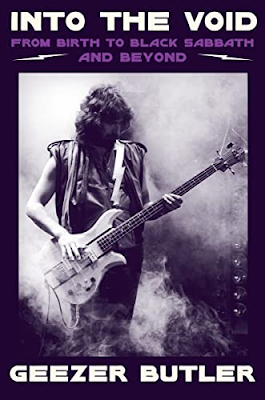 Spiraling into a (digital) void...I recently finished Geezer Butler’s biography Into the Void. A fun and interesting read for many reasons. It’s mainly as you’d expect a detailed look into Geezer’s time with Black Sabbath, in which he served as bass player and principal lyrics writer. Geezer experienced a wild rock and roll lifestyle, including a roller coaster ride to the top in the early to mid-70s and subsequent plunge to the bottom in the late 80s and early 90s. But along the way Into the Void offers some interesting commentary and a glimpse into how radically the music industry has transformed from 1969-today. Largely due to the rapid adoption of new technology and the corresponding shift from analog to digital.
I am of Generation X (born 1973) and have the benefit of living in two worlds. I grew up in an analog era of tapes and stereos, but also had a front seat to the rise of computers and digital music, and later Napster and YouTube and Spotify. I rode that lightning.
With that perspective I’ve come around to the belief that technological adoption results in both progress and regress. It is not a universal good, each step an advance toward some Star Trek utopia espoused by deluded techno-utopians like David Brin. Nor is it an evil, each advance in technology removing us further from some mythical Garden of Eden and closer to a digital Hell.
It is just Change, for better and for worse.
Music used to be harder to access. You had to plunk down hard-earned coin to buy it. There were fewer options, no carefully curated song lists built around your mood or vacation destination. Unless you wanted to go through the considerable trouble of making a mix tape.
But analog music was (and remains, with the right equipment) of a better sound quality than compressed digital, richer and more resonant. And friendlier to the collector. With your analog purchase comes physical art, albums with foldouts and liner notes and the like.
Many things got better for music with the advent of digital. With Spotify Premium ($10.99/ month, soon to be $11.99) I have access to essentially every piece of music ever recorded. I can go to YouTube and watch any music video I formerly had to pray Headbanger’s Ball might play. I can watch hundreds and thousands of concerts I’ve never been to, and documentaries and fan videos, when before the only options were to buy a VHS copy of Live After Death or take a gamble on a bootleg.
Tapes were never a great way to preserve music, and records and CDs can warp or scratch. Digital is “forever” (as long as you pay the monthly fee).
In short, digital was great for me, the fan and consumer, in many ways. I benefit it from it in a small way here on the blog, with my ‘Metal Friday” posts where I can link to videos and share them with like-minded metal fans.
Nevertheless, I prefer the way the music industry used to work. Or at least, enough of it to tip the balance toward the analog era. I’m aware I’m a trader in nostalgia, but like Geezer Butler I believe have some legit arguments to back me up (which makes us both geezers, I suppose).
In the pre-digital age recorded music was not a commodity. It had to be committed to physical objects—records, tapes, CDs—in order to be distributed. Albums had controlled pricing and were marked up to create profitable margins. And because artists could and did make real money on album sales, that meant live shows served a different purpose. They were a way to promote new albums and drive records sales. They were cheaper.
But for the artist, digital distribution is a nightmare. Butler in his book scoffs at the royalties he receives from Spotify, despite the fact Sabbath has sold more than 75 million albums. Says Butler:
While bands in the sixties and seventies got robbed by dodgy managers, modern artists and groups get robbed by streaming services like Spotify, who pay a fraction of a cent per play. It’s not even worth looking at Sabbath’s income from Spotify, it’s so small.The only way to make up for the loss of album sales is through touring, which has led to exorbitant concert prices.
Some will argue that the unlimited choices offered by Spotify and YouTube are an unmitigated good for the consumer. But I don’t necessarily see it that way, even though I have found bands on these platforms. Research has found that people like choice, but from a limited, selected set of options. Unlimited choice is crippling, which is why we need curation. Kerrang or Headbanger’s Ball served this purpose back in the day, but today who are the arbiters of taste? It’s harder to find new music when there’s no curated selections in record stores. It used to be a handful of your local rock radio stations would bring you the latest bands, now you have to subject yourself to the whims of algorithms or corrupt search engines.
But access to music just scratches the surface of the massive impact of digital.
Electronic drum machines and autotuned voices massively lowered the bar for who could record an album. It undercut raw ability and negated craft gained through sweat equity, trading it out for dance moves and good looks. Manufactured music gave birth to the rise of pop performers who captivated audiences through sex appeal and dance moves. This kicked off at the turn of the new millennium with the rise of Britney Spears, N’Sync, Backstreet Boys, and the Spice Girls, and continues unabated today.
Before the advent of digital, record labels gave bands like Rush and Black Sabbath several albums to find their sound. It was a risk, but a calculated one, because these bands had paid their dues in clubs, built followings, and could perform. They were talents that then required promotion.
Of course there were exceptions. Record labels were and are out to make money and signed many shitty bands purely because they were part of a hot music movement. But in general the labels had a longer leash and more patience for artists. When the emphasis is on the music, who cares how the band members look?
If four ugly dudes from Birmingham England with an experimental new sound that didn’t follow pop formula (and certainly could not dance) were born in 1999 rather than 1949, could they become rock stars? Does anyone think we’d have had Black Sabbath today? Butler doesn’t:
People tend to ask me: Could Sabbath happen now? The truth is, probably not. The odds of four working-class lads coming together in a rough place like Aston, writing very heavy songs about their gritty reality and making it in the music industry are slim to none. They wouldn’t look “right,” they wouldn’t sound “current” and they’d be too much of a risk for major record companies.Digitalization renders music into a commodity, cheap and disposable, no longer holy. We don’t have to queue up and wait for the new Guns and Roses albums as we once used. My daughters love Taylor Swift and pay big $ to see her in concert but don’t own her albums. The entire concept of an “album” is practically meaningless.
I don’t believe this is better, or healthier, for music.
I am heartened that analog still has a place. You can still find music stores and new records for purchase. I smile when I see young kids buying records and admiring the artwork, and enjoying the look and feel of a physical object in their hands instead of a vaporware download. But buying physical music is a novelty, not a necessity.
While something was gained in the switch to digital, something was lost along the way.


June 28, 2024
Force of a Storm, Sumerlands
"Force of a Storm" immediately jumped out at me as an awesome track and a worthy share on this Metal Friday.
I know nothing about Sumerlands, but they're a five-piece band whose sound is "rooted in 1970s hard rock and classic power metal from the 80s and 90s," per their website. They are a new band with a vintage sound, one that sounds very good to my ear. I like the vocalist and the guitar work in this one is excellent.
Enjoy.
June 20, 2024
Tain by Gregory Frost (1986), a review
Welcome to the field, ripe fruits.
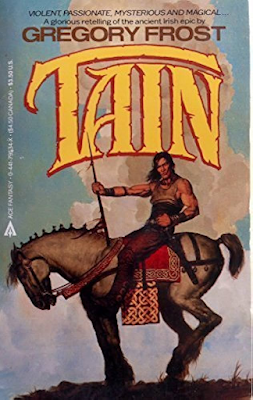 What is the meaning of the stones?
 Why do they stand alone?
Put down your roots and grow here,
Wither and enrich our soil.
Spill your seeds in the delirium of battle.
Alone, here stands Ulster
Against all of golden Eriu, allied—
A division to outlast you.
It pleases us, your offer to pour out your blood
While your fundament fails,
Fertilizing your grave,
And we, ravens, pluck the savory, sightless eyes.
--Gregory Frost, Tain
The ancient Irish were badasses (as are some of the moderns, I know of one Murphy who will soon bloody your lip as buy you a Guinness). As Britain’s kingdoms fell one by one to Viking raiders until Alfred stood alone, the Norsemen were never able to break the men of Ulster. See April 23, 1014 and Clontarf.
When your national mythology is built on the likes of Cu Chulainn, warfare is in your blood.
But Ireland was also riven by internal strife. The same clannish fierceness that made the Celts resistant to Viking incursions turned on itself with petty squabbles and bloody feuds. All the way back to great conflicts fought between the legendary Firbolg and the godlike Tuatha De Danann.
To be honest, my knowledge of Irish Celtic mythology suffers next to classical Greek/Roman and Norse (half of it probably derives from AD&D's Deities and Demigods). But in my defense the Celts don’t have the same well-known body of rich literature as The Elder Edda or The Norse Sagas, or The Iliad, The Odyssey or Ovid’s Metamorphoses. Even Bulfinch’s Mythology, which spends most its page count on Greek and Roman stories, opts to cover Anglo-Saxon myths including tales of Old King Arthur, leaving the Irish cupboard bare.
Thank goodness for Gregory Frost’s Tain, which brings the old stories to life in an unforgettable way.
Deuce Richardson sent me a copy of this somewhat obscure 1986 title (Ace Fantasy, I believe just one printing though it’s now an ebook). And damn, I’m glad he did. It was an excellent read.
Frost breathes life into these old—very old--stories. That’s a bit of a clichéd phrase but apt in this instance. Tain is a book not of dry or distant myths but bright blood and lust and vengeance and humor and cutting wit, told with a compelling modern style.
The women in this book… wow. Certainly three dimensional—lusty, prideful, headstrong, tough, ambitious, ruthless--just like their male counterparts, if not more so. The conflict and subsequent carnage stems from a pissing contest between Maeve, Queen of Connacht, and her husband Ailell. Maeve counts up her possessions against Ailell’s and finds them in balance—save that his herd includes the mystical blood red bull Finnbennach. To rectify this unforgivable sleight she orders a cattle raid on Ulster to steal Finnennach’s equal, the dark bull Donn. The army musters and marches. Standing in their way is the great hero Cu Chulainn, who holds a delaying action until the Ulstermen can get their shit together.
Adding further intrigue and a compelling love triangle is the hero Fergus mac Roich, who is openly sleeping with Maeve (she never turns a warrior away from her bed). Maeve’s advances grow so brazen that Ailell has no choice but to unman Fergus by stealing his legendary sword Leochain (there are many double entendres in this book, a sword is not just a sword, is it?)
Tain dips even further back into Celtic mythology with retellings of the tragedy of the impossibly beautiful Derdriu, the tale of the pigkeepers Friuch and Rucht, and the legend of the Amazon Queen Nessa. Frost connects these disparate stories with an interesting framing sequence: A creature of the faerie folk, Laeg of the Sidhe, emerges from a magic cauldron to show the old stories to the boy Senchan. The two wander through these great events as phantom observers with Laeg providing interpretation and light guidance. This was perhaps a slight weakness of the book but it does the job.
Tain is ripe with atmosphere and brings the Emerald Isle to life. We’re introduced to Cromlechs and sacrifices and torcs and all the cool trappings of the era. The Celtic Triple Goddess of war, fate, and death, the Morrigan--Morrigu, Badb, and Nemain—make a startling appearance on the battlefield. Druids also play a memorable and prominent role, bestowing geases with irresistible effect.
The heart of the book is the cattle raid, which is based on the single surviving example of Irish Celtic epic, the Tain Bo Cuailnge. Cu Chulainn is revealed as one of the great all-time heroes of his or any age, with feats of arms and battle prowess second to none. Codes of combat require that one Connacht hero challenge him at a time, and Cu Chulainn cuts them down like wheat, lopping off heads unnumbered until he encounters his near equal in a shallow river duel… but I won’t spoil it or the wonderous exploits therein. Go read Tain if you can find a copy.
June 14, 2024
Not all books need be movies
I like movies. I really do. Need I say this?
I mean, not liking movies is akin to not liking ice cream. It’s un-American. Heck, it’s inhuman.
I’ve posted numerous reviews of my favorite films. I seem to have a sweet spot for the early 80s, the likes of Blade Runner and Terminator and Excalibur and The Road Warrior (throw in Raiders and the Goonies for good measure). But I watch and enjoy new films too.
Now that I’ve paid my homage to celluloid, I’m not particularly fond of the fetishization of film by lovers of classic characters and IP. The incessant cry of, “this is such an awesome character, but when are we ever going to get the movie!”
Let’s take Conan. We have the amazing Robert E. Howard stories. We’ve got shit-tons of terrific comics, including great new material today from Titan. Pastiche novels. Even a loosely adapted but nevertheless magnificent 1982 film. So when I hear the incessant, when are we going to get a real Robert E. Howard film. We need one! It cheapens what has been done already. Just a bit, and IMO.
But you don’t understand Brian, we need a proper Conan film.
Why? Why do we need one?
I just don’t have the same hand-wringing urgency to get a movie made.
Here’s my question to the people I can feel protesting this post.
When was the last time you said, “that was an AWESOME movie… they really need to write the novelization! Like, now!”
The answer is… never.
Seriously, when was the last time you ever heard ANYONE say, “I love Furiosa… when is George Miller going to get an author to write the novel? That’s what we really need.”
I’ll wait.
When you always want “the movie” you are signifying an artistic hierarchy, one that places movies at the top and television in the middle (“it needs to be made into a Netflix miniseries!”) and poor old books at the bottom—perhaps just above static paintings or digital art.
Captain obvious incoming, but films and books are different mediums. Which means they do some things better than the other.
Films have many inherent advantages over books. The visuals are obvious. But also, sound. The wonderful dialogue, pregnant pauses and raised voices that convey additional levels of meaning are very hard to replicate in a book. And also, wonderful scores. Seriously, just hearing John Williams’ opening theme from Jaws immediately sends hackles up my spine and makes me nervous even when I’m in the neighbor’s swimming pool.
It’s awesome. Books can’t do this.
This combination of gorgeous visuals and stunning sound sweep us up, and make a great movie in an IMAX theater a thing of beauty. An event that I’m glad we have. Did I mention I love movies? I was blown away by Maverick and 1917 and of course The Lord of the Rings (though the book is better).
But books have their own distinct advantages too—advantages even over film. Like character interiority. This is very hard to do in a film, without awkward voiceovers.
Unbridled imagination is another. Film budgets and run times reign in possibility. Because budgets are an issue, the sprawling sweep of a book must be a dramatized compression on the screen. And thus worlds feel smaller than in the book. The Lord of the Rings is a prime example. I love the films, but Middle-Earth isn’t as big, or as grand, as Tolkien's vision.
The third is the unknown—HP Lovecraft can describe something awful beyond our imagination by not showing it. In film, which is purely visual, something must be shown. And it’s rarely as good as our imagination.
But the most important is artistic integrity.
Because movies are made by hundreds if not thousands of people, and because they cost so much, many fingers must touch the final product—including studio executives hungry for a return on their big investment, and their shareholders. Which means, compromises are made.
An author with a single artistic vision has inherent advantages, if they are talented and that vision is true and powerful. As a result books tend to have sharper edges and brighter colors.
I mean does anyone think we’d actually get an accurate “Red Nails” or “The Man-Eaters of Zamboula”? I don’t.
Even homemade movies made well and on the cheap by some guy in a basement with cutting-edge AI and a computer render some of these arguments invalid, the underlying principle remains: Books can do some things better than film. Which means there are novels that will always, from now until the sun turns cold and dark and burns out altogether in the far-flung future, be better than any movie adaptation.
OK, we do need a Dying Earth movie.
But if we don’t get one? It’s OK.
The world will keep spinning.
We’ve already got Vance’s book … and the book is better.
June 6, 2024
The 13th Warrior in the House, with Rogues
--Eaters of the Dead, Michael Crichton
The latest episode of the Rogues in the House podcast is out and I'm in the guest seat, talking the 1999 film The 13th Warrior with Matt and Deane.
Listen (and subscribe) here.
I have to say I'm not a huge fan of the film. It has its rousing moments, awesome pre-battle speeches, and a couple epic scenes, but drags in other places. It has a bit of a "talky" introduction, too much telling and not enough showing, though this works better in the 1976 novel on which its based, Michael Crichton's Eaters of the Dead. The filming was beset with difficulties; Crichton came on for a script rewrite and took over as director, firing John McTiernan—but reportedly was happy with the end result. McTiernan disputes much of this.
The film was a financial flop but has earned a bit of cult status, especially among fans of sword-and-sorcery.
I liked the film well enough upon rewatch but remain a bigger fan of the book, which IMO does a better job addressing the theme of the past as a different place.
We have too schools of thought: One is that people are people, and only the times and technology and education, etc. are different. And I do think there is such a thing as a fundamental human nature—that we are social, that we are fundamentally good, curious, etc.
But a second school says that the past (especially the deep past) was a different country.
As I state at one point in the podcast I think some modern S&S and other writers get this aspect wrong, with characters behaving like a 21st century man or woman would in certain circumstances. And I get it; these are fantasies, so historical verisimilitude is not necessarily the main objective. But if for example you believe that fate is inexorable, that there is a Valhalla awaiting the brave you will behave much differently than Joe Schmoe walking down Broadway in 2024. Death in the Viking Age was not nearly as traumatizing and all-encompassing as it is today. Death in combat was a celebration; young women willingly submitted to ritual execution by an “Angel of Death” to accompany a fallen chieftain on the other side.
Their general acceptance of death so fully and without remorse, and disdain of fear, explains why the Northmen could go a-Viking, and kill and pillage and take slaves and hold their own lives lightly.
Today we recoil from such behavior but it makes for truly fantastic writing (i.e., displacement from the real).
Anyway, I hope you enjoy the episode.
May 31, 2024
Worms of the Earth, Eternal Champion
I found out last night that Eternal Champion bass player Brad Raub passed away, just 36 years old.
So on this Metal Friday I honor his memory with “Worms of the Earth,” off their wonderful album Ravening Iron. With its spectacular Ken Kelly album cover (now THAT would be an amazing original to hang on my man cave wall).
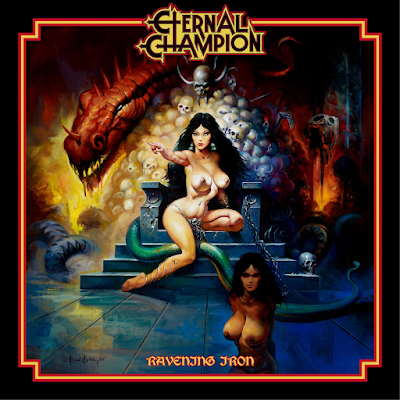 Beyond badass.
Still feeling my way out with this band but I’m really starting to dig Ravening Iron. "Worms of the Earth" should be a hit with any red-blooded sword-and-sorcery/Robert E. Howard/Bran Mak Morn fan. Here’s a sample of the lyrics, which are basically a faithful retelling of the tale:
Upon a Roman cross there hangs a man I cannot save
For this, Rome will have to pay
I must find the door to ebon depths where they degenerate
There's nothing I would spare to see Rome howl in pain
Eyes like golden stars shining in the dark
In Dagon's Barrow I will take the stone they must obey
The King of Picts has forced his claim
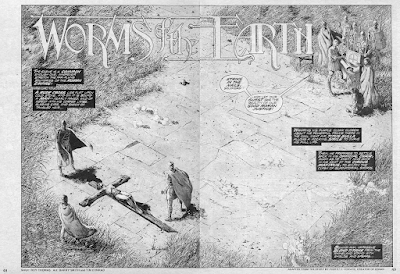 One of the all-time greats in visual adaptation. Fight me if you think otherwise.
The King of Picts has forced his claim... he certainly did. Love that.
I can’t express how glad I am to see a band like Eternal Champion lend their own artistic interpretation to REH. We’ve got pastiche novels, visual artists, comic adaptations, gaming supplements, and now heavy metal bands, all keeping Howard alive with their own inspiring visions of the greatest sword-and-sorcery author who ever lived.
Raub added his own verse to that roll-call, no doubt.
Rest in peace brother.
May 24, 2024
The Light is Fantastic—stay positive
I write about some heavy shit on this blog. If you were a casual observer passing through you might think I was a grim, moralizing figure discontented with the world. An old man shouting at clouds.
That’s quite far from the truth. I’m a pretty cheery person. I laugh a lot. I appreciate what I have, and the world around me.
From time to time I find myself dwelling on darkness. But much/most of the time I’m a happy person. That’s because I work at it. A baseline state of optimism so important to me that it’s become one of my values: Stay positive.
No one wants to hang out with bitter cynics. We all view the world through a glass darkly from time-to-time, but I’m talking about the types who complain about everything and can longer see beauty, or realize how lucky they are to be alive.
Anger has a purpose, and a place. It’s a human emotion, and so needs expression. But I don’t think it’s a healthy default position. Anger also has proven ill effects on your health, not just mental but physical.
A much better way to live is a state of positivity, and general optimism.
I wasn’t always this way. And today from time to time I get angry and frustrated at the world, even flirting with despair. But I have discovered ways to break out of the malaise.
One is through engagement with my deep and abiding interests, including fantasy fiction and heavy metal.
It might sound odd but something like a good Robert E. Howard story—even a really fucking grim tale like “Red Nails”—elevates my spirits, by stunning me with a reminder of the incredible human capacity to create beautiful art. Tolkien’s The Children of Hurin or a nasty Stephen King short story elevates me, by transporting my mind elsewhere. As does blasting Judas Priest and Iron Maiden.
I need fantasy, as an antidote to humdrum realities and worldly responsibilities. It hits the reset button.
Another way to break out is through human connection—spending time with my wife and family, and when I can find it, my friends. When I have my old friend Wayne over for a couple beers at the bar, and we talk about current times and the old times, and music, life is good. As is spending any time with my old man, still kicking at 80. Engaging with other people gets you out of your own head.
We need fantasy, AND we need human connection. I’m a big believer in balance. Which also keeps you positive.
If you want to cultivate more positivity in your life, one practical tip is starting a gratitude journal. I’ve been keeping one every day since early 2017 (M-F religiously, sometimes on Saturday. I’ve got a basic template if you want it). Write down three things you are grateful for every morning. This also serves the purpose of recording the high points and best memories of my life, which I can then reflect back on at the end of the year (and blog about here).
Gratitude journaling was/is huge for me. I cannot recommend it enough. It pulled me out of some dark times in my life. You can quite literally retrain your brain, teaching it to focus on the positive over the negative aspects of life (which are inevitable, and real). The positive becomes more noticeable.
One recent example: I run a monthly Happy Hour for my company. We’re a small company, 100% remote, with 43-odd internal staff. Sometimes I get 28-30 on a given call, other times its only 16-17. Years ago I would have thrown up my hands at the low turnout, and called into question, “why am I bothering with this?” Now my default position is, “everyone here is having a great time—and so am I! Cool. Can’t wait for the next one.”
I also recommend regular exercise. Lift some weight man, and get out for walk. Endorphins work wonders.
The best antidote to negativity is fostering mindfulness. Our greatest source of misery is our own thoughts. The mere act of noticing your thoughts and shifting your attention elsewhere, to the present, rather than ruminating on crap from the past you cannot change or an uncertain future, will shift your mind from negative to the positive.
In summary:
There is too much negativity in the world. Twitter has forgotten that life is beautiful. Adopt a positive mindset. Rather than attacking others, assume the best in other people and treat them well. It’s a better operating system; it also makes you a more likeable person.
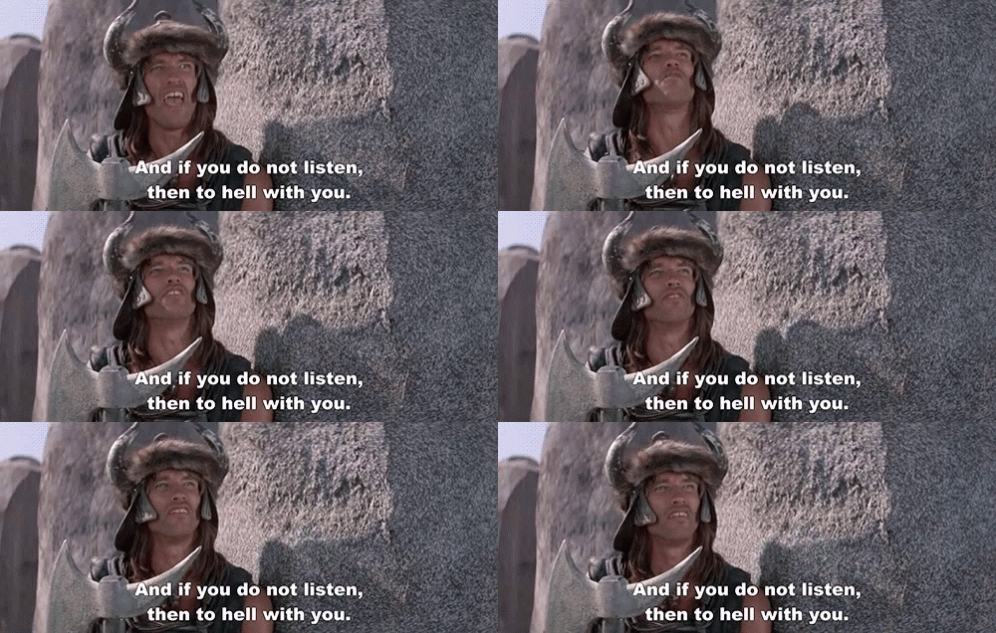
May 22, 2024
Humans are meant to do hard things
In my professional life I serve a profession called medical coding. No need to look it up; it’s quite niche and rather impenetrable to the outsider, though very important to the quality and financial health of hospitals.
I hear complaints all the time from medical coders about the difficulty of the work, and proposed fixes that would make everything better.
“If only the doctors would document acute systolic heart failure!” “If only the official coding guidelines were clearer about which diagnosis to report as principal!” “If only the insurance companies and hospitals could all agree on the definition of sepsis…
… then all our problems would go away!”
I don’t blame them for lodging these complaints, or for wanting fixes.
But what they don’t realize is they’d be replacing their day-to-day problems with a much bigger problem. Removing all the hard things would cost them their jobs. Because medical coding could be safely automated away.
And it would also cost them part of their life’s purpose, and stunt their development toward becoming an actualized human being.
I agree that their work is complex and often quite frustrating. Byzantine and possibly overly and needlessly complex in some aspects.
In need of some fixes.
But in general I see things with a different lens.
These “problems” are a good thing. Hard is a good thing.
Coding is not only a well-paying career, but for many actually meaningful too. Granted not for all; many consider medical coding, clinical documentation integrity and other like/adjacent professions (trauma/oncology registry, for example) mere work. They’d rather be doing something else, they work for the money and for the weekend.
But others have launched meaningful careers, made lifelong personal and professional relationships, in this line of work. Grew as people, became better versions of themselves, through the struggle of mastering their profession.
As have I, for example.
What happens if it all goes away? And the machines take the work?
You might say, this is just how the world is, and how professions evolve. One line of work is replaced by another, displaced by technology. Some “optimists” argue: We can now spend our time doing more meaningful work instead of these lower-order tasks.
There is some truth to this, but this line of reasoning falls apart when entire human skillsets are outsourced to machines.
Let’s use the example of something more meaningful to readers of this blog: Writing and the visual arts.
If I just enter a series of prompts, and then prompt the AI for additional clarity, and publish a book in a weekend, this is not a meaningful achievement. If I can summon Dall-e to create an image, I did not create the art, the machine did.
You put in no sweat equity worthy of celebration. Had no stumbles, and failures, and doubts, and anxieties that, when you finally overcame them and published the work, made it your crowning achievement. Regardless of whether you ever sold a copy you did something amazing.
You created something and did something hard. You.
We need to do hard stuff.
Doing hard work will disproportionately reward people with greater ability. This leads to inequity … but that’s the way it has to be.
We don’t need to spend all our waking hours doing hard things (I would not be opposed to a four day workweek, for example). Nor am I calling for an end to technological development. Some jobs will always inevitably be eliminated by labor saving technology. We don’t need to return to the good old days of horse-drawn wagons and polio.
If we could replace meaninglessly hard work, I’d be in favor of any such labor-saving device. I’m sure the suffering laborer would too.
But no one seems to have a plan for a world post work. Or far more frighteningly, life without difficulty. No one has addressed the fundamental underlying truth that doing hard things is good for us.
There is no intellectual I’m aware of who has painted a compelling--let alone non-dystopic and sane—picture of what a post-scarcity society would look like, and what it would mean for human flourishing. Could we still create believable, heartfelt art without any relationship to struggle? If we didn’t even know what struggle was, because everything was easy, available with the push of a button?
I would not call such a society a utopia, but a terrible dystopia.
The most beautiful human art is about struggle, and loss, and sometimes overcoming it. Even if the victory is only temporary.
Without anything hard to do, we’ll all be eating soma.
May 17, 2024
As heavy as I’ll go
I can’t do cookie monster vocals. That means that Death Metal and Black Metal bands are out.
To be honest, I haven’t made a concerted effort to break into these genres. The barrier to entry is so high that I just can’t bring myself to do it, even though I can appreciate some of the riffs and melodies.
I need to be able to understand what the vocalist is saying, and I can do that with Max Cavalera and Tom Araya.
Sabbath is heavy enough for most mortals, and will raise an eyebrow in mixed company. Slayer and Sepultura will get you flat-out kicked out of parties … but I still greatly enjoy them. As with here, on Refuse/Resist, and South of Heaven.
Both awesome, and really fucking heavy. And I don’t feel the need to go any heavier.
What’s your “max heavy?”
May 13, 2024
Why we need fantasy: Some thoughts from a Blind Guardian concert, May 11, 2024 at the Worcester Palladium
 I'm in there! Somewhere back left...
No one ever dares to speakIt's nothing else but fantasyIt's make believe,Make believeNo one ever dares to speakIt's nothing else but fantasyBut One day it will all come to life
--Blind Guardian, Fly
How did you spend your Saturday night? I was in a hall you might know, called … VALHALLA!
Or maybe it was the Worcester Palladium.
Either way, I was somewhere else. And that’s a good thing.
We need fantasy in our lives.
Blind Guardian lead singer Hansi Kuersch screams at the end of “Valhalla,” No, we can’t live without gods! He and his bandmates put to powerful music what many of us who breathe deeply of this type of thing have come to know:
We can’t live without fantasy. It is indispensable as air or water:
Songs I will sing of tribes and kingsThe carrion bird and the hall of the slainNothing seems realYou soon will feelThe world we live in is another Skald’sDream in the shadows
--Skalds and Shadows
We’re all just telling stories. Reality is what we make of it.
Blind Guardian knows this, and takes us to other places, fair and perilous lands where magic is real. Lands we once knew, but have forgotten. As we age our fantasies wither. We prioritize work and money, and embrace conformity and dull routine.
Stranded in the real worldLeft in the worldNo place for daydreamsSerious lifeI fall intoI fall into a dark holeAnd I can't come outDo you know if Merlin did existOr Frodo wore the ringDid Corum kill the godsOr where's the wonderlandWhich young Alice had seenOr was it just a dreamI knew the answersNow they're lost for me
--Imaginations From the Other Side
But fantasy calls, from the other side.
We might be lost, but Blind Guardian knows there is another world. Which can break down the walls around your heart. For a short time on Saturday at least.
Blind Guardian delivered on this stop on The God Machine tour. They were great. The setlist is below.
As always it’s a privilege to see a band of their magnitude in a place like The Palladium, which has a listed capacity of 2660. Blind Guardian plays to much larger crowds overseas.
 Take a bow, dudes. Maybe you don’t need German power metal bands in your life. That’s OK, with a good book or a well-done movie you can get (some) of what Blind Guardian offers. Enchantment, to restore a disenchanted world.
What you don’t get in a book or a movie however is the power of being in a big group of like-minded people, all experiencing the same powerful call. Chanting, “Valhalla, Deliverance!” like Viking warriors of old.
Where was I Saturday night? The lands of Faerie, or Worcester?
Both my friends.
Setlist
Imaginations from the Other SideBlood of the ElvesNightfallThe Script for My RequiemViolent ShadowsSkalds and ShadowsDeliver us from EvilSecrets of the American GodsThe Bard’s SongMajestyTraveler in TimeSacred WorldsTime Stands Still (At the Iron Hill)ValhallaMirror Mirror
Here's a bit of "Nightfall" from my cell phone: