David Gillespie's Blog, page 8
October 5, 2016
Stop public cash for private schools
The education Minister thinks some private schools are over-funded. He’s wrong. They all are.
According to the latest figures we have available, Australian taxpayers spend $12 billion a year propping up the businesses we call private schools. That is more than we spend on unemployment benefits and sickness allowance combined and it is about 12 times as much as we spend on the ABC and SBS. And that’s just for recurrent expenses. We also generously hurl another billion in their direction so they can build capital facilities that taxpayers don’t own and are not permitted to use. Since most of these businesses are also tax exempt those numbers are just the tip of our generosity.
The spin masters employed by these private businesses often run the line that they are doing taxpayers a favour by taking their money. They point out that while it does cost taxpayers $9,327 per student per year to educate one of their clients, it would cost the government $13,783 to do it in a government-run school. My goodness golly gosh they’re generous, they’re saving us $4,456 per student. Except they aren’t. More than half ($2,386) of that ‘saving’ is notional because it is for depreciation of the school assets owned by the public schools. The school doesn’t see a cent of it in its operating budget. Not one teacher is paid with it. Not one book is purchased with it. But that notional expense is included in the calculation for the government-run school and not for the privately-run school.
Once you drop that accounting trickery out, the gap narrows considerably. In 2014 it cost the taxpayer just 18% less to have the child educated ‘privately’ . And that gap has been closing very quickly. In 2009 it was 28%. At that rate of progress it should cease to exist at all in the next 5 or 6 years.
Even though are getting relatively less and less government money, it is the government-run schools taking on the more challenging task educationally. They teach 7 times as many students classified by the ABS as living ‘very remotely’ and 4 times as many students classed as being ‘remote.’ When it comes to children with special needs, once again it is those same schools doing the heavy lifting, educating 3.3 times as many children with a disability as their ‘private’ brethren.
And unlike government-run schools, privately-run schools are largely exempt from the provisions of Australia’s discrimination laws. They are permitted by law to pick and choose who they will and will not be bothered trying to educate. In New South Wales for example they can refuse to teach (or employ) people on the basis of marital status, sex, disability, transgender or homosexuality. Queensland is less discriminatory. Here schools can only pick and choose on the basis of not liking someone’s religion.
But let’s not fall into the trap of arguing about the pennies and ignore the pounds. The real question is why is the taxpayer contributing anything all? The taxpayer provides a fully funded secular system open to all comers. People can choose not to use the system, but if they choose to opt-out why does the taxpayer owe them anything? If I choose not to take the bus to work, I don’t get to ask the government to buy me a car. If I choose not to use a public swimming pool, I don’t get to ask the taxpayer to build me one. If I choose to employ a security guard I don’t get to send the taxpayer a bill for the police time I am saving them.
Meanwhile our results in benchmark tests continue to slide. Our rankings on international comparative tests have been dropping like a stone. We now rank 14th (out of 32 OECD) countries behind Poland, Germany and Vietnam. Worse, analysis of the numbers shows it is the private schools which are letting us down the most.
Usually when taxpayers subsidise something it is to gain a collective benefit. We subsidise child care because the government wants parents to work. We subsidise medical treatment because we want our population to be healthy and we subsidise local manufacturing because we want to keep those skills in Australia. There is however no reasonable justification for the extraordinary public funding of private choices in Australian education. It doesn’t save money, it doesn’t improve results, it divides our education system along class lines and it entrenches legally justified discrimination.
So, Minister, let’s not fret too much about who is on the ‘hit-list’ and who isn’t. Let’s put them all on that list and get on with using that $12 billion a year to fix our education system.
Also published in The Courier Mail


August 11, 2016
Why you need to keep seed oils out of your dog’s food.
Human sperm quality has been in a nosedive over the last half century. Now a new study proves exactly the same thing has been happening to dogs. And the likely cause is seed oils in their feed (for humans and dogs).
Last week a very strong study was released that showed consistently plummeting sperm quality in a large controlled dog breeding program. Quality dropped by 2.5% a year from 1988 to 1998 and then 1.2% a year from 2002 through to 2014. The reason for the improvement was that between 1999 and 2001, dogs that were not producing viable sperm were removed from the breeding program. Something you can do with dogs but potential fathers are a bit persnickety about.
These results are very close to those we already have in humans, the other omnivore that shares the diet and the living space of dogs. Similar rates of human sperm quality decline are now being reported in all Western countries (although alarmingly at a decline of 3% a year, Australia is at the high end).
Humans don’t normally eat dog food (well, I don’t), but there is one ingredient both dogs and humans eat now that neither ate before the early 20th century. And that’s seed oils.
Pick up your favourite packet of dog food and peer closely at the ingredients. Here’s a typical example (from Pedigree, one of the most popular dog foods on sale in Australia):
Cereals &/or cereal by-products, meat & meat by-products (poultry, beef &/or lamb), poultry palatant, beet pulp, salt, minerals, sunflower oil, vitamins, amino acid, antioxidants
The Cereal (husks and small cereal particles left over from milling as well as whole grains as filler) and Meat by-products (lungs, spleen, kidneys, brain, livers, blood, bone, fatty tissue, stomachs and intestines) are in dog food precisely because they are hard to sell to humans.
The ‘Palatant’ is flavouring to make it taste like food (and so the owner thinks it smells like food). If it weren’t there a dog wouldn’t eat it.
And Beet pulp is the fibre left over after they extract sugar from sugar beet plants. It makes dog poop firmer and this apparently pleases those who do the scooping.
Aside from the vitamins and minerals, there is only one ingredient in this ‘food’ that also appears in human food. In this brand it is sunflower oil but it often just described as vegetable oil.
These oils are not made from vegetables at all. Rather they come from seeds (like Canola or Rapeseed, Soybean, Sunflower, Safflower, Rice Bran and Grape). The dead give-away is often that they will make claims about the food containing ‘essential fatty acids’.
Omega-6 fat is the dominant fat in the ‘vegetable oils’ used in every processed food and in most dog foods. And there is ample evidence in both human and animal trials that omega-6 fats degrade sperm quality.
These Omega-6 based seed oils are the fat of choice for the processed food and the pet food industries because they are a lot cheaper than fats from animals and exotic fruits like olives, avocados and coconuts. As a result, human consumption of Omega-6 fats has at least tripled in the last century. We have no long term data on vegetable oil consumption by dogs. But it is not unreasonable to assume it is similar since, packaged dog food has only really been available since the end of the first World War and only the cheapest possible ingredients are used in most pet food.
While sperm quality is important to dog breeders (and humans who might want kids), I suspect it’s not of much concern to pet owners in general. Sperm quality is however an early warning for a much nastier set of diseases increasingly linked to consumption of these oils. Chief among these is cancer.
In humans we have high quality evidence that people fed these oils are twice as likely to suffer from cancer as people who are not. And there is strong evidence that as the amount of it in our food has accelerated, so too have the numbers of us affected by cancer.
Similarly, in dogs the rates of the most common cancers have tripled since the late sixties. Cancer is at terrifyingly high levels in most pets now, affecting 1 in 4 dogs. And those are just the ones we know about (because they are insured).
Dogs don’t get to choose not to eat seed oils. But their owners can. And surprisingly it is the extremely cheap brands that are often seed oil free. Woolworths Homebrand dry dog food, for example, uses ‘Animal Fat’ rather than seed oils. If you avoid dog foods which include seed oils you’ll give your best friend his best chance at avoiding cancer.

August 9, 2016
What seed oils are really doing to your body
VEGETABLE oils are highly unstable.
When they interact with oxygen, they release neurotoxic, DNA mutating chemicals which are known to cause cancer (at least).
Recent improvements in measurement technology have now thrown a spotlight on the quantity of these chemicals released by normal use. And the results are truly terrifying.
Cheap vegetable oil made from seeds (canola, sunflower, corn, safflower, grapeseed, rice bran and soybean oils) is a new addition to the human diet. Unlike animal fats and oils made from fruit (olive, avocado and coconut oils), they’re very high in polyunsaturated fats and in particular something called an omega-6 fat.
A recent study found that when seed oils containing these fats are heated at a normal cooking temperature (of 180 degrees celsius), they create highly toxic chemicals known to be involved in cancer causation.,
And each time the oil was re-used the concentration increased massively. The study showed that by the fifth day of oil re-use, it had five times the concentration of these chemicals that it had on the first (which was already alarmingly high).
But worse than that, the researchers also made the point that all they could measure was the amount of these chemicals left in the oil. Since they are highly volatile, they are constantly escaping into the air around us when the food is being cooked.
According to another recent study, it is likely that this volatility explains the stubbornly high rates of lung cancer among women in Asian countries (where smoking is rare among women, but wok frying with Canola oil is a daily task).
Those toxic molecules are dangerous because they are interact destructively with our DNA. This significantly increases the chances that cancer will develop.
These seed oils are now a core component of our food supply and Australians are sicker now than at any time in our history.
We are almost four times as likely to have thyroid cancer than just three short decades ago. We are more than three times as likely to have liver cancer. We are twice as likely to have melanoma, Motor Neuron Disease, kidney or anal cancer.
Men are more than twice as likely to have prostate cancer and 60 per cent more likely to have testicular cancer. Women are 43 per cent more likely to have breast cancer. And children are paying even more dearly.
A child is 6 times as likely to suffer from leukaemia than at the start of the 20th century. And they are more than four times as likely to suffer from a life threatening allergic reaction than they were just 20 years ago.
The chronic disease tsunami is upon us.
Every day there are thousands of teenagers standing over vats of frying canola oil for eight hour shifts at every fast food restaurant in this country. Every day, there are people cooking with high temperature seed oils in woks and frying pans. And every day there are industrial quantities of heated seed oil being poured into commercial baked and frozen foods.
A century ago, exactly none of these fats were added to our food supply.
Every day 312 new cancer sufferers are diagnosed in Australia. That this is allowed to continue when the science is so clear on the likely cause, is not merely a shame or an embarrassment. It is an outrage and a tragedy.
It is reasonably safe to assume all the fat in processed food comes from seed oils. The good news is that this only applies to food made by others (and usually shoved into a packet with a picture of real food on the front).
Nobody can stop you making and eating real food. All you need is a little know-how.
Eat Real Food Cookbook Launch Offer
 Get the new Eat Real Food Cookbook OR the Sweet Poison Quit Plan Cookbook OR BOTH for 25% OFF.
Just Enter the discount code ERFCB25 at checkout
Both books are of course signed by David
Offer ends 31 August 2016

July 20, 2016
Why we need to eat real food
Sugar is very bad news. It destroys (in this order), our teeth, our gut, our liver, our ligaments, our pancreas, our kidneys our blood vessels, our heart and eventually our brain. The science on all of this is now so uncontroversial, that many countries (including the UK) are implementing sugar taxes to help pay for the accelerating damage. But sugar is the lesser of the two dietary evils that have infiltrated our food supply. The other is vegetable oil. And it makes the consequences of sugar consumption look like a mild case of the sniffles. This stuff doesn’t just destroy our lives, it takes out the next generation as well.
Twelve years ago I removed sugar from my diet. I didn’t change anything else. Yep, I still ate meat pies (just without sauce). I still drank beer. And I still didn’t exercise anywhere near enough. I did it because I was obese and the evidence told me that the reason was my sugar consumption. So I stopped eating sugar. It changed my life permanently. I lost 40 kilograms and regained a passion for participating in the lives of my six kids, something that up until then was fading as fast as my weight grew.
Then, a few years into my sugar free life, I discovered something that made it immeasurably harder. Sugar isn’t the only thing that’s been added to our diet in large quantities by the food industry. The other is oils extracted from seeds (usually described as ‘healthy’ vegetable oil). It isn’t the occasional splash of oil you add to your salad or fry your steak in. It’s the industrial quantities of the stuff added to your bread, your biscuits, your frozen meals, your sauces and dressings and everything you buy in a restaurant or your favourite take-away.
Cheap vegetable oil made from seeds (canola, sunflower, corn, safflower, grapeseed, rice bran and soybean oils) is a new addition to the human diet. Unlike animal fats and oils made from fruit (olive, avocado and coconut oils), they’re very high in polyunsaturated fats and in particular something called an omega-6 fat.
When omega-6 fats are heated (in a deep fryer or in the human body) they produce highly toxic molecules. Those end-products are dangerous because they are incorporated into every cell in our body and interact destructively with our DNA. This significantly increases the chances that cancer will develop. But that’s by no means the least of it. Because of their neurotoxic capabilities, these molecules are likely to be heavily involved in motor neuron disease, multiple sclerosis, Parkinson’s disease and Alzheimer’s disease. They’re also implicated in chronic inflammation, the massive recent increase in allergies, stroke and heart disease. And, less predictably, they probably lie behind the sudden mass decline in male fertility and the massive increases in childhood cancers, Down syndrome and Autism.
Australians are sicker now than at any time in our history and it is getting worse unbelievably quickly. We are almost four times as likely to have thyroid cancer than just three short decades ago. We are more than three times as likely to have Liver Cancer. We are twice as likely to have Melanoma, Motor Neuron Disease, Kidney or Anal cancer.
Men are more than twice as likely to have prostate cancer and 60% more likely to have testicular cancer. Women are 43% more likely to have breast cancer. And children are paying even more dearly. A child is 6 times as likely to suffer from leukemia than at the start of the 20th century. And they more than four times as likely to suffer from a life threatening allergic reaction than they were just 20 years ago. Sperm counts halved in the 50 years (to 1990). Pregnancies are three times as likely to be affected by Down syndrome over the same period and a child is twice as likely to be autistic. The chronic disease tsunami is upon us.
These unbelievably cheap sources of fat are even more deadly than sugar and have now infiltrated everything on the supermarket shelves. If I avoided the 99% fat free but high sugar mayo, I was jumping out of the frying pan into the fire. The full fat version had no sugar but was made using sunflower oil.
A century ago, exactly none of these fats were added to our food supply. Now unless you made it yourself, it is reasonably safe to assume all the fat in your food comes from a seed. Avoiding these fats is several orders of magnitude harder than avoiding sugar. Our food supply is stuffed with two ingredients that are more likely than not to cause a slow, lingering and painful death. The good news is that this only applies to food made by others (and usually shoved into a packet with a picture of real food on the front). Nobody can stop you making and eating real food. All you need is a little know-how. And that’s what the Eat Real Food Cookbook is all about.
It’s an odd sort of a cookbook. It explains the science and gives you an easy guide to navigating the supermarket and your local eatery. It’s not the kind of cookbook you’d give to your best friend for her to put on her coffee table (and that neither of you having any intention of reading). It doesn’t show you how to cook flash cakes that look like Darth Vader. And it most certainly doesn’t show you how to make a salad in a jar.
My wife, Lizzie, and our six kids have been living off the recipes and tips in the book for the better part of the last decade. Don’t let the beautiful photography fool you. This is an intensely practical book designed to solve an intensely practical problem. How to create high quality food – simply, inexpensively quickly and every day – that’s completely free of the twin evils of fructose (the dangerous part of sugar) and seed oils (the man-made fats recently added to our food supply).
Eat Real Food Cookbook Pre-Release Offer
Get the new Eat Real Food Cookbook ($43.95 value) AND the Sweet Poison Quit Plan Cookbook ($32.95 value) AND a two year subscription to howmuchsugar.com ($54.95 value).
That’s over $130 value for just $79.95.
All books are of course signed by David and the new cookbook will be numbered for all orders received before 26 July.
Cookbook #1 will be randomly selected from the orders received before Midnight on 25 July and that person will have their entire purchase price and shipping refunded.
Offer ends 31 July 2016

July 12, 2016
Free Recipes
When you first quit sugar, its handy to have some stand-by recipes. Grab this starter set of recipes from the book absolutely free.
Download Now
These recipes were developed by Peta Dent. Peta is a proper chef, so the recipes are full-on, professionally developed desserts and sweet treats fit for inclusion in any TV chef’s collection. This doesn’t mean they’re hard to make or use bizarre ingredients (Guatamalan chia seeds anyone?).
Peta has cooked each of the recipes dozens of times, trying different combinations and adjusting the quantities until we (and a random selection of sugar-addicted and sugar-free guinea pigs) were happy with the end product. I’ve tasted all of them. The quality control was hard work, but someone had to battle through all that ice cream and cake (okay, I had a little help from the kids!). Lizzie has also made a lot the recipes to make sure an average person in an average kitchen with an average supermarket down the road can pull them off . They’re spectacularly good and we are very excit-ed by the sheer abundance of high-quality fructose-free options this book represents.

April 18, 2016
The Rise and Rise of Assisted Reproduction – Stealing our Future – Part 5
Assisted Reproduction
40 is the new 21. Half a century ago, the average kid was done with school by 15, married and settled into their first house by their early twenties and producing their own kids shortly thereafter. Now if you have had your first child by 30 you are doing well. But when it comes to fertility we are constrained by biology. 21 is still the new 21. And it’s a pretty good age to have kids (from a purely biochemical perspective).
Human reproductive systems work best when they are young.
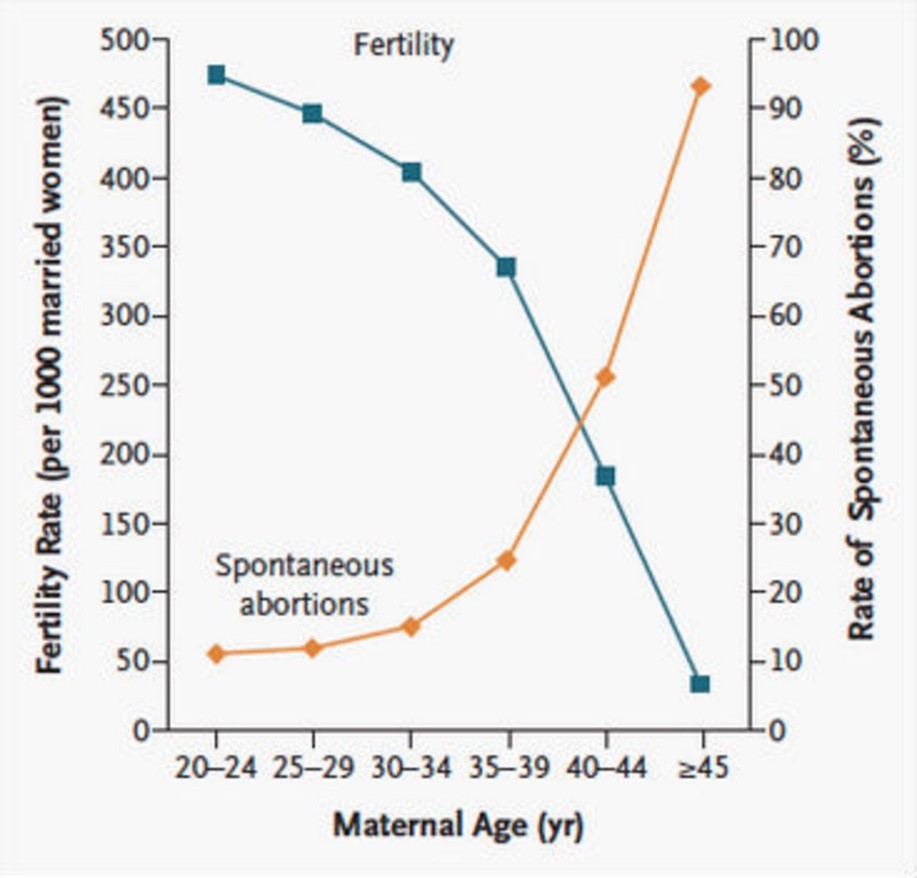
A woman is born with the last egg she will release before menopause. This makes that egg one of the oldest lived cells in the human body (at the time it is released) and as such, one of the cells most likely to accumulate damage to its DNA. Two of the body’s defense mechanisms against this sort of damage are infertility and miscarriage. As a woman’s age increases, her chances of becoming pregnant decline rapidly and her chances of having a miscarriage increase dramatically.
A similar defence mechanism is at work in men. As a man ages the quality of the sperm he produces drops significantly. Men over 40 have three times the DNA damage and consequently are less than half as likely to conceive (when compared to younger men).
We can accelerate the rates of DNA damage with oxidative stress. And vegetable oil consumption is a powerful driver of that. Vegetable oils made from seeds and legumes (Sunflower, Canola, Rice Bran, Grapeseed, Soybean, Peanut and Cottonseed) are very high in a type of fat (omega-6 polyunsaturated fat) which drives oxidation in the human body.
That oxidation destroys sperm quality and causes massive damage to sperm DNA. But our defences will normally kick in and the defective sperm are killed off. If those defenses fail (or are circumvented), sperm with damaged DNA can get through.
As parental age and vegetable oil consumption increases and fertility decreases, couples are increasingly seeking help with conception. This involves the use of assisted reproductive technologies (ART). In particular, the use of ICSI, the method used to address male infertility, has exploded.
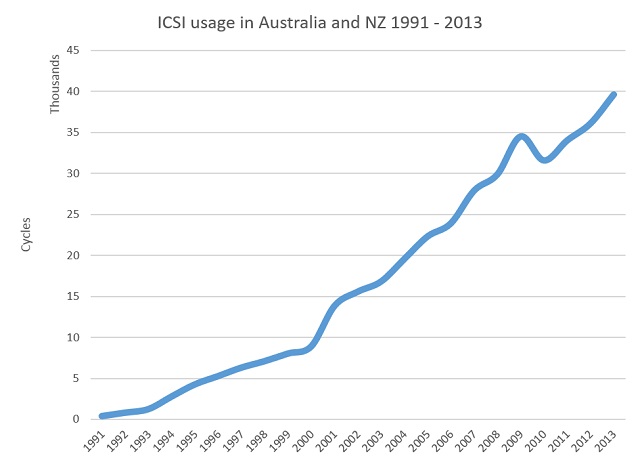
ICSI injects one sperm directly into an egg and so overcomes low sperm count and poor motility (movement and speed) problems. In other words, it works around the very things which the body is using to eliminate sperm which are less likely to produce healthy babies.
Of course ICSI doctors only select sperm which look healthy but at the moment there are no reliable tests for the type of damage to sperm DNA caused by oxidative stress. So when we deliberately circumvent our failsafe systems, the chances of childhood diseases (attributable to DNA damage) increase considerably.
One recent large study in Sweden demonstrated that the risk of Autism in ICSI births was up to 4.6 times as high (and mental retardation 2.3 times as high) as with an unassisted pregnancy. Similarly, a large Norwegian study published in February 2016 revealed there is a 67% increased risk for childhood leukemia in ART children. And a 2014 study showed there was 33% increase in schizophrenia in ART conceived children.
These studies are all from Scandinavia, because, unlike Australia, Northern Europeans keep high quality long term statistics on birth outcomes from ART. The exception here is Western Australia, the only state with a statutory register of ART treatments and outcomes. And even accounting for the relatively small size of their datasets, the same patterns are emerging. The risk of serious birth defects in ART children is approximately double that in unassisted conceptions.
Horrifically, in treating the obvious symptom of oxidation – declining fertility – with technology, we are end-running our body’s attempts to stop the suffering that sperm oxidation can cause.
Unfortunately, there are strong financial incentives to keep doing so. The Australian ART market is worth $400 million dollars a year and is generating strong and growing profits. Which is surprising given ART doesn’t work that well for most of its customers. More than 72% of fresh cycles for women under 30 (and 98.8% for women over 44) will not result in a live birth. Combine the accelerating profits from ‘treatment’ with the profits to be had from using cheap vegetable oils in our food and we are caught in a pincer movement of market forces working against a solution to the disease epidemics we now face.
The ART industry’s response to those statistics, and the increasing risks our children face, is that schoolgirls should be told to freeze their eggs when they are young. But I reckon if we’re going to be telling schoolchildren (of both genders) how to manage their fertility then how about we start with – Don’t Smoke, Don’t Eat Vegetable Oil and don’t delay having children (once you decide you want them).
Photo by Ⅿeagan . Distributed under the Creative Commons License.
This is the final part of a five part series. To see Part One click here.
Get all the studies mentioned in this series here

Stealing our Future – Part 5
Assisted Reproduction
40 is the new 21. Half a century ago, the average kid was done with school by 15, married and settled into their first house by their early twenties and producing their own kids shortly thereafter. Now if you have had your first child by 30 you are doing well. But when it comes to fertility we are constrained by biology. 21 is still the new 21. And it’s a pretty good age to have kids (from a purely biochemical perspective).
Human reproductive systems work best when they are young.
A woman is born with the last egg she will release before menopause. This makes that egg one of the oldest lived cells in the human body (at the time it is released) and as such, one of the cells most likely to accumulate damage to its DNA. Two of the body’s defense mechanisms against this sort of damage are infertility and miscarriage. As a woman’s age increases, her chances of becoming pregnant decline rapidly and her chances of having a miscarriage increase dramatically.
A similar defence mechanism is at work in men. As a man ages the quality of the sperm he produces drops significantly. Men over 40 have three times the DNA damage and consequently are less than half as likely to conceive (when compared to younger men).
We can accelerate the rates of DNA damage with oxidative stress. And vegetable oil consumption is a powerful driver of that. Vegetable oils made from seeds and legumes (Sunflower, Canola, Rice Bran, Grapeseed, Soybean, Peanut and Cottonseed) are very high in a type of fat (omega-6 polyunsaturated fat) which drives oxidation in the human body.
That oxidation destroys sperm quality and causes massive damage to sperm DNA. But our defences will normally kick in and the defective sperm are killed off. If those defenses fail (or are circumvented), sperm with damaged DNA can get through.
As parental age and vegetable oil consumption increases and fertility decreases, couples are increasingly seeking help with conception. This involves the use of assisted reproductive technologies (ART). In particular, the use of ICSI, the method used to address male infertility, has exploded.
ICSI injects one sperm directly into an egg and so overcomes low sperm count and poor motility (movement and speed) problems. In other words, it works around the very things which the body is using to eliminate sperm which are less likely to produce healthy babies.
Of course ICSI doctors only select sperm which look healthy but at the moment there are no reliable tests for the type of damage to sperm DNA caused by oxidative stress. So when we deliberately circumvent our failsafe systems, the chances of childhood diseases (attributable to DNA damage) increase considerably.
One recent large study in Sweden demonstrated that the risk of Autism in ICSI births was up to 4.6 times as high (and mental retardation 2.3 times as high) as with an unassisted pregnancy. Similarly, a large Norwegian study published in February 2016 revealed there is a 67% increased risk for childhood leukemia in ART children. And a 2014 study showed there was 33% increase in schizophrenia in ART conceived children.
These studies are all from Scandinavia, because, unlike Australia, Northern Europeans keep high quality long term statistics on birth outcomes from ART. The exception here is Western Australia, the only state with a statutory register of ART treatments and outcomes. And even accounting for the relatively small size of their datasets, the same patterns are emerging. The risk of serious birth defects in ART children is approximately double that in unassisted conceptions.
Horrifically, in treating the obvious symptom of oxidation – declining fertility – with technology, we are end-running our body’s attempts to stop the suffering that sperm oxidation can cause.
Unfortunately, there are strong financial incentives to keep doing so. The Australian ART market is worth $400 million dollars a year and is generating strong and growing profits. Which is surprising given ART doesn’t work that well for most of its customers. More than 72% of fresh cycles for women under 30 (and 98.8% for women over 44) will not result in a live birth. Combine the accelerating profits from ‘treatment’ with the profits to be had from using cheap vegetable oils in our food and we are caught in a pincer movement of market forces working against a solution to the disease epidemics we now face.
The ART industry’s response to those statistics, and the increasing risks our children face, is that schoolgirls should be told to freeze their eggs when they are young. But I reckon if we’re going to be telling schoolchildren (of both genders) how to manage their fertility then how about we start with – Don’t Smoke, Don’t Eat Vegetable Oil and don’t delay having children (once you decide you want them).
Photo by Ⅿeagan . Distributed under the Creative Commons License.
This is the final part of a five part series. To see Part One click here.
Get all the studies mentioned in this series here
April 7, 2016
Time to de-fund private school system
Want to save the taxpayer $11 billion a year? De-fund the ‘private’ school system.
Malcolm Turnbull is digging around in the back of the couch looking for loose change tax savings while the Australian taxpayer pours billions into our privately run education system. If things are really that dire, perhaps it’s time to seriously contemplate the Sacred Cow (or is it Elephant?) standing in the middle of the room.
In 1963 (and for the century before that), the Australian taxpayer contributed nothing to private education. This was very intentional choice. We had decided that the taxpayer funded, church run system we had before that was an inequitable, rolling disaster which educated only the rich and everyone else be buggered.
We thought that probably wasn’t a solid foundation for new egalitarian nation, so we purposefully decided to wrest control from the various churches and instead fund a high quality, public, secular, free education available to everybody. You could opt out but that was a choice you made, and paid for, yourself.
Some people did opt out. If you were Catholic (and listened to the Pope’s edicts on education) you sent your kids to a Catholic school. You paid the freight yourself and hoped for generous donations from nuns who worked for room and board, the Church and congregations. And if you were filthy rich you might also get your chequebook out and pony up to the high-end (usually protestant) equivalent. But neither of you would be getting a penny from the taxpayer to assist you with your choice.
A very similar system operates today in the US, UK, New Zealand and well, pretty much everywhere else. It is also the system we use for most other public services. If I choose not to use public transport, I don’t get to have the taxpayer buy me a Porsche. If I choose not to rely on the police for security, I don’t get to bill the taxpayer for a security guard. And if I prefer not to use a public pool, I don’t get help to build my own.
But now in Australia things are very different. Because of our designed-to-fail Federal-State funding system and constant pork-barreling by both sides of politics, the taxpayer has been steadily tipping more and more into the ‘private’ education sector.
Now the taxpayer pumps an eye-popping $11 billion a year into schools run by private entities (about 10 times what we spend running the ABC and about the same as we spend on unemployment and sickness benefits). And that does not count the charitable tax breaks and exemptions most of them also enjoy.
Besides operating expenses, that money is splurged on private assets like swimming pools, libraries, computer labs and sports fields, the likes of which most public schools can only dream about. And sometimes, as with the recent case of the Malek Fahd Islamic School, apparently not spent on education at all.
But there is something even worse than spending $11 billion a year buying other people swimming pools and hypoxic simulated altitude-training environments (that you’re not allowed to use). And that is doing it while delivering a worse result than when you didn’t spend any money.
Consistent testing tells us a modern Australian student is performing at a level about a quarter of a year behind their 1964 peer. And if that’s not bad enough, that same student is now more than two years behind the highest performing school systems in the world. All Australian schools performed terribly in the latest round of international comparative tests. But our best private schools did even worse than everybody else. The rest of the world has rushed forward while we have drifted backwards.
Not only have taxpayers gained nothing for their extraordinary generosity, they have ended up with a system in deep trouble. But we knew that would happen. It’s one of the reasons we stopped doing it the first time around.
Defunding the private education sector is not something you could do next Tuesday afternoon, but it is something that could be easily implemented with appropriate notice.
It would not destroy the religious education sector and it would not overwhelm the public sector. But it would slowly reverse the exodus of easy-to-teach kids, cost less, restore equity and likely improve everybody’s results. How do I know? Well, we’ve been there, done that and bought the T-Shirt, once already.
Also published in The Courier Mail
Photo by Thomas Hawk

March 31, 2016
Down Syndrome and Autism – Stealing our Future – Part 4
Part 4 – The Male Biological Clock
In Part Three of this series I showed how the rapid increase in our consumption of vegetable oils lies behind the explosive growth in childhood cancers during the last century. In this part I look at the other genetic diseases of childhood which research indicates are caused by eating foods containing those oils.
Sperm membranes need to be made from polyunsaturated fats to do their job well. This means they are also highly susceptible to damage from oxidation. The solution is to make them in huge numbers and kill off any that are damaged. Normally that works well enough, but occasionally a sperm with damaged DNA will escape the cleanup process and go on to fertilize an egg.
There are three known ways we can significantly increase the risk of damaged sperm getting through. We can use the sperm production system beyond its best-before date, we can significantly increase oxidative stress on the system and we can bypass the defences using reproductive technology.
Sperm from blokes that are too old
DNA damage accumulates with time. The older a man is, the more damage to his reproductive DNA will have accumulated. He can continue to produce semen until his last gasp, but the quality of the sperm contained in it declines dramatically after his 35th birthday.
The amount of DNA damage in sperm of men aged 36–57 is three times that of men under 35. A man more than 40 years of age is much less than half as likely to conceive as a man under 40.
Childhood diseases related to DNA damage are significantly increased in line with the age of the father. These diseases include childhood cancers, Down Syndrome, Schizophrenia and Autism. This is the reason why the age of sperm donors is limited to 40 years in in both the UK and the US and 45 in Australia.
There is now a strong trend towards older fathers. By 2010 the median married Australian father was 34 years old (30 for an unmarried father) and had increased by 3 years since 1990 alone.
That trend is undoubtedly driving part of the growth in the diseases, but it alone cannot account for the rapid recent acceleration.
Sperm damaged by Oxidative Stress
We can significantly increase DNA damage by ramping up oxidation in the body. Smoking is a well-studied source of increased oxidation. But the research is now telling us that oxidation of the polyunsaturated fats we eat (in the form of Vegetable Oils) are a much more significant concern. When these fats inevitably become part of the cell membrane of sperm, they provoke a state of oxidative stress at least as bad as that observed in smokers.
Only 13% of Adult Australians smoke but all of us eat Vegetable oils (whether we know it or not). Vegetable oils are the cheap oils extracted from seeds and legumes which now make up almost all of the fat in processed food. They include Canola (Rapeseed), Sunflower, Cottonseed, Grapeseed, Rice Bran, Peanut and Soybean oils. We are consuming more of them now than we have ever consumed before in the entire history of humans on this planet.
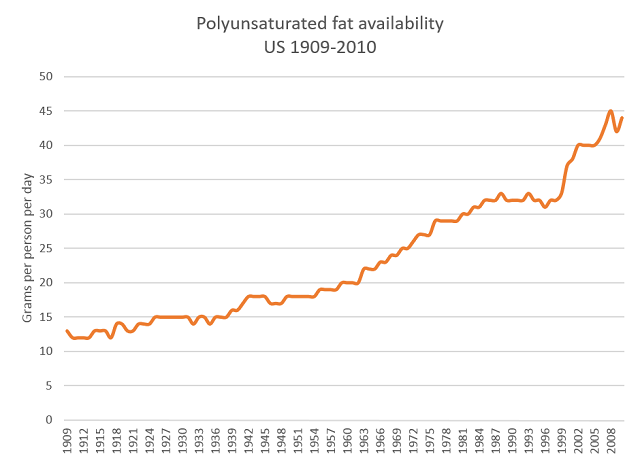
The oxidative damage caused by consuming vegetable oils is random in its effect. It is not just the genes involved in childhood cancers which suffer harm. Damage can, and does, occur throughout the entire DNA carried by the sperm.
The most common genetic abnormality in infants is Down Syndrome. And the occurrence of Down Syndrome have been steadily rising in line with our consumption of vegetable oils. In just the two decades between 1985 and 2004, the percentage of Down Syndrome affected pregnancies doubled in the UK. In Western Australia (the only Australian state which keeps reliable data) the rate over a similar period almost tripled.
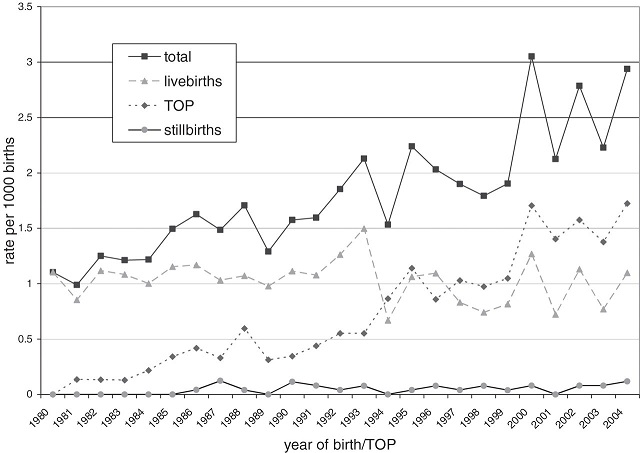
Down syndrome births, stillbirths, and terminations of pregnancy (TOP) per 1000 births in Western Australia 1980–2004.
The next most common genetic abnormality in infants is Autism (a group of developmental diseases associated with damage to over 100 genes). Autism rates in the UK have increased ten-fold since the 1950s and similar increases have occurred in the US. In the US the rate of autism spectrum disorders more than doubled between 2000 and 2010 alone. There is no reliable Australian data on this, but researchers estimate that Australian rates are similar.
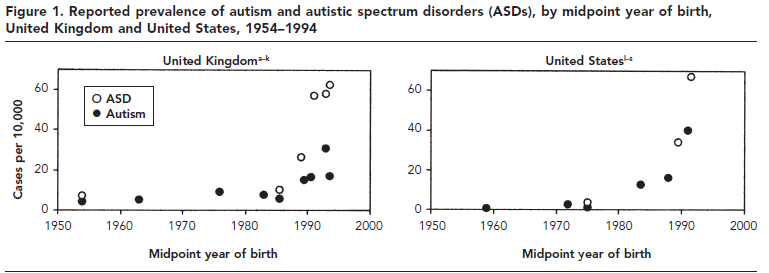
While it is likely that changes in the definition of autistic disorders are partly responsible for some of this growth, detailed analysis of the data has revealed that the increase is, regardless, very real and very large. We aren’t just getting better at diagnosing autism, there is a lot more of it to diagnose.
Childhood cancers, Down Syndrome and Autism are the diseases which affect the most children (and therefore the ones for which we have the best data), but the trends are starting to become visible for all similar genetic diseases (and there are very many of them).
We are in the midst of a massive acceleration of diseases driven by oxidative DNA damage (and to a lesser extent by age-related mutations). It is getting worse day by day and it has truly appalling consequences for everybody who is affected.
But there is a glimmer of hope. We can turn these horrible trends around. We just need to do three things, don’t smoke, don’t eat vegetable oils and don’t delay childbearing.
There is just one other thing we need to do. Be very careful about circumventing our body’s attempt to destroy defective sperm. That is the subject of the next part in this series.
Get all the studies mentioned in this series here

How Vegetable Oils are Stealing our Future – Part Four
Part 4 – The Male Biological Clock
In Part Three of this series I showed how the rapid increase in our consumption of vegetable oils lies behind the explosive growth in childhood cancers during the last century. In this part I look at the other genetic diseases of childhood which research indicates are caused by eating foods containing those oils.
Sperm membranes need to be made from polyunsaturated fats to do their job well. This means they are also highly susceptible to damage from oxidation. The solution is to make them in huge numbers and kill off any that are damaged. Normally that works well enough, but occasionally a sperm with damaged DNA will escape the cleanup process and go on to fertilize an egg.
There are three known ways we can significantly increase the risk of damaged sperm getting through. We can use the sperm production system beyond its best-before date, we can significantly increase oxidative stress on the system and we can bypass the defences using reproductive technology.
Sperm from blokes that are too old
DNA damage accumulates with time. The older a man is, the more damage to his reproductive DNA will have accumulated. He can continue to produce semen until his last gasp, but the quality of the sperm contained in it declines dramatically after his 35th birthday.
The amount of DNA damage in sperm of men aged 36–57 is three times that of men under 35. A man more than 40 years of age is much less than half as likely to conceive as a man under 40.
Childhood diseases related to DNA damage are significantly increased in line with the age of the father. These diseases include childhood cancers, Down Syndrome, Schizophrenia and Autism. This is the reason why the age of sperm donors is limited to 40 years in in both the UK and the US and 45 in Australia.
There is now a strong trend towards older fathers. By 2010 the median married Australian father was 34 years old (30 for an unmarried father) and had increased by 3 years since 1990 alone.
That trend is undoubtedly driving part of the growth in the diseases, but it alone cannot account for the rapid recent acceleration.
Sperm damaged by Oxidative Stress
We can significantly increase DNA damage by ramping up oxidation in the body. Smoking is a well-studied source of increased oxidation. But the research is now telling us that oxidation of the polyunsaturated fats we eat (in the form of Vegetable Oils) are a much more significant concern. When these fats inevitably become part of the cell membrane of sperm, they provoke a state of oxidative stress at least as bad as that observed in smokers.
Only 13% of Adult Australians smoke but all of us eat Vegetable oils (whether we know it or not). Vegetable oils are the cheap oils extracted from seeds and legumes which now make up almost all of the fat in processed food. They include Canola (Rapeseed), Sunflower, Cottonseed, Grapeseed, Rice Bran, Peanut and Soybean oils. We are consuming more of them now than we have ever consumed before in the entire history of humans on this planet.
The oxidative damage caused by consuming vegetable oils is random in its effect. It is not just the genes involved in childhood cancers which suffer harm. Damage can, and does, occur throughout the entire DNA carried by the sperm.
The most common genetic abnormality in infants is Down Syndrome. And the occurrence of Down Syndrome have been steadily rising in line with our consumption of vegetable oils. In just the two decades between 1985 and 2004, the percentage of Down Syndrome affected pregnancies doubled in the UK. In Western Australia (the only Australian state which keeps reliable data) the rate over a similar period almost tripled.
Down syndrome births, stillbirths, and terminations of pregnancy (TOP) per 1000 births in Western Australia 1980–2004.
The next most common genetic abnormality in infants is Autism (a group of developmental diseases associated with damage to over 100 genes). Autism rates in the UK have increased ten-fold since the 1950s and similar increases have occurred in the US. In the US the rate of autism spectrum disorders more than doubled between 2000 and 2010 alone. There is no reliable Australian data on this, but researchers estimate that Australian rates are similar.
While it is likely that changes in the definition of autistic disorders are partly responsible for some of this growth, detailed analysis of the data has revealed that the increase is, regardless, very real and very large. We aren’t just getting better at diagnosing autism, there is a lot more of it to diagnose.
Childhood cancers, Down Syndrome and Autism are the diseases which affect the most children (and therefore the ones for which we have the best data), but the trends are starting to become visible for all similar genetic diseases (and there are very many of them).
We are in the midst of a massive acceleration of diseases driven by oxidative DNA damage (and to a lesser extent by age-related mutations). It is getting worse day by day and it has truly appalling consequences for everybody who is affected.
But there is a glimmer of hope. We can turn these horrible trends around. We just need to do three things, don’t smoke, don’t eat vegetable oils and don’t delay childbearing.
There is just one other thing we need to do. Be very careful about circumventing our body’s attempt to destroy defective sperm. That is the subject of the next part in this series.
Get all the studies mentioned in this series here