
Rachel Barenblat's Blog, page 207
November 16, 2012
One from the archives: Preparations, a Shabbat poem
Here's one from the archives, written in 2001. Shabbat shalom to all!
PREPARATIONS
Breathe deep, from the belly,
as if for singing.
Notice your vertebrae, the curve
where spine tilts to pelvis,
and inhale everything into place.
Blanket the mind
as trees blanket grass with leaves.
Drape woven wool over
every sharp worry and task.
They'll survive a night without you.
Drizzle cornmeal on cookie sheets
like a sand painting
of the chaos in which creation begins.
Let challah dough rise and fall
like slow breathing.
Tonight the sky arches
like bent boughs roofed with cloud,
spangled with constellations.
The Breath of Life spreads peace
over creation.


November 14, 2012
Unexpected gifts
At an airport restaurant in Boston I withdrew my kindle from my bag. It's the kindle Ethan gave me when Drew was born; I think of it still as "the nursing kindle," because it made possible the act of reading-while-nursing (and, even more importantly, reading while my sacked-out son slept on me.) Reading a book while holding a sleeping infant was impossible; the crinkle of turning pages (not to mention the movement) would wake him straight away, but the small thumbclick of the "next page" button didn't. It was a godsend.
Anyway, last week I purchased a few books I've been wanting to read -- Ted Conover's book on roads, Anne Lamott's journal of her grandson's first year -- and last night as I sat down for a sandwich before my flight, I pulled out the kindle, ready to read. Alas! The screen was broken. I fiddled with it for a while, but it was pretty clear: this was, as Monty Python might have said, an ex-kindle.
I hastily downloaded the books onto my phone (now doing triple duty as phone, camera, and e-book reader) and resolved to look into the kindle paperwhite when I got home. Then it was time for the transatlantic flight. The so-called "sleep" over the ocean is better left undescribed. Upon arriving at Heathrow, though, a real gift was waiting: breakfast with my parents.
My parents live in Texas, where Drew and I visited them a few weeks ago. Long story short, they're joining some friends on a tour of (parts of) India this month. To make the travel and the shift in time zones slightly easier for them, they flew into Heathrow a day before the rest of their group and spent the night in an airport hotel, getting a good night of sleep in a real bed before embarking on the eight-hour flight to Delhi. As it happened, they had a few hours of layover between waking up in their airport hotel and departing for India. And those few hours matched precisely the few hours of my layover between one flight and the next!
Even though it had sounded as though the stars might be aligned for us, I was dubious. (For one thing, there's a transportation strike in Barcelona which had caused my first flight to be canceled; though the airlines claimed they were rebooking me on a later flight, who was to say it too wouldn't disappear?) And Heathrow is enormous. Who was to say we would actually be able to find each other, even if our layovers did magically overlap?
I didn't entirely believe it was going to work until I saw my mother standing outside a Duty Free shop. What a joy, to see my parents in this unlikely way, so far from home! We found a place which served oatmeal (just the thing for our slightly travel-addled systems) and we talked about their trip and my trip and how incredibly blessed we all feel to be able to do this travel at this moment in our lives. They'll see a few things in India which Ethan and I saw on our 2002 trip (I told them to keep an eye out for the monkeys at the Taj Mahal at sundown), though they'll also see places I didn't get to go. And I'll see things in Barcelona which will be new to them (it's a city they haven't yet visited), though our trip will be far shorter than thers -- a mere 3.5 days, attached to Ethan's speaking obligation at News X Change.
When we saw our gates listed on the overhead board, we regretfully hugged and parted ways, wishing wished one another bon voyage. "Enjoy every moment," we said to each other, and beamed.What a sweet little interlude. The chance to sit down for breakfast with my parents is rare enough now that I live a thousand miles away, but the chance to do so in London, as our paths temporarily crossed on our various arcs across space and time zones? Priceless.
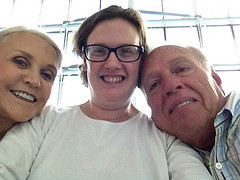
Breakfast at Heathrow with Mom and Dad!
November 12, 2012
What I cherish about shiva
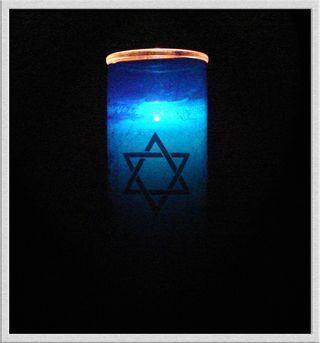 Is it strange to say that I cherish shiva minyans? Of course, a shiva minyan means that people are grieving. In that sense, I can't say that I look forward to them. But loss and death are a natural part of every life. We can't imagine them away, no matter how we might want to try. And given that reality, I find the custom of sitting shiva, and of convening a shiva minyan, to be both meaningful and sweet.
The custom of the shiva minyan originated at a moment in time when it was presumed that all Jews prayed three times a day. Imagine that you're in the habit of daily prayer, and then you lose a loved one. There's a gaping hole in your life. Your heart and soul feel raw and bruised. You don't want to put on a fancy suit and high heels (or whatever your version of getting all dressed up might be) and venture out of your house in order to daven in community.
So we come to you, and you get to daven weekday prayers and say kaddish for your loved one, and while we're there, we also do our best to take care of you. Usually, in my experience, people brings food. There are hugs. People will sit together with the mourner(s) and listen to them talk about the person who has died. Sometimes we look through photo albums and we tell stories. We cry and we laugh in remembrance. And -- traditionally -- the next night, we gather and we do it again. And again, until the first week of mourning after the burial is through. Sometimes we talk. Sometimes we sit in companionable silence. The conversation ebbs and flows. And at the appointed time, we pray.
Ma'ariv, the evening service, is short and sweet. It's very like the morning service, though there's an extra blessing after the shema, the hashkivenu prayer, in which we bless God who spreads a shelter of peace over us at evening when we go to sleep. There is something particularly poignant, I think, about davening the evening service (including that hashkivenu prayer) in a shiva house. Sleep, says the Talmud, is 1/60th of death; every night when we recite the bedtime shema and its prayer for forgiveness, we are clearing our spiritual slates in preparation for death. And there's a parallel between the way that we ask God to spread a shelter of peace over us as we sleep, and the way that we ask God to spread a shelter of peace over our loved one who has entered eternity.
Most of all, I just love that this is our custom when someone is mourning. We come to them. We comfort them with our presence as best we can. We pray with them. We give them the witnessing-community in which they can recite the mourner's kaddish, which never once mentions death, but which has rhythm and cadences which take me (take many of us, I suspect) into a different headspace and heartspace than we otherwise inhabit. There's nothing else one has to "do" during a shiva call, no fancy rituals or elaborate social expectations. It's really mostly about presence, about being present with and present to the person who has suffered a loss.
I find the shiva journey meaningful in all four worlds. In assiyah, the world of action and physicality, it's about being there, sitting with the person who has experienced the loss. (And in today's increasingly interconnected world, when we may have loved ones around the globe, I've known people to pay shiva calls via Skype. Telepresence is meaningful, too.) In yetzirah, the world of emotions, it's a chance to connect heart-to-heart. To open ourselves to someone else's loss, and to create a safe container in which the person who has experienced the loss can grieve. In briyah, the world of thought, shiva is an opportunity to reflect and remember together. And in atzilut, the world of essence, it's an opportunity to connect with the ineffable.
The traditional blessing spoken to someone who is grieving is המקום ינחם אתכם (Hamakom yinachem etchem), "May God comfort you." Or המקום ינחם אתכם בתוך שאר אבלי ציון וירושלים (Hamakom yinachem etcham b'toch sha'ar avelei tzion v'Yerushalayim), "May the Holy One comfort you among the mourners of Zion and Jerusalem." Some choose instead to say תנחמו מן השמים (tinechamu min hashamayim), "May your comfort come from heaven." But I appreciate the reminder offered by Rabbi Irwin Kula and Vanessa Ochs in The Book of Jewish Sacred Practices that "The right words -- which may be no words at all, just a rich, holding silence -- will come from our hearts." In a tradition so attached to words, I love this reminder that it's okay that sometimes our words may fail us.
This week's portion: The Blessing
THE BLESSING
All I wanted was for him to love me.
And I knew he couldn't. I reminded him
too much of himself: thin as tzitzit
with wispy hair and watery eyes.
I was always mommy's boy; Dad smiled
only for my rough and tumble brother.
Mom hung my watercolors on the fridge,
took me to the library on rainy days;
the two of them spent endless weekends
crouching in camouflage. They never asked
if I wanted to join. They knew I'd weep
the first time I turned a duck or a goose
from something living, flying, moving
into a limp pile of feathers and meat.
Then Dad got sick. His hornrim glasses
thickened til I could barely see his eyes.
His hands shook. He couldn't hold a gun.
My brother went out alone. I reread
books I already knew by heart, too numb
to imagine the change I knew was coming.
I never met my grandpa, though I heard
he went a little crazy once, almost
killed his younger son. I wish I could ask
whether Dad was scared, if he cried...
And now Mom comes upstairs, Dad's lunch
neatly arranged on a tray, the sweater
my brother likes best draped over her arm.
The wool is bulky and smells like smoke.
I barely recognize myself in the mirror.
I take the tray to the darkened study
where we've stashed the rented hospital bed,
I place it gently on Dad's bony knees.
When he reaches out I can't breathe.
I want him to know who's standing here
and to love me anyway. Is that you? he asks.
His voice is tremulous; I swallow hard.
It's me, dad, I tell him. I'm here.
The rest of my life I'll remember
his papery hand on my arm. I'll never know
whether he knew which son he blessed.
This poem arises out of this week's Torah portion, Toldot. It draws substantially on the Torah teachings of Aviva Zornberg; I drafted this after studying the chapter on Isaac's blessing of Jacob in The Murmuring Deep, which the local Jewish clergy Torah study group spent the last year reading together.
Our conversation, when we read Zornberg's chapter on this story, took us into some deep places: the nature of love and the nature of blessing, the essential tragedy of Jacob yearning both for his father to bless him and perhaps, also, for his father to recognize his deception and know who he truly was. What might it have been like to grow up as Isaac's sons, and to be the one who knew their father loved the other one better? Was Isaac's inability to love Jacob related to his own childhood trauma, the akedah?
As I imagined the scene, I pictured them as a modern family, and this is the poem which arose. All feedback welcome.
(If you enjoy this sort of response to the parsha, you might enjoy 70 faces, my collection of Torah poems, published by Phoenicia in 2011.)
November 11, 2012
Charlotte Mandel's The Marriages of Jacob
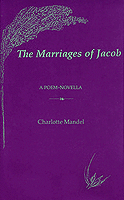 Charlotte Mandel's The Marriages of Jacob (Micah Publications, 1991) is a "poem-novella" which explores the story of the Biblical patriarch Jacob and his wives, and it is extraordinary.
As a reader, I relate to this volume on at least two levels. It's been more than thirteen years since I finished my MFA at Bennington, but I'm still interested and invested in contemporary poetry. So on the one hand, I approach this collection as a poet and a reader of poetry.
And my other set of lenses is my love of Torah and of the midrash which flowers-forth from Torah. I cherish our stories and the wealth of commentary which form the core of our tradition. I'm interested and invested in stories from Torah and in their various retellings.
This collection moves me and inspires me on both of these levels. I appreciate the craft of this poetry, Mandel's choices of word and turn of phrase. And I appreciate the love of this scriptural story which led her to write these poems, and the ways in which she fleshes out Torah's sparse narrative into something multifaceted, three-dimensional, and real.
Longtime readers know that writing Torah poems is part of both my creative and my spiritual practice; I wrote one every week for a few years, and collected the best poem for each parsha into 70 faces (Phoenicia, 2011). But I've never gone as deeply into a single story, a single Biblical narrative, as Mandel does here. Here's how the collection begins:
Silence veils this bride
no less than her lowered hood
sewn with seven stems of silver wheat
Seven years this virgin groom
has buried his fists in her father's harvests,
bound sheep's wool into humps
A bargain -- the heat of his body
for the fragrance of Rachel,
Laban's daughter.
A swollen moon,
thorned stars and fruitful vines
pattern the roof of the wedding tent
loomed by the hummingbird fingers
of girls too young to have bled.
Her bearded brothers are grinning
with closed lips at their father's wit:
"Did he not ask
for my daughter, and do I not give him
my daughter Leah?"
I like the alliteration and assonance of "sewn with seven stems of silver wheat," of "buried his fists in her father's harvests," of "loomed by the hummingbird fingers." (And what images! Fists buried in the thick springiness of wool, weaving fingers flying fast as tiny birds.) And I like the visual prosody of the turn at the middle of the poem, the indented line a hinge between the first half and the second, between one part of the story and the next.
Here's another one I really like. Take note of the earthy physicality of this poem, the fertility and pregnancy imagery, once again the use of repeated sounds (hunger and hot, risen rounds, the bread and the broth, bondsman and bread):
There is always hunger
and the hot bread.
The bride has milled this portion's flour
crouched on her knees to drive the stone,
kneaded yeast dough with her fists,
baked risen rounds upon the upraised belly
of the clay oven.
There is the wedding broth of milk,
beaten eggs and crushed almonds
sweetened with drops of date honey
the gift tray of woven reeds
set with Sumerian glazed bowls.
The bread and the broth steam to their nostrils.
A knot eases / another enters the weave /
Jacob the bondsman eats Leah's bread.
Some of these poems arise out of Leah's story; others, of course, out of Rachel's. Here's one of my favorites among the Rachel poems:
Kicked by a goat's hoof, a stone
ricochets, bruising her sandalled heel.
A bluish sickle moon
floats in barren twilight.
A trickle of monthly flow
stains her groin.
As a boy might do, Rachel
picks up the stone
and hurls it at the sky's hated
ghost calendar:
Plant lentils at the full
wheat at the dark
barley under the horn
Plant a son
as the husband wills
The folk-wisdom tone of the final stanza is a good reminder that our ancestors lived by agricultural measuring of time. And I love the image of "barren twilight" for Rachel, and "the sky's hated / ghost calendar."
Leah and Rachel aren't the only wives, aren't the only mothers, in this part of Torah's tale. Here are the stories of the handmaidens Bilhah and Zilpah, too. (One poem begins "If Zilpah weeps, no one sees or hears.") Another shows all four women working the same loom, each of the four singing her own creation story in her own tongue, her own idiom. I like that this collection gives voice not only to the two daughters of Laban but also to their handmaidens, foreign girls, servant-girls, who give birth on their mistresses' behalf. I appreciate that Mandel is mindful of the women who are so often doubly-erased.
Here too are Rachel's enduring sorrow and frustration at her inability to conceive, intertwined with poems which walk the path of labor with her sister Leah and the midwife. (Having myself borne one child, those poems move me someplace deep with memory.) And finally we read, in Mandel's words, the poem of Rachel's giving birth:
Rachel labors during a night of rain.
Beside houses and tents,
all cisterns upturned to the sky
fill with blessing.
Within the fold, drinking troughs brim over.
This is a night of births
among the animals --
by morning, seven ewes
lick the cauls from blind
trembling eyelids, limbs unfold
like broken sticks made whole.
According to custom,
no man enters the birthing tent --
but Jacob,
drops of rain scattering from his shepherd cloak,
eleven times a father --
for the first time, gazes
into the eyes of a newborn son. Motionless,
engraving each other's faces
on the tablets of their lives,
they hear Rachel's voice naming:
Joseph.
I like her choice to work with water imagery. Rain in the desert can indeed feel miraculous. Notice, too, the number seven (which recurs throughout this story -- Jacob's seven years working for each wife), the mention of blindness and eyelids (some hold that Leah's "soft eyes" mean she couldn't see, or couldn't see well), the vivid description of bony lamb's knees. And oh, "engraving each other's faces / onto the tablets of their lives" -- what an extraordinary description of the patriarch holding his newborn son for the first time. Every time I reread that I remember my own husband holding our newborn son.
Still later we get the sons of Jacob sitting, "a dagger's curve of youths // tough as desert palms;" Jacob's wrestle with the angel and his re-naming; the story of Dinah and Shechem; and, at the book's close, Rachel's burial by the side of the road. (I recently shared my own poem about Rachel's death -- Mother Rachel -- and it's interesting for me to juxtapose my imaginings with Mandel's.) On every page there is at least one turn of phrase which tugs at my heart, one poetic choice which makes me nod with recognition and appreciation.
These are powerful poems. This is a beautiful addition to its genres. I am so glad to have read it. I know I will reread these poems again and again.
The Marriages of Jacob, $12 on Amazon; here are other places where you can buy it, at prices ranging from $7 to $30.
November 10, 2012
Nice interview in the North Adams Transcript
The editors at The North Adams Transcript asked their religion writer, Seth Brown, whether he would write something about me and my blog. Seth and I had a lovely interview earlier this week, and the article is online this morning. Here's a taste:
The blog, Velveteen Rabbi, is about what Barenblat refers to as "Judaism writ large," which covers a wide range of topics including Torah, festivals, holidays, texts and poetry. More recently, her blog has also stretched to encompass a little bit about parenthood and life as a congregational rabbi.
"I think my blogging has changed as I’ve gone from being interested in the rabbinate, to moving through the rabbinic school, to now being a practicing rabbi,"
said Barenblat. "On the other hand, I’m still writing on a lot of the topics that captivated me 10 years ago. That’s a nice thing about Torah, God, religious practice and poetry -- they never get old."
Read the whole thing at the Transcript: Local rabbi's blog keeps conversation moving. Thanks, Transcript, and thank you, Seth!
November 8, 2012
Insights on Babel: how groupthink damages our relationship with God
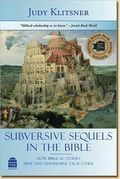 This year my clergy Torah study group is reading Judy Klitsner's Subversive Sequels in the Bible: How Biblical Stories Mine and Undermine Each Other. We've begun with the chapter which links the Tower of Babel with the story of the Exodus. So far we're still working our way through the first half of the chapter, which explores the Babel story. (Need a refresher? Babel on Wikipedia; Genesis 11:1-9 at Mechon-Mamre.)
The primary thing which has struck me, as we've been reading this commentary, is the extent to which the Babel story can be read as a commentary on the dangers of groupthink. "And all the earth was of one language and of one set of words..."
The commentator Naftali Tzvi Yehuda Berlin, known as the Netziv, writes:
We must understand why they [the builders of Babel] feared some people leaving for another land. This was certainly related to the devarim ahadim, the "one speech" among them. They feared that since not all human thoughts are identical, if some would leave they might adopt different thoughts. And so they saw to it that no one left their enclave. Anyone who deviated from the devarim ahadim, the "one speech" that was among them would be sentenced to burning...What emerges is...they decided to kill anyone who did not think as they did.
It's easy to think of this mythical era when all the earth was of one language and one set of words as a time of peaceful agreement. But the Netziv is drawing out what's sinister here.
Expanding on this theme, Klitsner writes:
There is much literary evidence for Netziv's hypothesis that the sin at Babel was the creation of a coercively conformist society... The insistently repetitive rhythms of the text point to a generation's intellectual and ideological homogeneity, in which every element of culture is mandated, from language and thought to meter and melody. Through structure and sound, this passage informs us that the sin at Babel is the achievement of consensus at the expense of individuality.
This isn't a matter of people finding consensus and agreement. It's more like being assimilated into the Borg, or the creepy unison ball-bouncing of the children of Camazotz (A Wrinkle in Time.) I'd never thought of the beginning of the Babel story in this way. The notion that God is somehow threatened by the people's intention to build a tower reaching the heavens has always seemed a little bit overblown to me, but the notion that God is troubled by the suppression of individuality -- that's a powerful idea.
Klitsner continues:
One aspect of the people's rebellion against God lies in their attempts at effacing the individual. Their attempts constitute a negation of God's plan for humanity to be unique as God is unique. But there is another facet to their mutiny. By quashing freedom of thought, the tower builders preclude any human-divine engagement...While religious behavior may be coerced or feigned, such acts by definition are meaningless. Religious worship has meaning only when the individual freely and sincerely chooses to submit to God's authority. By eroding the individual, the builders at Babel render impossible any hope of a human-divine covenant.
Without freedom of thought, no relationship with God is possible. I keep returning to that idea. We're called to live in relationship, in engagement, with the divine -- and we can't do that without choice and diversity and difference. Coercion and groupthink make connection with God impossible.
I resonate with the idea that in order for religious practice to have meaning, it has to be something we enter into willingly. Of course, I'm speaking in terms of practice and meaning, not in the terms she used (submission to divine authority). I think for many liberal Jews today, the language of practice and meaning is more accessible than the language of commandedness, much less the language of submission to something greater than ourselves. My question is always, how can I help open up the richness of the tradition such that more people will want to understand themselves as choosing to enter into relationship with God?
Anyway, I'm finding a lot of richness in this approach to the Babel story, and I'm looking forward to seeing how she reads Exodus as a commentary on, and/or a subversion of, the Babel narrative. If you've read Klitsner and want to share your response, or if you want to natter about these interpretations of the Babel story, feel free to chime in.
New toddler house poem, about waking early
DAWN IN THE TODDLER HOUSE
The wail -- wet pyjamas --
drags me bleary
past the flickering nightlight
at the red-eye crack of dawn
I wrap our cosiest blankets
at the wrong end of the bed
unwilling to flip the switch
and admit that it's daytime
but there's no more sleep
for either one of us:
I give up and make coffee
as early sun gilds the floor
Modah ani l'fanecha
living and enduring God
You wake me at 5:30
to remind me how good it is
to be awake
and to be dry
and to bring this mug
to my grateful lips
This is the latest poem in my occasional Toddler House series. Most, though not all, of these poems have appeared here at Velveteen Rabbi in draft. (The most recent was Morning Cartoons, Morning Prayer.) I'm keeping all of them in a single manuscript; I don't know if this will evolve into a full collection, but for the moment I'm enjoying how they play off each other.
The first Monday morning after the time change is always hard. Our little guy (not so little anymore; he's almost three!) goes to bed early and rises early, and though he hasn't batted an eye at going to bed an hour later than he used to (before the time change), he's also not sleeping any later than he used to, which has made this a week of earlier mornings than I might have strictly preferred. I'm aware, though, that sleeping through the night until 5:30 would have seemed unthinkable luxury when he was an infant.
Modah ani l'fanecha are the first words of the Modah Ani prayer, the morning blessing for gratitude. "I am grateful before You, living and enduring God: You have restored my soul to me with mercy; great is Your faithfulness!"
November 7, 2012
Shared hope
Democracy in a nation of 300 million can be noisy and messy and complicated. We have our own opinions. Each of us has deeply held beliefs. And when we go through tough times, when we make big decisions as a country, it necessarily stirs passions, stirs up controversy. That won’t change after tonight. And it shouldn’t. These arguments we have are a mark of our liberty, and we can never forget that as we speak, people in distant nations are risking their lives right now just for a chance to argue about the issues that matter -- the chance to cast their ballots like we did today.
We want our children to live in an America that isn’t burdened by debt, that isn’t weakened up by inequality, that isn’t threatened by the destructive power of a warming planet...We believe in a generous America, in a compassionate America, in a tolerant America open to the dreams of an immigrant’s daughter who studies in our schools and pledges to our flag, to the young boy on the south side of Chicago who sees a life beyond the nearest street corner, to the furniture worker’s child in North Carolina who wants to become a doctor or a scientist, an engineer or an entrepreneur, a diplomat or even a president. That’s the future we hope for.
I have always believed that hope is that stubborn thing inside us that insists, despite all the evidence to the contrary, that something better awaits us so long as we have the courage to keep reaching, to keep working, to keep fighting... I believe we can keep the promise of our founding, the idea that if you’re willing to work hard, it doesn’t matter who you are or where you come from or what you look like or who you love. It doesn’t matter whether you’re black or white or Hispanic or Asian or Native American or young or old or rich or poor, abled, disabled, gay or straight. You can make it here in America if you’re willing to try.
(Source: Transcript of President Obama's Election Night Speech.)
Amen.
Kallah 2013: Save the Date!
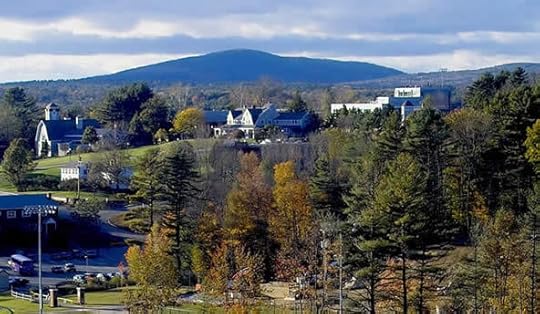
Franklin Pierce University, site of next summer's ALEPH Kallah.
Save the date for the 2013 Kallah, the Jewish Renewal biennial -- a week of community, learning, davening, singing, connecting, and joy. The 2013 theme is Kol Echad: Connecting With the Divine, Within & Around Us, and this year's Kallah will take place from July 1-7, 2013, at Franklin Pierce University in Rindge, New Hampshire -- a scant two hours and ten minutes from the synagogue I'm blessed to serve.
If you've ever been curious about Jewish Renewal teachings or teachers, coming to a Kallah is a fantastic way to get a sense for who we are and what we do. There's no better way to experience Jewish Renewal than to spend a week learning, dining, davening, connecting with other Jewish spiritual seekers. And this year, the Kallah takes place at a campus on a beautiful lake at the foot of Mount Monadnock -- it will be a beautiful and serene place to spend a few days, and the retreat will culminate in a fabulous, spirit-filled, awesome Shabbat.
I've submitted a proposal to teach at the Kallah next summer, and should know by the end of the year whether or not my proposal's been accepted. I'll be there no matter what. I hope to have the opportunity to teach (and I'm excited about the class I've proposed), but I'm most excited about spending that week with so many of my hevre, my friends and colleagues, and about the spiritual rejuvenation which always ensues.
Anyway: all are welcome! For more information, you can contact the Kallah office at kallahajr (at) rcn (dot) com. I'll post here again to announce the course offerings when they're finalized.
(For more, feel free to check out my ALEPH Kallah category on this blog, which features posts about and from the last few Kallot I've attended.)
Rachel Barenblat's Blog
- Rachel Barenblat's profile
- 6 followers

