Blake Charlton's Blog, page 2
May 22, 2013
May 2013 Spellbreaker Progress Report
Dearly Beloved Y’all,
I’ve been receiving more inquires about the progress on Spellbreaker and its expected publication date. The continued interest in the series and the notes of support mean more to me than I can express. Progress on Spellbreaker has been very good.
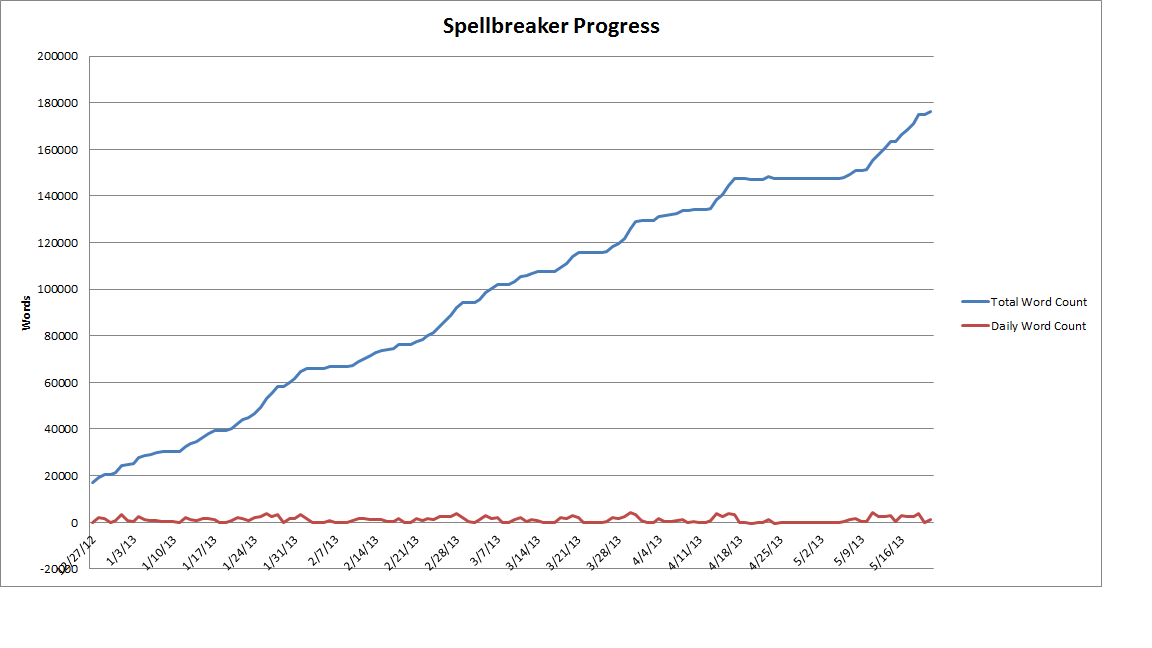
Back in January, I predicted I should finish in April with a word count of 140,000 on the first draft. I did indeed hit that word count in April; however, the story was determined to develop itself into something longer. This is partially because I’m telling a fuller story and delving more completely into the characters, but it is also because wrapping up a trilogy requires that all the loose ends be tied up to satisfaction.
Also, I must admit there have been a few distractions. I moved up to San Francisco, polished up a story for the Unfettered Anthology (which promises to be amazing), and knocked off an op-ed for the New York Times.
At the time of writing this blog, I’ve written 175,000 words on Spellbreaker and have 16 outlined chapters left. I would guess the final first draft will run about 220,000 words and the revision will come back down to about 200,000 words. That’s about 40% longer than the second book and makes it a good-sized, but not massive, epic fantasy.
Predicting a publication date is a dicey business at best. I should deliver a first draft to my editor next month. Depending on when the edits come back, I’ll need a few months to turn the manuscript around, especially if I am on a busy service in the hospital. After that, the publishers need time to package and print the books. All told, I think it’s safe to say the book won’t come out in 2013. Sadly. More regular updates, along with various internet shenanigans, can be found on my Facebook Author Page and my Twitter account.
I have gotten some very impatient notes, which I understand. I’m impatient with the process as well, and I can promise that I will be doing everything possible to get the best possible conclusion to this series out as fast as possible. Thank you kindly for bearing with me. Your support makes it all worthwhile.


March 15, 2013
Matched
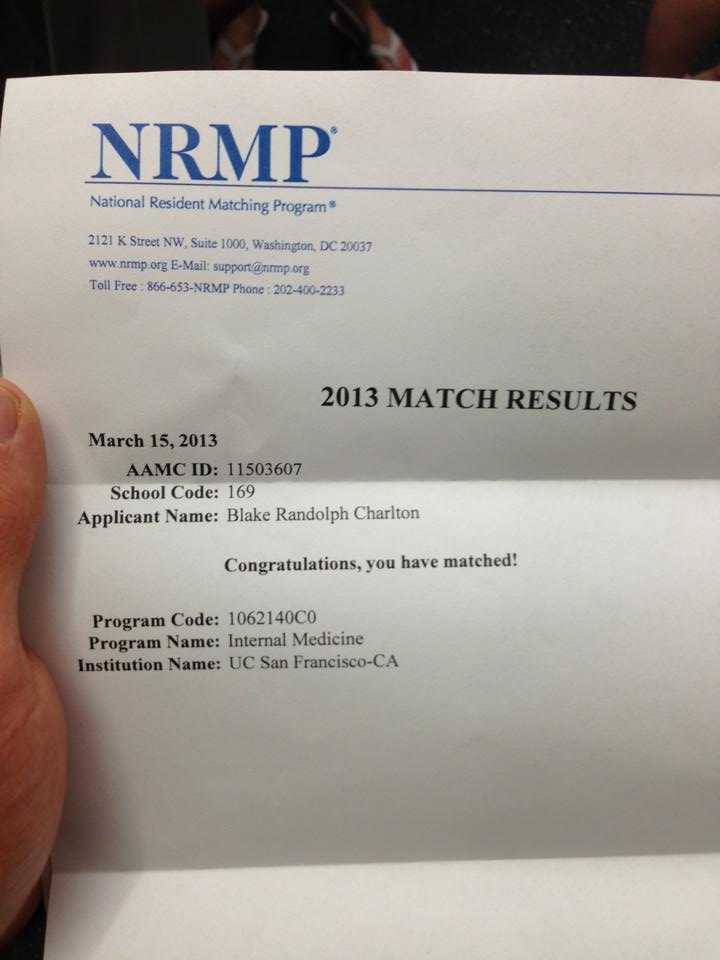
After so many years, exams, labs, reports, presentations, surgeries, sleepless nights, and deliveries, I have matched. I couldn’t be more thrilled. It has been a long, wild road from special ed to doctor, and I’m sure wilder paths lay ahead. The credit rests with my family and friends.
I’m honored that this June I will become a resident physician in internal medicine at the University of California, San Francisco…just after I turn in the next novel…of course.
Thank you all. I am so grateful.
.
February 5, 2013
Rank List Game Theory
Let’s play a game.
Assume you are about to enter a 3 to 7 year apprenticeship that will redefine your character, scramble your personal life, pay you ~$8/hr, greatly increase your risk of suicide compared to the average population, help you fulfill a life-long dream, and provide you with the privilege and responsibility to comfort and heal. Assume it is both wonderful and a little daunting.
You guessed it: We’re playing a game called “Becoming a Resident Physician.” It is one of the stranger games I have ever played, one that requires a peculiar, very personal calculus. Over the past few months, I have had many conversations with friends who are going through the same process and have been surprised by the diversity of approaches to the game. Anecdotally, it seems to me that the strongest forces within the game are family situation (which increases desire for a good location) and youth (which increases the desire for prestige). All this has made me very curious about how different people think about such situations. That’s why I’m interested what your approach might be. So, play with me?
Here is a very simple scenario:
1) Assume you must list, in order, your top three choices: Prestigious Hospital (PH), Unique Training Hospital (UTH), Good Location Hospital (GLH).
2) Assume that each hospital is excellent in its namesake quality and is satisfactory in the other two qualities. For example Good Location Hospital puts you in the city you most want to live in and close to your friends, family, loved ones; however, GLH has only satisfactory prestige and opportunities for unique training.
3) Caveats:
It cannot be known what effect the prestige of the hospital will have on your career; however, it is not likely to be deleterious.
Optimizing unique training is likely to provide you with a significantly more lucrative career and/or greater academic success overall; however, current and future healthcare reforms are likely to reduce the lucrativeness and/or research funding by an unknown amount.
Good Location provides easier access to places of interest, friends, family, loved ones; however, you will have very little time to enjoy these things.
Assume that all other things are equal (though they never really are).
So, that’s it: PH vs. UTH vs. GLH. What’s your rank list and why?
As you might guess, I’m in the process of finalizing my rank list, which will be finalized February 20th. Then a computer somewhere in Baltimore, or so I am told, will take all the lists of applying medical students and all the lists of students desired by hospitals and create the “Match,” assigning one student to one hospital. The commitment is binding. One must, the following July, report to the hospital at which one matched or one will not become a physician. On Match Day, March 15th (beware the Ides of March!) every medical student in the US and Canada will be given an envelope, and at the exact same hour, all across the continent, we will open our letters and discover where we will become physicians.
February 4, 2013
January 2013 Spellbreaker Progress Report
Dearly Beloved You Guys:
I hope that 2013 is treating you gently you so far. One of my New Year’s resolutions was to be a better blogger in the coming year, which promises to be full of changes. Now that all the traveling and interviewing for residency positions has been completed, I find myself with few medical responsibilities other than fussing over my Rank List in preparation for Match Day. More about the strange, painful, and personal calculus that goes into that list in a later post.
Meanwhile, I have found myself once again a full time author. This will be the last time this happens for a very long time. Possibly ever. Not that I don’t have plans to write during residency, not that I don’t think my best books are still ahead of me, but never again will I be so focused.
To that end, I’m happy to report that (so far) things have been going very well with Spellbreaker. It’s shaping up to be a darker book than the previous two and perhaps a longer one, though not by too much. I hit the halfway point the other day and am genially excited to see how one of the first big conflict/reveal scenes turns out.
When imagining the setting for my novels, I often comb through yon interschnitzel for inspiring pictures. If you’re curious about the seeing the pictures that are inspiring my vision of the kingdom of Ixos and the city of Chandralu, you should click through to my Official Facebook Page, where I am posting them. (Do us a favor and hit the “like” button while you’re there, won’t you luv?)
For this book, I am also trying to be more quantitative about my progress. I have begun keeping a spreadsheet of my word count and graphing it out. It’s a bit nerdy/medical of me, but I find it’s good motivation and helps me think about the process of writing. So, here are the data:
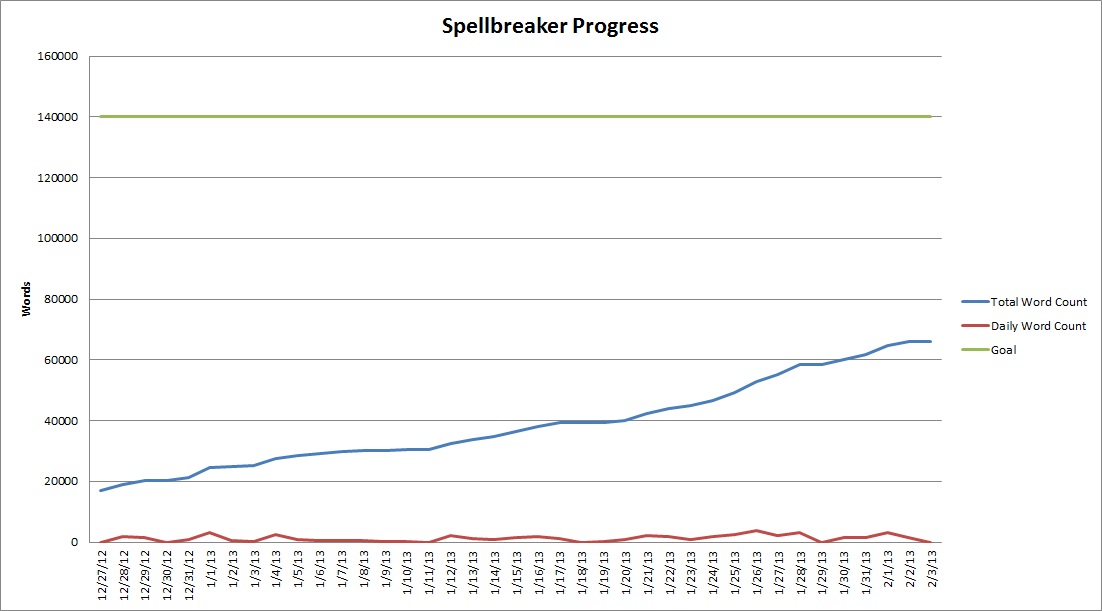
Word count for January: 37,281
Average daily word count: 1,202
Present total word count: 61,657
Expected total word count: 140,000
Estimated date of 1st draft completion: 10 April 2013
Estimated number of things that might go wrong and prevent me from making this deadline: ∞
The “zero days” are the roughest for me. They are mostly caused by family or professional responsibilities. Though you may notice that February 3rd was a Zero Day, which corresponds to the 49ers heartbreaking loss in Super Bowl XLVII. Sigh.
But so it goes. So it goes. Please keep all possible appendages crossed for me that the writing continues apace. Meanwhile, I’ll try to knock off another blog post in the next few days about the strangeness of putting in a Residency Rank List. Please check back as I’ll be curious for your input.
November 14, 2012
A Year of Endings & Decisions
Dearly Beloved You Guys,
It has been an embarrassingly long time since my last post. Since then I’ve finished medical school, the subsequent licensing exams, applied to residencies, watched some of the Spellwright books come out in more languages, and tried my best to make progress on Spellbreaker, however slowly. It has been a hectic and rewarding time. The thing that has suffered the most has been my correspondence. (If one of your messages is languishing in my inbox, bless you for your patience and hold on; I’m working my way through it.) The academic medical year starts and ends and July, so as we near the halfway mark of my last year of medical school, I believe I have correctly recognized this year as one of endings and of choices about the next round of beginnings.
Regarding medicine, I am currently on the interview trail for residency. So far, I have met some inspiring people and toured some wonderful hospitals. In a few months, I’ll form my rank list of desired programs and cross all my fingers that the concerned hospitals place me highly on their rank list. Sometime in the spring a computer somewhere in Baltimore–or so I have been told–will grind through all the medical student and hospital rank lists and try to match each to each. On March 15th, at the same time all across the country, med students will gather together to be given their match letters. At the same time, we will all open our envelops to discover where we will restart our lives, this time as doctors…
Regarding writing, I am also facing an ending. Twelve years after penning the first line of Spellwright, I am ending the trilogy. It seems to me that each book in a series presents unique problems. A first book has to tell a complete story while at the same time sowing the seeds for more books. A second book continues the series but must tell a complete tale unto itself even though it lacks a definitive beginning or ending. A final book has to tie up all loose ends but cannot do so in any predictable way. I have known since I started Spellwright what will happen at the trilogy’s end; however, my ability to portray that ending and what that ending means to me has evolved. For those who have followed the series, I very much hope the completed book will be both satisfying and more than a little surprising.
Of course an ending requires a new beginning. As I wind this series down, I have put one or two things afoot for my fourth book. At this point, I can say only that it will be something different than the Spellwright Trilogy. I’ll be sure to report more details later…possible much later…
June 29, 2012
An Answer for George R. R. Martin about D&D, Dice, & Getting Lucky
Dearly Beloved You Geeks:
If you’ve been around me lately, you’ve likely noticed that I’m glowing. Literally. Turn out the lights, my head would be a faint ball of pale light. This isn’t because I am extremely bald and white (both of which, with bad hair genes and a name like Blake Randolph Charlton, I am). This is because I am so effing happy that I might be slightly radioactive.
Why the radiant, and potentially carcinogenic, happiness? A few days ago I sat on a panel at the American Library Association’s national conference with the right and honorable Lois McMaster Bujold & George R. R. Martin. I managed to avoid having a fanboy meltdown around ether one of them. Clearly, it was a highlight in my career so far.
Anyway, during the Q&A session, a reader asked if D&D influenced our work. George talked about how his role-playing game lead to the start his Wild Cards series. I talked about how D&D allowed me to participate in storytelling when I was illiterate. I also, briefly, reprised my argument that D&D provided an excellent preparation for medical school by requiring probabilistic thinking. Deciding to toss a 7d6 fireball into a room of orcs or to load a febrile little old lady with vancomycin & piperacillin-tazobactam…well…the result of either comes down to a roll of the dice, to getting lucky.
George, to general laughter, remarked that it was too bad it didn’t work that way with our personal lives. “You can’t just roll the dice to get a date.”
Just to be a consummate snot, I said “You sure about that, George?” It got a brief laugh, GRRM included. But later, when I was lucky enough to attend dinner with George, he laughed and said, “All right, Charlton, one day, you really are going to have to explain how you can roll dice to get a date.”
Well, I have to admit my D&D game is rusty; I had to put aside many of my favorite hobbies (videogames, TV, & movies included) when I started chasing this MD novelist star. But, if memory serves, George, I think this is how it still might work.
1) Shop around for a good co-ed game.
2) Treat the girl who’s caught your eye with three times more respect than geeky’s generally chauvinistic culture treats her.
3) Ask her out to dinner and then put a d20 in her hands and ask if she’d like to roll for a saving throw against your charisma.
So there you go, George, that’s what I got. I’m probably forgetting my AD&D rules. But, regardless, if Parris is ever playing a paladin and you a snarky halfling hand of the ki…err…thief, and you want some backup, just send a line my way. I’ll be your wingman anytime.
June 26, 2012
Guest Post: D.B. Jackson on History, Fiction, & Fantasy
Dearly Beloved You Guys: Today I’m proud to welcome a fine writer and gentleman, D.B. Jackson (blog facebook twitter), to describe how he escaped academia to write his new forthcoming historical urban fantasy set in the American Revolution. It’s titled Thieftaker (sample chapters here). I’m pretty thrilled with the post D-Jack kindly submitted below & with the _amazing_ photo of D-Jack in grad school. (Wait for it…Facial hair & pastels. If you know anything about history, you’ll know that is how manliness has been done right through the ages, son.) Me, personally, I’m excited for Thieftaker (though I would have titled it “Kickass American Flintlock Fantasy,” because that’s what it is) and I’ve crossed my fingers that we get an audiobook very soon.
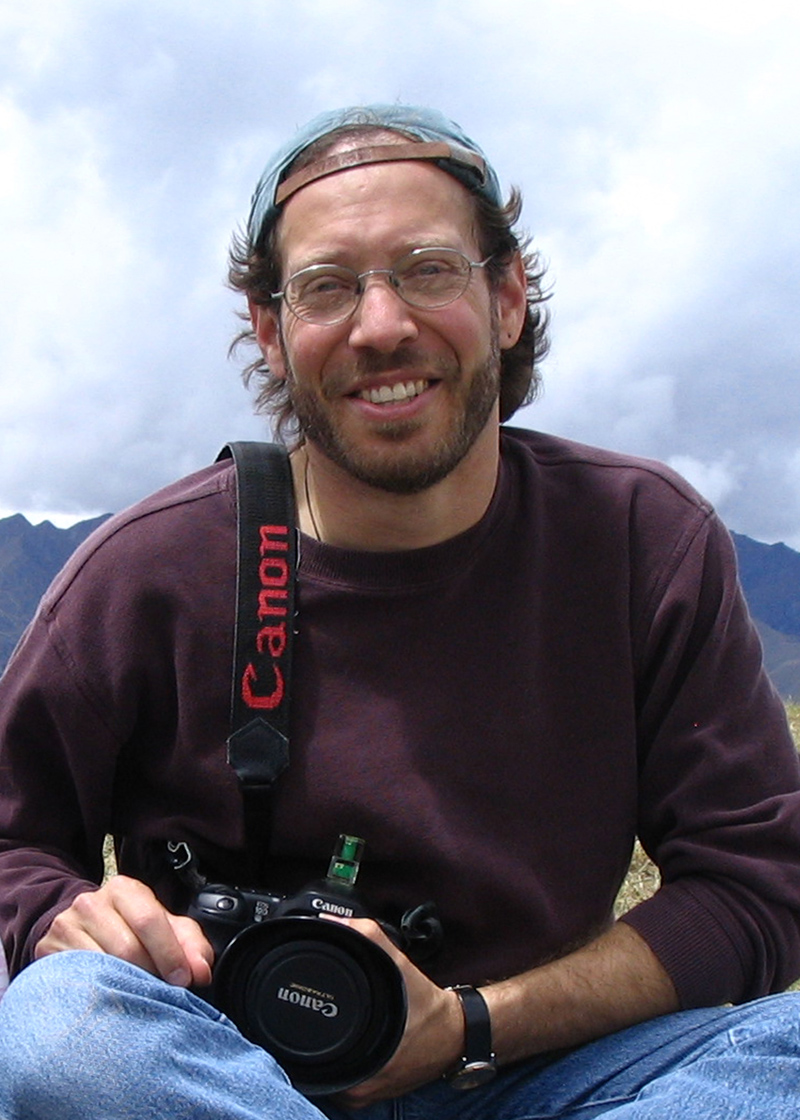
D.B. Jackson
I have a new book coming out a week from today. It’s called THIEFTAKER, and it’s the first book in my Thieftaker Chronicles, a historical urban fantasy series that I’ll be writing under the name D. B. Jackson. Now, all of my books are special to me; as with my children, I would never want to choose one over another as the one I love best. With my children, I prefer to put in place a sort of parental tithing system where they pay me in presents and cash in order to “earn” my love and approval. But while that works with kids, it’s far less effective with books, which, as it turns out, are inanimate. But I digress.
Though I love all the books I’ve written, the fact is that THIEFTAKER holds a special place in my heart, because it has allowed me to combine my interest in U.S. history with my longtime passion for fantasy.
Confession time: I am a refugee from academia. I have a doctorate in U.S. history that I earned a long, long time ago, back when history was known as “news.” I bring this up because I thought it would be particularly appropriate today, when I’m posting at Blake’s blogsite, to write about what my graduate school background has done for my writing. If anyone can understand the dual threads of writing fiction and working toward a graduate degree, it’s Blake, who, while quickly establishing himself as one of the rising stars of the fantasy genre, is also working his way toward his medical degree.
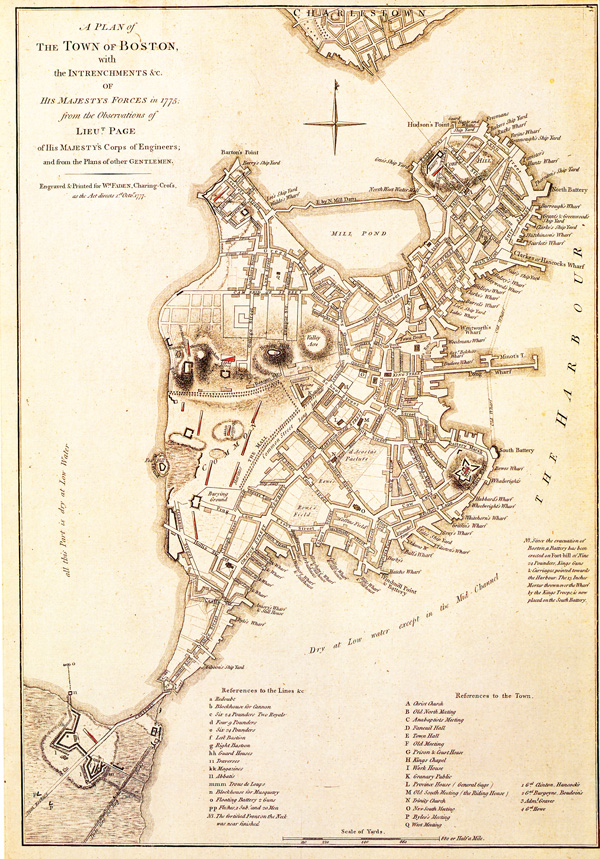
1775 map of Boston courtesy of the Norman B. Leventhal Map Center at the Boston Public Library.
Actually, as Blake can tell you, writing fantasy and being a graduate student have a lot in common. And I’m not just referring to the pay scale. They both demand a commitment of years in something akin to an apprenticeship. Those who enjoy immediate success in their writing careers are the exceptions to the rule. Usually it takes some time for an author to establish him or herself. And during that time, the author — like the graduate student — is sustained almost entirely by passion for the work, the fellowship of others following this path, and faith that ultimately the rewards of the career will justify the early struggles. Of course, Blake is going to be a medical doctor, which means that he can write fantasy AND pay the mortgage. As a historian I wouldn’t have been able to do that. Nor would I have been able to prescribe drugs. Meaning that he’s not only younger and better looking than I am, he’s also smarter. I hate the guy.
For me, the graduate school path didn’t work out as I had expected. I managed to get my degree, but by the time I finished my studies, I knew that it wasn’t the right life for me. I left academia to become a fantasy author, something I had aspired to since high school, but had assumed was beyond my reach. I got lucky and published a book, which was soon followed by more books. And for many years I felt that I needed to stay as far from history as I could, as if my mere proximity to the subject might allow the academic world to suck me back in. Only as I began to map out the Thieftaker books, and realized (with help from my editor, who also happens to be Blake’s editor) that they would work far better as historical fantasy than as alternate-world fantasy, did I begin to admit to myself that in fact I had missed history. I didn’t miss the academic life, I didn’t regret for a moment my decision to give up a career as a historian. But I finally allowed that there was a reason I had chosen to go to graduate school in the first place. And in acknowledging the power of that old love, I came full circle.
The history in the Thieftaker books is more than a backdrop to the stories. Each novel is a stand-alone mystery built around a key historical event in the years leading up to the American Revolution. So, for instance, THIEFTAKER opens on the night of the Stamp Act riots. While a mob rampages through the streets of Boston, a young woman, the daughter of a wealthy merchant, is found murdered. The royal authorities wish to blame the ruffians abroad in the city, but our hero realizes that she has been killed by a conjuring, and soon he is drawn into an intrigue of politics and magic. Blah, blah, blah. The point is, my fictional narrative is interwoven with the actual history of the riots and their aftermath, and with each subsequent book, another story line is tied to another set of historical circumstances.
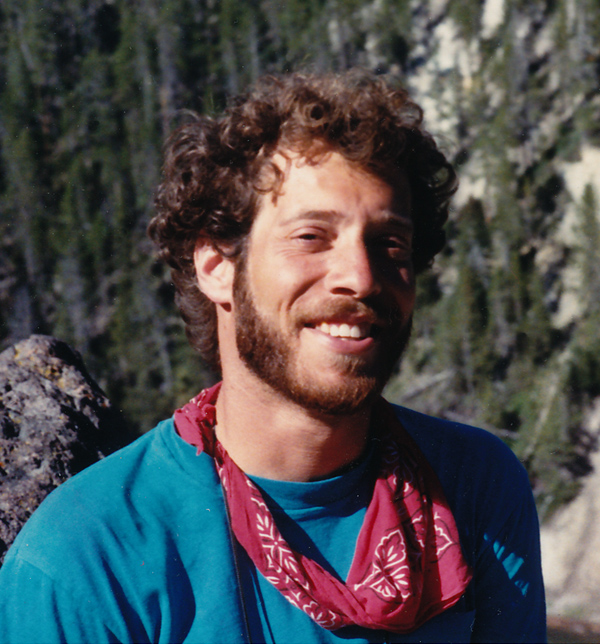
Real American Men Wear Fusicia.
Writing these books finally allowed me to avail myself of some of what I learned as a history graduate student and to use that knowledge in a fantasy novel. Obviously, a writer doesn’t need a Ph.D. in history to write historical fantasy, but I do think that my academic background has been incredibly helpful to me as I’ve researched and written THIEFTAKER, its sequel (THIEVES’ QUARRY, due out in 2013), and several related short stories. My familiarity with historical literature has allowed me to find the sources I need far more quickly than I might have had I not spent so many years in study.
More, I’m certain that working toward my degree gave me the discipline I’ve needed to be a successful writer. There are lots of writers out there who have as much talent as I do — many have more. But writing my dissertation, which was far, far less fun than writing my novels, trained me to write on demand, to put my butt in the chair even on those days when I wanted nothing at all to do with writing. It also trained my mind, teaching me to find narrative in seemingly disparate and unrelated events. That’s a valuable skill not only for academics, but also for fiction writers, who often have to tie together subplots in innovative and unexpected ways.
Now obviously, aspiring writers do NOT want to go to graduate school for six years in order to make themselves more productive writers. The mere idea rises to a level of masochism that is utterly breathtaking. The skills that being a grad student taught me can be learned without doing anything that foolish. For example, you want to be more disciplined? Word counts are your friend. Set a goal for the day — if you’re writing full-time 1,200 words/day is a good place to start; if on a typical day you have only a few hours in which to write, adjust that number accordingly. (If you find these numbers too easy to reach, push the count higher.) And then make yourself meet that goal each day. Only allow yourself to wander from your computer or check your email or surf the web when you reach certain word totals. Maybe work in 200 word increments. You get to check email at 200 words. You get to visit Tumbler at 400. Need a snack? You can have one when you reach 600. And so on, until you meet your goal.

Art for “A Spell for Vengeance,” a D-Jack short, first appearing on Tor.com. Illustration by Chris McGrath.
Looking for innovative ways to tie together your sub plots? I would suggest that you start with notecards. Really. Different colored ones if possible. Blue for one plot line, yellow for another, white for a third. And then use those cards to keep track of the characters involved with each, the setting where each takes place, the broader themes and implications of each. Make a story line of sorts with your cards and look for places where your different plots intersect. You may find places where you can bring together characters from two different threads, or you may find that you need to introduce a new character or plot twist in order to link one to another. But using those cards may allow you to see connections, or potential connections, that might not have occurred to you previously.
For all the jokes I’ve made about graduate school, I have to admit that I’m glad I spent those years studying history. I learned a lot, and I met the woman of my dreams. If I hadn’t studied history, it might never have occurred to me to write THIEFTAKER, and that truly would have been a shame. No, I didn’t wind up making a career of academia, and thank goodness for that. Instead, I found the path I was meant to take, and along the way I gained skills and knowledge that have served me well in my career as a fantasy writer. It’s hard to call that anything other than a successful grad school experience.
March 27, 2012
Zen & the Art of Invasive Medical Procedures
Crack the chest. Bury your knots. Spill some blood. Corporeal. Metaphorical. Open someone up and your every action seems to take on added significance. After ten weeks in the operating room, I have come to see simple actions—cutting, holding, sewing—as more than simple actions. I have come to wonder if the things we do everyday might carry extraordinary meaning. Consider how you peel an orange, hold a baby, tie your shoes. They are mundane actions, common gestures. But perhaps they make up who you fundamentally are.
It is an odd, very out-there statement. No, I wasn't high when I wrote this. Let me try to explain…
During my Month of General & Trauma Surgery, the importance of simple actions first suggested themselves to me. The steadiness of your hands is a measure of your care. How well you cut or suture is how well you might heal. Surgeons are not shy about telling you when your hands are unsteady, your suturing clumsy. Mostly you quietly, motionlessly attend to the surgeon, trying to integrate your actions into theirs. You often wait in such stasis for twenty or thirty minutes, until you can perform your singular task of cutting off the ends of a completed suture. As every surgeon knows, there are only two ways for a medical student to cut a knot: too short, and too long. Do it again, better. I spent more hours than I ever supposed a person might thinking about scissors. Their different weights, leverages. How to hold them. Where the blades best cut. In this motionlessness, this wordlessness, I saw that I existed for the patient only in so far as I cut well or poorly. I existed to my surgeon only in so far as I helped or hindered. How I cut the knot determined who I was in the OR. It was humbling, painful, thought-provoking.
My mother named me after William Blake. Like my namesake, I have trouble shutting up. The OR helped me shut up. As a boy, I often listened without comprehension to mother reading her favorite lines of Blake. Twenty years later, when quietly attending to trauma surgery, open heart surgery, brain surgery, I recalled those verses and for the first time felt the importance of seeing a world in a grain of sand, heaven in a wild flower, eternity in an hour…identity in a pair of scissors.
I began to see new meaning in bodies, both my patients' and my own. So much of the body has a parable to tell. Every human is born with a hole in the middle of their heart. It's named the foramen ovale. Most often it closes at birth. Sometimes it doesn't; it can be dangerous. A hole in the heart; you see the metaphor. Here's another. There are holes in your brain, large ventricles through which light fluid moves like unconscious thought. Another parable. We all start as flat characters. Pancake flat. It takes months in our mothers' bellies to grow a spine, get a heart, hold up our heads. These parables are powerful things. Cardiothoracic surgeons train for a very, very long time so they can say they fix broken hearts. Literally. Some days during open heart surgery, that particular metaphor felt like a poem; some days like a rejected country and western lyric.
True, the metaphor of the body is not equally distributed. You might, during a night of drinking, break up with a lover and wake up to find you are broken hearted. No one in that unfortunate state would say—despite it being far closer to the truth—that they were broken livered[1]. Some organs carry more metaphor than others. Generally those organs we can see or feel—heart, lungs, eyes, stomach, skin—contain more visceral meaning than those that work in stillness and silence. The pancreas, liver, kidneys, ye unsung heroes.
Perhaps it was the sleep deprivation, but in my surgical winter I began to believe that the body is the source of all human metaphor, all poetics. The language of anatomy is the language of significance. Anatomic structures close to your surface are said to be 'superficial;' those near your core are 'deep' or 'profound.' In the body and the soul there is both profundity and superficiality. Curl your finger with the flexor digitorum profundus muscle; pray to heaven with psalm 130, "De profundis clamavi ad te, Domine"—From the depths, I have cried out to you, Lord. I thought then that surgery was special. After the long hours, when I finally left the sterility and ceremony of the operating room, the rest of the world seemed to be painted on, to have a meaning that was only skin deep.
But on the anesthesia service, I saw it was not so. That things were far simpler.
Let's say it's 0630. Sunrise is changing the hospital windows from black mirrors to portraits of the morning sky. You're up in the pre-op area, talking a sweet 72 year old lady into letting you stick a needle in her arm. On surgery, the patients were asleep. They didn't need to be convinced or notice when your hands trembled or flinch when you punctured skin. Here, now, the moment you put steel to the back of her hand, she is exquisitely aware of you. Your existence has been focused down to a single, steel point. For the next 5 second, you are what happens at the end of that needle.
Let's say this is the first time your attending is letting you 'drive,' which is to say the first time you're pretending to know what you're doing. A test of sorts. Saying you are nervous would be what is technically known as "a huge fucking understatement." But, to be kind, let's say it all goes well. A satisfying flash of blood in the needle's chamber, a smooth advance of the catheter. You connect intravenous line and run saline into her vein. She says she feels coolness running up her arm. It's strange for her. It's strange for you. You just accessed her blood; you can now pour medication into her like pouring a teacup into a stream. Then comes the truly odd transformation. You wheel her back into the OR, fill her lungs with pure oxygen, induce a deep anesthetic state. Then, paralysis. She stops breathing. She has ten minutes of oxygen left.
Start. the. clock.
In your left hand, the laryngoscope, a long curved blade. Your right hand is in her mouth, scissoring open her jaw. Through your gloves you feel the sharp lines of her molars. The laryngoscope slides into her mouth; back it goes, into the back of her throat…and back…and back…far enough that it seems wrong, as if there shouldn't be so much space in a throat. You lift…and there's the epiglottis, the vocal cords. Like a textbook diagram. Like a toy. Eight minutes of oxygen left. The attending hands you the endotracheal tube. It feels as if it is your hand and not your hand at all that slides the tube down her throat. You slip, obstruct your own view. Pull back. Seven minutes left. You advance the tube, but it's trembling. Off center. You strike one of the vocal cords. Pull back again. Six minutes. Advance again, slowly, into what you hope is her trachea.
Then the flurry of activity. 5 minutes left. The attending takes over, inflates the tube's cuff. If you intubated her stomach, he'll have to get it out fast and mask ventilate her. You hook the tube up to the machine. 4 minutes left. You squeeze the bellows. The patient's chest rises, falls. Time becomes thick and sticky. 3 minuets, 30 seconds. The clear plastic tube goes white with condensation. Wet breath? You hope. 3 minuets, 20 seconds. The machine detects a long, slow CO2 wave form. It's her exhalation.
You exhale.
And suddenly you're in your own body again, profoundly relieved. You work the bellows and stare down at the sweet little old lady you paralyzed and for whom you are now breathing. It feels as if someone needs to do the breathing for you too. The surgeons—oblivious to your little quotidian med student drama—are draping the patient's abdomen. You secure the endotracheal tube with tape. The attending resumes control of the case. He begins to quiz you on respiratory physiology…
And maybe that's when you'll agree with me how strange and yet how perfectly normal the last few minutes have been. How strange it was to exist for the sweet little old lady as a needlepoint. How strange it was to be yourself and not yourself working against the oxygen clock. Maybe you'll realize that the patient was never in any danger, that attending could have peeled you off and mask ventilated her in twenty seconds. Maybe you'll begin to see that when you existed for your patient as a needlepoint, when you became her mechanical lungs, you existed as a simple set of actions. In fact, this existence predated the laryngoscope, the needle. Before the steel, you were a handshake, a smile. How is this any different then when you are phone call, a signature, a body standing on an elevator?
In high school, I had a linebacker coach who was fond of belting out the mantra, "How you practice is how you play." When I missed a tackle, he worked himself into a state of excitement that could, on account of his ruddy complexion, be described only as violaceous. "You can tell what kind of a man you are by how you tackle!" he would yell. At the time, I thought such statements were hyper-masculine bullshit. But I was probably being too dismissive. Sure, coach was full of hyper-masculine bullshit. So was I. But coach was right; how one practices is how one plays. How a man tackles does say something about who he is. Recently I went to a yoga class. The early twenty-something instructor was exhorting us to better focus on our one-legged downward facing dog pose. Despite the highly distracting qualities of modern women's yoga pants, I did manage to focus when the instructor invited us to see the pose as a metaphor for our lives. "How you do one thing," she of the yoga pants said, "is how you do everything." It is a fine mantra. Certainly better than that of my linebacker coach, and yet it is also too simplified. For it is not solely the doing of the thing, but the awareness of the doing that lends it such great meaning.
I no longer think that medical training is special in regard to the importance of actions, merely that the danger to others and the metaphor of the body demand a state of attentiveness, of awareness that accentuates the meaning of those actions.
It is a shame that cultivating attentiveness is so difficult, requires so much effort. It is a state that is more easily found by the journeyman than the master. An attending surgeon sews almost without thought, so finely has the action been trained into the mind. The attending anesthesiologist intubates without agitation or dissociation. To paraphrase Gawande, conscious training becomes unconscious skill. Masters operate unconsciously, freeing their consciousness to analyze nuances, construct contingency plans, or in the case of orthopedic surgeons, sing along to the 80s glam bands. (Why, I wonder, does every orthopod in my hospital seem to have a thing for Bon Jovi?) Mastership is a wonderful thing. We wouldn't have open heart surgery or the Mona Lisa or the Statue of Liberty without it; however, mastership makes it harder to find a state of awareness, of attentive grace that allows the meaning of our actions to become apparent. In a way, our daily lives are mundane because we have all become masters at eating sandwiches, riding an escalator, sneezing.
Perhaps, with a little effort, we might try to see through our mastery of common actions, approach the next handshake as if were our first, sip our next lemonade as if we never had done so before. Such a state would not be sustainable throughout a workday, or maybe even an hour. But at times, perhaps we can play the way we practice, do everything as we do one thing. Since leaving the OR, I have had a few moments of attentive grace in the everyday world. During those moments, it seems obvious to me that the way you comfort a friend is your philosophy; the way you fold your shirts, your political beliefs; the way you walk across a sunlit room, your religion.
[1] Unless they were an Elizabethan. Four hundred years ago, the anglos believed the liver and not the heart was the seat of passion. A coward was thought to have a bloodless, and therefore pale, liver; whence we get the archaic insult 'lily livered.' There are other, alternative systems of bodily metaphor. Famously, the ancient Egyptians thought the brain of no importance and so discarded it during mummification. What bitter irony it must have been then for the pharos then to arrive in the afterlife with their wives to discover their preserved bodies lacked brains. However, I should admit that perhaps some men might find nothing ironic at all about entering an afterlife without a brain but with eternal parts ranging from their heart to their penis. Some, in fact, might even think it approximated paradise.
February 6, 2012
A Month of General & Trauma Surgery
How to Survive a Month of General and Trauma Surgery at my County Hospital:
Apologize, in advance, to friends and family. You're not going to be around much.
Learn to scrub in, to stand very still for hours, to befriend the scrub nurse.
Don't say anything too stupid.
Learn to sew skin with tools resembling a fishhook, a pair of pliers, a pair of tweezers. Buy pigs' feet at the supermarket, cut, sew—practice, practice, practice.
Sew up a patient after surgery. Suture faster when the anesthesiologist says the patient will wake up in three minutes.
Learn to sew fascia, to sew bowel.
Agree that to wake up at 0500 is to sleep in.
Hold a man's leg while your intern saws off his gangrenous foot. Watch a gigli saw move through a limb without flinching.
Work with gloves covered in blood, in fat, in pus, in shit.
Become indifferent to the smell of electrocauterized flesh.
Stand behind your surgeon when he tells a little old lady that all the nodes had cancer in them.
Wonder if you're changing, having seen what you have.
Fall asleep on the resident room couch. Dream of endless, running subcuticular stitches.
In the trauma bay, cut the shirt off a six year old after a car crash has shattered both his femurs.
Wonder about a world that allows such things to happen.
That which does not kill you…well…likely it will hurt like hel. No one knows if it will make you stronger.
During laparoscopic operations, don't jerk the camera around or the surgeons will feel carsick.
During call nights, laugh with the interns until your belly hurts.
Help to cut out or off a gallbladder, an appendix, a tumor, half a colon, a foot, a leg, a breast, both breasts.
Don't be too upset when someone chews you out.
Be smarter. Work harder. Do a better job. Don't be a pushover for anyone. Don't be an asshole to anyone. Eat when you can. Sleep when you can. If you've got anything left, study.
Realize that you've got it better than many, many others.
Do all this and I'm guessing that on your first day you will see all the cutting and sewing, all the blood and pus and pain, and you will think that is disgusting, frightening, beautiful. On your last day, I'm guessing that you will see all of it again and you will think that it's Tuesday. Just Tuesday. All this saving and losing, all this organization and chaos existed before you knew anything about it, existed despite your knowing nothing about it. It may seem strange but after you leave it will all go on…and on. Maybe you will see how different the world is than you supposed it to be four weeks ago. Maybe you will realize that you're doing fine, just fine. And maybe then you will agree with me that the most astounding thing about the human soul is its malleability.
January 7, 2012
Authorial Hijinks in the Spring
Dearly Beloved Y'all:
Surgery is upon me! One month of general surgery in the county hospital, two weeks of transplant in the university hospital, two weeks of cardiothoracic (aka heart surgery) at the VA hospital. As you might guess, I won't be posting much on this blog during that time. For what's been happening in my head and heart, please see the previous post. Meanwhile, the best place to catch up with me is my personal Facebook page. Sadly, for whatever reasons, I seem to have lost the knack for twitter. So…please forgive my neglect there. On a happier note, I am excited to announce three upcoming authorial events. Hope to see you at one of them.
March 21: KGB Fantastic Fiction Series
7PM, KGB Bar, 85 East 4th St, New York, NY
Featuring the incomparable Terry Bisson and Yours Truly.
April 17-20: Texas Library Association Annual Convention
Houston, TX, George R. Brown Convention Center
I'll be on a panel about…dragons…what else April 19th, 2012 from 10 a.m. to 10:50 a.m.
June 21-26: American Library Association Annual Convention
Anaheim, CA, Anaheim Convention Center
I'll be hanging out with the Tor Books crowd