Matt Kaplan's Blog, page 3
November 25, 2020
Sunken treasure
There are few things on Hawaii that are more valuable than fresh water. This is not because the island is dry. It gets rained on a whole lot. The trouble is the nature of the volcanic rocks that it is made of. These rocks are exceptionally porous and allow water to run right through them. This makes water collection challenging and the price of water rather high. Now geologists are reporting the discovery of a huge fresh water river that is running through volcanic rocks beneath Hawaii's salt water lagoon.

Fresh water below
Hawaii is like an iceberg. Only a tiny fraction of it is sticking up out of the water. The rest of the island is submerged. This new work used marine electrical imaging to study the geology of these submerged sections of the island and this analysis revealed that, below the salty waves, fresh water is flowing through volcanic aquifers.
These aquifers have porous rocks filled with salt water above and below them but appear to be immediately surrounded by layers of volcanic rock that are less permeable. These less permeable layers run for miles inland and allow rain water that has soaked into the island to flow out to sea in underground rivers. Crucially, tapping into these rivers just before they mix with ocean water ought to have precious little ecological impact since the water is not being used by endangered island species by the time it gets that far below ground anyway.
This finding alone is important since it looks like there is a major source of drinking water that Hawaiians can now tap in to. However, what is truly important here is that this mechanism looks like it ought to be found on most islands that have a volcanic history. If this is ultimately proved to be true, then the water challenges faced by islanders all over the world might soon become a lot less challenging. You can read more in The New York Times article that I wrote on this here.


September 13, 2019
First Novel Published!

I am super excited to report that Victor’s Legacy has published!
The harrowing tale of a boy suffering from nightmares of times he never could have lived and his daring fight to make peace with his inner demons, Victor’s Legacy is a work of historic hard science fiction that will drawn you in and keep you turning pages to the very end.
The historic characters all existed, the events described took place, and the neurology upon which the book is based draws heavily from the latest experiments in this field that I have been covering for The Economist over the past decade. I hope it proves as thrilling to read as it was to write.
Get a copy today! It can be purchased right now on Amazon.
July 31, 2019
Science fiction novel coming soon
I am absolutely delighted to report that my first stab at Science fiction is finished and nearly ready to publish! And do note that we are talking about Science fiction rather than science fiction here. Super excited so do watch this space!
June 20, 2018
Palatable polymers
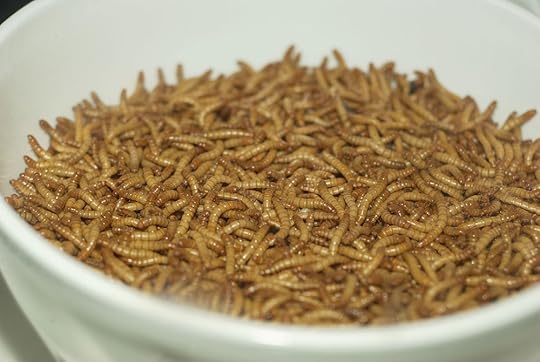
Recycling centre of the future?
Last year I reported the chance discovery that the larvae of the wax moth had the ability to chew through plastic shopping bags. That was cool but the finding was limited to the animals being able to devour only a single type of plastic and did not explore what was in their poop. That matters because if the bugs are only pooping out plastics then the fact that they are eating plastic in the first place is not particularly exciting. Now a new experiment with meal worms is revealing that the bugs are capable of eating two very different types of polymers and that they very effectively biodegrade both of these materials into carbon dioxide.
The new work follows on from a series of experiments that took place three years ago and revealed that meal worms could break down polystyrene in their guts within a period of 12-15 hours. Fascinated by that, the researchers wondered whether other polymers could be put on the meal worm menu. Since global production of polyethylene is roughly four times greater than that of polystyrene and since polyethylene is the most common plastic pollutant on the planet, the team decided to try feeding that to their larvae.
The results were great. The worms were capable of degrading the polyethylene at much the same rate as they degraded polystyrene. Crucially, mass balances calculated by the researchers revealed that the worms were converting roughly 49% of the polyethylene into carbon dioxide which they reckon could be captured and put to use.
What is really important to keep in mind here is that polyethylene has a very different chemical structure to polystyrene and the fact that the meal worms devour it just as effectively as they do the polystyrene suggests that pretty much any plastic is going to prove palatable to them and, if that is ultimately proved true, then their appetite has the potential to be thoroughly harnessed. You can read more in The Economist article that I wrote on this here.
June 6, 2018
Defended by the dark
During times of disease, like flu season, we have long known that people become more apprehensive in crowded locations where the chances of being infected are higher. Architects who design the lighting for public spaces have also known that dim lighting is favoured for places that are going to become quite crowded, like bars and theatres. Fascinated by this, psychologists Chen-Bo Zhong and Ping Dong at the University of Toronto set out to explore whether dim illumination reduces nervousness about the risk of infection. They found out that it did.
The team theorised that darkness increases our sense of distance from one another and that this, in turn, makes us view threats associated with human contact as somehow less relevant. Over the course of two initial experiments the researchers found that participants staying in a dimly lit room or wearing sunglasses estimated a lower risk of catching contagious diseases from others than did those staying in a brightly lit room or wearing clear glasses. In follow up experiments they even found that the effect persisted in both lab and real-life settings.
You can read more about this research in Psychological Science.
May 1, 2018
Born to dive
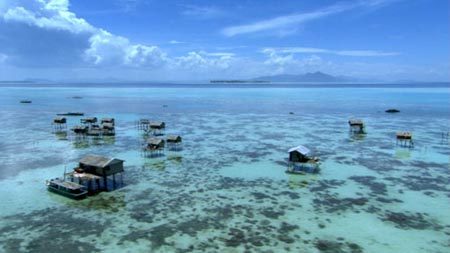
Life aquatic.
Image courtesy of www.travelbusy.com/gallery/
Understanding the physiology and genetics of how humans handle low levels of oxygen has, to date, yielded lots of useful medical information. The populations that researchers have studied for this sort of work have been exclusively those dwelling at exceedingly high altitudes. Yet a team noted that there are some humans who have routinely been denied oxygen by having to hold their breath to find food. Curious about what sorts of effects a breath holding lifestyle has on our biology, the researchers took at fascinating look at the indigenous Bajau people.
Known as the Sea Nomads of Southeast Asia, the Bajau have extraordinary breath holding abilities and use these abilities to collect food from the ocean. What has been mysterious is whether they are born with these abilities or whether they gain them through training.
Using a comparative genomic study, the team found that the Bajau carry genes that lead them to have much larger spleens than the rest of us. This is important because the spleen is responsible for providing us with the red blood cells that carry oxygen around and having more of these cells enables us to last for a longer time without breathing. Thus, the larger spleens allow the Bajau to have a huge reservoir of oxygenated red blood cells that dramatically increase their diving abilities. Thus, it would seem that the Bajau are literally born to dive. You can read more in The Economist article that I wrote on this here.
November 16, 2017
Here be monsters
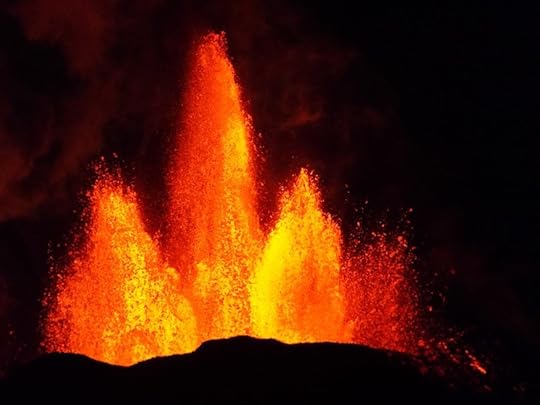
With fiery breath...
Image courtesy of Joschenbacher
It seemed like a curse. Ancient texts report that the winter of 821–822 CE was long and exceptionally cold, reportedly freezing solid the Danube, Elbe, Rhine, and Seine. A great food shortage struck in 822 CE. Famine continued into 823 CE when texts record drought, horrendous hailstorms and widespread plague. The winter of 823–824 CE was long and uncommonly severe. Remarkable hailstorms again hit in 824 CE and famine persisted at least into the autumn of that year. Irish, Spanish and even Chinese sources tell similar stories. Whispers of an angered monster were rampant and now a new paper is revealing the identity of that beast to be Katla.
Sleeping beneath 700 meters of ice, Katla is Iceland's most active volcano and her activity has been well recorded ever since Vikings settled alongside her in 870 CE. Yet in 821, the Vikings were still busy pillaging the coasts of France and England and there are no precise records of what Katla was up to. Thus, the curse of 821 remained a mystery until a severe spring flood on an Icelandic river in 2003 exposed a prehistoric forest that had been buried centuries ago under sediment. A team has now used a mix of radiocarbon and tree ring analysis to study a very well preserved fossil tree at the site and found evidence suggesting that there was a serious Katla eruption in 821. You can read more in The Economist article that I wrote on this here.
November 15, 2017
Sounds like trouble

Shall I flap the alarm?
Image courtesy of Fir0002/Flagstaffotos
In his writings on sexual selection, Darwin devoted equal space to non-vocal and vocal communication in birds. Yet, in the years that have passed since his death, the research community has given almost no attention to non-vocal communications. This, particularly when compared to the extensive attention that bird calls have received, is a great shame. Darwin called the sounds that birds made with their feathers and feet "instrumental music" and speculated that they used these sounds to send valuable signals to one another. That hypothesis is very old and has never been tested. Now, a team is revealing that one species of pigeon creates a unique warning sound with a single wing feather when fleeing danger.
The new work was all conducted through a clever mix of video and feather-removal experiments that were able to demonstrate that a highly modified primary feather on the wings of the crested pigeon produces a distinct note during each flap of the wing. Crucially, the note changes with wing beat frequency which means that pigeons fleeing danger produce a sound that is different from pigeons that are merely taking off in a relaxed manner. You can read more in The Economist article that I wrote on this here.
November 14, 2017
Antibiotic resistance on fish farms
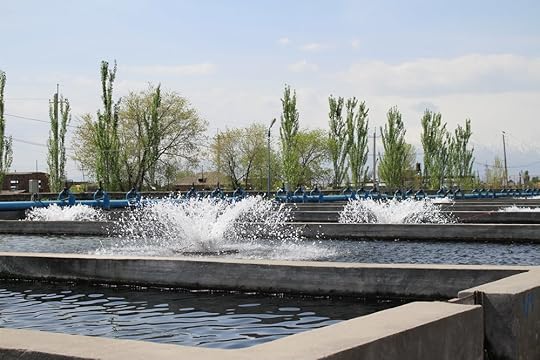
Looks clean but what's in the food?
Image courtesy of Narek75.
We know that antibiotic resistance genes commonly appear in bacteria living in the muck below fish farms. Until recently, the assumption was that antibiotics used to prevent disease in these farms were the key force behind the high concentrations of resistance genes in the bacteria living below them but in 2014 a study challenged that notion by revealing that farms in parts of the Baltic, where antibiotics have been banned for years or were never used, still had sediment below them that was crawling with resistant strains of bacteria. That finding along with several others left researchers scratching their heads as to how the resistance was getting there. Now a new experiment is revealing that the food being used to feed farmed fish is where most of these resistant genes are coming from.
The researchers behind the work knew from past studies that antibiotics had often been detected in poor quality fish food but, when they looked through the literature, they could find no studies that analysed whether fish foods on the markets were actually carrying bacteria in them with resistant genes. Curious, they analysed a bunch of commonly used fish food products and, voila, there they were. The team uncovered a whopping 132 unique resistant genes in five different fish food products. And the reason these genes are there? The fish food products are being made in facilities where sanitation is poor and genetic material in chopped up fish that are being prepared to be made into fish food are not getting heated enough to be destroyed. Friggin unbelievable. You can read more in The Economist article that I wrote on this here.
November 8, 2017
T test
Many studies show that testosterone male animals more aggressive but how the hormone affects human decision making has, surprisingly, had little attention. Keen to take a closer look, a team ran the largest human testosterone behavioural experiment ever conducted and randomly administered a single dose of either testosterone or a placebo to a sample of 243 men. They then measured the participants' performance on both the Cognitive Reflection Test, a long used exam that assesses a person's capacity to monitor their own intuitive judgments and override them when appropriate, and a mathematics test which functioned as a control.
The researchers guessed that testosterone would increase participants’ tendency to rely on their intuitive judgments, reduce inhibition of incorrect responses and thus impair their Cognitive Reflection Test performance compared to those who were given the placebo. They expected the maths test results to not be affected. This is precisely what they found. Mathematics scores from both placebo and testosterone groups were nearly identical. However, Cognitive Reflection Test scores in those dosed with testosterone were a staggering 50% those of the placebo group. You can read more in The Economist article that I wrote on this here.