
Tracy Cooper-Posey's Blog, page 4
January 26, 2025
Things People Do With Old Books
I keep massive notebooks — electronic ones, inside OneNote. And one of my notebooks is called “Making Things”. It’s a collection of inspiring or instructional pages and images about the things that people have made, that I might make one day when I have oodles of spare time (ha!).
And some of it I keep just because the creativity of people boggles my mind.
Here’s some of the more interesting art and crafts that people get up to using old books.


There are a lot more where those came from, but this post is already blowing up because of the many images. (Perhaps another post, another day, for more.) I hope you found it a little bit inspiring. After all, we all have a ton of old books sitting around, don’t we? 
Latest releases:
Grace of Lancelot
Christmas Romance Digest 2024: Love in Other Worlds
Upcoming Releases:
Captain Santiago and the Sky Dome Waitress


January 19, 2025
When Stories Collide with Scandals: Neil Gaiman and the Reader’s Dilemma

In light of recent allegations against Neil Gaiman, I find myself grappling with the complex relationship between an author’s personal conduct and their creative work.
This isn’t the first time such issues have surfaced; in 2023, I discussed similar dilemmas in a blog post titled “What do you do when the creators of your favorite stories misbehave?“
Summary of Allegations Against Neil GaimanNeil Gaiman, renowned for works like The Sandman and American Gods, has recently faced serious allegations of sexual assault and misconduct.
As of January 2025, multiple women have come forward with accusations, including non-consensual sexual acts and coercion. These allegations have led to significant professional repercussions for Gaiman, including the halting or cancellation of several projects:
Good Omens (Season 3): Originally renewed for a final season, the series will now conclude with a single 90-minute episode, with Gaiman stepping back from production.The Graveyard Book: Disney has paused the film adaptation of this work.Dead Boy Detectives: Netflix has canceled this series, though it’s unclear if the decision is directly related to the allegations.Gaiman has denied all allegations, asserting that any encounters were consensual. Investigations are ongoing, and no legal verdict has been reached at this time.
Reflecting on Past DiscussionsIn my previous post, I explored the challenges readers face when an author’s misconduct comes to light. Key considerations included:
Separating Art from Artist: Can we appreciate a creative work independently of its creator’s personal actions?Moral and Ethical Implications: Does supporting an author’s work equate to endorsing their behavior?Historical Context: How do we approach works created in different eras with differing societal norms?I shared personal experiences, such as my inability to revisit Marion Zimmer Bradley’s works after learning of her abusive actions, and my discomfort with certain scenes in Desmond Bagley’s novels that reflect outdated moral standards.
My Perspective on the Gaiman SituationThe allegations against Neil Gaiman are deeply troubling, particularly given their serious nature. While he maintains his innocence and investigations continue, the situation raises significant concerns.
Personally, I find it challenging to separate an author’s actions from their creative output, especially when the allegations involve harm to others. My instinct is to distance myself from their work, as was the case with Marion Zimmer Bradley.
However, each situation is unique, and the absence of a legal verdict adds complexity to the decision-making process. It’s a deeply personal choice, influenced by individual values, experiences, and the specifics of each case.
Invitation for Reader Perspectives
I recognize that this is a nuanced and personal issue, and I’m interested in hearing your thoughts. How do you approach reading the works of authors accused of misconduct? Do you remove their books from your reading list, or can you separate the art from the artist? Your insights and experiences are valuable to this ongoing conversation.
Latest releases:
Grace of Lancelot
Christmas Romance Digest 2024: Love in Other Worlds
Upcoming Releases:
Captain Santiago and the Sky Dome Waitress
January 5, 2025
Other Places to Find Good Books: Wattpad

This is Part Eleven and the final post of a series:
Part 1: Kobo
Part 2: Barnes & Noble, Google, Apple Books
Part 3: Ask an AI
Part 4: Smashwords
Part 5: Subscription Services
Part 6: Fiction Apps
Part 7: BookFunnel & StoryOrigin
Part 8: Book Bundlers
Part 9: Direct Sales
Part 10: Kickstarter and Other Crowdfunding
Part 11: Wattpad
We’ve arrived at the final stop in our whirlwind tour of alternative places to find fiction, and today we’re stepping into the chaotic, delightful, and sometimes baffling world of Wattpad.
What Is Wattpad, and How Does It Work?Wattpad is less a bookstore and more a giant, bustling marketplace of stories. It’s an online platform where anyone with a keyboard and an idea can publish their work for free. Readers, in turn, can devour these stories—also for free—by browsing categories, following authors, or diving into recommended reads.
Here’s the kicker: Wattpad is not curated. At all. This lack of oversight is both its greatest strength and its most obvious flaw. You might find a story so gripping it makes your heart ache—or one so riddled with typos it feels like an unintentional comedy.
The platform operates on a “freemium” model. While most content is free, Wattpad also offers a subscription service called Wattpad Premium, which removes ads and provides bonus perks. Some stories are part of Wattpad Paid Stories, allowing authors to earn money directly from their writing.
What Can You Find on Wattpad?Wattpad is a treasure chest of genres and subgenres, particularly for younger readers. Fanfiction reigns supreme, with countless stories inspired by beloved franchises, K-pop idols, and even real-life celebrities (hello, One Direction fanfics).
But Wattpad isn’t just fanfiction—it’s also the birthplace of viral hits like After by Anna Todd, which transitioned from Wattpad sensation to international bestseller (and eventually a movie franchise). You’ll find original works in genres like:
Romance: From swoon-worthy billionaires to bad boys with hearts of gold.Fantasy: Think magical realms, unlikely heroes, and star-crossed lovers.Thriller and Mystery: Perfect for fans of nail-biting twists and suspenseful drama.Horror: Expect everything from spooky tales to full-on nightmare fuel.Coming-of-Age and Contemporary Fiction: Relatable, heartfelt, and often beautifully messy.Despite the abundance of clichéd tropes and rough drafts, Wattpad fosters an atmosphere of experimentation and creativity. Many authors find their footing here, learning what resonates with readers and sharpening their craft.
The Wild West of FictionWhen people joke about Wattpad stories, they’re usually picturing over-the-top plots, impossible love triangles, or questionable grammar. And sure, those things exist. But the platform’s untamed nature is also what makes it exciting.
There’s no gatekeeping on Wattpad. Anyone can upload their story and share it with millions of readers. This open-door policy has led to a few breakout successes, proving that you don’t need a traditional publishing deal to find an audience.
Yet the same lack of barriers means readers must do some digging to find the gems. Think of Wattpad like a sprawling flea market: some stalls might sell hand-crafted treasures, while others hawk mass-produced knick-knacks.
Why Is Wattpad Worth Exploring?Love it or hate it, Wattpad has made an indelible mark on modern storytelling. It democratized fiction in a way few platforms have. For readers, it offers:
Endless Choices: With millions of stories across every imaginable genre, you’ll never run out of reading material.Direct Interaction with Authors: Leave comments, ask questions, and even influence the story as it’s being written.Discovery of Fresh Talent: Wattpad has launched the careers of several authors, some of whom now dominate bestseller lists.For authors, Wattpad is an experimental playground. It’s a chance to write boldly, connect with an audience, and test out ideas in real time.
Final Thoughts: The Gift of ExplorationWith Wattpad, we’ve reached the end of this series. Not because we’ve run out of places to find fiction, but because the possibilities are infinite.
I hope this series has shown you that great stories are everywhere, just waiting to be discovered. By venturing beyond the usual retail giants, you’re opening yourself up to new voices, fresh perspectives, and stories that might surprise and delight you.
Yes, there’s always a risk of disappointment. But that’s the beauty of fiction—it’s unpredictable, original, and sometimes messy. That’s what makes it worth seeking out.
So, as we start this new year, I challenge you to push your fiction boundaries just a little. Explore Wattpad. Check out an indie author. Back a Kickstarter. Take a chance on a story you might otherwise overlook.
You might just find your next favorite book—or an entire new way to experience storytelling.
Happy reading, and may your 2025 be filled with magical tales and unexpected discoveries.
Latest releases:
Grace of Lancelot
Christmas Romance Digest 2024: Love in Other Worlds
Upcoming Releases:
Captain Santiago and the Sky Dome Waitress
December 29, 2024
The Power of Reader Communities: How Goodreads Choice Awards Influence Romance Literature

Let’s talk about something we all know and love: the romance reader community. If you’ve ever swooned over a hero or squealed over a perfectly written grand gesture, chances are you’ve shared that excitement somewhere—with friends, book clubs, or, more likely these days, online. And one of the biggest platforms for romance fans to connect is Goodreads. It’s where we track our endless TBRs, leave reviews, and, every year, collectively lose our minds over the Goodreads Choice Awards.
Now, if you’ve ever seen the yearly scramble, you know these awards aren’t just some casual popularity contest. Oh no, these awards matter. They’re like the Oscars of our bookish world—if the Oscars were decided by millions of people shouting, “THIS BOOK DESTROYED ME, FIVE STARS!” into the void.
Why Goodreads Choice Awards Are Such a Big DealWhat makes these awards so special? For one thing, they’re entirely reader-driven. That’s right—no secretive panels of critics deciding what we’re supposed to love. The Goodreads Choice Awards are all about what readers actually devour, adore, and can’t stop talking about.
For romance authors, a win—or even a nomination—can be a career rocket booster. It’s not just a shiny badge for the book cover (though that’s cool, too). It’s a signal to every reader browsing Goodreads that this book is worth their time. And in a genre where new releases pop up faster than we can say “enemies to lovers,” standing out is everything.
Take Emily Henry, for example. Her books (Beach Read, Book Lovers) have become the gold standard for witty, heartfelt romance, in no small part because the Goodreads crowd showed up for her in a big way. These awards are like a megaphone for what readers really want, and when they shout about a book, the whole world listens.
What’s Trending in the Goodreads Universe?Every year, the winners and nominees reveal what’s lighting up the romance world. Lately, we’ve seen rom-coms reign supreme, with quirky heroines, sizzling banter, and just enough angst to make us bite our nails. Ali Hazelwood’s The Love Hypothesis and Tessa Bailey’s It Happened One Summer have been prime examples. They’re the perfect mix of laugh-out-loud fun and swoony romance—basically the book equivalent of a warm hug and a glass of wine.
But it’s not all just meet-cutes and accidental kisses. One of the most exciting shifts has been the rise of diverse romances. LGBTQ+ love stories and characters from a variety of backgrounds are getting their well-deserved moment in the spotlight, and readers are gobbling them up. It’s proof that we’re hungry for love stories that reflect the beautiful diversity of real life—and the Goodreads Choice Awards are helping push those stories to the forefront.
It’s About More Than AwardsHere’s the thing: while the awards themselves are exciting, they’re really just the tip of the iceberg. What makes Goodreads (and other reader communities) so powerful is the way they bring us all together. Romance fans are passionate (you know who you are!), and we love nothing more than screaming about our favorite books with other readers who get it. Whether it’s leaving a glowing review, gushing in a discussion group, or making memes about the latest book boyfriend, this community is the beating heart of the genre.
That sense of connection is why romance has always been special. It’s not just about the books—it’s about the people who love them, the authors who pour their hearts into them, and the way we all rally around these stories of love and hope. And the Goodreads Choice Awards? They’re just one more way we shout, “This book meant something to me!” and celebrate together.
So, What’s Next?If you’re an author, here’s your reminder: don’t underestimate the power of your readers. They’re out there championing your work, leaving reviews, and voting their hearts out in these awards. And if you’re a reader (hi, hello, welcome!), never stop sharing your love for the books that move you. Whether it’s on Goodreads, BookTok, or just chatting with a friend, your voice shapes the genre more than you might realize.
At the end of the day, the Goodreads Choice Awards aren’t about winning or losing. They’re about celebrating this wild, wonderful thing we call romance literature—and the incredible community that keeps it alive. So, here’s to us, the readers and writers who make it all happen. Let’s keep the love coming.
Latest releases:
Grace of Lancelot
Christmas Romance Digest 2024: Love in Other Worlds
Upcoming Releases:
Captain Santiago and the Sky Dome Waitress
December 8, 2024
Why Don’t Romance Cover Characters Look Like Their Descriptions in the Book?

If you’ve ever picked up a romance novel and thought, “Wait, that’s supposed to be the hero? Didn’t the author say he has a scar, dark curls, and a brooding stare? Why is this guy blond and smirking like a toothpaste model?”—you’re not alone. Romance readers have been puzzling over this for decades. Let’s unravel the mystery behind why cover characters often bear little resemblance to the people you’ve imagined from the pages of your favorite romance.
A Historical Perspective: The Stock ShortageBack in the golden age of traditional publishing, cover design wasn’t about meticulously matching the hero’s description to an image. It was about what sold.
Publishing houses relied heavily on stock images—photos pre-shot and available for commercial use. These images were far from bespoke. If you needed a smoldering Highlander, you had to make do with whatever the stock catalog offered. Blond Fabio-looking warrior in a kilt? Close enough. Publishers weren’t interested in accuracy; they were interested in covers that would make readers grab the book.
This market-first approach meant little attention was paid to the finer details of a character’s description. After all, they figured readers weren’t picking up romances for their strict adherence to the text—they wanted vibes.
The Indie Revolution and Its LimitationsFast forward to the rise of indie publishing. Suddenly, authors had the freedom to control every aspect of their books, from the words inside to the covers outside. But freedom didn’t mean unlimited resources.
Indie authors still relied on stock images, which hadn’t evolved much since the traditional publishing days. Custom cover art was an option, but commissioning a skilled artist who could create characters to spec was expensive—prohibitively so for many new authors.
As a result, many indie covers followed the same pattern as traditional ones: a “close enough” approach. Stock photos were combined, adjusted, or manipulated in Photoshop to create an appealing, marketable cover. But perfect fidelity to the hero described in the book? Still out of reach.
Enter AI: The Solution That’s… ComplicatedAI image generators promise to revolutionize this longstanding mismatch. With AI, authors and cover designers can create characters who look exactly as described in the book—down to the most specific details, like a crooked nose or a burn scar along the jawline.
So why aren’t we there yet? The reasons are multifaceted.
1. Copyright ConfusionWho owns an AI-generated image? The creator? The AI company? The courts haven’t decided yet, and authors and publishers don’t want to wade into murky legal waters. Imagine putting out a book cover, only to find yourself in a lawsuit over who “owns” the hero’s face.
2. The Uncanny Valley ProblemWhile AI-generated images are improving rapidly, they’re not perfect. Sometimes the characters look too smooth, too symmetrical, or a little off. A human-like face that isn’t quite right can make readers uncomfortable—and uncomfortable readers don’t buy books.
3. Reader BacklashReaders are a passionate bunch, and many are vocal about their dislike of AI-created art. They argue it devalues human artists and raises ethical concerns about originality. Some readers even boycott books with suspected AI-generated covers. For authors, alienating their audience is a risk few are willing to take.
4. Author EthicsMany authors themselves are wary of AI. They see it as a tool that could undercut human artists and reduce opportunities for creatives. Until these ethical questions are resolved, AI use in covers will remain a contentious issue.
The Future: A Turning Point is ComingDespite the current hurdles, AI is slowly infiltrating the world of book covers. Stock photo sites and professional cover artists are starting to use AI in their workflows, often blending it with traditional methods to produce high-quality, unique images.
AI image generators are also getting better. Recent advances have made it possible to create characters with more human-like flaws—crooked smiles, unruly hair, and all the imperfections that make a hero relatable.
Once the copyright questions are resolved (and court cases are in progress), the industry may see a shift. Authors who feel comfortable using AI will finally have the tools to create covers that match their heroes exactly as written.
What This Means for ReadersFor now, romance readers will have to keep imagining the heroes and heroines described in the book rather than trusting the cover to deliver an accurate visual. But change is on the horizon. In the not-so-distant future, your favorite brooding duke or rugged cowboy might look exactly like the character you’ve been picturing all along.
And who knows? Maybe one day you’ll be able to create a custom image of your book boyfriend with a click of a button. Until then, let’s enjoy the variety of artistic interpretations—and keep an eye on what’s coming next.
What do you think about the current state of romance covers? Do you love the “close enough” look, or are you excited about the possibility of perfectly matched characters? Share your thoughts in the comments!
Latest releases:
Grace of Lancelot
Christmas Romance Digest 2024: Love in Other Worlds
Upcoming Releases:
Captain Santiago and the Sky Dome Waitress
November 24, 2024
Why Best-Seller Lists Are the Worst Way to Find the Best Romances

Of course, you’re on the hunt for the best romances out there. Nobody picks up a book thinking, “I hope this is mediocre.” But here’s the thing: using best-seller lists, “top author” rankings, “Best of” compilations, or any similar lists to find great romances? That’s one of the worst ways to discover the truly amazing stories waiting for you in Romancelandia.
And it’s not just my opinion—it’s the numbers talking.
Dan Holloway at ALLi recently pointed out something staggering:
“In 2023, 2.6 million indie titles had ISBNs, up 7.2 percent from 2022. This contrasts with a 3.6 percent drop in traditionally published titles to just over half a million. (That comparison alone is interesting: indies are publishing five times more than traditional publishers, and that’s before we account for titles without ISBNs.)”
Let that sink in. Indie authors published over five times more books than traditional publishers. And if you consider the books published without ISBNs (hello, Amazon-exclusive indie authors!), that number balloons even further.
The takeaway? There are millions of romance novels out there. No one reader—or best-seller list—can capture even a fraction of them. And even if someone tried to make a “best” list, it would be like trying to sip from a firehose.
So, let’s break down exactly why these lists aren’t your golden ticket to discovering great reads:
Best-Seller Lists Are Exclusive, Not InclusiveNo best-seller list exists that includes every romance novel ever written. Not one.
Even the revered New York Times (NYT) Best Seller List had gaping holes (when it still existed). It didn’t include Harlequin/Silhouette category romances, even though they regularly outsold its monthly #1 picks. And it wasn’t until recently that they even bothered including e-books. Indie-published books.
Amazon, which dominates romance sales, has its own best-seller list, but that list only covers the books they sell. And even then, it’s skewed. (More on that in a minute.)
Whatever list you’re looking at—whether it’s a retailer, a review site, or a bookish magazine—it will always be limited. It’s only a slice of the vast romance pie. So, what you’re seeing is never a full representation of what’s truly “best.”
Time Skews EverythingMost best-seller lists have another big flaw: they’re all about timing.
For example, the NYT Best Seller List looked at book sales for a single month. A book that sells 20,000 copies in one month might top their chart, even if it never sells another copy. Meanwhile, a slow-burn bestseller—a book that sells 5,000 copies every month for a year (60,000 total)—will likely never make their list.
This skew gets even wilder in the e-book era. Unlike traditional paperbacks that disappeared from bookstore shelves after a few weeks, e-books stay on virtual shelves forever. They keep selling long after their “launch moment.” But most best-seller lists aren’t built to track that kind of longevity, so they miss these quiet success stories.
“Best Of” and “Top” Lists Are Purely SubjectiveMost “best of” or “top” lists are just personal opinions dressed up as authority.
These lists often reflect the tastes of one or two editors or reviewers. If your reading preferences don’t match theirs (and let’s be real, they probably don’t), then these lists aren’t going to help much. You’ll end up disappointed, wondering why that “Best Romance of the Year” felt more like a chore to finish.
Even Researched Lists Have Their LimitsNow, what about lists built on data? Highest reviews? Most votes? Surely those are more reliable, right?
Not exactly. Even data-driven lists have the same flaws as best-seller lists: they can’t account for every romance ever written. They’re still skewed by time, platform, and availability.
What Best-Seller Lists Are Good ForOkay, so I’ve been pretty hard on lists. Are they completely useless? Not at all!
Lists—whether they’re best-sellers, “best of,” or “top” rankings—are fantastic starting points. Use them as a way to discover new authors or titles you haven’t heard of before. Jot down a few names and do your own digging. Look up reviews, read excerpts, or even sample a chapter if you can.
Just don’t let a book’s inclusion on a list dictate your decision to buy or read it. A book’s spot on a list usually boils down to luck—selling the right number at the right time or catching the right editor’s eye.
So, How Do You Find the Best Romances?If you’re wondering how to discover amazing books without leaning on best-seller lists, don’t worry—I’ve got you covered. Check out my series, A Toolkit and Compass for Romanceland, where I share resources, strategies, and insider tips to help you uncover the very best romances for your unique tastes.
Remember, the best romance for you isn’t necessarily the one at the top of a list—it’s the one that sweeps you off your feet and keeps you turning pages late into the night.
Happy reading!
Latest releases:
Grace of Lancelot
Christmas Romance Digest 2024: Love in Other Worlds
Upcoming Releases:
Captain Santiago and the Sky Dome Waitress
November 10, 2024
Other Places to Find Good Books: Kickstarter and Other Crowdfunding

This is Part Ten of a series:
Part 1: Kobo
Part 2: Barnes & Noble, Google, Apple Books
Part 3: Ask an AI
Part 4: Smashwords
Part 5: Subscription Services
Part 6: Fiction Apps
Part 7: BookFunnel & StoryOrigin
Part 8: Book Bundlers
Part 9: Direct Sales
If you’ve been in the book community for any length of time, you probably already know that publishing has transformed in a huge way. Digital books, self-publishing platforms, and audiobook giants have given authors so many new avenues to share their stories with you. But let’s step off the well-trodden paths of traditional publishing and big online bookstores for a moment and explore a more exciting alternative: crowdfunding platforms like Kickstarter, Indiegogo, and Patreon.
Crowdfunding for Books? How Does That Work?Crowdfunding might bring to mind quirky gadgets or ambitious tech startups looking to fund the next “smart thing”—but in recent years, it’s become an absolute goldmine for authors and readers alike.
Here’s the lowdown: Kickstarter and other platforms allow authors to raise funds for their projects in advance. They set a financial goal for their book project, be it a single novel, a boxed set, a unique edition, or an entire series. Readers—like you!—can pledge to support the project and, in return, get some seriously cool rewards. Think limited-edition hardcovers, signed copies, early access, personalized goodies, and all sorts of exclusive perks.
For readers, this means you get to be part of a book’s journey right from the start. You’re not just a buyer—you’re a patron of the arts, playing a crucial role in helping authors create the stories they’re passionate about. It’s a unique way to connect with the creator and see the behind-the-scenes process up close.
Why Kickstarter? Because It’s Personal (and Risk-Free for You)If you’ve ever picked up a book and wondered, What inspired the author to write this?, Kickstarter might be your answer. When authors use crowdfunding, they often pour their heart and soul into the project page, sharing not just the plot but the passion that drove them to write it. You’ll get sneak peeks, updates, and insight into their creative process.
Kickstarter uses an “all-or-nothing” funding model, which means authors only receive funding if they hit their goal. It’s a win-win: creators don’t end up with half-baked projects, and readers know their money goes directly into making the book happen. Plus, if a project doesn’t meet its goal, you won’t be charged a cent. The sense of community and shared excitement around these campaigns is downright contagious.
Other Crowdfunding Platforms Worth ExploringIndiegogo: A bit more flexible than Kickstarter, Indiegogo allows creators to choose either an all-or-nothing or a keep-what-you-raise funding option. Authors sometimes use it for ongoing series or special edition projects. Indiegogo also lets creators extend their campaigns or move into an “in-demand” phase, where you can still grab perks even after the campaign ends.Patreon: Patreon works differently from Kickstarter or Indiegogo. It’s a membership-based platform where fans (or Patrons) support creators through monthly pledges. Authors often offer behind-the-scenes content, early chapters, exclusive stories, and community access in exchange for your support. It’s ideal if you’re a super fan and love the idea of consistently supporting your favorite author’s work.Perks Galore: What You Get Out of Backing a Crowdfunding ProjectAside from getting your hands on a new book before anyone else, crowdfunding projects come with some awesome perks. Authors love rewarding their early supporters with personalized touches like:
Signed Books: Often with a special note just for you!Limited Editions: Hardcovers, boxed sets, and illustrated versions that won’t be available anywhere else.Exclusive Content: Short stories, deleted scenes, and bonus chapters.Author Merchandise: Bookmarks, artwork, pins, T-shirts… you name it!And it doesn’t stop there. Some authors offer really unique, high-tier rewards like virtual hangouts, naming rights for characters, or a chance to read drafts and provide feedback.
Why You Might Love Crowdfunding BooksYou might be wondering, But why not just buy the book once it’s published? Good question! And sure, you could wait. But there’s something uniquely satisfying about being part of the process. Crowdfunding lets you follow along as the project comes to life. It feels like joining a secret club—one where you and the author are in on something special.
Moreover, many projects offer books that might never make it to a traditional publishing route. Crowdfunding gives you a chance to see more creative, experimental, or niche stories come to light.
Final Word: Take a Leap and Back a Book!So, if you’re ready to step beyond the well-known bookstores and explore a whole new world of author-reader connections, take a look at Kickstarter, Indiegogo, or even Patreon. There are so many projects out there just waiting for a reader like you to help them become a reality.
Who knows? You might find your next favorite read—or better yet, help create it.
Latest release: Grace of Lancelot
Upcoming Releases:
Christmas Romance Digest 2024: Love in Other Worlds
Captain Santiago and the Sky Dome Waitress
May 19, 2024
Other Places to Find Good Books: Direct Sales

This is Part Nine of a series:
Part 1: Kobo
Part 2: Barnes & Noble, Google, Apple Books
Part 3: Ask an AI
Part 4: Smashwords
Part 5: Subscription Services
Part 6: Fiction Apps
Part 7: BookFunnel & StoryOrigin
Part 8: Book Bundlers
Part 9: Direct Sales
The current economy, world-wide, would be better served, everyone keeps telling us, if we buy local, and buy direct.
But we (you and me) buy ebooks. How do you buy them locally?
Buying from an author, when they offer their books for sale directly from their site, is very close to supporting your local farmer by buying his tomatoes directly from him at the nearest farmers’ market.
Why buy direct?Good question. I get asked it a lot.
Buying from the River-who-shall-not-be-named is easy. They’ve spent squillions to make it easy, with their one-click purchasing, invisible downloading and seamless synchronizing across devices.
Most micro-businesses like authors can’t afford the thousands of dollar per year needed to provide that sort of slick service.
Think of it this way.
You can buy hot-house tomatoes from your big box grocery store, and get tasteless, gas-ripened, essentially green tomatoes that were picked over two weeks ago and transported in trucks to reach your store.
Or you can buy tomatoes plucked from the vine a day or two ago, when they were ripe. They’re fresh, and anything but tasteless. Yet buying from the local farmer at the nearest market can be a bit of a pain: maybe he can only take cash, or doesn’t have bags to put your produce in.
Buying books directly from an author can be just as interesting. Each author has a different way of selling, with different sofware. Some might not take PayPal. Others will only take PayPal. And working your way through the payment process for each author can be an adventure.
Selling direct is becoming a big thing with indie authors. Generally, we’re very much in favor of it.
I’ve been selling direct for years, before it was even a thing in the indie world. But now the rest of the indie publishing industry is catching up with me.
So, why buy direct?Quite apart from the ground-effect that buying from small business can have on the economy, here are 7 other reasons:
1. Sometimes the books are cheaper
Many authors are becoming aware of the fact that Amazon just doesn’t care about them and their little store.
For years, authors have had it rammed into them, usually the hard way, that Amazon really does insist upon favored nation pricing; if the book is cheaper anywhere else, they will discount your book on their store to match that price. It’s built into their user agreement.
But Amazon doesn’t give a sniff about an author’s website. They can sell books cheaper on their site and Amazon won’t blink. They can sell them for anything they want, instead of being penalized for selling books cheaper than $2.99 USD or more than $9.99 USD.
As author are 1) climbing aboard the direct-sales train and 2) learning that their pricing is independent of Amazon, they’re offering readers discounts, and every day pricing that readers can’t get anywhere else.
2. Bundling
There’s only one other store than does ad hoc bundling — and I’ll explain that one another day.
But authors can bundle anything. Partial series, books from across series that are connected by theme or sub-genre, books + merchandise, print + ebook — yes, authors can sell print from their websites. And audio. I sell ebooks and print, for example.
I also bundle. Bundles are a whole different thing from boxed sets, and they have some unique advantages, including getting all the books in a series as separate books, not one gi-normous file that makes your ereader gulp. [For more on bundles, check here]
3 Deals and Discount
Related to both points, above, but a slightly different idea: Authors can afford to give bigger and deeper discounts on their books when they sell them direct.
So you can see some eye-popping deals go down. E.g., the massively huge and scary discounts we ran for Black Friday-Cyber Monday, last year.
Authors can also offer buy one-get one deals, reward points, and all manner of loyalty programs.
4 Books not available anywhere else
Authors frequently have books and stories available for sale on their site that you can’t get anywhere else. It’s not that they’re withholding deliberately–although than can sometimes be the case. It could be because of other reasons.
For example, I have a series boxed set that, even with a discount upon the full retail for all eight books, I should be selling it at $19.99. But Amazon drops my author portion down to 35% on anything priced over $9.99, so I’m earning as much from the sale of a $19.99 big series as I would if I was selling it for $9.99. Amazon pockets the rest. Why? Because they said so.
I know many authors who refuse to play that sucker game, and only sell the boxed set on their site.
They will also sell luxury and limited edition sets on their site.
For example, I have a dust jacket hard cover edition of Cancer Curated that I can only sell on my site, because Amazon doesn’t print dust jacket editions.
I have another non-fiction book coming up that is a workbook, and I’m selling it as a spiral-bound edition. Amazon (and Barnes & Noble) will only print the trade paperback.
Luxury and limited edition editions will burst upon the marketplace soon, as the printer I am using, BookVault, is now offering really cool elements like ribbon bookmarks, and slip boxes for boxed sets — actual boxed sets! They’re also offering foil printing, and dyed edges.
You will start to see a lot of very interesting, unique editions of books on offer soon…but they’ll nearly all be direct from the author, as Amazon, et al, haven’t even started to catch up with this.
5. And combinations of all of the above
Authors have huge flexibility when they sell directly. They can combine special pricing, discounts, bundling, special editions, merchandise and more, to make up some jaw-dropping, utterly unique offerings.
If this sounds intriguing, then check out an author’s direct sales store the next time you come across one. And watch that store and that author for interesting deals and products.
6. You get to keep the book
I usually get a finger wagged at me, when I mention it, but damn it, it’s a genuine advantage of buying direct.
When you buy direct from an author, you download the book and sideload it to your reader — often through BookFunnel, but sometimes via other means.
In other words, the book is yours.
Unlike the retail stores, where what you’re really paying for is permission to read the book for as long as you maintain an account with that retailer. When you close (say) your Amazon account, all those books are removed from your reader. They’re gone.
’nuff said.
7. The author gets nearly all the money
This is where buying direct becomes a genuine win-win situation. Just like you are directly supporting the farmer whose tomatoes you buy, when you buy direct, you are supporting the author.
Amazon and other distributors take 30 to 40% of each book’s sale price for themselves. When you buy direct, the author keeps nearly 100% of the proceeds. No one syphons off anything except for a tiny percentage for the financial transaction. (A bit more, if you use PayPal).
__________
If you’ve never considered buying direct from the author before, I hope I’ve let you see that it’s worth thinking about and maybe dipping your toe into buying “locally” online.
Browse my own store, to get a feel for how it works. There’s a 10% off coupon code on the front page to encourage you to make your first purchase, and I have a reward points system, too. (Another thing the retailers don’t offer.)
You can start browsing here.
Scandalous Scions Box Four out soon!
May 12, 2024
Are Historical Romances Really Dead This Time?
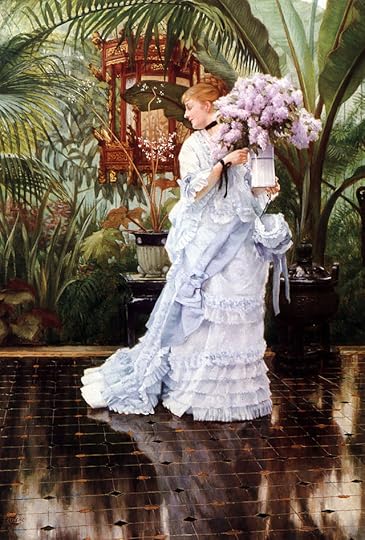 The Bunch of Lilacs, c.1875 – James Tissot
I first was drawn to historical romances because of two things. One was, absolutely, the dresses. A woman looks so much more womanly in some of the dresses she gets to swan around in, depending on which historical period you get to write in. And with her breasts and waist emphasized the way most of history seems to have made of point of outlining them, you can hardly blame heroes for wanting to slide their hands around a pulled in waist and peer down at an enticingly corsetted snow white — and usually heaving — bosom. Low rider jeans just don’t cut it in comparison.
This factor doesn’t always work, though. Lord knows, my heroine in Diana By The Moon seemed to go out of her way to look anything but enticing, but she certainly had her moments when Alaric was brought to an astonished halt, and those moments simply could not have happened in a contemporary novel. You don’t get long white gowns and crowns of flowers on a regular basis these days.
These days clothing is merely a form of personal expression, but what a woman wore had so much more meaning and implication back then. While I’m not a huge fan of Regencies, they showcase many perfect examples of how the wrong attire can utterly ruin a woman’s reputation in one disastrous outing.
The other point of historicals that I love that you can’t get in contemporary romances is the political/suspense storylines. Because the story is set in an historical time period, there will be historical events affecting the lives of your hero and heroine, and those events are usually dramatic and highly emotional. There are events and settings you can only get in the annals of history.
Wars where the women were forced to stay and home and send their men to fight them, or where the war came to the women’s doorsteps while the men weren’t there to defend them. Periods in history when women were chattels and moved around political chessboards like strategic pieces, to be married and sold off for political gain. Eras where superstition and religion ruled society or simply standing in the wrong place at the wrong time could cost you your personal freedom.
There’s so many delicious story possibilities throughout history when men can be really heroic and even women can be strong and brave, yet still melt into the arms of the men who come to love them (while wearing those gorgeous gowns, of course)…why would anyone want to give up stories woven around all those possibilities?
Historical romances used to be the backbone of the traditional publishing industry. Many historical romance authors were solid mid-list authors who put out a book every quarter or six-monthly, year after year. They brought in decent earnings; enough so that put altogether, the midlist historical romance genre looked like it would be around forever because it was propping up the fortunes of many publishers.
Until, in the early oughts, tradtional publishing suddenly stopped acquiring historical romances. They said the market was dead.
A great many authors moved over to the nascent indie publishing industry and published their historical romances that way. I was one of them. And the demand for historical romances seemed as strong as ever to me, to the point where I thought trad publishing was crazy. And to a degree they are; they’ve completely demolished their midlists, relying purely on star biographies and mega best sellers. Anything that only sells a little; the author doesn’t get a second chance, or any time to build up a following the why the midlist authors did. They’re cut, tossed back and the publisher moves onto the next potential mega seller.
So we all happily self-published and readers were happy too, because there was no more of this “wait a year” for the next book. Authors were free to publish as swiftly or as slowly as they wanted.
But times have changed again. Even the small, indie presses (those that aren’t one of the big five in New York), and indie authors are seeing sales slide. Most of the energy and reader demand is shifting over to fantasy romance. On Bookfunnel, there are five fantasy romance promos to every one historical romance promo.
Many historical romance authors I know are retooling their beloved genre. They’ve shaved off the serial number, and added magic, and a few supernatural creatures and are calling it historical fantasy romance, which keeps them happily writing in the era they love.
Others are inventing purely new worlds and writing true fantasy romance.
Is historical romance doomed, once more? Or is there a place where they can pop up once more for true historical romance fans to find them?
I don’t have any answers, only depressing facts. My sales numbers for historical romance have plummeted. This morning, thanks to Amazon’s return policy, my sales numbers for historical romance were -1. Yes, Negative one.
Do you love historical romances? Where to you acquire yours?
Scandalous Scions Box Four out soon!
May 5, 2024
I *Was* Going to Rant…
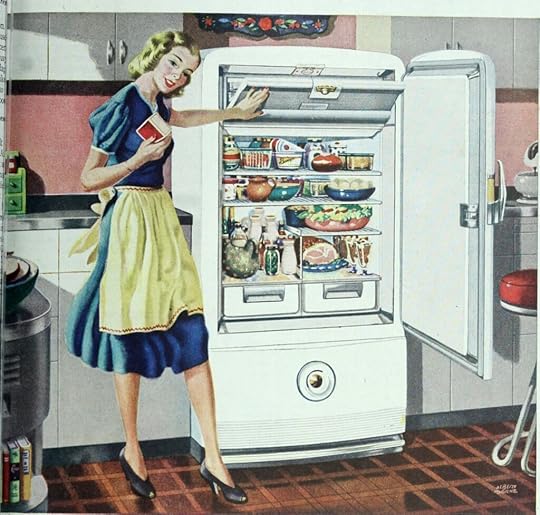 By Internet Archive Book Images – No restrictions
 I sometimes feel that I’m very much behind a lot of cultural shifts and trends — I hear about them years after they’ve got rolling.
But there’s an advantage in that: I only spend attention bandwidth on events and phenomena that look like they’re going to stick around. Like the recent wild bear/strange man in the woods meme that is perplexing men around the world at the moment, and making a lot more of them very angry.
There’s another cultural “thing” that I just learned about, that appears to be rolling along very well indeed. And honestly, the whole idea of it makes my stomach turn.
And while I know, acknowledge and wave to the many men who read my books, this post is, I’m afraid, addressed almost entirely to women. I’ll catch up with you guys another time. Promise.
The tradwife trend.Even if you haven’t heard about tradwives, just the name alone (and my post image) should clue you in very nicely.
Tradwives are women who have chosen to embrace the traditional patriarchal marriage, where she stays home, cooks, cleans, and raises the children, while her husband is the sole bread-winner, and the head of the household.
While it is no longer the law in most countries of the world that a wife obey her husband, tradwives nevertheless choose to.
They deliberately take a submissive role in their marriage.
The earliest reference I could find to “tradwives” was 2020. But that’s coming up on four years just for the name. There are earlier discussions about women taking traditional roles in marriages, from as far back as 2016. So this has been building for a while.
For a long and useful explanation of tradwives, check here.
This is where I was going to lose it.My first reaction to the idea of tradwives was fury.
My mother’s generation spent decades in protests, marches and political rallies, fighting for equality, for the right to vote, to work, to even open a cheque account by themselves.
My generation has pushed the envelope even further. We’ve cracked the glass ceiling (but it hasn’t quite shattered yet). Women can serve in the military, can become priests…they can literally do anything they want.
And there are near-global laws saying that a woman can decide for herself on just about every aspect of her lives. (I’m going to skirt the whole reproduction issue — it’s one of the last to topple, and we (women) were forced back a step a couple of years ago.)
Millions of women for a dozen generations have fought to provide their younger brethren with every opportunity they could possibly desire.
And the younger generations, those who want to be tradwives, are basically telling all of us who have fought, bled and, sometimes, died to give them these rights, “fuck you, I don’t want them.”
At least, that was my first reaction.
Tradwife is a choice.While the feminist in me writhed in horror, eventually I managed to cool off enough to think it through.
My next reaction was to say; “I don’t get it, I don’t understand why any woman would deliberately choose such a life, but I will defend to death her right to choose it.”
Because that is, in the end, the ultimate aim of feminism: to give women the right to choose how they want to live every aspect of their lives. There are too many men out there trying to tell us how to live our lives. Tradwives don’t need feminists added into the mix, too.
I even think I understand it.I heard myself saying “I don’t get it,” and realized that, actually, I think I do get it. I think.
I don’t know any tradwives. I’ve never talked to one (they and I move in completely separate circles), although I did briefly visit the site of one of the movement’s icons, Cynthia Loewen. Briefly. The content of the site made me deeply uneasy. Just the fact that she’s holding up clothes and looking like she’s won the lottery makes my heart patter…because it underlines the old, severely limiting sexism that a woman’s appearance is everything.
I’ve done a bit more research since learning about this movement, and as far as I’ve been able to break it down, these are the reasons a woman might choose to be a tradwife. I’m not making judgement calls about any of them:
Politics. I can’t ignore that there is a strong affiliation between tradwives and the US extreme right.Religion. Traditional Catholicism encourages the same values in a marriage that a tradwife embraces. More extreme Muslims sects do, too.
To simplify modern life. This one is a biggie, I think. We’ve all watched local versions of soccer moms driving themselves into the ground, trying to “have it all” and end up with very little of anything except stress-induced ulcers and heart attacks. Tradwives are the opposite of soccer moms. Women who choose to be tradwives could be deliberately choosing to not be soccer moms, and all the heavy negatives of that lifestyle.
To feel safe. This possible reason occurred to me when all the hoorah about the fact that close to 90% of all women would rather meet a wild bear in the woods than a strange man. I know exactly why women feel that way. I was a working “girl” when the prejudice and exploitation of women in the workplace seemed overwhelming. I can’t name one single job I had up until I moved to Canada, where men didn’t comment on my clothes and appearance, where they didn’t flirt heavily, use a lot of sexual innuendo in what should be business conversations, or where, at least once, hands “accidentally” brushed my breasts, my ass, and on one memorable occasion (that I enshrined in Her Outrageous Proposal,) my genitals. I was propositioned by men (both married and single) at least once every quarter. And they were all my superiors.
By the time I moved to Canada, most of that had gone underground. It was a lot more subtle, but it was still there to a degree. And it’s the heavily disguised sexism that is the worst. Sometimes you’re not sure if you’ve imagined it. Or worse, wonder if you invited it in some way. And even worse: You don’t want to speak up because you know of at least one woman who did speak up and lost her job a few weeks/months later, for stated reasons that were weak or invalid. This happened to me at least once. And one other occasion is murky and difficult to judge, but highly suggestive.
So I get why young women would choose, instead, the submissive, stay-at-home mother role, despite the loss of financial and personal freedoms, because at home, they’re secure. And so are their kids.
All of these reasons, or combinations of them, or even other reasons that I haven’t thought of, are perfectly valid reasons to choose the tradwife way of life.
But there are drawbacks to the life that no one seems to be talking about.
Tradwives are demonstrating that it’s okay to treat them as second-class citizensBy choosing submissive roles in patriarchal marriages, tradwives are telling the world that this is an acceptable way to treat all women. Humanity has demonstrated throughout history that it has huge difficulty dealing with the members of a demographic individually. Women all get lumped under the same heading. So the choices that tradwives make will spill out upon other women, who don’t want to be treated that way.
Tradwives will reinforce the notion of judging a woman by her appearance — something we’ve been trying to off-load for nearly a century.
They will be applauded in large sections of the populace (politically-oriented strata of the community, and religious groups), who will use the wedge these women have provided to crack open equal rights even further, and start chipping away all the progress we’ve made.
What’s a woman to do?Make your own choices with care and deliberation…and fight to keep the right to make them.
As I said earlier, the whole point of feminism is to give women the freedom to choose in every area of their life. So exercise that right.
You don’t have to get out there and march, and wave a placard. Just by choosing to control all areas of your own life, you’re demonstrating to other women, educating men, and teaching your kids valuable lessons about women’s rights.
Small decisions we make in everyday life can have huge effects. This is a theme I wrote about on Cameron Cooper’s blog a couple of days ago, and although the context is very different, it is a different type of demonstration that the decisions of one individual can make a difference.


