
Tracy Cooper-Posey's Blog, page 2
August 24, 2025
August 24, 410: The Day the World Changed (And Most People Missed It)

One thousand, six hundred and fifteen years ago today, the Visigoths marched into the city of Rome.
Not metaphorically. Literally. Swords out, torches lit, looting and pillaging their way through the Eternal City under the not-so-watchful eye of Emperor Honorius (who, incidentally, was holed up in Ravenna raising chickens—also not a euphemism; he was reportedly very fond of poultry).
It was the first time in 800 years that Rome had fallen to a foreign enemy. And while the city would stagger on for a few more decades, this was the end of Western Rome as it had been known. Rome—the Rome—was sacked. And nothing would ever be the same.
The emperor would eventually pack up shop and settle in Constantinople. The Roman Empire lived on in the East for another thousand years, yes—but it was never Rome again. Not the heart-pounding, empire-spanning, marble-columned colossus that had once ruled the western world.
Today marks that pivot point. The moment when the world shifted.
But Here’s the Real Story: Rome Lasted Over a Thousand YearsThink about that.
Rome was founded (according to legend) in 753 BC.
It was sacked in 410 AD.
That’s over a millennium of unbroken civilization.
When you say a millennium out loud, it sounds…vague. Abstract. Almost fluffy. Like a stat from a fantasy novel. But let’s make it real.
A Century of Change—Then Multiply by TenImagine life in 1925. Only 100 years ago.
We had just begun to recover from the First World War. Women had only just gained the right to vote. There was no penicillin. Tuberculosis was still a deadly, daily threat. Most houses didn’t have electricity or telephones. Your grandmother wore a corset, and the average woman spent most of her life either pregnant, breastfeeding, or cooking over a wood-burning stove. She couldn’t open a bank account, and depending on where she lived, she might not legally own property.
That’s what 100 years of change looks like.
Now multiply it by ten.
Ten Centuries of Roman InnovationIn those thousand years, Rome went from a muddy settlement on the Tiber to a globe-spanning empire. And they brought with them changes that improved life immeasurably:
Aqueducts that brought fresh water into cities from miles away.Sewers and underground drainage—unheard of luxuries in most of the ancient world.Concrete that we still can’t replicate today—Roman sea concrete gets stronger over time.Dentistry that included fillings, bridges, and gold crowns.Roads so straight and well-built that some are still in use.Central heating, indoor plumbing, public toilets, hot baths, libraries, and even shopping malls.And don’t forget law, architecture, and the deliciously complicated concept of citizenship.All that, and they kept it going for over a thousand years—even with emperors who were, at times, more soap opera than sovereign.
And the Women? They Changed TooIn early Rome, women weren’t even given real names—just a feminized version of their father’s family name. If you were the daughter of Agrippa, you were called Agrippina. If he had two daughters, you might be Agrippina Major and Agrippina Minor. Creative, right?
Women couldn’t vote, couldn’t hold office, and were legally under male guardianship for most of their lives.
But by the later Empire?
Women owned property, ran businesses, influenced politics, and in some cases, ruled entire regions. They had names. They had wills. They had social power. (Galla Placidia, for one, ran the Western Empire as regent—and she was taken during that 410 sack, only to return and become empress.)
One thousand years of change didn’t just build aqueducts. It built possibilities.
August 24: The Fall of Something GloriousThere’s something both awe-inspiring and tragic about the fall of Rome. To last that long, to shape so much of the world—and to finally falter.
But perhaps the greater story is not that Rome fell.
It’s that it endured for so long.
That it took over a thousand years for the world’s greatest superpower to finally lose its grip. And when it did, the world didn’t just lose a city. It lost indoor plumbing, public sanitation, written bureaucracy, widespread literacy, mass trade, and a shared identity.
We’re still chasing Roman engineering. Still borrowing from their legal system. Still marveling at their roads.
So today, take a moment to marvel—not just at the fall—but at the astonishing stretch of time before it.
Rome wasn’t built in a day. And when it fell, the echo took centuries to fade.
Latest releases:
Blackmont Bitters
Beltane Curse
Captain Santiago and the Sky Dome Waitress (  Aurealis Award Finalist!!)


August 10, 2025
Boudicca: The Celtic Queen Who Dared Rome
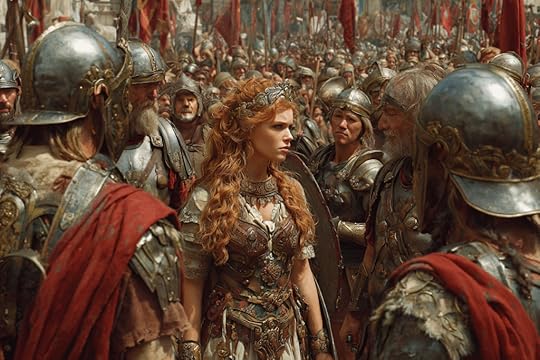
There’s a name that has haunted my notebooks and writing desk for years: Boudicca.
Or Boadicea. Or Buddug. Or Boudicea. Honestly, the spelling’s as slippery as myth itself—but the woman behind the legend? Not so much. She’s solid. Fierce. Unapologetically brutal. And gloriously real.
If you’re like most of my readers, you’ve probably heard her name in passing—maybe thanks to that haunting Enya track from The Celts album, which (side note) still gives me chills every time it floats through my speakers. But beyond the ethereal soundtrack and vague memory of a statue somewhere near Westminster, who was she really?
Let me tell you.
A Queen with a Grudge (And Damn Good Reason)Boudicca was queen of the Iceni tribe, nestled in what we’d now call East Anglia. Her husband, King Prasutagus, had tried to be clever—leaving his kingdom jointly to their daughters and the Roman Emperor. Because, you know, sharing.
The Romans, being Romans, said “Thank you very much,” and promptly did what empires do best: ignored treaties, annexed everything, and made an example of anyone who dared to expect justice. They flogged Boudicca and, far worse, publicly assaulted her daughters. It was an act so horrific, so arrogant, that it lit a firestorm across Celtic Britain.
And Boudicca? She didn’t go quietly.
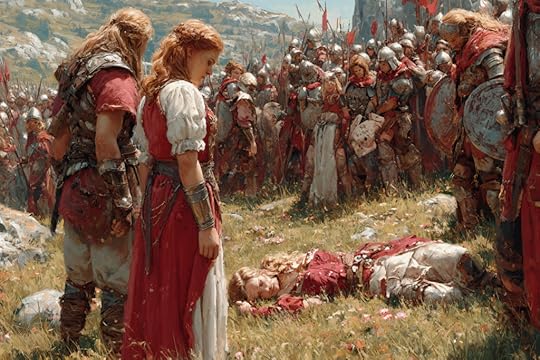 The Woman Who Nearly Burned Rome (Well… the British Part)
She rallied her people. Then neighboring tribes. Within weeks, she commanded an army that looked more like a tidal wave of fury than any military Rome had seen on this misty, rebellious island.
And oh, did she make them pay.
Camulodunum (Colchester)? Burned.Londinium (London)? Razed to the ground.Verulamium (St. Albans)? Also ash.Tens of thousands were killed—Romans and collaborators alike. It was a purge, a reckoning, a scream of defiance that echoed through the trees and bogs and hill forts of ancient Britain.
For a moment, Rome trembled.
But Rome Does What Rome DoesEventually, they regrouped. The Roman governor Suetonius Paulinus gathered what was left of the legions and lured Boudicca’s forces into a narrow pass—a tactical masterpiece. Discipline, training, and brutal precision won the day.
Her army, huge and passionate but poorly trained, was slaughtered. The stories differ on what happened to Boudicca herself—some say she poisoned herself, others that illness claimed her. Either way, she vanished into legend.
Why She Still Matters (Especially If You’re Obsessed With Arthurian Lore Like Some People We Know)Here’s where it gets spine-tingly delicious: Boudicca isn’t just a blip in the timeline. She’s part of the barely-there tapestry of verifiable ancient British history. The Celts didn’t write things down much, so we cling to these glimmers like dragonflies over a summer river.
She’s one of the only named women from this era. She led armies. She defied the greatest empire the West had ever seen. And, best of all? She’s evidence that Celtic women weren’t tucked away in smoky huts minding the fire—they were warriors, leaders, equals.
Maybe, just maybe, matriarchal societies did exist in ancient Britain.
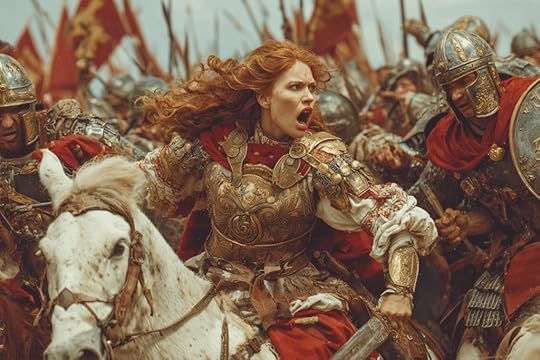 Echoes in the Mists: Arthurian Whispers
Now, I won’t swear to this (and neither will any respectable historian), but there are whispers—tantalizing, persistent—that Boudicca’s bloodline might brush up against the legend of King Arthur.
Some speculate Arthur was of the Iceni tribe, like Boudicca. Others claim Dumnonian roots, or perhaps Trinovantian. The truth? Every time you try to pin Arthur to a specific tribe or hillfort or even century, he slips sideways into story again.
But isn’t that what makes him—them—so enduring? Boudicca fought Romans with fire and fury. Arthur, if he existed, fought Saxons with sword and song. They’re bookends of British myth. Real or not, they live on because we keep wondering what if?
Maybe that whisper of Arthurian legend—the strong queens, the warrior women, the priestesses of Avalon—isn’t just romantic fantasy. Maybe it’s memory.
A Soundtrack for the SoulI’ll leave you with Enya’s “Boadicea.” Let it play. Close your eyes. Imagine a chariot rumbling across the moors, red hair streaming behind a woman who knew what she stood for, and paid the price for it.
History didn’t silence her. It remembered.
And so do we.
Latest releases:
Blackmont Bitters
Beltane Curse
Captain Santiago and the Sky Dome Waitress ( Aurealis Award Finalist!!)
August 2, 2025
Water, Arches, and Ancient Brilliance: The Underrated Fascination of Aqueducts
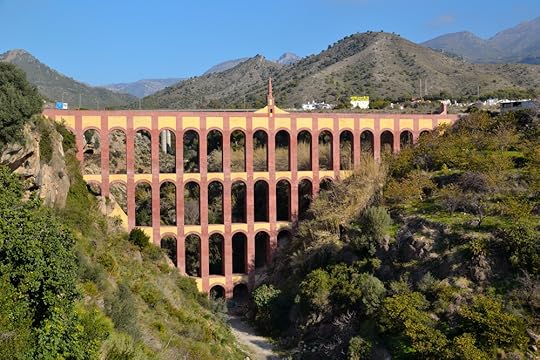 Nerja Aqueduct, Spain
I have a bit of a thing for aqueducts. There, I said it.
They’re one of those quietly remarkable things that don’t get nearly enough spotlight. You never see a thriller that pivots on the majesty of a Roman aqueduct, do you? But maybe you should. Because once you understand what these ancient structures were built to do—and how long they’ve lasted—it’s hard not to gape a little.
 Glenfinnan Viaduct, Scotland.
 Let me first straighten out a common confusion: aqueducts are not viaducts. They look similar—arched, elevated, stunning against a blue sky—but they are not the same creature. Aqueducts are ancient engineering masterpieces, built (mostly by the Romans) to carry water into cities and towns. Viaducts, on the other hand, came along much later, mostly during the Victorian era, and were designed to carry trains and other traffic across valleys. They’re bridges, really. Pretty ones. But not aqueducts.
Back to the water.
Roman aqueducts weren’t just pretty—they were astonishingly complex. They had to move water over dozens of miles, and they did it without pumps. Just gravity. That means the entire aqueduct had to be engineered with a continuous, gentle downslope. Sometimes, the decline was only a few centimeters over hundreds of meters. Do you know what that means? That they did the math. Two thousand years ago. With no computers. Just chalk, rudimentary surveying tools, and genius.
And here’s the kicker: many of them are still standing.
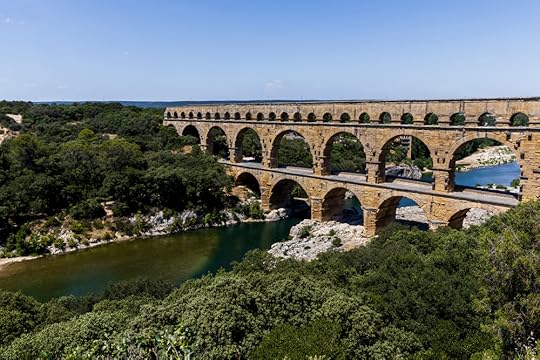 Pont du Gard, France
Let’s take the Pont du Gard in southern France. That one holds a special place in my heart, not just because it’s a jaw-dropper of a structure (which it is), but because I wrote a whole book—The Triumph of Felix—around it. It’s one of those places that stays with you, long after you’ve wandered away from the tourist path and into your story notes.
The Pont du Gard carried water to the Roman colony of Nemausus (modern-day Nîmes), and it did it with elegance. Three tiers of stacked arches, towering above the Gardon River, with a gradient so subtle it makes modern engineers shake their heads. It dropped only 2.5 centimeters over 456 meters. And it worked. For centuries.
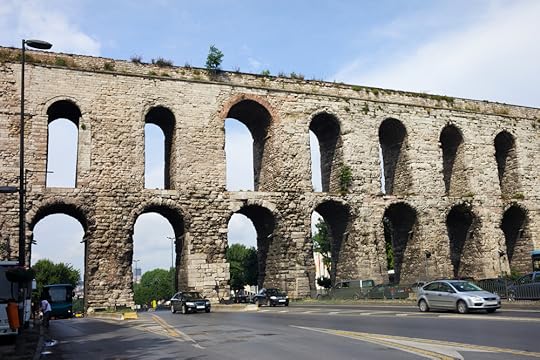 The Valens Aqueduct (Turkish: Bozdogan Kemeri) Istanbul – the longest known aqueduct system ever.
The longest known aqueduct system from antiquity is the Valens Aqueduct (Aqueduct of Constantinople), which—not in its bridge form, but as an entire water supply network—reached a staggering total length of at least 426 km (roughly 265 miles) by around the 5th century AD. That makes it the longest ancient aqueduct system on record. It started with conduits fed from springs some 60 km away, later expanded to about 120 km out.
And then there’s Nerja, over in Spain.
The Acueducto del Águila (Eagle Aqueduct) isn’t Roman. It was built in the Victorian era, around the 1880s. But—and here’s the cool part—it still works. It still carries water. Not for a bustling Roman bathhouse, but for irrigation, which is no less vital in sun-drenched Andalusia. This one isn’t just a relic—it’s functional. It’s gorgeous, too, with four tiers and a bright red hue that catches the sun in all the right ways.
You’d think aqueducts would be a strictly European thing, but you’d be wrong. The Romans, being the global go-getters of their time, built aqueducts wherever they went. You’ll find remnants across Europe, yes, but also in North Africa, parts of the Middle East, even Türkiye. Basically, anywhere the Empire stretched, they brought water—and the means to move it.
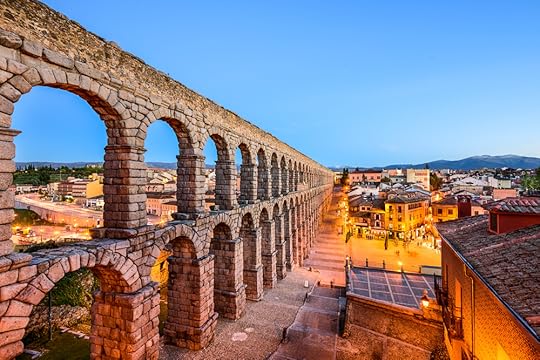 Segovia, Spain
Fun fact: the Segovia aqueduct in Spain was built entirely without mortar. It’s just 25,000 granite blocks, stacked dry, standing tall for nearly two thousand years. Try doing that with IKEA furniture.
Here’s another: the Eifel Aqueduct, in what is now Germany, was mostly underground and stretched 95 kilometers to bring fresh water to ancient Cologne. That’s nearly sixty miles of subterranean water highway. Still gravity-fed. Still genius.
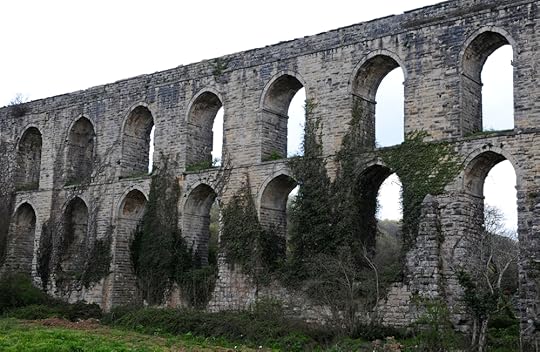 Uzun Aqueduct, Türkiye
I think what captivates me most is this: aqueducts are the perfect intersection of beauty and practicality. They’re not just pretty ruins. They were critical infrastructure. They made cities possible. They enabled sanitation, public fountains, and that all-important Roman bath.
They were—and are—quietly brilliant.
So yes, I have a thing for aqueducts. And while I’ve never had the luck to stand under one myself (not yet, anyway), every time I see one in a photo or a documentary, I can’t help but think, “Well done, lads.”
Because really, damn.
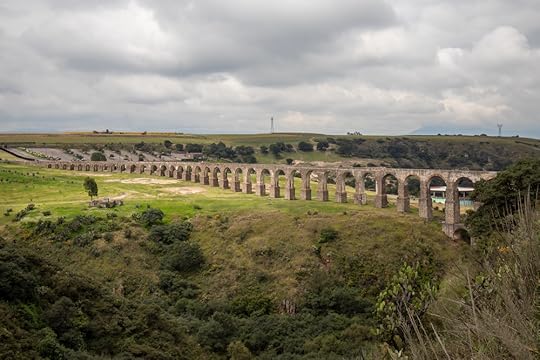 Arches of the Site, Mexico
July 20, 2025
What the Hell is Futa Fiction?
I came across something curious the other day—a term I didn’t know: futa fiction.
Honestly? Not even embarrassed that I had to look it up. The niches and sub-genres are coming thick and fast these days and even voracious readers can’t keep up.
So first: what is it?
Futa fiction comes from the Japanese term futanari, and generally refers to erotic fiction where characters have both male and female anatomical features. It’s niche, it’s rooted in manga and hentai traditions, and it thrives quietly in corners of indie publishing and digital marketplaces.
It’s a perfect example of how fiction is fracturing—and that’s not a bad thing.
The book world has exploded into tiny, wonderfully weird niches, and these days there’s a sub-genre for every possible taste:
Four-armed alien space pirate heroes? Manga-style romances packed with tropes Western romance barely touches? Omegaverse? Still going strong.Futa fiction? Apparently a whole fandom is waiting.And here’s the best part for readers:You don’t need to follow the big trends anymore. You can find stories that feel like they were written just for you—even if your taste runs to werewolf shifters in space falling for time-traveling queens from Atlantis.
All you have to do is keep an open mind and sample. There’s almost always free or affordable short reads to test-drive a new niche—and half the fun is discovering something unexpected.
So tell me: What weird mash-up or niche romance would you like to read?
Seriously—there’s a good chance it exists… and if it doesn’t, maybe someone will write it soon.
Latest releases:
Blackmont Bitters
Beltane Curse
Captain Santiago and the Sky Dome Waitress ( Aurealis Award Finalist!!)
July 13, 2025
The AI Said “Crochet This” – So They Did. And Now We Have Squiggly Wool Monsters.
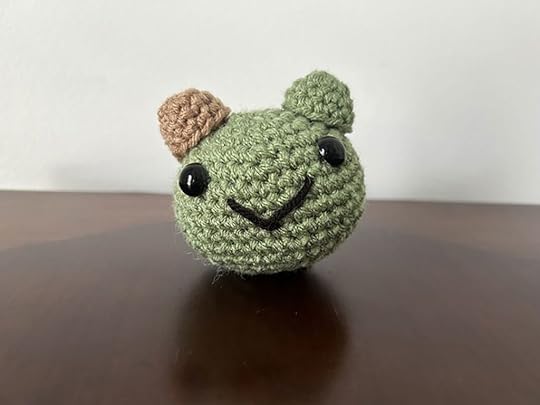
A couple of weeks ago in my newsletter, I mentioned a gorgeous crochet wrap I’d fallen head over heels for—the kind of pattern that whispers fairy-tale librarian vibes and demands yarn priced like gold leaf. I lamented the cost, floated the idea of Frankensteining it together from secondhand yarn, and promptly received an inbox full of amazing reader responses. Advice, encouragement, even requests for the pattern.
That’s what makes this next bit even more fun.
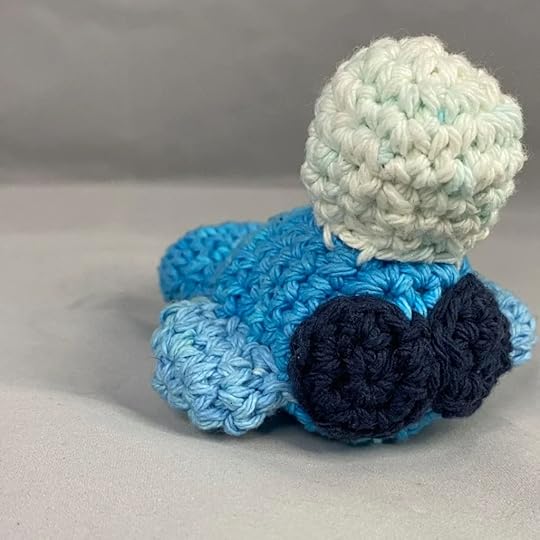
Around the same time, I stumbled on this CNN article about people who had asked AI to generate crochet patterns. And then—because curiosity is a powerful thing—they actually crocheted them.
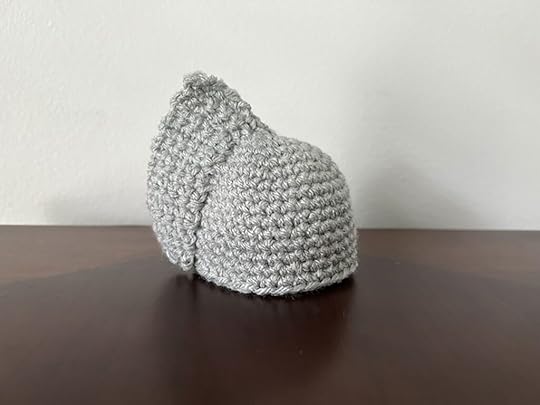
The results were… glorious. And bizarre. And occasionally horrifying in that way only yarn-based creatures can be.
I didn’t ask ChatGPT to create a pattern myself (I’m not that mean), but several brave souls did, and the patterns they received were stitched faithfully into life—one miscount, one ambiguous instruction, one eldritch loop at a time. The photos they shared are proof that yes, AI-generated crochet patterns are art. Just maybe not in the way we usually mean that word.
But here’s the thing: they’re weirdly charming. Much like early MidJourney art—which gave us glorious alien cities and also, occasionally, a woman with eight fingers and no elbows—these AI patterns live in that delightful space between intention and interpretation. The code tries. The yarn rebels. Magic ensues.
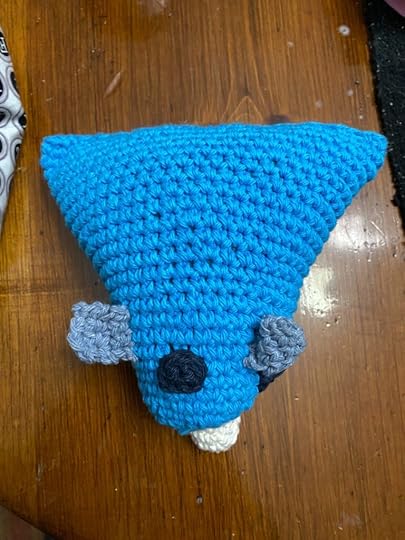
Also, let’s be fair: ChatGPT is not a crochet expert. It’s a language expert. It can imitate the structure of a pattern, but creating one that actually produces something recognizable, wearable, or vaguely humanoid? Not really in its wheelhouse.
And that’s okay.
Because what did come out of this experiment was joy. Laughter. Squishy, floppy, “what is that even supposed to be?” joy. And frankly, that’s what most of us are chasing with our creative projects anyway.
So tell me:
Have you ever followed a pattern—AI-written or otherwise—and ended up somewhere unexpected?
Did your shawl become a hat? Did your doily resemble roadkill? Did you finish it anyway out of sheer bloody-mindedness? I want to see. Send me your Franken-patterns, your woolly monsters, your happy accidents. We’ll celebrate the wonk together.
June 29, 2025
Romance Readers, Meet Fantasy: You’ve Been Soulmates All Along
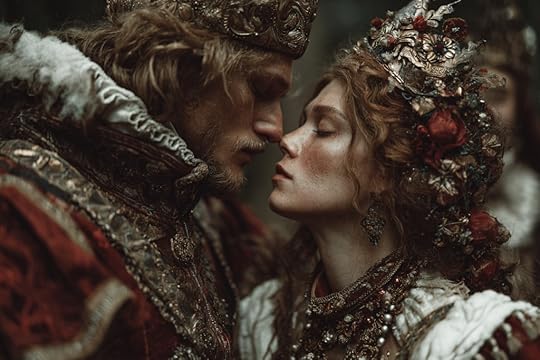
Something curious is happening on bookshelves lately.
Everywhere you look, there are dragons falling in love, fae princes with sharp cheekbones and emotional trauma, witches running magical bakeries and healing their hearts while also learning how to keep sourdough alive (not the metaphorical kind—actual bread).
Fantasy is booming right now—exploding, really. And not just the kind with battles and fireballs. There’s a wave of fantasy stories out there that are basically romance novels… they just happen to come with magical side effects.
If you’re a romance reader who hasn’t dipped into this yet, allow me to open a charming, slightly glowing door for you.
Cozy Fantasy: Romance’s Bookish CousinThere’s a subgenre called cozy fantasy—and I’m telling you now, it’s a treasure trove for romance readers. Imagine stories where the emotional payoff matters more than the body count. Where relationships drive the story, community is key, and the world might be falling apart a little—but there’s always time for tea and a bit of personal growth first.
Sound familiar?
That’s because cozy fantasy shares many of romance’s deepest values:
Emotional intimacyFound family (my personal writing favourite!)Slow-burn relationshipsHopeful endingsCharacter over spectacleThis is fantasy without the doom. Or, at least, with doom you can manage while still running your enchanted bookshop.
Where to Start?If you’re curious, here are a few gentle, heart-filling entries into cozy fantasy (with strong romance elements or romance-adjacent feels):
Legends & Lattes by Travis Baldree – A retired orc warrior opens a coffee shop and slowly builds a new life, friendships, and maybe more.Emily Wilde’s Encyclopaedia of Faeries by Heather Fawcett – Grumpy scholar, sunshine colleague, mysterious fae—deliciously bookish and romantic.The Very Secret Society of Irregular Witches by Sangu Mandanna – A witch finds love and belonging while teaching magical children to control their powers.Casey L. Blair’s cozy fantasy romances – Blair is an indie author making waves in this space (and just wrapped up a fantastic Kickstarter for special editions!). Her stories blend heart, humor, and magic in exactly the proportions romance readers love. You can check out her work here.Not Sure Where to Begin?I’ve got you covered.
Over on the Taylen Carver site, I’ve just posted a deep dive into the current fantasy boom—from romantasy to cozy fantasy and everything in between. It unpacks what’s happening in the genre for readers, and how you can find the books that genuinely light you up (not just the ones plastered all over TikTok).
Final ThoughtYou don’t need to “switch” genres to explore cozy fantasy. You’re not leaving romance—you’re broadening the landscape. Think of it like finding a new favorite café: same great conversation, different ambience. Possibly more elves.
So, romance readers, go forth. Find your magical inns, your fae-infested libraries, your slow-burn sorcery. The stories you already love? They’re just wearing a new cloak.
Already reading cozy fantasy? Have a favorite title or author? Share them in the comments—let’s spread the magic.
Latest releases:
Blackmont Bitters
Beltane Curse
Captain Santiago and the Sky Dome Waitress ( Aurealis Award Finalist!!)
June 22, 2025
The Devil’s in the Details—and It Might Save Your Life
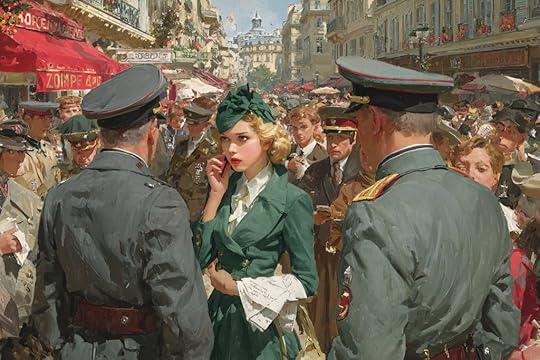
There’s something spine-tingling about watching a spy drama unfold on screen, where the stakes hinge on the smallest misstep. A word said in the wrong dialect. A glance that lingers too long. A button stitched the British way.
I was flipping through my notes the other day and rediscovered an absolutely riveting piece on how the British Special Operations Executive (SOE) dressed their spies in WWII. Not just dressed, mind you—but tailored, aged, dyed, worn-in, and obsessed over. These outfits were literally life-and-death garments. Because when you parachute into Nazi-occupied France, you better not look like you just walked out of Marks & Spencer.
The SOE trained and dispatched some 1,800 agents into France alone, and those agents had to pass for locals. That meant ditching British tailoring quirks, getting their buttons stitched the “French way” (two parallel lines, not a crisscross), replacing British-brand zippers, and even distressing brand-new clothing until it looked suitably used and ration-era ragged.
At one point, spies were getting French fillings in their teeth and fake tailor slips in their suit jackets. A spy’s shirt could betray him. A “British” stud hole on a detachable collar—vertical, not horizontal—might get him shot. Even shoes had to be French. As one spy discovered the hard way, an elderly woman on a train nearly outed him because she recognized his “lovely English shoes.”
https://cdn.midjourney.com/video/6a9ecbca-21ca-46d2-8009-010cde4e0d5f/1.mp4Details. Ridiculously tiny ones.
And yet, they mattered. Deeply.
Which brings me to a confession: I totally get it.
When I moved from Australia to Canada, it wasn’t the big cultural stuff that threw me. It was things like figuring out that “next Tuesday” might mean not this Tuesday coming, but the Tuesday after. Or saying “How ya going?” and being met with blank stares. I spent six weeks with a permanent headache trying to translate English into… still English, just different-flavored.
And that’s in peacetime. No Gestapo looming over my shoulder, just a grumpy barista wondering what on earth I meant by “flat white.”
Imagine, then, having to get it all right—clothes, accent, grooming, luggage contents, the literal angle of a buttonhole—while living undercover. It makes my adaptation hiccups look laughably mild. But the principle is the same: we judge what’s foreign or familiar based on the smallest cues. It’s not always fair, but it’s real.
I remember a WWII film where Cate Blanchett played a spy, and her drop kit included French sanitary pads, because yes, even those were different enough to potentially get you caught. It makes you think about just how fragile disguise is—how easy it is to be found out by a misplaced pleat or a too-shiny shoelace.
So what’s the takeaway? That attention to detail isn’t just a fussy personality trait. It can be a superpower. It can be the difference between being welcomed… or not. Between blending in… or standing out for all the wrong reasons.
Whether you’re a writer trying to build believable worlds, or someone starting life in a new country, or (let’s hope not) a covert operative, the lesson remains the same:
The details matter.
Sometimes they matter more than the big stuff.
Have you ever stumbled—embarrassed yourself or made a complete faux pas—just because of some small detail you didn’t know mattered? (And if you’ve ever moved countries, I know you have a story.) Or—have you read a romance where the heroine got the details wrong and ended up in a heap of trouble? Regency romances are rife with these little traps—tea manners, glove etiquette, the wrong kind of bonnet!
Drop your favorite “oops” moment or fictional disaster in the comments—I’d love to commiserate.
Pre-order now:
Blackmont Bitters
Latest releases:
Beltane Curse
Captain Santiago and the Sky Dome Waitress ( Aurealis Award Finalist!!)
June 15, 2025
A Waist Is a Terrible Thing to Fake (and My Self-Esteem Hack That Actually Works)
Okay, I’m on a tear. You know that feeling where something clicks in your brain and you can’t not share it? That’s me, right now.
So, here’s what’s got me fired up: photoshopped models and the slow, sneaky conditioning that’s convinced generations of women that the “ideal” body is one that looks like it’s made entirely of elbows and wishful thinking. I’ve had years—decades, even—of looking at those long-legged, vanishing-waist images and feeling like my body missed a memo from the fashion gods.
Well. No more.
I recently stumbled across three blog posts that pulled back the curtain with actual, jaw-dropping visuals. Wanna see for yourself? Be warned: once you do, you can’t unsee.
That Waist: Photo Editing at the Turn of the CenturyPhotoshopping: Altering Images and Our MindsThe Reality of Celebrity Photoshop: Before and AfterOne of them even suggests that every retouched image should come with this warning label:
“This image has been retouched to lower your self-esteem.”
I laughed. Then I winced. Because… oof, right?
Here’s where it gets interesting: I stumbled on a hack—by complete accident—that has turned my whole outlook around.
See, I sew. In my (non-existent) spare time, I collect images of clothes that inspire me. Beautiful silhouettes, vintage styles, sleek lines—basically, a Pinterest board without the Pinterest. But when I was flipping through my notebook, something started to bother me. Again. The models. So slender. So elongated. So… not real.
And a little voice in my head whispered: “Surely, no one is actually that long-limbed and whittled down to a suggestion of a waist?”
So, just to test a theory, I grabbed the side of one of the images and widened it. Just a little.
Then a little more.
And a bit more…
Until the model in the image started to look—brace yourself—normal. Like someone I might pass in the grocery store. Like me, or someone I know.
And something in me relaxed. I mean, really relaxed.
Now I do this with every image that hits me wrong—every fantasy long-legged woman in an impossibly proportioned dress. I widen the image until the person looks like someone I’d actually invite over for tea. With cake.
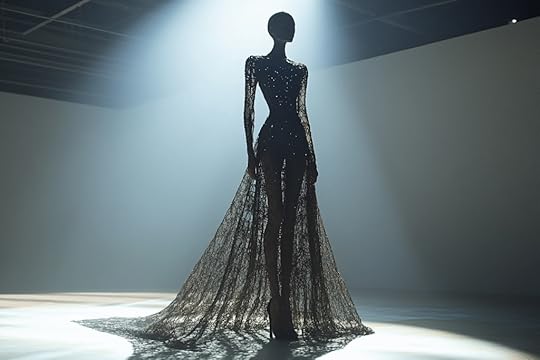
Here’s an example. The original high-fashion image:

Those legs can’t possibly be that long! She even looks like the photo has been stretched.
So I “normalized” her:
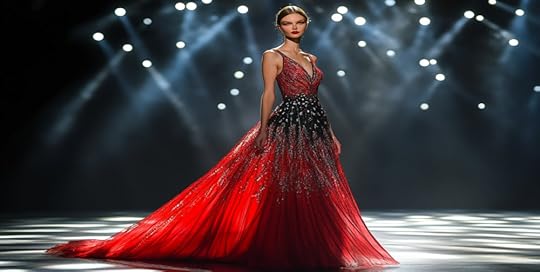
In this one, she looks human. You could even argue that there’s a suggestion of a belly under that dress. It’s…a relief, to see a woman with a normal-sized waist!
It’s weirdly healing. Suddenly, that dress doesn’t seem like a cruel joke played by the fashion elite. It looks like something I could wear. And not just wear—rock.
So if you, too, find yourself sighing at those endlessly tall, suspiciously narrow models, try my trick. Stretch the image sideways until the proportions start to feel human again. It won’t fix everything, but it will shift something inside you.
And that’s a start.
Pre-order now:
Blackmont Bitters
Latest releases:
Beltane Curse
Captain Santiago and the Sky Dome Waitress ( Aurealis Award Finalist!!)
June 1, 2025
Serial Killer Fatigue: Can We Mix Up Our Villains, Please?

Can we talk about the death grip serial killers have on romantic suspense?
Lately, it seems like every book I pick up in the genre has a villain who’s a serial killer. It’s like they’re being handed out with publishing contracts. “Oh, you’re writing romantic suspense? Great! Here’s your serial killer starter pack.”
I get it. I really do. Serial killers come with built-in drama. They’re mysterious, methodical, often brilliantly twisted. Hannibal Lecter didn’t just eat someone’s liver with a nice Chianti—he devoured an entire genre and left room for dessert.
When they first became “sexy” villains, there was a magnetic pull. That eerie, obsessive logic. The chess-match style of murder. Readers got a thrill from diving into that abyss.
But I’m full now. Topped up. I’ve ingested so many obsessive, ritualistic murderers I can tell you what triggers them before they’ve even monologued. It’s not suspenseful anymore—it’s predictable.
So I’m here with a bold question: does every bad guy have to be a serial killer?
What happened to villains who kill for practical reasons? Or profit? Or political convenience? Cold, calculating murderers who aren’t wearing someone’s skin under their cardigan?
What if the heroine isn’t their “type”? What if she’s not “the one who got away” or the perfect next addition to their serial scrapbook? What if she’s just a smart, capable woman who’s close to figuring it all out—and that makes her dangerous?
Even better, what if the killer’s not a “he” at all?
Or—hear me out—what if the killer killed accidentally, and now someone else is mopping up the mess? A powerful parent. A ruthless sibling. A lover with too much to lose.
I want more of those stories. Murders that are messy, emotional, strategic, or accidental. Bad guys who are scary because of their humanity, not because they’ve turned murder into a macabre art form.
So tell me—have you read a romantic suspense lately where the villain wasn’t a serial killer, but was still deliciously, compellingly bad? I want to know. Let’s make room for new flavors of evil.
Pre-order now:
Blackmont Bitters
Latest releases:
Beltane Curse
Captain Santiago and the Sky Dome Waitress ( Aurealis Award Finalist!!)
May 18, 2025
The Lut Desert: A Realm of Extremes and Echoes of History
 By Ninaras – Own work, CC BY 4.0
Sometimes, a setting sneaks up on you. It’s not the glittering castle or the misty forest that sparks the story, but a barren, blistering wasteland where the very ground might just crack open and swallow you whole.
The Lut Desert—Dasht-e Lut—is one of those places. Imagine a world where the earth reaches out to touch the sky with jagged rock formations and sand dunes that tower like ancient gods. The air is dry enough to parch the skin, and the ground bakes under a sun so relentless it has recorded the hottest surface temperature on the planet: a searing 159°F (70°C). Yet, as deadly as it is, there’s a haunting beauty here that tugs at the storyteller’s mind.
Iran’s Lut Desert is more than a place of extremes. It’s a monument to the passage of time, its sands swirling with the echoes of forgotten kingdoms and lost caravans. Rock formations rise like the bones of some colossal, extinct beast, their jagged edges softened by centuries of wind and sand. In a place where the day burns and the night freezes, one can almost hear the whispers of those who dared to cross this expanse—their stories hanging in the air like the dust that never settles.
It’s a land of contradictions. Friendly wolves roam the desert, as if the landscape itself wasn’t hostile enough. Sinkholes gape open like dark mouths, inviting you to peer down into the abyss. There are castles, half-buried in sand, standing as sentinels over nothing. And, at night, the stars blanket the sky in a way you only see in places where there’s no other light to compete. It’s the kind of sky that makes you feel small and immortal at once.
For me, this setting screams ‘story’ because it’s a land of extremes. Extremes pressure people. They push characters to their breaking points and beyond, twisting their morality and testing their endurance. What happens when a traveler is stranded in the Lut, the sun a hammer and the dunes a forge? What secrets might the sandstorms unearth—perhaps a buried city, or a lost love, or a ghostly memory?
And then there’s that nagging sense of history. The Lut is named for Lot, the prophet who fled Sodom and Gomorrah. You can almost feel his shadow lingering there, watching over a world that still burns, in a different way.
This is the kind of setting that slips into my notebook, a half-formed whisper of a scene, waiting for the right characters to stumble across it. Maybe one day, they will.
Pre-order now:
Beltane Curse
Latest releases:
Grace of Lancelot
Christmas Romance Digest 2024: Love in Other Worlds
Captain Santiago and the Sky Dome Waitress ( Aurealis Award Finalist!!)


