Andy Burnham's Blog, page 17
July 8, 2025
Terence Meaden: How Pytheas the Greek Discovered Iron-Age Britain and Stonehenge
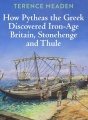
...and Thule. Terence Meaden writes: Pytheas of Massalia, a Greek scientific adventurer of the fourth century BC was the first literate explorer to meet British countryfolk and write of their customs, crafts, food and farming practices. He explored parts of Britain including Kent, Stonehenge (*) and the Cornish tin mines, then sailed to Scotland, Shetland, Iceland and the amber coasts of Denmark.
Published on July 08, 2025 07:52
July 7, 2025
Hellekiste fra Højmøllegård
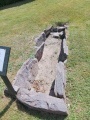
This cist (hellekiste) from Højmøllegård is a 4,000-year-old stone burial chest, dating back to the late Neolithic. It was discovered in 1974 at Højmøllegård in Denmark, near the main A9 road, originally covered by a low mound, typical for ancient burials. During excavation, archaeologists discovered skeletal remains along with grave goods from two completely different burial periods. These included a Neolithic battle axe and an early Bronze Age flint dagger, potentially hundreds of years later. This suggests the reuse and continuity of a sacred space over generations or even centuries, challenging the notion of a grave as a single, sealed event.
Published on July 07, 2025 13:16
July 6, 2025
Wigford Down Settlement
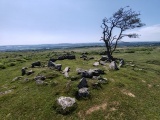
A prehistoric hut circle settlement on Wigford Down, SW Dartmoor, consisting of two large hut circles within an irregular shaped enclosure.
Published on July 06, 2025 11:08
July 5, 2025
Signes Høj
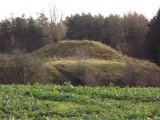
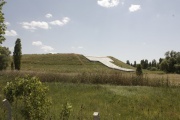
A significant, beautiful and well-preserved mound, with a great location in Ringsted, Denmark. It lies on the edge of a moraine near Tuel Å, in an area rich with other well-preserved ancient monuments, making it a notable landmark in an open landscape. It is dated to the Bronze Age.
Published on July 05, 2025 09:00
Ringmoor Down stone circle
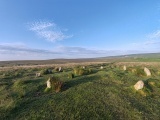
On the top of the open moor that is Ringmoor Down, to the north of the better-known Brisworthy and its stone circle, this tremendous cairn circle and associated stone row are to be found, although they were "restored" in 1909 by Rev. Baring-Gould, supposedly not very accurately. Strange fact: Baring-Gould is better known as the author of the hymn 'Onward Christian Soldiers' and restored several other prehistoric sites on Dartmoor.
Published on July 05, 2025 08:06
Allée Couverte du Mont-Hersé
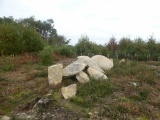
A fairly wrecked Allée-couverte some 60km NE of Carnac. Easy to find, and very nice energy, writes Karolous who visited recently - always great to see another site turn red on our map as first photos are sent in.
Published on July 05, 2025 07:52
Kaman Kalehoyuk
The death of renowned Japanese archaeologist Sachihiro Omura has been announced, aged 75. Earlier this year Professor Omura and team uncovered remarkable evidence of early iron working at this site: heated iron ore in a Bronze Age context dating back approximately 4,200 years - pushing iron production nearly a millennium earlier than previously thought. More on both on our page. Ancient Settlement in Kırşehir Province, Türkiye. Originally dating from the 3rd millennium BCE with later Hittite to Persian ruins. The earliest iron tool from about 1800 BCE was found here.
Published on July 05, 2025 07:30
July 3, 2025
Gunung Kawi
An 11th century temple complex in Tampaksiring north east of Ubud in Bali, Indonesia. Located on the river Pakrisan, the complex comprises 10 rock-cut candi (shrines) carved into the cliff face. They stand in 7m (23 ft) high sheltered niches cut into the sheer cliff face.
Published on July 03, 2025 14:31
July 2, 2025
Ulucak Höyük
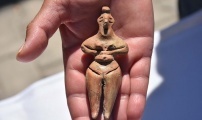
A recent and rare find from one of the most prominent and oldest Neolithic sites in Türkiye – a clay statuette of a female figurine, dated to ~6000BCE. One of the oldest sites in Western Anatolia. The first settlement in the mound dates back to 8850 years ago. For 1150 years, the Neolithic settlement continued - that's 45 generations without interruption.
Published on July 02, 2025 11:43
Symonds Yat Fort
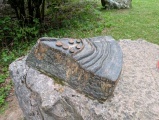
By the car park machines, there is now a nice display of the hillfort including a bronze model representation, looking like a large slice of cake. On the headland of Symonds Yat Rock, high above a complete U Bend in the river Wye. The promontory fort has the remains of four rows of ditch and bank ramparts, the largest remaining being the bank on the inside. These defences are now largely surrounded by the aforementioned car park created for the forest park, with all the walking trails marked out from it.
Published on July 02, 2025 07:51