Kara Dennison's Blog, page 20
June 17, 2022
Lupin the Third Rewind: The Coming of Goemon the Thirteenth

So far, Lupin the Third Part 1 has introduced us to four of our core five characters — the team that, no matter what else changes over the decades, won't be going anywhere. We've been down one major one, despite him appearing in the opening credits (though that's nothing weird for anime). In episode 5, though, we meet another descendant of a legendary thief. And with this episode comes a lot of lore that sometimes gets buried under the decades of TV episodes and specials.
Like, you know, the fact that Lupin and Goemon's entire association started because Goemon wants to kill Lupin.
Note: This blog post contains affiliate links. If you make a purchase through one of these links, I may make a small commission. Thanks for supporting my work!
Samurai Showdown

This episode starts with, frankly, one of my favorite Lupin and Jigen moments. As Goemon Ishikawa XIII practices his swordplay, these two idiots in their flawless non-disguises watch and applaud. Lupin attempts to pass himself off as a talent scout, and Jigen as an American gunslinger. Shockingly, though, Goemon sees through their ruse. Can't imagine how.
As it turns out, Sandayu Momochi — Goemon's mentor and the world's most prolific assassin — has tasked Goemon with killing Lupin. Oh, and Fujiko is there, and Goemon introduces her as his girlfriend. The initial battle between Lupin and Goemon is short-lived: the former douses the latter in fast-burning fuel, but ends up burning himself in the process.
Not long after, Fujiko finds Lupin and laments the horrors of Goemon and his lascivious ways. Lupin, always ready to white knight for his girl, immediately goes out to kill the heck out of this guy... and I'm sure you can guess what's going on. In an absolutely wild and totally unexpected turn of events, Fujiko has told Goemon that Lupin is the pervert she needs saving from. They realize they've been had just in time for Momochi to open fire on them.
Fujiko gets her reward for helping Momochi, but victory is short-lived. Goemon and Lupin (naturally) both survived. When Goemon demands an explanation, Momochi spins a wild story about being brainwashed by a powerful group with advanced computers. This would be a completely legit Lupin origin story, in fairness; but for now, it's not. By Goemon's reckoning, the whole thing is a lot more simple: Momochi is past it and can't handle Goemon, the wielder of the world's strongest sword, showing him up.
Momochi escapes in a hot air balloon, taunting Goemon the whole way. You see, this is the difference between Goemon and Lupin — Lupin would've just killed Momochi. Meanwhile, on a nearby rooftop, Lupin is like "Too right" and lights Momochi's balloon up. Goemon and Lupin have one more battle in traffic, with Fujiko catching the resulting traffic accident and selling it to the local news for a tidy sum.
Thief vs. Thief

Goemon was a presence in the manga, but this is our first time encountering him (outside the opening) in the anime. A few aspects of his whole scene have changed over the years. For example, his mighty sword Zantetsuken is said in more contemporary adaptations to be forged from a meteorite. In this episode, he says it's forged from the three greatest swords ever made... making it the triple-best, I guess.
While the ridiculousness of Goemon's sword comes into play much more as time goes on, we focus primarily on his actual skills and training. We see the finesse with which he uses Zantetsuken: the episode's final shot, for example, shows him slicing through a tree, leaving the butterfly on the other side unharmed to flutter away. We also see just how hardcore traditional he is. When asked why he's so different from other Japanese people, Goemon argues that he's the one who has it right.
Most of all, though, we get to see Lupin and Goemon's real reason for hanging out. Goemon is determined to kill him — a motivation that evolves over time into Goemon considering himself the only person who gets to kill Lupin. Lupin, meanwhile, takes a liking to the guy. We'll see this reexamined (as we do every relationship in the show) in Part 5.
For now, though, what the heck is a Goemon?
Thieves Are Eternal

Like Lupin and Inspector Zenigata, Goemon has his origins in literature and legend. The original Goemon Ishikawa allegedly lived in the late 16th century, a Robin Hood-esque outlaw. Over the centuries, accounts of his life have morphed and changed hugely. There are allegations of him attempting to assassinate a feudal warlord (which one depends on who you ask), and even the story of his execution by being boiled alive varies from telling to telling.
The original Goemon has become a popular kabuki character and tends to be depicted, like Arséne Lupin, as a sort of Gentleman Thief character. And, like Lupin, back in the day he apparently had some frankly beautiful words about his chosen profession:
"Like sand in a river, thieves will forever be countless and not wash away."
These were allegedly his final words, written as a poem. It's no wonder Monkey Punch threw Goemon's descendant into the mix.
When I first got into Lupin the Third, I was completely disconnected from its literary and historical connections. Digging into all its inspirations really changes the vibe of the whole piece.
In college, I was in a production of Pseudolus for the Classics Club. The era was non-specific — or rather, it was many eras at once, meant to show how long-lived the "clever servant" trope is. Examining Lupin the Third with an eye to all the different eras and cultures of its characters is fascinating... and the arrival of Maurice Leblanc's work in Japan in the early 20th century is probably worth a deep dive of its own. For now, it's a reminder of just how much thief and detective fiction has been imported and exported.
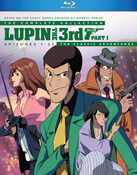
I've been off track with my posts as I started a new gig recently, and I managed to start at the busiest time of year. But I've got my feet under me, and I'm back to it. Next week (on our usual Wednesday), it's episode 6: with at least one (1) each of corpses and diamonds!


May 30, 2022
The Tearoom: Traveling with Tea
 Photo by Kira auf der Heide on Unsplash
As some of you may have heard — or know firsthand — I recently got home from my first out-of-state trip since before lockdown started. I was off being maid of honor for m'colleague and regular collaborator Ginger Hoesly (who is now off on her honeymoon), and spent a little extra time there before and after for socializing, bachelorette partying, and generally being out of the house for a change.
While Ginger drinks more tea than many of my friends, she isn't a Tea Drinker per se. (She loves that coffee and Coke Zero.) As someone who can't drink coffee, I turn to tea both for a caffeine boost and because I like it. Which means that unless I'm in the U.K., I have to plan and pack special if I want to continue drinking tea in the manner to which I'm accustomed.
I'm always refining my approach. But in the meantime, here's what I've learned, in case you find yourself in my predicament.
Note: This post contains affiliate links. If you purchase something through one of these links I may receive a small commission. Thank you for supporting my blog!
On Infusers, Bags, and Baskets
 Photo by Lucas Oliviera on Unsplash
If you are big into tea, odds are you're a proponent of loose tea. If not — if you're perfectly content with tea in bags — you have one less issue to worry about. Packing several bags of your favorite tea and chucking them in some hot water is simplicity itself. But what about loose tea enjoyers like yours truly? I have a setup at home with a kettle and a teapot with a built-in infuser. That's hardly coming with me in a suitcase.
You've probably seen those cute little tea balls. You may even have one. I've used them myself. They're adorable, and they come in neat shapes like Christmas trees and TARDISes. They're also very travel friendly. The down-side: they don't make quite as good or strong a cup of tea.
See, tea balls and similar small infusers don't give the leaves room to expand as they make friends with the hot water. You'll get a lot more bang for your buck by using a basket infuser: the kind that's nearly as big as your teacup.
Alternately, you can do like local tea shops and invest in some filter bags . You can fill these larger bags with loose tea to suit your taste, steep them the same as you would a commercial teabag or infuser basket, and simply throw it away for easy cleanup. As much as I like my basket infuser, I sometimes don't want that extra cleaning step in there.
Invest in Quality Tea
 Photo by Aaron Burden on Unsplash
Sometimes it can be daunting to buy loose tea because. Well. It's expensive. And there's doesn't seem to be much of it. But if the tea is good quality, that little bit will actually last you longer than you expect. Why? Resteeping.
Good leaves can be used twice. As in actually used twice, not "The water still turns a bit brown but doesn't taste like much of anything." That means, overall, you're using less tea. (If you go for a super expensive pu-erh, you can go even more steeps while retaining flavor... but at that point, cost effectiveness has sort of gone out the window anyway.)
I like to travel with at least a bag or tin of something like a nice strong Earl Grey . That blend in particular tends to be especially long-lasting, if the bergamot is strong enough. Plus, it's a good wake-up call when you're jet-lagged.
Explore Local Tea Shops
 Photo by Jason Leung on Unsplash
Fine, you got me. This is less a tip and more of an excuse. Since you're on the road anyway, have a sniff around and see if you can find some locally-owned tea shops on your travels. I've made some of my favorite tea discoveries while on holiday, and not just in London (though they've got some great ones).
If you've got a layover, check out the airport. If I had a nickel for every tea kiosk I'd stumbled across while waiting for a flight, I'd have two nickels. Which isn't much, but it's wild that it's happened twice. And if you happen to be local to one of your favorite major tea brands, see if they have an outlet near you.
One of the saving graces of traveling with tea is that there are no TSA restrictions on prepackaged teabags or dry loose leaf tea. So even if you bring your stash from home rather than buying it after security, you're good to go. Just make sure everything is sealed up tight: crunchy little tea leaves all up in your clothes is no fun.
---
Like what I do? Consider dropping me a tip on Ko-fi — or bookmark the page, since I'll begin offering fresh content over there in the coming weeks!
May 26, 2022
Lupin the Third Rewind: One Chance for a Prison Break

Note: This post contains affiliate links. I may receive a small commission if you make a purchase through one of them. Thank you for supporting my blog!
Our first introduction to Koichi Zenigata was, technically, at the very beginning of Lupin the Third Part 1. He was a presence, but not the key antagonist. We got a taste of what he's doing there and why — his belief that the two are destined to be at odds, as well as his links to the literary Zenigata and Lupin the First's Ganimard and "Herlock Sholmes." (More on that in my first blog post in the series.) But he's not the chief antagonist there so much as an extra wrinkle. His appearance is more for the sake of crafting the universe up front.
In "One Chance for a Prison Break," we truly see Lupin and Zenigata go toe-to-toe as equals, rather than Zeni getting comically thwarted as an afterthought. It kicks off a long history of rivalry mixed with respect, bloodthirsty intent tempered by actual investment.
The Long Game

The episode starts theoretically at an end: Lupin wrapping up a successful heist with Fujiko. With embarrassingly keen timing, Zenigata and his men swoop in at the last minute, peppering Lupin with tranq rounds and carting him off to prison.
Immediately, Lupin goes off. He's not Lupin, he's one of the guards. The real Lupin has disguised both himself and the guard and swapped places. There's a hot second of concern, but Zenigata finally confirms that, yes, they caught the real deal and he's just making a scene. Lupin is bundled into a straitjacket and locked up, with his execution scheduled for a year hence.
Yeah. Execution. That's the only thing that will satisfy Zenigata. Kill the son of a bitch. Put a pin in that.
Time goes on, and Lupin attempts... well, nothing. Except growing a hell of a beard and gettin' gaunt, and continue to inure Zenigata and the guards to the whole "I'm not the real Lupin" rant. Fujiko makes repeated attempts to break him out, with Jigen stopping her each time — Lupin knows what he's doing, Jigen assures her. But even Jigen begins to wonder what's up, finally disguising himself as a Buddhist monk and paying a visit as his partner's execution draws near. Lupin assures him this is all according to keikaku.
Hell, even Zenigata is freaking out at this point. A fellow officer points out that it's almost like he wants Lupin to escape. Put a pin in that, too.
Finally, the day comes, and we discover that Lupin hasn't been idle. He's been... growing out one fingernail. Now that it's razor-sharp, he can cut his way out of his straitjacket, shave half his face, and (unshaven side forward) lure a guard in. Then he really does pull the ol' switcheroo. As the prisoner is screaming that he's not the real Lupin, that the real Lupin has pulled a switch and is now posing as a guard... oh, right. That. Of course, as planned, Zenigata rolls his eyes and waves it off.
Lupin almost gets away with it, too... except that he accidentally refers to the prison having a gas chamber rather than an electric chair. That gives the game up, but Lupin still makes his escape — taking the time to point out that, yeah, he could have escaped at any time. But since Zenigata embarrassed him by thwarting him at the last second, Lupin wanted to do the same to him.
There's just one down side to Lupin's spite-motivated plan: the forest where he and Fujiko hid their acquisition got mowed down in the intervening year.
Adaptability

As with previous episodes, "One Chance for a Prison Break" was adapted from Monkey Punch's original manga. Specifically, the very second installment. A few changes were made here and there, chief among them being the presence of Jigen (who hadn't been introduced in the manga yet). Lupin was also due to be executed by gas chamber in the manga — hence his (not-so-)fatal slip-up in the anime.
But the adaptation action doesn't end there. This episode (and by extension the manga chapter) takes inspiration from parts of the very first Arséne Lupin collection. After being arrested in his first story ("The Arrest of Arséne Lupin," 1905), he sends a letter from prison claiming he'll be around before his trial for another round of light thievery ("Arséne Lupin in Prison," 1905).
It all kicks off in the appropriately-titled "The Escape of Arséne Lupin" (1906), when Ganimard allows Lupin to affect his jailbreak. The plan was to use the opportunity to nab Lupin's co-conspirators in the process... except that, aware he's being watched, the thief simply pops out for a meal and then returns to prison. On the same day, a lookalike was arrested and summarily released. But at trial, Ganimard becomes convinced that Lupin and the lookalike got switched around that day, and the Lupin on the stand is in fact the lookalike. And so, he's let go.
Except... whoops, it really was Lupin all along. His cohorts made sure the lookalike got in the mix on the day of his escape, and Lupin used dieting and drugs (ah, the early 20th century) to make himself look enough like the lookalike to cast doubt in Ganimard's mind.
Fortunately for The Third's health, we have it confirmed throughout the series that he prefers to use a Hollywood level makeup kit that he stows... somewhere.
Eternal Rivalry

The relationship between Lupin and Zenigata is, frankly, one of the best things in anime. It's interpreted a lot of different ways — full disclosure, I personally approach them as either friends or familial. Your mileage may vary, that's just what's here. Regardless.
I touched in my post on "Is Lupin Burning?" on the original Arséne Lupin's view of detectives and thieves (as he explained to Herlock Sholmes), and how we see that reflected throughout Lupin the Third. It's one of my favorite quotes from Leblanc's original stories: to paraphrase, the idea that the two are on opposite sides of a fence, with directly opposing purposes in life, and that they may occasionally meet and cross paths, but the fence may never be jumped. It's great. I love it.
Zenigata has a moment of pause in "Is Lupin Burning?" where he speculates (without actually verbalizing) on how life would be if he, a Zenigata, were not fated to chase and capture a Lupin. As time goes on, he doesn't really have to speculate, since the two are on the same side more and more as Lupin's ideals and characterization change. You see it in The Castle of Cagliostro, you absolutely see it in The First, and you get a big weird bite of it in 2001's Alcatraz Connection... where Lupin effects another jailbreak using Zenigata, his weird American partner, and a hearse.
Part V is where this really shines, though. It's a season devoted to testing and pulling on the core cast's interpersonal relationships, questioning them, and ultimately strengthening them. That includes Zenigata's obsession with bringing Lupin in. Koichi Yamadera gets to chew on possibly Zenigata's greatest monologue ever: where he explains exactly why he's doing this, filling in that blank from nearly 50 years prior.
As much as I want to just copy-paste it here, it's so much better to see it on your own.

Part IV has another impressive jailbreak, this time out of a bespoke prison designed from Zenigata's own specs. I won't go into it here (maybe someday on the blog); the short version is, there's some serious power creep between these two. Driving home that Zenigata really is a high-level Lawful Good Paladin when so much of his time is spent being thwarted can be difficult. His goofiness comes from his personality, not from any lack of skill. Zenigata is good. It's just Lupin is better.
Up next, we introduce a familiar face who's been notably absent so far. And he's got a bone to pick with Lupin, too.
May 19, 2022
Lupin the Third Rewind: Farewell, My Beloved Witch

Note: This post contains affiliate links. If you purchase any items via these links, I may earn a small commission. Thank you for supporting my work!
Pretty much any long-running anime series has to have at least one episode like this week's. You know the kind: our hero meets a mysterious and tragic girl whose fate is inextricably linked to a thing that must be destroyed. There's probably something vaguely supernatural (or at least weird) about said thing. The girl probably doesn't deserve whatever is going on, but she's almost certainly going to die.
In this spirit, we get Linda the Boomflower Witch. Though what actually makes her a witch... I'm still trying to figure out.

There's a fair bit of futzing around in this one to start. Lupin and Fujiko are on a motorboat, playfully acting like they're going to kill each other, when they catch up to some actual killers trying to take out a young woman in another boat. The assassins are a notorious gang known as the "Killer-in-Killers," and the woman is a blonde named Linda. Some sharpshooting from a previously-hidden Jigen saves the day, and Fujiko (presumably seeing Lupin is otherwise occupied) takes off with the boat.
No matter, Lupin and Linda are now on an island full of flowers. Flowers Linda smells like. The two have a nice little frolic before meeting up with Dr. Heinlein, a nuclear fission expert running experiments from his lab on the island. Turns out if you pulverize the flowers and mix them with his proprietary blend, you make a powerful explosive. The aforementioned Killers want it very much.
As for Linda? She was Dr. Heinlein's assistant, and he "ran experiments" on her involving the flowers. Now she needs them to survive. Also this "turned her into a witch," though what that actually means is sort of vague.
The battle for the explosive is underway. Fujiko wants it. The Killer-in-Killers want it. Lupin... wants to help Linda. He says as much when captured by the Killers, eventually making his escape.
Dr. Heinlein finally decides the only solution is to burn up all the flowers so no one can use them. Where's Linda when they do this? Frolicking in the flowers, obviously. Dr. Heinlein shoots her as she's burning to death, then gets shot in return by the Killers. His last request to Lupin is to find a missile deep in the ocean, one containing the last portion of his explosive, and deliver it to a lab in Japan.
Lupin nearly manages... but Fujiko shows up, wanting to ride the missile out of the wreckage with him. He explains that any extra weight will prevent them from making it to land, but this doesn't stop her from hitching a ride. We end with Lupin, Jigen, and Fujiko paddling to shore with the remains of the missile.
Witchy Things

This episode is notable for being Lupin's first (and dear God not remotely his last) time rescuing a damsel in distress. His entire motivation is Linda; and once he's gotten the horny out of his system, he actually does respond to her promise to protect her. Granted, he initially assumes she's simply being dramatic, but finding out her claims are true only strengthens his resolve.
Granted, we're dealing with pre-Miyazaki Season 1 Lupin (more on that in a moment), so he's going to have more than a smattering of his manga persona still about him. But this is where, at least in his anime form, we get a first glimpse of his more heroic side.
Then there's the whole thing of Linda herself. The story of the Third Sun flowers, Dr. Heinlein, and Linda herself doesn't come from the manga. The story "Lupin of Arabia" follows Lupin stealing a missile (with the intent of selling it and stealing it again), and is the source of the episode's final scene with Fujiko and a bit of the Killer-in-Killers action.
It's not really sticking my neck out to say this new story is a one off of Nathaniel Hawthorne's short story "Rappaccini's Daughter." Just in case you didn't have to read it in high school: our narrator Giovanni goes away to school in Padua and falls in love with Beatrice, the daughter of medical researcher Giacomo Rappaccini. Raised among the poisonous flowers he researches, she herself also becomes poisonous - and so does Giovanni the more he comes to visit her. He gives her an antidote to the poison, so she can leave her father's garden, but it ends up killing her.
Linda is a pretty clear analog for Beatrice: she's forced to live among the flowers because of an experiment, and eventually dies among them. But that's about it. It's never really explained why Dr. Heinlein claims he turned her into a witch (the word used in Japanese is majo, specifically referring to a magic-using woman, and some releases have translated it as "sorceress").
We do see a final shot of her as she dies, appearing to turn into a flower and waft away on the flames, and Lupin gives a similarly romantic description of her demise. Whether we're meant to see this as some magical happening, or simply an artistic interpretation of her death, it's hard to tell. It's not a terribly well animated episode to start. In fairness, Hawthorne's original work was similarly vague about Beatrice. But it does feel a bit as though there was a scene or story beat cut that might have clarified the "witch" claim.
The Lupin Syndicate

In my first entry of this series, I glossed straight over something pretty big: mention of the Lupin Syndicate. This gets mentioned as a major plot point in Strange Psychokinetic Strategy, the manga, and early episodes of the anime. But we don't hear about it much these days.
So, surprise! Back in the day, Lupin the Third had his own crime syndicate. And I don't just mean Jigen and Goemon and sometimes Fujiko. The manga laid down the idea to some degree that the Lupin family was actually a... you know. Family. That Lupin was feared and revered by the criminal world. And it can be a bit strange to see in retrospect.
It's not hard to see why this has gone almost entirely out the window. Lupin still has associates, old friends, old rivals. In the Blue Jacket series and forward, it's established (at least as far as the TV series go) that "Lupin" is a name passed down along a line of thieves, rather than an actual family line. But even then, he sticks to his trusted small crew.
It's part of his regeneration into the "thief with a heart of gold," it seems. It's a bit hard to argue you're a good guy when you're leading an international crime ring. That aside, we do get to see the great dichotomy of Lupin: the total goofball who can also be pretty terrifying if he cares to be. The guy who, even when his brain seems to be switched off, is potentially still keeping his eyes open. There's a fun little scene in this episode to that effect where Lupin and Fujiko, both seemingly ready to get it on under a tree, are actually squaring up to shoot the half-dozen assassins gathering around them.
I want to close this one out by pointing out something someone else noticed about this episode: it's our first time seeing Lupin actually shed a tear about something. (That "something" being, of course, Linda's demise.) It's an empathy alien to Lupin in the manga, who was all about getting money and things and girls, and whose stories generally ended somewhat humorously. We still have a few episodes left until the game-changers start to arrive on the scene. But even now, he was making a move toward becoming the character we know.
Next week, Zenigata is back!
---
Like what I do? Consider dropping me a tip on Ko-fi — or bookmark the page, since I'll begin offering fresh content over there in the coming weeks!
May 11, 2022
Lupin the Third Rewind: The Man They Called a Magician
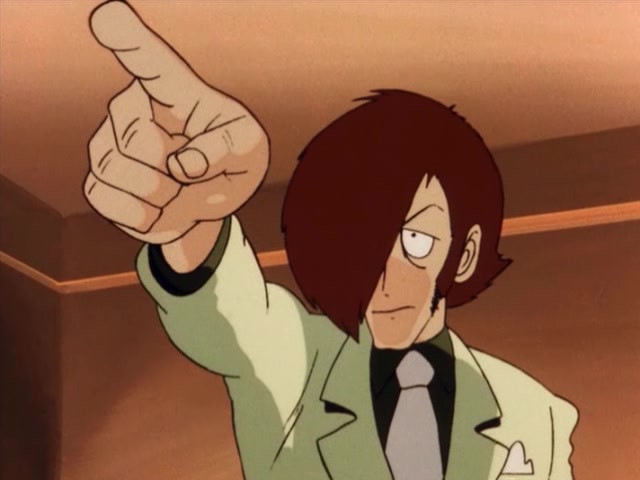
When engaging with Lupin the Third, the first thing you need to do — immediately — is suspend your disbelief. Gravity will be defied, plot armor will be donned and dropped in whatever way best serves the plot, and sometimes things will get downright paranormal. How paranormal? That's a good question.
We're all the way up to the second-ever TV anime episode, titled "The Man They Called a Magician." The episode is based on chapter 14 of Monkey Punch's original manga (released by TokyoPop as chapter 7, "The Hand Is Quicker Than the Spy.") In it, we meet Pycal: a man who can shoot fire from his fingers, levitate, and who (apparently) is impervious to bullets. Even for the notably resilient Lupin Gang, this is a lot.
Sleight of Hand

Pycal is Lupin's second-ever onscreen foe, and he's not messing around. Technically he's called "Paikaru," which is also another name for baijiu — hence Lupin's comment in the episode that his name sounds drinkable. Let's not get hung up on names, though. This guy introduces himself by setting Fujiko on fire, and that doesn't sit well with Lupin.
After a night resting up at Lupin's hideout, Fujiko is about to be treated to a big breakfast. Or she would be, if Pycal hadn't tracked her down, enduring a hail of bullets from multiple guns of varying sizes and leaving with her in tow. She has something he wants: some valuable slides of film, which she has since dropped off in Lupin's car.
On the one hand, Lupin is raring to rescue his lover. On the other, this dude just had machine gun death rained down on him, got back up, and set Lupin on fire with (it would seem) magic. Fortunately, Lupin can start to unravel most of his tricks. The last of them, it just so happens, can be figured out with the help of that all-important film.
Pycal isn't a magician, as it turns out. He is, however, in possession of some very cool science. Chief among these science-y things is a formula for a thin bulletproof membrane that, when sprayed on a person, makes them impervious to bullets and fire for a set amount of time. Lupin and Pycal eventually square off; but when Pycal sets Lupin aflame again, all he manages to burn up is his own film. The encounter devolves into a fire fight, with the victor being whoever's bulletproof spray is freshest. That would be Lupin... meaning Pycal is eventually burned to death.
Maybe.
Love and Lies

It's still early doors yet for Lupin and Fujiko, at least as far as the anime is concerned. As time goes on, their relationship (and what others think of it) will become a pivotal aspect of the story. 2018's Part V in particular relies heavily on examining all the relationships among the cast, with their strange romance being the strongest through-line. Having Fujiko finally demand to know what they are to each other, and getting an answer, is some of the most rewarding anime I've watched.
From the first episode, we get a sufficient surface-level view of their dynamic. She's operating in her own interests, with full awareness that Lupin has a weakness for her. Lupin is also aware of his weakness for her. And it's pretty clear that, whatever else he may say, he knows that any dealings with her have a high probability of ending in betrayal. He just goes ahead regardless.
Fujiko's in the midst of her own machinations with Pycal: carefully cultivating the same level of loyalty in him that she already has in Lupin, then sending them off to go toe-to-toe for dominance. Her aim is, of course, Pycal's film (or, more specifically, the formula on it). But she does, however briefly, show a bit of concern and emotional attachment for Lupin. It's when he's out of earshot, but it's there. And boy, will it stay out of earshot for a long time.
Paranormal Activity

Aspects of the sci-fi and supernatural — the ancient tech of The First, for example, or the strange history-magic of Part II's Rose of Versailles crossover episode — became more common in Lupin the Third the longer it went on. And, in particular, they became more baked into the anime's worldview the more Indiana Jones-esque it became. But Monkey Punch was no stranger to such things.
Kyosuke Mamo (a different Mamo from The Mystery of Mamo) was one of his creations: a mad sci-fi writer from the future who used his knowledge of time travel to attempt to put an end to the entire Lupin line. In fact, Mamo and Pycal would cross paths in the 2018 OVA Is Lupin Still Burning?, which Monkey Punch co-directed as a celebration of the manga's 50th anniversary. (Mamo will appear in Part I as well, with an altered back story... but all in good time.)
In other words, things of a fully sci-fi nature have always been welcome here. Which makes a character like Pycal all the more interesting. His story hammers home that, even in a world of strange happenings, everything must be somehow explicable beyond a hand-wave.
We see this in action constantly. Goemon's Zantetsuken operates well beyond the means of any real sword. But it's forged from a meteor and wielded by a legendary samurai. The gang regularly encounters technological marvels... but they are technological. At least, this is the general rule. There will be several exceptions to prove it, especially when Lupin goes Pink Jacket. (Or when Mamoru Oshii gets involved... speaking of things for another time.)
Of course, in the next episode he apparently meets a witch named Linda... so perhaps this whole blog post will go up in flames like Pycal's film. I guess we'll see. And (like I mentioned last week) Pycal does come back in a TV special, armed with a new bag of tricks. Remember when I said he may or may not have burned to death? Yeah... it's complicated.
For now, if you want go back and watch from the beginning, there are lots of ways to do so — including a very nice Blu-ray set:
---
Like what I do? Consider dropping me a tip on Ko-fi — or bookmark the page, since I'll begin offering fresh content over there in the coming weeks!
May 4, 2022
Lupin the Third Rewind: Is Lupin Burning?
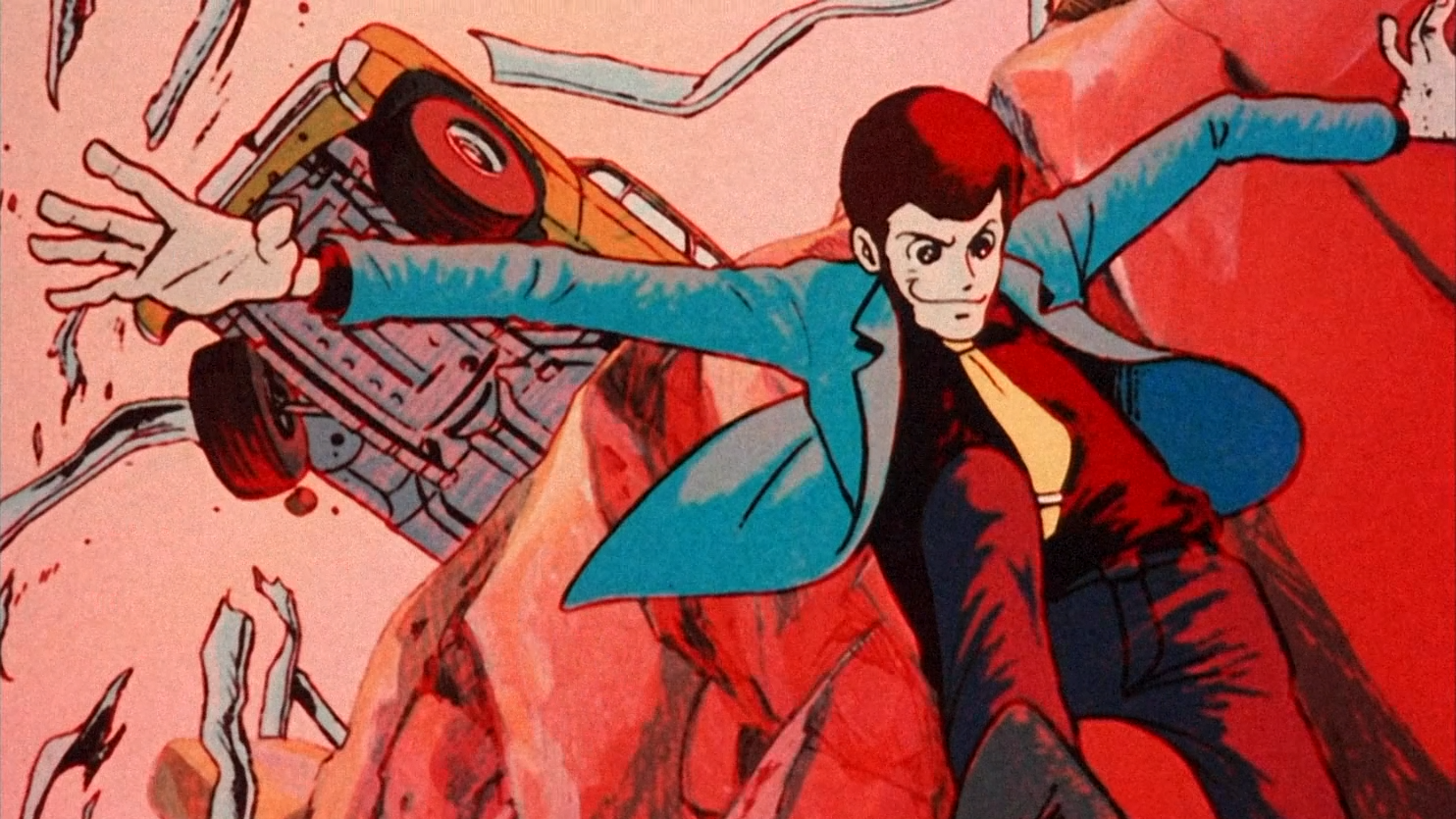
Last year was the 50th anniversary of the anime adaptation of Lupin the Third. That means I spent even more time than usual talking it up over on Crunchyroll, Otaku USA, and wherever else I could get away with it.
It was a formative series for me. The Castle of Cagliostro was the first time I looked at an anime and went, "Damn, there's something really special here." And in recent months, I've found myself revisiting and researching it for a (long-overdue) (to-be-announced) short story.
So as I return to blogging after much longer than intended... I figured, what the hell. If I'm going back, you're going back.
The history of the animated series is fascinating to me, because it's evolved so much over time. And a lot of that evolution was by necessity, and a lot of that was tied weirdly directly to — of all things — post-War Japanese economy. And other things. But that was there.
Those changes began nearly as soon as the anime itself did. So that's what I'm here to look into, and drag you through with me. At least for Part 1. Maybe more. But let's not get ahead of ourselves.
Watch Lupin the Third Part 1: "Is Lupin Burning?"
Lighting up the Racetrack

"Is Lupin Burning?" was the beginning of the beginning — not counting the pilot film, of course. It aired on October 24, 1971, and adapted (very, very loosely) Chapter 53 of Monkey Punch's original manga. (You'll find it in U.S. editions as Chapter 55, "Grand Theft Auto.") When I say "very loosely," I mean... yeah. We'll save that 'til later.
Lupin loves to drive fast. So of course, when he's invited to take part in a Formula 1 race, he accepts. In fact, it's a trap: all of Hida Speedway has been designed to "accidentally" kill him at a variety of turns. The mastermind? Scorpion (referred to as "Mister X" in later episodes), who wants to not only rid himself of Lupin, but demoralize Lupin's allies.
Of course, Lupin is only sort of dumb. He knows it's a trap. So he and Jigen come up with a plan to swap out mid-race, with Jigen dressed identically and driving an identical Ferrari. Meanwhile, Lupin sneaks off to the nearby Miracle Hotel to rescue Fujiko from Mister X's tickling machine. (You heard me.) Oh, right, and Zenigata is also in the race. Because he's convinced Lupin will do something before the day is out.
In the end, Lupin wins, flings the booby-trapped trophy back at Mister X's lackeys in the crowd, and blows up the stadium. Mister X, watching at a safe distance, is convinced that Lupin is (literally) burning. He's not, of course. But he does get caught by Zenigata, who was tipped off to his plan by Fujiko in exchange for ripping up her arrest warrant. Lupin escapes, Zenigata is left lugging a wrecked car to jail, and Lupin pops up in Fujiko's car to reassure her that he thinks treachery makes her hot.
So, how much of this is from the manga? Basically the race itself, Lupin and Jigen swapping places, and Zenigata also being in the race and (nearly) serving as his alibi. The original story involved Lupin taking off mid-race to rob a bank. Here, though, all he did was cheat, and stop himself from getting murdered.
Thief of Speed

It's still early days yet — Lupin the Third won't really start to change whole-hog until its new showrunners come in mid-season. But there's already an echo of what one of those major changes will be: the idea of Lupin stealing hypothetical things as opposed to carrying off a genuine heist.
When Lupin is on the stand accepting his exploding trophy, Zenigata initially comments that "all he's stolen is time." Of course, he eventually gets the tip-off from Fujiko that, if nothing else, there was some top-tier cheating going on. Which is enough, I guess, if you're the World's Greatest Thief with a detective on your tail.
In retrospect, it's interesting to note the similarity to the end of 1979's The Castle of Cagliostro: a film where Hayao Miyazaki would go out of his way to depict a less materialistic, more relatable Lupin. One who uses disposable lighters, who's clearly got several years of experience behind him. In Cagliostro, Zenigata notes to Clarisse that Lupin has stolen her heart — a much bigger get than any physical treasure.
So I might as well introduce the recurring theme of the journey from manga to anime. Which is that the Japanese Economic Miracle hit Monkey Punch like a freight train. The idea of being able to Have Things was a huge deal for him, which colored the manga. A lot. By the time the anime went into production, though, being able to afford things (hell, even the idea that the economy was on an upswing) was old news. A possession-hungry Lupin didn't resonate.
We'll see how that affects the character much more later. But for now, it's interesting to see a dash of that.
Cops and Robbers

Speaking of Zenigata. He's got one hell of a driving monologue, as he describes his and Lupin's respective destinies. As a descendant of Heiji Zenigata, it is his fate to chase, and catch, the descendant of Arséne Lupin. If things were different... Well, we'll go into that later.
Putting my thoughts together for this article, I ended up learning more about Heiji Zenigata's origins. While the character is an Edo-era detective, he was created as recently as 1931. Author Kodou Nomura based him somewhat on Sherlock Holmes, publishing his adventures in a serialized format. And while the original Lupin had his own bespoke detective rival in Ganimard, we all know by now how much Holmes (or rather, "Herlock Sholmes") figures into Arséne Lupin's history.
They shared a few stories, much to Arthur Conan Doyle's chagrin. And in those collected volumes, Lupin had a great little speech that stuck with me:
“You see, monsieur, whatever we may do, we will never be on the same side. You are on one side of the fence; I am on the other. We can exchange greetings, shake hands, converse a moment, but the fence is always there. You will remain Herlock Sholmes, detective, and I, Arsène Lupin, gentleman-burglar. And Herlock Sholmes will ever obey, more or less spontaneously, with more or less propriety, his instinct as a detective, which is to pursue the burglar and run him down, if possible. And Arsène Lupin, in obedience to his burglarious instinct, will always be occupied in avoiding the reach of the detective, and making sport of the detective, if he can do it.”
Whether Zenigata's speech was meant to mirror Lupin's speech to Sholmes, or whether it's just happy happenstance, I'll probably never know. But I love to see this mentality seeded throughout the history of the series, starting from the very first episode.
Next up is "The Man They Called a Magician," a very strange little episode that led to (sorry) one of my least favorite specials many years later. I'll be hitting that one up next Wednesday.
---
Like what I do? Consider dropping me a tip on Ko-fi — or bookmark the page, since I'll begin offering fresh content over there in the coming weeks!
Lupin the Third Rewind: "Is Lupin Burning?"
Last year was the 50th anniversary of the anime adaptation of Lupin the Third. That means I spent even more time than usual talking it up over on Crunchyroll, Otaku USA, and wherever else I could get away with it. It was a formative series for me. The Castle of Cagliostro was the first time I looked at an anime and went, "Damn, there's something really special here." And in recent months, I've found myself revisiting and researching it for a (long-overdue) (to-be-announced) short story.
So as I return to blogging after much longer than intended... I figured, what the hell. If I'm going back, you're going back.
The history of the animated series is fascinating to me, because it's evolved so much over time. And a lot of that evolution was by necessity, and a lot of that was tied weirdly directly to — of all things — post-War Japanese economy. And other things. But that was there.
Those changes began nearly as soon as the anime itself did. So that's what I'm here to look into, and drag you through with me. At least for Part 1. Maybe more. But let's not get ahead of ourselves.
Watch Lupin the Third Part 1: "Is Lupin Burning?"
Lighting up the Racetrack
"Is Lupin Burning?" was the beginning of the beginning — not counting the pilot film, of course. It aired on October 24, 1971, and adapted (very, very loosely) Chapter 53 of Monkey Punch's original manga. (You'll find it in U.S. editions as Chapter 55, "Grand Theft Auto.") When I say "very loosely," I mean... yeah. We'll save that 'til later.
Lupin loves to drive fast. So of course, when he's invited to take part in a Formula 1 race, he accepts. In fact, it's a trap: all of Hida Speedway has been designed to "accidentally" kill him at a variety of turns. The mastermind? Scorpion (referred to as "Mister X" in later episodes), who wants to not only rid himself of Lupin, but demoralize Lupin's allies.
Of course, Lupin is only sort of dumb. He knows it's a trap. So he and Jigen come up with a plan to swap out mid-race, with Jigen dressed identically and driving an identical Ferrari. Meanwhile, Lupin sneaks off to the nearby Miracle Hotel to rescue Fujiko from Mister X's tickling machine. (You heard me.) Oh, right, and Zenigata is also in the race. Because he's convinced Lupin will do something before the day is out.
In the end, Lupin wins, flings the booby-trapped trophy back at Mister X's lackeys in the crowd, and blows up the stadium. Mister X, watching at a safe distance, is convinced that Lupin is (literally) burning. He's not, of course. But he does get caught by Zenigata, who was tipped off to his plan by Fujiko in exchange for ripping up her arrest warrant. Lupin escapes, Zenigata is left lugging a wrecked car to jail, and Lupin pops up in Fujiko's car to reassure her that he thinks treachery makes her hot.
So, how much of this is from the manga? Basically the race itself, Lupin and Jigen swapping places, and Zenigata also being in the race and (nearly) serving as his alibi. The original story involved Lupin taking off mid-race to rob a bank. Here, though, all he did was cheat, and stop himself from getting murdered.
Thief of Speed
It's still early days yet — Lupin the Third won't really start to change whole-hog until its new showrunners come in mid-season. But there's already an echo of what one of those major changes will be: the idea of Lupin stealing hypothetical things as opposed to carrying off a genuine heist.
When Lupin is on the stand accepting his exploding trophy, Zenigata initially comments that "all he's stolen is time." Of course, he eventually gets the tip-off from Fujiko that, if nothing else, there was some top-tier cheating going on. Which is enough, I guess, if you're the World's Greatest Thief with a detective on your tail.
In retrospect, it's interesting to note the similarity to the end of 1979's The Castle of Cagliostro: a film where Hayao Miyazaki would go out of his way to depict a less materialistic, more relatable Lupin. One who uses disposable lighters, who's clearly got several years of experience behind him. In Cagliostro, Zenigata notes to Clarisse that Lupin has stolen her heart — a much bigger get than any physical treasure.
So I might as well introduce the recurring theme of the journey from manga to anime. Which is that the Japanese Economic Miracle hit Monkey Punch like a freight train. The idea of being able to Have Things was a huge deal for him, which colored the manga. A lot. By the time the anime went into production, though, being able to afford things (hell, even the idea that the economy was on an upswing) was old news. A possession-hungry Lupin didn't resonate.
We'll see how that affects the character much more later. But for now, it's interesting to see a dash of that.
Cops and Robbers
Speaking of Zenigata. He's got one hell of a driving monologue, as he describes his and Lupin's respective destinies. As a descendant of Heiji Zenigata, it is his fate to chase, and catch, the descendant of Arséne Lupin. If things were different... Well, we'll go into that later.
Putting my thoughts together for this article, I ended up learning more about Heiji Zenigata's origins. While the character is an Edo-era detective, he was created as recently as 1931. Author Kodou Nomura based him somewhat on Sherlock Holmes, publishing his adventures in a serialized format. And while the original Lupin had his own bespoke detective rival in Ganimard, we all know by now how much Holmes (or rather, "Herlock Sholmes") figures into Arséne Lupin's history.
They shared a few stories, much to Arthur Conan Doyle's chagrin. And in those collected volumes, Lupin had a great little speech that stuck with me:
“You see, monsieur, whatever we may do, we will never be on the same side. You are on one side of the fence; I am on the other. We can exchange greetings, shake hands, converse a moment, but the fence is always there. You will remain Herlock Sholmes, detective, and I, Arsène Lupin, gentleman-burglar. And Herlock Sholmes will ever obey, more or less spontaneously, with more or less propriety, his instinct as a detective, which is to pursue the burglar and run him down, if possible. And Arsène Lupin, in obedience to his burglarious instinct, will always be occupied in avoiding the reach of the detective, and making sport of the detective, if he can do it.”
Whether Zenigata's speech was meant to mirror Lupin's speech to Sholmes, or whether it's just happy happenstance, I'll probably never know. But I love to see this mentality seeded throughout the history of the series, starting from the very first episode.
Next up is "The Man They Called a Magician," a very strange little episode that led to (sorry) one of my least favorite specials many years later. I'll be hitting that one up next Wednesday.
---
Like what I do? Consider dropping me a tip on Ko-fi — or bookmark the page, since I'll begin offering fresh content over there in the coming weeks!
June 30, 2021
Abandoned: What Lies Inside Schrödinger's Blue Box

Every week I told myself: this week is the week I get back to blogging. Every week I stared at the computer and had no idea what to say. I wasn't sure what to do with my corner of the Internet anymore, now that people are actually letting me say what I want to say in a lot more places (fools), but I finally got there. So expect weekly updates once again where I rant about storytelling in the places I'm not paid or qualified to talk about it.
So what got my jimmies rustled enough to break a six-month silence and overcome severe bloggers' block? Only this whole Blue Box Game Studios thing.
There's no time. I'll explain in the car.
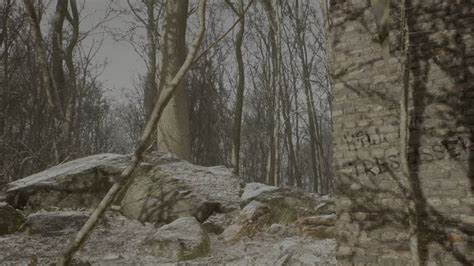
So there's a game coming out in Q4 called Abandoned, from a little company called Blue Box Game Studios. Blue Box has very little to its name, and what it does have is by and large failure. A Kickstarter for a game called Rewind was refunded after raising only $207 of its $12k goal. After saying it would be backed by a private investor, Blue Box instead released The Haunting: Blood Water Curse... a game that was apparently bad, and which was going to get an upgrade this year. And instead, we are getting Abandoned.
Blue Box apparently has many people working there, but only one visible: Hasan Kahraman, whose Internet footprint exists, but is minimal. And yet this indie company with zero wins "caught the eye" of Sony, and big hitters like Nuare Studio and Dekogon Studios are on board for the project. The blog post announcing the game promises lots but reveals little, and the front-facing communication is about how Kahraman just can't tell us things right now.
Also — and most importantly — all their projects look kinda like Silent Hill. And then when games journalist Geoff Keighley announced that he would be part of the Abandoned reveal, it all kicked off.

For those who don't recall — and boy, you're in for a fun rabbit hole if this is new to you — a new studio made its appearance at the Spike VGAs in 2012. Led by Joakim Mogren, Moby Dick Studio was set to release a game called The Phantom Pain. Fans picked up that something was odd. The Phantom Pain looked awfully Metal Gear-ish, and the studio had only been founded two weeks prior to their announcement.
Long story short, Moby Dick Studio was an invention of Hideo Kojima to build hype for Metal Gear Solid V: The Phantom Pain. Kojima's just a mad lad like that.
So what happens when we have every reason to believe a new Silent Hill game is on the horizon, yet another indie studio from Europe pops up out of nowhere with suspiciously good contacts, and the head of it is a secretive dude with the initials HK, and whose surname translates to "Hideo" in Japanese? Come on, you are way ahead of me already.
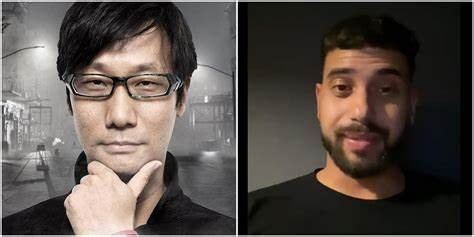
The thinking is this: Hasan Kahraman is a character created by Hideo Kojima, and Abandoned is another Phantom Pain scenario. Lots of people believe it. Bloomberg video games reporter Jason Schreier was confident enough about the theory to go full red-string on main. Videos, articles, and entire Reddit communities have popped up to discuss whether this is true, and the evidence is compelling. Hidden messages, numbers hidden in Kahraman's PSN profile, just the fact that the whole thing feels like such a Kojima move.
And yet Kahraman insists he is a real person, and all his coworkers are real people. He just can't tell us who they are, or what's going on. And he's also bumped the gameplay reveal to August (Kojima's birth month!), while posting Twitter vids insisting he and his unnamed coworkers are real.
So what's going on? I think I may have a theory. A wild one, but a theory.
See, Kojima has pulled this kind of thing before. He's played this literal card. He's set up a fake European studio with a seemingly unskilled programmer, claimed to have nothing to do with them, then sent the exact same video games journalist to do the launch interview. There's no way in hell he could make it fly again as an ARG... unless he had already accounted for us being wise to him.
Think about the clues we get. They're too easy. The initials HK? The names meaning the same thing? A series of Silent Hill-esque games? The letters "P" and "T" being notably blocked out of a certain shot in the announcement trailer? The game moving to August? It's all so easy. It's like we were meant to follow this trail.
And where does the trail lead us? A blue box.

Kojima has made no secret of his love of David Lynch. Where do we see a "blue box" in Lynch's work? Mulholland Dr. What is it? The link between reality and illusions — the link between fictional and fictionalized versions of people in an industry fraught with corruption.
Here we have a game designer who's gotten a straight-up fairy godmother deal, who doesn't want us to ask why his situation seems so suspicious, who can't explain to us why his story seems so blotchy, who keeps putting off his explanation. And we have red strings that lead back so perfectly to him and his company and his whole scene being a Kojima creation.
This is the theory: Hasan Kahraman is, in the fiction of this ARG, a character who doesn't know he's a Kojima creation. He believes he is an original creator releasing an original game, but he's being confronted on all sides by fans who see the clues. We're all a part of the fiction: we're playing his antagonists. We're doing exactly as we've trained ourselves to do, following leads that can't be coincidence because they're just too perfect. All while a fictional character, trying to create his dream project and just thinking he got super lucky, slowly comes to terms with the fact that he is living in an illusion on the other side of his own blue box.
... at least, that's what I'd say if Blue Box had not actually made profit off The Haunting.
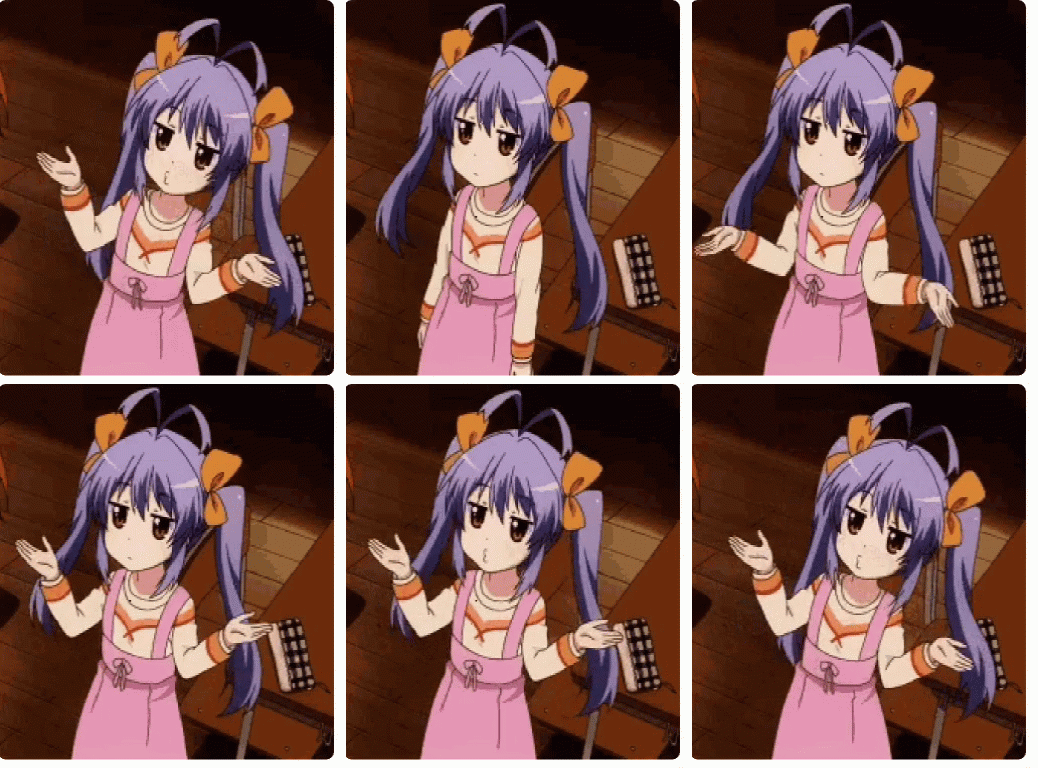
See, it's one thing to play a long game. And I think Kojima would be willing to play very long games. But six or seven years long, in an industry where deals are made and broken so quickly that one was announced while I wrote this? Running a Kickstarter and banking on it to fail? Deliberately releasing a bad and buggy game and taking people's money for it?
If this is an ARG, it's a bad ARG. And I don't think Kojima would do something like release a buggy game under a fake name, take money, and then go "haha just kidding it was all for Silent Hill, you're not mad right?" He's eccentric as hell, but there's a line.
Figure in, too, just how much of what's been getting around isn't actually true. "Hideo" and "Kahraman" do translate to each other, according to Google Translate; but it's a tenuous link relying on alternate kanji readings, and is still flimsy at best. And his games looking Silent Hill-ish confirm only one thing: he likes and is inspired by Silent Hill.
A lot of the influence behind the spread of the rumor came from two places: a YouTube channel later proven to be unconnected to Blue Box, and Schreier's own confidence in the conspiracy. Which he recanted on the same day.
So Kara, are you saying that this guy Hasan Kahraman really is just a guy who's made years' worth of flubs, somehow got surprisingly major deals for undisclosed reasons, and all the clues and similarities are coincidences? Yep. That's what I'm saying.
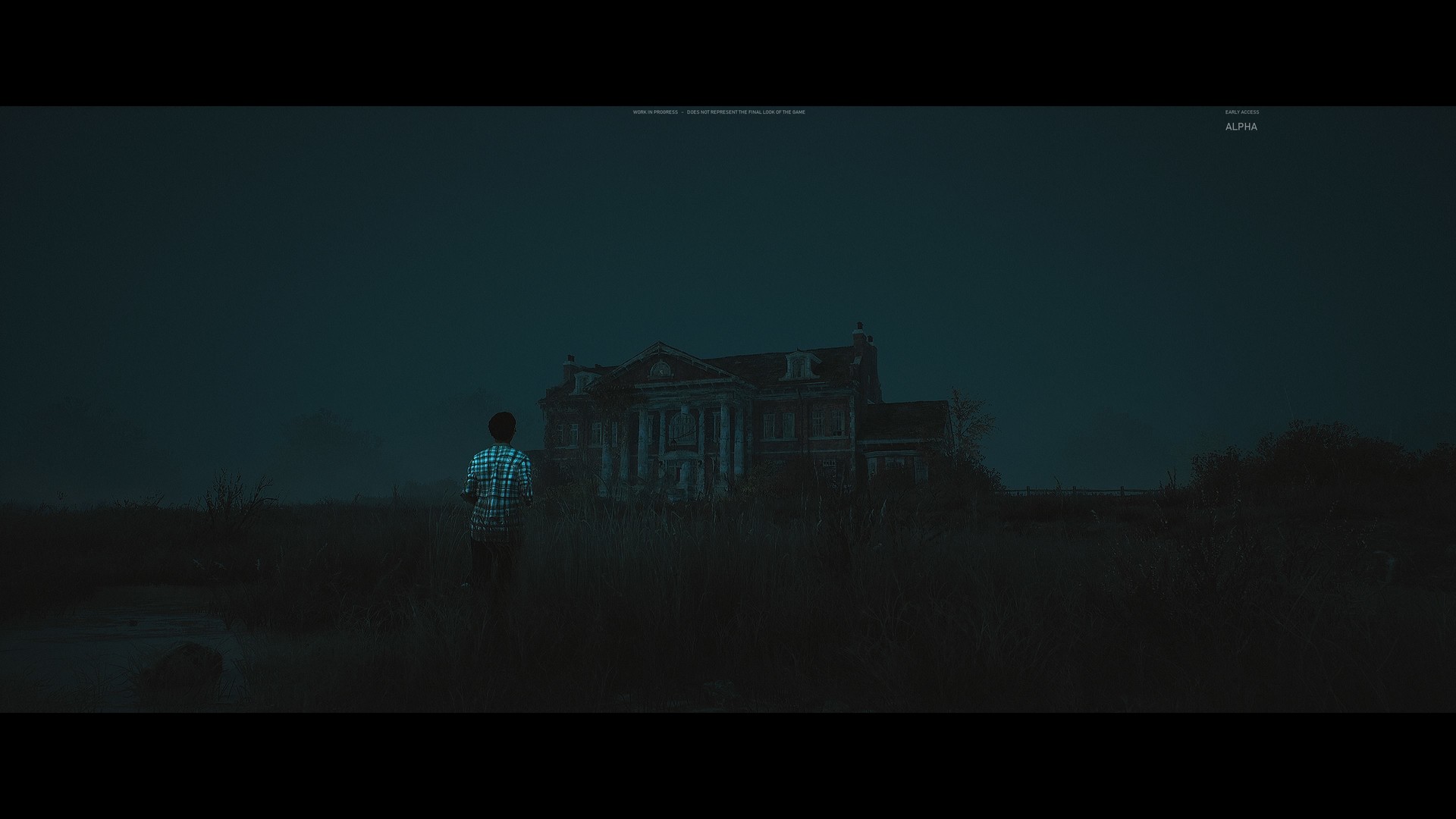
The final nail in the coffin for me was his June 25 Twitter update. Many people have argued that this is a convincing actor, or even a highly-advanced CG render. But what I see when I look at this video is a dude who is legitimately stressed and scared. This is a guy in over his head.
I don't know much about Kahraman. But operating on the most basic assumption that he's real, I can assume — and I apologize, I'm sure he's a lovely dude — that marketing is not his strong suit. An absence of information could be a sign of a company being fake, but it can also be a sign of just not knowing what you're doing. Awkwardly refusing to divulge more of your game could be a red flag that you are secretly a fictional character created by Hideo Kojima, or it could mean you're very awkward at self-promotion.
"But big studios!" For assets? It's quite possible. Now, it does to me seem wild that Rewind would have caught Sony's eye. But I have seen weirder deals be struck in many industries.
As far as I'm concerned, this is the real story:
Hasan Kahraman is real. Blue Box Game Studios is real. He might be the totality of Blue Box Game Studios, and wanted to give the impression that he wasn't, and that's why he names no co-workers. That, I can't say. After multiple failures, he's gotten the deal of a lifetime: someone's going to fund a game for him. Perhaps he's created something that will use a new peripheral or a new technology; perhaps not. But he is making something.
He's also clearly a Silent Hill fan. It's influenced his work for years. So when mild buzz started that he was actually a Kojima invention, maybe he rode it, in hopes that when all eyes were on him, he could flip it and reverse it. (Perhaps that's the real reason for the swiftly deleted "We're making something that starts with S and ends with L" tweet, which he's been apologizing for ever since.) Or maybe not, maybe he didn't encourage it at all.
Either way, he is now staring down the barrel of the Abandoned gameplay release: the moment everyone cracks it open and realizes that, no, it's not the game of their dreams, it's exactly what was advertised. This is an indie dev who bit off more than he could chew, one way or another, and he's watched it spiral out of control, and realized he can never deliver on the hype he's generated, because that hype isn't for him or his game.
I could be wrong, of course. Maybe Kahraman's work has been faked and backdated. Maybe Kojima is working with a real person with a real history, in order to add verisimilitude to his story. But the more you poke, the less of a slam dunk the story is.
Someone on Twitter said something along the lines of — when the Abandoned gameplay trailer drops, everyone's going to get either a detective badge or a clown nose. I have no idea which one I'm getting. But I will say, if you're on this roller coaster, enjoy it while you can. I don't think any gameplay trailer is going to cash this check.
December 26, 2020
NEW SHORT STORY: Feather Fall in Corvid-19
For many years now, I've been attending or working at RavenCon, a Virginia-based literary and sci-fi convention. I was there for the first one, when it was held in an airport hotel. I've performed there, done panels, and for a few years ran their Artist/Author Alley. Unsurprisingly, they did not hold an event this year — and have made the call early not to do so next year.
Anyone who's run or worked a con knows that taking a year off can be detrimental to an event on multiple levels. Be it the staff's own money, the money of people who have already bought memberships, keeping the name and event active and relevant enough to hold interest... basically, cancelling sucks. But there's also really not been much of a choice this year.
It's been cool to see events working around this in different ways, from virtual events to smaller interactive panels scattered throughout the year. In the case of RavenCon, they're keeping themselves funded and active with a crowdfunding campaign and new short story anthology. And they've already reached their crowdfunding goal, but that shouldn't stop you from giving this book a look.
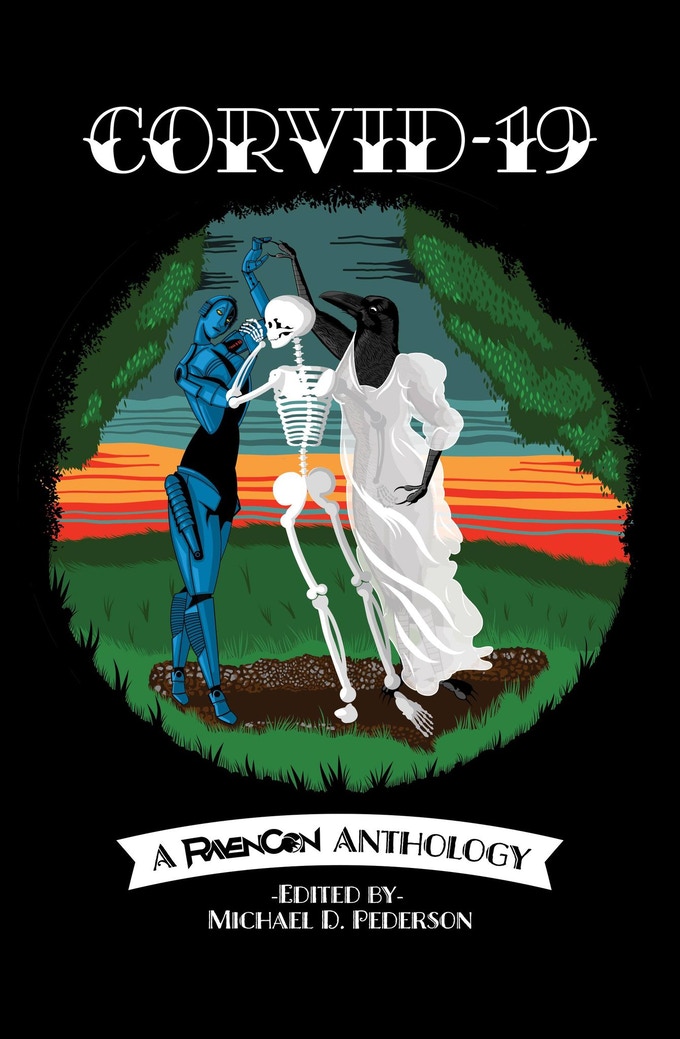
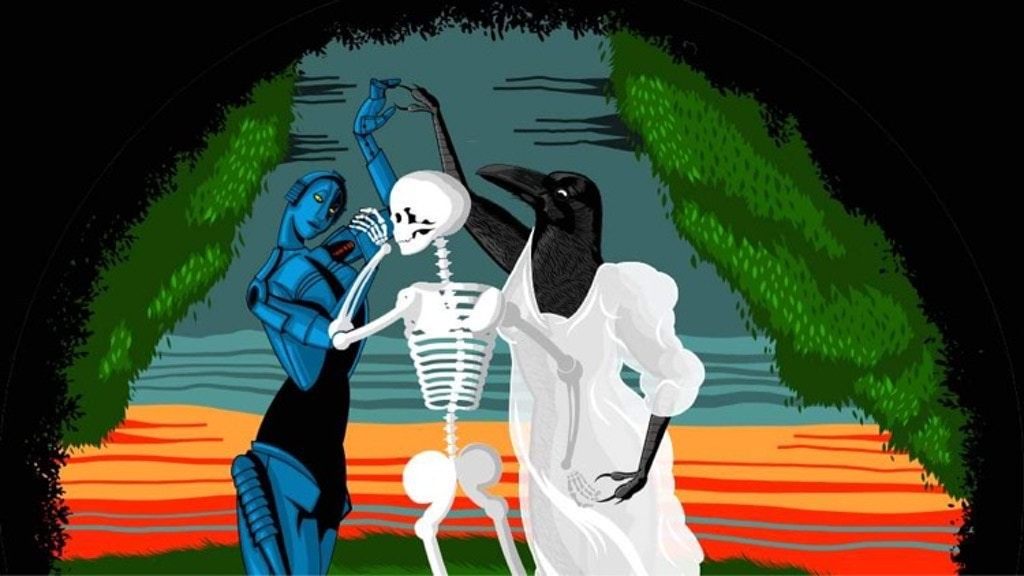
Corvid-19 sums itself up pretty well in its title. Besides the obvious pun, it's also literally what it say: a collection of 19 stories that, in some way, each involve a crow. As a previous guest of the event, and a planned guest for the 2020 convention before it was cancelled, I was one of the authors featured in the book.
The stories are all over the map in terms of genre and tone. We basically just had the one proviso of including a corvid. Mine, "Feather Fall," was written based on a lot of what I was feeling (and to be fair, still am feeling) during lockdown. In the story, a girl with no name and no memory finds herself at a café for wayward souls, in the middle of a city where time never seems to budge past twilight.

It's unclear why she's there and under what circumstances she'll be allowed to leave, but the girl discovers that there is a bridge to a different world, accessible via the feathers of the café's owner.
"Feather Fall" doesn't come from a specific idea in need of a home, but rather a series of images and moods I'd had floating around in my head while navigating days alone. With winter upon us, it feels even more appropriate to be talking about it. There's a lot of that same darkness going around, inside and outside. Poking at it usually feels like a bad idea. But sometimes to get past it, we need to step through it.
As much as I love dark imagery and horror and all those gruesome things, I like to write stories with at least some shred of optimism. I want to know that, if someone's found this story on their worst day, I've given them something to ease it a little — the way my favorite stories have done for me. "Feather Fall" touches on some of the darker parts of my own life, but I feel like it's ultimately a happy story.

That's what I really want to be able to offer right now: happy stories. The idea that there is an other side to the darkness, and it's okay to lose sight of that sometimes. We don't have to always remember that the darkness will end. I sure don't. But it will, and that's why it's worthwhile to keep pushing ahead. And to help others on the days they can't.
I really hope you'll pitch in on the Corvid-19 Kickstarter and help them push ahead to even bigger goals. There are also music rewards, the chance to be on an RPG podcast, and opportunities to become a part of an upcoming novel by one of several authors (not myself - though if you really want that, leave a comment and maybe they'll add it to the stretch goals?). Thanks in advance for your support, and I hope you enjoy the book!
NEW SHORT STORY: "Feather Fall" in Corvid-19
For many years now, I've been attending or working at RavenCon, a Virginia-based literary and sci-fi convention. I was there for the first one, when it was held in an airport hotel. I've performed there, done panels, and for a few years ran their Artist/Author Alley. Unsurprisingly, they did not hold an event this year — and have made the call early not to do so next year.
Anyone who's run or worked a con knows that taking a year off can be detrimental to an event on multiple levels. Be it the staff's own money, the money of people who have already bought memberships, keeping the name and event active and relevant enough to hold interest... basically, cancelling sucks. But there's also really not been much of a choice this year.
It's been cool to see events working around this in different ways, from virtual events to smaller interactive panels scattered throughout the year. In the case of RavenCon, they're keeping themselves funded and active with a crowdfunding campaign and new short story anthology. And they've already reached their crowdfunding goal, but that shouldn't stop you from giving this book a look.
Corvid-19 sums itself up pretty well in its title. Besides the obvious pun, it's also literally what it say: a collection of 19 stories that, in some way, each involve a crow. As a previous guest of the event, and a planned guest for the 2020 convention before it was cancelled, I was one of the authors featured in the book.
The stories are all over the map in terms of genre and tone. We basically just had the one proviso of including a corvid. Mine, "Feather Fall," was written based on a lot of what I was feeling (and to be fair, still am feeling) during lockdown. In the story, a girl with no name and no memory finds herself at a café for wayward souls, in the middle of a city where time never seems to budge past twilight.
It's unclear why she's there and under what circumstances she'll be allowed to leave, but the girl discovers that there is a bridge to a different world, accessible via the feathers of the café's owner.
"Feather Fall" doesn't come from a specific idea in need of a home, but rather a series of images and moods I'd had floating around in my head while navigating days alone. With winter upon us, it feels even more appropriate to be talking about it. There's a lot of that same darkness going around, inside and outside. Poking at it usually feels like a bad idea. But sometimes to get past it, we need to step through it.
As much as I love dark imagery and horror and all those gruesome things, I like to write stories with at least some shred of optimism. I want to know that, if someone's found this story on their worst day, I've given them something to ease it a little — the way my favorite stories have done for me. "Feather Fall" touches on some of the darker parts of my own life, but I feel like it's ultimately a happy story.
That's what I really want to be able to offer right now: happy stories. The idea that there is an other side to the darkness, and it's okay to lose sight of that sometimes. We don't have to always remember that the darkness will end. I sure don't. But it will, and that's why it's worthwhile to keep pushing ahead. And to help others on the days they can't.
I really hope you'll pitch in on the Corvid-19 Kickstarter and help them push ahead to even bigger goals. There are also music rewards, the chance to be on an RPG podcast, and opportunities to become a part of an upcoming novel by one of several authors (not myself - though if you really want that, leave a comment and maybe they'll add it to the stretch goals?). Thanks in advance for your support, and I hope you enjoy the book!