Kara Dennison's Blog, page 25
December 19, 2018
ALWAYS: For the Living and the Dead
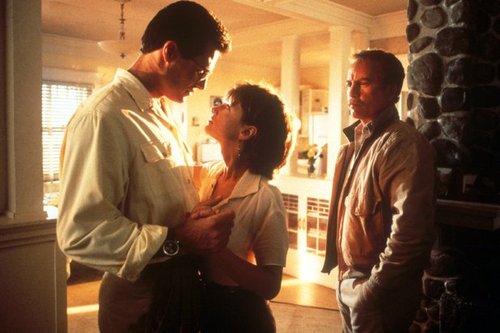
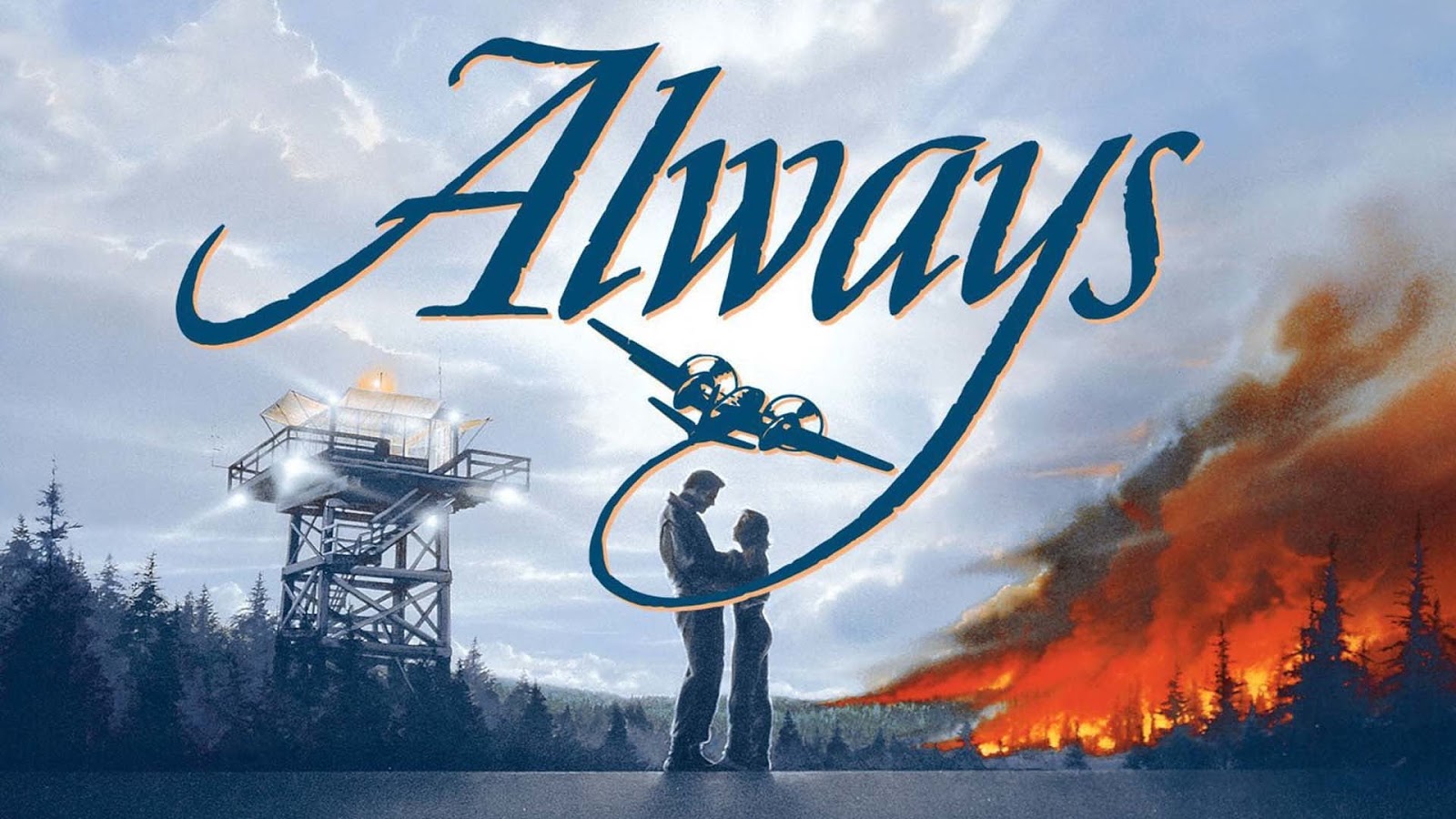
I like to think I have a fairly decent knowledge of movies, at least those by really quite famous directors and especially those released within my lifetime. So I was a little surprised to learn of the existence of Always, a 1989 Steven Spielberg film based on 1943's A Guy Named Joe. And I don't mean as in "I forgot and then remembered," I mean as in "I had no idea that this was a thing that existed, and was still a little on the fence about its existence until my friend brought out his LaserDisc copy."
Scratch the surface of Google, as I did while in search of images for this blog, and you'll see Always referred to as everything from "a forgotten classic" to "Spielberg's worst movie." While it hasn't gone on to be particularly memorable in the zeitgeist—and while admittedly maudlin ghost/human romance is a divisive subgenre—I'm not sure it warrants placement below the 2005 War of the Worlds.
But again, your mileage may vary. Apparently the remake came about because Spielberg and Richard Dreyfuss both stanned hard for A Guy Named Joe, and honestly if two guys are so in love with a weepy wartime ghost love story that they wanna do it themselves, I'm here for that. Go, boys.
While one would think the plot of Always—guy gets girl, guy nearly loses girl, guy dies horribly in fire, guy is forced to watch girl move on to other guy and then move on himself—would be widely accessible to the hopeless romantics and those who have loved and lost, there's a grim little twist that keeps it from being a proto-What Dreams May Come: our hero, daredevil aerial firefighter Pete, is kiiiiiind of a dick. And that dickishness, while paving the way for the character development requires, also becomes the core factor in the character development of his love interest, Holly Hunter's Dorinda.

Looking at Pete in Always from any sort of analytical standpoint requires us to do two highly contradictory things: assume Pete is really there after his death, and assume he isn't. Because both setups tell two important facets of Dorinda's story.
In public, Pete and Dorinda are silly, cute, and frankly made for each other. Behind closed doors, he calls her an idiot. His (occasionally quite accurate) observations that she is too unskilled for certain tasks are delivered more like a disapproving father than a concerned lover. He never says "I love you" where she can hear it. And her needs and wants in their relationship are only acceptable once she has negotiated for them to the point of tears.
Pete is in no way a knowingly abusive person—and thankfully we have his heavenly guide Hap in the form of Audrey Hepburn to remind us in so many words that he really is "one of the good ones." But his rakish egotism doesn't do him any favors when it comes to navigating real feelings, a lesson he only learns once his plane explodes and he's forced to observe her life with limited effect a year afterward.
See, he's back for a reason: it's his turn to serve as "inspiration" (in the Always version of death-and-what-comes-after, inspiration comes from a recently deceased person paying it forward to help someone else realize their full potential before they themselves move on). He believes he's back to help actual human Labrador retriever Ted Baker become a better pilot, despite Hap telling him in advance that that's 100% not what he's here to do.
In fact, he's here to free Dorinda's heart and his own from each other, so that she can find love and move on. As can he.
If you guessed that he really doesn't like this setup and in fact chooses to work against it, then you get zero points because that's a total gimme.
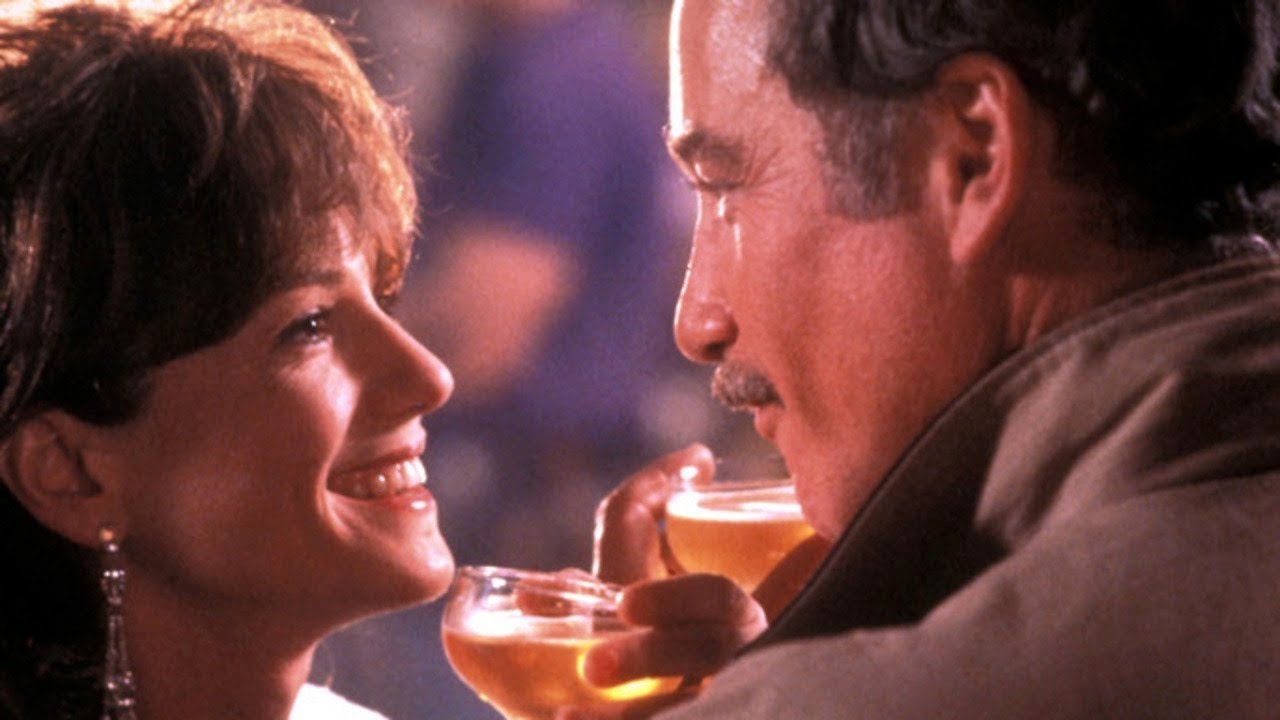
Here's where I hit the first version of the movie: the one where Pete is there as an active and acting presence. The ones where the words Dorinda and Ted and everyone else hears are his actual spoken words he's directing to them in the moment. As the movie would have it.
This presents to us one version of Pete: an actively controlling one. One that actually does border on knowingly, willingly emotionally abusive. One who attempts to influence his surroundings in order to push Dorinda into a corner psychologically where she isn't allowed to forget him. One who, for the love of God, sits next to her, telling her over and over that she belongs to him and she knows it. Imagine that sort of situation taking place between two normal people day to day.
The one mitigating factor—that he's dead and can't actually "have" her—only makes it worse. Now he's in her head, and she can't stop him. The one thing that theoretically gives it a pass actually makes it more garbage.
Fortunately for all of us, the narrative isn't that Pete's a great, misunderstood guy who's never made a mistake and is just doing his best. This is about him letting go, and about freeing her. Hap even lays out for him just how serious his actions are: her life is in a holding pattern until he gets over himself. Thankfully for her, for Ted, for everyone, he finally gets there. And he does absolutely eventually get that, both in life and in death, he was being selfish. It's what allows the movie to end, and for him to walk down the airstrip to whatever comes next.
But let's look at this in the other way the film presents these moments: with an absence of Pete. Because no one truly sees him, and while some people do give the cues he requests to prove they hear them, that doesn't necessarily mean they believe he's there. They're performed in that sort of "I know it's not true because that's crazy, but I'm the only one here, so sure I'll brush my hair out of my eyes just on the off chance."
Once in a while, we even see scenes where he's completely absent. No clever cuts or pans, no dimly-lit Pete blending into the background, nothing. Just our living, breathing characters... occasionally doing little things that seem like they ought to coincide with a word from Pete.

Most notable is a scene just after Dorinda and Ted's first date, where she traces over his name in a log book over and over again... and then, bit by bit, starts to write over it, turning his name into Pete's. But Pete is completely absent from the scene. We don't hear an angry mutter over her shoulder trying to force thoughts of Ted out of her mind.
These moments could very well be Spielberg slyly hinting at Pete's omnipresence while letting other scenes play out. But it also gives us a foothold for a Pete-less reading of Dorinda's scenes: one where, overarching plot of the film aside, he's not really there, and the intrusive thoughts and scoldings really are just coming from her own mind. One where Pete's presence over everyone's shoulder is purely metaphorical, ingrained in people's minds based on his behavior prior to his death.
The really sucky part is, that makes the movie all the more realistic. A person who ground certain thoughts into your head (whether deliberately abusive or unwittingly so) does an amazing job of holding sway over you, even in their absence. And their absence isn't necessarily death—though it often can be. After a separating, a good old-fashioned Facebook block, a restraining order, or even a less permanent separation like a psychologically domineering friend or partner who doesn't live with you but still holds real estate in your brain.
Anyone who's had a difficult friendship or relationship end knows that someone who's done an especially effective number on you doesn't have to be around—or even alive—to mess you up. A Pete-less reading of Always shows Dorinda bogged down by seemingly innocent words, more fights like the one we see early in the movie, and who knows what else.
It's not uncommon or unrealistic to feel stuck, even when the person in question is no longer around. You feel as though you need permission to move on. Even in cases where you yourself affected the separation and death isn't on the table, it's not always as easy as "just forgetting."
Pete was eventually one of the good ones, releasing his hold on the ones he left behind in a way that, for us, generally must come from within. Permission from the one holding us back isn't necessary for moving on, but it's not wrong or uncommon to be stuck believing so.
This is not a lesson for the Petes of the world; if they, like Pete, are one of the good ones, they'll need to understand for themselves what their influence does. This is one for the Dorindas, whether the words holding them back are being spoken here and now, or echoing in memories. It's natural to feel as though you need permission to move on. But you don't. The only permission you need is your own.


November 14, 2018
Am I Allowed to Do This? On Zines and Anthologies

I recently got in copies of The Hybrid, the Twelfth Doctor and Clara zine created by my friend/collaborator/kouhai Ginger to which I contributed a story. The proceeds go completely to charity. I've been in several other collections like this.
I'm also learning a bit more at zine culture as it stands now. For those who know the word but feel a little confused, modern zines aren't quite like the mimeographed goodness fans sent around before the Internet was a household tool. These are mini-books, predominantly (if not entirely) art, based on a fandom or a subset of a fandom (or sometimes a theme combined with a fandom). Many are done for profit, some are done for charity.
And just as with a lot of fan-created books I see going around, I see some interesting hopping back and forth over legality lines. I'm not a lawyer by any stretch, but I work in an industry where I've both sent and received C&Ds.
The "creation" side of fandom is a hugely important one nowadays, but the line between propagating fanworks and stepping on creator toes can be a blurry one. So where is that line? I can't define it for you absolutely, nor will I claim to, but I can at least help a little.
Bear in mind I'm not talking about distributing fanfiction, fanart, or other derivative works freely online—that's something else entirely, and I always encourage respectful fan creations provided they aren't in some way defaming or harming the original product. This refers to cases in which money changes hands, especially when there is a physical product.
Note: Copyright holders have final say.
Before anything else, I should clarify that everything that follows falls flat in the face of a cease and desist, and nothing is more important than what a creator says. Even if you create a completely respectful fanwork, with any funds raised going to the creator's charity of choice, if the creator and/or copyright holder(s) ask you to stop, you stop.
And that's not a tall ask. When you are taking money for a creation derivative of someone else's property, you are—for lack of a better term—in their lane. Creating fan works is a wonderful and positive thing, but what happens to them once they are created is the key.
Therefore, anything I say here always falls in the face of a Cease and Desist, or the rules of any particular venue or service.
So with that said... here are a few ways to figure out if you should be doing that anthology or zine:
1. Has the creator expressly asked that fan works not be sold?
Many creators, especially indie creators, will put out a specific request to their fan base that derivative works not be sold. The Welcome to Night Vale team, for example, loves fan art, but does not want prints of Cecil and co. sold at events.
Not every creator will do this. Those with large fan bases and small pockets tend to be more vocal about it, for obvious reasons. But larger companies—for example, the creators of the Love Live! franchise—will take the time to get very specific about what they will and won't allow when it comes to fan and doujin goods.
This is more common in Japan, where massive events like Comiket are devoted solely to the selling of doujin goods with a heavy percentage of them being based on existing IPs. In those cases, you're more likely to see a yes/no checklist: for example, you may sell prints but not books, keychains but not fan games, etc. They may also have specific guidelines concerning charity publications.
So, before anything else, the best thing to do is check if the rights-holder has flat-out said "no" to a certain kind of thing. And speaking as we were of smaller creators...
2. Is your fan creation likely to dent the income of the creator?

One of the major reasons sales of fan goods go unchecked by (some) larger companies is there's no great financial threat. If the fan creators aren't actively re-routing business away from the rights holders, many will choose to look the other way, provided the fan creations aren't actually duplicating something actually being offered.
Speaking again of smaller-time creators, it's generally not the "done thing" to make money off fan works based on their properties, even if they didn't say you can't. (Obviously if they've said knock yourself out, then knock yourself out.) Things like Undertale and Doki Doki Literature Club are highly popular with a major fan base, but Toby Fox and Dan Salvato are (with the greatest respect) likely still at a stage where if enough people offered fan goods of their properties for sale, their own income might take a hit.
The only problem with this particular mentality, and one I realize and still admittedly struggle with, is it creates a line where it becomes "okay" to not go hands-off. For example: where do games like Bendy and the Ink Machine and Five Nights at Freddy's fall? Both are indie hits, but both have achieved mainstream success and have official manufactured merchandise. (At the same time, The Meatly has offered outlets for fan creations to become canonical game content, thus offsetting that concern a little.) The idea of there being an invisible line beyond which fans can go to town selling their versions of your work is not an appealing one... more a thing to weigh than a thing to calculate.
3. Does your work go directly against the desires and image of the creator?

Back on the topic of Love Live!, there's another sort of fan work that the IP holders really do not want: explicit sexual content. And that's understandable because these are schoolgirls and that's illegal. That's not something that any creator with any sense wants to be associated with, even if the work is clearly fan-created.
This is not to say that anything out-of-character or not in line with canon is somehow horrible. This would be along the lines of depicting explicit violence, gore, or sex in conjunction with an all-ages property. (Unless the IP holders say it's okay. I mean, Junji Ito did some crazy Pokémon shit so you know anything's possible.)
This is actually a fairly hard-line easy one: if it's not part of the content of the original creation and it would be illegal in real life, probably don't do it.
Note too, though, that companies with any degree of brand management may not want their IP depicted in certain ways, even if the content isn't explicit. This is actually one of the main reasons people get C&D letters: they are creating something for the brand without that brand's guidance, which means literally anything could go out there. And even if most people are smart enough to know the difference between fan and official content, sometimes fan work is just that on point, and other times people really just don't know. A copyright notice from an IP holder may well be them wanting to retain that control just in case.
4. Where will the money be going?

This single point is often the line between a company looking the other way and that same company coming down on you with a sternly-worded letter. Specifically, charity zines and anthologies with a limited print run are more likely to get a hand-wave than a for-profit publication available for constant sale.
Obviously, this doesn't mean a creator is obligated to let you do a charity publication, even if it's going to their favorite charity, even if you stick to every letter of the unwritten law. It is simply a thing that some choose to allow or overlook based on the transient nature of the publication and the fact that the money is going to a good cause.
If you make a zine or anthology for profit, with the money going to you and your writers, and the content is not your own—you are in for a largely bad time. (Additionally, once you split up the profits, everyone will only make a pittance anyway, so it's sticking your neck out for very little gain.)
5. Are the rights holders litigious as heck?

Okay, so you're doing a limited-run anthology. All proceeds are going to the creator's favorite charity, which they are publicly known for representing. The anthology is professionally put together, and every story in it is well-written and respectful to the source. All of that means nothing if you are knowingly using content from a rights holder that makes it rain C&Ds.
I know I said earlier that all of this falls in the face of what the creator wants, but this is an additional issue. It's one thing to work within a fandom that is by and large friendly to fan creations, and another entirely to try to sell fan work from someone that everyone knows is going to come and get you. Save yourself the pain. Don't do it.
Got it? Good. A Few tips.

Right. So. You're ready to roll with a zine for charity, the creator and rights holders are notably chill with charity fan works, and your content isn't sketchy. That's great. A few more little notes to throw into the mix as you work.
Don't use official logos. And be very, very careful of derivative logos/typefaces. One of the main things you need to do in good faith is make sure that what you're putting out cannot be mistaken for official output by the casual observer. It's possible to evoke the property you're working from without actually using or mimicking their branding.
Put "fan" or "charity" somewhere on the cover. Along with the above, put it in words. It sounds like I'm asking you to idiot-proof this, and that's because I am. It doesn't have to be in giant letters, but it should be there and accessible—anything so that it's in print that this didn't come down from the source.
Either sell at cost or donate to charity. No, for real. Just do yourself that favor. You'll thank me.
Limit sales to a certain number or time frame. Transience, as I said above, is part of what makes many rights-holders not mind zines and anthologies. Limit sales to a certain number of copies, or hold pre-sales for a set amount of time. In other words, make it so there's a point where money stops coming in for the publication.
If you are asked to pull your zine, do so. The whole point of this post isn't to teach you how to outsmart a rights holder or creator for profit; it's to help you go about the creation of fan content respectfully. And the most respectful thing a fan can do is accept when a creator feels they have overstepped a line. No matter how strong your fandom, how good your work, or what have you, no creator is obligated to let you distribute fan works of their creation.
Now go out and make.
October 3, 2018
Beast Head: Love, Politics, and Crippling Anxiety

Confession: as much as I loved working on the first volume of Gear Drive for J-Novel Club, I was slightly disappointed that I didn't get to work on something with a "real" light novel style title. You know the type I mean: five thousand words long to the point that no one actually calls it by its real name anyway. There's no legitimate reason I wanted that, save for it being such a prevalent joke in both the industry and the fandom that I wouldn't feel right until I had a title the length of a full sentence under my belt.
Thank God, then, for Apparently It's My Fault That My Husband Has the Head of a Beast.
It had everything I wanted in a light novel title: length, the family angle, the supernatural angle, and that distinctive conversational tone that comes with so many of these outlandish storylines. "Welp, I inadvertently destroyed my husband's life. Must be Tuesday."
Okay, title jabs aside, I really enjoy this project. All I knew coming in was that it was going to be JNC's first shoujo title, and I can jam with some shoujo. And, yep, it really is very much a girl's side fairy tale romance, complete with a tsundere boy who hates her but seems to be coming around. Oh, and a catgirl maid. Um. Kinda.

So, the book's "prologue" is deceiving, as it's actually a context-free scene lifted from late in the first chapter. Read on its own (as it is), it looks like a lovelorn girl declaring to her maid that she's found the different boy of her dreams and is going to go across the room and propose to him then and there because her kokoro.
What's actually happening is she has found literally the first person in seven years who doesn't look like a fucking spite-driven monster, and she is terrified that if she doesn't latch onto him now she will spend the entire rest of her life afraid to interface with humanity.
Yeah, see. This is, whether Eri Shiduki intended it or not, a massive metaphor for anxiety.

Our heroine, Rosemarie, suffered something several years ago that gave her an odd condition. Her eyes have been magically altered in such a way that, if someone near her is negatively motivated in some way, their head appears to change into that of an animal. That could be her trusted maid Heidi sporting a cat's head when she's pissed off at someone, a knight appearing to be a stag when he's doubtful of someone's intentions, or ladies of the court turning into dogs and birds as they offer false compliments.
There's another issue: Rosemarie is a princess. Granted, she's the princess of a small pacifist nation called Volland and really isn't called on to do a lot as a princess. But her condition catches those negative feelings no matter how well someone masks them, no matter how deeply covered they are. Simply existing in court means moving among strangers who compliment her through giant animal mouths.
It's... no wonder she wants to wear a bucket on her head all the time.
When she meets Prince Claudio of Baltzar, considered to bear a fearsome visage and wield mighty magic, she sees... nothing amiss. No matter how many hands he shakes or compliments he weathers, no matter how deeply he doesn't want to be at his own event, his head remains human. She immediately races to him, seeing someone at last who could be a relief from her condition, someone who will never terrify her no matter what happens.
From the cover and title of the book, I'm pretty sure you can guess the reality of the situation. And if you think for five seconds or so, you can probably land on a theory that's close to what's actually going on. What it means for Claudio and Rosemarie personally, though, is a whole other story.
As I said, I have no idea if the author intended this to be an on-the-nose metaphor for anxiety. As someone who suffers from it, I can say it is an on-the-nose metaphor for anxiety — specifically empathic people with anxiety. And I don't mean that in some sort of "woo" way, I mean anyone who's especially good at body language or whatever you credit with the ability to "read" a person.
The combination of an ability to suss what people are thinking and an illness that deprives your brain of the resources it needs to parse that information is nasty. Nasty and terrifying. And when you can see quite clearly that someone is angry at you, or lying to you, or using you for something, yeah. You really would want to lock yourself away or wear a bucket over your head 24/7.
Don't get me wrong, Beast Head is not a deep dark psychological read. It's a story of how two people who grew up with two very different issues, and are now married to each other whether they like it or not, attempt to find common ground and a cure for their respective issues. It does have an undercurrent of understanding, though — one shared character arc is on the very difficult topic of acknowledging that both you and someone else can be suffering at the same time, and the solution is not to decide which of you is suffering more.
There's more to the story as you dig deeper in, concerning political intrigue and magic. But I don't want to spoil that for anybody. Instead, I highly encourage you all to give it a read, or a sample if you're not a JNC member. And if you like what you read, be sure to pick it up when it goes into publication!
September 26, 2018
We deserve less catastrophic reporting.

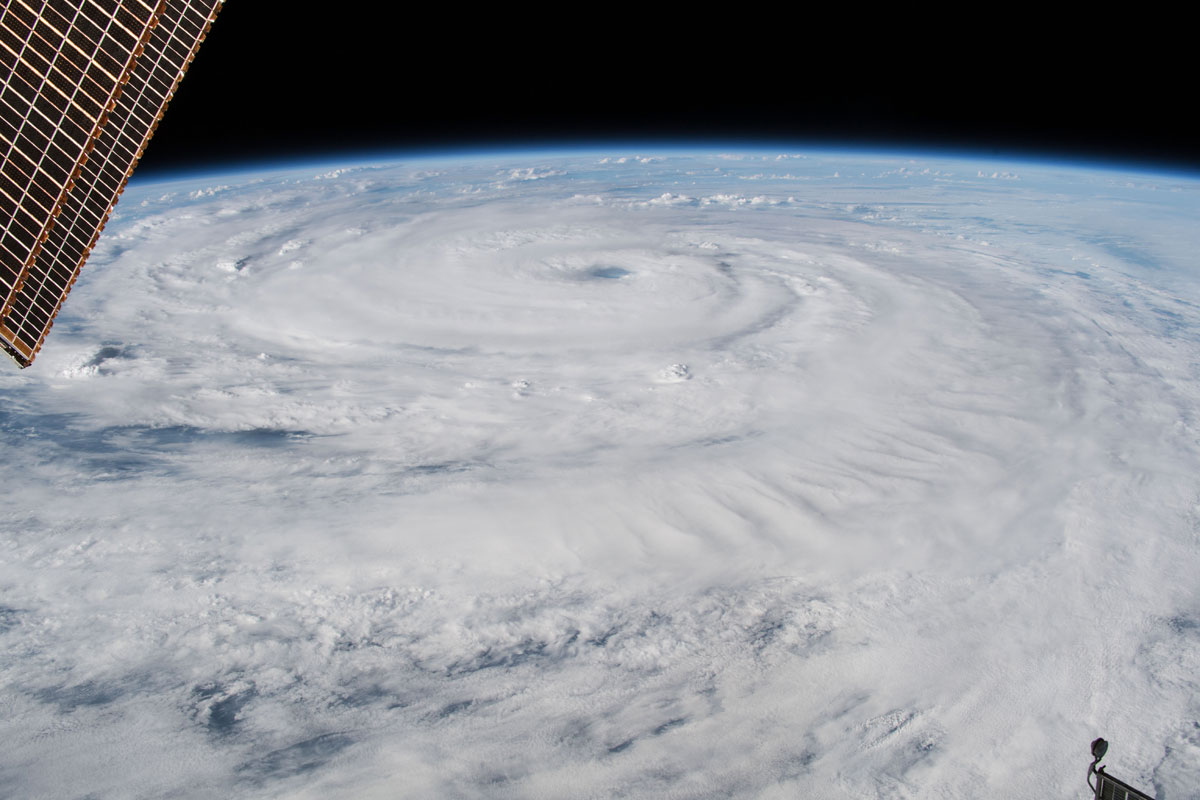
Not long ago, my region was staring down the barrel of Hurricane Florence, a Category 2 storm set to batter the eastern seaboard and destroy homes, properties, and perhaps even lives.
Well, okay. I'm up in Hampton Roads where, between being slightly more inland and above ground and being within reach of the tendrils at best, we were beset with the outside edge of Another Goddamn Inconvenience Spiral. The closer Florence came, the further downgraded we got, until my area got (at best) some drizzle and a blackout that lasted five seconds.
We — or at least I — was hugely relieved in large part because, once again, we got catastrophic reporting.
Now, something up front. The Carolina coast got far more than an Inconvenience Spiral. There was flooding, there was wind, and they're looking at hundreds of millions of dollars worth of damage. These people need help getting their situations back together, and they took the brunt of some extremely nasty weather. I am not in any way downplaying the situations of those who were affected, and I continue grateful that our preparations in Hampton Roads were ultimately unnecessary (for this storm).
That said... hurricane season is just beginning. And there will be more. The number of people I'll trust when it comes to telling me how to prepare for an oncoming storm has dwindled to basically NOAA and anyone who trusts NOAA. Even the Weather Channel, while better than most, gets an eyebrow. Because while I am always ready to hope for the best and expect the worst, the trend of catastrophic headlines for clicks is really seeping into areas where it shouldn't.
This will be an old-hat reminder for some and new news for others. Before I started working for entertainment news websites and publishing fiction, I spent just shy of ten years at a muggle news desk. I'm not going to say which because I'm about to talk smack about the editor.
I learned a lot of things on this job with regards to news feeds, writing in different styles, working to deadlines, handling ridiculous comments sections, and what have you. But I also learned what kind of things I hated and won't put up with, one being clickbait. I was working this job during the early days of clickbait as we know it, though that doesn't mean there hasn't always been a tendency to catastrophize for headlines. That's old news.
One of my standards is a writer is that, if I want to catch eyes with a headline, I do so with humor or with truth. And it's quite true that we as writers only have a few seconds to convince you to read our article, so a banger of a headline is essential.
Hyperbole can work if it's funny and obviously not true. For example, I once did a news piece on anime localization company Discotek licensing "basically everything." The company is known among anime fans for its massive release slates and its willingness to pick up shows regardless of age or perceived mainstream appeal. This particular article came after they'd laid out a breathless hour of announcements at a convention. Was it 100% accurate? No. Did it deliver a message from which accuracy could easily be pulled? Yes.
That's a far cry from telling every region within spitting distance of a storm that death is at hand.

If anything, the more serious a storm is, the less ridiculous the headlines need to be. These are people whose homes are in the line of something they can't stop. They need to know if they need to run, cover their windows, buy bottled water, stay put, whatever. They are making these decisions under duress, with only a few days to do so.
I think of Sagas of Sundry, my absolute favorite instance of watching other people play tabletop games. Each season is a horror game, with decisions made by pulls from a giant Jenga tower. The DM, Ivan, does not let up as these pulls are being made. He hounds the player with horrifying sound effects, intrusive thoughts, and continuing action as they try to steady their hands. This is all while doing something that will dictate whether their character survives the game.
For immersive horror storytelling, hounding a terrified person in the middle of life-or-death actions is nail-biting action. If you're doing it while they're boarding up their windows, you're a jerk.
We don't need someone over our shoulders every five seconds as we secure our belongs, asking us to contemplate our fate. We don't need mass media what-ifs as we decide whether or not to evacuate. We need access to objective reports with numbers, maps, and updates, and no storytelling on the side. Anything else is simply cruel.

I can say pretty safely that I suffered more from the anxiety I got from news reports and well-meaning friends than I will from Florence this weekend. Again, I can't say the same for my friends in the Carolinas, some of whom fared all right and others of whom have some creative planning and budgeting to do.
But the "If it bleeds, it leads" mentality should not be applied to acts of God or other situations that may affect life and livelihood. Even for those right in the middle of the action. Especially those.
I once had to explain the story of "The Boy Who Cried Wolf" to a grown woman, but I'm assuming I don't have to re-tell it to the majority of you. The more we hear the alerts for no good reason (or in this case, for clickbait reasons), the less likely we are to listen.
I've had out-of-state friends ask me why the hell we don't evacuate when we're told there's a death spiral coming, why we can't be bothered to shift until we're given a zone number and the literal governor tells us it is mandatory that we leave the area. Because the news tells us that every spiral is a death spiral. Because if we evacuated for every storm they told us was going to cause cataclysmic devastation, we'd never sit still for seven months. And because frankly we can trust an official state of emergency more than the literal Weather Channel.

This is what portions of North Carolina got. They deserved clear, accurate, non-fearmongering reporting so they could make their choices competently. They deserved it even more than we did in Virginia because they had more to lose this time. The worst anyone in my area suffered was a bit of basement flooding and an overturned trash can. There's not a lot of ways to plan wrong for that. Even with people yelling at us that destructive Category 5 winds were going to cause destruction the likes of which had never been seen before in Hampton Roads, the worst we'd get from them being wrong was a panic attack.
Which ain't fun. Don't get me wrong.
Yes. I am grateful that overplanning was the worst I got. But this is our first R month and there is more to come. Sweet Jesus, all I want is fewer colorful adjectives and more common sense. The ironic thing about selling these storms big is that it undermines what a big deal they actually are. And scaring the locals shitless isn't going to make us safe.
Please. If you work for a news outlet that reports storms or disasters of any kind that require preparation, do your part to do less scaring, more objective reporting. Trust me. You don't need to scare us to get us to look at news about a storm coming our way. We're looking.
September 19, 2018
Have you discovered The Hybrid?
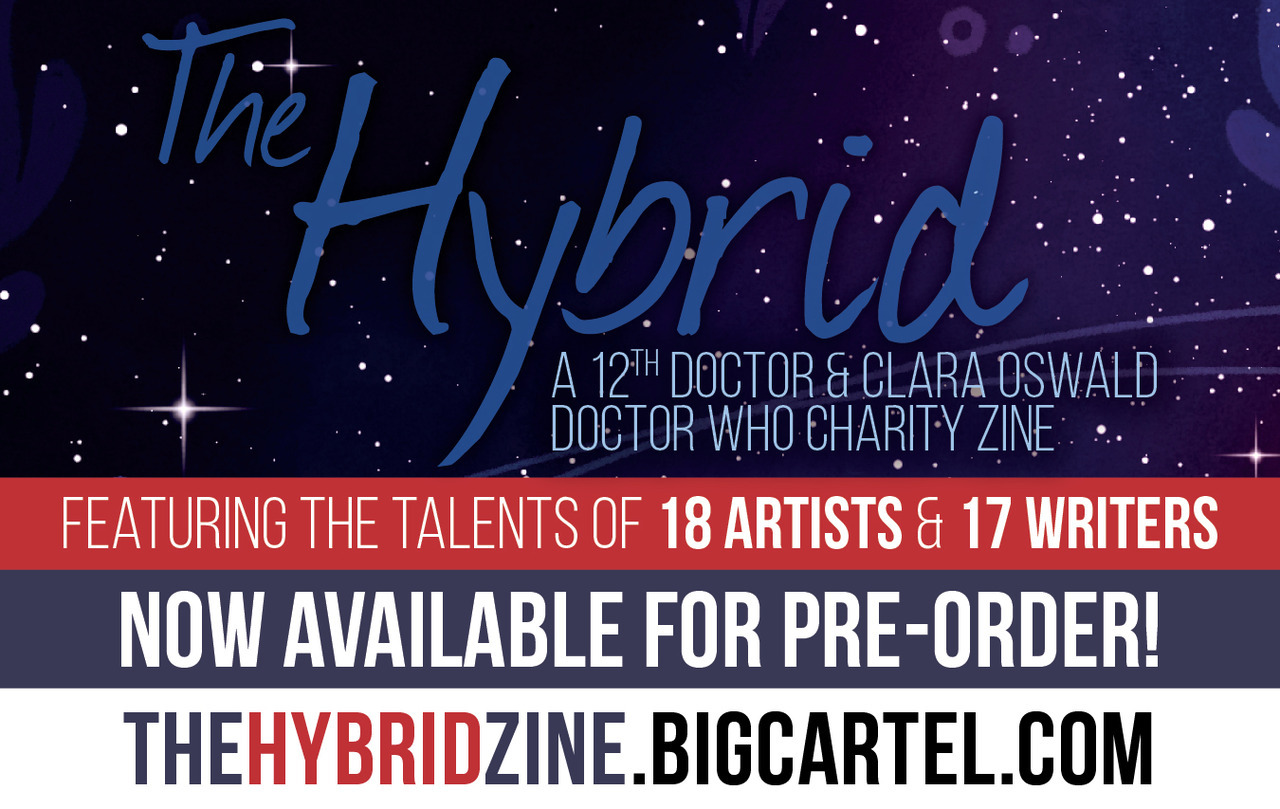
I know I've talked about it here and there and everywhere, but I'm frankly not done because preorders are still open which means y'all can still get it.
A while back, Ginger Hoesly threw out there that she was considering putting together a 12th Doctor and Clara Oswald zine. A few months later, and it's on sale, with all sorts of neat merch attached and a frankly astonishing set of writers and artists on board.
What's great — and what enabled me to take part — is the fact that this was more a zine-thology (aha!), with both art and stories. I'm not big into the zine scene, but I understand it's largely art-based. So doing this gave me a chance not only to create a new story for one of my favorite TARDIS teams, but also to work with some old friends (like Mike Dent and Paul Driscoll) and some new-to-me talent.


The proceeds from this will be going to One to One Children's Fund, for which Jenna Coleman is an ambassador. And there are a lot of different ways to go about supporting them. There's a digital book in case you're not keen on shipping costs, or if funds are low but you still want to contribute and get something nice in return. There's a print book to hold in your hand. There are also merch packages. What's that about?
Again, in the new-to-me world of zines, there's fan-made merch you can add on to your order. In this case, the merch orders also raise money for the charity, so it's more goodness all 'round. The bundles for this work kind of like stretch goals on crowdfunding. At the time of this writing, the bundle includes three prints. When they hit 25 orders, everyone who orders a bundle (including those who already paid) will also get three stickers and an iron-on patch. At 50, all that plus two acrylic charms. And so on.
There's also the Cloister Bundle (which I named, I'm so proud), which includes a book, merch bundle, and an acrylic standee designed by zine artist staypee. If you're not familiar with acrylic standees, they're rad — basically another alternative to figurines. They're all the rage in Japan.

Preorders are open now, and since I have a lot of Who types following me, I'm sure there's some of you who will need this in your life in some form. Bonus? Mine is apparently the first story in there. So new weird Kara fiction, no waiting.
Let me know if you preorder a copy! I want to see who in my circles is buying these up. And once they get shipped out, I'd love to know which stories and art people especially like.
August 29, 2018
Return to Camelot: Fate/GO and the New Legend of Bedivere
Yes, we're here talking about Fate/Grand Order again. I do this a lot... and admittedly, one of the reasons I do it a lot on here is because my writing for Crunchyroll, VRV, We Are Cult, and The Sartorial Geek is allowing me more scope to talk about things I love in multiple areas. That does, however, mean that a lot of what would usually have been my blog fodder is now elsewhere. Which, don't get me wrong, is good. But it also means the stuff I cover on here will be a lot more chill and a lot more personal.
It also explains (in addition to other blog-ly duties) why I've gone to once weekly on here. If you'd like more from me, absolutely hit up my feeds on the other sites.
That. Aside.
I recently finished, save for the Free Quests, the Camelot storyline of Fate/Grand Order. And if you know anything about me, it should surprise you zero that this is the one I've been gearing up for. Even the very opening of it intrigued me: a journey back to the Crusades, only to discover that there were no crusades, and that Camelot and the era of Ozymandias both existed at odds in this time.

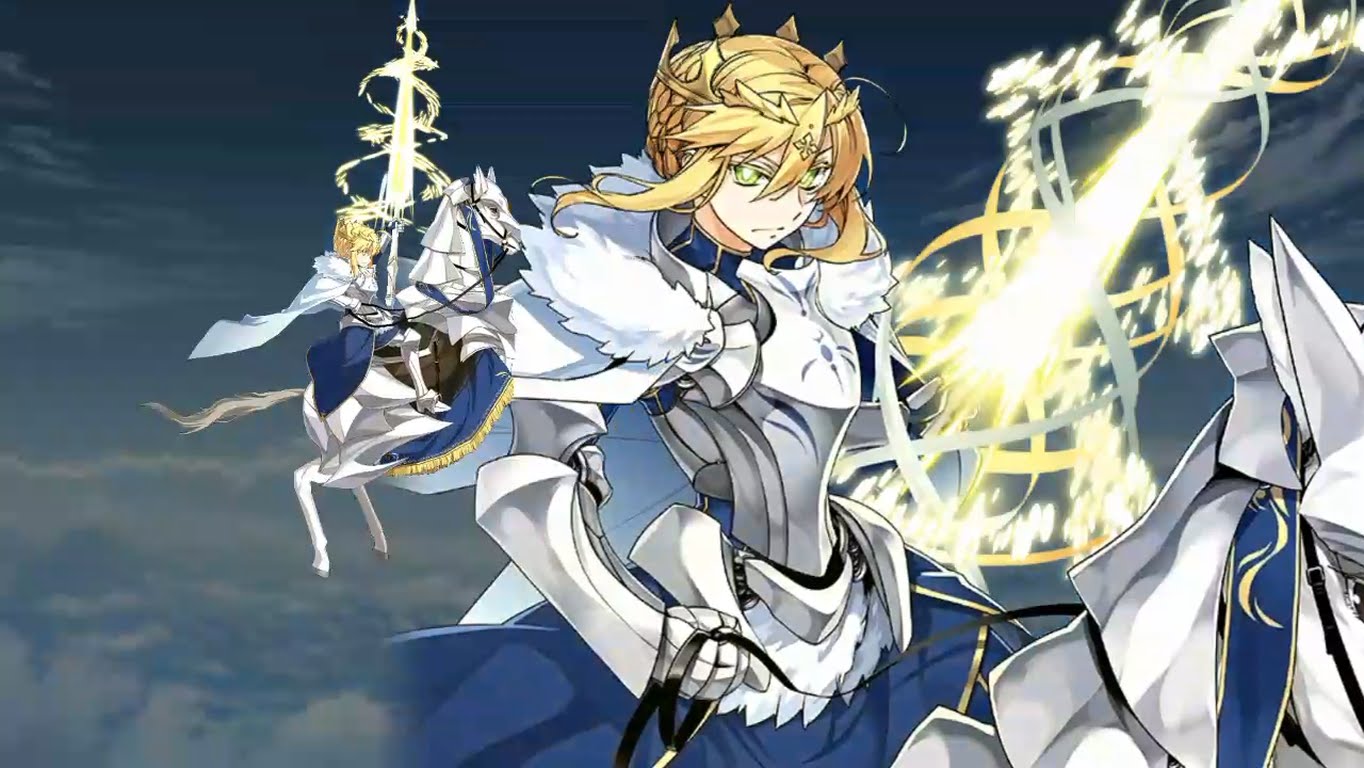
Even for a franchise already steeped in Arthurian lore, this Singularity of Fate/GO takes some massive, crazy turns. The jumping-off point of the story this time is the now-common legend of Bedivere returning Excalibur to the Lady of the Lake at Arthur's death, so that Arthur may die. In all versions of this telling, Bedivere tries twice, unable to part with his king, and is admonished. The third time, he throws it back, the Lady catches it, and Arthur dies.
This entire Singularity is kicked off because Bedivere couldn't make it happen on that third try. And what wowed me about this whole mess is that, really, this could be a "respected" piece of Arthuriana.
So, quick version — as quick as I can make this Once Upon a Time style soap opera heck-mess. You (the player) and your faithful sidekick Demi-Servant Mash Kyrielight meet a Servant claiming to be named Lucius. But you discover soon after that he's actually Bedivere, and yet he is not part of the Bizarro World Camelot that's landed here. If anything, he seems desperate to put an end to it. Also, he has a super powerful silver arm. But using it too much wears him down.
Meanwhile, in Camelot, we have a really weirdly godlike version of good ol' Altria Pendragon. She's surrounded by the usual suspects (Gawain, Tristan, Lancelot, Agravain, and Mordred), all of whom are completely down with her plan to find pure humans and welcome them into the walls of Camelot, and kill the impure ones. Even though this is super un-King-Arthur-y and they all know it. (Well, except for Lancelot. He's running a refugee camp on the quiet.)
So what's going on? Who is this Altria Pendragon who clearly looks and sounds like our Altria enough to know it's her, but who's got some really weird concepts of what "saving humanity" means? It's all down to Bedivere and his arm.

In the earliest legends, Bedivere only has one arm. So if we go by that, at the moment of Altria's death, he should have one arm and one Excalibur. But here he is, a millennium and a half later, with two arms and no Excaliburs.
Filling in the blanks yet?
Fortunately, it's laid out for us: when Bedivere tried a third time to return Excalibur to the Lady of the Lake, he once again failed. He couldn't go back to his king after a third failure, so he just... took Excalibur and wandered off, alone with a magic sword of immortality and his guilt. He eventually washed up half-dead on the shores of Avalon, where Merlin crafted him an arm out of Excalibur, on the condition that he then "return" it to his king. Bedivere was never a Servant... just a barely immortal human who'd been running himself down for more than a thousand years out of guilt.
But since the sword wasn't returned, Altria couldn't die. Instead, she took up her spear Rhongomyniad (a weapon mentioned in passing, usually as "Ron"), whose power eventually took control of her, making her its avatar. In fact, late in the chapter she becomes referred to as Goddess Rhongomyniad, signifying there's more of the spear's will to her now than her own. And this plays big-time into the game's story's endgame, but as a stand-alone story, it's so beautiful and heartbreaking.
I'm absolutely not even remotely shocked that it was turned into a stage show.
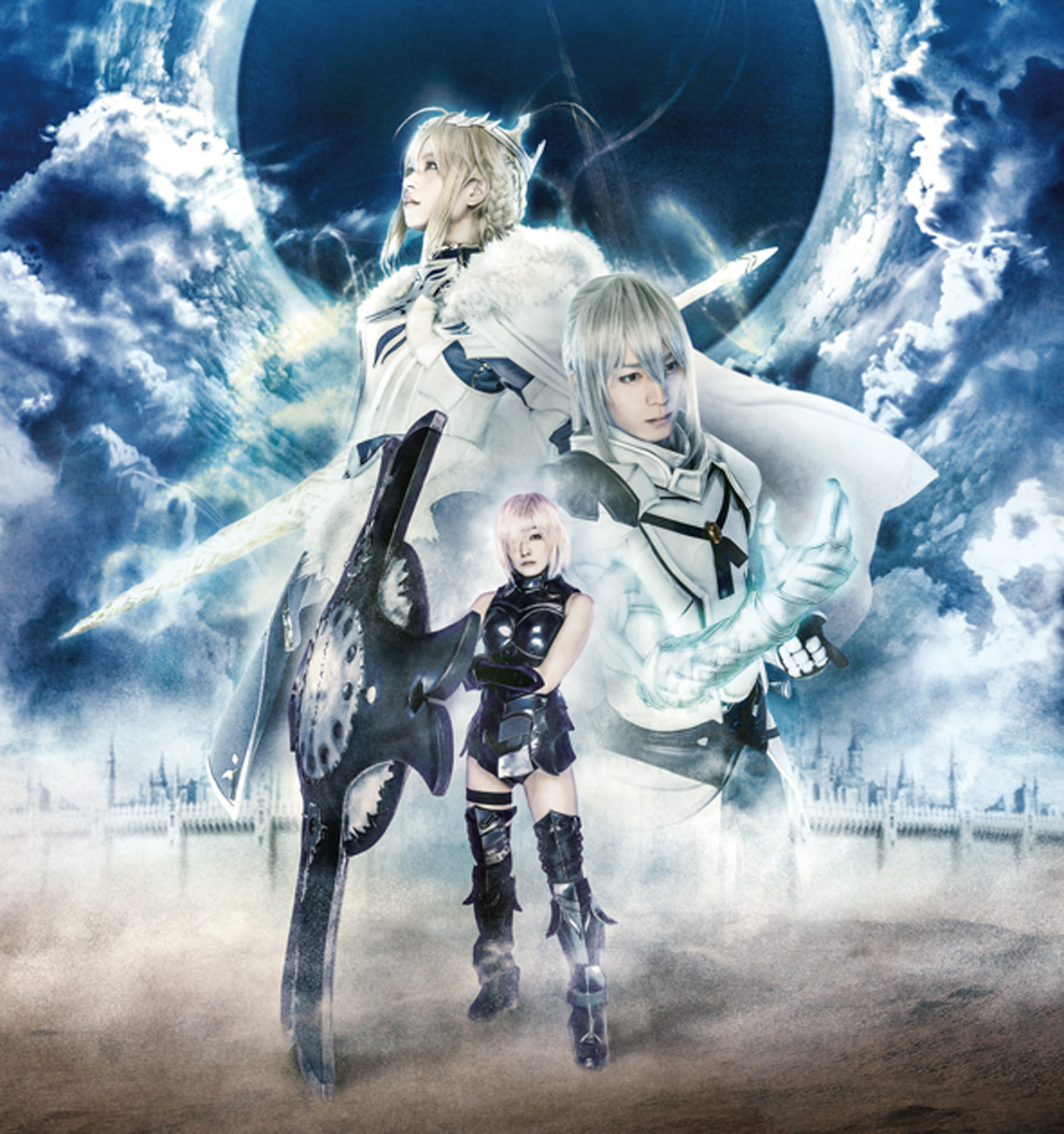
Overall, I really do like Fate/GO's stories, but this one in particular was so stunning simply because of the Arthurian lore it was already building on. The game gets silly and jokey and self-aware, but I always marvel at just how well it knows what it's talking about, regardless of era.
I wish people could experience this story in full — a knight so overly loyal to his king that he caused centuries of harm, and how he did penance for it — even if they're not into the game. It belongs in a book of lore. Granted, the bit about Sherlock Holmes breaking and entering a library of magic might be a bit weird in the midst of it, but whatever man. It's Fate.
The next Singularity is going to be a big one, as we finally approach the Big Moment for this particular story arc. So I'm kind of happy we're coasting along on a self-aware magical girl story for now.
August 22, 2018
Building Character: How Random Questions Round Out an OC

So before we kick this shindig off, let me make one thing very clear: if you write in any respect, you are a real writer, and this article is for you.
I don't care if you're published, unpublished, a tabletop gamer, an online roleplayer, or creating characters for something someday. I don't care if you write original works, fanfiction, or whatever the hell else. You put metaphorical pen to metaphorical paper and create something new where there wasn't something before, I consider you a writer, and anyone who tells you otherwise can come and fight me.
With that said.
Character creation is, for me, one of the most fun and also the most daunting elements of creating a story. And I say this from multiple angles. I'm currently retooling some characters for an upcoming published series, creating completely new ones for other works, and rolling up a Tiefling cleric for my friend Emily's 5ed game.
I'm a hybrid planner/pantser when it comes to writing: the end is in sight and I know what needs to happen to make the ending make sense, but I allow breathing room for the characters to decide they have other ideas. That said, I need to know my cast before I start, or at least enough to have their basic motivations down.

Creating an entire new fictional human (or whatever species they are) is difficult. For real humans, you're looking at some pretty infinite scope when it comes to motivation, feeling, changing feelings, and the like. Certain personality traits may develop over years and decades, and change when confronted with certain events.
I don't believe that you need to know your characters inside and out to write them. I believe only that you need to come in with enough that, if you were hit with a sudden question, you could extrapolate from what you have.
Emily has a fun way of helping build our D&D characters: she'll jump at us (online, not in reality) with a completely arbitrary question. We have to answer right away, even if that means making something up. It could be what the character's favorite smell is, a food they refuse to eat, their favorite time of day, etc.
The point is not to know this fact; the point is to open a gateway to questions, which encourage you to think creatively and find the way to big answers. As an example, a discussion she and I had about my aforementioned Tiefling cleric, Fight-the-Good-Fight-in-Faith, where I was led to create spur-of-the-moment responses:
~~~
Emily: So what's Faith's favorite smell?
Me: Um. Burning leaves in autumn.
Emily: Why that specifically? Is there a memory attached to it?
Me: She and her dad would make little backyard campfires in autumn and pretend they were on adventures.
Emily: Aw, that's adorable! Why didn't they use wood, though? Were they too poor?
Me: Mom said they had to only use wood for important fires, so Faith and her dad would use leaves and stuff.
Emily: Sounds like Mom was the strict one?
Me: Not strict so much as having common sense and just knowing what was needed to keep things in order. Dad was the "fun one" and Mom was the "disciplinarian," but there was no meanness or anything.
~~~
See? Now I had a clear view of Faith's parents, whose outline before had been "They're nice and also still alive," as well as a context for how she was raised. And those are two things that can be used as jumping-off points for a lot of bigger questions about motivation and history.

I see a lot of lists online of "30 Questions About Your OC," and they're super-good. I have several saved down and use them as a jumping-off point. But they're most useful as a starting point, with each question leading to a "Yes, and" dialogue.
For example, let's take a question like "What's a food your character refuses to eat?" Let's say the answer is avocado (because I don't like avocado). Why do they refuse to eat it? This could go off in a lot of directions:
* "They just don't like it." Are they a picky eater in general? Is there anything else they refuse to eat because they just don't like it? What do they tend toward food-wise if they are a picky eater? Does this limit the places they go to eat or shop for food? What would that mean regarding the people they run into on a regular basis?
* "It's a texture thing." Are they especially sensitive to food textures? What about others, like fabric? Is there anything else they avoid because of texture sensitivity?
* "Their parents made them eat it a lot." Were their parents pushy or well-meaning about food? Did they try to push any of their other preferences on your character? Did they ever tell their parents they were burned out on it, or was that kind of communication not a thing between them? Are their other pieces of parental influence they've shunned in a similar way?
* "They're allergic." How allergic: a bad sensitivity or full-on hospitalization? How did they find out? How do they deal with being sick? Are there any other allergies or illnesses they deal with?
Bear in mind the point is not to give or receive the third degree. It's to inspire your brain to tick over, draw comparisons, and create. And, oddly, it's a much easier and more natural path to an answer than just going "Tell me about your character's parents."
I'll admit I've stolen (borrowed?) Emily's method for a lot of character creation work I'm doing now. And it works extremely well in tandem with more familiar styles of planning. After all, we're all made up of the sum of our experiences. So why should our characters be any different?
Incidentally, I'm really looking forward to telling you guys about her campaign when it rolls out. Stay tuned.
August 16, 2018
"Share Your Rejections": From a Writing Perspective

I know I've talked before, here or elsewhere, about rejection as a writer. Specifically, how realistic expectations are, and how we've come to sort of have a skewed view of rejections vs. acceptance from a writing standpoint.
It came to mind as I was skimming the #ShareYourRejections tag — which is equal parts bizarre, sad, and the occasional story of beautiful comeuppance. It's a mix of creators getting their work rejected and people being turned away from jobs for strange and unfair reasons.
So I guess before I start anything else, I'll share my rejection. Or rather, rejections. Because I'm a writer, which means rejections are kind of a part of life.

When I was about twelve or thirteen, I wrote a book. (Don't be impressed, it was like 50 pages long and not great.) This was back when you didn't have things like Submittable and online calls for pitches, so my grandfather and I would buy writers' magazines and look for people who were accepting unsolicited submissions. We printed out my "book," packed it up, and sent it over.
Now, obviously, looking back 25 years I know my grandfather was not expecting my first childish crack at writing to get published. He was teaching me how to send off a manuscript and giving me the experience of actually going through the process. He was probably also setting me up for the experience of rejection (and if for some reason someone out there wanted to pay money for a preteen's super-mini-novella, bonus).
The first rejection letter I ever got still sticks with me. "I think you've misunderstood. We publish books for young adults, not by young adults." Which. Look. Again. S.E. Hinton cases are rare when you're talking going through an actual publisher.
But I remembered that all the way up through high school. You're not a grownup, so you can't do it. It has nothing to do with whether or not you're any good. We aren't even addressing that. It's because you're a kid.
You'd never see that today because Twitter piranhas would pick the company clean in ten seconds flat for discouraging a child. But in retrospect, eh. Maybe they really did think I was that confused.

More recently, I had a story rejected because. Eh. It wasn't quite what they were looking for. That's fair. That's actually the major reason people get rejected. You have a hundred submissions and twelve spots. 88 people have to be told "no," and some of those are going to be really good writers who stuck the landing only slightly less well than another really good writer.
After my rejection, I shopped the story around again after giving it an edit. Another publication took it happily. Nice.
The first publication wrote back, saying they were starting a podcast where they would discuss stories they had rejected and why they rejected them, so people could better understand what they were looking for in submissions. And could they use mine.
Before you say that sounds like a good idea, let me just note that they didn't mean "editors in general," they meant "specifically them." As in, "here's why this story didn't fit this particular publisher's standards."
Before you say that still sounds like a good idea, this was an obscure company with very specific tastes.
If it were about editor picks in general, or keyed to something that could be more widely applied, I'd probably have let them. But as it was very insular, I saw no point. Well, that and I'd sold the story already.
It was nice emailing them saying "Sorry, I can't let you use my story to explain why it wouldn't get accepted because it just got accepted."

Okay, those are mine.
So like. For a writer, rejections suck. They're no fun. You bust your butt with an idea, and it feels very personal. If the story was a passion project, it feels like a personal insult. If you wrote for a specific pitch, now you're stuck with something extremely specific and nowhere to send it.
Learning to live with rejections doesn't mean not being bothered by them, because we are not robots. Rejections suck! I hate them! They aren't fun! Whenever I get one I get all cranky, and then I feel like a big baby. Sometimes I take it way too personally. Sometimes in my own mind I put way too much blame on the publisher.
I can be bothered by getting a rejection while still understanding that it's an inherent part of my job. And that writers far better than I are getting just as many rejections over work far better than mine will ever be.
I kind of laugh at the "So-and-so was rejected twelve times before their book sold." Bully, man. Twelve rejections is a slow month. Again. Not fun. Sucky. But also part of life.
That's why I love the #ShareYourRejections tag right now. For writers, it's helping to hear just how many people go through it just how often. It's a good reminder that being a successful creator does not mean you've reached some magical point where everything you do gets accepted from now on. Not unless you are entirely self-funding and produce your own content from beginning to end.
And it's a reminder that you're not the only one who's had a pretty gross rejection letter. Some very successful people have been told some shitty things about specific projects that are now coming to a bookshelf or theater near you. It doesn't mean everything we create is bound for greatness. (I've got a bottom drawer that will prove otherwise.) But it's a reminder that different perspectives exist. Sometimes the editor is wrong. Sometimes you and the editor are wrong for each other. Sometimes, yeah, you really need to go back to the drawing board.
Keep sharing your stories. Y'all are awesome, and I love seeing how many of you are achieving greatness.
August 13, 2018
I AM INNOCENT: Casual Gaming Gets Skinned

Full disclosure: I did not play the entirety of I Am Innocent. I cannot speak for the ending of the storyline of the game; however, I played enough chapters of the game's various functions that I have a pretty damn good idea of what the experience would be like in the long term. While I admit up front that I cannot judge the game's plot based on its ending, I do feel that the fact that I did not finish it is a pertinent point in this piece for a variety of reasons.
First, though. What the hell am I on about.
I Am Innocent is a smartphone game I saw advertised on Instagram. It was free with in-app transactions, which usually means pay-to-win or pay-to-work-less-hard. Even with that proviso in my face, I was intrigued. It was a real-time story in which you received clues, hacked information, and solved puzzles to unravel a story and save a life.
My jam.

So, the concept. You're dicking around on your phone and chatting with people. You have a couple characters established up front: your ex Stella, who you're still on good terms with, and your hacker buddy Eric, who can make Internet magic happen and occasionally throw you some in-game cryptocurrency. You get a little while to chat with them and choose between responses to affect what sort of terms you're on with them.
Then the mysterious untraceable text comes in.
You talk to two unknowns: a man being held captive, and his captor. You start off knowing nothing about either of them — only that you will decide whether the captive lives or dies. Fortunately you have friends with skill sets, so you can set about figuring out what the hell is going on. And then... the real game begins.

Yeah, basically I Am Innocent is a mash-up between a real-time mystery game and a casual color-matching puzzle. And that's... fine. It's probably a two-way solution. It gave the creator of the casual game a way to get it out there, and it's a way to make hacking more interesting in the context of the app itself.
You progress the plot via this "hacking" method: earning stars to unlock new texts from the various characters, and solving all the puzzles in a set to gain info for Eric so he can help you along. Your cryptocurrency (which you can also buy with real money) is, as it turns out, what you use for extra turns and hacks in the game itself. So those fictional pennies get very dear very quickly.
The story of the game, as far as I got, is pretty interesting. There's a lot more to you (a nondescript adult male) that you learn as you go along. You lost your little sister nine years ago, and it may be something to do with the desperate captive. Or it may not. Depending on who you believe. The loss has affected your relationships with pretty much everyone you know, unsurprisingly, and part of the game involves repairing these relationships via text.

I'm divided when it comes to the storytelling. On the one hand, there's definitely some intriguing stuff going on here. On the other, the dialogue leaves something to be desired. Many of the conversations involve you and your conversation partner reminding each other in long expository style of things you both already know. And while I understand that we as the player need story and the texting conceit deprives us of prose... there are ways to create informative dialogue that don't force everyone to be Mr. Exposition.
For this reason, the tenser moments play out better and are more immersive. It's when we step backwards into needing to learn about your sister, or why you and Stella broke up, that it gets stilted.
(As an aside, the first conversation with your father is rough... he messages you out of nowhere basically going "Where did I go wrong with you?" and a few more messages in a maudlin tune begins to play over your headsets as you text back and forth. That was... a choice.)

Honestly... I uninstalled the app because my frustration with the puzzle game was not tempered by my engagement with the story. The concept intrigued me, and the structure of the app is awesome, but the flow (or lack thereof) of the dialogue sort of put a damper on my engagement. How can I put it... this feels like the first draft of a game I'd love to play the final version of.
Others may feel differently about it and 1) not be bothered by the dialogue, 2) be less crap at puzzle games or at least more ready to put up money to be good at them. The photos used are gorgeous, and the creators know it: the photographer is credited and linked in the app, and for good reason.
It's clear that, much like the team solving the mystery within the story of I Am Innocent, there's a multifaceted team behind the creation of it. And it's so very "almost there" for me that I'm certain it will be a hit for others. But I want to see this group at the top of their game. I don't feel like this is it. But I think they have it in them.
August 10, 2018
A moth flew into my tea last night.

I'd seen it fluttering around out the corner of my eye on the right-hand side, as I was working on social media posts for the next morning. The Internet had been slow all day, to the point that I couldn't even do my side job of watching an episode of anime to prep a Twitter post. I gave up and did what I could. I was tired already — insomnia leading to nightmares leading to oversleeping.
I can't wake up from nightmares. Paul asked me if it's the same for good dreams. I said no, I'd mind a lot less if it were.
I had another kettle of hot water ready, so I was going to swig the last big of cooling tea in my cup and then swap it out. There was something floating in it, dark and still. It was a moth. Likely the moth.
Shame. I actually kind of like moths. I rescue them from the tight folds of the curtains over the den's back door, where they tend to squeeze away without realizing they'll get trapped. In return they'll likely chew up my sweaters. But whatever.
It lay there on the surface, drifting and completely still. On the one hand, I had to laugh at myself for not noticing a moth taking a header into the teacup literally two inches from my left hand. On the other, I was a bit sad. It couldn't have been there long.
I picked up the cup to go splash the tea, moth and all, out the front door of my office. As I did, the moth twitched one wing. I wasn't sure whether it was me jostling the teacup or if it still had some life in it, so I dipped a finger in the lukewarm tea and tried to scoop the moth up. Nothing at first. Then a frantic flapping of wings, as though the sudden realization that it had help was enough to make it want to have another go at getting free.

It fluttered frantically as I scooped it up under two fingers, then climbed up on a knuckle and began drying its wings. It was a run-of-the-mill cabbage moth, a little darker than I usually see (though that could be because it was wet). It arched its abdomen up as it perched on my finger and dried itself off. I intended to take it to the door of the shop so it could get back outside, but it took off before I could.
I dumped out the tea and made some fresh.
A few minutes later, it flew back, headbutting my hand before taking off again. I let myself entertain the idea that it was giving me a little boop of gratitude. In all likelihood, it was probably just lost.
I do wonder if we do that ourselves. Drop in the drink and realize that, without someone reaching out, there's nothing we can do. When someone does reach out, we scramble. All we need is the first boost out. The rest, we can handle under our own steam.
Animals and insects can't ask for a hand. We can. We don't. We don't because we're trained not to. We have to be completely self-sufficient. And yeah, there are some areas of our life where we sort of have to learn and be ready to handle things on our own in a pinch. Without some degree of self-sufficiency, we won't get far, or have the confidence to.
But we have the power to ask for the hand up. For the five seconds to just lift us out. Not a great deal of emotional lifting. Just the moment to give us a foothold so we're not drowning in our own emotions. And we can do the rest. We just don't realize we can until we have the foothold.
Even animals ask for help. There are stories everywhere of deer, birds, foxes, and feral cats running up to the nearest human to rescue their young from a ditch or get something unstuck from them. Animals that can't use words run to the nearest apex predator for help. We have words and are terrified to use them for fear of looking weak.
Yesterday morning I told my grandfather "I'm sad." Two words. We talked. I knew why. But even though I know better, the world leans gently on me with the idea that admitting to sadness, sitting down and needing to just cry for a few minutes and say "I feel this way," is a weakness. It's not.
I'm not un-sad now. But I'm better than I was. I'm relieved. I'm out of the drink. I'm still drying off.
I didn't see that moth drop into my tea two inches away from me. Your friends can't always see when you drop, either. It's hard. But try. It's not the same as being an "attention whore" — demanding attention is not the same as needing a moment of emotional support.
Really. Give yourself that gift. Don't be me. Don't be the fool who needs to build an entire metaphor out of a bug falling into her tea just to realize it's okay to talk to people.