Laurel M. Stevens's Blog, page 5
February 17, 2021
A Novel Review: Slade House by David Mitchell
Another read recommended to me as part of my 2021 Reading List.
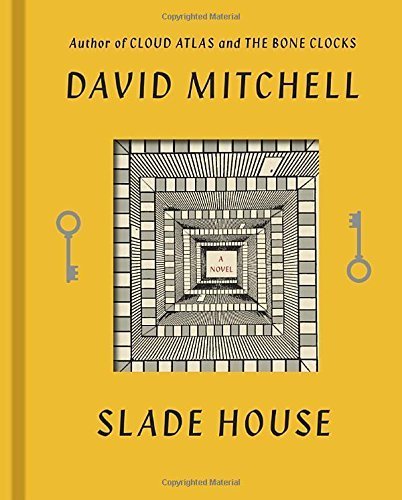
Keep your eyes peeled for a small black iron door.
Down the road from a working-class British pub, along the brick wall of a narrow alley, if the conditions are exactly right, you’ll find the entrance to Slade House. A stranger will greet you by name and invite you inside. At first, you won’t want to leave. Later, you’ll find that you can’t. Every nine years, the house’s residents—an odd brother and sister—extend a unique invitation to someone who’s different or lonely: a precocious teenager, a recently divorced policeman, a shy college student. But what really goes on inside Slade House? For those who find out, it’s already too late. . . .
(Disclaimer: The summary is not mine. I borrowed it from the publisher’s promotional site because it fits so well.)
Slade House was published directly on the heels of David Mitchell’s hefty 2014 novel The Bone Clocks, and is technically considered a much-shorter companion to aforementioned novel although it can be read as a standalone as I have done. Penguin Random House bills it as an “intricately woven novel will pull you into a reality-warping new vision of the haunted house story”. I was recommended this novel by my friend Nate. Included in this post are some questions I had for Nate about Slade House and his reasons for recommending it to me. As a warning, the following Q&A and my own comments on Slade House will have some minor spoilers – you’ve been warned!
Q&A with Nate
Why did you choose to recommend Slade House to me?
“I attended a lecture given by David Mitchell, author of Slade House. He didn’t seem remotely comfortable speaking in front of 1000 people and had a pronounced stammer. Despite this, I found his talk to be intriguing and was tempted to purchase one of his books but did not. I had many opportunities to borrow a copy of Slade House from the library, though. I did so before I traveled across the country on a business trip and read the entire book on the flight. I liked everything about this book. I liked its unique cutout in the cover, the way the story unfolded, and the way he wrote.”
Side Note from me – I also enjoyed the unique cut of the hardcover copy (the one pictured in this post), and it is unusual to find a hardback book with a center cut-out. Back to Nate!
What are your favorite elements or parts of Slade House?
“My favorite aspect about this novel is that it’s a captivating haunted house story. It had the essence of Dickens as well as some modern horror fiction authors. I thought that the descriptions were vivid and creative.”
Each chapter here is set 9 years apart since the 9-year span ties into the plot. Did you think this narrative technique was effective? And did you or did you not like it?
“I liked the 9-year gap between chapters. I noticed this when I read the novel but not as much as when I listened to the audiobook recording. I found it disconcerting yet entertaining that people keep making the same mistakes and get consumed by this house every 9 years.”
Narrators abound in Slade House. Did you have any favorite (or not favorite narrators)? Why or why not?
“I liked the first chapter when Nathan and his mother meet Norah. I don’t remember all the details but recall enjoying how the story unfolded. Each character really stuck out.”
While reading this I was continually being reminded of other works like Coraline, We Have Always Lived in the Castle, etc – are there any works that this novel reminds you of? Or that you would recommend to those who like this novel?
“This novel reminded me of Dracula, The Shining, and Great Expectations. It’s hard to imagine combining elements from these three works but they are in there. For people who enjoyed Slade House, I recommend The Keep by Jennifer Egan.”
Many thanks to Nate for both the recommendation and answering my questions.
The questions I asked may have given away what I thought of Slade House, but I will start off by saying that I have now added some of David Mitchell’s other books to my ever-towering ‘to-be-read’ list. His writing was well-crafted, and the world he created immersed the reader within the novel despite the shifting narrators. Having several distinct voices tell their own stories and still coming out at the end with a cohesive stories cannot have been easy. In fact, that shifting narration is part of what I really enjoyed about the book.
Following a mystery of house that disappears people sounds like your classic haunted house. Following each individual’s experience that leads up to their disappearance adds a dash of who-dun-it atmosphere. Keeping your reader engaged with each individual victim even after their deaths? That’s just excessive, but excessive in a fantastic way. Even if I thought I knew where the mystery of the house was going, and even if I didn’t particular care for narrator number two, the bits and pieces in each perspective that remained the same caught my attention.
Slade House could have read like a collection of short stories all revolving around the same house, but there were details in every person’s story tying it to both the next and the last perspective starting from 1979 and ending in 2015. Taking even just one of the short stories out would leave loose threads. The conclusion to the novel would not have been possible without the first victims we meet, Rita Bishop and her son Nathan. Their story trickles into Detective Inspector Edmonds’s and on it goes. Small physical items show up in story after story, as do the antagonists Norah and Jonah Grayer, but characters like Fred Pink get mentions throughout as well.
I highly recommend this book. The writing was excellent, the story was fun to follow, and it was a quick read as well – only a little over 200 pages. It had elements from multiple genres and you need not be a fantasy fan to enjoy this read. If you like classics, haunted houses, detective stories, fantasy, science fiction, or even literary fiction I would say this may appeal to you.


February 9, 2021
A Webtoon Review: Weak Hero by SEOPASS / RAZEN
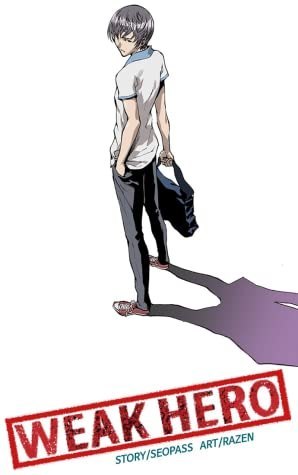
In Weak Hero (story by SEOPASS, art by RAZEN) on webtoons.com once the bullies target you it is game over. The reader follows the main character Gray Yeon, through his confrontations and befriending of the yakuza-like gangs of his school and the surrounding area. He starts as a mysterious new student, where his slight, effeminate looks seem to paint a target on his back at a notorious high school, but no one quite expects how vicious his fangs actually are. Think of a monster-of-the-week set up, but focused instead on teenage gangs in a world where grown-ups, when they exist at all, are matchstick periphery characters and your peers are out for blood. If you are one for cold, calculating protagonists with angsty backstory and tried and true brotherhood surrounded by brutal violence and colorful language – give it a shot.
Now, while I read plenty of web comics in my undergrad days it has been awhile since I have read one from beginning to it’s current ending. Not only that, gang stories are not the first thing I would pick up. However, my brother added this to my list for 2021, and I decided to start the year off with this one. For those unfamiliar with webtoons, each chapter or section is called an episode. This first two seasons of Weak Hero total to a whopping 127 episodes, and more is on the way. Not unusual for a web comic (they can get long, trust me on this), but if you’re used to traditional novels it will feel like quite the endurance challenge. Tip for reading – do it on a device where you can easily scroll! I love reading webtoons on a tablet, but any touchscreen or a well-adjusted roll of the mouse also works well.
Before we get into my thoughts on Weak Hero, let’s get some perspective from the person who recommended it to me in the first place (my brother).
Q & A
Why did you choose to recommend Weak Hero to me?
“I thought you would enjoy it and hoped it would (re)start an appreciation for webtoons, as they are a good story medium.”
What are your favorite elements or parts of Weak Hero?
“My favorite part is probably the friendships formed inside the group as the story progresses, despite being enemies before.”
Violence in Weak Hero makes up much of the story and character progression. Fight after fight pushes both the plot and protagonist onward. How do you think violence being that medium of progression impacted the story or characters?
“The lack physical repercussions of the violence would definitely impact the story. For example, when Helmet (one of the early fights) reacts throughout the rest of the story his actions are driven by the violence of that first interaction. His impact on the story would change if it was a different medium.”
Is there a different element that you think could have worked as a driving force if not violence?
“Perhaps competition in something like sports since everyone is already grouped by school already and the internal conflicts could just be infighting. The lack of physical repercussions and the differing attitudes would change the impact of the story though so maybe not.”
Exposition in Weak Hero is largely provided through third person observation and internal dialogue. That being said, some of the actual dialogue wouldn’t have been out of place in a romance – do you think that was intentional?
“I don’t know. I haven’t read any of SEOPASS’s other works, and since it is translated there is always a chance of tonal changes there. Flashback scenes are also meant to be intentional nostalgic so that could be it.”
…and that’s a wrap for the Q&A with my brother on his addition to my 2021 Reading List, Weak Hero. Many thanks to him for the recommendation and his time in answering my questions.
Some of my own comments on the webtoon relate to my brother’s answers. Chunky wording and phrasing throughout the comic are part and parcel of it being translated work. I would attribute any instances of awkward language to translation hiccups rather than author error. The more you read the harder those instances are to notice as you adjust to the way it is translated as well.
Onto the actual story review, and I want to start with the statement that if you are not a fan of in-depth background for every character or violence then Weak Hero may not be for you. Flashbacks to flesh out characters abound and redemption arcs are indeed a thing here. If the main character, Gray, interacts with another character the chances of a backstory arc for them increases exponentially. By the time the second season of Weak Hero ends, Gray has managed to make several close friends. Two of them, Ben and Alex (nicknamed Big Ben and Gogo respectively) have one of the longest backflash sections in the entire comic.
Gray Yeon, our protagonist, is the weak hero that Weak Hero gets its name from. He is small, slight, and effeminate in appearance. He has minimal physical strength. What he does have is wicked smarts, an analytical mind, and a willingness to persist far beyond any reasonable stopping point. One of the wrap-up lines near the end of season two that he says to a friend are, “I’m a coward…so I never start fights…I can’t win.” He grows on you. At the start he seemed a little brooding and emo to me, but I enjoyed seeing his character flesh out as the comic progressed and while I think I could tell you exactly how this series will end for our main character there is always time for a curve ball.
His supporting cast, as stated above, doesn’t suffer from 2-D characterization either. Each member as they are assimilated (yes, assimilated – the group seems to absorb people like an amoeba) receives a thorough analysis of their fighting background courtesy of resident fight nerd Eugene when we meet them. We the readers also get small bits of insight into hobbies such as the fact that Gerard, who has a stunning green bowl cut and some fierce kicks, sings and plays some killer guitar. Teddy Jin, while possibly insane, has a weakness for kittens. No new character joining the gang remains a mystery.
Reading Weak Hero was a break from my usual novels and fanfiction, and by the time I wrapped up with the content currently out a welcome one. I was unsure in the starting episodes if I would care about any of the characters enough to stick with it, but I am glad to be proven wrong. I do want to know what SEOPASS decides to do with Gray Yeon, Donald Na, and the inevitable clash between the two.
January 30, 2021
Decisions: Choosing What to Read in 2021
As last year wrapped up, I let writing about books fall to the wayside. After all, there were books I wanted to read before the year ended. However, at the start of the New Year got closer and closer I was left in a position that I am sure is overly familiar to most bookish fiends – so many books and not near enough time to read them all. Not to mention no clear idea on how to prioritize which ones to read first. I admit to envy in regards to people who have reading lists each month and complete said reading lists within the month. It inspires admiration in me.
Deciding what to read, for me, creates an interesting sort of tunnel vision. I often do not know exactly what I want to read, but I am distinctly aware of what I do not want to read. Many of the books I pick up end up being a book or series I expressed interest in years ago or one that catches my eye at the moment and I pick up as a whim. Occasionally I simply read the book that was last handed to me. I have many times attempted to create reading lists, but I am afraid I tend to spectacularly fail at those.
I researched all sorts of reading lists and challenges. There were “Books to Read Before You Die”, “The 100 Most Important Books”, “Classics Everyone Should Read”, the BookRiot Reading Challenge and so much more. Anyone who likes lists for their reading habits is well supplied by the current blogging and tweeting of book lovers, publishers, and authors. Unfortunately for me, none of them seemed to be lists that would challenge me the way I wanted. I know my opinions on many of the classics and I did not want to stick to one genre. Nor did I want to be responsible for choosing the book I was to read based on a prompt – I wanted a way to pick up books that I might not otherwise stumble upon.
With that knowledge in mind, I decided that instead of setting a reading list for myself in 2021 I would reach out to friends, family, and acquaintances to source a list of recommended reads for 2021. I asked for any one book – it could be a book that the person I asked thought everyone needed to read, perhaps a personal favorite, or even a book that they were curious to hear my opinion on. I put no restriction on genre or format. My primary request was that it be in English for my personal ease of reading. I ended up with 32 books (31 recommendations + one of my own).
In terms of my personal criteria, books that I might not otherwise stumble upon, the list is a success. The full list is shelved on my Goodreads under ‘2021 reading rec challenge‘, but the list contains genre fiction, non-fiction, new releases, poetry, manga, a webtoon, and fanfiction. I have a wealth of options at any given time as some of the reads are well outside my usual wheelhouse. As I spoke with everyone who recommended me a book I also realized it was a sterling opportunity to learn more about the person giving me a recommendation. My goal has evolved from simply reading the recommended books to reading the book and then following up with the person who recommended it for a chat.
Now, as I said earlier, I am deplorable with set reading lists, so these books are not the only ones I am reading but shall instead be spread out over the year with the books I read on a whim or fall into my lap (and the few I find out are coming and pre-order in a pique of excitement). In fact, having a list of books I know I will read has pushed me to pick up even more outside of that and I am set to finish a solid 30 books by the end of January (like, woah).
So, having difficulty choosing what to read? Perhaps try having someone else choose for you?
Regardless of how you decide what to read in the coming year, happy reading!
October 1, 2020
A Look at September’s Reads
My Goodreads reading stats would tell you I read 15 books over the month of September, which isn’t quite correct. Included in that number was a fanzine and a short story. So technically 13 books for this month. That being said, I highly recommend both the short story, “As the Last I May Know” by S. L. Huang on tor.com and the zine, “Harry Potter and the Problematic Author” by Maia Kobabe.
For books this month I started with wrapping up my Hugos read through with The Light Brigade by Kameron Hurley. I followed that up with the strangely cathartic The Boy, the Mole, the Fox and the Horse by Charlie Mackesy. I picked up the next in the Binit series as well and polished off Okorafor’s Home.
[image error][image error][image error][image error][image error][image error]
I rarely pick up thrillers, but Sharp Objects by Gillian Flynn was a book club read. It had some raw and evocative language, but I overall found it exceedingly predictable and a tad trite. In reverse, I found P. Djèlí Clark’s The Haunting of Tram Car 015 a fun detective jaunt (the magic probably helped). I must admit that I am developing a deep fondness for novellas this year, novellas and graphic novels both. The Best We Could Do was a memoir and graphic novel both and easy to sink into.
Unpacking My Library: Artist’s and Their Books by Jo Steffens, Wow, No Thank You by Samantha Irby, and Fun Home: A Family Tragicomic by Alison Bechdel rounded out the month’s nonfiction. All had their high points, although personally my favorite part of Irby’s book was the chapter on attempting to learn home maintenance. Unpacking My Library is simply a guilty pleasure at this point; I always want to see more personal libraries. As an English major the literature callouts in Fun Home felt like an in joke I had with the author. Of these three non-fiction, I would recommend Fun Home to almost anyone.
[image error][image error][image error]
The Silvered Serpents by Roshani Chokshi, The Grace of Kings by Ken Liu, The Order of the Pure Moon Reflected in Water by Zen Cho, and Heartstopper: Volume 1 by Alice Oseman finished out my fiction and were distinct works. The Silvered Serpents was a drama filled sequel to Gilded Wolves (full review to come) filled with thieves, lies, false goddesses, and of course, magical political intrigue and love…triangles? (shapes of some kind). The Grace of Kings felt a bit like reading a cultural reversed Game of Thrones. While Game of Thrones didn’t pique my interest, enough of Grace of Kings did that I may attempt the sequel, although I wouldn’t recommend it to very many other readers.
[image error][image error][image error][image error]
The Order of the Pure Moon Reflected in Water was fun to keep the description simple. Characters that made you smile and snort while shaking your head are always a treat. The world itself was promising as well, and it was a journey I was happy to take. The gorgeous cover art by Sija Hong definitely didn’t hurt either. Heartstopper I will reserve judgement on as I am still mulling over parts, but my first gut reaction was a bemused, “Cute.”
And that wraps up September! Aiming to read some thematically appropriate books for October, but we shall see what I end up procuring.
September 22, 2020
Hobbit Day: 2020
Wishing the absolute best to two brave and admiral hobbits on the occasion of their birth –
Happy Birthday, Bilbo and Frodo Baggins!
[image error]
As you may have guessed, or perhaps knew, September 22nd is the shared birthday of two of Tolkien’s beloved hobbits, Bilbo and Frodo Baggins. Frodo is Bilbo’s second cousin once removed, and after the death of Frodo’s parents Bilbo took Frodo in and made him his heir. Bilbo’s adventures in The Hobbit set the background for Frodo’s journey in The Lord of the Rings, a story which opens with Bilbo’s 111th birthday.
As a fun fact, the calendar in Tolkien’s work that the hobbits use does not completely sync up with our own Gregorian calendar. This means that the September 22nd listed as Bilbo and Frodo’s birthday is not our September 22nd. However, that doesn’t stop us from celebrating our September 22nd as Hobbit Day! Sit down, take off your shoes, and raise a hobbit sized glass in toast to two literary mainstays.
Happy Hobbit Day!
September 10, 2020
My Hugo Novel Nominees Read Through: 2020
Six Novels. Six Authors – and the winner already declared. Even though I started late I decided to read through all of the novels nominated for the Hugo this year to see what I thought. All of the following are my personal opinions on the six nominees.
Middlegame by Seanan McGuire The City in the Middle of the Night by Charlie Jane AndersThe Ten Thousand Doors of January by Alix E. HarrowGideon the Ninth by Tamsyn MuirA Memory Called Empire by Arkady MartineThe Light Brigade by Kameron Hurley
[image error][image error][image error][image error][image error][image error]
Fair warning that the following content contains spoilers for all six books. You can’t say that you didn’t know!
This year’s nominees felt like a list of Transformation Tuesdays. From Gideon and Harrow’s odd transmogrification (or was it spiritual melding and transcendence?) in Gideon the Ninth to Rose’s literal physical alterations allowing her to meld more completely with the near hive mind of an alien species in The City in the Middle of the Night, each and every one of these novels honed in on transformation. The Ten Thousand Doors of January had a perhaps more gradual transformation with January going from acting as a semi-normal human girl to a woman from a different world with the power to open portals (quite the character trip there). Middlegame‘s main characters were all crafted and brought into this world with alchemy – the entire plot of the novel revolves around transforming the forces of the universe into flesh. A Memory Called Empire has imagos that merge minds, and last but not least Light Brigade takes its soldiers and literally transforms them into light particles.
Like I said, a book list of six Transformation Tuesdays. (If only those were the transformations showing up on my social media dash instead of Beachbody workouts…)
I read Gideon the Ninth in late 2019 shortly after it came out, and while I enjoyed the characterization and the elements of the world structure the book as a whole fell flat for me. The punk vibe, the character tension, the mystery, possible immortality, and oh, necromancers in space, all hit high points for me, but I just could not fully sink into the story. Parts felt slow and clunky to me and while I enjoyed the narrative perspective I had difficulty rooting for Gideon until the end. While this is a book I can see others greatly enjoying it was merely okay for me. I adore the cover art though and there were enough interesting points that I will be reading the sequel, Harrow the Ninth.
The Ten Thousand Doors of January I ended up reading as part of a book club and I was stoked. I had heard so many rave reviews about the story, the premise sounded fascinating, and the cover art made me squeal. However, while I didn’t dislike The Ten Thousand Doors of January it didn’t live up to the hype for me. The doors between worlds and the power January has at her fingertips have so much promise, but the journey she takes throughout the book did not come off as cohesive. Some of the supporting characters also seem very prop-like to me and gave the world a bit of a washed-out tone. That may or may not have been intentional but it left me with yet another book I considered merely okay.
The City in the Middle of the Night was possibly the oddest book out of the six for me. Reading it felt like experiencing a vivid lucid dream-state that left me feeling chilled and mild disconcerted. Anders undeniably has buckets full of writing talent and I felt her crafting of the storyline was exquisite. That being said, I couldn’t seem to get into either Mouth or Rose’s heads. I felt like an outsider even while reading their narratives. I had similar difficulties with Gideon the Ninth as well – I just could not sink into the story. That being said it was definitely a well-written book and I would recommend it to any hard science fiction fans, or even literary fiction fans interested in taking a sci-fi dive.
The last book I read for this was Kameron Hurley’s The Light Brigade. This book is raw and pulls no punches. Halfway through I was pretty sure it could be considered a study in helplessness. The main character is a grunt and treated accordingly. The reader has as little clue what is going on as the characters. It makes for a messy read. The language itself is visceral and the descriptions verge into hyper-realistic. The image painted of war here wakes the reader up. With the novel following a grunt of a character though it makes it hard to suss out the plot and the military service of one character is only so interesting to me even with time skips to keep my attention. While a powerful work in its own right, it was another good book that simply wasn’t up my alley.
Now onto the books here that I did personally enjoy. Middlegame almost felt like it was checking off boxes that appealed to me directly. Powerful siblings? Bit of found family? Dark creepy puppet musters? building relationships? multiple timelines? alchemically containing the metaphysical powers of the universe? All checked. The two main characters, Rodger and Dodger, do outshine their supporting cast but their relationship was fascinating enough that I almost didn’t care. A sibling bond that has so much time and work put into it (from both the two siblings and outside powers that be) made for some interesting storytelling. However, the ending of Middlegame knocked it out of the running for first place with me. With the dark themes and disturbing characters, I wasn’t expecting the almost vanilla ‘and they all walked off hopefully into the sunset’ ending for Rodger and Dodger. It felt like an odd-fitting shirt – not necessarily bad just out of place. That being said there is a sequel so I shall keep my fingers crossed!
My favorite of the six, apparently a popular opinion as it won the Hugo award, is Arkady Martine’s A Memory Called Empire. The first third of the book had me on uneven ground as I swung between not sure if I hated or loved it yet. The society here is exceedingly complex and concerned with their version of propriety, but the reader follows an outsider to this Empire. Also, while some parts might be fascinating in an audiobook format I would not want to try to untangle this book while listening to it – it gets complicated in places. Despite the complexities, the characters manage to shine quite brightly as the novel progresses and how the main character relates to the people she interacts with had me hooked. She is sly, intelligent, and highly concerned with her job. How she chose to tackle what was set in front of her made for a breathtaking ride. I am eagerly awaiting the sequel to this one.
Thank you for taking the time to read through this post – and I would love to hear your opinions on these books (Goodreads, Twitter, Instagram – anywhere really!). Different perspectives make for fascinating conversation!
September 1, 2020
A Look At August’s Reads
August was as much of a roller-coaster as the books I managed to finish. I started off the month attempting to finish all of the Hugo nominated novels for this year, grabbed some non-fiction and YA in the middle and ended up missing my Hugo goal by one books. 11 books was my final total for August. Feel free to peruse my Goodreads for a complete timeline of my August reads.
The City in the Middle of the Night by Charlie Jane Anders and Middlegame by Seanan McGuire were both part of my Hugo reading list, and while The City in the Middle of the Night was a beautifully written book it wasn’t much in my wheelhouse. Middlegame definitely was, and I highly recommend it to modern fantasy fans as McGuire’s take on Alchemy and its political and natural science machinations fascinated me. Later in the month I finished A Memory Called Empire by Arkady Martine and so far it wins for my favorite of the Hugo nominees. I can decide for sure when I finish with The Light Brigade.
[image error][image error][image error][image error][image error]
Nimona by Noelle Stevenson and Almost American Girl by Robin Ha were my two graphic novels this month. Drastically different, but each a gem in their own right. Nimona had sass, had villains, had dragons, and a lovely, yet startling, ending. As a fantasy graphic novel with a twist, it was a pleasant surprise. Almost American Girl followed Ha’s experience of the sudden culture shock when she found herself living in America unexpectedly while still in high-school. I think graphic novel memoir may swiftly be creeping up my list of favorite genres.
So You Want to Talk About Race by Ijeoma Oluo and What If: Short Stories to Spark Diversity Dialogue by Steve L. Robbins sounded like two related books, and they were, but not in the ways I expected. Both have the premise of sparking discussions, but Robbins and Oluo go about it differently. Oluo’s book collects several essays and it has the feel of an in-depth discussion guide. Robbins’s book covers topics that are just as important but in a shallower format. All the short stories here are meant to spark discussion and offer possible paths of analyzing the status of diversity friendliness in the environment. Oluo’s writing plunges much deeper, but both should spark great discussion.
[image error][image error][image error]
The Court Dancer by Kyung-Sook Shin and translated by Anton Hur has been sitting on my tbr for awhile. Hur did a phenomenal job with the translation here in my opinion. The entire novel focuses on the life of the court dancer, Yi Jin, and it follows the same tragic trajectory as the Korean Joseon Court itself. Both a work of historical fiction and a romance this was a slow read for me, but a gorgeous one. The Court Dancer is both melancholic and engrossing. I recommend this book to anyone who has even a passing interest in Korean literature or history, or is a fan of tragic historical romances.
Kenny & the Dragon by Tony DiTerlizzi targets younger audiences, and I picked it up because I happened into an ARC of the sequel. However, I found myself pleasantly surprised at how much I enjoyed the story. While it follows the moralizing so popular in middle grade fiction, the entire book revolves around a rabbit and a dragon bonding over their love of books and stories. Rabbits and dragons are two of my favorite animals, and quite a bit obviously stories and books are some of my favorite topics. It was a bit like reading a story targeted right at me, and I am now looking forward to reading the sequel.
[image error][image error][image error]
I started the audio-book of The Hate U Give by Angie Thomas awhile ago and just managed to wrap it up before the month ended. I still struggle to get through longer audio-books, but The Hate U Give made it easy to pick up where I left off with its memorable characters and relatable backdrops. The Black Flamingo by Dean Atta was a bit of a whim pick up. The title caught my attention as pink flamingos have played a special role in my life, and when I cracked it open I was pleasantly surprised to find the novel was written in poetry. I ended up adoring it and am highly impressed with how cohesively Atta assembled the poems into the novel format.
That’s all for August folks. Thank you for taking the time to read about my reading!
August 9, 2020
Where Dreams Descend by Janella Angeles: A Novel Review
This review is of an advanced reader’s copy. The novel will be released August 25, 2020 in the USA. Many thanks to Wednesday Books for my copy!
I have a succinct review on my Goodreads. However, I wanted to go a bit more in-depth in regards to Where Dreams Descend since I did like so much in the book even though it has a few rough edges.
Where Dreams Descend is the story of the magician Kallia. She has been a show magician at the Hellfire House, learning powerful, show-stopping magic from Jack, the son of the original proprietor for years. But she wants more. Kallia hungers to leave the Hellfire House and make a name for herself, and as she starts to think of leaving you begin to see that something with Jack is not quite right. She eventually bursts out of Hellfire House and goes to make a name for herself by participating in a contest of magic, Spectulore, something not traditionally done by woman magicians. While there she grabs an assistant of the street, manages to infuriate one of the judges with a troubled past, and all the while marching onward, because after all, for Kallia the show must always go on.
This entire story feels like one long romp of magic and ambition although it does take place over a stretch of time. I love Kallia’s character. She is proud, she is rough, she is skilled, and she doesn’t take no for an answer – a force of nature. The entire society in Where Dreams Descend denies women a place on the stage (and it seems quite a bit more as well despite hearing about a handful of powerful women), and Kallia takes none of that. She does need to grow desperately, but as long as she learns I can see her becoming great. However, that does mean that most of the characters are male. The book goes a bit overboard constantly teasing mysterious pasts and twisty minds for the two men in the love triangle with Kallia (one Jack, the not-quite-right owner of Hellfire House, the other, Daron Demarco, a magician with a hidden past). After it is baldly hinted yet again that there is something off with both of them I wanted to say, “Yes, I get it.” It did ramp up the drama angle though, and since Kallia herself is over the top it wasn’t as jarring as it might have been elsewhere.
There are still female characters, such as the Seamstress Kallia interacts with in the city where Spectulore takes place, Glorian, and some other female performers camped out in Glorian who are not participating in the contest, but Kallia is the only female character we get true background on. There is an entire Carnival of women performers, but guess what? The Ringmaster and owner is a man who essentially wags his finger ‘No’ at them. A man that comes of as a creep and slight slime as well, *sigh*. That particular Carnival feels like a trap ready to snap shut around me for all that the performers within it shine and befriend Kallia.
Some of the cliches common in Young Adult books abound here. Romance via a love triangle in which one of the men is excessively controlling for some greater unknown purpose (Hi, Jack) is a big part of the second half, which isn’t quite my jam, but the setting and background here have so much potential – this world is begging to be explored. The mysterious past of Glorian, the rules of magic that are tied to a fantastical gate, the hows and whys four great families were toppled – all of it leaves me flush with interest. Angeles crafted a truly wonderful world here with some very promising characters.
This isn’t a perfect read. It falls prey to some odd pacing, loose strings and dead-ends, and somewhat two-dimensional characterizations. I want more from Kallia’s assistant and again, while mysteriousness drums up suspense at this point I just want Jack to stop being a vague and patronizing shadow. For those that plan to read this book it does also end on a pretty tight cliffhanger.
Despite what seems like some loose editing and a few bumps this is a fascinating story that carries you along, and I am truly looking forward to the sequel. I may perhaps even pick up a regular priced copy after its release to see if anything was tightened or updated. The atmosphere here was on point throughout, and even if the characters struggled to become three dimensional the foundations are there for them to grow.
Final decision: quite promising and I will be watching for future work. If you enjoyed Caraval or parts of The Night Circus aesthetic I would give it a try.
August 2, 2020
A Look At July’s Reads
I read 13 books over the month of July, and while I enjoyed all of them I was particularly thrilled with my non-fiction reads so that is what this post focuses on (see my Goodreads for a list of my reads so far this year). If you scroll to the very bottom of the post there is a short summation of the rest of my July reads, but for now – please enjoy the highlights of my non-fiction reads in July.
[image error]
Trick Mirror: Reflections on Self Delusion
by Jia Tolentino
Talking politics or religion never seems to end well in-person (most of the time, I can count on one hand the number of people I can disagree with that react somewhat calmly to those topics). This is to our detriment, but you don’t have to worry about that with a book and in Trick Mirror Tolentine does exactly what the subtitle says and dives deep into a culture she both observes and participates in.
Using her own life experiences Tolentino looks at things from reality TV, the mega-church institutions in Texas, Amazon’s labor practices, rape, and modern feminism. Her critiques are well-thought out and full of detail. This is one piece of cultural criticism that is worth both a slow read and a re-read.
“Writing is either a way to shed my self delusions or a way to develop them. A well-practiced, conclusive narrative is usually a dubious one.”
– Jia Tolentino, Trick Mirror
[image error]
Dragon Hoops
by Gene Luen Yang
I saw this title and was momentarily thrilled that there was a graphic novel about dragons playing basketball. That assumption is technically not false, but the ‘dragons’ are a team – not the fantastical beasts with wings and fire breath.
That disappointment aside I found myself blowing through this at high speed. I normally don’t care about basketball, and I have minimal experience with non-fiction graphic novels. However, Yang managed to make this a fascinating book. I still don’t care about basketball, but I have a so much clearer perspective of those that do care. Despite not caring about the game, I still game to care for the people within these pages who do. A powerful non-fiction read that I would recommend to almost anyone – basketball fan or not.
“So here’s the thing about growing up: As you get older, you generally spend less and less time with people who aren’t your kind of people.”
– Gene Luen Yang, Dragon Hoops
[image error]
Hyperbole and a Half: Unfortunate Situations, Flawed Coping Mechanisms, Mayhem, and Other Things That Happened
by Allie Brosh
Humor isn’t often my cup of tea. Allie Brosh had me laughing so hard I almost cried more than once throughout this book. Some of the topics and happenings here are dark, but she manages to portray them in a way that makes them both human and instantly relateable.
Did I ever eat pepper and salt continuously as a child? No. Did I ever struggle with depression bad enough I couldn’t manage to shower? No. Do I own a dog? No.
Despite not having many life experiences in common with the author she managed to communicate well enough that I could imagine it. I will shove this book into your arms if you let me.
“I prepare for my new life as an adult like some people prepare for the apocalypse. The first day or two of my plans usually goes okay.”
– Allie Brosh, Hyperbole and a Half
[image error]
The Storytelling Animal: How Stories Make Us Human
by Jonathan Gottschall
I love stories (I mean, hi – I have a book blog), but I have not often thought about why humans as a species focus on stories. Gottschall attempts to answer that why question. I did enjoy reading his attempt at an answer, although I found some parts lacking and in need of more in-depth exploration.
That being said this book brings up so many great questions, and hearing Gottschall perspective on them is invaluable. The theories brought up are great discussion points for anyone interested in stories.
“We are, as a species, addicted to story. Even when the body goes to sleep, the mind stays up all night, telling itself stories.”
– Jonathan Gottschall, The Storytelling Animal
[image error]
The Reading Life: The Joy of Seeing New Worlds Through Others’ Eyes
by C.S. Lewis
This is a collection of excerpts assembled from C.S. Lewis’s body of work. Lewis wrote and read prolifically, and assembling all of his writings on books and reading would result in a large text. This book is more of snapshot, but its contents are gems for readers who love books.
From reviews of specific texts such as Hamlet and The Hobbit to arguments for reading old books and children’s stories Lewis’s writings have not lost their relevance. He manages to make his point clearly and provide his rationale as if he simply having a conversation with the reader. Reading this small selection has me writing a list of the works these essays and letters are from so that I can look up their context in its entirety.
“The only imaginative works we ought to grow out of are those which it would have been better not to have read at all.”
– C. S. Lewis, The Reading Life
Outside of non-fiction I picked up poetry, science-fiction, a middle grade witch story, fantasy, and some Star Wars. I adored Shame is an Ocean I Swim Across by Mary Lambert – it had some ruthless poems within its pages. I am glad I gave Lang Leav a second chance with Sea of Strangers. I was worried that perhaps her poetry wasn’t for me, but it seems like I enjoy some of her work. I finally got around to Binti by Nnedi Okorafor as well, and it lived up to all the expectations I had of it. I had been seeing this sci-fi novella pop up as a recommendation from all sorts of folks for well over a year, and I am always happy when a read lives up to its reviews.
I managed to finish my arc of Where Dreams Descend by Janella Angeles before it was released, and it was quite a fun ride (I will be posting my full review of this particular book later). Eva Evergreen: Semi-Magical Witch by Julie Abe ended up being a fun, if not particular distinct, middle-grade adventure read focusing on a witch struggling to come into her own. The Ten Thousand Doors of January actually disappointed me a bit. It has some great parts, but it didn’t sweep me off my feet like I was expecting from all the gushing reviews. I still liked it, but in terms of reads I would deem ‘magical’ it fell short.
Reading a short story collection can feel like a gamble, but Star Wars: A Certain Point of View kept me entertained. There were storm-trooper stories, paper pusher stories, monster stories, and droid stories – all in different styles. It was nice to get some bite sized Star Wars content, and I am now looking forward to the next collection. I rounded off the month with Mr. Penumbra’s 24-Hour Bookstore by Robin Sloan, which had been on tbr list for an embarrassing amount of time. I wasn’t expecting a book cult when I started, but I still sped through this story excited to get to the end.
That’s all for this month folks – hope you had some great reads yourself!
July 30, 2020
Rainbow Shelf: 5 Violet Books
Violet is the end of the Rainbow Shelves much as it is the last color in the rainbow (see red, orange, yellow, green, blue, indigo), and I was pleasantly surprised at the range of purple books I owned. When I first thought of the Rainbow Shelves this was the one color I was unsure if I owned enough to make a shelf of. I had to branch out past violet, but I was able to fill a shelf.
Without further ado, 5 more violet books:
[image error]
1.
Muse of Nightmares by Laini Taylor
While this is the second book (after Strange the Dreamer), the first book has a fascinating enough premise and high enough reviews I am not worried about wanting to read this one at all. The flap of the book has a short but provocative description:
Sarai has lived and breathed nightmares since she was six years old.
She believed she knew every horror and was beyond surprise.
She was wrong.
Muse of Nightmares
I’d say that is definitely eye-catching and since the first book involves the concept of the dream choosing the dreamer I am onboard for this book.
[image error]
2.
If They Come For Us: Poems by Fatimah Asghar
Poetry can be difficult to recommend because even among poetry lovers tastes can be so diverse. To understand some of the pieces in Asghar’s collection some knowledge of the history of Pakistan helps, although a brief Google search of the key terms can get you an outline of the events mentioned such as the Partition. She captures the experience of being a Pakistini Muslim woman in America by braiding her experiences together with the past experiences of her people.
Her voice here is powerful, nuanced, and rich for any reader. The cover fits so well with the content as well – I haven’t hesitated to recommend this to many fellow readers.
[image error]
3.
And I Darken by Kiersten White
This is the first book of The Conqueror’s Saga – an appropriate title for a set of works that is a major retelling of the clad Vlad Tepes/Dracula story. Lada Dragwyla is brutal as she maneuvers the Ottoman Court, and this retelling also has a character many Dracula stories leave out – the younger brother. Lada, her younger brother Radu, and Mehmed, son of the Sultan, enter into a tricky friendship.
I was fascinated to come across a re-telling that has the historic characters of Radu and Mehmed (actual Vlad Tepes younger brother and the Sultan he advised to help drive Tepes out) and a genderbent Vlad Tepes. The relationship between Radu and Mehmed historically fascinates me so I don’t know if I will like this retelling, but it certainly caught my attention.
[image error]
4.
My Lovely Wife in the Psych Ward by Mark Lukach
A memoir of a young marriage and mental illness promises to be heart-wrenching, but I would like to believe it will also be hopeful. Reading memoirs by or about people with mental illnesses and how the world ripples around them is a particular interest point for me.
The summary of the book says it raises questions like: How do we care for the people we love? What and who do we live for? Those questions are so important, and I want to hear the answers that someone who has a loved one with a mental illness has found.
[image error]
5.
Erotic Stories for Punjabi Women by Balli Kaur Jaswal
I did not find this book, this book found me. A co-worker had a copy and said she would like to lend it to me. I read the title, raised my eyebrows, and said “Sure”. After all, who turns down a book recommendation that comes with the actual book?
Starting out I was a little hesitant, and the very dramatic murder plot didn’t actually manage to hold my attention all that much (although it was a shocking addition), but I fell in love with this story by the end. The title is very accurate, but this story also focuses on usurping your expectations for others and connecting across generational divides. The personalities of the individual widows and how they have been shaped by their surroundings, and how they continue to evolve in their own worlds is a powerful story.
Now for the list of the purple books I had on my shelf:
Fantasy Film Post 9/11 by Frances Pheasant-KellyThe Middle Ages, Volume I, Sources of Medieval History by Brian TierneyAlice’s Adventures in Wonderland and Through the Looking Glass by Lewis CarrollOne Hundred Years of Solitude by Gabriel García MárquezBasic Korean by Andrew Sangpil ByonFantasy and Social Movements by James S. OrmrodMap: Collected and Last Poems by Wisława SzymborskaInkdeath by Cornelia FunkeThe Curious Bartender by Tristan StephensonThe Book of Lost Things by John ConnollyCarry On by Rainbow RowellStudent’s Life Application Bible, King James VersionAfter the Quake by Haruki MurakamiThe Unofficial Harry Potter Cookbook by Dinah BucholzThe Four Ponies of the Apocalypse by L. G. HertzThe Truth About Magic by Atticus