Laurel M. Stevens's Blog, page 4
January 8, 2023
Dark Academia Hitting the Shelves: Jan & Feb 2023

They’re Watching You by Chelsea Ichaso
Jan. 3 (YA)
When a secret society has you in their sights, it can lead to power, privilege… or death.
It’s been two weeks since Polly St. James went missing. The police, the headmistress of Torrey-Wells Academy, and even her parents have ruled her a runaway. But not Maren, her best friend and roommate. She knows Polly had a secret that she was about to share with Maren before she disappeared― something to do with the elite, ultra-rich crowd at Torrey-Wells.
Then Maren finds an envelope hidden among Polly’s things: an invitation to the Gamemaster’s Society. Do not tell anyone, it says. Maren is certain her classmates in the Society know the truth about what happened to Polly, though it’s no easy feat to join. Once Maren’s made it through the treacherous initiation, she discovers a world she never knew existed within her school, where Society members compete in high-stakes games for unheard-of rewards―Ivy League connections, privileges, favors.
But Maren’s been drawn into a different game: for every win, she’ll receive a clue about Polly. And as Maren keeps winning, she begins to see just how powerful the Society’s game is―bigger and deadlier than she ever imagined. They see, they know, they control. And they kill.
Hell Bent by Leigh Bardugo
Jan. 10 from Flatiron Books (Adult)
Find a gateway to the underworld. Steal a soul out of hell. A simple plan, except people who make this particular journey rarely come back. But Galaxy “Alex” Stern is determined to break Darlington out of purgatory―even if it costs her a future at Lethe and at Yale.
Forbidden from attempting a rescue, Alex and Dawes can’t call on the Ninth House for help, so they assemble a team of dubious allies to save the gentleman of Lethe. Together, they will have to navigate a maze of arcane texts and bizarre artifacts to uncover the societies’ most closely guarded secrets, and break every rule doing it. But when faculty members begin to die off, Alex knows these aren’t just accidents. Something deadly is at work in New Haven, and if she is going to survive, she’ll have to reckon with the monsters of her past and a darkness built into the university’s very walls.
The Things We Do to Our Friends by Heather Darwent
Jan. 10 from Bantam (Adult)
Edinburgh, Scotland: a moody city of labyrinthine alleyways, oppressive fog, and buried history; the ultimate destination for someone with something to hide. Perfect for Clare, then, who arrives utterly alone and yearning to reinvent herself. And what better place to conceal the dark secrets in her past than at the university in the heart of the fabled, cobblestoned Old Town?
When Clare meets Tabitha, a charismatic, beautiful, and intimidatingly rich girl from her art history class, she knows she’s destined to be friends with her and her exclusive circle: raffish Samuel; shrewd Ava; and pragmatic Imogen. Clare is immediately drawn into their libertine world of sophisticated dinner parties and summers in France. The new life she always envisioned for herself has seemingly begun.
And then Tabitha reveals a little project she’s been working on, one that she needs Clare’s help with. Even though it goes against everything Clare has tried to repent for. Even though their intimacy begins to darken into codependence. But as Clare starts to realize just what her friends are capable of, it’s already too late. Because they’ve taken the plunge. They’re so close to attaining the things they want. And there’s no going back.
Promise Boys by Nick Brooks
Jan. 31 from Henry Holt & Co. (YA)
The Urban Promise Prep School vows to turn boys into men. As students, J.B., Ramón, and Trey are forced to follow the prestigious “program’s” strict rules. Extreme discipline, they’ve been told, is what it takes to be college bound, to avoid the fates of many men in their neighborhoods. This, the Principal Moore Method, supposedly saves lives.
But when Moore ends up murdered and the cops come sniffing around, the trio emerges as the case’s prime suspects. With all three maintaining their innocence, they must band together to track down the real killer before they are arrested. But is the true culprit hiding among them?
The Pledge by Cale Dietrich
Feb. 14 from Feiwel Friends (YA)
Freshman Sam believes that joining a fraternity is the best way to form a friend group as he begins his college journey – and his best chance of moving on from his past. He is the survivor of a horrific, and world-famous, murder spree, where a masked killer hunted down Sam and his friends.
Sam had to do the unthinkable to survive that night, and it completely derailed his life. He sees college, and his new identity as a frat boy, as his best shot at living a life not defined by the killings. He starts to flirt with one of the brothers, who Sam finds is surprisingly accepting of Sam’s past, and begins to think a fresh start truly is possible.
And then… one of his new frat brothers is found dead. A new masked murderer, one clearly inspired by the original, emerges, and starts stalking, and slaying, the frat boys of Munroe University. Now Sam will have to race against the clock to figure out who the new killer is – and why they are killing – before Sam loses his second chance – or the lives of any more of his friends.
My Last Innocent Year by Daisy Alpert Florin
Feb. 14 from Henry Holt & Co. (Adult)
It’s the winter of 1998 and Isabel Rosen has one semester left at Wilder College, a prestigious school in New Hampshire with a wealthy, elite student body and the sort of picturesque buildings college brochures were invented to capture. The only daughter of a Lower East Side appetizing store owner, Isabel has always felt out of place at Wilder, and the death of her mother shortly before she arrived on campus left her feeling unmoored in a way that’s proven hard to shake. Now, right as she’s coming to believe she’s finally found her place, the fallout from a nonconsensual sexual encounter with one of the only other Jewish students on campus leaves Isabel reeling.
Enter R.H. Connelly: a once-famous poet and Isabel’s married writing professor, a man with secrets of his own. Connelly makes Isabel feel seen, beautiful, talented; the woman she longs to become. His belief in her ignites a belief in herself. The two begin an affair that shakes the foundation of who Isabel thinks she is, for better and worse.
Murder Your Employer: The McMasters Guide to Homicide by Rupert Holmes
Feb. 21 from Avid Reader Press (Adult)
Who hasn’t wondered for a split second what the world would be like if a person who is the object of your affliction ceased to exist? But then you’ve probably never heard of The McMasters Conservatory, dedicated to the consummate execution of the homicidal arts. To gain admission, a student must have an ethical reason for erasing someone who deeply deserves a fate no worse (nor better) than death. The campus of this “Poison Ivy League” college—its location unknown to even those who study there—is where you might find yourself the practice target of a classmate…and where one’s mandatory graduation thesis is getting away with the perfect murder of someone whose death will make the world a much better place to live.
I Have Some Questions for You by Rebecca Makkai
Feb. 21 from Viking (Adult)
A successful film professor and podcaster, Bodie Kane is content to forget her past—the family tragedy that marred her adolescence, her four largely miserable years at a New Hampshire boarding school, and the murder of her former roommate, Thalia Keith, in the spring of their senior year. Though the circumstances surrounding Thalia’s death and the conviction of the school’s athletic trainer, Omar Evans, are hotly debated online, Bodie prefers—needs—to let sleeping dogs lie.
But when the Granby School invites her back to teach a course, Bodie is inexorably drawn to the case and its increasingly apparent flaws. In their rush to convict Omar, did the school and the police overlook other suspects? Is the real killer still out there? As she falls down the very rabbit hole she was so determined to avoid, Bodie begins to wonder if she wasn’t as much of an outsider at Granby as she’d thought—if, perhaps, back in 1995, she knew something that might have held the key to solving the case.


January 3, 2023
A Book Tour: Nine Liars by Maureen Johnson

In Nine Liars, Stevie Bell is back in yet another adventure! After solving Truly Devious and the Box in the Woods it is time for Stevie to head abroad in the fifth installment of Maureen Johnson’s Truly Devious series. This book was just recently released, hitting shelves on Dec. 27, 2022 courtesy of Katherine Tegen Books.
– Book Summary –
Senior year at Ellingham Academy for Stevie Bell isn’t going well. Her boyfriend, David, is studying in London. Her friends are obsessed with college applications. With the cold case of the century solved, Stevie is adrift. There is nothing to distract her from the questions pinging around her brain—questions about college, love, and life in general.
Relief comes when David invites Stevie and her friends to join him for study abroad, and his new friend Izzy introduces her to a double-murder cold case. In 1995, nine friends from Cambridge University went to a country house and played a drunken game of hide-and-seek. Two were found in the woodshed the next day, murdered with an ax.
The case was assumed to be a burglary gone wrong, but one of the remaining seven saw something she can’t explain. This was no break-in. Someone’s lying about what happened in the woodshed.
Seven suspects. Two murders. One killer still playing a deadly game.
Purchase this book at:
IndieBoundBookshop.orgBarnes & NobleBook DepositoryAmazon– Author Bio –
Maureen Johnson is the #1 New York Times and USA Today bestselling author of several YA novels, including 13 Little Blue Envelopes, Suite Scarlett, The Name of the Star, and Truly Devious. She has also done collaborative works, such as Let It Snow with John Green and Lauren Myracle (now on Netflix), and several works in the Shadowhunter universe with Cassandra Clare. Her work has appeared in publications such as The New York Times, Buzzfeed, and The Guardian, and she has also served as a scriptwriter for EA Games. She has an MFA in Writing from Columbia University and lives in New York City.
Some other places to find Maureen Johnson: Instagram, Twitter, Facebook, and Goodreads
–
This book is a HarperCollins title. The HarperCollins Union is currently on strike and has been since Nov. 10, 2022, in hopes of living wages. Their picket line starts back up again today (Jan. 3, 2023) after a holiday break, and I highly suggest checking out the union’s social media for further information.
–
This blog post is part of Turn the Page Tours.
April 8, 2022
Hugo Novel Nominees: 2022
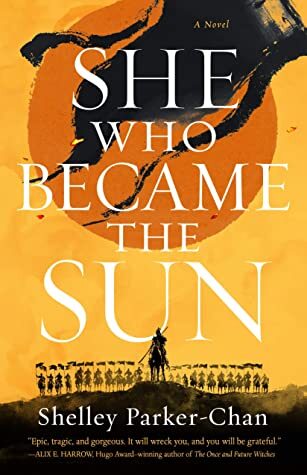
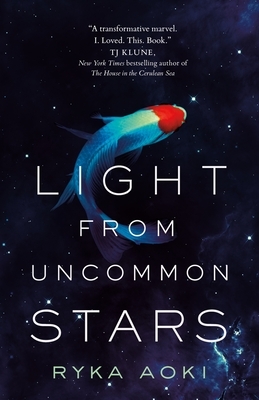
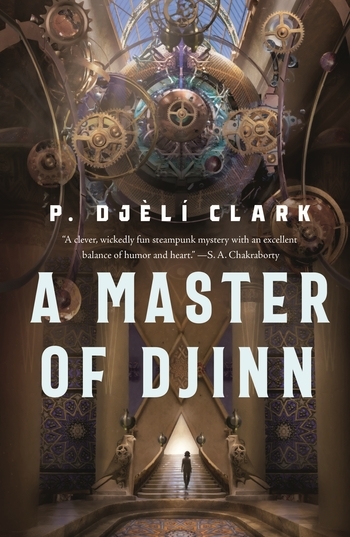
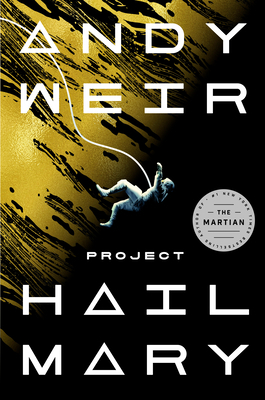
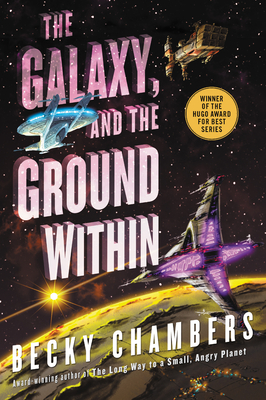
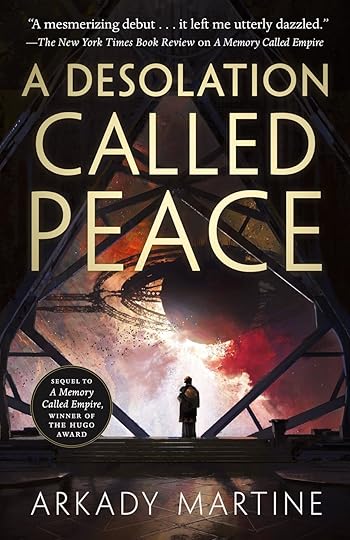
This year’s Hugo nominations for the Best Novel Award are out, and I am excited. I’ve only read two so far, Light from Uncommon Stars and She Who Became the Stars. However, three of them are in my immediate tbr, and the last of them, Project Hail Mary, I had been debating over for months. The debate is finished – I will be reading it. The list leans quite hard towards science fiction this year as well, which is interesting.
Here are the six nominated novels:
She Who Became the Sun by Shelley Parker-Chan
Light from Uncommon Stars by Ryka Aoki
A Master of Djinn by P. Djèlí Clark
Project Hail Mary by Andy Weir
The Galaxy and the Ground Within by Becky Chambers
A Desolation Called Peace by Arkady Martine
She Who Became the Sun is the only one I would say has no elements of science fiction. To me, it read like historical fiction with some supernatural, minorly fantastical, elements. A Master of Djinn, assuming it is anything like its accompanying novella, The Haunting of Tram Car 015, will be historical with a steampunk and supernatural bent.
As for reading through the Hugos, which I will be doing this year, the only two that are a part of a longer series are Chambers’ and Martine’s work. The bonus? I’ve already read the book prior to A Desolation Called Peace and have started The Wayfarer Series that The Galaxy and the Ground Within is the fourth entry in. I really can’t wait to finish reading them all, and I imagine that deciding which one I feel should take home the win will be the trickiest part (as usual).
If you’ve read any of these books or also plan to read the Hugo nominees, I’d love to hear your thoughts!
April 6, 2022
4 Recommendations for National Poetry Month
Poetry rates as one of the more contentious literary topics to discuss for me. I have friends that adore it, friends that despise it, friends that just ‘don’t get it’, and friends that are pickier over what poetry they read than what wine they drink. If you look up opinions on poetry, you see sweeping quotes that attempt to distill what poetry has meant to the speaker in a pithy line. You also see rage over it being pointless or unnecessarily high falutin. Like I said – contentious.
On my part, I happen to enjoy poetry most of the time. I find it can represent more to me in short lines than in entire paragraphs. There are some emotions evoked in poetry that are difficult to portray in a story or narrative, but that sink into poetry smoothly. It comes down to personal taste, much like music in my opinion. Thankfully, this blog’s existence is an ode to my opinion!
As April is National Poetry Month, and I quite appreciate poetry, here are a few of my favorite works for anyone interested:
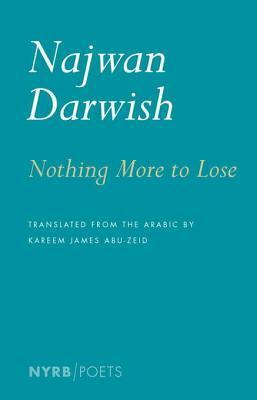
Nothing More to Lose
by Najwan Darwish
Darwish is a poet I stumbled upon accidentally when I came across this collection on a discount shelf. He writes in Arabic, so this is a translated work but I only had to read one poem to be hooked.
In Praise of the Family
“There is but a single sentence fit to praise you:
You are the deep quarry
of my nightmares.”
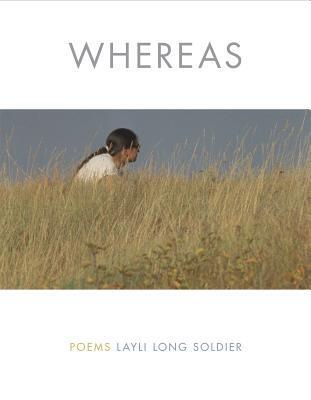
Whereas
by Layli Long Soldier
Layli Long Soldier was a recommendation tossed my way by a librarian while we discussed our towering to-be-read stacks. She had just finished this particular collection and vouched for its power – so of course, I picked it up.
I would call these social-historical poems, and they pull no punches. It is eautiful and terrible at the same time.
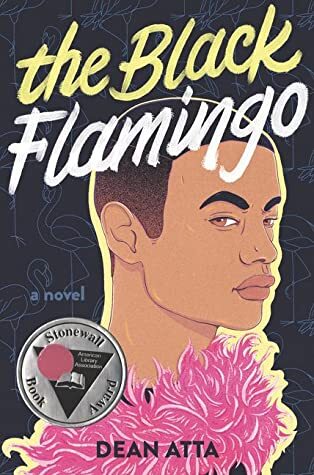
the Black Flamingo
by Dean Atta
This particular work of poetry is a novel in verse. So yes, the entire book is poetry, but it is poetry that carries forward a story throughout.
The contents of this book are lovely (and timely). It follows a boy finding himself, accepting himself, and learning that sometimes standing up for yourself doesn’t look like you expect it to. Brilliant and raw I found it impossible not to want more once I’d finished it.
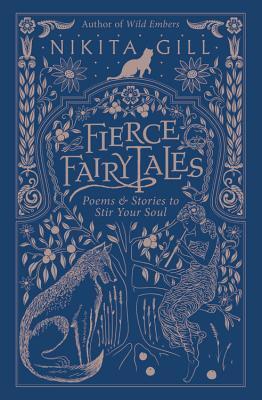
Fierce Fairytales
by Nikita Gill
This is the only poetry book I have a lending copy of. I would be sad without my own copy to pull out to read again, but it is also a poetry book I find is approachable even for those who don’t often read poetry.
Gill manages to tell stories and share conversations using the familiar context of fairytales while still keeping a unique poetic voice. With poems like “Cry Wolf” and “Wendy” the material feels familiar enough for some readers to take a chance. Most don’t end the way you would expect though.
March 16, 2022
A Novel Review: The Bone Orchard by Sara A. Mueller
I have finally gotten around to reading the gorgeous, gorgeous bones book, and I must admit – the story inside does live up to the cover. We are promised something elegant and gothic. Mueller delivers on that promise. See, it’s beautiful!

The premise of The Bone Orchard by Sara A. Mueller is deceptively simple. The Emperor dies, and our main character, Charm, is tasked with finding his killer. The slight twist here? It is the Emperor himself who gave her this task, and he gave it while she was his mistress, running a brothel, and psychically bound to follow her orders. Oh, and she has used her own trauma to split aspects of her mind into necromantic servants she grew in her orchard that are called boneghosts.
Mueller has managed to splice together murder mystery, political fantasy, and psychic trauma into one story. A story that can actually be followed at that! As I began I was worried it would remain too confusing to follow, but after the first section, I managed to sink into the story fairly well. I even grew attached to one of the characters, Pain, who is one of Charm’s boneghosts. Even as we learn that she is a splinter of whole her character gains depth as she is the only one of Charm’s boneghosts that interact with the outside world.
Whether we want to look or not, we cannot escape from the world. We can retreat for a while, but it is always there.
– quote taken from an ARC edition of The Bone Orchard – may not match published version
If you enjoy political intrigue or murder mysteries with a dark backdrop then I highly recommend The Bone Orchard to you. It is intricate, unique, and dysfunctional from beginning to end, and I for one cannot wait to see more from Mueller. If you want to see some comparisons to books I thought it resembled, check out my review on Goodreads. Please do check the Content Warnings for this book as there are dark and disturbing things such as graphic descriptions of violence, insinuation of rape, aftermath of trauma, mentions of pedophilia etc.
January 25, 2022
5 Favorite Novellas: A Capricious List
You can find varying definitions for a novella depending on where you look, but I generally consider it longer than a short story and shorter than a novel. There are a surprising number of stories that fall in that cavern between short story and novel, and I’ve been enjoying finding and inhaling novella over the last few years. There are thousands of novellas out there. You can find classics, translated works, literary fiction, and all sorts of genres. My favorites are, to no one’s surprise, the science fiction and fantasy ones!
Now, for print novellas, the one publisher that has been going hard with science fiction and fantasy novellas is tordotcom publishing. Accordingly, three of the five novellas I have on my list of favorites (at the moment, I’m a capricious soul) are published by tordotcom. They aren’t the only ones publishing novellas, but my favorites list highlights them for sure. If you have any favorites or opinions on any of mine, feel free to share!
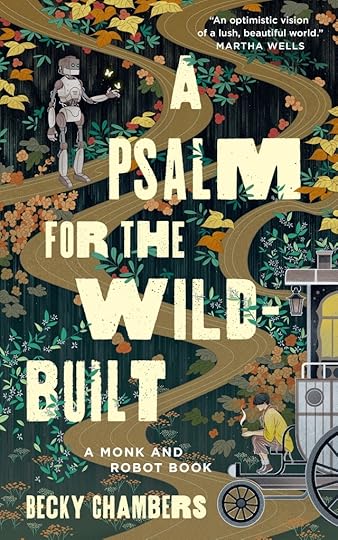
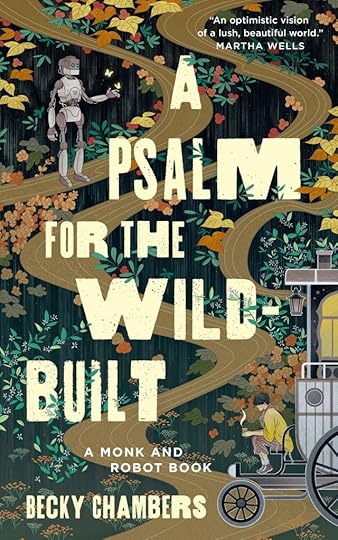
A Psalm for the Wild-Built by Becky Chambers gives readers a kind glimpse of a future where robots and humans have gone their separate ways. Well, at least until the robot Mosscap encounters the tea monk Dex and asks the question, “What do people need?”. This is a tricky question even in the close to utopian setting of the novella, and I found it a moving read about hope with a gentle touch of philosophy.
The sequel to this novella, A Prayer for the Crown-Shy, hits shelves in July of 2022. This is a sequel I am definitely excited for, and while I’m not expecting it to hit the same way as A Psalm for the Wild-Built did, but I do have high hopes for enjoying it.
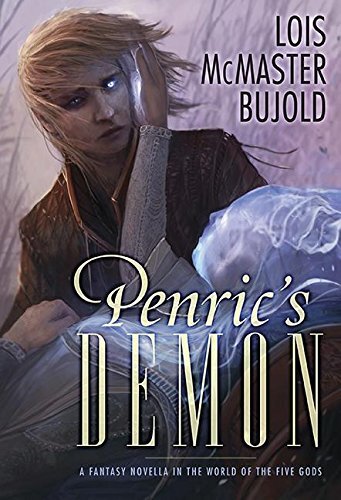
Penric’s Demon by Luis McMaster Bujold starts off a fairly lengthy novella series in which the young man Penric is suddenly in possession of a demon named Desdemona. Whether or not she is Penric’s demon or Penric is Desdemona’s human is up for debate.
Penric himself expects to live a fairly boring life trying to please his family and stay out of the way without causing trouble. He fails spectacularly at this and ends up on his own set of adventures where he has to grow into himself and an awareness of his (and Desdemona’s) place in the world.
A fun series that manages surprising character depth in such short books.
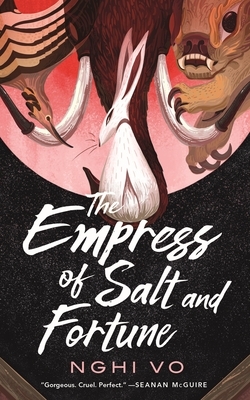
The Empress of Salt and Fortune by Nghi Vo is the first of the Singing Hills Cycle, and it is also one of the first novellas I ever read outside of the classic American ones assigned in school (think Of Mice and Men or Steinbeck’s The Pearl). As such, I may forever hold a fond spot for it in my heart.
The novella follows cleric Chih as she goes to find a story that she can take back with her, and instead encounters questions about what stories are made of and how they change with the person telling them. This novella skirts around empire, anger, and just who is left to learn from those stories.
The second entry, When the Tiger Came Down the Mountain, is out and also wonderful. The third entry in the series, Into the Riverlands, comes out in October of 2022.
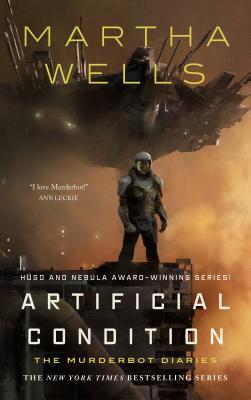
Artificial Condition by Martha Wells is not actually the first entry in The Murderbot Diaries, which as of January 2022 has 5 novellas and 1 full-length novel. The first novella in the series is All Systems Red which is a fun read, but it is lacking one of my favorite characters, ART, which is introduced in the second novella, Artificial Condition.
The premise of The Murderbot Diaries is that an artificial construct, Murderbot, has hacked its controller module, but continues to play along because it doesn’t want things to change. Cue unfortunate things like emotions and gaining friends to tilt its entire world on its access when all it wants is to be left in peace to watch media.
I adore the sass and character development in this series. The seventh installation in the series has been confirmed although we have yet to have a release date for it.
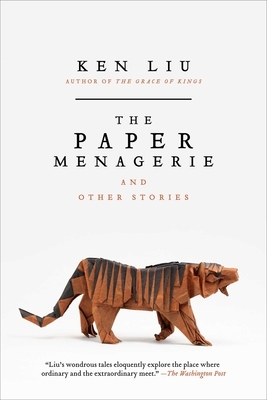
All the Flavors by Ken Liu feels a bit like cheating since the novella has not actually been published as a standalone piece. It was published as part of his collection The Paper Menagerie and Other Stories. However, it is definitely longer than a short story and shorter than a novel so I’ve kept it on the list. I also now realize that this is the only standalone novella on my list, although of course there are many more that I simply haven’t listed available.
All the Flavors takes place primarily in a mining town located in Idaho, and has interweaving narratives. Guan Yu, the Chinese god of war, has a perspective interspersed with that of the daughter of the landlord renting to the Chinese workers. The way Liu looks at integration, flavor, and leaves the ending open made for an interesting read that I enjoyed.
I’ve really come to adore novellas. Occasionally their brevity leaves me hungry for more content, but I like how it feels like a peek at another world and requires less mental fortitude than wading through a full-length novel. They are great to just sit back and read without worrying about finishing. So yes, I’m a novella fan. How about you? Any novellas on your list of things to read?
January 16, 2022
Beautiful Bones: A Book Cover Both Gorgeous and Gothic
Normally I post a book review, or an in-depth look at something that happened in a book, perhaps even a theme I see occurring regularly in a spate of recent reads. Today’s post is a bit different, as the entire post was inspired by a book cover that I looked at and went, “Oh, this is gorgeous. Even if the summary doesn’t sound overly promising I’m going to read this book.”
Now, as a visual person liking a cover isn’t a new thing for me. In fact, artist Tommy Arnold’s covers of The Locked Tomb books by Tamsyn Muir are a leading reason I plan to read the next installment of the series. Appealing visuals have always drawn me in. However, an appealing visual inspires me to read a book when I also like the summary. This is the first time I’ve looked at a cover and decided I don’t even need to read the summary so I had to share. (Although every time I see a cover by artist Feifei Ruan I come close.)
The book in question is The Bone Orchard by Sara A. Mueller, and the description bills it as a horror, thriller, and fantasy novel. A bit of a whodunnit with the high stakes of an entire Empire being on the line. In this case, it looks like I’m in luck because the topic appeals to me as well, but you can see the cover below to judge the visual appeal yourself. It is likely obvious that I’m into gothic imagery just from a glance.

I’ve been digging to find the name of the cover artist to share here with no luck as the publisher’s page doesn’t even list it. Once I have a name, which may perhaps not be until the book hits shelves on March 22nd, I will be sure to update this short write-up!
Of course, if you have any covers of beautiful bones that you would suggest yourself I would love to see them.
August 5, 2021
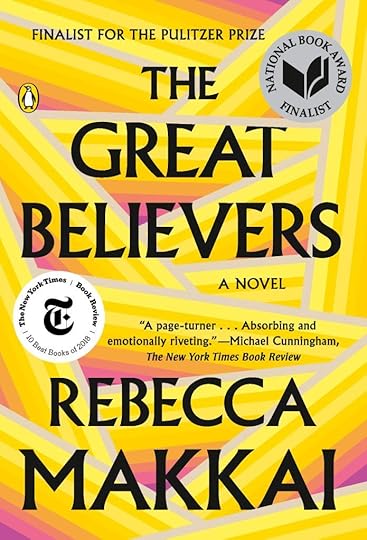
A Novel Interview: The Great Believers by Rebecca Makkai
You should know we had so much joy as well! But when you build a story down, you end up with something macabre. All stories end the same way, don’t they.
The Great Believers
The Great Believers follows two narratives that twine together. One of Yale Tishman, a gay art director gallery in Chicago at the height of the AIDS epidemic. The second narrative is of Fiona, the sister of one of Yale’s friends as she searches for her daughter years after the events in Chicago. Yale’s own story belongs to Fiona’s past, but manages to adroitly touch upon many of the same emotions that Fiona faces in the future. It was a touching and powerful read about mayhem, heartbreak, art, and finding the spot of good in the midst of dark events.
This book was another from the list of books recommended to me that I made it a goal to read in 2021. Sam Baker (check him out on Instagram if you’re interested) recommended it to me, so I asked him a few questions about his experience with the book!
How did you first find The Great Believers?
After college, I decided that I really want to rein in my spending on books – mainly brand new books. That financial decision led me to look for, and find, my old library card. To my delight (and surprise), I discovered that I could link my physical library card with an e-book library app called “Libby,” which serves several counties in rural Western PA. Additionally, in the Peace Corps, I had very limited access to electricity and the internet; and, of course, the humid tropical climate quickly destroyed physical books. So, reading e-books on my iPhone was a great option — I had a waterproof case on my phone, and the phone battery did not consume very much electricity. The small iPhone was also super portable! One day, then, I was looking through the literature shelf on the app where I found The Great Believers. (Also, I had first, first thought about reading The Great Believers after I saw one of my Goodreads friends update their reading status.)
Why did you recommend this particular book over any others?
I recommended this book because we do not learn about LGBTQ history in school — or the mainstream culture. (And so, I wanted to spread awareness of the community and this historic event.) This isn’t just because the LGBTQ population is a minority group in the USA; in fact, I think it’s also because of how morally problematic, political, and traumatic the AIDS epidemic of the 1980’s was. Sometimes, then, it’s “easier” for people to dive into a difficult and painful subject through fiction. Fiction can make the subject more accessible by telling empathetic, moving stories, as well. Moreover, I was really impressed with how realistically and sensitively the author dealt with the overarching AIDS crisis and the very real characters involved in her story. Too often, LGBTQ fiction is terrible because the gay and queer characters tend to deal with intense pain and suffering. This bad type of fiction abounds with abuse, mental health issues, and self-harm or even suicide. While pain and suffering certainly were present in The Great Believers, there were optimistic / uplifting themes, too, such as forgiveness, hope, redemption, resilience, and survival. It’s important for LGBTQ people, despite their pain and suffering, to see the possibility of those themes in their own lives, as well. (While also straying away from the toxic positivity of assuring LGBTQ that “It gets better”.)
Fiona and Yale’s story intertwine deeply throughout the years, and a large number of friends weave in and out of the narrative. Were there any characters that you felt especially attached to? Or vice versa? And do you know why?
I was deeply, deeply drawn to Yale. Although Yale was an artsy, preppy character, he didn’t come across as a stereotype or a trope. He really seemed like someone whom I would have enjoyed getting to know and spending time with. Once Yale saw his friends dying all around him, he then tried to be careful and cautious with his own behavior — and I was shattered when he ended up getting sick, too. That anxiety and stress were so pervasive; but, in the end, Yale lived as full of a life as he could have. In contrast, I did not like Charlie Keene — at all — and I did not want Yale to stay with him. Charlie was arrogant and rude, and deeply insensitive. There was toxicity in Charlie and Yale’s relationship. As a result, I valued Fiona and Yale’s friendship far more than I valued Charlie and Yale’s relationship.
Additionally, I was personally drawn toward Fiona and Yale’s friendship because I often have better, deeper friendships with females. I am definitely more cautious and reserved around men because they have been culturally conditioned to be aggressive, angry, impulsive, and violent. That cultural conditioning is in direct contrast to how I discipline my own conduct and emotions.
This novel is powerful historical fiction, but it has many direct parallels to issues and events still ongoing today. Was there any one specific issue you felt was best represented here that is still prevalent today? (I found way more than one, but was curious to see if there was one you thought was most prevalent.)
As a rather openly gay man, I am deeply fortunate that progress has been made for the LGBTQ community during my lifetime. The big LGBTQ issues of today are centering more and more on LGBTQ people of color, and transgender rights, which I fully support. Indeed, diversity within the LGBTQ community is being championed and recognized, after — for far too long — the LGBTQ movement was dominated by white gay cisgender men. (And cultural acceptance seemed to extend only to people who fit that description.) In the The Great Believers, I appreciated the diverse cast of characters because, too often, LGBTQ fiction is still just about gay white cisgender men. This is how I identify; and, although I lose some privilege being gay, I still have tremendous privilege being white and male. And, in some contexts, I blend in, code switch, and straight-act so that I can safely and successfully navigate less accepting or tolerant spaces. Others certainly can’t do that so easily. Moreover, the author chose Chicago as the setting for the novel, which is huge; because, most often, people think of Boston, NYC, San Francisco, Seattle, and Washington, D.C. as being the LGBTQ hotspots in the USA. But what about the Midwest? What about small towns, and rural communities? LGBTQ people live everywhere in the USA, even in the red states. We need the Equality Act to pass in the U.S. Congress, both chambers, and then be signed by President Biden, so that we can protect the LGBTQ people who live in states that don’t already protect LGBTQ citizens (like Pennsylvania, for example).
Why do you think it matters that Makkai chose to set the stories here within the time period of the AIDS epidemic?
For me, the author is most obviously telling this story because we lost an entire generation of LGBTQ people who, if they didn’t survive, literally cannot tell their stories today; or, if they did survive, might not be able to share such painful and traumatic experiences with us. For example, I had an uncle who died in 1989 from the AIDS epidemic, and I didn’t even learn about what truly happened to him until I was a sophomore in college and came out to my mom (who is / was the sister of my uncle). Even as a young kid, Granny and Mom would always say that I reminded them of Uncle Jeff, but little did we know just how similar Jeff and I were. I always lived in his shadow and felt his absence, and wanted to be like him growing up. I would have benefited enormously from having an LGBTQ mentor during my middle school and high schools years — when I was closeted — but I went without that, which made my adolescent years absolutely and utterly isolating and miserable. Indeed, I doubt I’m the only one who would have benefited from having an LGBTQ mentor from that generation in my life!
(and on a less socially serious topic-)The creation of artwork within the novel, from photography to painting, is displayed quite heavily as a collaborative effort of sorts between the artist and the muse. Do you think this holds true to the art we see today? And why do you think Makkai chose to focus on that relationship between artist and muse?
Not being an artistic person myself, I’m not sure I can provide a satisfying answer to this! My feeling is that art often appears in LGBTQ fiction because so many LGBTQ people see art as a way to express their diverse, unique identities and selves. Moreover, art and theater are assumed to be safe spaces for LGBTQ people to go, where they can find community, familiarity, and identity. Where else to go when one doesn’t fit into the dominant culture or the mainstream? Like I said, though, I’m not much of an artist: I’ll go to a gallery or a museum out of casual interest, but that’s about it, haha! (I’ve never even been to the theater to see a play or a production.)
Have any follow-up book recommendations?
There has been quite some hype around The Prophets by Robert Jones, Jr. I have not read it yet, but — according to my friends – it sounds like it’s worth the read!
July 30, 2021
A Novella Review: A Psalm for the Wild-Built by Becky Chambers
*contains profanity and spoilers
I have to start with the fact that the dedication literally reads, “For anybody who could use a break.” That dedication is indicative of what I believe Chambers was aiming to do with this 147 page bite of a novella. For the most part Chambers succeeded in that – of course, up for debate depending on what kind of break the reader needed, but it definitely hit the target for me.
When I closed the novella I had two conflicting thoughts in my head:
Everyone else I know should read this so that we can idea vomit together.No one else should read this until I re-read it, cover up my instinctual reactions, and logically react to it.Just a bit of conflict there.
A Psalm for the Wild-Built asks the question of, “What are people for if survival and good lives are guaranteed?” Or, as my brain put it, “What if the things you are always fighting for are no longer necessary to fight for? What then is your purpose?” And it does that by introducing Dex, a monk trying to find their purpose, to Mosscap, a robot aiming to see how humanity is getting along since the robots gained sentience and wandered into the wilderness. Turns out that overall humanity has done better than expected here and has a bit of a utopia going on – but of course, nothing is ever perfect.
The troubles that Dex and Mosscap bring up as questions have the definite ring of what I have often heard called, ‘first-world problems’. Food, racism, oppression, discrimination, and many of the physical barriers present in our current world simply don’t exist in Panga. Everyone has sufficient resources and support, so the question the novella asks isn’t how to make our world better but what can our purpose be once the world is better? A question I am very onboard with asking.
“That’s something I’m doing. That’s not my reason for being. When I am done with this, I will do other things. I do not have a purpose any more than a mouse or a slug or a thornbush does. Why do you have to have one in order to fell content?”
There were also small glimpses of the philosophies the inhabitants of this world hold to be true, such as the matter of fact assumption that, “A surplus has to be shared.” (pg 108) We may be getting a picturesque view of this world, we as readers do not see enough of hierarchy and structure to truly know that all of the issues we see in our own world have been addressed, but the people Dex interacts with vary wildly enough that I am willing to trust the author. This world is at peace, resources are not being hoarded, there are not children starving in the streets.
Dex, the tea monk we follow throughout the novella, grew up loved and with access to opportunities. They chose to pursue their current career out of true desire and not economic necessity. This is a dream come true for many readers, and gives me the comfort of reading a wish fulfillment scenario. Yet, even as Dex grows in their role and finds joy in carrying out their work something is still missing. At one point they almost demand of Mosscap an answer to an impossible question:
So, how fucking spoiled am I, then? How fucking broken? What is wrong with me that I can everything I could ever want and have ever asked for and still wake up in the morning feeling like very day is a slog?
A Psalm for the Wild-Built, pg 120
Mosscap, full name Splendid Speckled Mosscap, encounters Dex on its quest to find humanity and get the question, “What do humans need?” answered. Now, robots and humanity haven’t interacted in probably centuries (we aren’t given a clear timeline) so Dex feels just a tad underqualified to be the first human trying to answer this question, especially when their fairly sure it isn’t possible for their to be a singular answer. Mosscap, however, finds no issue with Dex being the human to work with it as it explores Panga in attempts to find an answer.
Mosscap ends up following Dex on their own journey out into the semi-wilderness to answer the question of, “What do I need?” They make unlikely travel companions and misunderstandings abound for all that Mosscap is probably one of the most humanistic robots I’ve ever read (reminds me a bit of Murderbot, just more…cheerful? less murder-y?). Dex and Mosscap work through these issues as they crop up, and communicate with each other when they can. Mosscap begins to understand Dex’s need to understand and Dex works out why they are uncomfortable about the fact that Mosscap cannot eat.
The entire novella had humorous scenes, meaningful scenes, and questions about the purpose of existence all woven together in an easy to swallow format. It may be full of idealism, but what Becky Chambers brought to the page, quite skillfully at that, brought me joy. I will now shamelessly ask that if any part of this piqued your curiosity that you go read this. I loved it and will be recommending it to many fellow readers!
July 27, 2021
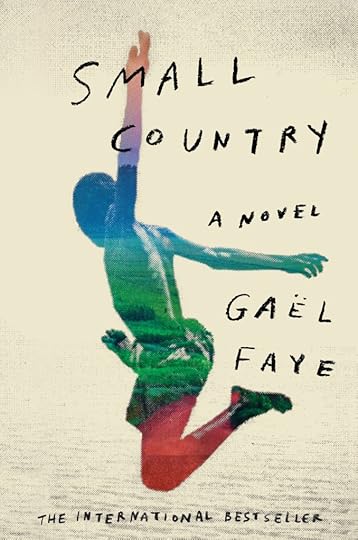
A Novel Review: Small Country by Gaël Faye
Small Country reads much like a memoir – enough so that I had to continually remind myself that it was indeed fiction. Faye paints the surrounding scenery with the thoroughness of a reporter and the knowledge of a native. The reader follows Gabriel nicknamed Gaby, the primary narrator, as he comes of age in late 1990s/early 2000s in Burundi, a country on the cusp of war and reeling from the Rwandan genocide.
History as seen from the eyes of a child living through it paints a powerful picture, and gives a different point of view from the usual adult perspective common in novels regarding war. Despite the work being fictional, Faye’s narrative stands as a testimonial to not only the horror that comes with war, but the innocence that can precede it. Overall, the novel is a quick read and beautifully translated from French.
Genocide is an oil slick: those who don’t drown in it are polluted for life.
Small Country, pg 154
“When we leave somewhere, we take the time to say goodbye: to the people, the things, and the places we’ve loved. I didn’t leave me country. I fled it.”
As powerful as the novel was in terms of story, the part that ended up catching my attention the most (book obsessed as I am), was the books that begin appearing in the last quarter of the book. One of the side characters, Madame Economopoulos, possesses a library that Gaby dives headfirst into reading as he attempts to immerse himself into worlds far aware from his own. In his own words he “had broken free from the limits” (pg 141) of his physical surroundings was able to regain some of the explorational innocence of his childhood.
Now, the only book he reads that is called out by name is The Boy and the River by Henri Bosco, but the first few books he borrows from her library have distinct descriptions and assumptions can be made about the titles.
The “story of an old fisherman, a small boy, a large fish, and a shiver of sharks” (pg 140-1) is an easy match to Ernest Hemingway’s The Old Man and the Sea. Now, “swords clashing, horses galloping, the swish of chevaliers’ capes, the rustle of a princess’s lace dress” (141) is a tad more vague, but if the reader assumes that the Madame largely reads in the classical Western canon, and takes into account that chevalier is French for horseman, one can guess that this is The Three Musketeers by Alexandre Dumas. The last book with a description solid enough to guess at the title is about “a cramped room with a teenage girl and her family, in a ruined wartime city. Over her shoulder, she let me read the thoughts she was inscribing in her diary.” (141) Gaby is reading The Diary of Anne Frank.
. . . I wanted to lose myself in happy memories, to be inhabited by gentle novels, to live deep inside books.
Small Country, pg 156
All other mentions of books are about Gaby’s thoughts towards books in general or actions in which specific books are not described outside of the general mood they convey. Giving the time period the book takes place in (1980-1990s) it is probably safe to assume the majority of the library Gaby has access to is Western classics, and Hemingway is the most recently published that we can determine with The Old Man and the Sea having a publication date of 1952.
Now, this is not a specific book but the poem Madame Economopoulos rips out for Gaby is by the Haitian poet Jacques Roumain. He was a contemporary of Langston Hughes and sought asylum in the USA for awhile, but I am not overly familiar with his poetry. He has several pieces translated into English and wrote about the concept of country frequently. If I discover the name of the poem she ripped out for Gaby I will put the title here (if anyone else knows, please share!), but there is a chance that except for the excerpt in this book the poem remains only in French so I may not find it. We shall see…
In my bed, deep in my stories, I sought out more bearable realities, and those books – my friends – painted my days with light again.
Small Country, pg 164