
Chloe Carmichael's Blog, page 3
December 9, 2021
How To Deal With Toxic People (And Why You Really Need To)
In an ideal world, all of the people in your life would be helpful resources, willingly by your side to provide support, add joy, and keep you balanced. But let’s face it: We don’t live in an ideal world (if we did, I’d probably be out of a job!). Most of us will encounter at least one person in our day-to-day at some point in our lives who does the opposite. Someone who drains your energy, undermines you, puts you down. I’ve recently been asked to speak about the topic of “toxic people” by FOX5 here in New York, and while “toxic people” isn’t a clinical term… I think I sort of knew what they meant. Toxic people chip away at your mental health and overall wellbeing, and the longer they’re in your life, the more damaging their emotional footprint can be.
Here’s the good news: You don’t need to tolerate behavior you find unacceptable! In fact, it is not only your right but your responsibility to limit their role in your life or remove them from it entirely. If you’re labeling someone or something as “toxic”, it’s part of your duty of self-care to manage the situation carefully. Plus, keeping someone around whom you actually dislike because you’re “too nice” to be truthful with them or at least quit engaging with them isn’t doing them any favors, either: Letting the toxic dynamic continue without giving them feedback will only encourage them to pursue and maintain unhealthy relationships with others. Plus, it can be seen as a form passive aggression on your part if you consciously allow someone you actively dislike to continue becoming more vulnerable to you as they mistakenly persist in a misapprehension that you’re friends. So whether you’re dealing with a sorta-toxic coworker or a so-toxic-it’s-traumatic partner, a “frenemie” friend… or even a toxic family member, here’s a guide to help.
1. IDENTIFY THE PROBLEM
This sounds like such a “duh!” step, but it’s one we tend to skip because it requires getting very real. First, you have to finally acknowledge the source of toxicity. This person can be a friend, a romantic partner, a relative, a colleague—no one’s off limits. And there’s a spectrum, which I like to break into three levels:
Level 0: The NON-toxic person.
This is someone whom you may be accidentally mis-labeling as toxic. They may just have different values, beliefs, communication styles, or expectations than you. This person may even be a little intrusive or annoying, but this person is actually NOT really a “toxic person”. You’re just regarding them as toxic because you haven’t figured out how to set limits or communicate your needs with them. (Examples: A friend who always brings you down by constantly complaining about everything, yet you’ve never said to the friend, “Hey would you mind if we focus on the positives today? I’m trying to keep on the bright side here!” Or a friend who “bothers” you by calling waaay too often, yet you just keep blithely answering all their calls and carrying on unbearably mundane phone conversations without ever mentioning that you’re actually not a lover of long phone chats– how are they to know if you’ve never told them?)
Level 1: Mildly Toxic.
Someone who is basically harmless, but who regularly uses energy-draining interpersonal antics: They may have a markedly dismissive attitude, regularly make snide remarks, pester you to do (generally harmless) things like meet for coffee even when you’ve made it clear you’d rather not, constantly try to “one-up” you, or place unreasonable demands on your time (or money). You’ve tried having heart-to-hearts to see if you can agree on a more respectful way of relating, but the person just becomes angry, refuses to take any ownership, or seems like they “get it” but then continues the same pattern without any actual willingness to continue working on it.
In my experience, all of us are likely to encounter at least one person like this in our lifetime. If you’re anxious about setting limits, try to think of this as a “training ground” opportunity, since learning to set basic limits is an important life skill. You don’t have to do it perfectly, and yes the person might get a little upset- but that’s their right, and learning to express yourself in an assertive-yet-courteous way will take you far in life.
Level 2: Toxic
This moving beyond the Level 1 behaviors by violating boundaries in a more intense way. Someone who threatens to end the relationship whenever they don’t get their way, text-bombs you with angry and disrespectful messages over relatively little things (think ten text messages in an hour), or who finds other ways of objectively sabotaging your well-being (such as pressuring you to drink more than you’d like, or belittling your goals and ambitions) would be traversing from Level 1 to Level 2. They may ironically flip things around on you as well, such as playing the victim and lamenting that you have “thrown their friendship away” when actually all you’ve done is decline to respond to their abusive text message telling you they were “done with you”.
Such a person may also call you names when they’re angry, or say nasty things about your appearance; or disrespect your time or property (such as being unavailable to return items they’ve borrowed, constantly canceling or delaying plans moments before or even during the time you were supposed to meet, acting entitled to stay at your apartment or visit with you whenever they’re in town or it’s convenient for them even if you’ve explained it’s not a good weekend; or pressuring you to spend money on entertainment you’ve explained you can’t really afford).
Level 3: REALLY Toxic.
Being physically abusive, stealing from you, verbally threatening you, or doing other things that are so intense they’re actually oftentimes against the law to do to another person. This category is actually the shortest and simplest to describe, since there’s really no “grey area” about these things– they’re clearly easy to recognize as 100% toxic.
Moving forward from a Toxic Person
arguing-peopleOnce you’ve ID’d the problem, the next step is to consider why you’ve allowed this toxicity to exist in your life. Oftentimes, we keep toxic people around because they’ve been in our lives for so long, it feels like our only option is to accept their behavior and make peace with it (for the sake of your history together). Other times, we let them bully us, physically or emotionally, because we’re too scared to speak up or don’t know how to set and enforce boundaries. And other times still, we almost like the toxicity or drama, because it’s become something we’re used to and we prefer familiarity over the unknown.
Repeat after me: None of these are good enough reasons to keep a toxic person around. Ready to set some boundaries? Read on!
2. TAKE ACTION
The best way to know if someone who you think is toxic is actually toxic—as in, unwilling to fix their behavior in order to improve the relationship—is to give them a real chance to change their behavior. Initiate a chat about what’s been going on—if they only respond with more toxicity from the get-go, that can actually help give you the clarity you need to move forward (possibly without them!).
Many of the clients in my practice are dealing with non-toxic or just mildly toxic behaviors, and honestly I think those can ironically be some of the most difficult to navigate— when someone is clearly being abusive, it’s actually easier to cut them out of your life. On the other hand, when someone is just a little manipulative or a “drama queen”, more nuanced strategies are sometimes helpful. Here are a few to get you started:
For a friendship you’ve outgrown:
“I feel like things have changed in my life since when we first met many years ago, and I’m no longer interested in X. If you want to change with me, awesome. If not, I just want you to understand why there might be some distance as we move forward and possibly grow apart.”
For someone who seems constantly down on you:
“For all of the negative things you say to me these days, I’m starting to wonder if you really get that much pleasure from hanging out with me; and honestly it doesn’t feel great to me either, since you seem to disagree with so many basic things about me. You have a right to your opinion on my hair/ weight/ job/ life, but I’m just not sure it’s healthy for either of us to continue spending so much time together if you find so many things about me to be so bothersome to you, especially since the things that bother you are not things I have any plan or interest in changing… and even if I did, I still wouldn’t appreciate feeling like it’s always open-season for commentary about my issues.”
For someone who constantly guilts you for not being able to spend as much time together as they’d like:
“I really value all of our memories together and I don’t want there to be any hard feelings, but I don’t think I can live up to your expectations as they are now. There’s nothing wrong with what you seem to want in terms of a friend who is always able to return same-day texts and visit on a weekly basis, but there’s also nothing wrong with someone like me who is only open for less frequent contact for whatever reason. Could we talk about what we both seem to need and then see if we still think this makes sense for both of us? No hard feelings either way, I just think it’s best if we can be open with each other about whatever the situation is.”
For Level 2 toxic behaviors:
Remember: You always have the right to end a relationship. But if you’d like to try setting some firmer limits instead of ending the relationship, you might try something like,
“I need to talk with you about something important: I’ve realized that I’ve allowed certain things to happen in our relationship that are actually really unhealthy for me, and I want you to know I’ve realized it’s my responsibility to stop allowing those things if I find them unacceptable. I may never have told you this, but when you do X it affects me in the following way: ______. So, next time X happens, I will (end our visit, block your texts for a while, stop chasing after you, put some distance between us, or whatever response seems logical– if you need help thinking of what’s logical, feel free to ask a trusted friend, therapist, or coach!).
For a Level 3 toxic person:
In many cases, it’s best to cut off contact with someone like this– and please remember you always have the option to do this if you wish, no matter whom the person is– but in situations such as an adult child or a family member who is struggling with addiction, we may sometimes decide that we’d prefer to learn hard boundaries instead (ie “You can stay in my life and we can interact when you’re sober, but if you steal from me I will call the police; and if you call me any names whatsoever our visit will end immediately.” or “I’ll visit with you, but only when someone else I trust is present; and if you become physically aggressive I will call the police.”). Please seek a professional or call 911 if you need help at any point!
Many people in my office fear conversations like the ones above because they’re afraid of upsetting the person. They often feel better when they remember that actually, if the toxic person gets really mad and ends the relationship, guess what? They just made things easier on you. I know it’s tough, but at least you’ve freed yourself from the toxicity—and the charade of a healthy relationship. You’ve now made more time for all the other genuine and healthy connections in your life—go, you!
Now, I know what you’re thinking: “Okay, Dr. Chloe, it’s not always that simple. What do I do if the toxic person is someone I can’t cut out—like, you know, my mother-in-law?” And that’s a great Q. First, be sure to schedule in some time for self-love whenever you have to be around that person, since being around crazy can make you feel kinda crazy (you know what I mean). Try scheduling a massage or dinner with your best friends to happen shortly after the visit, since they’ll help keep you grounded and give you a chance to unpack whatever happened.
Would you like to learn more about my acronym T.O.X.I.C., which offers steps to set limits with toxic people? Check out Part 2 of this series on How to Deal with Toxic People!
Here’s the good news: You don’t need to tolerate behavior you find unacceptable! In fact, it is not only your right but your responsibility to limit their role in your life or remove them from it entirely. If you’re labeling someone or something as “toxic”, it’s part of your duty of self-care to manage the situation carefully. Plus, keeping someone around whom you actually dislike because you’re “too nice” to be truthful with them or at least quit engaging with them isn’t doing them any favors, either: Letting the toxic dynamic continue without giving them feedback will only encourage them to pursue and maintain unhealthy relationships with others. Plus, it can be seen as a form passive aggression on your part if you consciously allow someone you actively dislike to continue becoming more vulnerable to you as they mistakenly persist in a misapprehension that you’re friends. So whether you’re dealing with a sorta-toxic coworker or a so-toxic-it’s-traumatic partner, a “frenemie” friend… or even a toxic family member, here’s a guide to help.
1. IDENTIFY THE PROBLEM
This sounds like such a “duh!” step, but it’s one we tend to skip because it requires getting very real. First, you have to finally acknowledge the source of toxicity. This person can be a friend, a romantic partner, a relative, a colleague—no one’s off limits. And there’s a spectrum, which I like to break into three levels:
Level 0: The NON-toxic person.
This is someone whom you may be accidentally mis-labeling as toxic. They may just have different values, beliefs, communication styles, or expectations than you. This person may even be a little intrusive or annoying, but this person is actually NOT really a “toxic person”. You’re just regarding them as toxic because you haven’t figured out how to set limits or communicate your needs with them. (Examples: A friend who always brings you down by constantly complaining about everything, yet you’ve never said to the friend, “Hey would you mind if we focus on the positives today? I’m trying to keep on the bright side here!” Or a friend who “bothers” you by calling waaay too often, yet you just keep blithely answering all their calls and carrying on unbearably mundane phone conversations without ever mentioning that you’re actually not a lover of long phone chats– how are they to know if you’ve never told them?)
Level 1: Mildly Toxic.
Someone who is basically harmless, but who regularly uses energy-draining interpersonal antics: They may have a markedly dismissive attitude, regularly make snide remarks, pester you to do (generally harmless) things like meet for coffee even when you’ve made it clear you’d rather not, constantly try to “one-up” you, or place unreasonable demands on your time (or money). You’ve tried having heart-to-hearts to see if you can agree on a more respectful way of relating, but the person just becomes angry, refuses to take any ownership, or seems like they “get it” but then continues the same pattern without any actual willingness to continue working on it.
In my experience, all of us are likely to encounter at least one person like this in our lifetime. If you’re anxious about setting limits, try to think of this as a “training ground” opportunity, since learning to set basic limits is an important life skill. You don’t have to do it perfectly, and yes the person might get a little upset- but that’s their right, and learning to express yourself in an assertive-yet-courteous way will take you far in life.
Level 2: Toxic
This moving beyond the Level 1 behaviors by violating boundaries in a more intense way. Someone who threatens to end the relationship whenever they don’t get their way, text-bombs you with angry and disrespectful messages over relatively little things (think ten text messages in an hour), or who finds other ways of objectively sabotaging your well-being (such as pressuring you to drink more than you’d like, or belittling your goals and ambitions) would be traversing from Level 1 to Level 2. They may ironically flip things around on you as well, such as playing the victim and lamenting that you have “thrown their friendship away” when actually all you’ve done is decline to respond to their abusive text message telling you they were “done with you”.
Such a person may also call you names when they’re angry, or say nasty things about your appearance; or disrespect your time or property (such as being unavailable to return items they’ve borrowed, constantly canceling or delaying plans moments before or even during the time you were supposed to meet, acting entitled to stay at your apartment or visit with you whenever they’re in town or it’s convenient for them even if you’ve explained it’s not a good weekend; or pressuring you to spend money on entertainment you’ve explained you can’t really afford).
Level 3: REALLY Toxic.
Being physically abusive, stealing from you, verbally threatening you, or doing other things that are so intense they’re actually oftentimes against the law to do to another person. This category is actually the shortest and simplest to describe, since there’s really no “grey area” about these things– they’re clearly easy to recognize as 100% toxic.
Moving forward from a Toxic Person
arguing-peopleOnce you’ve ID’d the problem, the next step is to consider why you’ve allowed this toxicity to exist in your life. Oftentimes, we keep toxic people around because they’ve been in our lives for so long, it feels like our only option is to accept their behavior and make peace with it (for the sake of your history together). Other times, we let them bully us, physically or emotionally, because we’re too scared to speak up or don’t know how to set and enforce boundaries. And other times still, we almost like the toxicity or drama, because it’s become something we’re used to and we prefer familiarity over the unknown.
Repeat after me: None of these are good enough reasons to keep a toxic person around. Ready to set some boundaries? Read on!
2. TAKE ACTION
The best way to know if someone who you think is toxic is actually toxic—as in, unwilling to fix their behavior in order to improve the relationship—is to give them a real chance to change their behavior. Initiate a chat about what’s been going on—if they only respond with more toxicity from the get-go, that can actually help give you the clarity you need to move forward (possibly without them!).
Many of the clients in my practice are dealing with non-toxic or just mildly toxic behaviors, and honestly I think those can ironically be some of the most difficult to navigate— when someone is clearly being abusive, it’s actually easier to cut them out of your life. On the other hand, when someone is just a little manipulative or a “drama queen”, more nuanced strategies are sometimes helpful. Here are a few to get you started:
For a friendship you’ve outgrown:
“I feel like things have changed in my life since when we first met many years ago, and I’m no longer interested in X. If you want to change with me, awesome. If not, I just want you to understand why there might be some distance as we move forward and possibly grow apart.”
For someone who seems constantly down on you:
“For all of the negative things you say to me these days, I’m starting to wonder if you really get that much pleasure from hanging out with me; and honestly it doesn’t feel great to me either, since you seem to disagree with so many basic things about me. You have a right to your opinion on my hair/ weight/ job/ life, but I’m just not sure it’s healthy for either of us to continue spending so much time together if you find so many things about me to be so bothersome to you, especially since the things that bother you are not things I have any plan or interest in changing… and even if I did, I still wouldn’t appreciate feeling like it’s always open-season for commentary about my issues.”
For someone who constantly guilts you for not being able to spend as much time together as they’d like:
“I really value all of our memories together and I don’t want there to be any hard feelings, but I don’t think I can live up to your expectations as they are now. There’s nothing wrong with what you seem to want in terms of a friend who is always able to return same-day texts and visit on a weekly basis, but there’s also nothing wrong with someone like me who is only open for less frequent contact for whatever reason. Could we talk about what we both seem to need and then see if we still think this makes sense for both of us? No hard feelings either way, I just think it’s best if we can be open with each other about whatever the situation is.”
For Level 2 toxic behaviors:
Remember: You always have the right to end a relationship. But if you’d like to try setting some firmer limits instead of ending the relationship, you might try something like,
“I need to talk with you about something important: I’ve realized that I’ve allowed certain things to happen in our relationship that are actually really unhealthy for me, and I want you to know I’ve realized it’s my responsibility to stop allowing those things if I find them unacceptable. I may never have told you this, but when you do X it affects me in the following way: ______. So, next time X happens, I will (end our visit, block your texts for a while, stop chasing after you, put some distance between us, or whatever response seems logical– if you need help thinking of what’s logical, feel free to ask a trusted friend, therapist, or coach!).
For a Level 3 toxic person:
In many cases, it’s best to cut off contact with someone like this– and please remember you always have the option to do this if you wish, no matter whom the person is– but in situations such as an adult child or a family member who is struggling with addiction, we may sometimes decide that we’d prefer to learn hard boundaries instead (ie “You can stay in my life and we can interact when you’re sober, but if you steal from me I will call the police; and if you call me any names whatsoever our visit will end immediately.” or “I’ll visit with you, but only when someone else I trust is present; and if you become physically aggressive I will call the police.”). Please seek a professional or call 911 if you need help at any point!
Many people in my office fear conversations like the ones above because they’re afraid of upsetting the person. They often feel better when they remember that actually, if the toxic person gets really mad and ends the relationship, guess what? They just made things easier on you. I know it’s tough, but at least you’ve freed yourself from the toxicity—and the charade of a healthy relationship. You’ve now made more time for all the other genuine and healthy connections in your life—go, you!
Now, I know what you’re thinking: “Okay, Dr. Chloe, it’s not always that simple. What do I do if the toxic person is someone I can’t cut out—like, you know, my mother-in-law?” And that’s a great Q. First, be sure to schedule in some time for self-love whenever you have to be around that person, since being around crazy can make you feel kinda crazy (you know what I mean). Try scheduling a massage or dinner with your best friends to happen shortly after the visit, since they’ll help keep you grounded and give you a chance to unpack whatever happened.
Would you like to learn more about my acronym T.O.X.I.C., which offers steps to set limits with toxic people? Check out Part 2 of this series on How to Deal with Toxic People!


December 2, 2021
Mindful Shopping: Get what you really want.
Dr. Chloe at FOX5 discussing shopping addiction
Whether it’s the holidays, birthdays, fashion week, or just everyday life, we can all become victims of the shopping bug: there’s always something new and exciting to buy. But while great stuff is… well… great, we also know that a healthy savings account feels pretty great too– and so does feeling content with what we have. When FOX5 called to ask me for tips on why we sometimes buy more stuff that what we need (or even actually want!), and for ideas on how to stay centered when impulse buys are tempting, I offered the two sets of tips below. The first set, called SAFE, offers some background on why we overshop, since it’s always helpful to have insight about why we do the things we do. The second set, SCRAM, offers tips on how to keep your eye on your real financial goals when rabbit holes beckon.
SAFE:
Self image– People often shop to get a temporary feeling that they’re more like the people they see with certain items. Whether it’s a mountain climber raising his hand in victory as he scales Mount Everest while wearing an expensive watch, or a model whose airbrushed lips look beautiful in a new shade of luxury lipstick, we sometimes feel pulled to buy things that play to a part of ourselves (even a small, quiet part!) that feels pulled into engagement or identification with an image offered by an advertiser– even if we know it’s actually totally unrelated to being that way in real life (like liquor ads featuring fitness models doing shots).
Accomplishment– Shopping can give us a sense of accomplishment. Even if it doesn’t really make sense, we can sometimes feel like we’ve accomplished something with a tangible result by sorting through three dozen tan handbags in order to find the perfect one (okay that one was me!).
Fear: With all the turbulence in today’s world, it’s understandable that some of us feel drawn to buy another portable generator or go into overdrive mode when filling up our pantry. Or maybe we grew up poor and there’s a part of ourselves that can never have enough and somehow finds security in more of anything, even if it’s our fifteenth pair of simple grey trousers. Whatever the reason, some people confuse security with shopping.
Escapism: When we’ve had a bad day, or just feeling lonely, retail therapy can offer a boost. While a little pick-me-up never hurt anyone, some of us head to the store to escape stress a little too frequently for our own good; letting our stressors remain unresolved.
Now that you have insight into why you sometimes overshop, here are some tips to help create structure when wanted 🙂
SCRAM:
Self statements: Once you know why you’re prone to overshopping, craft a simple statement that will keep you on track when temptation calls. For example, someone who spends money they don’t have on luxury goods in order to get a temporary feeling of glamour might say to themselves, “Debt is not glamorous” when tempted to overspend. Or a person who purchases because chummy salespeople cajole and flatter could silently remind themselves, “My real friends don’t make a commission off my purchases.” One last example is that a person who gets swept into exciting impulse buys could think of making an extra deposit into their 401k and tell themselves, “A fat retirement fund would be really exciting.”
Carry only cash: This tried and true tip is on the list because it’s just so good. Carrying only cash may actually add an exciting feeling of drama to a shopping trip– remember the old days when people didn’t always have a credit card “just in case”? While carrying only cash can have a fun 007-like quality to it, there’s actually an added bonus of security: Knowing in advance that there’s no way for you to go over budget can actually be very calming.
Return items you don’t need: Made a mistake and went a little overboard? Return it! This keeps you accountable (literally) when you get swept away. It also prevents spirals (“I already went overboard this week, why not a little more?)”, and takes the headiness out of binges because deep down you know you’ll just be returning it shortly–while it may feel like a bummer the first time or two, it will quickly help you to build awareness and stay peacefully grounded in that awareness.
Amazon wishlist: In case you didn’t know, Amazon has a Wishlist feature where you can create as many lists as you want (one for books you’d like to read, one for car trip toys for kids, one for gifts for your neighbors’ housewarming party– the options are endless). This allows you to “stroll the aisles” to your heart’s content, storing all of your choices and options. The biggest value add is the gamechaning ability to wait and see if you even remember you want to purchase whatever random item seemed so important or dazzling onscreen during a particular moment of impulse when you felt like clicking “add”. Plus, you of course know that if the item really does still seem super great the next day, it’s just a click away.
Money: Whether it’s the Mint app, or an app that connects directly to your bank or credit card, make it quick and easy to eyeball your credit card and bank balances– especially if there’s a shopping or savings goal in your life. Seeing these figures regularly keeps you focused on your progress (or the gap you want to close), which adds a healthy sense of immediacy to finances that can otherwise feel abstract. Just like people who own a scale and weigh themselves often are generally better at weight control, people who know their financial balances tend to be more balanced financially.
I hope you have enjoyed these tips! If you’re not already on my monthly newsletter please sign up! Thanks for reading!
Whether it’s the holidays, birthdays, fashion week, or just everyday life, we can all become victims of the shopping bug: there’s always something new and exciting to buy. But while great stuff is… well… great, we also know that a healthy savings account feels pretty great too– and so does feeling content with what we have. When FOX5 called to ask me for tips on why we sometimes buy more stuff that what we need (or even actually want!), and for ideas on how to stay centered when impulse buys are tempting, I offered the two sets of tips below. The first set, called SAFE, offers some background on why we overshop, since it’s always helpful to have insight about why we do the things we do. The second set, SCRAM, offers tips on how to keep your eye on your real financial goals when rabbit holes beckon.
SAFE:
Self image– People often shop to get a temporary feeling that they’re more like the people they see with certain items. Whether it’s a mountain climber raising his hand in victory as he scales Mount Everest while wearing an expensive watch, or a model whose airbrushed lips look beautiful in a new shade of luxury lipstick, we sometimes feel pulled to buy things that play to a part of ourselves (even a small, quiet part!) that feels pulled into engagement or identification with an image offered by an advertiser– even if we know it’s actually totally unrelated to being that way in real life (like liquor ads featuring fitness models doing shots).
Accomplishment– Shopping can give us a sense of accomplishment. Even if it doesn’t really make sense, we can sometimes feel like we’ve accomplished something with a tangible result by sorting through three dozen tan handbags in order to find the perfect one (okay that one was me!).
Fear: With all the turbulence in today’s world, it’s understandable that some of us feel drawn to buy another portable generator or go into overdrive mode when filling up our pantry. Or maybe we grew up poor and there’s a part of ourselves that can never have enough and somehow finds security in more of anything, even if it’s our fifteenth pair of simple grey trousers. Whatever the reason, some people confuse security with shopping.
Escapism: When we’ve had a bad day, or just feeling lonely, retail therapy can offer a boost. While a little pick-me-up never hurt anyone, some of us head to the store to escape stress a little too frequently for our own good; letting our stressors remain unresolved.
Now that you have insight into why you sometimes overshop, here are some tips to help create structure when wanted 🙂
SCRAM:
Self statements: Once you know why you’re prone to overshopping, craft a simple statement that will keep you on track when temptation calls. For example, someone who spends money they don’t have on luxury goods in order to get a temporary feeling of glamour might say to themselves, “Debt is not glamorous” when tempted to overspend. Or a person who purchases because chummy salespeople cajole and flatter could silently remind themselves, “My real friends don’t make a commission off my purchases.” One last example is that a person who gets swept into exciting impulse buys could think of making an extra deposit into their 401k and tell themselves, “A fat retirement fund would be really exciting.”
Carry only cash: This tried and true tip is on the list because it’s just so good. Carrying only cash may actually add an exciting feeling of drama to a shopping trip– remember the old days when people didn’t always have a credit card “just in case”? While carrying only cash can have a fun 007-like quality to it, there’s actually an added bonus of security: Knowing in advance that there’s no way for you to go over budget can actually be very calming.
Return items you don’t need: Made a mistake and went a little overboard? Return it! This keeps you accountable (literally) when you get swept away. It also prevents spirals (“I already went overboard this week, why not a little more?)”, and takes the headiness out of binges because deep down you know you’ll just be returning it shortly–while it may feel like a bummer the first time or two, it will quickly help you to build awareness and stay peacefully grounded in that awareness.
Amazon wishlist: In case you didn’t know, Amazon has a Wishlist feature where you can create as many lists as you want (one for books you’d like to read, one for car trip toys for kids, one for gifts for your neighbors’ housewarming party– the options are endless). This allows you to “stroll the aisles” to your heart’s content, storing all of your choices and options. The biggest value add is the gamechaning ability to wait and see if you even remember you want to purchase whatever random item seemed so important or dazzling onscreen during a particular moment of impulse when you felt like clicking “add”. Plus, you of course know that if the item really does still seem super great the next day, it’s just a click away.
Money: Whether it’s the Mint app, or an app that connects directly to your bank or credit card, make it quick and easy to eyeball your credit card and bank balances– especially if there’s a shopping or savings goal in your life. Seeing these figures regularly keeps you focused on your progress (or the gap you want to close), which adds a healthy sense of immediacy to finances that can otherwise feel abstract. Just like people who own a scale and weigh themselves often are generally better at weight control, people who know their financial balances tend to be more balanced financially.
I hope you have enjoyed these tips! If you’re not already on my monthly newsletter please sign up! Thanks for reading!
November 26, 2021
How to stay Sane During Pandemic Holidays
TIPS AND TOOLS FOR MAKING THE MOST OUT OF THIS HOLIDAY SEASON!
The holidays are a time for celebration and togetherness, but they can also be a time of increased stress. This holiday season, we are dealing with extra challenges, as COVID issues may prevent many of us from celebrating together in our normal way.
The good news is that these challenges don’t need to derail our holidays, and they may even represent an opportunity for increased closeness or changes that we’ll ultimately value! In this two-part blog series, I will dive into tips and suggestions for how you can stay centered, build new rituals, and honor different family boundaries. Here are three tips to help you reframe and enjoy the holidays.
1. Give yourself permission to grieve, and don’t be afraid to name the problem.
Before we can talk too much about how to make the best of the holidays in COVID, let’s take a moment to acknowledge the fact that this year is different. Give yourself the opportunity to grieve what you’re missing this year. I encourage you not to focus on the differences this year but don’t deny how the changes make you feel.
The current changes can help us value next year more—it’s just like the old saying, “Absence makes the heart fonder!” Fully acknowledge the way the changes this year make you feel without giving in to them. Acknowledging our pain and frustration this new year can also help teach our children resilience as we forge ahead anyway.
Be clear about what’s frustrating to you and your families. Give yourself the chance to mourn and vent, which can set you up to bond together with loved ones!
Action item: Journaling or talking with others can help you get out of your own head! High-functioning individuals are sometimes so good at staying strong that they don’t realize there is constructive value in just naming and addressing the sadness, frustration, or whatever else they may be feeling.
2. Stay centered by giving yourself a one-word theme.
Giving yourself a one-word theme can make it easy to center yourself and snap back to how you want to frame the new holiday situation. Running each problem, situation, and moment through that word can help us stay centered and remember what we want to focus on this holiday season!
For example, if you choose “kindness” as your one-word theme, remind yourself to be kind during each unexpected bump in the road in planning the holidays.
Choose whatever word or concept resonates with you: High-functioning individuals often know where they need to focus based on their intuition, but each person and situation is different.
Action item: Pick a good one-word theme for you and practice framing your life with it! Words like grace, strength, generosity, self-care, ancestors/resilience, role model, storytelling, and more. Put reminders of your word in different places in your physical space to build the habit of refocusing on it.
3. Decorate your space.
Decorating your home is a behavioral way to mark the holiday; plus, it’s a visual reminder of a wonderful thing you have accomplished! Mark off time to decorate, and make it as special as you can: You could even consider (if you’re comfortable) inviting family members to participate.
Engage all five senses in your decorating. You could light a candle, make a holiday snack, and mentally frame this as an important nourishing ritual to celebrate your holiday. Your space can reinforce your sense of identity: Your space can represent who you are and can even help to build your self-esteem.
Along with creating a space that you feel represents who you are, it can also come to stimulate good memories of decorating! This can spark authentic and moving conversations about the importance and significance of the rituals we maintain.
Action item: Have each family member, roommate, or friend pick a room or decoration item. You can decide to split rooms into themes or stick to a common theme for the house! Spend quality time engaging all five senses with your loved ones and create a nourishing and celebratory space for yourself.
4. Finally, give yourself permission to enjoy the silver linings.
I know I said I was only going to give three tips, but this one is too good not to include. One way you can offset the challenges of our new world is by giving yourself permission to enjoy the silver linings. You might feel that it’s wrong or selfish to be happy during a pandemic. I urge you to remember that the better and more balanced you are, the better a resource you’ll be to others.
Action item: Identify your silver linings. Are you excited to save money by not traveling or buying extra gifts for people? Are you relieved to skip seeing relatives you don’t get along with? Or maybe this holiday season will feel less hectic and more calm than others. Make a list of the things that could be considered silver linings this year.
Celebrating the holidays this year will inevitably look a little different, and that’s OK! If we are open to building new traditions, we can create new memories and bring ourselves even closer to our loved ones.
One of the biggest obstacles of the holidays this year is navigating and negotiating celebrating with those who have different boundaries than us regarding COVID. Stay tuned for the second part of this blog for my tips on how to stay connected with family and friends while respecting everyone’s comfort levels!
The holidays are a time for celebration and togetherness, but they can also be a time of increased stress. This holiday season, we are dealing with extra challenges, as COVID issues may prevent many of us from celebrating together in our normal way.
The good news is that these challenges don’t need to derail our holidays, and they may even represent an opportunity for increased closeness or changes that we’ll ultimately value! In this two-part blog series, I will dive into tips and suggestions for how you can stay centered, build new rituals, and honor different family boundaries. Here are three tips to help you reframe and enjoy the holidays.
1. Give yourself permission to grieve, and don’t be afraid to name the problem.
Before we can talk too much about how to make the best of the holidays in COVID, let’s take a moment to acknowledge the fact that this year is different. Give yourself the opportunity to grieve what you’re missing this year. I encourage you not to focus on the differences this year but don’t deny how the changes make you feel.
The current changes can help us value next year more—it’s just like the old saying, “Absence makes the heart fonder!” Fully acknowledge the way the changes this year make you feel without giving in to them. Acknowledging our pain and frustration this new year can also help teach our children resilience as we forge ahead anyway.
Be clear about what’s frustrating to you and your families. Give yourself the chance to mourn and vent, which can set you up to bond together with loved ones!
Action item: Journaling or talking with others can help you get out of your own head! High-functioning individuals are sometimes so good at staying strong that they don’t realize there is constructive value in just naming and addressing the sadness, frustration, or whatever else they may be feeling.
2. Stay centered by giving yourself a one-word theme.
Giving yourself a one-word theme can make it easy to center yourself and snap back to how you want to frame the new holiday situation. Running each problem, situation, and moment through that word can help us stay centered and remember what we want to focus on this holiday season!
For example, if you choose “kindness” as your one-word theme, remind yourself to be kind during each unexpected bump in the road in planning the holidays.
Choose whatever word or concept resonates with you: High-functioning individuals often know where they need to focus based on their intuition, but each person and situation is different.
Action item: Pick a good one-word theme for you and practice framing your life with it! Words like grace, strength, generosity, self-care, ancestors/resilience, role model, storytelling, and more. Put reminders of your word in different places in your physical space to build the habit of refocusing on it.
3. Decorate your space.
Decorating your home is a behavioral way to mark the holiday; plus, it’s a visual reminder of a wonderful thing you have accomplished! Mark off time to decorate, and make it as special as you can: You could even consider (if you’re comfortable) inviting family members to participate.
Engage all five senses in your decorating. You could light a candle, make a holiday snack, and mentally frame this as an important nourishing ritual to celebrate your holiday. Your space can reinforce your sense of identity: Your space can represent who you are and can even help to build your self-esteem.
Along with creating a space that you feel represents who you are, it can also come to stimulate good memories of decorating! This can spark authentic and moving conversations about the importance and significance of the rituals we maintain.
Action item: Have each family member, roommate, or friend pick a room or decoration item. You can decide to split rooms into themes or stick to a common theme for the house! Spend quality time engaging all five senses with your loved ones and create a nourishing and celebratory space for yourself.
4. Finally, give yourself permission to enjoy the silver linings.
I know I said I was only going to give three tips, but this one is too good not to include. One way you can offset the challenges of our new world is by giving yourself permission to enjoy the silver linings. You might feel that it’s wrong or selfish to be happy during a pandemic. I urge you to remember that the better and more balanced you are, the better a resource you’ll be to others.
Action item: Identify your silver linings. Are you excited to save money by not traveling or buying extra gifts for people? Are you relieved to skip seeing relatives you don’t get along with? Or maybe this holiday season will feel less hectic and more calm than others. Make a list of the things that could be considered silver linings this year.
Celebrating the holidays this year will inevitably look a little different, and that’s OK! If we are open to building new traditions, we can create new memories and bring ourselves even closer to our loved ones.
One of the biggest obstacles of the holidays this year is navigating and negotiating celebrating with those who have different boundaries than us regarding COVID. Stay tuned for the second part of this blog for my tips on how to stay connected with family and friends while respecting everyone’s comfort levels!
November 19, 2021
Women’s Fertility Game Changer: Egg Freezing
As a clinical psychologist, I have encountered many women in their late 20’s and early 30’s who have anxiety because their biological clock is ticking, and they are nowhere near ready to have a baby– many of them feel they are too busy with careers or graduate school; and others struggle because they want to wait till they find a husband before becoming pregnant– yet they have no way of knowing when Mr Right will materialize.
More and more women today are considering egg freezing as a way to extend their fertility and remove the time pressure associated with women and fertility. Women who hope to have more than one child are especially concerned because, while they may be able to have their first child relatively easily even at at age 33 or 34, they hope to add a second or third child several years later– which is very likely to be more difficult if they space the children two or three years apart, putting the woman into her forties by the time she views her family as complete.
Many women who come to see me for therapy or coaching on another issue, such as a demanding job or difficulties finding a romantic relationship, will share fertility concerns almost as an afterthought, because they are so busy trying to solve the work or relationship problem. However, the work or relationship problem creates a secondary fertility problem because it delays the woman from having a child during her easiest childbearing years. Women who are delaying childbirth because of career or relationship issues often don’t focus on fertility initially because it’s a problem they have felt powerless to address due to professional or romantic obstacles– until recently: As egg freezing grows more popular, more women are feeling empowered to address fertility concerns in a proactive and results-oriented manner. Below are 3 of the points that often arise in my office that women find helpful:
Changing the dating game. Single women in their late twenties, early thirties, and beyond tend to be particularly anxious about their biological clock. They often feel stuck between lowering their relationship standards in order to marry quickly, and taking the chance that their fertility may be compromised by the time Mr Right shows up. The relatively recent ability to have eggs frozen is changing how women perceive dating and relationships. Thirty-ish single women often complain that their dates assume the woman is desperate to get into a serious relationship soon so that marriage and children will follow before her fertility is compromised. In fact, the women sometimes do feel that way- and it isn’t fun. The perception that the woman is eager to “take the next step” can upset dating dynamics because it throws off the traditional dating dynamic in which the man pursues the woman rather than sensing she is desperately going to pursue him because she’s eager to have children. When the woman lets it be known in the early stages of dating that her eggs are banked and she’s not in a hurry, it often gives her a restored sense of confidence and patience, which helps both the man and woman to feel more comfortable.
Assured that their healthy eggs have been preserved for use at the appropriate time, women feel considerably less dating pressure to find partners who commit to long-term relationship goals such as childbearing and raising a family. The pressure to find such a partner is often a major factor that leads to frustration and rejection especially when brought to bear early in a relationship. Freezing eggs changes the game by relaxing the focus on the ability to share long-term goals in favor of other traits that determine compatibility.
Cost of the procedure. The cost of oocyte cryopreservation (more commonly known as egg freezing) is expensive at about $10,000 for the entire procedure. There is also an annual storage cost of $500-$1000 and then, when the suitable time comes, a woman could expect to spend about $10,000 for egg thawing, fertilization and embryo transfer. Ultimately, however, freezing eggs and/or fertility preservation is a very good and practical investment for many women. It significantly broadens the choices women can make in terms of marriage, career, education and other important life goals that would otherwise be restricted by the pressure from childbearing.
It’s not unusual for me to work with 30-year-old lawyers and bankers who initially balk at the idea of spending $10k on the procedure, but when they compare that with the $200k they’ve spent on education it starts to make more sense: They invested in their education, why not invest in their fertility and give themselves more time to make careful choices about when and with whom to have children? Similarly, when women consider the financial cost of divorce after potentially marrying the wrong man out time pressure, even taking out a loan for $10k starts sounding more and more reasonable as an option that places the woman back in control. Companies such as Eggbanxx.com also offer financing for this procedure.
Choice of health professionals and methods. Fertility preservation is by no means a haphazard process. It requires careful consideration and consultations with qualified health professionals. Find out if your doctor is board certified, and if so then what field? Also find out if your doctor is affiliated with the American Society for Reproductive Medicine. Do they have hospital privileges? Where did they go to medical school? What is their success rate? The Center for Disease Control actually publishes success rates here: CDC report of fertility clinic success rates.
Ask potential doctors where and how the frozen eggs would be stored. The preferred method is usually to freeze the eggs and store them in separate straws. That way, when thawing is required for fertilization, the whole batch does not need to be subjected to the thawing process. This preserves the integrity of the other eggs in the batch in case you want to use the eggs over a period of years to have multiple children.
My advice is to talk to at least three highly qualified doctors and see which one makes you feel most comfortable. In addition to being competent and qualified, you should feel comfortable and confident that your doctor listens to you and understands your needs. This is true for any doctor-patient relationship, but the need to find a doctor who can help you understand important information and “get it right the first time” is especially important in egg freezing
Hearing the tick-tock of the proverbial biological clock exerts tremendous pressure on many women in terms of their career, education, relationships, and other important life goals. However, fertility preservation by way of freezing eggs is giving women the chance to change how they perceive life and relationship goals by broadening their fertility options. It is an expensive procedure but can be well worth the time and money to many women who need or want want to buy time to use towards career, education, relationships, and other important goals.
Are you a woman with questions about how egg freezing could broaden your relationship or career options? Feel free to contact my office to discuss further.
More and more women today are considering egg freezing as a way to extend their fertility and remove the time pressure associated with women and fertility. Women who hope to have more than one child are especially concerned because, while they may be able to have their first child relatively easily even at at age 33 or 34, they hope to add a second or third child several years later– which is very likely to be more difficult if they space the children two or three years apart, putting the woman into her forties by the time she views her family as complete.
Many women who come to see me for therapy or coaching on another issue, such as a demanding job or difficulties finding a romantic relationship, will share fertility concerns almost as an afterthought, because they are so busy trying to solve the work or relationship problem. However, the work or relationship problem creates a secondary fertility problem because it delays the woman from having a child during her easiest childbearing years. Women who are delaying childbirth because of career or relationship issues often don’t focus on fertility initially because it’s a problem they have felt powerless to address due to professional or romantic obstacles– until recently: As egg freezing grows more popular, more women are feeling empowered to address fertility concerns in a proactive and results-oriented manner. Below are 3 of the points that often arise in my office that women find helpful:
Changing the dating game. Single women in their late twenties, early thirties, and beyond tend to be particularly anxious about their biological clock. They often feel stuck between lowering their relationship standards in order to marry quickly, and taking the chance that their fertility may be compromised by the time Mr Right shows up. The relatively recent ability to have eggs frozen is changing how women perceive dating and relationships. Thirty-ish single women often complain that their dates assume the woman is desperate to get into a serious relationship soon so that marriage and children will follow before her fertility is compromised. In fact, the women sometimes do feel that way- and it isn’t fun. The perception that the woman is eager to “take the next step” can upset dating dynamics because it throws off the traditional dating dynamic in which the man pursues the woman rather than sensing she is desperately going to pursue him because she’s eager to have children. When the woman lets it be known in the early stages of dating that her eggs are banked and she’s not in a hurry, it often gives her a restored sense of confidence and patience, which helps both the man and woman to feel more comfortable.
Assured that their healthy eggs have been preserved for use at the appropriate time, women feel considerably less dating pressure to find partners who commit to long-term relationship goals such as childbearing and raising a family. The pressure to find such a partner is often a major factor that leads to frustration and rejection especially when brought to bear early in a relationship. Freezing eggs changes the game by relaxing the focus on the ability to share long-term goals in favor of other traits that determine compatibility.
Cost of the procedure. The cost of oocyte cryopreservation (more commonly known as egg freezing) is expensive at about $10,000 for the entire procedure. There is also an annual storage cost of $500-$1000 and then, when the suitable time comes, a woman could expect to spend about $10,000 for egg thawing, fertilization and embryo transfer. Ultimately, however, freezing eggs and/or fertility preservation is a very good and practical investment for many women. It significantly broadens the choices women can make in terms of marriage, career, education and other important life goals that would otherwise be restricted by the pressure from childbearing.
It’s not unusual for me to work with 30-year-old lawyers and bankers who initially balk at the idea of spending $10k on the procedure, but when they compare that with the $200k they’ve spent on education it starts to make more sense: They invested in their education, why not invest in their fertility and give themselves more time to make careful choices about when and with whom to have children? Similarly, when women consider the financial cost of divorce after potentially marrying the wrong man out time pressure, even taking out a loan for $10k starts sounding more and more reasonable as an option that places the woman back in control. Companies such as Eggbanxx.com also offer financing for this procedure.
Choice of health professionals and methods. Fertility preservation is by no means a haphazard process. It requires careful consideration and consultations with qualified health professionals. Find out if your doctor is board certified, and if so then what field? Also find out if your doctor is affiliated with the American Society for Reproductive Medicine. Do they have hospital privileges? Where did they go to medical school? What is their success rate? The Center for Disease Control actually publishes success rates here: CDC report of fertility clinic success rates.
Ask potential doctors where and how the frozen eggs would be stored. The preferred method is usually to freeze the eggs and store them in separate straws. That way, when thawing is required for fertilization, the whole batch does not need to be subjected to the thawing process. This preserves the integrity of the other eggs in the batch in case you want to use the eggs over a period of years to have multiple children.
My advice is to talk to at least three highly qualified doctors and see which one makes you feel most comfortable. In addition to being competent and qualified, you should feel comfortable and confident that your doctor listens to you and understands your needs. This is true for any doctor-patient relationship, but the need to find a doctor who can help you understand important information and “get it right the first time” is especially important in egg freezing
Hearing the tick-tock of the proverbial biological clock exerts tremendous pressure on many women in terms of their career, education, relationships, and other important life goals. However, fertility preservation by way of freezing eggs is giving women the chance to change how they perceive life and relationship goals by broadening their fertility options. It is an expensive procedure but can be well worth the time and money to many women who need or want want to buy time to use towards career, education, relationships, and other important goals.
Are you a woman with questions about how egg freezing could broaden your relationship or career options? Feel free to contact my office to discuss further.
November 12, 2021
The Path to Mindfulness Part 3: Emotion and Thought Awareness
Mindfulness of thoughts and emotions gives us a “bird’s eye view” of what’s happening with ourselves and facilitates healthier perspective-taking. Issues are more manageable when we can observe them rather than just experiencing them without any sense of perspective.
REAL-WORLD EXAMPLES OF MINDFULNESS AND MANAGEMENT OF THOUGHTS/EMOTIONS
A simple example of basic everyday mindfulness is noticing that you’re so hungry your stomach has begun to ache. An infant will experience the pain of an empty belly and get lost in the experience and start wailing, whereas an adult can observe the experience rather than just react to the experience, and remain calm. The adult can draw from past experiences to observe that while the strong sensations of hunger and an empty belly may be uncomfortable, they represent a temporary and manageable problem.
A more developed mindfulness would aid the experience of withdrawal from quitting cigarettes. Someone without mindful awareness would be more likely to experience strong cravings as an overwhelming tension and possibly relapse because the tension felt unbearable; whereas someone with mindful awareness would recognize the strong craving as an uncomfortable yet temporary sensation that is a normal part of smoking cessation, and focus his attention on a pre-made list of short-term strategies to manage what he knows will actually be a short-term urge.
Mindfulness abounds in relationships as well. Consider the experience of intense sadness after going through a romantic breakup. A person without mindful awareness would get lost in the sadness and possibly even act on it by reconnecting with their ex, whereas a person with mindful awareness would realize that the sadness would almost certainly lessen with time, recognize it as a normal and predictable part of breaking up that does not necessarily mean they should reconnect with their ex, and focus on a pre-made list of ways to manage the sadness (such as calling a friend to talk or reviewing a list of reasons why the breakup happened.)
BUILDING UP YOUR MINDFULNESS SKILLS
In Part 1 of this series we explored ways in which you can practice mindful awareness of an object, and Part 2 introduced the use of breathing as a way to bridge awareness of an object to awareness of the self. In this post, you will learn how to focus mindful awareness fully inward, so that you can practice becoming fully aware of your thoughts and emotions.
Think back to when you learned how to become exquisitely aware of an object in Part 1, and how you learned to describe your observations in words. Similarly, in the 3-part breathing exercises of Part 2, you learned how to feel each part of your body as the breath passed through it, taking the time to slow down and become more aware of your experience. The thought awareness exercise below builds on these techniques to help you notice your thoughts so that you can put them into perspective, understand how they affect you, and manage them if need be. You can use mindful awareness of thoughts and emotions to adjust your behavior or responses in times of need and practice better self-care.
KEEP BREATHING
While the 3-part breathing technique is a useful exercise by itself, it can also be an excellent way to “wake up” your mindfulness muscles, just like stretching before a workout. Practice becoming aware of your breathing regularly so that you can easily enter the mindful zone when you need it during moments of stress.
In learning how to turn your observations inward to notice your thoughts and feelings, you’ll use the skills you built in Part 1 and Part 2 practicing mindful awareness of objects and breath. Synthesize what you learned in becoming aware of an object and during the 3-part breath exercise. Mindful awareness of tangible things is easier than mindful awareness of non-tangible things like thoughts and emotions. Mindfulness of the breath falls somewhere in between tangible and intangible, so mindful breathing is a great warmup to prepare for mindfulness of thoughts and emotions. Before trying the exercise below, I suggest you take some time to reconnect by practicing your 3-part breath from Part 2.
THOUGHT AWARENESS
STEP 1: CREATE A MENTAL IMAGE
Close your eyes and begin by thinking of a blue sky. Notice that there are clouds in this sky that move from left to right, and watch these clouds as they pass.
STEP 2: ATTACH YOUR THOUGHTS TO PASSING CLOUDS
As you watch the clouds pass, start to become aware of any thoughts you may be having, and begin to attach these thoughts to each passing cloud. Your goal in this part of the exercise is to start to associate your thoughts with tangible objects and recognize that they are only temporary, just like passing clouds. This exercise helps people to have a healthy sense of distance from their thoughts, rather than becoming completely consumed by them.
When you are just beginning the exercise, it may feel overwhelming to begin to separate out each thought. Don’t try and force things to think about. Instead, relax your expectations and start with the most obvious thoughts, which are the thoughts that you are having about the experience. For example, you may be thinking:
“Am I doing this right?”
“Well, this is certainly an interesting exercise.”
“My mind is wandering!”
“I can’t think of anything.”
Good news: Just noticing you’re having these thoughts, and attaching them to the passing clouds “counts” as doing the exercise! Just notice them, attach them to a cloud, and let them pass. Continue to practice the exercise until you have slowed yourself down enough to feel comfortable just noticing and observing your thoughts.
STEP 3: START TO CLASSIFY YOUR THOUGHTS
Once you begin to identify your thoughts, try and start to classify what kind of thoughts they are. Some simple classifications to start with include worry thoughts (“Am I doing this right?”), critical thoughts (“I can’t do this right!”), happy thoughts (I’m doing it!”), and self-conscious thoughts (“I look like an idiot doing this”).
EMOTION AWARENESS
Once you’ve learned to become aware of your thoughts, it is time to focus on awareness of emotions. You’ll practice the same exercises as above, only this time, getting in touch with your emotions during the process. Instead of attaching your thoughts to the passing clouds, now try and do the same with your emotions. Again, start to notice your feelings and attach them to each passing cloud. Take note of feelings like curiosity about the exercise, boredom during it, pride in completing it, and even suspense when you are waiting to see if it’s all worth it!
REMEMBER THAT MINDFULNESS IS A PRACTICE
One thing many people worry about when starting to practice thought awareness exercises is that their mind wanders or their thoughts race. That’s okay! Simply recognizing that your mind is wandering is helping to build your mindfulness muscles in that you have to keep refocusing to continue your observations. This process of bringing your attention back to focus on your thoughts will help you build your perception abilities and hone your concentration.
You can use distracting thoughts that may arise to help you practice strengthening these muscles. For example, if you are doing the thought cloud exercise and you find you keep wondering about your ex, begin to notice what your first thought is about being off topic. Did you think to yourself, “I am so frustrated that I keep getting off topic?” Congratulations, you are learning to be mindful in that you are aware of your thoughts, how they are distracting you, and how you can bring your attention back to the experience at hand.
USING YOUR SKILLS
The goal of identifying both your thoughts and emotions is that you want to be able to toggle back and forth between them so that when you find yourself in a moment of crisis or stress, you can identify why and how you are feeling a certain way, which can help you tailor your responses accordingly. Essentially, you can think of this as learning to have a bird’s-eye view of yourself, which notices and observes your internal responses to stimuli before you act. When you have learned to be aware of your thoughts and feelings, you are beginning to practice how meta-awareness can positively impact daily life.
REAL-WORLD EXAMPLES OF MINDFULNESS AND MANAGEMENT OF THOUGHTS/EMOTIONS
A simple example of basic everyday mindfulness is noticing that you’re so hungry your stomach has begun to ache. An infant will experience the pain of an empty belly and get lost in the experience and start wailing, whereas an adult can observe the experience rather than just react to the experience, and remain calm. The adult can draw from past experiences to observe that while the strong sensations of hunger and an empty belly may be uncomfortable, they represent a temporary and manageable problem.
A more developed mindfulness would aid the experience of withdrawal from quitting cigarettes. Someone without mindful awareness would be more likely to experience strong cravings as an overwhelming tension and possibly relapse because the tension felt unbearable; whereas someone with mindful awareness would recognize the strong craving as an uncomfortable yet temporary sensation that is a normal part of smoking cessation, and focus his attention on a pre-made list of short-term strategies to manage what he knows will actually be a short-term urge.
Mindfulness abounds in relationships as well. Consider the experience of intense sadness after going through a romantic breakup. A person without mindful awareness would get lost in the sadness and possibly even act on it by reconnecting with their ex, whereas a person with mindful awareness would realize that the sadness would almost certainly lessen with time, recognize it as a normal and predictable part of breaking up that does not necessarily mean they should reconnect with their ex, and focus on a pre-made list of ways to manage the sadness (such as calling a friend to talk or reviewing a list of reasons why the breakup happened.)
BUILDING UP YOUR MINDFULNESS SKILLS
In Part 1 of this series we explored ways in which you can practice mindful awareness of an object, and Part 2 introduced the use of breathing as a way to bridge awareness of an object to awareness of the self. In this post, you will learn how to focus mindful awareness fully inward, so that you can practice becoming fully aware of your thoughts and emotions.
Think back to when you learned how to become exquisitely aware of an object in Part 1, and how you learned to describe your observations in words. Similarly, in the 3-part breathing exercises of Part 2, you learned how to feel each part of your body as the breath passed through it, taking the time to slow down and become more aware of your experience. The thought awareness exercise below builds on these techniques to help you notice your thoughts so that you can put them into perspective, understand how they affect you, and manage them if need be. You can use mindful awareness of thoughts and emotions to adjust your behavior or responses in times of need and practice better self-care.
KEEP BREATHING
While the 3-part breathing technique is a useful exercise by itself, it can also be an excellent way to “wake up” your mindfulness muscles, just like stretching before a workout. Practice becoming aware of your breathing regularly so that you can easily enter the mindful zone when you need it during moments of stress.
In learning how to turn your observations inward to notice your thoughts and feelings, you’ll use the skills you built in Part 1 and Part 2 practicing mindful awareness of objects and breath. Synthesize what you learned in becoming aware of an object and during the 3-part breath exercise. Mindful awareness of tangible things is easier than mindful awareness of non-tangible things like thoughts and emotions. Mindfulness of the breath falls somewhere in between tangible and intangible, so mindful breathing is a great warmup to prepare for mindfulness of thoughts and emotions. Before trying the exercise below, I suggest you take some time to reconnect by practicing your 3-part breath from Part 2.
THOUGHT AWARENESS
STEP 1: CREATE A MENTAL IMAGE
Close your eyes and begin by thinking of a blue sky. Notice that there are clouds in this sky that move from left to right, and watch these clouds as they pass.
STEP 2: ATTACH YOUR THOUGHTS TO PASSING CLOUDS
As you watch the clouds pass, start to become aware of any thoughts you may be having, and begin to attach these thoughts to each passing cloud. Your goal in this part of the exercise is to start to associate your thoughts with tangible objects and recognize that they are only temporary, just like passing clouds. This exercise helps people to have a healthy sense of distance from their thoughts, rather than becoming completely consumed by them.
When you are just beginning the exercise, it may feel overwhelming to begin to separate out each thought. Don’t try and force things to think about. Instead, relax your expectations and start with the most obvious thoughts, which are the thoughts that you are having about the experience. For example, you may be thinking:
“Am I doing this right?”
“Well, this is certainly an interesting exercise.”
“My mind is wandering!”
“I can’t think of anything.”
Good news: Just noticing you’re having these thoughts, and attaching them to the passing clouds “counts” as doing the exercise! Just notice them, attach them to a cloud, and let them pass. Continue to practice the exercise until you have slowed yourself down enough to feel comfortable just noticing and observing your thoughts.
STEP 3: START TO CLASSIFY YOUR THOUGHTS
Once you begin to identify your thoughts, try and start to classify what kind of thoughts they are. Some simple classifications to start with include worry thoughts (“Am I doing this right?”), critical thoughts (“I can’t do this right!”), happy thoughts (I’m doing it!”), and self-conscious thoughts (“I look like an idiot doing this”).
EMOTION AWARENESS
Once you’ve learned to become aware of your thoughts, it is time to focus on awareness of emotions. You’ll practice the same exercises as above, only this time, getting in touch with your emotions during the process. Instead of attaching your thoughts to the passing clouds, now try and do the same with your emotions. Again, start to notice your feelings and attach them to each passing cloud. Take note of feelings like curiosity about the exercise, boredom during it, pride in completing it, and even suspense when you are waiting to see if it’s all worth it!
REMEMBER THAT MINDFULNESS IS A PRACTICE
One thing many people worry about when starting to practice thought awareness exercises is that their mind wanders or their thoughts race. That’s okay! Simply recognizing that your mind is wandering is helping to build your mindfulness muscles in that you have to keep refocusing to continue your observations. This process of bringing your attention back to focus on your thoughts will help you build your perception abilities and hone your concentration.
You can use distracting thoughts that may arise to help you practice strengthening these muscles. For example, if you are doing the thought cloud exercise and you find you keep wondering about your ex, begin to notice what your first thought is about being off topic. Did you think to yourself, “I am so frustrated that I keep getting off topic?” Congratulations, you are learning to be mindful in that you are aware of your thoughts, how they are distracting you, and how you can bring your attention back to the experience at hand.
USING YOUR SKILLS
The goal of identifying both your thoughts and emotions is that you want to be able to toggle back and forth between them so that when you find yourself in a moment of crisis or stress, you can identify why and how you are feeling a certain way, which can help you tailor your responses accordingly. Essentially, you can think of this as learning to have a bird’s-eye view of yourself, which notices and observes your internal responses to stimuli before you act. When you have learned to be aware of your thoughts and feelings, you are beginning to practice how meta-awareness can positively impact daily life.
November 5, 2021
The Path to Mindfulness Part 1: Mindful Awareness
Before I became a clinical psychologist I was a certified yoga teacher, so I have been studying mindfulness for years. The field of psychology has recently begun embracing the concept of mindfulness, and these days it’s common to hear the term being thrown around outside of mental health and wellness contexts. I consider mindfulness to be a crucial tool both inside and outside of therapy, but I find that many people don’t fully understand what it means and how to practice it. This series of blog posts will explain why I find mindfulness to be important, and how you can learn to use it to your benefit.
We use the term mindful in the dictionary sense to mean keeping something in our awareness. Examples would include being mindful of passing cars when crossing the street, or being mindful of stepping over the gap when getting on the subway.
When psychologists use the term mindfulness, we are referring to the tool that can be used to facilitate meta-awareness of the self. Practicing mindfulness meditations or mindfulness-based cognitive behavioral exercises helps us to observe our thoughts and feelings so that we can better manage and understand our needs.
MINDFULNESS TO THE RESCUE: A COMMON SCENARIO
Imagine you are standing on a stage, ready to speak to a large audience. All of a sudden your palms start to sweat, you can feel your pulse racing, and you’ve forgotten that opening joke that you knew would make a killer first impression. You have one of two options:
Option 1: Give into the feelings
You start wiping your hands on your blouse, which then shows moisture stains, so you begin worrying that everyone will notice, which only makes you sweat more. Thoughts like, “I knew this would happen, oh no, this is awful!” keep racing through your mind, till your mind just goes completely blank. Eventually, you find yourself a ball of nerves, and you stumble through your speech like a robot (or melt into a pile of panic!)
Option 2: Recognize the feelings for what they are, deal with them rationally, and keep your blouse intact
You know it’s normal to be nervous even though you’ve prepared for this day, and you recognize the sweaty palms and jittery thoughts as nothing more than markers of moderate anxiety– plus, you even feel kind of proud of yourself for recognizing these pesky speed bumps for what they are, and even having a plan to deal with them! Since you’ve had this mindful awareness of what’s going on, you have the tools to put your plan into action: You take a slow, deep (not gaping!) 3-part breath just like you’ve rehearsed, you focus your mind on the self-statements you’ve pre-crafted and maybe even written on an index card for this very moment (just like you learned in AnxietyTools.com), and trust that even if things don’t go as planned you will most certainly survive, likely even grow stronger, and quite possibly do a very good job!
The second option is obviously preferable, and it also describes how you can benefit from mindfulness at times of panic or anxiety. That moment when you can internally say to yourself “I am sweating because I am nervous” is the moment when you stop the cycle of panic because of your mindful awareness, and then use that insight to help you choose the right tools to deal with whatever you’re feeling.
While this scenario is rather simplistic, it also raises the key point that mindfulness is a practice. When you are standing on stage and frozen with fear is not the first time you want to “try out” mindfulness. To practice mindfulness in times of pressure, we must first be able to practice it in times of calm. That’s why the key word is practice. Mindfulness is a muscle, and it improves with use. By slowly building up your awareness practicing the following techniques during calm times (like sitting at home alone, or even during a boring meeting), you’ll be much better equipped to use mindfulness as a tool in emotionally intense situations.
MINDFULNESS 101
STEP 1: LEARN TO BE MINDFUL OF AN OBJECT
The first thing to do when learning to practice mindfulness is to increase your awareness by focusing completely on a tangible object.
Find any object, such as a paperweight from your office, and start by just looking at it. Allow yourself to observe the object, noticing its curves, any hard edges, and blemishes or scratches. Explore the color of the object, and how or if it changes when light hits it.
Touch the object. Notice the surface texture, whether it is rough or smooth, and whether it is consistent throughout. Does the object have a hot or cold temperature? Try picking the object up and weighing it in your palm.
Depending on the object and where you are, you may want to smell the object. Leather, wood, plants, food, clothing, and myriad everyday objects have a scent all their own. The goal is just to find as many ways as you can to notice and focus your senses on this object.
STEP 2: LEARN HOW TO PUT YOUR AWARENESS INTO WORDS
By completing the above exercise, you’ll notice that you can now describe the object far beyond its name or what its function is. A helpful aid for learning mindfulness is to put everything you’ve perceived into words. Practicing verbalizing your observations helps you to consolidate and clarify them, and it is a skill that comes in handy once you start using mindfulness to observe and express your feelings.
To illustrate, before the exercise you may have answered the question “What is this?” simply with “A paperweight.” Now, the goal is to answer that question with the observations you made in step 1. You may say things like “This is a round, black, cool-to-the-touch stone paperweight that has no smell. It is somewhat heavy in my palm when I pick it up, and it is big enough to fill my whole hand. It has several faint grey scratches that I can feel if I use the tip of my finger.”
MINDFULNESS FACILITATES CONNECTIONS AND OPTIONS
By practicing mindfulness of an object and sharing your observations with others or writing them down, you’ll be practicing how to hone your focus on an object fully and completely, as well as practicing how to communicate your experiences to others. If you do this with a partner and listen to their observations too, you will also start to learn more about what types of perceptions you tend to make, and learn how you communicate compared to others– because you and your partner are both focusing on the same object, it can be very interesting to compare what you notice and how you express it. Becoming fully aware of a tangible object will increase your powers of observation and prepare you for the more challenging experience of observing and communicating more abstract things, like your thoughts and emotions. Only once we truly notice our thoughts and feelings can we work strategically to shape, soothe, or cultivate them.
KEEP PRACTICING
The next entries in this series will help you learn to channel your observational powers inward, but it goes without saying that the more you practice focusing on things, the more natural the process will feel when you start to focus on yourself.
For more examples of techniques you can use to help build up your mindful awareness, visit AnxietyTools.com or sign up for 14-days of free anxiety tips.
We use the term mindful in the dictionary sense to mean keeping something in our awareness. Examples would include being mindful of passing cars when crossing the street, or being mindful of stepping over the gap when getting on the subway.
When psychologists use the term mindfulness, we are referring to the tool that can be used to facilitate meta-awareness of the self. Practicing mindfulness meditations or mindfulness-based cognitive behavioral exercises helps us to observe our thoughts and feelings so that we can better manage and understand our needs.
MINDFULNESS TO THE RESCUE: A COMMON SCENARIO
Imagine you are standing on a stage, ready to speak to a large audience. All of a sudden your palms start to sweat, you can feel your pulse racing, and you’ve forgotten that opening joke that you knew would make a killer first impression. You have one of two options:
Option 1: Give into the feelings
You start wiping your hands on your blouse, which then shows moisture stains, so you begin worrying that everyone will notice, which only makes you sweat more. Thoughts like, “I knew this would happen, oh no, this is awful!” keep racing through your mind, till your mind just goes completely blank. Eventually, you find yourself a ball of nerves, and you stumble through your speech like a robot (or melt into a pile of panic!)
Option 2: Recognize the feelings for what they are, deal with them rationally, and keep your blouse intact
You know it’s normal to be nervous even though you’ve prepared for this day, and you recognize the sweaty palms and jittery thoughts as nothing more than markers of moderate anxiety– plus, you even feel kind of proud of yourself for recognizing these pesky speed bumps for what they are, and even having a plan to deal with them! Since you’ve had this mindful awareness of what’s going on, you have the tools to put your plan into action: You take a slow, deep (not gaping!) 3-part breath just like you’ve rehearsed, you focus your mind on the self-statements you’ve pre-crafted and maybe even written on an index card for this very moment (just like you learned in AnxietyTools.com), and trust that even if things don’t go as planned you will most certainly survive, likely even grow stronger, and quite possibly do a very good job!
The second option is obviously preferable, and it also describes how you can benefit from mindfulness at times of panic or anxiety. That moment when you can internally say to yourself “I am sweating because I am nervous” is the moment when you stop the cycle of panic because of your mindful awareness, and then use that insight to help you choose the right tools to deal with whatever you’re feeling.
While this scenario is rather simplistic, it also raises the key point that mindfulness is a practice. When you are standing on stage and frozen with fear is not the first time you want to “try out” mindfulness. To practice mindfulness in times of pressure, we must first be able to practice it in times of calm. That’s why the key word is practice. Mindfulness is a muscle, and it improves with use. By slowly building up your awareness practicing the following techniques during calm times (like sitting at home alone, or even during a boring meeting), you’ll be much better equipped to use mindfulness as a tool in emotionally intense situations.
MINDFULNESS 101
STEP 1: LEARN TO BE MINDFUL OF AN OBJECT
The first thing to do when learning to practice mindfulness is to increase your awareness by focusing completely on a tangible object.
Find any object, such as a paperweight from your office, and start by just looking at it. Allow yourself to observe the object, noticing its curves, any hard edges, and blemishes or scratches. Explore the color of the object, and how or if it changes when light hits it.
Touch the object. Notice the surface texture, whether it is rough or smooth, and whether it is consistent throughout. Does the object have a hot or cold temperature? Try picking the object up and weighing it in your palm.
Depending on the object and where you are, you may want to smell the object. Leather, wood, plants, food, clothing, and myriad everyday objects have a scent all their own. The goal is just to find as many ways as you can to notice and focus your senses on this object.
STEP 2: LEARN HOW TO PUT YOUR AWARENESS INTO WORDS
By completing the above exercise, you’ll notice that you can now describe the object far beyond its name or what its function is. A helpful aid for learning mindfulness is to put everything you’ve perceived into words. Practicing verbalizing your observations helps you to consolidate and clarify them, and it is a skill that comes in handy once you start using mindfulness to observe and express your feelings.
To illustrate, before the exercise you may have answered the question “What is this?” simply with “A paperweight.” Now, the goal is to answer that question with the observations you made in step 1. You may say things like “This is a round, black, cool-to-the-touch stone paperweight that has no smell. It is somewhat heavy in my palm when I pick it up, and it is big enough to fill my whole hand. It has several faint grey scratches that I can feel if I use the tip of my finger.”
MINDFULNESS FACILITATES CONNECTIONS AND OPTIONS
By practicing mindfulness of an object and sharing your observations with others or writing them down, you’ll be practicing how to hone your focus on an object fully and completely, as well as practicing how to communicate your experiences to others. If you do this with a partner and listen to their observations too, you will also start to learn more about what types of perceptions you tend to make, and learn how you communicate compared to others– because you and your partner are both focusing on the same object, it can be very interesting to compare what you notice and how you express it. Becoming fully aware of a tangible object will increase your powers of observation and prepare you for the more challenging experience of observing and communicating more abstract things, like your thoughts and emotions. Only once we truly notice our thoughts and feelings can we work strategically to shape, soothe, or cultivate them.
KEEP PRACTICING
The next entries in this series will help you learn to channel your observational powers inward, but it goes without saying that the more you practice focusing on things, the more natural the process will feel when you start to focus on yourself.
For more examples of techniques you can use to help build up your mindful awareness, visit AnxietyTools.com or sign up for 14-days of free anxiety tips.
October 29, 2021
The 5-Step Plan to Achieving Any Goal
recently held a goal attainment webinar for the professional women’s network Ellevate. You can watch it here.
Have you ever vowed to do something — whether it’s as small as crossing an item off your weekend to-do list or as big as a career change — and then procrastinated for so long you never got around to it?
Sometimes, the things we really want to accomplish are so important to us, they induce a level of anxiety that can keep us from getting started. Other times, the sheer excitement we feel when we picture our goal can get overwhelming. And sometimes, we may just not even understand yet why we’re procrastinating at all.
Whatever your emotions, there is a way to address them and create a foolproof plan that allows you to achieve any goal. By creating a plan that not only breaks down the steps you have to do but also builds in steps to deal with the emotions that accompany your goals, you’ll be on your way to crossing off that to-do list or embarking upon the career you’ve always wanted. Here’s what to do:
1. Define the goal.
First, you want to get clear about what you’re trying to achieve. Think big but also think in a measurable way. You don’t want to get lost in the details, but you do want to be specific. So for example, if you want to get fit, instead of saying, “I’ll do 12 jumping jacks and 6 sit-ups and 20 push-ups on Tuesdays, Wednesdays, and Thursdays,” it’s better to commit to “I will be working out twice a week.”
2. Break down your goal into three main components.
Once you have your overarching goal, it’s time to think about some of things that go into executing it. For example, if your goal is to get into graduate school, there are three main steps you’d need to take to achieve it: write a winning personal statement, get a good test score, and put together your applications. Identifying these three main components helps you begin to see an outline of what is involved and takes away the guesswork — and some of the anxiety — as you can now start to see what exactly you need to do.
3. Add sub-tasks under each of the three components.
Now it’s time to list the smaller sub-tasks that go into achieving each component of your goal. Doing this gives you momentum, allowing you to plan ahead and giving you a to-do list to use to cross off all the hard work you’re doing as you go along. For the graduate school example, the sub-tasks would be as follows:
Component # 1: Winning Personal Statement
Pre-writing, jot down ideas
Write draft
Choose friends/family/coach to read draft
Get feedback and revise
Component # 2: Good Test Score
Self-study
Sign up for Kaplan
Attend Kaplan
Continue studying
Sit for test
Component # 3: Application Admin
Make list of schools and deadlines
Identify recommenders; ask them for letters of recommendation
Complete online or paper applications
Confirm all materials received by schools
The beauty of thinking all this through in advance is that you don’t have to do it all at that particular moment. You are taking a moment right now to step back and be a project planner for your goal.
4. Organize your tasks into a timeline.
Now that you know exactly what’s involved in achieving your goal, you’ll actually put all the steps you listed into a timeline. First decide the timeframe you want to achieve this goal in — is this a six-month process or a six-week process? Be realistic about this, taking into account how long each task will take you and how much free time you have ahead. Then start organizing your tasks into time slots. The final outcome should look something like this:
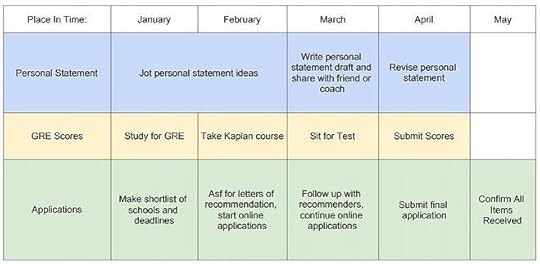
5. Consider obstacles that may keep you from sticking to your plan.
Now it’s time to think of what could keep you from carrying out your plan and addressing the emotions behind it so it doesn’t hold you back anymore. For example, if you find that you always keep your appointments with your clients but not with yourself, consider why. It could be a logistical problem: Maybe you tend to over-schedule yourself with clients or need to learn how to prioritize those meetings with yourself. Or, the issue could be that you value the work or you don’t value yourself enough.
It’s good to have emotions. It’s good to be excited about your goals when you think about them. The key is to identify your emotions behind each task and insert some self-care ideas right into your timeline, making a bridge between the practical timeline and the emotions that come up.
To do this, first jot down the emotions you’re feeling about your tasks:
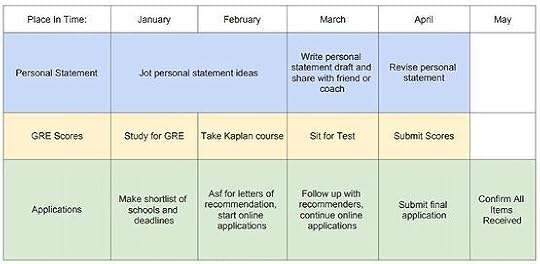
Then, layer in some self-care initiatives to address these emotions:
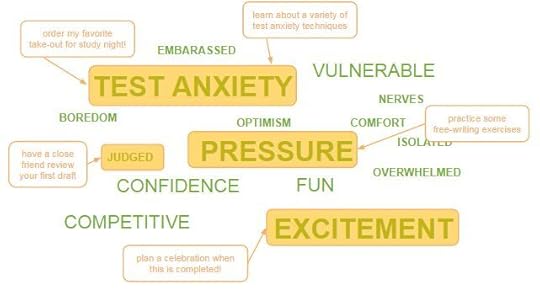
And finally, add these self-care strategies right into your timeline:
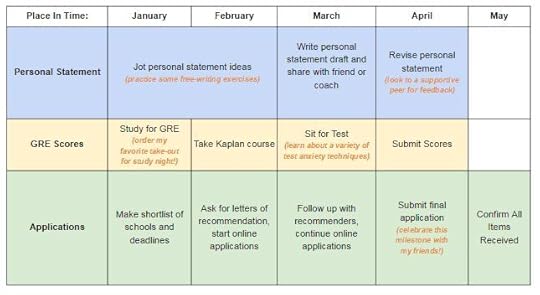
Doing this not only reduces your anxiety, but it also makes the process of goal attainment fun. You can add as many self-care strategies as you need to. Some ideas:
Planning 15 minutes of complete quiet time
Asking people in your life to help celebrate milestones with you
Treating yourself to a piece of chocolate cake
Recharging with a digital detox
What’s Your Next Step?
Now that you’ve got the five-step process down, it’s time to figure out your next step. Whether setting aside time to reflect on what goal you need to attain or make time on your calendar to complete your plan, figure out what you need to do to get that ball rolling.
Feel free to use my online worksheet, which you can also submit to me for feedback. I love to see these and love to help out in this way.
Q&As
If you want to know more, you can also check out some of the Q&As from my recent goal attainment webinar:
Q: What if you’re not sure what the emotions are?
If you don’t know what the emotions are, as a psychologist, I think that’s information too. To me, that would suggest that a person is maybe feeling overwhelmed. So I would ask you to talk about the goal — sometimes it helps to verbalize it a little bit, and that might be something you plan into your calendar. When we don’t know what our emotions are, it’s a good time to just reflect.
Q: What if the goal is longer-term and amorphous?
Long-term goals are great. I’ve used this plan all the way up through even five years. For the amorphous part, you still want to zero in on and come up with at least three things, at least three components that you know will be there. For example, no matter how amorphous it might seem to be a balanced and contented human being, you can say, “Well, to me that means being fit, being in a relationship, and giving back to my community through volunteering.” Whatever the case may be, you can take anything amorphous and come up with three core things that you can make part of your plan and work toward to make those things come to fruition.
Q: Sometimes I get so absorbed in my goals, I lose this touch with my social circle and feel kind of isolated.
Knowing your obstacles is good. Now you can prevent this by adding self-care strategies that involve your friends. Make your social circle part of your process by inviting them to celebrate your progress along the way.
Q: What are some strategies to stay on track with a long-term goal?
If we’re talking about a six-month timeline goal, we can actually plan that sometime in the next six months something is going to happen in your life that’s going to throw you a curveball, and in fact, it should, right? Life is supposed to throw us curve balls — it’s what keeps it fun and exciting. So I encourage you, once you actually have the timeline made, to post it on your wall.
That way if your mind wanders, which it inevitably will, this brings it back to you. I encourage you to make your timeline really attractive. As a psychologist, I know that the colors we use, the way we space is organized, the way a paper is organized. It helps us to adhere to it, and to feel like it’s fun and that we’re organized.
And I also suggest that people have an accountability buddy. You can choose a friend or family member, and to build on that accountability, just ask them, “Will you plan a lunch with me please for six weeks from now because I’m going embark on my goal and would really like a six-week check in?” and that way it’s on the calendar. Sometimes that helps people.
Q: What if I need to change my goal midway?
Feel free to alter it. In fact, changing it in a deliberate manner can really help people be aware and own the changes that they’re making, so that they can have a plan that feels like it has integrity and they can stay on track.
Have you ever vowed to do something — whether it’s as small as crossing an item off your weekend to-do list or as big as a career change — and then procrastinated for so long you never got around to it?
Sometimes, the things we really want to accomplish are so important to us, they induce a level of anxiety that can keep us from getting started. Other times, the sheer excitement we feel when we picture our goal can get overwhelming. And sometimes, we may just not even understand yet why we’re procrastinating at all.
Whatever your emotions, there is a way to address them and create a foolproof plan that allows you to achieve any goal. By creating a plan that not only breaks down the steps you have to do but also builds in steps to deal with the emotions that accompany your goals, you’ll be on your way to crossing off that to-do list or embarking upon the career you’ve always wanted. Here’s what to do:
1. Define the goal.
First, you want to get clear about what you’re trying to achieve. Think big but also think in a measurable way. You don’t want to get lost in the details, but you do want to be specific. So for example, if you want to get fit, instead of saying, “I’ll do 12 jumping jacks and 6 sit-ups and 20 push-ups on Tuesdays, Wednesdays, and Thursdays,” it’s better to commit to “I will be working out twice a week.”
2. Break down your goal into three main components.
Once you have your overarching goal, it’s time to think about some of things that go into executing it. For example, if your goal is to get into graduate school, there are three main steps you’d need to take to achieve it: write a winning personal statement, get a good test score, and put together your applications. Identifying these three main components helps you begin to see an outline of what is involved and takes away the guesswork — and some of the anxiety — as you can now start to see what exactly you need to do.
3. Add sub-tasks under each of the three components.
Now it’s time to list the smaller sub-tasks that go into achieving each component of your goal. Doing this gives you momentum, allowing you to plan ahead and giving you a to-do list to use to cross off all the hard work you’re doing as you go along. For the graduate school example, the sub-tasks would be as follows:
Component # 1: Winning Personal Statement
Pre-writing, jot down ideas
Write draft
Choose friends/family/coach to read draft
Get feedback and revise
Component # 2: Good Test Score
Self-study
Sign up for Kaplan
Attend Kaplan
Continue studying
Sit for test
Component # 3: Application Admin
Make list of schools and deadlines
Identify recommenders; ask them for letters of recommendation
Complete online or paper applications
Confirm all materials received by schools
The beauty of thinking all this through in advance is that you don’t have to do it all at that particular moment. You are taking a moment right now to step back and be a project planner for your goal.
4. Organize your tasks into a timeline.
Now that you know exactly what’s involved in achieving your goal, you’ll actually put all the steps you listed into a timeline. First decide the timeframe you want to achieve this goal in — is this a six-month process or a six-week process? Be realistic about this, taking into account how long each task will take you and how much free time you have ahead. Then start organizing your tasks into time slots. The final outcome should look something like this:
5. Consider obstacles that may keep you from sticking to your plan.
Now it’s time to think of what could keep you from carrying out your plan and addressing the emotions behind it so it doesn’t hold you back anymore. For example, if you find that you always keep your appointments with your clients but not with yourself, consider why. It could be a logistical problem: Maybe you tend to over-schedule yourself with clients or need to learn how to prioritize those meetings with yourself. Or, the issue could be that you value the work or you don’t value yourself enough.
It’s good to have emotions. It’s good to be excited about your goals when you think about them. The key is to identify your emotions behind each task and insert some self-care ideas right into your timeline, making a bridge between the practical timeline and the emotions that come up.
To do this, first jot down the emotions you’re feeling about your tasks:
Then, layer in some self-care initiatives to address these emotions:
And finally, add these self-care strategies right into your timeline:
Doing this not only reduces your anxiety, but it also makes the process of goal attainment fun. You can add as many self-care strategies as you need to. Some ideas:
Planning 15 minutes of complete quiet time
Asking people in your life to help celebrate milestones with you
Treating yourself to a piece of chocolate cake
Recharging with a digital detox
What’s Your Next Step?
Now that you’ve got the five-step process down, it’s time to figure out your next step. Whether setting aside time to reflect on what goal you need to attain or make time on your calendar to complete your plan, figure out what you need to do to get that ball rolling.
Feel free to use my online worksheet, which you can also submit to me for feedback. I love to see these and love to help out in this way.
Q&As
If you want to know more, you can also check out some of the Q&As from my recent goal attainment webinar:
Q: What if you’re not sure what the emotions are?
If you don’t know what the emotions are, as a psychologist, I think that’s information too. To me, that would suggest that a person is maybe feeling overwhelmed. So I would ask you to talk about the goal — sometimes it helps to verbalize it a little bit, and that might be something you plan into your calendar. When we don’t know what our emotions are, it’s a good time to just reflect.
Q: What if the goal is longer-term and amorphous?
Long-term goals are great. I’ve used this plan all the way up through even five years. For the amorphous part, you still want to zero in on and come up with at least three things, at least three components that you know will be there. For example, no matter how amorphous it might seem to be a balanced and contented human being, you can say, “Well, to me that means being fit, being in a relationship, and giving back to my community through volunteering.” Whatever the case may be, you can take anything amorphous and come up with three core things that you can make part of your plan and work toward to make those things come to fruition.
Q: Sometimes I get so absorbed in my goals, I lose this touch with my social circle and feel kind of isolated.
Knowing your obstacles is good. Now you can prevent this by adding self-care strategies that involve your friends. Make your social circle part of your process by inviting them to celebrate your progress along the way.
Q: What are some strategies to stay on track with a long-term goal?
If we’re talking about a six-month timeline goal, we can actually plan that sometime in the next six months something is going to happen in your life that’s going to throw you a curveball, and in fact, it should, right? Life is supposed to throw us curve balls — it’s what keeps it fun and exciting. So I encourage you, once you actually have the timeline made, to post it on your wall.
That way if your mind wanders, which it inevitably will, this brings it back to you. I encourage you to make your timeline really attractive. As a psychologist, I know that the colors we use, the way we space is organized, the way a paper is organized. It helps us to adhere to it, and to feel like it’s fun and that we’re organized.
And I also suggest that people have an accountability buddy. You can choose a friend or family member, and to build on that accountability, just ask them, “Will you plan a lunch with me please for six weeks from now because I’m going embark on my goal and would really like a six-week check in?” and that way it’s on the calendar. Sometimes that helps people.
Q: What if I need to change my goal midway?
Feel free to alter it. In fact, changing it in a deliberate manner can really help people be aware and own the changes that they’re making, so that they can have a plan that feels like it has integrity and they can stay on track.
October 22, 2021
The Marriage Whisperer
As a practicing clinical psychologist, I have found that the best outcomes occur when the therapist and client are a “good fit.” That is part of the reason I employ a diverse staff of associates: to maximize the chance of a client finding a good fit.
I recently spoke with two women who shared the same goal of getting married, but had very different circumstances and sets of obstacles to overcome. Take a look at their situations below, and you will see how oftentimes it’s more important that the therapist pays attention to the how and why of a single person’s story rather than the simple fact that they are single. This type of understanding is what helps me customize therapy to help single people find relationships in the way that works best for them.
Note: The following case studies have been abstracted and stripped of all identifying information, in compliance with state and federal law and in accordance with professional ethical standards.
Call #1
– 28-year-old woman
– Wants a healthy relationship that will ultimately lead to marriage
– In the past, she would sleep with men without obtaining a commitment
– Sometimes she feels bad about herself, but other times she feels really good about herself
This young woman is sick with a case of “yo-yo” self-esteem. Her self-esteem goes on the upswing as long as a man is coming on strong, but if he pulls away, she ends up feeling bad about herself. She went on to say that during periods of low self-esteem, she had engaged in casual sex, which I suspect validates the idea that she is not worth very much.
I told her my associates and I are ideally suited to help women like her with weekly sessions where she could explore her behavior patterns while also tracking her dating life in real time.
Literally a minute after I hung up with Call #1, I received a call from a woman who had the same goal of marriage but with a totally different career path and temperament.
Call #2
– 50-year-old woman
– Ready for marriage
– Financially stable
– Somewhat a wallflower
– Old-fashioned, male-dominated profession
As the second caller and I spoke, it became clear to me that her low self-esteem is manifesting in a completely different way than the younger woman I had just spoken to.
This woman is a high-level executive secretary who rose to her position in a “boys’ club” atmosphere for most of her career. I’ve seen women who work in secretarial jobs sometimes falling into the role of being pretty-yet-passive wallflowers, sleeping with their bosses or married colleagues, obviously without any sort of legitimate commitment.
I knew right away that I could help give her an attitude adjustment and get her on a path of self-respect. One of the practices I emphasize most with my associates is teaching clients the ability to parse complex goals into small, attainable steps. The myriad effects of years in a testosterone-laden environment would not simply disappear for this woman. In order to change, she would need to learn to take baby steps.
These two women each called me with the ultimate goal of getting married, but it is important that I understand that they arrived there by very different routes. One was active and one was a wallflower. One had her own career while the other worked as support staff. One had an active sex life while the other was celibate.
Understanding the differences between human beings is what makes a great therapist. By teaching my method to my associates, I have ensured that my own expertise is extended beyond the walls of my own office so that I can help more people, in more personalized ways.
I recently spoke with two women who shared the same goal of getting married, but had very different circumstances and sets of obstacles to overcome. Take a look at their situations below, and you will see how oftentimes it’s more important that the therapist pays attention to the how and why of a single person’s story rather than the simple fact that they are single. This type of understanding is what helps me customize therapy to help single people find relationships in the way that works best for them.
Note: The following case studies have been abstracted and stripped of all identifying information, in compliance with state and federal law and in accordance with professional ethical standards.
Call #1
– 28-year-old woman
– Wants a healthy relationship that will ultimately lead to marriage
– In the past, she would sleep with men without obtaining a commitment
– Sometimes she feels bad about herself, but other times she feels really good about herself
This young woman is sick with a case of “yo-yo” self-esteem. Her self-esteem goes on the upswing as long as a man is coming on strong, but if he pulls away, she ends up feeling bad about herself. She went on to say that during periods of low self-esteem, she had engaged in casual sex, which I suspect validates the idea that she is not worth very much.
I told her my associates and I are ideally suited to help women like her with weekly sessions where she could explore her behavior patterns while also tracking her dating life in real time.
Literally a minute after I hung up with Call #1, I received a call from a woman who had the same goal of marriage but with a totally different career path and temperament.
Call #2
– 50-year-old woman
– Ready for marriage
– Financially stable
– Somewhat a wallflower
– Old-fashioned, male-dominated profession
As the second caller and I spoke, it became clear to me that her low self-esteem is manifesting in a completely different way than the younger woman I had just spoken to.
This woman is a high-level executive secretary who rose to her position in a “boys’ club” atmosphere for most of her career. I’ve seen women who work in secretarial jobs sometimes falling into the role of being pretty-yet-passive wallflowers, sleeping with their bosses or married colleagues, obviously without any sort of legitimate commitment.
I knew right away that I could help give her an attitude adjustment and get her on a path of self-respect. One of the practices I emphasize most with my associates is teaching clients the ability to parse complex goals into small, attainable steps. The myriad effects of years in a testosterone-laden environment would not simply disappear for this woman. In order to change, she would need to learn to take baby steps.
These two women each called me with the ultimate goal of getting married, but it is important that I understand that they arrived there by very different routes. One was active and one was a wallflower. One had her own career while the other worked as support staff. One had an active sex life while the other was celibate.
Understanding the differences between human beings is what makes a great therapist. By teaching my method to my associates, I have ensured that my own expertise is extended beyond the walls of my own office so that I can help more people, in more personalized ways.
October 15, 2021
How to Manage Emotions from Difficult World Events
https://youtu.be/ydNMF2B-AuQ?list=PLM...
With all the issues facing our world today, I’ve had more clients than ever before seeking help to manage stress from things like terrorism, COVID-19, or other frightening events. I applaud people who are able to recognize this stress and want to face it in a constructive and healthy way.
It takes a lot of courage to be vulnerable and share that current events are making you feel anxious, angry, or confused. Recognizing this also empowers you to take healthy, appropriate action. Taking healthy, appropriate action not only makes the world a better place, but it’s also good for your mental health and well-being.
When we feel overwhelmed by events, it can be tempting to “check out” or numb ourselves to how much we care. By having a plan of how to express our cares, we simultaneously become better equipped to care for ourselves as well as the world around us.
The “C.A.R.E. System” below is something I created to guide you through four important steps during difficult world events:
1. Consider: The first step is to allow yourself to really consider the situation that you’re facing, and how it makes you feel. This is an important step because many of us get stuck in denial, or we try to avoid our feelings. Feelings are actually important information, and we don’t want to miss them. Below are some examples around considering feelings related to the coronavirus or terrorism; which are two major world events that tend to provoke strong feelings worthy of careful consideration. The two examples below are discussed separately, but of course there can be overlap in feelings over these events because both events can provoke fears related to survival, social connection, and well being.
If you’re feeling anxious about the coronavirus, you might be feeling fear around a sense of uncertainty or health concerns. You may also want to ask yourself if these fears might be touching on larger underlying issues about vulnerability or loss of control, or perhaps unprocessed grief over loss of loved ones from the past.
As another example, if you’re considering your feelings over an act of terrorism, you might notice that it makes you feel anxious—or you might notice it makes you feel angry—or you might even notice you feel both anger and anxiety. Anger is an important emotion because it cues us that we’re experiencing injustice. Anxiety, on the other hand, is an important emotion because it cues us that we may need to take steps to help keep ourselves safe.
No matter what you’re feeling, an essential first step is to consider the situation that you’re facing and be honest with yourself about how it’s making you feel.
2. Act: Once you have an idea of how a situation is making you feel, you will be better prepared to choose what type of action is healthy and appropriate. Taking action is often helpful because it reduces feelings of helplessness, increases feelings of self-efficacy, and helps convert anxiety or other emotions into healthy behaviors. Listening to emotions for the healthy behaviors they can stimulate is often the best things we can do for ourselves.
For example, if you’re feeling anxious about the coronavirus, you might take a moment to ensure that rather than just getting “stuck in your head” with the anxiety, you’re taking steps such as thorough hand washing, social distancing, and avoiding large gatherings when possible. To mitigate the stress of this, you may also want to plan some video hangouts or get-togethers with small groups to reduce feelings of isolation. Arming yourself with information is a healthy action, too– The National Institute of Mental Health has a wonderful guide online as well.
if you were feeling anxiety over fears of a local terror attack, you might consider healthy and appropriate actions, like creating a safety plan to connect with family and loved ones in the event of an emergency, or following the practical cautionary steps advised on the ads many New Yorkers have seen for a “go bag,” or whatever other types of steps you can take to demonstrate to yourself that you’re responding appropriately to anxiety.
If you’re feeling anger, you might consider what healthy and appropriate action you can take to act on this important awareness of your feelings about injustice. This can be anything from attending a rally to volunteering for a politician who represents your views, writing letters of support to our first responders, troops or police, or even just joining a discussion group or book club through a place like Meetup.org that focuses on the issue at hand (possibly an online meetup if more practical). Healthy and appropriate action will help you address your feelings in a proactive manner with a level of intensity that feels right for your situation and level of emotion.
If you’ve actually already done all the practical steps, but you’re still just feeling jittery, a healthy and appropriate action might be to book yourself a soothing massage, practice yoga or deep breathing, or schedule a talk with a friend or therapist, or some other healthy and appropriate action that will help or manage feelings of anxiety. One small “silver lining” of scary world events is that they create a strong motivation for us to learn meditation or relaxation skills that may otherwise not feel as immediately relevant. When we feel a strong motivation to learn, sometimes we are more focused and ready to build new skills.
3. Reflect: Once you have taken action, pause to notice how it has made you feel, and possibly how it has made others feel. If you donated your time or money to help people who were most directly affected by the issue at hand, how does it feel to think about the aid you gave? If you took the time to sign up for a discussion group or read a book about the issue, how do you feel about informing yourself? If you attended a rally or shared your views online, did it feel good to connect with others who share your view and make your feelings known publicly? If you created an emergency plan or preparations for yourself or loved ones, did it instill feelings of pride or self-efficacy, at least at some level? If you learned some new meditation or relaxation skills, did it create a sense of empowerment through building your self care skills? Please make sure you give yourself credit for the work you’ve done– don’t feel as if you’ve failed just because you may still have lingering feelings of anxiety– the goal here is not to completely resolve all of the pain, but instead to help you feel proactive as you confront difficult feelings.
Upon reflection, you may determine the action you took was positive—or reflection may guide you to realize that a different action is needed. Either way, congratulate yourself for taking the time to consider the situation and attempt to take appropriate action.
4. Ease: Now that you have considered, acted, and reflected, it may be time for you to ease into something else. After all, we do have other obligations and concerns in our lives, and we need to “give ourselves permission” to move forward with our day at some point. But only go to this when it feels right for you. If you want to take a break but you keep getting pinged by social media or updates on your phone, consider taking a social media fast for even 3-4 hours to make giving yourself a breather as simple as possible.
If you decide during the Reflection phase that you really want to re-engage and take more action or try a different course of action, then that may be the healthiest thing for you to do. The idea is to make sure you at least open to the idea that after consideration, action, and reflection, it may be the right time for you to ease forward with the rest of your day. Sometimes a healthy break actually gives us the perspective we need to think of more creative or effective actions to take in the future. You can always return to the beginning and “Consider” again anytime you feel the need.
I welcome questions, comments, and input from anyone who wants to join me. Thank you, and I hope to hear from others who are wrestling with these events on an emotional level!
If you’d like to watch a video of me talking through this blog and some additional ideas, please watch my V-LOG by clicking here.
—
This article was originally posted on The Huffington Post.
With all the issues facing our world today, I’ve had more clients than ever before seeking help to manage stress from things like terrorism, COVID-19, or other frightening events. I applaud people who are able to recognize this stress and want to face it in a constructive and healthy way.
It takes a lot of courage to be vulnerable and share that current events are making you feel anxious, angry, or confused. Recognizing this also empowers you to take healthy, appropriate action. Taking healthy, appropriate action not only makes the world a better place, but it’s also good for your mental health and well-being.
When we feel overwhelmed by events, it can be tempting to “check out” or numb ourselves to how much we care. By having a plan of how to express our cares, we simultaneously become better equipped to care for ourselves as well as the world around us.
The “C.A.R.E. System” below is something I created to guide you through four important steps during difficult world events:
1. Consider: The first step is to allow yourself to really consider the situation that you’re facing, and how it makes you feel. This is an important step because many of us get stuck in denial, or we try to avoid our feelings. Feelings are actually important information, and we don’t want to miss them. Below are some examples around considering feelings related to the coronavirus or terrorism; which are two major world events that tend to provoke strong feelings worthy of careful consideration. The two examples below are discussed separately, but of course there can be overlap in feelings over these events because both events can provoke fears related to survival, social connection, and well being.
If you’re feeling anxious about the coronavirus, you might be feeling fear around a sense of uncertainty or health concerns. You may also want to ask yourself if these fears might be touching on larger underlying issues about vulnerability or loss of control, or perhaps unprocessed grief over loss of loved ones from the past.
As another example, if you’re considering your feelings over an act of terrorism, you might notice that it makes you feel anxious—or you might notice it makes you feel angry—or you might even notice you feel both anger and anxiety. Anger is an important emotion because it cues us that we’re experiencing injustice. Anxiety, on the other hand, is an important emotion because it cues us that we may need to take steps to help keep ourselves safe.
No matter what you’re feeling, an essential first step is to consider the situation that you’re facing and be honest with yourself about how it’s making you feel.
2. Act: Once you have an idea of how a situation is making you feel, you will be better prepared to choose what type of action is healthy and appropriate. Taking action is often helpful because it reduces feelings of helplessness, increases feelings of self-efficacy, and helps convert anxiety or other emotions into healthy behaviors. Listening to emotions for the healthy behaviors they can stimulate is often the best things we can do for ourselves.
For example, if you’re feeling anxious about the coronavirus, you might take a moment to ensure that rather than just getting “stuck in your head” with the anxiety, you’re taking steps such as thorough hand washing, social distancing, and avoiding large gatherings when possible. To mitigate the stress of this, you may also want to plan some video hangouts or get-togethers with small groups to reduce feelings of isolation. Arming yourself with information is a healthy action, too– The National Institute of Mental Health has a wonderful guide online as well.
if you were feeling anxiety over fears of a local terror attack, you might consider healthy and appropriate actions, like creating a safety plan to connect with family and loved ones in the event of an emergency, or following the practical cautionary steps advised on the ads many New Yorkers have seen for a “go bag,” or whatever other types of steps you can take to demonstrate to yourself that you’re responding appropriately to anxiety.
If you’re feeling anger, you might consider what healthy and appropriate action you can take to act on this important awareness of your feelings about injustice. This can be anything from attending a rally to volunteering for a politician who represents your views, writing letters of support to our first responders, troops or police, or even just joining a discussion group or book club through a place like Meetup.org that focuses on the issue at hand (possibly an online meetup if more practical). Healthy and appropriate action will help you address your feelings in a proactive manner with a level of intensity that feels right for your situation and level of emotion.
If you’ve actually already done all the practical steps, but you’re still just feeling jittery, a healthy and appropriate action might be to book yourself a soothing massage, practice yoga or deep breathing, or schedule a talk with a friend or therapist, or some other healthy and appropriate action that will help or manage feelings of anxiety. One small “silver lining” of scary world events is that they create a strong motivation for us to learn meditation or relaxation skills that may otherwise not feel as immediately relevant. When we feel a strong motivation to learn, sometimes we are more focused and ready to build new skills.
3. Reflect: Once you have taken action, pause to notice how it has made you feel, and possibly how it has made others feel. If you donated your time or money to help people who were most directly affected by the issue at hand, how does it feel to think about the aid you gave? If you took the time to sign up for a discussion group or read a book about the issue, how do you feel about informing yourself? If you attended a rally or shared your views online, did it feel good to connect with others who share your view and make your feelings known publicly? If you created an emergency plan or preparations for yourself or loved ones, did it instill feelings of pride or self-efficacy, at least at some level? If you learned some new meditation or relaxation skills, did it create a sense of empowerment through building your self care skills? Please make sure you give yourself credit for the work you’ve done– don’t feel as if you’ve failed just because you may still have lingering feelings of anxiety– the goal here is not to completely resolve all of the pain, but instead to help you feel proactive as you confront difficult feelings.
Upon reflection, you may determine the action you took was positive—or reflection may guide you to realize that a different action is needed. Either way, congratulate yourself for taking the time to consider the situation and attempt to take appropriate action.
4. Ease: Now that you have considered, acted, and reflected, it may be time for you to ease into something else. After all, we do have other obligations and concerns in our lives, and we need to “give ourselves permission” to move forward with our day at some point. But only go to this when it feels right for you. If you want to take a break but you keep getting pinged by social media or updates on your phone, consider taking a social media fast for even 3-4 hours to make giving yourself a breather as simple as possible.
If you decide during the Reflection phase that you really want to re-engage and take more action or try a different course of action, then that may be the healthiest thing for you to do. The idea is to make sure you at least open to the idea that after consideration, action, and reflection, it may be the right time for you to ease forward with the rest of your day. Sometimes a healthy break actually gives us the perspective we need to think of more creative or effective actions to take in the future. You can always return to the beginning and “Consider” again anytime you feel the need.
I welcome questions, comments, and input from anyone who wants to join me. Thank you, and I hope to hear from others who are wrestling with these events on an emotional level!
If you’d like to watch a video of me talking through this blog and some additional ideas, please watch my V-LOG by clicking here.
—
This article was originally posted on The Huffington Post.
October 8, 2021
The C A R E System for Kids
https://youtu.be/ydNMF2B-AuQ?list=PLM...
When world events like terrorism or random violence occur, it’s hard enough for adults to manage their feelings- but it can be even tougher helping kids to navigate. The CARE system was created by Dr. Chloe Carmichael to help adults find healthy ways to cope with anger or anxiety related to frightening world events. To use the CARE system with kids, first remember that your own sense of calm is important— so make sure you are doing the CARE system yourself or whatever other tools are best for you. To adapt the CARE system for kids, break it down into smaller pieces and modify it for kids. Here’s how to do that:
Consider: In this stage, ask questions about what your child is experiencing, and offer help labeling emotions if needed. Make sure you validate rather than try to tell your child not to feel certain things. You might mean well by saying, “Don’t be scared,” but actually, a child can find this invalidating. Instead, you might say, “Yes, it is a scary situation. Let’s see how we can help you feel safe. Do you want me to hold you?”
Act: This is an important teaching moment to share with children about how feelings are important information that can guide our actions in a healthy and appropriate manner. Of course, healthy and appropriate actions for kids are going to be different from adults in certain situations, but they’re still important. Depending on age and circumstance, healthy and appropriate actions might include being present with your child and facilitating a “Hello, I appreciate you” type of conversation with a police officer or community leader, writing a letter to your local congressperson, drawing a picture that connects with their feelings, or writing a letter to troops.
Reflect: In this stage, ask your child how it felt to take action. Encourage him or her to experience pride in having shown an interest in others, if that’s what happened. If the action was more centered around the child, like simply wanting to be held close and feel safe, then remind the child he or she can return for more cuddles anytime, whether they’re feeling scared or not.
Ease: Being given permission to ease into something else is a very important step for children. They need the adult to guide them that it’s okay to move forward. Something like, “Well, I’m glad we talked about that and spent some time on it together. Do you feel like it might be a good time for us to do something else now, like maybe go outside for a while?” lets the child know that while it is good to focus on whatever issue was causing the upset, it’s also good and perfectly okay to move forward and think about other things too.
If your child appears to need additional support, by all means take him or her to a psychologist specializing in children. Dr. Chloe’s office does not specialize in children; these exercises are not intended as treatment or medical advice. To find a good child psychologist in your area, go to www.findapsychologist.org or try www.psychologytoday.com. Your pediatrician may also have referrals to suggest. If you are a parent who would like individual therapy for yourself or couples therapy for you and your partner; or just a place to talk about parenting issues from an adult perspective, then please feel free to contact our office!
https://youtu.be/lUMrBMfzrGA
When world events like terrorism or random violence occur, it’s hard enough for adults to manage their feelings- but it can be even tougher helping kids to navigate. The CARE system was created by Dr. Chloe Carmichael to help adults find healthy ways to cope with anger or anxiety related to frightening world events. To use the CARE system with kids, first remember that your own sense of calm is important— so make sure you are doing the CARE system yourself or whatever other tools are best for you. To adapt the CARE system for kids, break it down into smaller pieces and modify it for kids. Here’s how to do that:
Consider: In this stage, ask questions about what your child is experiencing, and offer help labeling emotions if needed. Make sure you validate rather than try to tell your child not to feel certain things. You might mean well by saying, “Don’t be scared,” but actually, a child can find this invalidating. Instead, you might say, “Yes, it is a scary situation. Let’s see how we can help you feel safe. Do you want me to hold you?”
Act: This is an important teaching moment to share with children about how feelings are important information that can guide our actions in a healthy and appropriate manner. Of course, healthy and appropriate actions for kids are going to be different from adults in certain situations, but they’re still important. Depending on age and circumstance, healthy and appropriate actions might include being present with your child and facilitating a “Hello, I appreciate you” type of conversation with a police officer or community leader, writing a letter to your local congressperson, drawing a picture that connects with their feelings, or writing a letter to troops.
Reflect: In this stage, ask your child how it felt to take action. Encourage him or her to experience pride in having shown an interest in others, if that’s what happened. If the action was more centered around the child, like simply wanting to be held close and feel safe, then remind the child he or she can return for more cuddles anytime, whether they’re feeling scared or not.
Ease: Being given permission to ease into something else is a very important step for children. They need the adult to guide them that it’s okay to move forward. Something like, “Well, I’m glad we talked about that and spent some time on it together. Do you feel like it might be a good time for us to do something else now, like maybe go outside for a while?” lets the child know that while it is good to focus on whatever issue was causing the upset, it’s also good and perfectly okay to move forward and think about other things too.
If your child appears to need additional support, by all means take him or her to a psychologist specializing in children. Dr. Chloe’s office does not specialize in children; these exercises are not intended as treatment or medical advice. To find a good child psychologist in your area, go to www.findapsychologist.org or try www.psychologytoday.com. Your pediatrician may also have referrals to suggest. If you are a parent who would like individual therapy for yourself or couples therapy for you and your partner; or just a place to talk about parenting issues from an adult perspective, then please feel free to contact our office!
https://youtu.be/lUMrBMfzrGA


