
John Lockley's Blog
January 15, 2025
The Call of the Wild, Befriending Nature - by John Lockley
Have you ever been moved by a particular smell, bird song or wild animal like a roaring lion that left you feeling alive? The smell and sound captivated your senses and alerted you to something sublime and mystical on the edge of your senses. Or maybe you experienced a particular dream that had you gasping for air like a fish out of water. The dream gave you pins and needles, an electric shock down your spine, reminding you of something deeper beyond your understanding. The last frontier or unexplored space could be closer than we think; the space between waking and sleep or between each heart beat. That space could be as fleeting as a newborn’s wink or a fledgling bird’s first flight. Pay attention! You might miss it. Nature is speaking to us in a language of signs, sometimes obvious, sometimes allusive, but always changing. In our fast-paced digital era we are all being called back to nature, to ourselves and the world around us. Can you hear the wind in the trees? What is it saying to you? The answer to species extinction and deforestation resides inside each one of us. Between each breathe and silent pause is a whisper of promise and opportunity, to turn the tide of the destruction of nature.
In order to save nature, we need to first save ourselves. We need to save ourselves from the overly domestic, sterile, and obsessive conditioning of the modern world that turns the earth into dirt and desecrates the land. In my travels around the world, I am often amazed to hear people talk about the weather as if it is wrong and can be controlled. It is either too hot, too cold, too windy, too snowy etc. How would the world look if we befriended the weather outside and we learned to smile at a rainy day and laugh nervously at a thunderstorm? Our relationship with weather is a wonderful metaphor for our relationship with nature. If we can learn to befriend weather outside then the next frontier is our inner weather of emotions like sadness, grief, anger and jealousy, that can turn a calm mannered person into a hurricane of unexpressed rage. This dynamic we are all familiar with, which can escalate to violence and even war.
The call of the wild is the call to the deepest part of ourselves, our human nature. In sangoma circles we speak about ‘Ubuntu Ubunzulu’, the depth of humanity. Ubuntu means humanity. During my lengthy sangoma apprenticeship my Xhosa elders explained to me that people are born human but they have to decide to be a human being. To be a human being means to listen to the wind inside us (uMoya), honour our ancestors (bones) and connect with the divine (Qamata). These teachings are deep and affect the human world as well as plant and animal. Ubuntu speaks about a circle, a human circle of interconnectivity based on our shared red blood and ancestors. After we connect with one another then we are more available to connect with the outer wilderness in the form of plants and animals.
The first step in our Ubuntu journey is about connecting with our ‘uMoya’ (spirit wind) and feeling how it emanates our flesh and bones through it’s relationship with our heart, the little drummer in our chest. In the traditional sangoma world we feel our heart beat as the drum that awakens our ancestors. As we energise our heart with the breath of life, our ‘uMoya’, then we feed our consciousness in a mindful way. The journey of befriending our inner Wilderness has begun; one step, one breath, one heart beat…
The next part of our human journey of listening to the call of the wild involves honouring our bones in the form of our ancestors. Whether you like your ancestors or not is immaterial. The work is about honouring the bones that gave us life. As we do this, we awaken the primordial and ancient part of us. Remembering our dead is a vital part of being human and an essential part of answering the ‘call of nature’.
Every human being has a moment of revelation or epiphany where they feel something deeper than their flesh and bones, something eternal, ephemeral or divine. Call it an experience of the soul, that part of us that survives physical death, our immortality. It is the wildest, most untamed part of ourselves. It is connected to nature in the rawest, most intimate way. I witnessed this first hand during sangoma rituals in the Eastern Cape when young initiates would accept their calling and this would often involve either tears of joy, uncontrolled shaking or a primal scream that loosened the layers of ordinary and extraordinary. After we accepted our calling, the sangoma drum would usher in a hurricane of energy, of thunder and lightning rising to a crescendo on the waves of the community’s chants. I experienced my own calling in this way, where I had to answer to the ‘call of the wild’ inside me. It was and continues to be exquisitely beautiful, painful and challenging. Why? Because we are intimately connected to nature. As we wake up, we become profoundly sensitive and empathic. As nature thrives, we thrive. As nature hurts, we hurt. This is the default of being a human being.
Some of the deepest and most profound moments of my life have been during sangoma ceremonies where the drums call our spirits home. A sangoma intlombe or ‘trance dance’ is one of the wildest experiences for a human being, like extreme surfing down 40 ft waves or climbing Mount Everest. As I am dancing my heart beats over 200 beats a minute and my body is transported to another world. It is painful physically and then the wilderness speaks through the heart and the drum in a language beyond words…The energy of a sangoma ceremony builds as the drum and voices of the people merge with an electrical intensity that permeates the room. I often think of one particular ceremony years ago where I could feel the drum beat in the walls of the house. Everything was pulsing, moving, swaying. We as a community of sangomas, traditional healers, township dwellers and human beings were saying “Yes” to connecting with our bones (ancestors), uMoya (wind inside) and collective community. And we said “yes” with our voices, our feet and our hands. People were alive, and in that moment, time stood still and nature moved closer.
Often our sangoma ceremonies would be greeted by literal thunder and lightning outside the ceremonial room. In these moments our elders would quietly exclaim, “Izinyanya zivumile”. The ancestors have agreed, or accepted our prayers. They have blessed us and opened our wild human journey to another level of consciousness, like another layer of the alchemical onion.
During my recent retreats in the Kalahari Desert with San Bushmen I was happy to experience the ‘shaking medicine’ or trance dance in the Bushmen way. The style of dancing is similar to my South African sangoma community. With the focus being on the feet and spine, the work is about shaking the spine in a reflexive, natural way. We have to get out of our heads and let the primal wilderness of our bodies speak in the language of rhythm. The trance dance is very simple and it starts with walking. I noticed my San tracker friends moving through the bushveld like dancers caressing the earth with fluidness and ease. With my own walking I touched the trance state whilst walking in a rhythmical way, listening to my body, keeping my spine straight and looking at the horizon. As I listened to the sounds around me, gazed at the horizon and brought the breath through my body, I experienced the ‘!Xum’ as the bushmen shared with us; that sense of electrical energy that moves the stars.
The journey of listening to the wind and answering the ‘call of the wild’ wouldn’t be complete without talking about the shadow, the ever-present and silent witness in our human world. As we dance, pray, and invoke our ancestors, our spine heats up. It is a physical experience. The heat of our spine also heats up our emotional body. In the sangoma world our elders caution us about expressing strong emotions like anger during ceremony. It brings to mind an old African saying that uninitiated men can burn the village down. Why? Because they can’t contain the wildness of human emotion. It seems like our world is running amok with uncontrolled emotions. The ubuntu journey needs to incorporate befriending our personal shadow. Each person is responsible for listening to their feelings. During ‘umsebenze’ or a sangoma ceremony, emotion is seen as a part of life. If people don’t feel anything then they are encouraged to approach one of the sangoma elders. Often strong and painful emotions are a sign that the medicine of the ceremony, of the dance, is working. In our modern world we blame incessantly, making politicians, leaders and other people responsible for our feelings. In an indigenous world this would be the mark of a child, adolescent or uninitiated person. A mature response is to allow the feelings to filter through the body, to nourish and condition the spine. This is alchemy, the medicine of transformation. Life initiates us whether we live in New York City or the heart of the Kalahari Desert. How do we respond to the trials and challenges of life? That is most important! We are all called nowadays to walk like warriors, face the horizon and open our spine to the stars. When we do this with courage and love then anything is possible and nature is right there with us as a silent friend, lover and companion.
See published article in Odyssey Magazine, Summer Edition 2024.


December 27, 2024
The Call of the Wild, Befriending Nature - by John Lockley
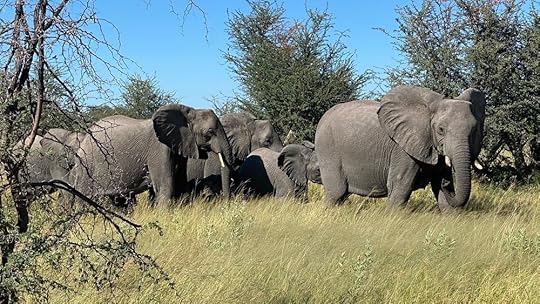
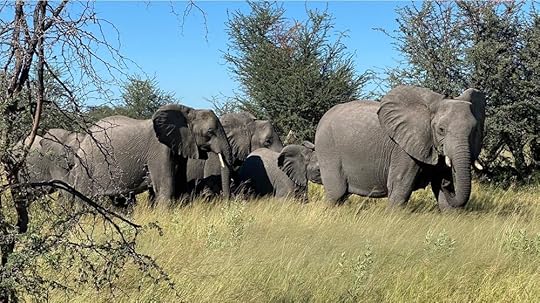
A herd of elephants in the Okavango Delta, Botswana.
Have you ever been moved by a particular smell, bird song or wild animal like a roaring lion that left you feeling alive? The smell and sound captivated your senses and alerted you to something sublime and mystical on the edge of your senses. Or maybe you experienced a particular dream that had you gasping for air like a fish out of water. The dream gave you pins and needles, an electric shock down your spine, reminding you of something deeper beyond your understanding. The last frontier or unexplored space could be closer than we think; the space between waking and sleep or between each heart beat. That space could be as fleeting as a newborn’s wink or a fledgling bird’s first flight. Pay attention! You might miss it. Nature is speaking to us in a language of signs, sometimes obvious, sometimes allusive, but always changing. In our fast-paced digital era we are all being called back to nature, to ourselves and the world around us. Can you hear the wind in the trees? What is it saying to you? The answer to species extinction and deforestation resides inside each one of us. Between each breathe and silent pause is a whisper of promise and opportunity, to turn the tide of the destruction of nature.
In order to save nature, we need to first save ourselves. We need to save ourselves from the overly domestic, sterile, and obsessive conditioning of the modern world that turns the earth into dirt and desecrates the land. In my travels around the world, I am often amazed to hear people talk about the weather as if it is wrong and can be controlled. It is either too hot, too cold, too windy, too snowy etc. How would the world look if we befriended the weather outside and we learned to smile at a rainy day and laugh nervously at a thunderstorm? Our relationship with weather is a wonderful metaphor for our relationship with nature. If we can learn to befriend weather outside then the next frontier is our inner weather of emotions like sadness, grief, anger and jealousy, that can turn a calm mannered person into a hurricane of unexpressed rage. This dynamic we are all familiar with, which can escalate to violence and even war.
The call of the wild is the call to the deepest part of ourselves, our human nature. In sangoma circles we speak about ‘Ubuntu Ubunzulu’, the depth of humanity. Ubuntu means humanity. During my lengthy sangoma apprenticeship my Xhosa elders explained to me that people are born human but they have to decide to be a human being. To be a human being means to listen to the wind inside us (uMoya), honour our ancestors (bones) and connect with the divine (Qamata). These teachings are deep and affect the human world as well as plant and animal. Ubuntu speaks about a circle, a human circle of interconnectivity based on our shared red blood and ancestors. After we connect with one another then we are more available to connect with the outer wilderness in the form of plants and animals.
The first step in our Ubuntu journey is about connecting with our ‘uMoya’ (spirit wind) and feeling how it emanates our flesh and bones through it’s relationship with our heart, the little drummer in our chest. In the traditional sangoma world we feel our heart beat as the drum that awakens our ancestors. As we energise our heart with the breath of life, our ‘uMoya’, then we feed our consciousness in a mindful way. The journey of befriending our inner Wilderness has begun; one step, one breath, one heart beat…
The next part of our human journey of listening to the call of the wild involves honouring our bones in the form of our ancestors. Whether you like your ancestors or not is immaterial. The work is about honouring the bones that gave us life. As we do this, we awaken the primordial and ancient part of us. Remembering our dead is a vital part of being human and an essential part of answering the ‘call of nature’.
Every human being has a moment of revelation or epiphany where they feel something deeper than their flesh and bones, something eternal, ephemeral or divine. Call it an experience of the soul, that part of us that survives physical death, our immortality. It is the wildest, most untamed part of ourselves. It is connected to nature in the rawest, most intimate way. I witnessed this first hand during sangoma rituals in the Eastern Cape when young initiates would accept their calling and this would often involve either tears of joy, uncontrolled shaking or a primal scream that loosened the layers of ordinary and extraordinary. After we accepted our calling, the sangoma drum would usher in a hurricane of energy, of thunder and lightning rising to a crescendo on the waves of the community’s chants. I experienced my own calling in this way, where I had to answer to the ‘call of the wild’ inside me. It was and continues to be exquisitely beautiful, painful and challenging. Why? Because we are intimately connected to nature. As we wake up, we become profoundly sensitive and empathic. As nature thrives, we thrive. As nature hurts, we hurt. This is the default of being a human being.
Some of the deepest and most profound moments of my life have been during sangoma ceremonies where the drums call our spirits home. A sangoma intlombe or ‘trance dance’ is one of the wildest experiences for a human being, like extreme surfing down 40 ft waves or climbing Mount Everest. As I am dancing my heart beats over 200 beats a minute and my body is transported to another world. It is painful physically and then the wilderness speaks through the heart and the drum in a language beyond words…The energy of a sangoma ceremony builds as the drum and voices of the people merge with an electrical intensity that permeates the room. I often think of one particular ceremony years ago where I could feel the drum beat in the walls of the house. Everything was pulsing, moving, swaying. We as a community of sangomas, traditional healers, township dwellers and human beings were saying “Yes” to connecting with our bones (ancestors), uMoya (wind inside) and collective community. And we said “yes” with our voices, our feet and our hands. People were alive, and in that moment, time stood still and nature moved closer.
Often our sangoma ceremonies would be greeted by literal thunder and lightning outside the ceremonial room. In these moments our elders would quietly exclaim, “Izinyanya zivumile”. The ancestors have agreed, or accepted our prayers. They have blessed us and opened our wild human journey to another level of consciousness, like another layer of the alchemical onion.
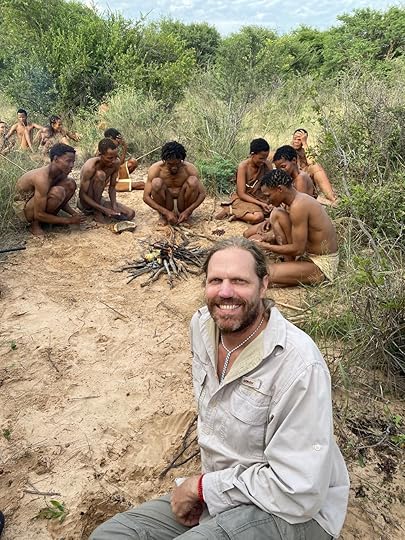
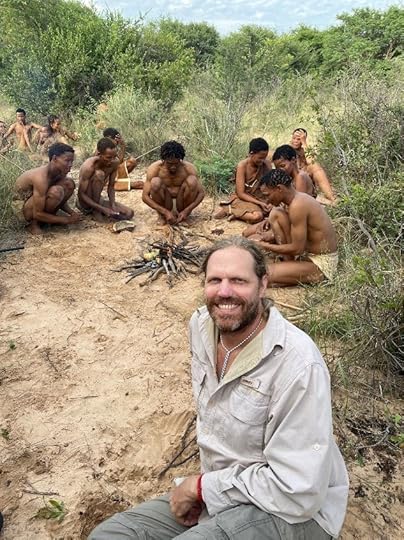
John in the Kalahari running his retreat ‘Dreams & Tracking in the Kalahari’.
During my recent retreats in the Kalahari Desert with San Bushmen I was happy to experience the ‘shaking medicine’ or trance dance in the Bushmen way. The style of dancing is similar to my South African sangoma community. With the focus being on the feet and spine, the work is about shaking the spine in a reflexive, natural way. We have to get out of our heads and let the primal wilderness of our bodies speak in the language of rhythm. The trance dance is very simple and it starts with walking. I noticed my San tracker friends moving through the bushveld like dancers caressing the earth with fluidness and ease. With my own walking I touched the trance state whilst walking in a rhythmical way, listening to my body, keeping my spine straight and looking at the horizon. As I listened to the sounds around me, gazed at the horizon and brought the breath through my body, I experienced the ‘!Xum’ as the bushmen shared with us; that sense of electrical energy that moves the stars.
The journey of listening to the wind and answering the ‘call of the wild’ wouldn’t be complete without talking about the shadow, the ever-present and silent witness in our human world. As we dance, pray, and invoke our ancestors, our spine heats up. It is a physical experience. The heat of our spine also heats up our emotional body. In the sangoma world our elders caution us about expressing strong emotions like anger during ceremony. It brings to mind an old African saying that uninitiated men can burn the village down. Why? Because they can’t contain the wildness of human emotion. It seems like our world is running amok with uncontrolled emotions. The ubuntu journey needs to incorporate befriending our personal shadow. Each person is responsible for listening to their feelings. During ‘umsebenze’ or a sangoma ceremony, emotion is seen as a part of life. If people don’t feel anything then they are encouraged to approach one of the sangoma elders. Often strong and painful emotions are a sign that the medicine of the ceremony, of the dance, is working. In our modern world we blame incessantly, making politicians, leaders and other people responsible for our feelings. In an indigenous world this would be the mark of a child, adolescent or uninitiated person. A mature response is to allow the feelings to filter through the body, to nourish and condition the spine. This is alchemy, the medicine of transformation. Life initiates us whether we live in New York City or the heart of the Kalahari Desert. How do we respond to the trials and challenges of life? That is most important! We are all called nowadays to walk like warriors, face the horizon and open our spine to the stars. When we do this with courage and love then anything is possible and nature is right there with us as a silent friend, lover and companion.
See published article in Odyssey Magazine, Summer Edition 2024.
January 26, 2024
War & Peace by John Lockley
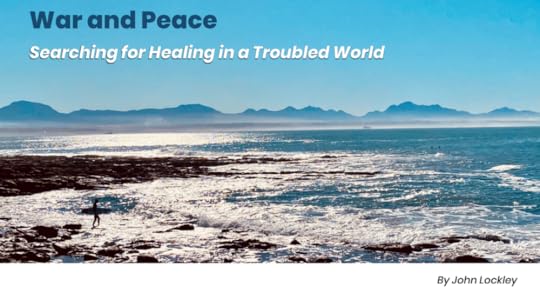
There is chaos in the hearts of man. And our chaos spreads like a virus into the natural world resulting in species extinction and unimaginable environmental destruction. It’s hard to conceive of war on the level of World War One & Two with millions of deaths and untold destruction. As we witness the recent war in Gaza and Ukraine, we are all called to ponder the question of ‘Why’? And is it necessary to resort to violence in order to be seen and heard? How can we fulfil our role as custodians of this planet and rightful guardians of the plant and animal worlds? It is clear that we need to face our own darkness and explore our inner shadows meticulously and be aware of what we might project onto people we perceive as other or different. In South Africa we have had many lessons around this from the last few hundred years since the start of colonisation, then apartheid and now democratic South Africa.
For those of us who study nature and have learnt to befriend the changing seasons we know that chaos is part of change and transformation. A thunderstorm brings lightning and rain. The rain nourishes the land and makes new life possible. In order to bring peace to our world we need to befriend our inner weather, and ride the storms of shadow energies involving turbulent emotions like anger and resentment. What do we do when these energies seek to overwhelm us? Attack another, ourselves or transmute them into something more productive? Anger is a powerful emotion that can help us transform the living fabric of society. But to do it effectively requires discernment and respect. First, we need to respect ourselves and not give in to our inner critic and when we find ourselves in conflict with others, we need to also hold a space in our hearts for respecting them. In martial arts from the far east like Karate in Japan, opponents begin and end their match with bowing to each other.
I recall a story of Nelson Mandela years ago who was televised in his meeting with the heads of the Palestinian and Israeli youth leagues. They asked him how he managed to create peace in South Africa. He was very matter of fact and recounted his talks with FW De Klerk in the early years. He said they would start each day shaking one another’s hands and having a cup of coffee together. During the course of the day, they would argue with one another and sometimes it would get quite heated. The Youth league presidents asked him if he ever felt like giving up. He said, “no”, because he and Mr FW De Klerk were aware that millions of South Africans were counting on them to find a peaceful solution. It wasn’t personal. No matter how difficult their day was they would always say good bye in an amicable and courteous manner.
In order to understand Mandela’s diplomacy and humanitarianism we need to explore an important aspect of his journey. Many people might not be aware of Nelson Mandela’s personal journey around his struggle with anger and hatred over white rule and lengthy incarceration. He recounts his story in his autobiography ‘A long walk to freedom’. He said that one night before he went to sleep a voice said to him “Nelson your anger can kill you”. And when he woke the next morning he remembered this voice and the next thing he heard was “…you need to befriend the enemy”. These thoughts were going through his mind when the white jailer unlocked his jail cell. All he said to him was, “what made you decide to become a jailer and join the correctional services?” The guard was a young white man and told Mandela he didn’t have a choice because his father died when he was only 15 years old and he had to get a job to help support his mother and four younger siblings. This shocked Mandela because he thought all white people were privileged. He realised in their discussion that he grew up with more privilege because when his father died when he was seven years old, he was brought up in the royal household of the Prince of the Xhosa nation. This enabled him to go to university and become a lawyer. He only knew apartheid when he was twenty-one years old. He asked the young jailer where he grew up. The man replied that his family have a farm in the Eastern Cape. Mandela was surprised and told him that he too was from the Eastern Cape. He then asked him in IsiXhosa if he understood the Xhosa language, and the young jailer replied “ewe, ndiyasaze isiXhosa!” Yes, I know Xhosa. And they finished their conversation in Mandela’s home language, isiXhosa. When Mandela became president of South Africa his young jailer friend was sitting next to him as they had become close friends over many years.
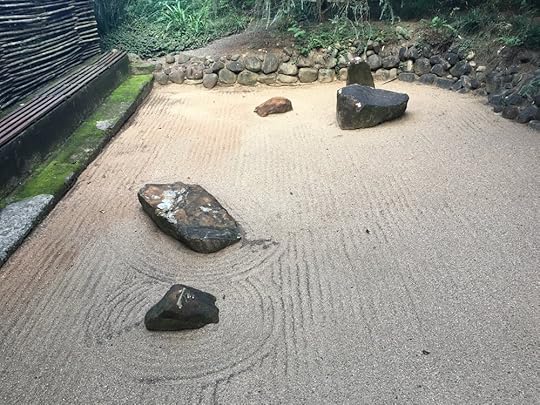
Traditional Zen garden
I took part in a traditional Zen Buddhist retreat in the early 1990’s in a temple in South Korea. The Berlin Wall had just fallen a few years previously resulting in the end of the cold war. There were many ex-soldiers on my retreat from East Germany, Russia, Czechoslovakia, Poland, and myself from South Africa. We all meditated like soldiers with discipline and a hunger to find peace within amidst the trauma of our collective experiences. During the 100 days retreat we became like brothers as we sought to befriend our inner demons and the cold of a Korean winter. I had never seen so much snow before. Sometimes our Zen Master would usher us outside at ten o’clock at night to sweep the temple grounds before the old people visited the temple in the early hours. One particularly cold night as the Siberian winds ushered in fresh snow the Grand Master, Seung Sahn was giving a dharma talk. He finished his talk with asking us if we had any questions. Everyone was silent, and then a young Californian woman said, “what do we do when the devil comes knocking?” Seung Sahn replied in his jovial way, “Ahhh, the devil! Well, ask the devil if he would like a cup of tea.” In life we our constantly fighting and blaming the devil for all of mankind’s problems. His answer was a quintessential zen reply. Respect all of life, including the devil. It doesn’t mean we need to side with the devil, but rather take a pause, reflect, bow and listen. This brings to mind a traditional Zen Garden with stones and sand in harmony. Listening within brings about spaciousness. As we meditate on the stones and the sand, we start to befriend the opposites of light and dark within us. Nothing is wholly good or bad, light or dark. It is our reactions that make it so.
Many people are speaking about the war in Ukraine and Gaza while the hidden war against animals and nature continues unabated. As humanity fights with one another and with issues of power, powerlessness, wealth and poverty, the natural world is dying. What can individuals do? As a traditional South African healer or Sangoma the answer is simple; we need to connect to our own ‘Ubuntu’ (humanity). This involves befriending our ancestors and our inner demons or conflicts. Ubuntu is a circle and speaks about the importance of all of us to hold hands and embrace our collective humanity. In traditional Xhosa and Zulu culture every human being is seeing as being related when you go back far enough. Why? Because we all have red blood and this blood or life force is transferable from person to person regardless of creed, culture or skin colour. We are the natural guardian and custodians of planet earth. We have an unassailable duty and responsibility to all of life on earth. The animals and plants are counting on us to respect life. And when we look closely at the natural world, we see the teachings of mutual respect and understanding shining back at us. Plants are wonderful teachers and demonstrate unconditional love in their offerings to the world of medicinal plants that spread healing and harmony.
In order to heal our world, we need to look into the past and see how our ancestors dealt with chaos, whether environmental or man-made. We are lucky in Africa to still retain a connection to our distant past. Southern Africa is thought by many anthropologists to be the birthplace of mankind. Our ancient ancestors are thought to be a small band of hunter gatherers or San Bushmen that inhabited the coastal regions of South Africa. They left their mark with numerous rock art paintings highlighting their incredible spiritual and tracking talents. They are the spiritual ancestors of current sangoma or African shamanic lineages in Southern Africa and represent what is possible when we connect to our spirit through trance dancing, plant medicine and following the tracks of animals in the sand. We are part of nature and in order to heal our environment and prevent species extinction we need to learn the language of nature.
I was on a recent ‘Dreams and Tracking retreat in the Kalahari Desert’ and I was speaking to one of our Bushman trackers about healing and dreams. In my experience as a sangoma I have encountered many people who are not remembering or connecting to their dreams. As we walked through the bush together, hundreds of kilometres away from modernity, I asked him if he could recommend any plants that can help people to remember their dreams and connect to their ancestors. The reason being, as a sangoma we believe that as people connect to their dreams and ancestors then they connect to their ‘Ubuntu’ (humanity), and balance and harmony is returned to the circle of life. The Bushman tracker walked past a shrub, stopped, and broke a piece off and placed it in his mouth. He then smiled in a gentle way and told me about this plant. He said that this particular medicinal plant was very powerful because it can heal conflict in the community. If people are struggling with one another in the community, they bite a piece off and spit it on the ground between them. This will help reduce the conflict and spread harmony. At this time the Ukraine war had just started thousands of kilometres away. The bees were going about their business pollinating flowers, and an interesting flock of birds were gravitating around a nearby bush speaking in the language of nature that we were trying to understand.
One of the Bushman elders started to speak in an animated way with the young tracker and they were pointing at me. The elder then approached me and asked me if he could participate in my ‘shrine tent activities’. He had heard about this white sangoma and wanted to see what I do. I was overjoyed and said, “yes of course, join anytime”. Every year on my Kalahari retreats I create a shrine tent for 7 days in the bush. It is a place where I teach people ‘inner tracking skills’; in particular how to connect to ancestors, dreams and ‘ubuntu’, the circle of life. The next day the Bushman elder called Gqikau joined our shrine tent with about 10 or more of his family/ community members. I beat my sangoma drum and we danced and sang together. I explained how I teach people how to pray in the sangoma way and then we all prayed together. It was a beautiful blend of different languages and cultures. The birds took a flight closer to see what was going on. The bushman band said that people visit them from all over the world but never tell them about their lives only asking many questions about them and how they live. They said they were curious about modern people and how they experienced life. I thanked them for their comment and then we went around the room and each retreat participant gave their name and where they came from in the world. People listened to one another. We then spoke about what was happening in the world, and one of the bushman ladies said the biggest problem she has noticed is that people are becoming selfish, they don’t want to share. We compensated for this by listening deeper and bridging our ancient and modern worlds.
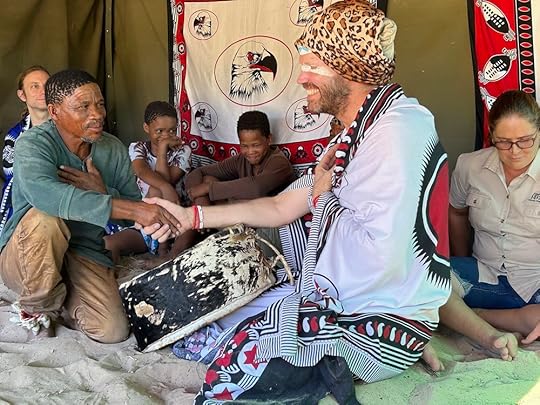
John and San Bushmen elder Gqikau on retreat in the Kalahari desert in 2023
At the end of our ceremony in the bush I offered Gqikau one of my sangoma fabrics which I draped over his shoulders. At the same time, I noticed a vulture flying towards us, low, almost touching the trees, and then flying over our heads. This was a wonderful sign, as vultures often represent transformation. Sangomas view them as powerful healers, with the ability to transform poison and negativity. This was a realisation of a vision I had for many years, of ancient and modern people sitting around a fire revisioning our humanity.
Excerpt from Odyssey magazine article, summer edition 2023-2024, Click here to view.
December 18, 2022
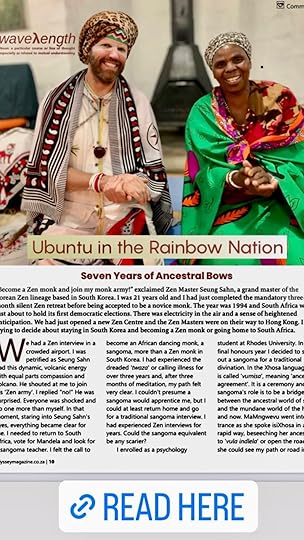
Seven Years of Ancestral Bows in the Heart of Zululand
I have been teaching at the Buddhist Retreat Centre in Ixopo, South Africa, for over 7 years with my colleague Makhosi Nomusa who is the resident Zulu Sangoma. The BRC as it is commonly known, is in the heart of traditional Zulu land. We are the first sangomas or traditional african healers to be teaching at the centre. I recently wrote an article in the Odyssey Magazine Summer edition 2022 sharing some of the stories and teachings during these years.
My journey began with Korean Zen practice in the early 1990’s. I went to South Korea in 1992 and participated in a 3 month silent retreat. At the end of it I was invited by the late grand Zen master Seung Sahn to become a Zen monk and join his “monk army”. I declined because I felt the call to become an african dancing monk instead. Click below to read the full story.
We will be leading our 8th retreat at the Buddhist Retreat Centre next year 2023 from the 27th - 30th Jan. Our ceremony is called ‘The Way of Ubuntu’. Ubuntu means humanity. It involves a circle of interconnectivity, starting with ourselves and spreading into the the plant and animal worlds. The focus of the ceremony is helping people to re-connect to their soul or umoya, the part of us that does not die, followed by our Ancestors and the natural world. As we do this we connect to the tree of life. If this speaks to you then join us.
September 15, 2022
Mindrolling Podcast - Finding your Edge
I was recently interviewed by Raghu Markus on his Mindrolling podcast. We had a powerful conversation that touched on important global themes pertaining to Energy & Ancestors, Dream Tracking & Inner Apartheid. These themes affect not only our human world but also the animal world. We touched on other conversations we have shared in the past or with the BeHereNow Network such as Rewilding modern humans, Decolonizing the mind and Healing Hungry Ghosts. Please follow the links to continue the conversation.
Raghu was a long time student and friend of Ram Dass a pioneer of consciousness in the US and a well known yogi. Raghu is the executive Director of the Love Serve Remember Foundation, an organisation dedicated to preserving the teachings of Ram Dass and his teacher Neem Karoli Baba.
Inner Apartheid & Tracking AnimalsRaghu invites john to share on the apex of conservation, reWilding back to nature, and returning to our roots as humans one with the land. To begin, John explores the concept of apartheid (separation) from the spiritual vantage of humankind’s current disconnection from nature. Through this lens, he explains how tracking—following the signs of animals, other beings we love, or even our dreams—can help us tune into the true essence of who we are.
Raghu & John talk nature, dreams, & reWilding modern humans, on Ep. 304 of Mindrolling Endangered Species // Dream Tracking (14:14)“We each harbor apartheid within ourselves because we are so separated from our true self.” – Raghu Markus
Speaking to rate of extinction on the globe, Raghu invites John to share on the most endangered species in the world – Pangolins. From here, John offers methods and perspectives on how we can start our day in connection rather than discursive thought, simply by grounding ourselves and our awareness in nature, our fellow humans, and the world around us. Next, John reflects on how Sangoma dream tracking is similar to the vibrational state of devotional mantra chanting from Krishna Das.
For more Raghu & John on decolonizing the mind, tune to Ep. 355 of Mindrolling Learning From Animals // Finding Our Edge // Energy & Ancestor Meditation (35:35)“Tracking your dreams means being mindful of the dreams you have at night and then noticing how those dreams are informing your life.” – John Lockley
After sharing about a mystical octopus tracking adventure, John explains how the retreats he runs help support the bushmen and trackers indigenous to the lands being visited. Next, Raghu steers the conversation to how we can learn to live with discomfort by mindfully observing animals. John explains how we can tune to this flow by “finding our edge” – facing our discomfort, spiritual poverty, and disconnection from our humanity. To close, John leads a resonant meditation and chant.
John Lockley explores the realm of the hungry ghosts, on Ep. 104 of the Guest Podcast“The lion finds its edge through facing its discomfort. And we have to find our edge as modern human beings through facing our spiritual poverty.” – John Lockley
May 31, 2022
Dancing with Ancestors - John Lockley
I was recently interviewed by Sarah Kirton from MysticMag about my sangoma journey and the role of a sangoma.
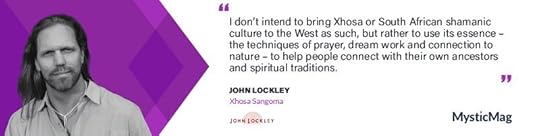
John’s current primary focus is ‘rewilding’ people and helping them connect to their bones, to their blood, to the earth and to their ancestors. John runs nature-based wilderness retreats in one of the oldest places in the world, the Kalahari in Botswana.
The retreats are called Dreams and Tracking in the Kalahari with the focus on educating modern man – it is what John refers to as ‘Indigenous Medicine for the Modern Man’. The focus is to help people connect with their indigenous roots, earth and nature. It involves tracking skills, animal communication and interspecies communication – dreams and connecting with ancestors.
Working alongside Bushman trackers, one will learn how to forage for medicinal plants and animals the way our ancestors and forefathers once did hundreds of years ago.
This is a retreat that is open to anyone with a deep love of nature, Africa and the wilderness. The Kalahari is one of the wildest places left, not only in Africa, but on Earth.
I have written a book called Leopard Warrior which describes how I became a sangoma. Like many traditional shamans, my journey to becoming a sangoma started before I was born.
A sangoma is a traditional South African shaman. It is a Zulu word which means the one who connects to the drum and the chant/song. When we sing, drum and dance, we connect with the spirit world and then we are able to get a sense of how to help and heal the community. We are the chanting monks of Southern Africa.
One cannot decide to become a sangoma, one is called – either through dreams or illness (Twasa). I was ill for seven to ten years. The illness affects your body physically and can be quite debilitating. However, there is also a strong psychic component involved where you dream about the future, receive messages from the spirit world and are shown what is happening to people you don’t know and how to heal them etc…
One first has to accept the calling and then find a teacher who can apprentice you, help heal you, and bridge the psychic or spirit world with the physical world. Accepting the calling starts the healing process from the twasa. Due to the political circumstances in South Africa at the time, I was only able to access a teacher well into my illness (after 7-10 years).
They are very similar but my answer to your question is no. Our ancestors are our roots that sustain us and give us life. Our ancestors are connected to the life force because they too are fed by life and by the earth.
- Is it your belief that all our Spirit Guides are in fact our Ancestors, and what is their defined role, if any?There are three groupings of spirit guides in the realm of ancestors: your mother’s people, your father’s people and the third, adopted ancestors. Here, one may have an experience or dreams of spirit guides from diverse cultures.
- What influence do animals have on your work of healing the past?Animals help connect us to our humanity and empathy. Whether it be a pet or wild animal, once you love an animal, you are connected to the powers of empathy and compassion. Once you are connected to this, healing can take place.
Each experience is unique and contextualized depending on what culture and background a person comes from. In saying that therefore there is no standard symbolism when it comes to interpreting visions or apparitions of animals in dreams.
It depends what people are searching for. Generally, people from the West look to access their spirit and soul and to work with their ancestors. In this case, I would work with divinations and throw bones. I also run online training courses in helping people to connect to their wilderness or to the wild spaces inside of them.
To achieve this, they learn how to work more mystically with their dreams as opposed to psychologically. They learn to feel the magic, mysticism and synchronicities of their dream life and how it mirrors and maps their waking state. Like a tracker in the bush, I teach them how to engage with their dreams like tracks in the sand. How does the dream reflect our life and vice versa.
The work I carry out in the indigenous or traditional world (in the Eastern Cape, South Africa) is a bit different because most people are already connected to their ancestors and their indigenous roots. There we perform ceremonies involving singing and dancing to strengthen our ancestral connection. Like a strong tree, the roots have to be watered.
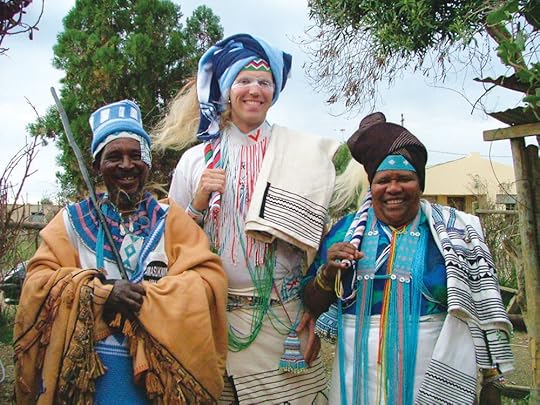
John and his Xhosa elders after his sangoma initiation in 2007
February 14, 2022
Ubuntu in the New South Africa
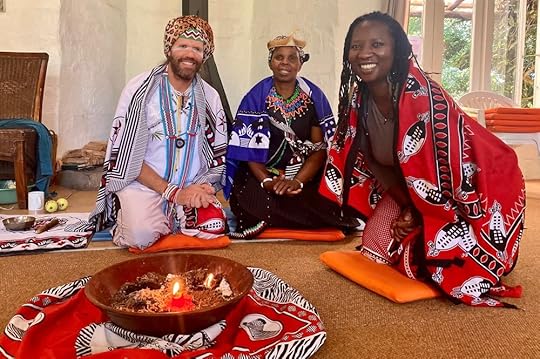
Ubuntu Retreat 2022 at the Buddhist Retreat Centre in Ixopo, South Africa. Sangomas practicing Ubuntu around the ceremonial altar.
Ubuntu is an old South African word meaning ‘humanity’. I just completed my 7th year of Ubuntu retreats at the Buddhist Retreat Centre in Ixopo. The numbers of retreatants have steadily grown over the years. I felt priveliged to teach the old teachings of Ubuntu that was taught to me through my Xhosa sangoma apprenticeship. My Xhosa elders speak about ‘Ubuntu Ubunzulu’, the depth of humanity teachings. It starts with the individual person. We are all born human, however the elders say that we have to make a decision to become a human being. In the isiXhosa & isiZulu languages they speak about ‘umntu, ngumntu, ngabantu’. A person becomes a person through other people. As we listen to one another and engage with acts of kindness, consideration and empathy we feed our human family and ourselves.
Ubuntu is a circle of interconnectivity beginning with the human world and stretching into nature. The more harmonious and balanced the human world the more opportunity we have to help our non human families, animals and plants. The Ubuntu circle stretches upwards into the future with our current actions affecting the next generations, and it also stretches backwards in time to our ancestors. In South Africa we have many words for our ancestors, abazali bam (our parents), abantu badala (the old people) and one of my favourites, amathambo (bones, representing our bone people). There is an implicity responsibility to remember and honour our ancestors. As we do this we strengthen ‘isidima’ or dignity, facilitating a deeper sense of ‘Ubuntu’ and the interconnectivity of the human and non human lives on our planet.
I recorded a few of these teachings whilst leading the 3 day retreat in Ixopo at the Buddhist Retreat Centre. Please click the links below to access the youtube videos.
A discussion on the 3 jewels of Buddhism vs traditional Ubuntu practice in South Africa.
A talk on developing an Ubuntu practice with emphasis placed on Dreams, Ancestors & personal responsibility.
May 24, 2020
Sacred Songs & Dream Work, Kent
A Weekend of learning about Sacred Xhosa Songs, 'Ingomas' and Sangoma Dreaming. What is a truth dream or 'mhlope amapupa' - white dream. How can we learn to open up to the incredibly transformative power of dreams? During this weekend we will learn some simple dream techniques and drum rhythms.
Friday 30 th April 7:30 - 9:30pm - African Blessing Ceremony & Talk £20
Sat 1st May - Workshop 10-5pm £75
Sun 2nd May - Private Sangoma consultations £70
Download PDF flyer Songs & Dreaming Workshop
To book call Ann Pattihis on tel: 01580 753993, mob: 07810 043937, or use the Book Now button.
April 8, 2020
Dreams and Tracking Retreat in the Kalahari Desert 2020
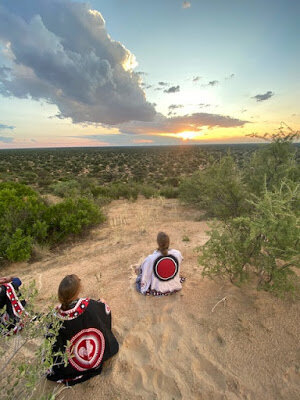
Sunset Meditation gazing over the Kalahari Desert
I have just returned from my first Dreams & Tracking retreats in the Kalahari Desert. The experience was incredible. I worked alongside Alwyn Myburgh and his safari company ‘Matsebe Safaris’. We lead 3 retreats over a 6-week period.
The focus of our work was to teach ‘African indigenous technology’. I focused on the ‘Dreaming’ component which entailed teaching people how to connect to their Ancestors, Dreams and working with African medicinal plants. Alwyn taught the ‘tracking’ aspect of the retreat. This involved intuitive tracking, interspecies communication and learning bird language. We split our teachings into 2 or 3 hourly segments depending on the weather and animal sightings. Each morning we would wake at 6am and start following the animal tracks at 6:30am.
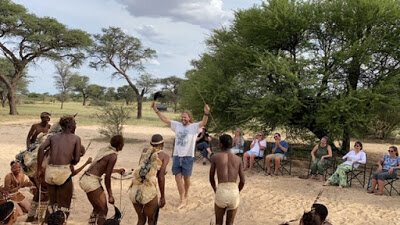
Dancing with the local Villagers
We tracked lion for 6 weeks and on the final week we managed to see them, all seven of them, which I felt was very auspicious. Our Bushmen trackers reckoned that they had never seen human beings before. The Kalahari Desert is renowned for large open spaces, hundreds of kilometers of unspoiled wilderness and one of the wildest most desolate places left on earth. We chose the Kalahari Desert to do our retreat because we wanted people to experience the ‘Garden of Eden’, nature untouched by man! A hard task to accomplish, but we did it.
We hosted about 22 people with diverse backgrounds from medicine, dentistry, IT, teaching and the healing arts. It was a life changing experience for all of us. Here are what some of the people said.
I have never felt the tranquility nor peace I experienced with our team of trackers in the Kalahari. Thank you, John and Alwyn. Nelson De La Cruz (Dentist from the US).
The most transformative retreat I’ve ever been on. Krista Nielsen (Teacher from Hawaii).
We will continue our Kalahari retreats next year 2021 in Feb & March. For bookings/ Enquiries please email Beverley reservations.origins@gmail.com.
Please see my interview (below via you tube link) with Mitchel Clute from Sounds True on their FB community ‘Shamanic Path’ page.
Change of Blog Platforms!
Hey guys,
I have recently upgraded my blogging system to the Blogger application rather than using my Squarespace set up.
I am now "archiving" all of my older blog posts from this platform.
If anyone is interested in checking them out.. the link is here!:
https://johnlockley.squarespace.com/old-blog
With love,
John
John Lockley's Blog
- John Lockley's profile
- 9 followers

