
John Lockley's Blog, page 3
September 15, 2017
'Leopard Warrior' talk in Dublin at Positive Nights
I spoke at Positive Nights with Paul Congdon in Dublin recently about my upcoming book, 'Leopard Warrior'. It was a wonderful night. I received a warm welcome and the people seemed to enjoy my talk. It was important for me to speak from my Mother's original home, Dublin, where it all began for me many years ago. It was in Dublin along the coast on DunLaoghaire peer that my Mother dreamt of Africa. She had a vision of African elephants calling her. The vision was so strong that she felt compelled to listen and travel to Africa. As she said to me years later, "she wanted to witness African elephants in the wild before it all goes..." Hopefully that won't happen. But the wilderness of Africa is under threat by poachers. The only way for this to stop is for there to be more awareness and education about the wilderness and how important it is for each person to reclaim their own wilderness, the landscape of their soul. This is part of my journey, and I was delighted, humbled and very grateful to kick off my world book tour in my second home, the lovely and enigmatic Dublin City.


September 14, 2017
Interview with Raghu Markus on the Mindrolling Podcast
I was recently interviewed by Raghu Markus on his Mindrolling Podcast about my new book 'Leopard Warrior'. I always enjoy my interviews with Raghu. We spoke about his friend and mentor, Ram Dass, as well as other spiritual masters. We covered some key areas such as the qualities of a spiritual teacher, the rhythm of truth, finding our center and connecting with our Dreams.
Please listen for an animated discussion and a few chants and guided meditation.
June 7, 2017
Way of the Leopard Teachings
My ‘Way of the Leopard’ teachings are an answer to my question, “how to help people who don’t come from a traditional shamanic culture, to connect with their vital essence, their humanity, and discover their calling in the world? And how to use traditional shamanic teachings to help the everyday person?”
It was inspired by my traditional sangoma apprenticeship as well as Zen training and general life experience.
Most of us have problems and anxieties either voiced or kept silent. A key part of these teachings is to encourage the individual to ‘feel’ their emotions and physical body. Our gifts or abilities are connected to whatever we are struggling with. ‘Every crisis creates an opportunity’. To connect with our inner power we need to breathe into our shadows, those unacknowledged parts of ourselves.
I do this through encouraging people to feel their heartbeat. To breathe deeply into their pulse, and accept themselves completely. Sometimes this is scary for people, but the results are always invigorating. After a few minutes of breathing and feeling their pulse I teach people how to move and shake their bodies in a vigorous and dynamic way. This has the potential for building up an incredible amount of heat. The heat is what helps to transform us, giving us energy, positivity, vitality and eventually personal freedom.
Let’s say someone is full of anxiety because they are in a relationship that doesn’t make them happy, and they are unsure about whether to break up with their partner. I teach a few simple breathing exercises and stretches and then an awareness of the hearbeat. Once we become centred around our beating hearts we connect to something dynamic, solid, and the ultimate bass drum. Often people say they can’t feel their pulse. In these cases I get them up dancing and shaking. I bring in a few simple African chants like ‘umama wam’ (my mother) and ‘umoya wam’ (my spirit). When it is done with a particular heartbeat rhythm it is deeply moving and invigorating. People laugh and sometimes cry. We all sit down and everyone feels their heartbeat. Once the heart is free to express itself freely unhindered from thinking and anxiety it gives us images and impressions, helping us to navigate our lives. The person with anxiety about their partner might need to move more, think less and feel their heart deeply, and over time in my experience, the answer always comes in a clear way.
Our hearts connect us directly to the natural world and our own strength. Our hearts speak in the language of mysticism, images, colours and impressions. We stimulate our hearts through happy movements and then listen to it’s song. It is always unique to each individual, loaded with possibility and creative potential.
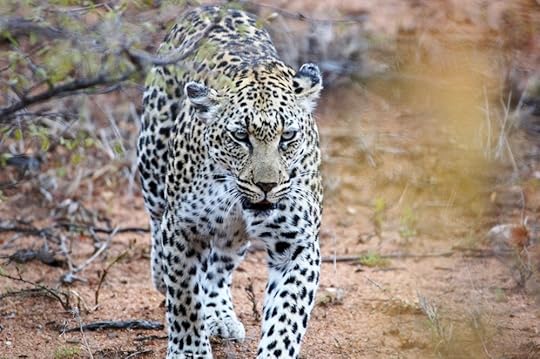
The Leopard teaches us how to REST and STALK our spirit. Resting involves listening, the most radical form of mindfulness. And stalking involves complete concentration, searching for our spirit and what makes us feel alive.
Are you ready to dance and shake your body and listen to the drum in your chest?
October 9, 2015
Leopard Medicine in the USA
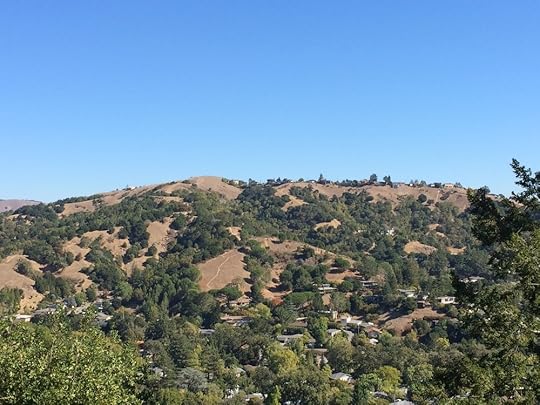
I have just arrived in Fairfax near San Francisco for my seventh USA tour. My first tour was in 2009. I was called by the spirit of the black bear, renowned by the Cherokee as the guardian of the herbal medicine realm. And again last week I dreamt about this mystical creature, further inspiring me for this new tour.
Despite jet lag (an 8 hour time difference) and a terrible cold from London, I feel optimistic and excited about this year’s journey to the United States. My teachings will focus on helping people to connect to their ancestors and the natural world. I will use plant medicine (non-hallucinogenic) and dream work to facilitate these workshops, retreats and public talks. And for passion and inspiration I will use rhythm in the form of African dancing, drumming and chanting to enliven the spirit and open the hearts of all who attend.
I call my work ‘the way of the Leopard’ because the Leopard is one of the main totem animals for us (Sangomas) in Southern Africa. The Leopard represents pure instinct and encourages us humans to listen to the wind, our hearts and the world around us.
As I went to sleep last night I was disturbed by a sound on the roof. It was loud and disruptive, like cracking rocks. When I investigated I was delighted to see a mother deer and her fawn scampering under the trees. I then awoke to the sounds of hawks flying overhead and crying to one another. I took these signs to be good omens, indicating that the land was accepting me. Then I went to the nearby ‘Best Buy’ store to buy a sim card. My new no had 777 as part of it’s sequence. My lucky numbers! This sealed the deal. I’m sure my US tour will be a huge success!
Tonight I will be speaking for the first time in Oakland, near San Francisco. I will be joined by my assistant Seyta Selter and Kimberly Conner, a multimedia journalist from New York City, who will be documenting my work to share with people interested in natural medicine. Kimberly recently spent some time in South Africa working for one of our prestigious newspapers, the Mail & Guardian. She fell in love with the country and its people and was called to write a piece on the Sangoma culture. I feel honoured to help her with this task.
If you would like to join me tonight or take part in one of my events in the US please click here for more information about my US tour.
September 28, 2015
African Zen in Japan
I recently had the good fortune of being invited to Tokyo to lead retreats and give private sessions. My first introduction to Japanese mysticism and spirituality was at the age of 18 when I immersed myself in studying Soto Zen, a branch of Japanese Buddhism. I was taught how to clear my mind, find calmness in my breath, and energise my body through the beauty of nature. The teachers were kind and strict. I learnt the beauty of spiritual discipline. Now 20 years later I find myself full circle, back in Japan, and this time I was given an opportunity to give back to the Japanese people whose spiritual culture had inspired me years ago.
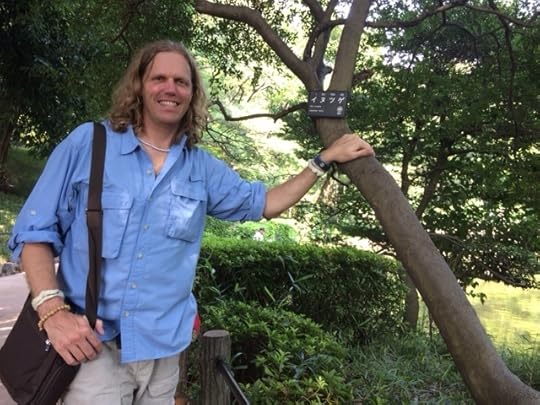
John in Japan
Whilst attending Buddhist ceremonies in Tokyo and surrounding areas I was delighted to find that I remembered some of the Heart Sutra (important Buddhist chant), and my spirit danced to the rhythmical cadence. I felt 'in sync' and in rhythm with the people. My translators and guides affirmed this by praising my flexibility and saying that it felt like I was Japanese. This warmed my heart.
After spending 18 years studying Sangoma medicine (African Shamanism) in my homeland, South Africa, it felt like a return to my spiritual roots, practicing in Japan. This helped affirm my conviction in our common human roots and how all spiritual disciplines are pointing in the same direction i.e. nature, transcendence, harmony and peace.
Japan is a wonderful mix of modern (Western) and traditional (Japanese) culture. Tokyo is by far the most serene and peaceful capital city that I have worked in so far. As I walked from my apartment near the French and German embassies, I experienced a sensory overload from my toes to the crown of my head. The heat was almost physical and it felt like I was walking in the karoo (semi-desert) in South Africa during a mid summers day. My ears were filled with the sound of cicadas chirping in a feverish way. They are called 'semis' in Japanese and only live for 24 hours. This seemed to encapsulate the intensity of their spirits, and made me appreciate the gift of life while I meandered through the streets of Tokyo.
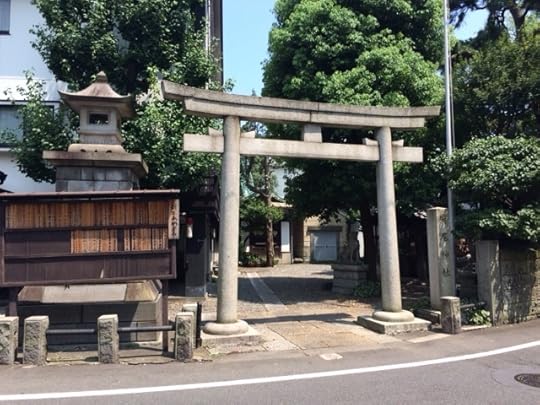
Traditional Shinto temple
I was struck by an ancient Shinto temple shouldered against the side of the road only minutes away from my new home. People stopped and bowed reverently. Life stood still. I approached the temple and felt a sense of awe and serenity like I experienced in many old Buddhist temples in South Korea. A lion sphinx like creature stood guard as you crossed over the threshold and entered the temple grounds. Apparently it is suppose to be a fox. The night before I dreamt about a large fox in red that seemed to welcome me and 'opened the road for me'. My Japanese translator and friend said this was a good sign. The fox represents the spirits of nature in the Shinto faith and is highly revered as a guardian spirit.
I was shown how to clean my hands with water before approaching the shrine. People wash both hands in a mindful way and take a sip of water. The water fountain bubbled up and appeared in a shrine like structure with wooden cups used to collect the water. The cups had ancient Japanese writing inscribed on them and the surrounding water fountain. We then walked up a short flight of wooden steps clapped our hands and bowed a few times. This was to summon the nature spirits and bowing demonstrated humility. I watched people standing in stillness around me while they prayed quietly and focused their awareness on the shrine ahead. We bowed again, clapped and turned away from the shrine and left the temple grounds.
Japanese Shintoism and Sangoma PracticeThe Japanese Shinto tradition is very similar to the Sangoma tradition in Southern Africa. As Sangomas we revere our Ancestors in terms of the 'Izinyanya', meaning the 'silent hidden ones' or spirits of nature. We have intricate ceremonies in the forest, near the sea, lakes and rivers where we pay homage to the spirits of nature in all it's forms. The same spirit of reverence and awareness is seen by Japanese people who practice the Shinto faith.
Sangomas always honour their blood ancestors who act as guardians and gatekeepers to the spirit world. The same could be said for the Shinto faith, which is one of the oldest traditions in Japan and most people practice it alongside their Buddhist faith. It rests on honouring one's ancestors and nature spirits. I found this incredibly similar to my own Sangoma practice. My Japanese clients and workshop participants had no problem understanding my speech about honouring ancestors and nature spirits. A number of them experienced powerful healings and dreams from the ceremonies they attended with me. My only advice or 'indaba' (spirit news or message) to them, was to remember their ancestors and the old traditions of their people. In this way It felt surprisingly similar to back home in South Africa, where I say the same thing to my countrymen from different Sangoma lineages. Modernisation is wonderful in making our lives easier through the use of mobile phones and computers. However, we have a responsibility to also be mindful of where we come from and remember our spiritual traditions.
Japan and South Africa are two areas in the word where ancient Shamanic earth honouring traditions are still alive and thriving; largely unbroken for hundreds of years. This is in stark contrast to other parts of the Western world like Europe and North America. One of the fastest spreading illnesses in the Western world is depression which speaks about soul loss. Traditional earth honouring cultures can teach all of us how to remember our humanity through revering the earth and one another in a subtle, beautiful and mindful way.
I look forward to returning to Japan again next year and to continue my world tour teaching people how to reconnect with themselves, one another and nature. There is so much life out there, from the sounds of the 'semis', to the swimming khoi, and eager faced young babies. When we breathe it all in, pause and breathe out slowly, there is no end to the wonder of this world.
John.
More photos from Japan...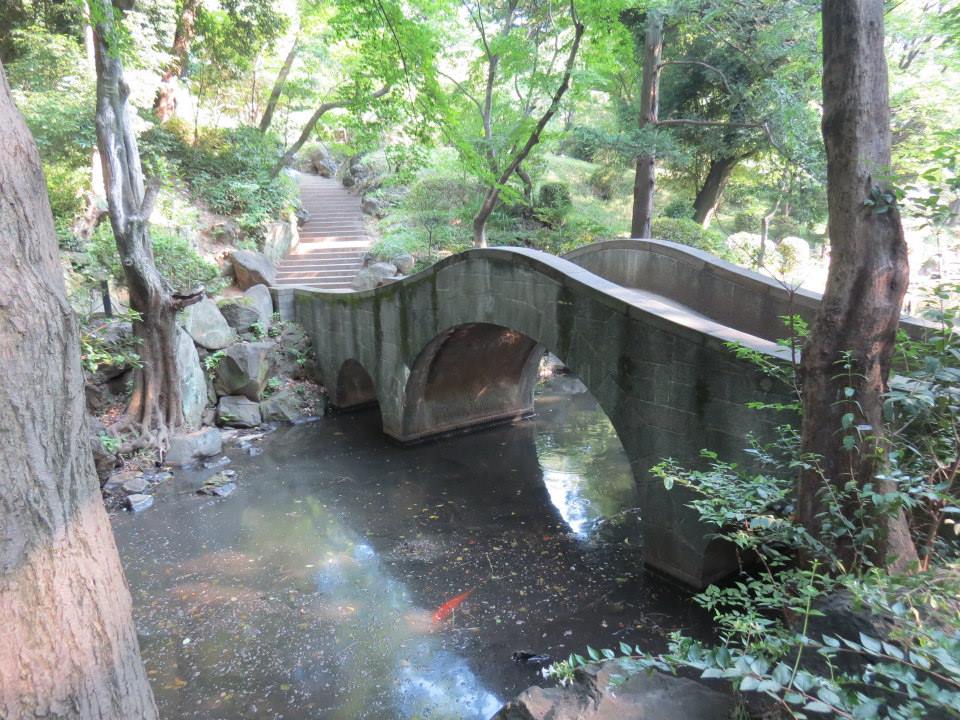


Upcoming travel...
September 3, 2015
Listen up for John on the Mindrolling Podcast!
Subscribe to Mindrolling here to listen on itunes.
Later next week, John's recent interview as guest on the Mindpod Network's Mindrolling podcast, with Raghu Markus and David Silver will be released!
John, Raghu and David talk about John's dynamic mindfulness work and his trip to the US. Raghu and David both have long histories working with spiritual leaders and are collaborating on this wonderful podcast featuring mindfulness teachers and current topics in modern Buddhism.
April 30, 2015
African Zen - 'Ubuntu' in Action

Ixopo BRC

IMG_3131
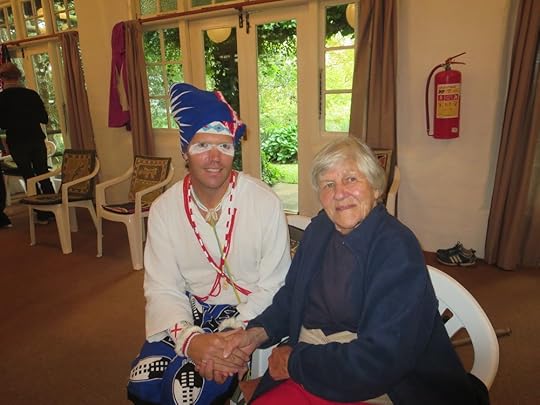
I just completed another retreat in Ixopo at the Buddhist retreat centre. We danced, sang, drummed and prayed. I was overjoyed to be joined by the Zulu cooking staff who helped keep the rhythms sweet and joyful. It is always such an honour for me to be able to share the wisdom of Sangoma culture with people. The Sangoma people of Southern Africa are equivalent to the Buddhist monks and nuns in the Far East. After my time in South Korea in the early 90's studying Korean Zen under the late Zen Master Su Bong, I discovered a number of similarities with my Sangoma colleagues in South Africa. The similarities involved an emphasis on prayer, humility and connecting with the divine through chanting. This included working together as a team, putting differences aside for the common good. In this way we all help to realise our ‘Ubuntu’, our humanity, and thus also our spiritual direction.
IMG_3132
I was delighted to see the dedication of fellow South Africans to learn about Sangoma traditional culture. This is the future, and it gives me great hope. We had a number of elders with us who were over 80 years old. One of them said to me that this weekend retreat at the BRC in Ixopo was ‘a wish come true’ for her, and she quietly said that she had wanted to learn about Sangoma traditional culture her whole life, and now she had. She was very happy. This warmed my heart and inspired me to continue sharing the beauty of South African traditional medicine.
I will be back at the Buddhist Retreat Centre in Ixopo again next year from the 15-17th January 2016, and I welcome all South Africans to join us.
John Lockley April 2015.
John Lockley's Blog

- John Lockley's profile
- 9 followers

