Zachary Craig Hanson's Blog, page 11
July 7, 2023
Muzzleloader 101
Although my favorite movie is Jeremiah Johnson and reading stories of mountain men carrying muskets and Hawken rifles was something that filled my childhood day dreams, muzzleloaders were always just a romantic idea of a bygone era to me. For years, that romance was happily buried by my pursuit of archery-only hunting until a great friend of mine recently gifted me with a beautiful Vortek Strikerfire .50 caliber muzzleloader with an after market William’s Precision Sight.
With that great gift came an onslaught of questions fueled by a bigger sense of curiosity. Who still uses a muzzleloader? What’s the benefit? And more importantly, how do you fill that thing with “powder and ball” and shoot it without blowing yourself up?
Modern MuzzleloadersBefore we get into my first range day with a muzzleloader, let’s start with a little bit of history. Muskets and muzzleloaders were the main weapon of war and hunting up until the end of the civil war in the United States of America around 1865. The advent of breech loaded metallic cartridges put the nail in the coffin for them as people could then purchase a self-contained projectile that was less susceptible to the elements (e.g. rain). That said, breech loaded weapons did not fully eviscerate the use of muzzleloaders for quite some time… it wasn’t until the cost of manufacturing breech loaded weapons, and the ammo that went with them, came down in the late 1800’s that muzzle loaders truly became a thing of the past.
It stayed that way for decades and decades until a small group of hunters in the 1970’s went looking for a more challenging and traditional way of hunting. After playing with flintlocks and other muzzleloaders, these gentlemen started seeing success and began a movement reverting to traditional hunting practices. Pretty soon Fish and Game departments started opening up early and late muzzleloader seasons for sportsmen and women around the country, and gun manufactures began to produce more modern weaponry that espoused the traditions of old with newer and more reliable composite materials.
So, why try Muzzleloader Hunting?Well, to answer that question we have to look at a few factors. Namely:
Opportunity, and;
Challenge
Though muzzleloader hunting is difficult (as you will see in my experience below), it offers up opportunity for sportsmen to target animals during opportune times of the year which are often closed to traditional rifle hunting. What got me hooked was that Idaho offers an OTC muzzleloader tag for doe Mule Deer in September every year. This is a time when most places are closed to rifle hunting and archers are the only ones roaming the woods. Furthermore, you can also apply for select controlled hunts such as bull or cow elk muzzleloader in September, which usually sees few people applying and traditionally has a pretty high success rate (well, except for me… I did not draw either of those tags despite two of my friends succeeding in the draw).
It’s also a challenge. When I first got into hunting I focused on archery hunting for that very aspect. I wanted something that would be difficult to achieve and always carried a high probability of failure. If I wasn’t putting on tons of boot miles and using every sense available to get in close to an animal, I didn’t want to be doing it — which, to date, has kept me away from hunting with a rifle.
Yet, with a muzzleloader, there are many things to consider that make it a proper challenge. First, you are using loose powder and a ram rod to load your bullet. Get your powder wet and you are toast. Second, the effective range is still only about 100 yards (give or take), which means you need to get close to your quarry. Third, it’s considered a traditional weapon in Idaho, which means you cannot use any magnified optics — only open iron or peep sights.
A Million Things to go Wrong…When I showed up to our local range (aka our town dump) last week to fire my muzzleloader for the first time, I had no idea what to expect. My friend and hunting mentor, John, was there to run me through the paces and he put on a literal clinic which made my head spin.
First and foremost, it seemed that the key terminology being used was “keep things clean and dry.” Everything we did was followed by either a cleaning, or at minimum, an observation at how dirty a piece of the rifle was getting.
Unlike a typical range day where you take your weapon, load it with ammunition, and start firing… we started by taking our long ramrod (yes I still laugh at that, too), applying a clean white dry patch to the end and working it up and down the bore of the barrel. Why? Well when you clean your muzzleloader to store it, you use something called bore butter to fight corrosion… which leaves trace amounts of moisture which needs to be sopped up before firing your weapon.
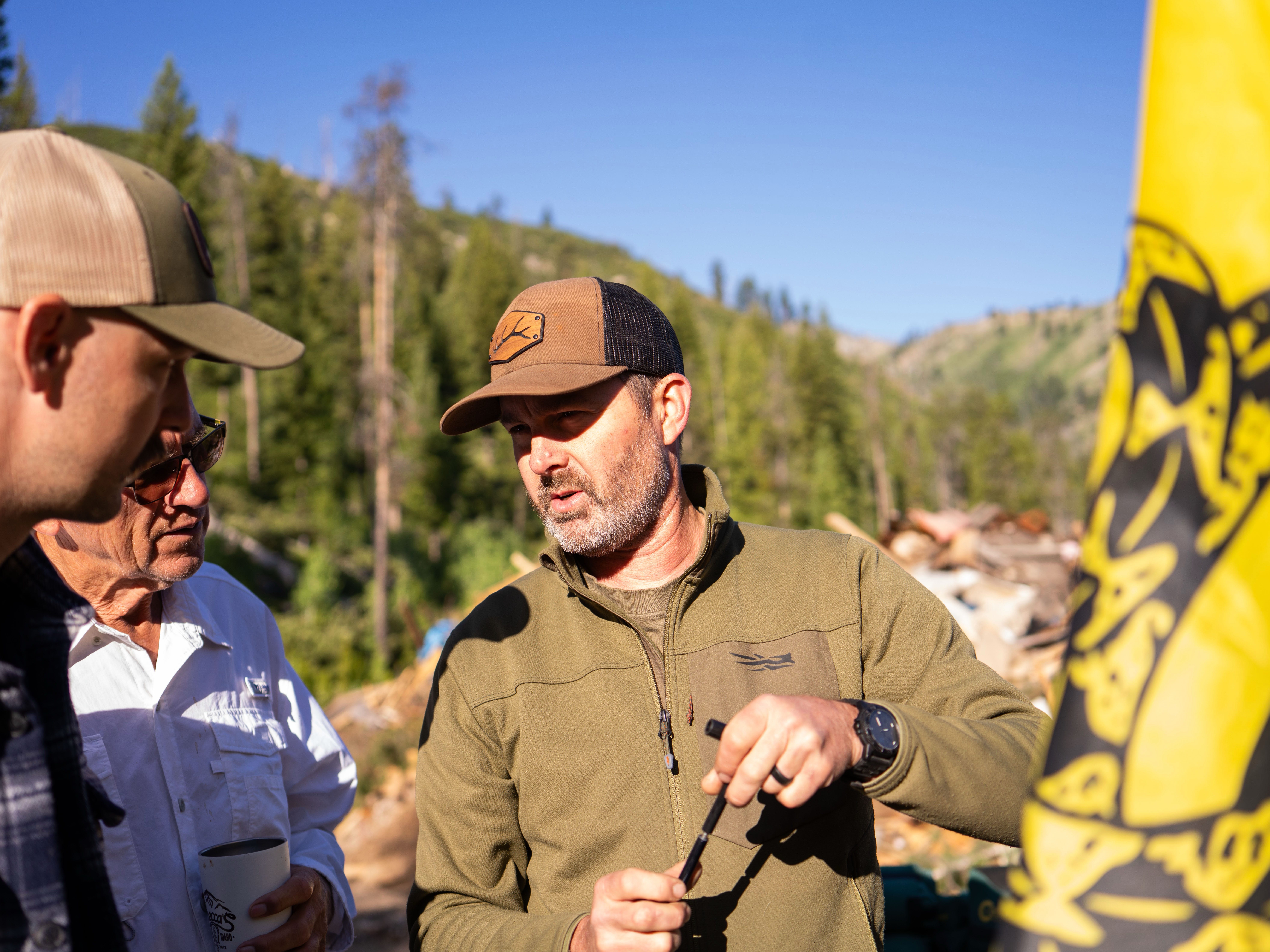 John teaching the finer points of barrel cleaning.
Once we had the barrel clean, John began to teach us all about the weapon itself. In Idaho you have to have an exposed breach with the ability to see the percussion cap covering the nipple, which is all a part of the mechanism to make the gun fire. For our use, we were using german-made 4-wing musket caps which were meant to burn hot and ignite the powder we would later be using.
To test this, John placed a musket cap over the nipple, pointed the barrel safely at the ground, cocked the hammer, and pulled the trigger. It took 3 tried before the hammer got the cap to “ignite” which made air come out of the barrel and small puff of smoke to release from the breech. We repeated this a few more times before John cracked the barrel open and allowed us to look down the nipple hole to see the grime and buildup that had occurred with just the use of the ignition caps. What was once a whistle clean little hole was now mucked with carbon build up and little piece of metal shrapnel. Confirming our caps were working (within a decent margin of error) we did a quick blowout of the nipple and hit it with a swab from a breech cleaner and went to the next piece of the puzzle - powder and lead.
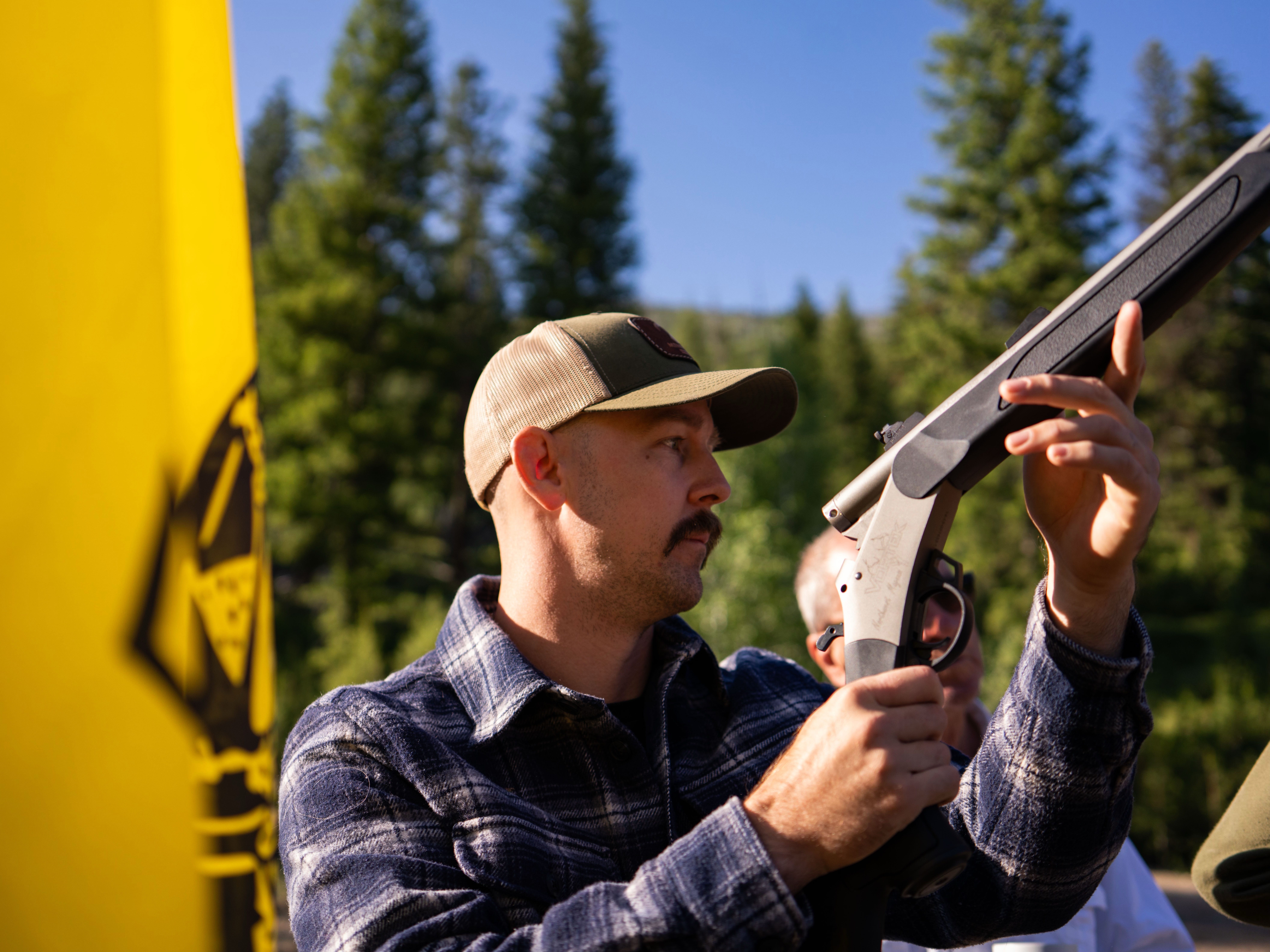 Looking down the nipple after firing some “caps”
Thankfully John had used my rifle before and had exact measurements of what we needed as it related to the powder (Triple 7) and quickly used a tool to help us measure it out. With little fanfare, John poured the black powder straight down the clean and dry barrel of the rifle before pulling out one of the 275 grain T/C bullets that were laying on our makeshift shooting bench.
Placing the bullet as flatly as possible, John grabbed a traditions ball starter and began to shove the projectile into the open end of the barrel. He then handed me the rifle and the ramrod (yes, ‘haha’ once more) and let me feel the pressure needed to force the bullet to the bottom of the barrel. Once seated, John put enough force on the powder that was sitting under the bullet and noted that as we play with loads over the next few weeks, once we get the right proportions that we should score our ramrod so that we do not run the risk of over or under packing our powder and bullet. With that step complete, we were ready to make our way to the shooting bench to give the gun it’s maiden voyage (in my amateur hands at least)
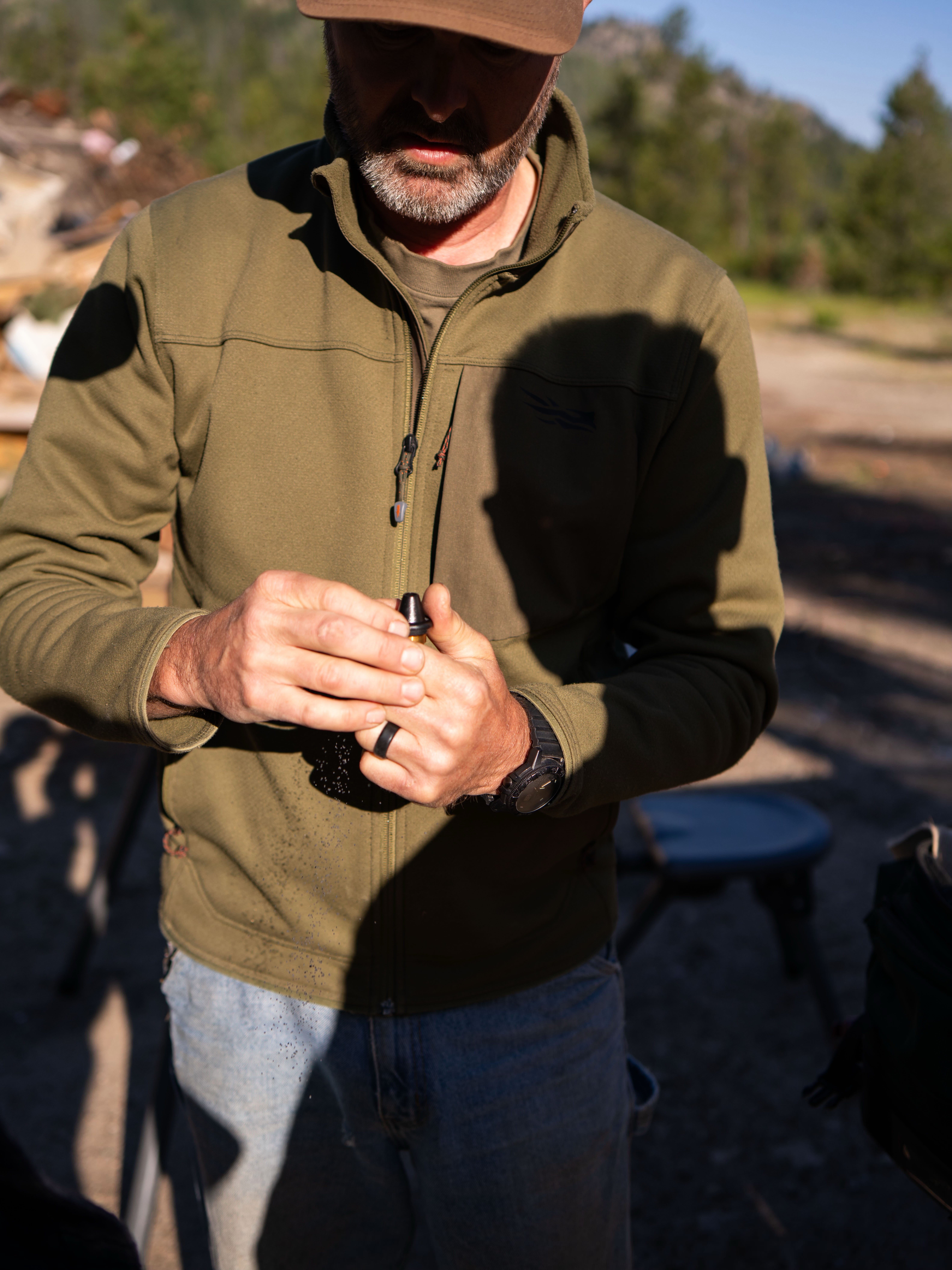 Measuring triple 7 powder in a speedloader.
Thanks for reading Let Me Die Learning! Subscribe for free to receive new posts and support my work.
Hang Fires & PatienceSitting on our Caldwell collapsable shooting bench we set up our shooting bags with a bright orange target 25 yards in front of us with a natural berm behind it. With a few nerves swirling around at the unknown of shooting a .50 caliber rifle for the first time, I nestled into the rifle and got one of the diamonds on the target centered in my peep sight. Once satisfied with my positioning I sat up to get instruction on what was needed to make the modern muzzleloader go “boom.”
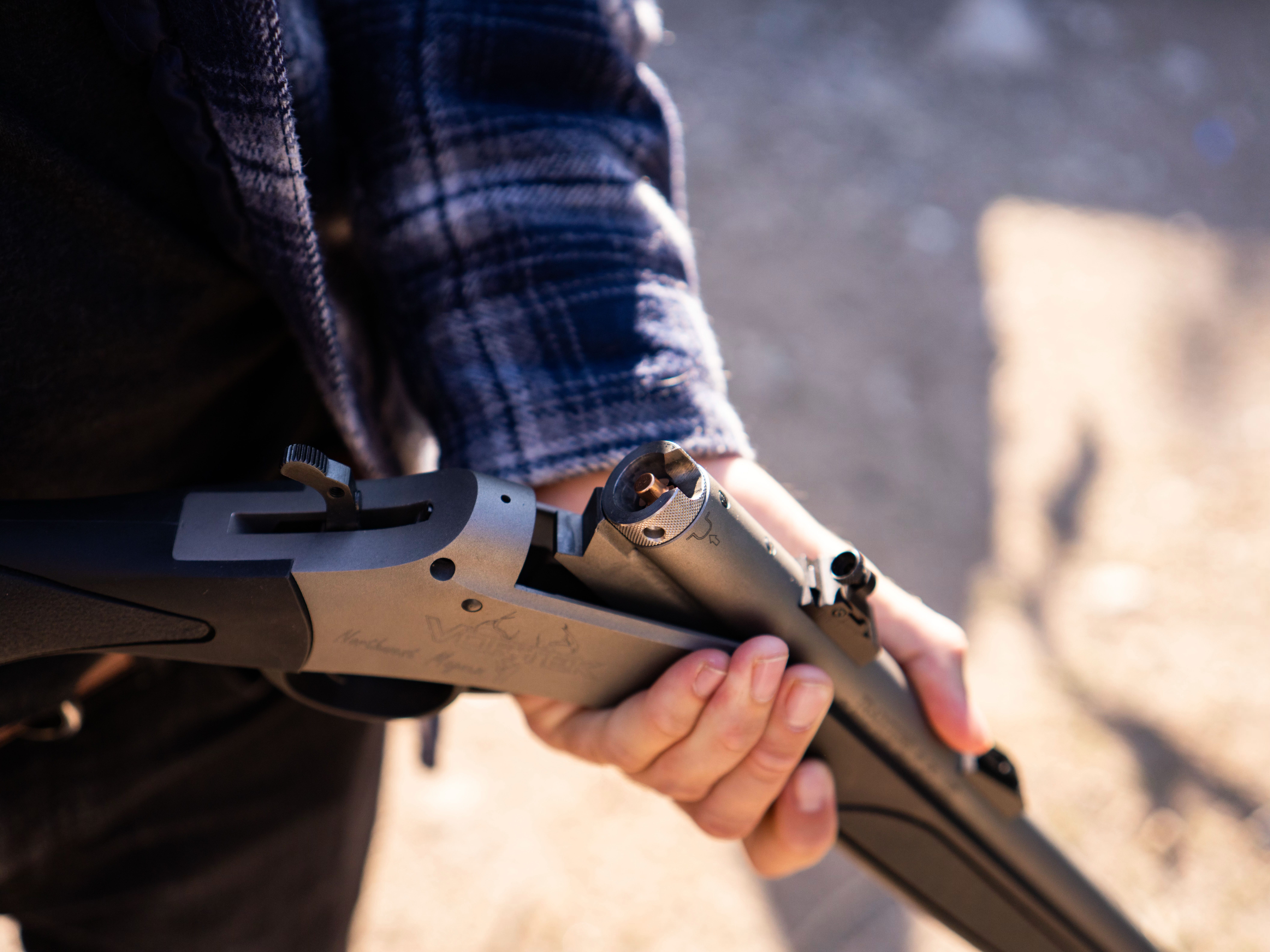 German 4-wing musket cap over the nipple on an open breech.
John instructed me to break the breech and expose the nipple. From a small Tylenol bottle, he fished out one of our 4-wing musket caps and I handed it to me to place on our nipple. I then shut the breech and we were officially ready to shoot the rifle for the first time.
John took his place behind me and coached me on cocking the hammer and taking the gun off safety. With that, I re-centered my peep sight and moved my finger to the trigger. With a controlled breath I began to depress the trigger just as I had learned in my Long Range Hunting course, anticipating the same recoil that I get from my Collier .300 PRC.
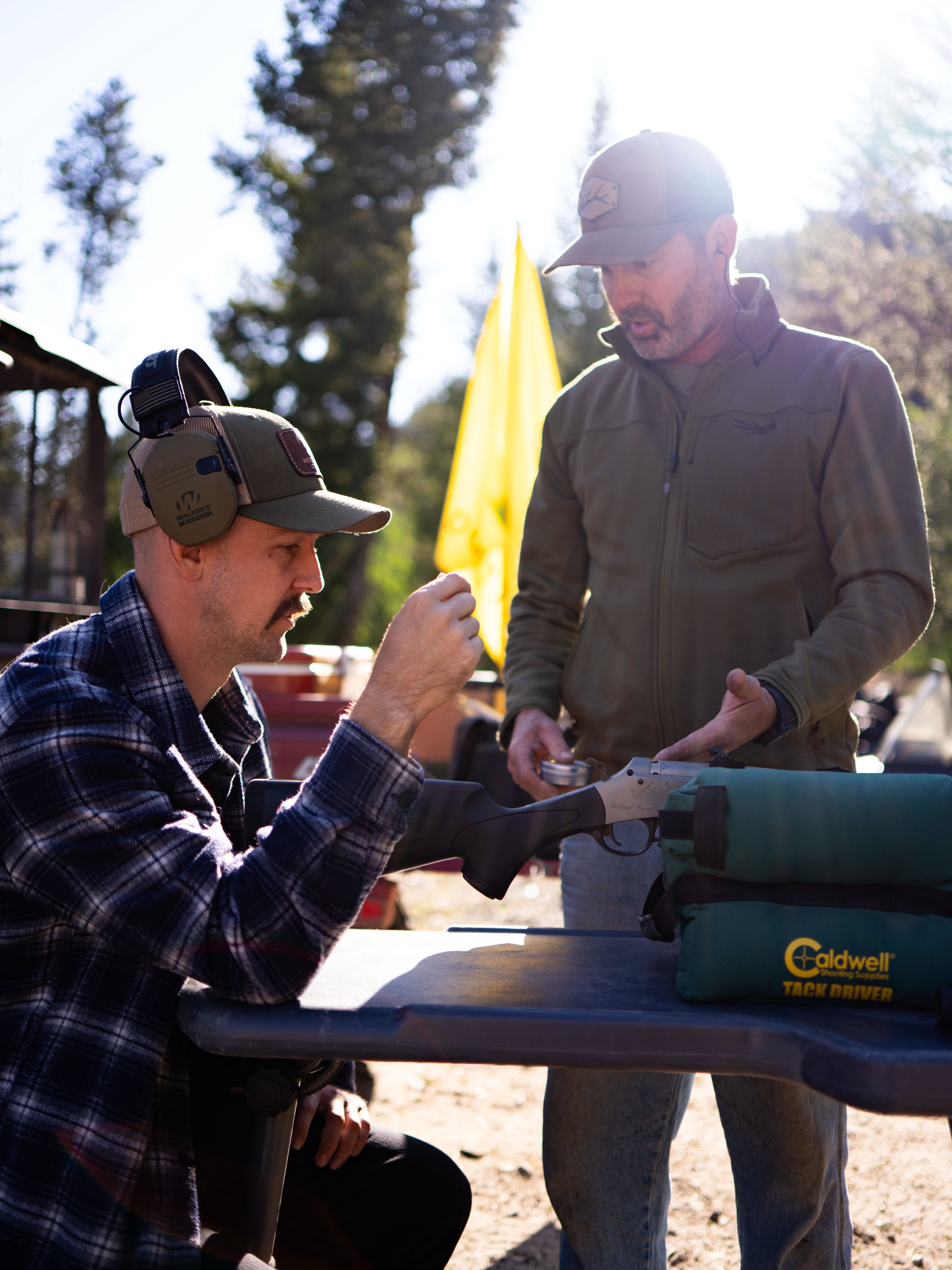 Expert instruction.
Yet as I pulled the trigger releasing the hammer, nothing happened. Calmly, John told me to re-cock the hammer… acknowledging that often times the hammer may not have the “oomph” to ignite the cap on the first go — which adds yet another element to muzzleloader hunting, the need for nerves of steel.
On the second trigger pull, I saw a small puff of smoke in front of my face and heard a small *pop*, but felt no recoil. Immediately I did what I shouldn’t do and sat up. John yelled at me “to not move,” while explaining what a hangfire was, and I heeded his warning. After 15 seconds we all breathed again and I opened the breech of my weapon and removed the used musket cap from the nipple and put a new one on.
With a spiked dose of adrenaline I resettled in to my rifle and once again cocked the hammer. After two more non-fires, on the third attempt the gun went “boom” and sent my .50 caliber projectile down range, slightly high and right of my intended target. The recoil was not quite what I expected - it was not snappy like a modern high caliber rifle, but more of an aggressive push with an explosion of powder.
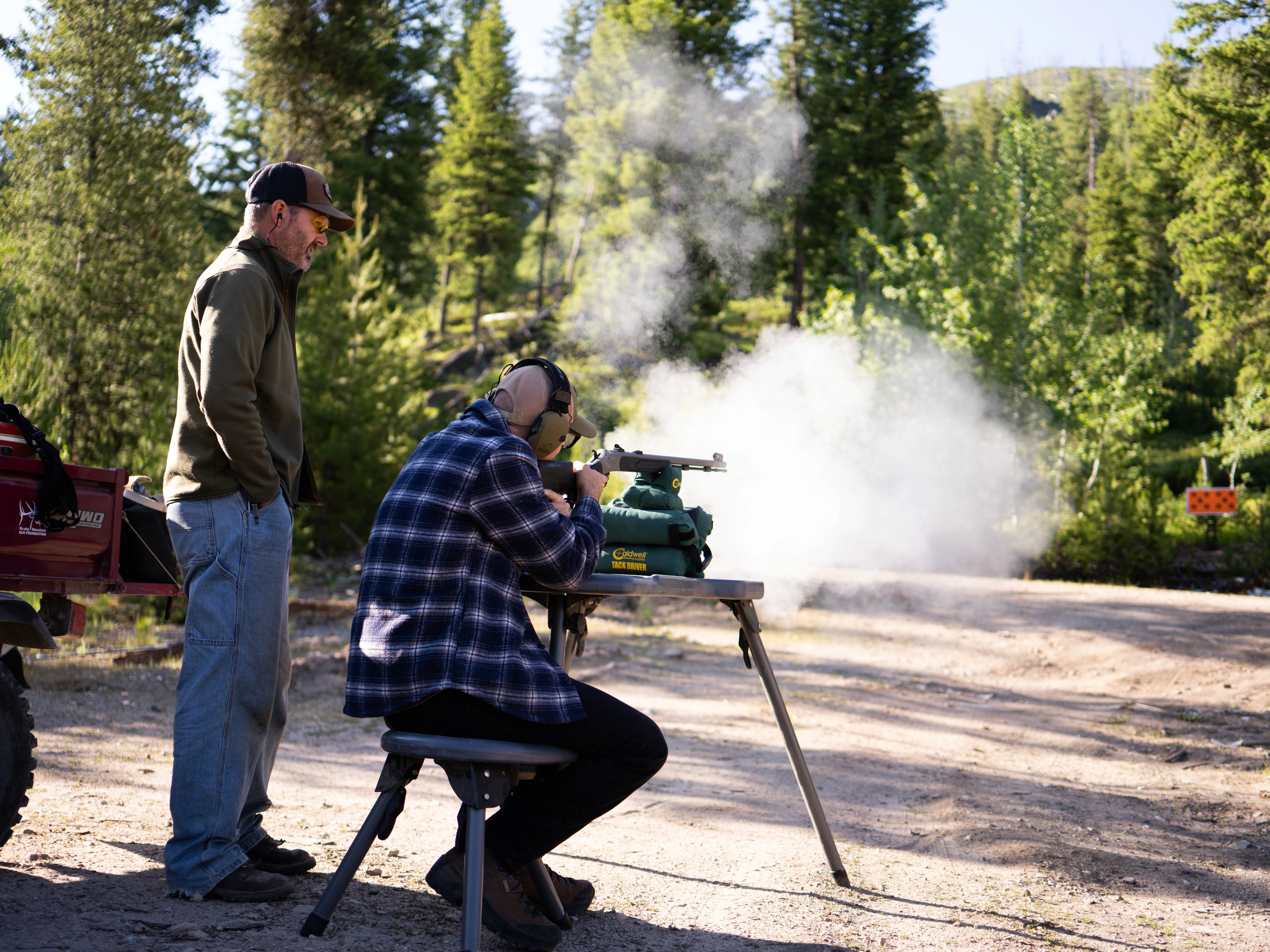 Success!
Satisfied with our first shot, we went about following the same steps as before to reload our rifle before attempting one more shot. Of note, on our second reloading, the bullet seating was much more difficult given the carbon and grime build up on the barrel after just one single shot!
Though we were pretty much on target for the second shot as well, my high and right tendency shows that I was anticipating the recoil and explosion, which I will need to work out as I spend more time behind the muzzleloader trigger. See below:
Keepin’ Things CleanOnce we were done, we went through the whole cleaning process, which involved many T/C wet patches, lube, and dry patches… and when I say we went through a lot of cleaning patches, I mean it. It took at least 15 swabs before we started to get a marginally clean barrel. Once the barrel was clean-ish, we switched to the breech and nipple, which both required specialty tools to release. After wiping, cleaning, and studying each part, John pulled out some anti-seize lube to place on the threads to help prevent a future lock up which would make cleaning and maintenance nearly impossible.
Once lubed, our gun was ready to put away until our next use!
All-In CostFor those looking to get into Muzzleloader hunting to take advantage of a relatively inexpensive and challenging pursuit that opens up a lot of Western (and Eastern) hunting opportunity, I have broken down the costs of everything that was needed to get started. All in, you could get into muzzleloader hunting with reliable equipment for just north of $1000:
Vortek Strikerfire .50 cal MuzzleLoader
German Made 4-wing Musket Caps (500)
Maxi Hunter .50 Cal Bullets (275 gr.)
Also, if you haven’t already give @letmedielearning a follow on Instagram

June 30, 2023
The Fall Trapping Countdown Is On...
Every time that July rolls around I am eternally shocked that bear season is over and that fall hunting and trapping will be here in mere weeks. Usually I suppress those thoughts and focus on wood chopping instead of getting as prepared as possible for fall success… But, not this year.
This year I am out of a job and I am going to take full advantage of that by going all in on trapping this fall. As a part of that I will be setting up a wall tent to work from deep in the back country where my lines usually end. In order to prep, I made time to actually degrease some new traps and re-dye my old ones well before the season starts.
However, without a 55 gallon drum available (whoops, I guess I used too many for bear baiting) I had to get creative. Thankfully, I had a huge metal horse trough behind my place and figured I could use that to do all of my dirty work.
After commandering some cinder blocks from a neighbor, I got my daughter to help fetch wood and start a fire underneath the trough while we filled it with water. While we waited for the water to get to a low rolling boil (it took an hour or two), we pulled out all of our traps, snares, and anchors and laid them out in piles. Once the water was hot, we added some over-the-counter logwood trap dye and some pine and spruce boughs.
After stirring the concoction like a witches brew, in went each of the traps in different batches. About 1-hour per set was the ticket to get them each to a nice de-scented dark color. Given the number of traps, we kept the fire rolling and the traps soaking well into the evening. Once pulled and cooled we re-hung them and started to fantasize about fall and winter nights in our wall tent! Now on to waxing…
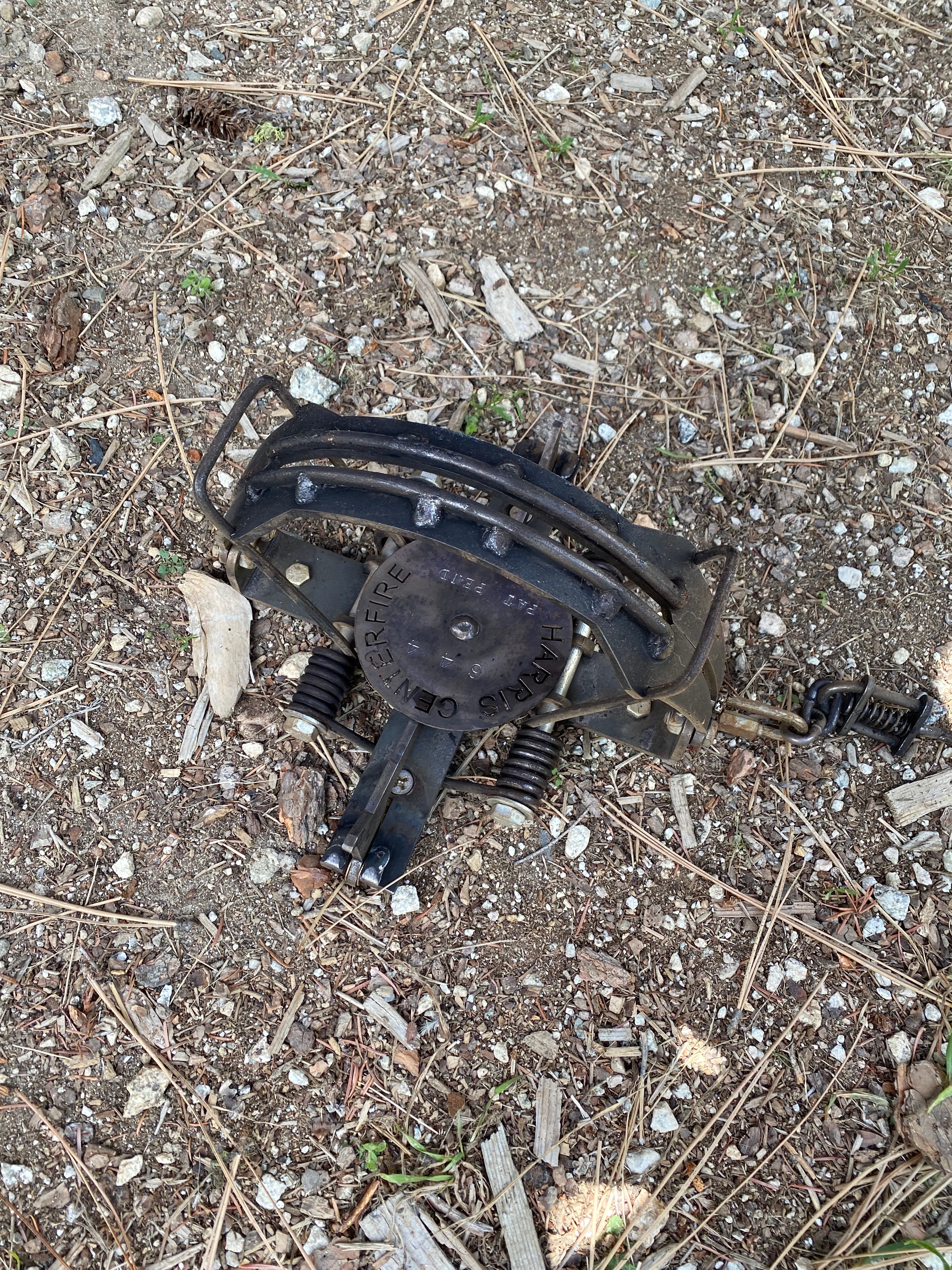 Wolf Trap Post Dye Treatment
June 17, 2023
Turning Feral w/ MTNTOUGH Fitness
So, the past few weeks have been… busy. Bear hunting (hard) and job searching (hard) have taken up most of my time, and it would seem as though I am coming up a wee bit short on both ends of that spectrum.
Despite the disappointment in not having gainful employment solidified (yet) or a bear on the ground (yet), I have had a blast getting to focus on two other passion areas… writing and fitness. As part of that investment I was fortunate enough to make it out to Bozeman a few weeks back to get absolutely mauled by the MTNTOUGH crew in a workout they dubbed “The Simulator,” before getting to sit down and chat about my book Turning Feral and my new company TheOutfitter.Guide. Take a listen below and make sure to plan on visiting Bozeman for Tough Fest 23’ in late June.
If you are interested in picking up the book itself, you can click here to buy Turning Feral for Father’s day: Turning Feral on Amazon
The Bone Scraper Free AudiobookNow, if my story or getting smoked in workouts to get ready for the fall mountains isn’t your jam, there is something else that I was able to cook up with my historical fiction publisher… a free listen on the first book in my 3-part historical western series “The Bone Scraper.”
This book is Louis L’amore meet Quentin Tarantino and was a blast to write. It focused on real Idaho history in my hometown of Atlanta in the 1860’s. You can take a FREE listen to all three parts below:
Take a listen and let me know what you think!
Thanks for reading Let Me Die Learning! Subscribe for free to receive new posts and support my work.
June 6, 2023
Spring Bear 2023
So, I have not been updating this substack very often the past few months. The typical excuses come to mind of losing my job, having young kids, being slow out of the gates on TheOutfitter.Guide, feeling uninspired blah, blah, blah… but it’s all bullshit. I just haven’t felt like writing.
Until now! Moving forward on a more frequent cadence I plan to use the LetMeDieLearning substack to cover as much as I can about offgrid living, hunting & trapping, and diving into the trade work industry in more depth. But for today’s blog, it’s all about bear.
Thanks for reading Let Me Die Learning! Subscribe for free to receive new posts and support my work.
For the past three weeks I have been going hard on spring bear hunting with extremely varying levels of success. This year I decided to sit and bait two spots, one of which I had seen many bear on last year and is within (a steep) walk from my cabin, the other is a higher altitude rifle spot near some old mining equipment.
In preparation for the season (which started at the end of April) I had left two beaver carcasses in 5-gallon buckets from trapping season out to rot… a trick that I was assured by numerous “experts” would be the ultimate bait to bring in big spring boars. And one that brought a lot of flies to our yard. Yay!
But as early May rolled around, my somewhat rotted beaver meat was still… frozen. Yes, the beginning of May here in central Idaho was cold and snowy. A far cry from the dry and green early May we had seen the year prior, which meant that bears were simply not moving at our elevation. For weeks after baiting the first barrel with dog food and expired sweet treats there was nothing, until about late-April when something finally showed up:
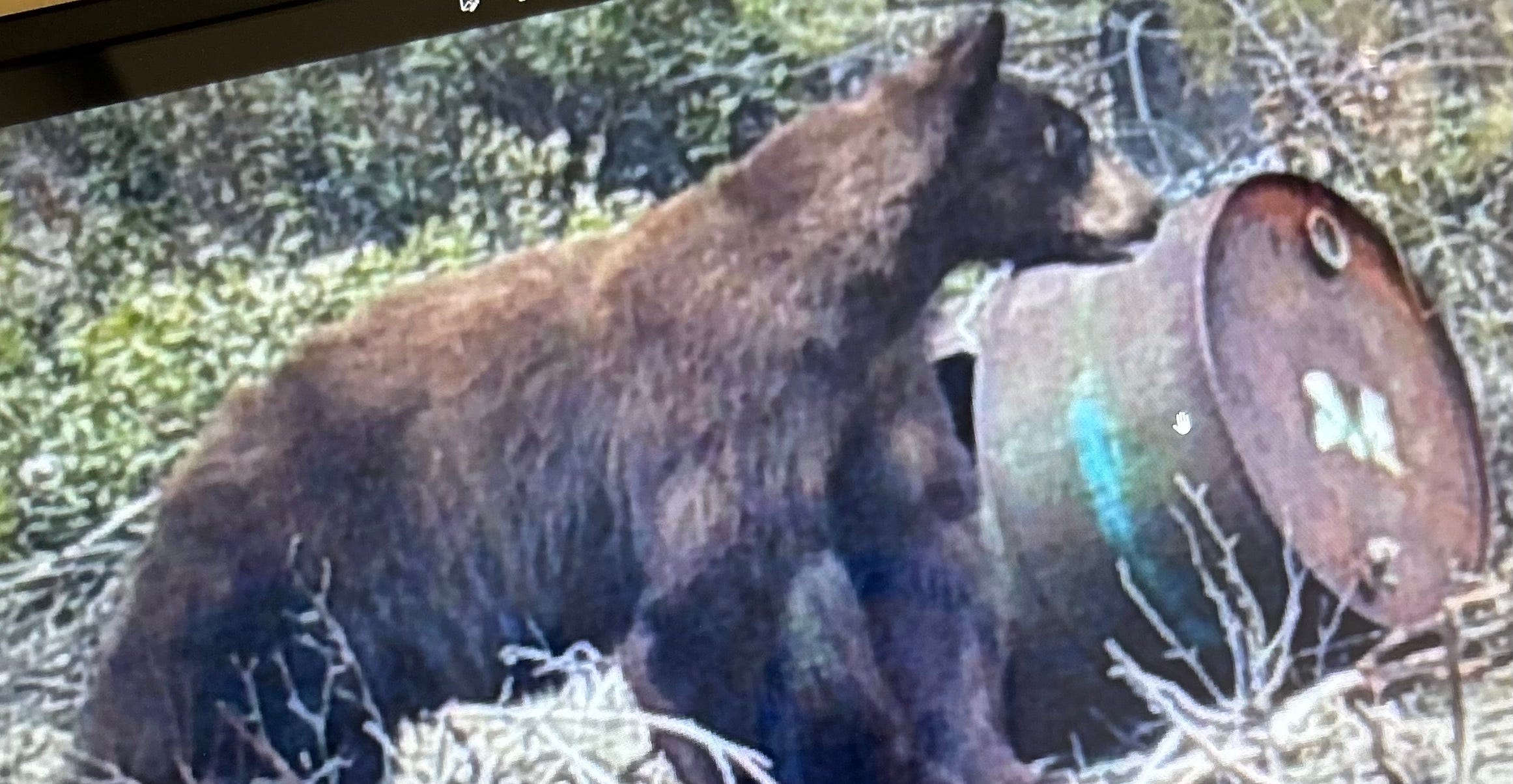 First bear on camera for the season!
With the help of a good friend, we kept the barrel baited and started to get in a few different bears over the next week.
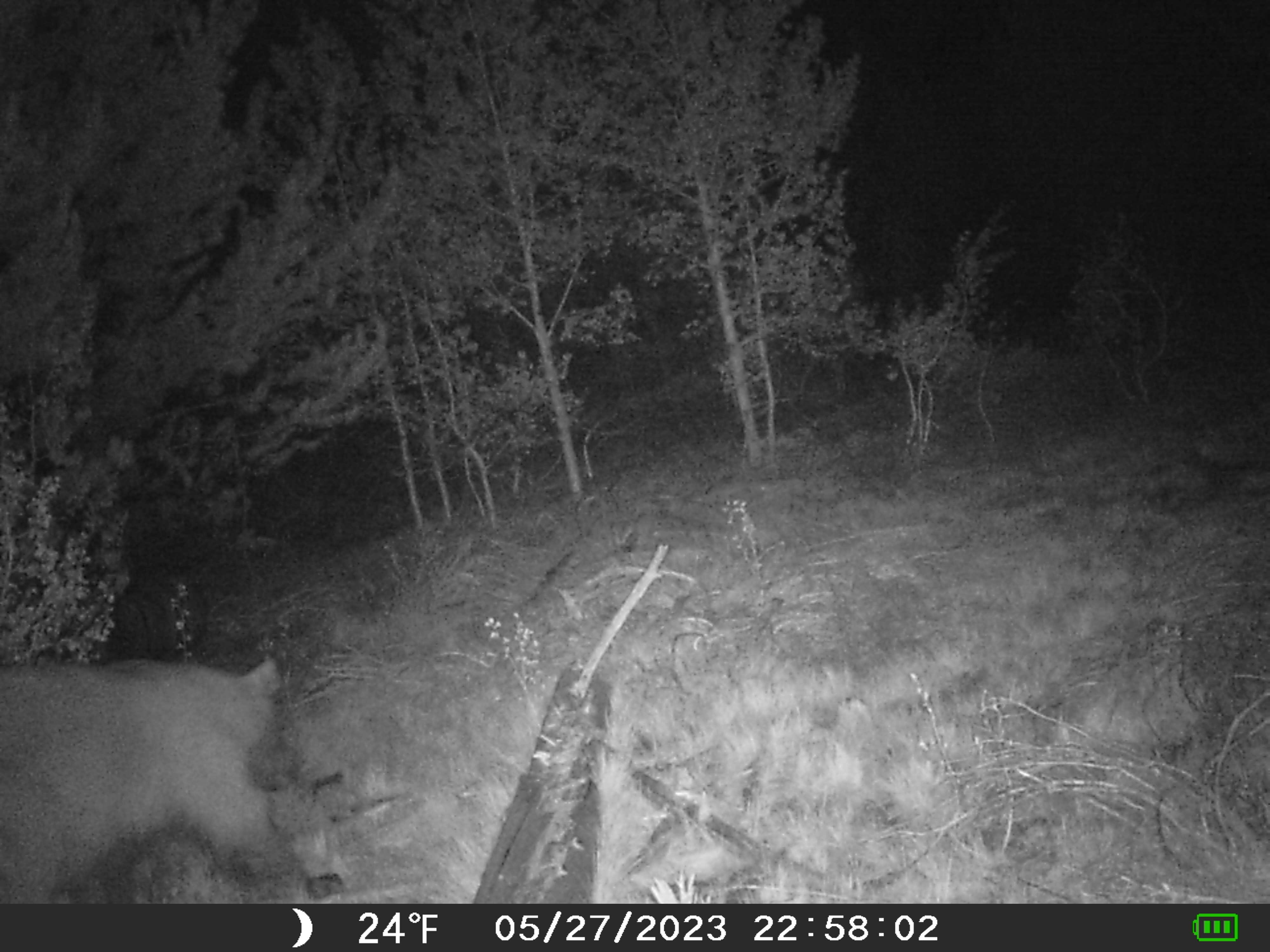 A bear looking for night time treats.
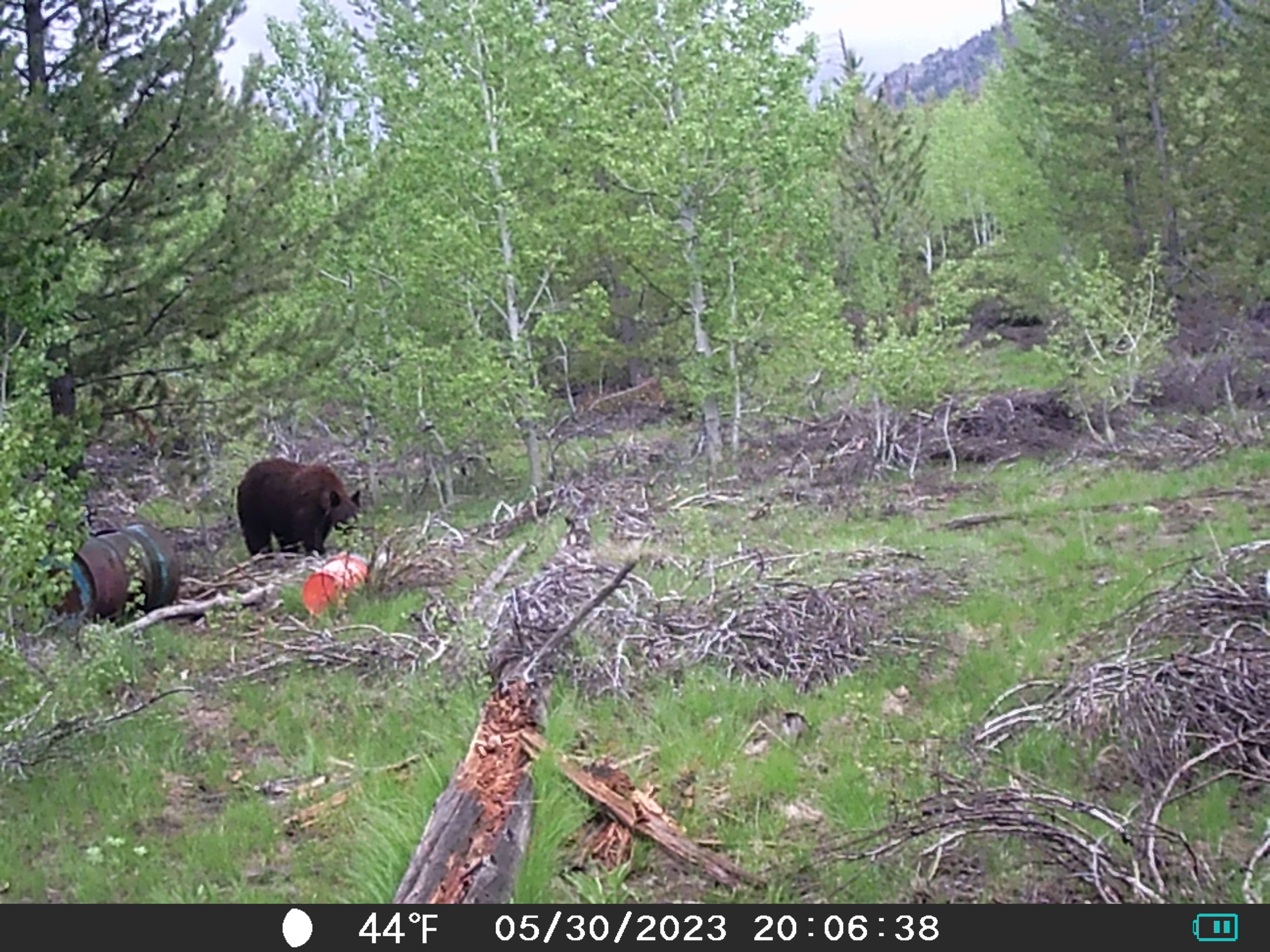 A nice sized chocolate bear coming in.
Knowing there was activity at our main barrel site, we decided to also branch out and set up a second barrel at a higher elevation. After scouring some old bait sites we settled on an area that had a great outcropping which would give an awesome 165 yard rifle shot and went to work hauling the barrel, bait, and rotten beaver into the area. With both barrels set and bears moving, the next thing was to actually go and sit them.
The SitWith my focusing on archery hunting, I chose to sit the barrel that was directly behind my house. It was in a flat spot surrounded on three sides by hills which would offer natural blinds and allow me to sit within 35 yards of the barrel and see any bear that may be coming in. However, what I hadn’t accounted for on the first 4:30 am dark-walk into the spot was the wind…
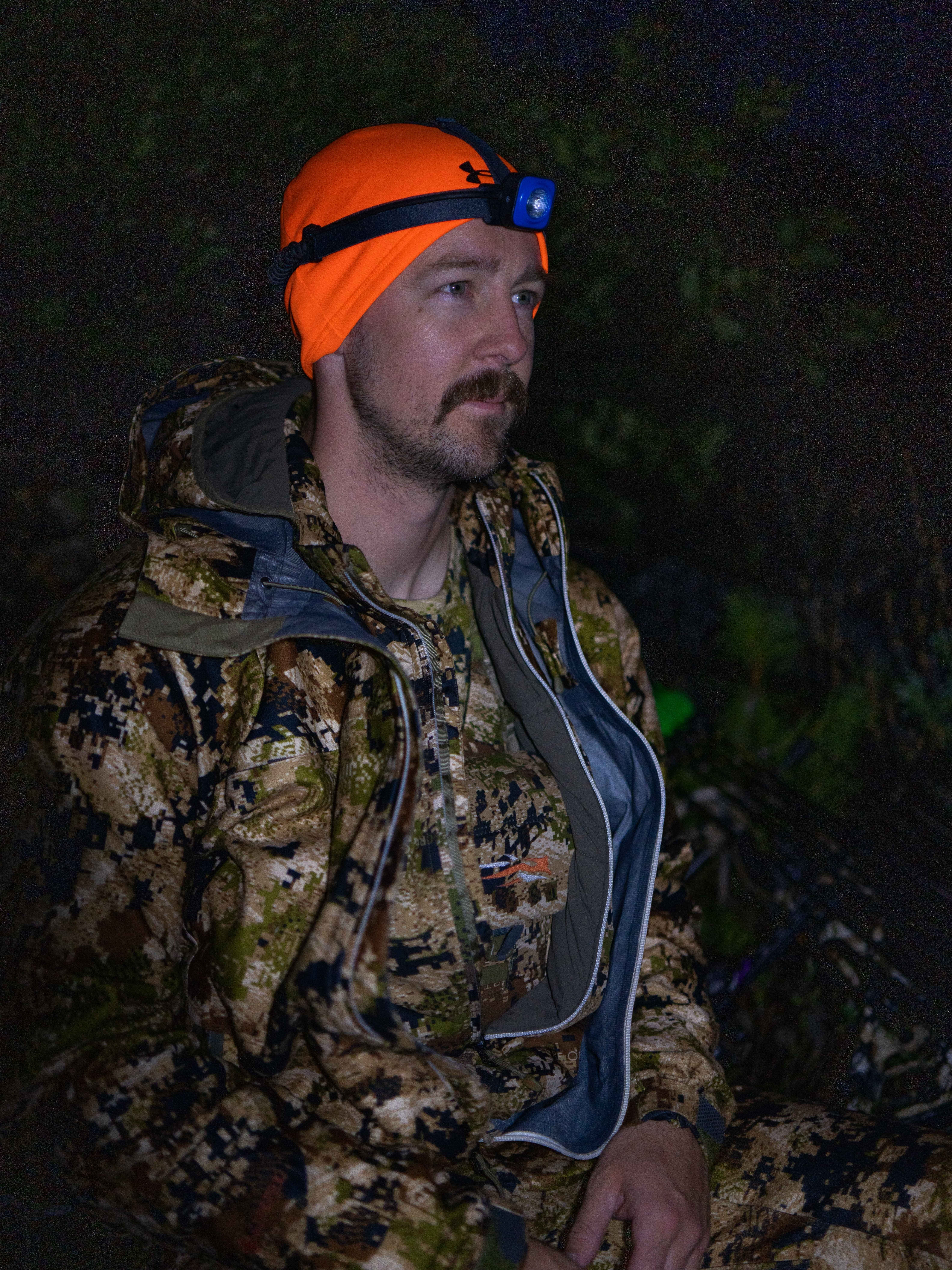 Early morning hikes into bear country.
As myself and a buddy sat about 45 yards away from the barrel in the dark, waiting on a mountain monster to lumber through, we quickly realized that the morning thermals were carrying our scent directly into the barrel no matter where we sat. As it swirled and drifted, so did our dreams of seeing a bear that morning.
As we walked out and back to the house we discussed what one of our other, more hunting knowledgable friends had said to us… which is that, “it’s going to be a barrel we need to sit in the evening.” With that fact confirmed, we heading back home and decided we would sit the high elevation barrel and give the spot we just blew time to “cool off”.
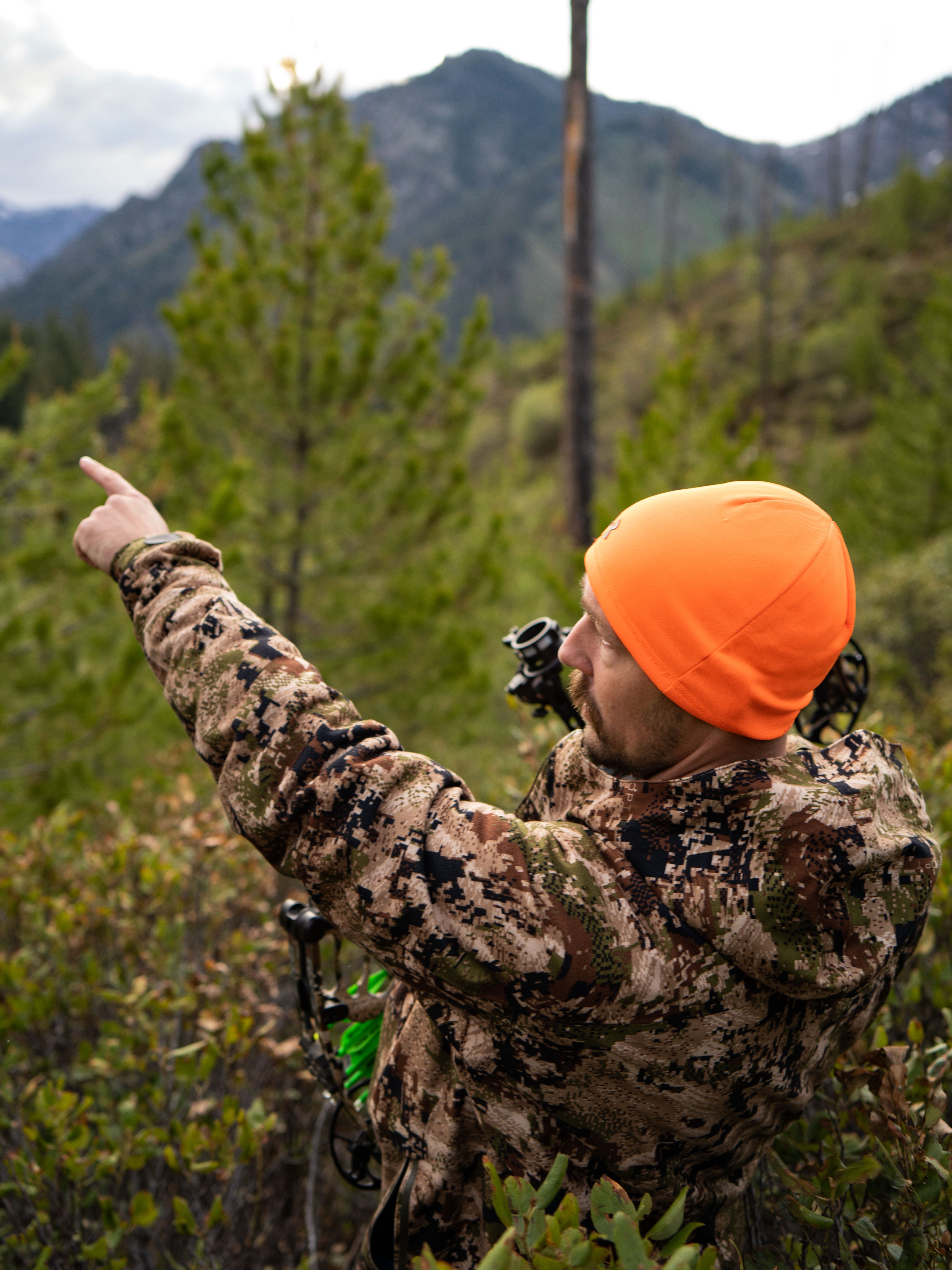 Aggressively pointing out a rock outcropping that could hold bear.
After hanging up my bow for that day, I joined my other friend to re-bait our second high-elevation barrel and to sit it until sunset. It seemed there had been no disturbance whatsoever and save for a few circling crows, we watched the sunset on dry un-touched barrels.
With a full day of nothing in the books I went back to evaluate what I may need to do on my “archery” barrel to have some more success. I landed on two things:
I needed to set up a ground blind close to the barrel as our natural cover was scant, and;
I needed to sit it in the evening when the wind would be carrying our scent uphill and away from the barrel
With a plan hatched I made my way back up the hill for the next few days to sit our blind every evening.
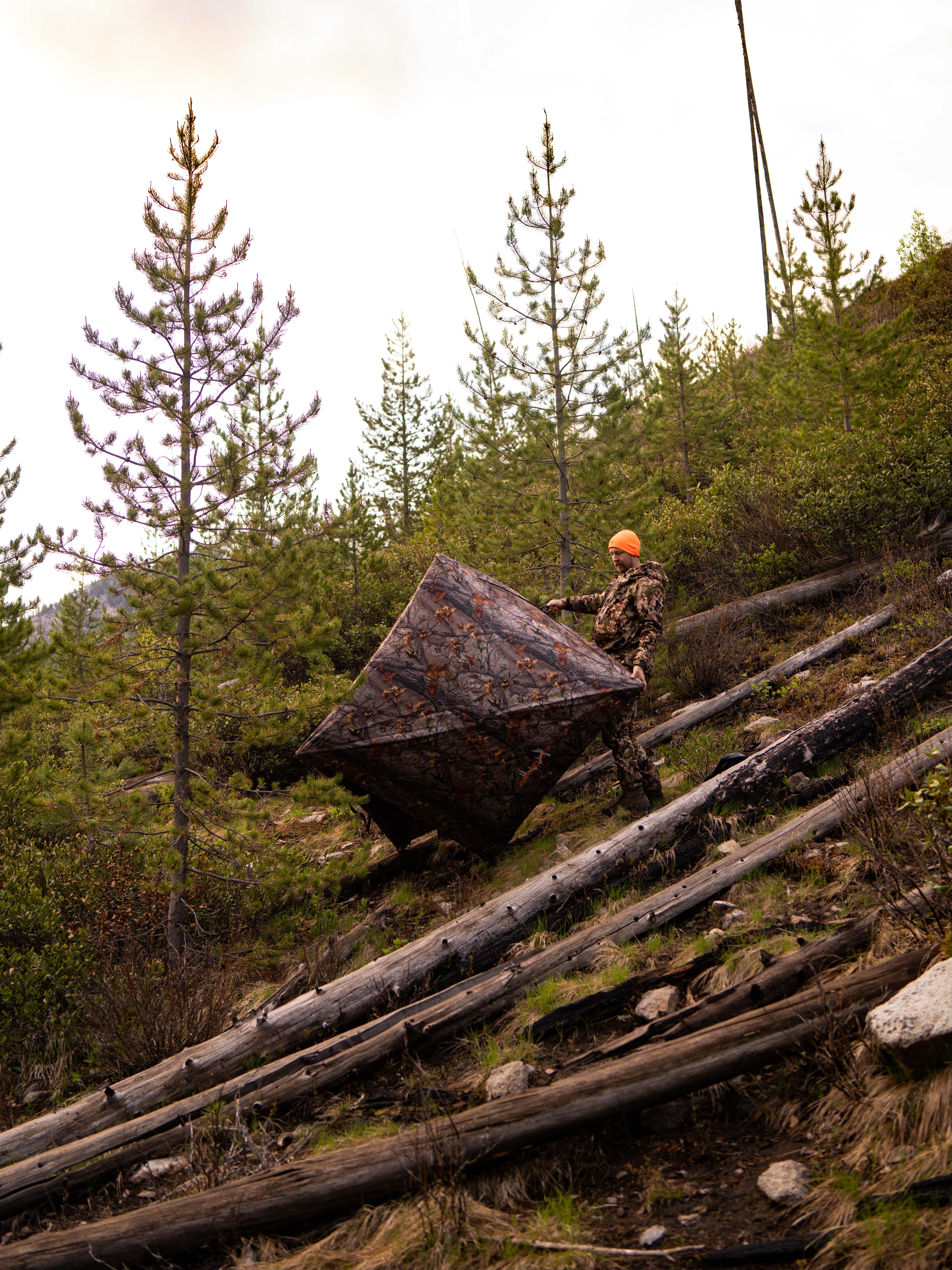 Setting a ground blind
With some redneck engineering and a lot of shoveling, we made a somewhat level space to sit the ground blind and set up shop. Our plan was to sit from about 5 pm until last light at 9:45 pm. Settling in, we began the pursuit of boredom with only intermittent breaks as golden mantels, squirrels, and one curious pine marten came in to check out the feast in the barrel.
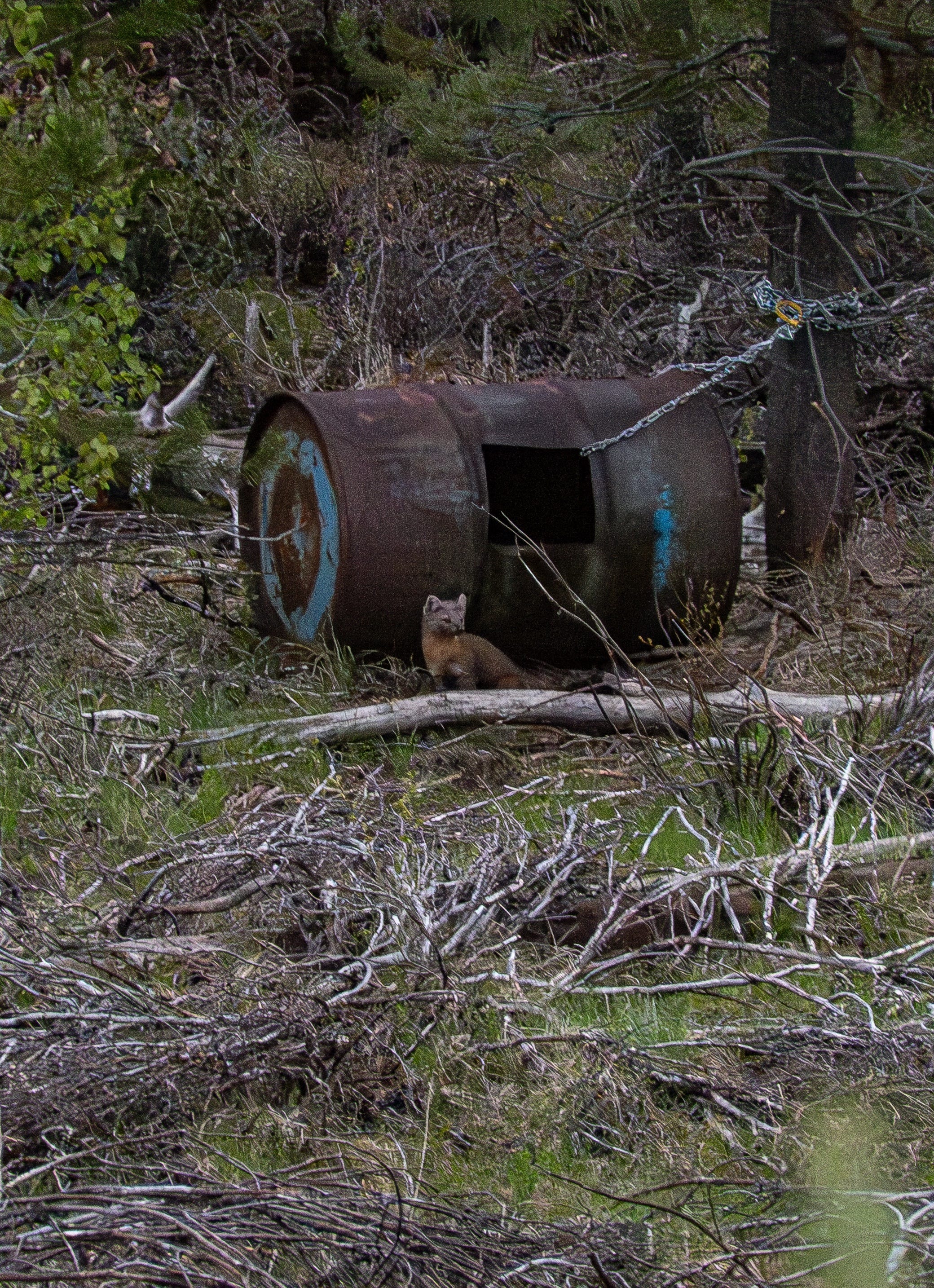 Curious Pine MartenThe Miss
As the clock pushed forward as it always does, I was sitting in the dirt when my friend nudged me and began speaking in a hushed tone. Through gritted teeth and with no movement in his neck or face, he whispered, “Zach, grab your bow. There is a bear. A good bear. 40 yards away.”
It was 7:30 pm.
Not believing him, I poked my head up to see that in fact there was a beautiful red-colored bear staring directly at us from a fallen tree 40 yards away. Slowly I nocked an arrow on my string and we both sat in silence. For 10 minutes this stare-off ensued while the two of us sat stone still. Yet, despite our discipline, the bear huffed at us and ran back up the tree and out of ear shot.
Disappointed, we talked about how cool it was to see him and discussed if the wind was still screwing us and whether it was our movement or scent that gave us away. With no answer we sat for another hour before we heard rustling less than 5 yards off to our right. With no clear view out of the side of our blind, we both grabbed our side arms (a 10mm for him and a .44 magnum for me) and assumed that maybe the bear had worked around us to get our scent. But just as the adrenaline was spiked for both of us, we saw two mule deer doe pop out right in front of our blind, oblivious that we were there.
Studying these two animals we both felt that our bear hunt was over for the day as I had always heard an old adage that “if you see deer milling about, there is likely no bear around.” Quickly, however, they trotted off and we resettled in to stick it out until dark. As our butts once again got comfy and less than 5 minutes after those deer left, I once again got an elbow in my side and another hushed whisper, “He’s back!”
It was 8:30 pm.
Sure enough, our bear was walking straight back down the fallen tree, but this time with more confidence to get into the prize sitting in the barrel.
This time we decided to be patient and wait. The goal would be for this bear to get his head into the barrel before I drew my bow so that he didn’t see us move so close to him. It took time as he cautiously moved in and all around us. At one point, I had a broadside shot, but no way to draw my bow as he was looking directly at our blind. Thinking I had missed my one opportunity we waited as he trotted off up the trail. We once again looked at each other with excitement thinking about the cool experience with a sense of gratitude. As the sun began to set and we were getting ready to pack it up for the day, the bear decided to come in once more and actually get into the barrel!
This was it. It was 9:30 pm
With the bear mounted on the barrel facing us, and with sunlight fading, I drew my bow. Yet, as I settled my pin on the bears vitals, his head popped up and he made direct eye contact with us. In a flash he had turned and jumped off right as I let an arrow fly. A clean miss followed by the sound of breaking branches and crushing buck brush as he ran off into the woods.
The above is the footage as the bear walked back to the barrel for the last time right before I took my missed shot… we were sitting in a blind 15 yards to the right of the frame.
All-in-all, you can’t be disappointed with such awesome encounters so close to bear. We have learned a lot this season and are still getting out almost everyday with the hopes of having another shot on boar before the season closes on June 15th!
Thanks for reading Let Me Die Learning! Subscribe for free to receive new posts and support my work.
April 26, 2023
TheOutfitter.Guide
TheOutfitter.Guide is made up of a group of guides and passionate hunters who share two things in common: A love for hunting and technology.
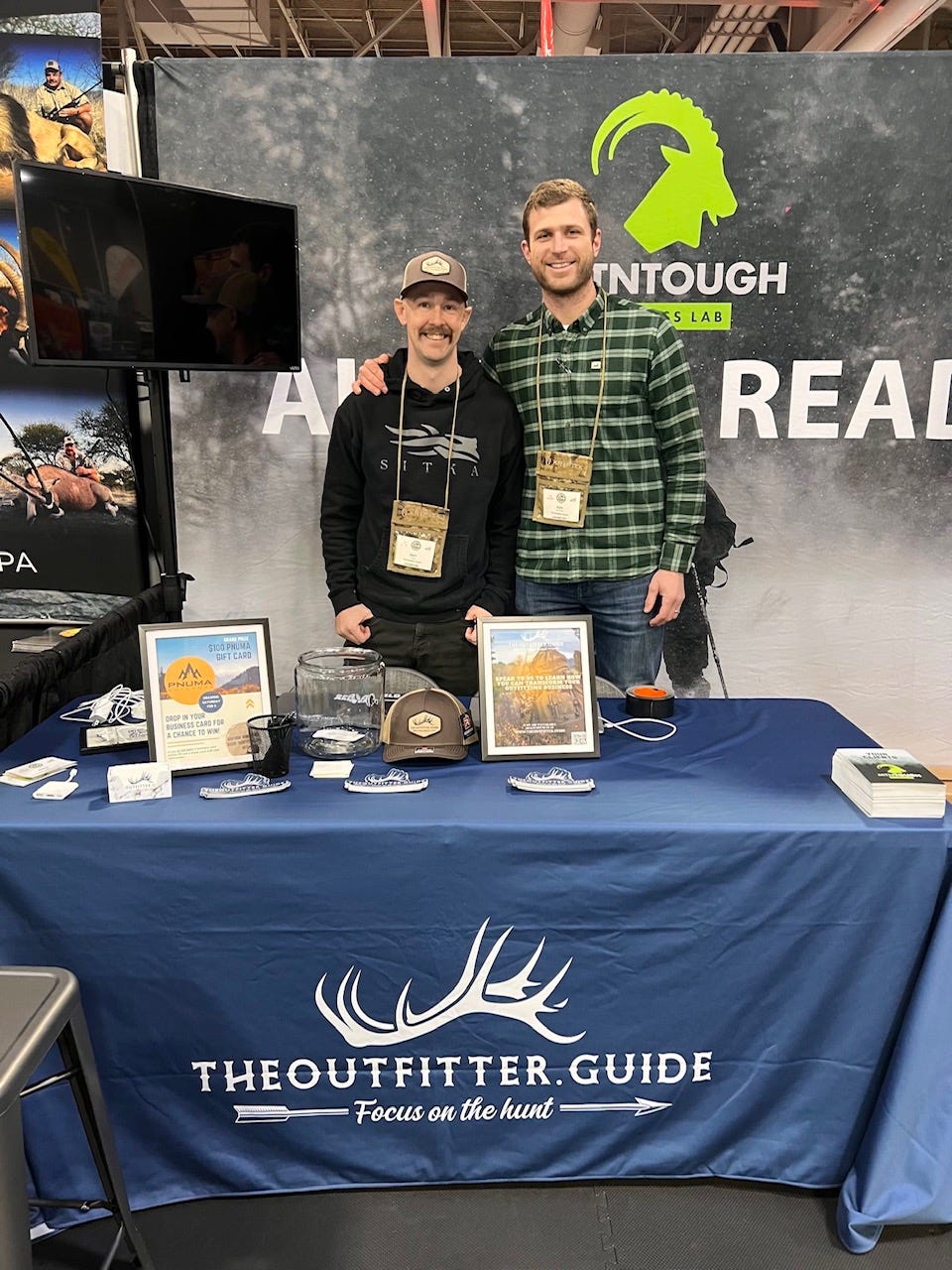 Two of the co-founders at Western Hunt Expo booth in SLC 23’What have we built?
We have built the industry’s first B2B2C platform for the ~$400M p/year western big game hunting industry. We are focused on the untouched niche of backend outfitter support and white-glove customer experience for the paying hunter.
What are we not?We are not a top-of-the-funnel search engine for outfitters. We do not seek to replace the commoditized side of the industry such bookyourhunt.com or outfitter.services.
What does it solve?To answer this question we need to look at it from both of our main persona’s view:
OUTFITTERS: We provide a single point of entry for all of your hunters and their data in a digital web-based platform. Upload your hunt info, contracts, and waivers once, then with a click of a button add new hunters and watch their progress through your custom dashboard.
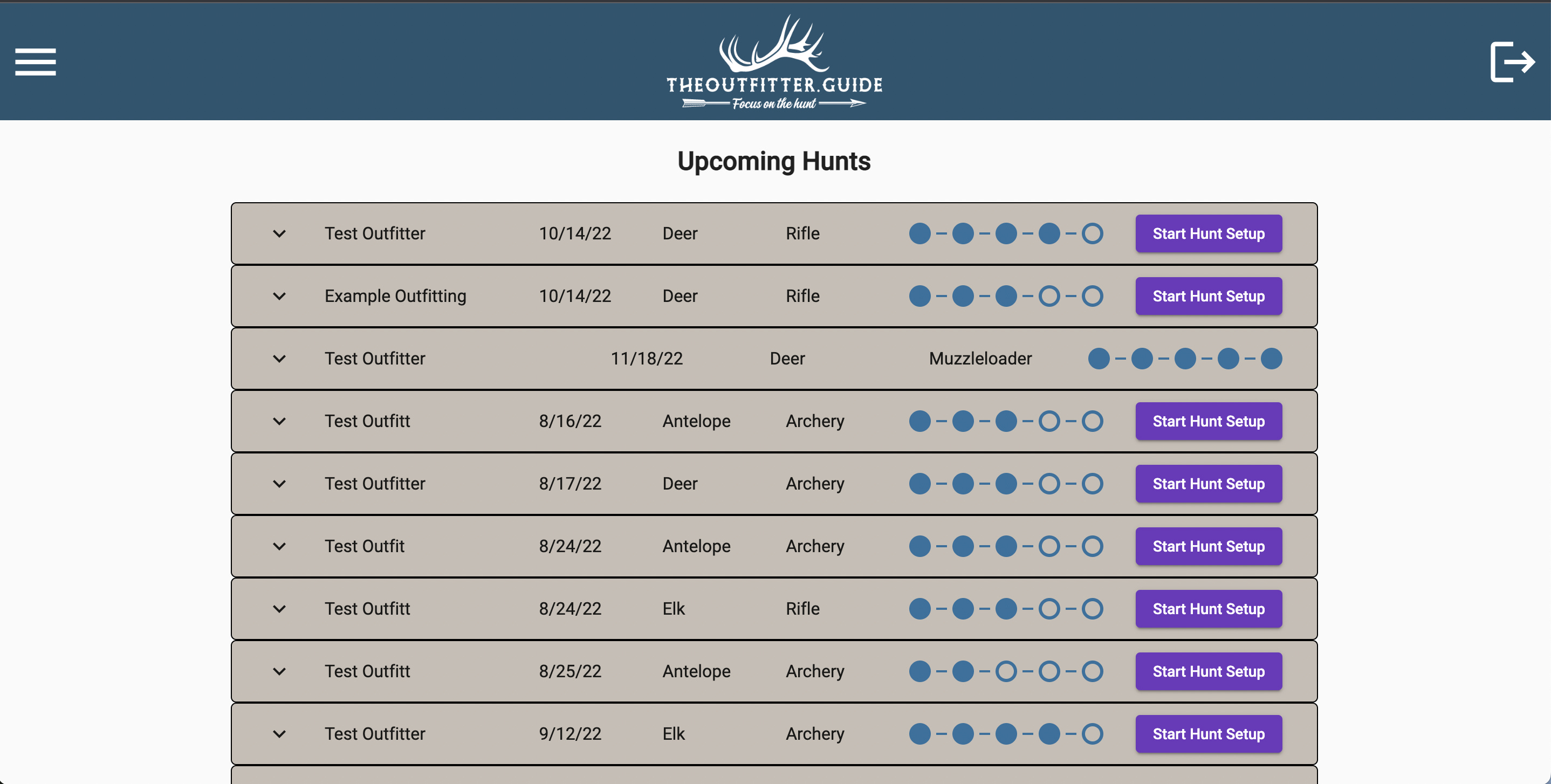
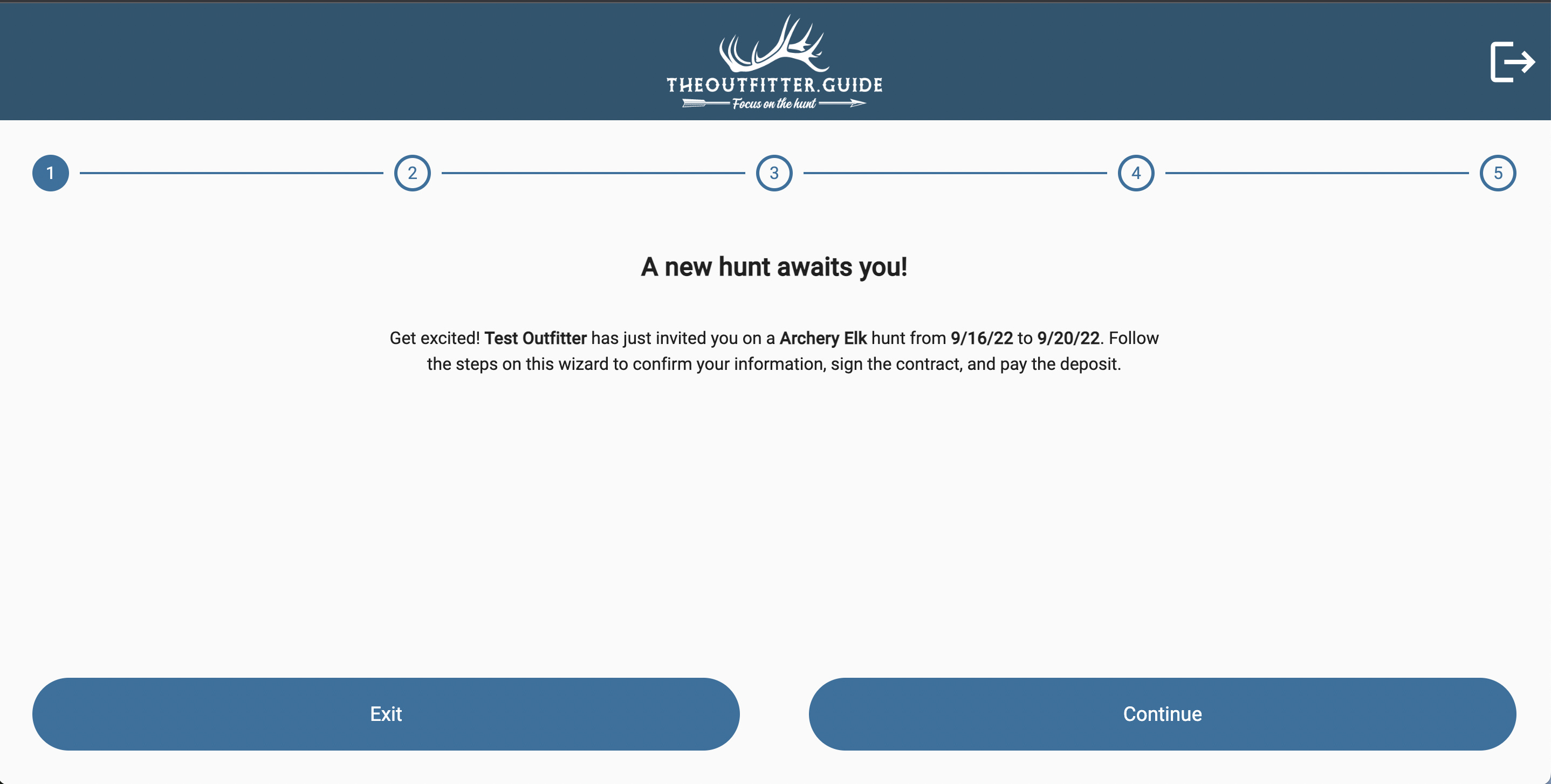
HUNTERS: If you choose to hunt with an outfitter who uses TheOutfitter.Guide, you will be treated to an easy five-step digital onboarding experience as well as custom communication from TheOutfitter.Guide team leading up to your hunt. With our affiliate partner program, you will receive custom hunt-prep info along with thousands of dollars in discount codes to some of the top brands in the industry to ensure that you are doing the most important thing: Focusing on the Hunt.
 Awesome! How do I use it and how much will it cost?
We are currently in a limited beta, however, our GA release is imminent:
Outfitters: If you are interested in the services we are providing, reach out to us at zach@theoutfitter.guide or kyle@theoutfitter.guide and we can work to get you into our beta. Once released, there will be a single one-time $150 setup fee which will include a custom on-boarding experience to get you up and running. For every hunter you onboard there will be a flat $40 fee which can be rolled into the cost of the hunt, or you can opt to pay that out of pocket.
Hunters: If you choose an outfitter using our services, the cost of the platform is free. Once signed up though, you will receive customized pre-hunt prep communication and thousands of dollars in discounts to the industries top brands.
Subscribe for free to receive updates on our upcoming launch.
November 29, 2022
Trapline Partners
After a bit of a harrowing journey back up to our cabin this past Saturday morning, which included a blown sidewall on my wife's rig, we got settled in for a few glorious weeks up in the mountains.
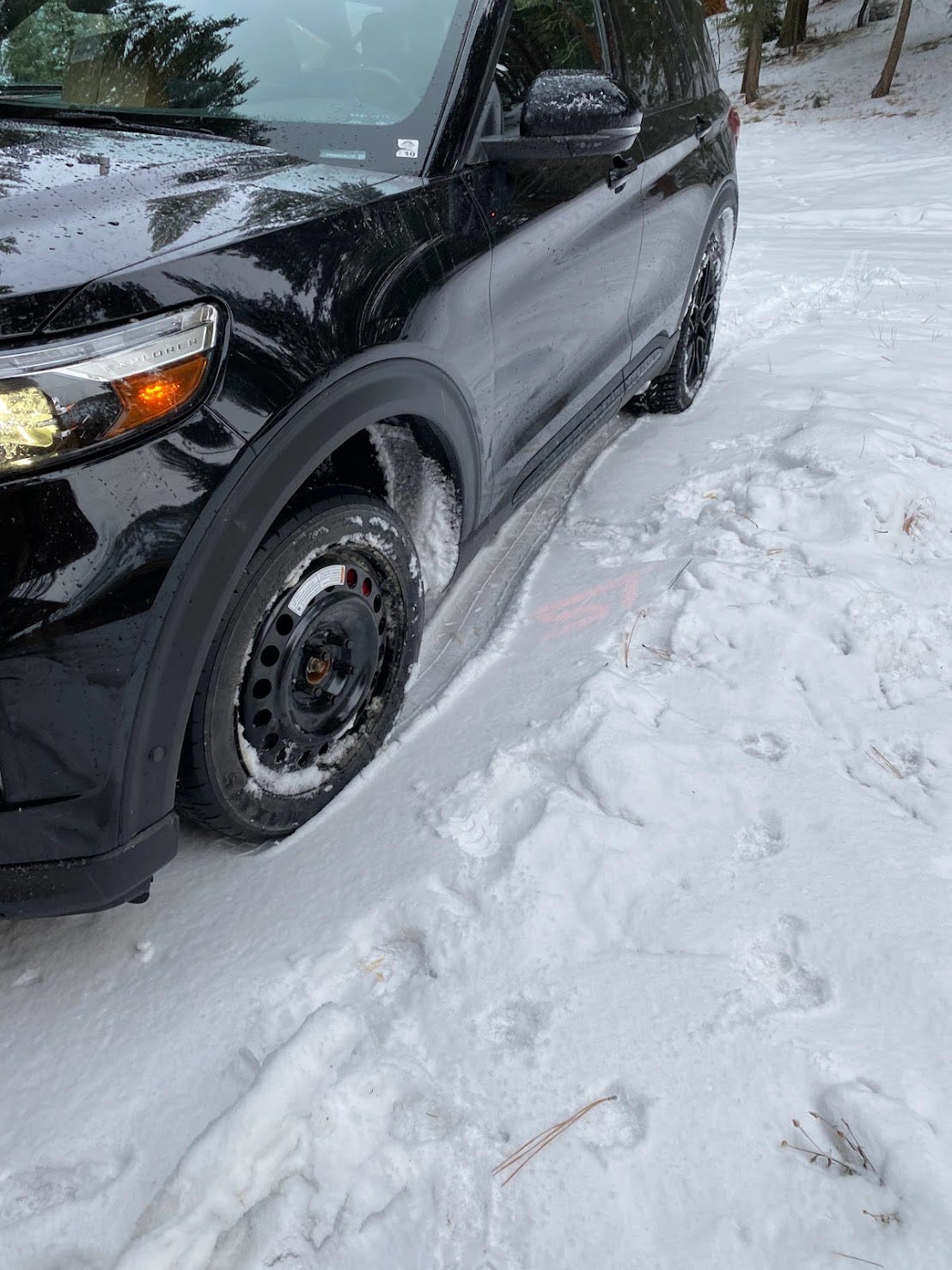 Womp Womp… No one likes riding a donut off road… missing the full size spare.
With my parents coming in a week, we had a lot that we wanted to get done. We needed to chop some more wood, I needed to fix our snowblower, juggle work and kids, and of course... trap.
For me, my target for the week was going to be beaver and otter. I know where a large bank den is just up river from our electric dam that I wanted to target, as well as a known otter-hangout at the base of our towns fish ladder. To confirm the need for this control, our town electric co-op owner called me up to let me know that a humongous beaver dam was reported from several miles up stream in the sawtooth wilderness that was/is allegedly 6 ft' tall and causing a significant slow down in water flow. Something that unaddressed would cause issues in our ability to maintain enough water flow to keep the literal lights on until spring runoff next year. Though, I am excited to snowshoe in with tons of traps in the coming weeks, my first order of business were the problem children close to home.
So, after a full day of work I loaded up my truck with a few footholds on drowning wires and conibears and set out to get things placed. However, once I got out to the bank den, I noticed a problem... all of the waterways I had planned to trap were iced over. That is not inherently a bad thing and once I cleared the snow I could see air bubbles under the ice confirming that beaver or otter were actively using the channels. Yay.
So, crawling hands and knees on ice I got out my ax and started punching through the four inch layer. I knew I made it through when a big splash of ice-cold water shot into my face and removed any drowsiness that still lurked in my body. The only problem that I didn't take into account was that this channel was too shallow for my conibears. If I had placed one and left it, the jaws would have become frozen shut and my efforts would have been for naught.
Therefore, I had to abandon that awesome idea and continue to investigate the surrounding. I found several slides which would have been prime for footholds and drowning wires, but I had limited time left to set before I needed to go tag in with the kids. So, I ended up doing something I have never tried, and put out a conibear on the bare ground about 8 feet back from the water line where it was clear a beaver was coming to get food. I set it in the snow and anchored it was a piece of rebar and called it good. A little castor oil to attract the beavers pasted on the tree above the trap and I went home to help with the kids.

The next day after a heavy snowfall I took my best little trapline helper, Ellis, to go check on what I had set the day before. Dragging her in her blue sled we came upon a coyote kill with blood everywhere and only the pelt left of a small yearling deer. Seeing this within 100 yards of where my land set had been placed I was nervous that if I had caught a beaver it would eaten up by the same pack of coyotes.
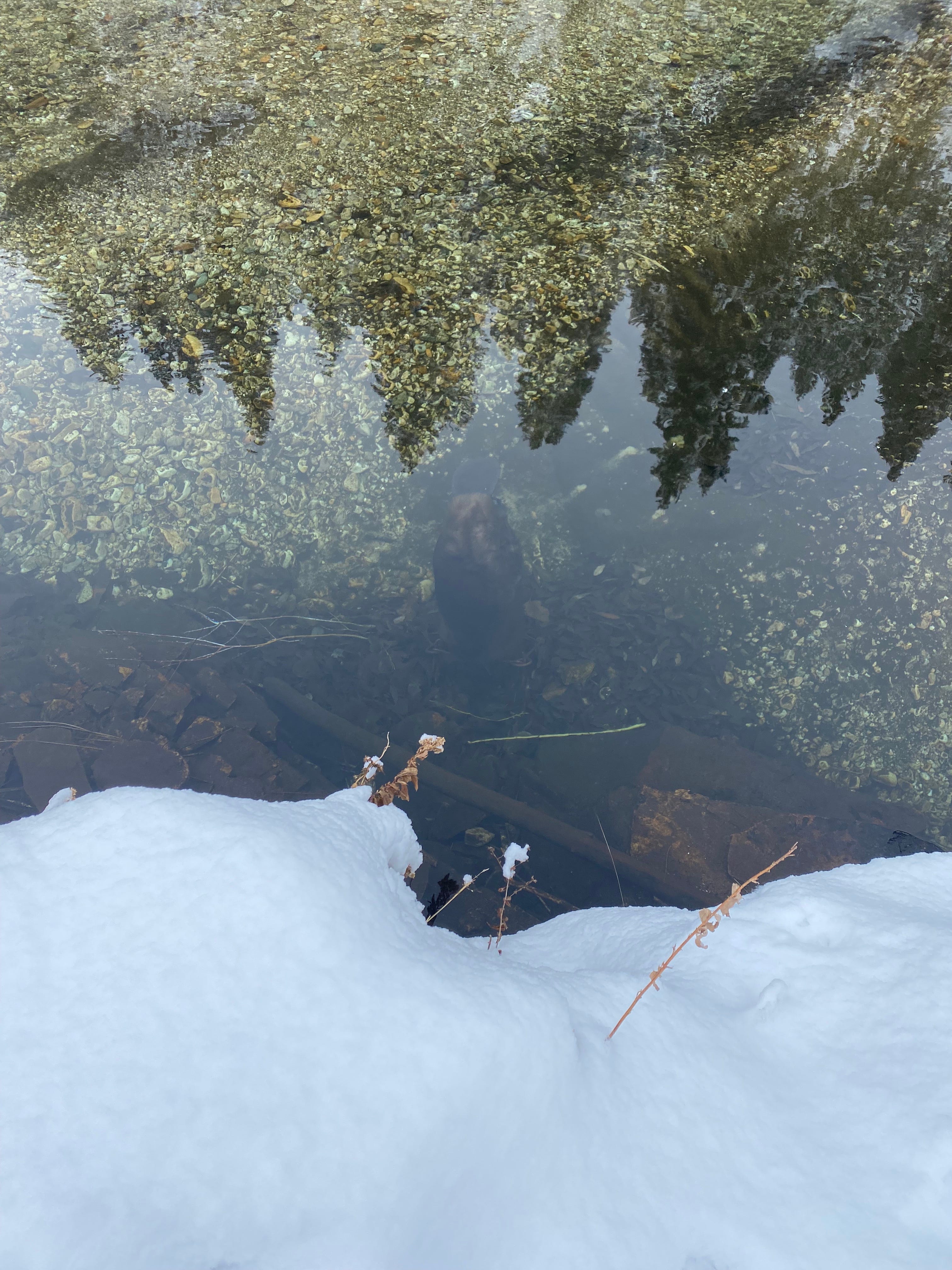 Beaver caught in a 330!
As we crossed the small bridge and I could see the slide, my heart sank as I noticed the trap was gone. All around it there was no evidence of a struggle or paw prints indicating something had been drug off. First, I cursed my trap stake for not holding it in place and second my mind went to figuring out how I would find what had toted off my trap. Yet, before that, I decided to investigate the slide into the water to see if I saw any evidence of something coming out of the water... then, to my relief, I saw in a six foot pool of water a beautiful 40+ pound beaver in the deep part of the water.
It must have come up the slide, gotten caught with a perfect head catch and had the power and instinct to turn around and get back in the water. Thankfully the dispatch was fast and the weight of the trap held him in place. With that relief I thought about how I would fish him out. I had left my waders at the house thinking I would not need them, but as always nature taught me a lesson in always coming prepared. I ended up leaving the beaver and taking Ellis home (after some more fun checks and sled riding) so I could get my catch pole and waders.
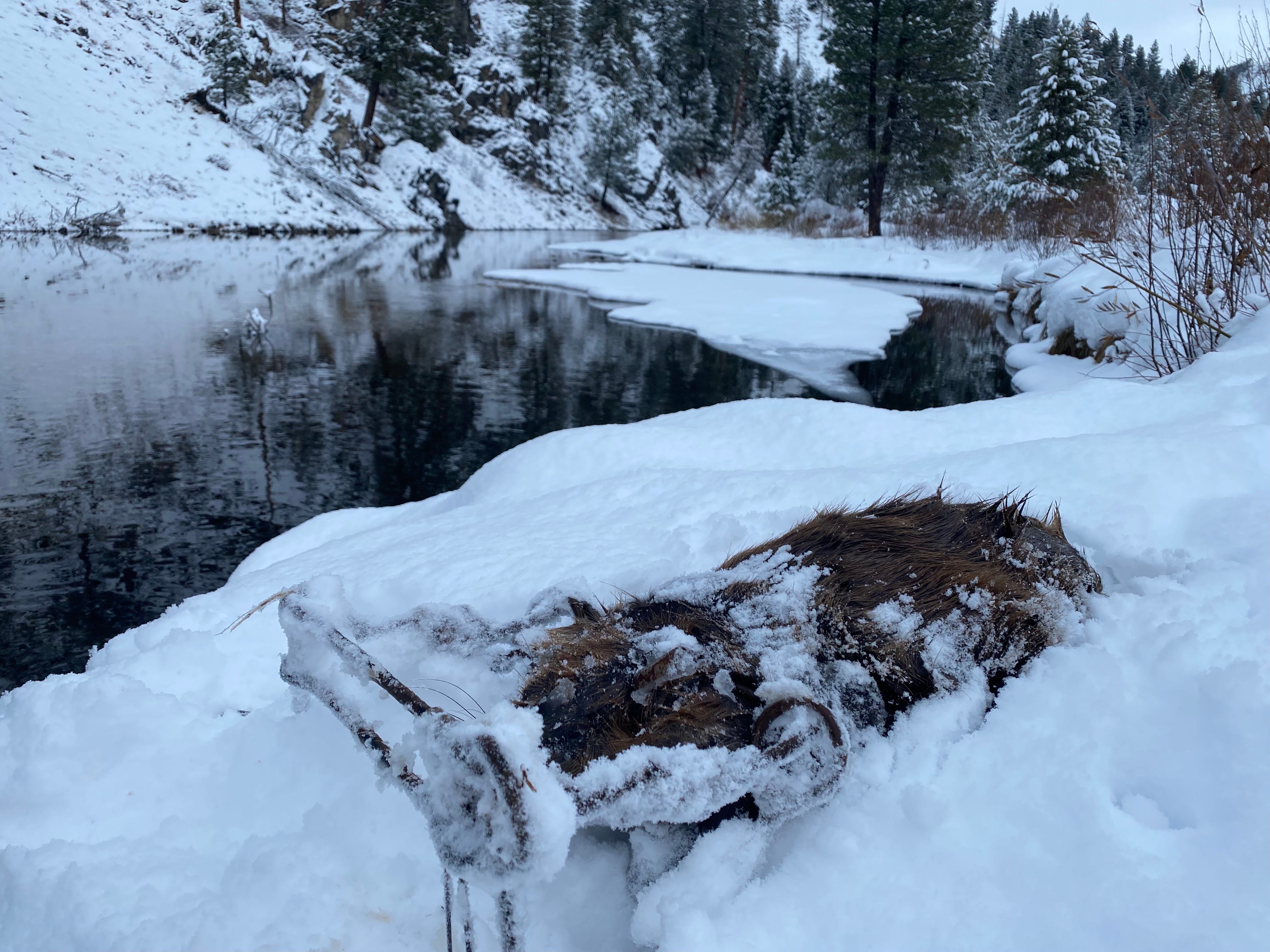
Shortly thereafter I returned, used my catch pole to snag the beaver by the tail, and pulled him ashore to free him from the trap. Another beautiful large beaver in the books and hopefully a few less sticks to be chewed and left to clog up our electric dam.
Stay tuned for the upriver exploits when I get ready for some real back country beaver catchin' in the coming weeks.
PS: My book is still available at a discount on Amazon... Check out Turning Feral and help support its continued growth!
Thanks for reading Let Me Die Learning! Subscribe for free to receive new posts and support my work.
November 16, 2022
Media Tour
So, without many expectations for the release of my new book ‘Turning Feral.’ It’s been fun to see what has organically cropped up in support of it. Most notably I have been invited to speak on several podcasts in the outdoor industry with more in the pipeline. I wanted to share those links here for those who are interested in learning a bit more about my background:
Thanks for reading Let Me Die Learning! Subscribe for free to receive new posts and support my work.
November 2, 2022
Otter-ly Fantastic
Today marks the official second day of the beaver trapping season here in the great state of Idaho. It also marks the first official cold snap of winter and it looks like we will have several feet of snow in bound to go along with our frigid temperatures over the next week.
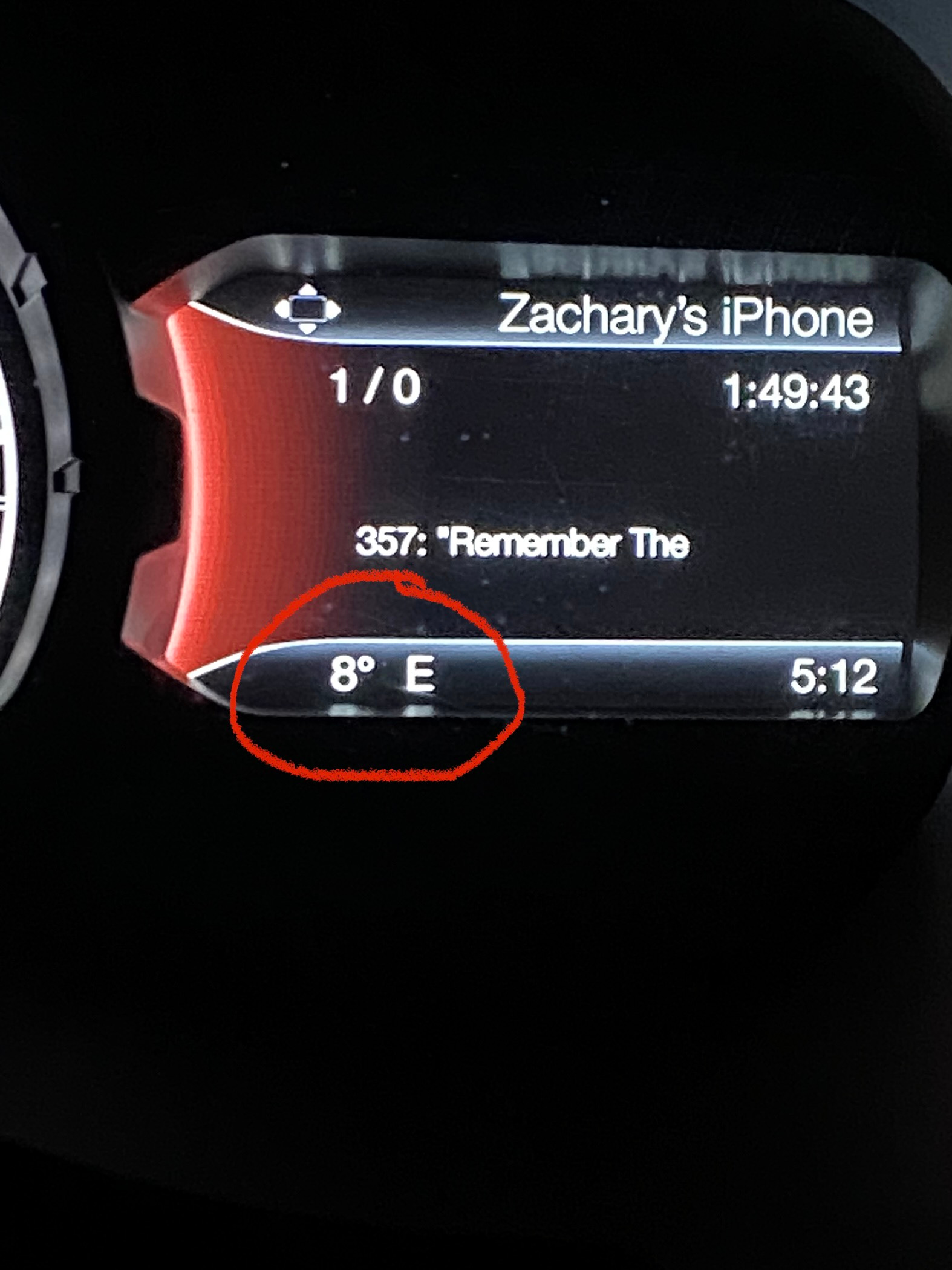 Cold morning to get in the water!
In fact, while I was out on Tuesday morning at 3:30 am setting some known beaver lodge’s my truck informed me that it was a mere 8* outside. Had I not seen and taken a picture of the temperature gauge, it would have still been very apparent when I stepped out of my truck. In fact, I could barely see through the brightness of my headlamp as my breathe was creating a dense cloud in front of my face.
Thanks for reading Let Me Die Learning! Subscribe for free to receive new posts and support my work.
Through that literal fog in the wee morning hours I had to strip down, take my boots off, and then put on my chest waders to get into the ice-covered waters. Behind my truck and already shivering I began to set two 330 conibears and one foothold trap attached to a drowning wire. The dam and lodge I was targeting was one that was jeopardizing our road with a washout, and we had twice (as the highway department) ripped it out only to have them rebuild it in short order. Net was, these beaver needed to go.
So with my cinderblock and pre-set foothold in hand, I made my way into the water. Against the glare of my light, I noticed movement in the water around me and was shocked to see that I was being circled by two extremely fast aquatic creatures. Assuming they were beaver, I was mesmerized out how fast they swam and how this normally shy creature was investigating me. Despite this heightening my nerves for fear of getting bitten by a beaver at 4 am in the middle of nowhere, it was definitely one of the coolest outdoor experiences I have ever had. With a quick splash of my hand on the ice, they disappeared into their den and I got to work setting my traps. Once set, I retreated to the warmth of my truck cab and made the drive home.
Then this morning, after first light, I set back out to see if we had any luck on the water line. Quickly my headlamp caught a shape near where I had set a conibear. I could see that a small juvenile beaver was humanely caught, which gave me motivation for the other two traps. As my headlamp panned around, though, I could see that my second conibear was untouched. When I then looked to where I had broken their dam and placed a foothold trap, the dam had been repaired and there was fresh beaver scat floating in the water. I assumed at that moment the beavers had successfully avoided my trap and built around it (not the first time this has happened to me)… but as I looked closer, I could see my foothold was gone and there was something at the bottom of my drowning wire… Maybe I did get one of them!
Getting into the water to investigate closer, I started to break up the ice with my hammer and pull on the long drowning wire to see what was on the other end. Eventually what was pulled out was not a beaver, but a beautiful black and grey river otter who looked like he had been filling himself quite well on the local trout. I then registered that what had been speedily circling me in the water just a day ago were otter and not beaver! This was amazing as otter were something I had been looking to target for some time, but my first catch was pure luck. Once home, I quickly called it into Idaho Fish and Game (You can only catch 3 per season and the regulations are tight around checking in the pelts within 72 hours) and began the skinning process of this coveted pelt. Being extremely cautious to not puncture the hide, I spent over four hours skinning, fleshing and boarding this beautiful (and fatty) creature.
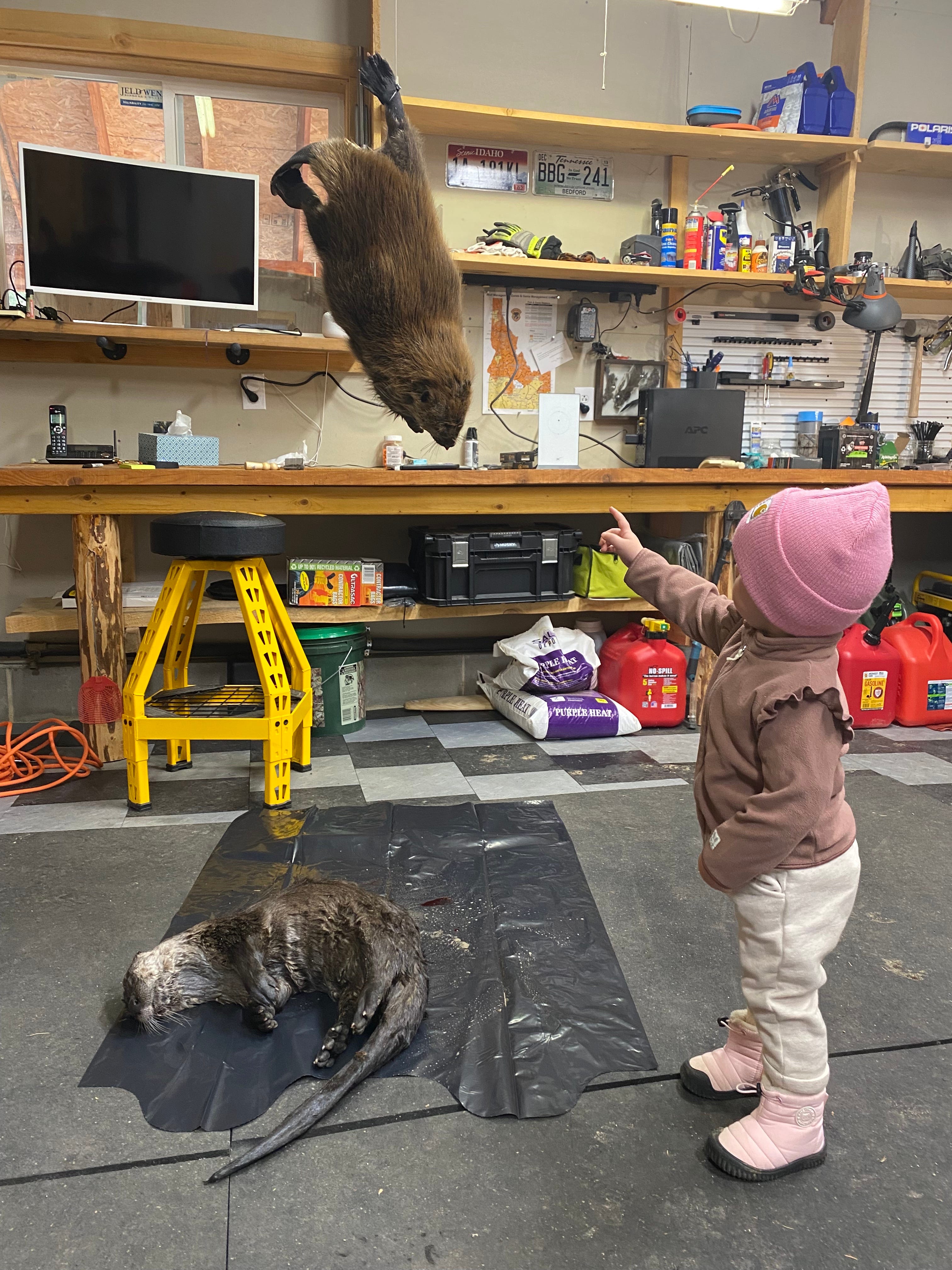 My daughter checking on the first day’s catch.
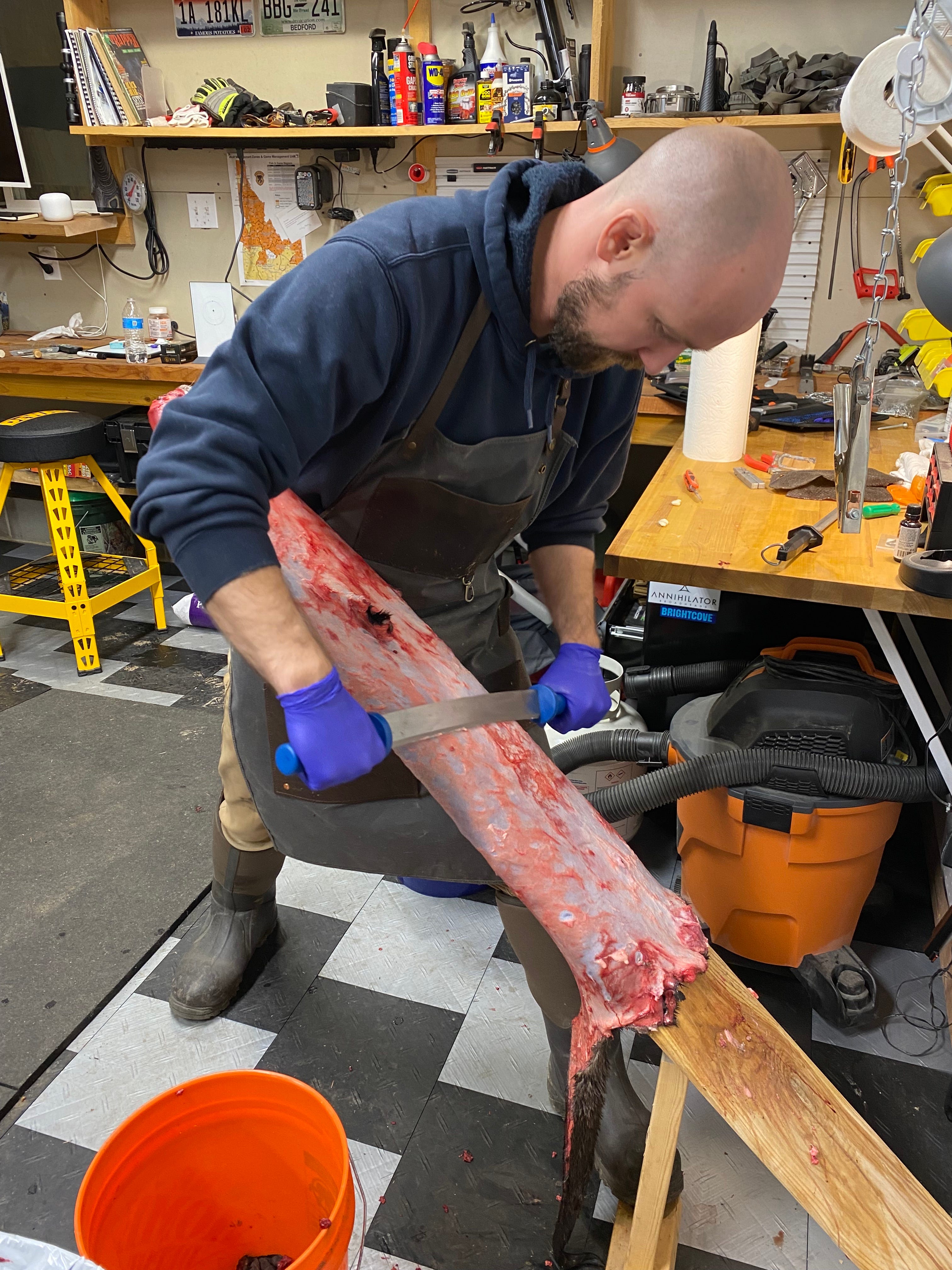 Fleshing the skin and removing all fat to get it ready for processing.
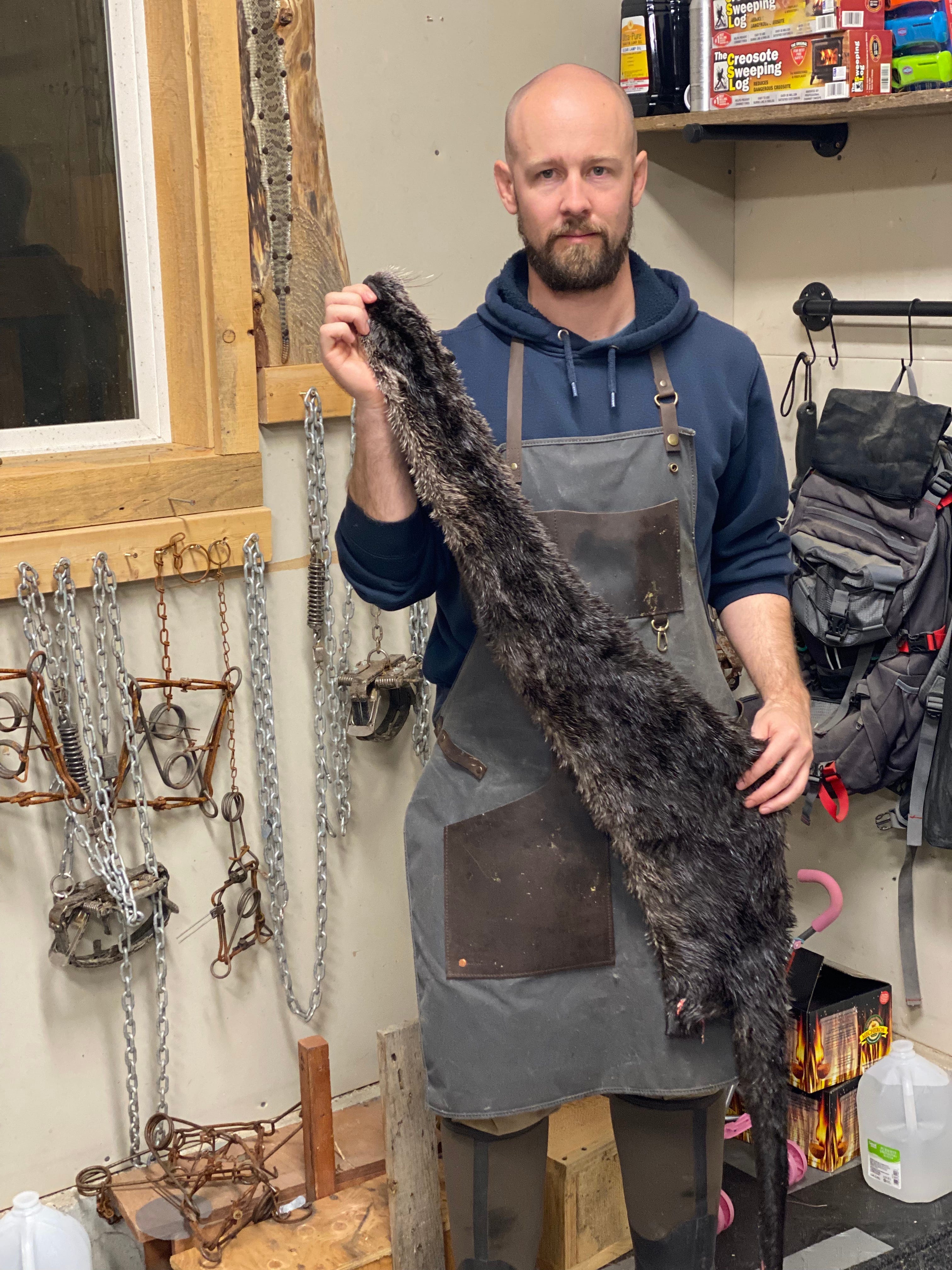 First Idaho river otter measured 5.5 ft from nose to tail!
Thanks for reading Let Me Die Learning! Subscribe for free to receive new posts and support my work.
October 13, 2022
The Highway Men
One of the things that many people do not know about me is that I am “technically” an elected public official in the great state of Idaho. More specifically, I am the chairman of the Rural Atlanta Highway District, which consists of a team of two operators and a meager budget. We are responsible for keeping the roughly 40+ miles of dirt road open (plus another 40 or so “unofficial miles”) year round.
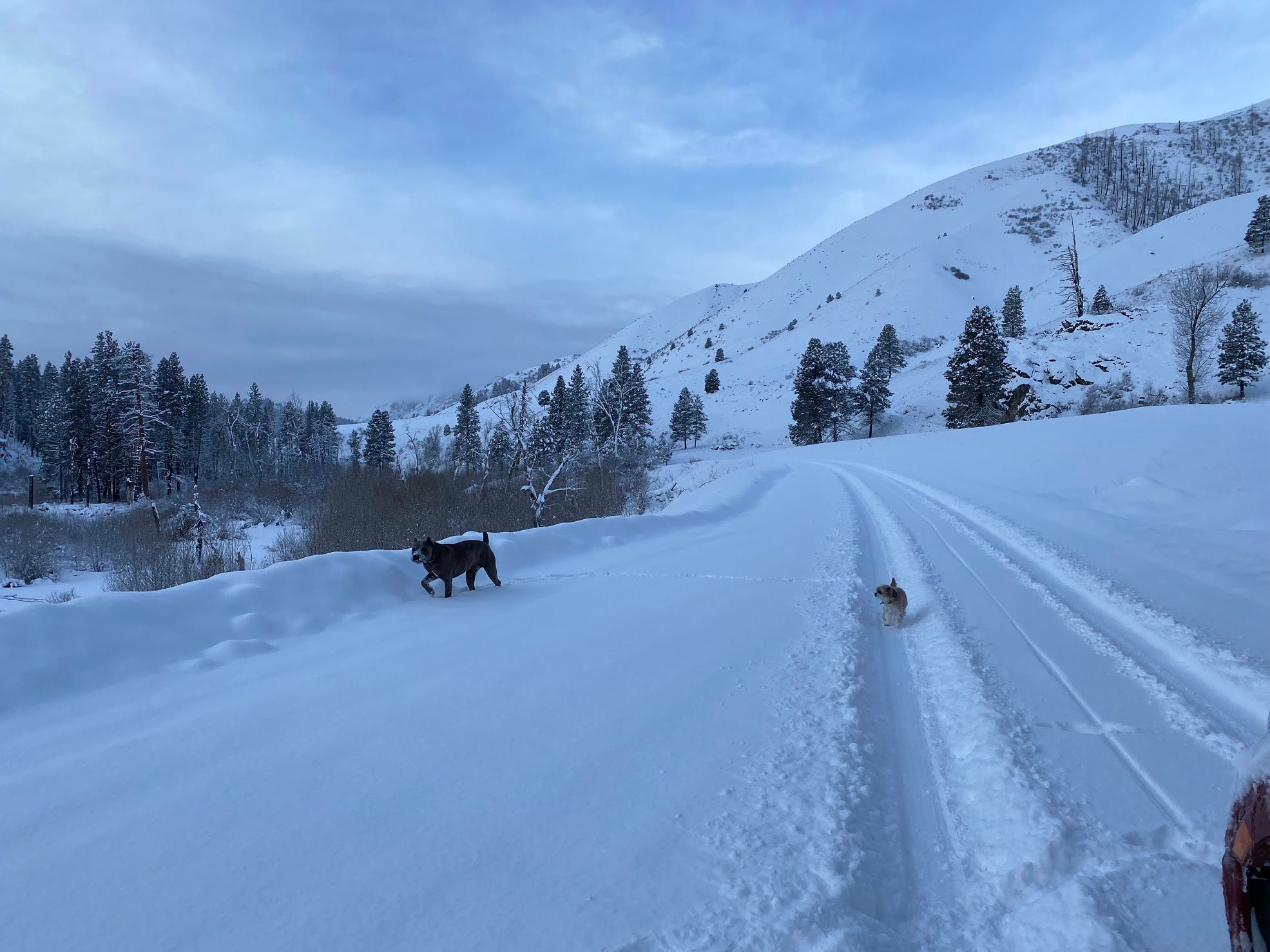 Some of our more tame winter road that must be maintained.
This consists of removing boulders and rock slides, snow slides, and anything in between… fallen trees from storms or beaver, washed out roads, and helping stranded passersby. It takes untold amounts of preparation to keep dust abated in the summer and snow cleared in the winter. We often have to battle aging equipment, weather, bureaucratic red-tape, and unsatisfied patrons.
Thanks for reading Let Me Die Learning! Subscribe for free to receive new posts and support my work.
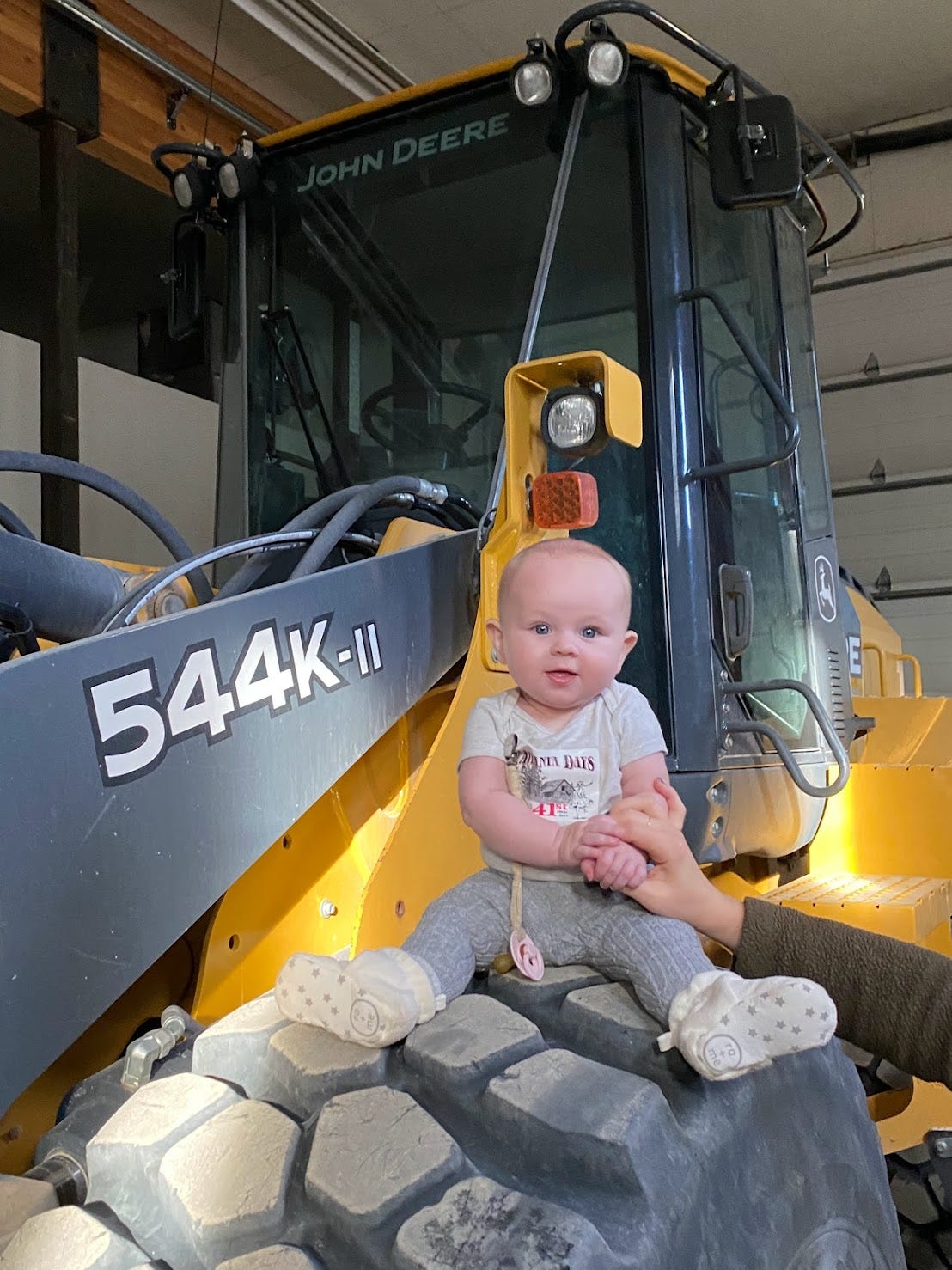 Our daughter hanging out at the Highway District Building.
Despite the hurdles, we always press on. We are constantly working to secure funds, acquire new equipment, and improve the quality and longevity of our cherished rural road. Those efforts largely go unnoticed, but sometimes there is cause for silent celebration. And silent celebrate we have done this past year. Without it getting put on the broader radar, we have secured grants from the Forrest Service, overflow funds from a broader ITD project, and most recently dissolved our odd grandfathered-in district voting rules. All of this is an amazing achievement for a small end-of-the-road highway district who had been stagnating for some time.
With that said, I am proud of where we have been able to take our little highway district in the two years that I have been serving. As I step down from my role at the end of this year I can’t wait to see where the other commissioners (and ones to be appointed) take our great little group!
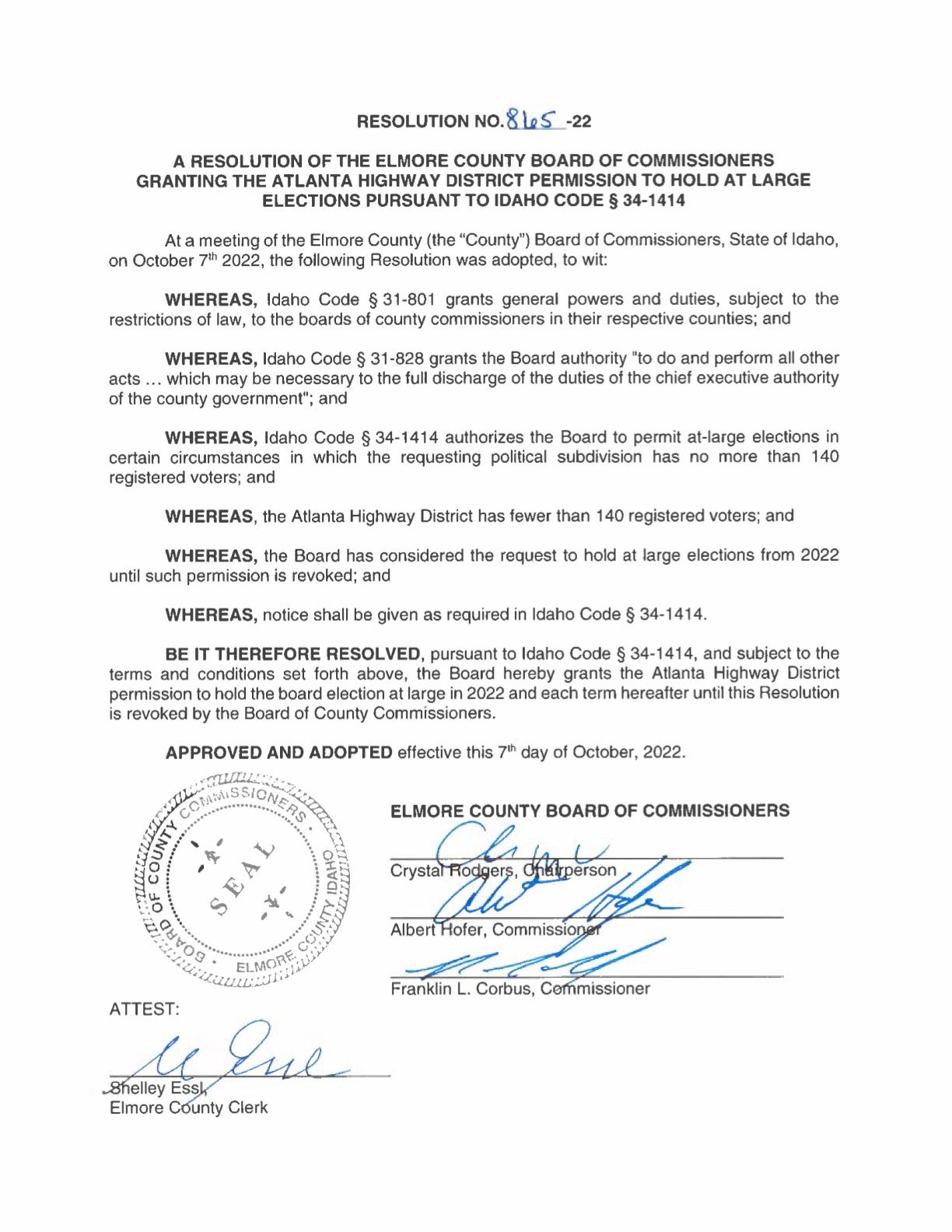 A successful resolution passed to dissolve our districting… This took more effort than you would think :-D
Thanks for reading Let Me Die Learning! Subscribe for free to receive new posts and support my work.
October 1, 2022
Splitting Wood
With early season archery elk behind me, it’s now time to focus on preparing for winter. My wife, myself, and our two little ones finally made it up to our cabin in order to leverage the last two weeks of my paternity leave to relax (some) and get a head start on wood chopping and fall cabin cleaning.
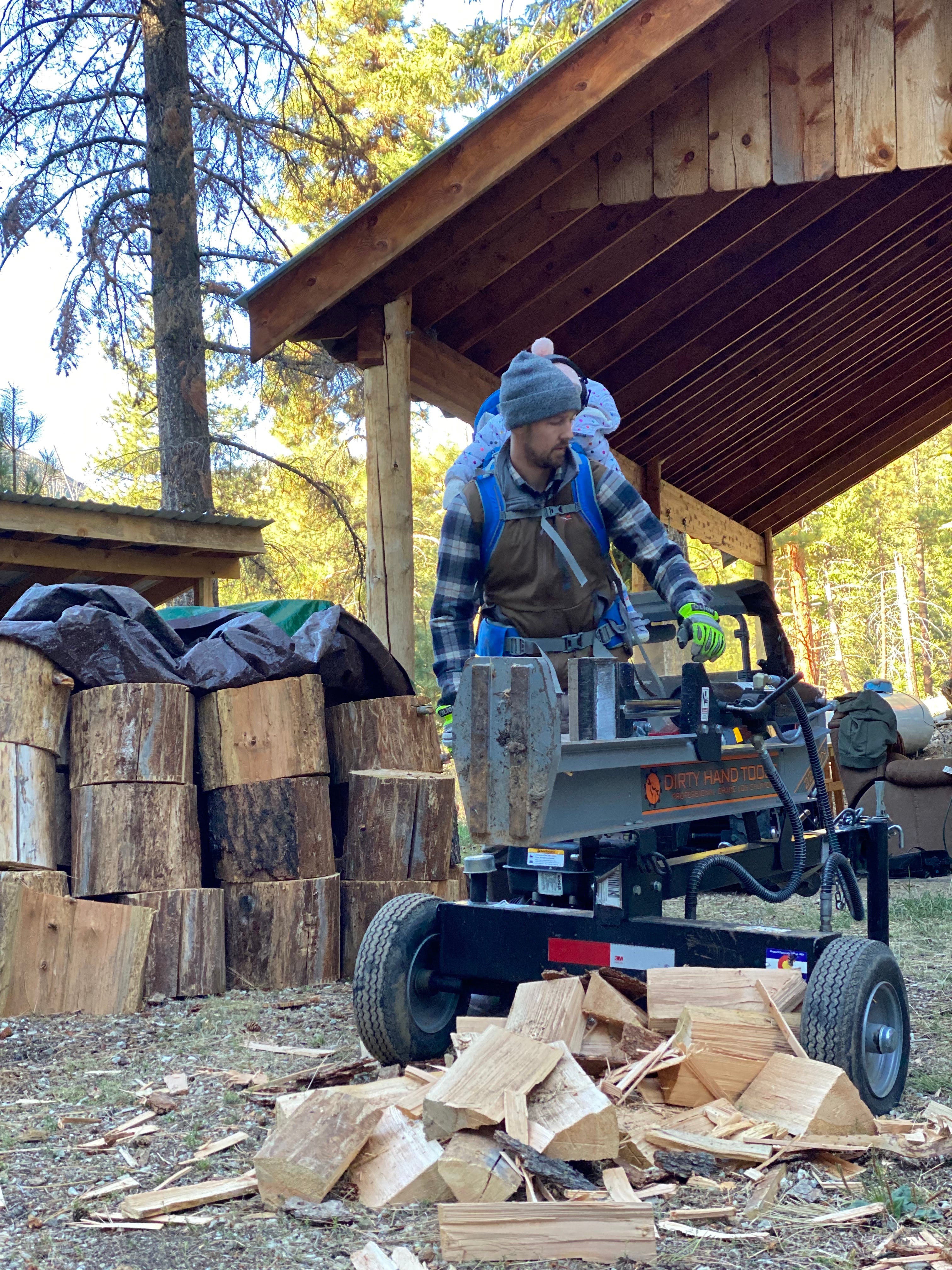 My daughter and I working the log splitter at our cabin.
Over the last two winters here in Atlanta, Idaho (where snow accumulations often reach over seven feet) we have been able to dial in our needs pretty well. With our small 900 sf cabin, we have two wood burning stoves, one upstairs and one downstairs, which requires about four and a half cords of wood to get us through the winter and into spring. A cord of wood roughly equates 128 cubic feet, or about a full-sized truck bed of wood stacked 4 feet high. It takes a few trees to get what we need and comes in at thousands of pounds. Pounds of whole round pine that needs to all be lifted, split on a log splitter, and then carried and placed into our wood shed for easy access during the long winter months.
Thanks for reading Let Me Die Learning! Subscribe for free to receive new posts and support my work.
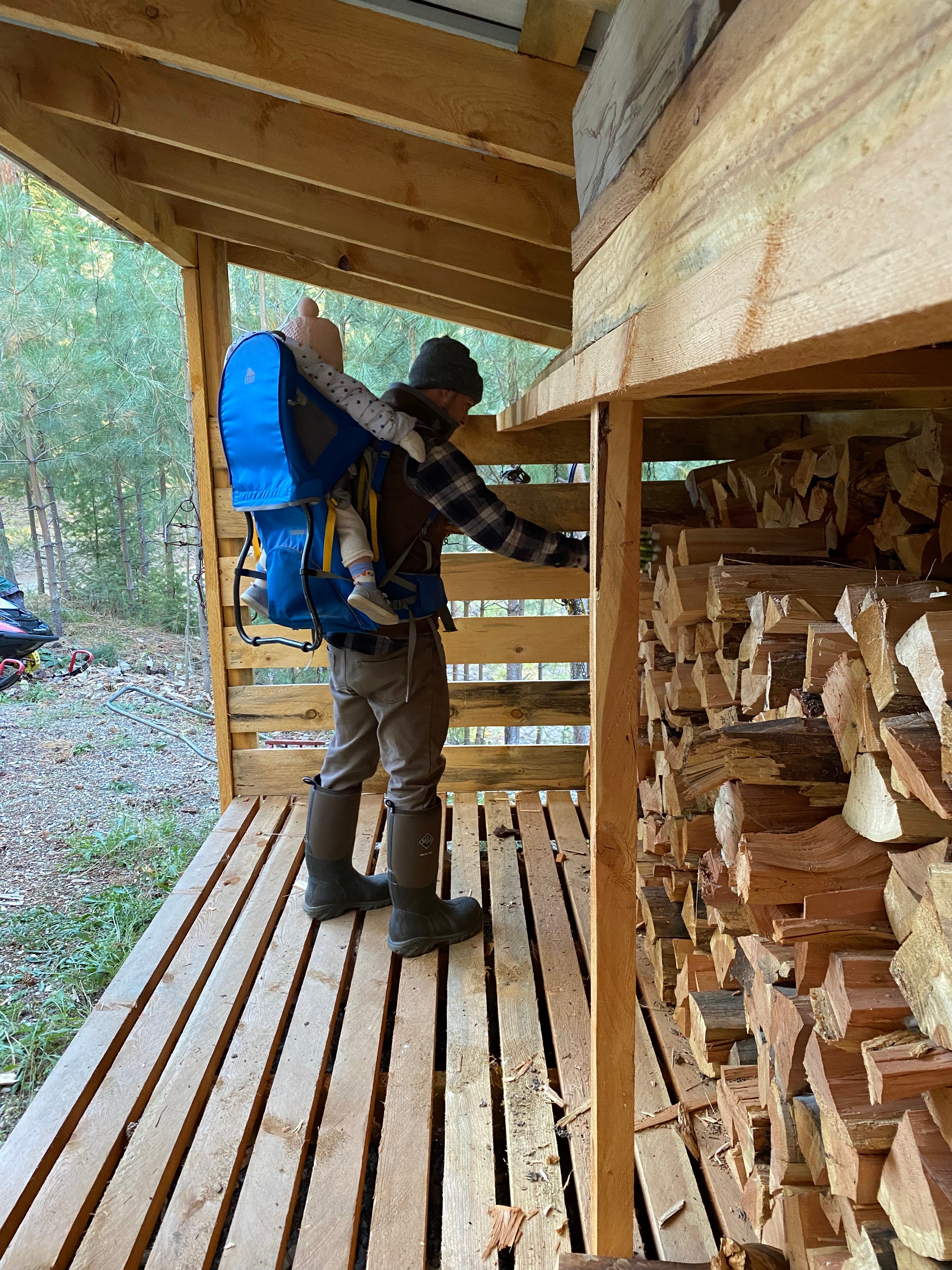 Stacking wood
Now, in the past I would split all of our wood with an axe with the intention of getting a good workout in over the summer months. But, with the new addition to our family and hunting commitments this summer I only had a very small (one week) window to get our wood acquired, split, and stacked. This meant that for the past week I have been cutting non-stop.
With my wife fully on infant duty with breast feeding, I had to take advantage of the hours that I had to get stuff done… which meant that our oldest daughter (1.5 years old) was my side kick for much of my morning splitting. She thankfully was very keen and did well strapped to my back (with proper hearing and eye protection) while I split whole round after whole round for hours at a time. She even sang me her favorite Cocomelon songs loudly in my ears as we toiled away.
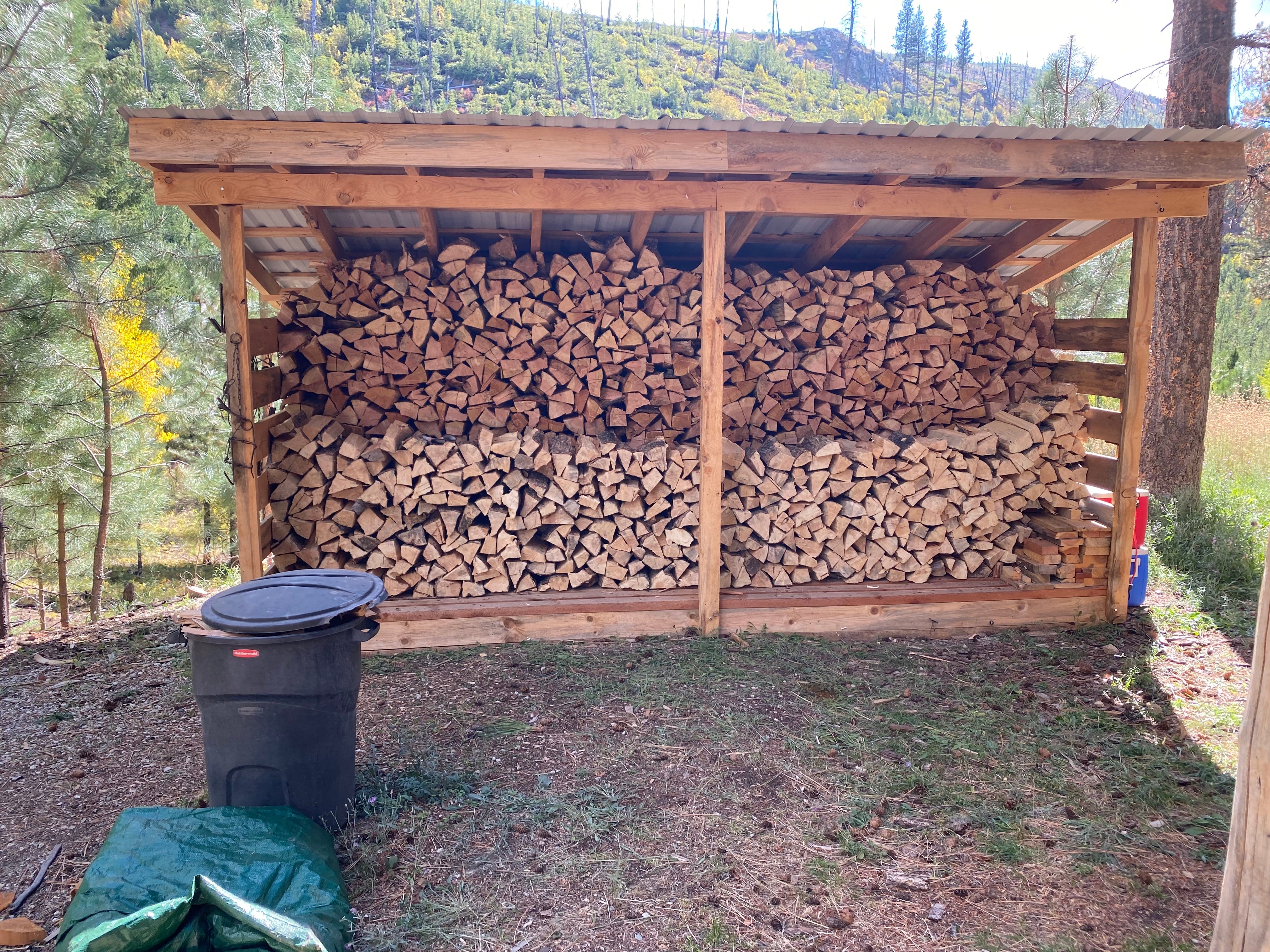 ~3 cords of wood stacked in our “5-cord” woodshed
All in, we were able to get about 3 of our 4.5 cords split and stacked and will have to postpone the last 1.5 cords until we are back later in October. The rest of the time we had needed to be spent relaxing with the family, cleaning, and celebrating my wife’s birthday. We even got in some reading time and cold plunges down by the river and my wife got some alone time at our hot springs. All of the goings-on at the cabin the last two weeks has reminded us how lucky we are to get to live where we do!
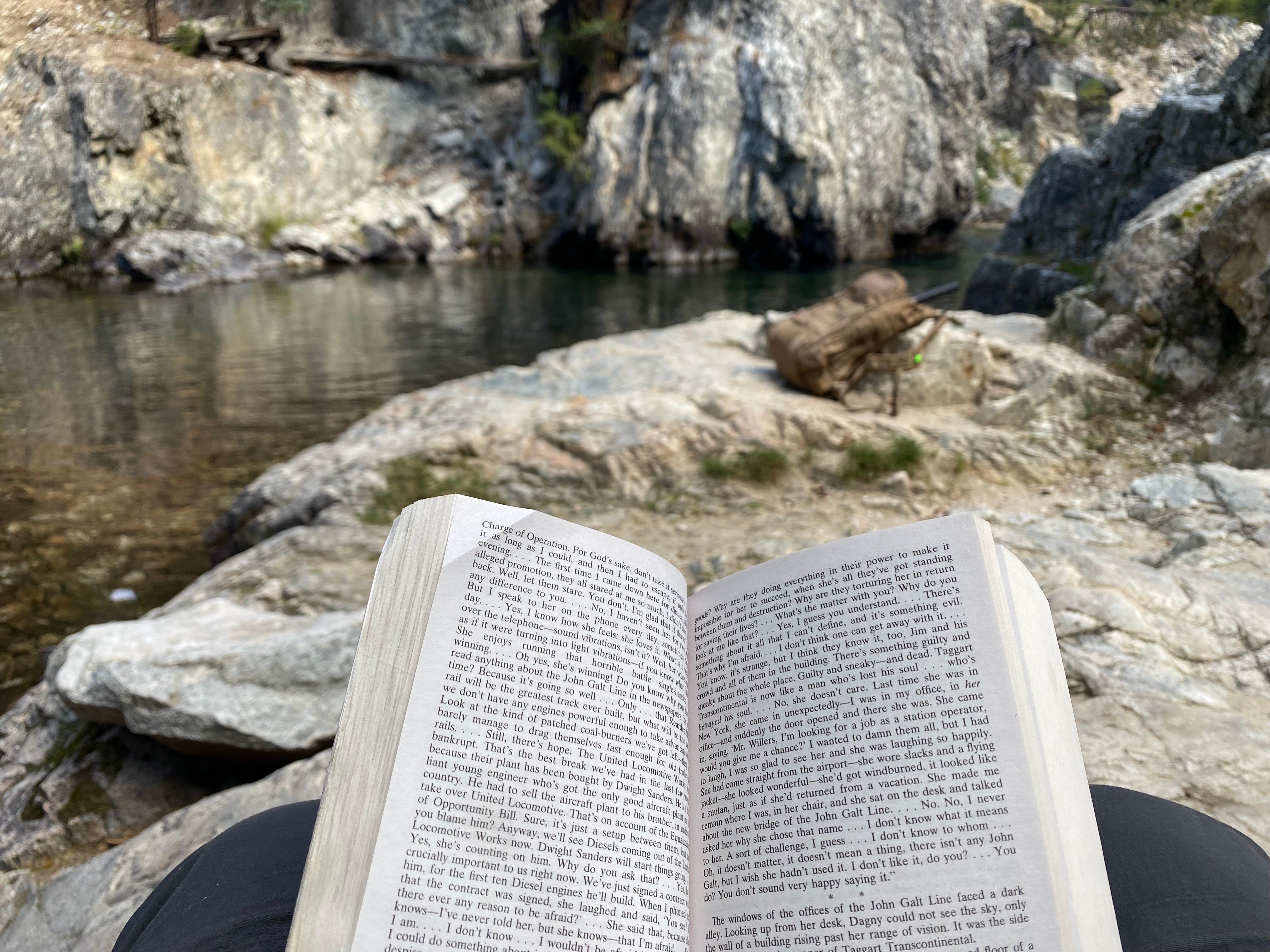 Re-reading Atlas Shrugged
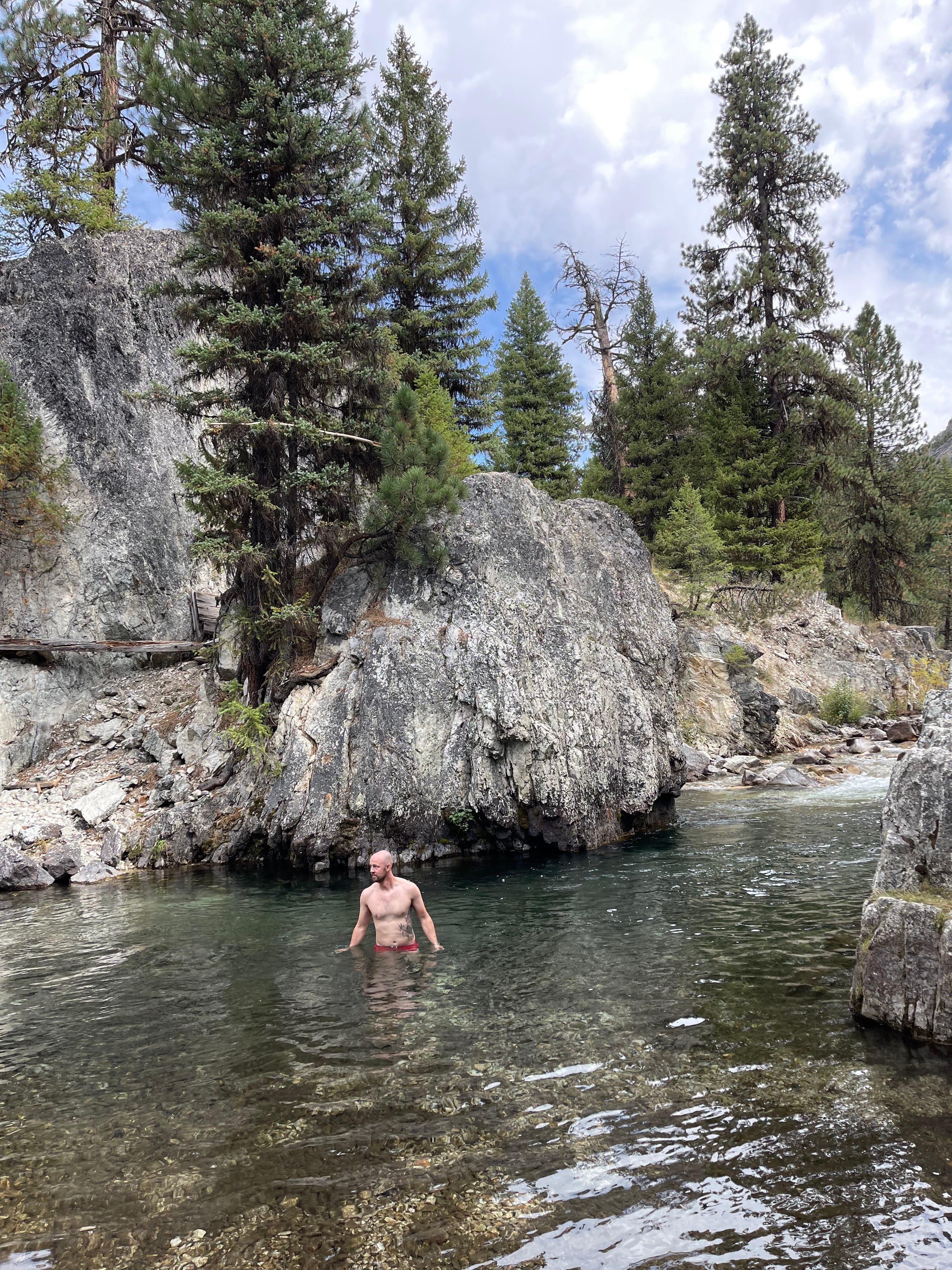 ~36* water is a good shock to the system, especially followed by ~110* hot springs
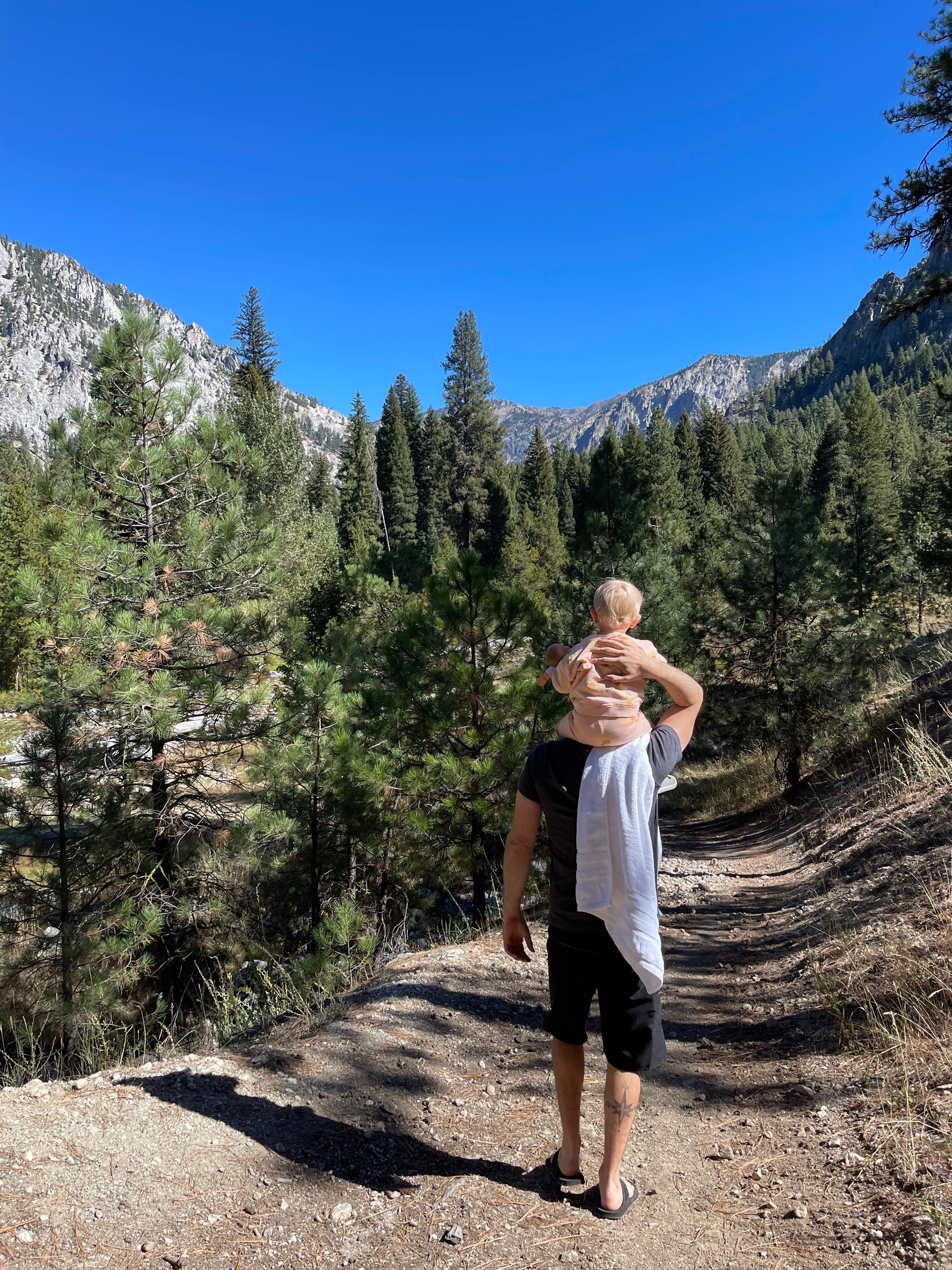 Raising feral kids in paradise!
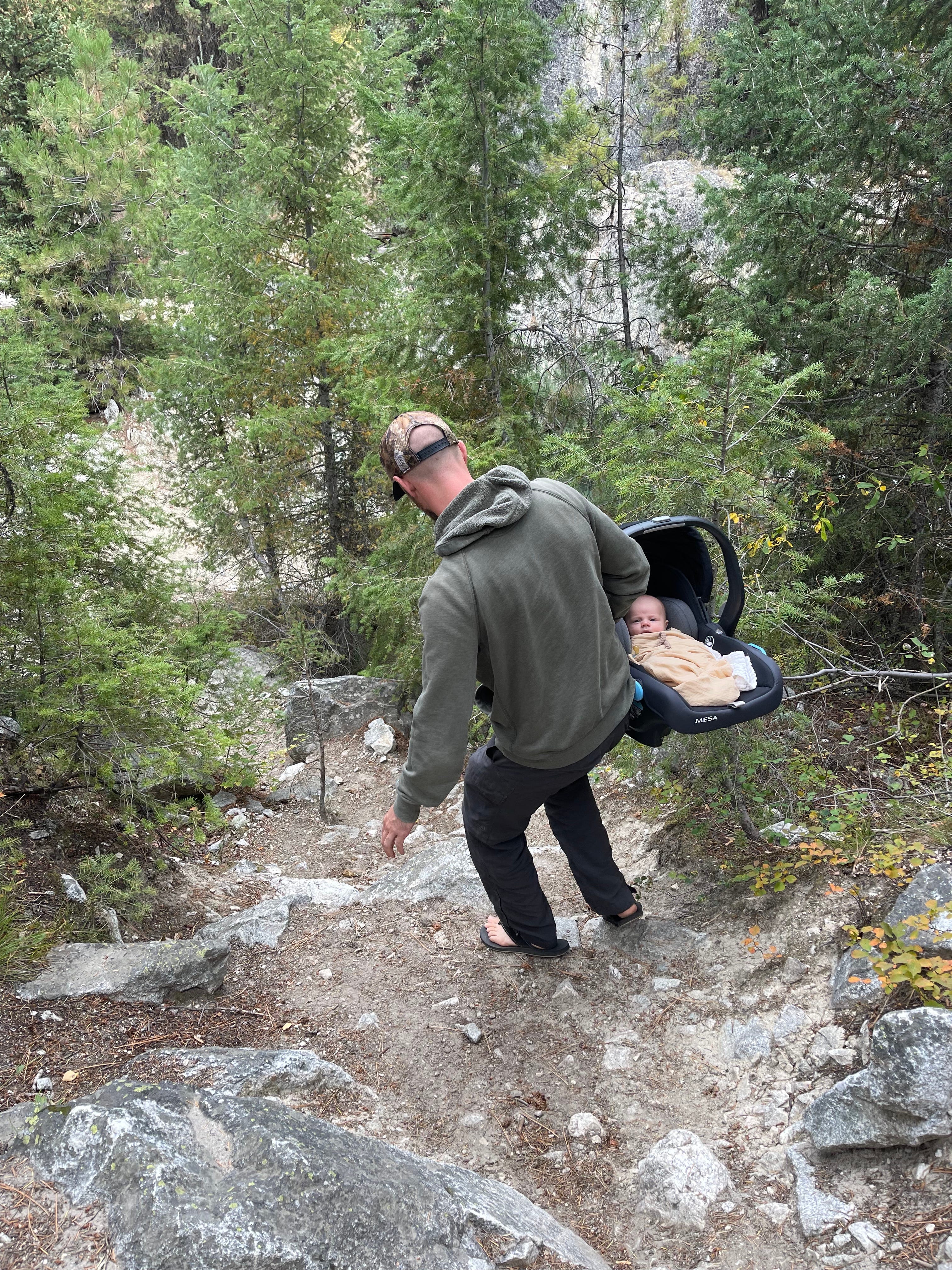 Our youngest about to get in some river-side naps.
Thanks for reading Let Me Die Learning! Subscribe for free to receive new posts and support my work.