Rachel Manija Brown's Blog, page 4
July 30, 2025
The Husbands, by Holly Gramazio
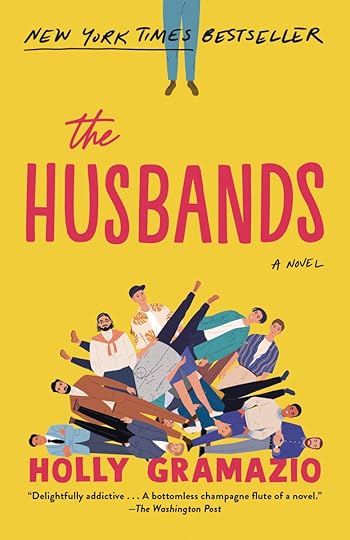
This book has a hilarious premise: a single woman's attic suddenly starts producing husbands! A husband comes down from the attic of Lauren's London flat, and she's instantly in an alternate reality in which she married that guy. The decor of her flat shifts, sometimes her own body or job shifts depending on whether she now works out regularly or some such, and sometimes there's wider ripple effects. Lauren is always aware of the changes, but no one else is. If the husband goes back into the attic, he vanishes and a new husband comes down.
I adore this premise, and the book absolutely commits to it. It is 100% about husbands coming down from the attic. Unfortunately, I didn't really like the way it explored the premise. It's largely a metaphor for dating in a time when you can swipe on an internet profile and instantly get rid of a possible match, so Lauren cycles through hundreds of husbands, often rejecting them at a glance, and we only ever get to know a very small number of them. Of the ones we do get to know, they're mostly fairly one-note - handsome and nice and American, handsome and nice but chews with his mouth open, handsome and nice but boring, or mean and hard to get rid of. The falling Ken dolls cover is apt in more ways than one. Lauren is also pretty one-note - shallow and frantic.
I also had an issue with the pacing. There's so much repetition of the same actions. A husband comes down, Lauren examines her text messages and photos for evidence of their history together, Lauren calls her friends to see what they know about him. A husband comes down, Lauren takes one look at him and sends him back. Some of this is funny but it gets old. The book felt at least 50 pages longer than it needed to be.
I would have liked the book a lot more if there had been way fewer husbands, and more time spent with each one. I never really got a sense of what Lauren wanted in a man, apart from some surface-level characteristics, or what she wanted in life. Her lives were also generally not that different, which didn't help.
There was one part that I really liked and was actually surprising.
( Read more... )
Rec by Naomi Kritzer, who liked it more than I did. But thanks for the rec! It was an interesting read, and not one I'd have found by myself.
My absolute favorite alternate lives story remains the novella And Then There were (N-One), by Sarah Pinsker, available free online at that link.
 comments


July 24, 2025
Headache, by Tom Zeller, Jr

A solid, well-written, and generally engaging book about migraine and cluster headaches. The author suffers from the latter, with suffer being the operative word - cluster headaches are called "suicide headaches" because people with them are known to kill themselves because of the intractable, excruciating pain.
The first-person account was the best part of the book: what it's like to have cluster headaches, how you're driven to hoard medication because you're not allowed to have enough (which leads doctors to view you with suspicion as a drug-seeker - NO SHIT you seek painkillers when you're in pain!), how you cling to any doctor who will take you seriously, and the psychology of chronic pain generally.
(In Zeller's case, he wasn't seeking opiods or anything that could get him high, but a medication that does nothing to anyone but stop cluster headaches if you have one. But his doctor didn't believe that he actually got them as often as he did, and his insurance company didn't want to pay out for his medication, so he was forced to hoard and ration his medication for no good reason, and then looked at with suspicion when he asked for more.)
The book gets a bit into the weeds in terms of the biological mechanism of cluster and migraine headaches, which is not yet known, and the reasons why there's little research or funding devoted to them. But overall, a good book that will make people with chronic headaches, or any chronic pain, feel seen.
 comments
July 22, 2025
Recent DNFs (Did Not Finish): Horror, Romantasy, Mount St. Helens
Recent DNFs (Did Not Finish)
Wake Up and Open Your Eyes, by Clay McLeod Chapman
A horror novel about - I think - how a Q-Anon analogue turns people into literal zombies. I couldn't get into this book. I don't think it was bad, it just wasn't my thing. I didn't vibe with the prose style at all.
The Baby Dragon Cafe, by A. T. Qureshi
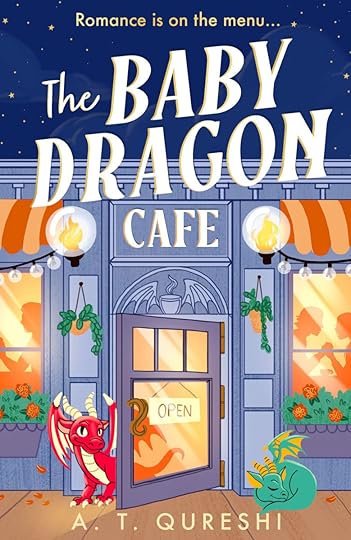
A woman opens a cafe that's also a baby dragon rescue. I adored the idea of this book, not to mention the extremely charming cover, but the execution left a lot to be desired. It was just plain dull. I dragged myself through two chapters, both of which felt eternal, then gave up. Too bad! I really wanted to like it, because the idea is delightful.
In the Path of Destruction: Eyewitness Chronicles of Mount St. Helens, by Richard Waitt
This ought to have been exactly my jam, except for the author's absolutely bizarre prose style, which is a combination of Pittman shorthand and Chuck Tingle's Twitter minus the sense of humor, with an allergy to articles and very strange syntax. I literally had no idea what some of his sentences meant. This weirdness extends to direct quotes from multiple people, making me suspect how direct they are. And yes, this was traditionally published.
Here are some quotes, none of which make more sense in context:
It contrasts the chance jungle violence with lava flows off Kilauea - so Hollywood but predictable.
"The state's closure seems yours. Have I missed something?"
[And here's a bunch of Tinglers.]
Heart attack took Eddie in 1975.
These years since wife Eddie died Truman's fire has cooled.
Since wife Eddie died, Rob is the closest he has to a friend.
Since wife Eddie died, Truman has been a bleak recluse, the winters especially lonely.
 comments
Wake Up and Open Your Eyes, by Clay McLeod Chapman
A horror novel about - I think - how a Q-Anon analogue turns people into literal zombies. I couldn't get into this book. I don't think it was bad, it just wasn't my thing. I didn't vibe with the prose style at all.
The Baby Dragon Cafe, by A. T. Qureshi
A woman opens a cafe that's also a baby dragon rescue. I adored the idea of this book, not to mention the extremely charming cover, but the execution left a lot to be desired. It was just plain dull. I dragged myself through two chapters, both of which felt eternal, then gave up. Too bad! I really wanted to like it, because the idea is delightful.
In the Path of Destruction: Eyewitness Chronicles of Mount St. Helens, by Richard Waitt
This ought to have been exactly my jam, except for the author's absolutely bizarre prose style, which is a combination of Pittman shorthand and Chuck Tingle's Twitter minus the sense of humor, with an allergy to articles and very strange syntax. I literally had no idea what some of his sentences meant. This weirdness extends to direct quotes from multiple people, making me suspect how direct they are. And yes, this was traditionally published.
Here are some quotes, none of which make more sense in context:
It contrasts the chance jungle violence with lava flows off Kilauea - so Hollywood but predictable.
"The state's closure seems yours. Have I missed something?"
[And here's a bunch of Tinglers.]
Heart attack took Eddie in 1975.
These years since wife Eddie died Truman's fire has cooled.
Since wife Eddie died, Rob is the closest he has to a friend.
Since wife Eddie died, Truman has been a bleak recluse, the winters especially lonely.
comments
July 17, 2025
Wildfire Days: A Woman, a Hotshot Crew, and the Burning American West, by Kelly Ramsey
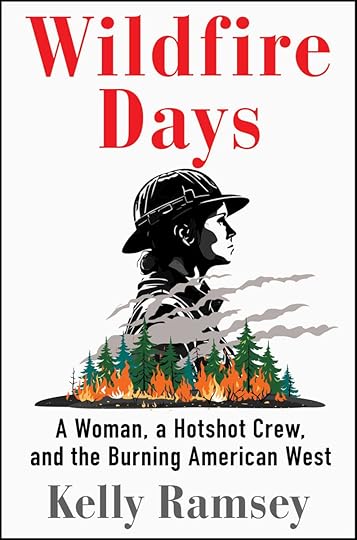
Kelly Ramsey became a hotshot - the so-called Special Forces of firefighting - with three strikes against her. She's a woman on an otherwise all-male crew, a small woman dealing with equipment much too big for her, and 36 years old when most of the men are in their early 20s. If that's not enough, it's 2020 - the start of the pandemic - and California is having a record fire year, with GIGAFIRES that burn more than ONE MILLION acres. At one point her own hometown burns down.
The memoir tells the story of her two seasons with the Rowdy River Hotshots, her relationship with her awful fiance (also a firefighter, on a different crew), her relationship with her alcoholic homeless father, and a general memoir of her life. I'd say about three-fifths of the book is about the hotshots, and two-fifths are her fiance/her father/her life up to that point.
You will be unsurprised to hear that I was WAY more interested in the hotshots than in her personal life. The fiance was loosely relevant to her time with the hotshots (he was jealous of both the male hotshots and of her job itself), and her alcoholic father and her history of impulsive sexual relationships was relevant to her personality, but you could have cut all of that by about 75% and still gotten the point.
All the firefighting material is really interesting, and Ramsey does an impressively good job of not only vividly depicting hotshot culture, but also differentiating 19 male firefighters. I had a good idea of what all of them were like and knew who she meant whenever she mentioned one, and that is not easy. You get a very good idea of both the technique and sheer physical effort it takes to fight fires, along with plenty of info on fire behavior and the history of fire in California. (She does not neglect either climate change or the indigenous use of fire.)
This feels like an incredibly honest book. Ramsey doesn't gloss over how gross and embarrassing things get when no one's bathed for weeks, you've been slogging through powdery ash the whole time, there's no toilets, and you're the only one who menstruates. She depicts not only the struggle of trying to keep up with a bunch of younger, stronger, macho guys, but how desperate she is to be accepted by them as one of the guys and how this causes problems when another woman joins the crew - a woman who openly points out that flawed men are welcomed while every mistake she makes is taken as a sign that women can't do the job.
I caught myself wishing that Ramsey hadn't had an affair with one of her crew mates as many readers will think "Yep, that's what happens when women get on crews," and then realizing that I hadn't thought that about the man who had the affair with her. Even I blamed Ramsey and not the equally culpable dude!
Ramsey reminded me at times of Amy Dunn's vicious description of the "cool girl" in Gone Girl, but to her credit, she's aware that this is a persona she adopted to please men and fill the void left by her alcoholic dad. Thankfully, there's a lot more to the book than that.
 comments
July 8, 2025
Elatsoe, by Darcie Little Badger

Ellie is a Lipan Apache teenager in a world where magic, vampires, ghosts, and so forth are known to be real. She’s inherited the family gift for raising ghosts, though she only raises animals; human ghosts always come back wrong, and she’s happy with the companionship of her beloved ghost dog Kirby, not to mention her pet ghost trilobite. But when her cousin, who supposedly died in a car crash, returns in a dream to tell her he was murdered, she finds that knowing who killed him isn’t as helpful as one might imagine…
Ellie’s cousin Trevor told her the name of his killer, Abe Allerton from Willowbee, but he didn’t know why or how he was killed. Ellie enlists her best friend, Jay, a cheerleader with just enough fairy blood to give him pointy ears and the ability to make small lights. More importantly, he’s good at research. They learn that Willowbee is in Texas, near the town where Trevor lived with his wife, Lenore, and their baby. Jay brings in help: his older sister’s fiancé, Al, who’s a vampire.
All of them, plus Ellie’s parents and a ghost mammoth belonging to her grandmother, play a part in the effort to solve the mystery of Trevor’s death and bring his murderer to justice. And so, in a sense, will a major character who’s long dead (and not a ghost) but who’s a big presence in Ellie’s life: Six-Grand, her great-great-great-great-great-great grandmother, the last person to have a gift as powerful as Ellie’s… and who vanished forever into the underworld.
I enjoyed this quite a bit. I mean, come on. GHOST TRILOBITE. GHOST MAMMOTH. It’s funny, it’s sweet, it’s heartfelt, it has lovely chapter heading illustrations, and it’s got some gorgeous imagery - I particularly loved a scene where the world transforms into an oceanic underworld, and Ellie sees a pod of whales swimming in the sky of a suburban neighborhood.
It's marketed as young adult and Ellie is seventeen, but the book feels younger (and so does Ellie.) I'd have no qualms handing it to an advanced nine-year-old reader, but it also appeals to adult me who misses the time when "urban fantasy" meant "our world, but with ghosts, elves, and so forth."
 comments
July 2, 2025
The Way Up is Death, by Dan Hanks

In a prologue that's very Terry Pratchett-esque without actually being funny, an enormous floating tower appears in England, becomes a 12-hour wonder, and is then forgotten as people have short attention spans. Then thirteen random people suddenly vanish from their lives and appear at the base of the tower, facing the command ASCEND.
I normally love stories about people dealing with inexplicable alien architecture. This was the most boring and unimaginative version of that idea I've ever read. Each level is a death trap based on something in one of their minds - a video game, The Poseidon Adventure, an old home - but less interesting than that sounds. The action was repetitive, the characters were paper-thin, and one, an already-dated influencer, was actively painful to read:
Time to give her the Alpha Male rizzzzzzz, baby!
The ending was, unsurprisingly, also a cliche.
( Read more... )
 comments
June 28, 2025
Misc Books: Helene Hanff, Lauren Tarshis, Stuart Turton
84 Charing Cross Road, by Helene Hanff
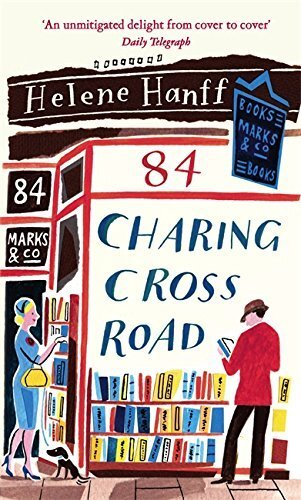
A sweet epistolatory memoir consisting of the letters written by a woman in New York City with extremely specific tastes (mostly classic nonfiction) and the English bookseller whose books she buys. Their correspondence continues over 20 years, from the 1940s to the 1960s. It's an enjoyable read but I think it became a ginormous bestseller largely because it hit some kind of cultural zeitgeist when it came out.
I Survived the Great Molasses Flood, by Lauren Tarshis

The graphic novel version! I read this after DNFing the supposedly definitive book on the event, Dark Flood, due to the author making all sorts of unsourced claims while bragging about all the research he did. The point at which I returned the book to Ingram with extreme prejudice was when he claimed that no one had ever written about the flood before him except for children's books where it was depicted as a delightful fairyland where children danced around snacking on candy. WHAT CHILDREN'S BOOKS ARE YOU TALKING ABOUT?
The heroine of I Survived the Great Molasses Flood is an immigrant from Italy whose family was decimated in a flood over there. A water flood. It's got a nice storyline about the immigrant experience. The molasses flood is not depicted as a delightful fairyland because I suspect no one has ever done that. It also provides the intriguing context that the molasses was not used for sweetening food, but was going to be converted into sugar alcohol to be used, among other things, for making bombs!
My favorite horrifying detail was that when the giant molasses vat started expanding, screws popped out so fast that they acted as shrapnel. I also enjoyed the SPLOOSH! SPLAT! GRRRRMMMMM! sound effects.
The 7 1/2 Deaths of Evelyn Hardcastle, by Stuart Turton

A very unusual murder mystery/historical/fantasy/??? about a guy who wakes up with amnesia in someone else's body. He quickly learns that he is being body-switched every time he falls asleep, into the bodies of assorted people present at a party where Evelyn Hardcastle was murdered. He needs to solve the mystery, or else.
This premise gets even more complicated from then on; it's not just a mystery who killed Evelyn Hardcastle, but why he's being bodyswapped, and who other mysterious people are. It's technically adept and entertaining. Everything does have an explanation, and a fairly interesting and weird one - which makes sense, as it's a weird book.
 comments
A sweet epistolatory memoir consisting of the letters written by a woman in New York City with extremely specific tastes (mostly classic nonfiction) and the English bookseller whose books she buys. Their correspondence continues over 20 years, from the 1940s to the 1960s. It's an enjoyable read but I think it became a ginormous bestseller largely because it hit some kind of cultural zeitgeist when it came out.
I Survived the Great Molasses Flood, by Lauren Tarshis
The graphic novel version! I read this after DNFing the supposedly definitive book on the event, Dark Flood, due to the author making all sorts of unsourced claims while bragging about all the research he did. The point at which I returned the book to Ingram with extreme prejudice was when he claimed that no one had ever written about the flood before him except for children's books where it was depicted as a delightful fairyland where children danced around snacking on candy. WHAT CHILDREN'S BOOKS ARE YOU TALKING ABOUT?
The heroine of I Survived the Great Molasses Flood is an immigrant from Italy whose family was decimated in a flood over there. A water flood. It's got a nice storyline about the immigrant experience. The molasses flood is not depicted as a delightful fairyland because I suspect no one has ever done that. It also provides the intriguing context that the molasses was not used for sweetening food, but was going to be converted into sugar alcohol to be used, among other things, for making bombs!
My favorite horrifying detail was that when the giant molasses vat started expanding, screws popped out so fast that they acted as shrapnel. I also enjoyed the SPLOOSH! SPLAT! GRRRRMMMMM! sound effects.
The 7 1/2 Deaths of Evelyn Hardcastle, by Stuart Turton
A very unusual murder mystery/historical/fantasy/??? about a guy who wakes up with amnesia in someone else's body. He quickly learns that he is being body-switched every time he falls asleep, into the bodies of assorted people present at a party where Evelyn Hardcastle was murdered. He needs to solve the mystery, or else.
This premise gets even more complicated from then on; it's not just a mystery who killed Evelyn Hardcastle, but why he's being bodyswapped, and who other mysterious people are. It's technically adept and entertaining. Everything does have an explanation, and a fairly interesting and weird one - which makes sense, as it's a weird book.
comments
June 20, 2025
Shroud, by Adrian Tchaikovsky

While on a commercial expedition, an unexpected accident causes Mai, an engineer, and Juna, an HR person, to crash-land on a pitch-black planet called Shroud. They can't get out of their escape pod because the air is corrosive and unbreathable, and they can't call for help. Their only hope is to use the pod's walker system to trek all the way across the planet... which turns out to be absolutely teeming with extremely weird life, none of which can see, all of which communicates via electromagnetic signals, most of which constructs exoskeletons for itself with organic materials, and some of which is extremely large.
As readers, we learn very early on that at least some of the life on Shroud is intelligent. But Juna and Mai don't know that, the intelligent Shroud beings don't know that humans are intelligent, and human and Shroud life is so different that it makes perfect sense that they can't tell. As Juna and Mai make their probably-doomed expedition across Shroud, they're accompanied by curious Shroud beings, frequently attacked by other Shroud creatures, face some of the most daunting terrain imaginable, and slowly begin to learn the truth about Shroud. But even if they succeed in rescuing themselves, the predatory capitalist company that sent them on their expedition on the first place is determined to strip Shroud for materials, and doesn't care if its indigenous life is intelligent or not.
This is possibly the best first contact novel I've ever read. It's the flip side of Alien Clay, which was 70% depressing capitalist dystopia and 30% cool aliens. Shroud is 10% depressing capitalist dystopia and 90% cool aliens - or rather, 90% cool aliens and humans interacting with cool aliens. It's a marvelous alien travelogue, it has so many jaw-dropping moments, and it's very thematically unified and neatly plotted. The climax is absolutely killer.
The characterization is sketchy but sufficient. The ending is a little abrupt, but you can easily extrapolate what happens from there, and it's VERY satisfying. As far as I know this is a standalone, but I would certainly enjoy a sequel if Tchaikovsky decided to write one.
My absolute favorite moment, which was something you can only do in science fiction, is a great big spoiler. ( Read more... )
 comments
June 5, 2025
The Only Light Left Burning, by Erik J. Brown: DNF

This sequel to one of my favorite books of last year, a young adult post-apocalypse novel with a lovely slow-burn gay romance, fell victim to a trope I basically never like: the sequel to a romance that starts out by breaking up the main couple or pitting them against each other. It may be realistic but I hate it. If the main thing I liked about the first book was the main couple's dynamic - and if I'm reading the sequel, that's definitely the case - then I'm never going to like a sequel where their dynamic is missing or turns negative. I'm not saying they can't have conflict, but they shouldn't have so much conflict that there's nothing left of the relationship I loved in the first place.
This book starts out with Jamison and Andrew semi-broken up and not speaking to each other or walking on eggshells around each other, because Andrew wants to stay in the nice post-apocalyptic community they found and Jamison wants to return to their cabin and live alone there with Andrew. Every character around them remarks on this and how they need to just talk to each other. Eventually they talk to each other, but it resolves nothing and they go on being weird about each other and mourning the loss of their old relationship. ME TOO.
Then half the community's children die in a hurricane, and it's STILL all about them awkwardly not talking to each other and being depressed. I checked Goodreads, saw that they don't make up till the end, and gave up.
The first book is still great! It didn't need a sequel, though I would have enjoyed their further adventures if it had continued the relationship I loved in the first book. I did not sign up for random dead kids and interminable random sulking.
 comments
June 3, 2025
Making Bombs For Hitler, by Marsha Forchuk Skrypuch

A historical children's novel by a Ukrainian-Canadian author, based on Ukrainian teenagers and children forced into slavery during WWII. After watching her neighbors and finally her family getting dragged off by the Nazis, Lida, a Christian Ukrainian girl, is kidnapped along with her younger sister. They're immediately separated and Lida is sent to a horrendous work camp. She's skilled at sewing, which keeps her useful and so alive for a while. But then the Nazis need bombs more than uniforms...
This book is an impressive feat of walking the line between being honest and straightforward about how terrible conditions are while not being too overwhelming for children to read. Lida and the other girls endure and try to support each other. Lida gives a Jewish girl her crucifix necklace to help hide her identity, and an older girl advises Lida to lie about her age so she isn't killed immediately for being too young to work. The German seamstress Lida works with (an employee, not a prisoner) is occasionally casually kind to her, but also gets a gift of looted clothing from a probably murdered French woman, and gets Lida to meticulously remove the woman's stitched-in initials and re-sew them with her own. A Hungarian political prisoner, who gets better soup than the Ukrainians, advises Lida to say she's Polish, as that will improve her her food. Later, Lida muses, It seemed that just as there were different soups, there were different ways of being killed, depending on your nationality.
( Read more... )
The book is interesting as a depiction of an aspect of WWII that isn't written about much, a compelling read, and a moving story about some people trying to keep hope and caring - and rebellion - alive when others are being as bad as humans can get. It's part of a trio of books involving overlapping characters, but stands completely on its own.
The afterword says that Skrypuch based the book on her interviews with a survivor.
 comments