Timothy P. Brown's Blog, page 86
February 28, 2023
Pigskin Dispatch Podcast: Coaching One Player During Timeouts
Pigskin Dispatch podcaster Darin Hayes and I discuss a recent TidBit about the old days when coaches could speak to only one player during timeouts and earlier days when they could not coach players during the game. I also tell a funny story about a teammate picking up and hiding an official’s flag during a game.
Click here to listen, or subscribe to Pigskin Dispatch wherever you get your podcasts.
 Football ArchaeologyToday's Tidbit... Coaching One Player During TimeoutsAmerican football originate...


February 27, 2023
Today's Tidbit... A Very Fine Football, It Seams
Think about your typical football. Do you know how many leather sections or panels it has? Most people would say a football has four leather panels sewn together with four seams, and they would be correct, usually.
However, in the spirit of people who tinker trying to find ways to improve things, such as making a football more aerodynamic, there was a time when a few sporting goods companies produced footballs that did not have four sections.
You may recall a recent Tidbit about bootleg footballs ...
February 26, 2023
Today's Tidbit: 1970 Oklahoma Coaching Staff and Values
Looking toward the 1970 season, the Oklahoma Sooners were coming off a disappointing and injury-plagued 6-4 year in Chuck Fairbanks' third season at the helm, though Steve Owens winning the Heisman Trophy brightened their perspective. The poor record reinforced the Sooners’ need to recruit successfully and to assist, they developed a brochure, Sports At Oklahoma, that informed prospects of the virtues of attending and playing for the University of Oklahoma.
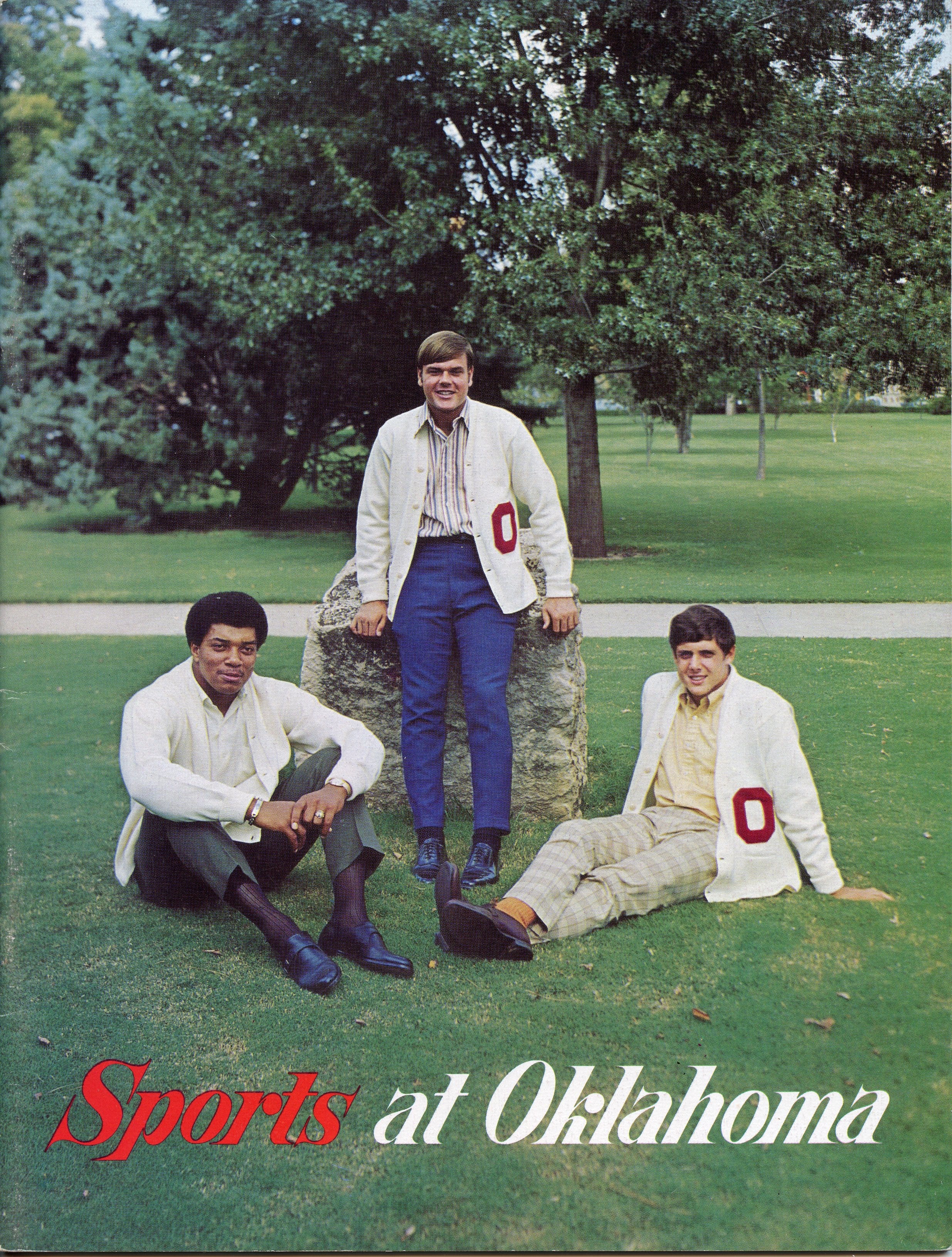
The forty-page booklet focuses on footb...
February 25, 2023
Today's Tidbit... O Line Blocking and the 1954 Chicago Cardinals Playbook
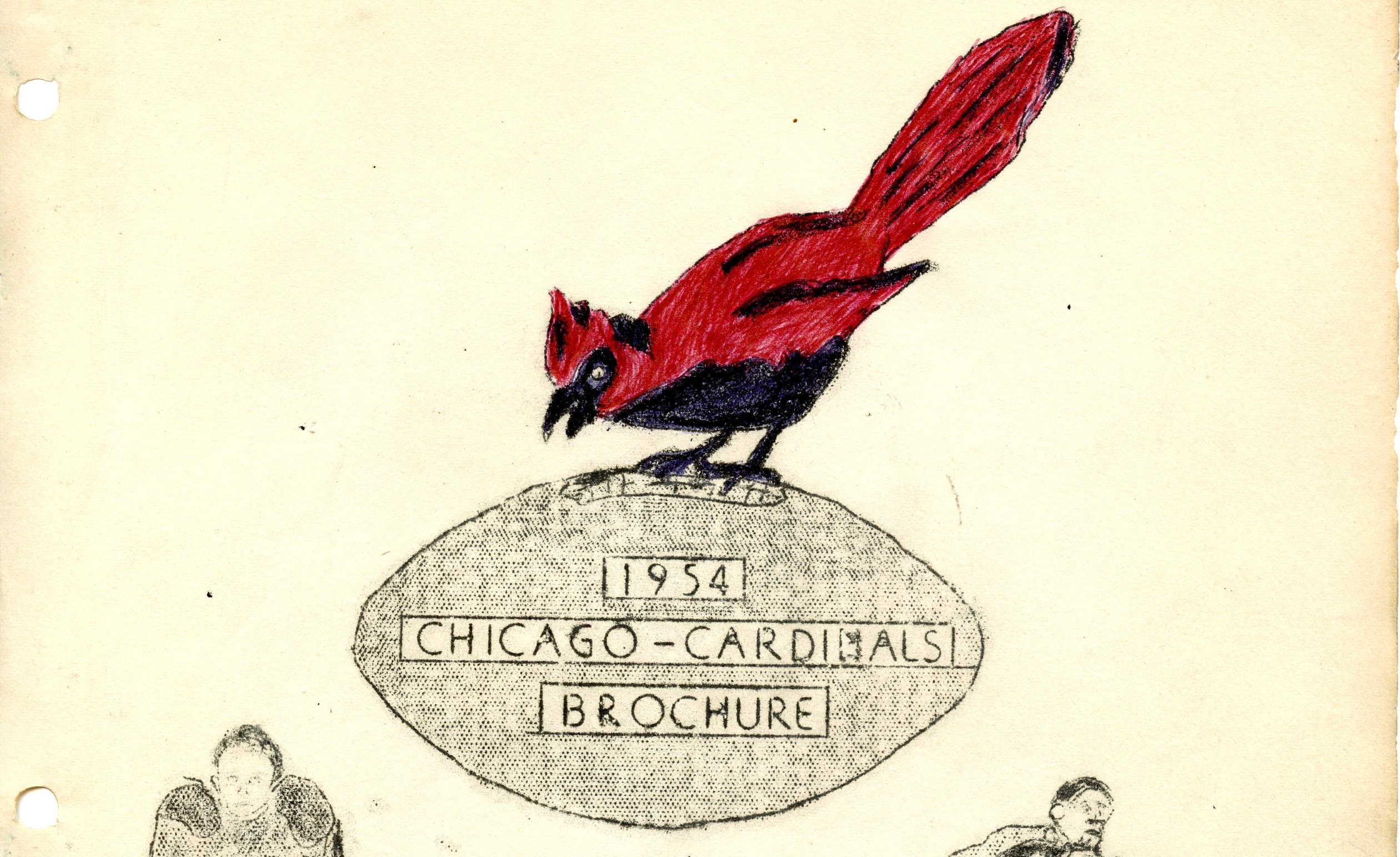 The partial cover of the 1954 Chicago Cardinals brochure/playbook exemplifies the simplicity of early playbooks. (Personal collection)
Early football offenses using the mass and momentum approach opened holes by crashing multiple backside linemen and running backs through the hole. Rule changes intended to eliminate mass and momentum plays required seven players on the line of scrimmage and required offenses to gain ten rather than five in three plays. (Teams had to gain ten yards in four plays s...
February 24, 2023
Gather 'Round, Boys: A History of Huddling
Like life in general, there are elements of football that made no sense until someone started doing them; other elements made perfect sense until someone stopped doing them. Such is the case with huddling. Football did not need huddling initially because it served no purpose until teams had structured plays. Once the rule of possession entered the game, offenses lined up in consistent formations and used preplanned plays called at the line. Football at the time had a nearly continuous flow. One ...
Today’s Tidbit… 1876 IFA Rule #19: Maul In
This is #19 in a series covering football’s original 61 rules adopted by the Intercollegiate Football Association in 1876. We review one rule each Friday.
Rules 19 and 20 concern maul-ins, which largely left the game in 1885, while some elements remained until 1910. Some aspects of maul-ins returned to football in recent years and were on full display in Super Bowl LVII (the one played in 2023 since few remember the Roman numerals).
Rule 19 defines maul-ins and their two potential outcomes, while ...
February 23, 2023
Today's Tidbit... The NCAA First Required Face Masks in 1993
Football is a rough game with a history full of attempts to limit the number of player injuries. Rules were enacted to reduce injuries, including early football's bans on slugging and hacking. Rules requiring seven players on the line of scrimmage and only one player in motion reduced the dangerous mass and momentum plays. Clipping, piling on, spearing, and targeting penalties are also intended to minimize injuries.
Beyond the rules, players and, later, sporting goods manufacturers created nose g...
February 22, 2023
Today's Tidbit... Win Two, Claim A Conference Championship
An article from two weeks ago discussed the 1932 NFL season and how tie games did not count when calculating the team win percentages that determined league or conference championships. In that example, the 10-3-4 Green Bay Packers sat behind the 6-1-6 Chicago Bears and the 6-1-4 Portsmouth Spartans in the standings.
Similar situations occurred in college conferences when travel and other difficulties resulted in highly unbalanced conference schedules. Top-level teams often filled the first half ...
February 21, 2023
Pigskin Dispatch Podcast: Letter Sweaters and Jackets
Pigskin Dispatch podcaster Darin Hayes and I discuss a recent TidBit about the origins of letters sweaters and jackets, noting some of the fabulous fashions of football past.
Click here to listen, or subscribe to Pigskin Dispatch wherever you get your podcasts.
Football ArchaeologyHonoring Letter Sweaters and JacketsThis article previously appeared on Uni Watch on January 22, 2023…Read morea month ago · 3 likes · Timothy P. BrownSubscribe for free and never miss a story. Support this site with a ...
Today's Tidbit... NFL Scoring Leaders Of Old
Most everyone knows that kicking specialists did not become common in the NFL until the 1960s. Before then, kicking specialists were rare because substitution rules limited the ability to send kickers into games for a play or two, and rosters were limited to 16 players in 1925 and 30 in 1938 before increasing to 40 in 1964.
The combination meant that position players doubled as the punters and kickers. Linemen sometimes kicked, but drop kicking and punting were typically handled by backs.
 Dutch Cl...