Alex Marchant's Blog, page 15
May 4, 2020
Latest #Lockdown #AuthorReading – from ‘King in Waiting’ by Alex Marchant
In the latest of my #Lockdown readings, I’ve, perhaps bravely, opted for reading the opening of Book 3 in ‘The Order of the White Boar’ series, provisionally entitled ‘King in Waiting’. The book will tell of the events in the lives of Matthew Wansford and his young friends in the months after the Battle of Bosworth.
It can be found, along with links to previous readings suitable for ages 8 to adult, at:
There’s still a way to go before I finish the book, but I hope this will offer a little taste of what is to come…
And over the next couple of weeks, watch this space for more guest posts!
The first will be a fascinating interview with the authors of the forthcoming collection The Road to Liberation: Trials and Triumphs of WWII – Marion Kummerow, Marina Osipova, Rachel Wesson, JJ Toner, Ellie Midwood, and Chrystyna Lucyk-Berger. Look out for this on the day after the commemoration of the 75th anniversary of VE Day, on 9th May!
Then, on 13th May, I’ll be joined by fellow Ricardian author J.P. Reedman, with her long-awaited prequel to I, Richard Plantagenet, entitled The Road from Fotheringhay. The book tells the story of King Richard as a boy through his own eyes. (Yay – now I don’t have to write it!!)
Please join us!
Loyaulte me lie! 


April 27, 2020
El Cid – ‘Rise of a Champion’ – interview with Stuart Rudge
As the latest in my series about fellow historical authors, I’m delighted to welcome Stuart Rudge on to my bog. Stuart has just published his debut novel, Rise of a Champion, about a fascinating person in a truly intriguing period of history. I’ll let him tell you all about it – and them – in his own words.
Alex: Welcome, Stuart! You’ve recently published your first novel, Rise of a Champion, book 1 of Legend of the Cid, telling the story of the great El Cid. What led you to write about this medieval Spanish hero?
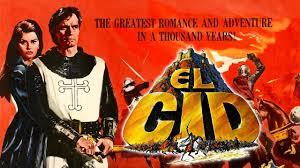
Stuart: First of all, thank you for hosting me on your blog, Alex. This is my first author interview, and having scanned through the questions it seems a lot of fun! I first encountered El Cid in a computer game (Age of Empires II), what seems like a lifetime ago. At the time I was only thirteen, and thought it was cool to play as the Spanish hero. But I couldn’t understand why El Cid seemed to save the day so much, yet was continually scorned by those he served. He spent years in exile and eventually became the master of his own fate. It wasn’t until a few years ago, when I decided to try my hand at writing seriously, that I settled on El Cid, and started doing some research. I always wanted to write historical fiction, but the periods I initially thought of writing about (Romans and the aftermath of Hastings) seemed saturated with good material already, and there were no English translations of novels about El Cid, or screen adaptions other than the Charlton Heston film from fifty years ago. I believed I had found a gap in the market and decided to give it a shot.
[image error]
Charlton Heston as El Cid
Yet as I sit and write this, there has been a major Spanish TV series in production, in collaboration with Amazon, as well as two Spanish novels and two English novels released in the past twelve months! It can be a little disheartening when others release material covering the same subject you have written about, but this book is my interpretation of the Cid saga, and I look forward to seeing and reading other creatives’ versions when I can find the time.
Alex: You chose to tell the story of Rodrigo Diaz de Vivar – who became known to his enemies as El Cid, or ‘The Champion’ – through the eyes of Antonio Perez, a gentleman in his household. Is Antonio a real person, and why did you choose this approach?
Stuart: Antonio is entirely fictional. My initial idea was to tell the story through the eyes of Alvar Fáñez, who was a close companion of El Cid’s and an important historical character in the later years of the eleventh century. Ultimately, I decided to tell the story through a fictional character because I wanted to control the perception of the Cid; Antonio will come to act as both a close companion but also a source of conflict throughout the series, who questions El Cid’s motives, yet will regularly revere him and put him on a pedestal so to speak. We will still see El Cid grow from a humble knight into the legend he became, through a man who becomes oath-bound to him and enamoured of his feats. And having a fictional protagonist allows me to explore other aspects of the period and have eyes on different episodes; through my research, I discovered several events in Alfonso VI’s reign which I knew I must include, but El Cid would not have been present at them. Plus I can put Antonio in perilous situations, which allows El Cid to save the day and be the hero he is!
[image error]
Alex: What sort of research did you have to do for the books? Is research something you enjoy?
Stuart: There are several contemporary sources on El Cid, like the El Cantar del Mio Cid (Spanish, The Song of my Cid) or Carmen Campi Doctoris (Latin, Song of the Campeador), but the thing I found with most accounts of him is that the more detailed accounts are set after his exile in 1081, and there is an element of fiction and exaggeration about them. Rise of a Champion begins in 1063, after the battle of Graus, which is the first time El Cid’s name is recorded. The first four books in the series are all set between 1063 and 1081, when very little is written about him, so it was important to look at a broader historical setting, most notably the lives of Fernando of Leon-Castile and his sons Sancho and Alfonso. The lack of mention of El Cid’s early life was an advantage to an extent, as it allowed me to create a backstory which ties in with the main character, Antonio, and to create situations which mould him and justify why he became the mighty hero he is portrayed as.
I generally enjoy research, and always look for new sources to take bits from and add them to enhance my work. I have a stack of books and scholarly articles which I pore through, but I try not to saturate the books with pointless historical fact and waffle just for the sake of it. Researching the Moorish taifas has been a highlight, and I always look forward to writing scenes set in a Moorish city. It is great to see how the names of Spanish cities were influenced by their original Moorish names; Toledo was Tulaytula, Valencia was Balansiya, Gibraltar was Jebel Tariq, etc.
Alex: Did you visit any of the locations involved in El Cid’s history (or indeed Antonio’s)? Did any in particular make a lasting impression?
Stuart: I would have loved to visit all the places I have mentioned in the novel, but time and money constraints would not allow it. For research purposes I resorted to travel blogs to garner other people’s impressions on the landscape and location, archaeological websites and blogs to get a feel for what the architecture and culture was like in the eleventh century, and Google Earth/Maps to study the lie of the land and calculate distances between locations. The early part of Rise of a Champion set in Asturias, near Oviedo, and the surrounding area, and Monte Naranco overlooks city. I remember seeing an image from the summit looking south to the Cantabrian Mountains and found it breathtaking, so much so I knew I had to include a description in the book. Perhaps when my kids are older and I have the chance yo visit Naranco I will, as well as Vivar del Cid, Zaragoza and Valencia, which are the places most connected with the Cid. And I would love to walk part of the pilgrim road which features in the book, the Camino de Santiago.
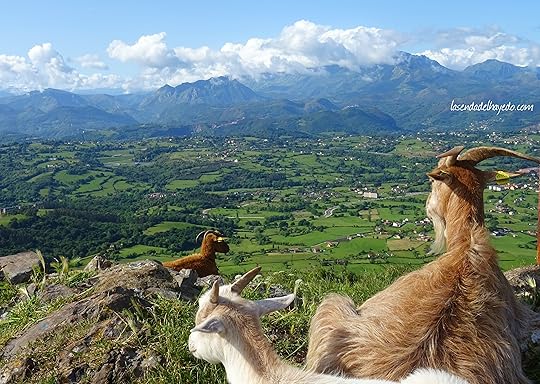
Photo: La Senda del Hayedo
Alex: I have to admit my main ‘knowledge’ about El Cid comes from the eponymous Hollywood epic starring Charlton Heston. How accurate is that portrayal of his story?
Stuart: Unfortunately, the Charlton Heston version of the story suffers from the curse of Hollywood over History. I watched it many years ago, and whilst it was a pretty epic film, it contains so many inaccuracies and plot holes. For example, El Cid is portrayed as being a mentor to the princes of Leon, Alfonso and Sancho, whereas in reality he was around eight years Sancho’s junior. He grew up in Sancho’s household, then served him when Sancho was crowned king of Castile. And the final scene, where the dead El Cid rides forth upon Babieca to defeat Yusuf and the invading Almoravids, is complete fabrication; although he defeated an invading army after his conquest of Valencia, the truth is he died peacefully in 1099, some three years before the Almoravids marched upon the city a second time. His wife Jimena ruled over Valencia after his death. Whilst the changes may make for a better film, glaring historical inaccuracies really irk me. That is why I am meticulous in my research and look to be as historically accurate as possible.
Alex: Tell us a little about yourself and how you started as an author.
[image error]Stuart: I currently work in a port, but studied Ancient History and Archaeology at university, with designs to work in a museum. But my graduation coincided with the recession and heritage jobs became a premium, and I just could not break into the sector. It was around this time I was inspired to begin writing when I attended the book launch of a local author and family friend. I loved the way he passionately talked about his book and I had a good chat with him on how to write and get published. My first attempt at writing, set in the late Roman Republic, was a complete disaster and will never see the light of day. I later got a job at York Minster, commuted to and from York via train, and used the commute to write a Viking-influenced fantasy novel; whilst it wasn’t great, it gave me good practice in honing my style.
I joined a writing course in 2015 and produced the very first draft of Rise of a Champion, and gained experience in pitching to a real agent. After editing and more pitching I was picked up by an agent in 2017, but after two and a half years of hearing nothing back from the agent or any potential publishers, I decided to part ways with them and looked at self-publishing. It has been a long, gruelling trek, and I questioned whether today would come, but I am delighted that I never gave up and now have my first novel out for the world to see. The key is self-belief and persistence.
Alex: How has your background in archaeology influenced your writing (if at all)?
Stuart: I like to believe I can look at a piece of archaeology and see the story behind it, not just what it is in the present day. I can walk around a Roman fort on Hadrian’s Wall and imagine the daily routine of the garrison; I can look at a sword or piece of jewellery and visualize the blacksmith hammering away at his forge, or a skilled craftsman spending countless hours in his workshop creating a masterpiece we now display in a museum. I loved working in York Minster and chatting to visitors about the history of the building, the architecture and archaeology in the museum in the undercroft. Being able to reconstruct an image of the past through archaeology helps me piece together a scene and find the words to bring it to life on a page.
[image error]
York Minster
Alex: Where do you write? Do you need silence, or do you listen to particular music? (Spanish medieval troubadour music might spring to my mind for these books!)
Stuart: I write mainly at home at the dining room table. I have petitioned for a desk for several years now, but alas, the better half does not agree it can be accommodated in the limited space in the house! But all I need is a table and my laptop, and I let the words flow. I tend to write when no one else is around, mainly early in the morning before work or when the kids are at school. If I listen to music it tends to be classical or movie soundtracks – Gladiator is a particular favourite of mine, especially when writing battle scenes. As I previously mentioned I wrote a novel many years ago commuting on a train, and found it hellish, and the cliché of writing in a coffee shop isn’t for me because I get distracted by all the sporadic conversations one can hear. (I’d much prefer a quiet pub with a cold pint, but never have the chance!)
Alex: Who are your favourite authors? Do you read much historical fiction, of the medieval or other periods? What other genres do you enjoy? What are you reading at the moment?
Stuart: My number one has to be Bernard Cornwell, like many others in our genre. My uncle gave me The Winter King when I was at university and I devoured it; then when I had finished the Arthur Trilogy, I made my way through the Uhtred books. I tend to stick to historical (of all periods) or fantasy; I do enjoy Joe Abercrombie’s dark, gritty stuff, especially the First Law books, and Matthew Harffy and Giles Kristian. Lancelot was my favourite book from recent times. I’m currently reading Angus Donald’s Robin Hood series, but plan on investing in a few books from indie authors I like the look of; Steven McKay’s The Druid is the next on the list.
Alex: You’ve self-published your book, and it’s being published at a rather strange time in the world, with so many countries on lockdown owing to the Covid-19 pandemic. How have you found the process of self-publishing? And have the present circumstances been a help or a hindrance to you?
Stuart: Self-publishing is very daunting if you have no clue what to do, but I looked at several successful self-published authors, notably Steven McKay and Matthew Harffy, and studied how they started out and made a success. Creating a website, blogging quite regularly and connecting with people on social media were the main points, but it is also important to start marketing your book as soon as possible; get people interested, spread the word, make sure people remember your name. That has been my general approach. I like the freedom of being able to design my own cover and put whatever content I want within the book.
The lockdown has been a hindrance for sure. In the preceding weeks, I explored the possibility of doing a small book launch in an independent bookshop, but that door was firmly shut. Depending on when things get back to ‘normal’, and if I have a few books out, I may combine the signings into a larger one. But other than that the lockdown looks to have helped self-published authors a little, as readers have more time to read and seem to be looking for more content to devour.
Alex: What’s next for you? Are you writing the second book in the series, or are you taking a break to do something different?
Stuart: I wrote Rise of a Champion five years ago, and in the intervening time, I have managed to write books two and three (currently titled Blood Feud and Fall of Kings, respectively). I am currently halfway through book four of an eight-book series. I plan on finishing book four and getting book two ready for publication, then will most likely crack on with book five. I have thought about doing one or two standalone novels, one of which is a fantasy, but I will see how the El Cid books do first. If they sell well, I’ll most likely finish the series before I move on to a new project. I also plan on doing a few short stories to plug in the gaps in between books.
Alex: And one final question: given the strange times we’re living through, how is your day different to usual? Have you resorted to anything ‘quirky’ to help you stay sane, or get you (and your family) through the days?
Stuart: It is strange not to have to get the kids up early and do the school run. We do have a routine at home, but its more relaxed than normal; nobody needs the unnecessary stress of sticking to a strict routine when it isn’t needed. My day usually consists of my main job and home schooling the kids, and those odd jobs around the house which we like to put off but do not have the excuse to evade any longer! I get bits of writing done when I can, but my focus has been on editing Rise of a Champion and promoting it. We have not had to do anything quirky to stay sane, but regular family activities like board games, arts and crafts, and family film times seem to keep everybody happy.
Alex: Many thanks, Stuart – and best of luck with all your books!
Rise of a Champion can be found at: https://www.amazon.co.uk/dp/B08742YDMZ/ref=cm_sw_r_tw_dp_U_x_qnBNEbY3BJVK3
Stuart’s website is: www.stuartrudge.wordpress.com
Stuart can be found on social media:
Twitter: https://twitter.com/stu_rudge
Facebook: https://www.facebook.com/stuartrudgeauthor/
Alex Marchant is author of two books telling the story of the real King Richard III for children aged 10+, The Order of the White Boar and The King’s Man, and editor of Grant Me the Carving of My Name and Right Trusty and Well Beloved…, two anthologies of short fiction inspired by the king, sold in support of Scoliosis Association UK (SAUK).
Alex’s books can be found on Amazon at:
My Twitter handle and Matthew Wansford’s
Instagram: AlexMarchantAuthor
#AuthorReading of ‘The Order of the White Boar’, Chapter 1, Part 2
By a rather circuitous route, the second part of my reading of Chapter 1 of The Order is now available, via You Tube or my Facebook page.
Matthew’s introduction to Middleham Castle continues, after his besting by Hugh Soulsby, when he first makes the acquaintance of the ever-friendly Roger de Kynton, ‘a fair-haired, open-faced boy, with freckles and laughing eyes’…
The first part of Chapter 1 is also now available on YouTube: https://youtu.be/PhGxmltD6f0 More readings to come. Suggestions welcome (though the next is likely to be from my work-in-progress, prompted by hearing my first cuckoo of the spring yesterday).
Alex Marchant is author of two books telling the story of the real King Richard III for children aged 10+, The Order of the White Boar and The King’s Man, and editor of Grant Me the Carving of My Name and Right Trusty and Well Beloved…, two anthologies of short fiction inspired by the king, sold in support of Scoliosis Association UK (SAUK).
Alex’s books can be found on Amazon at:
My Twitter handle and Matthew Wansford’s
Instagram: AlexMarchantAuthor
April 24, 2020
Henry Tudor and the King Arthur claim – a guest post by Mary Anne Yarde
Now, anyone reading this may well know what little liking I have for a certain King Henry VII, otherwise known as Henry Tudor. The reasons are obvious if you know I’ve been a Ricardian for many years and am of the belief that Tudor had no real claim to the throne when he usurped it from the rightful king, Richard III. And many of his actions over the next few years suggest Henry knew it too (something I find I’m touching on in my work-in-progress…)
Today I’m delighted to host a guest post from the fabulous Mary Anne Yarde as part of her ongoing blog tour, on a perhaps lesser-known aspect of Tudor’s attempts at a claim – and one that ties in well with her own newly released book, The Du Lac Curse, Book 5 of The Du Lac Chronicles, inspired as it is by legends of King Arthur.
(A warning: for those readers of a nervous Ricardian disposition, one of the images in the following post may be somewhat disturbing… 
Some great #HistoricalFiction coming your way! King Arthur, El Cid, VE Day…
Periodically I apologize for neglecting this blog, and that’s usually followed by a little flurry of activity before a further period of neglect… Perhaps this apology and flurry will be the start of something more sustained. I hope so, because I’ve some exciting guest posts coming your way over the next few weeks.
I’ve often said that, since publishing my first novel, I’ve found the writing community to be incredibly supportive, and I try my best to support my fellow authors in turn. One of the most supportive people I’ve come across in the past couple of years is Mary Anne Yarde, and I’m absolutely delighted to say that Mary Anne will be a guest of honour on my blog tomorrow as part of her blog tour promoting her new release, The Du Lac Curse, Book 5 in her Du Lac Chronicles.
If you enjoy historical fiction, perhaps with a little fantasy thrown in, or simply the treasure trove that is Arthurian legend, Mary Anne’s fiction is for you. And tomorrow, her guest post comes rather close to home for me and my work…
[image error]
After Mary Anne, on 28th April I have another treat for you: an interview with new historical author Stuart Rudge. His debut novel, Rise of a Champion, is the first in a series about the legendary Spanish hero, El Cid. And if your knowledge of the Cid is based largely on Charlton Heston’s Hollywood epic (as sadly mine is), you’ll discover a fascinating other side to the history…
With the 75th anniversary of VE Day rapidly approaching, and sadly the curtailment of many if not most commemorations owing to the current global situation, you may be looking for some reading in tribute to those momentous events. Watch this space as I have a special interview lined up for 9th May…
In between times, there may also be a few more author readings from The Order of the White Boar and The King’s Man…
In the meantime, stay safe and stay well.
Alex Marchant is author of two books telling the story of the real King Richard III for children aged 10+, The Order of the White Boar and The King’s Man, and editor of Grant Me the Carving of My Name and Right Trusty and Well Beloved…, two anthologies of short fiction inspired by the king, sold in support of Scoliosis Association UK (SAUK).
Alex’s books can be found on Amazon at:
My Twitter handle and Matthew Wansford’s
Instagram: AlexMarchantAuthor
April 20, 2020
‘Middleham Castle, 1482’ – a reading from ‘The Order of the White Boar’
Having finally resolved some technical issues, I’ve now posted the second in my brief readings from my books. This time, from the opening scene of Chapter 1 of The Order of the White Boar.
I hope this will become a regular thing during the coming weeks, especially during the UK lockdown. My plan next is to continue the reading from Chapter 1, in which of course Roger de Kynton (many readers’ favourite character) is introduced.
Not only will I be reading from The Order and The King’s Man, but also from other work, including, perhaps, my current work in progress, the third in the White Boar sequence, currently provisionally titled ‘King in Waiting’. All requests welcome!
So watch this space! (or more importantly perhaps, watch my Facebook page…)
Enjoy! (and share widely if you do!) 
April 18, 2020
“A gloriously entertaining tale … an easy 5 stars”… ‘The Order of the White Boar’
I’ve just found a fabulous new review of ‘The Order’ on Amazon. They always brighten my day – and it has to be said, in these strange days more than ever. So thank you so much to Karen Perkins! 
April 13, 2020
My latest for @AuthorsElectric: hot cross buns & chocolate eggs
My latest blog for Authors Electric
https://authorselectric.blogspot.com/2020/04/an-easter-celebration-15th-century.html
A little late for Easter itself, but it’s never too late for hot cross buns & chocolate eggs – or an author reading!
[image error]
Alex Marchant is author of two books telling the story of the real King Richard III for children aged 10+, The Order of the White Boar and The King’s Man, and editor of Grant Me the Carving of My Name and Right Trusty and Well Beloved…, two anthologies of short fiction inspired by the king, sold in support of Scoliosis Association UK (SAUK).
Alex’s books can be found on Amazon at:
My Twitter handle and Matthew Wansford’s
Instagram: AlexMarchantAuthor
April 10, 2020
An Easter reading – rolling those eggs at Middleham Castle in ‘The Order of the White Boar’…
Well, the first of my planned readings of excerpts from my books and possibly my work-in-progress is up and running on Facebook.
It’s not quite as planned, but a series of technological hiccups has led to a ‘post-it-or-miss-Easter’ moment! So here it is:
Please forgive the shaky camera work – this hermit author who spends most of their time in the fifteenth century is finding it difficult to master the requisites for such recordings – especially when let down by one device after another!
But if you’d like me to persevere and do another, let me know! Requests welcomed…
[image error]
Alex Marchant is author of two books telling the story of the real King Richard III for children aged 10+, The Order of the White Boar and The King’s Man, and editor of Grant Me the Carving of My Name and Right Trusty and Well Beloved…, two anthologies of short fiction inspired by the king, sold in support of Scoliosis Association UK (SAUK).
Alex’s books can be found on Amazon at:
April 8, 2020
A treat for Easter week…
In the next few days I hope to post on my Facebook page the first of some readings from my books, starting with a short one appropriate for the Easter season.
[image error]
While prepping for the readings from my books, I remembered that someone else got there first! So I suspect I won’t be ‘performing’ the first chapter of ‘The Order of the White Boar‘ as I can’t possibly compete with Grandpa Joe.
A fellow member of the Promoting Yorkshire Authors group, Paul Smith has his own dedicated You Tube channel for Grandpa Joe’s Story Time, as well as being the driving force behind Wise Grey Owl, a book promotion site which showcases independently published authors in particular (especially apt during what is currently #IndieApril). Get yourself over there if you’re in need of new reading material! (And don’t forget The King’s Man is currently on a Kindle offer at only 99p/99c…)
But if you enjoy being read to instead, why not try Grandpa Joe‘s Story Time? This link will take you direct to his reading of the first scene of The Order – told of course from Matthew Wansford’s point of view.
Are you sitting comfortably? Then he’ll begin…
[image error]
Obviously this is not Grandpa Joe…
Alex Marchant is author of two books telling the story of the real King Richard III for children aged 10+, The Order of the White Boar and The King’s Man, and editor of Grant Me the Carving of My Name and Right Trusty and Well Beloved…, two anthologies of short fiction inspired by the king, sold in support of Scoliosis Association UK (SAUK).
Alex’s books can be found on Amazon at: