Alex Marchant's Blog, page 32
April 23, 2018
Promoting Yorkshire Authors – and a positive view of the real #RichardIII
Promoting Yorkshire Authors have very kindly invited me to join fellow Ricardian author Marla Skidmore in a interview/question and answer session at Harrogate Library, North Yorkshire on 19 May to discuss our books about King Richard III.
If you happen to be in the area, do come and join us! If not, do look out for the recording when available… 
As their press release says:
“Promoting Yorkshire Authors (PYA) is lucky to have among its members two authors who have focused on Richard III, inspired by the discovery of his remains in a car park in Leicester.
They’ve told two very different stories but both give an intimate insight into the life of Richard, so different from his public persona immortalised by the Bard in his tales.
Marla Skidmore’s novel, Renaissance concentrates on Richard’s defeat at the Battle of Bosworth Field but it has an unusual and unique slant, one that I’ll not reveal but adds real interest to the novel. Marla studied History at University and her research for this story, though fictional, has been rigorous.
Alex Marchant’s novel The Order of the White Boar, tells the tale of Richard through the eyes of the young page Matthew who is in the service of the Richard when he is the Duke of Gloucester, Edward IV’s brother and before Richard became King of England. Though intended for children and young adults, it’s a story for anyone who remembers the trials of growing into an adult, though not many of us will have had such an insight into the future King’s inner vulnerabilities and those of his family.
We’re interviewing Marla and Alex at Harrogate Library on 19th May at 2 pm and you’ll have a chance to listen as the authors answer questions framed by Paul Smith, also an author and a member of Promoting Yorkshire Authors. The event will be recorded for PYA’s podcast and You Tube channel.
Please come along and support both the event an Yorkshire’s authors.
The PYA affiliate Yorkshire Writer Podcast can be found at http://www.yorkshirewriterpodcast.podbean.com/ and PYA’s You Tube Channel at https://www.youtube.com/channel/UCwvgdKFqUji1YFvlR9dOmBw.”
[image error]


April 16, 2018
Romantic fiction – and Richard III
Well, here’s a rather different blog post – not specifically about King Richard III* or his times, or even about Master Matthew Wansford. But a little musing on an interesting blog that one of my fellow Authors Electric bloggers, Jane Thornley, posted about ‘romance’ fiction: ‘I should have been a romance writer’.
http://authorselectric.blogspot.co.uk/2018/04/i-should-have-been-romance-writer-by.html
After pointing out that writers of romantic fiction can tap into the largest pool of readers (and buyers) of any genre, Jane questions why the genre is looked down upon – and especially in terms of gender – with romance generally being seen as the preserve of female authors. As she says, love and what goes with it are what perpetuate the species and can offer some of the best aspects of life – though they can also be responsible for (and/or inextricably entwined with) some of its worst throughout history (from the ostensible reason for the Trojan war onwards….)

Although the relatively new ‘young adult ‘ genre is populated with many books exploring relationships between teenagers, as a writer of children’s books, I tend to steer clear of the more ‘romantic’ aspect, of course (though readers may spot the odd hint from time to time perhaps in the later books). For Matt and his friends, ‘romance’ refers rather specifically to the medieval romances: as Wiki puts it, ‘historically, the term “romance” originates with the medieval ideal of chivalry as set out in its chivalric romance literature . . . Historians believe the word “romance” to have developed in the French vernacular meaning “verse narrative.”‘ My readers may have noticed various references to such books imported from the continent by Matt’s father and Master Ashley in The Order of the White Boar.
[image error]
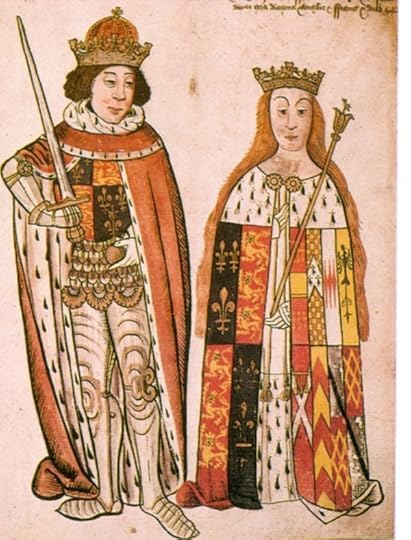
Many books about King Richard (*oops, I was wrong, this blog post does relate back to him…) portray him as a romantic hero – in perhaps both senses of the term: as the chivalric ideal (pleading guilty, m’lud – at least through Matt’s eyes) and as an irresistible fifteenth-century ‘babe-magnet’ (not guilty: as Alys writes in response the the rumour about a possible marriage between him and Elizabeth of York: ‘Elizabeth is mortified. She says that she has grown to like her uncle, now that she knows him better, but she could never love him like that! She’s his niece, and he’s so much older than her‘ [and yes, that is her underlining – her teenage indignation resulting in her quill point almost tearing through the paper – you can almost hear her saying ‘Yuck!’]).
That latter sort of romance isn’t for me and my books, although, as always throughout history, it will probably be lurking under the surface at every turn, even if not explicit. Did Richard marry his wife Anne for love? Did King Edward marry for love (and *SPOILERS!* how many times)? Will Alys grow to love her intended husband Ralph Soulsby, to whom her betrothal is arranged when she is aged just 12? Can Elizabeth of York possibly love … sorry, that’s a step too far for those who don’t know what’s coming.
The aspect of this discussion that touches on the gender of the author is an interesting one. Jane Thornley mentions a male historical fiction writer who is clearly more interested in battles than romance: ‘Romance, sex, or any human interactions that had not taken place without the deployment of weaponry, preferably with an entire legion, did not grace the pages of his weighty tomes.’ Is there a real split here, or is it more apparent than real?
In terms of female vs male writing of ‘romance’, my favourite comparison is between ‘War and Peace’ and ‘Gone with the Wind’. They’re both weighty tomes (800+ pages), deal with very similar themes, have hefty descriptions of battles, chart the effects of war on those left behind. BUT the one written by a woman (Margaret Mitchell) is so often dismissed as ‘romance’, ‘chicklit’, ‘Mills&Boon’ – at least by those who haven’t read it.
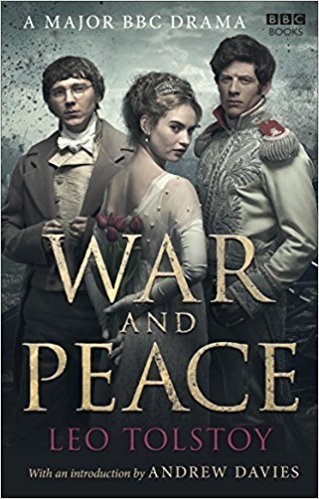
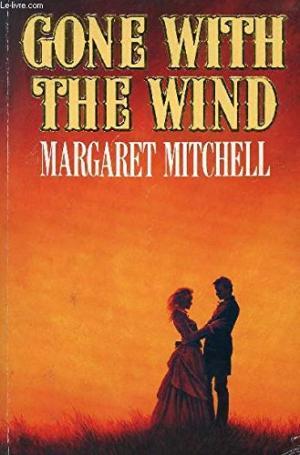
I’ve read both twice. They’re both works of their time (with some aspects that are not entirely welcome in the twenty-first century), but they are also both compelling in their exploration of human nature – including how men and women relate to one another/perpetuate the species.
So, returning to books about Richard III. Battles versus romance? Female writers or male writers? Do ‘Richard as romantic hero’ and ‘Richard as warrior’ belong to different genders as well as genres? Is there or can there be a balance? Or is it possible to have a ‘Richard as a man who does a bit of everything and actually likes little more than sitting at home with his family having a glass of wine and reading a book in the evening’? What do you think? And which do you prefer?
And should I, as Jane Thornley ponders, consider turning my hand to the more financially lucrative romantic fiction? Just asking…
The Order of the White Boar is available at myBook.to/WhiteBoar and also through Blurb: http://www.blurb.co.uk/b/8167813-the-order-of-the-white-boar
[image error]
April 13, 2018
A new venture! @AuthorsElectric
A new venture for me!
Joining thirty other authors on the fantastic Authors Electric blog site for a regular slot. Please join me on the 13th of every month at http://authorselectric.blogspot.co.uk/

Today, my introductory blog. Some of you will recognize the origin of my title without any help from the asterisked note . . .
http://authorselectric.blogspot.co.uk/2018/04/right-trusty-and-well-beloved-we-greet.html
[image error]
[image error]
April 11, 2018
More fabulous 5* Amazon reviews for ‘The Order of the White Boar’!
I’m delighted to find that The Order has received two more fabulous 5* reviews on Amazon!
Annie says ‘I really enjoyed this book, suitable for both children and adults. You very quickly become engrossed in the era of the book and the story line and characters. Really looking forward to the next instalment of the story.’
And K and R say ‘I so enjoyed this book… The storyline, characters and atmosphere were well created and believable. I so hope the bad guy is going to get his comeuppance on the battlefield later! As a Ricardian I am sure JAH would approve! Looking forward to the sequel.’
Thank you so much, Annie and A and R! And I do so hope dedicatee Dr John Ashdown-Hill does indeed approve! His research and writings have been very influential on the book, and particularly his The Last Days of Richard III and The Mythology of Richard III on the sequel The King’s Man.
April 9, 2018
OTD in 1483 – the death of a king
On this day in 1483, King Edward IV died at the age of just 40. He had ruled England for 22 years (with a short break in 1470-1 when Henry VI was briefly restored to the throne), the last 12 of them in relative peace after the tumult of the ‘Wars of the Roses’.
[image error]
He left behind him a 12-year-old son to inherit his crown as Edward V, and in his will named his youngest, and only surviving, brother, Richard, Duke of Gloucester as protector of the kingdom.
It’s unclear exactly how Edward died. He was a strong, apparently healthy man of middle age, if perhaps a little overweight in recent years. Various suggestions have been put forward, including apoplexy (nowadays known as a stroke) and a ‘chill’, supposedly caught on a fishing trip, although as this was the Easter season, such pastimes may not have been approved of in Catholic England. More recently, it has been suggested that he may have been poisoned with arsenic (a form of murder then becoming fashionable on the continent). Whatever the truth, it was a sudden, unexpected death that led ultimately to the turmoil of the ‘Year of the Three Kings’.
‘The Order of the White Boar’ comes to an end soon after the news of Edward’s death reaches Duke Richard in Middleham. And the soon-to-be-published sequel, ‘The King’s Man’, begins on the road to London, as the Duke and his retinue travel south to meet with the new King on his way to be crowned in the city.
[image error]
At Northampton they are met by two of the young King’s other uncles, Earl Rivers and Henry, Duke of Buckingham. The gentlemen spend a pleasant evening dining in an inn together, then after Rivers retires to bed, Dukes Richard and Henry sit up, talking . . .
“Buckingham drank deeply, then placed his cup down on the table, with care this time, and gazed across at Duke Richard. His next words seemed chosen in a more deliberate fashion.
‘And if the rumour I hear is true?’
‘What rumour?’
‘That your brother’s death was – suspicious. That maybe – and, as I say, it is only a rumour – that maybe he was . . . poisoned.’
‘Poisoned?
‘They say it has become all the rage at the Italian courts.’
Without a second’s hesitation, Duke Richard shook his head.
‘Nay, cousin, rumours are dangerous beasts and should not be believed lightly. Hastings’ messenger said apoplexy.’
Buckingham sat back again, revolving his wine-cup slowly with the fingers of one hand, while watching his fellow Duke.
‘Apoplexy can take many forms, so too can poisoning. But how often does a man recover from apoplexy, only to die of it a week later.’
‘Hastings did not report that.’
‘They say the King fell ill, then rallied. But after several days, and an evening spent in the bosom of his wife’s family . . . The first illness was a failed attempt – seven days later came success.’
A moment of quiet. The gentlemen from Yorkshire exchanged glances, the candlelight catching their eyes.
When Duke Richard remained silent, my lord of Buckingham ploughed on.
‘It is perhaps no coincidence that Dorset was made deputy constable of the Tower only weeks before. In preparation for seizing power – and the royal treasure. They say Edward Woodville has shipped half of the treasury away to his fleet in the Channel.’
‘I have heard that about my brother’s treasure also, and perhaps it is true. But I cannot believe the Queen capable of such a crime as murder. She loved my brother . . . at least, once she did.’
‘Yet now her charms have faded – you saw for yourself at Yuletide. Mistress Shore and others have become favourites. And they say Hastings himself has had a part to play in that. Elizabeth’s hold over Edward was perhaps broken and her family feared their grip on power ending. When so threatened, it takes little to drive a pack of dogs to turn on the hand that feeds them.’
‘But not to kill a king. That is a crime beyond all others. No, even the Woodvilles, for all their scheming, could not turn to that . . . .’”
Perhaps we’ll never know how Edward IV died. But he cannot have known, as he drew his final breaths, what difficulties he would bequeath to those he left behind . . .
Coming soon: ‘The King’s Man’. Follow Matthew Wansford and Duke Richard’s story as the Protectorship unfolds . . .
April 6, 2018
Another fantastic review – from Wendy Johnson, Looking for Richard Project and Richard III Society
I’ve just received the following fantastic review of The Order of the White Boar from Wendy Johnson, member of the Looking for Richard Project team who were responsible for finding King Richard’s grave in 2012, and to whom the book is dedicated.
It’s about to be published in The Journal of the Scottish Branch of the Richard III Society Spring 2018. Many thanks to Wendy and the editor for allowing me to reproduce it here.
The Order of the White Boar: Alex Marchant
Book Review by Wendy Johnson
One of the aims of the Richard III Society is to educate and inform the younger generation, introducing them to the true story of King Richard’s life, which may not be a part of their school curriculum.
During the Middleham Festival Weekend last year, Philippa presented a talk to local schoolchildren, and along with Society members, Sharon Lock and Amanda Geary, distributed copies of Richard III by Stuart Hill; a book from the I Was There series of novels for young people, which sets out to tell Richard’s story in a sympathetic and engaging way. By all accounts, the children were delighted to meet Philippa and eager to read more about King Richard in the books they received.
It is important to encourage future generations to take an interest in King Richard and to engender in them the same mixture of curiosity and determination which eventually led to the discovery of the king’s remains in 2012. We also need future generations to question traditional academic views and feel inspired to pursue their own research into the fifteenth century. Many of those with a fascination for King Richard and his times admit that interest was fostered in their early years, kindled, more often than not, by their discovery of a particular book.
Alex Marchant’s recent publication The Order of the White Boar is just such a book. Written primarily for young people, this delightful story has the power to captivate readers of any age, as it draws them into the exciting world of protagonist Matthew Wansford who, at twelve years of age, enters the household at Middleham Castle in the auspicious year of 1482.
Matthew, son of a successful York merchant, has a precious talent: as a former pupil of the Minster School, he possesses an unparalleled singing voice. This soon brings him to the attention of Duke Richard of Gloucester, who is keen for Matthew to join his private chapel, as a chorister. Matthew, who has dreams of becoming a knight, quickly settles into the household, making friends with fellow page, Roger de Kynton, and Alys Langdown, a young girl in the service of the Duchess Anne.
But in addition to making friends, Matthew also encounters Hugh Soulsby, son of a disgraced Lancastrian, who soon becomes the boy’s nemesis. A dangerous enemy, Hugh sets out to make Matthew’s life a misery, missing no opportunity to humiliate him in the practice yard and to probe into Matthew’s troublesome past. Duke Richard, on the other hand, impressed by Matthew’s virtues of honesty and loyalty, allows the boy to draw close to his family, trusting him to act as companion to his young son, Edward.
Despite the malice of Hugh Soulsby, or perhaps because of it, Matthew, Roger, Alys and Edward forge bonds of loyalty and friendship which lead to the formation of their own private chivalric order: The Order of the White Boar.
The scene is then set for the young friends to embark upon a series of adventures, and for Matthew to prove his courage in the face of adversity as well as his loyalty to his master, Duke Richard of Gloucester.
Alex Marchant has woven an engaging and exciting story around the true events of 1482; creating a convincing and lovable hero, whilst also tracing a sympathetic portrayal of Duke Richard as a man who values, and inspires, loyalty. The book is extremely well researched and whilst some of the characters are imagined, the author proves her extensive knowledge of the period by the inclusion of a number of real characters beyond the obvious: Walter Kirkeby, for example, a member of the York Waits, referred to in the historical record of the York House Books as well as Frederick Wansford, Matthew’s brother, another real historical figure. The book’s descriptive passages are a pleasure to read; from the rolling hills and valleys of Wensleydale to the clanging bells and heaving streets of medieval London.
As the novel draws to a close, King Edward’s death casts an uneasy cloud over the household at Middleham and as Matthew Wansford rides south in the retinue of Duke Richard of Gloucester, we know that the road ahead will be fraught with danger for both of them.
How will Matthew fare as he comes face to face with those hostile to the duke? And will his path once more cross that of his arch enemy, the Lancastrian sympathiser, Hugh Soulsby?
I, for one, cannot wait to find out.
Wendy Johnson
[image error]
Wendy Johnson with fellow members of the Looking for Richard Project team, Dr David Johnson, Philippa Langley and Dr John Ashdown-Hill, at the Greyfriars dig site in 2012 (Photo (c) copyright Philippa Langley)