Michael Levitt's Blog, page 80
May 27, 2021
Must-Know Tips for Storing Grains in Agriculture

In the agriculture industry, handling grains is a task requiring immense preparation, patience, and knowledge. Unfortunately, simple storage mistakes can render grain useless. To keep products safe and secure under your watch, use these must-know tips for storing grains in agriculture. Utilizing these tips will help you build the right reputation in the industry instead of providing clients with lackluster products.
Choose Silos CarefullyFacilities that store bulk materials, from sand to grains, have two distinct options: long-term and short-term. To ensure the grain remains intact during the storage period, facilities must choose the right type of silo to get the job done. Luckily, when it comes to storing grain, the solution is simple: flat-bottom metal silos can store grains both long-term and short-term. Most flat-bottom silos contain galvanized steel, which makes them incredibly durable against the elements.
Prioritize Workplace SafetyThis might sound like a straightforward guideline, but simple grain silo mistakes can have dire results. Breathing loose dust particles in grain bins is dangerous, and the hazard of entrapment is always present. Luckily, there’s plenty of safety gear and techniques for keeping the workplace safe. Equipment such as safety harnesses and respirators specialized for grain dust can keep employees out of harm’s way. Furthermore, safety measures such as powering down equipment while employees are inside are essential. All employees working with grain bins should know the proper steps for preventing significant but avoidable accidents.
Keep Consistent Cleaning SchedulesCreate a comprehensive cleaning schedule, with specific times and dates slotted for grain storage areas. By cleaning storage silos between batches, you can prevent contamination from ruining grains beyond repair. Suffice it to say, when you load a new batch of grains into a silo, you don’t want mold or insects in there, and neither do your clients. A lot goes into successfully cleaning and sanitizing storage silo tanks, but making an effort to complete these procedures is crucial. An integral part of building a great reputation is providing customers with high-quality, safe-to-use products. By using these must-know tips for storing grains in agriculture, you can successfully build that reputation.


How Wooden Pallets Benefit the Food Industry

When businesses use wooden pallets, they tend to rely on these containers to store or ship items for transportation. While pallets are produced to make the handling of materials more manageable, these containers can also significantly save businesses money over time.
Businesses in the food industry can use these pallets to ensure products are more secure, safe, and convenient. In this blog, we'll discuss how companies can optimize the use of their pallets and how wooden pallets benefit the food industry.
Pallets Create Safer Storage for BusinessesThe robust design of wooden pallets paired with these containers' sturdy lumber and steel materials makes them an excellent option for protective storage. However, when businesses store food products, they want to find containers that protect their products from external factors and keep food quality safe for consumption.
There are plenty of reasons that pallets are safe for food storage. For one thing, since wood is dry and brittle, the surface of wooden pallets is not an ideal home for bacteria to grow. Businesses can utilize wooden pallets without concerns about hidden bacteria on the surface or corners of these containers.
In fact, even when contaminants do come into contact with wooden pallets, these viruses and bacteria cannot survive on the surface of the wood for long periods. While plastic pallets are more likely to house bacteria on their surfaces, wooden pallets will absorb contaminants and dry them out without creating cross-contact with foods.
Wooden Pallets Are Easily MaintainedIf business owners are concerned with the cost of using wooden pallets, they should also consider the easy maintenance and sterilization of these containers. The process of cleaning wooden pallets is easy, simple, and cost-effective. When businesses sterilize pallets, they use heat treatments that kill possible pests within the wood.
These heat treatments ensure that pallets are wholly sterilized and remove excess moisture to prevent mold growth. These heat treatments are fast and highly effective, making the cleaning and use of wooden pallets very efficient for businesses. Since the maintenance for wooden pallets is so manageable, food industry businesses can better optimize storage space.
Wooden Pallets Are More SustainableOne of the best ways that pallets benefit the food industry is by offering a sustainable storage option. As customers demand that businesses display higher efforts toward eco-friendly practices, pallets provide a simple solution. Wooden pallets can be recycled and reused to reduce the amount of lumber used and wasted over time. By using recycled pallets for food products, businesses will be making highly effective and convenient changes toward establishing a more sustainable brand.
Although it does not seem like wooden pallets serve a significant role in the food industry, these storage devices offer practical solutions to keep businesses efficient and mindful of the needs of consumers. Review these benefits of wooden pallets to assess how these containers could optimize your business’s manufacturing process.
Solving Technology Challenges Within Your Business

Image: (Image Credit)
Technology can be a blessing and a curse for businesses in the modern world. Computers, smartphones, and all of the other gadgets that your company uses will make it easier to do your job, but they can also put a halt to productivity when they go wrong. This can make life very hard, but there are always plenty of ways to solve issues like this without having to make your business stop in its tracks. Let’s take a look at some of the best ways to solve technology challenges within your business.
Training can be a powerful thing when it comes to using technology. Many people don’t have access to computers from a young age, and this means that they may not have the basic skills required to use them comfortably. Providing a small amount of training can be a great way to reduce the challenges that technology causes within your business. Of course, though, you need to make sure that you choose training at the right level for each team member.
The types of computers and other devices being used by your business can make a massive difference when it comes to the issues you face. While many people assume that these types of products have only gotten faster over time, they have also become more stable. This means that having access to modern machines can be a great way to reduce the issues that you face with them. Computer operating systems are a great example of this, with Windows 10 having fewer day-to-day issues than Windows 7 or XP.
There are some computer-based issues that your team simply won’t be able to fix on their own unless you’re lucky enough to have a computer whiz in your business. Third-party IT support companies can solve this issue for you, giving you the chance to outsource the problems that you face and get on with your day. In many cases, this will enable you to get problems fixed quickly and more affordably than using an in-house team for the job.
Alongside having modern hardware, it also makes sense to kit your team out with the latest software to use on their tech devices. Updates are a big part of this, but it can also pay to get your hands on the latest generations of software, too. This has gotten more affordable over time, with many companies moving over to models that enable you to get access to software on a subscription basis rather than having to buy a new copy with each major update.
As you can see, solving computer and technology challenges in your business doesn’t have to be hard. There are loads of options available that can help you with this, and you can improve the position of your business without having to do loads of work. Of course, though, you need to make sure that you take the time to choose the right services to help you with this.
May 26, 2021
Saving Time Without Cutting Corners On Construction

Source: (Image Credit)
Construction projects are always more likely to overrun than finish quicker than expected. Problems can arise at every stage of a job like this, leaving you to deal with issues that are hard to overcome and adding time to the task. While many companies work through this, some will cut corners to save time when they are doing building work. This approach will only lead to problems in the future, though. To help you out with this, this article will be exploring some of the work that can be done to reduce the time of a construction project without having to cut corners in the process.
The tools and machinery that your construction team is given can make a huge difference to the time that goes into a building project. There are countless options on the market for companies of all budgets, making it possible to improve your construction times by a huge degree. Many companies ignore this when they are getting started on construction projects, but it can save a small fortune if you choose to spend more at the start of your project to make the whole thing move faster.
Alongside tools and machinery, it also makes sense to use modern methods when you’re putting a building together. Soldier piling and beam lagging are great for supporting deep excavations, for example, but it’s always best to look for ways to do this in the fastest way possible. Doing this properly can save a lot of time down the road, enabling you to avoid collapses that could take a long time to fix.
The size of your team is very important when you’re handling construction work. Too many people can end up getting under each other’s feet, but not having enough will leave jobs that can be done at the same time being done one after another. It’s good to find a sweet spot between these two areas, with some construction companies reducing and increasing their team sizes as projects are done. Of course, though, you will have to be careful not to hire people who won’t have anything to do.
The companies that you work with during a building’s construction can be a major source of delays if you don’t pick them carefully. Suppliers are a good example of this, with many being difficult to talk to and unreliable when it comes to providing the resources you need when you need them. This should be nice and easy to overcome by simply reading reviews online, though it can also be worth talking to other construction companies to see who they recommend.
Reducing the time it takes to put a building together without cutting corners can be a big challenge. There will always be worth that can’t be done faster, but you can overcome this with clever planning and organization. Of course, it also helps to make sure that you are factoring in delays when you come up with your construction deadlines.
Setting up a Retirement Plan for a Small Business

Starting a small business is exciting. While you get a new business off the ground, it’s hard to think about taking it more than one day at a time. As your employees come on board, however, they’re thinking about their own futures as much as the company’s. This makes establishing employee retirement plans imperative. Read about these options for setting up a retirement plan for a small business.
401(k) PlanThe 401(k), named for its section in our tax code, is perhaps the most recognizable form of retirement plan. Under a 401(k), employees can withhold part of their earnings before taxation and deposit them into a retirement account, which makes strategic investments to grow that money over time. From there, employers may choose to match those contributions as an employment benefit. In a traditional 401(k), contributions are tax-deferred, meaning that an employee will not be taxed on earnings until withdrawal. Employers also have the option of a Roth 401(k), in which contributions arrive in accounts after taxation and therefore pay out in tax-free distributions in retirement.
Simplified Employee Pension PlanFor very small businesses—all the way down to a “me, myself, and I” workforce—the Simplified Employee Pension Plan is an ideal strategy. This plan isn’t just for sole proprietors, however. Under an SEP, an employer can contribute up to $58,000 per year or 25 percent of income. This money goes into SEP-IRAs, which the employer sets up for each participant. This pre-tax money grows for retirement in stocks, bonds, and money market accounts. These high contributions make SEP-IRAs attractive, but because employee contributions must equal employer contributions, the plan is most ideal for sole proprietorships.
Keep It SIMPLEA Savings Incentive Match Plan for Employees Individual Retirement Account, better known for obvious reasons as a SIMPLE IRA, is another way for employers to set up a retirement plan for a small business. A SIMPLE IRA is quite similar to a SEP, save for one important difference—both the employer and the employee can make contributions to a SIMPLE IRA. This allows for more flexibility than a SEP, in which employers make all contributions on their employees’ behalf. The namesake simplicity of this plan comes into play when bypassing some of the bureaucratic entanglements that accompany qualified retirement plans like 401(k)s.
Industries That Rely On Barcodes

A technology that has remained useful since the 1970s, there are many industries that rely on barcodes. By tracking its application across multiple areas, we can gain a better appreciation for this simple yet endlessly useful tool.
SchoolsIn order to receive much of their grant money, schools need to show they are capable of keeping track of fixed assets, such as tablets, laboratory equipment, and textbooks. For many schools, the stakes are simply too high to allow a hand count to trace every necessary piece of equipment. To make sure they stay on top of their things and maintain their grant money, many schools have instituted a barcode system that ensures every item is accounted for.
HealthcareIn the healthcare industry, barcodes play a prominent role for patient safety and organization. By giving every patient a wristband barcode, healthcare professionals can scan it to find out information about the individual and their treatment. With this system, there is far less room for human error, as nurses, doctors, and other professionals do not need to rely on notes and files to sort out the medications each person needs. Ideally, with barcodes, everyone gets the right treatment at the right time.
Government OrganizationsGovernment organizations like police departments, fire departments, and the military purchase many tools and assets using the public’s money. They owe it to the people to keep track of those investments using the best technology available. In many cases, barcodes are used to account for checked-out pieces of equipment. Tracking systems save money for the taxpayers, who do not have to foot the bill so often if fewer essential tools get lost or stolen.
Big-Box RetailersAnother major industry that relies on barcodes, big-box retailers use the technology to help them track sales and then, in turn, make intelligent business decisions based on their tracking. Because of barcodes, Wal-Mart and other massive big-box retailers know which products are being sold at what times. Based on that information, they can determine the products that deserve their investment, how to organize their store, and how to adjust their pricing.
Why and How To Secure Your Router
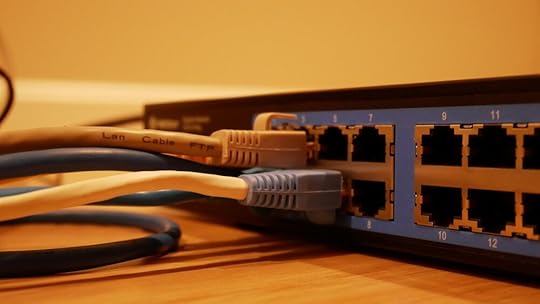
Image by @isodme
Securing business Wi-Fi routersSmall to medium sized businesses are prime targets for hackers and scammers. They don’t usually have the technical resources of larger companies but have more to lose, or to steal, than individuals.
If you want to minimise the risks of being hacked and protect what’s yours, securing your router is paramount.
The good news is, we’ve teamed up with Broadband Genie to create this guide that has all the information you need to secure your own business Wi-Fi router!
Why are routers targeted?Routers are like the front door to your business. They offer a point of entry for anyone who wants to try to enter your network. That makes them prime candidates for attack.
Break your router security and your network is open for anyone to explore.
A mixture of parts shortages means we are using older routers for longer. A lack of expertise and the availability of hacking tools means there are more risks out there than ever before.
All combine to make business routers prime candidates for attack.
Simple steps to help protect your businessSo that’s the why of router security, now let’s get to the how.
You will need access to your router’s administration dashboard to perform many of these steps. Each router is different so will have different ways to access the dashboard.
Check your router’s manual for specifics for your make and model.
Change the administrator passwordThe first thing you should do whenever you buy a new router is change the administrator password. Default router passwords are widely known and are frequently published online.
Therefore, your first task is to change the password to something difficult to guess. Make sure it’s long (12 characters at least, but the longer the better), and don’t use individual words. A mix of random characters is best, and you should use a password manager to store it so you don’t need to worry about remembering it.
Check and change the Wi-Fi passwordIf you use Wi-Fi at work, you should change that password too. Like administrator passwords, default Wi-Fi passwords are well known or easy to guess.
Changing the Wi-Fi password to something secure is the second best thing you can do to improve security after changing the admin password.
Your router should have a Wi-Fi section within the dashboard and the option to change the password. Create a strong password and save the change.
Update the router firmwareRouter firmware is like computer software. It’s what controls the hardware and provides features for you to use. Firmware updates can also include security patches to improve existing security or to fix vulnerabilities discovered after release.
Most routers have a firmware update option within the administrator dashboard. Some will download it automatically while others may require manual download.
Follow your manufacturer’s instructions as appropriate.
Make sure Wi-Fi uses at least WPA2, ideally WPA3WPA2 and WPA3 are encryption protocols used by Wi-Fi routers to keep your traffic secure. It is vital to use the latest version in order to protect your Wi-Fi traffic.
Most newer routers should automatically use WPA2 or WPA3 security. WPA2 is strong security used on current and older routers. WPA3 is a newer security protocol that protects Wi-Fi traffic.
Check the Wi-Fi areas of your router dashboard and use WPA3 if you have the option or WPA2 if you don’t.
Use HTTPS to access the router administration dashboardHTTPS is a secure protocol for web access and should be default for all websites. It should also be default for accessing your router administration dashboard, as it protects you against eavesdropping.
HTTPS encrypts all connections between your browser and the website, in this case, your router.
Your admin dashboard should include the option to use HTTPS within the main settings area.
Restrict administrator access to wired connectionsMany newer routers have the option to not allow access to the administrator dashboard using Wi-Fi. This is to help protect your network from external hacking and is a very useful method of protecting your business network.
It means only someone connected to the router using an Ethernet cable can access the admin panel, which is an excellent security precaution.
If your router has this option, you should see it in the main settings area along with HTTPS access.
Disable WPSWPS, Wi-Fi Protected Setup, is a legacy setting that means anyone who can press a button on your router can join your network. While lower risk than many of these other settings, it’s still a theoretical weakness, especially if you regularly have visitors in your workplace.
There should be a setting within the main settings area of your administrator dashboard to enable or disable WPS. We recommend disabling it.
Use a guest networkIf you provide Wi-Fi to visitors, you should create a guest network. This keeps your business network entirely separate and means a visitor using Wi-Fi should not be able to access anything to do with your business.
Most routers will have the option for guest networks but will go about creating them in different ways.
This is another of those ‘read the manual’ moments. Check your manual and follow the instructions for creating a guest network.
Upgrade the routerIf you have an older router that doesn’t have WPA2 or WPA3, no longer receives firmware updates or has slow Wi-Fi speeds, perhaps now is a good time to upgrade.
Routers are in short supply right now but they are still available.
New routers should have better security, support for new faster Wi-Fi speeds, WPA3 encryption and perhaps more. If your router is more than a few years old, perhaps now is a good time to upgrade!
How recruitment has developed over the years

The process of recruitment has changed greatly over recent years, due to a number of different factors. There are a number of different ways that businesses recruit and hire their employees nowadays, that did not exist years ago. Nowadays, it is rare to see people dropping their CVs into businesses or searching for jobs through newspapers. Here are a number of ways that recruitment has developed over the years.
Internet and technology developmentsAs well all know, the internet and technology are continuing to grow and develop from year to year. The internet has now become the most popular way for people to search for a new job. Candidates can now easily search for available jobs and apply online, proving to be extremely beneficial. The introduction of online assessments, skills testing, and video profiling has also changed how businesses select their employees. Nowadays, many tests and assessments can be taken online in order for a business to see how a candidate performs, even before they interview them.
Online recruitment websitesAlong with developments in the internet comes the introduction of online recruitment websites, also known as job boards. Job boards were created to make the process of recruitment easier and quicker for both businesses and candidates. Job boards provide businesses with a template to place a job advert, allowing them to write details of the business and a description of the job. A Job Advert Template, such as those offered by Hiring People, makes it easy for a business to create adverts regarding their available position. Job boards also allow candidates to apply for the role easily online any time of the day. Job boards are extremely effective for business as they reach a wider audience, compared to traditional methods of recruitment.
Social mediaRecruiting through social media has also become more popular over the past decade, as it free, easy and effective. Businesses can now advertise available jobs through social media sites such as Twitter, Instagram, and Facebook. Just like job boards, when posting a job advertisement on a social media site it will reach thousands of people in a short period of time. Social media also allows a business to advertise their available position towards targeted candidates, ensuring they receive applications from candidates who are perfect for the role.
International recruitmentThe development of online recruitment websites and social media, it now allows businesses to recruit their employees internationally. Previously, businesses would typically hire people who were local to the business, meaning they usually had very little selection. The pool of talent is now much wider and means that businesses can hire people from all over the world. As we all know, working remotely is now a major part of many people’s work lives. The introduction of sites such as Zoom, Microsoft Teams, and Skype, means that people do not need to be in their place of work to do their job. This makes it much easier for businesses to have a diverse, international team.
May 25, 2021
What Do Modern Entrepreneurs Do To Prevent Anxiety?

Source: Unsplash - CC0 License
A study by the National Institute of Mental health reveals that over 7 in 10 entrepreneurs are directly or indirectly affected by mental health issues such as stress, anxiety, and depression. Entrepreneurs make approximately 8% of the global population. They are more likely to suffer from mental health issues compared to other professionals. Burnout and chronic anxiety are some of the most commonly cited complaints. Unfortunately, mental health issues can affect experienced and new entrepreneurs in equal measures.
Mental health for entrepreneurs can turn into a serious issue that affects day-to-day performance and their relationships, wealth, and lives. When you start your own business, you have a duty of care to your employees and your family. Ultimately, people rely on you, which means that anxiety problems will have lasting consequences beyond the affected individual. What is in your power to protect your mental health?
They look for medicinal support
It is fair to say that you can’t keep stress at bay as an entrepreneur. Your role is pivotal to the survival of the company. So, there will be many long working days, multitasking, and unexpected challenges as you run a business. Therefore, it can be helpful to look for medicinal boosts, such as cannabis against anxiety or an antidepressant, which you can keep in your bag at all times. For metal health prescribed medication, you want to keep your prescription on hand for quick refills. Medicinal marijuana can be consumed as edible or even smoked and kept in a secure doob tube. Some entrepreneurs also use aromatherapy to induce calmness and relaxation.
Every employer knows that employees are quick to lose their enthusiasm when they have a bad day. But helping them by offering open communication channels and a friendly presence can go a long way. Unfortunately, as an entrepreneur, there is nobody looking out for you. Yet, you can apply the same principles, such as finding supportive communication channels with other entrepreneurs. Sharing your struggles with someone who understands what you are going through can be a game-changer.
Friends and family can support you emotionally. But they can’t provide the calm guidance of a business mentor. For a new entrepreneur, a business mentor is a seasoned entrepreneur, someone who has already faced and conquered the challenges you’re facing now. Most mentors are happy to share their wisdom for free, reaching out via unique organizations such as SCORE or social networks. A long-term and trusted relationship with a mentor will not only offer business advice but also prevent emotional distress, as they know how to avoid damaging issues.
A partner could be another amateur entrepreneur. Yet, what they don’t have in business experience, they might have in complementary skills and personality. A partner is like a soundboard that ensures you don’t take harmful decisions or get overwhelmed by business duties. Together, you can learn how to run a successful business while supporting each other in the eye of the storm.

Source: Unsplash - CC0 License
Burnout, depression, anxiety disorders are frequent occurrences for entrepreneurs. Unfortunately, if you want to build a successful business, you need to make your well-being a priority without sacrificing company duties. Surrounding yourself with experts who understand your pain and provide support can make a great deal of difference. You also want to focus on your mental health, tackling anxiety and isolation before they get to you.
May 22, 2021
How Can You Ensure A Brighter Monetary Future For Your Business?

Source: https://unsplash.com/photos/NeTPASr-bmQ
Asset management is the art of selecting, maintaining, inspecting and renewing assets. The process involves making the best possible use of these assets so that optimum returns can be generated and shareholder value maximized. It can also help to minimize business risk as well. It is not surprising that this practice is something which is deployed by many businesses and therefore correlates to the success of a company.
What are some examples of the assets found in asset management? The truth is that the assets incorporated are extremely varied. They range from highly liquid assets to highly fixed assets and thus can encompass everything from goods in stock, to buildings, to cash in hand, to plant equipment. This is why it makes sense to work with the likes of Clark Street Associates and Skywater to manage your business finances.
To further understand why asset management is important it is worth considering what will happen if you do not engage in this process. Essentially what you are going to be doing is wasting your resources. This would lead to a lack of revenue and costs incurred through the likes of depreciation, potential storage expenditure, and possible maintenance. This is obviously dependent on how your assets have been wasted, for example, if you stockpiled too many products all three possibilities would likely become a reality.
You now know what asset management is and why it is important. However, it is not an easy task to embark on yourself. This is why you need a financial planning adviser for asset management. The aid of an expert proves to be pivotal. You will gain the help from individuals who have been trained and are experienced in this area of finance. There is no room for error and professional financial planners can ensure you make the best possible use of your assets.
Bridging the skill gap not only guarantees you benefit from the highest level of service, but you will also have peace of mind and you will save a lot of time in the process. By not having to focus on this area of finance you have the capacity to concentrate on the core purpose of your business. Mastering the art of asset management is definitely not something you can learn within a mere day or two, although there are some resources that are great for improving your financial mindset as a company owner, so you should definitely make time for the likes of this.
In addition to this, a good financial adviser does not operate via a one size fits all mantra. They get to know your company thoroughly. They recognise that planning is a process. It is not an event. They will take the time and make the effort to assess your company thoroughly. They determine where you are at financially at present and where you could be at by pinpointing opportunities for improvement.
.