Sharon Wray's Blog, page 42
October 27, 2022
History of Werewolves
Legends about werewolves have been around since ancient times, and the stories cross all continents and cultures. While werewolf costumes for Halloween are not hugely popular right now, stories about werewolves fill novels and movie screens, with more and more coming out every year. And when I was doing some research for a super-secret writing project, I learned all sorts of strange and interesting facts about werewolves that could explain our fascination with these stories.
Werewolves are people who can change or shift into a wolf/human hybrid. Most movies and legends say that these creatures are scary monsters who hunt and prey on people. Werewolves are supposedly driven by a bloodlust that kicks in during the full moon, or the three days when the moon appears to be full. The earliest literary references to werewolves roaming the earth are found in the Epic of Gilgamesh (a poem from ancient Mesopotamia from around 2100 B.C.). In this huge literary work, the author references a moment in Gilgamesh’s life where he rejects a lover because they turned their mate into a wolf.
Both the Mesopotamian story and the Greek version can be found in poetic and philosophical writings. In 425 B.C., the Greek historian Herodotus wrote about a nomadic tribe of men who could shift into wolves for several days a few times a year, usually around Ember Days which correspond to our solstices and equinoxes. This tribe was called the Neuri and they lived in an area call Scythia which is now part of Russia. These Neuri men used the fur from wolves to keep warm in the winter and it’s possible that the stories of these men came from their unusual cloaks.
Then, around 380 B.C., the Greek philosopher Plato told a story in his publication “The Republic” about a “Lycaon Zeus” (Wolf Zeus) shrine he saw in Arcadia, a region of ancient Greece. Plato talks about a harsh and brutal king named Lycaon who tries to trick Zeus (the head of all the gods) into eating the body of boy who the king had sacrificed. Zeus, horrified by the act and the attempt to turn a god into a cannibal, punishes Lycaon. Zeus changes Lycaon and his sons into a wolf/human hybrid. The story goes on to say that the character Socrates (who is narrating this part of the story) announces “…he who tastes one bit of human entrails minced up with those of other victims is inevitably transformed into a wolf”.
There is historical evidence that the members of this “Lycaon Zeus” cult used human flesh when they made ritual sacrifices to Zeus. Both of the ancient historians, Pliny the Elder and Pausanias, wrote about a young Greek athlete named Damarchus who was forced to taste the entrails of a young boy who’d been sacrificed to “Lycaon Zeus”. After Damarchus swallowed the meat, he turned into a wolf and stayed in that wolf form for nine years. But parts of this story say that Damarchus, who hated what had happened to him, became more of a protector of people than a predator.
Then Ovid, in his Metamorphoses, added a story about King Lycaon that included all the elements we see in modern werewolf legends like murder and cannabalism. In Ovid’s tale, Lycaon killed and mutilated one of Zeus’s prized prisoners. In retaliation, Zeus turned Lycaon into a wolf. Ovid even included a passage that details the Lycaon’s transformation–a transformation that requires the man must first be a human monster before turning into an animal monster.
“…He tried to speak, but his voice broke into an echoing howl. His ravening soul infected his jaws; his murderous longings were turned on the cattle; he still was possessed by bloodlust. His garments were changed to a shaggy coat and his arms into legs. He was now transformed into a wolf. “
This passage above gave the modern world the origin of the werewolf that we see in movies and read in books. King Lycaon’s wolf is now the “predator wolf trope” of today’s fictional stories.
Werewolves also appeared in the Nordic Saga of the Volsungs. This epic story offers a tale of a father and son who discover dead wolves who’d been skinned with their pelts nearby. When the father and son put on the wolf pelts to stay warm, they are turned into violent wolves for 10 days. Only after the 10 day period is up can they become human again. But while they are wolves, they grow fur and their teeth elongate. They run about the woods, howling and killing people and other animals. Finally, toward the end of the 10 days, the father and son turn on each other. But just as the father is about to kill his son, a raven (sent by Odin) brings medicinal leaves to the son and applies them to his wounds. Once the son is revived and healed, the 10 days are up and they turn back into men. Horrified at what they’d become, they burn the wolf pelts so no one else can ever suffer they way they did.
From the 15th to 17th centuries, people believed that werewolves were serial killers. France, especially, had trouble with serial killers in the 16th century. One story says that Pierre Burgot and Michel Verdun, who’d sworn fealty to the devil, were given an ointment so they could change into wolves. While in wolf form, they killed many children until they were caught and burned at the stake. They were burned instead of hanged because deviltry was a crime against the church, not the state. Some people also believed that burning was one of the few ways to truly kill a werewolf. Not long after these two murderers were executed, another man in France, Giles Garnier (aka the “Werewolf of Dole”) supposedly also used this devil’s ointment to change into a werewolf and killed a bunch of children and then ate them. Once the authorities caught him, they burned Garnier as well.
But France wasn’t alone in its werewolf troubles. In the early 1500s, in Bedbug, Germany, a man named Peter Stubbe was also supposedly a werewolf. He was a farmer who claimed the devil gave him a magical belt that turned him into a werewolf. While in his wolf form, he killed and ate livestock, children, and local townsfolk. After hunters finally caught him (in his human form), the authorities tortured and executed him by cutting off his head just to make sure he was dead. No one ever found Stubbe’s magical belt, but they did find more gruesome evidence to prove he was a serial killer who’d killed more people than they realized. After this event, people started “seeing” werewolves everywhere. Accusations were made and many innocent people got caught up in the hysteria. Although, there are also written accounts of criminals dressing in wolf furs and skins to terrorize the populace.
As time passed, stories about werewolves evolved. When blaming the devil, magical oils and belts, or ancient gods fell out of favor, the cause of lycanthropy (the disease of becoming a werewolf) shifted. Now more modern stories blame genetic links passed down through family bloodlines, or being scratched or bitten by a werewolf, or just wearing a werewolf’s clothing. The ways of killing a werewolf have changed as well. Where beheadings and fire were once considered the best way to kill the beasts, now silver is key to taking down a werwolf. But why does silver work? Because when silver spends time interacting with the air, the metal tarnishes and turns black. Silver, though, is nonreactive which means is stays the same in water and air. But when small bits of a particular element that floats around in air hits the silver, the silver begins to tarnish. And the element that causes the black coating on silver is sulfur.
When sulfur, aka “the devil’s element”, is combined with silver a chemical reaction happens and you end up with silver sulfide. While silver sulfide is isn’t toxic, it is not water soluble. That means that if you inject silver sulfide into an animal (or werewolf), it can poison the bloodstream and destroy blood vessels. Silver sulfide kills the werewolf (or any other animal infected with it). It’s possible that since burnings were also how witches were executed, storytellers wanted a unique form of execution to kill off their werewolves. Silver made the stories more “romantic” in a gothic kind of way, and once that concept was introduced in the late 17th century, it’s been with us ever since.
While werewolves aren’t real, they’ve become a huge part of our storytelling canon, especially around Halloween. And from their recent rising popularity in fiction novels, I have a feeling they’ll be howling at our full moons for a long, long time.
 Subscribe
 Enter your email address to subscribe to this blog and receive notifications of new posts by email.
Email Address
Subscribe
The post History of Werewolves appeared first on Sharon Wray.


October 26, 2022
A Romance Writer’s Favorite Books for Halloween
As an author and librarian who loves to read and write happily ever afters, I have to admit I also read in many different genres, including horror. And this time of year, I tend to reread a lot of my favorite “scary and spooky” books that I’d normally not read at any other time of year. So I’ve put together a list of the books I read around Halloween. Some are classics and bestsellers, some are relatively unknown. Some are Young Adult novels and the others are Adult Fiction. (YA and Adult fiction are determined by the age of the protagonist, not the age of the reader). If you’re in the mood for a spooky read, I’m sure you’ll find something on this list to enjoy!
Book previews and blurbs are courtesy of Amazon.The story of a young scientist who creates a hideous, sapient creature in an unorthodox scientific experiment.
Frankenstein tells the story of gifted scientist Victor Frankenstein who succeeds in giving life to a being of his own creation. However, this is not the perfect specimen he imagines that it will be, but rather a hideous creature who is rejected by Victor and mankind in general. The Monster seeks its revenge through murder and terror.
The novel was first published in 1818. It was written originally by Mary Shelley (1791-1851) as a short story when the poet Lord Byron suggested that each member of a group of friends write a ghostly tale to keep themselves entertained. Mary’s story was the undoubted winner.
Today, Frankenstein is regarded as a foundational, prescient work of science fiction.
Dracula by Bram Stoker…
“Welcome to my house! Enter freely and of your own will!” He made no motion of stepping to meet me, but stood like a statue, as though his gesture of welcome had fixed him into stone. The instant, however, that I had stepped over the threshold, he moved impulsively forward, and holding out his hand grasped mine with a strength which made me wince, an effect which was not lessened by the fact that it seemed as cold as ice―more like the hand of a dead than a living man.
I am where dead children go.
Okiku is a lonely soul. She has wandered the world for centuries, freeing the spirits of the murdered-dead. Once a victim herself, she now takes the lives of killers with the vengeance they’re due. But releasing innocent ghosts from their ethereal tethers does not bring Okiku peace. Still she drifts on.
Such is her existence, until she meets Tark. Evil writhes beneath the moody teen’s skin, trapped by a series of intricate tattoos. While his neighbors fear him, Okiku knows the boy is not a monster. Tark needs to be freed from the malevolence that clings to him. There’s just one problem: if the demon dies, so does its host.
Seventeen-year-old Aderyn (“Ryn”) only cares about two things: her family and her family’s graveyard. And right now, both are in dire straits. Since the death of their parents, Ryn and her siblings have been scraping together a meager existence as gravediggers in the remote village of Colbren, which sits at the foot of a harsh and deadly mountain range that was once home to the fae. The problem with being a gravedigger in Colbren, though, is that the dead don’t always stay dead.
The risen corpses are known as “bone houses,” and legend says that they’re the result of a decades-old curse. When Ellis, an apprentice mapmaker with a mysterious past, arrives in town, the bone houses attack with new ferocity. What is it that draws them near? And more importantly, how can they be stopped for good?
Together, Ellis and Ryn embark on a journey that will take them into the heart of the mountains, where they will have to face both the curse and the deeply-buried truths about themselves. Equal parts classic horror novel and original fairy tale, The Bone Houses will have you spellbound from the very first page.
Newly orphaned Peggy Grahame is caught off-guard when she first arrives at her family’s ancestral estate. Her eccentric uncle Enos drives away her only new acquaintance, Pat, a handsome British scholar, then leaves Peggy to fend for herself. But she is not alone.
The house is full of mysteries—and ghosts. Soon Peggy becomes involved with the spirits of her own Colonial ancestors and witnesses the unfolding of a centuries-old romance against a backdrop of spies and intrigue and of battles plotted and foiled. History has never been so exciting—especially because the ghosts are leading Peggy to a romance of her own!
In 1558 while imprisoned at Elwenwood Hall, a remote castle in northern England, teenaged Kate Sutton finds herself involved in a series of mysterious events that eventually bring her to an underground labyrinth peopled by the last practitioners of druidic magic.
When Kate Sutton is sent to Elvenwood Hall as a prisoner by Queen Mary in the summer of 1558, she learns of the Druids and the truth about the disappearance of Sir Geoffrey’s little girl
Ever since Cass almost drowned (okay, she did drown, but she doesn’t like to think about it), she can pull back the Veil that separates the living from the dead . . . and enter the world of spirits. Her best friend is even a ghost.
So things are already pretty strange. But they’re about to get much stranger.
When Cass’s parents start hosting a TV show about the world’s most haunted places, the family heads off to Edinburgh, Scotland. Here, graveyards, castles, and secret passageways teem with restless phantoms. And when Cass meets a girl who shares her “gift,” she realizes how much she still has to learn about the Veil — and herself.And she’ll have to learn fast. The city of ghosts is more dangerous than she ever imagined.
The Complete Tales & Poems of Edgar Allan Poe contains every know tale written by the famous gothic American writer. His often macabre and dark works, which span the years from 1827 to his death in 1849, include “The Raven,” “The Black Cat,” “The Tell-Tale Heart,” and “Annabelle Lee.”
For Poe fans worldwide, this elegant collector’s edition includes over 70 of Poe’s short stories, more than 40 melodious poems, and his only full-length novel, The Narrative of A. Gordon Pym. In addition, it also includes a compelling introduction by notable historian and biographer Daniel Stashower.
Set in 1482, Victor Hugo’s powerful novel of ‘imagination, caprice and fantasy’ is a meditation on love, fate, architecture and politics, as well as a compelling recreation of the medieval world at the dawn of the modern age.
In a brilliant reworking of the tale of Beauty and the Beast, Hugo creates a host of unforgettable characters – amongst them, Quasimodo, the hunchback of the title, hopelessly in love with the gypsy girl Esmeralda, the satanic priest Claude Frollo, Clopin Trouillefou, king of the beggars, and Louis X1, King of France. Over the entire novel, both literally and symbolically, broods the Cathedral of Notre-Dame.
Vivid characters and memorable set-piece action scenes combine to bring the past to life in this story of love, lust, betrayal, doom and redemption.
Ben Mears has returned to Jerusalem’s Lot in hopes that exploring the history of the Marsten House, an old mansion long the subject of rumor and speculation, will help him cast out his personal devils and provide inspiration for his new book.
But when two young boys venture into the woods, and only one returns alive, Mears begins to realize that something sinister is at work.
In fact, his hometown is under siege from forces of darkness far beyond his imagination. And only he, with a small group of allies, can hope to contain the evil that is growing within the borders of this small New England town.
With this, his second novel, Stephen King established himself as an indisputable master of American horror, able to transform the old conceits of the genre into something fresh and all the more frightening for taking place in a familiar, idyllic locale.
Following accusations that her scientist father gruesomely experimented on animals, sixteen-year-old Juliet watched as her family and her genteel life in London crumbled around her—and only recently has she managed to piece her world back together.
But when Juliet learns her father is still alive and working on a remote tropical island, she is determined to find out if the old accusations are true. Accompanied by her father’s handsome young assistant, Montgomery, and an enigmatic castaway, Edward, Juliet travels to the island, only to discover the depths of her father’s insanity.
Torn between horror and scientific curiosity, Juliet knows she must end her father’s dangerous experiments and escape her jungle prison before it’s too late. Yet as the island falls into chaos, she discovers the extent of her father’s genius—and madness—in her own blood.
When the mysterious fog of the Ruining crept over the world, the living died and the dead rose. Only the walled city of Viyara was left untouched.The heirs of the city’s most powerful—and warring—families, Mahyanai Romeo and Juliet Catresou, share a love deeper than duty, honor, even life itself. But the magic laid on the Juliet at birth compels her to punish the enemies of her clan—and Romeo has just killed her cousin Tybalt. Which means he must die.
Paris Catresou has always wanted to serve his family by guarding the Juliet. But when his ward tries to escape her fate, magic goes terribly wrong—killing her and leaving Paris bound to Romeo. If he wants to discover the truth of what happened, Paris must delve deep into the city, ally with his worst enemy . . . and perhaps turn against his own clan.
Mahyanai Runajo only wants to protect her city—but she’s the only one who believes it’s in peril. In her desperate hunt for information, she accidentally pulls Juliet from the mouth of death—and finds herself bound to the bitter, angry girl. Runajo quickly discovers Juliet might be the one person who can help her recover the secret to saving Viyara. Both pairs will find friendship where they least expect it. Both will find that Viyara holds more secrets and dangers than anyone ever expected. And outside the walls, death is waiting. . . .
For sixteen-year-old Dan Crawford, the New Hampshire College Prep program is the chance of a lifetime. Except that when Dan arrives, he finds that the usual summer housing has been closed, forcing students to stay in the crumbling Brookline Dorm. The dorm was formerly a sanatorium, more commonly known as an asylum. And not just any asylum—a last resort for the criminally insane.
As Dan and his new friends Abby and Jordan start exploring Brookline’s twisty halls and hidden basement, they uncover disturbing secrets about what really went on at Brookline . . . secrets that link Dan and his friends to the asylum’s dark past. Because Brookline was no ordinary asylum, and there are some secrets that refuse to stay buried.
Featuring found photographs from real asylums and filled with chilling mystery and page-turning suspense, Asylum is a horror story that treads the line between genius and insanity, perfect for fans of Miss Peregrine’s Home for Peculiar Children.
Micheline Helsing is a tetrachromat — a girl who sees the auras of the undead in a prismatic spectrum. As one of the last descendants of the Van Helsing lineage, she has trained since childhood to destroy monsters both corporeal and spiritual: the corporeal undead go down by the bullet, the spiritual undead by the lens. With an analog SLR camera as her best weapon, Micheline exorcises ghosts by capturing their spiritual energy on film. She’s aided by her crew: Oliver, a techno-whiz and the boy who developed her camera’s technology; Jude, who can predict death; and Ryder, the boy Micheline has known and loved forever.
When a routine ghost hunt goes awry, Micheline and the boys are infected with a curse known as a soulchain. As the ghostly chains spread through their bodies, Micheline learns that if she doesn’t exorcise her entity in seven days or less, she and her friends will die. Now pursued as a renegade agent by her monster-hunting father, Leonard Helsing, she must track and destroy an entity more powerful than anything she’s faced before . . . or die trying.
Alexis thought she led a typically dysfunctional high school existence. Dysfunctional like her parents’ marriage. Or her doll-crazy twelve-year-old sister, Kasey. Or even like her own anti-social, anti-cheerleader attitude. When a family fight results in some tearful sisterly bonding, Alexis realizes that her life is creeping from dysfunction into danger.
Kasey is acting stranger than ever: her blue eyes go green, sometimes she uses old-fashioned language, and she even loses track of chunks of time, claiming to know nothing about her strange behavior. Their old house is changing, too. Doors open and close by themselves. Water boils on the unlit stove, and an unplugged air conditioner turns the house cold enough to see their breath in.
Alexis wants to think that it’s all in her head, but soon, what she liked to think of as silly parlor tricks are becoming life-threatening: to her, her family, and to her budding relationship with the class president. Alexis knows she’s the only person who can stop Kasey—but what if that green-eyed girl isn’t even Kasey anymore?
First published in 1959, Shirley Jackson’s The Haunting of Hill House has been hailed as a perfect work of unnerving terror.
It is the story of four seekers who arrive at a notoriously unfriendly pile called Hill House: Dr. Montague, an occult scholar looking for solid evidence of a “haunting”; Theodora, his lighthearted assistant; Eleanor, a friendless, fragile young woman well acquainted with poltergeists; and Luke, the future heir of Hill House.
At first, their stay seems destined to be merely a spooky encounter with inexplicable phenomena. But Hill House is gathering its powers—and soon it will choose one of them to make its own.
Subscribe Enter your email address to subscribe to this blog and receive notifications of new posts by email.
Email Address
Subscribe
The post A Romance Writer’s Favorite Books for Halloween appeared first on Sharon Wray.
October 25, 2022
Sarah Munro’s Pumpkin Spice Latte
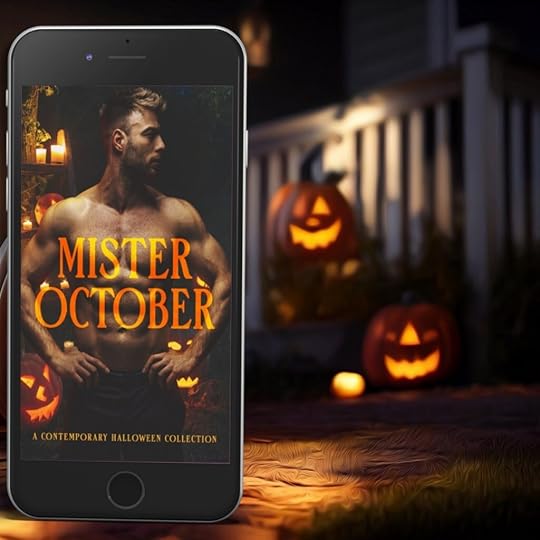
In my most recent anthology, Mister October, I have a short story called One October Night which takes place in a tiny fictional town called Kingsmill deep in the Shenandoah mountains. In the center of this town, there’s a small cafe owned by the heroine Clara’s Uncle Harry. Harry’s cafe serves as the meeting place for all of the characters, and Harry is a fun, quirky guy who knows way more about the all the folks in town than he admits. Harry’s cafe also offers fall-themed treats including Pumpkin Scones, Pumpkin Muffins, Apple Oatmeal Cookies, and Pumpkin Lattes.

Because coffee has been around for centuries, and was prized by the early American colonists, Sarah Munro, (my PhD historian and heroine in book 2 of the Deadly Force series, ONE DARK WISH), has added Pumpkin Spice Lattes to her collection of DIY herbal recipes. This drink uses fresh ingredients that were widely available in the 18th century and has none of the toxic fillers/flavorings found in many of the ready-made drinks available today. It’s not hard to make, and it tastes so much better than what you find at most coffee shops.
There are nutritional benefits in this latte as well. Pumpkin is high in Vitamins A, C, and E, all of which help strengthen your immune system and reduce free radicals. Cinnamon and ginger can help increase circulation and nutmeg warms you from the inside out. That makes this a perfect drink on cold Autumn mornings.
Sarah Munro’s Pumpkin Spice LatteIngredients & Equipment:1 cup freshly-brewed coffee or favorite espresso8 Tablespoons pumpkin puree2 Tablespoons real maple syrup (NOT corn syrup)2 teaspoons unsalted butter, softened to room temperature1 teaspoon Ceylon cinnamon1/4 teaspoon powdered ginger1/4 teaspoon nutmeg1/4 teaspoon allspice1 1/2 cups of milk (any type, dairy or non-dairy)Dash of Ceylon cinnamon and a cinnamon stick for garnishGlass jar with tight-fitting lid for frothing the milkBlenderDirections:Brew the coffee.
While the coffee is brewing, use a small bowl and a wooden spoon to stir together the pumpkin puree, maple syrup, butter, Ceylon cinnamon, ginger, nutmeg, and allspice.
Add this butter/pumpkin mixture to a blender, along with 1 cup of coffee, and and pulse/puree until the mixture is smooth and creamy.
In a small saucepan, gently heat the milk. Do not scorch it! Heat it slowly, until just about boiling, and remove it from the heat. Add it to the glass jar and tighten the lid. Wrap a dish towel around the jar (it will be hot!) and shake until the milk has almost doubled in volume and looks frothy.
Pour the tea/pumpkin mixture into two cups (1/2 cup of mixture in each cup). Pour the frothy, hot milk over the coffee. For a garnish, add a dash of Ceylon cinnamon and a cinnamon stick. Or a glob of whipped cream–because everything tastes better with whipped cream!
Makes 2 mugs.
IMPORTANT DISCLAIMER ABOUT WILD PLANTS, FORAGING , AND MAKING HERBAL REMEDIES:I am not a medical professional and nothing written on this blog is medical advice. None of my statements have been evaluated by the FDA (I am legally required to give you this disclaimer).
It is important to do your due diligence before foraging, harvesting, and/or consuming any type of medicinal plant.
If you are taking any medications, talk to your doctor about any potential drug interactions.If you are allergic to anything, make sure whatever you are foraging is not in the same family. Example: While dandelions are typically considered safe, those who are allergic to ragweed, latex, daisies, or any other plants in the same or similar families, may not be able to consume dandelion.Always research potential side effects, dosage recommendations, and how to properly prepare and consume each medicinal plant.
Always make sure you are foraging what you believe to be. Fully prepare and study the anatomy before harvesting wild plants.
Always make sure your kitchen/work area is clean and that all materials are sterilized.
Do not forage plants from areas that have been sprayed within the past 2 years at the very least.
I am not legally or morally responsible for the health of any of my readers. Please do your own research!
Subscribe Enter your email address to subscribe to this blog and receive notifications of new posts by email.
Email Address
Subscribe
The post Sarah Munro’s Pumpkin Spice Latte appeared first on Sharon Wray.
October 24, 2022
NaNoWriMo Preptober: Part 3
This article is an edited repost from the archives. Most of the information from last year is still relevant, but I’ve added some new resources and video links as well.

In the last week, I’ve had a ton of messages asking me about the technology I use to plot and write my books. My absolute favorite way to plot and write is longhand. But as a working writer, that’s not fast enough. So I thought I’d give a brief review of the systems I use. But while I love these systems, there are a ton more apps out there that other writers swear by. Many of the programs I’ve listed below are ones I have used for years. And while I’m always interested in learning new and shiny programs, I don’t have the time right now.
Note: This list of tech is specifically for crafting novels. I do use other systems like Trello, Excel, and Canva to help run other aspects of my business but this list is just for writing. And, while I’ve added links to this post, I am NOT selling these programs. If you decide you want to purchase any of these, please search the internet for coupon codes. There are ALWAYS coupon codes available for these systems. Some of the coupons can save you hundreds of dollars!
Microsoft Word 365: My editor and agent expect my manuscripts to be submitted in Word. I write on multiple machines, sometimes in different places other than home, and I keep some of my manuscripts in a cloud to ensure I am always working on the most recent version. Although I do download and save my work every night. Then I email the manuscript to myself so there’s always a copy on my email provider’s server. But this program can get expensive so make sure to check the internet, and other writing organizations, for coupon codes.
Scrivener: I’m not even sure how to describe Scrivener. It’s part word processor, part indexer, part visual editor, and part story & plot designer. Imagine taking all of your writing notes (sticky notes, journal pages, jottings on napkins) and placing them in Scrivener so you can keep track of everything! You can build book worlds, develop character and setting sheets, and break down your manuscript into the smallest scene that can be moved around on a virtual bulletin board. It is a complicated program and takes some time to learn, but it’s worth the time. I’ve been using it for years so there are updates that I’m not even aware of yet! But after writing over 11 novels on Scrivener, I can’t imagine using any other program. Although, having said that, when my trad books are done and ready to submit, I reformat the book in Word 365 for my editor and agent. If It’s an indie book, I’ll move it to Word 365 before uploading it to Vellum (noted below). In Word, I’m able to strip out extra, hidden formatting that makes it easier to use Vellum. But the more I learn about Vellum, the less I need to take that extra step.
Abbie Emmons, over on YouTube, has a great playlist on how to personalize Scrivener and how to use it to get ready for NaNo. Here’s the link to her YT playlist. But I’m warning you–this will suck up hours of your time! I especially love the video on how to change your Scrivener aesthetic to match your current WIP.
Plottr: Plottr is a visual planner and outlining tool that helps you plan out your story. There are timelines, character and setting sheets, and scene builders. I’ve been using this program for about a year and the more I use it, the more I like about it. There’s also a free YouTube channel with tutorials so you can check out the program and how to use it. This software is for visual learners. So if you’re a hardcore journal scribbler, this may not work for you. There’s also an ability to create a story bible. I’ve been keeping my story bible in Scrivener but I may move it over to Plottr in the next few months.
Vanessa Keir has a great YouTube video on using Plottr to plan your NaNiWriMo project. And the Plottr YouTube Channel keeps adding videos on how to plan and structure your current WIP.
ProWritingAid: This is a grammar checker and style editor software. You just dump your manuscript into the editor and it evaluates your writing and tells you everything you’ve done wrong. What I like most about this software is that it helps me identify reused phrases and word echoes. It also evaluates your writing style and gives you ideas to improve readability. This is an AI program, but it’s not perfect. It is not a replacement for proof reading or copy editing.
Grammarly: This is another AI-based grammar checker and style editor software similar to ProWritingAid. There’s a free level and sometimes I’ll use it if I’m struggling with how to structure a particular sentence. Grammarly, ProWritingAid, and Google Docs all use proprietary AI systems and I’m always struck at how differently they evaluate my writing. I do love the more advanced version of Grammarly, but you have to pay for it. And since I use a coupon code for PWA, I can’t justify paying for two similar systems. But if I ever drop ProWritingAid, I’ll pick up Grammarly. It’s just as good.
Adobe Acrobat Pro: My publisher uses Adobe Acrobat Pro for both copyedits and final galley proofs. While I hate paying the monthly fee, the software does make it very easy to read through the final versions of the manuscript (which, I believe, are designed with InDesign). For my indie books, I’ve yet to run into an editor who works with Adobe. But if you’re a trad author, or hope to become one, you may have to sign up. Luckily you can sign up month-to-month so during the months I’m drafting and revising, I turn it off. It’s easy to turn back on once I receive a final version of the manuscript.
Vellum: I use this software to format my indie books and get them ready to upload to vendors like Amazon and Barnes & Noble. It even has an option to load up paperback versions to KDP and IngramSpark. But if you’re not using it to publish right away, you don’t have to pay for it. I’ve used the free version of this software to read through early versions of my book because sometimes reading drafts in a book-style format helps me see grammatical errors and pacing issues.
Reedsy: I am just learning about Reedsy and their free formatters (similar to Vellum) and AI manuscript checking programs (similar to ProWritingAid). While it doesn’t offer all of the fancy things Vellum does (like adding images on title pages), it’s super easy to use and it’s free!
Google Docs: This is a free word processor that works great, and is cheaper than Word 365. But I don’t use it to write. I use it as a free spell check because their AI system is different from Scrivener, Word, and ProWritingAid. I just upload the finished draft into a google doc and then run the spell check. You’ll be amazed at what the other AI programs have missed!
Aeon Timeline: I used to use this visual editor to help lay out my books in the Deadly Force series but I recently switched to Plottr. Aeon Timeline is a beautiful app and offers a ton of options but it’s just too complicated for me. I’d rather spend my time writing. But if you are working on a large series, like a space opera or a huge epic fantasy series, this may work really well for you. It’s at least worth checking out.
A Note on Story Bibles: These software programs are for planning, plotting, and writing. But Scrivener, Aeon Timeline, and Plottr can also be used to build story bibles which is especially useful if you’re writing a series. A story/series bible is crucial if you’re writing a long series with a large world, like in the sci fi or fantasy genres. I’ll be honest–these all work okay as series bibles but I’ve yet to find a software that can be a plotting/planning tool and offer a full Wiki experience. I’ve seen videos that the productivity tool Notion can do this, but that seems super complicated as well. So I’m using what I have… until the next shiny app comes knocking on my inbox!
While I don’t use Trello as an outlining tool (it’s more of a Kanban-type productivity tool), I do love this YouTube video by Megan Tennant on how to use Trello as a WIP outlining tool.
Two of my favorite author YouTubers also have great playlists for videos about NaNoWriMo, including the technology they use when crafting and editing their stories.
Here is Bethany Atazadeh’s Playlist and here is Sarra Cannon’s Playlist.
I hope this information helps and I can’t wait to hear about your journey on the other side of NaNoWriMo!
Subscribe Enter your email address to subscribe to this blog and receive notifications of new posts by email.
Email Address
Subscribe
The post NaNoWriMo Preptober: Part 3 appeared first on Sharon Wray.
NaNoWriMo Preptober Part 3
This article is an edited repost from the archives. Most of the information from last year is still relevant, but I’ve added some new resources and video links as well.
In the last week, I’ve had a ton of messages asking me about the technology I use to plot and write my books. My absolute favorite way to plot and write is longhand. But as a working writer, that’s not fast enough. So I thought I’d give a brief review of the systems I use. But while I love these systems, there are a ton more apps out there that other writers swear by. Many of the programs I’ve listed below are ones I have used for years. And while I’m always interested in learning new and shiny programs, I don’t have the time right now.
Note: This list of tech is specifically for crafting novels. I do use other systems like Trello, Excel, and Canva to help run other aspects of my business but this list is just for writing. And, while I’ve added links to this post, I am NOT selling these programs. If you decide you want to purchase any of these, please search the internet for coupon codes. There are ALWAYS coupon codes available for these systems. Some of the coupons can save you hundreds of dollars!
Microsoft Word 365: My editor and agent expect my manuscripts to be submitted in Word. I write on multiple machines, sometimes in different places other than home, and I keep some of my manuscripts in a cloud to ensure I am always working on the most recent version. Although I do download and save my work every night. Then I email the manuscript to myself so there’s always a copy on my email provider’s server. But this program can get expensive so make sure to check the internet, and other writing organizations, for coupon codes.
Scrivener: I’m not even sure how to describe Scrivener. It’s part word processor, part indexer, part visual editor, and part story & plot designer. Imagine taking all of your writing notes (sticky notes, journal pages, jottings on napkins) and placing them in Scrivener so you can keep track of everything! You can build book worlds, develop character and setting sheets, and break down your manuscript into the smallest scene that can be moved around on a virtual bulletin board. It is a complicated program and takes some time to learn, but it’s worth the time. I’ve been using it for years so there are updates that I’m not even aware of yet! But after writing over 11 novels on Scrivener, I can’t imagine using any other program. Although, having said that, when my trad books are done and ready to submit, I reformat the book in Word 365 for my editor and agent. If It’s an indie book, I’ll move it to Word 365 before uploading it to Vellum (noted below). In Word, I’m able to strip out extra, hidden formatting that makes it easier to use Vellum. But the more I learn about Vellum, the less I need to take that extra step.
Abbie Emmons, over on YouTube, has a great playlist on how to personalize Scrivener and how to use it to get ready for NaNo. Here’s the link to her YT playlist. But I’m warning you–this will suck up hours of your time! I especially love the video on how to change your Scrivener aesthetic to match your current WIP.
Plottr: Plottr is a visual planner and outlining tool that helps you plan out your story. There are timelines, character and setting sheets, and scene builders. I’ve been using this program for about a year and the more I use it, the more I like about it. There’s also a free YouTube channel with tutorials so you can check out the program and how to use it. This software is for visual learners. So if you’re a hardcore journal scribbler, this may not work for you. There’s also an ability to create a story bible. I’ve been keeping my story bible in Scrivener but I may move it over to Plottr in the next few months.
Vanessa Keir has a great YouTube video on using Plottr to plan your NaNiWriMo project. And the Plottr YouTube Channel keeps adding videos on how to plan and structure your current WIP.
ProWritingAid: This is a grammar checker and style editor software. You just dump your manuscript into the editor and it evaluates your writing and tells you everything you’ve done wrong. What I like most about this software is that it helps me identify reused phrases and word echoes. It also evaluates your writing style and gives you ideas to improve readability. This is an AI program, but it’s not perfect. It is not a replacement for proof reading or copy editing.
Grammarly: This is another AI-based grammar checker and style editor software similar to ProWritingAid. There’s a free level and sometimes I’ll use it if I’m struggling with how to structure a particular sentence. Grammarly, ProWritingAid, and Google Docs all use proprietary AI systems and I’m always struck at how differently they evaluate my writing. I do love the more advanced version of Grammarly, but you have to pay for it. And since I use a coupon code for PWA, I can’t justify paying for two similar systems. But if I ever drop ProWritingAid, I’ll pick up Grammarly. It’s just as good.
Adobe Acrobat Pro: My publisher uses Adobe Acrobat Pro for both copyedits and final galley proofs. While I hate paying the monthly fee, the software does make it very easy to read through the final versions of the manuscript (which, I believe, are designed with InDesign). For my indie books, I’ve yet to run into an editor who works with Adobe. But if you’re a trad author, or hope to become one, you may have to sign up. Luckily you can sign up month-to-month so during the months I’m drafting and revising, I turn it off. It’s easy to turn back on once I receive a final version of the manuscript.
Vellum: I use this software to format my indie books and get them ready to upload to vendors like Amazon and Barnes & Noble. It even has an option to load up paperback versions to KDP and IngramSpark. But if you’re not using it to publish right away, you don’t have to pay for it. I’ve used the free version of this software to read through early versions of my book because sometimes reading drafts in a book-style format helps me see grammatical errors and pacing issues.
Reedsy: I am just learning about Reedsy and their free formatters (similar to Vellum) and AI manuscript checking programs (similar to ProWritingAid). While it doesn’t offer all of the fancy things Vellum does (like adding images on title pages), it’s super easy to use and it’s free!
Google Docs: This is a free word processor that works great, and is cheaper than Word 365. But I don’t use it to write. I use it as a free spell check because their AI system is different from Scrivener, Word, and ProWritingAid. I just upload the finished draft into a google doc and then run the spell check. You’ll be amazed at what the other AI programs have missed!
Aeon Timeline: I used to use this visual editor to help lay out my books in the Deadly Force series but I recently switched to Plottr. Aeon Timeline is a beautiful app and offers a ton of options but it’s just too complicated for me. I’d rather spend my time writing. But if you are working on a large series, like a space opera or a huge epic fantasy series, this may work really well for you. It’s at least worth checking out.
A Note on Story Bibles: These software programs are for planning, plotting, and writing. But Scrivener, Aeon Timeline, and Plottr can also be used to build story bibles which is especially useful if you’re writing a series. A story/series bible is crucial if you’re writing a long series with a large world, like in the sci fi or fantasy genres. I’ll be honest–these all work okay as series bibles but I’ve yet to find a software that can be a plotting/planning tool and offer a full Wiki experience. I’ve seen videos that the productivity tool Notion can do this, but that seems super complicated as well. So I’m using what I have… until the next shiny app comes knocking on my inbox!
While I don’t use Trello as an outlining tool (it’s more of a Kanban-type productivity tool), I do love this YouTube video by Megan Tennant on how to use Trello as a WIP outlining tool.
Two of my favorite author YouTubers also have great playlists for videos about NaNoWriMo, including the technology they use when crafting and editing their stories.
Here is Bethany Atazadeh’s Playlist and here is Sarra Cannon’s Playlist.
I hope this information helps and I can’t wait to hear about your journey on the other side of NaNoWriMo!
Subscribe Enter your email address to subscribe to this blog and receive notifications of new posts by email.
Email Address
Subscribe
The post NaNoWriMo Preptober Part 3 appeared first on Sharon Wray.
October 21, 2022
An Autumn Romance Book Fair
This year, I’m taking part in a few romance anthologies that have decided to run an Autumn Romance Book Fair. This fair includes current and upcoming romance novels available for free and for sale at varying price points.
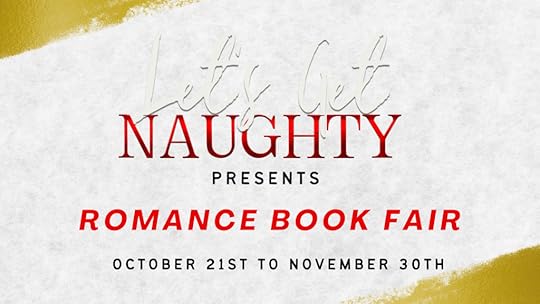
If you love romance novels, and want to support your favorite authors, click the link and below to check out all of the wonderful titles. There are books at all price points, including free, and books in all romance genres from sweet/clean to steamy/sexy. I’m sure there’s something on this list for everyone!
Let’s Get Naughty Book FairSubscribe Enter your email address to subscribe to this blog and receive notifications of new posts by email.
Email Address
Subscribe
The post An Autumn Romance Book Fair appeared first on Sharon Wray.
October 20, 2022
The Hungry {Romance} Writer: Apple Oatmeal Cookies
I can’t believe another week has gone by and that Halloween is almost here! Since I’m sharing recipes for fall foods that are eaten, shared, and mentioned in my newest release Mister October, this week I’m making Apple Oatmeal Cookies.

My story in this limited romance anthology is called One October Night, and it takes place in Kingsmill, VA, a tiny fictional town deep in the Shenandoah Mountains. On Kingsmill’s Main Street, there’s a small coffee shop called Harry’s Cafe, named after Clara’s Uncle Harry. (Clara is the heroine of the story). Harry is a quirky, fun guy who decides to make a special fall cookie for the town’s Haunted House Tour that Clara, along with her hero Jacob, are running for charity. And this year, Harry is making Apple Oatmeal Cookies to go along with his Pumpkin Scones, Pumpkin Muffins, and Pumpkin Lattes. I hope you enjoy Harry’s cookies as much as the characters in One October Night do!
Sharon Wray
Yields 20 cookies
The Hungry {Romance} Writer: Apple Oatmeal CookiesThis is an easy fall cookie recipe using Granny Smith apples that I've been making for years. I found this recipe in my grandmother's recipe box and updated it, using butter instead of lard. It's super important to use Granny Smith apples (or another type of tart cooking apple) in this recipe otherwise the cookies will be too sweet and too mushy. Also, don't use the quick oats--use the old-fashioned, long cooking rolled oats to keep the cookies firm and chewy.
40 minPrep Time
14 minCook Time
54 minTotal Time
 Save Recipe Print Recipe var print_b = document.getElementById('mpp_print_button'); var save_b = document.getElementById('mpp_saverecipe_button'); print_b.onclick = function(){ zlrPrint( "mpprecipe-container-240", "https://sharonwray.com/wp-content/plu...", "mpprecipe-design18", "1", "#" ) }; save_b.onclick = function(){ window.open('https://sharonwray.mealplannerpro.com...' + window.location.href); return false; }; My Recipes My Lists My Calendar
 Ingredients
1 1/4 cups all-purpose flour scoop and level to measure1 1/4 cups rolled old-fashioned, long cooking oats1 teaspoon ground cinnamon1/2 teaspoon baking soda1/4 teaspoon salt1/2 cup butter softened3/4 cup packed light brown sugar1 large egg1 teaspoon pure vanilla extract1 cup Granny Smith apples peeled and chopped into 1/4-inch cubes or smaller2 teaspoons fresh lemon juiceInstructions
Preheat the oven to 350 degrees F.Using parchment paper, line two 18" by 13" baking sheets.In a medium-sized bowl, stir together the flour, cinnamon, baking soda, and salt. Once that is all combined, whisk in the rolled oats.In a large bowl, and using an electric beater, cream together the softened butter and brown sugar. Mix in the egg until just combined. Then add in the pure vanilla extract. Do not over beat the batter.In another large bowl, stir together the chopped apples and lemon juice.Slowly beat the flour mixture into the butter/egg batter. Once the batter is all mixed together (do not over beat!), fold in the apples.Drop 2 Tablespoons per cookie onto the baking sheets. Space the cookies out 2 inches to allow them to spread. Using the back of a spoon, flatten them cookies just a little bit.Bake each cookie sheet separately, one at time. Bake for about 14 minutes, or until the cookies are set. The edges will be darker than the middle.Take out the baking sheet and allow the cookies to cool on the sheet for 6 minutes. Transfer the cookies to a wire baking rack and allow to cool completely.Cookies must be stored in an airtight container to prevent them from going stale.7.8.1.2240https://sharonwray.com/the-hungry-writer/the-hungry-romance-writer-apple-oatmeal-cookies/ { "@context": "http://schema.org/", "url": [ "https:\/\/sharonwray.com\/the-hungry-writer\/the-hungry-romance-writer-apple-oatmeal-cookies\/" ],"name" : "The Hungry {Romance} Writer: Apple Oatmeal Cookies","description" : "This is an easy fall cookie recipe using Granny Smith apples that I've been making for years. I found this recipe in my grandmother's recipe box and updated it, using butter instead of lard. It's super important to use Granny Smith apples (or another type of tart cooking apple) in this recipe otherwise the cookies will be too sweet and too mushy. Also, don't use the quick oats--use the old-fashioned, long cooking rolled oats to keep the cookies firm and chewy.","prepTime" : "PT40M","cookTime" : "PT14M","recipeYield" : "20 cookies","datePublished" : "2022-10-13 09:42:07","recipeInstructions":[ { "@type": "HowToStep", "text": "Preheat the oven to 350 degrees F." }, { "@type": "HowToStep", "text": "Using parchment paper, line two 18\" by 13\" baking sheets." }, { "@type": "HowToStep", "text": "In a medium-sized bowl, stir together the flour, cinnamon, baking soda, and salt. Once that is all combined, whisk in the rolled oats." }, { "@type": "HowToStep", "text": "In a large bowl, and using an electric beater, cream together the softened butter and brown sugar. Mix in the egg until just combined. Then add in the pure vanilla extract. Do not over beat the batter." }, { "@type": "HowToStep", "text": "In another large bowl, stir together the chopped apples and lemon juice." }, { "@type": "HowToStep", "text": "Slowly beat the flour mixture into the butter\/egg batter. Once the batter is all mixed together (do not over beat!), fold in the apples." }, { "@type": "HowToStep", "text": "Drop 2 Tablespoons per cookie onto the baking sheets. Space the cookies out 2 inches to allow them to spread. Using the back of a spoon, flatten them cookies just a little bit." }, { "@type": "HowToStep", "text": "Bake each cookie sheet separately, one at time. Bake for about 14 minutes, or until the cookies are set. The edges will be darker than the middle." }, { "@type": "HowToStep", "text": "Take out the baking sheet and allow the cookies to cool on the sheet for 6 minutes. Transfer the cookies to a wire baking rack and allow to cool completely." }, { "@type": "HowToStep", "text": "Cookies must be stored in an airtight container to prevent them from going stale." }],"keywords" : "The Hungry {Romance} Writer: Apple Oatmeal Cookies","recipeIngredient" : ["1 1\/4 cups all-purpose flour scoop and level to measure","1 1\/4 cups rolled old-fashioned, long cooking oats","1 teaspoon ground cinnamon","1\/2 teaspoon baking soda","1\/4 teaspoon salt","1\/2 cup butter softened","3\/4 cup packed light brown sugar","1 large egg","1 teaspoon pure vanilla extract","1 cup Granny Smith apples peeled and chopped into 1\/4-inch cubes or smaller","2 teaspoons fresh lemon juice"], "image": { "@type": "ImageObject", "url": "https:\/\/sharonwray.com\/wp-content\/uploads\/2022\/10\/Facebook-posts-3.jpg" }, "author": { "@type": "Person", "name": "Sharon Wray" }, "nutrition": { "@type": "NutritionInformation", "servingsize": "1 serving"},"@type": "Recipe"}Subscribe Enter your email address to subscribe to this blog and receive notifications of new posts by email.
Email Address
Subscribe
The post The Hungry {Romance} Writer: Apple Oatmeal Cookies appeared first on Sharon Wray.
October 19, 2022
An Irish Halloween
As we get closer to October 31st, more and more stories are popping up about the history of this holiday. As an avid Irish folklore researcher, I’ve learned a lot about the stories of pagan Ireland. And a lot of them revolve around this time of year, specifically Samhain–the precursor to our Halloween. While there are also a lot of Scottish stories that occur during Samhain, for the purpose of this article I’m focusing on Irish folklore. (although there are a lot of similarities between the two)
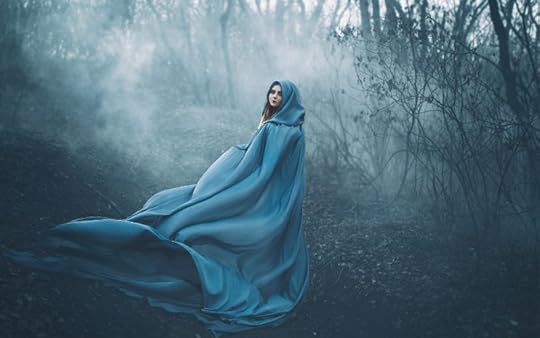
Samhain (or Halloween) occurs during a period of time that signifies the “dying of the days”. The days are getting shorter, nights are definitely longer, and whatever hasn’t been harvested for the winter is left behind. It’s also a time of year when the veil between the world of the living and the world of the dead thins. This allows spirits from the other side to come into the living world to cause all kinds of mischief. This time of year also sees an increased in the activity (both mischievous and malicious) of The Good People (aka Irish Fairies). The Slua Sidhe (a fairy host) is active on Samhain, looking for mortals to take mortals to their world where they keep them as servants until tossing them back into the real world–sometimes decades after they’ve been abducted.
The Púca (a Celtic phantom goblin fairy) is also roaming about, especially on Oiche Shamna (Samhain Eve), causing trouble. The Púca is known for ruining the fruit that hasn’t been harvested (by spitting, urinating, or stomping on the berries), leaving them inedible for humans. This story is similar to the one about Michaelmas, the anniversary of when St. Michael tossed Lucifer out of Heaven and he landed on a blackberry bush. Samhain is also known in Celtic fairytales as a fire festival (one of the Ember Days) where fairies move their homes and are more visible to humans. So, around this time of year, there are more stories about people actually seeing or interacting with Irish fairies.
One story, according to the Cath Maige Tuired (two of the sagas of the mythological cycle of Irish Mythology that translates as “The Battle of Magh Tuireadh”), the Morrigan (an Irish warrior/goddess/queen) and the Dagda (the chief of the Tuatha dé Danann–the highest level of Irish fairies) meet at Glen Tin. It was here, at Glen Tin on Samhain, that the Tuatha de Danann fought their greatest enemy, the Fomorians (a supernatural race of Celtic monsters). The Fomorians had been demanding a tribute of corn and children from the human population every Samhain Eve, and the Tuatha dé Danann fought this great battle on the behalf of people. So every Samhain since, the Morrigan and the Dagda meet at Glen Tin around a bonfire to remember the battle and all of those (supernatural and human) who were lost. But, if you’re an unlucky mortal who stumbles upon this fiery festival, you may end up living the rest of your mortal days in the Otherworld as a prisoner. If you’re lucky, they’ll allow you to serve them
There are more not-so-friendly stories about Samhain and the Tuatha dé Danann. According to P. W. Joyce’s Smaller Social History of Ancient Ireland, the Sidhe would open up the veils between the Otherworld and the real world on Samhain Eve. This “opening” would allow supernatural monsters such as two-headed birds, chimeras, and Púcas (goblins), to emerge and cause devastation on Earth. Because these creatures sought out mortals to eat or destroy, people began dressing up as either fairy folk or animals to avoid these monsters.
Another Celtic Samhain myth mentions a man named Nera who takes up a challenge issued by the Irish King Aillil. This challenge required a man to tie a cord around the ankle of another man who’d been recently hanged. When Nera, dragging the dead man by the ankle, goes out on Samhain night he has all sorts of scary adventures including talking to the dead, joining a Slua Sidhe (fairy host) for a party in the Otherworld, taking a fairy wife, and then returning to King Aillil to issue a warning from the fairies that an attack by Fomorians would happen the day after Samhain (All Saints Day). Nera proves his stories by showing King Aillil the fruit Nera has taken from the Otheworld–fruit not available in the human world until summertime.
Because of the increased activity of the Tuatha dé Danann and the Púca around Samhain, many Irish traditions include avoiding certain areas and protecting oneself against encounters with the fairies. One example is that, after dark on Samhain Eve, you’re not supposed to walk on the west side of a building or near any kind of water. Also, you’re not supposed to travel at night. And if you have to leave your house, you carry a piece of iron (like an iron nail) and you turn an article of your clothing inside out.
But some people want to meet up with the fairy folk on Samhain. So, if you’re inclined to do that, you have a few options to attract their attention. First, you can offer yourself as a tribute. If you are chosen by the Tuatha dé Danann, you will be forced to undergo tests of courage and fortitude. Since many of the fairy folk can be quite malicious, they will never guarantee your safety. If you want to submit to their trials, hoping for a chance to either become immortal (like a lower fairy) or to have access to the Otherworld, you’re on your own.
Another way to meet fairies on Samhain is to leave out offerings in case the Tuatha dé Danann wander by while trick-or-treating. Supposedly, the Tuatha dé Danann love milk or cream along with a piece of freshly-baked bread. They also like candy. But whatever you offer, don’t be stingy. The Tuatha dé Danann really hate stingy humans!
There are a lot more stories about Irish fairies and Samhain, but they tend to be about battles and massive amounts of death that I don’t like writing about. But, however you choose to celebrate Samhain or Halloween, consider carrying a bit of iron in your pocket and wearing your socks inside out. Because on a dark Halloween night you never know who–or what–you’ll encounter.
Subscribe Enter your email address to subscribe to this blog and receive notifications of new posts by email.
Email Address
Subscribe
The post An Irish Halloween appeared first on Sharon Wray.
October 18, 2022
Sarah Munro’s Rosehip Oxymel
Oxymel is just a fancy word for a honey-vinegar tonic. In Latin, “oxy” means acid and “mel” means honey. Oxymels have been around since Roman times and are used as elixirs or tonics to help improve the immune system. Because the basis of the oxymel is vinegar and honey, it can be incorporated into gravies and salad dressings so it’s easy to eat and add to your diet.

Oxymels are easy to make and will take on the added benefits of whatever you choose to add to the vinegar and honey. For this recipe, I’ve chosen to add dried rosehips, dried elderberries, and freshly-crushed garlic to add Vitamin C, Vitamin B, and Vitamin K. Rosehips are also powerful antioxidants and can help with inflammation. Here is some more information about Rosehips and their nutritional value. Elderberries and garlic also help in warding off colds and flu. Ceylon cinnamon* contains cancer-fighting enzymes and offers antioxidant and antimicrobial effects. I prefer to make this oxymel with dried rosehips and elderberries, and I grow my own in my garden. But if you don’t grow your own, you can find them on Amazon and in most health food stores.
*Ceylon Cinnamon differs from Cassia Cinnamon in that Ceylon has a sweeter flavor. Even more importantly though, Cassia cinnamon has a much higher amount of coumarin, a naturally-occurring chemical that can act as a blood thinner. So if you’re taking any hepatoxic medications, have any kind of liver or bleeding issues, or are prepping for any kind of surgical/dental procedures, you should avoid Cassia cinnamon. Ceylon Cinnamon is available at Amazon as well as in any health food store–but it’s very hard to find on generic grocery shelves.
Other than using the amount of vinegar and honey this recipe calls for, you can add more or less rosehips and elderberries according to how you like the taste. The recipe below for Rosehip Oxymel dates back to colonial times. That is why Sarah Munro, (my PhD historian and heroine in book 2 of the Deadly Force series, ONE DARK WISH), has added it to her collection of DIY herbal recipes.
Sarah Munro’s Rosehip OxymelIngredients & Equipment:12 ounces Apple Cider Vinegar with Mother8 ounces raw honey1 whole head of garlic, peeled2 Tablespoons dried rosehips2 Tablespoons dried elderberriesDash of Ceylon cinnamonCheesecloth & Colander1 pint glass jar with tight-fitting lidDirections:Crush the peeled garlic and set aside for thirty minutes so the enzymes can form.
In a medium saucepan over medium heat, stir together the apple cider vinegar, reships, and elderberries. Bring the mixture to a simmer. Lower the heat and cover the pot. Simmer for 15 minutes.
Remove the saucepan from the heat and place on a towel on the counter. Stir in the crushed garlic and Ceylon cinnamon. Cover the pot again and let it sit until the mixture has cooled to room temperature, about 30 minutes. (but it could take longer)
Line a colander with cheesecloth. Set the colander in a large bowl. Once the mixture has cooled, strain it in the cheesecloth. Using your fingers, squeeze out as much juice as you can. Discard the solids.
Pour the oxymel into the glass mason jar. Stir in the 8 ounces of raw honey. Once you put on the tight-fitting lid, shake the jar gently.
Store the glass jar in a dark cabinet for up to six months.
This oxymel can be used immediately after being made. Take 2 Tablespoons per day to books your immune system. I like to add it to salads (as a dressing) and I also drizzle it over cooked chicken or pork.
IMPORTANT DISCLAIMER ABOUT WILD PLANTS, FORAGING , AND MAKING HERBAL REMEDIES:I am not a medical professional and nothing written on this blog is medical advice. None of my statements have been evaluated by the FDA (I am legally required to give you this disclaimer).
It is important to do your due diligence before foraging, harvesting, and/or consuming any type of medicinal plant.
If you are taking any medications, talk to your doctor about any potential drug interactions.If you are allergic to anything, make sure whatever you are foraging is not in the same family. Example: While dandelions are typically considered safe, those who are allergic to ragweed, latex, daisies, or any other plants in the same or similar families, may not be able to consume dandelion.Always research potential side effects, dosage recommendations, and how to properly prepare and consume each medicinal plant.
Always make sure you are foraging what you believe to be. Fully prepare and study the anatomy before harvesting wild plants.
Always make sure your kitchen/work area is clean and that all materials are sterilized.
Do not forage plants from areas that have been sprayed within the past 2 years at the very least.
I am not legally or morally responsible for the health of any of my readers. Please do your own research!
Subscribe Enter your email address to subscribe to this blog and receive notifications of new posts by email.
Email Address
Subscribe
The post Sarah Munro’s Rosehip Oxymel appeared first on Sharon Wray.
October 17, 2022
NaNoWriMo Preptober: Part 2
I have been writing for most of my life, but because there’s so much information out there on how to write a book I still get overwhelmed. There’s even more information on NaNoWriMo. That makes running a successful blog series about how to plan for NaNoWriMo quite daunting.
Last week I offered a quick, easy list on how to get started planning for NaNoWriMo without becoming stressed. But today I want to offer a few resources that may help you on your writing journey. This list is similar to the one I published last year, except I edited it to add more updated resources.
NOTE: THIS IS NOT AN EXHAUSTIVE LIST OF WRITING RESOURCES. I’M NOT SURE ONE OF THOSE IS EVEN AVAILABLE. THIS POST IS JUST AN ABBREVIATED LIST OF RESOURCES SPECIFICALLY FOR WRITERS WHO ARE TRYING TO PREPARE FOR NANOWRIMO,First, I’ve set up a bibliography of some of my favorite writing craft books. It will eventually be annotated, but right now it’s just a list with links to Amazon. It is indexed by topic and in alphabetical order by author. (I am not an Amazon affiliate and make no money from the links on this site. I only recommend and link to products I have used and loved but I have no relationship with these vendors.)
Second, there so many websites out there that offer great writing information and free guides, printable, etc. I’ve listed some of my favorite websites below.
https://www.eadeverell.com, run by Eva Deverell, offers a free One Page Novel workshop to help you figure out the main elements of your story before you start. The site is filled with writing craft articles and links to other resources.
http://www.aliciarasley.com is run by professional editor, professor, and historical author Alicia Rasley. Alicia has so much information on this site that it’s best to set aside a few hours to sift through it all. In particular, I love her “How to Outline a Story in 30 Minutes.” It’s perfect for Preptober!
https://heartbreathings.com is run by YA author Sarra Cannon (see YouTube link below) that corresponds to her YouTube channel. Sarra offers tons of freebies and printables about how to craft the best novel possible.
https://thewritepractice.com offers a ton of annotated lists and links to all the tools a writer may need to craft a novel. But the real treasure is found under the articles tab where guest authors write about everything from drafting to refining grammar.
https://writerunboxed.com is a great aggregate website filled with articles on writing craft, writing technology, and writing encouragement. You could spend hours on this site!
https://writershelpingwriters.net is a large website with a lot of things for sale–but head to the resources tab where you can find free printables, lists of articles and books all about the craft of writing.
Third, I love YouTube videos about writing. A few (such as at the Heart Breathings channel) even offer free printables and other information specifically for Preptober. I’ve posted a few of my favorite channels below.
Sarra Cannon/Heart Breathings. Sarra Cannon, a successful indie YA author, has two channels. Heart Breathings is for writers and Sarra Cannon channel is for her readers. But they both have great information for both experienced and new writers. If you sign up for her website (link above), you can even get a free downloadable Preptober Planner that I use every year. https://youtu.be/ftm9kWn-IHo
Bethany Atazadeh. Another successful indie YA author, Bethany offers information from writing craft to managing a publishing business. Bethany has a degree in creative writing and speaks on all aspects of the writing craft from outlining to writing a series. https://www.youtube.com/c/BethanyAtazadeh/featured
Alexa Donne. A successful trad YA author who offers great-if-harsh advice on writing and querying and other aspects of the writing industry. She’s tough and honest which is why I’m addicted to her channel. This is a tough industry and I always appreciate it when another author offers real advice instead of general validations. She has great information on drafting and editing. https://www.youtube.com/c/AlexaDonne
Shaelin Writes. Shaelin is a young fiction writer from Canada with a large channel filled with craft and grammar advice from filtering words to line editing. And she has an interesting take on NaNo and why sometimes it’s better to lose. https://www.youtube.com/c/ShaelinWrites
Abbie Emmons. Abbie is young adult fiction author who also teaches classes on YouTube about how to plan and write novels. She also has a great YouTube playlist for Preptober. This video, in particular, is a great lecture on developing character profiles. https://youtu.be/k1W5DSOlPrw
Like I mentioned above, there is so much information about writing books in the world that it can become very overwhelming very quickly. So I hope this shorter list helps… and remember. No one can write your book better than you can. Good luck!
Subscribe Enter your email address to subscribe to this blog and receive notifications of new posts by email.
Email Address
Subscribe
The post NaNoWriMo Preptober: Part 2 appeared first on Sharon Wray.