Harold Sipe's Blog, page 4
March 31, 2020
strandbooks:The past week has been the most difficult in ...
The past week has been the most difficult in The Strand’s 93 year history. With New York’s PAUSE act now enforced, all of our operations have effectively been shuttered since 3/15, including our online store. We’re doing our best to look forward and get back on track. With that being said we know a lot of you might have questions, so we wanted to give you the right people to contact.
📚📚📚
1. For questions about recent orders or Book Hook Up Subscriptions reach out to dan@strandbooks.com.
2. For questions about events or pre-orders reach out to sabir@strandbooks.com Unfortunately all events and pre-orders have been cancelled for the foreseeable future.
3. For more general questions (or if you just want to talk) you can reach out to me at james@strandbooks.com.
📚📚📚
If you’re looking for a way to support The Strand right now, our gift cards are still available at strandbooks.com/gift-card/. We’re actively working on some alternatives to see how and when we might be able to get some orders to you all.
📚📚📚
As always, we appreciate every single one of you. We can’t wait to safely reopen our doors and see all your faces again. Stay safe and stay healthy. — view on Instagram https://ift.tt/3duJbbr


strandbooks:
The past week has been the most difficult in The...

The past week has been the most difficult in The Strand’s 93 year history. With New York’s PAUSE act now enforced, all of our operations have effectively been shuttered since 3/15, including our online store. We’re doing our best to look forward and get back on track. With that being said we know a lot of you might have questions, so we wanted to give you the right people to contact.
March 16, 2020
So, while I am very much an introvert I am pretty sad that I...
So, while I am very much an introvert I am pretty sad that I won’t be able to connect with my collecting friend or go dig through dusty boxes for comics over the next few weeks. I am going to try a few small videos looking at comics or comics collecting. Feel free to drop collecting thoughts in the comments and stay healthy!
February 16, 2020

gplusbfics:
I heard a rumor that O’Brien may turn up in t...

I heard a rumor that O’Brien may turn up in the new Picard series. I wonder if reminiscing for the DS9 documentary softened him up to participate. Meanwhile I don’t know who came up with this tweed Starfleet coat but LOL.
gplusbfics:
I heard a rumor that O’Brien may turn up in the new Picard series. I wonder if...

I heard a rumor that O’Brien may turn up in the new Picard series. I wonder if reminiscing for the DS9 documentary softened him up to participate. Meanwhile I don’t know who came up with this tweed Starfleet coat but LOL.
February 9, 2020
All in Color (or B&W) for 50-cents, or $1.00, or $1.25, or $1.95
It’s a thousand pages, give or take a few
I’ll be writing more in a week or two
I could make it longer if you like the style
I can change it ‘round
And I want to be a paperback writer
Paperback writer
In these heady days of the 2020′s, the collection of comic books into paperback volumes is such a given that many who read this material will only refer to it as the term Graphic Novels. In low-art vs high-art terms, I can understand why one wouldn’t want to sully their shelves with comic books, but, growing up during the birth of the American Graphic Novel I find it really hard to call a collection of comic books single issues anything other than a collection or using a publishing term, trade paperback.
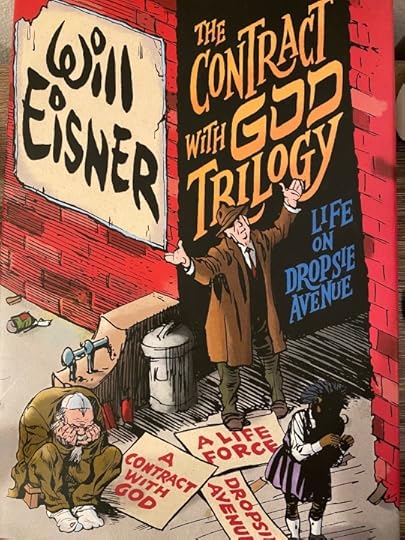
Today, the comics periodical, or the comic book single issue (the pamphlet, the floppy) is released almost exclusively in comic book stores (of which there are roughly 2,300 in North America) every Wednesday. In today’s culture of Marvel movies and geek culture, I would argue most people who read comic books in the age of the trade paperback don’t read them in periodical form. The public no longer having the patience to read monthly cliffhangers now reads their comics in collected form found at bookstores, libraries and Amazon.
Why do publishers still trade in single issues if the majority of readers prefer trades? The economics of comics publishing are quite different that that of other book publishers:
1. The comics publisher depend on the monthly income of the single issues to pay for the production (talent cost, publishing cost, editorial overhead) of the comic itself. In order for the publisher to stay cash flow positive and make a profit on a comic book, the title must pay for itself (be profitable or at least break even) before it is collected into a TPB so that the only overhead on a collected edition of the printing of the trade paperback. If the majority of income on these books isn’t profit the the comics title isn’t economically viable.
2. The comics creators depend on the monthly income. These creators need to see monthly income (most have no job security or even health insurance) the same way that most American workers depends on the bi-weekly salaried paycheck. Most creators would welcome the chance to do more long-form work but in that scenario they would be looking at (maybe) an advance on the publication of the work and then a long period of creating the work, with no income, until the book was published.
3. The North American comic book stores rely on that weekly income to stay in business. Some stores are converting to more of a bookstore model, but many depend on the weekly sales of new comics to help cover the weekly orders they have to place to keep inventory in the store.
The idea of the comic book collection solidified in 1986, when three masterpieces of the form: Dark Knight Returns, Watchmen, and Maus were published. The mainstream books heaped coverage on these books and the publishers rushed to put them out in a format that could be found in mall bookstores such and Waldenbooks.
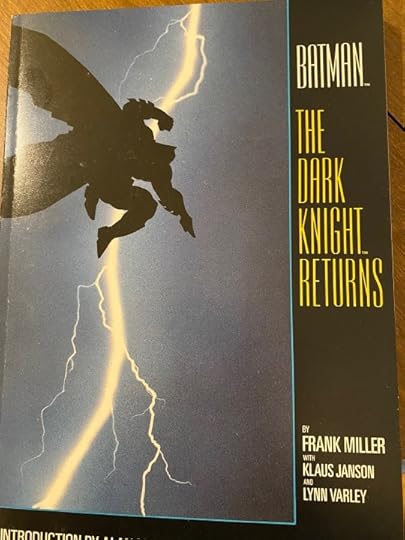
My copy of the Dark Knight collection from 1986
Trade paperbacks have gained in popularity with readers since the early 2000′s when big-box bookstores and Amazon made them more accessible. This format was always attractive to publishers because the material was already paid for. A collection had much higher profit margins than new material.
Of course, there were times (many times) when comic strips and comic books broke through to the public consciousness. So, how did book publishers capitalize on comic books before the trade paperback? They turned to their own popular consumption format: The pocket paperback.
Book publishers turned to their own cheap format aimed at mass consumption to publish collections of comics. The largest challenge was the size and format. Paperbacks are typically 4 inches wide by 7 inches tall while the average comic book is 10 and 1/8 inches by 6 and 5/8 inches. So how you fit a comic book into a paperback? Cut them up and show the art panel by panel.
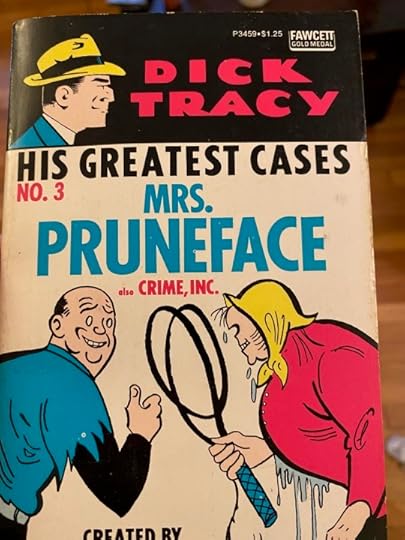
This could be easy if the you were adapting a newspaper strip, The format lends itself to panel by panel reading.
The task becomes more complicated when dealing with really complicated layouts like Will Eisner employed in The Spirit.
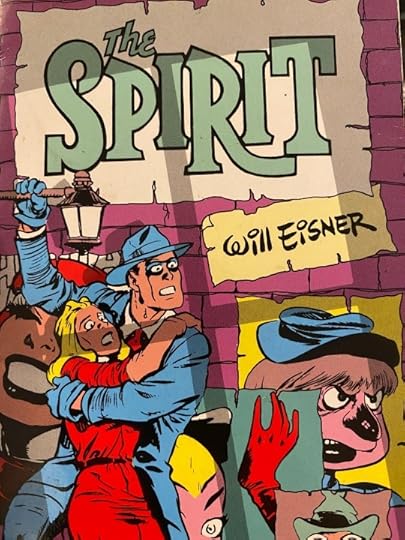
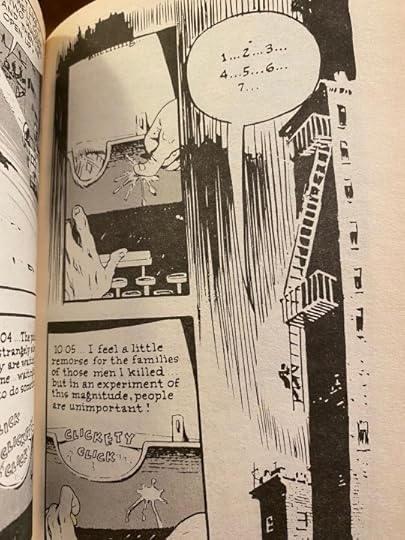
Collection of six Spirit stories from Titan Books in paperback format from 1989
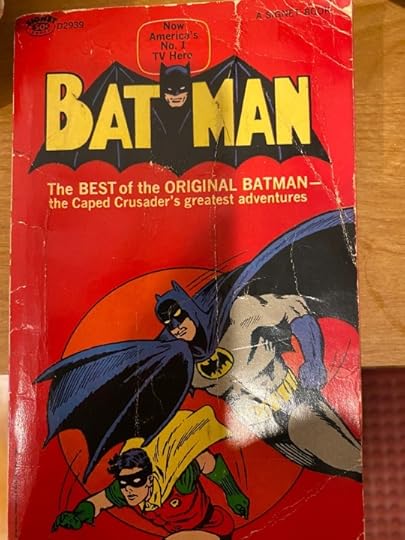
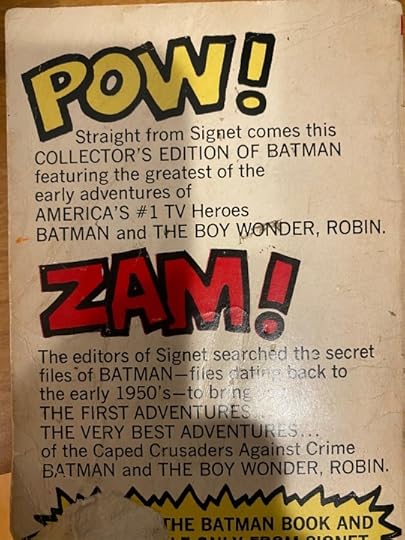
Signet collection of Batman and Joker stories from the 40′s and 50′s reprinted in 1967 as a paperback to capitalize on the Batman TV show craze.
While Signet worked to reformat Batman stories to fit on the small page size, Pocket Books would just shrink the pages for their 1970′s Marvel color reprints. This would make them incredibly hard to read.
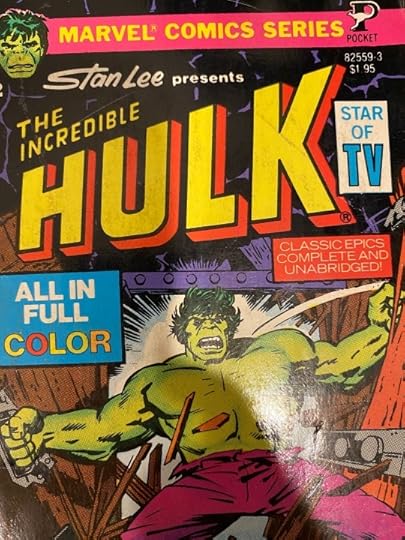
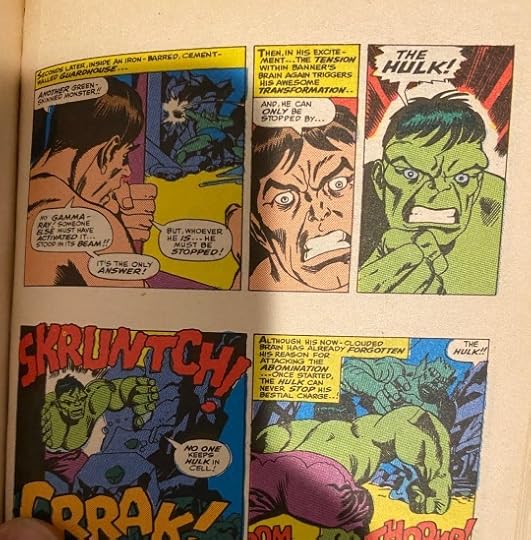
This 1979 Pocket paperback billed it’s Hulk collection as “Seen on TV” but the fans of the loner on the run-style show would be hard pressed to recognize the out there sci-fi driven tales of these stories.
Many of the paperbacks were of more well-known comic strip and comic book characters but in 1984 The New Teen Titans saved DC Comics from shuttering its publishing line and licensing its titles to Marvel. Given the popularity of the title Tor put out a volume for the mass market in paperback form. Seeing the Perez art in black and white is neat but the detail in his art can be challenging at that scale.
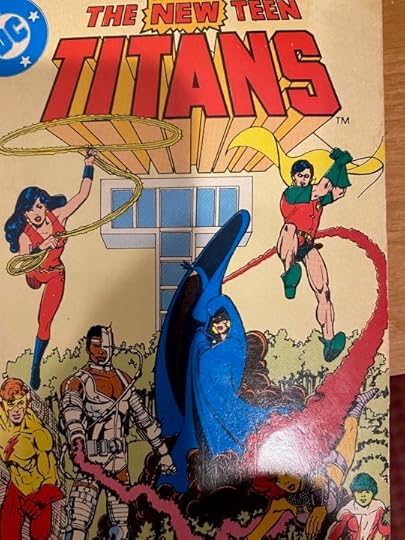

The New Teen Titans Tor paperback from 1984. They dud a great job on formatting the age to keep the Perez art for it felt as dynamic as in the comic while keeping the type readable.
These paperback editions can be pricey in the back-issue section of your comic shop but they were popular enough to turn up with some regularity at used bookstores and thrift shops. Always a welcome and fun find, I really enjoy having a lot of this material being so portable. Even in the e-reader age there is something fun about 8 to 10 issues of a comic that can fit in your jacket pocket, even if some do require the near-sighted to break out their readers to enjoy..
December 4, 2018
twentiethcenturykid:
JUST ANOTHER MEGO MONDAY
Batman And ...
JUST ANOTHER MEGO MONDAY
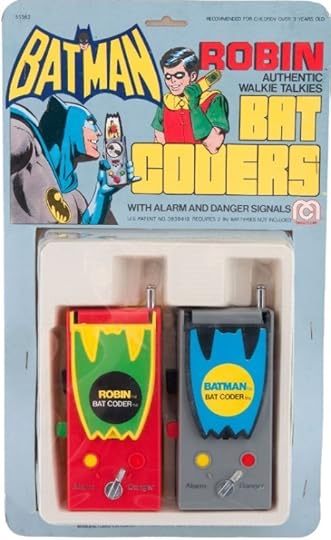
Batman And Robin Bat Coders
Circa 1976