Andrew Anzur Clement's Blog, page 6
October 27, 2020
Writing During/Against a Pandemic
I dashed this piece off yesterday evening. I think it’s my first flash fiction. That is all:
Dmitri Djordjević had lived in the Bežigrad district of Ljubljana for a few years, in a blok off of Topniška ulica. The apartment looked out at the castle. He was born in Belgrade. He and his family moved to the States following the wars of the nineties. He went to high school in America, Chicago.
He remembered how the wind from Lake Michigan would always whip his face when he walked along Lakeshore Drive, while he’d bullshit with his friends. Now he was living in Ljubljana. His mom was Slovenian. She met his Serb dad in the Yugoslav times and they decided to relocate to Slovenia. They’d bought the apartment in Bežigrad. Dad was going to get a visa. While they were working on that they spent a couple of years in the Slovenian capital.
There was another family, one of many in the blok, a few floors down. The two families became close. Dmitri with them, especially. He was a city rat, living in Belgrade and then Chi-town. His Slovene was imperfect. The other family took him mushroom hunting. He’d never been to a forest, before. Their youngest daughter liked practicing English with him.
Dmitri’s parents were going to come, full time. But there was a problem. A pandemic, which, after a time Dmitri started to append the term ‘So-Called’ to. The neighbors who lived downstairs ate at his table and he ate at theirs. They were Yugoslavs. They didn’t judge. They didn’t mask. None of them used sanitizer. None of them got sick.
Masks were mandatory out of doors; then they weren’t, and then they were again. The medical mandarins had all the ears in Parliament. The MPs were listening to the people who knew what to do, theoretically. But most of the ‘people who knew’ really had no idea what they were doing, except screwing up people’s lives. They didn’t seem aware of that part, as far as Dmitri could tell.
He’d see the youngest daughter of the family who lived downstairs again and again, showing up at the front door. The food-gift giving became a tradition, almost. She wasn’t in school anymore, not really, and she wanted to be. Her dog came with her a lot; it was her dog. Her mom didn’t like dogs.
One day, while coming home to his blok, with the airline eye mask he’d got on a flight to Japan and hadn’t washed in three months around his chin, Dmitri saw his neighbor’s youngest daughter in the entrance way. The stores were closed again. She was out of school again. She’d grinned and bore it.
She was crying.
He took her up to the floor his apartment was on. They sat in the stairway – it was no longer legal to hug a non family member, due to a threat that Dimitri had been repeatedly reminded for months had no selectivity, but required a curfew during certain hours of the day. He hugged her. He let her cry and let her dog sit with him.
In that moment Dmitri Djordjević, wondered how anyone could make a girl cry like this. He wondered how he could be told hugging her was doing harm when she clearly was a human being who needed a hug. He wondered who the true tormenter was and if some of them possibly wore white coats. He wondered how someone could exist, who wanted to dampen the freedom of life, the life, the living life, of this girl. He wondered and wanted to rage at the lack of empathy.
He felt something harder than he ever had felt before. A mix of anger, fear, angst and ripshitness at those who had caused his neighbor to cry. He knew what he thought and nothing was going to change that. He knew that ‘they’ could take any talk they may have of curves and do something involving obscenity with them, the sharper the better. The only thing that mattered was the ‘little cousin’ Dimitri was trying to soothe in his arms.
Worst of all, he felt powerless. Powerless against what he was really trying to protect her against. So he kept the his crying neighbor's daughter in his arms, holding her there. Shielding her against the mob, who had decreed hugging her was illegal.
Dmitri sat on the stairs. He hugged her anyway.Dmitri Djordjević had lived in the Bežigrad district of Ljubljana for a few years, in a blok off of Topniška ulica. The apartment looked out at the castle. He was born in Belgrade. He and his family moved to the States following the wars of the nineties. He went to high school in America, Chicago.
He remembered how the wind from Lake Michigan would always whip his face when he walked along Lakeshore Drive, while he’d bullshit with his friends. Now he was living in Ljubljana. His mom was Slovenian. She met his Serb dad in the Yugoslav times and they decided to relocate to Slovenia. They’d bought the apartment in Bežigrad. Dad was going to get a visa. While they were working on that they spent a couple of years in the Slovenian capital.
There was another family, one of many in the blok, a few floors down. The two families became close. Dmitri with them, especially. He was a city rat, living in Belgrade and then Chi-town. His Slovene was imperfect. The other family took him mushroom hunting. He’d never been to a forest, before. Their youngest daughter liked practicing English with him.
Dmitri’s parents were going to come, full time. But there was a problem. A pandemic, which, after a time Dmitri started to append the term ‘So-Called’ to. The neighbors who lived downstairs ate at his table and he ate at theirs. They were Yugoslavs. They didn’t judge. They didn’t mask. None of them used sanitizer. None of them got sick.
Masks were mandatory out of doors; then they weren’t, and then they were again. The medical mandarins had all the ears in Parliament. The MPs were listening to the people who knew what to do, theoretically. But most of the ‘people who knew’ really had no idea what they were doing, except screwing up people’s lives. They didn’t seem aware of that part, as far as Dmitri could tell.
He’d see the youngest daughter of the family who lived downstairs again and again, showing up at the front door. The food-gift giving became a tradition, almost. She wasn’t in school anymore, not really, and she wanted to be. Her dog came with her a lot; it was her dog. Her mom didn’t like dogs.
One day, while coming home to his blok, with the airline eye mask he’d got on a flight to Japan and hadn’t washed in three months around his chin, Dmitri saw his neighbor’s youngest daughter in the entrance way. The stores were closed again. She was out of school again. She’d grinned and bore it.
She was crying.
He took her up to the floor his apartment was on. They sat in the stairway – it was no longer legal to hug a non family member, due to a threat that Dimitri had been repeatedly reminded for months had no selectivity, but required a curfew during certain hours of the day. He hugged her. He let her cry and let her dog sit with him.
In that moment Dmitri Djordjević, wondered how anyone could make a girl cry like this. He wondered how he could be told hugging her was doing harm when she clearly was a human being who needed a hug. He wondered who the true tormenter was and if some of them possibly wore white coats. He wondered how someone could exist, who wanted to dampen the freedom of life, the life, the living life, of this girl. He wondered and wanted to rage at the lack of empathy.
He felt something harder than he ever had felt before. A mix of anger, fear, angst and ripshitness at those who had caused his neighbor to cry. He knew what he thought and nothing was going to change that. He knew that ‘they’ could take any talk they may have of curves and do something involving obscenity with them, the sharper the better. The only thing that mattered was the ‘little cousin’ Dimitri was trying to soothe in his arms.
Worst of all, he felt powerless. Powerless against what he was really trying to protect her against. So he kept the his crying neighbor’s daughter in his arms, holding her there. Shielding her against the mob, who had decreed hugging her was illegal.
Dmitri sat on the stairs. He hugged her anyway.


September 20, 2020
Europe’s Lost Children: Book Three Historical References
Europe’s Lost Children is an alternative history series set during the 2010s. It deals with European integration and the aftermath of the Yugoslav wars of the 1990s. As such, it is a work of fiction. However, there are many real world and historical references peppered inside.
In Europe’s Lost Children Book Three: Orphans’ Plight a very fictional band of Serbian nationalists called the Brutalists is out to destroy the EU, see to the rise of Greater Serbia and take down Elena, the head of the Covert Action Service — the EU’s fictional MI6. Let’s have a chapter-by-chapter look at some of the real history and (almost) current events that inspired it:
[image error]
One: The Fugitive in the Woods: Of course, the references to major figures such as Slobodan Milošević and Arkan are historical, through their secret children are very fictional. The Hotel Emos is a real abandoned place. It was the headquarters of the Serb forces for the Foča area in Bosnia during the 1990s wars. The Serb nationalist symbols are real.
Two: A Murder in Gothenburg: All events that take place in Sweden are fictional. The personages of Milorad Dodik and Momčilo Krajišnik are historical, however their involvement with Brualists is, of course, made up by me. The character of Mr. Kurvić is fictional.
Three: A Kid in Need—also, the Brexit Vote: It goes without saying that the referendum on the UK leaving the European Union, during which this chapter is set, really did happen. Fikret Abdić remains, to this day, the mayor of Velika Kladuša. The Miral migrant camp is very real and it is one of the main points where the Croatian border police send migrants back to Bosnia.
I must thank my friend and colleague Boštjan Videmšek for his in-depth reporting on the migrant corridor, including the Miral camp. Without his investigation and first-hand accounts these books would not have been possible. (If you’re looking for a deep dive into the subject of migration to Europe or war in the Middle East defiantly check out his work of new journalism: Dispatches from the Frontlines of Humanity: A Book of Reportage.)
Four: Remembrances: As the name of the chapter suggests, this is mostly a series of personal recollections. As such, aside from references to place names, historical figures and a varietal of Balkan wine, everything is fictional.
Five: Accusations of Neglect: The remains of the bobsled track from the 1984 Olympics on Mount Trebević in Sarajevo are quite real.
[image error]The author’s ‘best side’ walks down the ruins of the bobsled track from the 1984 Sarajevo Olympics.
Six: A Schooling: Zagreb’s Mamutica is really one of the largest apartment bloks in the former Yugoslavia and all of Europe.
Seven: A Schooling 2.0: The specific school in Velika Kladuša that Ayoub attends is fictional. However, there are schools in the Croat and Bosniak entity of Bosnia and Herzegovina that have bars, which go down the middle of them where the Croat and Bosnian Muslim students are segregated. The line that Erika quotes her teacher having said: “Apples with apples and pears with pears,” is from a statement of the education ministry of the Federation of BiH. Anything that has to do with Ayoub and Erika throwing a secret party for the two sides is totally fictional.
Eight: A Party Gets Crashed—Literally: As mentioned above, all events are made up by me.
Nine: Prodigal Parents: The Nice, France truck attack, which occurs in the background of this chapter, is historical, though it being masterminded by a bunch of Serbian twenty-somethings is totally fictional. The Eurostar high speed train and the Chunnel are certainly quite real.
Ten: Attack on the Vineyard: The Elenov winery exists but it is just a winery. All events are fictional.
Eleven: The Ring: The National Theater of Zenica is quite real. However, it’s director is quite fictional; you may recognize her from Tito’s Lost Children. Wagner’s Ring Cycle is a thing.
Twelve: After Siegfried…: Again, the Ring operas exist, but the rest of the events in the chapter are fictional.
Thirteen: The Passing of the Scarf: Donald Tusk and Angela Merkel are obviously real political figures. The events of the chapter are fiction.
Fourteen: Kresnice, Part I: The layout of Ljubljana circa 2016 has been faithfully represented. The character of Janez Zupančič is completely fictional. However, the village of Kresnice, along the Sava River gorge, is quite real (the author’s family comes from there; some of the people who help Erika out may, in fact, be based off of the writer’s relatives!). Further fun fact: The character of Mr. Zupančič’s nephew, Tone Tomšič, was actually named for a partisan fighter.
[image error]The Partisan monument to Tone Tomšič in the Poljane district of Ljubljana.
Fifteen: Gearing Up: There are Serb nationalist accusations that the doctors in Sarajevo’s University Clinical Center give preferential treatment to Bosniaks at the expense of Serbs. The rest of the events are fictional.
Sixteen: We’re All Loyal Serbs Here: Luda Kuća — The Madhouse — is a real bar in New Belgrade and is known as a hangout for Serb nationalists. The convicted war criminal Radovan Karadžić used to hang out there while in hiding, under the disguise and alias Dragan Dabić. Is it any wonder that Marana would use this as one of her HQs? The reference to the epic Serbian folk song glorifying Mr. Radovan Karadžić is historical, as is Marana’s quote of his poem ‘Sarajevo’.
Seventeen: Kresnice, Part II: The abandoned schoolhouse really does exist, though, of course, it didn’t get blown up! The lime and gravel factory is also in Kresnice, right next to the train station; the rock gondola is there, too. There really is a quarry on the other side of the river. The place Ayoub would have been hiding next to the schoolhouse is really quite beautiful.
[image error][image error][image error][image error][image error]
Žale cemetery in Ljubljana really exists. The two characters that end up burred there have a tomb that is meant to resemble a Yugoslav partisan monument.
Eighteen: Pups Become Dogs—Sometimes Dogs Get Mean: All events are fictional. But Marana hasn’t given up. She is still determined to unite Greater Serbia; it will be up to the team of the Covert Action Service to stop her and bring the former Yugoslavia under the banner of Europe in the final installment of Europe’s Lost Children — Brotherhood and Unity.
[image error] The first book in the Europe’s Lost Children series is available here.
September 17, 2020
Tito’s/Europe’s Lost Children Acknowledgements
I’ve had trouble admitting this for a while, but here goes: Europe’s Lost Children, as well as my previous series: Tito’s Lost Children were inspired by an Anime. Back in 2016, on a visit to the States, I was arguing with my parents (and especially my father) about my decision to write full-time. A friend from high school insisted that I watch Avatar: The Last Airbender to take my mind off things. She’d been nagging me to watch it for years, but I normally hate animation, so I had not until then. She watched the whole first season with me. (Note: the same friend has pointed out to me that there is a rather spirited debate about whether or not Avatar is, in fact, an anime. Suffice it to say that I will continue to use the term as the definition of ‘anime’ is far beyond the scope of this post).
[image error][image error]
Upon my return to Brussels, I watched the next two seasons of Avatar, all the while feeling a sense of déjà vu, and at first complaining about all of the dark themes that the PG-rated show touched on (“Do you realize that this is a reference to child soldiery?” I asked my friend. “The whole show is a reference to child soldiery!” was the response.). Anyway, thanks Friend-From-High-School for making me watch this.
I then started with the sequel to Avatar — Legend of Korra. I think that was the first time that I subconsciously knew I was going to write Tito’s/Europe’s Lost Children. Upon starting the first episode of Korra, I remember stopping it during the intro and thinking that the premise of the story was exactly like the founding of the European Union. Then I took a second look at the map of the ‘Avatar Fantasy World.’ It hit me: what I’d been reminded of the whole time. ‘Avatar World’ wasn’t just Europe: take out the water, flip the Fire Nation and the Earth Kingdom… “It’s Yugo –[explicative deleted]–slavia.” I muttered to myself.
[image error]The author enjoys a lovely beer in Brussels, the EU’s capital.
It was 2017 by that point. My family went on vacation in Montenegro, Croatia and Bosnia, after going to Slovenia, where we have roots. I knew about the history of the Yugoslav wars of the nineties, even though I spent the whole time as a happy child in Los Angeles. A Slovenian friend who was moving had offered to put me in touch with the landlord of the apartment he was renting in Ljubljana. However, it was too big and expensive for one person. This was also the first time when I informed my father that was wasn’t planning to look for a traditional ‘day job’ after defending my PhD dissertation, on European identity formation and the right of free movement of persons in the Union, a couple of months from then. Instead I was planning, one way or the other, to devote myself to writing fiction full-time.
There was a crazy car ride to Mount Lovćen. The main road was closed and we had to take a side lane that was barely a strip of asphalt. The car’s engine started to overheat — the only time that’s ever happened to me. There were no signs. My dad got a bit of road rage. I’ve written before about how I got the concrete idea to write Tito’s Lost Children on Lovćen, but not about the Anime-inspired background.
[image error]The view from the sumit of Mount Lovćen
I’ve never said what went through my mind as I took in the view from the dais behind the poet, priest and philosopher King Njegoš II’s tomb. Maybe this was the first time that the character of Jovana ‘spoke’ to me; the first time I realized where the déjà vu was coming from. If you’ve watched Avatar, you might find some things to recognize.
“Long ago, the six nationalities lived together in brotherhood and unity. Then everything changed when the Serbs attacked. Only Tito, Maršal of all six nations could stop them, but when Yugoslavia needed him most he died. Some thought that they could take over for him. They couldn’t. Boom.
“Eleven years later, I discovered that I was the new Maršal; I’ve got a lot to learn before I’m ready to save anyone… But I believe that I can save Yugoslavia.”
That was it. It was then that I knew what the show had reminded me of: the breakup of Yugoslavia. It was one of those few moments of clarity when you see it all. I knew I would write what would turn into my latest eight books.
[image error]The setting for the final scene in Tito’s Lost Children: Book Three. Sarajevo, Bosnia
My dad and I hadn’t been talking much, even though we were traveling together. He knew about the offer to rent the apartment in Slovenia; my mother was also looking for a more permanent place there. She and I had no illusions: he wouldn’t agree.
The next morning, he walked out of the bedroom of our tourist apartment near to the town of Kotor in Montenegro and said “We’re renting that place in Slovenia.” Then he walked back in. You could have knocked my mom and I over with a feather. It was fate.
So thanks again to my friend from high school and the creators of Avatar and Korra. Tito’s and Europe’s Lost Children would not have been inspired without them (and large healthy doses of real Balkan and modern EU political history!). I guess it’s just what happens when you show an Asia-inspired Anime to a Slovenian/Balkan-American. And thanks Dad for agreeing to support my writing career. Thanks for fighting about it with me, too. I may never have watched Avatar or Korra, otherwise.
Thanks Mom, you’re always my first-line beta reader, the first to see anything that I write. I’m glad you were brutally honest with me about the earlier drafts of book two of Europe’s Lost Children; it led me to really consider what the point-of-view premise of the story was. My gratitude goes to my official editor as well, who was nice enough to help me figure that out, pro-bono.
[image error]My editor-mom on the exact sight where I got the idea.
Thanks as well to my younger American cousin, who helped this 30+ year old ‘geezer’ figure out how a bunch of teenagers would have self-organized in 2017 on social-media against an entire secret army. I also must give thanks to my Slovene friends and relatives who showed me where some of the events I was plotting could have occurred in my grandfather’s village of Kresnice.
[image error]The view of the Sava River from Kresnice. Might a diplomat’s daughter and a street urchin boy fall in love here?
Of course, Avatar and Korra weren’t the only thing that inspired these books. In addition to the real history of the Yugoslav Wars and European integration, I’d like to give a quick shout-out to the person who sold us the apartment we eventually bought in Slovenia — she has a character named after her — as well as our upstairs neighbors and their two lovely daughters, whose personalities inspired characters in Europe’s Lost Children (Erika and Lucija, I’m looking at you!). It was a privilege to watch you two grow up over the past couple years as I was writing the Europe’s Lost Children series.
In the end, I’d like to bring this back to my ‘Avatar confession.’ In the last few chapters of the final book, the main characters collectively adopt two (completely unrelated) teenage orphaned kids. It’s heavily implied that they are watching an episode of Korra from season two. In the epilogue those kids eventually have two children together and if you’ve watched Avatar or Korra, you may recognize their names: one if you can read a bit of ‘Balkan’; the other you may recognize outright. Hint: it is four letters long, begins in a Z, ends in an O and is a real Serbian name derived from the word for fire. It makes me start to wonder who was punning off of what, or if in the end, it really matters.
The final book in Europe’s Lost Children, Brotherhood and Unity, is with the editor as I write this. My next series will get a bit grittier (One thing I loved about writing something inspired by Avatar was that I didn’t have to keep a quite PG rating). My new series will be about Moscow street children and the city’s underworld (and how they overthrow Putin!). I’ve already started research and I’m looking forward to commencing work already.
Anyway, thanks again to everyone who helped to inspire and write my most recent eight books.
The first book in Europe’s Lost Children is available here. The main character has a very cool dog: a Macedonian Šarplaninec.
[image error]
August 5, 2020
Europe’s Lost Children: Book Three is Out!
Some of you may have seen me on House Hunters International. I’m excited to say that our update episode ‘The Adventure Continues: Writing a New Chapter in Ljubljana’ will re-air, tomorrow, August 6th.
It’s already slightly out of date! I’ve written another whole new novel in Ljubljana.
It’s my 14th and it just came out. It’s called Orphans’ Plight and it’s the newest book in the Europe’s Lost Children series!
Elena Marković, head of the European Union’s Covert Action Service, has survived a Syrian warzone and a harrowing journey through the Balkan migrant corridor. Stranded in an abandoned house in Bosnia, she finds herself at the mercy of the Brutalists – a mysterious enemy determined to destroy the EU and empower the rise of Greater Serbia.
Twelve-year-old Ayoub, now an orphaned migrant, has been left to an uncertain fate in a squalid refugee camp. Although he has finally escaped a lifetime of abuse by his Islamic extremist father, his ordeal is far from over. Reuniting with Elena could be his only chance for survival – if he can get to her before the Brutalists finish her off.
Drago and the rest of the Covert Action Service team wonder if Elena is even still alive as they are tasked with tracking down the culprits behind a string of gruesome murders. As the CAS team investigates, they discover that the key to catching the perpetrators – and possibly learning the Brutalists’ true identities – could be buried in their own childhood memories.
Old vendettas are about to be settled as the children of wartime rape join forces with terrorists and convicted war criminals in a diabolical plot to take down CAS and strike at the heart of Europe. Elena’s friends and loved ones will be in the line of fire as they struggle to fight the Brutalists. The CAS team’s most powerful weapon may be the realization that family and friendship are what matter most – maybe even enough for some of them to make the ultimate sacrifice.
Europe’s Lost Children: Orphan’s Plight is available here.
July 13, 2020
House Hunter’s International Updates the Story of a Our Family’s Move to Ljubljana
The hit real estate show House Hunters International is updating my family’s (and others’) stories.
Our new episode has an air date! You can tune in to HGTV on July 14th, 10:30 PM US Eastern Time to see how our life in Slovenia has developed in HHI’s new series. Here’s the promo video; I’m younger the guy in the red shirt:
The filming was a breeze as always!
July 12, 2020
The Society for Slovene Studies Profiles a Slovene-American Author
The piece talks about my writer’s life in Slovenia , my Slavic Pagan ‘Uncle’ and my experience appearing on House Hunters International. Part of it is a bit out of date. I’ve just published my 13th novel: Europe’s Lost Children: the Migrant Crisis. The next book in the ELC series, Orphans’ Plight, is with the editor as I write this and I’m currently hard at work on the finale to the series that will bring EUrope and the Balkans together — I call it Brotherhood and Unity. It really takes things into an alternative history and future.
Hope you enjoy the interview! Also, I defiantly decided on Slavic Warrior Prince.
An update on our family’s life in Ljubljana is soon to follow…
[image error]
June 23, 2020
Europe’s Lost Children: The Migrant Crisis, Historical References
My books are fiction; all of the main characters are fictional. However they were inspired by real events. My latest alternative history/historical fiction series, Europe’s Lost Children, takes Maršal Josip Broz Tito of Yugoslavia’s ‘shadow family’ into the almost-present day. They must try to bring Yugoslavia back together, while some real-life major European leaders (fictionally, of course) entrust my main character and her friends with the responsibility to run the European Union Covert Action Service – kind of like the EU’s ‘what if’ FBI.
Europe’s Lost Children is set during real-life events; many of them occurred during my time living in Brussels, while doing a PhD in Political Science and EU Studies during the 2010s. Book Two: The Migrant Crisis is set during wave of migration, mostly from Syria and Iraq, that occurred during 2015-2016. In the book, our protagonists have a fictional role to play in causing it, and then trying to stop it, both with the best of intentions. Still, a lot of other stuff based on real modern history goes on, too. Let’s have a chapter by chapter look at the facts and the fiction below:
One: Threats on the Horizon, Part I: The Cabinet of the European Council’s president is very real, as is the third bailout package for Greece during the height of the Eurozone crisis. The parking lot under the Justus Lipisus building really was renovated to provide more meeting space.
Two: Brutalism: Brutalism is a real architectural style. Bosnian children of war rape really do face discrimination. The abandoned hotel near Foča was, in fact, the local ‘Crisis Command Center’ headquarters of the Bosnian Serb forces during the 1990s wars. Foča was the sight of one of the most infamous rape camps during the breakup of Yugoslavia.
Anything about Brexit, ISIS, the Migrant Crisis all being connected by a bunch of angstful children of war rape is made up by me.
Three: Threats on the Horizon, Part II: The Macedonian wiretapping scandal really did happen.
Four: The Wiretapping Scandal: The ‘pet-project makeover’ of the capital that the Macedonian government had at the time, Skopje 2014, is historical. The EU really did broker an agreement between the Macedonian Government and the opposition, calling upon the then prime minister to step down. My characters’ involvement is, of course, fictional.
Accusations have been made about the leading party in Macedonia at the time purchasing the kind of data manipulation software that Emilija mentions. The former prime minister really did try to blame the wiretapping on foreign spies.
Five: An Anthem for Europe: I never name refugee violinist who plays ‘Ode to Joy,’ the EU’s anthem, on the Idomeni border crossing between Greece and Macedonia; he is depicted as colluding with one of my fictional antagonists out of desperation. However, a Syrian music student really did play the EU’s anthem on his violin at that border crossing during August 2015.
Six: Empty Handed: Germany’s ‘open door’ policy on welcoming Syrian refugees happened. Elena’s role in inspiring it didn’t, because Elena doesn’t really exist. The migrant ‘bottleneck’ at Budapest East train station is historical.
Seven: Fallout: Elena and Hristijan’s discussion of Polish and Hungarian politics is faithful. The pro-migrant demonstration in Sweden really did happen. The attempted terror attack on it is made up by me, though the border closures mentioned really did happen over general migrant and terror concerns.
Eight: The Valletta Conference: The conference on migration from Africa to Europe, held in Valletta, Malta, did occur in the venues mentioned in the book. To my knowledge, a snarky, no-nonsense twenty-something from the Balkans never really shouted all of the delegates down.
Nine: Sins of the Grandparents: The major Yugoslav public figures who Elena is descended from were real. Tito did, in fact, have a wolf-dog named Tiger during World War Two.
Ten: Compromised: The 2015 Paris terror attacks were, of course, real. The rest of the events in the chapter are fiction.
Eleven: The Puppetmasters: All happenings are thought up by me.
Twelve: The Raid: The Abdsalam brother who wasn’t killed while perpetrating the Paris attacks was really captured via a police raid on a home in the Brussels neighborhood of Molenbeek in 2016. The police did actually figure out where he might be hiding out due to the family harboring him receiving larger than normal pizza deliveries. Anything about his discovery being secretly ordered by a bunch of Bosnian-Serb orphans is completely made up.
Thirteen: Fracture Points: The Brussels Airport/subway terror attacks happened. The video that Ayoub is in when captured was inspired by a real video of a Belgian-Arab kid who had been brought to Syria to fight.
Fourteen: The Sting: The neighboring towns of Karkamiş, in Turkey, and Jarabulus in Syria really were split up by the war. Everything else is fiction.
Fifteen: Stranded: All happenings are fictional, except for a discussion which mentions the actual Kurdish front lines at the time.
Sixteen: The Crossing: The train station square in front of Ismir, Turkey, is a staging area for migrants trying to cross the Aegean Sea to Greece. The crossing usually takes place in small, overcrowded dingys. There really are NGOs made of lifeguards, who rescue drowning migrants who can’t swim. Unfortunately, the ‘lifeguard’ who Ayoub and Elena meet, has much more nefarious, personal intentions.
Seventeen: Carrying On: The Moria migrant ‘Hot Spot’ on the island of Lesbos still exists, and is apparently a crap-hole, especially if you are a migrant. The rest is fiction.
Eighteen: Full-Circle: The migrants in the Idomeni camp did try to break through the border with a train carriage in real life.
Nineteen: Breaking Out: Other than the reference to the President of Republika Srpska, everything is fiction. However, while writing this chapter — mostly a tragic state of relations between a mother (You’ll know the mom if you’ve read Tito’s Lost Children) and her unwanted daughter — I realized that I wasn’t writing a story about high EU politics, or migrant crises.
Europe’s Lost Children a story about parents and their kids; it’s ultimately about the passing of legacy from generation to generation. That’s what takes center stage in Europe’s Lost Children Book Three: Orphans’ Plight.
Europe’s Lost Children: The Migrant Crisis is available here.
May 25, 2020
Europe’s Lost Children Book Two Launches
The second book in the Europe’s Lost Children series, set during the 2015-2016 migrant crisis, launches today on the anniversary of Yugoslav Youth Day (Dan Mladosti). Get your copy before the price goes up to $2.99 on May 28th.
The synopsis and cover are below:
Elena Marković, raised to be the next leader of Yugoslavia, has been named the head of the Covert Action Service – the European Union’s secret rapid reaction force. With clandestine support from some of the EU’s most powerful leaders, defending Europe is now up to Elena and her friends from the Balkans.
Operating from a high-tech underground bunker in Brussels, the team appears ready to take on terrorism and corruption. But they also must face an enemy that they never knew they had — one that is dead-set on ruining them and destroying the EU.
Conflicting agendas threaten to tear the team apart as they try to make sense of seemingly unrelated events: a political scandal in Elena’s home country, a migration crisis from war-torn Syria and the plight of an abused child from a radicalized Islamic family who begs for help they cannot give.
Together with her team, Elena must track down the mastermind behind this new wave of terror attacks in Europe. – someone who connects all these things and more. The mission will test her relationship with Drago, a refugee who is still coming to terms with his past deeds as a child soldier.
Caught up in the European fallout of a vicious web of Balkan war crimes and revenge, they will have to face the truth of their pasts – or become its next victims.
Europe’s Lost Children: The Migrant Crisis is available here.
April 11, 2020
Battling Brexit: Separating Fact from Historical Fiction
Europe’s Lost Children is an alternative history, satirical series set mostly in Brussels and the Balkans during the mid-to-late 2010s. In book one, Battling Brexit, Elena Marković, Maršal Josip Broz Tito’s fictional granddaughter, sets out for the capital of the European Union, having been raised in and trained in isolation for her entire life. Ostensibly a college student in a program at the Université Libre de Bruxelles, Elena tries to set about about the mission her parents gave her: to bring the rest of the former Yugoslavia into the EU. But, she finds that first, she will have to learn how to deal with an outside world that won’t wait for her to play catch up. With the help of two street-hardened brothers (who you may recognize from The Kosovo War) Elena uncovers a plot to cause a series of terror attacks in Europe, in order to convince the United Kingdom to leave the EU. With the diplomatic establishment unwilling to believe them, stopping the attacks and the fate of Europe is up to Elena, her scrappy college student friends and her trusty Šar Mountain Dog.
Europe’s Lost Children is fiction, as are all of the main characters. However, the books do contain a number of real life references to the setting of Brussels, the Balkans and to the sometimes dysfunctional process of governing Europe. The main characters interact with real-life public figures in European politics, some of whom have secret — and completely fictional — motives in the story. Below, I talk a bit about some of these references chapter by chapter, as well as take the opportunity to point out which elements of the plot are fictional.
As always when I write one of these posts, I’ve tried to avoid major spoilers. But if you really mind them, here is your warning. Otherwise, let’s get started.
One: Beyond the Compound: The Elenov winery is a real place in Macedonia, though in real life it’s just a winery, not also a secret compound where someone was trained to fight all of her life. Hristijan’s references to the state of politics in Europe are all factual, for the setting of mid-2014.
Two: The Capital of Europe: The pro-Brexit protesters, and Islamic extremist gatherings that Elena encounters on her rampage through Brussels are fictional, though loosely based on the general current events of the time. While coordination between Brussels’ various police forces is an issue, I have (perhaps greatly) exaggerated it throughout the book for dramatic and satirical effect.
Three: The Guild of Social and Political Sciences: The Belgian student guilds really do exist as does Saint V’s Day, the anniversary of the ULB’s founding. Institute for European Studies is also real. The specific program that Elena is enrolled in, however, is fictional. The author did his PhD at the Institute and will leave you guessing as to the bases for some of the academics who inhabit it. 92.1 FM really is the ULB’s campus radio station.
[image error]
The author defends his dissertation the Kant Room of the ULB’s Institute for European Studies, where Elena and Afrim study in Battling Brexit.
Four: The Never-Ending Sacrifice: As I mentioned here, Tour et Taxis and the Gare Maritime really do exist. While the Kosovo War that Drago mentions being a child soldier in is historical, the actions he mentions having taken in it, are, of course, fictional.
Five: Your Presence Is Kindly Requested…: Hristijan and Elena’s meeting with Chancellor Merkel is, of course, one hundred percent fictional. However, there was a spike in irregular migration to Germany from Kosovo at about that time, spurred by fake news that those who made the trip could get asylum. The position of the Permanent Representative to the Council of the European Union really does exist for all member states. The character of Sir Jonathan Watson, the UK’s Representative in the book, is totally fictional. La Bécasse is a real restaurant, probably the most ‘traditionally swanky’ one around the ULB; you can go and eat there.
Six: The Proclamation: The locations mentioned are all real places, except for Avdi’s house and the Croatian diplomatic residence. While the Abdsalam brothers are historical, the secret Islamic extremist rally that they are seen taking part in, in Tour et Taxis, is totally fictional as is the character of Abd al-Qadir. Anything about UKIP, or any of it’s members, colluding with ISIS is completely, totally and one hundred twenty five percent fiction. Indeed, that all this could have been going on right under everyone’s noses near the center of Brussels is meant to seem vaguely ridiculous.
[image error]
The Grand Place on the other side of the canal from Tour et Taxis.
Seven: The Reception Bombing: The reference to President Junker of the EU Commission is historical. All events are fictitious.
Eight: Showdown: All events and the actions of the characters are fiction.
Nine: The Cordon: The library of the ULB’s Solbosch campus is faithfully described. All events are fictional.
Ten: Constitutional Crisis: The political situation in Kosovo and it’s EU applicant status are historical. Elena’s response to that situation is totally fictional. The Bois de la Cambre forest and the restaurant on the island in lake in the middle of that forest are real places.
Eleven: Friendly Competition: The specific location where the students are decorating their floats for Saint V’s day is fictionalized, however the other locations and monuments described are very real, up to and including the Secret Beer Place. The façade of Brussels’ Palais de Justice really is under constant renovation, due to the type of stone it is built out of.
[image error]
Westmalle Beer, which Afrim introduces Elena to in chapter eleven — without bothering to tell her how strong it is.
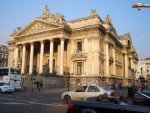
Twelve: Saint V’s Day: The university holiday commemorating the founding of the ULB and it’s Flemish speaking counterpart is traditionally marked by a raucous student parade that goes from the Grand Sablon to the Brussels stock exchange building. Students really did decorate large trucks and use watering cans to dispense beer from them, though I understand that this was later forbidden. The person who Elena hears speaking from the overpass is meant to be the author, who actually did observe the real parade in 2014.
The terror threats against the parade are fictional, as is the terror attack on the festivities afterward at the ULB. The competition between the guilds regarding the float-trucks’ decorations is fictional (The LA native author may have partly taken the idea from the Rose Parade).
Thirteen: Out-hacked: The character of Emilija’s father, Ranko Stanić, is fictional. However, I loosely based his character on a refugee-turned-entrepreneur I heard about who does have multi-ethnically staffed factories in Bosnia to promote reconciliation, though that is really their only purpose.
The Trepča mining complex in Kosovo is real, but everything else that Emilija discovers in her hacking session is fiction. The Gare Maritime really was subsequently renovated.
Fourteen: The Tip-off: All characters and events are fictional.
[image error]
The Mannequin Pis: Why does one of the characters joke about the symbol of the city being a peeing boy?
Fifteen: Trepča: The town of Kosovska Mitrovica is divided into two parts based on Serb or Albanian ethnicity, with a river running down the middle. All events are fictitious.
Sixteen: An Attack and a Kidnapping: The ISIS attack on the Croatian diplomatic residence and everything else is, of course, fiction. The catacombs under the Laeken cemetery exist.
Seventeen: The Takedown: A la Morte Subite is a real pub in Brussels city center. The rest of the characters and events are fictional.
[image error]
The monument to the Belgian infantry and the scaffolded Palais de Justice, near where the final scene in Battling Brexit takes place.
Eighteen: Home Again: All events are fictional, except for the fact that Kosovo’s Stabilization and Association Agreement — a key step on the path to EU membership — did get signed, though without the help of my main character. The last minute twist in the chapter, was partially inspired by how the author obtained his Slovenian citizenship. Alas, major European leaders didn’t play a role in getting me mine, though.
Anything about Elena getting chosen to head up a secret EU covert ops force is fictional as well. Of course it is; why, you ask, would Europe’s leaders possibly think that it would be a good idea to give a teenage girl and her friends that kind of power, or that they could even do the job? Well, what if they were being secretly being manipulated all the while, by the real bad guys… We will explore this more fully in Europe’s Lost Children: Book Two, which is set during the events of the 2015/2016 migrant crisis. Get ready to meet the Brutalists. You don’t know them. But they already know you. And they are out to take Europe down. Look for it out in May 2020.
Europe’s Lost Children: Book One: Battling Brexit is available here.
March 28, 2020
The Kosovo War: Historical References
As I always say, when I begin one of these posts, Tito’s Lost Children: the Kosovo War, like the rest of the Tito’s Lost Children series, is a fictional, alternative history re-telling of the 1990s breakup of Yugoslavia. All of the main characters and their actions are fictitious. However, they are set against real events and encounter real public figures.
The Kosovo War is set primarily during the 1998-1999 conflict between the Yugoslav Army/Serb paramilitary forces and the Kosovo Liberation Army (UÇK). Rather than focus on the main characters in the first three books of Tito’s lost Children, The Kosovo War follows the fortunes of Drago and Afrim, two orphaned brothers who are forced to become child soldiers in the UÇK.
Below let’s have a chapter-by chapter look at some of the real history behind the fiction in The Kosovo War. I’ll try to keep major spoilers to a minimum, but if you really have a problem with them consider yourself forewarned.
Chapter One: The town of Likošane is real. It was really raided by the Yugoslav Army in late February of 1998, one of the first outbreaks of violence in the conflict. The soccer teams mentioned are also real, though the specific match on the television is fictional. President Ibrahim Rugova is historical and he really did have a preoccupation with silk scarves. Adem Jashari and his family are also historical. He was found shot dead following a Yugoslav Army siege of his family’s compound Prikaz, though my depiction of his death is fictionalized.
Chapter Two: The village of Goldjane is also real. The compound where Drago and Afrim get taken is fictional as are all other characters and events in the chapter.
Chapter Three: Abd al-Qadir and his mujahedeen fighting unit are fictional as is the character of UÇK fighter Ekrim Avdi.
I should note that certain Serbian-language sources do claim that a man by the name of Ekrim Avdi did exist and that he did have ties with Islamic extremists. They also claim that a training camp for extremists did exist somewhere in Bosnia. However, I was not able to verify this. Most sources in English claim that the UÇK did not have any meaningful ties with Islamic terror groups.
Chapter Four: During the war, the UÇK did engage in arms smuggling over the Albanian border. However, the specific arms run that Drago and Afrim are a part of is fictional. The people that Drago helps save while on the arms run are also fictional; they are some of the main characters from the first three books in Tito’s Lost Children.
Chapter Five: The UÇK really did shoot at a car with Yugoslav police riding inside of it in the town of Ljubenić, causing the Yugoslav Army to invade and violently clear out the town. This became known as the Ljubenić Massacres.
Goraždevac’s school really was used to house Serb refugees who got expelled from the Croatian borderlands (Krajina) near the end of the war in Croatia. The character of Jelenka is, of course, fictional.
Chapter Six: US Special Envoy Richard Holbrooke and his fact-finding visit to the town of Junik is historical. He really did get ‘photo-bombed’ by a UÇK fighter, which was widely interpreted as a tacit gesture of US support for the Kosovar Albanians. My characters’ involvement in getting that picture is completely made up by me.
Chapter Seven: The battle over the Belaćevac coal mine is historical. There really were nine Serb hostages. In real life, their bodies were never discovered. I should point out here that, while UÇK did make use of child soldiers, I exaggerated the extent of Drago’s involvement in the fighting, at times, for dramatic effect. The reference to Kaçak fighters Azem Bejta and Shote Galica is historical.
Chapter Eight: Drago’s reference to the massacre at Lake Radonjić is historical, as are the references to the failed peace talks in France. Drago’s mention of the US being too obsessed with ‘some girl and her dress’ to care about what happens in Kosovo is a reference to the Monica Lewinsky scandal, which was going on at the time.
Chapter Nine: The NATO air strikes are historical, as is the Yugoslav Army/ Serb paramilitary’s systematic displacement of ethnic Albanians from Kosovo. The displacements were likely part of a plan called Operation Horseshoe.
Chapter Ten: The Murja paramilitary is historical. In general, NATO did occasionally miss their targets and accidentally attacked columns of Kosovar refugees. The specific bombing that Drago and Afrim get caught in is fictional.
Chapter Eleven: Generally speaking, reprisals by returning Kosovar Albanians against Serbs following the withdraw of the Yugoslav forces were a problem. However, in many instances, the international peacekeepers that were sent to Kosovo after the NATO bombing were too outnumbered to prevent them from happening. The specific raid on a Serb’s house that Drago and Afrim are a part of is made up by me.
Chapter Twelve: Other than Avdi’s reference to KFOR peacekeepers, all people and events are fictional. The song that Drago sings in mourning at the end of the chapter is a version of a real UÇK fighter’s song . I wrote The Kosovo War as a meditation on it.
Epilogue: Bienvenue à Bruxelles: Aside from the setting of Brussels, and some of the landmarks that Afrim points out on the way into the city, all events and people are fictional, except for the massacre that Avdi mentions his son dying in, which is historical. Croatia really did join the EU on 1 july 2013. Tour et Taxis as well as the Gare Maritime do exist and were abandoned at the time.
The Université Libre de Bruxelles and its student guilds are very real. They figure prominently in Europe’s Lost Children: Battling Brexit, which picks up the further fortunes of Afrim and Drago and their adventures with Maršal Josip Broz Tito’s fictional granddaughter in the capital city of the European Union.
Tito’s Lost Children: The Kosovo War is available for FREE here.