Andrew Anzur Clement's Blog, page 5
July 16, 2021
1st Time Sale on Europe’s Lost Children
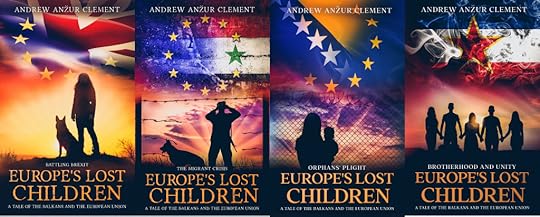
All of the books in the ‘Europe’s Lost Children’ alternative history series are on sale for the first time, through July 18th!
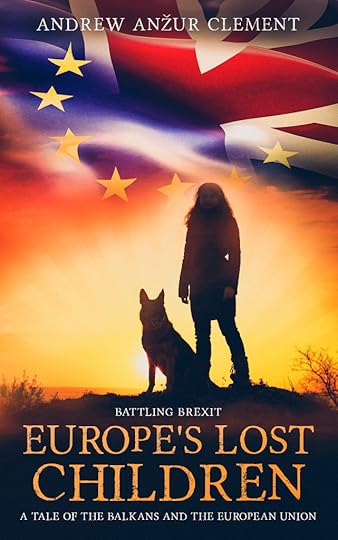
The sequel to ‘Tito’s Lost Children,’ the four book series follows the adventures of an eclectic group twenty-somethings from the Balkans in the 2010s as they must struggle against a plot made between nationalist forces and religious extremists to tear Europe apart and prevent the rest of the Balkans from getting into the Union.
Book one: Battling Brexit is free and the other three books will be $0.99 through the 18th. A $20 value for only three bucks.
Start here!
 https://amzn.to/39Wkr9W


June 24, 2021
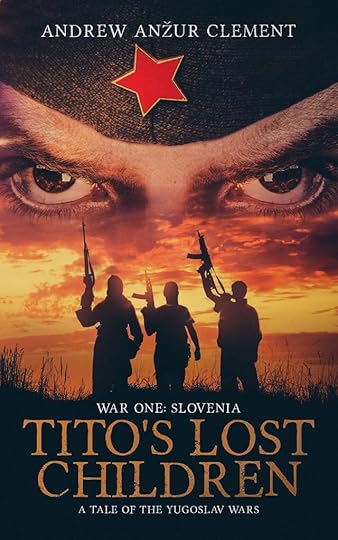
‘Tito’s Lost Children’ Now out as a Boxed Set
Today is Statehood Day in Slovenia. It marks the day when Slovenia declared independence from Yugoslavia.
My alternative history trilogy, Tito’s Lost Children, is set during Slovenia’s ensuing Ten-Day-War of Independence, and the following breakup of the rest of Yugoslavia. It follows the adventures of a snarky band of late teens and twenty-somethings as they try to keep the country from tearing itself apart, and increasingly just attempt to stop the violence.
The books have also been out for the better part of two years now. So, Statehood Day, and the 30th anniversary of Slovenian independence, seemed like the perfect time to finally release the entire trilogy as one boxed set ebook!
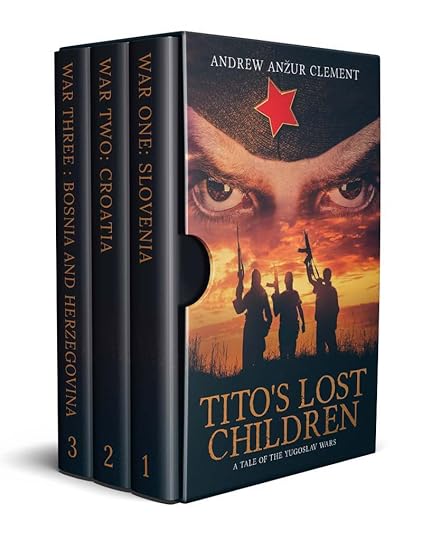
It’s launching at the special sale price of $0.99. Get it while you can before it will go to $7.99 on July 3rd.
Tito’s Lost Children. A Tale of the Yugoslav Wars. The Complete Trilogy, is available Here.
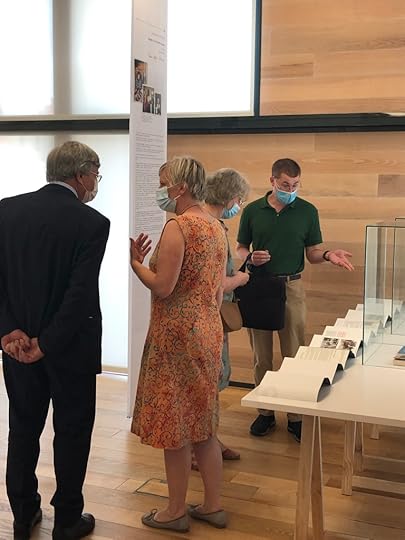
Tito’s Lost Children at the Slovenian Ethnographic Museum
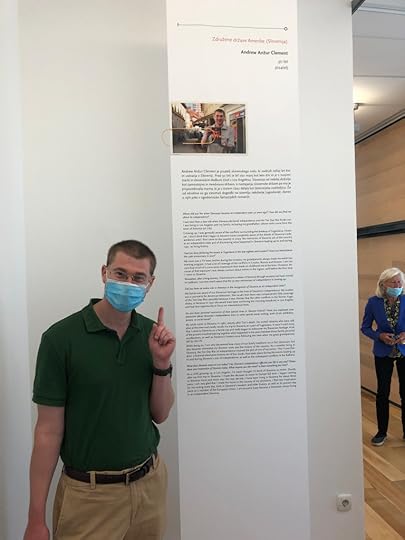
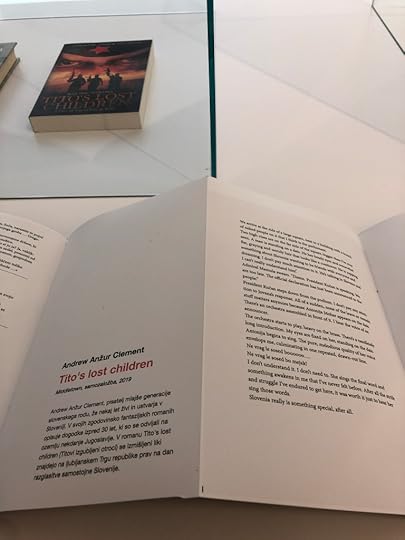
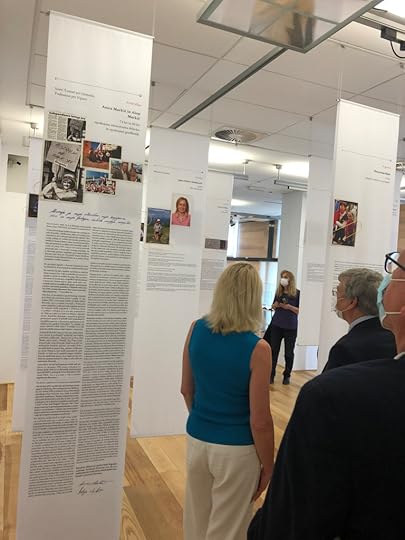
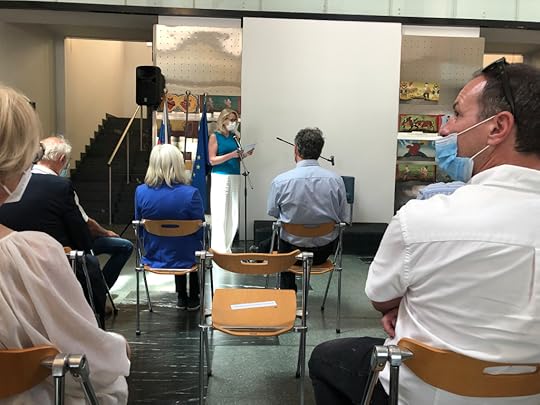
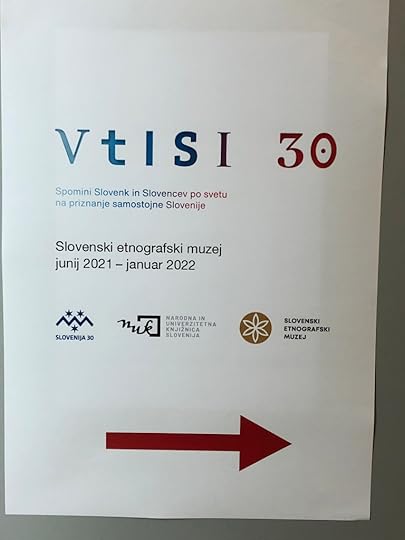
It’s great to have my novel Tito’s Lost Children. War One: Slovenia included in the Slovenian Ethnographic Museum’s exhibit ‘Impressions 30,’ meant to mark the 30th anniversary of Slovenia’s independence from Yugoslavia.
The book is an alternative history novel, which partially takes place during the event’s of the Ten Day War of independence. The exhibit will run through January 2022 in Ljubljana.
Here are some pictures from the opening ceremony:
May 4, 2021
The Russia Chronicles Book 2 Launches
The second book in The Russia Chronicles, a thrilling action-adventure series, which follows the fortunes of a gang of homeless teenagers, launches today. In Book Two Katya, Pyotr and their friends a must outwit a ruthless police agent in order to make it to a secret sanctuary… if they don’t succumb to the perils of the Russian countryside first!
The ebook of Book Two: The Siberian Spirit will be at the special sale price of $0.99 until May 10th, when the price goes up to $4.99 (The print book is also available).
As part of the launch, Book One in The Russia Chronicles, The Streets of Moscow, will be free for the same period of time.
The cover and synopsis of Book Two are below:
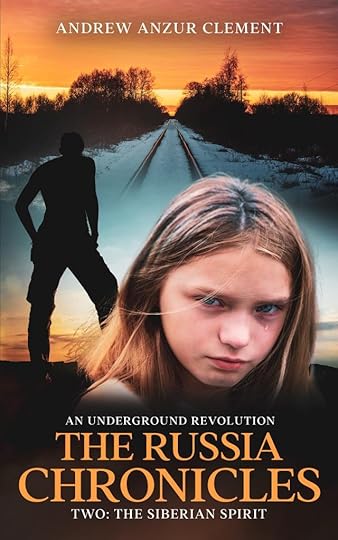
A desperate band of Russian street kids has been forced to flee their hideout in Moscow’s Second Subway. Totally unprepared to survive in the sub-freezing countryside, they have only one hope: to reach a hidden Slavic pagan sanctuary called The Lake.
Peter Greenfield no longer thinks of returning to his former life as the pampered son of American diplomats. Now known as Pyotr Bolshoiov, his more immediate problem is to survive the brutal Russian winter and keep his new family of “small homeless” together.
Katya, a glue addict from an impoverished Siberian family, may be the key to the group’s survival. The secrets hidden in her family tree could also make her a threat to the Russian government’s hold on power. She must outwit a ruthless agent of the Federal Security Bureau, who will stop at nothing to take his revenge on Katya, Pyotr and the rest of their bunch.
Stranded in the cold and shunned by heartless villagers, they have no choice but to trek eastward. A chance encounter with a group of international tourists on the Trans-Siberian Express could bring the help they so urgently need – or deliver all of them into the hands of the FSB. Katya’s stubborn Siberian spirit will be tested, not only by the elements, but by the sinister forces vowing to make Katya, Pyotr and their friends disappear.
April 17, 2021
Pagans’ Cult is out for Free
The prequel novella in The Russia Chronicles, an alternative history thriller series of novels is out. It follows the tribulations of a couple of the characters in the main series. They are forced to take matters into their own hands as they start to dish out vigilante justice to protect their families and siblings. A series of grisly killings done for all the right reasons — as told from the perps’ perspectives.
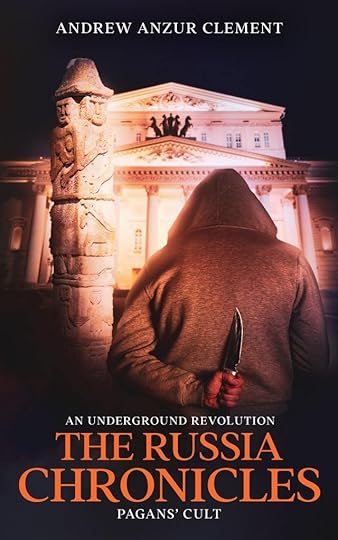
It’s available Here on Amazon, as well as all major ebook retailers, or for FREE Here along with two other ebooks in return for an email.
April 1, 2021
‘The Kosovo War’ in Academic Review
Many thanks to Romana Turina of Arts University, Bournemouth and the Journal of the Society for Slovene Studies for their wonderful, constructive review of Tito’s Lost Children: The Kosovo War!
Here’s an excerpt:
“One in a long list of novels produced at a record pace by Clement, this book keeps the reader turning the page. Effective in it’s ability to offer an experience of urgency to the reader, Clement can put characters on the page and draw attention to the immediacy of their feelings…Walking in the steps of the protagonist, we are introduced to the human geographies of the Kosovo Liberation Army , and the impossible relationships a young teenager is asked to form with the family of the man who accidently killed his parents. As the protagonist continues to protect his brother and comply with the will of the group that cares for them in exchange for his service in the army, the reader makes sense of the experience and the characters the author chose to make agents of change in the story. The relationship between brothers, as offered from the point of view of the older one, contributes to the discovery of meaning during the reading experience.” – Romana Turina, Journal of the Society for Slovene Studies
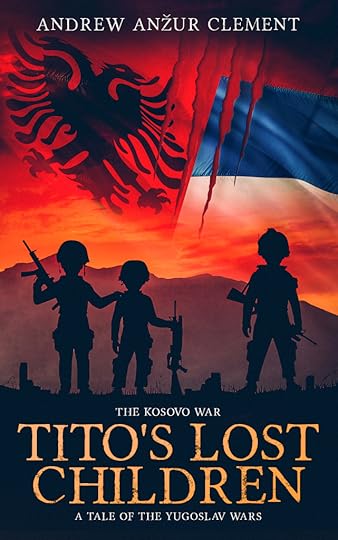 Get it FREE Here!
February 9, 2021
The Russia Chronicles Book One Launches
The first book in my action-adventure thriller series is out! It follows the trials and tribulations of the son of American diplomats. He ends up living with a gang of Moscow’s street kids, facing strife but also finding friendship and maybe even love. How, you ask? Well, read The Streets of Moscow.
The cover and synopsis are below:
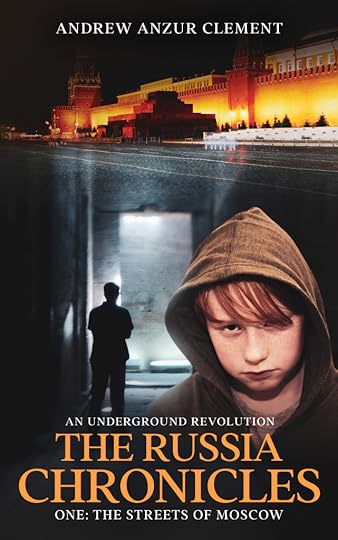
Sixteen-year-old Peter Greenfield didn’t want to go to Moscow. When his Foreign Service officer parents are called on an emergency mission to Russia, he is left with little choice but to get dragged along.
The trip starts off with Red Square, the Kremlin and the sights of the city – what any tourist would expect. Then an anti-government protest breaks out. His parents run toward the unrest – along with him.
Lost in the body crush, separated from his parents and his American passport, Peter is rescued by a band of teenagers: children fleeing broken homes and struggling to survive on their own in Moscow’s subway system.
Unable to return to the US embassy, Peter must now throw in his lot with the band of homeless youth who have taken him in. Reluctant, and unable to speak Russian at first, he begins to discover Moscow’s secret underworld as he grows closer to his newfound friends, including a resolute but caring girl named Tanya. Together, they face the indifference, hunger, and corruption that are a part of life for Russia’s street children. Life or death could hinge on outsmarting a former member of their gang turned politically powerful enemy, and breaking into some of the Russian government’s most heavily fortified facilities.
As Peter and his friends fight to live another day, he begins to question whether Peter Greenfield still exists, or if he will ever be able to leave behind life on the streets of Moscow.
The Russia Chronicles. Book One: The Streets of Moscow is available Here.
February 6, 2021
Where to Start Reading Andrew Anzur Clement’s Books.
I hate to toot my own horn. But, it’s safe to say that I have a few books out there by now. I’ve had to field this question a lot recently: Where do I start?
I began by writing historical fantasy and then alternative history. Most recently, I am writing what could be dubbed contemporary thrillers. So what does one choose as an entry point? At the time of writing this post, I’ve written four completed (two of each related) series of novels and am currently working the fifth, which I call The Russia Chronicles.
Most-all of my novels have some kind of a historical bent, whether it is set in the nineteenth century or in the 2000s. I love creating my characters, and then setting them among real historical events and locations.
So, if you want to read some of this stuff, what’s the first thing to do?
Step One Is Free:
This is admittedly a shamelessly honest plug. I’d recommend starting by signing up to my mailing list, if you haven’t already. There, you can get a sampling of free ebook novellas from all the series in all of genres that I write. So, Step One. There you have it.
 See Above…
However, that may not be the end-all-and-be-all. After all, where exactly you start depends on what you like to read. So let’s have a look at what I write that might interest you most and the best places to dive in:
Historical Fantasy:
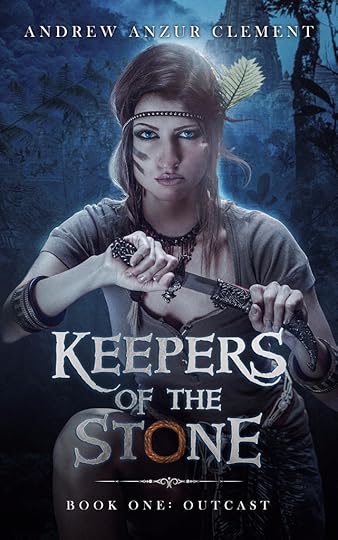
I got my start here. My first trilogy, Keepers of the Stone is a clean YA fantasy set in South Asia, America and Europe during the late 1800s. Think of it as kind of a travelogue, but also with a demonic order and a magic gem. Book One: Outcast is free, in addition to the bonus content novella that you can get here.
My second trilogy, Voyages of Fortune, is a sequel to the first. It’s enjoyable in its own right and Book One: Hidden Truths is also free, though I’d honestly recommend starting from Keepers, the beginning of the entire seven book saga.
Alternative History:
I’ve always thought that this was a bit of a funny name for a genre. Isn’t all historical fiction – or fiction, in general – technically alternative?
At any rate, my alternative history books books do ask a ‘What If?’ question. They’re called Tito’s Lost Children and the sequel series, Europe’s Lost Children. There’s no fantasy world, but there is a fictional vendetta that led Josip Broz Tito, the Marshal of Yugoslavia, to name an untested teenager as his successor; she has to try to stop the Yugoslav wars of the 1990s. No pressure, or anything. It’s my arrogant opinion, but they are my best writing so far.
Start with book one in either series: Tito’s Lost Children: War One: Slovenia. Or, Europe’s Lost Children: Battling Brexit, which follows the adventures of Tito’s granddaughter and her friends. It even leads into an alternate future!
Action-Adventure Historical Thrillers:
I’m not sure that you could call something set in 2000s Moscow historical. But, at the time of writing, my latest project, The Russia Chronicles, is about an American teenager who has to throw his lot in with a bunch of Russian kids fleeing broken homes and trying to live on the streets. Fair warning: sometimes the way they talk will make your ears bleed. I consider it the darkest thing I’ve written yet. There’s some fun, too — Spoiler alert: by the end of the series they end up taking over Russia.
Book One is called: The Streets of Moscow. The spinoff novella, Pagans’ Cult, will be offered via my mailing list (Even though it’s not out quite yet, you’ll get it free if you sign up, anyway, when it’s ready).
So, depending on what you like to read, I guess there are a number of adventures to pick from, and places to start. That would be my answer.
November 12, 2020
Brotherhood and Unity: Historical References
The final book in Europe’s Lost Children is finally out. It feels like the end of an era. My family has roots in the Slovenia/the Balkans, but as a writer with a formal training in EU political science I’ve really lived and breathed the history of the region over the past few years, while writing my most recent eight novels.
Let’s talk about some of the real world events that inspired Europe’s Lost Children Book Four: Brotherhood and Unity. The title itself is based off an old Yugoslav slogan. Suffice it to say at the beginning of this post: this last one really makes alternate history get ‘alternate’ but a lot is still based on real happenings:
[image error]
One: Sparing: Aside from the run-up to the 2016 US elections, all events are fictional. Sorry if that’s a disappointing way to start out. Much of Ljubljana’s old town and a few other locations in the area really were designed by Jože Plečnik. Think of him as the Slovenian Gaudi.
[image error]The famous Ljubljana Market, designed by renowned architect Jože Plečnik.
President Dodik of Republika Srpska is historical, as well as Momčilo Krajišnik, but their actions of course are not.
Two: The Weight of Chains: The reference to the Trojka and the slow-burning Eurozone crisis is historical, as is the Slovenian-Croatian border arbitration dispute. The EU Common Security and Defense Policy (CSDP) really exists, in the 2009 Lisbon Treaty, but is far less encompassing than it ends up being throughout the course of this novel. The deployment of NATO troops to the Baltic States really happened.
The Kosovo Serb refugee center in Adrani, Serbia is a real place. The events that happen there are fictional. The reference to the NATO bombings of the Balkans in the nineties and Montenegro’s NATO membership aspirations at the time of the novels setting in the 2010s are historical (In real life, they are now members).
[image error]Tivat, Montenegro: They may not have the strongest navy, though…
Three: Standing Out: PESCO’s activation (Europe’s Permanent Structured Cooperation in the area of defense and counterterrorism) is historical, however the program is not as encompassing as in the novel. The rest of the events are fictional.
Four: Swiped: All events are fiction.
Five: Security Measures: ‘Srpska Danas’ is a real TV program in Republika Srpska. ‘Crown Prince’ Alexandar Karadjordjević is a real person. His role in the novel is totally fictional, though him and his family really do live in the former Serbian royal family’s palace. The president of Montenegro is also real, though everything he does is made up by me.
Six: The Inflatrator: All events are fictional.
Seven: What Have We Got to Lose?: All events are fictional. The airports in Charleroi and Podgorica and the landing process are faithfully depicted, however. The Hotel Fjord, near Kotor, is very real.
[image error]The abandoned Hotel Fjord in Kotor. Might one of my characters have gotten an idea while looking at a cruise ship from here?
Eight: The Bridge on the Drina: The novel for which the chapter is named is a real award-winning Serbian book. The restaurant near to Kotor where Agnieshka, Afrim and Ayoub eat, or at least try to, is based on a real place. The ‘Cats of Kotor’ are a thing. Anything about three people hijacking a cruise ship is, of course, totally made up.
[image error]Some of the cats in Kotor, lounging on the street, oblivious.
Nine: How We Hijacked a Cruise Ship: All events are fictional — see above. Kotor is a relatively popular cruise ship destination, though, and the references to the names of Serbian politicians is historical.
Ten: Scuttled Ambitions: All events are fiction. King Nikolaj’s Palace in Bar is a real place.
Eleven: The Tagalong: President Izetbegović (junior) and his family are historical. The rest is more than a bit of alternative history.
Twelve: The Second Proletarian Brigade: Thanks to my younger American cousin for helping me to figure out how a bunch of younger people might have self-organized on newer social media platforms.
The Hotel Holiday is probably better known by its former name: the Sarajevo Holiday Inn.
[image error]BiH Parliament, right across the street from the Hotel Holiday.
Thirteen: The Secret Hideout: The Ethnic landscape that Ayoub’s new friends have to confront reflects modern divisions in Kosovo, though they would likely be in the minority for people their age, insofar as it doesn’t matter to them. We can always dream.
The phrase ‘Kosovo-One Multiethnic Clubhouse’ is a shout out to the German-lead co-production movie ‘Kill Me Today, Tomorrow I’m Sick,’ about Serb/Albanian/NGO relations after the 1998/1999 war in Kosovo.
Fourteen: Besieged Again: Sarajevo Airport and its location has been faithfully depicted. Anything about it getting shot at, in the 2010s at least, is totally made up. Lukavica was a Serb forces stronghold during the (real) 1990s wars. The Tunnel of Salvation that went under the Airport was very real, as is the present-day museum to it.
[image error]The preserved section of the Tunnel of Salvation. Person pictured was lot more lucky than one of the author’s characters.
Fifteen: Buried Alive: Everything is fictional. It’s more of a letter to another character, really.
Sixteen: “You Didn’t Count on Us”: The title is a paraphrase of a famous Yugoslav youth song, ‘Računajte na Nas,’ that was written originally during the seventies. What Erika sings in English very closely parallels it and is an ‘updated’ version of the lyrics that actually goes to the melody.
In reality, we still don’t quite have an EU Army yet.
Seventeen: The Battle of Kosovo Field: The Field of Blackbirds (Kosovo Field) and the ‘Kosovo Myth,’ of how Tsar Lazar fought the ottomans, was betrayed and lost there, are very real. In alternate history, I wanted to bring things full-circle in the end.
Eighteen: Loose Ends: Madam Mao’s ‘Red Detachment of Women’ is a real ballet. Yugoslav Youth Day Slets were a real thing, though the new one in the book is like no Slet that ever took place. The demise of the leader of the Islamic State is based loosely on the real events, through with a very EU-led twist. Who knew that a Macedonian sheepdog ‘really’ was involved?
Afterward: Europe 2058: It’s set in the alternate history future, but poignant and uplifting in the end, if I do say so myself.
Or is it the end? What if the next leader of Russia became friends with the characters in Europe’s Lost Children? What if he read this and then he and his friends decided to write their own, about their rise?
What if it all started when an American teen came to Moscow and fell in with a bunch of Russian street kids? I call my newest series The Russian Revolution.
Europe’s Lost Children: Brotherhood and Unity is available here.
[image error]
November 3, 2020
The Final Book in Europe’s Lost Children is out!
The fourth and final book in Europe’s Lost Children, my alternative history and historical fiction series is out. It’s set in the Balkans and the European Union. I call it Brotherhood and Unity, after the famous Yugoslav slogan.
[image error] Europe’s Lost Children: Brotherhood and Unity is available here
The synopsis is below:
Elena and her Covert Action Service team may be Europe’s only hope of stopping the Brutalists. Their leader, Marana, has recruited a rogue army and is closing in on Sarajevo, determined to promote the rise of Greater Serbia and bring down the European Union. The endgame has begun.
Ayoub is training in Brussels to join the CAS special ops team. The scrappy teenager is learning fast, but time is running out. As he fights his own demons, he unwittingly allows an enterprising American journalist to infiltrate CAS headquarters. She is about to reveal the existence of Europe’s secret intelligence service, run by a bunch of misfits from the Balkans.
But the big story may never reach the headlines. Sinister forces are manipulating the Internet to preserve a cover-up of the secret war in the Balkans, enabling the United States to save face at any cost. The fate of Europe may depend on a daring plan by Ayoub’s forbidden girlfriend to break the silence – and the willingness of some of CAS’s members to pay the ultimate price.
Personal vendettas are still simmering beneath the surface. Drago, a former child soldier returning to Kosovo, must confront a blood feud that demands death for him and his brother. Neglected as a child, Marana is still resentful of Elena’s privileged upbringing. She adopts an abused refugee girl as her own daughter as she plots her revenge.
Marana and Elena are headed for a final confrontation between the forces of Greater Serbia and Europe. The outcome will determine if Europe’s Lost Children will ever find a place where they truly belong.
In my next series we move the action to Russia, Moscow, to be specific. There will be a lose tie-in with the Tito’s/Europe’s Lost Children ‘universe’.
How did a bunch of former Soviet street kids and the lost son of American ‘diplomats’ become the next rulers of Russia? you’ll have to wait and find out! In the meantime I hope you enjoy Brotherhood and Unity.