Andrew Anzur Clement's Blog, page 11
May 8, 2017
From Slovakia to Slovenia. Part II: Vienna
With my meetings concluded, I had some time left over for a walk. I lived in Vienna for about a year during 2013-14. Rediscovering my old neighborhood near the Westbhanhof was enjoyable. It was also the first time I’d been able to travel to a location that the characters in KOS go to, since writing the books. It was almost surreal to walk in their footsteps.
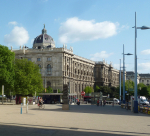
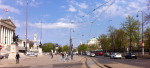
In KOS, I also mention the battle of Vienna. In the timeframe during which the books are set, it was true that there was no monument to Jan III Sobieski, the Polish king who masterminded the city’s defense against the invading Ottoman Turks in 1683. However, in the present day, one can be found on the narrow Augustinerstrasse, tucked onto the side of a church in the old town.
[image error]
When returning to a city that I’ve lived in, I often find that I enjoy staying in a completely different part of it. This time I based myself in the city’s second district near Prater park. I was able to get to know the area a bit later in the day, after walking back through the city center.
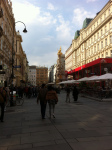
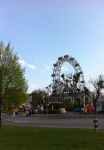
I also had a chance to poke my head back in the Votive Church near the main university building. In it, you can see the various seals of Austro-Hungarian regions, some of which are reminiscent of present-day countries’ national emblems.
Next morning I awoke and made my way to the Hauptbhanhof. I was intent on catching my transfer from Vienna to one of those countries — Slovenia.



May 5, 2017
From Slovakia to Slovenia. Part I: Bratislava
I grew up coming to Europe almost every summer. Doing so, I developed a quick appreciation for the unique blend of cultures that find themselves enmeshed into the area of one small continent. At the time, I viewed the borderless space nebulously being created by something called ‘the EU’ as placing that uniqueness under threat. It wasn’t until after I began living in the EU that I began to realize how beneficial this integration is in terms of movement and travel.
Some of the positives can be demonstrated by comparison with the sections of Keepers of the Stone that take place in 19th century Europe. Without (I hope) giving too much away, the characters often encounter difficulties in moving from one place to another, simply because of administrative or national barriers. Yet, in the Europe of today, many of these problems would be virtually unrecognizable to many of its citizens. Recently, I took a trip that demonstrates how this is becoming the case:
I was planning to head to Vienna, for a few days of meetings. I’ve heard it griped on more than one occasion that Vienna doesn’t have discount airline flights. Looking at Vienna’s airport, it’s true that you won’t find any such arrivals. Still, they do exist . Just in another country: Slovakia.
[image error]
Discount flights to Vienna depart for Bratislava.
I began my journey by flying from Brussels to Bratislava. Slovakia’s capital city finds itself just on the other side of the Austrian border. You can take a bus from Bratislava’s airport directly to Vienna’s Erdberg metro station in about an hour, just like going between two cities. No border check required. Incidentally, Vienna’s airport serves as the non-discount hub for the Slovak capital, if you’re coming from further afield than Europe.
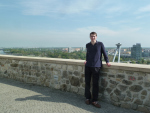
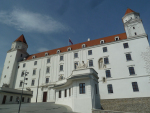
I didn’t have time to visit Bratislava on this trip. But, its definitely worth it. The price/quality ratio of hotels in Vienna is better than in Bratislava (I’m told this is the case with housing in general, too) . But, there are frequent bus and train connections that make it quite feasible and cheap to go for the day. Both countries are Eurozone members, so no need to worry about changing money. The bus from Vienna will drop you in the depot under the SNP Bridge, built right in front of the cathedral’s main doors by the Czechoslovak era authorities. The good news is that this also makes it centrally located to the old town and the citadel, as well as the cathedral, where a number of Hapsburg monarchs — who knew Bratislava by its German name of Pressburg — were crowned.
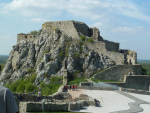
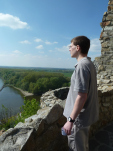
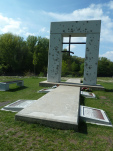
Local buses also depart from the same depot for Hrad Devín: A ruined castle directly on the Slovak-Austrian border. In addition to its imposing mid-evil walls, the place is also known to Slovaks for being a lookout point, from which families could gather to wave across the border at their relatives, who’d escaped/defected to the West, during the Czechoslovak times. Now, aside from a small monument, its hard to tell where one country ends and the other begins.
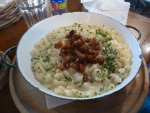
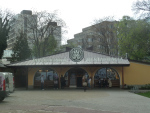
While the old town may be nice to look at, I have it on good authority from Slovak friends that some restaurants in the city center tend to water down the quality of their meals. So, if you’re feeling slightly adventurous , wonder out towards the new Slovak National Theater/Opera (As an opera fan, I feel obliged to point out here that the price/quality/seat availability ratios of the Slovak national opera compare favorably with the Wiener Staatsoper, even though the later is more famous). In the neighborhood around the blue facade of St Elisabeth’s church, a few less touristy establishments are on offering. In particular, I enjoy the Bratislavský Meštiansky Pivovar, a local brewery with traditional Czech and Slovak dishes.
All of this is doable on a easy daytrip from Vienna. If you come to Austria’s capital, definitely don’t forget to hop across a now non-existent border of the former Iron Curtain, to see its smaller sibling. For other locales in Slovakia worth visiting, the city of Košice and the UNESCO world heritage old town of Bardejov are also good bets.
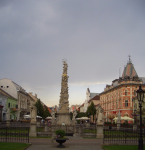
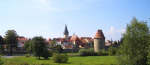
As it was on this trip, I continued my journey onward to Vienna.


From Slovakia to Slovenia: Part I
I grew up coming to Europe almost every summer. Doing so, I developed a quick appreciation for the unique blend of cultures that find themselves enmeshed into the area of one small continent. At the time, I viewed the borderless space nebulously being created by something called ‘the EU’ as placing that uniqueness under threat. It wasn’t until after I began living in the EU that I began to realize how beneficial this integration is in terms of movement and travel.
Some of the positives can be demonstrated by comparison with the sections of Keepers of the Stone that take place in 19th century Europe. Without (I hope) giving too much away, the characters often encounter difficulties in moving from one place to another, simply because of administrative or national barriers. Yet, in the Europe of today, many of these problems would be virtually unrecognizable to many of its citizens. Recently, I took a trip that demonstrates how this is becoming the case:
I was planning to head to Vienna, for a few days of meetings. I’ve heard it griped on more than one occasion that Vienna doesn’t have discount airline flights. Looking at Vienna’s airport, it’s true that you won’t find any such arrivals. Still, they do exist . Just in another country: Slovakia.
[image error]
Discount flights to Vienna depart for Bratislava.
I began my journey by flying from Brussels to Bratislava. Slovakia’s capital city finds itself just on the other side of the Austrian border. You can take a bus from Bratislava’s airport directly to Vienna’s Erdberg metro station in about an hour, just like going between two cities. No border check required. Incidentally, Vienna’s airport serves as the non-discount hub for the Slovak capital, if you’re coming from further afield than Europe.
I didn’t have time to visit Bratislava on this trip. But, its definitely worth it. The price/quality ratio of hotels in Vienna is better than in Bratislava (I’m told this is the case with housing in general, too) . But, there are frequent bus and train connections that make it quite feasible and cheap to go for the day. Both countries are Eurozone members, so no need to worry about changing money. The bus from Vienna will drop you in the depot under the SNP Bridge, built right in front of the cathedral’s main doors by the Czechoslovak era authorities. The good news is that this also makes it centrally located to the old town and the citadel, as well as the cathedral, where a number of Hapsburg monarchs — who knew Bratislava by its German name of Pressburg — were crowned.
Local buses also depart from the same depot for Hrad Devín: A ruined castle directly on the Slovak-Austrian border. In addition to its imposing mid-evil walls, the place is also known to Slovaks for being a lookout point, from which families could gather to wave across the border at their relatives, who’d escaped/defected to the West, during the Czechoslovak times. Now, aside from a small monument, its hard to tell where one country ends and the other begins.
While the old town may be nice to look at, I have it on good authority from Slovak friends that some restaurants in the city center tend to water down the quality of their meals. So, if you’re feeling slightly adventurous , wonder out towards the new Slovak National Theater/Opera (As an opera fan, I feel obliged to point out here that the price/quality/seat availability ratios of the Slovak national opera compare favorably with the Wiener Staatsoper, even though the later is more famous). In the neighborhood around the blue facade of St Elisabeth’s church, a few less touristy establishments are on offering. In particular, I enjoy the Bratislavský Meštiansky Pivovar, a local brewery with traditional Czech and Slovak dishes.
All of this is doable on a easy daytrip from Vienna. If you come to Austria’s capital, definitely don’t forget to hop across a now non-existent border of the former Iron Curtain, to see its smaller sibling. For other locales in Slovakia worth visiting, the city of Košice and the UNESCO world heritage old town of Bardejov are also good bets.
As it was on this trip, I continued my journey onward to Vienna.
April 19, 2017
Here’s the Idea…
Welcome to my new blog! I’m bringing it out in conjunction with Keepers of The Stone: My period/fantasy trilogy set in the 1880’s. Its plot partially unfolds amid real historical and cultural happenings. So, one of my aims with this site is to provide some insights regarding what served as the inspiration for various aspects of the story, or references in the books that were based on real things, occurrences or historical figures. I’ll also point out some intentional anachronisms.
But, that’s not the only goal. I’m a passionate traveler; I get a good deal of inspiration through the places I go. In fact, I often feel most creative as an author when on the road somewhere, churning out a good amount of copy while on buses, trains or otherwise in transit. So, I also hope to use my posts here to share here to share the joy I take in traveling to some knew location. The thoughts and revelations I gain through discovering a destination — whether it’s one new or old. Just think of this as partly a companion to the books, and partly a travel blog. Happy reading!
[image error]