
Simon Ings's Blog, page 14
June 1, 2022
Models of innocence and contentment
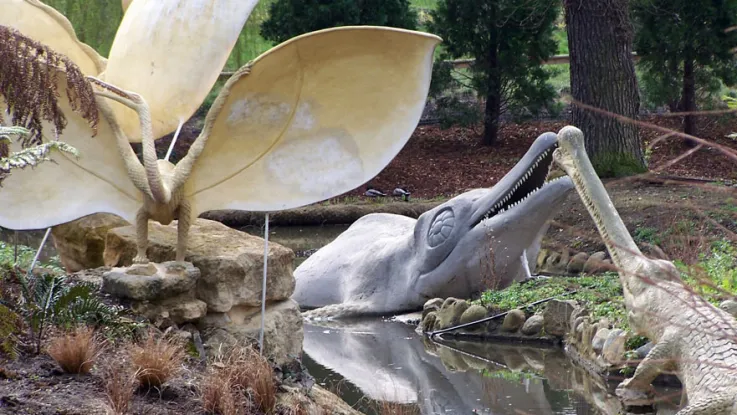
The Great Exhibition of 1851 was a huge success — so huge, in 1852 the huge iron and glass structure that had contained it was reassembled on parkland in Penge in South London to form the centrepiece of a complex of gardens, fountains and unusual attractions.
Dispel any notion that Penge was an afterthought: the permanent exhibition cost nine times as much as the Great Exhibition itself. And the Geological Court — arguably its most beguiling attraction — continues to enchant and inspire.
Cleverly landscaped and planted to evoke lost landscapes, peppered with artificial geological features and sculptures of long-extinct creatures, this naturalistic celebration of geology and palaeontology opened to the public in 1854. Whole teams of experts were involved in the enterprise, led by natural history artist Benjamin Waterhouse Hawkins, geologist David Thomas Ansted, and mining engineer James Campbell. Theirs was the world’s first attempt at depicting prehistoric worlds at scale in sculptural form.
Today elephantine sloths, Jurassic marine reptiles and delicate pterosaurs continue to watch other warily from the banks of artificial islands. Delicate, weathered, and in most cases colourless (the British weather is not kind to Victorian cement) they are also oddly modern-looking. The whole concept of a “dinosaur” was hardly over a decade old when the Court opened, and the field was advancing fast. Visitors were startled to discover that dinosaurs weren’t at all the appalling dragons that artists had imagined just a few years before. “It seems a very model of innocence and contentment,” wrote one journalist of the Iguanodon, “a huge antediluvian illustration of the amiability produced by a strictly vegetarian face.”
Paleoartist Mark P Witton and evolutionary biologist Ellinor Michel have assembled a work of scholarship that’s also a rich visual resource, indispensable for historians and prehistorians alike. Given the sheer vulnerability and fragility of the site, a record this rich and detailed — and so frankly charming — is long overdue.


A spear through the cheeks

Reading Dimitris Xygalatas’s Ritual for New Scientist, 1 June 2022
“I always feel my stomach churn when I look at someone being impaled by a spear through the cheeks,” writes Dimitris Xygalatas, a Connecticut anthropologist specialising in the study of extreme rituals. The Thaipusam Kavadi ritual in Mauritius is his favourite (if that is quite the word): men endure many piercings, ranging from a few needles through the cheeks to several hundred spikes perforating the entire body, “as well as hooks from which they hang bells or limes”.
It’s a florid affair, but by no means exceptional. From the hazing ordeals of US college fraternities to the arduous initiations practised in criminal gangs and military groups around the world, ritual is everywhere. “If you can find a human society without any rituals,” writes Xygalatas, “I will happily reimburse you the cost of this book.”
Why rituals exist is a puzzle. Ask a young man from Greece, Bulgaria or Spain why he walks over burning coals every year, and he is most likely to shrug and say he’s doing as his father and grandfather did. Further explanations are more subtle and full of symbolism, but no more revealing. The Thaipusam Kavadi ritual is said to commemorate the occasion when Murugan received his mighty spear from his mother, enabling him to lead a divine army against the demons, led by the demon Soorapadman, who had kidnapped the gods. So there.
But what if those baroque just-so stories were explanations after the event — genuine attempts to rationalise behaviours more ancient than any tale — more ancient, indeed, than reason itself?
Not every ritual performer in this book is human. Magpies, crows and ravens perform death rites. So do elephants and dolphins. Chimpanzees build cairns and visit what we might dare to call sacred trees; at any rate, these regular tree-visits are an occasion for dancing and feverish excitement. The pattern is not hard to spot: the more social a species is, the more ritualistic it is.
Suppose ritual behaviour evolved very early, especially in avian and mammalian lines; then it shouldn’t be too hard to spot what’s advantageous about this adaptation. Perhaps ritual is the primary mechanism by which we develop theory of mind and establish group identity. More specifically, social beings become anxious in the absence of their fellows. Grief, though maladaptive, is simply a special case of the anxiety that bind social groups together. That being the case, death rituals might exist to ameliorate the anxiety triggered by bereavement.
Xygalatas has spent 20 years putting bones on these ideas. His is now a hybrid field. Biometric sensors and hormonal sampling are used to explore the neuro-physiological effects of various rituals; while more traditional ethnographic methods, including behavioural measurements, psychometric tests and surveys, reveal some of the motivations behind ritual practices.
The results are not altogether convincing. The work is solid enough, but Xygalatas couches his conclusions in terms of how healthful ritual practices can be. We’ve known for a while that intense physical exercise can be as effective as antidepressant medication — or would be, if you could only get your demotivated, mood-disordered client out of bed in the morning. “Cultural rituals may help circumvent this problem by exerting external pressure to participate,” says Xygalatas. This does not feel to me like a compelling reason to go walking over hot coals.
Xygalatas can hardly be blamed for wanting to put the most positive spin he can on this fascinating and rapidly developing field of study.
Even as I was reading this book, however, news came that Russian kindergarten children were dressing up as tanks and nuclear missiles, in time for Russia’s 8 May Victory Day parade.
Xygalatas’s always fascinating account begs a sequel, about how ritual so often proves maladaptive among hypersocial Homo sapiens.
May 25, 2022
Talking about different worlds

Listening to Matthew de Abaitua’s The Dolittle Machine on BBC Radio 4, 25 May 2022 for New Scientist
Might we one day invent a translation device, enabling us to talk to the animals — and hear their replies? This could be good for the planet (especially if we learned to say “sorry” to all those species we’ve pushed to extinction). It would definitely be good for us, says science fiction writer Matthew de Abaitua, presenting this deceptively winsome speculation about animal languages.
No two species experience the world in the same way. If animals have language at all, then they are talking and thinking about different worlds. How then can translation progress?
Already we use machine-learning algorithms to translate foreign languages. These algorithms spot which words most commonly appear next to each other. By matching these patterns across languages, a machine can begin to translate from one language into another. The hope is that the same method can, by listening to squeaks, songs and stridulations, find common terms in the languages (if they exist) of other species.
The differences in life experience between species are huge. A loquacious bat may struggle to describe to a human what echolocation is like. A dolphin may not be able to offer a bat much insight into the experience of an animal whose every breath is the outcome of a conscious decision. A human may struggle to explain his taxes to a dolphin. But bat, dolphin and human may still be able to talk about what common experiences exist, like hunger, and danger, and family.
The Dolittle Machine is a superb distillation of a complex field. Best of all, it leaves us feeling a little less alone.
Micro-wasps that live on other parasitoid wasps that live inside caterpillars and others

Reading Seirian Sumner’s Endless Forms: The secret world of wasps, 25 May 2022
“It is almost impossible to walk into a bookshop these days and not bump into a beautiful book about bees,” Seirian Sumner grumbles. The London-based behavioural ecologist has, like the rest of us, reached “peak bee”. What are bees, anyway, but merely wasps that have forgotten how to hunt? The ‘original bee’ was a solitary wasp who turned vegetarian, just as the ‘first ant’ was a wasp that lost its wings.
Wasps are where the scientific action is: why, there are probably more distinct species of wasp than there are beetles! Did you know that there are swarming wasps in South America that build colonies “that look like air balloons, exotic fruits, gourds, cowpats, lumps of mud, Roman vases and even chamberpots?” That the study of wasp venom is helping us understand the more severe symptoms presented by COVID-19? That the familiar yellowjacket Vespula which terrorises our picnics can discriminate between similar-looking human faces?
Wait.
What…?
Seirian Sumner dares us to pause in wonderment. Behold the hyperparasitoids: micro-wasps that live on other parasitoid wasps, that live inside caterpillars, eating them from the inside out!
Savour the chemical cocktail of toxins, enzymes and amines with which the solitary hunting wasp simultaneously paralyses, cleanses and preserves prey fifteen times its body weight, “a helpless but healthy sack of living nutrients”! Admire her gleaming weaponised ovipositor!
The odd thing about wasps is not that we steer clear of them; it’s that we’ve learned so recently to ignore them. Much of the foundational learning offered up in this dense, anecdotal, intermittently stomach-churning labour of love is drawn from researchers active at the end of the nineteenth century. These people were even tougher-minded than Sumner. (“What lessons can we not learn from her transcendental chemistry?” exclaimed Leon Dufour, contemplating a wasp’s suspiciously fresh-looking weeks-old beetle victims. “How immensely superior to our own pickling-processes is that of the wasp!”)
With a level of glee last evinced by the kid at camp who urged you to put your hand in that hollow tree trunk, Sumner guides us through the evolution of hymenopteran sociality. Wasp societies represent the first stages in the evolution of altruism. Most small-colonied wasps follow a simple rule of succession: the older you are, the closer you come to being crowned queen. In more complex wasp societies, aggression is the norm, as rival nestmates bite and sting each other to death. This correlation between social complexity and violence is not reassuring. I now find myself looking askance at those highly social bees.
Endless Forms is an exuberant, garrulous, generous survey of its field. I can’t wait to read selected passages to my children.
May 11, 2022
“Material of negative value”

Watching Lars Edman and William Johansson’s documentary Arica for New Scientist, 11 May 2022
Forty years ago the Swiss company Boliden sold nearly 200,000 tonnes of smelter sludge — rich in mercury, arsenic, lead and other heavy metals — to the Chilean reprocessing company Promel.
Promel dumped almost the entire consignment beside a row of residential houses in the port town of Arica (current population, over 200,000), and a generation of children grew up playing in the stuff.
The residential quarter, meanwhile — a government housing project for low-income families — grew and grew, until it surrounded the site of contamination.
In 1999 the Chilean government struck an uneasy peace with the victims of this wholly avoidable environmental catastrophe. Promel no longer exists (though its former manager is more than happy to issue not-so-veiled threats of violence to the filmmakers here). Families closest to the site have been evacuated; their properties are now dens for drug dealers.
What’s Boliden’s responsibility in all this? Chilean-born Swiss filmmaker Lars Edman returns to his birthplace and the site of his 2006 documentary The Toxic Playground to follow the legal case assembled by an international legal team against Boliden, a company whose due diligence regarding toxic materials turned out to be not nearly diligent enough. The chief protagonist of The Toxic Playground was Rolf Svedberg, former environmental director of Boliden’s Rönnskär smelting plant in Skelleftea, Sweden. It was his site visit and report that green-lit the sale and transport of what Boliden’s legal team call “material of negative value”. Brought face to face with the consequences of that report, and hosted by a community riddled with cancer, bone deformities and birth defects, Svedberg distress was visible.
Eleven years on, though, Svedberg has the legal case to think of, not to mention his current role: he’s a judge at Sweden’s Supreme Court for the Environment. Svedberg’s displays of fear and dismal self-justifications in Arica are all the more powerful for filmmaker Lars Edman’s obvious sympathy for his old acquaintance.
Boliden’s legal consultants bring in experts who assemble arcane explanations and a particularly ludicrous wind-tunnel experiment to show that living next to tailings containing 17 per cent arsenic could not possibly have affected anyone’s health.
Opposing Boliden are 800 plaintiffs (out of a population of 18000) armed with a single series of urine tests from 2011 and evidence that would be overwhelming were it not so maddeningly anecdotal. An interviewee, Elia, points out houses from her front gate:
“The lady who lived in the house with the bars sold the house and died of cancer. Next door is Dani Ticona. She had aggressive cancer in her head and died too. And her son’s wife had a baby who died. But he doesn’t want to talk to anyone about it. Marisa Pena has got stomach cancer. The lady who bought her house has facial cancer. And on the other side, that gentleman also has cancer. And over there…” On and on like this.
Boliden’s legal team performs a familiar trick, sowing doubt by suggesting that laboratory science and field science are the same thing, and standards of proof are the same for both. In the end, though, the case comes down to public accountability. If Boliden had to deal with ordinary consumers, it would have saved money and reputation long since by owning the problem.
Boliden, however, deals with corporations and governments, and its reputation rests on problem-free operations. It pays Boliden to stay silent.
Law is a rhetorical art, as its finest exponents, from Cicero to John Mortimer, ably demonstrate. We may like to think that justice can be scientifically determined, but in doing so we misunderstand the nature both of science and the law. Tragedy, poverty, blame and shame cannot be reduced to what one legal wag here calls “numbers, preferably with a lot of decimals”.
Protest, eloquence and argument are as essential for justice as they were in the making of this daunting, elegaic documentary.
May 8, 2022
Safe and clean and a nightmare
Reading Serhii Plokhy’s Atoms and Ashes for the Telegraph, 8 May 2022
Jimmy Carter is the only US president to have had hands-on experience of nuclear reactors. As part of the US Navy’s nuclear submarine program, he once helped disassemble a Canadian research reactor that had gone into meltdown. His enthusiasm for the technology was, to say the least, measured: “US dependence on nuclear power should be kept to the minimum necessary to meet our needs,” he told the UN General Assembly in 1976, tying the fortunes of the industry ever more tightly to immediate geopolitical demands.
But the nuclear industry has never been able to respond to such demands quickly enough. Right now, Germany is finding this out the hard way. The country decommissioned its nuclear fleet after the 2011 Fukushima accident. Ill-suited to renewables, beset by winter doldrums and long overcasts, it bet on being able to import its energy. Now it finds itself in a hopeless tangle, under pressure to stop importing Russian gas, yet unable to reverse its nuclear decommissioning programme.
It’s this unwieldiness, this inflexibility that puts nuclear power, time and again, on the wrong side of history, and powers the deeper arguments running under Serhii Plohki’s terrifying compendium of notorious nuclear mishaps.
The ostensible theme of Atoms and Ashes is straightforward: what happens when nuclear power generation goes wrong?
Rejecting the distinction between military and civil nuclear programmes (the uranium 235 and plutonium used in nuclear munitions are, after all, usually obtained from civil reactors), Plohky begins in the Marshall islands in March 1954 where, according to a notorious White House briefing, “the wind failed to follow the predictions,” spreading fallout from a US thermonuclear test across Rongelap and other inhabited islands.
In the UK, around 12 kilogrammes of uranium escaped through the stacks of the Windscale piles between 1954 and 1957, giving maybe 300 people terminal cancer.
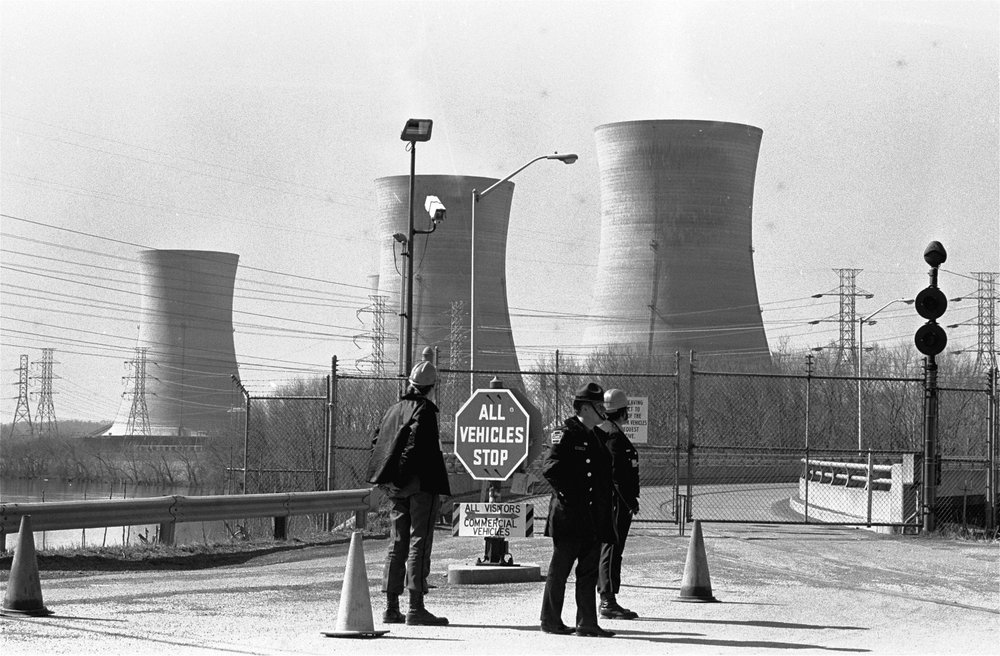
In 1979 a nuclear core melted down inside a reactor on Three Mile Island in Pennsylvania. No uncontrolled release of radiation ever occurred.
There’s a pattern here, and let’s not be bashful: the West won. Compare these chapters with the ones about the nuclear waste fires at Kyshtym in the Urals in 1957 (nadir of an environmental catastrophe so severe, some of the 20,000 square miles contaminated were turned into a nature park to keep people out) and the explosion at Chernobyl in Soviet Ukraine in 1986 (which killed over thirty outright and over the years has likely seeded 4000 people with terminal cancer). These accounts spell out exactly what to expect when you deny vital information to people and then bully them into performing impossible miracles on shoddy equipment. If civil nuclear power were a theatre of the Cold War (and it was) then the West, with its capitalistic working practices, won hands down.
But complacency is not an option. The peaceful application of nuclear power was the industry’s grail in those dark years, but “atoms for peace” far from ending want and war, have merely encouraged nuclear proliferation. (India produced its first plutonium in a reactor supplied by Canada, calling its first nuclear test a “peaceful nuclear explosion”.)
Not can we comfortably assume that, like the oil industry, like the hydo-electric industry, nuclear power is evolving and improving and becoming safer year on year.
True, the oil industry kills 264 times as many people as the nuclear industry, to produce just over seven times the amount of useful energy. True, nuclear power produces barely three fifths the amount of carbon that solar energy does, and generates four times as much power.
But the build quality of nuclear reactors across the globe is probably going down, not up, as reactor design loses research funding in the developed world, while relatively primitive reactors, further “simplified” to cut costs, are sold to unstable states hungry for nuclear prestige.
Plohki’s last major chapter analyses the multiple reactor meltdown at Fukushima in 2011. The earthquake which hit on Friday 11 March — an 8.9 on the Richter scale — shook the entire planet on its axis and jolted the whole of Japan several feet sideways. The tsunami that followed was far more terrible than the Fukushima Daiichi designers had allowed for. Yet no one died from acute radiation poisoning, and while cancer deaths cannot be ruled out, studies have as yet found no increase in the rate of such deaths.
Reasons for the deep unease that swept the globe following the Fukushima accident will be found neither in the figures, nor in the historical circumstances. (The worst that happened politically was that the prime minster, Naoto Kan, was roundly pilloried for grandstanding on Japanese TV.)
No, what really got under everyone’s skin were the eight painfully long days of pure terror during which the Fukushima disaster unfolded, with its various equipment failures, meltdowns, and releases of radioactive materials.
Look at it this way: were some poor sod to lose control of his muscle car on a cattle grid near Penistone, we would merely shrug and sigh. But imagine if the act of wrapping that car around a tree took over a week, and each excruciating moment of it were broadcast live on television. What would our reactions be then? Come Monday, how many of us would leave our cars in the garage?
On the outside, Atoms and Ashes looks like an altogether unnecessary contribution to the “Say something should happen” argument against nuclear power. But Plohki’s gripping, measured accounts of human error and staggering heroism in the face of the slow, unwieldy and terrifying forces of nuclear power get under the skin of problem.
We’ve developed a clean, safe energy generation system. But never mind the materials it uses, the machine itself scares the living daylights out of us: slow, inexorable, mysterious, and persistent (no nuclear power station has ever been fully decommissioned).
Nuclear power is safe, and clean, and a nightmare — and one cannot simply reason one’s way out of a nightmare.
April 30, 2022
The past in light materials

Reading Georgi Gospodinov’s Time Shelter for The Times, 30 April 2022
Bulgaria’s best known contemporary novelist gets into a tremendous historical tangle in Time Shelter, the tale of how a fictional Georgi Gospodinov (let’s call him GG) helps create the world’s first “clinic for the past”. Here, past ages (1980s Soviet Sofia, for example) are recreated to relieve an elderly clientele from the symptoms of senile dementia.
The bald premise here isn’t as fanciful as it might sound. I assume that while writing, Gospodinov was all over news stories about the Alexa nursing home in Dresden, which in 2017 recreated spaces from communist-era East Germany as a form of therapy.
From this shred of clinical fact, GG’s mind, like Stephen Leacock’s Lord Ronald, rides off in all directions.
GG’s boss at the clinic is his lugubrious time-jumping alter-ego Gaustine (who’s cropped up before, most memorably in Gospodinov’s 2011 novel The Physics of Sorrow and in an eponymous story in his 2007 collection And Other Stories). Gaustine hires GG to run the clinic; GG’s own father becomes a client.
Soon, carers and hangers-on are hankering to stay at the clinic, and Gaustine dreams up grand plans indeed — to build time clinics in every town; to build whole towns set in the past; ultimately, to induce whole nations to reenact their favourite historical eras! “The more a society forgets,” Gaustine observes, “the more someone produces, sells, and fills the freed-up niches with ersatz-memory… The past made from light materials, plastic memory as if spit out by a 3-D printer.”
This is a book about memory: how it fades, and how it is restored, even reinvented, in the imaginations of addled individuals, and in the civic discourse of fractious states.
As the clinic’s grandest schemes bear fruit, there’s political satire of the slapstick kind, as when “one day the president of a Central European country went to work in the national costume. Leather boots, tight pants, an embroidered vest, a small black bow above a white shirt, and a black bowler hat with a red geranium.” The scene in which a three-square-kilometre Bulgarian flag is dropped over the crowds in Sofia’s oldest park, the Borisova Gradina, is a fine piece of comic invention.
As the dream of European unity frays, and each European country embraces what it imagines (and votes) to be its best self, Gospodinov’s notes on national character and historical determinism threaten to swallow the book. But in a development that the reader will welcome (though it’s bad news all the way for GG) our narrator flees time-torn Bulgaria (torn between complacent Soviet nerds and keen reenactors of an unsuccessful national uprising in 1876), finds himself a cheap cell in a Franciscan monastery outside Zurich, and comes face to face with his own burgeoning dementia. “The great leaving is upon you,” GG announces, sliding from first person into second, from second into third, as his mind comes apart.
Gospodinov chillingly describes the process of mental ageing: “Long, lonely manoeuvres, waiting, more like trench warfare, lying in wait, hiding out, quick sorties, prowling the battlefield ‘between the clock and the bed,’ as one of the elderly Munch’s final self-portraits is called.”
Of course, this passage would have been ten times more chilling without that artistic reference tacked on the end. So what, exactly, is Gospodinov trying to do?
His story is strong enough — the tale of an innocent caught up in a compelling aquaintance’s hare-brained scheme. But Gospodinov is one of those writers who thinks novels can, and perhaps should, contain more than just a story. Notes, for example. Political observations. Passages of philosophy. Diary entries. Quotations.
GG comes back again and again to Thomas Mann’s polyphonic novel The Magic Mountain, but he could just as easily have cited Robert Musil, or James Joyce, or indeed Milan Kundera, whose mash-ups of story, essay and memoir (sometimes mashed even further by poor translation) bowled readers over in the 1980s.
Can novels really hold so much? Gospodinov risks a mischievous line or two about what a really brave, true, “inconsolable” novel would look like: “one in which all stories, the happened and the unhappened, float around us in the primordial chaos, shouting and whispering, begging and sniggering, meeting and passing one another by in the darkness.”
Not like a novel at all, then.
The risk with a project like this is that it slips fiction’s tracks and becomes nothing more than an overlong London Review of Books article, a boutique window displaying Gospodinov’s cultural capital: “Ooh! Look! Edvard Munch! And over there — Primo Levi!” A trove for quotation-hunters.
Happily for the book — not at all happily for Europe — Vladimir Putin’s rape of Ukraine has saved Time Shelter from this hostile reading. In its garish light, Gospodinov’s fanciful and rambling meditation on midlife crisis, crumbling memory and historical reenactment is proving psychologically astute and shockingly prescient.
Gospodinov’s Europe — complacent, sentimental and underconfident — is pretty much exactly the Europe Putin imagines he’s gone to war with. Motley, cacophonous, and speciously postmodern, it’s also the false future from which — and with a terribly urgency — we know we must awake.
A surprisingly narrow piano

Reading Richard Mainwaring’s Everybody Hertz for the Spectator, 30 April 2022.
Imagine that all the frequencies nature affords were laid out on an extended piano keyboard. Never mind that some waves are mechanical, propagated through air or some other fluid, and other waves are electromagnetic, and can pass through a vacuum. Lay them down all together, and what do you get?
The startling answer is: a surprisingly narrow piano. To play X-rays (whose waves cycle up to 30,000,000,000,000,000,000 times per second), our pianist would have to travel a mere nine metres to the right of middle C. Wandering nine and a half metres in the other direction, our pianist would then be able to sound the super-bass note generated by shockwaves rippling through the hot gas around a supermassive black hole in the Perseus cluster — a wave that cycles just once every 18.5 million years.
Closer to home, how big do you think that piano would have to be for it to play every note distinguishable by the human ear? You’d have to add barely a single octave to either side of a regular concert grand.
Readers of Richard Mainwaring’s wonderfully titled book will fall into two camps. Some will want to hear what this “infinite piano” conceit reveals about the natural world; about the (considerable) auditory abilities of spiders, say, or how 23 high-stepping fitness junkies caused a tremor that evacuated the the 39-storey Techno Mart building in Seoul, South Korea.
Other readers, though entertained well enough by Mainwaring’s extraordinary clear and concise science writing, won’t be able to get that infinite piano out of their heads. It’s a metaphor so engaging, so intuitive, it’s quite as exciting as anything else in the book (for all that the book features ghosts, whales, Neolithic chambered cairns and Nikolai Tesla).
Mainwaring is a musician and a composer, and the business of music runs under even his most abstruse intellectual excursions. A Marsquake recorded on On 6 April 2019, sped up by a factor of 60, sounds, he tells us, “not unlike someone blowing over the top of a half-full wine bottle in Westminster Abbey”. Fully concentrating on a task generates brainwaves of around 40 Hz or more: ”it’s a wonder we can’t hear them humming, as they are at the same frequency as the opening bass note of Cypress Hill’s ‘Insane in the Brain’.”
This is infotainment at its most charming and lightweight; tonally, it’s of a piece with the musical stunts (for example, arranging a performance by massed tuning-forks) that Mainwaring has regularly staged for BBC1’s pre-watershed magazine programme The ONE Show. The glimpses Mainwaring gives us into the peculiar, fractured, distraction-filled business of modern music making are quite as fascinating as his tales of planetary resonance and the latest thinking about olfaction. He can also be tremendously catty, as when he pricks the vaingloriousness of virtuoso bass players (“Know your role, bassists – stay out of the way.”)
Like any ebullient teacher, he won’t be everybody’s cup of tea. There’s always one misery-guts at the back of the class whose teeth will be set on edge, and now and again Mainwaring’s humour is a little forced. This is usually because he’s hit on some neat metaphor and doesn’t know when to stop beating on it. We should set against this, though, his willingness to dive (and deeply, too) into any number of abstruse subjects, from religious experiences to Edwardian vibrators.
Throughout, Mainwaring keeps a sharp eye out for specious claims and pretensions. There is, he says, nothing magical about “the God-given, superhero ability of perfect pitch” — the ability to identify a note from its frequency. Indeed, before 1955, the year the ISO standardised “A” at 440 Hz, there was no such thing as perfect pitch. (Interestingly, though, speakers of Mandarin, a language dependent on tonal inflexion, are rather better at guessing notes than the rest of us.)
On the other hand there is, as Mainwaring ably demonstrates, an extraordinary spiritual power to music, particularly around the note A forty-seven white keys to the left of middle C. (That’s 19 cycles per second, or 19 Hertz, we say now, in honour of Heinrich Rudolf Hertz, who proved the existence of electromagnetic waves). This “A” can trigger cold sweats, fits of severe depression, and even sightings of dead people. Mainwaring traces the use of low notes and infrasound from the more inaccessible tunnels of French caves (where little ochre dots marked where prehistoric singers should stand to sound especially resonant and amplified) to Bach’s Toccata and Fugue in D Minor which, on any decent organ, generates infrasonic byproducts by means of two chords and a low pedal D.
Though horribly abused and exploited by various new Age fads over the years, the old intuition still holds: vibrations reveal much about life, consciousness and the integrity of matter. Mainwaring’s clear-eyed forays into medicine, psychology and spirituality reflect as much.
It’s a commonplace of popular science that the world is looked at best through this or that funny-shaped window of the author’s choosing. But Mainwaring’s garrulous offering is the real deal.
April 20, 2022
The worst day ever
Reading Riley Black’s The Last Days of the Dinosaurs for New Scientist, 20 April 2022
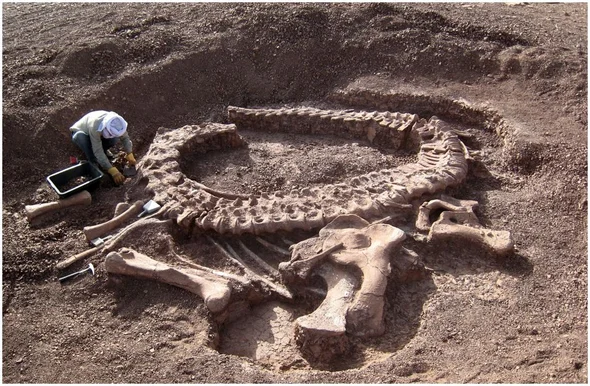
Welcome to Hell Creek, in what is now Montana. Readers had best not get too attached to the inhabitants dreamt into being in the first chapter of The Last Days of the Dinosaurs: the Tyrannosaurus rex, “her reddish brown hide now draped in orange and gold from the low-angled light of the evening sun”; the low-slung herbivore Ankylosaurus, defending herself with a tail club the size of a car tyre; the new-born Alamosaurus sanjuanensis chick, that will never get to grow into one of the largest animals to ever walk the Earth.
Tomorrow, a seven-mile-wide meteor will plough into the ancient Yucatán, triggering the extinction of around three quarters of all species on Earth. Along with all non-avian dinosaurs, great batwinged pterosaurs will perish; later, invertebrates like ammonites will stutter and stop in seas made corrosive by acid rain. Most early mammals — those that didn’t go up in flames, or get blasted off into outer space — will eventually starve; and with them, most lizards, snakes, and birds.
Subsequent chapters offer glimpses of the aftermath, each separated by an exponentially longer interval. An hour after impact and in Hell Creek, over 4,500 kilometres away from the impact, a puzzled Ankylosaurus fights for its footing at the edge of a trembling lake. Safe in her burrow, a squirrel-like Mesodma sleeps through a day of pulsing, planetary conflagration. A month in, and little two-toed Acheroraptors are poking about amongst the decaying debris, unaware of the cold and hunger to come.
Time accelerates. A year, a hundred years, a thousand years go by. We venture far from Hell Creek, many times, and learn much about dinosaurs and their long history, about the mechanisms of evolution and climate, and about the deep history of our planet. We learn to abandon old notions of a planet healing itself, or of life returning to some ideal degree of diversity. Mass extinctions are not “opportunities”, and when living designs are lost, in the great game of adaptation and extinction, they stay lost. Life got through by the skin of its teeth.
Hell Creek remains central throughout, as is only reasonable, since its geology appears to record in such extraordinary detail the events immediately following the giant Chicxulub asteroid’s impact. We glimpse it as an Eden, gardened by towering herbivores. We see it go up in flames. We say goodbye to the place as new plants smother and entangle it, creating the jungle environments from which complex behaviours and communities — both primate and avian — will be born. Throughout, the author’s shifting cast of characters remains vivid and charming.
Indeed, it’s as if Black — a palaeontologist and prolific writer, and no doubt familiar to many readers for her Laelaps blog — had set up camp in the very heart of the valley. This is palaeontology written with the immediacy of natural history.
In a long appendix, Black explains what’s real in this book, and what she’s made up. No need to be disconcerted. Without a leavening of intelligent speculation, palaeontologists have never been able to say anything useful. it’s a point Black makes splendidly, with reference to an illustrated study from 1863, The World Before the Deluge.
This book was published just a couple of years after the discovery of the first decent fossilised skeleton of Archaeopteryx — a previously missing link between reptiles and birds. The only problem was the head was missing. “Did Archaeopteryx have a beak? Teeth? Both? Neither? There was no way to answer the question,” Black explains. “And so The World Before the Deluge portrayed Archaeopteryx flying high above Jurassic conifers totally headless.”
Black’s approach is much more sensible, adding to The Last Days of the Dinosaurs whatever she needs — a head here, a behaviour there — to give us living, more-or-less reliable glimpses into the days after the worst day ever suffered by life on Earth.
April 13, 2022
Look! The Astrodome! Glen Campbell! Hippies!
Watching Richard Linklater’s Apollo 10-1/2 for New Scientist, 13 April 2022
“What we really seek in space is not knowledge, but wonder, beauty, romance, novelty – and above all, adventure.” So said science fiction writer Arthur Clarke, speaking at the American Aeronautical Society in 1967, and with the gloss already beginning to flake off the Apollo project.
By the time Apollo 11 launched on 16 July 1969, NASA’s bid to land astronauts the moon — the costliest non-military undertaking in history — could not help but be overshadowed by the even more enormous cost of the Vietnam War.
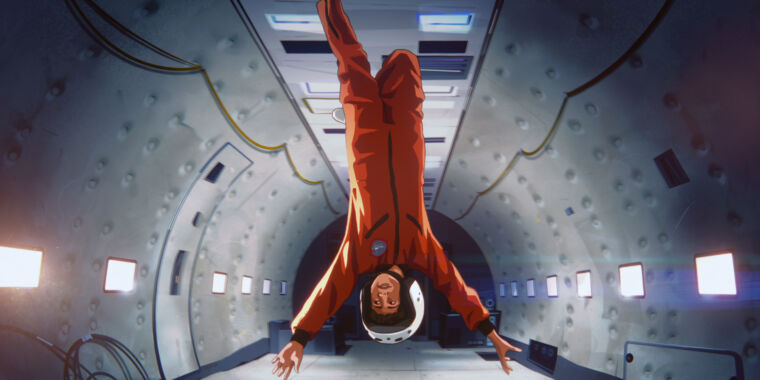
Only a very little of this realpolitik trickles into the consciousness of ten-year-old Stanley (newcomer Milo Coy) as he propels himself on his Schwinn bike around Houston — north America’s own Space City. His father is one of NASA’s smaller cogs — one of the 400,000 people who contributed to the programme — but this is enough to inspire a whole other reality in Stanley’s head: one in which he’s hired for a secret test flight of Apollo equipment before the grown-ups, Armstrong, Aldrin and Collins, blast off to glory.
Jack Black (whose mother, incidentally, was a NASA engineer; she worked on Apollo 13’s life-saving abort-guidance system) plays Stanley in the present: a narrator whose perspectives have widened to take in the politics of the time, but not in a way that undercuts the story. Apollo 10½ is, in the best sense, an innocent film: a film about wonder, and beauty, and adventure. Though full of Boomer catnip (Look! The Astrodome! Glen Campbell! Hippies!) — it is not so much a nostalgic movie as a movie about childhood, about its possibilities and its fantasies.
To that end the film, an animation, harnesses the “interpolated rotoscoping” technique first developed by art director Bob Sabiston for Linklater’s 2001 film Waking Life. Sabiston’s “Rotoshop“ software essentially allowed an artist to draw over the top of QuickTime files, much as inventor Max Fleischer drew over movie stills to create the first Rotoscoped animations in the 1910s.
The software worked a treat for the surreal philosophical meanderings of Linklater’s 2006 Waking Life (a documentary of sorts about consciousness) but keeled over somewhat when a frantic studio expected it to actually speed up the production of A Scanner Darkly.
Unsurprisingly, it didn’t.
An adaptation of Philip Dick’s paranoid classic (in which an undercover policeman is assigned to follow himself), this unfairly rushed film wobbles uncertainly between visionary triumph (type “scramble suit” into Youtube) and the sort of rather flat, literal animation that looks as if a computer could have done it unaided (though it couldn’t, and it didn’t).
Sixteen years on, Apollo 10½ realises Sabiston’s original 2½-D conception with perfect consistency. But that’s only partly down to improved technology. In fact traditional rotoscoping techniques were used in preference to the computer-aided “interpolated” rotoscoping of Scanner and Waking Life. The two-year industry hiatus triggered by COVID-19 gave Linklater and his animators the time they needed to hand-craft their film.
Time is rarely on the side of the filmmaker, but Linklater has chiselled out a unique relationship with the stuff. Boyhood (2014), about one boy’s childhood and adolescence, was filmed in episodes from 2002 to 2013 with the same cast. Merrily We Roll Along, based on Stephen Sondheim’s musical spanning 20 years, will take 20 years to complete. Apollo 10½, which the director had been noodling around for 18 years, has taken longer than the whole space race.
These are approaches to production that any traditional film studio would struggle to accommodate. So it’s no surprise to find an odd duck like Apollo 10½ streaming as a Netflix original. The streaming company’s 222 million subscribers are already sat at their screens, waiting to be entertained. Relieved of the need to recoup single investments in single cinema-going weekends, Netflix can afford to work in a more constructive fashion with its artists. That, anyway, was Linklater’s view when interviewed by IndieWire in March 2022, and he’s by no means the first auteur to sing the company’s praises.
Streaming will kill the feature film? On the evidence of Apollo 10½ alone — a charming, moving, and intelligent movie — I think we should bury that particular worry.
Simon Ings's Blog

- Simon Ings's profile
- 147 followers

