Morgan Hawke's Blog, page 5
February 22, 2014
What KIND of story are you telling?
10 Second Tip:
What KIND of story are you telling?
EVERY story is in fact a tale about the relationship of an individual
(your main character) to society -- symbolized by their workplace,
school, their immediate or extended family, the gang they belong to, a
best friend, a lover...
A comic story (one
with a happy ending,) describes an isolated individual achieving social
What KIND of story are you telling?
EVERY story is in fact a tale about the relationship of an individual
(your main character) to society -- symbolized by their workplace,
school, their immediate or extended family, the gang they belong to, a
best friend, a lover...
A comic story (one
with a happy ending,) describes an isolated individual achieving social


You Don't ALWAYS have to Show. Sometimes you Can TELL!
You Don't ALWAYS have to Show.
Sometimes you Can TELL!
Plot Pacing and Narrative Summary
By Randy Ingerman
Featuring: Harry Potter & the Philosopher's Stone
~~~~~~~~~~~~~
If there's one thing that any writer is guaranteed to hear too many times, it's the dictum, "Show, Don't Tell."
There
is a lot of truth to this rule of thumb. The purpose of fiction is to
give the reader a
Sometimes you Can TELL!
Plot Pacing and Narrative Summary
By Randy Ingerman
Featuring: Harry Potter & the Philosopher's Stone
~~~~~~~~~~~~~
If there's one thing that any writer is guaranteed to hear too many times, it's the dictum, "Show, Don't Tell."
There
is a lot of truth to this rule of thumb. The purpose of fiction is to
give the reader a
February 21, 2014
MEMORY Training
 MEMORY Training
How I trained myself to have a Photographic Memory.
Shortly after I published my very first story, I was introduced to the phrase:
"Write What You Know."
I was horrified.
I was horrified because at the time, I was still in high school and living with my Mom in a very small New England town. Other than a few encounters with a couple of ghosts, a couple fast-food jobs, and what I had looked up in my local library, (keep in mind this was 1980; the Internet hadn't been invented yet,) I knew Nothing. Seriously, I had no personal experience doing Anything.
What the heck was I supposed to write if I only wrote what I knew?
I had yet to learn how to drive a car, but that was okay. I was damned good at riding the bus. However, I still hadn't had my first kiss yet, so relationship stories of Any kind were right out. Forget stories that had guns or weapons, though I could use a sling-shot, swing a mean baseball bat, and smack a face with a pocketbook. (Book-bags weren't around yet either.) Forget stories with horses in it, though I did know how to feed and train a dog.
I had three younger brothers, so I had some experience with childcare, but having learned my techniques from a sociopathic parent ( Not a Joke ,) writing from those experiences would have landed that character in the villain slot, pronto. (The scary part was that I was aware of this back then!) I sucked at sports, and had no friends, so those kinds of stories were out too.
In short, the sum total of my knowledge was strictly from books. Which was to say, Not Useful toward making a story realistic in even the vaguest sense.
Even worse, I discovered that my memory Leaked. I could remember things long enough to pass a test, but that was as far as it got.
Since moving out of my mom's house wasn't looking too close to happening, experiencing new things had to be put on hold. So, instead I started working on my memory.
I tried a number of techniques, but what worked for me was a type of Image Association.
In short, staring hard at something and then later, Drawing it. Or rather, trying to. I was an okay artist, nothing terrific, believe me, but I noticed right away that if I drew a picture whatever I was trying to remember stayed in my head better. Even doodling in the bottom corner of my notebook worked. The really interesting thing was that the picture didn't have to be related at all to what I was trying to remember! Though it worked better if it was.
Strangely enough, cutting pictures out of magazines worked too, though not nearly as well. I had to really stare at the picture and recite out loud what it was I was trying to remember.
This led to the next step: Recitation.
This meant quite literally, staring hard at a scene I wanted to write about later, such as the park during the height of autumn, or a thunderstorm, and describing it out loud -- without writing it down. Just spitting out adjectives that described what I was looking at, or what I was Feeling, such as what the brass handrail in school felt like sliding under my hand while walking down the stairs. After only a couple of tries, it didn't even have to be out loud. Saying it in my head or under my breath worked too.
I never did recall exactly what I said, but I recalled the experience Perfectly.
In other words; Sensory Association.
By the way, the Schoolhouse Rock multiplication jingles saved my math grade, seriously. If I sang along with the cartoon, I remembered it. ALL of it. In fact, I still remember them. Recitation + Images.
About a month or two after I started doing all that, the flip-side of those exercises suddenly kicked in. I started Picturing what I was reading while I read it. In other words, I was playing a movie in my head of whatever I was reading. Though it was a bit more than that. My memory added the experiences I'd worked to remember. If the writer mentioned 'forest', my memory automatically added the sound of the wind, bird-calls, the smell of moldering earth, the specific colors of the leaves in sunlight, and the chilly brush of a breeze.
That doesn't seem like such a big deal, but it had one hell of a side effect.
I could remember anything I'd read. That included Text Books. If the text books had pictures it was even easier. I was actually able to remember the names and stories of any historical figure simply by picturing that person's portrait.
However, I was not remembering the Words, only the images I'd seen and the Stories that went with it. This actually worked well when I needed to answer essay questions.
However, my ability to remember things in a list; dates, names, phone numbers, groceries I needed to buy...dropped off the face of the earth. If I didn't have a picture to connect with what I was trying to remember, it left my head almost the moment it went in.
My last two years of high school saw a major lift in my grades in every subject except One: Math. I still suck at math. Numbers simply don't bring up images. I could remember my times tables, (thank you Schoolhouse Rock,) but that was IT. Geometry was fine because the formulas were all associated with shapes, but Algebra was right out.
One would think that Grammar would have been difficult to remember, but it wasn't. I was using it almost daily in my story notebooks. (When one is writing a story, one NEEDS punctuation to have it make sense to the reader.) Repetition saved me there.
Later on, I finally left home and gathered a great number of wildly varying experiences. I still can't recall all the names of the people I met, but their faces are all engraved on my mind along with everything I experienced down to the weather conditions on the day it happened.
Image Association, Recitation, and Sensory Association.
Those were the keys to how I trained my memory to recall anything I'd seen or done clearly enough to write it on paper. I'm still amazed by how much I haven't forgotten.
Enjoy!
Morgan Hawke
www.DarkErotica.Net
Writing HORROR
 Writing HORROR
When writing a Horror story, one must begin with a Monster. The most terrifying of course, are the ones you don’t notice, or refuse to notice. The ones right next to you.
“The most dangerous wolves are those that are hairy on the inside.”So, let us begin with what makes a Monster ACT like a Monster.
-- A Company of Wolves
The Personality of a MONSTERThink, who are the people that walk right up to you every day – and you let them? Who are people who could ask you to go with them to an isolated location, or just out of sight for a quick word -- and you wouldn't even think twice about refusing them?
• Your neighbors
• Your co-workers
• Your friends
• Your lover
• Your parents
• Your siblings
• Your children
Now imagine if one of them was a man-slaughtering or even man-eating Monster?
In reality, it happens all the time. They’re known as Psychopaths.
~~~~~~~~~~~~~~~Not only that, Psychopaths are COMMON.
"Psychopaths cannot be understood in terms of antisocial rearing or development. They are simply morally depraved individuals who represent the "monsters" in our society. They are unstoppable and untreatable predators whose violence is planned, purposeful and emotionless."
-- What is a Psychopath?
~~~~~~~~~~~~~~~
The American Psychiatric Association estimate that 1 in about 25-30 people are Psychopaths. Do you know more than 30 people? Check your Friends list. Check your email address book. Check your phone contacts. According to statistics, for every 30 people you know at least 1 is a Psychopath – an actual monster.
How's that for scary?
The Psychopaths’ weakness, however, is that they’re actually pretty easy to spot by their behavior patterns. Here’s a checklist:
20 Traits of a Psychopath
~~~~~~~~~~~~~~~
1. Glibness and Superficial Charm
– Smooth-talking, engaging and slick. (They talk, and talk, and talk...without ever really saying anything. They also frequently mix-up their vocabulary.)
2. Grandiose Self-Worth
– Greatly inflated idea of one's abilities and self-esteem, arrogance and a sense of superiority. (Pride is one of the few emotions they can actually feel, even if they've done nothing to earn it.)
3. Needs Stimulation/Prone to Boredom
– An excessive need for new, exciting stimulation and risk-taking. (Attention-seeking even to the point of provoking fights just to keep the focus on themselves.)
4. Pathological Lying
– When moderate: shrewd, crafty, sly and clever; when extreme: deceptive, deceitful, underhanded and unscrupulous. (When caught, they'll lie even more to cover their lies.)
5. Manipulative
– Uses deceit and deception to cheat others for personal gain. (They have only one agenda: themselves.)
6. No Guilt/Remorse
-- no feelings or concern for losses, pain and suffering of others, cold-hearted and unsympathetic. (Love, Affection, and most importantly, Compassion are things they simply cannot feel -- or respond to.)
7. Emotional Poverty
– Limited range or depth of feelings; interpersonal coldness.
(They are only capable of feeling 5 emotions: Pride, Hate, Greed, Fear, Amusement. This is Biological, not psychological. It wasn't 'done to them', they were born this way. It's a Genetic flaw.)
8. Lacks Empathy
– A lack of feelings toward others; cold, contemptuous and inconsiderate. (I repeat: Love, Affection, and most importantly, Compassion are things they simply cannot feel -- or respond to.)
9. Parasitic Lifestyle
– Intentional, manipulative, selfish, and exploitative financial dependence on others. (They prefer the easy route, and it's much easier to mooch off of other people, or just plain steal, than it is to work for it.)
10. Poor Behavioral Controls
– Expressions of negative feelings, verbal abuse and inappropriate expressions of anger.
(Since they can only feel 5 emotions, they can only Respond with those 5 emotions: Pride, Hate, Greed, Fear, Amusement. Anything else is an Act.)
11. Promiscuity
– Brief, superficial relations, numerous affairs and an indiscriminate choice of sexual partners. (They literally don't care who, or what, they sleep with because sex is limited to strictly physical sensation. They can't feel any of the emotions that make sex special, such as Love or Affection -- but they know You do, and will happily use it against you.)
12. No Realistic Long-Term Goals
– Inability or constant failure to develop and accomplish long-term plans. (To make a long-term goal, one must have a passion for that goal. The only emotions they can feel passion with are Pride, Greed, Amusement, Fear, and Hate, which is why they can be unusually persistent if they are angered.)
13. Impulsiveness
– Behaviors lacking reflection or planning and done without considering consequences. (Greed / Amusement / Pride + extremely short attention spans = stupid stunts.)
14. Irresponsible
– Repeated failure to fulfill or honor commitments and obligations. (If they think they can get away with it, they will Try to get away with it.)
15. Fails to Accept Responsibility for Own Behavior
– Denial of responsibility and an attempt to manipulate others through this. (When caught, they will ALWAYS blame someone or something else. They are incapable of feeling bad about their actions because the emotions needed to feel Remorse or Guilt, such as affection or compassion, are Missing. However, Fear they definitely feel, so they will do everything in their power to avoid Punishment.)
16. Many Short-Term Marital Relationships
– Lack of commitment to a long-term relationship. (Love, Affection, and most importantly, Compassion are things they simply cannot feel, so relationships happen out of Greed. In other words, they only form attachments to those they can Use. When they can't be used any more, they leave.)
17. Early Behavior Problems
– A variety of dysfunctional and unacceptable behaviors before age thirteen. (As early as 4 years old.)
18. Juvenile Delinquency
– Serious criminal behavioral problems between the ages of 13-18.
19. Revocation of Conditional Release
– Violating probation or other conditional release because of technicalities. (If they think they can get away with it, they will Try to get away with it.)
20. Criminal Versatility
– Diversity of criminal offenses, whether or not the individual has been arrested or convicted. (If one trick stops working they'll happily try another.)
For more detail, read this:
-- What is a Sociopath? -- LoveFraud.com
~~~~~~~~~~~~~~~
Know anybody like this? I’m absolutely sure you do. I do. In fact, I can name two from my own immediate family, one of which was actually diagnosed Sociopathic. The difference between a Sociopath and a Psychopath? The Sociopath hasn't killed their victims. They prefer to destroy them, emotionally and financially -- in addition to physical bullying.
The real horror comes in when friends, family, and particularly lovers refuse to see the Monster staring them in the face. Why not? Those fascinated by them (their confidence, their physical attractiveness, their smiling, sweet-talking charm…) simply will not listen to reason, even when warned by those they say they trust, those who have seen the psychopath in action. This is particularly true with Women ‘in love’ with such monsters.
Why won’t they listen? Because they don’t want to.
The psychopath goes out of their way to make the people they consider their possessions (friends, co-workers, family members, lovers…) their victims feel "special” and most importantly: needed. And they’re good at it.
These Monsters are so good at pretending to be exactly what their victims want them to be, (spouse, lover, best friend, parent...) their victims refuse to believe it even when the evidence is staring them in the face. Even when they have been shown point blank that everything they have been told are lies the people that love them still refuse to see the truth -– that it’s only a matter of time before the Monster eats them.
They want the illusion that the Monster made for them; “I love you,” “I need you,” “I’m the only one who will ever accept you as you are,” even if they only get to see that illusion for two short weeks right after the Monster does terrible things to them.
~~~~~~~~~~~~~~~What exactly do these Monsters DO to convince their victims to remain victims? Here’s a list:
"Take a look at Ted Bundy; my friend's mother once went on a double-date with him and claimed he was the nicest person. His mother said he was the "best son any mother could have." Bundy was also apparently quite good-looking, which made him even more dangerous."
-- What is a Psychopath?
~~~~~~~~~~~~~~~
~~~~~~~~~~~~~~~
Lavish flattery
-- They tell them all the things they want to hear.
Impressive-sounding Credentials
-- They use name-dropping, detailed resumes, or other credentials to sound impressive. However, when investigated, their information is exaggerated and/or completely false.
Trustworthy on the surface
-- They pay back initial loans, or favors, or appear to be unselfishly helping others. Once they are believed they drop everything. “Loan? What loan?”
Lies that sound like the Truth
-- When small inconsistencies or unexplained loose ends come up in their stories, they glibly provide explanations that sound plausible, often using a thick coating of meaningless chit-chat to distract their listener away from the their initial question.
Intense eye contact
-- A "predatory stare"—unblinking, fixated, and emotionless that’s often mistaken for a sign of empathy, or rapt attention. It’s not. It’s an intimidation technique.
Loving Isolation
-- They slowly and subtly separate their victims from those who may question their plans. "No one loves; knows you; trusts you, better than I do."
For more: How to Spot a Con Artist
~~~~~~~~~~~~~~~
How to Make Your Own MonsterSo…! Now you know how your monster thinks; what they do, how they do it, and how easily they can fool the people closest to them. You also have their potential victims; those who refuse to see the evidence right in front of their eyes, “He’s never done anything to me?” or worse, those helping them hide their deeds. “I walked into a door. I tripped on the stairs.” "He didn't mean it, it was an accident."
All you need now is a Costume to wrap them in, such as:
• Vampire
• Werewolf
• Sorcerer
• Demon
• Witch
• Mad Scientist
• Ancient god whose seal was accidentally broken…
• Creepy next door neighbor
All that’s left is to Research the mythical monster of your choice.
Once you wrap this costume around the psychopathic personality you’ll have a monster worthy of any Horror story you could possible think of. Even better, it’s realistic. After all, there is nothing more frightening than Reality.
What’s next? A place for Terrible Deeds to happen.
A PLACE for HorrorComing up with a place for Horror to happen is easy. The scariest places for terrible things to happen are the places we go to daily: school, work, the grocery store, our own homes… Think of all the close-by, but out of sight areas terrible things can happen in while people walk right past the door:
• Empty classrooms
• School boiler room
• Principal’s office
• Janitor’s office
• Apartment building boiler room
• Apartment building laundry room
• Apartment storage sheds
• Stock room in a grocery store
• Store manager’s office
• Office records and filing room
• Empty board room
• Public toilet stall
• Attic
• Basement
• Kitchen
• Bedroom
• Bathroom
Any place just out of casual sight can be the stage for a Terrible Deed, or two. Of course, abandoned buildings, crumbling castles, derelict factories, dark alleys, and dingy clubs with back rooms will also work.
Now you need, a Terrible Deed, or even better, a history of terrible deeds that have yet to come to light.
ACTS of HorrorThis is particularly easy. Read or watch the News. You can also go to Google News and type: ‘murder’ in the search bar. There, now you have all the terrible deeds you could possible use.
A Motive?
Monsters don’t need Motives to do their Evil Deeds.
They do them because they simply WANT to.
If the opportunity presents itself, they'll do it. In fact, impulsiveness is a trademark of their kind. Sometimes it’s simple Greed; someone has something they want so they take it, or they destroy it just to make the one who did have it suffer from its loss. Sometimes it's Pride; someone called them on their lies, or got more attention than they did, so they trash that person's credibility, usually with Lies. Amusement is often the trigger for bullying, especially if their target cannot fight back.
Any one of the 5 emotions they feel; Greed, Hate, Pride, Fear, and Amusement, can trigger an Impulse to Do Something -- usually terrible.
No, Monsters don't need a motive. However, if they’re caught, they have thousands of excuses, and all of them begin with: “It wasn’t my fault...!” because Fear is something they definitely feel.
ALL monsters enjoy causing suffering; mentally, emotionally, financially… No matter how much they say they don’t, they do. You can see it in their smile. They find it vastly entertaining to watch desperate people do desperate things; especially if they’re the ones who triggered it.
And desperate people pushed into a corner will do desperate things.
Ordinary, normal people WILL commit Terrible Deeds
when they feel they have no other option. Normal, ordinary, not-psychopathic people will kill, lie, cheat, and steal in self-defense, and to defend those they love. This can make them monstrous -- but not Monsters.
How can you tell the Difference
between an ordinary person and a Monster? Remorse and Regret.
A normal person will Regret that they caused pain to someone else. They will feel genuinely horrified that someone was hurt by their actions, or worse: died, and for a very long time, possibly their entire lives.
A psychopath; a Monster,
is physically incapable of feeling
either Regret or Remorse.
Instead, they dive straight into Anger and blame. “It’s all their fault! If they hadn’t done such and such, this wouldn’t have happened!”
Okay! You have a Monster, you have a list of horrific acts, and you have places for said acts to happen. Now you need someone to uncover and defeat the monster; a Hero.
The HEROThe best heroes for Horror tales are those that seem completely helpless against the Monster. Most especially, the kind of people no one will believe when they say that they’ve discovered a monster in their midst.
Someone with:
• A history of Low Self-Esteem.
• A history of lying (after making accusations they couldn’t prove.)
• A history of violence (defending themselves against bullies.)
• A history of mental illness (for seeing the world differently.)
• A history of delinquency (frequent absenteeism at school or their job.)
• A history of being different (Goth, nerd, anime fan, artist, poet, stripper...)
• A history of seeking isolation (introverts, the studious...)
Monsters love making victims out of these people because of they are already OUTSIDERS, cut off from the rest of society, or because their trustworthiness has already been destroyed. Monsters know that despite any evidence they might present, these people will never be believed.
So, how does such a Hero defeat a Monster? The same way one defeats a Bully on the playground. You know how in grade school they tell you that the only way to defeat a bully is to stand up to one, and don’t back down, in other words; overpower them into backing off? On the playground, this becomes; “hit them back twice as hard as they hit you,” preferably with a pack of friends behind you (to keep the bully’s friends from jumping you,) but it can also mean, “get an adult to stop them,” preferably with expulsion. This technique actually works –- until you reach adulthood anyway.
Anyone that ever told you to Ignore a Bully never dealt with a Real one. Ignoring bullies doesn’t work. In fact, it can make them downright dangerous. Every last one of them is narcissistic; all attention MUST be on them at all times. It’s why they are bullies to begin with; to get attention using the fastest and easiest means: violence. If they don’t get the attention they want, they get louder and even more aggressive. In fact, being ignored can enrage them to the point that they will chase after you. They will then go out of their way to make your life miserable in every possible way they can; above and beyond anything they might have originally done.
Don’t believe me? Check out the News reports. There are hundreds of cases of psychopathic juveniles that set schoolmates’ and teachers’ houses on fire, or knifed someone at school, or pushed someone into traffic just because they were ignored.
Once adulthood is reached, fighting becomes illegal, unless there are witnesses (and video) to say you were cornered first. That’s IF you know some sort of martial art and can actually defend yourself. For the rest of us, the only way to overpower them is by calling the cops. Unfortunately, that won’t work until After physical damage has been done that the cops can use as evidence against them.
The only other option for dealing with a bully is Disappear. Change your phone numbers, change your email, change the privacy settings on your Facebook, and password protect anything public that they might try to get to. Disappearing can also mean quitting the job (if that’s where the bully is,) or even moving away. The more dangerous might try to track you down, but those can be arrested.
As for Story Monsters, the first rule applies: Your characters' only chance at survival should be to Overpower them and KILL THEM ALL.
Other CharactersAll you really need for a Horror story is:
• a Monster
• a Trusted Friend (often a mysterious teacher-type character, but occasionally a love interest) who may, or may not survive, but they are out for the count (or just absolutely no help at all,) during the climactic one on one Monster vs Hero battle scene.
• and a Hero.
All other characters tend to fall in these categories:
• Someone that Interferes with the Hero, until they become part of the body count.
• Someone that Helps the Hero, until they become part of the body count.
• A body waiting to be counted.
Anyone else is merely sprinkles on an already decorated cake.
On to the story!
The Horror STORYThe basic plot for a Horror is pretty much the same as a basic adventure plot with a few minor shifts here and there:
Act One:
~~~~~~~~~~~~~
There’s a mysterious death
-- Or series of deaths.
Hero discovers Monster.
-- from evidence
Or
-- by seeing the Monster in action.
Act Two:
~~~~~~~~~~~~~
All evidence disappears.
No one believes the Hero about a Monster
-- and/or they think the Hero is the killer.
Hero privately investigates Monster:
-- who/what Monster is.
-- a way to kill the Monster.
A Trusted Friend appears and reveals a way to kill the Monster.
Act Three:
~~~~~~~~~~~~~
Monster threatens Hero.
Hero refuses to give in to threat.
Someone close to the Hero dies.
-- Lover
-- Family member
-- Trusted Friend
-- all of the above.
Pissed off Hero gains Special Weapon and goes after Monster.
Annoyed Monster goes on killing spree.
Bodies pile up:
-- proving that the Hero is innocent of murder.
-- proving that there IS a Monster.
Act Four:
~~~~~~~~~~~~~
Hero goes on Monster Hunt
-- with friends
Or
-- alone.
Monster is cornered and captured
-- or incapacitated.
Monster breaks free
-- or wakes up.
Monster attacks and bodies pile up.
-- Friends
Or
-- Innocent bystanders.
Wounded Hero faces off with Monster and uses Special Weapon.
Fatally wounded, Monster issues one last vague threat.
Monster dies.
Hero goes home
-- to celebrate
-- to angst
-- or dies alone in the rain.
If you want to make your story longer, or Manga style, make Four Heroes (or more) and multiply the entire plot by four, (or however many heroes you have) with all the heroes running through the plot separately and Losing their climactic battle scene. (Often done as Back-Story.)
Once all that’s done, have the Heroes discover each other (usually by being rescued,) until you’ve gathered them all together. Once they agree to become a TEAM, run through the entire plot all over again. This time, when you get to final climactic battle scene, have all the Heroes fight the monster together. The Monster takes out each of the heroes one by one, leaving one last Hero (usually the weakest) to deliver the final blow.
You don’t want to know how much manga I’ve read, and anime I’ve watched, to discover just how common this plotting pattern. Really. Off the top of my head? D-Gray Man, Naruto, Yu Yu Hakusho, Saiyuki, One-Piece… And that’s just the tip of the iceberg.
SHORT HorrorThe Short Horror plot is actually done a little differently from the plot I just showed you. Mainly because the characters are pared down to focus on only three: a Monster, a Hero, and a Trusted Friend. The Hero deals directly and immediately with the Monster while the Trusted Friend is usually someone completely ignorant of what’s really going on and gets caught between them. Often there are other minor characters, but those are just to raise the angst quotient by way of interference and/or body count.
Short Horror is best told entirely from the Monster’s point of view, the Hero’s point of view or the Trusted Friend’s point of view -- and only the ONE from beginning to end.
While there are literally thousands of variations, the Short Horror plot comes in two basic flavors. Each still has 4 Acts, but the stories are far more condensed:
Hero vs Monster
Act 1 -- The Angsty Hero
-- While Hero is recovering from trauma, something mysterious happens.
-- Against advice, Hero investigates.
-- Hero discovers monster and barely escapes.
-- Despite obvious wounds, no one believes Hero about Monster.
Act 2 -- Monster Harasses Hero
-- Letters, phone calls, dead things in the mail.
-- Accidents start happening to close friends/family.
-- Hero isolates themselves to keep friends away from Monster.
Act 3 – Escape Attempt
-- Hero runs and hides in the one place they feel absolutely safe.
-- Someone Hero trusts arrives.
-- Trusted Friend unknowingly brings the Monster with them.
Or
-- Trusted Friend is the Monster!
Act 4 – Hero vs Monster.
-- Trusted Friend interferes during fight and Monster attacks them.
-- Trusted friend finally realizes that Hero was right, but dies.
-- Angry Hero slays Monster and angsts over lost Friend.
Or
-- Hero tries to reason with Friend/Monster who he does not want to kill.
-- Monster offers a bargain: remain with Monster forever or die.
-- Hero accepts and goes off with Monster.
Or
-- Hero accepts and is devoured by Monster.
Or
-- Hero accepts then slays Monster and commits suicide to keep promise.
Or
-- Hero refuses, slays Monster, and angsts for the rest of his life.
Devil’s Bargain
Act 1 - The Angsty Hero
-- While Hero is recovering from trauma, something mysterious happens.
-- Against advice, Hero investigates.
-- Hero discovers monster and makes a bargain with it.
-- Monster carries out bargain in the worst way possible.
Act 2 – The Bargain
-- Scared Hero tries to find way out of Bargain.
-- Scared Hero confesses, but no one believes Hero about Monster.
-- Reminders of bargain arrive: Letters, phone calls, dead things in the mail.
-- Accidents start happening to close friends.
Act 3 – Escape Attempt
-- Hero runs and hides in the one place they feel absolutely safe.
-- Someone Hero trusts arrives.
-- Trusted Friend unknowingly brings the Monster with them.
Or
-- Trusted Friend is the Monster!
Act 4 – The Bargain’s Fulfillment
Hero accepts and…
-- goes off with Monster.
-- is devoured by Monster.
-- is transformed into a Monster.
-- gives Trusted Friend to Monster for devouring.
Or
Hero refuses and…
-- Angry Monster devours Trusted Friend.
-- Angry Monster devours Hero.
-- Angry Monster devours them both.
-- Trusted Friend helps slay monster.
Or
-- Trusted Friend offers themselves in Hero’s place.
-- Trusted Friend reveals that have already traded themselves for Hero.
Note: These plot-lines are, by no means, all the variations possible!
Okay! There you have it, a Monster, a Hero, and some Stories. Everything you need to write a basic Horror.
How to Write HORRORUse lots of atmospheric description, and tons of angst. Horror thrives on graphic depictions, action scenes, and remorseful (angsty) narration.
The trick to making any scene really work is Detail; also known as DESCRIPTION, but especially in Horrors and Gothics. Atmosphere is what carries those stories, and for that you need detailed depictions of the environment (weather, temperature, light conditions, darkness levels, shadows, smells, and sounds,) in addition to detailed descriptions of your locations, and the characters. (Yes, the characters too!) Most especially, their Expressions.
SHOW the fear, don't just say: "They were scared."
While a monster is scarier when it's Less visible; perhaps only a patch of shadow, what defines the monster's vagueness is how perfectly visible the Rest of the scene and characters are. Go watch a horror movie and look how crystal clear the characters and their immediate surroundings are compared to the monsters (at first anyway.)
Keep in mind that when you get to your climactic Hero vs Monster scene you WILL have to describe your monster in detail too, so be prepared!
As an exercise, pull out your favorite highlighter and dig out an old horror paperback that you don't mind ruining. Go to the best scenes in the book and Highlight all the sections of Description. Now, really LOOK at what was described and what words they used. THAT'S what you need to do. Take notes on what you find, and keep them close so you can add more to them later.
Description is what will make or break your Horror story. Seriously.
The Secret to HorrorWhat many beginning writers miss is that at its core,
a Horror story is in fact, a MYSTERY story. The core value of a Mystery is a contest between the Author who presents a Puzzle, and the Reader who seeks to discover the Solution before the end of the story.
A Good Mystery is one that Keeps the Reader Guessing until the very last page. A Poor one gives away the key Villain by the fourth chapter.Never give anything away until the last possible second.
NEVER give the Monster a POV! Unless you intend to tell the whole story from the Monster's POV.
KEY: The Monster should be the Physical Representation (presented as a puzzle) of the story's Concept AND the final Answer.
If you tell your readers the final answer by the fourth chapter, you've just removed their reason for reading your story in the first place. So, Don't Do It! Okay?
Also! The final Answer should be more shocking than your Monster.
Enjoy!
Morgan Hawke
www.DarkErotica.Net
February 20, 2014
13 Hours ~ the Fairytale Heroine's Journey
 13 Hours
The Fairytale Heroine's JourneyThere is a ton of information on the Heroic Cycle, or Hero's Journey, but what about the Heroine's ?
Being a female that prefers to write stories with a female lead, I decided to do a bit of my own research into the myths and fairy tales that feature Heroines rather than heroes. What I found was a little...startling. While many things in the Hero's Journey still apply, Her journey is not quite the same as His because the path the Heroine takes through the labyrinth is guided by her Heart not her head--or her sword.
There are Thirteen stages in the Fairy Tale Heroine's Journey. Thirteen hours in her clock of adventure--one for each full moon in a year.
Fair Warning: The fairy tale examples used here are my opinionated interpretations of the oldest and Grimmest versions I know.
1. Upon a time ~ Secret Betrayal
~~~~~~~~~~~~~~~~~
Too pretty, too smart, too loyal, too friendly, too obedient, too good at housekeeping, or sewing, or spinning, or making the flowers grow--someone is always out to get the Fairy Tale Heroine. Though it's usually a jealous (aging,) female relative that betrays her, male relatives do too--by trading her skills for cold hard cash.
Snow White, Cinderella, Psyche, and Vasilisa were so pretty they inspired jealousy in the other women they lived with. Beauty's father steals a flower and the cost is Beauty. The father of Rumpelstiltskin's maiden bragged ridiculously about her until he was finally told to prove it or die. The princess in the Goose Girl was too rich and too obedient for her maid to resist bullying. Rapunzel's mother couldn't get enough parsley. Bluebeard's wife, on the other hand, was out to get him.2. The Herald ~ Bearer of Bad News
~~~~~~~~~~~~~~~~~
This is the Catalyst--a friend, family member, enemy, or object that reveals the deed, promise, or debt for which she is being held accountable, or the deadly danger she's being sent into.
The Huntsman tells Snow White that her stepmother wants her heart, among other internal body parts--to eat. Cinderella's stepsisters brag that all the chores she's been given are specifically to keep her too busy to make a ball gown for herself. Beauty's father finally reveals that he has been asked to trade her life for his--and blames her request for a flower. In Rumpelstiltskin, the maiden's father sends her to the castle knowing full well that she cannot do as he bragged. A witch offers to buy Rapunzel for a sheaf of parsley. In the Goose Girl, the talking horse Falada tells the princess that her maid intends to betray them both. Vasilisa's stepsister brags that she won't be coming back with a live coal to light their fire because the witch Baba Yaga will eat her. A letter from her sister tells Bluebeard's future wife that the man killed her--and why.3. Refusal of the Call ~ Obedience to the Call
~~~~~~~~~~~~~~~~~
Unlike her male counterpart the Hero, the fairy tale Heroine either doesn't want to refuse the call to adventure, or isn't allowed to. She may argue, fight, weep bitterly, or bolt outright, but someone's life or honour is usually if not always on the line--frequently her own. Ruled by her heart rather than her head, she has no choice but to answer it.
On a side note, when these stories were originally told back before the Dark Ages, women were taught from early childhood to be obedient in all things. Only men were allowed a Choice.
Cinderella knew exactly what she wanted and went right after it--a prince and escape from her step-mother's home. However, her stepmother and stepsisters didn't have any problem refusing for her--by ripping up the gown she'd painstakingly sewed. Against her father's will, Beauty sneaks out of the house and takes off for the Beast's lair. Rapunzel's father refused quite a bit, but her mother was thoroughly addicted to the witch's parsley. (Makes one wonder if it was actually parsley, no?) The princess who became the Goose Girl couldn't do anything about her maid's bullying--royal etiquette wouldn't allow for it. Vasilisa considered refusing, but her magic doll advised her that going to see Baba Yaga was the right choice. In Bluebeard, the maiden deliberately sought him out because she wanted revenge for her sister's murder. In another version, he refused her because of her youth. She actually had to drop her clothes to prove she (had pubic hair) was old enough to marry.4. Mentors, Tricksters & Costly Gifts
~~~~~~~~~~~~~~~~~
A mentor/trickster comes offering gifts. The Mentor is one who actually cares for the Heroine and wants her happy. Tricksters however, are out for themselves. They want whatever they can get out of the Heroine. If what they grant makes her happy, that's nice, but not necessary. Occasionally, a Trickster such as Baba Yaga can become a Mentor, but that normally takes a lot of pretty impressive work on the Heroine's part.
The gift could be:
A gown, slippers, and transportation to a ball. The favor such as weaving straw into gold. The answer to a riddle that hasn't been asked yet.Magically long hair. A curse of sleep instead of death. A spell to call the breeze and make a dead animal's head talk. A family heirloom doll that talks.A glowing skull. A golden key to a deadly room.In all cases, there is a life-altering price on such gifts. Sometimes the payment is a trinket such as a necklace or ring, but more often it's a promise to be delivered later, or a first kiss--meaning her virginity. Occasionally it's a body part such as her hands, her voice, her hair, her finger, or her firstborn child--the medieval euphemism for her virginity and continued sexual favors until pregnant. In other words, a common law marriage.
5. Enter the Labyrinth
~~~~~~~~~~~~~~~~~
She gives in to temptation and takes the offered gift, crossing the threshold to the labyrinth and committing herself to a path where there is no turning back.
This scene can be played out as a rescue which usually includes the demand of a reward such as a kiss--the symbol for outright seduction.
~~~~~~~~~~
Snow White is rescued by the Huntsman when she escapes into the forest. The price for his silence is a kiss. Psyche is saved from a fall off the cliffs by an invisible Eros and becomes his lover--but not his wife. Rumpelstiltskin's skills at spinning save his maiden from certain death on the sword of the greedy prince, but also put her continued survival firmly into his own hands. This scene can also be played straight.
~~~~~~~~~~
From her mother's grave, Cinderella gains a gown, slippers, and a magical clay horse. (The earliest Cinderella is Chinese!) In another version, the gifts include a coach and come from a fairy godmother. Beauty walks boldly into Beast's castle to pay for her father's life with her own. Red Riding Hood takes the basket her mother offers and trots off into the woods toward grandmother's house. Lonely Rapunzel happily accepts small gifts and conversation from a prince who visits her tower. Accompanied by her talking nesting doll, the ever obedient Vasilisa marches off into the snowy forest to find Baba Yaga's chicken-legged hut so she can ask for a few live coals to light her hearth.Or in Reverse.
~~~~~~~~~~
The princess in the Goose Girl is forced by etiquette to submit to her maid's bullying--and loses her mother's gifts. The vengeful younger sister arrives at Bluebeard's castle bringing gifts--her dowry, her virginity, and a pair of specially trained messenger birds.6. Secret Allies, Secret Enemies, Deadly Gifts & Scary Promises
~~~~~~~~~~~~~~~~~
Entry to the labyrinth has been gained, but there's another, even more dangerous task or temptation to deal with. Another gift is offered with an even higher price-tag, a more chilling promise. She has every intention of fulfilling her bargain, but she has secret enemies.
Snow White has survived the forest and arrived at the home of the seven dwarves. All they ask is that she be wary of strangers. Cinderella arrives at the ball to seduce her prince, but has promised to leave by midnight. Beast finally allows Beauty a visit home, but she must return by a certain day. Psyche survives the flight into the clouds, but has promised not to look at her new lover. In the third and final room of straw. Rumpelstiltskin's maiden promises her first born child--a common law marriage--to the dwarf that's helping her. Red Riding Hood has promised not to talk to strangers. Rapunzel promises not to let anyone, but the witch climb up her hair. The princess exchanges clothes with her maid and swears to never reveal the switch to another living thing. She becomes the Goose Girl. Vasilisa is told not to snoop in Baba Yaga's house or ask questions. Bluebeard gives his new wife a golden key on the promise that she will not open a certain door.7. Treachery ~ Broken Vows
~~~~~~~~~~~~~~~~~
Through trickery, lies, theft, temptation, ignorance, or outright wilfulness, her promise is broken.
Even after needing to be rescued from a poisoned comb and a poisoned corset, Snow White bites into an apple offered by the same stranger. While the clock is striking twelve, Cinderella finally notices the time. Beauty's sisters jealously steal her magic ring delaying her to return to the Beast. Psyche's lover is revealed by candle light to be beautiful beyond compare. Rumpelstiltskin's maiden marries the prince--instead of leaving with the dwarf. Red Riding Hood talks to a wolf. Rapunzel lets her prince climb up into her tower--more than once. Her horse killed for his ability to speak, the Goose Girl offers gold to the local knacker to nail Falada's head under a certain bridge. She then proceeds to speak to him daily--right in front of the goose boy. Bluebeard's door is opened to reveal hideous contents. Or not.
~~~~~~~~~~
Despite several dangerous tasks, one of which is cleaning the interior of Baba Yaga's house--plus make dinner, Vasilisa doesn't pry or ask questions. Because her doll does all the dangerous tasks while she cooks, she sees nothing she isn't supposed to.8. CRASH Point ~ Center of the Labyrinth
~~~~~~~~~~~~~~~~~
Aware that she must pay the price for her broken vow, she bravely goes forth to--find a way to dodge the consequences.
Snow White's dwarves dodge her death by putting her in a clear crystal casket. Beauty has a hair-pulling fight with her sisters to get her ring back. Cinderella bolts for her clay horse knowing full well that it won't make it all the way home. Psyche throws herself at Aphrodite's feet and swears she'll do anything to get her lover Eros back. Rumpelstiltskin's maiden bargains for her freedom--his name. She then sends huntsmen all over the kingdom to discover the dwarf's name--before he can get her pregnant. Red Riding Hood eats the meat the wolf gives her, takes off her clothes, and climbs into bed with him. Rather than admit that she's pregnant, Rapunzel tells the witch that she ate too much. Before the king, the Goose Girl reveals that she is being held by a vow of silence--which makes her look even more suspicious. A peasant wouldn't bother to keep such a vow, only a princess would. Because of her dead sister's warning, Bluebeard's wife saves the key from being bloodied, but not her slippers. Vasilisa's ability to accomplish miracles and keep her mouth shut surprises Baba Yaga. Suspicious, the old woman offers to answer a question--but warns that some answers are deadly to know. Vasilisa asks about the three horsemen she saw. The answer is harmless: Black Night, Red Sun, and White Morning Star.9. Ordeal ~ The Darkest Hour
~~~~~~~~~~~~~~~~~
She faces her greatest fear and death. Unfortunately, she doesn't have any actual weapons at her disposal but her wits. Back then, women weren't allowed to touch things like swords or knives. Fighting wasn't feminine.
Snow White is locked in a coma--and a crystal casket. About the same time that the prince announces that he is looking for a woman that fits a certain sized slipper, Cinderella's growing waistline is noticed and she is locked in the attic. Beauty returns to the Beast, but he seems dead. To gain Aphrodite's approval, Psyche goes to the kingdom of the dead to fetch something from Persephone, the Queen of Death. Rumpelstiltskin's maiden goes through name after name with the dwarf trying to keep him too busy to impregnate her. Red Riding Hood starts questioning the wolf. To get around her oath to never speak of her situation to another living thing, the Goose Girl is encouraged by the king to speak to a fireplace--while he waits at the chimney. Bluebeard's wife's runs all over the castle dodging her furious husband while waiting for her brothers to arrive.Knowing exactly how dangerously impossible her tasks were, a puzzled Baba Yaga asks how Vasilisa accomplished them. Knowing that one cannot lie to Baba Yaga and live, yet sworn to secrecy about her doll, Vasilisa dodges with "My mother's blessing."10. Rewards & Punishments
~~~~~~~~~~~~~~~~~
If she survives the Ordeal, she is rewarded with release from the heart of the labyrinth--or punished by expulsion. Either way, she is permanently marked by her experience.
Snow White's crystal casket is discovered and carried off by a necrophiliac prince. On the journey to his home, the apple stuck in her throat is jarred loose, allowing her to awaken.Cinderella finally gets the chance to reveal her other slipper--and her growing belly to her prince. Beast awakens and turns into a handsome young man. Aphrodite tells Psyche to "go home." Rumpelstiltskin's maiden finally hears back from one of her huntsmen. Red Riding hood gets eaten for being too stupid to know that she's in danger. Rapunzel is shorn of her hair and thrown from the tower for preferring a man. Shortly afterward, the witch catches the prince, blinds him, and throws him out of the tower too. The king has his wife's women clean up the Goose Girl and dress her as befitting her station. Vasilisa's diligent work and obedience is rewarded by a kiss of protection on her brow. She is then given permission to take one of the skulls for fire, but she must not touch it, or look directly into its eyes. In another version, Baba Yaga asks a question of her own: Why go back? Vasilisa's reply: I want them to love me. Baba Yaga responds by grabbing her and dunking her into a vat of gold. Not only has her dress turned to gold, she comes out blonde and milky-skinned. Most remarkably, when she speaks, gold coins and jewels fall from her lips. She is then advised to face the crowing rooster at the gate. Bluebeard's wife's brothers finally arrive.11. Release from the Labyrinth
~~~~~~~~~~~~~~~~~
She heads back to the Ordinary World with a mission to accomplish. At the last threshold, she replays her very first act of commitment, a keepsake gift, a vow, or a kiss.
Snow White kisses her astonished (and possibly disappointed) prince. Cinderella leaves with her prince. Beast and his castle finally rejoin the mortal world. Psyche goes home to find Eros on the cliff where she first met him. Unable to live without him, she jumps off the cliff. He rescues her again. Rumpelstiltskin's maiden finally says thank you and uses his name. Free at last from the tower, though bald and saddled with twins, Rapunzel goes looking for her blinded prince. Awakened by her twins suckling for milk, Briar Rose, the Sleeping Beauty rises from her long sleep to go looking for the man that knocked her up while she was unconscious. The Goose Girl turned Princess once more, attends the local King's wedding feast for his son--who was supposed to be her bridegroom. Vasilisa uses a tree branch to take one of the flaming skulls mounted on Baba Yaga's gate and goes home to face the stepmother who cast her out into the snow. In another version, she merely stops at the skull-lined gate to face the crowing rooster and is granted a star on her brow. At the gate where she arrived, Bluebeard's wife meets her brothers and leads them straight to the bloody chamber.12. Confrontation & Rebirth ~ Parties & Payback
~~~~~~~~~~~~~~~~~
She returns to face her original betrayer. She needs them to acknowledge what they have done to her. This scene is often played out as a visit to her home in her bridal finery and a huge feast. However, this is also when the wicked are punished.
Snow White's mother dances to death in molten iron shoes. Cinderella's stepmother and stepsisters lose their eyes to Cinderella's friends the birds. Beauty invites her family to the castle to meet her new and extremely handsome husband. Psyche's rumour-mongering sisters are transformed into birds. Rumpelstiltskin rips himself in half. In another version Rumpelstiltskin literally throws himself into her body (a poorly euphemistic rape,) right in front of the whole court. He's ripped out of her--and in half--by her angry Prince husband. In the Goose Girl, the false princess is set in a barrel of nails and driven around the castle walls 'til she dies. Under the direct gaze of the magic skull, Vasilisa's nasty stepmother and stepsister are burned to ash. She then buries the skull to keep it from harming anyone else. In the other version, Vasilisa's stepsister is so envious of Vasilisa's golden appearance--and the jewels she literally coughs up, she marches off to spend time with Baba Yaga herself, only she ends up in a vat of pitch. She comes out black-haired, dark-skinned, and spewing slugs and toads when she speaks. At the gate, when she looks away from the rooster she faces an ass and gains a donkey's tail on her brow. Bluebeard is hacked to pieces.13. The Last Promise and Ever After
~~~~~~~~~~~~~~~~~
After all her final goodbyes are said, she returns to the Labyrinth to take her place there and receives one last gift, normally a crown or wealth, and makes one final promise. Sometimes it's merely a wedding vow, sometimes it's not.
Snow White, Cinderella, Beauty, the Goose Girl, Rapunzel, the Sleeping Beauty, and Rumpelstiltskin's maiden all become queens who vow to rule wisely. Psyche accompanies her husband Eros to Olympus and becomes a demi-goddess who vows to stay by his side forever. Vasilisa's cleverness is noticed and she becomes advisor to the Tsar. She vows to always tell the truth. In another version, she merely makes her family rich enough to move into town where she ends up meeting a rich merchant's son. After yet another spiteful trick from her step-family, she marries him. Bluebeard's widow uses his gold to give every woman in the bloody chamber a proper burial and takes over his castle, but vows never to marry again.So how does one use something like this for Writing? Consider this a Plot Arc, a map of the major turning points in a story. You can use it to plot the major turning points in any sort of heroine based adventure story, but it's far more effective as Relationship Journey for navigating Love , not life -- and not necessarily a purely female one.
Act One
~~~~~~~~~~~~
1. Upon a time ~ Secret Betrayal
-- Their own body betrays them by wanting sex -- and love.
2. Herald ~ Bearer of Bad News
-- "That person Likes you!"
3. Refusal of the Call ~ Obedience to the Call
-- "Let's go see them!"
4. Mentors, Tricksters & Costly Gifts
-- First impressions
Act Two
~~~~~~~~~~~~
5. Enter the Labyrinth
-- First personal Encounter
6. Secret Allies, Secret Enemies, Deadly Gifts & Scary Promises
-- The dating game.
7. Treachery ~ Broken Vows
-- "They haven't told you everything."
Act Three
~~~~~~~~~~~~
8. CRASH Point ~ Center of the Labyrinth
-- Spying, Prying, and Stalking--oh my!
9. Ordeal ~ The Darkest Hour
-- They know that You know that They know...
10. Rewards & Punishments
-- To Trust and go on, or Not to trust and dump them?
Act Four
~~~~~~~~~~~~
11. Release from the Labyrinth
-- Truth & Consequences
12. Confrontation & Rebirth ~ Parties & Payback
-- Showing off the new Lover (spouse); usually in front of the Old lover (spouse).
13. The Last Promise and Ever After
-- Marriage or...?
Simply fill in the blanks.
Wait, FOUR Acts, not Three?
~~~~~~~~~~~~
Correct. The Fourth Act is the main character's resurrection from their Ordeal, their rebirth and exit from the labyrinth. Only Tragedies, like Red Riding Hood finish at the end of a Third Act because the main character (or the relationship) does not survive the Ordeal.
Enjoy!
Morgan Hawke
www.DarkErotica.Net
June 16, 2011
Faery Tale ~ A Visual Novel
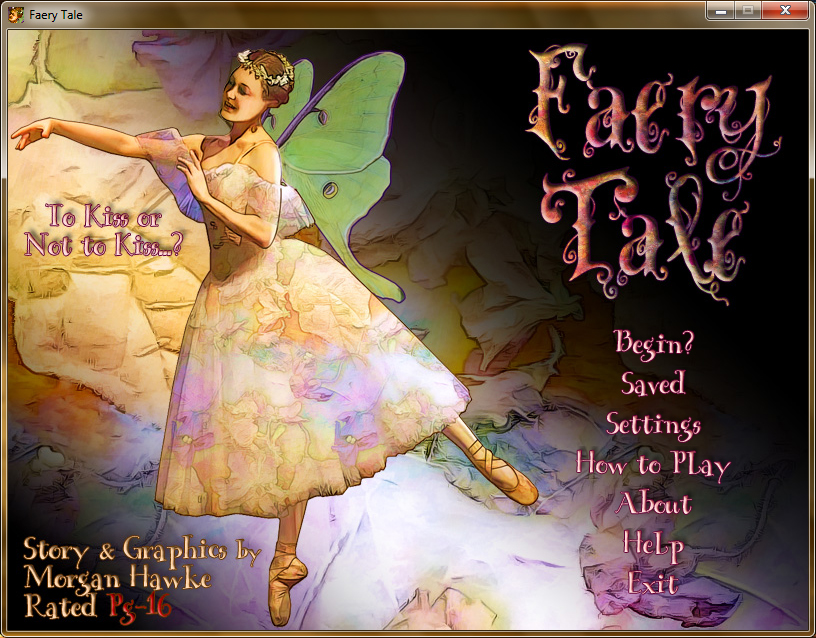
Faery Tale
A Romantic Fantasy Visual Novel
Story & Graphics by Morgan Hawke
The faery tale the fair maiden ends up in depends entirely on your choices!
Faery Tales Featured
They are NOT true to the originals, by any means.
Red Riding Hood
The Nixie of the Millpond
Cinderella
The Red Shoes
Free to download. Free to distribute.
This is rated PG-16.
This contains NO adult content, but there is quite a bit of suggestive story content and a couple of nearly-nude female images.
748 screens of dialogue
19 Menus
12,753 words.
8 possible endings.
Download available from Mediafire
or Internet Archive
200 MB.
All art was photo-manipulated and rendered in Photoshop by me.
Screenshots:

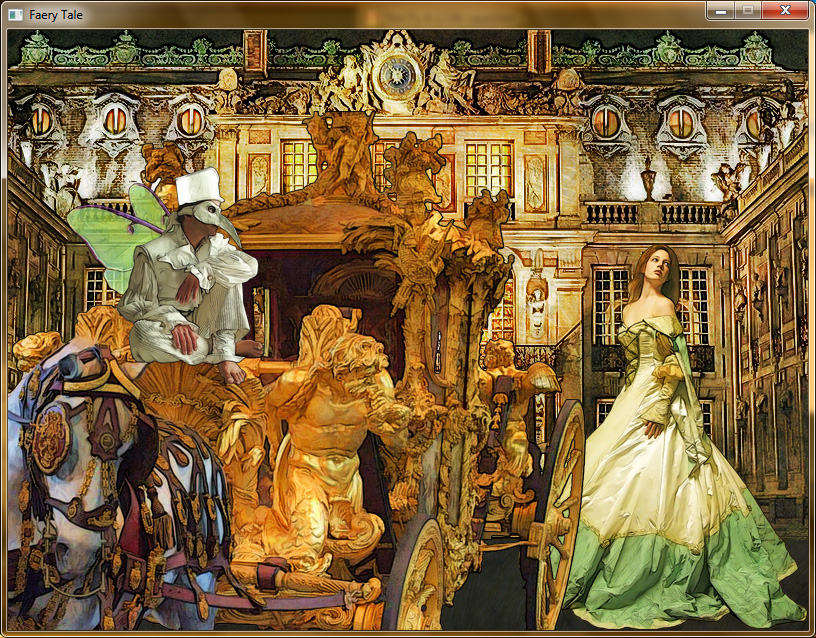


The Characters:
They are all name-able.
The Fair Maiden

The Fae
Yes, my Faery Tale actually has Faeries!

The Nixie - A fresh water sprite

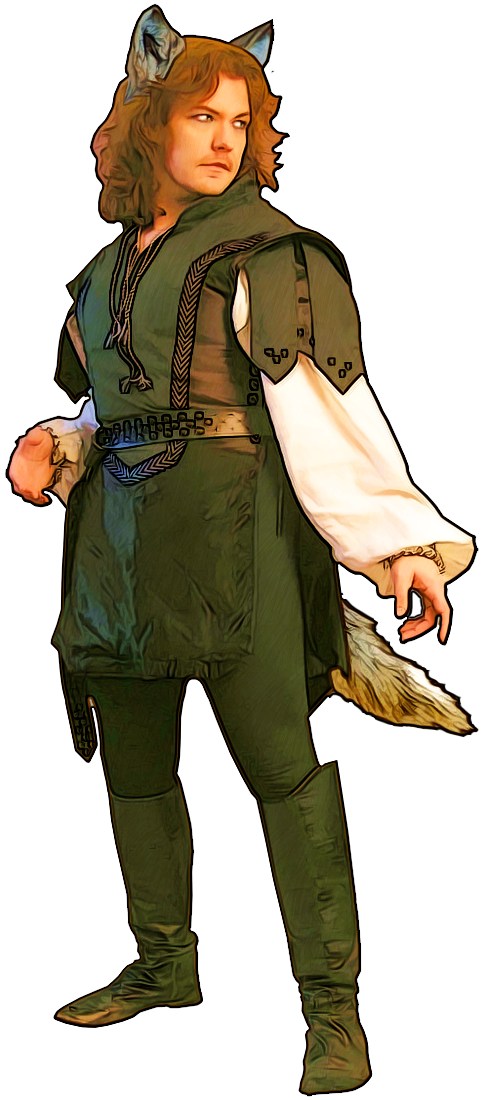
The Prince

The Sorcerer
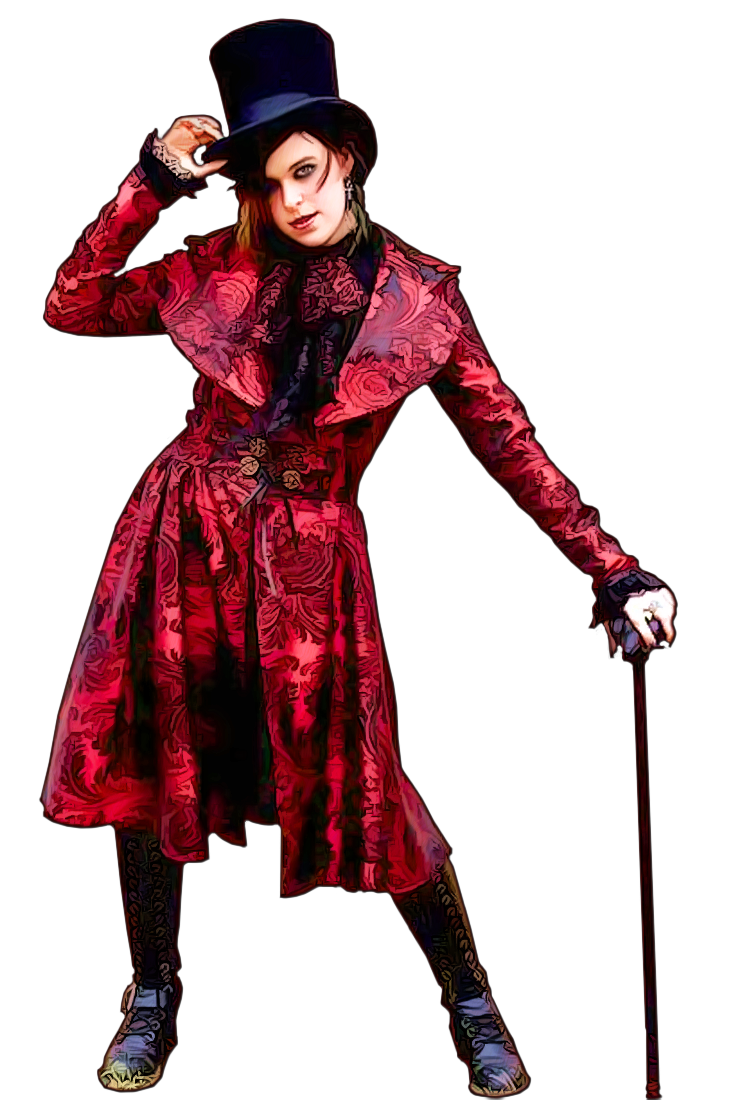
The Big Bad Wolf
For more games, visit: DarkEroticaGames !
May 17, 2011
Creative Narrative - A Description exercise
 Creative Narrative
A Description exercise.
DESCRIPTION is the key to fleshing out ANY scene, but especially Sex Scenes. Don't just call it 'juice,' describe the glistening moisture that slides in slender rivulets down the inside of her thigh THEN describe how it feels physically, THEN how the character feels emotionally about the fact that they're dripping from excitement.
1. What it looks like.
2. What it feels like Physically.
3. How they feel about it Emotionally.
You have 5 senses -- USE THEM:
Texture, Flavor, Appearance, Sound, AromaThe glistening moisture slid in slender rivulets down the inside of her thigh. The coolness of the moisture tickled in contrast to the wamth of her skin. Because her skirt was so short, her excitement was clearly visible to anyone who happened to be looking. Her cheeks filled with embarrassed warmth and she lowered her gaze, not wanting to know who might be staring at her, aware that she was aroused. "So how do you DO that sort of writing?"
The same way you do anything, you PRACTICE.
For this exercise, you will need the movie Sin City. If you don't have it, The Matrix or Equilibrium will do.WATCH the movie undisturbed from beginning to end. NO INTERRUPTIONS. This is Important!Watch where the Camera looks. Sin City in particular is a brilliant example of how to describe using pictures. The movie is filmed in black and white with splashes of color here and there only where the viewer's eye needs to be.When a character is first introduced, LOOK at how the camera starts in Close Focus on the character's face and then pulls back to reveal the character's body, lovingly showing the viewer exactly what the character looks like AND their distinguishing characteristics from top to bottom. THEN the view expands wider to disclose where that character is and what they are doing at that moment.After those first few moments of sheer View, you get a narrative from the Point of View character -- which may Not be the character the camera is showing you. You get the narrator's opinions, their feelings, their delusions. THAT is how the viewer (the reader) learns about the character.Once the movie is over, put on some music that fits the movie. (I actually have the soundtracks, to these.) Next! Break out your remote control and Watch The Same Movie AGAIN -- but this time, with the volume OFF.Sit on your couch and Out Loud, Narrate what you are looking at. Do NOT write anything. Just talk to the TV screen Out Loud and describe -- in detail -- what you are looking at as though it was a book you were reading.Describe the Characters.Describe the Actions.Describe the Fight Scenes.Describe the Kisses.Describe the Backgrounds and Setting -- including the rooms and weather conditions!Use your remote control and STOP the scene where you have difficulty describing what you are seeing. Work at it until the words come to you. They don't have to be perfect -- close IS good enough for this exercise.Do NOT write anything down.Keep going until the movie is Over.This should help loosen up a few things in your writing mind -- and give you some strong visuals to write from later.
Next!-- Write a 1000 word Scene that introduces a character of YOURS. Make sure you picture the scene in your mind with the same dramatic camera angles and close-ups the movie and Describe it so that anyone Reading it can clearly see it.Compare that scene with any introductory scene in a story you've already written and SEE the difference.~~~~~~~~~~~~~
Just so you know, this is an exercise I created to make my own writing more Visual back when I first started writing. The movie I used was "The Lost Boys", the original 1984 version. It really helped my ability to describe in my stories.
Enjoy!
April 8, 2011
Modern Fiction Story Structures
 Office by Jenova Art
Modern Fiction Story Structures
PLOT ARC - The events that happen while the characters make other plans.
CHARACTER ARC - The emotional roller-coaster that the character suffers in dealing with the Plot.
The PLOT ARC
If it does not forward the plot - it does not belong in the story.When I set out to write a tale, I begin by blocking out the plot, listing what I want to happen: Inciting Incident
Crisis
Reversal
Ordeal
Climax
Resolution For a 100k novel that's 20 chapters at 5000 words each. I note what I want to happen in each chapter and that's the frame I work from. If I find a better way to twist the plot great! But a detailed outline or block keeps me from wandering all over the place and going over my word count. Blocking or outlining is not the only way to build a story. It's just the easiest way. Steven King does not Block. (Keep in mind - he is a master at his art.) He writes his opening chapter, then his closing chapter then writes almost pure stream of consciousness to get from one to the other. What he does is write a bunch of character-based stories surrounding one event. What makes his books so huge is the size of his cast of characters. This is also why he ALWAYS goes way-way-way over his word count. *grin* But then, his publishers are not about to make him conform, there are too many other publishers dying for his work.
Plot & Character IntegrationTo make a cohesive whole, every single event must happen for a reason. Every single character must have a reason to be there and EVERYTHING must tie in together. Every scene in a story should either illustrate Character (Character Arc) or be an Event (Plot Arc).
The CHARACTER ARC
The Stages of Grief: Denial - Anger- Bargaining - Despair -AcceptanceWhy Grief?
-- Because STORY needs ANGST to BE Story.
Stories are all about CHANGE; about Adapting and Overcoming circumstancing that should take them down. The hero and the villain change and develop as the story progresses to allow the hero a toehold chance - and no more - to win. This is where dramatic tension is generated.The difference between the Hero and the Villain is the Villain's failure to change. The Villain fails to face his fears, which allows the hero to take him down. The rest of the cast may or may not have personal growth, but the hero and the villain must. Changing takes suffering. Both the hero and the villain should suffer emotionally and physically to allow for their personal changes. Think about how hard it is for YOU to change your mind about liking or disliking anyone. What would it take to change your mind? That's the level of suffering - of Angst - you need. Plot Arc is all about what HAPPENS.
Character Arc is all about how the characters FEEL. The Stage of Grief that character happens to be going through dictates how that character will React the event. If you plan it just right, every event will work Against the character's Stage of Grief. The whole Idea being: "That which does not kill me, makes me stronger." - Nietzsche
The plot movements combine both the Plot Arc (Events/Actions) and the Character Arc (Emotions/Reactions).
Flash Fiction / The Vignette
Under 1000 words
~~~~~~~~~~~~~~~
The climactic moment of a single event
1 Movement:
~~~~~~~~~~~~~~~
Ordeal - Sacrifice
~~~~~~~~~~~~~~~
2 characters
2 main characters: Protagonist / Antagonist
1 POV character ~ 1st Person or 3rd Person Limited POV
~~~
The Short Story
5000 to 19,000 words
~~~~~~~~~~~~~~~
One Small Event in the Hero's life.
3 major movements:
~~~~~~~~~~~~~~~
1- Crisis - Anger
2- Ordeal - Sacrifice
3- Climax - Acceptance
~~~~~~~~~~~~~~~
1 chapter per movement.
~~~~~~~~~~~~~~~
2 main characters: Protagonist / Antagonist
1 POV character ~ 1st Person or 3rd Person Limited POV
~~~
The Novelette
20,000 to 59,000 words
~~~~~~~~~~~~~~~
A single event that changes the Hero's life
5 major movements:
~~~~~~~~~~~~~~~
Act One
1-Inciting event - Denial
~~~
Act Two
2-Crisis - Anger
3-Reversal - Despair
4-Ordeal - Sacrifice
~~~
Act Three
5-Climax - Acceptance
~~~~~~~~~~~~~~~
2 chapters per movement.
~~~~~~~~~~~~~~~
3 Main characters: Protagonist / Obstacle Character */ Antagonist
1 or 2 POV characters ~ 1st Person or 3rd Person Limited
~~~
*Note: The Obstacle Character is the Nay-sayer that possesses the opposing opinion. In a 3-character plot, the Emotionally-driven character tends to play opposition for both the Antagonist (Motive-driven character) and the Protagonist (Action-driven character).
The Novella ~ Category Novel
60,000 to 89,000 words
(Many publishers consider anything over 60k a novel.
However, most ePubs will not print a book under 80k.)
~~~~~~~~~~~~~~~
A single that changes all the Main Character's lives
7 major movements:
~~~~~~~~~~~~~~~
Act One:
Set up - Something Bad has Happened
2- Inciting Incident -Denial
3-Crisis - Anger
~~~
Act Two:
4-Reversal - Despair
5-Ordeal - Sacrifice
~~~
Act Three:
6-Climax - Acceptance
7-Resolution - Acknowledgment
~~~~~~~~~~~~~~~
2-4 chapters per movement.
~~~~~~~~~~~~~~~
3 Main characters: Protagonist / Main Viewpoint Character */ Antagonist
2 Support characters: Hero's Obstacle Character / Villain's Obstacle Character
1 to 3 POV characters - 1st Person or 3rd Person Limited
~~~ *Note: The Main Viewpoint Character is rarely the Protagonist or the Antagonist. In most stories, the Viewpoint Character is the one caught in the middle, if not completely lost, in the battle between the Protagonist and the Antagonist. (Neo, in The Matrix was the Viewpoint Character caught between Morpheus and the Agents of the Matrix.) The Novel
90,000 to 125, 000 words
(Publishers rarely take manuscripts higher than 125k.)
~~~~~~~~~~~~~~~
A collection of events that lead to a single Major Event that brings change in all the (main) character's lives.
~~~~~~~~~~~~~~~
9 major movements:
~~~~~~~~~~~~~~~
Act One:
1-Set up - Something Bad has Happened
2- Introduction - Innocence
3- Inciting Incident -Denial
~~~
Act Two:
4-Challenge - Anger
5-Crisis - Betrayal
6-Reversal - Despair
7-Ordeal - Sacrifice
~~~
Act Three:
8-Climax - Acceptance
9-Resolution - Acknowledgment
~~~~~~~~~~~~~~~
2-5 chapters per movement.
~~~~~~~~~~~~~~~
3 Main characters*:
Protagonist / Main Viewpoint Character / Antagonist
3 Major Support characters:
Protagonist's Obstacle Character
Antagonist's Obstacle Character
Viewpoint Character's Obstacle Character 1 to 3 POV characters**
1st Person or 3rd Person Limited, or Omniscient
~~~ *Note: With casts of Characters - Less is more - ALL major character arcs must conclude to fulfill resolution. The larger the cast, the longer the story.**Note: With Viewpoint Characters - LESS is definitely more. Hopping from Viewpoint to Viewpoint can get very frustrating to the reader who has to keep track of each of those different story threads. And then there's the Fatal Flaw of: Head Hopping. Keep in Mind: Each POV character chosen, automatically becomes a Main Character. Woe betide the author that does not conclude all the issues raised with EACH Viewpoint Character - in addition to the Main Characters. Any more than 4 POVs and you're looking at a Massive undertaking to conclude them all, or make plot-holes you can drive trucks through.
Tragedy vs. Happily Ever AfterThe difference between a Tragedy and a Happily Ever After seems to be that in a Tragedy, the Protagonist FAILS at their Crisis Point in Act Two. Act Three is merely the death scene that fullfils their failure to change.To make a Happily Ever After, the Protagonist still Fails their Crisis Point in Act Two, but then replays their Crises Point in Act Three and finally Wins at the end of the Act. The story then goes on to a whole new FOURTH act.
Additional Reading: The Internal Journey - Premise Building Developing the Dark Moment Who Cares? Character Values and Conflict Being, Doing, Becoming:
The Heroic Strength, the Heroic Flaw, the Heroic Journey Starting Small and Building Plot External Conflict Worksheet Enjoy!
April 7, 2011
Periodic Table of Storytelling

Created by ComputeSherpa at DeviantArt.com
If you are any kind of fan of fiction writing, whether it books, TV scripting, movie scripting, or even fan-fiction, THIS is the ultimate cheat sheet for story crafting -- especially if you are a fan of TV Tropes !
Enjoy!
March 15, 2011
Erotic Plot Generators
 Just for fun!
Erotic Plot Generators
Looking for a quick and painless way to get ideas for Erotic stories or Yaoi stories? Have I got the toys for you! One click and there you go!
Click: Generate me an Erotic plot!
Example of results:
~~~~~~~~~~~~~~~
As an apology, a socially inept yet sincere actress put on a strap-on and ass-fucked a submissive police detective in a narrow stall of a public toilet. This resulted in a business proposition.
~~~~~~~~~~~~~~~
After catching the peeper red-handed--literally and figuratively, a naive and unsuspecting actress made tender love to a vivacious, red-haired erotica author in a high class hotel overlooking the bay. This resulted in the discovery of a hidden fetish.
~~~~~~~~~~~~~~~
Wearing only a towel, a dominant delivery girl called in some friends and had an orgy with a submissive college student in a seedy hotel in the bowels of the city. This resulted in a very sincere apology.
And for those interested in Boy on Boy erotic stories...?
Click: Generate me a YAOI plot!
 Example of results:
~~~~~~~~~~~~~~~
Having fallen hopelessly in Love, a petite, fair and delicate teacher had anal sex with an eccentric martial artist in the VIP room of a night club. This resulted in the loss of his underwear.
~~~~~~~~~~~~~~~
Wearing only a towel, a vivacious, red-haired private detective was fucked by an attractive mail man in a seedy hotel in the bowels of the city. This resulted in the annulment of a debt.
~~~~~~~~~~~~~~~
Caught masturbating, a submissive graffiti artist ass-fucked a friendly college professor in front of the fireplace of a Victorian mansion. This resulted in an invitation to live together.
The Java code is from Seventh Sanctum, but rest is all mine. Feel free to use any of the ideas generated for your own stories.
Enjoy!