Robin Van Auken's Blog, page 3
April 2, 2019
International Development Internships Abroad | International Relations
.fusion-image-frame-bottomshadow.image-frame-shadow-1{display:inline-block}.element-bottomshadow.imageframe-1:before, .element-bottomshadow.imageframe-1:after{-webkit-box-shadow: 0 17px 10px rgba(0,0,0,0.4);box-shadow: 0 17px 10px rgba(0,0,0,0.4);}
Take your business degree to the next level and learn how the economy of a foreign country evolves with an internship in International Development. Or, focus on education policies, governance, conservation, science, health, gender equality, or more with a broader internship that allows you to explore ways to improve living conditions, alleviate poverty, and stimulate economic growth.
The concept of International Development is so broad that nearly any topic you study is relevant because what it measures is how a community or country changes through time. Hopefully, that change is positive globalization and the establishment of free trade policies between developed and underdeveloped nations.
As an international development intern abroad, your goal is to help people enjoy freedom from poverty, hunger, and insecurity.
An internship in international development would build upon both the Millennium Development Goals, established by the United Nations and the Sustainable Development Goals, a new agenda that calls upon all countries to act in solidarity to transform our world by the year 2030.
New goals focus on climate change, economic inequality, democracy, poverty, and peacebuilding.
To accomplish these goals, international aid is needed – not just disaster relief or humanitarian aid. The difference between these types of aid is the emphasis on long-term, internal solutions – ones that help a developing country devise solutions for its own problems.
“A truly sustainable development project is one which will be able to carry on indefinitely with no further international involvement or support, whether it be financial or otherwise.”
WHAT ARE THE SUSTAINABLE DEVELOPMENT GOALS?
There are 17 interconnected goals that serve as a blueprint to achieve a better and more sustainable future for everyone. These global challenges that must be accomplished by 2030 are:
NO POVERTY – Economic growth must be inclusive to provide sustainable jobs and promote equality.
ZERO HUNGER – The food and agriculture sector offers key solutions for development and is central for hunger and poverty eradication.
GOOD HEALTH AND WELL-BEING – Ensuring healthy lives and promoting the well-being for all at all ages is essential to sustainable development.
QUALITY EDUCATION – Obtaining a quality education is a foundation for improving people’s lives and sustainable development.
GENDER EQUALITY – Gender equality is not only a fundamental human right but a necessary foundation for a peaceful, prosperous and sustainable world.
CLEAN WATER AND SANITATION – Clean, accessible water for all is an essential part of the world we want to live in.
AFFORDABLE AND CLEAN ENERGY – Energy is central to nearly every major challenge and opportunity.
DECENT WORK AND ECONOMIC GROWTH – Sustainable economic growth will require societies to create conditions that allow people to have quality jobs.
INDUSTRY, INNOVATION, AND INFRASTRUCTURE – Investments in infrastructure are crucial to achieving sustainable development.
REDUCED INEQUALITIES – To reduce inequalities, policies should be universal in principle, paying attention to the needs of disadvantaged and marginalized populations.
SUSTAINABLE CITIES AND COMMUNITIES – There needs to be a future in which cities provide opportunities for all, with access to basic services, energy, housing, transportation and more.
RESPONSIBLE PRODUCTION AND CONSUMPTION – Sustainable consumption and production are about promoting resource and energy efficiency, sustainable infrastructure, and providing access to basic services, green and decent jobs and a better quality of life for all.
CLIMATE ACTION – Climate change is a global challenge that affects everyone, everywhere.
LIFE BELOW WATER – Careful management of this essential global resource is a key feature of a sustainable future.
LIFE ON LAND – Sustainably manage forests, combat desertification, halt and reverse land degradation, halt biodiversity loss
PEACE, JUSTICE AND STRONG INSTITUTIONS – Access to justice for all, and building effective, accountable institutions at all levels.
PARTNERSHIPS FOR THE GOALS – Revitalize the global partnership for sustainable development
How will the world know it has accomplished these goals, especially since we only have a decade to complete them? And who decides if an underdeveloped country is on its way to becoming developed, or if it’s even necessary or desirable to move in that direction? To help answer these questions, the United Nations has created a protocol for interpreting the “human development index.” A country scores a higher HDI when the lifespan is higher, the education level is higher, and GNI (PPP) per capita is higher. There are many different measures of human development, but some of them are:
National GDP
Literacy rates
Life expectancy
Human Development Index
Gini coefficient
Human Security Index
Per capita income
Maternal survival rate
HIV infection rates
Number of doctors per capita
HOW CAN YOU HELP?
If you’re a student or a recent graduate, and you’re seeking the hands-on professional experience that will launch your career, you can add an international development internship to your resume in as little as two weeks. Many volunteers ask what they can accomplish in such a short time, but the fact is your contribution adds to the ongoing work of thousands of other like-minded people who are helping to improve the world each day.
International development internships include placements in medicine and health care, childcare and education, wildlife and marine conservation, micro business, agriculture, engineering, science and technology, law and public relations, media and journalism, government and politics, and hospitality and tourism.
The partners featured in this article work with NGOs and grassroots community development organizations to address important sustainability issues such as access to clean water, education, gender equity, health care, agriculture, and more. Explore the possibilities!
READ THE REST OF THIS ARTICLE BY ROBIN VAN AUKEN ON VOLUNTEER FOREVER…
Volunteer Forever is a comprehensive online resource that helps volunteers find and fund their volunteer opportunities. It advocates empowerment through information and resources. With Volunteer Forever, you can quickly create a profile and start fundraising right away. Volunteering abroad can be expensive, but it’s also a noble endeavor that your friends, loved ones, and communities will be happy to support. Learn more about Volunteer Forever here.
The post International Development Internships Abroad | International Relations appeared first on Hands on Heritage with Robin Van Auken.


March 26, 2019
How to get College Credit for an Internship Abroad
.fusion-image-frame-bottomshadow.image-frame-shadow-2{display:inline-block}.element-bottomshadow.imageframe-2:before, .element-bottomshadow.imageframe-2:after{-webkit-box-shadow: 0 17px 10px rgba(0,0,0,0.4);box-shadow: 0 17px 10px rgba(0,0,0,0.4);}
Looking to grow personally and professionally with a global experience? Does your college or university offer credit for internships spent abroad?
Many higher education institutions have entire departments dedicated to expanding internship, research, and international travel opportunities for their students. Called “enhanced academic experiences,” most colleges encourage students to create unique educational portfolios with internships and study abroad trips.
But what can you do if your college doesn’t have one?
How can you start to research internships or global education experiences without professional help? Can you persuade your institution to accept your internship once you’ve found one that excites you? There are many hurdles in your path overseas, not the least of which could be your GPA, as Josh C., a liberal arts student studying at a small college in the Mid-Atlantic discovered.
Josh said his interest in internships was kindled, “… because I want to broaden my understanding of my place in the world. Sure, I can do that and have done that at my home university, but that will only ever get me so far. I wanted to have the network and connections from both universities. I began looking in an area that I wanted to travel to – Australia – and found a school with a structure very similar to that of my home university.”
With a grade point average, well, below average, Josh worried that his application to study abroad would not be taken seriously. He was slow to decide upon a major and hadn’t focused on maintaining excellent grades during his first two years at school. “My primary concern was that I was going to be immediately overlooked due to my GPA not being at the ‘recommended level.’ My GPA has definitely created obstacles. I was seen as not ready and not suitable enough to be able to take the challenge of studying abroad.”
Josh’s story is not unique. Many students at liberal arts schools are encouraged to explore the academic catalog and take classes that will broaden their education through experiential learning, and in the process, they don’t focus on maintaining a high GPA. He discovered that he enjoyed learning “soft skills,” including decision-making, leadership, creativity, and innovative thinking. He said he hopes that by studying abroad he will be able to, “… broaden my network and connections outside of that of my own university, and to experience learning in a different environment.”
TYPES OF STUDY ABROAD PROGRAMS
If you’re considering a program away from your home university, start by reviewing the “Study Abroad” section of your college catalog or website. Often you’ll see headings such as:
Semester Programs
Language Immersion
Summer Programs
Faculty-Led Travel Courses
With the exception of faculty-led courses, you’ll be on your own, which means you’ll need a certain level of maturity and discipline to be successful while abroad.
Semester programs are popular because tuition grants and scholarships can often be used as direct tuition exchanges. That means if you’re enrolled full-time at a college, then all federal grants and loans you’re eligible for while studying there could be used for the study abroad experience during a semester program. Check with your college to see if it offers direct tuition exchange programs.
Summer programs are most often affiliated, which means some grants and scholarships are off the table. You should check with your college because sometimes funding can be used as long as it does not exceed the cost of attendance at the exchange institution or program. That doesn’t make them less desirable – in fact, summer internships abroad can be life-changing experiences that help you position yourself for a future career.
Language immersion programs allow you to embed yourself in a new culture, often living with a host family and speaking a foreign language all day. The concept is that you’ll learn faster by living and working in a locale where the language is spoken.
Faculty-led courses are often tied to a class at your college and the whim of the adventuring professor. On the upside, it gives you extensive experience in the field. Popular summer programs can be found in the Anthropology or Biology departments and can have you digging ancient sites with an archaeology crew in the Old World, or trekking through jungles of the New World as you research amphibian populations.
FINDING THE FUNDS TO INTERN ABROAD
Finding funding to travel abroad can be daunting, but there are options. Your own college or university may offer scholarships for travel. The key is to start researching financial aid, scholarships, grants, and donations early. Start your search here on Volunteer Forever with fundraising and scholarships for intern programs abroad.
Also, look at all types of scholarships – not just study abroad funding. You may be eligible for special funding, including fellowships or scholarships offered by your school or a club to which you belong.
Other funding resources include StudyAbroad.com Scholarships, the Institute of International Education Study Abroad Funding, and the Fund for Education Abroad.
Alternative funding ideas include:
Stretch your dollar by studying abroad in a country with a good exchange rate.
Get “off the beaten path” and be willing to travel where you’re needed.
Commit to longer stays. Grants and scholarships may be available for year-long internships and volunteer opportunities instead of a few weeks.
Check out the travel agencies and deals offered by partner organizations. Many programs offer discounted rates, and some airlines offer student rates.
Stay with a host family instead of in a hostel or dorm. You’ll have the added benefit of immersing yourself within the culture and it will help you learn a new language.
Check with private and community organizations, including alumni, chambers of commerce, service organizations, and heritage organizations for a scholarship or grant.
Ask local businesses about sponsoring your travel.
Contact your friends and family who may be willing to help fund your experience.
READ THE REST OF THIS ARTICLE BY ROBIN VAN AUKEN ON VOLUNTEER FOREVER…
Volunteer Forever is a comprehensive online resource that helps volunteers find and fund their volunteer opportunities. It advocates empowerment through information and resources. With Volunteer Forever, you can quickly create a profile and start fundraising right away. Volunteering abroad can be expensive, but it’s also a noble endeavor that your friends, loved ones, and communities will be happy to support. Learn more about Volunteer Forever here.
The post How to get College Credit for an Internship Abroad appeared first on Hands on Heritage with Robin Van Auken.
March 16, 2019
Leadership Development Abroad: Volunteer & Professional Internships
.fusion-image-frame-bottomshadow.image-frame-shadow-3{display:inline-block}.element-bottomshadow.imageframe-3:before, .element-bottomshadow.imageframe-3:after{-webkit-box-shadow: 0 17px 10px rgba(0,0,0,0.4);box-shadow: 0 17px 10px rgba(0,0,0,0.4);}
Rise to your potential with an internship that helps you polish your management style and become a professional leader.
Leadership is a skill – it’s not a personality trait someone is born with. You can learn how to become a successful leader by improving your ability to communicate well, make better decisions, manage conflict, motivate others, and build a great team.
Leading is about collaborating effectively with others and making them feel confident and safe following you – with their heads and their hearts.
Leading teams and organizations can be a challenge, but it’s also a challenge to find the path to becoming a leader. With an international internship, you’ll gain hands-on experience working and engaging with others to achieve collective goals. You’ll become more mature and confident as you take on more responsibilities.
But it’s not enough to have the information about how to be a better leader. It’s not enough to be motivated to act. You need both.
Expand your horizons and start on your career path through global networking and cultural exchange through an internship with Maximo Nivel. A trusted international organization like this can place you on an internship that lets you work as an advocate for others, contributing to change that improves the community while you gain hands-on experience.
Or build your leadership skills and your network with Intern Abroad HQ, a flexible option with multiple start dates available every month and durations that can be as short as two weeks. The short stays are great for introductory experiences.
If you’re committed to staying abroad longer, but concerned about adjusting to life in a new country like Spain or Japan, The Intern Group partners with Talkspace to provide all its participants with anonymous access to a licensed online therapist for up to three months. Talking with someone about your worries is great stress relief. And if you’re interested in combining a trip abroad, and immersing yourself in the culture and commerce of another country, take a look at the opportunities offered by Plan My Gap Year.
If you’re already working toward a career, either in business or health care, consider an internship that places you in a developing country with African Impact. The experience of working with people whose lives are greatly influenced by your help can be doubly rewarding.
Anyone can develop the skills of leadership, but it requires commitment and practice. Embrace the challenge and take your career as far as it can go by choosing one a leadership development internship abroad.
READ THE REST OF THIS ARTICLE BY ROBIN VAN AUKEN ON VOLUNTEER FOREVER…
Volunteer Forever is a comprehensive online resource that helps volunteers find and fund their volunteer opportunities. It advocates empowerment through information and resources. With Volunteer Forever, you can quickly create a profile and start fundraising right away. Volunteering abroad can be expensive, but it’s also a noble endeavor that your friends, loved ones, and communities will be happy to support. Learn more about Volunteer Forever here.
The post Leadership Development Abroad: Volunteer & Professional Internships appeared first on Hands on Heritage with Robin Van Auken.
March 14, 2019
Volunteer Abroad for Community Service Credit: High School & College Travel
.fusion-image-frame-bottomshadow.image-frame-shadow-4{display:inline-block}.element-bottomshadow.imageframe-4:before, .element-bottomshadow.imageframe-4:after{-webkit-box-shadow: 0 17px 10px rgba(0,0,0,0.4);box-shadow: 0 17px 10px rgba(0,0,0,0.4);}
When you volunteer for community service credit, your effort and energy benefit other people. But what tangible benefits do you receive?
Community service is a great way to develop new skills, make new friends, and gain experience working on a team. It’s also a great way to meet the requirements for graduation from your high school or college. Need a few more reasons? Here are a few important benefits of volunteering for community service credit:
Gives you a way to help others in need
Helps improve a community
Strengthens your resume and college application
Results in personal growth
Helps you to gain work experience and learn more about available jobs
There are hundreds of ideas for volunteering for service in your own community, ranging from raising money for local charities, reading books to the visually impaired, running in a charity race, delivering meals to the elderly, and collecting clothes and supplies for the homeless – and the list goes on.
These ideas are wonderful suggestions, but have you considered traveling abroad and performing community service on a global scale?
The depth and scale of need in developing countries is huge, and it may be difficult to imagine that you – one person – could make a difference, but the surprising truth is that the generous giving of time and energy adds up. Check out these amazing programs that provide projects with community service hours (and even course credit!) for teens and college students wanting to travel abroad:
READ THE REST OF THIS ARTICLE BY ROBIN VAN AUKEN ON VOLUNTEER FOREVER…
Volunteer Forever is a comprehensive online resource that helps volunteers find and fund their volunteer opportunities. It advocates empowerment through information and resources. With Volunteer Forever, you can quickly create a profile and start fundraising right away. Volunteering abroad can be expensive, but it’s also a noble endeavor that your friends, loved ones, and communities will be happy to support. Learn more about Volunteer Forever here.
The post Volunteer Abroad for Community Service Credit: High School & College Travel appeared first on Hands on Heritage with Robin Van Auken.
March 1, 2019
‘Lost’ History of Andrew Montour in Perry County
“They were driven from the lands on which they had settled and on April 18, 1752, Andrew Montour was commissioned by the governor to settle and reside upon these Indian lands, the Indians on July 2, 1750, having petitioned for such occupation, and arrangements having been made with them for such occupation at a place considered most central, to see that the lands were not settled upon and to warn off any who had presumed to settle there. He was also to report the names of any who did settle there that they might be prosecuted. He chose to settle on a stream which to this day bears his name, Montour’s run flowing through Tyrone Township. “
History of Perry County
H.H. Hain 1922
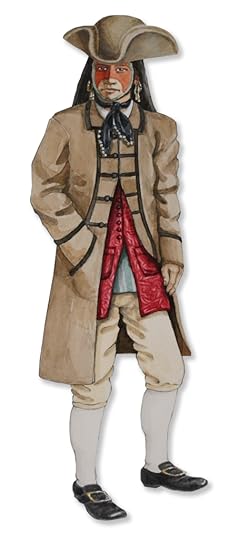 If you are a local historian and are surprised by this reference to Andrew Montour in Perry County (near Harrisburg) – you’re not alone. The namesake of Montoursville, Pa., turns out to have spent a chapter of his life in Perry County, that even the folks at the Gen. John Burrows Historical Society in Montoursville did not know about. Upon sharing this information with Ray Harmon, vice president of the society, he commented, “ Little or nothing was known locally about Andrew Montour’s role in settling Perry County.”
On my part, all of this was a chance discovery while doing research on his mother, Madame Montour.
Born Isabel Couc in New France (Canada) in 1667 to Pierre Couc, a Frenchman, and Marie Miteoamegoukoué of the Algonquin Nation, Madame Montour was exposed at an early age to Native American and European languages on what, at that time, was a very wild frontier. She had a gift for languages and became fluent in French, German, English, Iroquois and Algonquian and, as early as 1711, she was in demand as an interpreter and negotiator between Indians and settlers. She became invaluable to both the governors of New York and Pennsylvania.
In 1727, she settled at the mouth of Loyalsock Creek near present day Montoursville, Pa. with her Iroquois husband, Carondowana, and her two children, Andrew and Margaret. It was there that she founded the village of Otstonwakin.
The exact location of the village was a mystery until 2009 when Franklin & Marshall College anthropologist Mary Ann Levine discovered the site. Her archaeological excavation and subsequent lectures are what launched me on a study of the Montour’s and that time period.
In addition to Internet research and drawing on local sources, one book, in particular, became invaluable for insights not only into the history of the Montour family but the times in which they lived — “Madame Montour and The Fur Trade” by Simone Vincens. Originally published in French as “Madame Montour et son temps” (1979), it was not translated into English until 2011. The author draws on archives from Quebec, Montreal, Ottawa and France to fill in the many gaps in the life of Madame Montour, and brings to life the collision and cultural complexities of contact between Native Americans and white settlers during the 17th and 18th centuries.
Andrew Montour inherited his mother’s gift for languages and basically took over the family business of interpreting when Madame Montour lost much of her influence through age and the loss of her husband. Having heritage in both the Anglo and Indian worlds, he traveled back and forth across the frontier on mission after mission. He was a member of the Iroquois Grand Council and was employed by the governors of New York, Pennsylvania, and Virginia. His travels put him at all of the important Indian negotiations of that time period and in the presence of colonial figures such as Benjamin Franklin and George Washington.
The Moravian missionary Count Zinzendorf, on a trip to Madame Montour’s village of Otstonwakin, described Andrew Montour as a young man: “Andrew’s cast of countenance is decidedly European and had not his face been encircled with a broad band of paint applied with bear fat, I would certainly have taken him for one. He wore a broadcloth coat, a scarlet damasken lapped-waistcoat, breeches, over which his shirt hung , a black Cordovan neckerchief, decked with silver bugles, shoes and stockings, and a hat. His ears were hung with pendants of brass and other wires plaited together like the handle of a basket. He was very cordial, but on my addressing him in French, he, to my surprise addressed me in English.”
The above quote is well known locally and is contained in the “History of Lycoming County” by John F. Meginness. but what about the missing pieces of Andrew Montour ‘s life not well known in Lycoming County?
“In Madame Montour and the Fur Trade,” the author describes a land grant given to Andrew by the governor of Pennsylvania , as petitioned by the Indians, of 143 acres and a stone house. When he took up residence there he became the first official settler of Perry County and with the authority given to him by the governor on the as-yet-Indian lands to kick white squatters off he essentially became the first “sheriff”. This also put him along the Allegheny Trail which was about to become the preferred route to western Pennsylvania and the Ohio Valley, the original trail along the Susquehanna River and by Otstonwakin being forsaken for better terrain and more direct route west. Andrew was now positioned strategically to keep an eye on it all.
Madame Montour, even at the advanced age of 85, accompanied Andrew to the new place along Sherman’s Creek and this, according to Vincens’ book, is where she dies. When I read those words I said, “Wait a minute!” Most accounts have her dying in Western Pennsylvania at another land grant given to Andrew. And other accounts report she died at Fort Augusta in Sunbury, PA. Sherman’s Creek was news to me.
At this point, I knew nothing about Perry County history except what I read in “Madame Montour and the Fur Trade.” I didn’t even know exactly where Sherman’s Creek was located. The book had a rough drawing of the area so I used that map and the Howard Higbie Stream Map of Pennsylvania to locate Sherman’s Creek. And while I was following it west using the largest magnifying glass I own (the first casualty of getting older) guess what I found? It was another creek flowing into it called Montour’s Creek!
What were the odds that the land grant might be at the meeting of these two creeks? There was only one way to find out — I had to go there.
On a Saturday morning in June 2013, I picked up a navigator of sorts, my friend and fellow digger, Joel Buck, and headed down Route 15. From the maps, we knew our goal was close to the town of Landisburg on Route 233, about 20 miles from Route 15 and northwest of Harrisburg. That’s all we knew for sure.
Sherman’s Creek turned out to be a fair body of water, deep enough to be navigable in the spring but not in the summer months. We located what turned out to be Montour’s Creek and while not identified by signage it was confirmed by locals. It was a very small steam about four or five feet across and barely a trickle of water. The confluence of it with Sherman’s Creek was on private land and we could see that it was basically a farmer’s field.
There was an absence of historical markers at the site so we decided to do some detective work. We interviewed locals at some busy Saturday yard sales to see if they knew why the small stream was named for a Montour. No one knew anything. One of them told us to check with the historical society just outside of town at the even-smaller hamlet of Dromgold. This turned out to be a very good piece of advice.
I thought we had a better chance of meeting Andrew Montour himself than finding anyone at the historical society on a Saturday morning. I was just going to leave a card and note and call them later. What we found, however, was a very lively yard/book sale benefitting the Historical Society of Perry County. As luck would have it, we found Thomas Prescott of the society at the first booth and started asking questions.
Was the meeting of Sherman’s Creek and Montour’s Creek the site of the famous land grant? “Absolutely,” he said. In fact, they had an ongoing archaeological dig at the site but as yet had not found evidence of Andrew’s home. They had been pulled away from the site for some rescue archaeology but plan to restart the dig as soon as possible.
All of this surprised me. Here we had what amounted to common knowledge of the Montours and their homestead by this historian, and Perry County in general but less than 100 miles away, in Lycoming County, we were basically in the dark about it.
As we headed home, Joel and I talked excitedly about the day and the detective work that brought us to Perry County. We knew that the next step would be further research. One source recommended by the folks at the historical society in Dromgold was, “The History of Perry County” by H.H. Hain. And that’s where the pieces began falling into place. Now we had multiple sources telling the same story.
The mission of historians and archaeologists is always about putting the pieces of the past together and bringing those findings to light. How important they are depends on your perspective. What I find vital and engrossing may be of little interest to others, but the fact remains that we are all rooted in the past and we are all products of those times.
Andrew Montour was an important figure on the American frontier. His role cannot be diminished because of his mixed Native American and European blood. The fact that he had a foot in both worlds made him one of the colonial period’s most complex, but effective, characters. Andrew was an interpreter, negotiator, spokesman and warrior. If it were not for his courage at a very crucial and dangerous time, the history of an entire continent might be very different. The fact that he was given multiple tracts of land across Pennsylvania for his services is proof of his worth to his contemporaries and one of those tracts would eventually become Montoursville.
– Tank Baird is the vice president of Northcentral PA Chapter 8, Society for Pennsylvania Archaeology.
The post ‘Lost’ History of Andrew Montour in Perry County appeared first on Hands on Heritage with Robin Van Auken.
The Plum Tree Massacre and the Iroquois War on Colonial Expansion
The date was June 10th 1778. In the east, the Revolutionary War raged and colonial forces under General George Washington were seeing key victories producing a turning point in the conflict. People living here in what would become Lycoming County PA were also part of that war. They were fighting for their lives against an enemy and ally of the British whose very plan of attack included ambush and lightning raids designed to produce as much terror as possible. Also according to plan, these attacks were creating a second front to drain men and material from the fight in the east.
The land that would later include Williamsport had only one small settlement at Jaysburg (the modern Newberry section). But there was a problem with that location and indeed any farms, forts, and settlements west of Lycoming Creek including those at the future towns of Jersey Shore and Lock Haven. They were on Iroquois land.
At the Treaty of Fort Stanwix in 1768 the Iroquois had sold the land up to Lycoming Creek to the English for 10,000 pounds sterling. The Iroquois were not selling land because they were cash strapped. This was a desperate move to take the pressure off of incursions by settlers onto the land of the Six Nations of the Iroquois in upstate New York.
The Province of Pennsylvania threatened fines and imprisonment to those making “improvements” on Iroquois land but to no avail. There were over two million people bottled-up east of the Appalachian Mountains and the colonials kept coming. And this, as it turned out, was not just an Iroquois problem. Despite actions like the British Proclamation of 1763 which forbade settling west of the Appalachians, all along the east coast other Indian nations like the Cherokee were experiencing the same out of control invasion of their lands.
Lt William King was one of those illegally building a home for his family at Jaysburg. King had already seen action as an officer in the Pennsylvania militia and fully realizing the dangers of frontier life he had left his wife Rachal and their two children at Northumberland promising to come back for them when the home was finished. But his wife after hearing rumors of a pending attack by Iroquois and British up the North Branch of the Susquehanna decided to join a group headed to Jaysburg.
Just before dark the small band was approaching a wild plum orchard near the future Fourth and Cemetery streets in Williamsport when Indians attacked. In widening a path to accommodate wagons, settlers had piled branches from those same plum trees by the side of the road. It was a perfect place for an ambush. Some of the settlers escaped the tomahawk and some did not.
Militia dispatched from Fort Muncy to investigate the shots fired had seen some bodies at the scene but decided to press on to Jaysburg not being able to discern the identities of those killed because of the darkness.
Lt. King accompanied the miltia the next morning to the spot of the massacre. In all, six men, women and children lay dead. In one of the saddest moments recorded, Rachal who had survived the night despite her wounds died just after seeing her husband. His two children were missing and presumed captured. King in all probability had not even known of his family fleeing Northumberland. The dead were buried where they fell.
This was, in fact, the last of three separate engagements locally on that day in June and the death toll would be the highest war death total in Lycoming County history.
But how and why had it all come to this? Why did the Iroquois who had never raised their tomahawks against English settlers now kill indiscriminately? The Six Nations had stayed neutral in the French and Indian War and even in the face of the advancing flood of illegal settlement had shown remarkable restraint. At the beginning of the war both Colonial and British leaders had urged all Native Americans to stay out of the conflict. The attitude of the Iroquois was that the British did not need their help, after all, they understood the British to be superior militarily.
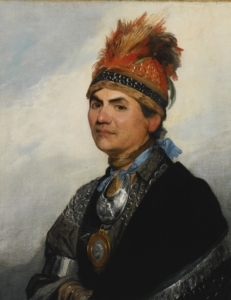
Joseph Brant
Joseph Brant was a Mohawk of the Six Nations. Brant’s sister married Sir William Johnson, a British Indian agent and this brought several advantages to Brant including being educated at what would become Dartmouth College. He also traveled to England and was treated as a celebrity. His portrait was painted and while there he became a Mason. He also became convinced that the Iroquois needed to enter the war on the side of the British. At least they were trying to halt the aggressive settlement that threatened their existence.
The Revolution had already begun when he returned to America and after fighting with the British on Long Island he slipped behind enemy lines and returned to Iroquoia.
General Washington meanwhile had made a great tactical error in hiring Penobscot Indians to serve as riflemen (probably snipers). This enraged the British and the gloves came off. If the Iroquois or any other tribes wished to fight on their side then so be it.
With great oratory Brant spoke at the council fires of Onondaga, the capital of the Iroquois, and four of the Six Nations committed to the British side with the Tuscarora and Oneida staying with the Americans. Sadly, the Great Iroquois Confederacy that had stood as one nation since before the coming of Europeans and that had been a model of government for the United States by our Founding Fathers, was now broken.
The Plum Tree Massacre and the ensuing Battle of Wyoming on the North Branch of the Susquehanna would be the deciding factors in a call by authorities to abandon the West Branch. This would initiate a sad flotilla of settlers using anything including hog troughs and hastily constructed rafts to travel to the protection of Fort Augusta near present day Selinsgrove. This panicked exodus would become known as the Big Runaway.
Settlers would try to come back to harvest crops and resettle for the remainder of the war but they faced serious danger from Indian and Loyalist attack. Most every home and fort in the area was looted and burnt.
Joseph Brant would survive the war. He was granted 650,000 acres of land in Canada for his service to the Crown and moved there with other Mohawks at the close of the war. He would later become a farmer and continue to advocate for Indian rights.
William King would remarry during the war and in 1783 at the close of hostilities he received news that his two children were indeed captured by the Iroquois and had survived. He retrieved them at Fort Niagara in New York and they would live out their days here in Pennsylvania.
If you go to Fourth and Cemetery Streets in Williamsport you will see a monument to the massacre and then something perhaps unexpected. There are two grave markers almost directly behind the monument. Both are veterans of the Revolution. One of them is Lt. William King.
I find it curious that he would be buried near the unmarked graves of the massacre. Was it guilt for not being able to defend his family on that June evening or did he simply want to be buried close to his first wife? We will probably never know.
Joseph Brant and William King were on opposing sides during the war. Both were brave warriors and both risked their lives defending a way of life and their homes in the wilderness.
Tank Baird is Vice President of Northcentral Chapter 8 of the Society for Pennsylvania Archaeology. This article is based on part seven of Baird’s series on Native Americans hosted by Ted Saul on the iHeart radio program “Community Matters”.
The post The Plum Tree Massacre and the Iroquois War on Colonial Expansion appeared first on Hands on Heritage with Robin Van Auken.
February 25, 2019
Volunteer with Children in Asia: Vietnam, Cambodia, Laos & more
.fusion-image-frame-bottomshadow.image-frame-shadow-5{display:inline-block}.element-bottomshadow.imageframe-5:before, .element-bottomshadow.imageframe-5:after{-webkit-box-shadow: 0 17px 10px rgba(0,0,0,0.4);box-shadow: 0 17px 10px rgba(0,0,0,0.4);}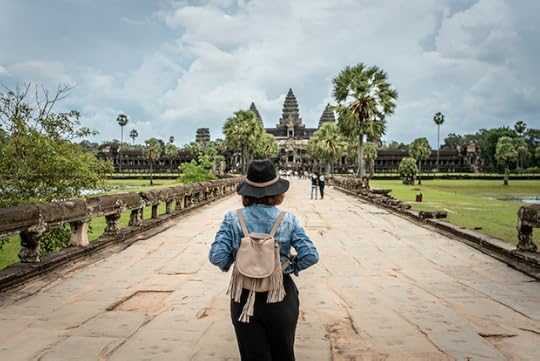
There’s a reason why childcare and childhood education programs are the most popular projects chosen by volunteers who travel abroad – it’s the most rewarding. And when you combine a trip to Asia with a volunteer experience with toddlers and tweens, you’ll enjoy the best life has to offer – visiting exotic locales and making fantastic new friends.
It’s true that one person can change the future, and that person’s actions can even change the lives of many. When you help a vulnerable child learn a new skill, you empower them to improve their own world, and you teach them the value of learning.
A child’s learning experience starts as soon as they are born, and how people treat them and what they see, hear, and do, all contribute to the kind of person they’ll be when they mature. Of course, children do best in a loving and safe environment, but not all children have this luxury. Underprivileged children in developing countries throughout Asia need care and encouragement and with more than a dozen different destinations, including Bali, Cambodia, China, India, Indonesia, Laos, Nepal, Philippines, Sri Lanka, Thailand, and Vietnam, there’s sure to be a lot that appeals to you.
As a volunteer working with children, you can provide assistance in a range of environments – community centers, day care centers, after-school programs, and meal programs. No experience is needed with most programs because volunteers often are overseen and trained by teachers and staff at the facilities.
Tasks will vary depending upon your choice of location, but organizations like International Volunteer HQ are looking for volunteers to provide children with personalized attention, mentoring, educational support, or playing games and assisting with daily operations, such as cooking and cleaning.
You don’t need qualifications – just enthusiasm and energy – to join a childcare project in Asia, and organizations like Plan My Gap Year offer programs starting monthly year-round. Love Volunteers is another excellent organization offering several amazing placements that allow you to care for the at-risk and impoverished children in Asia and beyond. Or pay it forward with Volunteering Solutions, spending time with and making a difference in the lives of children from underprivileged Asian communities. Choose a childcare or teaching project in unique locations like China and Mongolia with premier organizations like Projects Abroad and A Broader View. Organizations like Cross-Cultural Solutions and Globalteer focus on one country in Asia, but with your help, their impact is enormous!
When you travel to Asia to help a child, you help to create a better future for more than just one person. You empower young people to change their community. Read on to learn more about the variety of opportunities available from some amazing volunteer organizations.
READ THE REST OF THIS ARTICLE BY ROBIN VAN AUKEN ON VOLUNTEER FOREVER…
Volunteer Forever is a comprehensive online resource that helps volunteers find and fund their volunteer opportunities. It advocates empowerment through information and resources. With Volunteer Forever, you can quickly create a profile and start fundraising right away. Volunteering abroad can be expensive, but it’s also a noble endeavor that your friends, loved ones, and communities will be happy to support. Learn more about Volunteer Forever here.
The post Volunteer with Children in Asia: Vietnam, Cambodia, Laos & more appeared first on Hands on Heritage with Robin Van Auken.
February 22, 2019
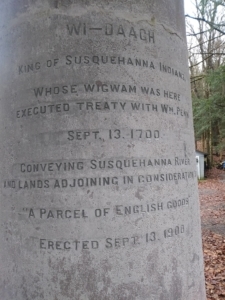
The Widaagh Monument in Antes Fort
So, what does a forty-five-foot tall, forty-one-ton monument on private land, the Susquehannock Indians, an ex-bank president in Indian dress-up, and a magical place called Lockabar have in common? Well, historian Carl Becker once said it best, “history is an imaginative creation” and that tongue-in-cheek remark never bore more truth than the story of the King Widaagh Monument in Antes Fort, PA.
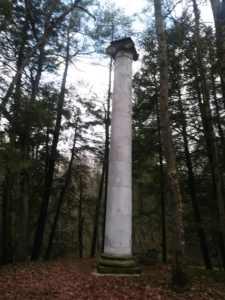 When I first saw the monument (yes the monument is one of the real parts), I was taken aback by its presence near a dirt driveway on the property of the present owner. It is, in short, amazing and unexpected. When I read the inscription, I was equally flabbergasted:
WI-DAAGH, KING OF THE SUSQUEHANNA INDIANS – WHOSE WIGWAM WAS HERE – EXECUTED TREATY WITH WM PENN SEPT. 13 1700 – CONVEYING SUSQUEHANNA RIVER AND LANDS ADJOINING IN CONSIDERATION OF “A PARCEL OF ENGLISH GOODS” – ERECTED SEPT. 13, 1900.
Now, I pride myself on knowing a little bit about Pennsylvania’s history and this, I’ve gotta tell you, did not make sense. The Susquehannock Indians (the monument says Susquehanna Indians, which was a common duo usage) were a defeated people by that date, having been conquered by the mighty Five Nations of the Iroquois from New York State. In 1675, they were defeated in the Lancaster area of Pennsylvania and then driven into Maryland and Virginia. With the presence of a fierce Indian warriors so close to them, the Colonials were nervous enough to send in the militia. It was clear to the refugee Susquehannocks that they would not be safe where they were trying to resettle. It must have been a bitter pill to swallow but they had little choice but to petition the Iroquois for admittance back into Pennsylvania.
Though they sometimes waged relentless and total war on their enemies, once defeated, the Iroquois many times would adopt their foes into their villages and allow those defeated to live on their lands as subjects. Anthropologists believe some Iroquois towns were ninety percent non-Iroquois because of this policy. So, it was with the Susquehannocks. They would settle in a few select locations in their previous southern Pennsylvania lands; however, all territory owned by the Susquehannocks, which was virtually all of Pennsylvania, became Iroquois Lands.
The William Penn part of the inscription was equally confusing. I’m familiar with the various land acquisitions by the Penn family and I had never heard of this one. The early date, the location of this conveyance and land purchased from a subjugated people made it difficult to believe that it was anything other than a local legend. I said as much to a few people, including Tina Cooney, president of the Jersey Shore Historical Society, but I told her that I would continue to research.
Now eating humble pie has never been my strong suit, nevertheless, a humbling experience awaited me while searching the Pennsylvania Archives. Working late in the evening on Christmas Eve when not a mouse was stirring tells you two things about me — I’m like a bloodhound and I have no life. Awaiting me in those pages including the Provincial Council Minutes for Sept. 13, 1700, was a confirmation that the purchase and those involved were actually true: William Penn, Wi-Daagh, the initial treaty of 1700 and the whole shootin’ match. However, as they say, stay tuned for the rest of the story.
 Thomas Dongan, Earl of Limerick and former governor of New York, was the key to the whole story. Until he came into view as a player, my research was going nowhere. While in office and after the ruin of the Susquehannocks he purchased, for lack of better words, a right-of-way through the entire Susquehanna drainage with lands on both sides. The purchase was made from his friends, the Iroquois. In turn, he offered these lands to William Penn. Penn also wanted a right of way into lands that had not been purchased yet. He paid the ex-governor his asking price and sent emissaries to the Iroquois looking to validate the purchase. Almost immediately however the Iroquois complained that this was not proper. Pennsylvania was theirs by right of conquest and not to be traded or conveyed to others without consent. They launched a protest with Colonial provinces that would last for years.
Despite the disapproving Iroquois, on April 23, 1701, Philadelphia would be the site of what would become the validation ceremony for the big purchase. In my opinion, the whole affair was not typical of William Penn’s treatment of treaties or, for that matter, any other aspect of dealings with Native Americans. However, I do see a man who seems desperate to make this happen. Maybe it was the price paid to Thomas Dongan or the importance of being able to access the interior of what would become Pennsylvania. Either way, it seems a little on the shady side or I might be kind in that evaluation, it might have been a lot on the shady side. The records do not say what a parcel of English goods amounted to but it doesn’t seem like much, even as a token payment to the Indians.
In the later part of the 1600s, the last of the Susquehannocks living in Pennsylvania become widely known by the Colonials as the Conestoga Indians. It is theorized that Conestoga was a corruption of what they called themselves, the Gandastoga. The Conestoga were concentrated in Lancaster County near their ancestral lands and numbered only about 300 souls. This was the remnants of Widaagh’s people. His mark does appear on the land treaty and provincial delegates crowned him King Widaagh.
So, everything written on the column was true and happened as stated but this is where the legend begins.
The location of the monument is called Lockabar. This is not an Indian place name but is Gaelic and named after a location in the west highlands of Scotland. It must have reminded someone of that region, being a spectacular bit of mountain scenery with a cave-fed pool that meets Antes Creek.
Colonel George Sanderson, one of a succession of owners, purchased the property in 1848. Sanderson was a businessman and ex-bank president and was also the person responsible for the monument. In what would seem like an unrelated incident, the Capitol building in Harrisburg burned in 1897 and had to be demolished. Sanderson purchased three of the columns supporting the structure and brought them to Lycoming County. Two were placed in local cemeteries and one was placed on his property at Lockabar where the inscription was added. On the face of things, Sanderson would seem to be a historian marking a moment in Pennsylvania’s peaceful acquisition of land from the Indians. But the embellishment and outright fantasies that abound at Lockabar would preclude that. I believe that the Improved Order of Red Men, one of the organizations Col. George Sanderson was a member of, is most likely the answer. This was a patriotic secret society that probably began as a branch of the Sons of Liberty. In his book “Nippenose Valley,” Wayne Welshans has a drawing of Sanderson and his fellow “Red Men” in Indian garb.
In 1900, the same year as the inscription was made on the monument, Uriah Cumming wrote a book titled “The Song of U-ri-on-tah” and dedicated it to Sanderson. I read what I could of the 400-page book, which included all kinds of creatures and tales of long-lost Indian ceremonies. If any of his blatherings were true, I’d be surprised. I could only conclude that it was written as a fantasy.
I enjoy local folktales and even ghost stories but I think we need to know enough of history that the lines aren’t blurred terribly. In this case, there are too many questions and red flags for anybody truly interested in the actual events.
The monument states that Widaagh’s wigwam was at Lockabar. I don’t think so. There were no white settlers in this area in 1700 who could confirm that statement. Widaagh’s grave is supposedly on the same site. I don’t think so. As far as my research has taken me, all the Susquehannocks lived a peaceful coexistence with settlers in and around Lancaster County and the last of the recognized Susquehannocks (Conestoga) were buried in a mass grave in Lancaster after the Paxton Boys hacked them to death in 1763. It is implied that William Penn traveled here to sign the original treaty. I don’t think so. Penn never made it further into Pennsylvania than Lancaster County. It’s a nice story that includes the Great Island at Lock Haven and other recognizable locations but it’s only a story.
However, the ghost story of Widaagh’s haunting of the valley (because of his regret for selling land to the English for so little) is based on some truth. The Indians’ concept of land sale was based more on the buyer passing through, hunting on, or as shared usage and not exclusive ownership. Consequently, when the Conestoga realized that the English now owned the Susquehanna River and lands on both sides, the Pennsylvania Archives does record a statement of sadness and regret from them for selling it for virtually nothing.
Perhaps it was Col. Sanderson’s intent to entertain. Mixing history with fantasy would do that. Maybe he was fulfilling some mission for his secret society and, just maybe, he thought that those in the future would easily know the difference with no harm done. Whatever his intent, his riddle has undoubtedly preserved part of our state history for future generations. And while Widaagh may or may not be haunting in the Nippenose Valley, I will bet that for the last 300 years he’s been turning over in his grave — wherever that is.
By Tom “Tank” Baird
The post The Widaagh Monument in Antes Fort appeared first on Hands on Heritage with Robin Van Auken.
February 19, 2019
Volunteer Abroad with Pandas & Other Bears
.fusion-image-frame-bottomshadow.image-frame-shadow-1{display:inline-block}.element-bottomshadow.imageframe-1:before, .element-bottomshadow.imageframe-1:after{-webkit-box-shadow: 0 17px 10px rgba(0,0,0,0.4);box-shadow: 0 17px 10px rgba(0,0,0,0.4);}
Bears are iconic and have been throughout history, playing a major role in art and mythology. They were traditionally been hunted by humans, often as a challenge to dominate a large, fierce species, or for their rich reserves of meat and fur.
Most American children are familiar with the beloved “Teddy Bear,” invented to honor U.S. President Theodore Roosevelt. The story goes, Roosevelt was on a hunting trip but did not find a bear. One of his assistants cornered and tied a Black Bear to a willow tree so the president could “save face,” but Roosevelt refused, saying it was not sporting. Clifford Berryman, a cartoonist, heard the story and drew a satire of the president, “Drawing the line,” which ran in the Washington Post newspaper on Nov. 16, 1902. A toymaker capitalized on the cartoon, and created a stuffed bear that he called “Teddy’s Bear.”
Roosevelt liked the bear and gave his permission to toymaker to keep using his name, and today, the Teddy Bear is a ubiquitous gift in the United States and beyond. There are even Build-a-Bear Workshops, stores that allow people to create and personalize their stuffed bears. The chain has donated $1 million to charities, including the World Wide Fund for Nature.
Other beloved bear icons include Paddington Bear and Winnie the Pooh, both fictional characters of U.K. children’s literature. Winnie the Pooh is a friendly, philosopher created by A. A. Milne in 1926. British author Michael Bond introduced the polite Paddington Bear in 1958.
Other notable bears include: Smokey Bear, who tells children in the United States to prevent forest fires; Fozzie Bear, a comedian who accompanies his pal, Kermit the Frog, on adventures; Yogi Bear, who is smarter-than-the-average-bear and steals picnic baskets at Jellystone National Park; and Baloo, a fun-loving bear from Rudyard Kipling’s “The Jungle Book.”
Bears are beloved in a book and on screen, but the reality is a different story. In modern times, bears are threatened by encroachment on their habitats, and illegal trade in bear parts, including the Asian bile bear market. Of the eight species that remain, six are vulnerable. Even the two that aren’t threatened – the brown bear and the American Black Bear – are still at risk. Laws have been enacted to protect bears, but education and conservation are needed to preserve the remaining populations.
If you’re interested in helping bears, take a look at a volunteer project at the Giant Panda Center in China offered by GoEco. Frontier will place you at the China Panda Breeding Centre where you work to increase the Giant Panda population.
Or join Volunteering Solutions abroad to help the smallest bears in the world – the Sun Bears of Malaysia! If you want to walk on the wild side, check out Fronteering’s project at the Bear, Deer & Wolf Haven in Ontario, Canada.
Globalteer allows you to help with rescued bears at the Cambodia Bear Sanctuary, stemming the tide of the bile bear trade, or, if you’re a teen, you can travel to Peru and work with the rare Spectacled Bear as part of Project Abroad’s Rainforest Conservation work.
Before you go, brush up on bears. It’s important to know more about this endangered animal, especially since its fate has been so closely entwined with ours.
About the Ursidae
These great, shaggy beasts are found throughout North and South America, Europe, and Asia, but of all the bears that once walked the planet, only eight species are left. They are:
Brown Bear (includes the Grizzly and Kodiak)
Polar Bear
Asian Black Bear
American Black Bear
Sun Bear
Sloth Bear
Spectacled Bear
Giant Panda Bear
Modern bears share common characteristics: they have large bodies, stocky legs, long snouts, small ears, long fur, short tails, and paws with five non-retractile claws. But that’s their common traits – and individual species are quite unique. Take, for example, the Giant Panda Bear, a vegetarian that feeds primarily on bamboo. The indolent Panda, typically a solitary animal, has come to symbolize vulnerable species. Then, there’s the Polar Bear, primarily a marine mammal that spends much of its time on Arctic sea ice. This carnivorous mammal that will eat almost any other animal it crosses in the Arctic Circle, traveling up to 20 miles each day in search of prey. Most bears, however, are omnivores and eat both meat and plants.
Bears may seem clumsy, but they’re great at climbing, running, and even swimming. Many people fear bears because of their size, but research shows that most bears only become aggressive when they are threatened, or their babies are in danger. They’re smart, shy and great a hiding. They need to be elusive to survive. They often live 25 years, which is why wildlife sanctuaries are so important for their long-term care when they’re rescued.
One of the biggest threats to bears is the Asian bile bear market, which traps and keeps bears in captivity to harvest their bile. Bile is a digestive fluid produced by the liver and stored in the gallbladder and is used by some traditional Chinese medicine practitioners.
If you’re interested in animal conservation, take a look some of the featured programs below that place you with bear sanctuaries throughout the world, helping to protect bears and their natural habitat.
READ THE REST OF THIS ARTICLE BY ROBIN VAN AUKEN ON VOLUNTEER FOREVER…
Volunteer Forever is a comprehensive online resource that helps volunteers find and fund their volunteer opportunities. It advocates empowerment through information and resources. With Volunteer Forever, you can quickly create a profile and start fundraising right away. Volunteering abroad can be expensive, but it’s also a noble endeavor that your friends, loved ones, and communities will be happy to support. Learn more about Volunteer Forever here.
The post Volunteer Abroad with Pandas & Other Bears appeared first on Hands on Heritage with Robin Van Auken.
February 18, 2019
Public Health Volunteer Programs & Internships Abroad
.fusion-image-frame-bottomshadow.image-frame-shadow-2{display:inline-block}.element-bottomshadow.imageframe-2:before, .element-bottomshadow.imageframe-2:after{-webkit-box-shadow: 0 17px 10px rgba(0,0,0,0.4);box-shadow: 0 17px 10px rgba(0,0,0,0.4);}
If you’re interested in a career in public health, pursuing a degree in a related field, or already employed in the public health sector, then you have an idea of how critical its initiatives are.
Public health personnel and the volunteers who help them, improve the lives of millions of people worldwide. In the United States alone, the average citizen’s lifespan has been extended by 30 years! But it’s not just the United States that’s enjoying better health and longevity. Great progress has been made in to prevent death, and raise life expectancy through improving the living conditions of people everywhere.
During the 20th century, public health professionals have achieved many accomplishments:
Eradicated smallpox and developed vaccines for many other diseases
Reduced child mortality
Decreased the events of HIV/AIDS and founded a coalition in Africa
Improved access to safe water and sanitation
Increase awareness for road safety, and tobacco control
Improved preparedness and response to global threats
Established nuclear test bans
We don’t know how much we would have accomplished without volunteers to support these initiatives, but we know there’s much more work needed. Without volunteers, public health professionals couldn’t complete their mission.
Volunteers for public health don’t always need experience to be useful. Doctors, nurses, paramedics, and other health-related professionals provide critical services, but the average volunteer can lend support in the areas of educating the public about health and safety issues, performing administrative work at clinics and health hotlines, delivering meals to the homebound and elderly, caring for children while parents seek help, and even cleaning and repairing. From the important to the menial, all tasks matter and help to build a healthier, happier world community.
There’s also the fact that volunteering for public health can improve your social skills and leadership abilities while building your resume through job-related experience. This is important because healthcare, healthcare support, and personal care fields are among the fastest growing sectors with a projected growth of 15.6 million new jobs by 2022! Take a look at the outstanding opportunities below to allow you to live abroad while gaining in-depth experience, or sharing your own expertise, in public health.
READ THE REST OF THIS ARTICLE BY ROBIN VAN AUKEN ON VOLUNTEER FOREVER…
Volunteer Forever is a comprehensive online resource that helps volunteers find and fund their volunteer opportunities. It advocates empowerment through information and resources. With Volunteer Forever, you can quickly create a profile and start fundraising right away. Volunteering abroad can be expensive, but it’s also a noble endeavor that your friends, loved ones, and communities will be happy to support. Learn more about Volunteer Forever here.
The post Public Health Volunteer Programs & Internships Abroad appeared first on Hands on Heritage with Robin Van Auken.