
Linnea Tanner's Blog, page 52
April 16, 2017
Awakening by D.N. Frost Book Review
 Awakening by D.N. Frost
My rating: 4 of 5 stars
Book 1: Awakening by D.N. Frost is an unique, world-building fantasy structured around a prophecy in four movements. The book is mythical, almost dream-like, as the tales of various characters from different fantastical realms unfold and they meet to fulfill their destinies.
In the first movement, the fantastical tale introduces Larin, a young women with mystical powers of foresight and healing. She is sold as a sex slave to an evil elf, but is later saved by Jorn who later plays a pivotal role in the prophecy. From a desert region, another character, Tirrok, begins an odyssey and meets Kingard, a strong mage who drove all evil from the land in past times. And finally, the young Darek, a shape-shifter, joins Kingard to embark secretly to A’lara. It is here the empress has darkmages in her employ that slaughter shifters. The tales of the various characters weave together in the next three movements as the prophecy is fulfilled. The most ominous prediction is that one of them will rise as a daemon and betray them. Only the life forces of A’lara gives hope of overcoming the evil that has encased the city.
The world-building and surreal descriptions of magical feats are original and unique. For example, the healing powers of Laren are vividly described as follows: “Faster and faster, the light rushed until Laren felt her body eroding with the flow of it.” Maps are sprinkled throughout the book to give a visual image of the various regions. At first, I thought the prophecy of Vyedik Ndeloh Dynde is taken from previous legends, but I realized after doing research that the prophet was conjured in the author’s imagination. The story is told from multiple points of views which at time makes the story confusing, particularly in the beginning. However, Jorn and Larin are engaging characters when the story is told from their point of view. The climatic ending is fast-paced and takes unexpected turns. I recommend the book to fantasy readers who love world-building and vivid imagery of how magic works. D.N. Frost Awakening
The post Awakening by D.N. Frost Book Review appeared first on Linnea Tanner.


April 13, 2017
Apollo’s Raven New Release and Kirkus Review
I am excited to announce that Book 1: Apollo’s Raven was released on April 10 and a review of the book by Kirkus was published today.
“A complex and promising start to a new fantasy series.” — Kirkus Reviews
Click on the following to read the full review which provides an in-depth overview of the story: APOLLO’S RAVEN
As a debut author, I’d love to hear your feedback on Apollo’s Raven and encourage you to write your honest review on Amazon, Barnes and Noble, and/or Goodreads. This is one of the best ways to give your opinion about a book and at the same time give authors your feedback. It also serves as an important guide that readers can use to select their next book.
More information on giveaways and special deals on Apollo’s Raven in May are forthcoming.
Bublish Platform
Another platform that I have begun to use is Bublish which provides a dashboard for authors to create and publicize their books. What is most powerful about this platform is that authors can create what is called a “bubble” where they can publicly provide their insight on excerpts from their books. The following link is an example of a bubble that provides my insight on Chapter 1 of Apollo’s Raven bit.ly/2nVPL36 . In the future, I’ll create other bubbles that provide background as to why I wrote a scene in a certain way. The good news is the site is open to readers as well as authors.
Another powerful tool from Bublish is that authors can draft their next book directly into their system. The author can create a bubble that publicly displays an excerpt from a draft to get comments from other authors and readers. The final plus is the final manuscript can be converted to epub to create an e-book, or downloaded in word or PDF format. The manuscript of Book 2: Empire’s Anvil has been transferred to this site, and I will be seeking comments on certain scenes in the future.
Utube Book Trailer
A new book trailer that my granddaughter, Maylin, created is now on Utube. She is the Celtic Warrior Princess in the video. Check it out by clicking here: https://youtu.be/zJzqMvsNQ8E

Catrin, Celtic Warrior Princess and Druidess
Comments on Blog Posts
There were some issues of leaving comments on the blog posts, but this has now been corrected. I appreciate everyone’s patience as we resolve glitches with the website. Feel free to comment or contact me if you have any questions regarding the book or if you would like to set up a Skype call for a book club.
Everyone have a wonderful weekend!
The post Apollo’s Raven New Release and Kirkus Review appeared first on Linnea Tanner.
April 1, 2017
Update Apollo’s Raven Release April 10
Exciting news! The first book in the Apollo’s Raven series will be released on April 10th. The historical fiction/epic fantasy fulfills my lifelong dream to publish a story based on a character I first imagined as a child.

Catrin, Celtic Warrior Princess
You can pre-order the paperback (ISBN 978-0-9982300-0-9), the e-book ISBN (978-0-9982300-2-3), and the special edition hardcover book (ISBN 978-0-9982300-1-6) at http://amzn.to/2nQLHhC.
The following video book trailer is a glimpse of the upcoming release of Apollo’s Raven https://youtu.be/fRUBJa-e_1o
About Apollo’s Raven Series
The Apollo’s Raven series weaves historical fiction into an epic Celtic tale of love, magic, adventure, intrigue and betrayal. The series follows two star-crossed lovers in the backdrop of Ancient Rome and Britannia spanning from 24 AD through 40 AD. The Apollo’s Raven epic series is inspired by the legacy of Cleopatra and Mark Antony, but with a Celtic twist. The heroine is based on historical accounts and mythology of Celtic warrior queens. Her Roman lover is the great-grandson of Mark Antony. The vastly different cultures of the empire-building Romans and the mystical Celts in Britannia set the backdrop to the series.
Important Update on Website
Integrating my previous blog with my new author website has posed unexpected challenges. We’re now working through the issues to make sure posts from my previous blog are included on this website.
The switch over to the new website also impacted my WordPress blog entitled, “Apollo’s Raven,” https://apollosraven.wordpress.com. At this point, it will be maintained as a separate blog.
I appreciate everyone’s patience the last couple months as we worked through these.
Subscribers
Subscribers from my previous blog have been integrated with new subscribers of this website. I cherish the friendship and interactions I’ve had with my subscribers and hope you will continue to follow me on the new website.
As a special thank you, all subscribers will be given the opportunity to download free the first three chapters of Apollo’s Raven. A separate e-mail will be sent to you with instructions on how to download this.
Subscribers to my new website will receive periodic newsletters and notifications of new posts on my blog and media buzz. My blog will highlight my ongoing research, book reviews, and author interviews. This summer, I plan to travel to the United Kingdom and will give on-the-spot reports on sites I visit and new discoveries.
Subscribers will be notified of special offers and giveaways in the future.
For those who are not yet subscribers, just fill out the form below and become a member of my exclusive Celtic tribe. You’ll receive free the first three chapters of Apollo’s Raven.
http://linneatanner.com/newsletter/
Thank you for following me on my journey.
The post Update Apollo’s Raven Release April 10 appeared first on Linnea Tanner.
March 28, 2017
Press Release Apollo’s Raven by Linnea Tanner Historical Fiction / Fantasy Weaves Celtic Mythology Into Backdrop of Ancient Rome and Britannia
Contact:
Linnea Tanner
Email: linnea@linneatanner.com
Phone: 720-772-8362
Website: http://LinneaTanner.com
Apollo’s Raven by Linnea Tanner Follows Two Star-crossed Lovers and Weaves #Celtic Mythology into a Backdrop of Ancient Rome and Britannia
First novel in the series sweeps readers into an epic tale
of love, magic, adventure, intrigue and betrayal
WINDSOR, CO, March 22, 2017 – In a story of forbidden love and loyalty, the Celtic Warrior Princess Catrin is caught in a political web of deception when the emperor Tiberius demands allegiance from her father, King Amren.
Catrin is drawn by the magnetic pull she feels for Marcellus, the great-grandson of Mark Antony, who stands in the shadow of his scandalous forefathers. When King Amren takes Marcellus as a hostage, he demands that Catrin spy on him. As she falls in love, she discovers a curse that foretells a future she desperately wants to break.
Torn between her forbidden love for the enemy and loyalty to her people, Catrin urgently calls upon the magic of the Ancient Druids to alter the dark prophecy that looms over her.
Will she save her lover? Will her father succumb to the Emperor’s demands? Discover the truth in Apollo’s Raven, an epic Celtic tale of love, magic, adventure, intrigue and betrayal set in Ancient Rome and Britannia. The historical fiction/epic fantasy by Colorado author Linnea Tanner is the first in a series of books in the Apollo’s Raven series. The story spans from 24 AD when the young couple first meet to 40 AD just prior to Emperor Claudius’ invasion.
The series, inspired by the legacy of Cleopatra and Mark Antony but with a Celtic twist, will appeal to women ages 18 to 35 who want a captivating tale of a young woman torn between loyalty to her family and love for the Roman enemy. Readers will learn how true love has the power to change destiny.
“Modern women can draw on the rich traditions of ancient civilizations where women owned property and could become rulers and Druids,” Tanner said. “These women fought, hunted, rode horses and used bows and arrows, just like the men, to maintain the integrity and protection of their society.”
As a young girl growing up in the 1950s, Tanner was inspired by the myths and legends of powerful women warriors and sorceresses. In third grade, when her friends were reading Nancy Drew mysteries, she was devouring books on Greek and Nordic mythology. By eighth grade, she was reading adult historical fiction – “the adventures of epic heroes and gods and goddesses that steered the fate of humans.”
Join Tanner’s email list for updates on her book series and receive free the first three chapters of Apollo’s Raven. Subscribe at linneatanner.com. She accepts invitations to discuss her book with book clubs and readers’ groups via Skype. Email linnea@linneatanner.com.
###
About the Author:
 Since childhood, Linnea Tanner’s passion has been learning about ancient civilizations and mythology which held women in high esteem. In preparation for writing Apollo’s Raven, she did extensive research and traveled to sites in the United Kingdom and France which she describes in her books.
She is an expert in Celtic history, mythology and legends, the legacy of Celtic women, and Rome’s influence over Celtic tribal kingdoms in Brittania.
Tanner retired in 2010 from the pharmaceutical industry where she worked as a chemist and regulatory affairs liaison. Depending on the time of day and season of the year, you will find her exploring and researching ancient and medieval history, mythology and archaeology to support her writing. She lives with her husband in Windsor, Colo.
About the Book:

Apollo’s Raven, the first novel in a series, weaves ancient Celtic epics of love, magic, adventure, intrigue and betrayal. The historical fiction/epic fantasy series is inspired by the legacy of Cleopatra and Mark Antony, but with a Celtic twist. The heroine is based on historical accounts and mythology of Celtic warrior queens. Her Roman lover is the great-grandson of Mark Antony. The vastly different cultures of the 1st Century empire-building Romans and the mystical Celts from Britannia set the backdrop to the series.
(Apollo Raven Publisher, LLC; April, 2017; hardcover ISBN 978-0-9982300-1-6 ($22.95), softcover ISBN 978-0-9982300-0-9 ($15.95), ebook ISBN 978-0-9982300-2-3 ($5.99), available on Amazon April 10. The audio-book ISBN 978-0-9982300-3-0 will be released early summer. The Library of Congress Catalog Number is 2016920018)
Review Copies and Media Interviews:
For a review copy of Apollo’s Raven, or an interview with Linnea Tanner, contact Tanner at 720-772-8362 or linnea@linneatanner.com. If you would like to receive this information as a Word document, please let us know.
The post Press Release Apollo’s Raven by Linnea Tanner Historical Fiction / Fantasy Weaves Celtic Mythology Into Backdrop of Ancient Rome and Britannia appeared first on Linnea Tanner.
March 24, 2017
Collaboration D.N. Frost Fantasy Author
Introduction
It is with great pleasure that I again introduce D.N. Frost, an exciting fantasy author with whom I’ve collaborated and shared my passion for Celtic mythology and traditions. I encourage everyone to learn more about D.N. and her epic saga Tales of the Known World published by TotKW books.
D. N. has twice been a guest blogger on my website. I was delighted on how she wove the meaning of the symbols of Celtic Tarot cards into some of the imagery I used in my book (Apollo’s Raven available April 10th). She recently re-posted these articles on her website which I encourage you to read:
http://www.dnfrost.com/2017/03/celtic-tarot-card-meanings-inspired.html
http://www.dnfrost.com/2017/03/celtic-tarot-cards-meaning-from-nature.html
Multi-talents of D. N. Frost
During our collaboration on the guest blogs, I learned of D.N. Frost’s other talents as a world builder and cartographer. She generates maps of new and past worlds that you can preview at her website:
http://www.dnfrost.com/2015/06/maps-of-known-world-resource-directory.html.
I asked D.N. to generate maps of Britannia, the Roman name for the United Kingdom. Below is the map of Britannia that she created. It provides a visual image of where the Celtic tribal kingdoms were located in 1st Century AD Britannia.

Map of Britannia Created by D.N. Frost
Collaboration on Apollo’s Raven
The backdrop for Book 1: Apollo’s Raven is in 24 AD southeast Britannia. D.N. Frost generated the map below of this region that was included in Apollo’s Raven to help readers visualize where the story takes place.

Map of southeast Britannia provided in Apollo’s Raven
Historical Backdrop to Apollo’s Raven
Southeast Britannia evolved differently than Wales, Scotland, and Ireland. After Julius Caesar’s military expeditions to the region in 55 – 54 BC, Rome strongly influenced the internal politics and trading of southeast Britannia. Many of the rulers in southeast Britannia were educated in Rome as hostages and adopted the empire’s taste for luxuries. Several powerful Celtic kings expanded their territories by conquering other tribes. There are written accounts that pro-Roman Celtic rulers pleaded for Rome’s help to intervene on their behalf.
Cunobelin, the king of the Catuvellauni, overtook the Trinovantes about 9 AD. He established his capital at Camulodunon (modern day Colchester). Recent archaeological evidence supports there was a Roman military presence before 43 A.D. that protected areas of Britannia vital to trading with the empire. This historical background sets the stage for the Apollo’s Raven series spanning from 24 AD to 40 AD.
I greatly appreciate D.N. Frost’s collaboration for creating the map of southeast Britannia that inspires the world-building for Book 1: Apollo’s Raven.
Future Updates
More information about Apollo’s Raven can be found at http://amzn.to/2m17UJU. In the future, I’ll be providing updates on the release of the book, new posts on my blogs highlighting my research and other authors, and upcoming events.
Thank you for your continued support. Have a wonderful day!
The post Collaboration D.N. Frost Fantasy Author appeared first on Linnea Tanner.
March 20, 2017
Update Apollo’s Raven Release April 10
Exciting news! The first book in the Apollo’s Raven series will be released on April 10th. The historical fiction/epic fantasy fulfills my lifelong dream to publish a story based on a character I first imagined as a child.
Catrin, Celtic Warrior Princess
You can pre-order the paperback (ISBN 978-0-9982300-0-9), the e-book ISBN (978-0-9982300-2-3), and the special edition hardcover book (ISBN 978-0-9982300-1-6) at http://amzn.to/2nQLHhC.
The following video book trailer is a glimpse of the upcoming release of Apollo’s Raven https://youtu.be/fRUBJa-e_1o
About Apollo’s Raven Series
The Apollo’s Raven series weaves historical fiction into an epic Celtic tale of love, magic, adventure, intrigue and betrayal. The series follows two star-crossed lovers in the backdrop of Ancient Rome and Britannia spanning from 24 AD through 40 AD. The Apollo’s Raven epic series is inspired by the legacy of Cleopatra and Mark Antony, but with a Celtic twist. The heroine is based on historical accounts and mythology of Celtic warrior queens. Her Roman lover is the great-grandson of Mark Antony. The vastly different cultures of the empire-building Romans and the mystical Celts in Britannia set the backdrop to the series.
Important Update on Website
Integrating my previous blog with my new author website has posed unexpected challenges. We’re now working through the issues to make sure posts from my previous blog are included on this website.
The switch over to the new website also impacted my WordPress blog entitled, “Apollo’s Raven,” https://apollosraven.wordpress.com. At this point, it will be maintained as a separate blog.
I appreciate everyone’s patience the last couple months as we worked through these.
Subscribers
Subscribers from my previous blog have been integrated with new subscribers of this website. I cherish the friendship and interactions I’ve had with my subscribers and hope you will continue to follow me on the new website.
As a special thank you, all subscribers will be given the opportunity to download free the first three chapters of Apollo’s Raven. A separate e-mail will be sent to you with instructions on how to download this.
Subscribers to my new website will receive periodic newsletters and notifications of new posts on my blog and media buzz. My blog will highlight my ongoing research, book reviews, and author interviews. This summer, I plan to travel to the United Kingdom and will give on-the-spot reports on sites I visit and new discoveries.
Subscribers will be notified of special offers and giveaways in the future.
For those who are not yet subscribers, just fill out the form below and become a member of my exclusive Celtic tribe. You’ll receive free the first three chapters of Apollo’s Raven.
Thank you for following me on my journey.
The post Update Apollo’s Raven Release April 10 appeared first on Linnea Tanner.
January 17, 2017
Book Review The Queen’s Poisoner by Jeff Wheeler
 The Queen’s Poisoner by Jeff Wheeler
My rating: 5 of 5 stars
The Queen’s Poisoner by Jeff Wheeler was a delightful read. For the most part, it is told from the perspective of an eight-year old boy, Owen, who is taken as a hostage by the brutal King Severn Argentine. Owen’s life is under constant threat because his father, Duke of Kiskaddon, tried to overthrow the king and must now demonstrate his utmost loyalty to Severn or forfeit his family’s lives. At the beginning of the story, Owen is very timid and afraid, and can hardly utter a word. However, a motherly young woman, the Queen’s poisoner, befriends Owen and teaches him how to survive, to gain the trust of the king and to discern the true nature of friends. Another precocious princess also befriends Owen and shows him how to be courageous. Through the influence of the young woman and princess, Owen gains courage and learns how to use the magic of the KingFountain to control his destiny. The book would be suitable for young adults, as the theme on how to discern trustworthiness and to gain courage is explored. The characters are well developed. I especially love how the female characters, who not only give Owen the love he needs, but give him valuable lessons on how to bravely deal with the king. I highly recommend this book.The Queen’s Poisoner
The post Book Review The Queen’s Poisoner by Jeff Wheeler appeared first on Linnea Tanner.
January 15, 2017
Apollo’s Raven Coming Soon

APOLLO’S RAVEN on the Horizon
New exciting changes are on the horizon for the APOLLO’S RAVEN series and a new website. In the next few weeks, the current website will transition to an author website in anticipation for the release of the first book, APOLLO’S RAVEN.
Two blogs entitled, APOLLO’S RAVEN, will be combined into one blog on the new website. Topics will include my research and travels to sites described in the books, author interviews, and other topics of interest to readers. The new site will provide latest news on the release of books, events that I will be attending, and a reader’s guide that can be used in book clubs.
My journey for writing the APOLLO’S RAVEN series began in 2010. My blog went live on January 4th, 2012. I’ve met wonderful authors, writers, friends, and readers who have been very supportive. The photographs of the Celtic Warrior Princess Catrin which inspired me were taken by my friend and photographer, Rebekah West.
Catrin, Celtic Warrior Princess and Druidess
I’ve also met roadblocks. But constructive feedback from authors, writers and agents prompted me to re-envision the APOLLO’S RAVEN series as historical fiction / fantasy.

White Cliffs Southeast Britannia
The first book of the series is set in 24 AD Britannia, where the magical world of the Celtic tribal kingdoms is explored. The historical backdrop of the epic story is based on new archaeological findings that strongly suggest that Rome not only had strong political influence, but also a military presence in southeast Britannia. The political situation is similar to Egypt under the rule of Cleopatra.
APOLLO’S RAVEN will ultimately be available in print, e-book, and audio format. It has now been formatted for print and is undergoing final proofing. The release date will be announced soon after the new website goes live the next couple of weeks.
I invite you to take an adventure into the vastly different worlds of Ancient Rome and Britannia, where Celtic tales are inspired.
What happens when forbidden love and loyalty create a tangled web of deception?
The Celtic Warrior Princess Catrin is swept into a political web of deception when the Emperor Tiberius demands allegiance from her father, King Amren.

Celtic Warrior Princess Catrin
Catrin is drawn by the magnetic pull she feels for Marcellus, the great-grandson of Mark Antony, who is caught under the shadow of his scandalous forefathers. When King Amren takes Marcellus as a hostage, he demands that she spy on him. As she falls in love, she discovers a curse that foretells a future she desperately wants to break.
Torn between her forbidden love for the enemy and loyalty to her people, Caitlin urgently calls upon the magic of the Ancient Druids to alter the dark prophecy that awaits her.

Catrin Summons Magic of Ancient Druids
Will she save her lover? Will her father succumb to the Emperor? Discover the truth in APOLLO’S RAVEN, an epic Celtic tale of love, magic, adventure, intrigue and betrayal in Ancient Rome and Britannia.
The post Apollo’s Raven Coming Soon appeared first on Linnea Tanner.
January 1, 2017
Ancient Celtic Religion: Ancestral Gods and Goddesses
Myths of the Great Goddess teach compassion for all living beings. There you come to appreciate the real sanctity of the earth itself, because it is the body of the Goddess —Joseph Campbell
Introduction
As we continue exploring the mystique of the Ancient Celtic religion, we discover their beliefs have similarities to the Greeks and Hindu Brahmins. The belief in the immortal soul can be tied to the darker Celtic side of keeping enemy heads so they can capture their power. There were 374 names of gods and goddesses recorded throughout the vast area once inhabited by the Celts in Europe, from Ireland to Turkey. Of these names, about 305 of these only occurred once and are thought to be names of local deities particular to each tribe. Only twenty names occur with great frequency in the areas where the Celts once resided and were often associated with the Roman pantheon of deities.
Unfortunately, written accounts by the Celts were sparse. Today, we must rely on Greek and Roman writers, Irish Christian monks, and archaeological artifacts to piece the Ancient Celtic religion together. Classical writers were biased by their perception of Celts being barbarians. Celtic myths written by Christian monks were heavily redacted to reconcile them with the Christian beliefs. Even though the evidence is fragmentary, we can glimpse some of the religious ideas and rituals connected with the pantheon of Celtic deities and their roles by studying the mythology and comparing it to archaeological evidence.
Below is an overview of how the ancient Celts viewed their ancestral god and their belief that the Mother Goddess was involved in the creation of the universe.

Coastal White Cliffs Near Dover, Britain
Ancient Celtic Religion
Celtic Ancestral Gods
Caesar and the insular literature indicate the Celts did not look upon their gods as creators but as their ancestors—more as supernatural heroes and heroines. In the lives of these gods and heroes, goddesses, and heroines, the lives of the people, in their emerging patriarchal society and the essence of their religious traditions, were mirrored. The gods and goddesses were depicted as human and were subject to all the natural virtues and vices in an idealized form: love of nature, arts, games, feasts, hunts and heroic single-handed combat. Their intellectual powers were equal to their physical abilities. This depiction of gods as ancestors also appears in Hindu myth and saga.

Cernunnos, Antler-God of the Forest, Portrayed on Panel of Gundestrup Cauldron
Pomponius Mela, a Roman historian at the time of Claudius 43 AD, states, “The Druids profess to know the will of the gods.” Hence, the Druids were viewed as the conduits between the moral and immortal world. There is an old Irish passage in which the Druids, like the Hindu Brahmins, boasted they had made the sun, moon, earth and sea. In Vedic mythology (historical predecessor to modern Hinduism), creation began with space (aditi) in which sky and earth were formed and were regarded as the original male and female elements.

Blood Moon
Mother Goddess
The ancient Irish bards deemed the river’s edge, the brink of the water, was always that place where wisdom, knowledge and poetry were revealed. Irish tales suggest the Ancient Celts believed creation evolved around the Mother Goddess.

Saône River Hillside Near Lyon, France
In one tale, the children of the Mother Goddess, Danu, arrive in Ireland to battle the evil Fomorri, whose own Mother Goddess is Domnu. The Irish epic tells of several struggles between the Children of Domnu, representing darkness and evil, and the Children of Danu, representing light and good. Only after the Children of Danu break the powers of the Fomorri at the second Battle of Magh Euireadh did the good gods prevail. Interestingly, the Children of Domnu are never completely overcome or eradicated from the world.
The Children of Danu came from four fabulous cities where named Druids taught them skill, knowledge and perfect wisdom. Further, the Children of Danu brought special treasures from these cities:
Lia Fáil (Stone of Destiny) from Falias
Sword from Gorias (the forerunner of the famous Excalibur)
Spear of victory from Finias
The Dagda’s cauldron of plenty from Murias

Gundestrup Cauldron
The Dagda is portrayed as the father of the gods in this epic tale. This is significant because The Dagda is Danu’s son by Bilé. As the sacred waters leave from the heavens, Danu waters the oak, Bilé’s male fertility symbol, and gives birth to The Dagda—the good god who fathers the rest of the gods.

The Dagda Portrayed on Gundestrup Cauldron
Bilé is the Old Irish word for a sacred tree which was also used to denote a ‘noble warrior.” Bilé’s role in transporting the souls of the dead Celts to the Otherworld is significant. Transportation is usually via rivers like the Thames or out to the sea. In essence, he transports souls to the divine waters – his consort Danu, the Mother Goddess. Hence, Danu takes precedence as the primary source of life. More will be discussed below about the association of Bilé with Apollo.

Cork Oak Tree; ‘Druid’ derived from ‘dru-wid’ — “Oak Knowledge”
Overview of Celtic Deities
Celts did not visualize gods with exclusive roles. Not only did their deities have different functions – and therefore were polyvalent— they also appeared in various forms—and thus were polymorphic. Another common feature associated with these deities is votive offerings that were offered at lakes and rivers to win the favor of the gods. Their links with water, trees, and groves suggest the Celts worship earth gods as opposed to the sky gods of the Greeks and Romans.

Bath Roman in Bath Britain; Dedicated to Celtic goddess Sulis, whom the Romans identified with Minerva
Julius Caesar associated the Celtic gods in Gaul with Roman deities as follows:
“They [Celts] worship chiefly the god Mercury; of him there are many symbols, and they regard him as the inventor of all the arts, the guide of travelers, and as possessing great influence over bargains and commerce. After him they worship Apollo and Mars, Jupiter and Minerva. About these they hold much the same beliefs as other nations. Apollo heals diseases. Minerva teaches the elements of industry and the arts. Jupiter rules over the heavens and Mars directs war.”

Minerva, Roman Goddess of Wisdom
Caesar also recorded the Celts in Gaul believed they were descended from Dispater, which the Romans associated with the god of the underworld and of the night. The 18th Century French Historian, Henri D’Arbois de Jubainville, identified the Dispater as the Celtic god Bilé (also known as Bel, Belinus and Belenus). His feast day was celebrated on 1 May (Beltane). As discussed above, Bilé appears to be a god of the dead and is portrayed as Danu’s consort.

Bonfire During Beltaine Festival Celebrated 1st May
Writing a century after Caesar, the Roman poet Lucan gave particular prominence to the names of three gods: Teutates, Taranis and Esus. Taranis could be equated with Jupiter, as the name survives as toran in Welsh and torann in Irish which are interpreted as meaning thunder. Esus was considered to be equivalent to the god of war Mars.

Teutates on Gundestrup Cauldron
Celtic gods were often depicted with female companions. When patriarchy replaced the “mother goddess” concept, the new male gods had to consort with the old female river goddesses to retain continuity with the old beliefs. A raven, the Celtic symbol of death and battle, perches at their feet. The marriage of a chieftain god with a Mother Goddess was viewed as assuring the people of protection and fertility.

The Raven, Celtic Symbol of Death and Battle
After Christianity achieved dominance in the Celtic world, the ancient gods were relegated to dwell in the hills. In Irish, the word sidhe means mound or hill and denotes the final dwelling places of the Dé Nanaan, the Immortals, after their defeat by the Milesians. The ancient gods, thus driven underground, were relegated in folk memory as the des sidhe, the people of the hills or in later folklore as simply fairies. The most famous fairy is the banshee (bean sidhe), the woman of the fairies whose wail and shriek portends a death. Each god was allotted a sidhe or hill in Ireland by The Dagda before he gave up his leadership of the gods.
Bilé’s Association with Apollo
To judge from inscriptions, the most venerated god was Belenus who can be most closely equated to Apollo. There is evidence of his cult in southern Gaul and northern Italy, and he may have given his name to Beltane, the Irish festival celebrated on the first of May. Worship of him proved to be enduring. Ausonius of Bordeaux, writing in the 4th Century, mentioned a contemporary of his who was a grandson of Phoebicius, a temple priest of Belenus, and whose family bore names associated with the great Apollonian shrine at Delphi.

Apollo, God of Sun; Associated with Celtic God Bilé, also known as Bel and Belenus
There are many places named after Bilé throughout Europe. In London, Belenus’ Gate is known as Billingsgate (Bilé’s gate). Presumably the heads of the dead at the original Celtic settlement, and later at the Roman occupied city, were taken though this gate to the river Thames—tamesis, the dark or sluggish river. The human heads were used as votive offerings or simply placed for Bilé to transport them to the Otherworld. Hundreds of skulls from the Celtic period have been discovered in the Thames, around London, with other votive offerings.
As previously discussed in APOLLO’S RAVEN, the ancient Celts believed the soul reposed in the head, not in the region of the heart as Western Christians now have it. That is why the head was so venerated and prized. In one Welsh tale, the mortally wounded Bran the Blessed urges his companions to remove his head and take it back to the Island of the Mighty (Britain) for burial. It takes many years and Bran’s head eats, drinks, and instructs the soldiers on the journey back. The head is buried (legend has it that the site was Tower Hill in London) looking toward France so that, in accordance with Celtic custom, he could protect the land against invasion. Many other examples of talking heads of slain heroes are found in Celtic myth.

La Roquepertuse Doorway of Skulls
Connecting the many human skulls found in the Thames, together with exquisite swords, shields, helmets and other votive offerings, suggests the Thames could have been a sacred river for the British Celts, occupying the same role as the worship of rivers, springs or wells in Central India.

Celtic Battersea Shield
Bilé was incorporated in many personal Celtic names, the most famous being Cunobeline, who ruled just before the Roman invasion of AD 43. His name means ‘hound of Belinus’. He was later immortalized as the King of Britain in the Shakespearean play entitled, “The Tragedy of Cymbeline.”
To be continued
The next post will provide a more detailed description of the Celtic gods and goddesses.
References
John Davies, The Celts: Prehistory to Present Day; 2005; Sterling Publishing Co., New York.
Julius Caesar, translated by F. P. Long, 2005. The Conquest of Gaul; United States: Barnes & Noble, Inc.
Peter Berresford Ellis, The Druids, 1995; William B. Eerdmans Publishing Co., Grand Rapids, MI.
Steve Blamires, Magic of the Celtic Otherworld: Irish History, Lore & Rituals, 2009, Llewellyn Publications, Woodbury, MN.
Joseph Campbell, The Power of Myth with Bill Moyers, 1991; Doubleday, New York, NY.
The post Ancient Celtic Religion: Ancestral Gods and Goddesses appeared first on Linnea Tanner.
December 31, 2016
Roman Britain: Ruling Britannia
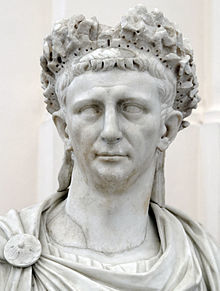
Bust of Emperor Claudius
This is a reblog of an article in History Today in which archaeological findings strongly suggest the presence of Roman armies in Ancient Britannia before the invasion of Claudius in 43 AD.

Archaeologist Miles Russell describes recent discoveries which overturn accepted views about the Roman invasion of Britain.
Source: Roman Britain: Ruling Britannia
The post Roman Britain: Ruling Britannia appeared first on Linnea Tanner.


