
Linnea Tanner's Blog, page 2
October 21, 2025
Janet Tamaren Ugarit #HistoricalFiction #AncientNearEast #BronzeAge #Ugarit #BlogTour #TheCoffeePotBookClub @JTamaren @cathiedunn
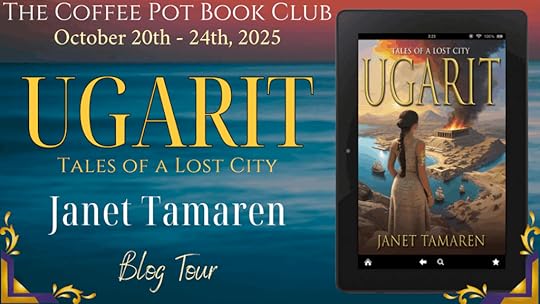
I’m delighted to welcome Janet Tamaren as the featured author in The Coffee Pot Book Club Blog Tour being held between October 20th – 24th, 2025. Janet Tamaren is the author of the Historical Fiction, Ugarit: Tales of a Lost City, published by Historium Press on September 2nd, 2025 (334 pages).
Below are highlights of Ugarit, Janet Tamaren’s author bio, and an excerpt from the book.
Tour Schedule Page: https://thecoffeepotbookclub.blogspot.com/2025/09/blog-tour-ugarit-by-janet-tamaren.html
HIGHLIGHTS: UGARIT
Ugarit: Tales of a Lost City
by Janet Tamaren
Blurb:
A captivating tale of bravery in the face of heartbreak and upheaval.
IN THE SPRING OF 1190 BC, on the sun-drenched shores of the eastern Mediterranean, the thriving city of Ugarit pulses with life, trade, and courtly intrigues. But danger brews beyond its walls.
Yoninah, a gifted healer, offers herbs and amulets to ease her neighbours’ suffering. When a Mycenaean – an ex-soldier from the Trojan War—stumbles into her life, he reawakens memories she thought long buried. Just as whispers of war echo ever closer.
Meanwhile, in the royal court, Thut-Moses is a scribe who was trained in the temples of Egypt. The king is paralyzed by ominous messages: foreign invaders are razing one coastal city after another. As the tide of destruction nears, Ugarit’s fate hangs in the balance.
Torn between loyalty and survival, love and duty, Yoninah and Thut-Moses must each decide: what will they risk to protect what they hold most dear?
Rich with historical detail and inspired by newly-translated cuneiform tablets unearthed form Ugarit’s ashes, UGARIT brings to life the final days of a cosmopolitan world on the brink of collapse – a sweeping tale of courage and resilience at the twilight of the Bronze Age.
Praise for Ugarit:
“A masterfully told tale-rich, riveting, and utterly transporting. I couldn’t put it down.”★★★★★ – Historical Fiction Review
Any Triggers: battle scenes
Buy Link:
Universal Buy Link: https://books2read.com/u/bxpykq
AUTHOR BIO: JANET TAMAREN

Janet Tamaren is a retired physician who practiced for two decades in rural Kentucky. Now living in Denver with her husband, she enjoys writing and is the author of a medical memoir and a guide to Hebrew Bible stories. She began writing UGARIT during the COVID lockdown.
Author Links:
Website: https://jtamaren.com
Facebook: https://www.facebook.com/janet.tamaren
Instagram: https://www.instagram.com/drtamaren/
Amazon Author Page: https://www.amazon.com/stores/author/B09FFKGWHM
Goodreads: https://www.goodreads.com/author/show/21709056
EXCERPT: UGARIT
CHAPTER 2: PALACE STREET
In the Lower City two days later, Yoninah and her daughter Bat-El were walking hand in hand along Palace Street. It was a fine day in early spring. The winter rains were behind them. The trees were just beginning to send out tentative buds.
This was their favorite day of the week. They would make this trip weekly. As a healer in the lower city, Yoninah had to buy fresh medicinal plants for her shop.
The two of them, mother and child, made a striking picture. Yoninah always dressed up for her shopping trips into the heart of the city. At age thirty-four, her hair was a lustrous black, curls caught up in a bronze hair ornament. She wore a tunic of fine Egyptian linen. She of course wore a veil on her face. All free women remained veiled. Only slaves and prostitutes went around with their faces unveiled.
Her daughter Bat-El at age ten was still too young to require a face covering on the street. Bat-El’s bright eyes shone with anticipation at the trip down Palace Street.
Palace Street led from the bridge over the river Ed Delbeh, along which the sailors and merchants come from the Harbor. Running through the lower city, with its modest two-story houses and shops, the street climbed towards the Temple Mount, where the Palace and Temples stood.
Palace Street was narrow, like all the streets in Ugarit, with stone and mud brick houses bounding it on either side. Contained within its narrow margins was a wealth of color and sound.
Wearing multicolored long skirts with bells on them, a slave girl ran past. Priestesses, modestly veiled, made their way back to the Temple Quarter.
Young sailors passed by, speaking a medley of tongues: Ugaritic, Akkadian, Mycenean. An occasional Hittite, with entirely alien sounds. Dogs barked in the garbage. All these sounds added to the acoustic chaos of the street.
Yoninah and Bat-El’s progress up Palace Street halted when they came to a cluster of people in the road. They were gathered around a wildly gesticulating figure, a man with long gray hair and a disheveled appearance.
“Hear, hear! Lord Baal told me the city is doomed!” the man called to the crowd.
The man’s gray hair was wild, his beard long and untrimmed. He wore a tunic which looked none the better for wear. His torso was wiry with the gaunt appearance of someone who did not eat enough. Yoninah thought he probably fasted. A mechanism by which many of these self-proclaimed prophets achieved their visions.
“The city is doomed!” The prophet lifted his arms to the sky. “Lord Baal spoke to me. Warn the people, he told me. The blasts of war will be heard throughout the city. A great storm of enemy soldiers will appear at the gates. The city will burn!”
Yoninah and Bat-El were impressed with his grand hand gestures and the vividness of his vision. Others on the street laughed at him.
“You have lost your mind, old man!” one man shouted. The people went on their way. No one paid him much attention. The sun in a clear sky, the colors of spring flowers bright around them, the women in their flowing tunics, the young sailors with their boasts and jeers.
Yoninah thought the prophet was a gifted storyteller with a touch of madness, no doubt. She briefly remembered the birds settling out of the sky and the unnatural darkness the other. day. The memory gave her a brief sense of unease. She and Bat-El nonetheless continued their trip along Palace Street. It was hard to give much credence to a prophecy of doom, not when the city was prosperous and their gates were well-guarded.
As they climbed the gentle incline of Palace Street, they approached the more prosperous houses near Temple Mount.
The Temple and its shops were located at the very highest point in the city. As they looked down, they could see the harbor below, with the waves of the Great Sea glistening in the sun. They could see three ships in the waters: their sails unfurled, catching the sea winds and heading away from the city.
On a quiet back street near the Temple, Yoninah and Bat-El found the vendor they sought. Carefully handing over the half-shekels in her purse and watching while the merchant weighed the silver pieces on his scales, Yoninah bought her requisite medicinal herbs: poppy seeds, cannabis flowers, valerian root, and mandrake root.
As Yoninah picked out the stock, she told her younger daughter what each herb treated. “Poppy seed for pain, cannabis for feeling nervous and jumpy, valerian root for sleep.” She did not tell her daughter about the uses for mandrake root. She did not want to explain an aphrodisiac to the child.
With their purchases in hand, mother and child made their way back down Palace Street. The day had been lovely, a respite from the winter rains and the summer heat which was yet to come. Nothing like a spring day in the city. Altogether a successful trip, Yoninah thought with satisfaction. Although she could have done without the mad prophet.
 Twitter: @cathiedunn
Instagram & Threads: @thecoffeepotbookclub
Bluesky: @cathiedunn.bsky.social


October 15, 2025
Trisha T. Pritikin Then Came the Summer Snow #HistoricalFiction #Downwinders #AtomicJustice #1950s #BlogTour #TheCoffeePotBookClub @TrishaPritikin @cathiedunn
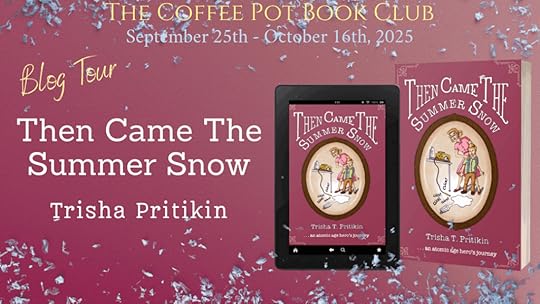
I’m delighted to welcome Trisha T. Pritikin as the featured author in The Coffee Pot Book Club Blog Tour being held between September 25th – October 16th, 2025. Trisha T. Pritikin is the author of the Historical Fiction / Dark Humor / Atomic Feminism, Then Came the Summer Snow, published by Moonshine Cove Press on September 15th, 2025 (328 pages).
Below are highlights of Then Came the Summer Snow, Trisha T. Pritikin’s author bio, and a guest post by the author about the historical consequences of the downwind radioactive byproducts of the Hanford atomic weapons production site.
Tour Schedule Page: https://thecoffeepotbookclub.blogspot.com/2025/08/blog-tour-then-came-the-summer-snow-by-trisha-pritikin.html
HIGHLIGHTS: THEN CAME THE SUMMER SNOW
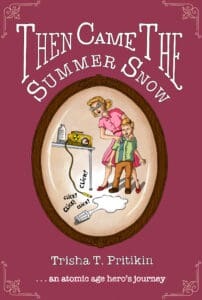
Then Came the Summer Snow
By
Trisha T Pritikin
Blurb:
In 1958, Edith Higgenbothum, a housewife in Richland, Washington, downwind of the massive Hanford nuclear weapons production site, discovers that the milk her young son Herbie drinks contains radioactive iodine from Hanford’s secret fallout releases. Radioactive iodine can damage the thyroid, especially in children.
When Herbie is diagnosed with aggressive thyroid cancer, Edith allies with mothers of children with thyroid cancer and leukemia in communities blanketed by fallout from Nevada Test Site A-bomb tests on a true atomic age hero’s journey to save the children.
Praise for Then Came the Summer Snow:
“In Trisha Pritikin’s crisp and sweeping novel, the Cold War comes home to live with a family in Richland, Washington. Not the Cold War of ideologies, but the one that included 2,000+ nuclear tests, and the production of hundreds of tons of plutonium; that contaminated our homes, food and communities; that actually took family members.” ~ Robert “Bo” Jacobs, Emeritus Professor of History at the Hiroshima Peace Institute and Hiroshima City University, author of Nuclear Bodies: The Global Hibakusha (Yale 2022).
“Then Came the Summer Snow is like an unexpected gift in its surprise and freshness. Absurdity informs its realism, its poignancy, and its humor. A troubling, hilarious, weird, and wonderful novel.” ~ Mark Spencer, author of An Untimely Frost
Buy Link:
Universal Buy Link: https://books2read.com/u/bOOqKE
This title is available to read on #KindleUnlimited.
AUTHOR BIO: TRISHA T. PRITIKIN
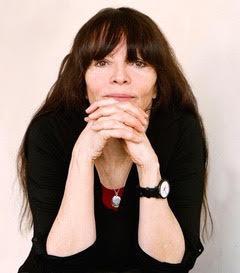
Trisha is an internationally known advocate for fallout-exposed populations downwind of nuclear weapons production and testing sites. She is an attorney and former occupational therapist.
Trisha was born and raised in Richland, the government-owned atomic town closest to the Hanford nuclear weapons production facility in southeastern Washington State. Hanford manufactured the plutonium used in the Trinity Test, the world’s first test of an atomic bomb, detonated July 16,1945 at Alamogordo, NM, and for Fat Man, the plutonium bomb that decimated Nagasaki on August 9, 1945. Beginning in late 1944, and for more than forty years thereafter, Hanford operators secretly released millions of curies of radioactive byproducts into the air and to the waters of the Columbia River, exposing civilians downwind and downriver. Hanford’s airborne radiation spread across eastern Washington, northern Oregon, Idaho, Western Montana, and entered British Columbia.
Trisha suffers from significant thyroid damage, hypoparathyroidism, and other disabling health issues caused by exposure to Hanford’s fallout in utero and during childhood. Infants and children are especially susceptible to the damaging effects of radiation exposure.
Trisha’s first book, The Hanford Plaintiffs: Voices from the Fight for Atomic Justice, published in 2020 by the University Press of Kansas, has won multiple awards, including San Francisco Book Festival, 1st place (history); Nautilus Silver award (journalism and investigative reporting); American Book Fest Book Awards Finalist (US History); Eric Hoffer Awards, Shortlist Grand Prize Finalist; and Chanticleer International Book Awards, 1st Place, (longform journalism). The Hanford Plaintiffs was released in Japanese in 2023 by Akashi Shoten Publishing House, Tokyo.
Author Links:
Website Twitter / X Facebook Pinterest
Amazon Author Page Goodreads Atomic Heritage Foundation Interview
GUEST POST: HISTORIAL BACKGROUND
THEN CAME THE SUMMER SNOW
Then Came the Summer Snow is a fictional tale set in 1958, in the ‘Atomic City’ of Richland, Washington, downwind of the Hanford atomic weapons production site. The story is based on true historical events.
I was born and raised in Richland. Like many others who grew up during Hanford’s decades of plutonium production, I was exposed to a wide range of airborne and river-borne radionuclides secretly released from the Hanford site. Many of us who were exposed to Hanford’s fallout as infants and children now have radiation-related cancers and other radiogenic diseases.
Hanford began to release radioactive byproducts of plutonium production to the air and water beginning in November 1944, with start-up of the site and continuing during the decades of the subsequent Cold War. Plutonium produced at Hanford was used in the world’s first test of an atomic bomb, the Trinity Test, detonated July 16, 1945, and in the plutonium bomb (Fat Man) that decimated Nagasaki August 9, 1945.
Airborne fallout from Hanford blanketed a wide area of the Inland Pacific Northwest, and entered British Columbia. Hanford operators dumped liquid and solid radioactive byproducts into the Columbia River. Children were particularly susceptible to the effects of radiation exposure.
A wide range of radionuclides were released from Hanford. With regard to I-131, a radionuclide prevalent in Hanford’s airborne radiation, the Atomic Energy Commission and Hanford operators were aware that potassium iodide pills and iodized table salt could block the thyroid from absorbing radioactive iodine. Yet, they did nothing to protect communities downwind, concerned that letting the public know the air and water was full of radiation would “cause undue alarm.”
Then Came the Summer Snow is an exploration of what might have happened had a mother in Richland inadvertently discovered that the milk in her young son’s glass was radioactive. This is a true atomic age hero’s journey.
Twitter: @cathiedunn
Instagram & Threads: @thecoffeepotbookclub
Bluesky: @cathiedunn.bsky.social
October 14, 2025
Christy Matheson The Boat on the Lake of Regret #BoatOnTheLakeOfRegret #CastleInKilkennyFairyTales #HistoricalFantasy #BlogTour #TheCoffeePotBookClub @CMathesonAuthor @cathiedunn
I’m delighted to host Christy Matheson as the featured author in The Coffee Pot Book Club Blog Tour being held between October 13th – 15th, 2025. Christy Matheson is the author of the Fairy Tale Retelling / Historical Fiction, The Boat on the Lake of Regret (The Castle in Kilkenny: Fairy Tales), independently published by Christy Matheson on July 15th, 2025 (210 pages).
Below are highlights of The Boat on the Lake of Regret, Christy Matheson’s author bio, and an excerpt from the book.
Tour Schedule Page: https://thecoffeepotbookclub.blogspot.com/2025/09/blog-tour-the-boat-on-the-lake-of-regret-by-christy-matheson.html
HIGHLIGHTS: THE BOAT ON THE LAKE OF REGRET
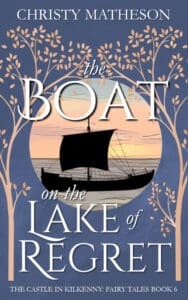
The Boat on the Lake of Regret
(The Castle in Kilkenny: Fairy Tales)
by Christy Matheson
Blurb:
He has one last chance to be a fairy tale hero.
But she didn ’ t agree to be the damsel in distress.
When her longtime boyfriend unexpectedly slides a ring on her finger, Hannah is whisked from her everyday bedroom to a medieval ball. Hannah knew that Dylan would do anything to prove to her parents that he’s husband material, including going into the Fae world—but she never agreed to go through the Veil herself.
Now one of three princess sisters, Hannah is paired with now-Prince Dylan. But, homesick and blindsided, she pretends the Veil has wiped him from her memory.
As her prince scrambles in vain to be the right kind of hero, Hannah ignores her instincts and follows her new sisters onto a mysterious boat—which promptly sails them into a land of giants, magical traps, and enchanted pianos…and away from Dylan.
Read now to journey back to medieval Ireland, complete with the Fae and mythological monsters, in this fairy tale adventure and sweet “it was always you” romance.
Buy Link:
Universal Buy Link: https://buy.bookfunnel.com/hzxiszq79z
AUTHOR BIO: CHRISTY MATHESON

Characters you connect with. Adventure. Love. Family… And endings that are more than a sugar rush.
When Christy Matheson is not throwing ordinary characters into fairy tales, she is busy raising five children. (Very busy.) She writes character-driven historical fiction with and without fantasy elements, and her “fresh, smart, and totally charming” stories have won multiple awards.
Christy is also an embroidery artist, classically trained pianist, and sews all of her own clothes. She lives in Oregon, on a country property that fondly reminds her of a Regency estate (except with a swing set instead of faux Greek ruins), with her husband, five children, three Shelties, one bunny, and an improbable quantity of art supplies.
Author Links:
Website Twitter / X Facebook Instagram Blueskye Book Bub
TikTok Amazon Author Page Goodreads Substack
EXCERPT: THE BOAT ON THE LAKE OF REGRET
Ship takes off:
The wind catches our cloaks when we reach the front of the boat, and Nuala lifts her arms and laughs into the gust. I can’t help but smile too; something about the raw free power of it after this day.
There’s a deep poom above me, as the sail snaps full. It rocks Nuala half off her feet—I grab her, she laughs, I laugh too.
“Wait!” I shake her lightly. “The sail!”
“What about the—” Nuala looks up and goes quiet.
As one, we both turn to the cove, which is a dozen yards away. Two dozen.
“Stop!” someone yells from shore, or many someones. I still can’t see them.
“It’s cozy down here,” Mór calls, “but the waves have come up a bit.”
The sail flutters and snaps full again.
“There’s no one here,” I say, terrified. “How is the ship moving?”
“We’re running straight downwind,” Nuala answers, her voice flat. “Maybe they just left the sail rigged? And the wind changed?”
Even I know that sailors don’t get off a boat and just leave the rigging in place so the first wind will take their boat away.
Behind us, there’s a scream and a splash. We both turn, but can’t see anything behind the headland. The sail is still dropping and then pulling full again, so we’re distinctly moving, but not getting anywhere fast.
Just then, there’s a clatter and the ropes drop loose in the pulleys, the winches on the other side start to turn, and the sail flops against the mast, then pulls towards the side.
There’s still no sailors. At least ones that we can see.
Twitter: @cathiedunn
Instagram & Threads: @thecoffeepotbookclub
Bluesky: @cathiedunn.bsky.social
October 13, 2025
Luv Lubker Under The Sword #HistoricalFiction #VictorianEra #KaiserWilhelm #QueenVictoria #Anti-Trafficking #BlogTour #TheCoffeePotBookClub @LuvLubker @cathiedunn
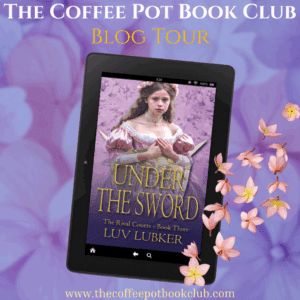
I’m delighted to host Luv Lubker as the featured author in The Coffee Pot Book Club Blog Tour being held between October 13th – 17th, 2025. Luv Lubker is the author of the Historical Fiction, Under The Sword (The Rival Courts), published by Historium Press on July 14th, 2025 (414 pages).
Below are highlights of Under The Sword, Luv Lubker’s author bio, and an excerpt from the book.
Tour Schedule Page: https://thecoffeepotbookclub.blogspot.com/2025/09/blog-tour-under-the-sword-by-luv-lubker.html
HIGHLIGHTS: THE SWORD
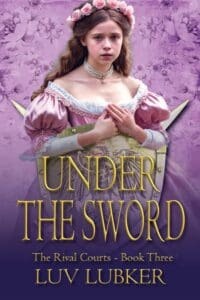
Under The Sword
(The Rival Courts)
by Luv Lubker
Blurb:
From acclaimed Victorian historical author, Luv Lubker, the author of “Under His Spell” comes the continuing romance of the Princess Royal Victoria and Frederick III of Prussia.
Join Queen Victoria’s eldest daughter and her husband, future German Emperor Frederick III in this third installment of The Rival Courts family saga, as they climb the treacherous path to their dream of German unification in the Franco-Prussian war of 1870.
In the calm after the storm, Vicky and Fritz have it all: a devoted marriage, a growing family, and the promise of a bright future. But Fritz’s Uncle Karl lies in wait behind the scenes, hatching his newest plot. A shocking outcome of Vicky’s Royal duties will bring fresh doubts to Fritz’s heart, and his fatherhood.
As personal tragedy strikes and shakes them to their core, Fritz is forced to lead the largest battle history has ever seen. One which could change the face of Europe forever.
Vicky’s best friend struggles to shield her daughters from the sinister force that seeks to control them. The youngest shares her grandfather’s uncanny ability to know the truth behind others’ motives. But can she see the truth in him? In such a dangerous world, what heroic role will this small child play?
Can they escape the danger and betrayal that lurks in every corner as they travel to the icy expanse of Russia, the peaceful Mediterranean shores, and the vast Eastern deserts?
Will Vicky and Fritz’s love and marriage survive a mysterious illness, or will Uncle Karl’s conspiracies tear them apart for good?
Fans of Clare McHugh’s A Most English Princess, Mary Hart Perry’s The Shadow Princess, and Daisy Goodwin’s Victoria will be swept away by this gripping tale of love, war, and intrigue. With rich historical detail and deeply human struggles, Under the Sword, the third installment of The Rival Courts saga, brings to life the triumphs and tragedies in a fight against a nefarious trade which flourished in the shadows of the Royal court. A must-read for lovers of Victorian-era royal fiction.
Buy Link:
Universal Buy Link: https://books2read.com/u/mqLqv6
AUTHOR BIO: LUV LUBKER
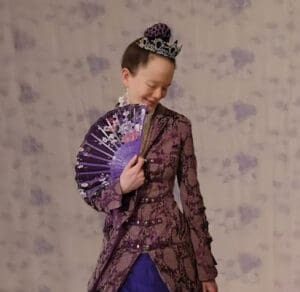
Luv Lubker began life in the Animal World, researching creatures great and small since before she can remember, and earning her degree in chicken psychology by age twelve. Not long after, she immigrated to the Victorian era, where she has lived half her life in close company with the Brontë sisters and made friends with Queen Victoria’s extended family, whom she now knows quite as well as her own kin.
Born in a cattle trough in the Appalachian Mountains, Luv currently resides in Texas’ Great Plains when visiting the modern world. When she isn’t writing or reading, she delights in preparing and savoring gourmet raw food with her family and exploring nature on long bike rides. Her special abilities include researching in seven languages and riding a unicycle since age seven.
Luv’s research delves into the unwritten stories that history left behind. Through unpublished letters, altered manuscripts, and deeply buried secrets, she reveals emotional truths concealed beneath the era’s refined exterior. Her novels give voice to the silenced, reveal what Victorians were taught to suppress and what their biographers chose to omit, tracing invisible scars that shaped lives, choices, and history itself.
Author Links:
Website: https://TheRivalCourts.com
Twitter / X: https://x.com/LubkerLuv
Facebook Series Page: https://facebook.com/TheRivalCourts
Facebook: https://facebook.com/Luvy.Lubker
Instagram: https://instagram.com/luvlubker
Threads: https://threads.net/@LuvLubker
Pinterest: https://pinterest.com/luvlubker/
Amazon Author Page: https://amazon.com/stores/Luv-Lubker/author/B0C5TRY327
Goodreads: https://www.goodreads.com/author/show/21511046.Luv_Lubker
EXCERPT: THE SWORD
Fritz looked up at the mill on top of the hill. It had been rebuilt since its destruction at Onkel Karl’s command – and there was lush green grass growing everywhere. Everything looked so different after a year of peace. The farms were rebuilt and prospering.
“Over here – that hill. That is where we all were at the last storm,” he said, pointing to the Spitzberge.
Vicky followed his gaze, and then looked up at him. “I can’t imagine this place as you described it! It was snow and ice – and then mud and blood – and now it’s so beautiful!” She turned, motioning to a field full of color.
Fritz flinched as he turned to follow her gaze. Over the mass graves danced the colorful faces of many flowers. Fritz had always heard it said that flowers grew beautifully where much blood had been shed. It had always been a grotesque thought when he was young, that flowers would flaunt themselves over the deaths of so many men, but now, he saw something else. Those men had fought for a purpose – they had given their lives for their country – and now the flowers bloomed over them, showing the beauty of the love behind the sacrifice those men had made.
Twitter: @cathiedunn
Instagram & Threads: @thecoffeepotbookclub
Bluesky: @cathiedunn.bsky.social
October 9, 2025
Book Review Tailored Truths Nancy Jardine #HistoricalFiction #FamilySaga #WomensFiction #Victorian #Scotland #BlogTour #TheCoffeePotBookClub @nansjar @cathiedunn
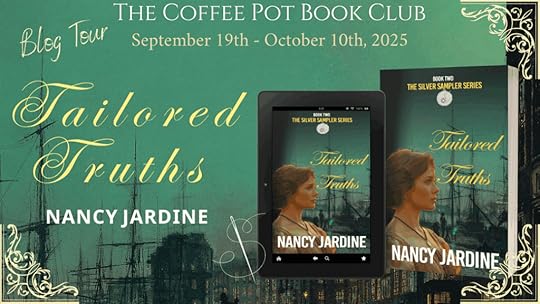
I’m delighted to welcome Nancy Jardine again as the featured author in The Coffee Pot Book Club Blog Tour, being held between September 19th – October 10th, 2025. Nancy Jardine is the author of the Historical Fiction / Family Saga / Women’s Fiction, Tailored Truths (Silver Sampler Series, Book 2), published by Nancy Jardine with Ocelot Press on September 12th, 2025 (468 pages).
Below are highlights of Tailored Truths, Jancy Jardine’’s author bio, and my review of her poignant family saga set in 19th Century Scotland.
Tour Schedule Page: https://thecoffeepotbookclub.blogspot.com/2025/08/blog-tour-tailored-truths-by-nancy-jardine.html
HIGHLIGHTS: TAILORED TRUTHS
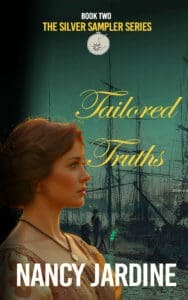
Tailored Truths
(Silver Sampler Series,
Book 2
)
by Nancy Jardine
Blurb:
An engrossing Victorian Scotland Saga (Silver Sampler Series Book 2)
Is self-supporting success enough for Margaret Law or will her future also include an adoring husband and children? She might secretly yearn for that though how can she avoid a repeat of relationship deceptions that disenchanted her so much during her teenage years?
Employment as a lady’s maid, and then as a private tutor in Liverpool in the 1860s bring thrilling opportunities Margaret could never have envisaged. Though when those posts end, her educational aspirations must be shelved again. Reliance on her sewing skills is paramount for survival when she returns to Dundee.
Meeting Sandy Watson means love, marriage and starting a family – though not necessarily in that order – are a striking development though it entails a move north to Peterhead. Yet, how can Margaret shed her fear of commitment and her independence and take the plunge?
Jessie, her sister-at-heart, is settled in Glasgow. Frequent letters are a life-line between them but when it all goes horribly wrong, the contents of Margaret’s correspondence don’t necessarily mirror her awful day-to-day realities.
Buy Link:
Universal Buy Link: https://mybook.to/TTsss
This title is available to read on #KindleUnlimited.
AUTHOR BIO: NANCY JARDINE
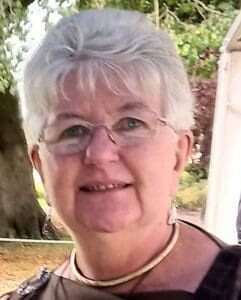
Nancy Jardine writes historical adventure fiction, historical saga, time travel historical adventure and contemporary mysteries. Research, grandchildren, gardening fill up her day in the castle country of Aberdeenshire, Scotland, when not writing or promoting her writing. Interacting with readers is a joy at Book and Craft Fairs where she signs/sells paperback versions of her novels. She enjoys giving author presentations on her books and on Ancient Roman Scotland.
Memberships include: Historical Novel Society; Scottish Association of Writers, Federation of Writers Scotland, Romantic Novelists’ Association and the Alliance of Independent Authors. She’s self-published with Ocelot Press.
Author Links:
Website Twitter / X Facebook Instagram Threads Bluesky
Pinterest Book Bub Amazon Author Page Goodreads
BOOK REVIEW: TAILORED TRUTHS
Tailored Truths chronicles the family saga of Margaret Law. a young woman striving to find her herself and to survive in 19th Century Scotland at the height of the Industrial Revolution.Sweeping technological changes in production are having dire consequences on the environment and family dynamics as women enter the workforce. Though highly educated, Margaret faces obstacles trying to find work as a single woman, most often paid lower wages than a man. She shares her hopes with Jessie, her sister-at-heart, with daily conversations in Dundee. However, their close friendship alters when Jessie’s fortunes change and she marries an engineer and moves to Glasgow. Thereafter, the two women occasionally visit each other and exchange letters. Margaret’s aspirations to be independent and to support herself in a job using her talents are fulfilled when she is hired as the head seamstress at a tailor shop. She become smitten with Sandy Watson, a tailor in training who lavishes gifts and affection on her. As their relationship deepens, she shakes off gnawing feelings that he has a secret, darker side to him. She marries Sandy and moves with him to a northern Scottish town where his dysfunctional family lives.
Author Jardine Jardin immerses the reader in the everyday worlds of upper and working class Scottish people facing dynamics changes in the environment and to their family structure. Even though Tailored Truths is the second book in the series, there is sufficient backstory to read the novel as a standalone, but loose ends will need to be resolved in another book. Vivid descriptions of various locations add to the historical authenticity.The story offers insight in the challenges faced by both men and women whose livelihoods are heavily impacted by rich industrialists. One of the more interesting aspects of the tale is how sewing machines were introduced into tailor shops.
This is a character-driven story centered on themes of friendship, social issues pertaining to gender roles and expectations, and survival. Margaret Law is an engaging character whose fate is determined by unfortunate circumstances and limited options presented to her. The potential for Margaret to steer her own life as a seamstress at the tailor shop is shattered when she moves to Peterhead to live with her husband’s parents in Peterhead. Nonetheless, her determination to make the best of the situation and her resilience shines through the shadows. It should be noted that phonetic spelling to capture the strong Scottish dialect sometimes drew me out of the story to decipher the dialogue.
Tailored Truths is a poignant story of a Scottish woman’s struggle for self-reliance in the wake of misfortune and social injustice during the Industrial Revolution.
Twitter: @cathiedunn
Instagram & Threads: @thecoffeepotbookclub
Bluesky: @cathiedunn.bsky.social
October 6, 2025
Ken Tentarelli The Blackest Time #HistoricalFiction #Medieval #ItalianHistoricalFiction #Plague #BlackDeath #BlogTour #TheCoffeePotBookClub @cathiedunn
I’m delighted to host Ken Tentarelli as the featured author in The Coffee Pot Book Club Blog Tour being held between September 29th – October 10th, 2025. Ken Tentarelli is the author of the historical fiction, The Blackest Time, published by Black Rose Writing on September 25, 2025 (268 pages).
Below are highlights of The Blackest Time, Ken Tentarelli’s author bio, and the author’s guest post about actual historical events just prior and during the plague in Italy.
Tour Schedule Page: https://thecoffeepotbookclub.blogspot.com/2025/08/blog-tour-the-blackest-time-by-ken-tentarelli.html
HIGHLIGHTS: THE BLACKEST TIME
The Blackest Time
by Ken Tentarelli
Blurb:
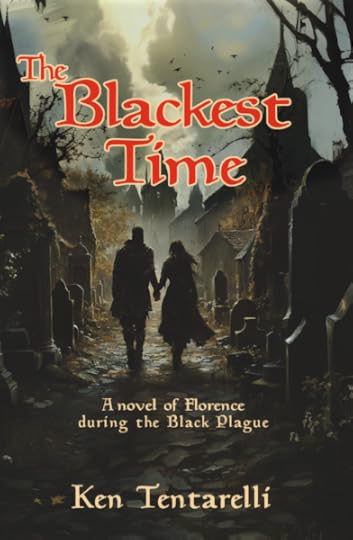
Set in the 1300s during the devastating black plague, The Blackest Time is a powerful tale of compassion, love, and the human spirit’s ability to endure immense adversity.
Gino, the central character, is a young man who leaves his family’s farm to find work in a pharmacy in Florence. His experiences show us how people coped in the most horrific time in history.
Shortly after Gino arrived in the city, two years of incessant rain destroyed crops in the countryside, leading to famine and despair in the city. Gino offers hope and help to the suffering— he secures shelter for a woman forced to leave her flooded farm, rescues a young girl orphaned by the plague, and aids others who have lost everything.
The rains had barely ended when the plague hit the city, exposing the true character of its people. While some blamed others for the devastation, the story focuses on the compassionate acts of neighbors helping each other overcome fear and suffering. Doctors bravely risk infection to care for their patients. A woman healer, wrongly accused of witchcraft and driven from the city, finds a new beginning in a village where her skills were appreciated.
Despite the hardships, love blossoms between Gino and a young woman he met at the apothecary. Together they survive, finding strength in each other and hope in a world teetering on the edge.
The Blackest Time is a testament to the strength of the human spirit in overcoming unimaginable tragedy.
Buy Link:
Universal Buy Link: https://books2read.com/u/bPO08J
AUTHOR BIO: KEN TENTARELLI

Ken Tentarelli is a frequent visitor to Italy. In travels from the Alps to the southern coast of Sicily, he developed a love for its history and its people.
He has studied Italian culture and language in Rome and Perugia, background he used in his award-winning series of historical thrillers set in the Italian Renaissance. He has taught courses in Italian history spanning time from the Etruscans to the Renaissance, and he’s a strong advocate of libraries and has served as a trustee of his local library and officer of the library foundation.
When not traveling, Ken and his wife live in beautiful New Hampshire.
Author Links:
Website: https://KenTentarelli.com
Facebook: https://www.facebook.com/ken.tentarelli.3/
Instagram: https://www.instagram.com/kententarelliauthor/
Book Bub: https://www.bookbub.com/authors/ken-tentarelli
Amazon Author Page: https://www.amazon.com/stores/Ken-Tentarelli/author/B07PDYZ34Q
Goodreads: https://www.goodreads.com/author/show/18920645.Ken_Tentarelli
GUEST POST: HISTORICAL BACKGROUND OF THE BLACKEST TIME
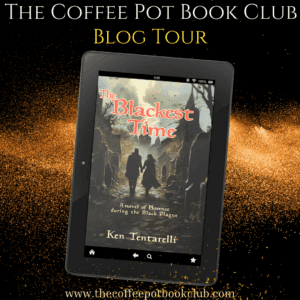
Readers of historical fiction expect authenticity. Sure, the stories are fiction, but it’s important for them to portray historical settings and events accurately. I delighted in finding unusual tidbits while doing research for my historical mystery series set during the Renaissance. Often I’d spend more time doing research than writing. While searching for inspiration for a new book, I drifted back to the history of the 1300s and discovered three events that happened around the same time. Those three events inspired me to write The Blackest Time.
The first event chronologically was a triple conjunction of planets that occurred in the year 1345. Prophets believed God arranged the formations of stars and planets to serve as omens of future events on Earth. Jupiter and Saturn were considered to be water planets by the prophets who claimed their appearance close together in the sky meant a flood was coming.
Triple conjunctions—three planets close together in the sky—were rare celestial events that occurred only once every hundred years or so. The triple conjunction in the year 1345 included the planet Mars, the god of war, which prophets saw as a sign of something much worse than a flood, although they couldn’t say exactly what tragedy the future held.
The second event of note was incessant rain that began in 1346 and continued for two years. According to the seers, the rains were foretold, but something more ominous was yet to come. Rain caused crop failures throughout central Europe. Initially, merchants who brought goods to markets in the cities from farms in the countryside compensated by traveling greater distances to get enough vegetables to fill their wagons. When the situation worsened, governments took extraordinary measures to get food supplies so food shortages didn’t become famines. The Republic of Florence, which included the seaport city of Pisa, sent ships as far as Sicily for grain so Florentine bakers could make bread.
Farm families, forced to leave their farms when crops failed, went to the cities where they added to the number of poor unable to find work. In The Blackest Time, the family of Gino, the main character, is one of those driven from their farms. Like many others, their livelihood was lost, but they were fortunate to find support from relatives living in Pisa.
After two years of nearly constant rain, the prophecy culminated in the Black Plague, which arrived in Florence in March 1348. Arguably the worst tragedy in our history, it claimed nearly half the population of Europe. Florence, one of Europe’s major cities, went from a population of 120,000 to 50,000.
People responded to the plague in different ways. Doctors realized their treatments couldn’t cure the sick, but at great risk to themselves, they continued to treat family members of the afflicted, hoping to contain the spread of the plague. The staff at Santa Maria Nuova hospital in Florence provided food, clean beds, nursing care and spiritual care to patients.
Some people believed the plague was sent by God to punish sinners, and they looked for scapegoats to blame for the tragedy. The Blackest Time depicts the situation of women falsely accused of witchcraft by Gino saving a woman healer from prosecution by helping her flee the city during the night. Many believed that bad air was responsible for the plague, and they sought the most powerful perfume scent available, hoping it would dispel the poisoned air. Wealthy people with villas in the countryside simply fled the city.
To address the possibility that poor air quality was responsible for the disease, the city government implemented regulations to improve hygiene. They had trash removed from the streets, had the streets washed every night, banned foods that rotted quickly from being imported, and made butchers dispose of spoiled meat. Those measures deprived disease-bearing rodents of food, which lowered the rodent population and ended the epidemic. The Black Plague claimed 70,000 people in Florence in only six months.
Now, having described how terrible life was in the 14th century, I need to say The Blackest Time isn’t about the horror; it’s about the ways ordinary people, filled with compassion, love, ambition, and courage, coped and survived. I hope readers will find it an inspiring tale—a testament to the strength of the human spirit in overcoming unimaginable adversity.
Twitter: @cathiedunn
Instagram & Threads: @thecoffeepotbookclub
Bluesky: @cathiedunn.bsky.social
October 2, 2025
Stephanie Cowell The Man in the Stone Cottage #Brontë #Yorkshire #Victorian #EnglishLiterature #WomenWriters #HistoricalFiction #TheCoffeePotBookClub #BlogTour
I’m delighted to host Stephanie Cowell as the featured author in The Coffee Pot Book Club Blog Tour being held between September 22nd – October 3rd, 2025. Stephanie Cowell is the author of the historical fiction, The Man in the Stone Cottage: A novel of the Brontë Sisters, published by Regal House Publishing on September 16th, 2025 (258 pages).
Below are highlights of The Man in the Stone Cottage, Stephanie Cowell’s author bio, and the author’s guest post about the historical background of the novel.
Tour Schedule Page: https://thecoffeepotbookclub.blogspot.com/2025/08/blog-tour-the-man-in-the-stone-cottage-by-stephanie-cowell.html
HIGHLIGHTS: THE MAN IN THE STONE COTTAGE
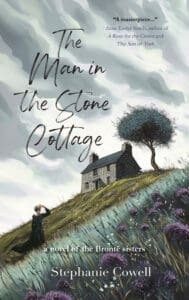
The Man in the Stone Cottage: A novel of the Brontë Sisters
By Stephanie Cowell
Audiobook by Brilliance Audio
Blurb:
“A haunting and atmospheric historical novel.” – Library Journal
In 1846 Yorkshire, the Brontë sisters— Charlotte, Anne, and Emily— navigate precarious lives marked by heartbreak and struggle.
Charlotte faces rejection from the man she loves, while their blind father and troubled brother add to their burdens. Despite their immense talent, no one will publish their poetry or novels.
Amidst this turmoil, Emily encounters a charming shepherd during her solitary walks on the moors, yet he remains unseen by anyone else.
After Emily’ s untimely death, Charlotte— now a successful author with Jane Eyre— stumbles upon hidden letters and a mysterious map. As she stands on the brink of her own marriage, Charlotte is determined to uncover the truth about her sister’ s secret relationship.
The Man in the Stone Cottage is a poignant exploration of sisterly bonds and the complexities of perception, asking whether what feels real to one person can truly be real to another.
Praise for The Man in the Stone Cottage:
“A mesmerizing and heartrending novel of sisterhood, love, and loss in Victorian England.” – Heather Webb, USA Today bestselling author of Queens of London
“Stephanie Cowell has written a masterpiece.” – Anne Easter Smith, author of This Son of York
“With The Man in the Stone Cottage, Stephanie Cowell asks what is real and what is imagined and then masterfully guides her readers on a journey of deciding for themselves.” – Cathy Marie Buchanan, author of The Painted Girls
“The Brontës come alive in this beautiful, poignant, elegant and so very readable tale. Just exquisite.” – NYT bestseller, M.J. Rose
“Cowell’s ability to take readers to time and place is truly wonderful and absorbing.” – Stephanie H. (Netgalley)
“Such a lovely, lovely book!” – Books by Dorothea (Netgalley)
Buy Link:
Universal Buy Link: https://books2read.com/u/mqLV2d
AUTHOR BIO: STEPHANIE COWELL
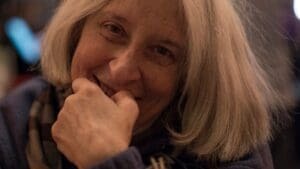
Stephanie Cowell has been an opera singer, balladeer, founder of Strawberry Opera and other arts venues including a Renaissance festival in NYC.
She is the author of seven novels including Marrying Mozart, Claude & Camille: a novel of Monet, The Boy in the Rain and The Man in the Stone Cottage. Her work has been translated into several languages and adapted into an opera. Stephanie is the recipient of an American Book Award.
Author Links:
Website: https://stephaniecowell.com
Facebook: https://www.facebook.com/stephanie.cowell.14
Instagram: https://www.instagram.com/cowell.stephanie/
Amazon Author Page: https://www.amazon.com/author/stephaniecowell
Goodreads: https://www.goodreads.com/author/show/197596.Stephanie_Cowell
HISTORICAL BACKGROUND: THE MAN IN THE STONE COTTAGE
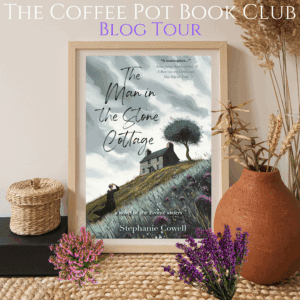
“The Victorian Era in Britain,” read one article I found, “was dominated by the reign of Queen Victoria (1837-1901). Although it was a peaceful and prosperous time, there were still issues within the social structure.” Oh, there certainly were issues! During Victoria’s time a worldwide empire was built, with unprecedented expansion of its overseas landholdings. It was also a period of achievement in science, industry and the arts. And many people were crushed and lost under the laws.
My novel – The Man in the Stone Cottage – is about the three literary Brontë sisters in 1844-1848 in the time when they were writing their great novels. How would the wars and colonization and economics of their times have affected the little family of the Reverend Patrick Brontë and his three daughters Charlotte, Emily, Anne and son Branwell? Well, the industrial age had descended on their small village of Haworth, Yorkshire with factories just outside the town which polluted their water, already tainted with disease, running as it did under the graveyard earth just outside their parsonage door. (Reverend Brontë suspected this but no one would believe him.) Every day, as the daughters walked through the small village, they were aware of the lack of opportunity for the poor and the dirt and rank odors around them.
The little family in their clean parsonage home on the hilltop held serious discussions of politics and social problems around the dinner table. One of the worse problems was the Irish Famine which reached its height in 1847, in the same year that Jane Eyre and Wuthering Heights were published. Surely Patrick Brontë who was Irish and had been born there had relatives and friends in distress who were among the million who died! Surely, the family grieved, terrified by the silences of those perhaps lost. Penny postage letters might have found no one in a deserted Irish cottage.
At that time, England was also divided by social classes. Upper classes were divided into three subcategories: Royal, those who came from a royal family, Middle Upper, important officers and lords, and Lower Upper, wealthy men and business owners. The wealthiest build or owned great house with many servants to serve them. Middle class, ever growing, owned small businesses and allowed the women to dress beautifully but not as beautifully as the wealthy.
The Brontë sisters, as highly educated daughters of a clergyman, fell into a rarified class that no one knew how to label: they were teachers and governesses, albeit the only paid work an educated woman could have. When employed by a great house, they could not socialize with the servants, nor could they socialize with their employers. Money divided them. It was lonely to be a governess. That Jane Eyre marries her wealthy employer is a lovely story but not a likely one. (It was not until 1860 that the career of a nurse opened to qualified women and women would get the vote in a limited way in 1918).
One of the greatest problems of the era in which the three Brontë girls wrote their novels was the poverty around them of the lower class: the huge mass of the poor. They were the working poor who sometimes could only feed their family bread and dripping) and not those who had fallen to the bottom and had not four pence for a bed for a night or a half penny for bread. Those were in dire straits.
One writer who addressed these issues was Charles Dickens who in private life fought intensely to help the poor. In1843, three years before Charlotte, Emily and Anne published their famous novels, he published A Christmas Carol which urged compassionate help. Victorian England’s social safety net was primarily the Poor Law of 1834, which centralized aid in workhouses which provided basic sustenance and shelter but imposed harsh conditions to discourage reliance on public assistance. A gentleman says to Scrooge in A Christmas Carol, “Many can’t go there; and many would rather die.” To which Scrooge famously replies, “If they would rather die, they had better do it and decrease the surplus population.”
If you were very poor, you could bring in a few pathetic shillings a week by sending your child to work. Unfortunately, Parliament had put in place child labor laws. England’s primary law regulating child mine labor was the Mines and Collieries Act of 1842, which prohibited the underground employment of any child under 10 years old and no female workers at all. This legislation aimed to protect children from the hazardous work and harsh conditions prevalent in coal mines. So, by law, your ten-year-old son could spend fourteen hours a day in a dark mine but your nine-years old could waste his time at home unemployed.
And then there were the rights of women! What rights? Charlotte, Emily and Anne Brontë were quite aware of the limited agency of married women. The husband had complete control of the family finances and her personal property, her earnings, and even her children belonged to him. Even when a husband abandoned his wife, he retained control of her property. So when Anne Brontë published her novel The Tenant of Wildfell Hall, in which the wife flees from her drunken, lustful, wretched husband, her older sister Charlotte found the subject so shocking that, after Anne’s death, she suppressed a second printing for ten years.
But lovely news! This period was of course that of the expanded British empire which brought the products of the world to England. Charlotte and her sisters were aware that two hundred miles south, the great port of London welcomed thousands of foreign ships bringing exotic goods, some of which even made their way to their village of Haworth. Victorian England imported a wide range of products including raw materials like cotton, timber, and spices, as well as tea, coffee, and sugar. Other imports included silk, wines, and porcelain, particularly from India and China. When Charlotte began to earn good money from her novels, she had a few fine dresses made for herself. One which she wore to go on her honeymoon was shot silk, a fabric which is made up of silk woven from warp and weft yarns of two or more colors producing an iridescent appearance.
To tell the whole historical background of The Man in the Stone Cottage would take a heavy book indeed, so I have touched on a little bit of the history and laws and wealth and poverty pressing against the home and the imagination of the Brontë sisters and their brother a little more than 175 years ago in a dull little village on the Yorkshire moors which you can visit. Miraculously, almost nothing has changed from when the family lived there. You can travel back in time.
Twitter: @cathiedunn
Instagram & Threads: @thecoffeepotbookclub
Bluesky: @cathiedunn.bsky.social
September 25, 2025
S.R. Perricone Cobblestones #HistoricalFiction #NewOrleans #TrueEvents #TheCoffeePotBookClub #BlogTour @cathiedunn
I’m delighted to welcome S.R. Perricone as the featured author in The Coffee Pot Book Club Blog Tour being held between September 22nd – 26th, 2025. S.R. Perricone is the author of the Historical Fiction, Cobblestones published by Historium Press on July 30, 2025 (586 pages).
Below are highlights of Cobblestones, S.R. Perricone’s author bio, and an excerpt from the book.
Tour Schedule Page: https://thecoffeepotbookclub.blogspot.com/2025/08/blog-tour-cobblestones-by-s-r-perricone.html
HIGHLIGHTS: COBBLESTONES
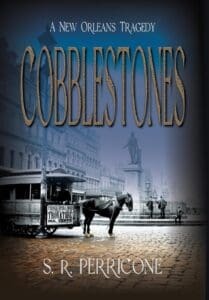
COBBLESTONES
by S.R. Perricone
Blurb:
The turbulent history of Post-Reconstruction New Orleans collides with the plight of Sicilian immigrants seeking refuge in America.
Antonio, a young man fleeing Sicily after avenging his father’s murder, embarks on a harrowing journey to New Orleans with the help of Jesuit priests expelled from his homeland. However, the promise of a fresh start quickly sours as Antonio becomes entangled in a volatile clash of cultures, corruption, and crime.
In the late 19th century, Italian immigrants in New Orleans faced hostility, exploitation, and a brutal system of indentured servitude. Antonio becomes a witness to history as a bitter feud over the docks spirals into violence, culminating in the assassination of Irish police chief David C. Hennessy. The ensuing trial of nine Italians and the shocking lynching of eleven innocent men ignited international outrage, threatening to sever ties between the United States and Italy.
Caught in the crossfire of prejudice and power struggles, Antonio fights to survive while grappling with his own past and future. His journey weaves a gripping tale of resilience, betrayal, and the enduring hope for justice. Cobblestones: A New Orleans Tragedy is a poignant reminder of the human cost of intolerance and the courage it takes to rebuild a life from ashes.
A phenomenal epic account of a forgotten slice of New Orleans history for fans of Scorsese / Coppola-type cinematic dramas such as Midnight Vendetta and The Godfather!” ~ HFC Reviews
Buy Link:
Universal Buy Link: https://books2read.com/u/mdOKMd
AUTHOR BIO: S.R. PERRICONE
[image error]
Sal Perricone, a graduate of Loyola University of New Orleans with a BA (1975) and JD (1979), has dedicated his career to law enforcement, legal practice, and public service. Beginning as a sergeant with the Jefferson Parish Sheriff’s Department, he progressed to detective with the New Orleans Police Department before practicing law privately in New Orleans. In 1985, he joined the Federal Bureau of Investigation as a Supervisory Special Agent, specializing in financial crime investigations and organized crime.
In 1991, Sal Perricone transitioned to the U.S. Attorney’s Office for the Eastern District of Louisiana, where he served as Chief of the Organized Crime Strike Force and Senior Litigation Counsel until retiring in 2012. Over his illustrious career, he prosecuted significant cases involving La Cosa Nostra, public corruption, and white-collar crime. He earned numerous accolades, including multiple Director’s Awards and the Attorney General’s Award for his role in establishing the Katrina Fraud Task Force.
An adjunct professor at Tulane University and the University of New Orleans, Sal Perricone has trained law enforcement professionals across the nation. Post-retirement, he has authored two novels with positive Catholic themes, Blue Steel Crucifix and The Shadows of Nazareth. A Brother Martin alumnus, he continues to inspire with his dedication to justice and ethics.
Author Links:
Facebook Profile: https://www.facebook.com/sal.r.perricone/
Facebook Author Page: https://www.facebook.com/srperricone
Amazon Author Page: https://www.amazon.com/stores/S.-R.-Perricone/author/B00RKH1OP6
Goodreads: https://www.goodreads.com/author/show/57777507.S_R_Perricone
EXCERPT: COBBLESTONES
From Chapter 1
Bisacquino, Sicily
June 1, 1889
6:10 AM
From his first breath, he became eligible for death, but nothing impaled his mortal existence more, than the murder of his best friend. For on this day, the young Sicilian contandini began his mournful morning with dreadful thoughts. The misty dawn coiled him in a flint-gray shroud, which reminded him of the fragility of life—his and others. As the shards of sunlight beamed through the narrow alleys and streets of his mountain village, he knew his innocence, and his humble life’s tillage in the undulating soil on the green hills of his family’s olive groves and grape-ladened vineyards, were changing with every fleeting step. Even the air he breathed stung his senses with a tomb-like stench.
The clopping hooves of a solitary black horse on the ancient cobblestone streets echoed against the old tan and yellow stucco homes and shops that framed the Piazza Triona. The horse needed no guidance, as it had made this trip many times. It needed no stinging whip to force him to tug the black lacquered hearse up the hill towards the yawning doors of St. John the Baptist Church, where a French Jesuit, Jacque Fontebuis, waited with his hands clasped around his Missal for the Requiem Mass.
As the undertaker, Vincenzo Trambatore, stomped on the hearse’s wooden brakes, Father Fontebuis nodded his head and doffed his black Biretta. The undertaker silently removed his black coppola and nodded. Across the piazza, a lamplighter extinguished the village’s lamps. For a moment, those were the only men near the church, but that was about to change.
As Father Fontebuis and the undertaker approached the rear doors of the hearse, their funereal countenance was diverted to the hobnail thumping of young peasant’s boots against one of Bisacquino’s six hundred-year-old cobblestone streets, leading down from the outskirts of town to the piazza. The young peasant, Antonio Carravella, panting from his run, slowly approached the priest and the undertaker. He stopped and looked past the priest and through the oval glass doors of the hearse. He took one step closer, and snatched his brown coppola and placed it over his heart.
Twitter: @cathiedunn
Instagram & Threads: @thecoffeepotbookclub
Bluesky: @cathiedunn.bsky.social
September 24, 2025
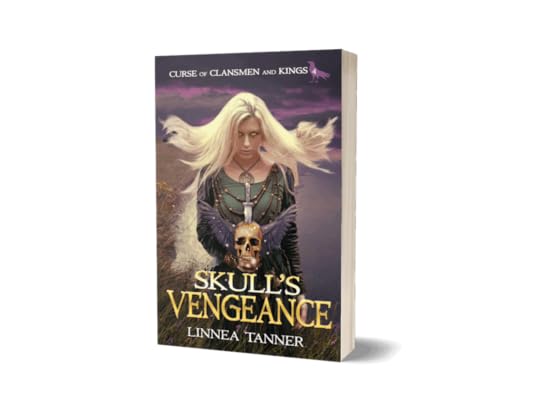
Reader’s House Interview Linnea Tanner #ReadersHouseMagazine #Interview #CelticMythology #RomanHistory #SkullsVengeance @readershousemag
I’m thrilled and honored to re-post my interview with Reader’s House Magazine from United Kingdom published on 17 June 2025 at the following link: https://readershouse.co.uk/linnea-tan...
Also included in the post below is the Editor’s Review of Skull’s Vengeance (Book 4 Curse of Clansmen and Kings).
I greatly appreciate Reader’s House Magazine for giving me the opportunity to discuss my inspirations, cultural clashes, and mythical underpinnings that shape my Curse of Clansmen and Kings series.
Linnea Tanner Weaves Myth and History into Timeless Tales of Ancient Rome and Britannia17 June 2025Editor’s Desk – LondonPHOTO: Award-Winning Author Linnea Tanner, Bringing Ancient Worlds and Mystical Legends to Life

Linnea Tanner discusses interweaving Celtic mythology with Roman history, crafting complex characters, blending historical accuracy with fantasy, and her personal inspirations, including ancient warriors and her transformative travel experiences to archaeological sites.
Linnea Tanner’s literary mastery showcases a dazzling interplay of historical authenticity and mythical imagination, making her a standout voice in the realm of historical fiction enriched with Celtic mythology. A true luminary in her craft, Tanner doesn’t merely write stories; she conjures immersive worlds brimming with political intrigue, forbidden love, fierce battles, and the enigmatic tension between Roman imperialism and Britannic mysticism. Her award-winning Curse of Clansmen and Kings series—a tapestry elegantly woven with titles like Apollo’s Raven, Dagger’s Destiny, Amulet’s Rapture, and Skull’s Vengeance—is a testament to her dedication to vivid storytelling and meticulous research. Additionally, her poignant short story, Two Faces of Janus, demonstrates her ability to delve deeply into the human condition within the historical context of Ancient Rome.
Inspired by the indomitable spirit of women like Boudicca, Linnea crafts heroines who defy adversity, and through their journeys, she explores universal themes of love, power, resilience, and identity. Her protagonist, Catrin, is a force to be reckoned with—a Celtic warrior princess with Druidic abilities whose evolution from innocence to sovereignty captures the hearts of readers. With an academic foundation in chemistry paired with an undying passion for history and mythology, Linnea seamlessly blends rigorous archaeological research with the imaginative flair of fantasy to bring the ancient world to life.
In this interview, Linnea Tanner takes us behind the scenes of her captivating narratives, reflecting on the inspirations, cultural clashes, and mythical underpinnings that shape her tales. Her travels to historical sites, her fascination with Arthurian legends and the legacy of Mark Antony and Cleopatra, as well as her dedication to interweaving history with fantasy, reveal the mind of an author deeply committed to her readers and her craft. It is with great admiration that we invite you to meet the brilliant mind behind stories that transport us to the mystical and tumultuous realms of Ancient Rome and Britannia.
Linnea Tanner captivates readers with her intricate storytelling, richly imagined worlds, and masterful blend of history, mythology, and fantasy.
How has your background in chemistry influenced your approach to writing historical fiction, particularly in integrating detailed research into your narratives?
My background in chemistry provides a basis on how I research historical books, academic papers, and archaeological findings to support my work. The Celts left almost no written records. Their historical events were supplanted by Greek and Roman historians, archaeological findings, and medieval writers who spun their Christian beliefs into the Celtic mythology they wrote about.
Your ‘Curse of Clansmen and Kings’ series intertwines Celtic mythology with Roman history. What inspired you to blend these two distinct cultures in your storytelling?
The series is inspired by Boudicca, a Celtic warrior queen and druidess who united the Britons in a rebellion against the Romans in AD 61. The Celts held women in higher esteem than the empire-building Romans. The cultural conflict between the prosaic, realistic Romans and the mystical, nature-oriented Britannic tribes provides a major conflict in the series.
“The cultural conflict between the prosaic, realistic Romans and the mystical, nature-oriented Britannic tribes provides a major conflict in the series.” – Linnea Tanner
Catrin, the protagonist in your series, is a Celtic warrior princess with Druidic abilities. How did you develop her character, and what aspects of her journey do you believe resonate most with readers?
The series is a coming-of-age story of Catrin who must transform from a naïve Celtic princess into a formidable warrior queen. She is tested in ordeals so she can gain newfound wisdom and power to overcome her treacherous half-brother, King Marrock. Modern-day audiences will relate to her emotions of love, grief, and heartbreak as she courageously faces what seems insurmountable circumstances.
In ‘Skull’s Vengeance’, Catrin faces her sorcerer half-brother, King Marrock. Can you share insights into crafting their complex sibling rivalry and its significance to the overarching plot?
The sibling rivalry between Catrin and King Marrock drives the overarching plot. The first book in the series, Apollo’s Raven, begins when Catrin’s father reveals that she is the raven and Marrock is Blood Wolf in the curse cast by the previous queen, Marrock’s mother: “I prophesy your future queen will begat a daughter who will rise as a raven and join your son, Blood Wolf, and overtake your kingdom.” Catrin must break the curse by altering the future which may have unforeseeable consequences. Not only is the tale about her conflict with Marrock, but it is also about her internal struggle not to transform into someone as evil as him as she gains new magical powers.
“Modern-day audiences will relate to her emotions of love, grief, and heartbreak as she courageously faces what seems insurmountable circumstances.” – Linnea Tanner
Your short story ‘Two Faces of Janus’ is set in Ancient Rome. How does this narrative connect to or diverge from the themes explored in your main series?
One of the antagonists in the Curse of Clansmen and Kings series is Lucius Antonius, the father of Catrin’s secret husband (Marcellus Antonius). Little is known about Lucius except he was the son of Iullus Antonius and grandson of Marcus Antonius (Mark Antony) and was banished to Gaul after his father’s death. In Two Faces of Janus, Lucius must demonstrate his fealty to Augustus Caesar by witnessing the suicide of his father who is condemned to die for his treasonous adultery with the emperor’s daughter. This tragic scene haunts Lucius throughout his life and impacts Marcellus’s fate in the series.
Having travelled to various archaeological sites for research, can you discuss a particular location that profoundly impacted your writing and how it influenced specific scenes or settings?
An eleven-mile hike on the Dover Cliffs inspired the first scene of Catrin spotting warships that suddenly appearing out of the mist in Apollo’s Raven. The Roman lighthouse at the Dover castle evoked the image of a fortress being built by King Marrock with the aid of Romans in Skull’s Vengeance. The ruins of the Amphitheatre of the Three Gauls in Lyon, France elicited an image of Catrin parading up the steep road to combat as a female gladiator at the arena in Amulet’s Rapture.
“The series is inspired by Boudicca, a Celtic warrior queen and druidess who united the Britons in a rebellion against the Romans in AD 61.” – Linnea Tanner
The series draws inspiration from Arthurian legends and the legacy of Cleopatra and Mark Antony. How have these historical and mythical elements shaped the themes and character dynamics in your work?
Although the series takes place almost 500 years earlier, the cultural clash between the Celts and Romans are pivotal to the storyline. Some of Merlin’s magic such as shapeshifting, controlling nature, and appearing and disappearing in a magical fog are depicted in the books. Before the Roman occupation of Britain in 43 AD, Britain may have been a client state like Cleopatra’s Egypt under Roman influence but ruled independently by local monarchs. The conflict of love and duty is a similar theme in the series as the legacy of Mark Antony and Cleopatra.
What advice would you offer to aspiring authors aiming to blend historical accuracy with elements of fantasy in their storytelling?
My advice is to research the period and ascertain whether the events in the story are historically plausible. For example, the backdrop of my series is based on evidence that Romans profoundly influenced British politics prior to their occupation of Britannia in 43 AD. Further, they should weave in fantastical elements as though it is the reality experienced by the characters.
EDITOR’S CHOICE
Linnea Tanner delivers a masterful blend of history, fantasy, and drama, creating an unforgettable tale with rich characters and intrigue.
September 22, 2025
Wendy J. Dunn Shades of Yellow #ShadesOfYellow #Forgiveness #AmyRobsard #WomensFiction #DualTimeline #Romance #BlogTour #TheCoffeePotBookClub @cathiedunn
I’m delighted to host Wendy J. Dunn as the featured author in The Coffee Pot Book Club Blog Tour being held between September 9th – 30th, 2025. Wendy J. Dunn is the author of the Women’s Fiction / Literary Fiction / Dual-Timeline, Shades of Yellow, published by Other Terrain Press on September 7th, 2025 (350 pages).
Below are highlights of Shades of Yellow, Wendy J. Dunn’s author bio, and an excerpt from the book.
Tour Schedule Page: https://thecoffeepotbookclub.blogspot.com/2025/08/blog-tour-shades-of-yellow-by-wendy-j-dunn.html
HIGHLIGHTS: SHADES OF YELLOW
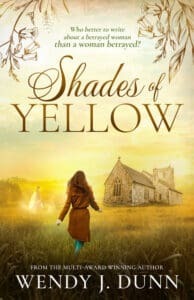
Shades of Yellow
By Wendy J. Dunn
Blurb:
During her battle with illness, Lucy Ellis found solace in writing a novel about the mysterious death of Amy Robsart, the first wife of Robert Dudley, the man who came close to marrying Elizabeth I. As Lucy delves into Amy’s story, she also navigates the aftermath of her own experience that brought her close to death and the collapse of her marriage.
After taking leave from her teaching job to complete her novel, Lucy falls ill again. Fearing she will die before she finishes her book, she flees to England to solve the mystery of Amy Robsart’s death.
Can she find the strength to confront her past, forgive the man who broke her heart, and take control of her own destiny?
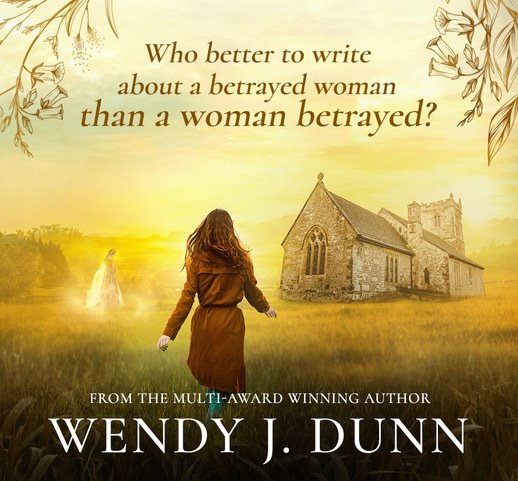
Who better to write about a betrayed woman than a woman betrayed?
Any Triggers: Adult themes and with a few well-deserved F words included.
Buy Link:
Universal Buy Link: https://books2read.com/u/mqPGgd
This title is available to read on #KindleUnlimited.
AUTHOR BIO: WENDY J. DUNN
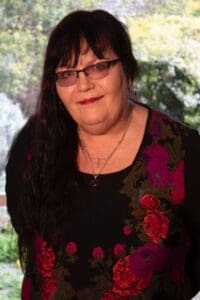
WENDY J. DUNN is a multi-award-winning Australian writer fascinated by Tudor history – so much so she was not surprised to discover a family connection to the Tudors, not long after the publication of Dear Heart, How Like You This, her first Anne Boleyn novel, which narrated the Anne Boleyn story through the eyes of Sir Thomas Wyatt, the elder.
Her family tree reveals the intriguing fact that one of her ancestral families – possibly over three generations – had purchased land from both the Boleyn and Wyatt families to build up their holdings. It seems very likely Wendy’s ancestors knew the Wyatts and Boleyns personally.
Wendy gained her PhD in 2014 and tutors in writing at Swinburne University of Technology, Australia. She loves walking in the footsteps of the historical people she gives voice to in her books.
Author Links:
Website Newsletter Facebook Instagram Threads Bluesky
Book Bub TikTok Amazon Author Page Goodreads LinkedIn
EXCERPT: SHADES OF YELLOW
‘So, you’re Stephen’s Australian granddaughter. I’ve heard a lot about you over the years.’
A flush warming her face, Lucy shook his hand and smiled back. ‘I hope Pop told you only good stuff.’
Tom laughed. ‘Yes. Only good stuff.’ He waved towards the door he had just come out of. ‘Shall we get started? We get to the Bell Tower from inside the Queen’s House.’
Lucy blinked to adjust her eyes to dimmer light when she reached the narrow spiral stairwell of Bell Tower. Knowing her good fortune to have a private tour of the tower and the ramparts, she steeled herself to surmount a demanding climb. To her relief, not long into their ascent, Tom halted and pointed out a cell with a toilet. The heavy porcelain toilet bowl and its honey-coloured wooden seat seemed to come from around the 1930’s. Lucy gulped back a giggle. Despite its obvious age, the toilet looked incongruous in its ancient setting.
‘They say this is where they planned to place Hitler in World War Two.’
Jo peered into the cell. ‘Dad told me about the plot to capture Hitler. Sounds rather mad to me.’
‘Desperate times result in desperate measures,’ Tom responded. ‘The Second World War was a desperate time for Britian.’
Lucy pretended interest in the story as she caught her breath, only to become fascinated when Jo and Tom talked about the efforts of an English witch coven to win the war.
Tom laughed. ‘Like I said, desperate times, desperate measures.’
They returned to climbing to the ramparts. By the time the three of them emerged from the stairwell to daylight, Lucy’s heart thudded hard against her chest. Wobbly and a trifle ill, she gathered the remnants of her strength and headed straight to the waist-high wall of the rampart to look out at the view of modern London, seeing again the newly rising Shard from a fresh vantage point. She prayed Jo’s attention was all on the view and not on her. Her aunt may discern she was lingering at the ramparts for other reasons than the gorgeous outlook of London.
Tom came to stand next to her. ‘I’ve served here close to twenty years and never tire of coming here.
Jo joined them to take photos.
Relieved to no longer hearing her heart drumming loudly in her ears and feeling better, Lucy waved her hand from right to left. ‘It would have been so different in the sixteenth century.’
Tom leaned on the wall. ‘Time always changes things. Even the Tower. We can all be thankful that Victoria and Albert both appreciated England’s history so much that they rebuilt it.’
Lucy laughed. ‘Hooray for old Queen Victoria.’
‘Well, yes.’ Tom grinned. ‘But she wasn’t old Queen Victoria then, and it didn’t mean they rebuilt everything. John Taylor, the second man in charge of the rebuilding program, caused an awful stink by pulling down far too much.’
Lucy peered over the top of the wall. ‘I, for one, am happy they left some things to our imagination, like the moat. For centuries, they called it a cesspool. It was a source of illness to those who lived close by.’
‘You’re right.’ Tom returned to his soldier’s stance. ‘It destroyed the health of many of the men who drained it, too.’
‘Thank you for bringing us here, Tom,’ said Jo, recapping her camera. ‘You said you need to go back before twelve? Time for us to walk the leads before we head to our next stop, don’t you think, Lucy?’
‘Walk the leads.’ She paced along the narrow walkway and looked over her shoulder at her aunt. ‘The people of the past had such a lovely way of describing their surroundings. I adore how it describes walking the ramparts. Weird to think of Elizabeth walking here and causing time to rewrite it as Queen Elizabeth’s Walk.’
The sky was now the same shade as the stones of the Tower. The wind picked up, blowing colder. She stilled near the wall. The world around her disappeared. Her Amy in 1554 possessed her mind’s eye.
On the ramparts, Amy shifted a little away from Robert, gathering her cloak tighter around her chilled body. Below, the moat glittered as clouds broke away from the sun. Smoke from chimney stacks of nearby houses eddied in the air and tickled her lungs. The spire of St Paul’s pierced the sky. Robert rarely brought her here. But, after John confided this was the place her husband most often met with Elizabeth, Amy had entreated Rob to take her to the ramparts. Now she pretended to study the view, all the while imagining Rob holding Bess in his arms, like he had just done with her. Rob kissing Elizabeth. Telling her he loved her. The thought cut Amy’s heart into pieces.
Twitter: @cathiedunn
Instagram & Threads: @thecoffeepotbookclub
Bluesky: @cathiedunn.bsky.social


