Michele Rigby Assad's Blog, page 4
January 17, 2018


November 5, 2017
Pivot Podcast: Finding Faith, Courage and Confidence as a Secret Agent
Ever been scared to try something new? Have a passion and aren’t sure what to do with it? Join the Pivot Podcast where Jenny Blake, the master at making great changes in our lives, talks with me about calling, career, and the fruit of the struggle. And then let us know what you think!
The post Pivot Podcast: Finding Faith, Courage and Confidence as a Secret Agent appeared first on Michele Rigby Assad.
October 20, 2017
October 4, 2017
Is North Korea Attacking Our Diplomats in Havana?
On October 3, 15 Cuban diplomats were told they had a week to leave their posts in the United States, to match staff reductions at the US Embassy in Havana following mysterious attacks on at least 22 personnel there.
Background
U.S. diplomats stationed in Havana reported experiencing “concussion-like” symptoms in November 2016. After investigating these strange incidents over the course of many months it was hoped that whatever caused the issue was no longer active, but a new incident occurred in August 2017. Authorities believe that our diplomats have been attacked using some sort of sonic device that blasts sound waves above and below the range of human hearing. These sound waves can cause permanent injuries.
Latest Details
As many as 50 attacks are believed to have been carried out against 22 of our diplomats.
Originally reported to have been silent, these attacks were described as sounding like loud insects or metal dragging across the floor. These sounds accompanied a sudden wave of nausea, dizziness and headaches. Some of our diplomats have suffered permanent hearing loss, brain damage, and other forms of cognitive impairment.
My Analysis
It is possible that the expulsion of Cuban diplomats is based on the acquisition of intelligence indicating their complicity or their lack of support in investigating the matter. However, I find it more likely that this was a political move. Senator Marco Rubio (FL-R) has pushed the administration to penalize Cuba for these incidents. Separately, he has questioned the normalization of relations with a country that has not made any improvements in political freedoms or human rights (this part I agree with).
However, as much as I dislike the Cuban regime, I don’t assess that Cuba was behind the attacks. When the attacks occurred, diplomatic and economic relations were being restored by President Obama, a process that began in 2015. Cuba had no reason to jeopardize its blooming relationship with the United States. The timing of the attacks argues against the involvement of the Cuban regime.
Weeks ago, I posited that the following countries could be responsible for such insidious and sustained attacks: Russia, Iran, and North Korea. All of these countries have carried out brutal assassinations of political rivals in other countries. I excluded Iran because relations with Iran improved under President Obama, so there was no reason for them to attack at that time. Russia is certainly an option, but even in the midst of the Cold War, I’m not aware of Russia executing operations of this nature against us. They prefer to use cyber attacks, misinformation campaigns, on-the-ground harassment–indirect operations.
The attack methodology used in Havana is strange, rudimentary, and “old school” in terms of technology. The one potential actor that seems to fit the bill for such a weird attack is North Korea. And they were probably the most motivated at that time to do it.
I have come to believe that the culprit may be North Korea and here’s why:
On September 25, I devoured one of the most incredible articles I’ve ever seen regarding North Korea’s operational capabilities. It is a detailed reconstruction of the assassination operation against Kim Jong Un’s brother in Malaysia in February 2017. If you are interested in intelligence, espionage and international operations this is a MUST READ. I have seen no better description of North Korea’s modus operandi. https://www.gq.com/story/kim-jong-nam-accidental-assassination
What the Assassination Operation in Malaysia Demonstrated:
North Korea agents don’t operate like people who just crawled out from under a rock. They are not just proficient in false-flag operations, they are experts. North Korean agents posed as South Korean and Japanese nationals. They recruited unwitting agents to carry out the operation: two young, naive and extremely vulnerable women from Vietnam and Indonesia.
False flag operations are designed to make activities appear as though they are being carried out by persons, groups, or nations other than those who actually planned and executed them. The term “false flag” originally referred to pirate ships that flew flags of the of the vessels they planned to attack. This tactic prevented victims from fleeing or preparing for battle.
North Korea is well-versed in carrying out targeted attacks. In Cuba, the attacks were often late at night when the diplomats were alone in their homes or hotel rooms—an obvious effort to reach specific individuals. This was not a haphazard or ‘shoot from the hip’ approach.
North Koreans can operate with large teams of agents to achieve their objectives and—more importantly–are able to do so without being noticed by host governments. In the case of Malaysia, North Korean agents had the women carry out multiple dry runs in the airport before the actual assassination operation to ensure the women could properly execute the acts. (An airport is the last place an intelligence agent would want to carry out dry runs as airports are some of the most secure places on earth. In addition, you don’t want to heat up an area and compromise your operation before you get to carry it out. But the North Koreans found ways to operate under the noses of Malaysian security because this is where their target would be.)
North Koreans are brazen and bold (for all the reasons listed above).
North Koreans are able to set up robust, sophisticated networks to follow their targets for long periods of time and strike whenever and wherever to maximize their chances of success.
North Korea Agents in Cuba?
Over the past half-century, Cuba and North Korea have been each other’s most consistent international allies. North Korea has a robust presence in Cuba providing all types of support to the Castro regime (and vice versa). North Korea’s arms embargo support was finally uncovered in 2013 when Panama intercepted a North Korean ship containing Cuban arms concealed under bags of sugar. This incident represented the most significant Havana-Pyongyang commercial linkage since the 1980s.
A Disturbing Revelation?
One of the most disturbing revelations in the article is that one of the young women recruited to smear a substance on the brother (not knowing it was poisonous) was told during training that they might even send her to the US to carry out the stunt there. Was he trying to motivate his unwitting agent, or was he providing a window into North Korea’s ambition to attack Americans?
What if the North Koreans decided to carry out anti-American operations in Cuba where they operate freely and can get the job done on someone else’s territory?
Something in my gut tells me that this half-baked (yet effective), strange, movie-like operation was concocted a weirdo who’s missing some marbles. The attacks against our diplomats sounds like a page right out of North Korea’s playbook. We need to increase our awareness of this possibility to protect against these unprecedented attacks on our diplomats which have caused grievous bodily harm.
What can the U.S. do?
Focus on asymmetric operations against North Korea that do not put Seoul at risk
Continue ramping up offensive cyber operations
Develop a robust counterintelligence program
The post Is North Korea Attacking Our Diplomats in Havana? appeared first on Michele Rigby Assad.
September 26, 2017
Better Vetting, Not Bans: A former CIA officer’s look at the new visa policies
On September 24, President Trump announced a newly updated policy to replace existing travel bans implemented earlier this year. The policy includes a range of restrictions on Iran, Libya, Somalia, Syria, Yemen, Chad, North Korea and Venezuela. According to the administration, these eight countries ended up on the list because they have inadequate vetting procedures and/or do not cooperate with the United States with regard to the exchange of information that would enable us to vet visa applicants.
In my opinion, a travel ban is an excuse for the inability of our government to vet people coming into this country. As it currently stands, we are unable to do proper vetting—and this was acknowledged in Trump’s statement. However, he and his administration believe this is a function of other country’s inadequate systems and documentation, when, in fact, it is our own shortcoming. We are terrible at vetting.
How do I know this? Because I worked for the government for ten years and I saw first-hand how our officers lacked the expertise, cultural knowledge, linguistic skills, and overall training to vet people, their claims, and their documentation. And the bedrock of our current vetting system is name traces which are hard to do well. If you don’t have the proper training and substantive expertise, traces of names not originally written in the English alphabet are incredibly hard to make sense of.
Our current visa system needs to be overhauled and we need a significant amount of training to improve our vetting procedures. This training needs to occur in all the agencies involved in reviewing immigrant and nonimmigrant visa applications (and conducting intelligence and security-related activities).
Here is a further breakdown of the updated policy on each of the eight countries:
North Korea: The policy blocks the issuance of all visas to North Koreans. This is largely a symbolic move because most North Korean citizens are not permitted to leave North Korea. There are only two categories of North Koreans traveling abroad:
Government representatives–diplomats, pseudo government/business leaders, and spies. When they leave the DPRK on business, they always travel in groups and have minders to ensure they don’t “make a run for it” at the earliest opportunity. Of course, we want to limit the ability of North Korean officials to use their travel to the U.S. to develop contacts that allow them to line the pockets of self-appointed leader and god, Kim Jung Un. But there are already mechanisms in place that allow us to ban the travel of individuals based on intelligence that they are human rights violators, regime officials involved in smuggling activities, etc.
A tiny number of people who risk their lives to escape that hell hole: asylum seekers and defectors.
An overarching travel ban is symbolic, and senseless really, because it belies our desire to provide refuge to any North Korean who can make it out of that awful place. I think that as a matter of principle, we should welcome North Korean citizens with open arms, but this new policy does not reflect that sentiment.
Venezuela: The policy blocks visas for certain government officials on business or tourist travel and their immediate families. Just like the situation of North Korea, we should ban the travel of government officials who prop up or support the Maduro regime. I am glad to hear that this is not a blanket ban. While we should ban the travel of human rights-crushing regime officials to the United States—those who are killing protestors and starving their people to death–a blanket ban of all Venezuelan officials would work against our human rights stance and foreign policy goals.
Syria: The order bars all travelers–immigrants and non-immigrants–from Syria. While I am a huge advocate for improved vetting procedures from people coming from active war zones in which so many are committing human rights violations and are involved in terrorism, a blanket ban is never a good idea. It causes much angst in cases where we are trying to help the most vulnerable and those persecuted for their thoughts and ideas, etc. I can assure you that the very people designing this policy will see some of the results and shake their heads saying, “this is not what we intended.”
There’s this insidious little dynamic called the law of unintended consequences—This administration hasn’t taken the time to debate the issues and seek to understand how an outright ban will figure into various scenarios. I promise that there are several they’ve never considered: What about the family that has been split and—the wife is in the US and the husband is stuck in Syria….or we can’t exfiltrate a human rights advocate from Syria and bring them to the US. What about Christians and other minorities who face genocide there?
Iran: Nearly all visas were blocked except those for students and visitors in exchange programs. Why are we holding all Iranians accountable for the sins of the regime and not focusing on the travel of regime members and their families (Just as we are doing with Venezuela)? There are so many good people in Iran that hate their government and travel to the U.S. and Europe for a break from the strictures of the “Shi’a caliphate” where there is no freedom of religion, thought, worship, right to gather, or press. The Iranian government seeks to crush anything that does not fit their state controlled religion that dictates law, economy, culture, socialization, etc. So much of the Iranian population does not share their views, so why lump them all in together?
Chad, Libya, Yemen: The policy bans the issuance of all immigrant visas, as well as business and tourist visas. With regard to Libya and Yemen which are essentially failed states, I understand why government officials say that folks coming from these places are difficult to vet. Their governments can barely operate, never mind issue travel documents like passports, drivers’ licenses, and national identity cards. At the same time, I know Libyans and Yemenis that are honest, hard-working, non-radical folks who travel quite frequently to the United States and should be allowed to continue to do so. A total travel ban does not make sense—better vetting procedures do. (And to date, improvement of our actual vetting procedures hasn’t been discussed in any meaningful way.)
(Note: I have no experience in Chad, so am not able to provide value-added insight into this specific policy.)
Somalia: Prevents the issuance of immigrant visas and extra scrutiny for non-immigrant travelers. I don’t know what the justification is for a total ban on immigrant visas for all Somalis. I’d like to hear it though.
In summary, I don’t think blanket bans are a good idea for the following reasons:
Total bans interfere with our foreign policy, intelligence, and human rights objectives. Such extreme policies prevent the government’s own officials from doing their jobs in these areas.
And just as critically, these policies ignore the biggest problem—we have broken and inefficient visa and immigration systems that require a complete overhaul. Far from being strong, it is ridiculously broken. Despite all the talk about vetting, few people actually know what vetting is or how to do it. Like the previous Democrat and Republican administrations, the Trump team is hyper-focused on policies and not procedures. We have an opportunity here, and once again our country is missing the forest for the trees.
The post Better Vetting, Not Bans: A former CIA officer’s look at the new visa policies appeared first on Michele Rigby Assad.
September 19, 2017
Scare Yourself a Little — My Experience on the Flying Trapeze
So to get my mind off of the hurricane about to batter my home state, my sister Julie took me and my niece Danielle to Trapeze School for a couple of hours…
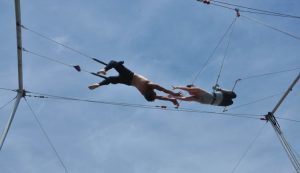
Trapeze School New York, Santa Monica
Sometimes, you have to scare yourself.
People think I’m pretty courageous. I’ve traveled around the world more times than I can count. I served in war zones. I’ve lived through rockets, car bombs, and even shoot-outs. But since leaving the CIA (and the war zones) behind, I’ve returned to FL where I grew up. Living near the coast, on a river, is akin to paradise after living so long in the desert.
Until there’s a hurricane.
And then all sense of security goes right out the window. Hurricane Matthew made a mess of our property last year so I was not happy to hear Hurricane Irma was headed our way too. I had a pre-existing business trip planned to NYC, so after getting the house and property prepared for the storm, I evacuated like most others on the island.
In order to get my mind off of the impending storm, my sister (who lives in Manhattan) took me and my niece to Trapeze School. She asked me in advance if I was interested and I said, “Absolutely!” But to be honest with you, I didn’t give it much thought.
Until I was standing on the platform (that was swaying slightly in the wind), thinking, “Why did I say yes to this?”
I knew it would be scary the first time but then figured that my nerves would be fine after the first try. But no, no, no. Every time I climbed that ridiculously long and floppy-feeling ladder, my heart was in my throat. I was terrified! But everyone else was doing it, so….I swallowed it and kept going.
When you grab ahold of the bar the first time, the only thing you’re thinking is, “Don’t fall. Don’t fall. Don’t fall.”
Call it peer pressure, or not wanting to look like a dork, but I usually hang in there longer than I want to because I don’t want to lose face. So as instructed, I grabbed hold, assumed the “ready” position and jumped up into the air like we were taught. I did what they told me to do. And then 1.5 hours later, after continued skill-building and instruction, I did this…
That’s right. I did a catch!!!! Finally, the exhilaration kicked in and I was on top of the world, feeling really proud of myself and amazed at what just happened.
I grew up dancing, doing gymnastics, cheerleading, and being very physical. However, what’s surprising is they can teach almost anyone to do this regardless of activity level.
The value of such a confidence-building exercise is incredible. That’s why I implore you to try something new. Do something that scares you.
I highly recommend it!
For more information about Trapeze School, please see the Trapeze School New York (TSNY) at https://newyork.trapezeschool.com/about/history/ TSNY has trapeze schools in Manhattan (Pier 41), Washington D.C., Los Angeles (Santa Monica Pier), and Chicago.
The post Scare Yourself a Little — My Experience on the Flying Trapeze appeared first on Michele Rigby Assad.
August 23, 2017
Shocking Conversations With Recent Migrants to Europe
My husband, Joseph, and I just spent a couple of weeks traveling in Europe for summer vacation. We were in the UK, Austria, Bulgaria, Macedonia, and Greece. Given that several of these countries are on the frontlines of the migrant crisis, we couldn’t help but notice migrants everywhere we traveled: small groups of young men gathered in parks, train stations, and cafes where they hang-out. My husband Joseph, being a native speaker of Arabic and a passionate humanitarian, had some interesting conversations with some of the young men, most of whom who hailed from North Africa. He’s gifted at establishing trust with others and was able to get some of them to speak about their experiences.
The conversations with recent migrants revealed some shocking things.
Most of the young men with whom Joseph spoke harbored significant anti-Christian and anti-Jewish sentiments (they didn’t know he was Christian). A couple of guys on the outskirts of groups Joseph engaged were clearly radicalized and/or ripe for recruitment into jihadi groups. Of course, this concerned us from a counter-terrorism perspective.
But the more Joseph talked with migrants, the more we realized that there’s a bigger story here; this may be the most underreported angle of the whole crisis:
Crime syndicates, particularly those involved in the drug trade from Afghanistan to Europe, are sending military-aged Turkish and Afghan males to Europe to support the opiate industry. In addition, they are recruiting lonely, desperate, jobless Arabic-speaking males to work the drug trade in Europe. Given the number of migrants involved and the number of Europeans already addicted to drugs, t he heroin addiction in Europe is about to spiral out of control.
How do we know? Because we saw it ourselves. My husband was almost assaulted while speaking with a young Syrian; we’ll call him Ahmad. While they were chatting, a group of Afghan males approached. They threatened Joseph, telling him to leave the park. Suddenly, a menacing and angry 18-year old lifted his hand to strike Joseph. Just in time, Joseph lifted his arm to block the punch while yelling, “Knock it off!”
The young man got closer. He cursed again, warning Joseph to get out of the park, but Joseph yelled back, “I am NOT talking to you!”
Later on I asked, “Weren’t you scared that you were about to get beat up?”
Joseph explained, “I was in that position so many times growing up in Egypt. I got used to standing up for myself, even when I thought I was about to get pummeled by bully kids.”
Joseph’s confidence worked. The Afghan gang backed off. And Joseph was able to get some good insights from Ahmad. Later on, we figured out that these young males use the park to distribute drugs. We also think they were grooming Ahmad to become a drug mule or heroine pusher. We were raining on their parade by invading their territory and trying to bond with their potential recruit.
Once things calmed, Ahmad let Joseph in on a secret. He said, “The Austrians see the Afghans cozying up to Austrian women and say, ‘Oh good, look they’re integrating!’ when in fact they are actually getting these young women into drugs. Authorities are stupid. They have no idea what’s going on here.”
Some migrants Joseph met with said they desperately wanted to work, while others said there was no need to get a job as the social benefits provided by countries like Austria and Germany are plenty enough to live on. In Austria, they said that the government provides a significant stipend (up to 800 Euros a month for each child, including children left behind with mothers or other family members in their home countries).
As a result of this policy, men are leaving their families, relocating to Europe and gathering social benefits for them there. Two-thirds of Austria’s social assistance this year has gone towards the support of migrants. Therefore, migrant reception centers are full of single, military-aged males, most from Afghanistan and North Africa and authorities don’t why. (Seriously people, it’s not that hard to figure out.)
Even if they want to work, many of the new arrivals are unskilled. Their inability to secure jobs which will compound the pre-existing economic crises these countries are experiencing. The situation is simply unsustainable unless Europe takes a fresh look at what’s driving the crisis, improves its policies, and approaches the situation from a security and intelligence perspective.
Europe needs to use intelligence tools and methodologies to pursue people-smugglers the way the worldwide community has pursued terrorists and their associated networks.

By Michele Rigby Assad. Greece: Signs of the economic crisis are everywhere.

BACKGROUNDER: Wars aren’t the cause of the crisis…People Smugglers are.
In the USA and Europe, it was largely assumed that they massive influx of migrants in 2015 was caused by ISIS. But the truth is that people smugglers took advantage of Europe’s good will towards Syrian and Iraqi war refugees and caused the migrant crisis by sending waves of other nationalities across land and sea borders into a woefully unprepared Europe. These people weren’t war refugees but economic migrants—people hoping to find countries with better job opportunities or social benefits. Sure, Iraqis and Syrians are there as well, but not in the numbers you think.
People smugglers marketed their services hard using social media and word of mouth. Many men we spoke of found smugglers via social media, trying to gather their own intel about the best smuggling routes. The smugglers are responsible for presenting Europe as the promised land, lying about the types of support the refugees will receive, and making the border crossings sound easy and safe. They are the ones responsible for the flood of immigrants under the banner of “war refugees”. The migrants were told to ditch their papers (passports) and inform immigration officers that they were from Iraq or Syria. As a result, economic refugees from Africa, Turkey and Afghanistan have flooded into Europe while smugglers have become multi-millionaires.
The human misery caused by the smugglers is beyond words. For all those migrants who have made it to Europe (which has turned out to be far from the promised land they envisioned), thousands of others have perished at sea while the rest are being taken advantage of, extorted for money they don’t have, used as slaves and held against their will on both ends of the flow. For example, an enormous industry has sprung up in Libya and Europe to take advantage of economically disadvantaged Africans who have no idea how very badly their human rights wil be crushed by the people they paid to help them seek a better life. And since Libya is largely a nonfunctioning or failed state, there’s not much that can be done about it.
Austria’s Social Policies and Immigration
Austria is considering a plan to reduce child benefits for foreign EU workers whose children live in their home countries. Austria’s minimum social benefit currently amounts to about 840 euros (900 dollars) per month, higher than average wages in some eastern EU countries. Meanwhile, per Austrian’s foreign minister, the number of jobless Eastern Europeans in Austria had risen by 200 per cent to 50,000 people since 2011.
Austria has a shrinking population and if they can welcome immigrants who wish to work and are able to work (and are not there to abuse the system or push drugs), then this could benefit society. However, the social welfare laws need to change in order to create a more robust and sustainable system for all involved. https://www.dailysabah.com/europe/2017/03/19/austrian-foreign-minister-says-eu-should-restrict-social-benefits-for-migrants
The post Shocking Conversations With Recent Migrants to Europe appeared first on Michele Rigby Assad.
July 31, 2017
Personal Security and Your Kids: College Student Escapes Abductors By Jumping Out of the Car
Jordan Dinsmore is one lucky and clear-headed young lady. Her three abductors could not drive her stick-shift (manual) vehicle, so they made her drive while they sat in the passenger seats. After leaving the ATM where she was forced to withdraw money from her account, Jordan decided not to follow their commands. She understood that if taken to a secondary, non-public location, these men would likely follow through on their pronouncement that they intended to rape her.
The 20-year-old remembered her mother explaining how to react if faced with such a situation, “Keep a cool head, don’t let them get you out of a public space, and try to escape. If they get you out of the public eye, they’re going to do something worse to you and shoot you anyway.”
The college student kept her seatbelt unbuckled after returning from the ATM. Instead of following her captor’s directions, she threw the car into neutral, opened the car door and jumped out. Not knowing how to operate the vehicle, her captors were not quick to respond to the car now barreling down the road at 35 mph. Meanwhile, a passing car stopped, called 911 and took Jordan to safety.
What can we learn from Jordan’s incredible escape on July 26?
She kept a clear head. Instead of going into shock or checking out mentally, Jordan kept her wits about her. She realized the importance of staying in control. It was this courageous approach the situation—one in which she knew she had options—that she was able to think through various responses and choose the best course of action.
EXAMPLE/BOGOTA: I had a contact who was kidnapped while hiking with four friends in the mountains of Bogota. (Yes, the choice to go hiking in an area rife with kidnappings and carjackings was a very bad idea.) This group was kidnapped, hogtied and held at gunpoint for 12 hours. While the leader left to negotiate the sale of the Americans to the FARC terrorist group, the captors played Russian roulette on the victims with a revolver.
My contact said that one of the women went into shock when a kidnapper held a handgun to her head and pretended he was going to kill her. From that point on, this woman couldn’t speak, interact with anyone, etc. My contact said the woman’s eyes were completely empty-looking and unresponsive. When the group finally sensed a moment when they could break free and make a run for it, the young lady literally had to be pushed, cajoled, and eventually carried down the mountain by two of the men, as they ran barefoot, crashing through the thick, almost impenetrable forest to get away from the kidnappers who were in hot pursuit. Don’t be that woman. Do everything possible to survive. A positive, fighting attitude is key.
Jordan understood: Do anything to avoid being taken to a secondary location. This personal security advice made popular on Oprah’s show years ago by self-defense professional Sanford Strong still applies today. Make sure your family understands this. (Strong on Defense, by Sanford Strong)
MY EXAMPLE: I was almost carjacked in one of my postings. Two years prior to my arrival in country, the woman who held the same position was carjacked in the streets of the capital, just blocks from her home. Thankfully, this occurred before al-Qa’ida became a major actor in the area, and she was quickly released by her tribal captors. Since then, things had changed dramatically. If I were to be kidnapped, I knew I’d be killed as other Westerners had the previous year. No one ever came back from these operations alive. My colleagues and I committed ourselves to the mantra, “Never get taken.”
I knew that I needed to act in order to avoid being abducted and sold by tribal kidnappers to al-Qa’ida for a large sum of money. With this running in the back of my mind, I ended up having to use my car as a weapon—using the bumper to “nudge” someone out of my way in order to avoid being closed in by a crowd of men forming around my vehicle. The adrenaline coursing through my veins kept me shaking for hours, understanding how very close I had come to being another statistic. (No, the man wasn’t hurt, just quite surprised, as was I—that my security training had kicked in on such a guttural and instinctive level.)
Discuss potential scenarios and options ahead of time. This trains your brain to remain engaged and reactive, even under extreme stress. I love that Jordan’s mother regularly spoke to her daughter about personal security issues. I am grateful I was trained by the CIA how to react to ambush situations. Take stories like this, dissect them, and use them as teaching points. Hopefully, you’ll never have to use them, but in today’s world, awareness could mean the difference between life and death.
For more information about this story, please see the Daily Mail: http://www.dailymail.co.uk/news/article-4744218/South-Carolina-student-escapes-racially-motivated-rape.html#ixzz4oQ45B2vh
The post Personal Security and Your Kids: College Student Escapes Abductors By Jumping Out of the Car appeared first on Michele Rigby Assad.
July 25, 2017
3 Ways to Stand Out – Build a Spectacular Resume to Get a National Security Job
1. BE DIFFERENT. If there is nothing else that you take away from this blog, remember this one thing: The key to your success is DIFFERENTIATION. Think about this: Thousands and thousands of resumes flood the in-boxes of HR staff (and their computer systems) in government agencies, private sector companies, nongovernmental organizations, think tanks and all the other cool places you’re applying to. How are you going to stand out? How are you going to look more interesting than other job seekers?
My resume included a history of overseas travel: I had studied abroad, done volunteer work in foreign countries, and exposed myself to different cultures. It was clear that I had gotten off the beaten path. I believe this is what got me into Georgetown University’s Arab Studies program even though my GRE test scores weren’t as high as most candidates’. I’m smart, but not necessarily Ivy League material. That’s why I’m convinced that it was my commitment to learning that pushed me over the edge and made me a good candidate for the master’s program. (I’m more of a “street-smart” kind of person than “book smart,” so I wasn’t sure how easy it would be to get into graduate school.)
Ultimately, it was the master’s program in a unique area of study that got my resume noticed by CIA recruiters. They told me it was the advanced degree in Arab Studies that grabbed their attention. Of course, I had to do the rest—get through the intensive interviews and national security vetting process, but my resume opened the door. (For more information on the CIA’s hiring process, see my article at the Feminine Collective, “Recruited–How I Got Into the CIA.”) http://www.femininecollective.com/recruited-by-the-cia/
Differentiation is critical to success. My focus on the Middle East—particularly during a time when that wasn’t a popular thing to do (pre-September 11 attacks), is what helped me get into graduate school and enabled me to get a job with the CIA. Be unique. Have the courage to go places and do things others haven’t considered. Think to yourself: What’s going to grab people’s attention?
2. GET SMART. There is no substitute for expertise. Find something that interests you that is also of interest to our country and study, study, study. Once you find something that really pulls you in—for me it was the mystery and allure of the Middle East–learn everything you can about it. After graduating from college, I didn’t have much money, so one of the things I did was take Arabic classes as the USDA. (At the time, they were the cheapest language classes in the DC area and they were fantastic!)
Undergraduate study abroad program in Cairo + Arabic classes + Master’s degree = Competitive Resume

My first trip abroad: Egypt, 1991.
3. DEMONSTRATE GRIT. Not only did I demonstrate a commitment to learning about the Middle East, but I also got up close and personal to the subjects of my interest. My knowledge wasn’t just from classrooms or books, but from experience in the region. Days after graduating from high school I joined a group of students that volunteered to work for a month in an orphanage in Upper Egypt. It was hot. It was dirty work. It was excruciatingly difficult to do manual labor outside in the searing Egyptian summer sun, but that experience changed me. And it showed potential employers that I was tough. (This was important as I looked quite young for my age and had a hard time getting jobs in DC because of my appearance. Even though I was 22-years-old, I pretty much looked like I was 15. So my resume shocked people. My activities and achievements reflected the personality of someone much stronger and more resilient than I appeared at first glance.)
The post 3 Ways to Stand Out – Build a Spectacular Resume to Get a National Security Job appeared first on Michele Rigby Assad.
July 13, 2017
The Liberation of Mosul — Now What?
The Iraqi government announced its liberation of Mosul this week after nine months of intense operations to clear the city of ISIS. Three years ago ISIS waltzed across the Syria-Iraq border, took over Iraq’s second largest city, and declared Mosul part of its caliphate.
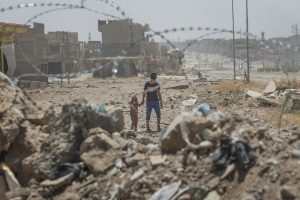
Photo Credit: EU Civil Protection and Humanitarian Aid EU Delivers Aid Inside War-Ravaged Mosul_11 via photopin (license)
But victory has come at the expense of the destruction of Mosul and the Ninevah Plains. Northern Iraq is utterly devastated. According to Sky News Arabia, 80% of Mosul has been destroyed which includes 308 schools, 12 educational institutes (including Mosul University) 11,000 homes, four electric stations, six water purification plants, 212 workshops/businesses, 63 houses of worship (historic mosques and churches), 29 hotels, factories, 9 hospitals, and 76 health centers.
According to Refugees International, war and instability has caused the displacement of 3.3 million people. Today, 11 million people require assistance to survive: water, food, and shelter. They have lost their property, their homes, and their livelihoods. Most are not able to rebuild their shattered lives.
Amnesty International warned in a report released Tuesday that the conflict in Mosul has created a “civilian catastrophe,” because extremists carried out forced displacement, summary killings and used civilians as human shields. On the other side of the equation, Iraq government forces (which include government troops, Shi’a militias, and Iranian advisors) have also engaged in extrajudicial killings. They are known for their “death squads” that shoot first and ask questions later.
While there is great relief that most of Northern Iraq has been liberated, it doesn’t mean that everything’s OK now.
There will be ongoing problems with remaining terrorist elements, regardless of whether they stay in Iraq, Syria, or go elsewhere in the region. Foreign fighters and their families have been abandoning ISIS and beginning the long journey home via Turkish land borders. Two months ago, two British nationals and a U.S. citizen (from Jacksonville, FL) were arrested by Turkish forces as they crossed the border. And that’s just a drop in the bucket of foreign fighters leaving Iraq. Once home, many of them will claim to have gone to Iraq or Syria for humanitarian purposes. Sure.
It is immensely hard to determine which Iraqis are innocent civilians and which are Islamic State fighters, families and supporters. This is the messy part of war rarely acknowledged by the outside world–but remains a major driver of sectarian strife. Radical remnants don’t just disappear. Those that are not killed have to go SOMEWHERE. And Shi’a militants are working to ferret them out of the local population, and not in ways that would make of us feel comfortable.
We’re not out of the woods yet. The protracted humanitarian crisis may get worse.
It takes time and resources to rebuild infrastructure and economies. Not only is Mosul’s infrastructure a disaster, cities across Northern Iraq are completely uninhabitable. (Having worked directly with Christians from historic villages such as Qaraqosh, I know that if these people could go back, they would in an instant. The fact that refugee camps are still full, indicates how ravaged the countryside is. If ISIS couldn’t control the area, they made sure no one else could either.) There is little to suggest that Baghdad has the capacity to move the country forward without encroaching on historic Sunni, Yazidi and Christian areas.
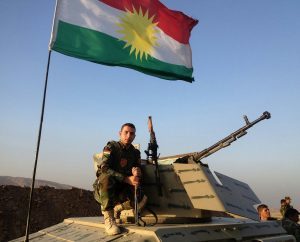
Photo Credit: Kurdishstruggle Peshmerga | Kurdish Army via photopin (license)
And consider this wild card: The Kurdish government just announced an independence referendum for late September. This is a provocative, yet timely step that takes advantage of the chaos to advance the Kurds’ greatest dream. This could cause further tension in the region, depending on the Kurds’ ability to placate the Baghdad government, as well as Turkey and Iran with economic incentives.
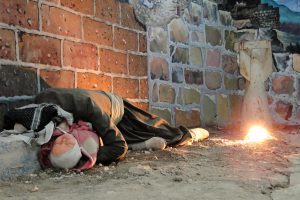
(Background on Kurdistan: The northeastern section of Iraq is referred to as Kurdistan. The Kurds are not Arabs. They are a distinctly different people group historically located in and along the border areas of Turkey, Iraq, and Iran. Kurds were severely persecuted under Saddam Hussein until the US, UK and France established a no fly zone in Northern Iraq after the First Gulf War in 1991. (You may recall shocking images, like the one below, of thousands of Kurds killed with mustard gas and nerve agents as part of Saddam’s al-Anfal genocidal campaign.) The no fly zone enabled the Kurds to get back on their feet and establish self-governing mechanisms.)
Over the past three years, the Kurds have been hospitable to those displaced by ISIS. I commend that. But information I have just received from sources in Northern Iraq indicates that the Kurdish government may kick out tens of thousands of Christians, along with Arab Sunnis which make up the largest portion of displaced persons. As far as the Christians go–they don’t have many options. Outside of the Christian cities and villages that they hail from, which are now destroyed, much of Iraq remains inhospitable to them—with or without ISIS.
(Context: Saddam Hussein largely allowed Christians to live in peace, but since the Iraq War, the numbers of Christians in Iraq have tanked. In 2003, there were approximately 1.1 million Christians, and today it’s approximately 180,000. What’s worse is that many Christians are what I call “repeat refugees” which means that they have fled multiple Iraqi cities over the years. They are in a constant state of upheaval and are exhausted by the struggle to survive.)

Photo Credit: Michele Rigby Assad
Kurdish authorities are considering the closure of refugee camps. They are concerned that ISIS and similar groups are using them as a base for operations. (This is one of the most underreported dynamics in Western press. We like to think all people in refugee camps are innocent. Not true. Refugee camps are microcosms of the conflicts from which they emerge, meaning that there is representation from all elements of society. The last few refugee camps set up outside Mosul contain a large number of ISIS families. The terrorists sent their families out of the city when the fighting got too intense.)
Recommendations
While I support the right of the Kurds for self-determination, I would like our government to engage Kurdish authorities and ask that they allow Kurdistan to remain a safehaven for displaced persons, particularly those that are most vulnerable, such as Christians and Yazidis (an Islamic sect that is considered heretical by Sunnis and Shi’a).
Our government should encourage Kurdish authorities to allow churches, mosques and nongovernmental organizations in Kurdistan to continue providing support to those whose lives were destroyed by ISIS.
Reconstruction support should not be funneled through Baghdad’s central government as that money will never reach intended recipients due to corruption and mismanagement.
The post The Liberation of Mosul — Now What? appeared first on Michele Rigby Assad.