Michele Rigby Assad's Blog, page 5
June 6, 2017
Why Does the US Support Qatar—a Major Sponsor of Terrorism?
Article by Michele Rigby Assad and Joseph Assad
The U.S. government over the years has buried its head in the sand when it comes to our relationship with Qatar. We sure didn’t give Saudi Arabia or the UAE a pass when it comes to terror finance (nor should we). But why do we hold onto the notion that Qatar is a good friend when it’s a state sponsor of terrorism? Qatar has played both sides for so long it’s become normal to us.
What is Qatar?
Most Americans don’t have much knowledge about this tiny country situated in the corner of the Arabian Peninsula. But if you stick with me to the end of this article, you’ll know everything you need to know about the tiny kingdom.
Qatar is about the size of Connecticut. The country is home to 2.6 million people, but only 313,000 are Qatari citizens–that’s less than the population of Tampa, Florida. The rest are foreign workers who live in the country on temporary work visas. With the world’s 3rd largest natural gas and oil reserves, Qatar has the highest per capita income in the world. It is small, but economically it packs a powerful punch.
What’s so bad about Qatar?
Qatar is an equal opportunity terrorism supporter, which means that they support both Sunni and Shi’a terrorists. No other country is this prolific in its support to violent movements around the world. The Washington Institute provided a good explanation for Qatar’s motives: “Qatar’s security strategy has been to provide support to a wide range of regional and international groups in order to bolster its position at home and abroad.” I would add that in addition to its motivation for power and influence is a religious/spiritual motivation.
The following is a list of groups that Qatar supports with money, weapons, and other material support:
ISIS (in Iraq, Syria, Libya, Yemen, Turkey, Egypt, and elsewhere in the world)
Numerous terrorist groups in Syria and Iraq who hold the same ideology as ISIS but are smaller in size
Al-Qa’ida
Houthis in Yemen (Shi’a militants)
Hamas
The Taliban (in Afghanistan–Also the Taliban was permitted to set up an official office in Doha)
The Muslim Brotherhood (worldwide)
Iranian militias (Shi’a)
This week, there was an unprecedented diplomatic break between several Arab/Muslim States and Qatar.
This included Saudi Arabia, Bahrain, Egypt, UAE, Libya, Yemen, Mauritania, Mauritius, Maldives, and reduced diplomatic representation in Jordan. Why? These countries are fed up with Qatar’s meddling in the region. They have been dealing with the implications of Qatar’s terrorism support in their own counter-terrorism efforts. They have been telling the US government how duplicitous Qatar’s dealings have been while we continue to treat Qatar like a good and solid friend.
This massive diplomatic shift has sent shockwaves through the region. Culturally, Arabs do not like to air their dirty laundry in public. Most Arabs prefer to work out their problems quietly, behind closed doors. They don’t like to use the media as a tool of diplomacy. In meetings, the most important thing a Gulf Arab diplomat or business partner will tell you is at the end of the meeting—as you are beginning to say thank you and good-bye. Their entreaties are quiet, delicate, and can be missed if you’re not paying attention. That’s why this week’s events are off-the-chart shocking—These countries are THAT fed up and THAT desperate to be heard.
The initial US response was seriously lacking.
On June 4 U.S. Secretary of State Rex Tillerson responded to the break in relations saying,
“…we certainly would encourage the parties to sit down together and address these differences. And if there’s any role that we can play, in terms of helping them address those, we think it is important that the GCC (Gulf Cooperation Council) remains unified. I do not expect that this will have any significant impact, if any impact at all, in the unified–repeat unified–fight against terrorism in the region or globally.”
When we read that we almost fell out of our chairs. Address their differences? This isn’t about political differences, sir, it’s about radical ideologies and terrorism. Somehow Secretary Tillerson didn’t get the memo when he downplayed the “rift” between the Arab countries making it sound like our Middle Eastern allies were children on a playground that just needed to get along.
However, we were encouraged by statements from President Trump today (June 6) that seemed to suggest that he’s aware of what’s going on:
“During my recent trip to the ME I stated that there can no longer be funding of radical ideology. Leaders pointed to Qatar—look!”
“So good to see the Saudi Arabia visit with the King and 50 countries already paying off. They said they would take a hard line on funding extremism, and all reference was pointing to Qatar. Perhaps this will be the beginning of the end to the horror of terrorism.”
Why is this situation tricky for the United States?
The US has a strategic military base in Qatar, U.S. Central Command’s Al-Udeid Air Base. It is a big deal to shut down or relocate a military base. It’s probably the last thing we want to do, but that airbase keeps our criticism in check and provides Qatar with “top cover,” i.e. political protection.
Another reason that we’ve been unwilling to censure Qatar is because it has provided funding to a variety of key politicians in the United States, including former Secretary of State Hillary Clinton who received $1 million via the Clinton Foundation.
Also, in September 2013, the wife of the former Amir of Qatar Sheikha Moza bint Nasser, was presented with an award by former President George H. W. Bush for her work promoting education and social reform. What was not mentioned was the degree to which she is one of the driving forces behind Qatar’s radical initiatives.
What do the other countries have to say about Qatar?
Many Arab States don’t trust Qatar at all. They don’t trust Qatar’s extremely close relationship with Iran or its relationship with (and funding for) a bevy of terrorist groups. Egypt, Saudi Arabia, Bahrain, Jordan, and the UAE won’t even share intelligence with Qatar because it swiftly leaks the data to Iran and shares counterterrorism leads with the terrorists we are trying to work against. Qatar is a double agent.
And it’s not just the U.S. that has a complicated relationship with Qatar. The London Telegraph explained the extent to which the UK has benefitted financially from Qatar in September 2014:
“So it is that Qatar buys London property while working against British interests in Libya and arming friends of the jihadists who tried to kill one of our ambassadors. A state that partly owns 1 Hyde Park, London’s most expensive apartment block, and the Shard, the city’s tallest building, is working with people who would gladly destroy Western society.” They added, “Qatari investors own more property in the capital than the Mayor of London’s office and three times more than the Queen.”
It’s time for us to draw a line in the sand with Qatar. If Qatar’s funding and weapons are cut off from these terrorists, we will see a significant decrease in ISIS and other terrorists’ capabilities. We cannot let Qatar continue to foment instability and radicalism in the Middle East, Europe, or America.
The post Why Does the US Support Qatar—a Major Sponsor of Terrorism? appeared first on Michele Rigby Assad.


May 25, 2017
Two Reasons Why ISIS May Try to Carry Out Terror Attacks This Ramadan
Shutterstock Image
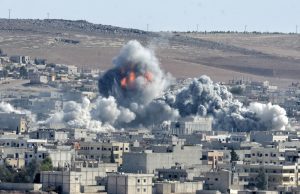
This year, the Islamic holy month of Ramadan occurs May 27 to June 26. For Muslims, this is a time of fasting when they take time to think about the blessings in their life and to be generous with those in need. It is a season of reflecting on God’s provisions and giving to others.
Unfortunately, terrorists believe that if they carry out attacks during Ramadan, they will go straight to heaven. (In Islamic ideology, no one can be certain until the day of judgement whether they are going to paradise or not. They hope that when they are judged by God, their good deeds outweigh their bad deeds.) However, terrorists believe they will immediately enter paradise and receive extra special treatment there for sacrificing their lives in the cause of God. This is why they seek martyrdom. Because of this ideology, there is an increased risk of attack—specifically suicide attacks–during Ramadan.
Last year, during the first few days of Ramadan (June 12), Omar Mateen carried out the brutal attack in Orlando’s Pulse Nightclub (In 2016, Ramadan was June 6 to July 5.)
The second reason why I believe there is a heightened risk of attack is because ISIS is hemorrhaging territory in Syria and Iraq. Their losses have been significant. Foreign Policy Magazine estimates the group has lost upwards of 50% of its territory. The terrorists are on the defensive, they’re on the run, and they’re looking to remain viable.
The projection of power via the execution of external terrorist attacks is much easier than executing battlefield victories in Syria and Iraq where a bevy of strange bedfellows has dealt them repeated blows: Iraq, Iran, Syria, Russia, the United States, Saudi Arabia and the United Arab Emirates. Because of this, I assess that ISIS will attempt to offset its losses by carrying out (or inspiring) terrorist attacks this Ramadan. Attacks are carried out by cowards against innocents but it makes the group appear more powerful than they really are.
Terrorist tactics range from the use of improvised explosive devices (IEDs) like the terror attack that just occurred in Manchester, to the use of vehicles to assault pedestrians. We are most vulnerable in areas of large gatherings, so be mindful of your surroundings this Memorial Day weekend. There is no substitute for situational awareness.
If you hear someone talking about their interest in carrying out terrorist attacks or notice persons or activities that seem suspicious (more specifics on that soon), please advise authorities immediately. Keep a watchful eye, but at the same time, let’s not give ISIS the benefit of fearing them. We will not let the terrorists win.
The post Two Reasons Why ISIS May Try to Carry Out Terror Attacks This Ramadan appeared first on Michele Rigby Assad.
May 22, 2017
Trump–Terrible on Turkey, On-Point with Saudi Arabia
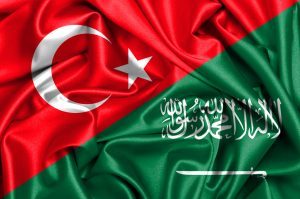
Two separate events over the last week have led me to conflicting assessments of President Trump’s foreign policy choices. One I praise, and the other I am extremely disappointed with. My views might sound contradictory, so it led me to wonder, how can I articulate my deep dissatisfaction with the way our administration handled Turkey and give praise for Trump’s interaction with the Arab/Muslim World during his trip to Saudi Arabia? If you want to understand more about these two fascinating countries, read on.
What happened with regard to Turkey?
Turkish President Recep Tayyip Erdogan visited Washington, DC last week to meet with President Trump. While there, Erdogan’s Turkish security officers assaulted protestors on our land, in our capital city (some of whom were American citizens). These actions demonstrate a complete lack of respect for our country and was one of the most arrogant displays of power I’ve seen in a while. Turkish officials punched, kicked, and bloodied men and women, and then their official Turkish press berated U.S. law enforcement for not doing their job to deal with protestors. Wow. Just wow.
U.S. response — Turkey
In diplomatic terms, the U.S. government gave Turkey a mild slap on the hand. USG horror at this assault on our freedoms was not communicated by President Trump to Erdogan (if he did, he did not advise the press). Instead, this statement was issued by the State Department:
“We are concerned by the violent incidents involving protesters and Turkish security personnel Tuesday evening,” said State Department spokeswoman Heather Nauert in statement.
“Violence is never an appropriate response to free speech, and we support the rights of people everywhere to free expression and peaceful protest. We are communicating our concern to the Turkish government in the strongest possible terms.”
Here was our chance to stand against an authoritarian regime, but instead, we behaved as if Erdogan can do whatever he wants on U.S. soil. Furthermore, it doesn’t appear that this event affected the tone or outcome of our bilateral discussions.
I really don’t know how Erdogan can act like Russian President Vladimir Putin and still be a part of NATO. I don’t know how you can completely wipe out freedom of the press, freedom of speech, and freedom of conscience and threaten to send ISIS operatives into Europe to attack us, and still be welcomed into our country for a meeting with the president. It makes no sense. He’s spitting in our face and we’re just standing there smiling?
What happened with regard to Saudi Arabia?
President Trump visited Saudi Arabia and King Salman took the chance to invite dozens of other countries’ leaders to join him for Trump’s first meeting abroad. The meetings turned into an Arab Islamic American Summit where numerous agreements were signed to counter extremism and work against Iran. Massive defense packages were signed and many pictures were taken. The excitement there was palpable. It was clear that the Arabs are excited to have a better partnership with the U.S., particularly with regard to Iran—which they (rightly) view as an existential threat.
Human Rights in Turkey and Saudi Arabia– the Similarities
Both countries have abominable human rights records.
Human Rights in Turkey and Saudi Arabia– the Differences
Now here is what I believe to be the key difference and a very important meter for judging the way in which the US should interact with these countries:
We should judge regimes by the relationships they have with the people they govern.
The lack of freedoms in Turkey are dictated by Erdogan and his henchmen to a public that largely decries such moves. Turkey is a regime that is absolutely crushing the freedoms and rights the Turkish people have enjoyed since Mustafa Kemal Ataturk founded modern day Turkey and established a secular society….It’s a top-down disaster and the Turkish people are suffering under this tyrant.
As crazy as it might sound, Saudi leaders are some of the most progressive people in the country (including the octogenarian king and his late half-brother, former King Abdallah) which sounds crazy but is true. Many of the lack of freedoms in Saudi Arabia can be blamed on society itself—the family, tribal and religious power players. Unlike Erdogan forcing changes on unwilling Turks, Saudi values are largely held in place by various elements of society. Saudi Arabia is more bottom-up, versus top-down which I would not have believed had I not spent a lot of time in the kingdom (as well as Turkey). It is truly counterintuitive.
Saudi Arabia is led by a monarchy, but here’s what most people don’t know—it’s a tribal monarchy. This means that the Saudi king does not rule as an dictator, but governs with the acquiescence and support of various families, tribes, religious institutions, etc. Although it looks nothing like ours, Saudi Arabia does have its own unique “balance of power”.
For example, King Salman and many in his retinue are willing to grant women the right to vote and the right to drive a car. But if the Saudi royal family instituted such changes without requisite support of Saudi’s power brokers, they would be chancing their own existence. The same would be true with regard to religious liberties. I know many senior Saudi leaders that support the right of other faiths to worship as they please in the kingdom (i.e. to have Bibles and hold their own church services); however, they can’t say this publically or they could be assassinated.
With Turkey, we should seek to isolate this tyrant and bond together with Europe and other countries to ensure Erdogan does not have our backing. If we were to support Erdogan (politically, economically or otherwise), we’d be accepting his authoritarian behavior.
However, I do not assess that supporting the Saudi regime would hurt the people because their system is set up to balance alliances between tribal and religious leaders and we have no influence in this arena. The United States is not capable of changing the minds of all the Saudi people who do not want to extend more freedoms to its citizens. We need to encourage change, but change must come from within the society that created its laws and legal structures. In this case, I would argue that the most effective means of encouraging movement towards greater freedoms is through engagement, not isolation.
We should build collaborative and respectful relationships but we must be willing to use this leverage when we have specific issues that need to be resolved (such as the release of the innocent American and Egyptian NGO workers that were held without trial in Egypt for years).
The post Trump–Terrible on Turkey, On-Point with Saudi Arabia appeared first on Michele Rigby Assad.
May 18, 2017
The Truth About the Leaked Intelligence

My role as a former CIA intelligence officer is to take the politics out of security issues. My job is to give you the scoop devoid of political wrangling.
The sad fact about the intelligence reportedly leaked by President Trump to Russian Foreign Minister Sergey Lavrov is that the intelligence leaked itself.
What do I mean by that?
When the CIA acquires credible and detailed threat-related intelligence, we face a moral and ethical dilemma. We must release the intelligence to potential target(s) of the threat as well as those in a position to stop the threat. That’s the whole point of collecting intelligence—to provide it to those who can prevent the operation from being carried out.
But here’s the dicey part: Threats of this nature are known to a very small group of people, those involved in planning the operation. That means that the source of the intelligence we gather, either a human being or technical communications, will quickly be discovered and dealt with accordingly.
This means that by sharing the intelligence, we are completely closing a window into the group and will be unable to gain additional insights into their plans and intentions. If the source is human, he will likely be killed if he hasn’t already been exfiltrated from the area. If the operation was discussed over a telephone, then that phone will be destroyed. If an email was used, then it will be quickly discarded and never used again.
So whatever fallout that would occur in the wake of telling the world about the terrorist threat has already occurred, way before Trump discussed it with Lavrov. Unless Trump discussed the details of who collected the threat and how it was obtained, then there’s very little that could be compromised at this point. Per CNN, “The President did not directly reveal the source of the information, but intelligence officials told CNN that there is concern that Russia will be able to figure out the highly sensitive source.”
Well guess what guys—everyone involved in the threat has already figured out where the leak occurred and have taken care to get rid of the source of the information. They will ensure that we will never be able to use the same collection method again.
Our foreign intelligence partners know this. They have worked closely with us since 9/11 on these issues and are fully aware of our need (and their own need) to inform appropriate authorities. Intelligence professionals are constantly balancing the need to protect the source of the information with the need to share it to stop the threat. And because this threat affects so many different countries, many of our foreign intelligence partners are aware of the threat details and have collaborated with us to figure out a way to stop it. This is how intelligence works.
My bottom line: There are plenty of other issues to be concerned with. Manufactured horror at this “leak of classified information” is just that—a situation blown out of proportion. There are plenty of other valid issues to be concerned with, but the “leak” is not one of them. The compromise of this stream of reporting due to the necessary release of this information to the public and the continued threat to our well-being is much more critical.
Take it from someone whose former job was to clear such information for authorities, governments and the general public. My job was to balance source protection with the need to stop attacks from occurring. I’ve been around this block a few times.
The U.S. government released the information to protect us, and now the source of the information is forever compromised. It sucks, but this is how intelligence and espionage works when dealing with threat information.
BACKGROUNDER
What was the intelligence about?
The intelligence indicated that a terrorist group (possibly ISIS) planned to use electronic devices (i.e. laptops) as a platform for a new type of improvised explosive device (IED) that could be initiated on an aircraft—a goal terrorist groups have had for years as they work to devise a way to blow up airplanes mid-flight.
Implications of the plot
This is a serious threat because it is credible and detailed. Law enforcement, intelligence, security, and airline authorities are doing their best to safeguard our interests and ensure that airline travel is as safe as possible. It takes time to figure out how to defeat the technology terrorists seek to use against us. It will likely change rules about what devices we can take onboard with us and what may need to be checked in our luggage. I don’t know about you, but I can’t imagine being parted from my laptop. I don’t trust that it won’t be stolen during my travels in my checked luggage. This issue will be a challenge for us all.
*** This does not constitute an official release of CIA information. All statements of fact, opinion, or analysis expressed are those of the author and do not reflect the official positions or views of the Central Intelligence Agency (CIA) or any other U.S. Government agency. Nothing in the contents should be construed as asserting or implying U.S. Government authentification of information or CIA endorsement of the author’s views. This material has been reviewed solely for classification.
The post The Truth About the Leaked Intelligence appeared first on Michele Rigby Assad.
May 10, 2017
Living Freely In The Era Of Terrorism
Interview with Charmaine Carraway of the Visionary Woman, Published on Jan 9, 2017
.embed-container { position: relative; padding-bottom: 56.25%; height: 0; overflow: hidden; max-width: 100%; } .embed-container iframe, .embed-container object, .embed-container embed { position: absolute; top: 0; left: 0; width: 100%; height: 100%; }
The post Living Freely In The Era Of Terrorism appeared first on Michele Rigby Assad.
PBA alumna reveals her life and faith as a spy
Michele Rigby Assad was recently present at a special Palm Beach Atlantic University event called Women of Distinction, celebrating Emilia Fanjul and Darlene Jordan last week.
Graduating from PBA in 1995 with honors and a Bachelor’s degree in Political Science, Assad questioned her career, but felt drawn to International Affairs.
.embed-container { position: relative; padding-bottom: 56.25%; height: 0; overflow: hidden; max-width: 100%; } .embed-container iframe, .embed-container object, .embed-container embed { position: absolute; top: 0; left: 0; width: 100%; height: 100%; }
The post PBA alumna reveals her life and faith as a spy appeared first on Michele Rigby Assad.
May 3, 2017
How a Small Town Girl From Central Florida Got Into the CIA
When I speak to people about my career, one of the first questions I get is how a small town girl from Central Florida got into the CIA. I never dreamed of working for the CIA, and didn’t even know that was a real job. It was a path that I didn’t know I was on…
Click on the image above for the article.
Curated from: https://vunela.com/how-a-small-town-g...
The post How a Small Town Girl From Central Florida Got Into the CIA appeared first on Michele Rigby Assad.
November 29, 2014
I couldn’t get a job … until I finally got hired by the CIA
After several years living and working in Washington, D.C., I still had no idea what I was supposed to do with my life. All the other Young Turks were surging ahead, finding success left and right: helping run administrations, writing legislation, and passing bills. They were amazing, and I was still clueless.
Read entire article on my Inspired Intel column.
Curated from femininecollective.com
The post I couldn’t get a job … until I finally got hired by the CIA appeared first on Michele Rigby Assad.
November 12, 2014
13 Things You May Not Know About Nice People

The problem with being “nice” is that people often mistake this attribute with simplicity or ignorance. Whether or not it’s subconscious, there is an assumption that nice people are by definition one-dimensional. But I—and others like me—are nothing of the sort. We’re quite the opposite.
Curated from femininecollective.com
The post 13 Things You May Not Know About Nice People appeared first on Michele Rigby Assad.
October 6, 2014
3 things you NEED TO KNOW about terrorists NOW that can save your life
With social media as prevalent as it is, it’s not hard to detect a spike in the online chatter that suggests these guys are up to no good. Because these takfiri thugs and their supporters love social media, thrive on it, and build support through it, their communications give a clear indication what they are up to. It’s hard NOT to recognize the patterns …
Read entire article on my Inspired Intel column on Feminine Collective
Curated from femininecollective.com
The post 3 things you NEED TO KNOW about terrorists NOW that can save your life appeared first on Michele Rigby Assad.