
Helen C. Escott's Blog: The Helen C. Escott Book Club: A Novel Idea, page 6
November 18, 2022
Out of the Fog
Host Don-E-Coady invites Crime Author Helen Escott. Eye Physician & Surgeon Dr. Christopher Jackman. Michael Wahl, Host of the WAHL Show. Braeden King, Director, WAHL Show and a performance by Mallory Johnson.
Watch it ,here.


October 31, 2022
HELEN C. ESCOTT’S OPERATION MASONIC
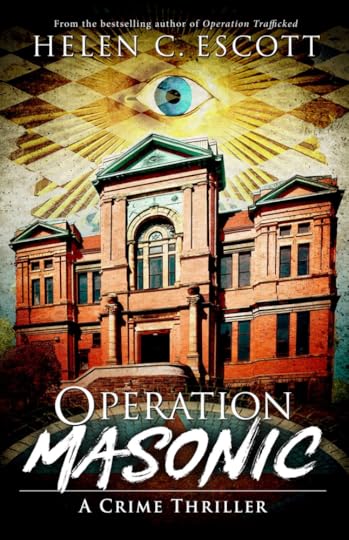
(By Krystyn Hayden) St. John’s, the capital city of Newfoundland and Labrador, is undoubtedly one of the oldest settlements in all of the western hemisphere. The vibrant city, with an equally as colourful history, was officially incorporated with the passage of the City of St. John’s Act by the Newfoundland government in 1921.
Sitting along the coast of the Atlantic Ocean near the most-easterly point in North America, an incredibly old history dating back to before the 1500s makes St. John’s a small city with big stories. There’s no shortage of secrets and theories within the steep mazes of bright houses and unique preserved architecture. St. John’s contains an abundance of National Historic Sites, but what about the lesser known historical mysteries and secrets within town?
Not only is St. John’s referred to as a “paranormal hot spot”, but it holds its’ fair share of secrets within the cold war bunkers and 17th century tunnels running underneath a large portion of what is now considered downtown.
Living Her Dream
As a teenager growing up in such a historically fascinating and artistically driven city, bestselling crime-thriller author Helen C. Escott knew she wanted to be a writer her entire life.
“I am one of those people who are living their dream. When I was a teenager, I wanted to write novels.” Escott shared in a one-on-one interview. “In 2014 I was fifty years old and still not a published author. So, I retired and decided it’s time to have the job I always wanted. My career in the media and with the RCMP were the perfect mix of life and material to write from.”
You may recall Escott’s 2018 novel Operation Wormwood, the first novel in the Operation series, which became one of top 5 finalists in Canada for the Arthur Ellis Awards Shortlist for Excellence in Canadian Crime Writing in 2019. The series continued and Operation Vanished, a psychological crime thriller, was awarded a Silver Medal for Best Regional Fiction at the 24th annual Independent Publisher Book Awards.
“I write from a place of outrage. When I become outraged about something I write that story. Each of my books deals with a subject of outrage: child abuse. Missing and murdered women. Human trafficking and greed.”
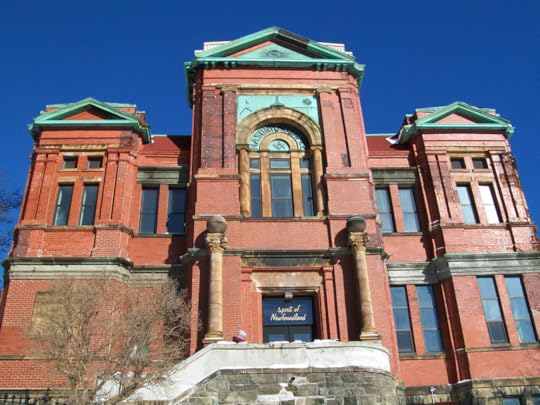
Masonic Roots St. John’s has masonic roots dating back to 1746. They built the first Masonic building on Long’s Hill in 1885, but it soon after became one of the many victims of the Great Fire of 1892. Former Newfoundland prime minister Sir William Whiteway, who was a Freemason, laid the cornerstone for what is known today as one of the most architecturally impressive buildings in Newfoundland and Labrador.
“The Masons have always interested me. I have always had an interest in secret societies and what they do. I find that fascinating”, Escott explained. “I do an incredible amount of research for each book. I seek out experts and spend months reading and researching even before I write the first paragraph. For Operation Masonic, I interviewed John FitzGerald who is the Basilica Historian. He discovered that the St. John’s Basilica aligns with the winter and summer solstices and that sparked my interest."
History & Secrets
All of Escott’s books are based on real investigations with reoccurring characters throughout the Operation series. Operation Masonic, published by Flanker Press, is another one of her incredibly well-written murder-mysteries with the investigation led by Inspector Nicholas Myra from the RNC. The thrilling fictional story based on actual historical research is full of twists and turns that will keep you guessing with every page. Captivating readers since the first book of the series, Escott proves her talents yet again with her graphic writing following the murder of the Freemasons’ Most Worshipful Grand Master, and Myra’s search for the killer through thousands of years of history, secrets, scandals, and symbols.

“When I bring a reader into a scene, I want them to not only know what it looks like, but what it smells like, what it sounds like. I get a lot of feedback from readers telling me they can see the movie in their minds, and I love that.”
Operation Masonic hit shelves August 17. You can find all novels by Helen C. Escott at: Chapters and Coles, and online at: indigo.ca, Apple — iTunes, Amazon and Kobo. For more information on the author, visit www.helencescott.com
Buy the Operation Series here
October 25, 2022
I'm in the jailhouse now: Memories from the front line
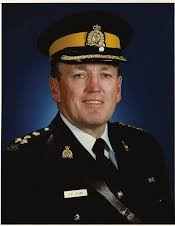
When Gerald Leahy joined the RCMP in his home province of New Brunswick in 1956 he was thrilled when first posted to Newfoundland.
"I was only in St. John's for about two months when they gave me about five hours to get ready to transfer to Grand Bank. I had no idea where the other member was taking me. It seemed we were driving on and on and on, all on dirt road,” he laughs.
Leahy had no idea that much of his policing duties would involve testing people for drivers' licenses, issuing bus permits and answering calls on the detachment's “party line.”
“Private lines, even for police, didn't come in effect until later,” he says.
“And we spent many a night walking the beach... with word that someone had gone to St. Pierre (to bring back illegal liquor). It was a cat and mouse adventure. They were making all this money at bootlegging, but they could hardly afford to pay a $2.00 fine when they got caught.”
One funny story that stays with him, Leahy recalls occurred during a prisoner escort from Grand Bank to Harbour Grace. The man was not dangerous, he says, rather had failed to pay some tickets.
Mr. Leahy stopped at Goobies, with his prisoner, for lunch.
Leahy put a quarter in the nickelodeon (juke box) but he got called away for a few moments, not having time to punch in his next couple of song choices he left the prisoner at the table, and asked a taxi driver sitting at a nearby table to make the choices for him.
“Halfway through our meal the song comes on 'I got stripes and I'm in the jailhouse now,' Mr. Leahy laughs at the appropriate Johnny Cash song.
Leahy's early Newfoundland postings also included Whitbourne, Goose Bay and Bonavista.
While today considered non-policing duties, back in his early days of policing, RCMP members were responsible for ensuring the people in a particular community got a salt rebate from the government depending on the amount of salt they'd used.
“We provided the documentation showing how much they'd used, and we provided rabbit licenses. And we never questioned doing any of that,” he laughs.
Mr. Leahy married Hannah Forsey. They have five children and 15 grandchildren.
In his early years of policing in this province, it wasn't unusual for the RCMP to be both the investigator and prosecutor on the same case.
“There was no crown prosecutor. That happened when I was in Bonavista and in Labrador,” he says.
Leahy transferred to New Brunswick in 1970 where he was commissioned before being transferred to Ottawa.
When the opportunity to return to Newfoundland came in 1977 he jumped at the opportunity.
“I ran into an officer who'd served here (Newfoundland) and was looking after transfers around the country. I had a quick discussion with him in the washroom. He was looking for someone to go to Newfoundland,” Leahy recalls.
When asked if he'd be interested, Mr. Leahy told the officer that he'd need some time to think about it.
“When he said, 'Okay, I'll do that.' I said, 'Okay, I've thought about it. I'll go!'” Leahy laughs.
He remained in Newfoundland for over a decade before being named Commanding Officer of the RCMP in Nova Scotia.
He also spent almost five years as the force's director of personnel in Ottawa eventually retiring from the force in 1994 after 37 years.
At the time of his retirement he'd reached the rank of Assistant Commissioner.
“I left my office at five o'clock on my last day and went home feeling that I did the best I could. Sometimes the old nostalgia sets in and you think you'd like to be back. But then you tell yourself: don't be so foolish, you had your turn,” A/Commr. Leahy laughs.
Read more stories about RCMP Officers who served in Newfoundland and Labrador in - In Search of Adventure available here
October 19, 2022
Remembering the good old days of policing
When reminiscing about his policing career with family, friends and fellow members, retired Chief Superintendent George Powell says it's always the good times that come to the surface.
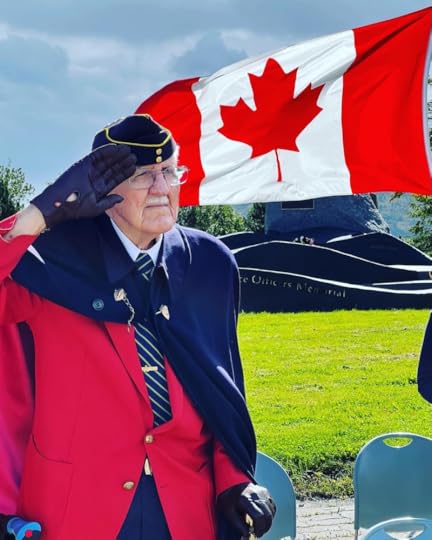
“You have lots of rough times but when we start talking stories, it's always the good times we remember,” he says. George has many such stories that will stay with him a lifetime.
A native of Southern Ontario, Mr. Powell joined the RCMP in 1952, trained in Ottawa and Regina and then headed to St. John's in 1953.
Barrack life meant acquiring an extended family, he says. “That (living in the barracks) was a strength of days gone by. The people you lived with became your family. Today, you work with people and you go home. You don't have the same kind of esprit de corps,” he says.
He admits it’s a different World in which we live today. “Life was so much different, and policing was different. The barrack life no longer exists.” Every detachment building had “quarters” for single members, and single members were required to live in quarters “and they paid for the pleasure” he adds.
A storyteller at heart, Mr. Powell recalls a conversation he had concerning a young man asking an elder about the key to success. “He said you have to learn to make the right decisions.” When the young man asked the senior how you learn to make the right decisions, his answered “by experience.” When the young man asked him how do you get experience, he said, “by making the wrong decisions,” George says “The only way to be sure of not making a mistake is to do nothing. Errors or mistakes are learning opportunities.” Powell laughs. “Life is all about making mistakes but learning from them.”
Mr. Powell learned much from his experiences policing in St. John's, Grand Falls, Botwood, and Grand Bank. He's also served in New Brunswick, Ontario and British Columbia. After retiring in Vancouver at the rank of Chief Superintendent in 1988 he moved back to St. John's.
“I did about half of my service in Newfoundland.” During his early years, traveling throughout Newfoundland, always by train, was never easy, he admits. “We had to escort prisoners. We would leave Grand Falls about ten o'clock at night and get in St. John's about noon the next day. We dropped off our prisoners at the penitentiary then took the five o'clock train back to Grand Falls,” he recalls.
During those early years, RCMP members wore many hats, in addition to their Stetson. “In those days all our patrols were one member and oftentimes, there was just one of us on duty. There was very little back-up,” he says.
RCMP members took on the role of social worker, welfare officer, counsellor and letter writer. Learning new skills was one of the positives about choosing a career as a Mountie Powell says. “I worked in general policing, I was in criminal investigations, in administration, security service, on the street, in research, spent two years working with the Solicitor General's department and with all those job changes I didn't have to change employer.”
One of the downsides of policing decades ago was the short notice given about a pending transfer,” he remembers. “I was sitting down in the lock-up with a prisoner one afternoon. The fellow I was working with had to go back to the office to pick up some documents. He came back and said, 'You're transferred.'” Two days later, Powell was indeed re-posted from St. John's to Grand Falls. “For a single person like I was at the time, it was much easier to transfer,” he says, his glass half-full always.
Chief/Supt. Powell recalls attending his first autopsy not in a hospital but in a barn by kerosene lamp a far cry from what would come later in his career, working on the streets in Toronto. “There were no facilities, so they had to do it in a barn. It was cold there. It was a sudden death, a young person. So, we could take the specimens and return it (the remains) to the family.” In those days, Powell recalls crimes such as break and entries were simple, drugs were non-existent. “And, of course, there were bootleggers and those making homebrew because there were no liquor stores across the province. They had to send to St. John's to get their liquor.”
RCMP members in this province were glad to work beside former Rangers (55 who integrated into the RCMP) and Constabulary members (35 who traded their uniform for an RCMP uniform), Mr. Powell says. He still has the record of those who joined among his many souvenirs of the Force. “I worked with both. And I acquired a lot of items of historical significance from when I worked with them. Now, my wife calls it junk,” Mr. Powell laughs.
While he admits he “had some crummy assignments along the way” Chief/ Supt. Powell says you always move on and learn from life experiences.
“If you do nothing, you'll never learn a thing,” he says. Chief/ Supt. Powell is an active member of the RCMP Veterans Association. He volunteers visiting veterans and their families who are ill and arranges veterans attending funerals as a group. He is well regarded as one of the finest gentlemen you will every meet.
Read more stories about RCMP Officers who served in Newfoundland and Labrador in - In Search of Adventure available here
October 12, 2022
From being shot to meeting Joey Smallwood, it was a great 36 years!
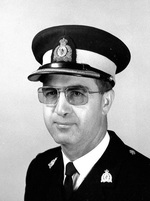
When Murray Evans joined the RCMP 56 years ago, recruiters were as interested in his physique as they were his intelligence. The boy from New Brunswick was 18 years old at the time.
“The first time a friend and I went to the RCMP office, the sergeant said: 'Go home and measure your chest and make sure it measures up.' It had to be so much in expansion,” Mr. Evans recalls with a smile. Delighted that their chest sizes were acceptable, Mr. Evans and his friend went back to the office and wrote the entrance exam. “My friend who encouraged me to join didn't pass the test so I was left alone,” Evans says. Evans, a carpenter at the time, soon found himself trading in his tools for a Stetson hat and red serge.
“I went up to Fredericton and the sergeant said: 'You better know, you're signing away five years of your life, young man.' They sent me out on the train that evening across Canada to British Columbia to the Fairmont Barracks.” Mr. Evans was raised in the fishing community of Lorenville, on the outskirts of St. John, New Brunswick. After completing his RCMP training he was posted to St. John's, Newfoundland.
“I was so pleased to come here because when I was working with a roofing company they all talked about Newfoundland and how kind Newfoundlanders were,” Mr. Evans remembered.
The train ride across the country was, long, tiring and, in places, breathtaking. “I remember getting off the train in the prairies with my little camera taking pictures of the oxen. Someone was calling out to me but I thought, they aren't going to bother me. But here it was the train was pulling away without me,” Supt. Evans laughs.
Once he arrived in this province, Supt. Evans was told by his supervisors that he'd only be in St. John's for three months before being transferred to rural parts of the province.
Rather than three months, his posting to St. John's spanned three years. Long drives over gravel roads were very much a part of his early duties, he says. “We went all down the Southern Shore and to Harbour Grace. We were with the Preventive Service-Liquor-Highway Patrol we had motorcycles back then, an old Harley Davidson belong to the Ranger force and two English bikes. We were told we had to put 200 miles on them each day.”
“The young men often found their own ways of adding miles to the speedometer,” he says.
“There were times you'd be on a back road and you'd strike a blueberry patch and you'd pitch the hitch up and let it run for a few miles.”
Among the highlights of his early career, Mr. Evans says was meeting and spending time with the late Premier Joseph R. Smallwood. The premier had an apartment at Fort Townsend which gave him both privacy and security working near the police in Constabulary Square. Evans says during his meetings with the premier, Mr. Smallwood was always a gentleman and great person to have a conversation with. “I had an occasion to be with Premier Smallwood just before his stroke, for the last time,” he says.
When he wasn't busy in the office, Evans and his comrades were policing in the community earning their title “Jack of all Trades.”
While stationed at St. John's, Mr. Evans met his wife Stella Whitten from nearby Petty Harbour. The couple, who have two children and five grandchildren, recently celebrated their 50th wedding anniversary.
The next 25 years of his career was spent serving at various other detachments in Newfoundland including Harbour Grace, Glovertown, Ferryland, Whitbourne, Labrador City, Gander, and Corner Brook. While much of his duties were routine, policing back in by-gone days also meant risking one's life. While stationed outside the St. John's area, Mr. Evans came face-to-face with the barrel of a shotgun.
He and Stella had two young children at the time, he responded to the call about a mentally ill man shooting windows out of houses.
“Myself and another constable went down. We got out by the old potato house and crawled down through the grass. I got in and jumped on his back to try to knock him down, he wouldn't go down. He started to turn the shotgun on me so I ran out and around the corner but there was a fence there and I couldn't go any further. I turned back and he shot me and got me in the corner of the eye. I shot him then in the leg and he fell down.”
Although bleeding himself from the head, Evans rendered first aid to the man.
Both were taken to hospital where Evans was treated for his eye wound.
Whether traveling by boat, train, skidoo, car or cycle, Mr. Evans says he enjoyed all of his police postings both in this province and elsewhere in the country. He retired in 1990 after 36 years with the RCMP. “I always said if there's ever a day I don't completely love my work, I'd leave. But that never happened and that's why I stayed for so long,” he says.
Superintendent Murray Robert Evans passed away at the age of 81 on May 4, 2017.
Read his story and the story of other RCMP Officers who served in Newfoundland and Labrador in - In Search of Adventure available here
October 3, 2022
Constable Ken Ellis: From the historic Badger Riot to the night that changed his life
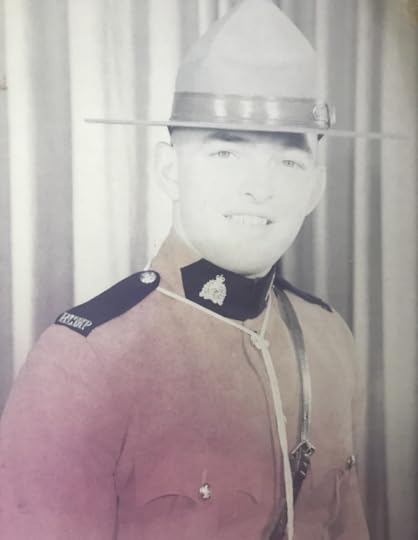
As a young man, the only thing Ken Ellis wanted to be was an RCMP officer. That dream came true on May 05th, 1958 when he went to Edmonton, Alberta and joined Canada’s national police Force. Ellis, a native of Red Deer, was sent to the training center in Ottawa.
Upon completion of his training, he was sent to his first posting in Newfoundland. Ellis and a fellow Mountie, Jim Swim, drove from Ottawa to Swim’s home in Nova Scotia, then on to North Sydney where he boarded the M/V William Carson and sailed through rough seas. On March 4th, 1959 Ellis, and Swim arrived in Port Aux Basque.
They took the train in Port Aux Basque wearing their red serge and boots eager to begin their careers in the RCMP. But a March snowstorm left them stranded for three days in Gaff Topsail, which is now an abandoned railway settlement located between the communities of Millertown Junction to the east and Kitty's Brook to the west. They finally arrived in St. John’s at RCMP Headquarters on March 07th only to be told they were getting back on the train to go to Grand Falls for strike duty.
Ellis was sent with a contingent of other RCMP Members as well as Royal Newfoundland Constabulary (RNC) Officers to the Badger strike.
At only twenty years old, his first introduction to real policing would stay with him for life. He thinks back to the first day driving into the strike area. “Several of us were in the police car and the loggers gathered around it and shook the car.”
A picket line of over two hundred loggers lined off the Main Road and the Buchans Road intent on blocking any cars trying to bring replacement loggers into the camps. Ellis says, “The next day we were all on a bus, and the loggers gathered around it and tried to tip it over.”
The strike had dragged on since December 31, 1958 and tempers were at an all time high. “To me, just after coming out of training, it was very scary.”
On March 10th, 1959 approximately two hundred and fifty striking loggers were in Badger with approximately sixty RCMP and RNC trying to keep the peace when replacement workers were brought in. The car carrying the replacement workers was allegedly picked up and turned around by the loggers. As a result, a battle broke out as strikers armed with pulpwood clubs, bottles, peaveys and an axe clashed with police who only had RCMP short riding crops and RNC nightsticks to defend themselves with.
“The RNC and RCMP officers were lined up and told to march through the loggers to disperse them.” Ellis was six days into his policing career. “Our riding crops were not very effective against the loggers. We didn’t have any shields or any other ways to protect ourselves. It became a very wild and frightening scene.”
Constable Ellis was about ten feet away from twenty-four-year-old RNC Constable William Moss when Moss was hit in the head by a striking logger. When the melee ended both sides were bloodied. Moss was rushed to the Hospital in Grand Falls where he died on March 12th. The “Badger Riot” became a dark day in Newfoundland’s history.
Ellis was at the strike for about three weeks then he was sent back to St. John’s where he served on Detachment and highway patrol.
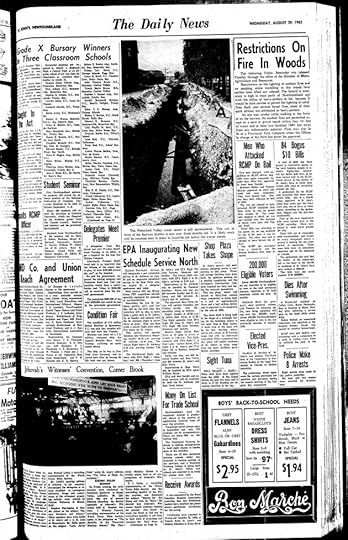
On Sunday, August 18, 1962 Constable Ken Ellis was on highway patrol when he was brutally, and viciously assaulted by two men. Ellis stopped to check on two cars parked near the junction of Horse Cove Line and Topsail Road. The cars were driven by two brothers, who were construction workers. One of the vehicles had some defects. Constable Ellis asked the driver to accompany him back to the patrol car where he had planned to give him a warning slip to ensure he had the repairs done to the vehicle.
They walked toward the patrol car. “Without warning, the man grabbed me by the shirt, and we begin to fight.” Ellis still gets emotional talking about it. “I was doing ok and about to put the handcuffs on him when the other brother got out of his car and jumped me.”
The brothers were able to push Ellis’s body down into a roadside ditch where they continued their assault. One brother picked up a rock and tried to bash in Ellis’s head. Traffic was starting to slow down or pull over and watch the fight and Ellis screamed out for help, but no one came to his assistance.
“I was able to get away and crawl out of the ditch. I made it to the bonnet of the police car.”
The two brothers caught up with him and continued the savage attack. “I eventually had to give up.” The two brothers left the young constable badly injured on the road.
After they drove away, Ellis was able to get to the driver’s side of the police car and call for help.
The brothers were found, charged and released on five-hundred-dollars bail. Constable Ellis had three cracked ribs, a torn cartilage in his knee, head injuries, multiple bruises and abrasions from the sadistic beating. He was off work for six weeks.
“It dampened my spirits for policing,” he admits. “I didn’t get much support.”
In 1962, there was no assistance offered to an officer who went through an assault like that. He was ordered back to work as soon as his physical wounds healed.
Seven years into his career he was transferred to Harbour Grace. His wife, who was an operating nurse, was making more money than he was as a constable. He decided to hang up his spurs and left the Force after seven years. He went on to have successful fifty-one-year career in life insurance. Ken and his wife Jean have been married for fifty-nine-years.
“I had mixed feelings about leaving.” Ellis, now in his eighties, is proud of his career with the RCMP. “But I’m glad I joined.”
Constable Ken Ellis is one of the founding members of the RCMP NL Veterans’ Association. He is not only a past President of the Association, Ellis is a charter member.
Constable Ellis and his wife, Jean, live in St. John’s and have two sons.
Cst. Ellis' story as well as other stories are available in the historical book from Flanker Press "In Search of Adventure" Buy it and Escott’s other novels at: Chapters, and Coles. Also, online at indigo.ca Apple – iTunes, Nook – (Barnes & Noble), Amazon, and Kobo. National and international orders can be placed by calling 1-866-739-4420 ext. #22 or you can send e-mail eoldford@flankerpress.com or at https://www.helencescott.com/books
September 25, 2022
Why were the Germans obsessed with Newfoundland during WWII?
Some evidence suggests that Hitler, at least briefly, considered an assault on Newfoundland
as part of a larger campaign against the United States.
But why?
Have you watched The Curse of Oak Island?
It is a Nova Scotian show where the treasure hunters are looking for treasure and artifacts on a small island called Oak Island. The treasure is believed to range from pirate treasure to Shakespearean manuscripts to the Holy Grail or the Ark of the Covenant. They believe the Grail and the Ark have been buried there by the Knights Templar.
But wait a minute? Why would the Knights Templar bury treasure on Oak Island, Nova Scotia?
Nova Scotia was one of the first four provinces to join Confederation in 1867. Newfoundland didn’t join Confederation until 1949. It simply does not make sense for the British Knights Templars hide treasure in Nova Scotia, Canada when they owned and controlled a British Colony next door.
By the way… there are rumoured to be over 30 Knights Templars in Newfoundland and Labrador today.
If they were going to hide treasure it would make more sense for them to hide it in Newfoundland.
Then we have to ask ourselves, where would they hide it?
I have an idea!
The Ecclesiastic Circle is in the center of St. John’s. It starts with the Basilica of St. John the Baptist, goes to the Congregational Church on Gower Street, which is now an apartment building, then to the Masonic Temple (which is called the lost cathedral), to St. Andrew’s Presbyterian Church formally known as The Kirk, Gower Street United Church, and the Anglican Cathedral of St. John the Baptist.
If you take the Masonic Symbol of the dot within the circle you will see how it fits perfectly over the Ecclesiastic Circle.
Why did all these different religions build in a circle? Anywhere else in the world – religions build on opposite sides of a city. They don’t build in a circle – so why did they do it? What are they protecting?
You’ll never find out because it is a National Historic area. Which means no digging!
Which leads back to my first question: Why did Adolf Hitler and the Nazi’s have such an interest in Newfoundland during the war?
Nazi U-boats stalked Newfoundland and Labrador coasts during the Second World War
Bell Island was one of the few places in North America to be attacked by German forces during the Second World War. They sunk four iron ore vessels near Bell Island in September and November of 1942.
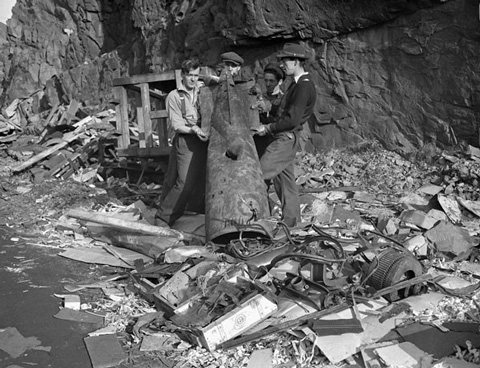
Did you know that Bell Island was the only community in North America to take a direct hit from a torpedo? It was fired by a Nazi U-boat in World War II. During the second attack of November 2, 1942, a torpedo struck the Scotia Landing Pier.
Labrador was the only place in North America where armed German soldiers successfully landed. On Oct. 22, 1943, a Nazi U-boat arrived in remote Martin Bay, near the northernmost tip of Labrador. An armed team landed and spent the next 48 hours walking North American soil and installed
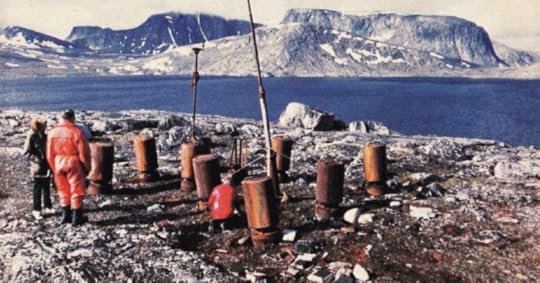
a weather station that wasn’t discovered until the 1970s.
There is also a strange story of a Father “Schultz,” who, posing as a German Catholic priest, showed up on the Labrador coast back in 1933. He travelled extensively by dog team along the coast of Labrador, pretending to be tending to his parishioners, while secretly taking extensive readings of weather, and charting details about the coastal topography. When war finally broke out, Father Schultz promptly disappeared. Later information surfaced that he may have escaped on another German U-boat or floatplane. The conclusion was that he had been a German spy all along.
There are rumours that say the Nazis landed near Bay Bulls and came into the St. John’s to visit the pubs.
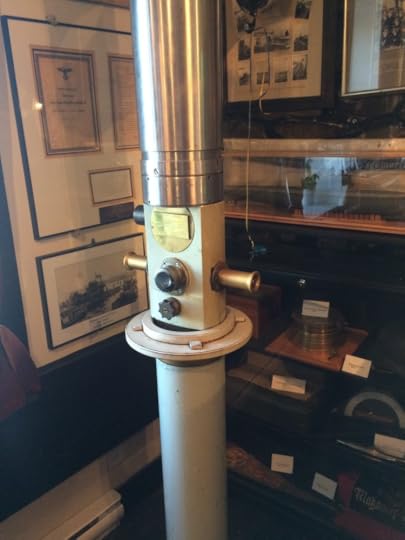
Late in World War ll, a Nazi submarine surrendered 600 miles off Newfoundland. Its periscope is on the roof of the Crow’s Nest naval club in St. John’s.
It is all concrete proof that Hitler had a huge interest in Newfoundland. But why? What did Hitler know?
There’s also a rumour that most of Joey Smallwood’s first cabinet were all Masons. Including Mr. Smallwood himself. Of course, we will never be sure because Freemasons are not a secret society…. They are a society with secrets.
Many Newfoundlanders and Labradorians believe to this day that the "official" results of the referendum to join Canada were not the true ones. Could this have been a Masonic move?
This is the basis of Operation Masonic. It is a story about greed.
It is fiction, that is all true.
After the murder of the Masonic Grand Master, I give you the history of Freemasons in Newfoundland and Labrador and why I believe the Freemasons, who predicted the first world war moved and hid treasure on this Island for safe keeping and it remains here today.
The first formal Masonic building was built on Long's Hill in 1885, where The Kirk is now, but it burnt down in the Great Fire of 1892. The Masons rebuilt on Cathedral Street and the cornerstone was laid on August 23, 1894, by Freemason and former Newfoundland Prime Minister Sir William Whiteway.
Now you have to read Operation Masonic – and decide for yourself…. What treasure is buried under the streets of old St. John’s!
Books are available at: Chapters, Coles and gift stores throughout the Island. Also, online at indigo.ca Apple – iTunes, Nook – (Barnes & Noble), Amazon, and Kobo. National and international orders can be placed by calling Flanker Press at 1-866-739-4420
September 21, 2022
Did you miss the memo on Women’s History Month in Canada?

Yes? Me too. I don’t remember seeing advertisements for parades. I didn’t get ask to donate to a women’s charity at the supermarket.
Where is the hoopla?
When it is Shark Month, they get four weeks of shows on the Discovery Channel.
What do we get? Nothing.
October is Women’s History Month in Canada. The government website says it is “A time to celebrate the women and girls from our past, and our present, who are contributing to a better, more inclusive Canada.”
Great… but where are the celebrations?
https://women-gender-equality.canada.ca/en/commemorations-celebrations/womens-history-month.html
In 1992, the Government of Canada designated October as Women’s History Month. The government website says, “They are marking the beginning of an annual month-long celebration of the outstanding achievements of women and girls throughout Canada’s history.”
Okay… but where are they marking it? I don’t see it.
This year’s theme is 'Women Making History.'
The site says, “It recognizes the amazing women who are making a lasting impact in our country, especially in the current context of the COVID-19 pandemic and efforts to advance reconciliation, through their work and commitment to make our country a better place.”
Wonderful! … But where are these women? Do they get the day off? Flowers? A free coffee?

Where are the parades and corporate promotions raising money for our issues. Does Tim Horton’s sell a donut for that? What would it look like? Donuts with the hole filled in to make two mounds of icing breasts.
We celebrate Women’s History Month in October because it is the month that commemorates the famous “Persons Case”, which on October 18, 1929, concluded with a ruling that Canadian women were ‘persons’ in society, with a right to vote.
That’s right. We are people as of 1929. My mother was born in 1927. She was not considered ‘a person’ under law.
Instead of government posting the same old photos of established and accomplished women every year, how about doing some ‘real’ things that can help women? Take each week and make it mean something powerful.
First week: Let’s start with a government advertising campaign that encourages taking away the embarrassment and stigma around girls getting their periods. How about a commercial where girls are told not to hide their tampons in the bathroom. Or a commercial where a father buys tampons without being embarrassed. Or show a classroom where this basic female function is discussed openly in front of boys and girls.
2nd week: Focus on taking away the embarrassment and stigma around menopause. Fight the stereotype that menopausal women are crazy and over emotional. How about a promotion around how menopause is a fact of life. That women can’t change it. God knows we have tried. Show a well put together woman who is working through menopause. Not one breaking down.
3rd week: How about a campaign on taking away the embarrassment and stigma for pregnant women. Maybe a commercial where a stranger says, “How lovely you’re pregnant. I won’t touch your stomach because that’s inappropriate.”
4th week: The Government of Canada can announce that they no longer tax items like tampons, mini pads, anything needed for menstruation, breast pads and vitamins for pregnant women, other medical items a pregnant or nursing mother needs. Stop taxing menopausal medication, creams and other items related to menopause.
A national limit should be put on the price of these products so they can’t be sold for an exorbitant profit.
Instead of a redundant theme like “Women Making History” (Because women have been making history as long as men have and will continue to do so), how about a theme that benefits us like: “Nothing a woman needs to address a biological need should ever be taxed and no woman should be embarrassed by what her body does or creates."
Now, that’s a month that women can celebrate. I would even organize the parade.
August 5, 2022
RCMP Second Man Award
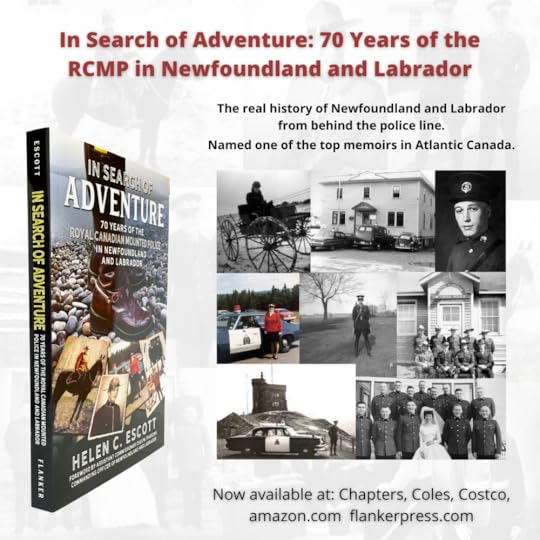
On Dec 21, 2013 the RCMP in Newfoundland and Labrador honoured twenty-two women in recognition of their support and unpaid services while they were stationed with their RCMP officer husbands in rural and remote locations.
The women were ultimately unpaid members who answered phones, searched female prisoners, and provided prisoner meals. They often used their homes as a hotel for visiting senior officers, court judges, doctors and nurses to whom they also provided meals and entertainment.
All of this done in very remote locations with inadequate housing and growing families of their own to which they had to tend. They provided these services out of loyalty to their husbands who were stationed by the RCMP to various areas of the country, each location bringing their own unique challenges.
"I was doing everything," said Ethel Jarvis, one of the recipients of the Second Man Award. Jarvis and her family lived in many communities on the coasts of Newfoundland and Labrador. Her husband, Dick Jarvis, first a Newfoundland Ranger then an RCMP officer, who was transferred from post to post.
Ethel Jarvis often worked alongside her husband, Newfoundland Ranger and RCMP officer Dick Jarvis, in his many postings. Jarvis said in each community, the family always lived in the same building where her husband worked. While her husband was away from the detachment, Jarvis answered phones, hosted visiting police officers, and cooked for whoever was in the detachment, and sometimes even acted as a guard.
"People who used to give us trouble, there was no cell, you used to put them in the office and stay up all night with them.”
Occasionally it was scary Jarvis said doing work at the detachment was often enjoyable but sometimes frightening. She recalled a day in Burgeo, “Dick was out on a call, and he had to leave me with a rambunctious, mentally ill patient. The man kept calling Dick, and when I went to check on him, the prisoner had escaped his holding area, and was pacing in the RCMP office, with a knife on a desk.”
Jarvis said she spoke to the prisoner through a thin sheet of glass. "I said, 'What do you need, anyway?' he said, 'I need a razor,' and I said, 'What do you need that for?' And he said, 'So I can cut my throat.'"
Jarvis responded, “Just a minute, I'll see if I can help you.” Ethel and Dick Jarvis were married for 65 years, and he passed away in May 2013. Jarvis said she will wear her Second Man badge in honour of her husband and policing partner.
Barbara Daye also received the award. She recalls her days in Battle Harbour, “When the commanding officer and other big shots came down to Battle Harbour to do inspections of the detachment, I had to feed them. I had four frozen turkey when I went down there. I had to feed them with my last one. There was nowhere else for them to go. But they said thank-you when they were leaving.”
Barbara’s husband, Art Daye, originally from Nova Scotia joined the RCMP in 1957. His first posting was to Corner Brook in November 1958. He spent his entire twenty-five-year career policing in Newfoundland and Labrador.
Art Daye was the last RCMP officer to be stationed at Battle Harbour off Labrador’s southeast coast. Barbara uprooted with her husband wherever he was sent. Their two children were just babies when they arrived in Battle Harbour. “The winter we were there, there were only 39 people in the community. Four of them were me, Art and our two kids. There was a special constable and his wife and three kids. So that made up nine of the 39 people there.”
While Art patrolled by boat in summer and snowmobile in winter, Barb was left holding down the fort and caring for their two young children. “I’d take all the notes when Artie was away. I’d answer the police radio and pass the message along to him when he got home,” Barbara said.
“He could be gone for two days or if the weather was bad, he could be gone for a week. Bobbie was two-and-a half. Leslie was seven months.”
As the RCMP Officers wife she took on many jobs. “It wasn’t unusual for people to call to ask what it was like on the island, I’d look out the window and I’d say well, I can see down to Mrs. Luther’s house so it must be okay for about a quarter of a mile,” Barbara laughed.
The nights in Battle Harbour were extremely cold. “I would take our little girl and go in one bed and Artie would take our son in the other sleeping bag and go in the other bed. I used to say to Artie, make sure his hands are not outside the sleeping bag. It was a hard go for a girl from Grand Falls… I wasn’t used to that.”
Retired Chief Superintendent George Powell says, “The men were married to the force first and to their wife second. They faithfully supported the Mounties. When the Mountie was away the citizens still came to the office or to your living quarters. They expected the Mountie’s wife to do everything the Mountie would do if he were there. Sometimes, the women would come to the Mounties’ wife because they were uncomfortable discussing personal things with a man.” While the Mountie’s wife has no official status, Powell said, she was a full-fledged member of the detachment and played a leading role in the community.
“Visiting government officials expected to be welcomed and fed at the Mounties’ house. After all it was a government building even if it was upstairs over the post office or courthouse or over the jail,” Powell said.
In October 2010, RCMP Commissioner William Elliott, approved the creation of a recognition for the wives of RCMP members who served from the 1900's to the 1970's, and whose contributions are chronicled in a book entitled, "When the Second Man was a Woman" by Ruth Lee-Knight. The Second Man Award was presented to 468 women across the country who were the wives of RCMP members working in one or two-man detachments from the 1940's to the 1970's.
Find this and more RCMP stories in: In Search of Adventure – 70 years of the RCMP in Newfoundland and Labrador by Helen C. Escott available at: Chapters, and Coles. Also, online at indigo.ca Apple – iTunes, Nook – (Barnes & Noble), Amazon, and Kobo. National and international orders can be placed by calling 1-866-739-4420 ext. #22 or you can send e-mail eoldford@flankerpress.com
The history of the RCMP in Newfoundland and Labrador
Newfoundland officially joined Canada at midnight, March 31st, 1949. The next day, April first, the Royal Canadian Mounted Police officially arrived in the country’s newest province. But the RCMP actually arrived in the province on March 21st, 1949. On that date, eight Mounties arrived by RCMP aircraft to form the first permanent troop in the newly created ‘B’ Division.
The first eight included: #11392 Inspector Tony D.A. McKinnon, #12035 Sgt. Bernard Peck, #10544 Sgt. Theodore Bolstad, #12373 Cst. Alexander Gillespie, #11761 Cst. Alexander Ewing, #11686 Cst. Bernard Harvey, #12627 Cpl. Lawrence Gilchrist, and #12642 Cst. Archibald Watson.
The next day, #14510 Cst. Joseph A. Pinto arrived on the ferry driving the first marked RCMP police car to be used on the Island.
They had their work cut out for them. Their duties included: setting up the new ‘B’ Division Head Quarters on Kenna’s Hill, and begin preparations for the planned absorption of Newfoundland Rangers.
The RCMP took over the duties of the former Newfoundland Rangers and members of the Newfoundland Constabulary serving outside St. John's.
The Force was given a policing contract for all of Newfoundland and Labrador except for the capital city.
For the first year, RCMP Members performed Federal duties. Then on August first, 1950 fifty-five Members of the Newfoundland Rangers and thirty-five Members of the Newfoundland Constabulary became Members of the Royal Canadian Mounted Police. It was the beginning of the RCMP’s contract policing history in this province.
Eventually the growth in the establishment of the RCMP led to the force opening sub-division headquarters in Corner Brook and St. John's in 1954. As the force continued to expand, sub-divisions were then added in Gander and Labrador.
Although the RCMP absorbed the Newfoundland Rangers and members of the Newfoundland Constabulary they were not the first Newfoundlanders to join the Force.
That honour goes to Regimental No. 2178 Constable Ernest Peyton who joined the North West Mounted Police, the forerunner of the RCMP, in 1888. He was the son of a prominent family from Twillingate and was believed to be 21 at the time. Cst. Peyton served for only three months. He succumbed to a sudden illness on September 25, 1888. A plaque honouring Cst. Peyton is proudly displayed at the Twillingate Museum.
Cst. Patrick J. Whelan from Placentia was eighteen when he joined the NWMP in 1911. Cst. Whelan served at several postings on the prairies. In 1914, war broke out in France and Canada began to mobilize to contribute to the aid of the British. In 1915, Cst. Whelan left the Mounties and enlisted with the 50th Battalion in Calgary. He was sent to France in 1916 and was injured several times in front-line action. On April 25, 1917, he was killed in action during a night reconnaissance mission at Fresnoy, in the battle for Vimy Ridge. He was buried in a military cemetery at Villers du Bois near Arras.
Two RCMP Members were killed on duty in Newfoundland and Labrador.
Cst. Terry Hoey was 21 years old when he was serving in Botwood, November 6, 1958. Cst. Hoey, along with two other RCMP members, responded to a domestic dispute between the owner of a local restaurant and his son. After getting no response from inside the living quarters of the restaurant and fearing for the son’s life, the three members entered a side window and knocked on the living room door. They received no answer and found the door had been heavily barricaded. They called out to the owner and asked him to open the door. Immediately a shotgun blast ripped through the wood of the closed door striking Cst. Hoey in the chest. He died at the scene. A great part of his family’s sorrow was in knowing that Terry had wanted to be a policeman all his life and that wish had led him to his death.
Cst. Robert Amey was 24 years old when he was killed December 17, 1964 in Whitbourne. Four men broke out of Her Majesty’s Penitentiary in St. John’s. They stole a car and headed west along the Trans-Canada Highway. Near Whitbourne, they ran through an RCMP roadblock that had been set up by Csts. David Keith and Robert Amey. A chase ensued, and the four fugitives soon abandoned their car and ran for cover. They were discovered hiding in Whitbourne. Even though they were cornered, they refused to surrender. Amey went to the car radio and called for help. When Amey was in the cruiser, the four rushed Cst. Keith and after beating him severely, took away his service revolver. When Amey came running back, he could see that Keith was down and one of the fugitives was armed. Amey attempted to hold the prisoners at gun point but the fugitive fired three shots, one of which hit Amey in the chest.
Four RCMP members who were born in Newfoundland and Labrador have their names engraved on the Honour Roll:
Cst. Richard William GREEN - Died 6 August 1958 along the East Shore of Skaha Lake, BC while performing his duty (spotter)when the RCMP Aircraft he was in crashed.
Cst. Derek Thomas IVANY - Died 24 June 1971 at St. Arthur, NB., while performing his duties in a Police Vehicle Accident.
Cst. Lindbergh Bruce DAVIS - Died 8 December 1979 at Portage Le Prairie, Manitoba while performing his duties in a Police/Train Accident.
Cst. Douglas Ambrose Mark BUTLER - Died 16 October 1982 near Oxbow, Saskatchewan, while performing his duties in a Police Vehicle Accident.
The image of Sgt. Reg Gulliford is displayed on the Conception Bay South Monument of Honour, a solemn tribute to those who serve, and have served. On March 6th, 1986, Sgt. Gulliford and his partner, Special Constable Rob Thomas were in Powerview, Manitoba when they were shot while on duty. Special Constable Thomas died at the scene and Sgt. Gulliford was seriously injured. He underwent 29 operations and by September 1987 was back on his feet. Incredibly, he returned to work with the RCMP in St. John's the following January. Gulliford worked at RCMP Headquarters in St. John's until his death at the age of forty-six. He died January 13, 2008 after a courageous battle with a rare form of cancer that was related to radiation exposure. This exposure was from the endless X-rays to help him recover. As always Sgt. Gulliford faced this terrible disease with strength of character and a positive approach. Sgt. Gulliford is buried in the Buchans Community Cemetery in Buchans, NL.
On September 16, 1974, three women from Newfoundland and Labrador made Canadian policing history when they were sworn into the RCMP’s first female troop. They included: Cheryl LaFosse, Gail Courtney, and Rose Marie Russell-Coffee. While LaFosse and Courtney were posted to the mainland, Cst. Russell-Coffey was posted to Corner Brook in 1975, making her the first female police officer in Newfoundland and Labrador.
On August first, 2020, the RCMP celebrates their 70th anniversary in Newfoundland and Labrador. Since Confederation in 1949, the Force has become entrenched in the history of the province. They held the line at the Badger Riot in 1959, engaged in a pursuit on the high seas with two Spanish trawlers that kidnapped two Fisheries Officers, in 1986 processed the Tamil refugees, responded to the Arrow Air Flight DC-8 crash on Dec. 12, 1985 that killed all 256 American soldiers and crew. RCMP Members coordinated the response on September 11, 2001 during the terrorist attacks that brought 17,000 international airline passengers who landed in the province.
The RCMP has been sown into the cultural fabric of the province through well-known iconic songs like Aunt Martha’s Sheep. The image of a Mountie standing proudly is depicted in the painting ‘The History of Newfoundland’ by artist Harold Goodridge which is hung in the lobby of the Confederation Building in St. John’s.
The RCMP’s history in Newfoundland and Labrador has been document in two books: The Mounties: The First Fifty Years in Newfoundland and Labrador, edited by Gerald Leahy, for the RCMP Veterans' Association of Newfoundland and Labrador.
In Search of Adventure: 70 Years of the RCMP in Newfoundland and Labrador.
The RCMP NL Veterans Association was formed in 1977 by a group of retired members. It has been continually active since that time.
Today the Newfoundland and Labrador RCMP Veterans Association have approximately 300 members throughout the Province. The Association is active as a social committee, regularly supporting veterans, their families, RCMP events and our communities.
The NL RCMP Veterans Association has made many contributions to numerous charitable organizations. They participated in the provincial Adopt a Highway program for ten years, volunteered at senior’s residences on special occasions, assisted at shelters serving and feeding persons in need and volunteer to run the RCMP’s annual Klondike Night.
Our Veterans continually volunteer at George Street United Church, The Gathering Place and Choices for Youth, among others.
The NL Veterans Association also offers camaraderie through an annual breakfast for the staff at B Division Headquarters, a monthly supper/ meeting for Veterans, annual summer BBQ and auction where money raised is donated to charity.
Our Veterans march and stand proudly along side our serving members during the Remembrance Day Ceremony, Memorial Day and during the annual Police Officers Memorial.
The Newfoundland and Labrador Veterans Association – We are proud to have served, and we are proud to be Veterans.
Find these and more RCMP stories in: In Search of Adventure – 70 years of the RCMP in Newfoundland and Labrador by Helen C. Escott available at: Chapters, and Coles. Also, online at indigo.ca Apple – iTunes, Nook – (Barnes & Noble), Amazon, and Kobo. National and international orders can be placed by calling 1-866-739-4420 ext. #22 or you can send e-mail eoldford@flankerpress.com
The Helen C. Escott Book Club: A Novel Idea

Be it the the humourous side as in I Am Funny Like That or the darker voids as in her Operations series, Escott is always looking t ...more
- Helen C. Escott's profile
- 152 followers

