
Helen C. Escott's Blog: The Helen C. Escott Book Club: A Novel Idea, page 5
June 13, 2023
Operation Masonic was shortlisted for the Atlantic Book Awards - get the 1st chapter free!

Atlantic Book Awards - Get the first chapter of Operation Masonic free!
What an amazing night at the Atlantic Book Awards. My first time there & I was incredibly honoured to stand with so many incredibly talented Newfoundland and Labrador and maritime authors.
My crime thriller, Operation Masonic was short-listed for the 2023 Best Atlantic-Published Book Award by the Atlantic Publishers Marketing Association.
Haven't read it yet? You can get the first chapter free when you sign up for, A Novel Idea here.
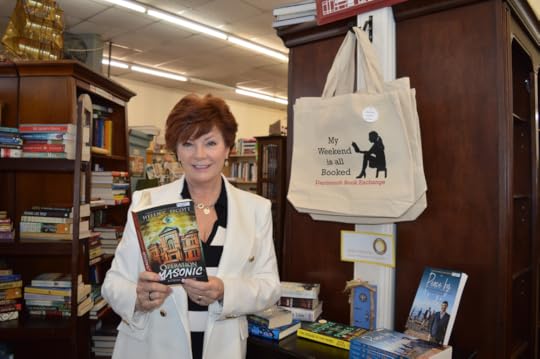
Dartmouth Book Exchange - Reveals the mystery behind my character names!
Oh no! I bet you didn't know about the mystery behind the mystery in all of my books!
I have hidden a secret behind the name of the characters in the Operation Wormwood Duology. Sue Slade, manager of the Dartmouth Book Exchange was able to get the details out of me during her interrogation, I mean interview, when I visited the store last week.
I bet you didn't know there was a mystery behind the mystery. Check it out by clicking here. Thank you to Sue and everyone who showed up for my visit during the Atlantic Book Awards.
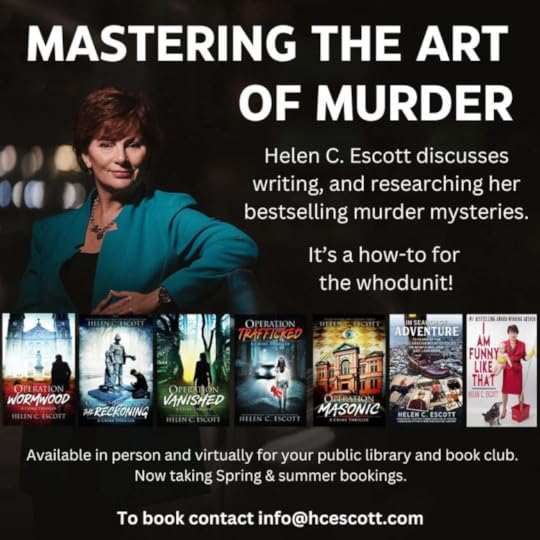
Mastering the Art of Murder: The art of crafting the perfect murder story
Have you always wanted to write a murder mystery but don't know where to start? Do you have a tale of mystery, intrigue and murder inside just waiting to get out?
Learn the art of crafting the perfect murder story, with Mastering the Art of Murder. Available to schools, libraries and writing groups.
I start with a twenty minute slide presentation followed by a thirty minute question and answer session where we can discuss your ideas and talk about how to start your novel.
Recently, I spoke to Krissy Holmes at the CBC St. John's Morning Show about this course. Listen to the interview about Mastering the Art of Murder here.
To book contact Helen C. Escott at: info@helencescott.com


June 1, 2023
There's a little bit of fruitcake left in everyone of us
If my mother had been born in Hollywood, she could have easily been a movie star. I could picture her as a teenager with her long black hair dancing around her shoulders and her long legs dangling as she swayed to some 1949 hit as she sat on a stool in some corner malt shop. I could see her playfully nursing some chocolate shake as a movie producer spotted her across the room and noticed her potential to be a star.

Instead, she was born in St. Vincent’s, St. Mary’s Bay where she was sent out at fourteen years old to a family in St. John’s to become their maid. She never talked much about the experience but every now and again she would drop a story about how hard it was to wash the clothes for five children in the old wringer washer machine and how the Lye soap burned her hands.
Her life was far from that of a Hollywood actress. She didn’t smoke or drink, and she seemed to exist solely on tea and toast. She survived an abusive marriage and was left with ten children to care for. Her family told her, ‘You made your bed, now lay in it.’ There were no reinforcements coming to help. She put her shoulder to the grindstone and pushed. With the help of the Roman Catholic Church, she was able to buy a four story, hundred-year-old house on Freshwater Road.
The top flat was filled to the rafters with boarders. We referred to them as ‘Mom’s stray cats.’ She took in anyone with a hard-luck story. It paid the bills and solving their problems became her nightly chore. She did not believe that there were throw away people. When ever she spotted someone who was down on their luck, she would stop to talk to them much to our great embarrassment. She would say, “They weren’t born that way. Somebody did something that made them turn out like that.”
Everyone with a sob story knew they could get a hot meal, a cup of tea and a bed for the night at Mrs. Cleary’s Boarding House. She never charged for tea or food and there was always a pot of something on her oil stove and the kettle boiled.
I remember one Christmas Eve in particular, a huge Newfoundland storm had closed the city. The snow on the roads was up to my knees. A city bus was tearing its guts out trying to get up Freshwater Road, but it hit a white out by Cook Street and grinded to a halt. Mom and I watched from the living room window. The bus driver and several passengers got off and made attempts to push and pull to no avail. Only a tow truck would be able to move it.
My mother watched from the front door and waved to the driver to come over. Which was an amazing thing. My mother had anxiety and panic attacks long before they were in vogue and hardly left the house. She seemed to get over her shyness whenever she spotted someone in need.
The driver came over and asked to use the phone. She invited him in and then invited the whole bus load of people in. About twenty or so people of all ages piled into our hallway. Boots and coats were stacked up everywhere.
They were in luck.
You can smell my mother’s kitchen from the front doorstep and probably well down the road. Especially if she was baking. Which she had spent days doing.
The strangers piled in to the kitchen wherever they could fit. My mother line up cups and saucers and a box of Tetley Tea (she saved the Red Rose for the boarders). She took the top off a pot of pea soup simmering on the stove and dealt out a spoon and bowl to each person.
She was like an orchestra conductor waving her arms around, giving directions, finding places to sit, directing people to the bathroom. Our kitchen had turned into Grand Central Station.
Her kitchen itself was nothing special. Handmade wooden cabinets lined the walls with laminate countertops, floral canvas covered the floor, and it had one wide window that looked out on a small muddy yard and into the neighbour’s kitchen. There was an antique wooden table in the center that had come from ‘up home.’ She reached in under the table and pulled out the two leaves that were tucked into secret pockets underneath and only extended for occasions or company. Six wooden well-worn captains’ chairs surrounded it. A small sideboard lovingly displayed her blue and white Willow dishes that were also only used for occasions or company. She opened the doors to it and pulled out her finest for these Christmas strangers.
She had cut the pine wainscotting around the kitchen walls herself on the back doorstep that past summer and bought the striped wallpaper above it from Templeman’s on Water Street. I was with her when she bought it and for some reason, she was quite proud of where it came from. She told everyone who admired it that it ‘came from Templeman’s on Water Street,’ with a slight old fashioned Newfoundland pre-confederation British accent.
She had stayed up one night a few weeks before Christmas baking fruitcakes. Although I never understood why because I don’t think anyone of us liked fruitcake.
If I did not get in the way, she would let me stay up late to watch and learn, even though I had no interest and just wanted to stay up late to spend time with her. At this point in our lives, it was only myself, my mother, two brothers and a fourth floor full of boarders. Everyone else had married or just moved away.
She would say things like, ‘A fruitcake should be rich and moist. It should be so heavy so you can barely lift it off the table.” All good advice that I would not need for another fifty years.
“If the fruitcake is not heavy people will know you skimped on the ingredients.” It was her way of saying; they’ll know we are poor.
It took hours to make these cakes. I did not mind because she would let me have tea and gingerbread cookies while I watched. She would turn the radio up and hum along to the Christmas carols telling me stories about Christmas back in St. Vincent’s when she was my age. She always talked about her childhood with such fond memories especially when she referred to her father, whom she adored.
I would watch her knead the dough on top of our old wooden kitchen table with the wobbly leg and they would begin a dance that turned into this thick dark brown concoction that drooped into well greased medal pans.
“People think that because the ingredients are dried, it doesn’t matter how old they are.” She leaned across the table and lowered her voice, “Sharon next door is using left over dried fruit from last year. You’ll tell the difference.”
I doubt if I could, even today.
“This one’s for Aunt Vera, she loves a little extra dried fruit in hers,” and she would take a handful of coloured, candied fruit and swirl it around in the batter. “Aunt Liz likes hers traditional. Nothing extra and nothing new.”
Every cake had a name attached to it.
The oven in our old oil stove could heat the whole kitchen when she opened the door. She took the damper hook off a nail on the wall and checked to make sure it was good and lit. Then announced, “It’s ready.” The cakes would be neatly piled into the oven and within minutes it seemed like the whole street smelled like dried fruit and spices. Or as she would say, “It smells like Christmas.”
It would be well after midnight when she finally took them out of the oven but that would not be the end of it. Just the beginning. Making fruit cakes would be a week-long project. Once they cooled, she would wrap them in parchment paper and root out the bottle of rum she had hid in the back of the cleaning closet in the hallway. Then douse the cakes with it.
I hated the stark smell of the alcohol and how it stung my nostrils or burned a hole in my stomach when I tasted the cake. “The rum preserves the cake,” she would tell me, “The ingredients cost a lot of money and you can’t let the cake go bad. The rum will keep it fresh for years.”
Years later I used her recipe for the first time. It took me nine hours to make the cake. The ingredients alone cost almost two hundred dollars. After it cooled, I wrapped it as she taught me and poured a whole bottle of rum over it, much to my husband’s great annoyance.
No one ate it. It became a centerpiece over Christmas and a paperweight after the decorations were put away. I kept it on the countertop just to see how long it would last. When we came back from Florida that May, my husband demanded that I throw it out.
It was hard to let it go.
“Are they ready?” I would ask her as soon as I threw my bookbag in the front hall.
“Yes,” she finally said. She would carefully pull the parchment paper off and place them on a silver tinfoil covered carboard disk. Each cut perfectly for each cake. “It can’t just taste right. It must look good too.”
She would decorate each one with green peppermint leaves, and candied cherries, which I would sneak a taste of every time she looked away. “No one will eat the cake if it doesn’t look good.”
She would lift each cake with both hands and let me slip the cellophane wrapping underneath. Then she would gather it all up and tie it together with a big Christmas bow.
Each cake would be proudly displayed on the countertop with the name of the receiver attached to it. A light and a dark cake would be displayed on matching glass cake platters and only cut when people were coming. It would be cut into small pieces and placed next to the blue and white Willow dishes.
The bus driver asked her about the ‘lovely fruit cakes’ on the counter. She happily sliced it up and dealt it out to everyone along with their tea. It was an impromptu Christmas party that went on for hours. Eventually the tow truck showed up along with another bus and the people put on their boots and coats and left leaving behind well wishes and promises to drop in another time. A few did drop back gifts of candy and cookies and other treats.
My mother accepted her lot in life and carried on as her generation does. Never making a fuss about anything.
Every Christmas she happily and loving made her fruitcakes just as every day she collected the lost souls in the neighbourhood. Never judging just ‘living like Jesus’ she would say.
Looking back, I think the fruitcakes were the only thing in her life that she truly controlled.
To this day when I run into people who knew her, they rave about her fruitcakes. At her funeral an elderly woman took me by the elbow and said, “Your mother made the best fruitcakes.”
In reflection, I think everyone who lived in Mrs. Cleary’s Boarding House was a fruitcake. The nuts, the glazed cherries, the dried prunes, the chopped dates the dark and golden raisins, the currents and yes there is a difference between raisins and currents.
All mixed together lovingly, nurtured, cared for, made presentable. So, no one would judge them wrongly. So, no one would think they were poor.
May 24, 2023
Why I want the next group of politicians to come from the arts.

I want an author for Minister of Education.
I want someone who loves our own story to tell it.
I want someone who knows our true history to write it.
I want someone who loves our Newfoundland and Labrador culture to promote it.
I want our Ode to Newfoundland to sung on high by our youth.
I want Labrador to be included in that Ode
I want young Newfoundlanders and Labradorians to see themselves in the books they read.
I want the rules to be more about what you know, rather than who you know.
I want people from this province to be the most education people in the country.
I want Canadians to hear the word Newfoundlander and Labradorian then automatically think: Hardworking and educated.
I want to read loudly from my books on the mainland and not be criticized for my accent.
I want to change the term ‘politician’ to ‘fighting Newfoundlander’ so they don’t forget their purpose.
I want a painter for Minister of Culture and Tourism.
I want them to vividly capture the landscape and blur the line between photo and painting.
I want a sculpturer for Minister of Immigration.
I want them to carve out what the future of our culture looks like.
I want a photographer to be Minister of Children, Seniors, and Social Development.
I want them to have the ability to capture the soul of a child in foster care or a senior who must choose between staying warm and staying fed.
I want them to look at those photos every day and remember what they are there to do.
I want a tattooist for Minister of Finance.
I want them to write a plan for our future in permanent ink for all to see.
I want to be able to pull up the sleeve of government and read that plan when they tell me it never existed.
I want an illustrator for Minister of Fisheries, Forestry and Agriculture.
Someone who can lay out the topography of the land and show us the past, present and future.
I want a textile artist for Minister of Health and Community Services.
I want them to weave and hook until they make sense of a system that makes people sick.
I want a graphic designer for Minister of Justice.
I want them to create visual concepts that communicate ideas that inspire, inform, captivate and reform rather than run a broken system that only teaches people how to be better criminals.
But first, I want an author for Minister of Education.
An author who can inspire young people to stay in the education system, and keep them out of the justice system. To keep them away from the health care system, take them away from the foster care system, keep our culture ingrained in their DNA and bring people back to our natural resources.
I want the youth of this province to stay and make a life here.
April 13, 2023
Local Author Finalist for Best Book in Atlantic Canada
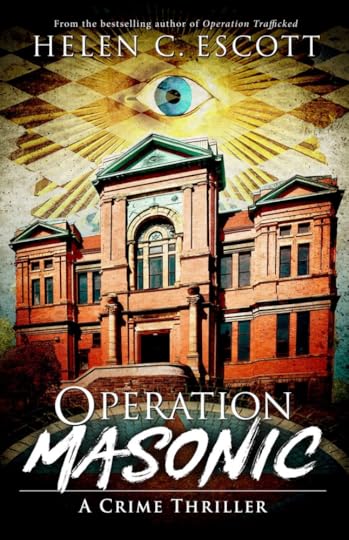
Award-winning author Helen C. Escott has been announced as a finalist for the 2023 Best Atlantic-Published book award by the Atlantic Publishers Marketing Association (APMA) for her best-selling book Operation Masonic (Flanker Press).
Get the first chapter of bestselling Operation Masonic for free when you sign up for A Novel Idea - Helen C. Escott's newsletter.
The winners of the six Atlantic Book Awards will be revealed at the Atlantic Book Awards Gala at Halifax Central Library on Wednesday, June 7. The awards ceremony will also be live-streamed so book lovers across the region and beyond can join in the celebration.
Operation Masonic: The Mason’s Most Worshipful Grand Master is murdered in the Masonic Temple on Cathedral Street in St. John’s. His body laid out in the ritualistic Chamber of Reflection surrounded by centuries of secrets. Royal Newfoundland Constabulary (RNC) Insp. Nicholas Myra digs through thousands of years of history, secrets, scandals, and symbols in a hunt for the killer. A search that leads them back to the Temple of Solomon and the first Masonic murder.
A spelling mistake in a stained-glass window at the Basilica of St. John the Baptist and a Masonic symbol that fits over the map of St. John’s lead to rumours of hidden tunnels under churches and to an unbelievable treasure hunt in the heart of the Ecclesiastical Circle. An area few know about.

This is the historical backdrop to Helen C. Escott’s engrossing and well-researched new novel, Operation Masonic – The Lost Cathedral- from Flanker Press. This gripping thriller is exceedingly clever and compellingly truthful.
Operation Masonic is a fiction, that is all true.
“The killer is always the one who is not getting what they want. Who must have what they can’t have.” (Insp. Myra)
April 12, 2023
Announcing the 2023 Atlantic Book Award Nominees
Hold onto your hats, book lovers, the Atlantic Book Awards are back, showcasing the finest
in Atlantic Canadian writing and publishing. The books shortlisted for the 2023 Atlantic Book Awards are a testament to the incredible diversity and richness of Atlantic Canadian literature, with everything from poetry to scholarly writing, books for young adults, short stories, adult fiction, and three titles in contention to be named the best Atlantic-published book.
The winners of the six Atlantic Book Awards will be revealed at the Atlantic Book Awards Gala at Halifax Central Library on Wednesday, June 7. Here are the nominees:
Alistair MacLeod Prize for Short Fiction
Meghan Rose Allen, The Summer the School Burned Down (Indie-published)Bridget Canning, No One Knows About Us (Breakwater Books)Elaine McCluskey, Rafael Has Pretty Eyes (Goose Lane Editions)
Ann Connor Brimer Award for Atlantic Canadian Children’s Literature
Nicola Davison, Decoding Dot Grey (Nimbus Publishing)Vicki Grant, Tell Me When You Feel Something (Penguin Random House)Jo Treggiari, Heartbreak Homes (Nimbus Publishing)
APMA Best Atlantic-Published Book Award
Goose Lane Editions with the Beaverbrook Art Gallery, Wabanaki Modern / Wabanaki Kiskukewey / Wabanaki Moderne by Emma Hassencahl-Perley & John Leroux Flanker Press, Operation Masonic by Helen C. EscottBoulder Books, Food, Culture, Place: Stories, Traditions, and Recipes of Newfoundland by Lori McCarthy and Marsha Tulk
Atlantic Book Award for Scholarly Writing
Carol Lynne D’Arcangelis, The Solidarity Encounter: Women, Activism, and Creating Non-Colonizing Relations (UBC Press) Mark David Turner, Inuit TakugatsaliuKatiget / On Inuit Cinema (Memorial University Press)Elizabeth Yeoman, Exactly What I Said: Translating Words and Worlds (University of Manitoba Press)
J. M. Abraham Atlantic Poetry Award
Luke Hathaway, The Affirmations (Biblioasis)Nanci Lee, Hsin (Brick Books) Annick MacAskill, Shadow Blight (Gaspereau Press)
Thomas Raddall Atlantic Fiction Award
K. R. Byggdin, Wonder World (Enfield & Wizenty) Bobbi French, The Good Women of Safe Harbour (HarperCollins) Lisa Moore, This Is How We Love (House of Anansi)
Nine of the eighteen nominations are for books published by Atlantic publishers. New Brunswick’s Goose Lane Editions and Nova Scotia’s Nimbus Publishing have two nominations each. Other regional publishers are Breakwater Books, Boulder Books, and Flanker Press, all based in Newfoundland, and Nova Scotia’s Gaspereau Press.
Nominee Meghan Rose Allen (The Summer the School Burned Down) is also nominated for a New Brunswick Book Award. The winners of the NBBAs will be revealed at an awards ceremony at Lily Lake Pavillion in Saint John on Saturday, June 3.
Nominees Bobbi French (The Good Women of Safe Harbour), Nanci Lee (Hsin), and Jo Treggiari (Heartbreak Homes) are all also nominated for Nova Scotia Book Awards. Winners of the NSBAs will be revealed at a gala ceremony at Brightwood Golf & Country Club in Dartmouth on Monday, June 5.
The Nova Scotia Book Awards and the New Brunswick Book Awards take place during the Atlantic Book Festival, along with a range of online and in-person events featuring authors shortlisted for awards in the week leading up to the Atlantic Book Awards Gala.
On Wednesday, June 7, the six Atlantic book awards, including one of Canada’s biggest book prizes, the Thomas Raddall Atlantic Fiction Award valued at $30,000, will be presented along with the Atlantic Legacy Award, honouring an individual who has made an extraordinary contribution to the advancement and encouragement of the literary arts in Atlantic Canada.
The 2023 Atlantic Book Awards Gala takes place at Paul O’Regan Hall in Halifax Central Library at 7:00 p.m. and will be hosted by journalist, author, and editor Lindsay Ruck (Amazing Black Atlantic Canadians). Tickets ($20) are available online now: https://www.eventbrite.com/e/atlantic-book-awards-tickets-609529317597
The awards ceremony will also be live-streamed so book lovers across the region and beyond can join in the celebration.
The Atlantic Book Awards Society extends a big congratulations to this year’s nominees. Visit www.atlanticbookawards.ca and find us on Facebook, Twitter, and Instagram, where you can stay up-to-date on the Atlantic Book Awards Festival events.
March 13, 2023


December 29, 2022
A Novel Idea: The Helen C. Escott Book Club

January is already turning out to be an exciting month for crime thriller readers. For the first time both Operation Wormwood and The Reckoning are on sale!
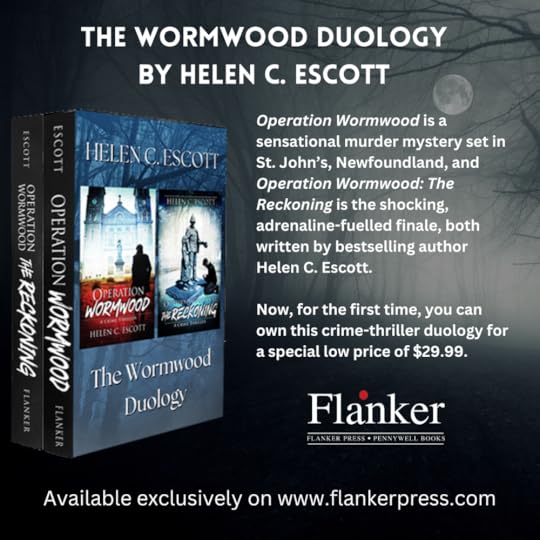
Operation Wormwood is a sensational crime thriller & its conclusion, The Reckoning, is the shocking, adrenaline-fueled finale in this bestselling Duology by Helen C. Escott.
Now, for the first time, you can own this crime-thriller duology for a special low price of $29.99, available only at https://www.flankerpress.com/
Helen C Escott’s iconic detective is back – in this bestselling suspense thriller series.
Sgt. Nicholas Myra’s crime-solving spree takes him to the most historic areas of the oldest city in North America, St. John’s. He is hot on the track of a serial killer who the media and public are calling a hero.
Read about this bestselling series here.
Operation Wormwood is a bestseller that critics are calling ‘one heck of a thriller.’ It was a finalist in the 2019 Arthur Ellis Awards for Best First Crime Novel. Read the first chapter here.
Royal Newfoundland Constabulary's Sgt. Nicholas Myra knows that evil lurks around every corner. He has policed the city of St. John's his whole career.
Take a trip through some the scenes in both novels. Click here.
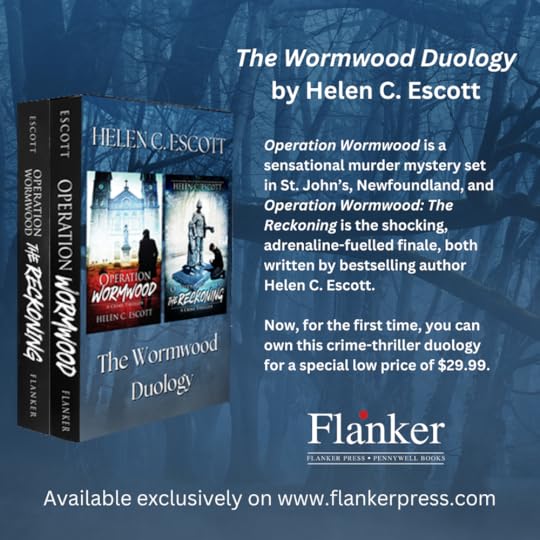
Helen C. Escott's Operation Series takes you on a thrill ride through the oldest city in North America. Where historical landmarks become clues and every name has two meanings. Each one is a mind blowing crime thriller that will have you researching what’s real and what’s not. Never take a chapter at face value. See the whole series here.
Get in Touch Sign up for the Helen C. Escott newsletter for stories, features, and news on her latest books delivered to your inbox every month. Plus receive the first chapter of bestselling Operation Masonic for free. Fill out the form at the bottom of this page .
Travel Newfoundland and Labrador with Sgt. Myra
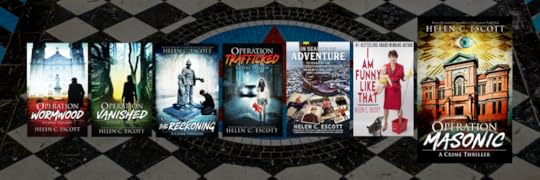
Helen C Escott’s iconic detective is back – in the bestselling suspense thriller - Wormwood Duology: Operation Wormwood and The Reckoning.
Royal Newfoundland Constabulary Sgt. Nicholas Myra knows that evil lurks around every corner.
Let's take a trip through all the scenes in both novels.
Newfoundland and Labrador:
When was the last time you took a breath? Or watched the setting sun? In Newfoundland and Labrador, our way of life is a little different. We don’t believe much in regret. We take what each day has to offer, and we don’t wait for a reason to celebrate. That’s why you’ll find us dancing and singing any night of the week, at a kitchen party or on the shore. Don’t be surprised if you're asked to join in. Come visit Canada's newest province click here for ,information.

City of St. John's:
On the eastern edge of Newfoundland & Labrador, St. John’s is the province’s capital city and the oldest city in North America.
Since the Europeans first came here more than 500 years ago, the city has been the economic, political, and cultural hub of this vibrant and unique province.
Sgt. Myra takes you on a trill ride through the historic streets as he investigates several several crime scenes. Get all the information you need on St. John's by clicking here.
Need a map? Click here.
Health Science Center:
The Health Sciences Centre is an acute care facility serving the people of the entire province. It is a teaching hospital and is connected to Memorial University’s Schools of Medicine, Pharmacy and Nursing. It is also connected and shares services with the Janeway Children’s Health and Rehabilitation Centre and the Dr. H. Bliss Murphy Cancer Centre.
Sgt. Myra first meets nurse Agatha Catania and Dr. Luke Gillespie at the Health Science Center where they deal with patient zero in the Wormwood Duology.
Basilica of St. John the Baptist:
Upon This Rock I Will Build My Church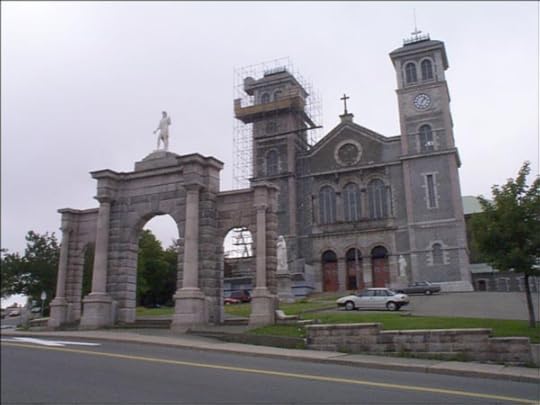
Sgt. Myra meets Father Peter Cooke for the first time at the Basilica of St. John the Baptist. Throughout the book they take you to several locations inside this grand Basilica. Take a look at the beautiful collection of ,stained glass.
Guided tours of the Basilica Cathedral begin daily after morning masses conclude and on Sundays at noon and continue until the Basilica closes at 4pm. If you prefer a self-guided socially-distanced tour, a self-guided QR code audio tour is available in English, French, Spanish and German for a nominal fee from the Basilica Heritage Foundation at the Basilica Visitors’ Desk at the main entrance to the Basilica.
Tour operators are strongly encouraged to pre-book visits for groups by contacting the Basilica parish office at 754-2170; an admission fee of $5 per-person applies for commercial tour operators.
VIRTUAL TOUR OF THE BASILICA CATHEDRAL
Walk through the Basilica Cathedral virtually with the interactive tour. At points of interest, click to learn more. Click on the blue dots embedded in the tour for text and links to further information. Self-guided Audio tours in English, French, Spanish and German are available from the Basilica Heritage Foundation at the Basilica Visitors’ Desk at the main entrance to the Basilica. Get the tour here.
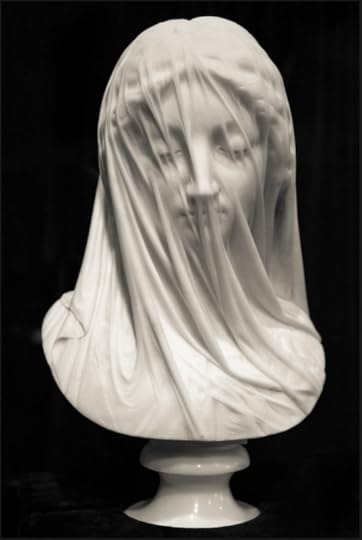
The Veiled Virgin:
Father Peter Cooke and Sr. Pius have an intense conversation in front of the famous Veiled Virgin. It is said that those who pray before her have their prayers answered.
Yes this is a real statue.
The Veiled Virgin Sculpture is one world famous art piece belonging to the Presentation Sisters and available for public viewing.
This marble sculpture is currently housed at Presentation Convent, Cathedral Square.

Quidi Vidi Lake Trail:
Dr. Gillespie clears his head by running around Quidi Vidi Lake. As he runs the path he spots the rowers practicing for the Royal St. John's Regatta. The longest running sporting event in North America.
It is a 3.8 km walking trail that loops around Quidi Vidi Lake. During the summer rowers prepare for the Royal St. John's Regatta, held in St. John's annually in August since 1826. You can observe waterfowl and seabirds that use the Lake year-round as a resting and feeding area. Check it out for your self by clicking ,here.
Happy Valley Goose Bay:
Sgt. Myra meets RCMP Inspector Boyd Michaels who tells him about a file he worked on while station in Happy Valley Goose Bay. Inspector Michaels fills in some holes in Myra's investigation but also leaves some questions unanswered.
Interested in Happy Valley Goose Bay?
The Town of Happy Valley-Goose Bay is home to a population of approximately 8,000 people, making it the fifth largest municipality in Newfoundland and Labrador and the largest Indigenous populated community in Labrador. Learn more ,here.
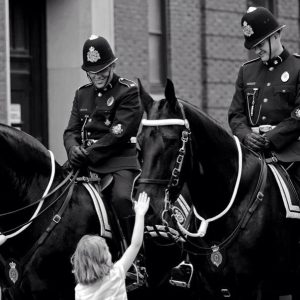
The Royal Newfoundland Constabulary:
Sgt. Nicholas Myra has long family history with the Royal Newfoundland Constabulary. Both his father and grandfather were police officers.
Myra takes you inside the headquarters of the oldest police force in North America where his office is located and were a lot of the action takes place.
The Royal Newfoundland Constabulary (RNC) is Newfoundland and Labrador’s Provincial Police Service. The RNC dates back to 1729, with the appointment of the first police constables. In the 19th century, the RNC was modeled after the Royal Irish Constabulary with the secondment in 1844 of Timothy Mitchell of the Royal Irish Constabulary to be Inspector General, making it the oldest civil police service in North America.
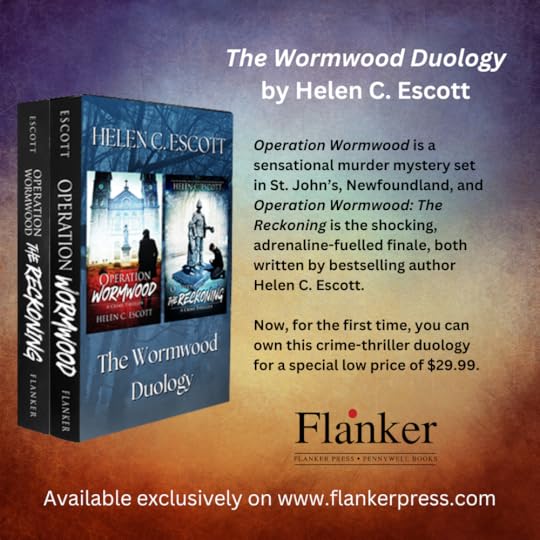
Operation Wormwood is a sensational crime thriller & its conclusion, The Reckoning, is the shocking, adrenaline-fueled finale in this bestselling Duology by Helen C. Escott.
Now, for the first time, you can own this crime-thriller duology for a special low price of $29.99, available only at https://www.flankerpress.com/
Operation Wormwood - Chapter 1
It may only be a matter of time before God unleashes a plague upon the earth. — Sister Mary Pius
A thick fog hugged the streets of St. John’s, the oldest city in North America. The seaport had been surrounded by a bank of fog for three days. The cold, damp air crept into a person’s bones, causing a chill that not even a hot cup of tea could thaw. This type of spring weather could last for weeks, causing even the hardiest of Newfoundlanders to curse the damp cold and wonder why they didn’t move down south to a warmer climate.
It wasn’t unusual for a person to develop anything from a common cold to pneumonia this time of year. The emergency department at the Health Sciences Centre was alive with activity. Charles Horan struggled to carry Patrick Keating through the front doors of the hospital. The elderly Keating was barely able to stand and continuously passed in and out of consciousness. Horan wanted to call an ambulance, but Keating did not want the attention the lights and sirens would bring. The two men could have easily been mistaken for father and son. The waiting room was standing room only.
The thirty-year-old hospital had hardly kept up with the growing population of the province. The once state-of-the-art emergency department was in dire need of simple things like an updated seating area, a lick of paint, and more space. The sniffles and groans of sick people filled the area. The sign on the wall said estimated wait time: 4 hours. There were three wickets at the front of the room, each with clerks taking basic medical information from patients and determining their level of priority. Keating’s right arm was draped across Horan’s shoulders. Horan held the elderly man tight around the waist to keep him from falling as he carefully helped him sit in front of a wicket. Keating’s body melted into the chair. The perspiration on his brow was visible, and his mouth sagged as if he was having a stroke.
Horan quickly explained that Keating had been sick on and off for over a year. He had a flu that he could not get rid of. He told the nurse he begged the elderly man to go to the doctor, but Keating refused. His symptoms became worse over the past few months. He had an unquenchable thirst but found water bitter and turned his stomach. The thirst was followed by unstoppable nosebleeds. He had lost a considerable amount of weight but attributed this to stress and being overworked. He also had torturous pain throughout his body. The nurse noted the symptoms and placed a hospital bracelet around Keating’s wrist. She prioritized him as urgent but not life-threatening. She brought out a wheelchair and, with Horan’s help, lifted Keating onto the padded seat.
By this time, Keating was starting to come to and began talking nonsensically. He was unaware of his surroundings, and his speech slurred as he grabbed Horan by the collar and pulled him closer, whispering, “Don’t tell them who I am. I don’t want the media to get wind of this. I don’t want any rumours or panic.” Keating was winded and couldn’t focus his eyes. “No, Patrick, don’t worry about things like that now. You’ll see a doctor soon, and you’ll be fine.” Keating’s head fell forward, and he passed out again.
Agatha Catania, the emergency department nursing supervisor, didn’t care who he was. She was more interested in getting him into triage and assessed. With expert precision from years of crisis medical experience, she took Keating’s vital signs. His temperature was 101, his pulse was racing, his respiratory rate was laboured, and his blood pressure was 180 over 95. She wheeled him into an examination room, and two more nurses assisted her, lifting him onto a bed.
“We have to get him into a gown to be examined,” she said, and started to unbutton his shirt. “No, I’ll do it.” Horan pushed her hands away from Keating's chest. She shoved his hands back. “I am a nurse, sir.” Horan decided to divulge their secret. “He’s the Roman Catholic archbishop for the province, and I’m his assistant. We’re both priests. Please, let me do it.”
Agatha felt like he was expecting her to bow her head and genuflect at the mention of his title. She was the first person in her Conception Bay family to get a university degree. Her father, a weathered fisherman, broke his back to ensure his only daughter received a good education. He never wanted her to work on the water. Her family had Italian and English roots, but centuries of blending their accent with the local Irish dialect, spoken throughout this island in the cold North Atlantic, left them with a distinctly townie or bayman accent. She was a bayman and a proud Protestant raised in the Church of England but often mistaken for Irish Catholic due to her thick Bayman pronunciation of certain words. Four years of university and ten years of working at the biggest hospital in the province could not take the bay out of the girl.
Father Horan’s assumption that she was a good Catholic girl was more than justified by her words and actions. Putting this old man into a johnny coat was one less thing she had to do during this busy shift. She moved back to allow Horan to unbutton the shirt.
“I’m sorry. Go ahead. The doctor will be in shortly.” She walked out of the room, allowing the two men their privacy. By the time Dr. Luke Gillespie entered the examination room, Horan had the archbishop in his hospital gown and a blanket pulled up to his chest. He was mopping his supervisor’s brow with a cold face cloth.
“Your friend has a nasty flu, from the looks of this,” the doctor surmised while reading the vitals from a clipboard. “For some time now,” Horan informed him. “Let’s have a look.”
Gillespie took his stethoscope from around his neck and began to listen to Keating’s heart and lungs. “How long has he been sick?” he asked as he took the stethoscope out of his ears. “He’s had the flu on and off for a little over a year. He just can’t shake it,” Horan said. “It started getting worse a couple of months ago. He was tired all the time, and he has lost a considerable amount of weight, maybe twenty to twenty-five pounds, in a short period. He has fevers on and off, and diarrhea.”
Gillespie folded his arms and pondered his patient’s predicament. “How old is he?” “He’ll be sixty in a month. One more thing,” Horan added.
“He has this incredible thirst for water, but every time he drinks it, he throws it up, saying it’s bitter and vile.” Horan’s face showed concern and fear. “He also has uncontrollable nosebleeds. He can bleed for hours. I’ve never seen anything like it, and he complains of constantly being in pain. Sometimes the pain is so bad he cries, which is unlike him.”
The doctor could sense his attachment to this man. Gillespie tilted the archbishop’s head back until his mouth opened and placed a tongue depressor inside. He shone a small penlight into his patient’s mouth. He was alarmed to see white spots and a thick coating on his tongue. The doctor threw the tongue depressor in the garbage and felt Keating’s lymph nodes in his neck and armpits. They were enlarged.
The archbishop began to come to and broke into a heavy cough. His throat was dry. He could not catch his breath, and his head fell forward. Horan put his arm under the archbishop's shoulders and lifted him to open his airways. Without notice, he broke into a harder cough that came from the pit of his belly. Suddenly, blood spewed from his nose, splattering his chest. He coughed again, and the blood flew through the air.
Gillespie instinctively jumped back, but the projectile blood splatter reached him, dotting the top of his scrubs. Keating slid back into a trance. The front of his hospital gown was soaked in his blood. Horan propped up the pillows as the doctor laid him back down.
“I keep him elevated when he is like this so he doesn’t choke on his own blood.” Horan stared at the doctor as if hoping for an answer.
Nurse Catania, followed by two other nurses, ran into the room, ready to take direction. “I want everyone who comes in here to be wearing latex gloves, masks, and gowns,” ordered Dr. Gillespie. “He is quarantined as of right now.”
The three nurses left and headed toward the supply cabinet to get suited up. Father Horan was shaking. “Does he really need to be quarantined?”
“It’s standard procedure when staff is exposed to blood. You’ll have to go to the waiting area.” The doctor pointed toward the door.
“Is he going to be all right? I have to notify some people of his situation.”
Horan took note of the concern on Gillespie’s face. “Call whoever you need. We’re going to run some tests now.” Dr. Gillespie felt a sense of panic come over him. He quickly scrubbed the blood off his hands and checked in the mirror to see if any had landed on his face. It was clean. “Thank God for that,” he whispered to himself.
Nurse Catania returned, covered in a mask and gown. “Are you all right? What is it?” The look on the doctor’s face stopped her in her tracks.
Gillespie hesitated. “I’m okay. I’m thinking of a few possible causes. I can’t be sure till I get the tests back.” He looked at his patient, who was unconscious in the bed. “I’ll write up a requisition for blood and urinalysis. Make sure no one else comes into this room, and keep yourself covered.”
“Do you think it’s another wave of something like SARS?” Agatha knew she’d have a mountain of paperwork if it was.
Several causes were running through his head. “I’m not sure, but I think it’s more serious than the flu.” Gillespie looked at the chart again “Who is he? His name and face are familiar.”
“Are you Catholic?” Agatha asked.
He looked at her like he didn’t understand what language she was speaking. “I was born Catholic, but I haven’t practiced in a long time.”
“He is the Catholic archbishop for the province. The other gentleman is his assistant.”
“I haven’t been to church in a long time. He wouldn’t be familiar to me. Maybe to my mother,” he added as an afterthought. Gillespie shrugged. “I don’t care who he is. He’s a patient to me. Money and power are no good to anyone in a hospital bed.”
* * * * *
It took a few hours to get the X-rays back. Dr. Gillespie stood in the emergency room office examining the test results and looking at the archbishop’s results displayed upon the wall when Nurse Catania approached him.
“What does it show?” She stood next to him looking at the screen.
Gillespie shook his head. “I don’t know. I’ve never seen anything like this before.”
Nurse Catania picked up the paperwork from his desk and read the results. “He has an infection. That’s obvious.”
“My gut told me to test for AIDS or HIV,” he confessed.
Agatha looked at him with a smirk on her face. “Really?” He looked away from the X-rays.
“The white spots on his tongue and the swollen lymph nodes in his neck and armpits give me concern. I have to go with my gut.”
Agatha laid the paperwork down on the desk. “What about a disease similar to SARS?”
“No. Tests are clean for that, too. As a matter of fact, according to all these tests, he is as healthy as a horse. I thought for sure it was going to be tuberculosis, but his lungs are clear.” Luke was thinking out loud. “I’m at a loss. I’m really at a loss.”
“I just checked on him before coming in here. He’s still unconscious, and he hasn’t had another bleeding episode yet. So, what now?”
Gillespie was running symptoms and diseases through his mind like a computer searching for information. “He’s not fitting into any one disease. It seems like he has bits and pieces of several diseases.” A thought popped into his head. “Does his chart say anything about him being a hemophiliac?”
“I don’t think so. I’ll check.” Catania left the room and returned a few minutes later with the archbishop’s chart.
“No. Nothing about any type of bleeding disorder. Do you want me to test him?”
“Yes. Maybe we’ll find a clue there.”
Agatha returned to the main nursing station and retrieved the needle and rubber tourniquet to take blood from the archbishop. The nurse at the counter informed her that Father Charles Horan was in the waiting room and wanted to speak to someone. She put her supplies in her uniform pocket and headed to the waiting area.
Horan was pacing in the hallway with a cellphone to his ear, speaking to someone about the archbishop’s situation. He said goodbye when he saw Nurse Catania coming toward him.
“Any news?” He was anxious, and his hands were shaking as he tried to put the cellphone into the holster on his belt.
“Not yet. We’re running tests. Can you think of anything that may be causing this?” Horan shook his head.
“He was always healthy and active up until a little over a year ago. He caught the flu and couldn’t shake it. He would often complain of pain, saying he thought every nerve in his body was on fire.” He shoved his hands in his pants pocket and looked worriedly toward the ceiling.
Nurse Catania wasn’t sure if he was looking for answers or divine intervention. She noticed how young this priest was—he couldn’t be more than twenty-five. Yet the lines around his eyes made him look much older. He seemed too young to have the responsibility of caring for the head of the church in this province.
“I have seen similar symptoms in a few other priests, but not as severe as the archbishop’s,” Horan confessed.
“You told us when you came in that no one else around him had these symptoms,” the nurse reminded him.
“Not as severe as his. The rectory is old. It’s not unusual to hear people complaining about the cold and damp in the rooms. It’s easy to catch a flu there, but no one has been as violently ill as the archbishop.”
Father Horan loved the historical structure of the rectory but knew it had to be brought up to code in many areas. The rectory was built behind the Basilica of St. John the Baptist. Its construction began after the basilica was finished around 1855. The entire Catholic compound was constructed using limestone and granite imported from Galway and Dublin, Ireland, as well as bricks from Hamburg, and local sandstone quarried from St. John’s and Kelly’s Island in Conception Bay, giving the buildings their characteristic grey colour. They are located on the highest ridge overlooking the city of St. John’s facing toward the Narrows surrounding St. John’s harbour. They were purposely built that way to greet fishing vessels entering through the Narrows.
The first things the sailors would see were the largest church buildings in North America at that time. Much of the church and rectory remained the same as when it was built, except for the wiring. The cost of upkeep was staggering. The heat alone cost a king’s ransom.
Declared heritage buildings, they had to stay true to their history, thus drafty windows and cold stone walls kept their residents in a constant state of freezing temperatures, even when it was hot outside.
“What about you? Do you spend a lot of time with him?” Agatha queried.
“I’ve known him forever. He was the priest at my orphanage when I was a boy.” Horan turned to face her. “He’s the reason I became a priest. After I was ordained, I transferred back to his office to work with him. When he became archbishop, he chose me as his assistant,” he ended proudly.
"So, you’re like father and son?” The question came out of her mouth before she could stop it. She never understood the Catholic hierarchy but knew it was inappropriate as soon as she asked it.
Father Charles Horan’s face took on a look of smug authority. “I am his assistant. This is not a father-son relationship. We are priests.”
Nurse Catania had a feeling that he had answered this question before, maybe many times. She tried to cover her embarrassment by saying, “I need to know his next of kin for his record. He has your name listed, but does he have family who should be making decisions for him?”
“He doesn’t have family other than the church.” Agatha knew he was lying but didn’t know why.
“Okay, well, he has you listed, so I will let you know if anything changes.” Agatha turned and walked back into the emergency unit. She never looked back at Father Horan but could feel he was watching her. She felt like a schoolgirl who had just been disciplined for talking back. Suddenly, the hair on the back of her neck stood up, and goosebumps formed on her arms. She felt cold and decided that, although Father Horan may be a man of God, he gave her the creeps.
* * * * *
Archbishop Patrick Keating was peaceful in his bed when she entered his room. Agatha turned his arm over, tied the rubber tourniquet around his forearm, inserted a needle into his vein, and proceeded to draw blood. She had just finished when he opened his eyes and looked up at her. “I’m taking your blood so we can run some tests to find out what is wrong with you.” Her voice was soothing. She was used to calming people down in the emergency area.
“I am so thirsty.” His lips were pasty and stuck together. He could barely get the words out.
“I can’t give you any water just yet, but I’ll get some ice chips. They will give you some relief.”
Agatha called out to a nurse who was walking by and asked her to bring ice chips for the archbishop. She returned with a Styrofoam cup full and a small stick with a sponge on the end to help wet his lips. Agatha wet the sponge and rubbed it along the archbishop’s lips until they were moistened. At first he seemed relieved, then he licked his lips and began to gag.
“You’ve put vinegar on my lips!” He tried to spit the water out and wiped his lips with his sleeve. “You cursed woman, where is Charles?”
He changed from peaceful to difficult in a matter of seconds. Agatha felt the same air of superiority that Horan had exuded. "They’re certainly cut from the same cloth," she thought.
"It’s ice chips. They’ll make you feel better.” She tried to calm him down.
“It tastes bitter, like vinegar.”
She felt like a servant who had done wrong. “Here, try the sponge yourself. It’s soaked in cold water. You can suck on it like a lollipop.”
She took the sponge out of the cup and handed it to him.
The archbishop put it between his lips and spat it out, coughing and sputtering. “It’s vile, woman. Get me some water,” he ordered her.
“This is water.” Agatha wasn’t afraid to talk back to him He hit her hand, and the cup full of ice landed on the floor.
“Get me Charles.” She stood back from the bed, collected her blood vials, and turned to walk away.
When she got to the door, she turned toward him. “You’re quarantined. No visitors.”
She placed the vials in the collection tray and thought to herself, "I’m not Catholic. He can go to hell, for all I care."
If you have enjoyed this extract you can buy the Wormwood Duology here . Operation Wormwood is a sensational crime thriller & its conclusion, The Reckoning, is the shocking, adrenaline-fueled finale in this bestselling Duology by Helen C. Escott.
Now, for the first time, you can own this crime-thriller duology for a special low price of $29.99, available only at https://www.flankerpress.com/
The Wormwood Duology
Helen C Escott’s iconic detective is back – in the bestselling suspense thriller Wormwood Duology.
Sgt. Nicholas Myra’s crime-solving spree takes him to the most historic areas of the oldest city in North America, St. John’s. He is hot on the track of a serial killer who the media and public are calling a hero.
Operation Wormwood is a sensational murder mystery set in St. John’s, Newfoundland, and Operation Wormwood: The Reckoning is the shocking, adrenaline-fueled finale, both written by bestselling author Helen C. Escott.
Now, for the first time, you can own this crime-thriller duology for a special low price of $29.99!
*This collector’s set is exclusive to the Flanker Press online store. Graphic for display purposes only* https://www.flankerpress.com/
If you have already read the Wormwood Duology I look forward to you sharing your reviews.
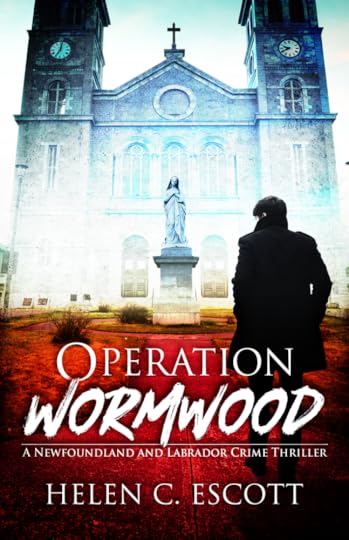
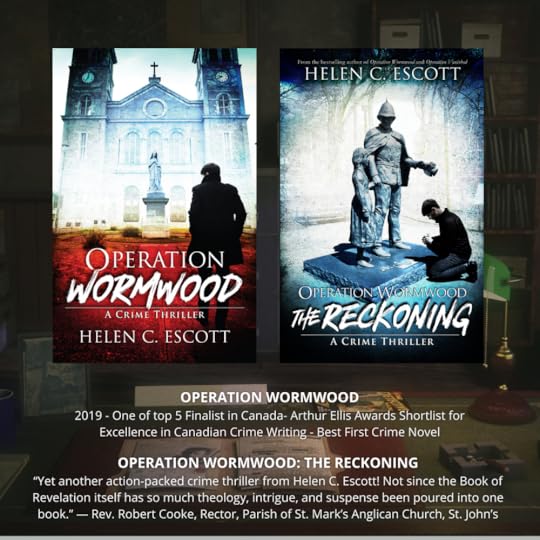
Book 1 - Operation WormwoodAn elderly man is carried into the emergency Department of the Health Sciences Centre setting off a chain of events that leaves doctors mystified. He is the first of many victims suffering from severe nosebleeds and excruciating pain. Dr. Luke Gillespie and Nurse Agatha Catania investigate the symptoms but are unable to diagnose them. The only thing they have in common is Sgt. Nicholas Myra, an investigator with the Royal Newfoundland Constabulary. Dr. Gillespie and Sgt. Myra join forces to solve this twisted mystery. The story takes a critical turn when Sister Pius, a nun from Mercy Convent, informs them about Wormwood: a disease she believes is created by God to kill perpetrators of the most heinous crimes. Wormwood becomes an international media storm when parish priest Father Peter Cooke holds a news conference on the steps of the Basilica of St. John the Baptist and announces that God has unleashed a plague upon the earth. Is God truly punishing these criminals, or is a serial killer targeting them? Dr. Gillespie and Sgt. Myra race to find answers, while the Roman Catholic hierarchy starts bringing people back to the Church in droves . . . by cashing in on what it claims to be a miracle.
2019 - One of top 5 Finalist in Canada- Arthur Ellis Awards Shortlist for Excellence in Canadian Crime Writing - Best First Crime Novel
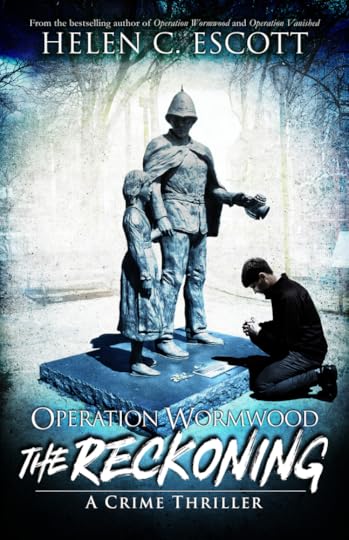
Book 2 - Operation Wormwood: The ReckoningSgt. Nicholas Myra is back with a vengeance, and he is out for blood. Years of investigating horrific crimes have become too much, and Myra’s PTSD is intense and out of control. He can’t unsee the images that race through his dreams. Now as he investigates the biggest case of his career, he is in a constant state of fight-or-flight. The hunt continues for a serial killer who is targeting the most heinous of criminals, making them die a slow, painful death. Sgt. Myra partners with Dr. Luke Gillespie in a hunt to find a killer who is targeting criminals … who everyone wants dead. On the day of reckoning, everyone is called to account for their actions. Award-winning author Helen C. Escott, a former civilian member of the Royal Canadian Mounted Police, offers an exciting new voice in crime fiction and conducts a thorough investigation into why evil against the most vulnerable goes unpunished.
PLEASE SHARE YOUR THOUGHTS AT (Facebook, twitter and Instagram)
Get more information on the Operation series a helencescott.com
The Helen C. Escott Book Club: A Novel Idea

Be it the the humourous side as in I Am Funny Like That or the darker voids as in her Operations series, Escott is always looking t ...more
- Helen C. Escott's profile
- 152 followers

