Mary Kingswood's Blog, page 38
May 4, 2019
Review: Lady Saves The Duke by Annabelle Anders
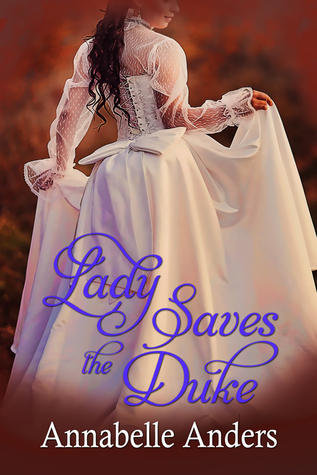 I loved this book. It made me laugh, it made me cry, and for all the right reasons. It’s riddled with silly anachronisms and Americanisms and (shock, horror!) I didn’t mind a bit because it was so much fun to read.
Here’s the premise: our heroine Abigail is dwindling into spinsterhood after her only season in London went disastrously wrong. Her mother hasn’t quite given up on her, however, and wheedles her a place at a stylish house party, where she encounters the tragic figure of hero Alex (who’s a duke, naturally), whose wife and children died in an accident. They don’t seem to have much in common, until a wardrobe malfunction and a chance meeting in the library at night upends both their lives. Abigail is ruined again, and the duke has to make things right. Or he could marry her…
I liked both the main characters. They felt believably three-dimensional, especially given their personal histories. So many authors throw in a past tragedy to draw reader sympathy and attempt to give a character depth, but it rarely works. Anders, however, is a strong enough writer to pull it off, and the internal thought processes of Abigail and Alex, and their conflicting emotions, were very convincing.
There’s only one part of this book where, for me, the plot logic failed. Abigail’s decision to go for a midnight stroll around a house full of men, especially given her history, defies all common sense. And then, meeting Alex in the library, why on earth did she not simply run back to her room? But it’s an essential part of the plot that brings them together, so I’ll let it pass.
From then on, the whole story works wonderfully, and if there are a few over the top moments (Abigail getting to church, for instance), they never strayed from amusing to absurd. As a marriage of convenience story, with the two protagonists inching towards a working arrangement and then (surprise!) to love, this one is hard to beat. But be warned, the sex scenes are moderately graphic, so if that’s not for you, this one’s best avoided. It’s not perfect in the historical accuracy department, by a long chalk, but it was so well-written that it got a pass from me (something that hardly ever happens). However, if gotten and fall and so on will push your buttons, then avoid. For me, it’s a rare five star.


May 3, 2019
Review: A Lady’s Prerogative by Annabelle Anders
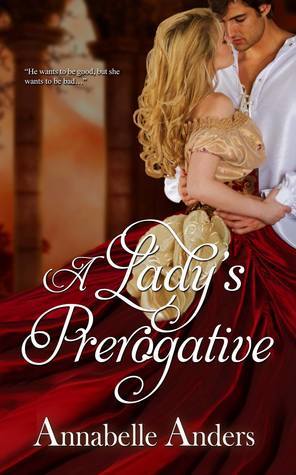 This is the third book of the Lord Love a Lady series that I’ve read, although I got them out of order. I started with #3, to which I gave five stars, then #1, which mustered four stars, and then I came to this book, which is #2 in the series, and I started to get worried.
Let’s get the plot out of the way first, such as it is. Our heroine is Natalie, the girl who sensibly released the Duke of Cortland from their betrothal in book 1 so that he could marry his true love, Lilly. Now Natalie’s branded a jilt, and confined to the country estate of her parents to rusticate for a while. She’s bored and looking for a little excitement, when into her life wanders unredeemed rake Garrett. There could have been some interesting ways to take a story like this, but sadly the author chose the most obvious and well-worn one, and the first half of the book becomes in essence one long bout of foreplay.
I don’t have any issues with sex in a Regency romance, but it does have to conform to a degree of plausibility. This particular case has a number of problems in that regard. Firstly, Natalie. Having set her up in book 1 as the oh-so-cool and composed ladylike type, suddenly she’s a walking bundle of overwrought emotions, essentially throwing herself at Garrett’s head. Then there’s Garrett himself. He’s old enough and experienced enough to keep himself under control and not respond when the daughter of his host tries, in her innocence, to seduce him. And then there are Natalie’s parents. What on earth are they thinking, not merely to invite an acknowledged rake to a house party with their vulnerable daughter, but to allow them to wander off together unchaperoned and even, at one point, to hint that Garrett might be an acceptable husband for her? It’s unconscionable. It would serve them right if he did what rakes are known for, and got her pregnant.
So the first half of the book is the two finding a dozen different ways to sneak off and be alone, and do some of the things that well-brought-up young ladies shouldn’t even know about. But then the sub-plot kicks in, the book lurches into melodrama and suddenly the author’s talent shines through again, releasing all that soul-searching and emotion that I so enjoyed in the other two books. Now, there are plenty of issues with plausibility in the second half of the book, too, plus all the Americanisms that pepper all these books, but none of that mattered a bit. I got thoroughly swept up in the story, really enjoyed the way the two characters resolved their differences and got very teary-eyed when they got their happy ending. Extra brownie points for knowing the law regarding the earldom, as well. It doesn’t quite reach the heights of five stars for me, but it’s a very good four stars.
May 2, 2019
Review: Nobody’s Lady by Annabelle Anders
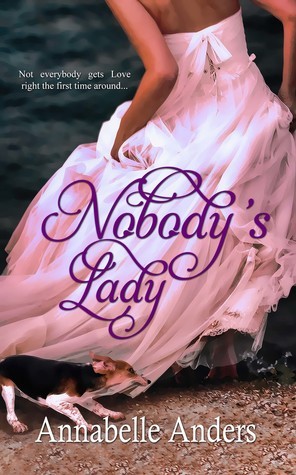 Michael Redmond, now the Duke of Cortland, has been ambushed on his way to London by highway robbers, who have stolen his coach and horses. He makes his way on foot to an inn, where he bumps into a face from the past, Lilly Bridges, now the widowed Lady Beauchamp. There’s a lot of history between them, but he’s now embarked on an urgent political mission and is betrothed, to boot, so that past must stay buried – if it can.
So right from the start, it’s clear that there’s a whole heap of sexual tension between these two. We see their past history unfolding in parallel with the present day events, but we’re already aware of their tragedy – that they should have married, but because of a misunderstanding, it never happened. She married the widower of her older sister, and he never married, although he’s recently betrothed himself unemotionally to the daughter of a political ally.
I’m not normally keen on the overworked trope of the Great Misunderstanding, but the author here makes it more credible than most such scenarios. There’s one major flaw in the logic, though. Lilly married her dead sister’s husband (a baron), a union frowned on by the church, because when a man and woman marry, they become ‘one flesh’. This means that her sisters are theoretically his sisters too, so a marriage to the deceased wife’s sister becomes incestuous. In theory. In practice, this was such a pragmatic solution to the problem of a widower with children that it actually happened quite a lot. One of Jane Austen’s brothers did exactly this. And, contrary to the statements in the books, such marriages are not illegal. It’s far, far more complicated than that. Such a marriage was voidable. That meant that it was perfectly legal until someone challenged it, at which point it became void, the marriage no longer existed and any children were rendered illegitimate.
That uncertainty made it unlikely in the extreme that any responsible nobleman would contract such a marriage because of the risk that a male heir might be suddenly disinherited. On the other side of the coin, no responsible father would push his daughter into such a union, either, because of the risk that she would be left without the protection of a husband. It would be disastrous. The whole premise of the book is that Lilly’s father persuades her to marry for security, when in fact he was putting her into a very uncertain and potentially ruinous situation.
That aside, the question of whether such a marriage would be scandalous is an interesting one. Lilly’s baron husband would have been listed in Debrett’s Peerage, together with the names of both his wives, so the matter could hardly be kept secret. It wasn’t a sensible choice for a peer, but I don’t know just how much of a scandal it would cause. These are interesting questions, and I applaud the author for treading in such murky legal territory, even if she doesn’t quite get all the complexities straight.
But this is just the background to the romantic difficulties faced by our two protagonists. Michael and Lilly find themselves thrown together by circumstance, and increasingly unable to keep their hands off each other. Neither of them is the restrained Regency type so beloved of Georgette Heyer. Lust overcomes them with increasing frequency and in a range of implausible al fresco settings. The sex scenes are tastefully done, but moderately graphic, so beware if that’s not your thing. It’s fairly obvious where things are going, but how they get there is always interesting. The ending is fairly dramatic, with a huge coincidence and an over-the-top villain, but I enjoyed it nevertheless, and everybody got what they wanted in the end.
Of the characters, I liked Lilly very much. She was enchantingly natural and genuine, following her heart more than her head but never regretting what she’s done. Michael I had a bit less sympathy for. Considering the position he was in, with his marriage fast approaching, he really was very bad about keeping his breeches buttoned with Lilly. He was constantly overcome with uncontrollable lust, and then swamped with guilt afterwards. Pro tip: feeling guilty doesn’t excuse the lapse in behaviour. By contrast, compare the actions of Michael’s friend Danbury. He’s a very contented bachelor, but he happily agrees to pretend to be a suitor to Lilly to deflect attention from her relationship with Michael, and when things go pear-shaped, he gallantly prepares to marry her to get everyone out of the pickle. That is a true hero.
Now, for those who are sensitive about anachronisms, this book is riddled with them, and the Americanisms are so egregious that I can’t believe the author even tried to avoid modern usage. The one that made me shudder from horror is ‘go potty’ (in a toilet context). This isn’t a British expression even today, and certainly not in the Regency era. I found myself sufficiently swept up in the story not to mind too much, but if swathes of ‘visit with’ and ‘passed’ and ‘off of’ and ‘gotten’ would upset you, this author is best avoided.
It’s actually a pity the author didn’t let a (British) proofreader loose on the book, because if the anachronisms could have been ironed out, this would have been a fine story indeed. The romance and the heart-breaking situation the protagonists find themselves in are examined in unswerving detail, the other characters are quite properly kept in the background, and there’s plenty of angst and deep emotion to satisfy even the most discerning reader. I loved it, and only the horrible anachronisms keep it to four stars.
April 15, 2019
A fun new Facebook group for Regency romance fans!
I’ve got together with several other authors of Regency romances to create a salon for Regency fans to meet. We’ll be sharing our new releases, teasers, giveaways, sales, and other delightful treats, and (naturally) talking about our favourite Regency reads. All my new friends write (and read) the same style of Regency that I write – “Sizzle in the drawing room, not the bedroom.”
If you’re a Facebook user and you’d like to join us, you’ll receive a very warm welcome to Lady Catherine’s Salon from me and all my new friends.
Lynn Winchester
Catherine Tinley
Regina Scott
Gail Eastwood
Anna St. Claire
Charlotte Henry
Martine Roberts
Come along and say hello! Click here to join.
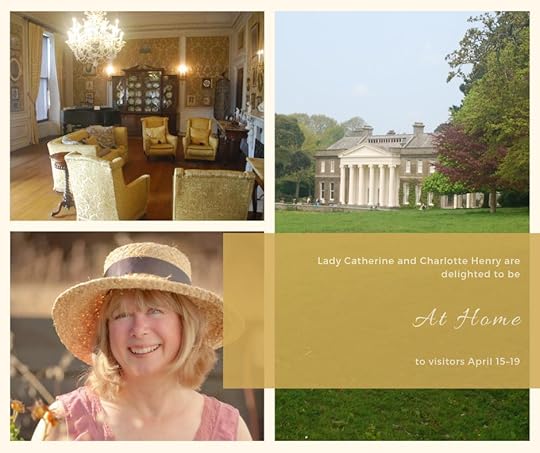
And to get the new group underway, our first featured author is Charlotte Henry, who will be ‘at home’ with Lady Catherine this week.
March 31, 2019
Review: Sauce for the Gander by Jayne Davis
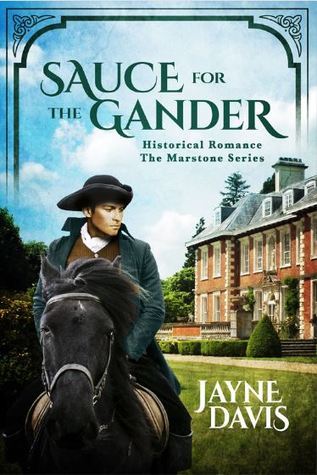 Jayne Davis’s first book, The Mrs MacKinnons, was a blast of fresh air in the stuffy and overdone trope-forest of Regency romance. Brilliantly-drawn characters, an unusual situation and a hefty dollop of humour in unexpected places made it a delight to read, even though there were darker undertones. This book is a much more conventional outing, a marriage of convenience that turns into a bit of a boy’s own adventure, but still a wonderful, classy read.
Here’s the premise: Will is the son of an earl obsessed with rank and heritage. He’s the second son, but now the heir and responsible for perpetuating the line. But he’s been gallivanting about town, bedding willing married women and gambling excessively, in the time-honoured tradition of Regency heroes. But then he’s caught out by an irate husband and challenged to a duel. He survives by the skin of his teeth, but his father’s had enough, and orders him to marry his choice of bride.
She turns out to be Connie, the little-regarded younger daughter of a lower-ranked local man, whose meek and obedient demeanour masks a spirited intelligence. The two meet at the altar, and make their way immediately to Will’s grace-and-favour estate in Devonshire, where the servants and locals are strangely unwelcoming.
The romance is the usual one for a marriage of convenience – a slow build through respect to physical attraction to trust and, eventually, love. I liked both Will and Connie very much, although there really wasn’t very much to dislike about them. Will’s bad-boy reputation drops away pretty fast, to turn him into a thoughtful, caring man, and Connie is a bit of a paragon from day one. I would have preferred a little more friction between the two – perhaps resentment at their enforced marriage, or some hints of bad behaviour from Will, but his previous wildness is all set down to boredom and the two get along together pretty well right from the start. There are one or two moments where Will has to consciously broaden his horizons to encompass his new responsibilities, which was neatly done, and the way Connie struggled to find the right moment to raise the issue of sex was very believable. Still, their relationship felt very modern to me, and I’m not sure that any Regency man, especially one with Will’s past, would be quite so considerate of his wife’s feelings.
The boy’s own adventure was great fun, but I won’t spoil things by saying any more about that. At least it went some way towards alleviating Will’s boredom and need for activity. I wasn’t totally convinced by the resolution to the various difficulties, which seemed fraught with potential problems to me, but the romance ended charmingly.
This is another wonderful read from the author. It lacks the originality of the previous book, and I missed the humour, too, but the writing is superb, with some glorious descriptions of the house and surroundings, and a strong sense of both time and place. Thoroughly recommended. Five stars.
March 27, 2019
Review: The Waiting Bride by Rose Pearson
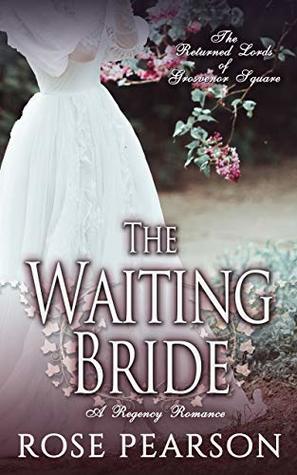 Rose Pearson is a new author to me, although I’ve seen her books gracing the best-seller lists for some time. This one tempted me with its premise: our hero and heroine are nudged into an arranged betrothal by their respective parents. They agree to it, although she insists that he has to propose first. He fails to do so, and is so terrified at the prospect of marrying her that he scoots off to India. But when he eventually returns, he knows he’s expected to do his duty and he’s still terrified. She, for her part, worries about marriage without any sort of affection. It’s all a bit of a muddle. And into the middle of it comes another candidate for the lady’s hand…
Right from the start, it’s obvious that this is going to be heavy on the angst and misunderstandings. If the couple could just sit themselves down with a nice cup of tea and talk it all out, there would be no story. However, the author makes the two of them credibly unable to do this. In the first place, after a very brief courtship and more than a year apart, neither of them is at all sure what they feel about the other. Also, Philip is endearingly socially inept (for a viscount), and manages to mess up every conversation with the lady, when he manages to speak at all. Marianne is a good Regency girl who isn’t supposed to express strong emotion, even when she feels it. So although there is a whole heap of angst, it feels quite believable, and I was rooting for poor, tongue-tied Philip to get his act together and tell her how he feels.
So let’s get the negative stuff out of the way, and these are just minor points that probably won’t bother anyone but me. I’m a demon for spotting title errors in Regencies, and this one has a couple. Lord Henry Redmond, the other potential husband for Marianne, is the heir to an Earl. That would give him a courtesy title, most likely a viscountcy, so he’d be Lord Something, not Lord Henry (which is a courtesy title reserved for the younger sons of dukes and marquesses). Also, Marianne’s maid calls her ‘my lady’, which she isn’t, at least she doesn’t have the title Lady Marianne, being only the daughter of viscount. Don’t you just love the British peerage? The maid would call her ‘miss’, or ‘Miss Marianne’, or perhaps ‘madam’. One other mistake – Marianne’s sister should be addressed as Miss Harriet. She’d only be Miss Weston if her sister wasn’t there. On the other hand, everyone correctly calls Philip by his title, Galsworthy, even his mother. Kudos to the author for getting that right.
There were some social oddities. The story opens in September, which is described as the very end of the season, but usually the season ended in July or so, when everyone decamped to the country for the start of the shooting season in mid-August. I don’t know why so many people were still in town so late. Some of the social interactions felt a little odd to me – everyone conversing freely around and across the dinner table, for instance, and although the ladies changed for dinner, the gentlemen appeared not to (Lord Henry is invited to dinner on the spur of the moment). And one inconsistency: after a dinner at Marianne’s house, there’s mention of driving home afterwards. I also wondered why two girls of marriageable age were left to wander around town with only a maid as a chaperon. Where was their mother? Or failing that, an aunt or married cousin to look after them.
One other grumble: the whole premise of the book is the question of the betrothal – are they betrothed or aren’t they? And the question of whether they can break it off. There’s some suggestion that he could break it off, but her reputation would be damaged if she were to do it, which is the opposite of the usual (it’s generally accepted that a gentleman does not break off an engagement). But of course they aren’t really engaged… or are they? They have been corresponding for more than a year, which is generally taken as evidence of a betrothal. I found it all very confusing. A betrothal was a pretty binding agreement in those days, so it was as well to know just whether you were or you weren’t.
So things chug along quite nicely for a while. Yes, there’s a lot of angsting but that’s signalled right from the start so it’s no surprise, and our hero and heroine seem to be getting along quite nicely. Happy ending ahoy. So what can possibly go wrong? The plot, that’s what. The author decided to throw a spanner in the works and… it’s completely over the top. Now, I get that the author wanted to ramp up the tension at the end, but it was just too much for me. Sorry.
For anyone whose powers of suspension of disbelief are greater than mine, you might well enjoy this. It’s very readable, and the story’s an interesting and unusual one. But I didn’t like the fudging of whether they were engaged or not, and the melodramatic ending keeps the rating down. Most of the book is a solid four star, but that ending is just two stars for me, so that averages out to three stars.
March 16, 2019
Review: Katherine When She Smiled by Joyce Harmon
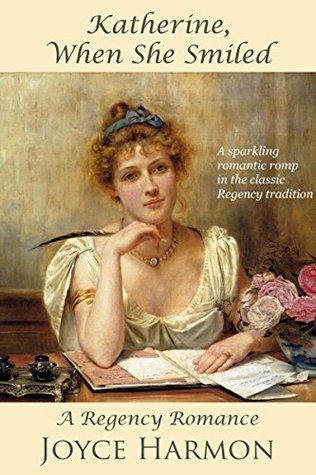 Every Joyce Harmon book is a delight and this one is no exception. For anyone looking for a substitute for Georgette Heyer, here’s an author who might just fit the bill. She has a light hand with dialogue, a strong array of characters and plots that effortlessly unfurl. This one eschews the standard Regency settings of society London or Bath, being firmly set in a small village, but that makes it a gentler, more affectionate look at Regency life. And it’s very, very funny. I do love a book which makes me chuckle all the way through.
Heroine Katherine is the oldest of her family, now orphaned by the recent death of her father. But amongst his scholarly papers she finds a half-written Gothic novel, the latest in a long line of them, by which her father had secretly been supporting his family. Katherine realises that, to keep a roof over their heads, she has to continue her father’s novel-writing career.
Our hero is the long-awaited brother of a duke, a soldier returning from the wars to claim his estate and find himself a suitable wife. The ladies of the village have their own ideas on the subject of suitability, and handsome Lord Charles sets many a female heart a-fluttering – except for Katherine, who’s busy fending off the attentions of the worthy young vicar while shouldering all the burdens of her family.
As with Heyer, the subplots, which involve a couple of boys behaving boyishly and much Gothic fun and games, tend to overshadow the romance at times, and although we see Charles’ moment of revelation regarding Katherine, we never see hers towards him (or at least, it is so understated as to be almost invisible), which was a great pity. I do like to see the protagonists inching towards an understanding. But both of them behaved with intelligence and common sense, no one acted stupidly in pique and (hallelujah!) there were no contrived misunderstandings.
Some of the loose ends tidied up and the other pairings resulting seemed a little too convenient to me, but I won’t quibble. There were a very few typos, and a smattering of Americanisms (gotten, fall instead of autumn), but Harmon has such a strong grasp of the Regency era that it ever bothered me. This is a lovely traditional Regency, very much in the style of Georgette Heyer, and I highly recommend it, and all Harmon’s books, to all Heyer fans. Five stars.
Review: Regency Road Trip by Joyce Harmon
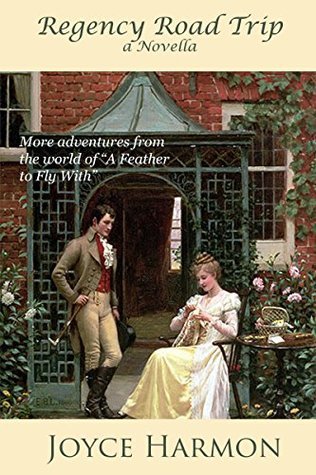 This is one of those delightful books that is filled with something that’s so rare in modern writing – charm. It manages to be whimsical without being silly, it’s effortlessly funny and the plot rattles along at a nice pace. And three rousing cheers for a romance featuring a decidedly older couple. Yes, there’s a side romance with a younger pair, but that never overshadows the main event.
The plot is a simple one: the Earl of Salford has returned from the wars to find his estate on the verge of ruin at the hands of his cousin and heir. The estate can be rescued, but as soon as the aging earl pops off, the heir will take over again, unless he can produce an heir to transplant the cousin. In most Regencies, this would be the cue for a marriage of convenience plot, but the earl refuses to play that game. Instead, he trawls the family tree and finds a missing branch of the family which meandered off into middle-class-dom a couple of generations ago.
To track down the missing heir, he recruits his good friend Eliza Merryhew, and to make things more fun, they travel incognito, as a baron’s widow and her devoted manservant. Which just makes things even more entertaining, of course. If the search is a little too easily resolved, that just leaves a little more time for those romances to brew up. My only complaint is that the story is too short – I really wanted more about this lovely couple! Five stars.
February 25, 2019
Review: Miss Serena’s Secret by Carolyn Miller
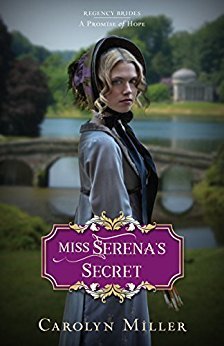 This was a difficult book for me to rate. On the one hand, it’s well written, it feels realistically steeped in the Regency era and I was definitely rooting for the two lovers. But on the other hand… boy, was it slow, and the on again/off again between the protagonists got old really quickly. I much prefer a couple who know their own minds and go after what they want, rather than a lot of existential angsting.
So this follows directly after the first book in this series, Winning Miss Winthrop, so we get to see our happy couple from last time around billing and cooing, holding hands under the table, gazing lovingly into each other’s eyes and generally behaving in twenty first century ways. Well, whatever. Some readers like that, but personally I prefer my Regency characters to behave like proper Regency characters and not display affection openly.
This time around, the lead characters are the sister and friend of the previous couple. Serena is the cool as ice, just out of the seminary young lady with artistic talent. Harry is the ne’er do well heir to an earldom, with roguish charm and tendencies towards mistresses and gambling. There’s a lot of strait-laced disapproval of poor Harry from his family, his friends and from Serena, all of which got on my nerves rather. He doesn’t seem to have stepped beyond the normal bounds for a young man of means in that era, so although I can understand that his family wanted him to settle down, it seemed a bit much to regard him as unredeemable. Especially when he’s so charming (yes, I confess I have a thing for roguish charm, and Harry’s very funny with it, always a plus).
For various implausible reasons, the two are thrown together at Harry’s family home in Derbyshire, and for even more implausible reasons, Harry is told not to exert his considerable charm on Serena. But naturally they begin to fall in love anyway, and why not? She’s a young lady of breeding and good family, he’s the heir to an earldom and (despite all the posturing about his reputation) he’s extremely eligible. So the author’s ingenuity is tested rather to find ways to keep the two apart. Serena has both an unfortunate previous encounter with a male tutor at her school, which has put her off men, plus a medical condition. Harry has a former lover amongst other problems, but none of this is insuperable if people would just talk to each other, instead of stoically putting up with things in silence. And as for the whole shenanigans with the painting at the exhibition, it just seemed over the top to me.
Both the main characters seemed too driven by the opinions of other people. Serena was very contrary, not making any protest about her art master’s behaviour, then giving in too readily to the idea of exhibiting her painting, even though it must have been obvious there would be problems. And at other times, she was quite determined to do her own thing. Harry seemed weak at times, and needed regular chats from his friends to stiffen his backbone. I could see what the author was trying to achieve, but her efforts to bring drama to the plot often served only to weaken her characters.
However, the book is well written, Serena’s artwork is very well described and it will appeal to anyone who likes a slow-building romance with lots of (minor) obstacles for the characters to angst about. The Christian theme is less intrusive than in the first book. But for me, the contrivances of the plot and the dithering main characters keep this to three stars.
Review: Winning Miss Winthrop by Carolyn Miller
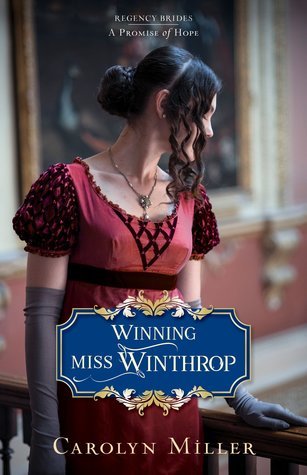 I got off on the wrong foot with this, misunderstanding the opening scenes pretty comprehensively. Too many random names, unexplained relationships and (frankly) comments which made no sense. When a baron dies, there is never the least question of who will inherit the title. The rules were laid down at the time the barony was created and simply can’t be changed, so no one would be in any doubt about it. Eventually, I restarted, discovered the family tree at the beginning and thereafter got on rather better, but still… the heir is never going to be a surprise. Nor that the widow and unmarried daughters will move to the dower house, and live on cabbage soup forever more. Such was the way of the Regency world – the male heir got everything, everyone else got crumbs.
So here’s the plot. Stop me if you’ve heard this before. The hero and heroine have some deeply buried history. Met, fell in love, split up because reasons. Now they meet again, still in love, but somehow they both think the other hates them. And needless to say, it takes the entire book for the reasons to emerge and for them to work out their misunderstandings, when really, if they had a jot of sense they would say: we’re both of age, no obstacles now, what do you say we give it another go? Or at least talk about it, and not rush off making plans with some other person altogether. I must have read this theme a score of times, and it still makes me want to bang their heads together. For the woman, it’s difficult with the constraints of Regency life, but a man of independent means should be perfectly capable of deciding what he wants in a wife, and reaching out for it.
The hero, Jonathan, comes across initially as a paragon of virtue. He spends his time improving the lot of his tenants, helping out his cousins and, in his spare time, starting a village school. Meanwhile, the heroine, Catherine, continues to call him Mr Carlew, even though he’s now Lord Winthrop, which is incredibly rude. However, she otherwise behaves with commendable restraint, especially with her mother, who is completely horrible in the early part of the book.
But then both hero and heroine go off the rails. He decides that the best way to forget Catherine is to marry some pretty young thing at the earliest opportunity, and pays determined court to the first passable girl who turns up. She goes off to Bath where she is openly rude to visitors, who then retaliate by circulating spiteful rumours about her relationship with an elderly man. And to compound the stupid, everyone thinks it’s a great idea to counteract the rumours by setting up a fake engagement with the elderly man. Oh dear.
And then, when things get rough in Bath, Catherine and her mother decamp for home, where the plot veers between melodrama and outright farce, and the hero has to ride to the rescue. And even then, when they’re finally given an opportunity to set things straight, they only half explain and leave several chapters for the romance to finally lurch to its happy ever after. And this is indicative of the whole book – everything was dragged out far too much. The whole plot could have been condensed by about a third to make a much tauter and (to my mind) more readable story. But many people enjoy an expansive Regency so I guess it’s all a matter of taste.
The other characters were more in the nature of caricatures. The two mothers behaved incredibly badly for most of the book, before miraculously becoming sickly-sweet at the end. The hero’s half-sister, Julia, veers between niceness and spoilt brat. The recently-married couple (characters from a previous book?) are uniformly sickly-sweet. The residents of Bath are, for plot reasons, shallow tittle-tattlers to a man (or woman), with the exception of the General, who’s a sweetie pie.
This is a Christian book, so there are numerous references to God, and a degree of preachiness, and this got a bit wearisome after a while. I do appreciate the point that there is a real need for this kind of book, and there are so many Regencies where the main characters are jumping into bed by chapter 3 that a faith-based story is refreshing. However, I sometimes found it hard to see the point. There were times when Catherine’s mother was particularly whiny, and a prayer or the memory of a snippet from the Scriptures helped Catherine stay sane and patient, which was good, but there were many times where she behaved incredibly badly, despite all the prayers and Bible-reading. However, I’m not very familiar with this kind of story, so it may be that there are subtleties that whizzed over my head.
There were a very few historical errors. Whisk(e)y was difficult to get in the Regency, so our hero would have shared a brandy with his friends instead, or possibly Madeira or claret. Adrenaline was unknown (first recorded usage 1893). The letter in an envelope was unlikely; there were occasional hand-made ones, but envelopes weren’t in widespread use until 1840. I learnt a new word – to pang, as a verb – and while this is interesting, I could have wished that Catherine’s heart had panged a little less frequently. Not sure if anyone in Regency times would call a sister ‘poppet’ (it was in use, but it sounds odd to me).
But generally speaking, the historical accuracy was excellent and the writing hard to criticise. I would have liked a little more humour, although at one point there’s a glorious discussion of the etiquette attached to sneezes. I would have loved more of this kind of whimsy. Despite my long list of criticisms, there is nothing at all wrong with this book. It follows a well-worn plot, very close to Persuasion, although with echoes of Pride and Prejudice and Heyer’s Bath Tangle, too, and it’s none the worse for that. It was perfectly readable, and even though I wanted to slap the main characters upside the head, I kept reading avidly to see how they resolved their differences.
And yet… somehow, it didn’t quite work for me. The characters never quite came alive, the dialogue sometimes felt stiff and some of the plot twists felt contrived. Worst of all, I never quite got past the feeling that the hero, at least, ought to have been sensible enough to know what he wanted and go after it, without stupidly getting betrothed to some woman he doesn’t care tuppence about. So ultimately it only gets three stars for me, but I already have the next book in the series (about Catherine’s sister, Serena), so I shall give that a go.