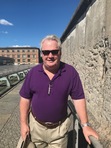
David Trawinski's Blog, page 3
June 23, 2019
The Best Polish Author? In English or Polish? Conrad or Sienkiewicz?
I was returning on a long drive recently from a book-signing in Latham NY, so i loaded up an excellent Audible edition of Heart of Darkness on my phone. It had been a few years since I last read this novel, and the performance by Kenneth Branagh was outstanding. It got me reflecting on a few threads that weave through Polish Literature.
OK, I get it, to call Joseph Conrad’s work Polish literature is a stretch. He was only one of the most descriptive writers to every pen the English language. By the way, that was likely his fourth, most certainly his third, language. He was born Józef Teodor Konrad Korzeniowski in what then was eastern Poland (technically Russia as Poland at that time did not exist) and spoke and wrote in his native Polish tongue. [image error]
His father, Apollo Korzeniowski. was a writer and political activist engaged in attempts to regain Poland’s independence. This earned the Korzeniowski family an exile to a small Russian town 300 miles north of Moscow, where young Joseph Conrad likely learned Russian, given its Slavic similarities to Polish. When he was sent to the French maritime city of Marseilles at age 16, he already spoke excellent French. It was not until his years as a seaman that he picked up the English language, not becoming fluent until he was in his twenties. Despite all this, he went on to master its prose as almost no other has done to this day. His works Heart of Darkness and Lord Jim are acclaimed masterpieces of all the world’s literature.
I especially love Heart of Darkness for a couple of reasons. Beside being the book that Francis Ford Coppola’s movie script Apocalypse Now was based on, Heart of Darkness adeptly details how the norms of society are increasingly cast asunder as his protagonist Charles Marlow travels inland along the Congo River. Metaphorically, I always think of Nazi Germany, and how those who were pulled deeper and deeper into the immoral workings of National Socialism cast aside society’s constraints, until their efforts ultimately resulted in the horrors of the Holocaust. This resulted in the deaths of six million European Jews, as well as millions of Poles, Russians, Ukrainians, Lithuanians, Roma (Gypsies) and so many, many others.
It appears to me that in his tale, Conrad foreshadowed the destruction that was to be brought upon his beloved Poland. “Oh, the horror, the horror” as his charismatic renegade overlord character in Agent Kurtz faintly predicted upon his last breath upon the waters of the Congo. At least Conrad himself was spared from witnessing this atrocity to his homeland as he died in 1924, some 15 years before the Nazi attack upon Poland.
[image error]
Henryk Sienkiewicz was the writer most famous for his novels written in the Polish language. Most famous for the novel Quo Vadis set in the Roman times of Emporer Nero, Sienkiewicz won the Nobel Prize for literature for his extensive writings of Polish historical events. I greatly enjoyed reading (a translation of) The Teutonic Knights (Krzyżacy in Polish), his tale of conflict between the Poles and the crusaders’ monastic order imposing upon their lands. The characters are many and greatly developed, the story set against the most accurate of historical events, and the elements of greed, loyalty, and love are richly explored. His writing stands up well against Victor Hugo, Charles Dickens, or even Lev (Leo) Tolstoy, and that is certainly saying something!
Sienkiewicz’ works are often said to have been written in such a manner as to be symbolically critical of Poland’s overlords under the censorship in the times of the Partitions (Austria, but more so Prussia and especially Russia). His trilogy of With Fire and Sword, The Deluge, and Sir Michael (Pan Wołodyjowski) is outstanding, and well worth its Les Miserable/Tale of Two Cities/War and Peace page-counts and expansive scope.
So, who is the greater Polish writer? Conrad or Sienkiewicz? It all depends whether you are expecting to read their works in English or Polish. Either way, you will not be disappointed!


May 18, 2019
For the Love of Polish Culture
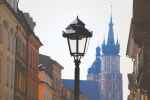
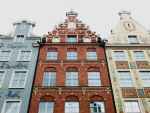
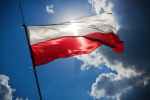
Not many people realize that Poland was one of the first unified countries of Europe. While Germany and Italy were unified only in the 1870’s, Poland was unified just after the turn of the first millenium Yes, it is true that Poland’s borders have shifted over the centuries, and even that due to the incursions of her three large neighbors – Austria, Prussia and Russia – Poland was erased from the maps of Europe for 123 years. Poland’s lands could be criminally digested by its neighboring empires, with the last bite coming in 1795. Its culture, however, could not be destroyed, because it continued to live in the hearts of all those proud to call themselves Poles.
Even when the Polish Republic was re-established after World War I by Woodrow Wilson’s Thirteenth of Fourteen Points, the nation continued to face Russian aggression. The new Communist Bolshevik leadership of the fledgling Soviet Union pressed its new Red Army on the attack of Warsaw itself. In what has been remembered as the “Miracle of the Vistula”, the Poles rose up and against great odds drove back the Red Army.
In September, after Poland was once again divvied up by the Nazi-Soviet Alliance, the Polish culture was again fiercely enkindled in the protective hearts of her countrymen yearning for the restoration of their freedom. That ultimately did not happen until 1989, when Poland threw off the shackles of its Communist overlords.
To the Poles, its culture is a flame that time and again over the centuries has had tp survive in the hearts of all Polish over the world, That’s why the summer Polish Culture Festivals all across America are so important. I am proud to be participating in Latham NY’s PolishFest outside Albany from June 7-9. I will be signing my Chopin Trilogy of spy thrillers based on Polish history.
I hope each of you can participate in the Polish Cultural Festival closest to your homes.
Keep the flame of the Polish Culture burning bright!
[image error] [image error]
November 11, 2018
Sto Lat Polonia
[image error]
The traditional birthday song of Poland is “Sto Lat” which suggests “may you live one hundred years”. One hundred years ago today the Republic of Poland was reconstituted as the 13th of American President Woodrow Wilson’s 14 Points which lead to the end of First World War.
Yet Poland is so much older than a century! Poland was one of the first nations in Europe to become unified during the early 11th century under King Boleslaw the Brave. His father King Mieczko had converted the pagan land to Christianity in 966. Poland became a power in Central Europe, defeating the Teutonic Knights at the Battle of Grunwald in 1410, and rescuing the besieged city of Vienna from the Ottoman Turks in 1683, saving Europe from a crescent invasions that had designs on Rome itself.
Yet the very Austrians that were rescued by King Jan III Sobieski’s Winged Hussars less than a century before participated in the most criminal act in European history – the Partition of Poland. Beginning in 1772 and concluding in 1795, Poland was wiped from the map as a culture by the Austrians, Prussian Germans, and the Russians. The country that had so recently defended Christianity, was completely absorbed by these three powers.
For 123 years the people of Poland had no country, and their culture was constantly under attack. In his classic novel Anna Karenina, Tolstoy describes a late 19th century parlor scene of Russian Nobles discussing how they would subdue the Poles absorbed within their kingdom. This is telling, for despite their attempts to Russify the Poles, as well as Germany’s attempt to Germanize them (Austria was the most lenient of the three), the Poles held tightly to their identity, their culture and their language. This would serve them well in the many occupations to come later, including the post WWII Soviet controlled Communist State that was eventually overthrown in 1989. The Polish people’s clinging to their culture also explains why Poland today ranks among the countries with the highest rates of literacy in the world.
The photo above is what is left of the Polish “Saxon” Palace after the leveling of Warsaw on Hitler’s personal orders. Under the three arches lies the remains of Poland’s unknown soldier. Being today is also Veteran’s day in the US and Armistice day in Europe, I thought it was the single most important image of Poland on which to reflect. For all the powers of the world that have tried to suppress her, Poland and her people live today in peace and prosperity.
Thank you, Woodrow Wilson.
And Happy Birthday to Poland, may you live another 100 years in peace.
September 17, 2018
Bitter Tears of September
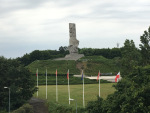
The first photo above is the monument that solemnly stands sentinel today over the penninsula of Weterplatte, near Gdansk. Here Polish garrisons were unexpectedly fired upon on September 1, 1939, from the German warship SMS Schleswig-Holstein. This hostility commenced the Second World War, and the resulting horrors of the Nazi regime in Poland and far beyond, which have been well documented.
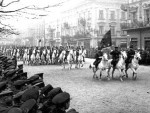
I have waited until today, September 17th, to post this blog entry so that other invasion on Polish sovereignity is not forgotten. For on September 17th, 1939, with Poland battling courageously against an overwhelming Nazi war machine, the Soviet Union with no declaration of war, invaded from the East. The masive Red Army moved across her borders with Poland, knowing they had nothing to fear from the German aggressors in the West due to their pre-war Molotov–Ribbentrop Pact dividing the historically peaceful country. The second photo above is of the Red Army marching triumphantly through the streets of the then Polish city of Lwów. (Today Lviv is in The Western Ukraine).
As they had done in the last 30 years of the 18th century, Russia and Germany (along with Austria in the past) had divided up Poland. In 1795, the final Partition of Poland removed it from the European map for the next 123 years. After being re-established as a sovereign nation following The Great War, WWI, it took only another 21 years for these powers to again devour this beautiful “Land of Fields” that lay between them.
But there is an underlying beauty in this horrendous carnage! As they did in 1795, when Poland ceased to exist as a nation, the Poles rallied. They resisted, they organized, they cherished their then forbidden culture and language.
Today, the pride of the Polish culture and tradition blooms around the world. We have our strength of forefathers battling Hitler’s and Frederick the Great’s attempt to subjegate them, to Germanize them. We have our strength of culture thanks to Catherine the Great and Stalin’s attempt to Russify our ancestors. While all these powers horriffically crushed the structure and countryside of our beloved nation, the bones of our countrymen, and the sanctity of the Polish women, from this carnage the seeds of defiance and resolution were sown. Seeds that have grown in the hearts of the people who would rise up against the Nazi’s, overthrow the yoke of the Soviets, and once again cherish the sweet breaths of freedom and self-determination.
I love reading classic literature. I was somewhat surprised in reading Tolstoy’s Anna Karenina that a scene involved the Russian nobility having a parlor discussion over the Russification of the defiant Poles in then western Russia. It is this defiant people, so protective of their culture and language, who have rebuilt a peaceful nation once again based upon these treasures. Perhaps, that is why Poland today has among the highest literacy rates in the world, at 99.8%. For these people cherish the freedom and value of speaking, writing and loving their language that so many have attempted to take from them.
August 5, 2018
Armia Krajowa – August Remembered
On August 1st, 1944, the Armia Krajowa (or Polish Home Army) raised a fierce insurrection against the Nazi troops occupying Warsaw. The reason the term “Polish Home Army” was adopted was to differentiate it from much of the Polish Army that survived the Nazi invasion of ’39 and were then fighting with other allied forces abroad. Polish units even fought with the Soviet Red Army which in August 1944 was advancing to the eastern banks of the Vistula river. [image error]
Veteran Polish military commanders such as Witold Pilecki (Pronounced Vee-Told Pee-LETS-ski), who earlier had deliberately surrendered himself to and escaped from Auschwitz Concentration Camp, organized the resistance against the Nazi occupiers. The Poles daring attack caught the Wehrmacht off-guard with fierce determination to drive the Germans out of their capital in advance of the arrival of the Red Army.
[image error]
Stalin watched as the Poles fought the Nazi occupiers for 63 grueling days with high casualties on both sides. He feared the resistance, even though it was of course no challenge to the Red Army, it was a breeding ground for an independent post war Poland. He adopted a policy of watching the insurrection be crushed as the Poles ran out of weapons, ammunition and food leading to their ultimate surrender, (Although a number of partisans and civilians escaped through the sewers of Warsaw).
[image error]
Hitler, furious over the audacity of the Poles, ordered Warsaw flattened. Block by block, German demolition teams destroyed 85-90% of the already war ravaged city. Yet, as if to show respect for the veracity of the Polish foe they had just conquered, in Pilsudski Square in the heart of Warsaw, where the demolition was the most severe, the old Saxon Palace was completely destroyed except for three arches. These arches, allowed to stand by the Nazi forces, had housed since 1925 the remains of Poland’s unknown soldier.
[image error]
To this day, it is among Warsaw’s most solemn sites, as the three arches are surrounded only by parkland and a large open plaza.
As for Witold Pilecki, he survived the war only to rebuild a resistance against the new Soviet oppressors who ran the post-war country, a far cry from the supposedly independent Poland called for by the Yalta and Potsdam Conferences. It did not take long for the Soviets to accuse him on trumped charges of spying for the allies. He was found guilty in a show trial and executed in 1948 at the age of 47.
But the resistive nature of the Poles would survive and become engrained in an underground movement that eventually shed the Communist yoke in 1990, one year before the Soviet Union ceased to exist.
And thanks to the resistance movement, and Poles with the bravery of Witold Pilecki, today Poland is once again among the free nations of the world.
[image error]
July 15, 2018
The Road To Świebodzin
On July first, Marie and I made our way home after three weeks in Europe. We had started out on a side trip to Scotland, before joining a Rhine river cruise in Amsterdam. I could not resist, despite it being a cold and rainy day, dropping into the city to visit the sites where my trilogy began. After all, the story began with the body of Ted Barber being fished out of the canals there.
While our tour down the Rhine was wonderful, our real adventures began when we departed the longboat in Basel, Switzerland about eight days later. After some sightseeing, Marie and I rented an underpowered Ford 5-speed and drove out of Basel, past Zurich into the magnificent alpine scenery around Bregenz, Austria. You will note as we progress in this blog a theme of revisiting scenes from my latest novel “War of the Nocturne’s Widow”.
Bregenz sits on the lower shores of Lake Constance and is surrounded by mountains as it separates Switzerland from Germany. It is a breathtaking city. We enjoyed sitting in on rehearsals (preparing for Carmen) for their outdoor Opera house , where the stage floats upon the Bodensee (the local name for Lake Constance). We couldn’t resist taking the cable car to the top of the Pfänder, a mountain overlooking the lake with fabulous vistas of Switzerland’s Alps as well as the Bodensee itself.
[image error]Marie and I in the Pfander above Bregenz, Austria
Our second day took us via ferry to Lindau, Germany for a wonderful Saturday on the Lake. After which, we departed the Bodensee for our drive along Germany’s famed Autobahn system. Our little 5-speed got us there, as the Audis, Porsche and S-Class Mercedes snapped by, often forcing each other out of the fast lane.
[image error]Nuremberg charm
Our destination was Nuremberg. Again, a major setting in my last novel, I have always been drawn to Nuremberg, as it has a dark side of its history tied to the Third Reich and its eventual downfall. The medieval section, like so much of Europe, has been painstakingly rebuilt after World War II. We spent a significant amount of time in Albrecht Dürer square, where the castle looms overhead and the walls of the city stand.
[image error]
After our time in Nuremberg, it was off again to test our skills along the Autobahn as we drove onto Berlin. After dropping our luggage at the hotel, we drove past Karl Marx Alee to the Alexanderplatz to drop off the 5-speed.
[image error]Berlin’s Alexnaderplatz
From there we walked through the Alexanderplatz, and past Museum Island to revisit the Kupfergraben district along the Spreekanal. This site in the last novel kicked off the climatic conclusion. We also found a world class Asian restaurant nearby, at which we dined frequently having by then had plenty of German fare.
[image error]At the remaining portion of the Berlin Wall
As an author, I find Berlin to be a most fascinating city. It has multiple dark sides of its history, most recently the far right excesses of the Nazi regime, followed by the far left excesses of the Communist German Democratic Republic. The Wall, The Stasi, The Gestapo, The SS – opposite venues of man’s hostility to his fellow man.
I am a strong believer in the adage that one must respect history, especially the excesses of the human race, so that these are never repeated. Unfortunately, the politically correct world of today is inclined to whitewash these periods of darkness by tearing down all references to them. This is a mistake in my view. I was pleased to see that today’s Berlin recognizes its past, and displays it, as shameful as it was.
We interrupted our stay in Berlin for an overnight trip to Poznan, Poland. We passed through Frankfurt an der Oder, as we crossed the river into Poland. The change in the topography was dramatic as now small towns dotted rolling fields as we progressed into Poznan.
[image error]Poznan ’56 Remembrance Monument
We had unintentionally scheduled a trip on the anniversary of the 1956 Poznan uprising. The Soviets and Communist puppet Government brutally cracked down on striking workers, months ahead of a similar uprising in Budapest, Hungary that was also violently quelled. These events were among the first to show the world the tenuous hold that the Soviet Union had upon its satellite states.
In this beautiful town, perhaps the expression of the local people in God was the most wonderful site. “Jeszu Ufam Tobie” was very visible in town squares, which translates to “Jesus, I trust in you”. These are a people who have had their right to worship their God taken from them for decades if not centuries.
Along the route back to Berlin the next day, this observance was reinforced in the small country town of Świebodzin. Here, arising from a makeshift pedestal is, arguably, the tallest statue of our Lord on Earth. The Christ the King Statue of Świebodzin rises 33 meters above the landscape, one meter for each year of Christ’s life. To see this 100 foot-plus high statue stretching above the quiet plains of northern Poland reminded me that this country has its priorities right. They remember the oft horrible history they have been forced to endure, but let not this fate shake their faith in God.[image error]
June 24, 2018
Europe in Summer’s Peace
[image error]During a recent trip to Europe, my wife Marie, and I found ourselves enjoying a Sunday afternoon in Nuremberg, Germany. We could not stay away from the square below the castle, where the Albrecht Durer Haus is located. This is a key setting in my most recent book, “War of the Nocturne’s Widow”. The square was alive with locals enjoying a beautiful afternoon, and more than a few tourists taking in the sights.
[image error]One cannot take in the medieval walled city and not think of the progress that Europe has made over the centuries. Gone are the need for walls, gone is the recurring curse of the Black Plague, and gone is the even darker fascist plague of the twentieth century. Schengen has erased the borders, to an extent, and today Europe is peaceful and prosperous.
Now one has to wonder just how long can Europe withstand the pressures of Brexit, swelling immigration patterns, and the resurgence of nationalistic politics.
[image error]I suppose we should simply enjoy the beauty that is Europe today, and pray that this century will avoid the wars and hatred of centuries past.
May 22, 2018
Some notes in May…
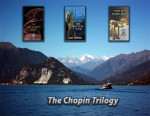
On April 30th, 2018 I published the last volume of the Chopin Trilogy, “War of the Nocturne’s Widow”. I want to thank all of you who have expressed your feelings for my books, and all the feedback has been extremely supportive, and in several cases almost fanatical. The three volume story which started with an Aerospace Executive’s body being dragged out of the canals of Amsterdam seems to have really captured the minds of my readers, while characters such as Stanley Wisniewski, Diane Sterling, Malcolm Devereaux, Langston Powell and Jack Trellis seem to invoke the readers’ many emotions. I am very grateful for this wonderful response.
The image above was taken by my lovely wife Marie on a recent sojourn as we travelled aboard a ferry from Stresa, Italy to Locarno, Switzerland across Lago Maggiore. Ernest Hemingway set his very famous novel ” A Farewell To Arms” along this same lake. In fact, we stayed in the very same hotel in Stresa where Hemingway had his characters escape the war, before setting off to Switzerland in a rowboat. The lake serves as a major venue for my book “War of the Nocturne’s Widow”, as does Bregenz, (Austria), Nuremberg (Germany) and Berlin – both before and after the wall fell in November 1989.
The story that started just over two years ago with “The Willow’s Bend” is now complete. The overall themes of the story can be told in the seasons of the novels’ setting, as well as the first word of each of the three books :
Darkness (with “The Willow’s Bend” set in the lengthening shadows of Fall);
Death (with “Chasing the Winter’s Wind” set in Winter – the season of survival);
and Duty (with “War of the Nocturne’s Widow” set in Spring – the season of rebirth).
By the way, the last novel came out just in time for the annual Cartersville May Market festival at Rose Lawn. Marie and I were there for the second straight year, and the sales of these books exceeded our every expectation. Thanks to all of you who may have dropped by our booth!
“Do widzenia”,
Dave Trawinski
April 17, 2018
Almost here – “War of the Nocturne’s Widow”
Today, I submitted my final proofs for the third book of the Chopin Trilogy, “War of the Nocturne’s Widow”. I hope it will be published in early May!
Without giving away too much of the plot line, Diane Sterling is missing and this drives an inter-intelligence agency war between the CIA and Britain’s MI6. The action takes place in a wide panorama of locales, including Washington, DC, London, France, The Swiss Alps, Austria and Germany. Like all of my novels, these are locations from my travels, and I hope their description intrigues the reader.
Historically, the novel’s back story is set in Cold War Berlin. The brutal resettlement of German civilians from war territories is addressed. as is the genesis of the East German communist state. This state emerged with an island of freedom floating behind the Iron Curtain, that was West Berlin. The storyline describes Stalin’s brutal attempt to drive the West to abandon Berlin by siege, only to have the Allied Nations respond with the Berlin Airlift. Having failed, the freedom of West Berlin was a beacon that drew hundreds of thousands of East Germans annually. At least until Der Mauer, or The Wall, was built in 1961. For 28 years, it separated family from families, lover from lover, and, even, hope from despair. The job of preventing the West from infiltrating the East German state fell to perhaps one of the most brutal and repressive secret police organizations in history – The Stasi.
My family of characters expands with the Stasi double agent Erasmus (although readers of “Chasing the Winter’s Wind” may remember his brief reference in that story). Erasmus handles a highly placed spy code-named Osprey from within the Warsaw Pact and East Bloc Leadership. While completely fictional, Osprey is based upon a real-life spy, code named Gull, who spied for nearly a decade for the United States from behind the Iron Curtain.
I will stop there for now, but I will close in saying that many of the characters from the first two books are here – Jack Trellis, Diane Sterling, Ellison Redmond, Carlyle, Sophie, Emory, George Chartwell, Malcolm Devereaux, and, yes, even, Stanley Wisniewski. If you enjoyed the story so far, then I am quite sure you will find this chapter to be a very thrilling conclusion.
[image error]
February 28, 2018
An Early March Blog
[image error]Here is a sneak peak of the cover for my next book, “War of the Nocturne’s Widow.
It has been accepted by my publisher and we are shooting for a mid April release.
The story concludes the Chopin Trilogy started in “The Willow’s Bend” and sequelled in “Chasing The Winter’s Wind”. Diane “The Huntress” Sterling is missing. CIA Deputy Director of Operations (DDO) Jack Trellis is intent on finding her, as he fears Stanley Wisniewski has passed his secrets onto her. Trellis alleges that the British Secret Service is aiding and abetting Diane, and threatens his longtime MI6 nemesis, George Chartwell, with an open intelligence war over her.
The intrigue spreads across Europe with locales including London, Switzerland, Germany and of course Poland. Historically, the rise of the East German Communist State is explored, focusing on one of history’s most repressive organizations, the Stasi State Security apparatus.
All of the characters of the first two books are back for this last exciting tale of Cold War Espionage and Collusion. I am looking forward to sharing it with each of you. I hope you’ll come along for one last ride!