Nancye Thomas's Blog, page 2
March 29, 2017
Where Do Retired Lab Chimps Go?
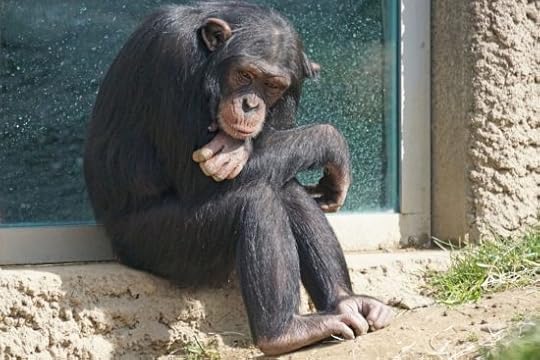
Do you know how chimps are treated in laboratories? Do you know what their reward is for their help in science?
Chimpanzees have contributed much to science. They flew to space before man; they helped develop hepatitis vaccine; in the name of biomedical research for the benefit of man, they endured tests, trauma, torture. Because of all the invasive and brutal experiments, only a few chimps survive to reach the ripe age of retirement, and instead of being released, they—like most laboratory animals—get euthanized. Since governments and organizations in the previous century wouldn’t shoulder the costs of maintaining retirement homes, they opted for euthanasia on the poor chimps, showing them mercy by killing them. “Mercy.”
Perhaps conscience caught up with countries around the world because policies and laws banning or severely restricting research on great apes started popping up as early as 1997. By 2013, the United States of America was the only major nation left using chimpanzees in laboratories. This situation got further alleviated in 2015 when the world’s largest financier of biomedical research, the US National Institutes of Health (NIH), decided to retire all federally owned chimpanzees after constant pressure from PETA and several animal advocacy groups.
There was still the issue of how the chimps enter retirement. Thankfully, many nonprofit organizations and animal sanctuaries were ready to receive them, and Chimp Haven is one of these sanctuaries.
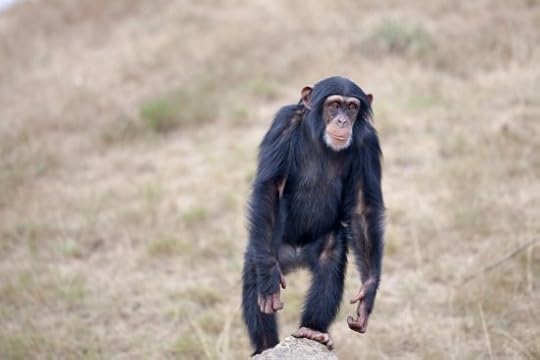
A New Life for Lab Chimps
The description on www.ChimpHaven.org says, “Chimp Haven sits on 200 acres of prime forested land in Keithville, Louisiana, just southwest of Shreveport. With a staff of just under 50 individuals, Chimp Haven has created new beginnings for almost 300 chimpanzees.”
It’s not just food and shelter that’s provided; the staff at Chimp Haven also create games and puzzles to entertain the chimps, as well as set up aesthetics and structures that simulate the wild. These serve to reacquaint the chimps to their natural habitat after living in cages for so long. Many chimps who have medical and mental problems are watched over by veterinarians and are provided with maintenance medicine in their diet. Furthermore, Chimp Haven employs a team of behavioral experts who monitors the chimps every day for any mental illness (i.e., depression, PTSD, etc.) gained from years of suffering invasive experiments.
In an interview with National Geographic, Chimp Haven cofounder, Amy Fultz, said, “We don’t know all of the details of their personal histories, and we don’t know all that they endured. But for many of them it was a harsh life, and when they first came here, their attitude was, ‘people suck.’ That they trust us as much as they do now is phenomenal to me. They are incredibly forgiving.”
To Amy and her team in Chimp Haven and all other similar sanctuaries, I say, “You bring hope back to the world by bringing true mercy to the chimps. Merci beaucoup.”
References
Kretzer, Michelle. 2015. “Victory! NIH to Retire All Chimpanzees from Laboratories.” PETA, November 18. Accessed March 23, 2017. http://www.peta.org/blog/victory-nih-to-retire-all-chimpanzees-from-laboratories/.
Bale, Rachael, and Jani Actman. 2015. “Government Research Chimps Set to Retire.” National Geographic, November 19. Accessed March 23, 2017. http://news.nationalgeographic.com/2015/11/20151119-chimpanzees-retired-medical-research-NIH/.
PETA. “Primates in Laboratories.” Accessed March 23, 2017. http://www.peta.org/issues/animals-used-for-experimentation/primates-laboratories/.
O’Brien, Keith. 2014. “America’s Chimp Problem.” Slate, September 26. Accessed March 23, 2017. http://www.slate.com/articles/health_and_science/science/2014/09/research_on_chimpanzees_should_retired_government_chimps_go_to_sanctuaries.html.
Clifton, Merritt. 2015. “Lab Chimp Retirement Upstages Steep Rise in Monkey Use.” Animals 24-7, November 22. Accessed March 23, 2017. http://www.animals24-7.org/2015/11/22/lab-chimp-retirement-upstages-steep-rise-in-monkey-use/.
Mcconnaughey, Janet. 2016. “From Lab to Sanctuary: 220 Research Chimps being Relocated (Update).” Phys, May 3. Accessed March 23, 2017. https://phys.org/news/2016-05-lab-sanctuary-chimps-relocated.html.
The post Where Do Retired Lab Chimps Go? appeared first on Picky The Marvelous Chicken.


March 23, 2017
To Bee or Not to Bee: The Global Impact of Pollinator Decline
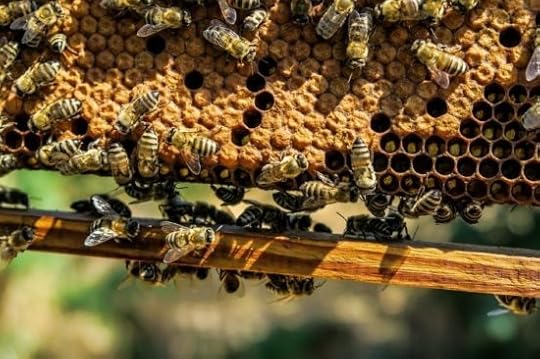
Honeybees are in effect six-legged livestock that both manufacture agricultural commodities—honey and wax—and, more importantly, contribute agricultural services—pollination.
—May Berenbaum, American entolomologist
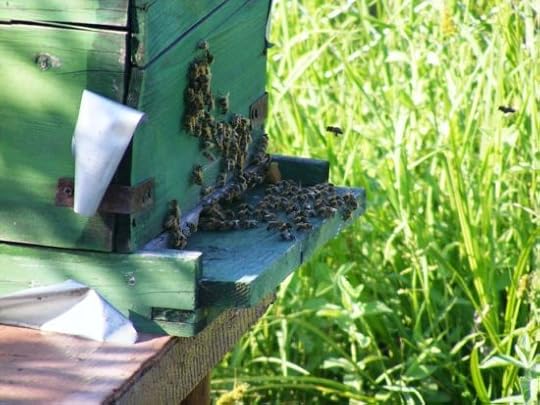
Honeybees as Chief Pollinators
Bees play a vital role in agriculture. Over the years, researchers have proven the correlation between naturalized and feral pollinators and the production of local and acclimatized crops. Most local produce benefit from migratory beekeeping. Almonds, for example, are 100 percent dependent on honeybees for pollination. Cherries are 90 percent dependent. And just to show how important bees are to local and international economy, bees pollinate essentially most of vegetables, spices, nuts, fruits, and flowers anyone can name. Converted in numbers, that is equivalent to US crop production worth $15 billion annually.
Crops are being grown in less farmland, yet increased yields and high-quality produce is evident. These qualities are attributed to honeybees. Today, California almond crop contributes 80 percent of the world’s supply. Here’s a summarized data from obamawhitehouse.com.
Economic Importance of Pollinators:
Insect pollination is integral to food security in the United States. Honeybees enable the production of at least 90 commercially grown crops in North America. Globally, 87 of the leading 115 food crops evaluated are dependent on animal pollinators, contributing 35 percent of global food production.
Pollinators contribute more than $24 billion to the United States economy, of which honeybees account for more than $15 billion through their vital role in keeping fruits, nuts, and vegetables in our diets.
Native wild pollinators, such as bumblebees and alfalfa leafcutter bees, also contribute substantially to the domestic economy. In 2009, the crop benefits from native insect pollination in the United States were valued at more than $9 billion.
At one time, honey drove this industry. Now it’s pollen. Every third bite we take is from a bee-pollinated nut or flower.
—Richard Adee, prominent beekeeper in the United States
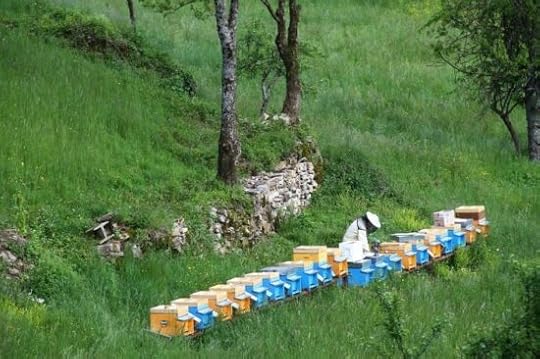
The Consequences of Pollinator Decline
But what happens when the leading pollinator deteriorate in number?
Gallai et al. evaluated the consequences of the pollinator decline throughout the world. They calculated that in 2005, 9.5 percent of world agricultural production for human consumption embodies the €153 billion of the global economic value of pollination. Without considering the behavior of the consumers, the group found out the following:
There was a positive correlation between the rate of vulnerability to pollinators’ decline of a crop category and its value per production unit. Looking at the capacity to nourish the world population after pollinator loss, the production of 3 crop categories—namely fruits, vegetables, and stimulants—will clearly be below the current consumption level at the world scale and even more so for certain regions like Europe.
If the bee disappeared off the surface of the globe then man would only have four years of life left. No more bees, no more pollination, no more plants, no more animals, no more man.
—Maurice Maeterlinck
Taking Action, Saving Honeybees
In June 2014, a presidential memorandum was released in response to decreasing pollinator race. Read more about Creating a Federal Strategy to Promote the Health of Honey Bees and Other Pollinators.
The government is doing its part. When are you going to do yours?
A healthy beekeeping industry is invaluable to a healthy US agricultural economy.
—American Beekeeping Federation

References
Gallai, Nicola, et al. 2009. “Economic Valuation of the Vulnerability of World Agriculture Confronted with Pollinator Decline,” Ecological Economics 68(3): 810-821. Accessed March 17, 2017. doi: 10.1016/j.ecolecon.2008.06.014.
Calderone, Nicholas W. 2012. “Insect Pollinated Crops, Insect Pollinators and US Agriculture: Trend Analysis of Aggregate Data for the Period 1992–2009,” PLOS ONE 7(5): e37235 . Accessed March 17, 2017. doi: 10.1371/journal.pone.0037235.
Aslan, Clare E. 2016. “The Role of Honey Bees as Pollinators in Natural Areas,” Natural Areas Journal 36(4): 478–488. doi: 10.3375/043.036.0413. http://www.bioone.org/doi/abs/10.3375/043.036.0413.
American Beekeeping Industry. n.d. “Pollination Facts.” Accessed March 22, 2017. http://www.abfnet.org/?page=14.
New Agriculturist on-line. n.d. “The Benefit of Bee.” Accessed March 22, 2017. http://www.new-ag.info/00-5/focuson/focuson8.html.
The Nature Conservancy. n.d. “Learn How Bees Play an Important Role in Agriculture.” Accessed March 22, 2017. https://www.nature.org/ourinitiatives/regions/northamerica/unitedstates/indiana/journeywithnature/bees-agriculture.xml.
Hackett, Kevin J. 2004. n.d. “Bee Benefits to Agriculture.” Accessed March 22, 2017. https://agresearchmag.ars.usda.gov/ar/archive/2004/mar/form0304.pdf.
Sharp, Jay W. n.d. “The Honeybees’ Role in Agriculture.” Accessed March 23, 2017. http://www.desertusa.com/insects/honey-bee-and-agriculture.html.
Holland, Nick. n.d. “The Economic Value of Honeybees,” BBC News. Accessed March 23, 2017. http://news.bbc.co.uk/2/hi/business/8015136.stm.
The post To Bee or Not to Bee: The Global Impact of Pollinator Decline appeared first on Picky The Marvelous Chicken.
March 16, 2017
Honeybees Are Dying Due to Stress!
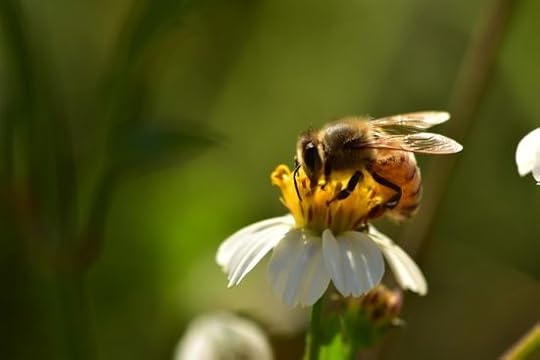
News about honeybee colony collapse has been widespread since 2006 when beekeeper Dave Hackenberg discovered that 400 out of 2,400 hives have been forsaken by bees. These bees disappeared, leaving no trace of a single dead body in the vicinity—a phenomenon different from the die-offs in the past where dead bees are retrieved after parasite attacks. This unexplained honeybee disappearances is known as colony collapse disorder.
While the root of CCD is not yet proven by science, USDA ARS describes CCD as “a syndrome specifically defined as dead colony with no adult bees and with no dead bee bodies but with a live queen, and usually honey and immature bees, still present.”
Though CCD may be mistaken as the leading cause of loss among managed bee colonies, USDA ARS collects data proving that beekeepers reporting dead colonies due to CCD have declined since 2010. ARS confirms, “CCD is far from the only major threat to the health of honey bees and the economic stability of commercial beekeeping in the United States.”
So what drives honeybee colony loss?
However, several research studies have pointed out several factors that stress bees and trigger colony loss.
Dietary stress. Beekeepers take their managed beehives on a cross-country tour to pollinate various agricultural products such as corn, wheat, and berries. Beekeepers and their bee colonies stay for three weeks or more in one place, depending on the pollination timeframe. In turn, the hardworking bees feed on the only food source for a certain period.
Loss of floral sources and unsuitable nest sites. Beekeepers and their bees travel from one place to another. Most of the time they stay on the road, feed on protein supplements, and breathe in dusts. Bees lost their natural grazing ground. Bees lost their flowers.
Exposure to pests, pesticides, and pathogens. Varroa destructor, tracheal mite, small hive beetles, microsporidian parasites, RNA virus, and pesticides are common causes of bee colony losses even in the past.
Climate change. Moreover, global climate change is another factor that can aggravate the condition.
In 2015, Goulson et al. arrived to a conclusion that one stressor may not cause honeybee colony loss but a combination of several stressors may.
For example, some pesticides act synergistically rather than additively. Both pesticide exposure and food stress can impair immune responses, rendering bees more susceptible to parasites. It seems certain that chronic exposure to multiple interacting stressors is driving honeybee colony losses and declines of wild pollinators, but the precise combination apparently differs from place to place.
Saving honeybees
Most studies suggest that evading pesticide use and resorting to natural farming methods of pest control will less likely expose the bees to harmful chemicals. Other honeybee management strategies, such as intensifying floral resources, propagating bee-friendly flowers, and nurturing graze land will lessen dietary stress and improve breeding ground.
Tune in to the next article about honeybees and the United States agriculture.
Share your thoughts on beekeeping business.
References
USDA Agricultural Research Service. n.d. “ARS Honey Bee Health and Colony Collapse Disorder.” Accessed February 13, 2017. https://www.ars.usda.gov/oc/br/ccd/index/.
Wallace-Wells, David. 2015. “The Blight of the Honey Bee.” NYMag, June 15. Accessed February 13, 2017. http://nymag.com/daily/intelligencer/2015/06/bees-are-literally-worrying-themselves-to-death.html.
Holland, Jennifer S. 2013. “The Plight of the Honeybee.” National Geographic, May 10. Accessed February 13, 2017. http://news.nationalgeographic.com/news/2013/13/130510-honeybee-bee-science-european-union-pesticides-colony-collapse-epa-science/.
Goulson, Dave, Elizabeth Nicholls, et al. 2015. “Bee Declines Driven by Combined Stress from Parasites, Pesticides, and Lack of Flowers.” Science 347. Accessed February 15, 2017. doi: 10.1126/science.1255957.
vanEngelsdorp, Dennis, JD Evans, et al. 2009. “Colony Collapse Disorder: A Descriptive Study.” PLOS ONE 4 (8): e6481. Accessed February 13, 2017. doi: 10.1371/journal.pone.0006481.
Martin, Stephen J. 2001. “The Role of Varroa and Viral Pathogens in the Collapse of Honeybee Colonies: A Modelling Approach.” Journal of Applied Ecology 38: 1082–1093. Accessed February 13, 2017. doi: 10.1046/j.1365-2664.2001.00662.x.
Naug, Dhruba. 2009. “Nutritional Stress Due to Habitat Loss May Explain Recent Honeybee Colony Collapses.” Biological Conservation 142 (10): 2369–2372. Accessed February 13, 2017. doi: 10.1016/j.biocon.2009.04.007.
Nazzi, Francesco, Sam P. Brown, et al. 2012. “Synergistic Parasite-Pathogen Interactions Mediated by Host Immunity Can Drive the Collapse of Honeybee Colonies.” PLOS Pathogens 8(6): e1002735. Accessed February 13, 2017. doi: 10.1371/journal.ppat.1002735.
Henry, Mickaël, Maxime Beguin, et al. 2012. “A Common Pesticide Decreases Foraging Success and Survival in Honey Bees.” Science 336(6079): 348–350. Accessed February 13, 2017. doi: 10.1126/science.1215039.
Highfield, Andrea C., Aliya El Nagar, et al. 2009. “Deformed Wing Virus Implicated in Overwintering Honeybee Colony Losses.” Applied and Environmental Microbiology 75(22): 7212–7220. Accessed February 13, 2017. doi: 10.1128/AEM.02227-09.
Genersch, Elke. 2010. “Honey bee Pathology: Current Threats to Honey Bees and Beekeeping.” Applied Microbiology and Biotechnology 87(1): 87–89. Accessed February 13, 2017. doi: 10.1007/s00253-010-2573-8.
Ellis, James, D., Jay D. Evans, Jeff Pettis. 2015. “Colony Losses, Managed Colony Population Decline, and Colony Collapse Disorder in the United States.” Journal of Apicultural Research 46(1): 134–136. doi: 10.3896/IBRA.1.49.1.30.
The post Honeybees Are Dying Due to Stress! appeared first on Picky The Marvelous Chicken.
March 8, 2017
Protecting and Preserving Endangered Species

Humans are not the only rightful residents of the Earth. Without plants, animals, and other terrestrial and marine inhabitants, the ecosystem won’t be a friendly place for the living. That is a fact that the human race has started to figure out. Thus, there is a rapid upsurge of animal welfare advocacies, environment-friendly projects, and species-specific protection programs all over the world.
Humans have fashioned rules and regulations that promote animal rights and protect natural resources, including plants, and other living things that is beneficial to the ecosystem. One of those is the well-meaning law called the Endangered Species Act. If anyone wonders what it is, here’s a brief introduction.
The Endangered Species Act
The laws protecting endangered species has been in place since 1973 when President Nixon signed the Endangered Species Act. As the primary statutory law for both local and global preservation, the act postulates a structure that targets the protection of endangered and threatened species along with the ecosystems they depend on.
Today, ESA registered an approximately 2,270 endangered or threatened species, with about 650 exotic species unique to regions where the United States has no jurisdiction. ESA works with USFWS. While ESA looks after endangered and threatened marine species, USFWS oversees both terrestrial and freshwater ones.
Endangered vs. Threatened
US Fish and Wildlife Service (USFWS) sets a distinction between endangered and threatened species. Species that are endangered are those that are in peril of becoming extinct while those categorized as threatened may likely become endangered species in the near future.
In order for a species to be given special protection, it must fall into one or more of the following conditions.
The species is susceptible to diseases or vulnerable to predation.
The environment on which the species depend on becomes toxic or destroyed.
The species is dying out due to recreational, commercial, scientific, or educational uses.
The existing legal code is incompetent in protecting the species.
Manmade factors imperils the survival of the species.
Check out the list of threatened or endangered species throughout the world. The list may change from time to time depending on the species’ status of recovery from extinction.

The effort in protecting the endangered species is worldwide. A number of groups or organizations receive funding from either the government or private donations—all looking forward to save what has been once neglected or unprotected. But this is not just about the world’s battle for conservation—it is also about an individual’s endeavor to make our home planet better for everyone.
References
US Fish and Wildlife Service. Revised March 2003. “What Is the Difference between Endangered and Threatened?” Accessed March 8, 2017. https://www.fws.gov/midwest/wolf/esastatus/e-vs-t.htm.
National Oceanic and Atmospheric Administration. n.d. “Endangered Species Act (ESA).” Accessed March 8, 2017. http://www.nmfs.noaa.gov/pr/laws/esa/.
National Wildlife Federation. n.d. “What We Do to Protect Endangered Species.” Accessed March 8, 2017. http://www.nwf.org/What-We-Do/Protect-Wildlife/Endangered-Species.aspx.
Endangered Species Coalition. n.d. “Protecting the Endangered Species Act.” Accessed March 8, 2017. http://www.endangered.org/campaigns/protecting-the-endangered-species-act/.
The post Protecting and Preserving Endangered Species appeared first on Picky The Marvelous Chicken.
March 1, 2017
The Relationship between Early Humans and Animals
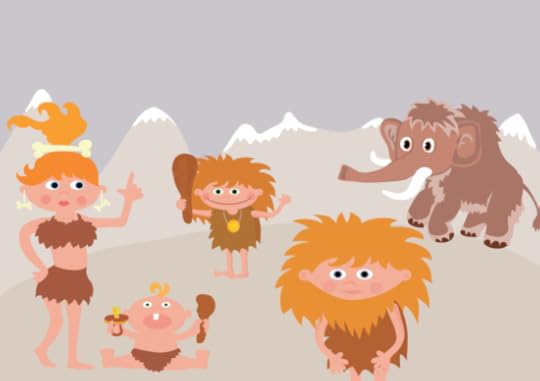
Human beings are bound to other animals for survival. We share the same earth, breathe the same air, and drink the same water. Since the evolutionary appearance of Homo sapiens—when humans developed the ability to think—our species has never stopped depending on animals.
Humanity—especially prehistoric humans—is almost entirely dependent on animals for food. Humans are omnivores; that is, we can eat, digest, and metabolize both plant and animal food products. While plants provide carbohydrates, vitamins, and minerals necessary for our dietary needs, animals are the main source of eight essential amino acids from which both functional and structural proteins are synthesized. The human physiology needs these amino acids from animals since it cannot produce them de novo, from scratch.
Without the animals that could be used as beasts of burden, mounts for fleeing from predators and for chasing prey, humans would have probably been confined to the trees, swinging in Tarzan-like fashion simply to survive. The great migrations that began one hundred to fifty thousand years ago could not have been successful without animal transportation.
The hides of animals provided clothing. Their sinews were used to sew the hides together using needlelike tools carved from bone to fashion clothing, moccasins, as well as tents (yurts) which the first nomads used for shelter.
The development of a primitive religion, animism, was dependent in part on the development of rituals associated with animals. Feathers, shells, and teeth strung on sinews adorned participants dancing and chanting along with the priests that conducted divinations in an attempt to appease the gods. It was believed that gods resided in objects, both animate and inanimate. One of these rituals, called haruspication, involved a seer or priest predicting the future by inspecting the entrails of sacrificial animals. This method of divination persisted throughout early human history into the middle ages, becoming a part of the medical practices among the Mesopotanians, the Etruscans, and the Romans.
Some of the beliefs fostered by animists persist today. For example, our grandparents planted their crops by the signs of the zodiac, ten of which are animals. Others may own good luck charm keychains with a rabbit’s foot attached. Several important Eastern religions worship cattle, treating them as sacred beings.
Today, we grow our own food, build our shelter from rocks, and ride in metal vehicles. Although the relationship between humans and animals has changed over time, we still remain linked to them. For we still share the same earth, still breathe the same air, and still drink the same water.
The post The Relationship between Early Humans and Animals appeared first on Picky The Marvelous Chicken.
February 22, 2017
Ham and Enos: The First Two Chimps in Space
Before any man can claim legacy on spaceflights, there are chimps like Ham and Enos.
Everyone knows that the first person who landed on the moon’s surface is the American astronaut Neil Alden Armstrong. But did you know that Ham and Enos have orbited the Earth before any man had?
In fact, there have been a number of unsung heroes who went to space. There are several batches of selected animals—monkeys, chimps, dogs, mice, cats, squirrels, rabbits, etc.—that have been sent into space as test subjects.
It was at the height of the Cold War when the Soviet and America were competing over technological supremacy, specifically over which country can send a living entity into space and bring it alive back to Earth.

Initial space launches have aimed to collect data about a living organism’s survival chance in extended periods of weightlessness. Successful missions include obtaining data about the effects of swift acceleration on prone or seated position, evaluating biological response in space, and getting passengers back home alive and well. Most failures are due to technological malfunction or fatality due to impact.
Among the successful operations, those of Ham and Enos are most renowned. These space chimps have paved the way for further space research. And before any man can leave a legacy on spaceflights, air force chimpanzees like Ham and Enos had already made one—there was Ham before Alan B. Shepard Jr. and Enos before John Glenn.
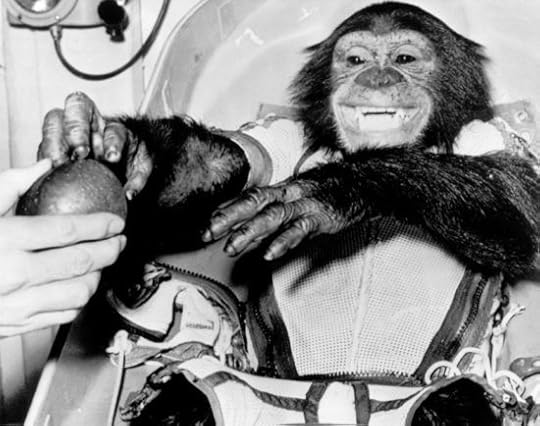 Image 1: Ham
At the age of three, Ham, originally named No. 65, boarded the Mercury Redstone rocket on January 31, 1961. The suborbital flight reached an altitude of 157 miles in 5,857 miles per hour within 16.5 minutes. Ham lived through 6.6 minutes of weightlessness in space. After a thorough medical examination, Ham was moved to the Washington Zoo where he lived alone for 17 years. He was later relocated to North Carolina Zoological Park where he died. Ham’s remains, excluding his skeleton that the Armed Forces Institute of Pathology examines to this day, were entomb in front of the International Space Hall of Fame in New Mexico.
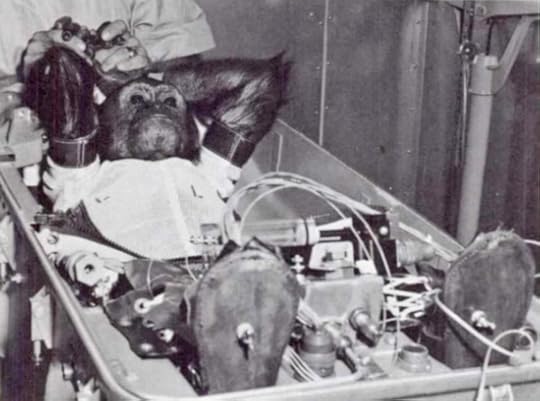 Image 2: Enos
On November 29, 1961, Enos boarded a Mercury Atlas rocket and became the first living thing to successfully orbit the earth twice. That time, the mission’s goal was to test the physical and mental abilities of animals in orbit. Though trained to answer oddity problems by avoidance conditioning (chimps get electric shocks to the soles of their feet for every wrong answer), Enos received a total of seventy-six shocks due to technical malfunction. His flight ended after two rounds (planned originally three) around the orbit. When he landed back to Earth, he was trapped in the capsule for more than three hours with damaged physiological sensors and wrecked belly panel. He died in less than a year later.
Science has proved a number of things and continues to unfold more discoveries through space research. Along this, ethical questions continue to arise. Is the pursuit of technological supremacy justifiable at the expense of moral neglect? Should animals continue to suffer and die for human experiments?
References
Madrigal, Alexis. 2011. “The Horrible Thing That Happened to Enos the Chimp When He Orbited Earth 50 Years Ago.” Accessed February 13, 2017. https://www.theatlantic.com/technology/archive/2011/11/the-horrible-thing-that-happened-to-enos-the-chimp-when-he-orbited-earth-50-years-ago/249241/.
National Aeronautics and Space Administration. n.d. “A Brief History of Animals in Space.” Accessed February 13, 2017. https://history.nasa.gov/animals.html.
The post Ham and Enos: The First Two Chimps in Space appeared first on Picky The Marvelous Chicken.
February 15, 2017
Yerkes National Primate Research Center
The Yerkes National Primate Research Center (YNPRC) is one of the seven research centers across the country funded by the National Institutes of Health (NIH) for the study of nonhuman primates. It is founded by and named after the pioneering primatologist Dr. Robert Mearns Yerkes.
The laboratory has been a part of the Emory University since 1961. It houses approximately 3,400 chimpanzees and over 10,000 rodents that are essential to the study in the fields of microbiology, psychobiology, behavioral biology, immunology, neuroscience, visual science, and molecular medicine.
In 1985, the Association for Assessment and Accreditation of Laboratory Animal Care International (AAALAC), a nonprofit organization that upholds humane care for animals in laboratories, awarded Yerkes full accreditation.
For over eighty years, the center has been exploring ways to cure addiction to drugs, cultivate vaccines for both infectious and noninfectious diseases, decode the mystery of memory, and other related researches. As the center works toward success, a number of controversies regarding inhumane treatment of monkeys in the research center have been apparent throughout its operation.
In 2006, Yerkes has applied for an amendment to slaughter thirty imperiled sooty mangabeys due to lack of space in the facility. Not only that, Yerkes has expressed an intention to conduct fatal procedure to one hundred of these arboreal and diurnal species. Fortunately, the proposition was opposed and successfully put to halt by animal welfare groups.
The most recent controversy has taken place a couple of years ago where Yerkes faced legal trouble for planning to send seven chimpanzees to an accredited zoo in England. The animal rights group challenged the plan and argued that it is against the law. This time the animal rights group lost the case.
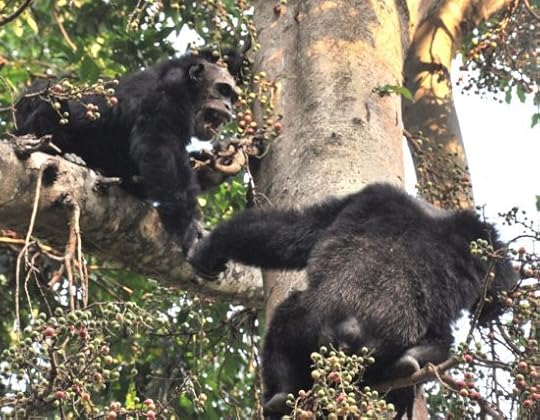
These are just among the controversies that Yerkes has confronted. Undoubtedly, the center has made successful interventions to improve the health and well-being of humanity. However, groups who are devoted to protect animal rights intensely raise questions about the ethical use of animals in laboratories.
Do humans have the right to experiment on animals? Share your thoughts in the comments section below.
References
Animal Legal Defense Fund. 2006. “Yerkes Drops Bid to Kill Endangered Species.” Accessed January 24, 2016. http://aldf.org/press-room/press-releases/yerkes-drops-bid-to-kill-endangered-species/.
CBS46.com. 2011. “Monkey missing from Yerkes National Primate Research Center.” Updated July 22, 2011. Accessed January 18, 2017. http://www.cbs46.com/story/14960350/monkey-missing-from-yerkes-national-primate-research-center.
PETA. 2011. “Monkey Breaks Out of Laboratory.” Accessed January 18, 2017. http://www.peta.org/blog/monkey-breaks-cruel-lab/.
Stobbe, Mike. 2007. “USDA Fines Animal Lab After Monkey Death.” USA Today. http://usatoday30.usatoday.com/tech/science/2007-10-01-2233779348_x.htm.
Stokes, Stephannie. 2016. “Animal Rights Groups Lose Lawsuit Over Yerkes Chimp Transfer.” WABE 90.1 FM. Accessed January 24, 2017. http://news.wabe.org/post/animal-rights-groups-lose-lawsuit-over-yerkes-chimp-transfer.
Yerkes National Primate Research Center. Accessed January 18, 2017. http://www.yerkes.emory.edu/.
The post Yerkes National Primate Research Center appeared first on Picky The Marvelous Chicken.
February 8, 2017
Giving Rescue Dogs a Chance at Happiness
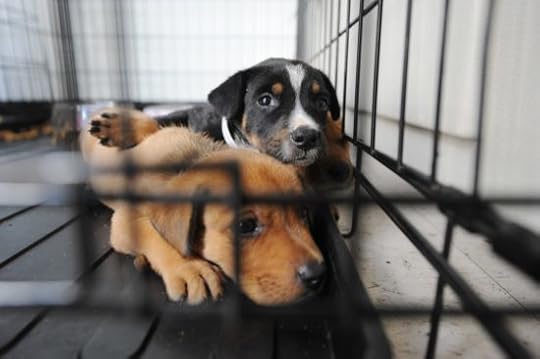
“Until one has loved an animal, a part of one’s soul remains unawakened.”—Anatole France
Dogs are loving, loyal, and loveable. They make good companions for those who love furry and playful pets. Man’s four-legged best friends are creatures of love. They seem to have an endless capacity for affection—they love anyone who is kind to them and even those who are not. Despite these wonderful qualities, many dogs are housed in cramped shelters waiting for adoption into forever homes. While cute puppies are fairly easily placed for adoption, many older dogs that may have more health and/or behavioral problems are harder to place. Fortunately, there are numerous organizations in almost every state that attend to these needs and place the older dogs for adoption. These dogs are especially loving, obedient, and grateful for a safe, loving home. I have adopted two rescued mixed breeds, both of them wonderful dogs: Angel, who lived to be fourteen years old, and my current dog Lucy, who is now 10 years old and is a Golden-Labrador mix. Adopting a dog also helps the shelter make space for other rescues.
Brinks was once a stray pit bull who roamed the streets of Brooklyn. Now he can’t stop smiling after being rescued and adopted by his human dad, Jon. The two are best pals, going on walks, playing fetch, and enjoying each other’s company.
 Instagram: @smilingbrinks
Five-week-old Pikelet escaped from almost certain death when he was rescued and adopted into his forever home by his loving family. He was later joined by another rescue dog, Patty Cakes. When the family fostered rescue ducklings, the two dogs happily took take care of their tiny guests.
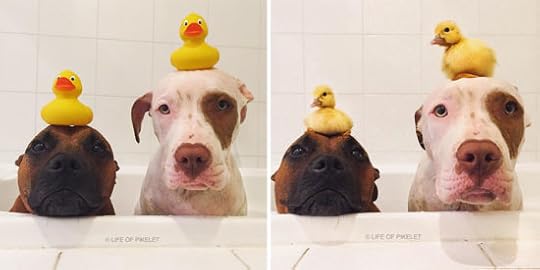 Instagram: @lifeofpikelet
Taking in a dog takes a lot of effort, but adopting a rescue takes more. A rescue dog’s background is not always guaranteed. Sometimes, they come with conditions that can take a lot of resources to treat or with behaviors that need to be unlearned. But with a lot of patience, love, and care, they can be the best dogs they can ever be.
The post Giving Rescue Dogs a Chance at Happiness appeared first on Picky The Marvelous Chicken.
February 1, 2017
Animals in Space Research
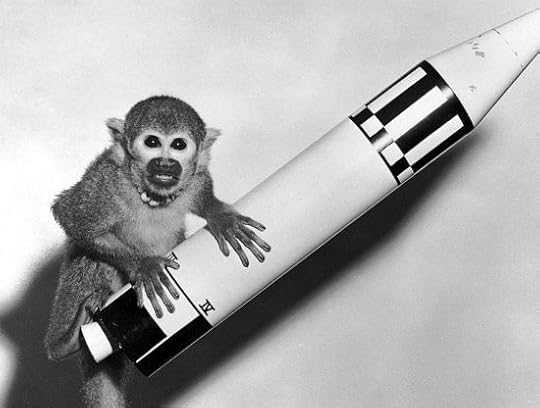
Astronaut and mission commander Neil A. Armstrong, in his Apollo 11 mission, was the first human to walk on the moon’s surface on July 20, 1969, along with lunar module pilot, Buzz Aldrin. But did you know that a rhesus monkey named Albert II was the first mammal to come before the men, launching successfully into space on June 14, 1949? Albert reached a distance of 83 miles.
For decades now the Russian and American aeronautics and space administrations have worked with rats, mice, fruit flies, pigs, and dogs to find answers to important researches for neuroscience, immunology and disease, musculoskeletal, cardiovascular, and sensory motor studies. Animals have taken part in the advancement of space and biological study years before humans have.
In fact, a good thirty-two monkeys have already entered space. They range from chimpanzees, squirrel monkeys, to macaques. In the 1950s, as the United States worked with monkeys, the Soviet Union placed their trust in dozens of our friendly, four-pawed canines. The first space dog was named Laika. Laika orbited earth on board Sputnik 2, a small satellite, on November 3, 1957. Sadly, Laika died in the flight due to stress and heat. Soviet Sputnik 5 (August 19, 1960), however, was successfully able to return home dogs Belka and Strelka alongside a gray rabbit, forty-two mice, two rats, and fruit flies.
More Russian space dogs such as Veterok and Ugolyok made their presence in space. The two orbited for twenty-two days before landing on earth on March 16, 1966. Veterok and Ugolyok still hold the record for longest space flight for dogs.
Animals were only supposed to be substitutes to test the suitability of environment in space for human habitat, but when proven their biological systems could withstand space environment, humans followed. In fact, even the French launched the first and only cat Félicette to space. She survived, having reached an altitude of 100 miles with electrodes implanted in her skin.
By the year 1968, as aeronautic technology continued to advance, the Soviet Union launched Zond 5, a spacecraft filled with biological payload. It carried plants, seeds, bacteria, wine flies, mealworms, and two tortoises. Zond 5 is also recognized as the first spacecraft to circle the moon. When astronauts began landing on the moon by 1969, more biological payloads were carried on board. They included spiders, turtles, rabbits, fishes, jellyfish, algae, and amoebae.
There have been many protests to animal testing, but unfortunately, experiments continue to be conducted, which involve stress and pain for these creatures. Radiation exposure, bone fracture studies, partial gravity/hypergravity studies are some common experiments done on space animals . In the year 2004, a NASA-sponsored report concluded with a statement on animal research, stating it is “an integral tool for understanding and ameliorating the known and yet-to-be-discovered impacts of spaceflight upon the human body.” Moving forward to the future, hopefully harm-free experiments will render both animals and humans more beneficial to various areas for research.
References:
Dohrer, Elizabeth. “Laika the Dog & the First Animals in Space.” Space.com. September 25, 2012 (accessed January 10, 2017). http://www.space.com/17764-laika-first-animals-in-space.html.
”Space Research.” Neavs.org. Accessed January 10, 2017. http://www.neavs.org/research/space.
The post Animals in Space Research appeared first on Picky The Marvelous Chicken.
January 25, 2017
Animals in Medicinal Experiments
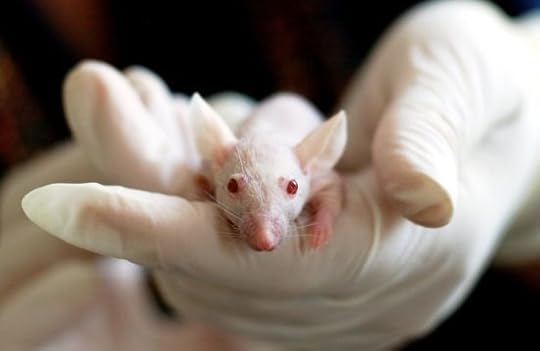
For a long time now, human beings have claimed dominion over animals. They have hunted wildlife for food, for domestication, and over the years, for agribusiness and other types of profitable engagements. They have uprooted animals from their natural habitat and turned them into slaves for human entertainment, such that in circuses. But the animal cruelty does not end there. More ghastly practices can be found within the four walls of research laboratories.
Animals in Scientific Testing
In the United States alone, there are approximately twenty-six million animals used for both scientific and commercial experiments annually. Animals are used as mock-ups to study diseases. They become the subjects to several tests in the development of potential forms of treatment. They become the determiners of toxicity levels of medications and of product safety for human use.
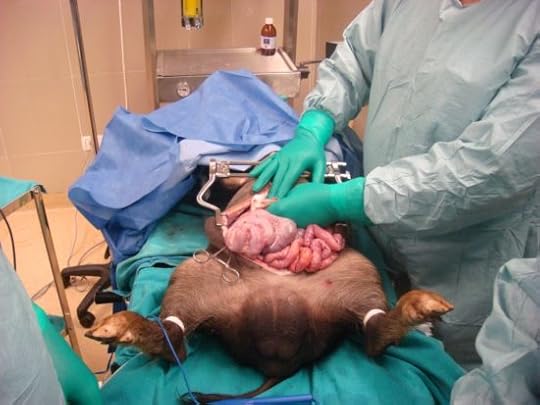
People for the Ethical Treatment of Animals, also known as PETA published an article entitled “Animals in Medical Experiments” that contains the text below:
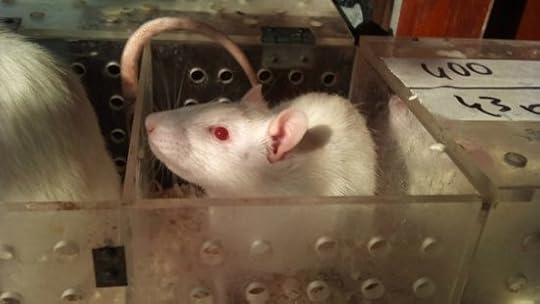
At more than 1,000 laboratories across the country, monkeys are addicted to drugs, cats are deafened and have holes drilled into their skulls, sheep and pigs have their skin burned off, and rats have their spinal cords crushed. Tiny mice are made to grow tumors nearly as large as their entire bodies, kittens are purposely blinded, and rats are made to suffer seizures. Dogs are intentionally poisoned with experimental drugs, chimpanzees are infected with debilitating diseases, and rabbits have grotesque devices implanted into their bodies. There’s likely a hellish laboratory like these right in your city.
Much of healthcare-related research success is attributed to the use of animals. Proponents believe in the necessity of using living organisms that have the same cell processes like humans—all for the advancement of scientific understanding and for the protection of the safety of people, animals, and the environment.
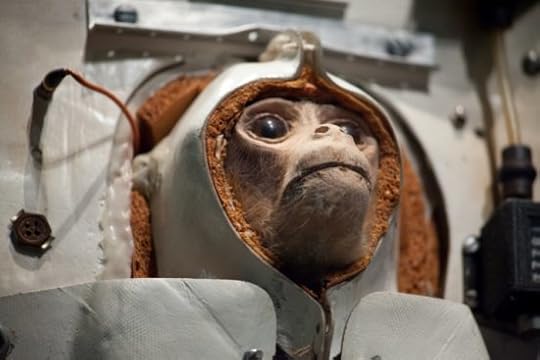
However, another group opposes the inhumane practices toward animals, specifically in medicinal experiments. Opponents propose for alternative methods to animal testing—citing that “animals are so different from human beings that research on animals often yields irrelevant results” (Should Animals Be Used for Scientific or Commercial Testing?).
As the cruelty on animal testing becomes prevalent throughout the world, more and more questions arise targeting the ethical side of the methodology reigning in the field of medicine.
Is it ethical to use animals in medicinal experiments?
Does using animals in medicinal research really beneficial for the safety of people, animals, and the environment?
Is it possible to further scientific research and understanding without experimenting on animals?
The debate is still going on. What’s your stand?
References
PETA. “Animals in Medical Experiments.” Accessed on November 25, 2016. http://www.peta.org/issues/animals-used-for-experimentation/animals-medical-experiments/.
“Should Animals Be Used for Scientific or Commercial Testing?” Accessed on November 25, 2016. http://animal-testing.procon.org/.
AnimalResearch.Info. “Why Animals Are Used.” Accessed on November 25, 2016. http://www.animalresearch.info/en/designing-research/why-animals-are-used/.
The post Animals in Medicinal Experiments appeared first on Picky The Marvelous Chicken.