Linda Shenton Matchett's Blog, page 78
November 21, 2018
Talkshow Thursday: Meet Allison Garcia
Talkshow Thursday: Meet Allison Garcia
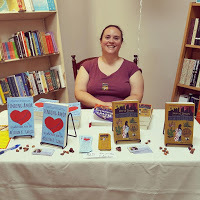
Linda: Welcome to my blog! You are one busy lady. You recently released a book in September and just published another as part of a novella set called A Merry Navidad.How did that project come about and what was your inspiration for the story?
Allison: Thanks for having me, Linda! Well, I was looking for sensitivity readers for Finding Amor and Cindy Flores Martinez accepted the offer, and I found out she also wrote Latino Christian fiction. I was soooo excited because I thought I was the only one writing in the genre. She told me she knew a couple more writers of Latino Christian fiction, and we formed a Facebook group called Latino Fiction Writers in the Light, where Cynthia Marcano (one of the members) brought up the idea of a Christmas novella set featuring Latino Christian fiction. That was the birth of A Merry Navidad. My novella in the set is called “Navidad & Familia” and takes a look at a couple side characters from Finding Amor, Nancy and her daughter, Kayli. They are new Christians, so I wanted to capture the joy of Christmas understanding its true meaning for the first time while also celebrating traditional Mexican holiday food and emphasizing the importance of loving your family.
LM: Research is a necessary part to writing any book. What sort of “wow” or “aha” moment have you had when researching one of your books and you knew you had to include the information?
 Allison: For my current project, I have been looking for information about the U.S.’s involvement in some of the chaos in Central America (as in the Buscando Home series, the main characters are from El Salvador). I learned that decades ago Guatemala was going to do reparations towards their indigenous populations because of land taken from them, but that the U.S. didn’t want to lose their banana plantations there, so we sent arms and money to overthrow their government, which led to a brutal decades-long war that made their country unstable. That broke my heart for so many reasons, and I knew I had to have one of the characters, Lauren, stumble across that information at some point so the reader learns it too. There’s so much we don’t learn about in school!
LM: What do you come up with first: Title, character names, or plot?
Allison: I think plot first….then a combo of title and names. I usually get an idea for a character(s) and what is going to happen to them in the story. Then I like to think about a name that fits them and also a name that fits the book. I usually get character names before book titles, I think. Sometimes I have loads of fun looking up names!
LM: What writers influence you the most?
Allison: I really enjoy Reyna Grande, Barbara Kingsolver, the Bronte sisters, Agatha Christie, J.K. Rowling, and the authors and the Author of the Bible. J
LM: Here are some quickies:
Favorite Actor/Actress: Tom Hanks/Meryl StreepFavorite Bible Verse: Romans 5:3-5Favorite Season: Spring
LM: What is something that you wish you knew how to do?
Allison: Skateboard. I loved playing Tony Hawks games and watching videos. I don’t even think I could stay on it for ten seconds…
LM: Can you tell us what writing projects are on your plate right now?
Allison: Currently I’m doing National Novel Writing Month (NaNoWriMo) and I’m working on book 2 of the Buscando Home series, Finding Seguridad. So far, I’m closing in on 30k words. I’m getting to an interesting spot so I’m excited about writing it!
Linda: Where can folks connect with you?
 Allison: There are lots of ways! I love connecting with fans!
Facebook: http://www.facebook.com/allisonkgarciaauthorInstagram: @allisonkgarciaauthorTwitter: @athewriterBlog: http://allisonkgarcia.wordpress.comNewsletter: http://bit.ly/findingamor
A Merry Navidad: Four Latino Christmas novellas-each story with a set of traditional Latino Christmas recipes.
Purchase Link: www.amazon.com/dp/B07K37WL84

Linda: Welcome to my blog! You are one busy lady. You recently released a book in September and just published another as part of a novella set called A Merry Navidad.How did that project come about and what was your inspiration for the story?
Allison: Thanks for having me, Linda! Well, I was looking for sensitivity readers for Finding Amor and Cindy Flores Martinez accepted the offer, and I found out she also wrote Latino Christian fiction. I was soooo excited because I thought I was the only one writing in the genre. She told me she knew a couple more writers of Latino Christian fiction, and we formed a Facebook group called Latino Fiction Writers in the Light, where Cynthia Marcano (one of the members) brought up the idea of a Christmas novella set featuring Latino Christian fiction. That was the birth of A Merry Navidad. My novella in the set is called “Navidad & Familia” and takes a look at a couple side characters from Finding Amor, Nancy and her daughter, Kayli. They are new Christians, so I wanted to capture the joy of Christmas understanding its true meaning for the first time while also celebrating traditional Mexican holiday food and emphasizing the importance of loving your family.
LM: Research is a necessary part to writing any book. What sort of “wow” or “aha” moment have you had when researching one of your books and you knew you had to include the information?
 Allison: For my current project, I have been looking for information about the U.S.’s involvement in some of the chaos in Central America (as in the Buscando Home series, the main characters are from El Salvador). I learned that decades ago Guatemala was going to do reparations towards their indigenous populations because of land taken from them, but that the U.S. didn’t want to lose their banana plantations there, so we sent arms and money to overthrow their government, which led to a brutal decades-long war that made their country unstable. That broke my heart for so many reasons, and I knew I had to have one of the characters, Lauren, stumble across that information at some point so the reader learns it too. There’s so much we don’t learn about in school!
LM: What do you come up with first: Title, character names, or plot?
Allison: I think plot first….then a combo of title and names. I usually get an idea for a character(s) and what is going to happen to them in the story. Then I like to think about a name that fits them and also a name that fits the book. I usually get character names before book titles, I think. Sometimes I have loads of fun looking up names!
LM: What writers influence you the most?
Allison: I really enjoy Reyna Grande, Barbara Kingsolver, the Bronte sisters, Agatha Christie, J.K. Rowling, and the authors and the Author of the Bible. J
LM: Here are some quickies:
Favorite Actor/Actress: Tom Hanks/Meryl StreepFavorite Bible Verse: Romans 5:3-5Favorite Season: Spring
LM: What is something that you wish you knew how to do?
Allison: Skateboard. I loved playing Tony Hawks games and watching videos. I don’t even think I could stay on it for ten seconds…
LM: Can you tell us what writing projects are on your plate right now?
Allison: Currently I’m doing National Novel Writing Month (NaNoWriMo) and I’m working on book 2 of the Buscando Home series, Finding Seguridad. So far, I’m closing in on 30k words. I’m getting to an interesting spot so I’m excited about writing it!
Linda: Where can folks connect with you?
 Allison: There are lots of ways! I love connecting with fans!
Facebook: http://www.facebook.com/allisonkgarciaauthorInstagram: @allisonkgarciaauthorTwitter: @athewriterBlog: http://allisonkgarcia.wordpress.comNewsletter: http://bit.ly/findingamor
A Merry Navidad: Four Latino Christmas novellas-each story with a set of traditional Latino Christmas recipes.
Purchase Link: www.amazon.com/dp/B07K37WL84


November 19, 2018
Traveling Tuesday: The Sunshine State Does its Bit
Traveling Tuesday: The Sunshine State Does its Bit
 Like all other U.S. states, Florida sent its sons and daughters into war zones. More than a quarter of a million Floridians served in uniform, approximately 3,000 of whom gave their lives. The state also participated on the home front in many ways.
Because of Florida’s warm climate and an extensive amount of vacant land, it was an excellent choice for housing and training soldiers, sailors, and airmen. In 1940, there were eight military installations. Just three years later, there were over 170, ranging from extremely large to relatively small camps. Two of the larger complexes were Camp Blanding, near Starke, and the Jacksonville Naval Air Station.
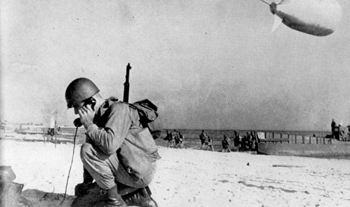 Blanding became Florida’s fourth largest city during the war, growing to 180,000 acres and housing 55,000 soldiers and several thousand POWs. Construction entailed the use of over 22,000 civilians. Unfortunately the pace of construction created severe housing problems, forcing some workers to sleep in their cars or pitch tents for lack of lodging facilities.
 Flat lands and beaches offered training opportunities for myriad campaigns including the landing at Normandy. Military facilities became so overcrowded that the government turned to the hotel industry. Some billeted troops while others were converted to makeshift hospitals for personnel returning from overseas.
The shipbuilding industry exploded, and many began to refer to Florida as the Steel State. Wainwright in Panama City built 108 vessels with 15,000 workers. Another 9,000 employees worked in Tampa, and even landlocked Orlando produced 9,000 assault boats using in amphibious landing operations.
 One of Florida’s largest contributions to the war effort was their agricultural industry. For the first time, the state surpassed California’s production of citrus. In 1942, Florida growers patented a process to make frozen concentrated orange juice. Much of this such was a result of importing more than 75,000 Bahamians and Jamaicans to work in the fields, taking the place of citizens who had left for the armed forces.
 War arrived in Florida in the shape of German U-boats who managed to sink over twenty-four ships off both coasts. One of the most famous of these incidents occurred near the Jacksonville Pier. The Gulfamerica, an 8,000 ton steam tanker, was on its maiden voyage. One scholar commented about the “chivalrous” actions of the German commander: rather than finishing off the tanker by shooting toward the pier crowded with civilians, he surfaced the sub between the pier and the ailing ship and shot toward the open ocean.
As a result of these attacks, patrols were formed to defend the coastlines. Mr. Guy Allen of Tampa is credited with establishing an unofficial motorcycle corps which later became part of the State Defense Council and escorted military convoys.
November 14, 2018
Talkshow Thursday: June Foster's Story Behind the Story
Talkshow Thursday: June Foster's Story Behind the Story
 A Harvest of Blessing was inspired by a real life couple my husband and I met in Pensacola, Florida. Several years ago we were traveling and living in our RV full time. Since my husband is retired army, we generally stayed on military posts in their RV parks. This year we stayed at Pensacola Naval Air Station and attended the military chapel.
One Sunday we got to talking to a great couple and wound up going to lunch with them after church. Their story amazed me. They were both visiting the graves of their dead spouses when they met. They even pointed out the graveyard as we passed on the way to lunch.
Cupid went to work, and they eventually married. Their story has been on my mind for several years, and I finally got the chance to tell it in A Harvest of Blessing where my hero and heroine who're in their mid fifties meet in a graveyard. But that's where the similarity ends. I deviated from the real couple and made Nadia's husband a jerk and Jared's daughter an obstacle between the two of them.
 In the story, Nadia's son David is serving a tour of duty in Germany. I put him in Germany because my husband and I were there before he retired from the army. Wood carvings abound in the European country, and I thought it would be fun to have David bring one of the lovely pieces—like the one I own—back home for his mom. The real wood carving used to hang on my mom's wall. Today it sits on a cabinet in my dining room.
The carving is special to me as it is the artist's rendition of a loaf of bread and a chalice, an important element in Christianity—communion or the Lord's Supper.
I loved writing A Harvest of Blessing as this is the first book I've penned where the characters are middle aged. I hope you'll enjoy reading it as much as I enjoyed writing it.
Book Blurb: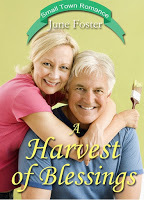 If there's one thing Nadia Maguire knows, Jon Maguire robbed her of a godly marriage and left her in financial ruin. The night he was killed in an accident, guilt threatened to suffocate her. She wasn't sorry he died.
When Nadia accidentally sits on a stranger's lap in the graveyard where Jon is buried, she's horrified to learn the good-looking guy with salt and pepper hair is her new boss.
Jared Abrams is a widower who longs to move on. He's intrigued by the beautiful woman who puts God first in her life. But as their friendship grows, an unexpected obstacle separates them—his daughter Sarah. No one can replace her mother. Especially not Nadia Maguire whose son harmed her in high school.
If Nadia can't find the funds to get her house ready to sell, she'll have to balance two jobs with no time left to nurture a relationship with the man she loves. Will she and Jared find a Harvest of Blessings, or a season of drought?
Purchase Link: http://www.amazon.com/dp/B07H36HMJN
 A Harvest of Blessing was inspired by a real life couple my husband and I met in Pensacola, Florida. Several years ago we were traveling and living in our RV full time. Since my husband is retired army, we generally stayed on military posts in their RV parks. This year we stayed at Pensacola Naval Air Station and attended the military chapel.
 One Sunday we got to talking to a great couple and wound up going to lunch with them after church. Their story amazed me. They were both visiting the graves of their dead spouses when they met. They even pointed out the graveyard as we passed on the way to lunch.
Cupid went to work, and they eventually married. Their story has been on my mind for several years, and I finally got the chance to tell it in A Harvest of Blessing where my hero and heroine who're in their mid fifties meet in a graveyard. But that's where the similarity ends. I deviated from the real couple and made Nadia's husband a jerk and Jared's daughter an obstacle between the two of them.
 In the story, Nadia's son David is serving a tour of duty in Germany. I put him in Germany because my husband and I were there before he retired from the army. Wood carvings abound in the European country, and I thought it would be fun to have David bring one of the lovely pieces—like the one I own—back home for his mom. The real wood carving used to hang on my mom's wall. Today it sits on a cabinet in my dining room.
 The carving is special to me as it is the artist's rendition of a loaf of bread and a chalice, an important element in Christianity—communion or the Lord's Supper.
I loved writing A Harvest of Blessing as this is the first book I've penned where the characters are middle aged. I hope you'll enjoy reading it as much as I enjoyed writing it.
Book Blurb:
 If there's one thing Nadia Maguire knows, Jon Maguire robbed her of a godly marriage and left her in financial ruin. The night he was killed in an accident, guilt threatened to suffocate her. She wasn't sorry he died.
 When Nadia accidentally sits on a stranger's lap in the graveyard where Jon is buried, she's horrified to learn the good-looking guy with salt and pepper hair is her new boss.
Jared Abrams is a widower who longs to move on. He's intrigued by the beautiful woman who puts God first in her life. But as their friendship grows, an unexpected obstacle separates them—his daughter Sarah. No one can replace her mother. Especially not Nadia Maguire whose son harmed her in high school.
If Nadia can't find the funds to get her house ready to sell, she'll have to balance two jobs with no time left to nurture a relationship with the man she loves. Will she and Jared find a Harvest of Blessings, or a season of drought?
Purchase Link: http://www.amazon.com/dp/B07H36HMJN
November 11, 2018
Mystery Monday: Crimebake Mystery Conference
Mystery Monday: Crimebake Mystery Conference
 This past weekend, I attended Crimebake, an annual mystery writing conference in Woburn, Massachusetts jointly produced by Mystery Writers of America and the New England chapter of Sisters in Crime. This year marks my eleventh conference, yet I learn something new (usually lots of "somethings") every time I come.
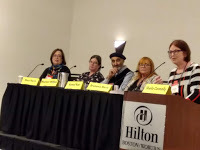 A Master class in forensics was chock-full of information to ensure I'll get my facts correct. Panels on writing short fiction and upending cliches rounded out the afternoon. A seminar on marketing tips and techniques is always helpful, and it was nice to find out I'm doing some of right! During his interview, Guest of Honor Walter Mosley shared that he was rejected seventeen(!) times for his latest book before it was accepted by a publisher. You would think fifty-four books in thirty years would have publishers lining up to release it.
As much as I love coming for the writer-part, I love the reader-part of rubbing shoulders with authors
I admire, some of whom are NY Times or USA best sellers for good reason, others who haven't received awards, but write some of the best mystery fiction I've read. Here are a couple of goose-bump-worthy incidents:
While I was standing in the registration line on Friday afternoon, Hank Phillippi Ryan intentionally approached me, gave me a big hug, and said how glad she was to see me. Hank, who has won countless awards for her investigative reporting and for her writing! Hank, treating me like a friend and cohort. And she does it every year.
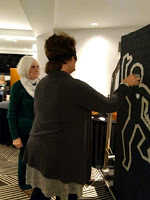 Friday night, Tiger Wiseman and I ran the SinCNE game "Pin the Wound on the Corpse." (Yes, you read that right!) Chatting with one of the contestants I mentioned I wrote historical fiction and had several books published. Didn't two women overhear me and rush over to ask me about my books. They also asked questions about the industry, and I was pleased to be able to share from my experiences.
The weekend passed in a flash, and I'm already looking forward to next year's conference.
Do you attend industry conferences for your job? I hope they are as exciting as Crimebake!
 This past weekend, I attended Crimebake, an annual mystery writing conference in Woburn, Massachusetts jointly produced by Mystery Writers of America and the New England chapter of Sisters in Crime. This year marks my eleventh conference, yet I learn something new (usually lots of "somethings") every time I come.
 A Master class in forensics was chock-full of information to ensure I'll get my facts correct. Panels on writing short fiction and upending cliches rounded out the afternoon. A seminar on marketing tips and techniques is always helpful, and it was nice to find out I'm doing some of right! During his interview, Guest of Honor Walter Mosley shared that he was rejected seventeen(!) times for his latest book before it was accepted by a publisher. You would think fifty-four books in thirty years would have publishers lining up to release it.
As much as I love coming for the writer-part, I love the reader-part of rubbing shoulders with authors
I admire, some of whom are NY Times or USA best sellers for good reason, others who haven't received awards, but write some of the best mystery fiction I've read. Here are a couple of goose-bump-worthy incidents:
While I was standing in the registration line on Friday afternoon, Hank Phillippi Ryan intentionally approached me, gave me a big hug, and said how glad she was to see me. Hank, who has won countless awards for her investigative reporting and for her writing! Hank, treating me like a friend and cohort. And she does it every year.
 Friday night, Tiger Wiseman and I ran the SinCNE game "Pin the Wound on the Corpse." (Yes, you read that right!) Chatting with one of the contestants I mentioned I wrote historical fiction and had several books published. Didn't two women overhear me and rush over to ask me about my books. They also asked questions about the industry, and I was pleased to be able to share from my experiences.
The weekend passed in a flash, and I'm already looking forward to next year's conference.
Do you attend industry conferences for your job? I hope they are as exciting as Crimebake!
November 7, 2018
Talkshow Thursday: Author Linore Burkard
Talkshow Thursday: Author Linore Burkard
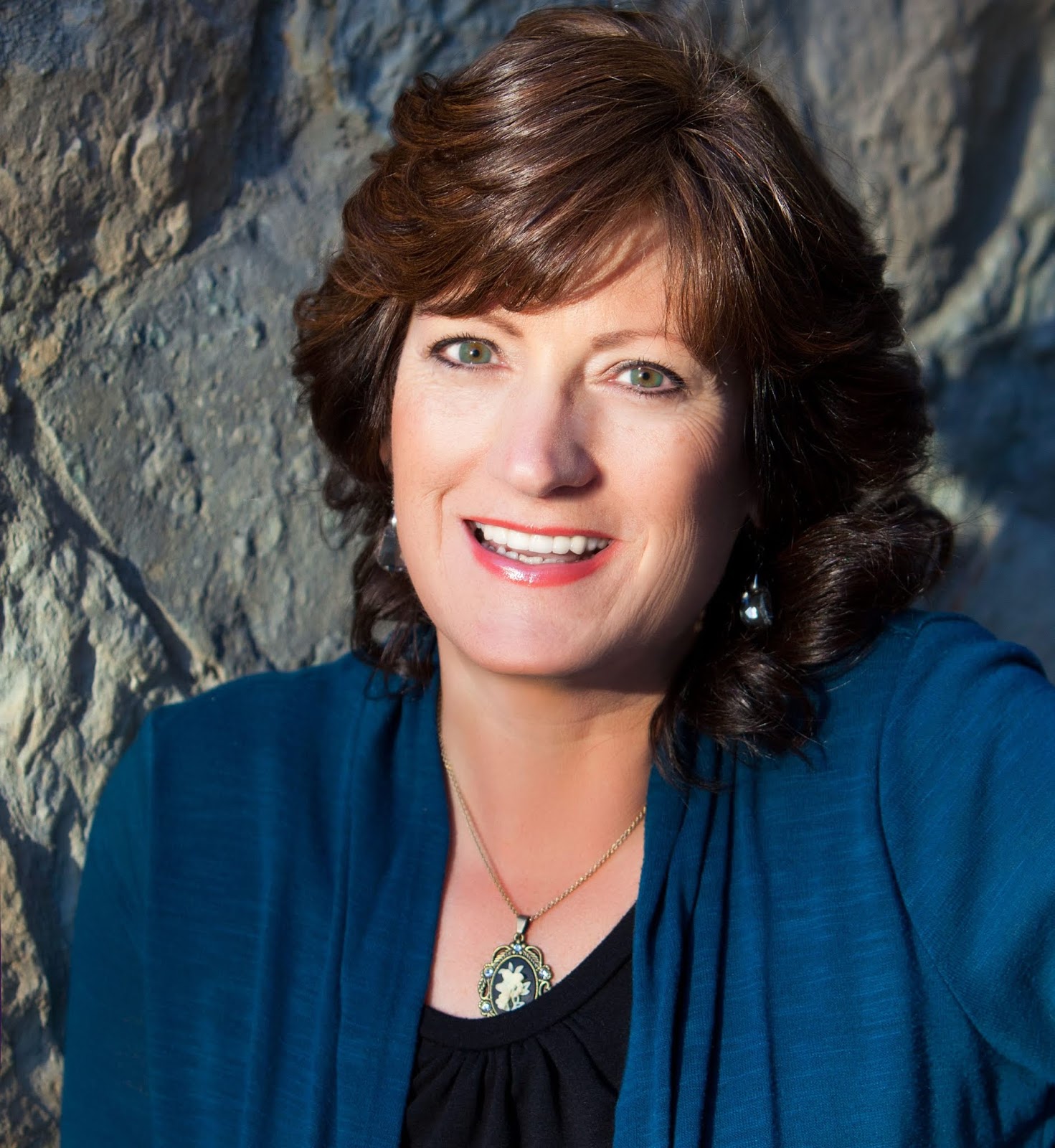 Linda: Welcome back and thanks for joining me today. My readers love historical fiction, so they will be very excited to hear about your latest box set release, The Regency Trilogy. It sounds intriguing. What was your inspiration for these stories?
Linore: I am a big fan of Jane Austen and Georgette Heyer, but when I looked for Christian fiction set in the regency (1811-1820, England) there was none. Not a single authentic regency romance in Christian fiction. My goal was to change that. With the help of Nick Harrison, then editor at Harvest House, we did. With his help, Harvest picked up my first book, Before the Season Ends, which was previously self-published. I wrote two more books for HHP, the sequels which make up the box set. Readers—and other writers—loved the books and soon there were regencies coming from other fiction houses. So that today regency romance is an established genre for Christian readers!
LM: How do you come up with your characters? Are they based on any real people in your life?
Linore: I don't think any author can wholly avoid incorporating traits of people they know, or of themselves, for that matter, into their characters. But I never fashion a character entirely upon anyone that I actually know.
LM: Research is an important part of writing, but especially in historical fiction. How did you go about researching Before the Season Ends and did you find any special tidbits you knew you had to include?
 Linore: I wanted to include features I most enjoyed in the authors I loved, so that humor in the vein of Heyer is in my books, and language faintly in the style of Austen (many reviewers mention that. One called it "Jane Austen Lite.") I wanted to give my readers the best of both worlds, so to speak.
LM: What do you do to prepare yourself for writing? For example do you listen to music or set up in a specific place?
Linore: I don't do anything to prepare for writing, other than have an idea about where I want to go in the story. If it's a new story, it's only new to the page; meaning, I've been simmering it in my head for a long time before I write it out. This isn't to say that I don't sometimes take writing retreats away from home and family. When the writing is hard in a new book, or when the revisions are difficult (I call it 'brain surgery') I sometimes have to get away. It's the only way to have uninterrupted time.
 LM: What one thing would you like to learn how to do?
Linore: I'd like to learn how to squeeze in more reading time while still meeting my writing and publishing goals!
LM: Quickies:
Linore:Favorite Color: Mauve/RoseFavorite Book: The Bible (or, The Good Earth, by Pearl S. Buck—one of my faves)Favorite Movie Actress: Rosamund Pike, Keira Knightley or Reese Witherspoon
LM: What is your next project?
Linore: I have a time-travel regency with my agent as I write. Next I'm working on a compilation of true-life God encounters! My first non-fiction book.
LM: Sounds exciting. Where can folks find you on the web?
Linore: Websites: http://www.LinoreBurkard.com, http://www.LRBurkard.com, Facebook: https://www.facebook.com/groups/AuthorNewsfromLinore/Twitter: https://twitter.com/LinoreRBurkard
Blog: http://todayswomanoffaith.blogspot.com
Book Blurb:
Lovely Ariana Forsythe arrives at her wealthy aunt's London townhouse just in time for the season, called the "marriage mart." Thrust into a world of the upper crust, an innocent blunder entangles her in a treacherous rumor that threatens her good name. She is forced to team with the Paragon, the darkly handsome but taciturn Phillip Mornay, to disprove the lie. Ariana can trust God's hand in her life, but can she resist Mr. Mornay's increasing claim on her heart? When she finds herself betrothed to him, she is faced with a terrible choice--she must make it soon, before the season ends!
Purchase Link: www.amazon.com/dp/B07BFFHW5L
November 5, 2018
Traveling Tuesday: Minnesota-Land of 10,000 Lakes
Traveling Tuesday: Minnesota-Land of 10,000 Lakes
 The U.S. state of Minnesota has many nicknames: Land of 10,000 Lakes, The Gopher State, The North Star State, The Agate State, and the State of Hockey. Personally, I’m surprised it’s not also called The Corn State in recognition of the miles of corn fields I pass during the ninety-minute drive from the Minneapolis airport to my sister’s house. A beautiful state, its flat lands and gently rolling hills are vastly different from the forested mountains of New Hampshire where I live.
But Minnesota is much more than its geography, although its geography is part of what helped the state “do its bit” during WWII.
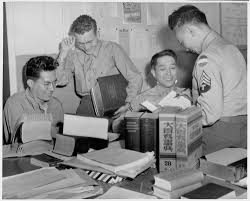 As soon as the U.S. entered the war, Fort Snelling, located south of Minneapolis where the Minnesota and Mississippi Rivers come together, became an induction center and processed more than 300,000 men and women into the Armed Forces. At its peak, nearly 800 recruits per day passed through. The Fort was also used to organize and train specialized unit such as the military police and the 99th Infantry Battalion that was made up of Norwegian-speaking soldiers who trained to fight on skis and snowshoes. In 1944, Nisei (second generation) Japanese-Americans came to the fort to learn Japanese, Korean, and Chinese in preparation for service as interpreters, interrogators, and intelligence workers.
In the Iron Range, over 338 million tons of iron ore were mined which amount to seventy percent of the iron ore needed for battleships, planes, and tanks. One train car of ore left Hibbing’s Hull-Rust-Mahoning Mine every twenty seconds for the shipping docks!
Shipbuilding was also a big enterprise in Minnesota. Contracted to build six ships, Savage Shipyard managed to produce eighteen ships and four tug boats instead. All told the six shipyards in the area manufactured over 230 ships for the war effort.
 At the University of Minnesota, thirty-six conscientious objectors volunteered for an experiment to determine the physical and mental effects of starvation. The study ran for over a year, from November 20, 1944 until December 19, 1945. The results guided Allied relief assistance to famine victims in Europe and Asia at the end of the war. Another project at the University developed the K ration, a prepackaged set of meals soldiers could carry.
The Mayo Clinic’s Aero Medical Unit participated by inventing the first practical “G-suit,” a pressured flight suits that prevented fighter pilots from blacking out during quick maneuvers and dives. The Unit’s doctors and engineers risked their own safety by whirling themselves unconscious in the first civilian centrifuge.
One of the more unusual products devised by a company for the war effort of the manufacture of “wet or dry strips” by 3M. The strips were sticky on one side, and used on the edges of plane wings and ambulance runners to people could stand on them without fear of slipping.

Food manufacturer, General Mills used its Mechanical Division to produce gun sights.
Remember Spam? Hormel had been manufacturing the canned meat since 1937, but in 1941 it became an important part of the Lend-Lease program which sent food and supplied to allied countries.
October 31, 2018
Talkshow Thursday: Author Ellie Gustafson
Talkshow Thursday: Author Ellie Gustafson
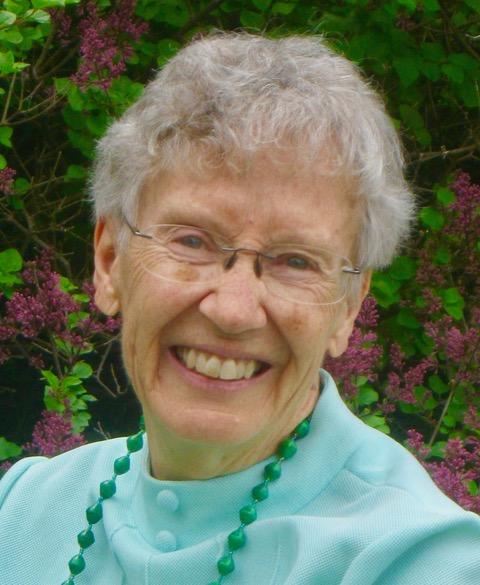 Linda: Thanks for joining me today. Congratulations on your newest publication An Unpresentable Glory. How did that come about and where did you get the inspiration for the title?
Ellie: It all came from a real-life incident, as related in the Preface:
The night before my husband’s dad died, I volunteered to take the night shift, as a bladder infection made him restless and required constant attention. I sat beside him, serving him—my father-in-law—as needed. But through those difficult hours, I felt I was on holy ground, the room peopled with angels.
This awkward stint of servanthood affected me profoundly, eventually moving me to write An Unpresentable Glory. Whatever hidden, “unpresentable” ways He asks us to serve may reflect God’s glory more vividly than our more well-dressed benevolences. Places or situations that are awkward and not for public view may become God’s platform for displaying His love. This love could be for all to see (presentable) or only for the eyes of the participants.
LM: You have published several books. What is your favorite part of the writing process?
Ellie: Editing each book—at least fifty times! Writing the first draft is really hard, but I find joy in pruning and scrubbing and polishing text until it shines and sings. Each re-edit comes from a fresh perspective.
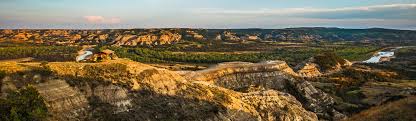 LM: Research is an important part of each book. Can you describe a time you had an “aha” moment while researching one of your books?
Ellie: I needed the Teddy Roosevelt National Park to be open on Christmas day—which it’s not. However, I learned that the public road that runs through from south to north has to remain open to provide a corridor for people who live north of the park. YESSS!!!
LM: What do you do to prepare yourself for writing? For example, do you listen to music or set up in a specific place?
Ellie: I can’t write while listening to music. Music speaks its own emotional language and requires its own attention. I can’t work “bi-lingually.” I prepare for each day—whatever I’m doing—with a time of Bible and other devotional reading, along with prayer. If I don’t keep the right focus, nothing—writing included—amounts to much.
LM: You live in New England, a beautiful area of the country. If money were no object, what is your idea of the ultimate vacation?
Ellie: That’s a hard question. I don’t think in those terms. Vacation, though, is different from destination. I think, at my age and stage, going on a pre-planned tour, with people to feed and water you, take care of your luggage, and drive you to gawk at whatever swell place, sounds reallygood.
LM: What is the quirkiest thing you’ve ever done?
Ellie: Place: Supai Canyon, Arizona. Occasion: Visiting an Indian mission at the base of a thousand-foot cliff. People involved: Four—me, husband, father-in-law, missionary. Activity du jour: Climbing the thousand-foot cliff. Quirky event: Halfway up, I, wearing old and fragile slacks, feel the seam giving way. Soon, only the hems at the bottom of each leg hold the slacks together. Me—with three men fore and aft—my unpresentable moment! Response: A good laugh for all.
LM: Here are some quickies:
Favorite Color: I don’t have a favorite color. I’m waiting for the new colors I’ll see in heaven.Favorite Food:Hot, homemade bread!Favorite Season: Spring
LM: An Unpresentable Glory is your final novel. What big plans do you have for retirement?
Ellie: Right now, unprogrammed, uninterrupted sleep sounds pretty good.
LM: Where can folks find you on the web?
Ellie: www.eleanorgustafson.com
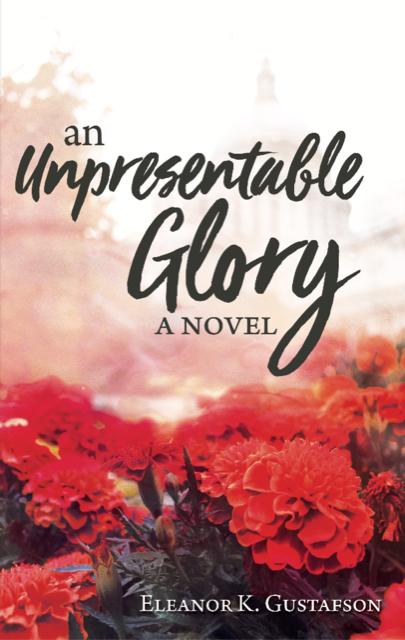 Book Blurb:
 Linda Jenson leads a relatively quiet life in Westchester County, New York, as the owner of a highly-acclaimed garden. Inherited from her parents, the garden is her pride and joy. What is not so joyful is finding a strange man sprawled near her delphiniums! The mysterious man is sick, unable to do anything more than drink water-and beg for secrecy. Ignoring all alarm bells, Linda sees to his needs, but her caring act takes on unexpected significance, an unpresentable glory.
Seeds of trust, and perhaps love, are planted in Linda's garden haven. But as secrets are revealed and scandal hits the headlines, the act of caring for this man threatens to tarnish both of their reputations. Like weeds in Linda's garden, circumstances threaten to choke out their fledgling relationship, and small moments prove to be the biggest influencers-on a national scale.
Purchase Link: http://www.amazon.com/dp/B07DTFFL9R
October 28, 2018
Mystery Monday: Who was Bernice Carey?
Mystery Monday: Who was Bernice Carey?
 Popular with book critics during the 1940s and 1950s, Bernice Carey wrote eight crime novels, and then disappeared from view.
 Born in 1910 as Bernice Carey Martin to Swedish immigrant parents on a farm in North Wisconsin, she and her family moved to California where they moved several times between San Francsico and Los Angeles. Almost immediately out of high school, she married Walter Fitch. They moved to Ventura where Walter worked on the oil rigs. Later they moved so that he could take a job as a factory foreman. Moving again, the couple ended up outside of Salinas where they were very active in politics and labor unions (a topic which turns up in her novels).
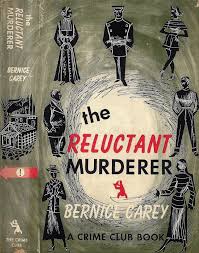 Bernice published essays and poetry in a variety of magazines. It wasn’t until 1949 that her first book was published. (Perhaps she was waiting until she finished raising her two sons.) Her debut novel, The Reluctant Murderer, is similar to the Pat McGerr novels in that the victim’s identity is withheld until well into the story.
The plot revolves around Vivian Haines, a 40-year old San Francisco career woman who wonders if murder is the only answer that will solve her problem. However, she really doesn’t want to do it. Written in first-person point of view, the story follows Vivian’s thought process to come to her decision.
“I never cared for detective stories, and for a moment I regretted it. If I had read more of them I might be familiar with different means of doing away with people. I am not one to leave things to the last minute, nor be vague about my plans; but somehow I had put off really getting down to business on working this thing out. After all, one has a natural reluctance about taking a human life…”
 As the novel progresses, suspense is ratcheted up as Vivian begins to believe that someone is out to kill her.
 Carey’s books are all set in California, and the last was published in 1955. She died of a heart attack in 1989.
October 24, 2018
Talkshow Thursday: Speculative Fiction Author Yvonne Anderson
Talkshow Thursday: Speculative Fiction Author Yvonne Anderson
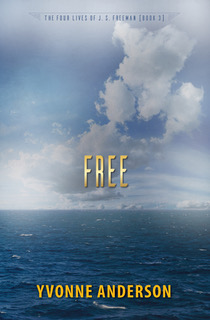
 Linda: Thanks for joining me today. Congratulations on your new release, Free (The Four Lives of J.S. Freeman, Book 3). Where did you get the inspiration for the story and its characters?
Yvonne: It all sprang from the setting. For several years previously, I’d spent a lot of time (mentally) on the planet Gannah while working on my Gateway to Gannah series. I wanted a different setting for my next project but had trouble deciding between two environments that have long fascinated me: a flat, steamy bayou-type place where people travel on the water rather than roads; and steep, rocky slopes that only a mountain goat could be comfortable with. How to choose? But wait a minute; what if this world was made up of both kinds of terrain at once? The two are mutually exclusive in nature, but couldn’t such an environment be man-made? So I created the mysterious island of Freemansland and put it in the middle of the largest ocean on an otherwise earth-like planet.
Once I had the setting, I tried to imagine the people a place like that might produce. How would they live? How might their environment shape them? Would they be isolated from the rest of the world? I put myself in the position of a girl growing up in those conditions, and the story took off from there.
LM: You write speculative fiction. Did you read a lot of fantasy and science fiction while you were growing up? How did you become interested in the genre?
Yvonne: I didn’t read a lot of sci-fi and fantasy when I was growing up, but I will confess to an obsession with Tolkien in my youth. I discovered The Hobbit in fourth grade and the Lord of the Rings series a few years later, and I read them all several times. I recall enjoying a few other books in the speculative category, but usually when I’d pick up a sci-fi book, I’d put it down before I got very far because it didn’t interest me.
 Why did I start writing speculative fiction myself? Funny story: I never felt compelled to write fiction until my children were grown, and when I did start, I played with historical and women’s fiction, purely earth-bound stuff. At one point, highly frustrated and resolved to quit fiction altogether—both the reading and writing of it—I read an interesting little nonfiction book called The Gospel in the Stars that explained how, when God created the heavens and the earth, He portrayed the gospel message through the constellations for early man to “read.” The idea fascinated me, and before I knew it, I was writing a story about people on another planet who discovered this “story in the stars.” That led to my first published novel, The Story in the Stars. Once I started writing it, I knew I’d found my niche.
 LM: Research is an important part of writing a book. What sort of “aha” moment did you have while researching your Four Lives of J. S. Freeman series?
Yvonne: When you write about things that take place on another planet, you don’t have to do a lot of preliminary research. You can just make up everything as you go along. But because the world in this story is subject to the same natural laws as our world, I do have to make sure things are logical and consistent. For instance: at the time I wrote the story, my husband and I were living in the Appalachian Mountains of Western Maryland, where the weather in the higher elevations can be strikingly different from that of the valleys. The island of Freemansland is equatorial, but built in layers, like a cake. I hadn’t gotten very far into the story before I realized that those tiers would each have different climates; they wouldn’t all be steamy and hot. This prompted me to research how altitude affects temperature.
LM: What is your favorite part of the writing process?
Yvonne: I’m a pantser, and one of my favorite parts about writing is being surprised by what happens next. I always know where the story will end, but I often have no idea what might happen along the way until it unfolds.
LM: What is something you wish you knew how to do?
Yvonne: Speak multiple languages.
LM: What is your next project?
 Yvonne: I have a couple of things in mind, but I’m not sure yet what project of my own I’ll begin next. However, I’ve been working with a friend on polishing up a nonfiction book of hers, and we’ll be publishing it soon through my own imprint, Gannah’s Gate. Watch for Dancing on Stones: A Quest for Joy by Edith Harrington. Here’s the blurb:
 Life gets rocky. You stumble and fall, crushed beneath an avalanche of despair. You cry out, God, where are You? How could You let this happen? I don’t understand! Must you lie helpless forever beneath life’s rubble? Or can you take God’s hand, and rise to dance again?The author, a former ballerina, shares her story of grief, betrayal and depression. She looked to God for healing, but years of false teaching kept her in darkness. The story of how she discovered joy in the midst of suffering is a tender but powerful reminder that God is faithful.Pick your way with her through the stones in her path and discover anew that His word is true and His love knows no bounds.
LM: Where can folks find you on the web?
Yvonne:Website:http://www.yswords.comFacebook: http://www.outofthisworldfiction.comGoodreads: http://www.goodreads.com/yandersonTwitter: http://www.twitter.com/yanderson101
October 22, 2018
Traveling Tuesday: Pennsylvania During WWII
Traveling Tuesday: Pennsylvania During WWII
 Last week, we traveled to Maryland. Today, we’re in Pennsylvania, the home state of Murder of Convenience’s protagonist, Geneva Alexander. Geneva and her parents are from Philadelphia, but this entire state named for William Penn “did its bit” for the war effort.
Industry boomed in Pennsylvania as millions of Federal dollars poured into companies that manufactured war materiel. Everything from parachutes and radio crystals to tanks and battleships. Bethlehem Steel, one of the country’s largest producers of steel churned out more steel than the Axis powers combined. Mill across the state put out about one-third of the nation’s supply and one-fifth of the world’s supply.
 Henry "Hap" ArnoldThe military was a large presence with depots and army bases in numerous locations around the state such as the Philadelphia Navy Yard, the New Cumberland Army Services Forces Depot and the Letterkenny Ordnance Depot. In addition, nearly a dozen airfields populated the state from Philadelphia to Pittsburgh and Middletown to Williamsport. Almost 1.25 million Pennsylvanians served in the armed forces, and some of the war’s most famous leaders hailed from the state: George C. Marshall, Chief of Staff of the Army; Henry “Hap” Arnold who commanded the Army Air Corps and was instrumental in getting approval for the Women’s Air Service Pilot program, Carl Spaatz who was Arnold’s second in command, and Chief of Naval Operations in Europe Admiral Harold Stark.
Volunteerism exploded as women surged to organizations such as the USO, Red Cross, American Women’s Voluntary Service, and other worthwhile non-profits. Thousands of ladies were active in bond drives as well as fundraising events for social organizations through the United War Fund. Rolling bandages, entertaining armed forces members, and creating neighborhood newsletters that were sent to the boys overseas are just a few of the ways women served in unpaid capacities.
 Pennsylvania also went to war in its laboratories, becoming a center of technological advancements. Philco Corporation created the Plexiglas canopies for American aircraft and engineers at the University of Pennsylvania designed ENIAC, the world’s first digital computer. G. Raymond Rettew developed a method for the mass production of penicillin that saved millions of lives.