Linda Shenton Matchett's Blog, page 74
March 13, 2019
Talkshow Thursday: Welcome Jarm Del Boccio!
Talkshow Thursday: Welcome Jarm Del Boccio!
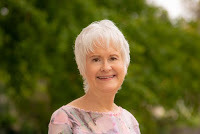 Linda: Thanks for joining me today. Congratulations on the release of your debut novel The Heart Changer. What made you decide to write biblical fiction geared toward teens, and how did you decide which story to write?
Jarm: Thanks, Linda! I would say I wrote the original (which was chapter book length) then realized the story was geared more towards lower middle grade (publishing industry definition)— ages 8 to 11 —depending on their reading level. I have a heart for the kids in Scripture that have made a huge impact in the lives of those around them, but have no name or backstory — so I give them both! Since my passion is to ‘breathe new life into the pages of history’ I delight in the ‘what-ifs’ and bring the story to life so children can relate to the Bible characters in a fresh way.
LM: How did your former careers as teacher and librarian aid you in the writing process? How were they an impediment?
Jarm: That’s an interesting question, Linda! Come to think of it, my years in education, along with my resolve to bring truth into my writing has impeded my progress in finding a secular publisher for my works. They avoid traditional, didactic stories, but that type of writing comes naturally to me. After reading a plethora of books to my students during story time back in the 70’s and 80’s, and as a homeschool mom from 2001-2011, all that great literature has seeped into my pores! This is a good thing, but not what the general public is seeking — fantasy and sci-fi are big in the market right now, along with historical novels peppered with elements of fantasy. So, I have learned (and am still learning) to ‘show’ my stories instead of ‘telling’ them, knowing my readers can be impacted without being preachy.
LM: Lots of research goes into writing a book. Did you unearth a particularly interesting tidbit you just knew had to be included in the story?
 Jarm: Actually, Yes! As I was finishing the final edits with my publisher, Ambassador International, one of my endorsers questioned how my MC would know the Syrian language, since I had her conversing easily with foreigners. When I did the digging, I discovered in those days, the Syrians would have spoken Aramaic (presently it’s Arabic) while the Israelites native tongue was Hebrew. The “ah-ha” moment came when I understood the two languages were derived from the same root, so they would have been able to understand each other, just as an Italian could understand a Spanish-speaking person. Then, I realized Jesus spoke Aramaic in the first century AD, which is why he could communicate with so many Gentiles. I love those connections!
I also was blessed with input from a missionary mom and her three daughters who lived in that very area close to the Syrian border.
LM: What is one thing you wish you knew how to do?
Jarm: I wish I had the voice of an angel. Although my voice is passable, and I can sing in tune, I’ll need to wait until I get to heaven to realize my dream!
LM: Some quickies:
Jarm:Favorite color:Growing up, I would always say ‘blue’, but now that I’m older, a color somewhere between lime green and neon — the color of new life — is my favorite.
Favorite food: I have extreme food intolerances, so my choices have been reduced by 75%, but if I could eat anything? Hmmmmm. Fresh cinnamon rolls or Beignets with a cappuccino would be a pleasure!
Favorite time of year: Since my (full) first name, “Jarmila” means ‘lover of spring’ in the Czech language, it’s truly my favorite season. Spring to me is like a promise of good things to come — a fresh start.
LM: You have traveled extensively. What has been your favorite place to visit thus far?
 Jarm: That is a tough question, since I’ve been to six continents. Each city and country has its own flavor which makes it unique. Oddly, I fell in love with Istanbul, but Israel (Joppa in particular) is also a favorite. In Europe? Well, it’s the tale of two cities — or rather, countries — The Cotswolds in England, and the French countryside both captured my heart! Although I try not to visit the same place twice, sometimes it’s unavoidable. Next on my bucket list? Living in a yurt drinking yak milk as a nomad the Mongolian desert. But only for a couple of weeks. ☺️
LM: What is your next project?
Jarm: I have three other middle- grade novels, (set in England, Spain, and the 1893 World Columbian Exposition) The latter novel I’ve been submitting to publishers and agents, so I would be blessed if it was in God’s plan for it to be snatched up in 2019!
LM: Where can folks find you on the web?
Jarm: Website/blog: https://www.jarmdelboccio.com/ Facebook Page: https://www.facebook.com/JarmDelBoccio/ Pinterest: https://www.pinterest.com/jarmdelboccio/ Twitter: www.twitter.com/JarmVee
Book Blurb:
Can an Israelite captive, wrenched from all she loves, serve the very man who destroyer her village?
Miriam is asked to do the impossible: serve the wife of Naaman, commander of the Syrian army. Clinging to treasured memories of home and faith, Miriam faces captivity with worry and bitterness. Little does she know the Heart Changer is wooing and preparing her for a greater mission far beyond what she could imagine.
This middle-grade historical novel reflects the heartache and angst of a young refugee in a foreign land where all hope is lost.
Pre-order now: https://amzn.to/2TbKxkT
 Linda: Thanks for joining me today. Congratulations on the release of your debut novel The Heart Changer. What made you decide to write biblical fiction geared toward teens, and how did you decide which story to write?
Jarm: Thanks, Linda! I would say I wrote the original (which was chapter book length) then realized the story was geared more towards lower middle grade (publishing industry definition)— ages 8 to 11 —depending on their reading level. I have a heart for the kids in Scripture that have made a huge impact in the lives of those around them, but have no name or backstory — so I give them both! Since my passion is to ‘breathe new life into the pages of history’ I delight in the ‘what-ifs’ and bring the story to life so children can relate to the Bible characters in a fresh way.
LM: How did your former careers as teacher and librarian aid you in the writing process? How were they an impediment?
Jarm: That’s an interesting question, Linda! Come to think of it, my years in education, along with my resolve to bring truth into my writing has impeded my progress in finding a secular publisher for my works. They avoid traditional, didactic stories, but that type of writing comes naturally to me. After reading a plethora of books to my students during story time back in the 70’s and 80’s, and as a homeschool mom from 2001-2011, all that great literature has seeped into my pores! This is a good thing, but not what the general public is seeking — fantasy and sci-fi are big in the market right now, along with historical novels peppered with elements of fantasy. So, I have learned (and am still learning) to ‘show’ my stories instead of ‘telling’ them, knowing my readers can be impacted without being preachy.
LM: Lots of research goes into writing a book. Did you unearth a particularly interesting tidbit you just knew had to be included in the story?
 Jarm: Actually, Yes! As I was finishing the final edits with my publisher, Ambassador International, one of my endorsers questioned how my MC would know the Syrian language, since I had her conversing easily with foreigners. When I did the digging, I discovered in those days, the Syrians would have spoken Aramaic (presently it’s Arabic) while the Israelites native tongue was Hebrew. The “ah-ha” moment came when I understood the two languages were derived from the same root, so they would have been able to understand each other, just as an Italian could understand a Spanish-speaking person. Then, I realized Jesus spoke Aramaic in the first century AD, which is why he could communicate with so many Gentiles. I love those connections!
I also was blessed with input from a missionary mom and her three daughters who lived in that very area close to the Syrian border.
LM: What is one thing you wish you knew how to do?
Jarm: I wish I had the voice of an angel. Although my voice is passable, and I can sing in tune, I’ll need to wait until I get to heaven to realize my dream!
LM: Some quickies:
Jarm:Favorite color:Growing up, I would always say ‘blue’, but now that I’m older, a color somewhere between lime green and neon — the color of new life — is my favorite.
Favorite food: I have extreme food intolerances, so my choices have been reduced by 75%, but if I could eat anything? Hmmmmm. Fresh cinnamon rolls or Beignets with a cappuccino would be a pleasure!
Favorite time of year: Since my (full) first name, “Jarmila” means ‘lover of spring’ in the Czech language, it’s truly my favorite season. Spring to me is like a promise of good things to come — a fresh start.
LM: You have traveled extensively. What has been your favorite place to visit thus far?
 Jarm: That is a tough question, since I’ve been to six continents. Each city and country has its own flavor which makes it unique. Oddly, I fell in love with Istanbul, but Israel (Joppa in particular) is also a favorite. In Europe? Well, it’s the tale of two cities — or rather, countries — The Cotswolds in England, and the French countryside both captured my heart! Although I try not to visit the same place twice, sometimes it’s unavoidable. Next on my bucket list? Living in a yurt drinking yak milk as a nomad the Mongolian desert. But only for a couple of weeks. ☺️
LM: What is your next project?
Jarm: I have three other middle- grade novels, (set in England, Spain, and the 1893 World Columbian Exposition) The latter novel I’ve been submitting to publishers and agents, so I would be blessed if it was in God’s plan for it to be snatched up in 2019!
LM: Where can folks find you on the web?
Jarm: Website/blog: https://www.jarmdelboccio.com/ Facebook Page: https://www.facebook.com/JarmDelBoccio/ Pinterest: https://www.pinterest.com/jarmdelboccio/ Twitter: www.twitter.com/JarmVee
Book Blurb:
Can an Israelite captive, wrenched from all she loves, serve the very man who destroyer her village?
Miriam is asked to do the impossible: serve the wife of Naaman, commander of the Syrian army. Clinging to treasured memories of home and faith, Miriam faces captivity with worry and bitterness. Little does she know the Heart Changer is wooing and preparing her for a greater mission far beyond what she could imagine.
This middle-grade historical novel reflects the heartache and angst of a young refugee in a foreign land where all hope is lost.
Pre-order now: https://amzn.to/2TbKxkT


March 12, 2019
Wartime Wednesday: SACO
Wartime Wednesday: SACO
 During WWII, most of European countries had some sort of resistance system in place. The U.S. Office of Strategic Services (OSSO and Britain’s Special Operations Executive (SOE) both played a large in coordinating those systems within and between the countries. However, neither organization found success in working with their Chinese allies in the Far East.
Fortunately in 1939, U.S. Navy Commander Milton E. Miles and China’s military attaché Major Xiao Bo met in Washington, DC to determine strategic plans if, in fact, they found themselves drawn into the war. Not long after the attack on Pearl Harbor, those plans became reality.
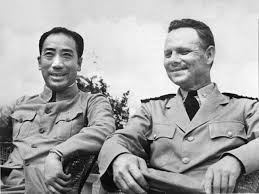 Miles jumped on a plane and flew to Chungking, China where he met with Generalissimo Chiang Kai-shek (the understood leader of Nationalist China), General Dai Li, and Major Bo. The purpose of their meeting was to discuss preparations for a large-scale amphibious assault, the creation of a global intelligence network, and interestingly, remote weather stations in the Pacific.
Candid from the beginning, Li is reported to have said, “The United States wants many things in China. Weather reports from the north and west to guide your planes and ships at sea, information about Japanese intentions and operations, mines in our channels and harbors, ship watchers on our coast, and radio stations to send information. I have 50,000 good men. If my men could be armed and trained, they could not only protect your operations, but work for China, too.”
Details were hammered out, and in June 1942 Miles and Li signed the treaty that formed the Sino-American Cooperative Organization (SACO-pronounced “socko”). The men shook hands to seal the deal, often referred to as one of the best-kept secrets of WWII. Li became the director, and Miles was deputy directory. Each had the power to veto the other’s plans.
Trusted sailors were appointed to create camps and units where Americans trained Chinese guerillas in the art of espionage, small arms, hand-to-hand fighting techniques, demolitions, scouting, and patrolling. Each camp had difference responsibilities from ambushes, sabotage, and coast watchers to construction of radio stations, breaking of codes, and prediction of weather patterns.

What was most unusual about the situation is that Miles and Li required their men to adopt each other’s cultures, judge each man by his actions, and use every asset no matter how irrational it appeared on the surface. Highly successful, the units rescued seventy-six downed aviators, erected over seventy weather stations, provided highly effective intelligence, and built an army of nearly 100,000 Chinese guerilla fighters, some of whom when ton to serve with the famed Merill’s Marauders in Burma.
Not bad for an organization created over a cup of coffee._____________________________________________________
 A prostitute, a spy, and the liberation of Paris.
Sold by her parents to settle a debt, Rolande Bisset is forced into prostitution. Years later, shunned by her family and most of society, it’s the only way she knows how to subsist. When the Germans overrun Paris, she decides she’s had enough of evil men controlling her life and uses her wiles to obtain information for the Allied forces. Branded a collaborator, her life hangs in the balance. Then an American spy stumbles onto her doorstep. Is redemption within her grasp?
Simon Harlow is one of an elite corps of American soldiers. Regularly chosen for dangerous covert missions, he is tasked with infiltrating Paris to ascertain the Axis’s defenses. Nearly caught by German forces moments after arriving, he owes his life to the beautiful prostitute who claims she’s been waiting for the Allies to arrive. Her lifestyle goes against everything he believes in, but will she steal his heart during his quest to liberate her city?
Inspired by the biblical story of Rahab, Love’s Rescue is a tale of faith and hope during one of history’s darkest periods.
Purchase Link: http://www.amazon.com/dp/B07MJM6MNL
March 6, 2019
Talkshow Thursday: Welcome back, Amanda Cabot!
Talkshow Thursday: Welcome back, Amanda Cabot!
 Linda: Welcome back! Congratulations on releasing A Tender Hope, third in the Cimarron Creek Trilogy. In talking about the book on your website you comment that “the road to happily-ever-after isn’t an easy one.” How hard do you find it to subject your characters to difficulties and obstacles? Wouldn’t you rather make life easy for them?
Amanda: Oh, Linda, I hate making life difficult for my characters. I literally cry when I put them into tragic situations, but I know that if I didn’t, the books would be boring and would have little relevance to my readers’ lives. After all, much as we wish it were otherwise, no one’s life is perfect. I agree with Tolstoy when he said in Anna Karenina, “Happy families are all alike; every unhappy family is unhappy in its own way.” It’s the difficulties characters surmount that make their stories interesting.
LM: You write historic fiction. Are any of your characters or plots based on real people or events?Amanda: Short answer: no. Longer and more accurate answer: sometimes things that have happened to real people provide the germ for a story and start me asking “what would I have done differently?” or “what could be worse?” I also use historical facts to add authenticity to my stories, but the basic plots are not based on true events.
LM: What do you do to prepare for writing? (Do you have a set schedule or place, listen to music, etc.?)
 Amanda: I’ve been accused of being OCD, and while I deny that vehemently, I do have a fairly rigid schedule for writing. As soon as I’ve finished breakfast (which follows exercise and a shower), I head for my office and write until noon. That’s my primary writing time, although I do sometimes write in the afternoon if I haven’t finished my scheduled chapters for the week.
LM: What is something you wish you knew how to do, and do you plan to try to learn whatever it is?
Amanda: I wish I were more expert in Photoshop, so yes, some Photoshop tutorials are on my “should do” list. When I’ll actually make the time to take them remains to be seen.
LM: You’ve got over thirty books in publication. How has writing and the industry changed for you since you began? What has stayed the same?
Amanda: I can hardly believe that A Tender Hope is my thirty-sixth book and that I’ve been writing for … well, let’s just say “decades.” So much has changed in that time. When I first started writing, I hired a typist for my manuscripts and sent paper copies to my editor. Revisions were literally cut and paste. Now everything is electronic, which I greatly prefer.
Another major change has been in promotion. I used to do many, many booksignings in brick and mortar stores. Remember when every mall had at least one and sometimes two or three bookstores? Now the majority of my promotion is done online. While I miss the personal contact with readers, I’m grateful for the opportunity to reach readers throughout the world via the web.
What hasn’t changed is the desire for each book to be better than the previous one and the need to ensure that the historic details are accurate.
LM: Here are some quickies:
Amanda:Favorite actor or actress: Meryl StreepFavorite Bible verse: Joshua 1:9Favorite place to write: My office
LM: When we spoke last year, you were working on a book headed for publication in 2020. Is that still in process or are you on to something else?
Amanda: I finished that book in late December and am excited to tell you that I have a final title for it. (For those who aren’t familiar with the process, working titles are often changed to be more marketable.) Anyway, this book, which is the first of the Mesquite Springs trilogy, is going to be called Out of the Embers. I absolutely love the title and can’t wait to see the cover art for it.
Meanwhile, I’m hard at work on the second story in the trilogy, which will be released in 2021.
LM: Where can folks find you on the web?
Amanda: Website: www.amandacabot.comFacebook: https://www.facebook.com/amanda.j.cabot
Twitter: https://twitter.com/AmandaJoyCabot/
Blog: http://amandajoycabot.blogspot.com/
Thanks so much for inviting me to be your guest, Linda. I’ve enjoyed it!
 Book Blurb:As far as Thea Michener is concerned, it’s time for a change. With her husband murdered and her much-anticipated baby stillborn, there is nothing left for her in Ladreville. Having accepted a position as Cimarron Creek’s midwife, she has no intention of remarrying. So when a handsome Texas Ranger appears on her doorstep with an abandoned baby, Thea isn’t sure her heart can take it.
Ranger Jackson Guthrie isn’t concerned only with the baby’s welfare. He’s been looking for Thea, convinced that her late husband was part of the gang that killed his brother. But it soon becomes clear that the situation is far more complicated than he anticipated—and he’ll need Thea’s help if he’s ever to find the justice he seeks.
Purchase Link: http://www.amazon.com/dp/B07F3HWFPK
March 4, 2019
Traveling Tuesday: Oklahoma During WWII
Traveling Tuesday: Oklahoma During WWII
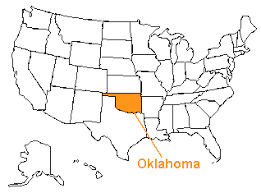
 One of the last states to enter the union (46th), Oklahoma was created by merging the Oklahoma and Indian territories, and is a major producer of natural gas, oil, and agricultural products. The state’s name is derived from the Choctaw words “okla” and “humma” meaning “red people.” It is nicknamed the “Sooner State” because of the non-Native settlers who jumped the gun in staking their claims before the official opening date of land grants.
 As with most of the United States, Oklahoma suffered during the Great Depression despite receiving federal assistance through President Roosevelt’s New Deal. With the advent of WWII, life changed for the state. The number of clear days made Oklahoma a prime location for flying. Even before the US entered the conflict, programs for training British Royal Air Force pilots were created. Between them, the Darr Flight School and the Spartan School of Aeronautics taught over 13,000 students how to fly.
 Not long after Pearl Harbor, federal funds poured into the state establishing military installations and constructing wartime production facilities. Douglas Aircraft provided employment for nearly 50,000 who built C-47 “Gooney Bird” cargo planes, and medium and heavy bombers. At Rogers Field, personnel were trained as members of bomber crews and for photoreconnaissance. Manhattan Construction Company built hangars, barracks, aircraft plants, and other military facilities. Oklahoma Ordnance Works used hydroelectric power from a dam on the Grand River to produce gunpowder, and 10,000 Dupont employees produced explosives. Oklahoma A&M College (now Oklahoma State University) became the location of a WAVES training facility.
Thirty-two POW camps around the state housed approximately 20,000 German prisoners. Many earned wages on local farms, replacing the thousands of men who left the fields for the armed services.
 Nearly 5,500 Oklahomans died during the war, and nineteen received Congressional Medals of Honor. A National Guard Unit drawn from Oklahoma, Colorado, New Mexico, and Arizona was called to service under Major General William Key as part of the 45th Infantry Division. As participants in the invasion of Sicily, they fought for 511 days, captured more than 120,000 prisoners, and suffered 3,650 casualties. They fought in eight campaigns and made three additional amphibious landings.
 Oklahoma truly did its bit.
____________________________________________
 A prostitute, a spy, and the liberation of Paris.
Sold by her parents to settle a debt, Rolande Bisset is forced into prostitution. Years later, shunned by her family and most of society, it’s the only way she knows how to subsist. When the Germans overrun Paris, she decides she’s had enough of evil men controlling her life and uses her wiles to obtain information for the Allied forces. Branded a collaborator, her life hangs in the balance. Then an American spy stumbles onto her doorstep. Is redemption within her grasp?
Simon Harlow is one of an elite corps of American soldiers. Regularly chosen for dangerous covert missions, he is tasked with infiltrating Paris to ascertain the Axis’s defenses. Nearly caught by German forces moments after arriving, he owes his life to the beautiful prostitute who claims she’s been waiting for the Allies to arrive. Her lifestyle goes against everything he believes in, but will she steal his heart during his quest to liberate her city?
Inspired by the biblical story of Rahab, Love’s Rescue is a tale of faith and hope during one of history’s darkest periods.
Available from Amazon, Kobo, Apple Books (iTunes), and B&N
February 27, 2019
Talkshow Thursday: Welcome back Julie Arduini!
Talkshow Thursday: Welcome back Julie Arduini!
 Linda: Welcome back. I can’t wait to hear about your latest release, You’re Amazing, the second in the Surrendering Stinkin’ Thinkin’ series. As with the first book, you co-authored the story with your daughter. How was this experience different than the first time?
Julie: Hi, Linda! Thanks for having me back! The biggest change for You’re Amazing is that Hannah created a plot around dance, something I have zero experience or knowledge about. The whole concept of the book for Jazmin’s story was having her struggle in dance for the first time, so I could relate! I have to thank our dancing friend, Alanis, who went over the dance aspects and edited me for accuracy.
 LM: It’s obvious you have a heart for young people, and this series seems geared to help them deal with the issues of growing up. What do you think is the biggest challenge for teens today?
 Julie: My passion is for young people, girls especially, to embrace the truth that as Stasi Eldredge wrote, that they are “Captivating, the masterpiece in creation.” If that truth doesn’t reach them, they will go find a way to be captivating in ways that will scar them. Young people have so much stress and little encouragement. That was Hannah’s heart for the series, to encourage girls younger than her so they wouldn’t struggle as much.
LM: You’ve written both fiction and non-fiction. How is the process different?
Julie: I think the research for fiction is harder. In the Surrendering Time series, it was important to get the setting right because I love the Adirondacks so much I wanted to honor the people and place. The non fiction writing I have done has been about my infertility experience, so that was something I knew very well, too well.
 LM: You are a self-professed chocolate lover. What is your favorite chocolate treat?
Julie: Pretty much anything milk chocolate with almonds. I received Cadbury bars for Christmas and they didn’t last long!
LM: How do you prepare yourself for writing? (e.g. set up in a certain place, listen to music)
Julie: Great question! I have found I’m in a better frame of mind if I workout first, doing a walking workout on YouTube followed by a quick yoga program. Then, I spend time in Bible study. I turn on my candle warmer, usually with a Christmas tree scent, and have Alexa play instrumental music. I tend to write in the bedroom because my husband is often in the office and our college aged son also has online classes he takes downstairs.
LM: Here are some quickies:
Julie: Favorite Actor or Actress: Ryan ReynoldsFavorite Season: FallFavorite Biblical character: Esther
LM: What is your next project?
Julie: This fall I will release Restoring Christmas. It was part of the A Christmas to Remember boxed set, but now that novella will also be available in print form.
I’m also finally writing the first book in my next Christian romance series, Surrendering Opinions. I’ve tried Anchored three times and put it down. I finally feel like everything in my head will finally make it to paper. For those that enjoy the show, This is Us, Surrendering Opinions will be a series I think they will enjoy.
LM: Where can folks find you on the web?
Julie: My site is at http://juliearduini.com, where they can also receive my first romance, Entrusted, as a gift when they subscribe to my newsletter. I’m everywhere on social media between Facebook and Snapchat as @JulieArduini. I’d love readers to follow me on Amazon https://www.amazon.com/-/e/B00PBKDRSQ and Goodreads, https://www.goodreads.com/author/show/9819114.Julie_Arduini. Don’t be shy to reach out. I enjoy connecting with readers.
Thank you, Linda!
 Book Blurb: Jazmin’s a natural at dance until a series of changes make her wonder if she should even keep up with her favorite hobby.
Lena’s a mom with young children overwhelmed with her schedule when a woman remarks that what Lena does isn’t even important.
Both Jazmin and Lena belong to Linked, a mentoring ministry where all ages encourage each other and build friendships. Can these two surrender the lies they are believing and realize they are amazing? A novella for tweens, teens, and women of all ages by mother and daughter team Julie Arduini and Hannah Arduini.
Purchase Link: https://www.amazon.com/Youre-Amazing-Surrendering-Stinkin-Thinkin-ebook/dp/B07M7D6HSV
February 26, 2019
Wartime Wednesday: From Italy to Oswego
Wartime Wednesday: From Italy to Oswego
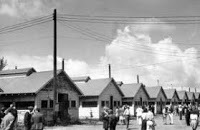 In August 1944, one hundred and eighty five years after its construction by the British, Fort Ontario, on the Canadian-U.S. border in Oswego, New York, would find itself repurposed as an emergency shelter for 982 European refugees. The individuals, predominantly Jewish and from eighteen different countries ranged in age from a new born baby to an eighty-year-old man. Some has escaped from or been liberated from concentration camps and ghettos.
Called “Safe Haven,” the project was operated by the War Relocation Authority (the same organization responsible for the Internment Camps created after Executive Order 9066 was implemented). War Refugee Board Representative Leonard Ackerman traveled to Italy to determine who would be selected for transport to the U.S. Part of the criteria established was that the refugees for whom no other havens were available. Roosevelt also included the group should include mostly women and children. However, there were some rabbis, doctors, and a few skilled workers to maintain the camp. The President managed to circumvent immigration laws by referring to the refugees as his “guests.”
 Visions of a life of freedom were dashed, when the refugees arrived after their seventeen day journey on the U.S. Army transport ship Henry Gibbons (later used to transport war brides). The travelers were deloused then placed under quarantine, forbidden to leave the fort. Visitors were also not allowed. And the worst of it was the chain-link fence that circled the camp, reminding the refugees of what they had left behind.
The city of Oswego welcomed the refugees, often lining up at the fence to shake hands and pass food and other gifts through the holes. Eventually restrictions were lightened, and the “guests” were granted six-hour passes to explore the city.
After the war, there was trepidation from the refugees who had signed documents agreeing to return to their countries of origin. But most has nothing to return to. Many organizations offered to take displaced families and help them begin a new life. Fortunately, not long after President Truman took offer, he decreed the refugees could stay.
 To make it official, they were bussed across Rainbow Bridge to Niagara Falls, Canada, where they were presentation with the necessary immigration papers, then returned to the for where they were officially admitted to the United States.
_______________________________________________________
 A prostitute, a spy, and the liberation of Paris.
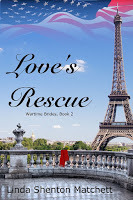
Sold by her parents to settle a debt, Rolande Bisset is forced into prostitution. Years later, shunned by her family and most of society, it’s the only way she knows how to subsist. When the Germans overrun Paris, she decides she’s had enough of evil men controlling her life and uses her wiles to obtain information for the Allied forces. Branded a collaborator, her life hangs in the balance. Then an American spy stumbles onto her doorstep. Is redemption within her grasp?
Simon Harlow is one of an elite corps of American soldiers. Regularly chosen for dangerous covert missions, he is tasked with infiltrating Paris to ascertain the Axis’s defenses. Nearly caught by German forces moments after arriving, he owes his life to the beautiful prostitute who claims she’s been waiting for the Allies to arrive. Her lifestyle goes against everything he believes in, but will she steal his heart during his quest to liberate her city?
Inspired by the biblical story of Rahab, Love’s Rescue is a tale of faith and hope during one of history’s darkest periods. Available on Amazon.
 In August 1944, one hundred and eighty five years after its construction by the British, Fort Ontario, on the Canadian-U.S. border in Oswego, New York, would find itself repurposed as an emergency shelter for 982 European refugees. The individuals, predominantly Jewish and from eighteen different countries ranged in age from a new born baby to an eighty-year-old man. Some has escaped from or been liberated from concentration camps and ghettos.
Called “Safe Haven,” the project was operated by the War Relocation Authority (the same organization responsible for the Internment Camps created after Executive Order 9066 was implemented). War Refugee Board Representative Leonard Ackerman traveled to Italy to determine who would be selected for transport to the U.S. Part of the criteria established was that the refugees for whom no other havens were available. Roosevelt also included the group should include mostly women and children. However, there were some rabbis, doctors, and a few skilled workers to maintain the camp. The President managed to circumvent immigration laws by referring to the refugees as his “guests.”
 Visions of a life of freedom were dashed, when the refugees arrived after their seventeen day journey on the U.S. Army transport ship Henry Gibbons (later used to transport war brides). The travelers were deloused then placed under quarantine, forbidden to leave the fort. Visitors were also not allowed. And the worst of it was the chain-link fence that circled the camp, reminding the refugees of what they had left behind.
The city of Oswego welcomed the refugees, often lining up at the fence to shake hands and pass food and other gifts through the holes. Eventually restrictions were lightened, and the “guests” were granted six-hour passes to explore the city.
After the war, there was trepidation from the refugees who had signed documents agreeing to return to their countries of origin. But most has nothing to return to. Many organizations offered to take displaced families and help them begin a new life. Fortunately, not long after President Truman took offer, he decreed the refugees could stay.
 To make it official, they were bussed across Rainbow Bridge to Niagara Falls, Canada, where they were presentation with the necessary immigration papers, then returned to the for where they were officially admitted to the United States.
_______________________________________________________
 A prostitute, a spy, and the liberation of Paris.
Sold by her parents to settle a debt, Rolande Bisset is forced into prostitution. Years later, shunned by her family and most of society, it’s the only way she knows how to subsist. When the Germans overrun Paris, she decides she’s had enough of evil men controlling her life and uses her wiles to obtain information for the Allied forces. Branded a collaborator, her life hangs in the balance. Then an American spy stumbles onto her doorstep. Is redemption within her grasp?
Simon Harlow is one of an elite corps of American soldiers. Regularly chosen for dangerous covert missions, he is tasked with infiltrating Paris to ascertain the Axis’s defenses. Nearly caught by German forces moments after arriving, he owes his life to the beautiful prostitute who claims she’s been waiting for the Allies to arrive. Her lifestyle goes against everything he believes in, but will she steal his heart during his quest to liberate her city?
Inspired by the biblical story of Rahab, Love’s Rescue is a tale of faith and hope during one of history’s darkest periods. Available on Amazon.
February 25, 2019
Traveling Tuesday: California and WWII
Traveling Tuesday: California and WWII
 Initially settled by Native Californian tribes, what is now the state of California was explored by numerous European expeditions during the 1500s and 1600s. The Spanish Empire claimed it as part of their New Spain colony, but then it became part of Mexico following their war for independence. After the Mexican-American war it was ceded to the U.S. Two years later, California became the thirty-first state. First in population with nearly forty million residents, California ranks third in size (after Alaska and Texas). Neither urban nor industrial and known for oranges and movies in the 1930s, California was popular with tourists and retirees.
 The Pearl Harbor was attacked on December 7, 1941, and overnight life changed. Near panic conditions resulted as tens of thousands of citizens expected similar attacks – perhaps even by the same force that had attacked Hawaii. Japanese submarines trolled the waters off the California coast, taking out merchant ships and reinforcing the fear. Rumors began to circulate that Japanese fisherman were mining the harbors and Japanese farmers were poisoning the fruits and vegetables they were selling. Additional rumors claimed the Japanese were secretly organizing military units to work behind American lines.
As a result of these tensions, martial law was declared on Los Angeles’s Terminal Island – a scrap of land that a major U.S. Naval base, oil facilities, and a large ethnic Japanese community shared. California beaches were strung with barbed wire and watch towers were constructed. Coastal cities were put under blackout conditions. Radio stations went off the air, and commercial airliners were grounded.
Shortly thereafter, President Roosevelt signed Executive Order 9066, and individuals with Japanese, Italian, and German heritage were shipped to internment camps all over the country.
 Already agricultural, California expanded its capabilities to meet wartime needs for food. Factories and military bases sprang up, and by war’s end the state was a leading manufacturing center and was home to over 140 military installations. Soldiers trained in deserts, mountains, and beaches, and pilots learned to fly. San Francisco, LA, and San Diego shipyards built over 1,500 ships, and more planes were assembled in California than any other states. Workers flocked to the state in what newspapers nicknamed “The Second Gold Rush.”
Over 800,000 Californians would serve in uniform, and millions would be trained at California installations or shipped out through the state’s embarkation centers.
__________________________________________________________________
 A prostitute, a spy, and the liberation of Paris.
Sold by her parents to settle a debt, Rolande Bisset is forced into prostitution. Years later, shunned by her family and most of society, it’s the only way she knows how to subsist. When the Germans overrun Paris, she decides she’s had enough of evil men controlling her life and uses her wiles to obtain information for the Allied forces. Branded a collaborator, her life hangs in the balance. Then an American spy stumbles onto her doorstep. Is redemption within her grasp?
Simon Harlow is one of an elite corps of American soldiers. Regularly chosen for dangerous covert missions, he is tasked with infiltrating Paris to ascertain the Axis’s defenses. Nearly caught by German forces moments after arriving, he owes his life to the beautiful prostitute who claims she’s been waiting for the Allies to arrive. Her lifestyle goes against everything he believes in, but will she steal his heart during his quest to liberate her city?
Inspired by the biblical story of Rahab, Love’s Rescue is a tale of faith and hope during one of history’s darkest periods. Available on Amazon.
February 20, 2019
Talkshow Thursday: Meet Author Kathleen Neely
Talkshow Thursday: Meet Author Kathleen Neely
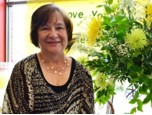 Linda: Thanks for joining me today. Congratulations on your upcoming release (tomorrow!) The Street Singer. It sounds like a wonderful book. Where did you find your inspiration for the story?
KATHLEEN: I love novels that focus on relationships, particularly inter-generational. I also enjoy reading stories that involve the legal system—law suits, court cases, attorneys. The Street Singer is actually my second novel, although the first to reach publication. When I finished my first novel and breathed a bit sigh of relief, my mind went to work weaving story lines, building and discarding ideas, until I decided on what eventually became The Street Singer. It’s about Trisha, a final-year law student, and Adda, a once famous recording artist known as Adaline. Although it’s their story, everyone loves a little romance. That keeps things interesting.
LM: Research is an important part of the writing process. What sort of research did you do for The Street Singer? Did you unearth anything that was totally unexpected?
KATHLEEN: I wouldn’t say ‘unexpected’ but I believe it holds some interesting elements. Most people know a little bit about the legal system. I knew enough to get myself in trouble if I hadn’t consulted an expert. Actually, two experts. I reached out to an attorney who read the legal portions of my manuscript and provided feedback on my misunderstandings, then passed it along to her husband whose area of law was more closely compatible.
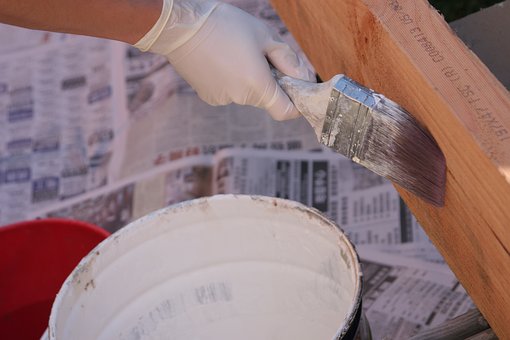 An interesting sub-theme shows the renovation of an older home. That research was easy for me. My husband has worked for decades in every area of home building. He walked me through each phase of the work.
 LM: What is your favorite part of the writing process?
KATHLEEN: Unlike what I hear from many authors, I enjoy editing—not the line editing checking for every punctuation mark. Once the skeleton of a story is written, I enjoy embellishing it, bringing it to life with words. I go through my manuscript many times, looking to add sensory details and thinking through the emotions that should be evident.
LM: You are a retired educator and an avid reader. Who are your literary heroes/heroines?
KATHLEEN: I have so many authors that I admire. I can’t name a favorite, but I’ll tell you some specific works that live in my heart. Charles Martin’s Water for the Heart, Lisa Wingate’s Before We Were Yours, and Kristen Hannah’s The Nightingale.
LM: What has been the most challenging part of the road to publication for you? What advice do you have for fledgling writers?
 KATHLEEN: The hardest element of publication has been the unknown. I like a step-by-step outline of what comes next. It’s very exciting to receive the first acceptance, but it would have been great to know that, from that point, things would move s-l-o-w-l-y. I’m a buckle your seatbelt and get it done personality.
My advice for fledgling writers is this—surround yourself with people in the industry. Garner all of the help they can give you. I’ve found writer’s to be the best and most willing mentors. Read trade books on writing and attend conferences.
LM: Here are some quickies:
KATHLEEN:
Favorite season: Definitely Spring Favorite vacation spot: Hilton Head Island Favorite place to write: I have a home office where I often write, but when no one is home, I love to take my laptop to the kitchen table where natural light is abundant.
LM: What are you currently working on?
KATHLEEN: I’m working on a story about a mother’s love. After a teenage pregnancy, she gave her baby up. Twelve years later, she has another chance to be part of his life. Until the unthinkable happens. That’s all you get. No spoiler alert.
LM: Sounds intriguing! Where can folks find you on the web?
KATHLEEN: The best way to reach me is my website. Readers can sign up, learn more about me, and read about my three upcoming releases at http://www.KathleenNeely.com. I can also be reached on Facebook at www.Facebook.com/kathy.neely.98Follow my Twitter page at www.Twitter@NeelyKneely3628
 The Street Singer: Trisha Mills, a student in her final semester of law school, has fond memories of listening to the music of Adaline, a once famous recording artist. She learns that Adaline, now Adda Marsh, is a street singer in Asheville, NC. Adda’s sole means of support in her senior years comes from the donation box. Along with her meager possessions, Adda has a box labeled, “Things to Remember.” Adda agrees to show Trisha the contents. With it comes her story. Adda reveals her journey by sharing a few items at a time, beginning as a sharecropper’s daughter in Mississippi, to fame in Nashville, and to poverty in her old age.
Trisha is busy cleaning out the home of her deceased grandfather, preparing to sit for the bar exam, and planning her wedding to Grant Ramsey. However, she cannot overlook the injustices that Adda has experienced. Aided by Rusty Bergstrom, an attorney who will work pro bono, Trisha convinces Adda to seek restitution. Will her growing friendship with Rusty Bergstrom affect her engagement to Grant?
February 17, 2019
Mystery Monday: Who was Claude Aveline?
Mystery Monday: Who was Claude Aveline?
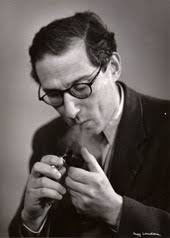 In further exploration of what my characters might have been reading in France during WWII, I discovered, Claude Aveline who was a prolife writer. His credits include poetry, screenplays, articles, and mystery novels.
The pen name of Evgen Avtsine, Claude was born in Paris in 1901 of Jewish parents who had fled Russia in 1891 because of racial segregation and persecution. They became French citizens in 1905. In 1915, at only fourteen years of age, Claude volunteered as a medic. After WWI, he moved to Cannes to begin his college studies but experienced severe health problems and had to drop out of school.
Several of his poems were published, and he was introduced to Anatole France who became his mentor. Three years later, Claude founded his own publishing house (does that make him the first indie author?!). His mystery novel released in 1932, La Double Mort de Frédéric Belot,” was a huge success, and his 1936 novel Le Prisonnier even more so.
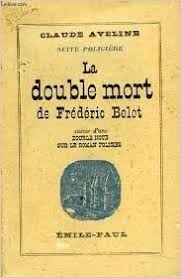 Interesting to note is that his Wikipedia biography refers to Aveline’s membership in the French Resistance in one short sentence. What they fail to mention is that he intentionally left Paris and moved to Lyon where he shared a house with journalist Louis Martin-Chauffier that was a major center of Resistance activities. In addition, Claude founded the underground newspaper, Combat.
After the war, he moved back to Paris and continued his writing career, winning awards and recognition, especially for his radio works. He published a psychological mystery, Carriage 7, Seat 15, which many scholars consider a classic. In addition to his fictional work, he wrote his memoirs.
Claude passed away in 1992.
______________________________________________
 A prostitute, a spy, and the liberation of Paris.
Sold by her parents to settle a debt, Rolande Bisset is forced into prostitution. Years later, shunned by her family and most of society, it’s the only way she knows how to subsist. When the Germans overrun Paris, she decides she’s had enough of evil men controlling her life and uses her wiles to obtain information for the Allied forces. Branded a collaborator, her life hangs in the balance. Then an American spy stumbles onto her doorstep. Is redemption within her grasp?
Simon Harlow is one of an elite corps of American soldiers. Regularly chosen for dangerous covert missions, he is tasked with infiltrating Paris to ascertain the Axis’s defenses. Nearly caught by German forces moments after arriving, he owes his life to the beautiful prostitute who claims she’s been waiting for the Allies to arrive. Her lifestyle goes against everything he believes in, but will she steal his heart during his quest to liberate her city?
Inspired by the biblical story of Rahab, Love’s Rescue is a tale of faith and hope during one of history’s darkest periods. Available on Amazon.
February 14, 2019
The OSS and the Liberation of France
The OSS and the Liberation of France
 World War II has been studied by scholars, students, and history buffs since the day the guns fell silent and surrender documents were signed. Over the years I have read hundreds of books and watched thousands of hours of interviews and documentaries. The more I study, the more I realize I’ve merely scratched the surface of the conflict.
As time passes, more information comes to light as documents are declassified and people decide to tell their stories before they die. A topic I recently researched to ensure accuracy in my book Love’s Rescue, is the liberation of Paris. It has been interesting to discover who was involved and who was not.
I was sure the British were there. After all, France is just across the English Channel. Turns out the British didn’t arrive until several days after the City of Light was freed from the Germans. Also turns out the Office of Strategic Services (OSS), precursor to the CIA was heavily involved, prior to and during the liberation. I shouldn’t have been surprised. The OSS is a spy agency, and intelligence, subterfuge, and espionage played a crucial part in the event.
 My search of documents from the National Archives and the CIA provided fascinating insight into the thoughts and activities as the war neared its end. One report indicated that having worked in league with the French Resistance, the OSS’s role came to fruition once the liberation of Paris occurred. Another report estimates that nearly eighty percent of the intelligence received prior to D-Day and the subsequent liberation was thanks to the 225 OSS agents stationed in France. Activities included:Messages answering specific inquiries by the Allied Fleet HQ and the Seventh Army were radioed directly to the command ship of the invasion fleet en route to France;Plans for the defense of Marseilles were forwarded to the appropriate military leader;Information regarding the fortifications of Lyon was sent ahed;German defense plans for St. Nazaire and Lorient were captured;Downed U.S. airmen in enemy territory were aided; andAgents served as guides for the Allied forces reaching their areas.Once France was safely back in the hands of its leaders, the OSS could focus its sights on the remaining European Theater of Operation and the Pacific war which would not be over for another eight and eleven months respectively.
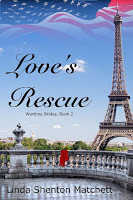 Love's Rescue is now available! Pick up your copy today of this tale of faith and hope inspired by the biblical story of Rahab and set during the liberation of Paris in August 1944. Available for a limited time for only $0.99 from these fine retailers:
Amazon: http://www.amazon.com/dp/B07MJM6MNL
Kobo: https://www.kobo.com/us/en/ebook/love-s-rescue-1
Apple Books: https://itunes.apple.com/book/id1451530079
Barnes & Noble: https://www.barnesandnoble.com/w/loves-rescue-linda-shenton-matchett/1130382950?ean=9780998526546
 World War II has been studied by scholars, students, and history buffs since the day the guns fell silent and surrender documents were signed. Over the years I have read hundreds of books and watched thousands of hours of interviews and documentaries. The more I study, the more I realize I’ve merely scratched the surface of the conflict.
As time passes, more information comes to light as documents are declassified and people decide to tell their stories before they die. A topic I recently researched to ensure accuracy in my book Love’s Rescue, is the liberation of Paris. It has been interesting to discover who was involved and who was not.
I was sure the British were there. After all, France is just across the English Channel. Turns out the British didn’t arrive until several days after the City of Light was freed from the Germans. Also turns out the Office of Strategic Services (OSS), precursor to the CIA was heavily involved, prior to and during the liberation. I shouldn’t have been surprised. The OSS is a spy agency, and intelligence, subterfuge, and espionage played a crucial part in the event.
 My search of documents from the National Archives and the CIA provided fascinating insight into the thoughts and activities as the war neared its end. One report indicated that having worked in league with the French Resistance, the OSS’s role came to fruition once the liberation of Paris occurred. Another report estimates that nearly eighty percent of the intelligence received prior to D-Day and the subsequent liberation was thanks to the 225 OSS agents stationed in France. Activities included:Messages answering specific inquiries by the Allied Fleet HQ and the Seventh Army were radioed directly to the command ship of the invasion fleet en route to France;Plans for the defense of Marseilles were forwarded to the appropriate military leader;Information regarding the fortifications of Lyon was sent ahed;German defense plans for St. Nazaire and Lorient were captured;Downed U.S. airmen in enemy territory were aided; andAgents served as guides for the Allied forces reaching their areas.Once France was safely back in the hands of its leaders, the OSS could focus its sights on the remaining European Theater of Operation and the Pacific war which would not be over for another eight and eleven months respectively.
 Love's Rescue is now available! Pick up your copy today of this tale of faith and hope inspired by the biblical story of Rahab and set during the liberation of Paris in August 1944. Available for a limited time for only $0.99 from these fine retailers:
Amazon: http://www.amazon.com/dp/B07MJM6MNL
Kobo: https://www.kobo.com/us/en/ebook/love-s-rescue-1
Apple Books: https://itunes.apple.com/book/id1451530079
Barnes & Noble: https://www.barnesandnoble.com/w/loves-rescue-linda-shenton-matchett/1130382950?ean=9780998526546