Linda Shenton Matchett's Blog, page 75
February 13, 2019
Talkshow Thursday: Welcome Gail Sattler!
Talkshow Thursday: Welcome Gail Sattler!
 Linda: Thanks for joining me today. Congratulations on your latest release The Other Neighbor. Where did you find your inspiration for the story?
GAIL: The Other Neighbor is actually based on a true story. Back in the prelude to Y2K (who remembers that?) my husband found out the hard way that a customer of his - he owned and operated a web design business - planned to bomb part of the Trans Alaska Oil Pipeline at midnight December 31, 1999. The FBI caught him in time, and he is I believe still in jail. But his company, with the arrest and conviction of the owners, went into bankruptcy owing my husband’s company a lot of money. I, of course, changed the story to make it a romantic suspense, but the antagonist and his plan was real.
LM: Wow! Truth really is stranger than fiction! You are a prolific writer – are you a planner or a “pantster,” and what is your favorite part of the writing process?
GAIL: Definitely a plotter/planner. I outline everything. My favorite part of the process is when I write a scene that just works, and when it’s done, I think, wow, I loved that.
LM: Research is an important part of the writing process. Have you ever stumbled on a tidbit you just knew had to be included in your story?
GAIL: That actually happened on this book. When it happened, I thought the premise would make a good book. And here it is.
 LM: In addition to being a full-time writer, you are also an active musician. How do you balance the two activities in addition to your roles as wife and mother?
GAIL: I don’t do housework. That’s my husband’s job, and it has been for a couple of decades. Gotta love the man. We own a vacuum cleaner. I just haven’t touched it for 20 years.
LM: What a wonderful gift! J What advice do you have for fledgling writers?
GAIL: Study the craft and join a critique group. Learn the basics about POV and Show vs Tell. I have read a lot of books that people write and put on Amazon themselves without having done that. There are a lot of very terrible books out there.
LM: Here are some quickies:
GAIL: Favorite food: Butter ChickenFavorite vacation spot: Tofino, BCFavorite actor or actress: Sandra Bullock
LM: What are you currently working on?
GAIL? I’m rewriting an old book, Secret Admirer, that’s gone out of print and I got the rights back. I’m redoing it for a more general market to reach more people, and I’m also making it longer.
LM: Where can folks find you on the web?
GAIL: Website: http://www.gailsattler.comBlog - What Goes On In The Mind Of A Writer: http://www.gailsattler.com/category/new/Facebook: https://www.facebook.com/gail.sattler.3Facebook author page: https://www.facebook.com/Gail-Sattler-author-568988573496833/?modal=admin_todo_tour
 Book Blurb:
Cheryl Richardson doesn't know that her landlord who owns the other half of the duplex where she lives is plotting to build a bomb-but the FBI does. In order to discover what her landlord is planning to blow up, agent Steve Gableman moves next door to get closer to Cheryl to learn what she knows, namely the target and motive, so they can stop it. But when Steve involves himself in every area of her life, including her dog, will Cheryl be the one to explode?
Purchase Link: http://www.amazon.com/dp/B07J6RD2W5


February 12, 2019
Wartime Wednesday: Collaborative Code Breaking
Wartime Wednesday: Collaborative Code Breaking
 With the 75th anniversaries of WWII occurring over the last several years, Hollywood has produced multiple movies highlighting everything from efforts on the U.S. home front (“Hidden Figures”) to battles (“Dunkirk”) and key leaders (“Darkest Hour”). Some of the films are better than others, but all have served to bring history to the general public, and to many who might never explore the past.
 Disappointingly, none of the movies and few of the books I’ve read talk about collaborative efforts made among the Allied forces. But without the passing of information and discoveries to each other, progress would not have been achieved as quickly and perhaps even hindered.
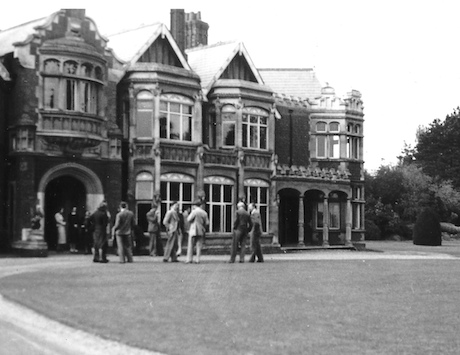 One area that seems to be skewed is code breaking. Most people are familiar with Bletchley Park and the strides the British made in breaking the Enigma code from this location in the English countryside. From the outside, it appears the British succeeded single-handedly, but as with nearly every aspect of the war, they had help.
Recently, I was surprised to find out that Polish cryptanalysts were working on codebreaking long before the Germans overran their country. In fact, they had managed to construct an Enigma machine complete with internal wiring. Polish mathematicians and cryptologists hosted a meeting in a bunker-like building in Pyry, Poland (outside of Warsaw) with French and British colleagues. Turns out the Poles’ cipher bureau was running out of money, and they realized cooperation was the only way to complete the project.
 Plans made to work together were cut short with the German invasion of Poland. Members of the cipher bureau escaped into Romania where they went to the French embassy in Bucharest. Given travel visas, they made their way to France where they would ultimately be caught in the German occupation.
Unable to do much from Vichy France, these Polish scientists waited out the war, but Bletchley certainly benefited from their early work.
 Love's Rescue releases tomorrow! Pre-order your copy today of this tale of faith and hope inspired by the biblical story of Rahab and set during the liberation of Paris in August 1944. Available for a limited time for only $0.99 from these fine retailers:
Amazon: http://www.amazon.com/dp/B07MJM6MNL
Kobo: https://www.kobo.com/us/en/ebook/love-s-rescue-1
Apple Books: https://itunes.apple.com/book/id1451530079
Barnes & Noble: https://www.barnesandnoble.com/w/loves-rescue-linda-shenton-matchett/1130382950?ean=9780998526546
February 11, 2019
Traveling Tuesday: French Forces of the Interior
Traveling Tuesday: French Forces of the Interior
 “The rapid advance of my army through France would have been impossible without the fighting aid of the FFI.”Four-star General George S. Patton, Jr.
“The help given by the FFI from the Mediterranean landings to the arrival of U.S. troops at Dijon, was equivalent to four full divisions.”Three-star General Alexander M. Patch
High praise from highly-placed senior officers in the U.S. Army. Who were these men and women? According to an article written by Sgt. Bill Davidson, Yank Staff Correspondent:
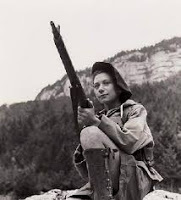 “The French Forces of the Interior, better known as the FFI or the Maquis (from the brush country in which they hide and operate), are not a collection of picturesque hit-and-run guerrillas led by a Hollywood character resembling Errol Flynn. They are a highly-organized, well-disciplined army of some 500,000 French men and women, divided into divisions and regiments, with rifles, mortars, pack artillery and even tanks, and fired with tremendous resolve to re-establish their homeland among the free, respected peoples of the earth.”
He goes on to say, “The Maquis are mostly young, tough-looking guys between the ages of 17 and 25, although there is a good percentage of women and older persons.”
One intriguing anecdote tells of a group of five FFI members who walked into a restaurant, hung their rifles on the hat rack, and sat down to have lunch with their wives. Having just finished a mission that killed some Germans outside the city, they discussed domestic issues with the women, finished their meal, then headed out in a captured German staff car marked with the cross of Lorraine.
Prior to 1942, the FFI was a relatively small and disorganized force. They worked underground, appearing long enough to conduct acts of sabotage and providing intelligence to Allied leaders. By 1944, the group had grown and were unified under the command of French General Marie Pierre Koenig. Absorbed into the French regular forces, the FFI were used as light infantry and continued to use their own weapons and wear civilian clothing with an armband marked “F.F.I.”
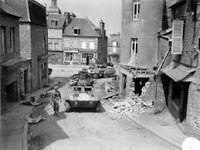 As liberation progressed, the FFI took control of bridges and flushed the Germans out of villages and towns all over France. It is estimated the Maquis liberated approximately 50,000 square miles of the country, including Paris. They served as scouts for the Allied armies and slowed down enemy troop movements.
Many members of the FFI are well-known, with streets, bridges, and parks named in their honor, but the majority of this organization slipped back into obscurity after the war and resumed their lives as unassuming men and women.
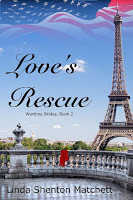 Love's Rescue releases tomorrow! Pre-order your copy today of this tale of faith and hope inspired by the biblical story of Rahab and set during the liberation of Paris in August 1944. Available for a limited time for only $0.99 from these fine retailers:
Amazon: http://www.amazon.com/dp/B07MJM6MNL
Kobo: https://www.kobo.com/us/en/ebook/love-s-rescue-1
Apple Books: https://itunes.apple.com/book/id1451530079
Barnes & Noble: https://www.barnesandnoble.com/w/loves-rescue-linda-shenton-matchett/1130382950?ean=9780998526546
 “The rapid advance of my army through France would have been impossible without the fighting aid of the FFI.”Four-star General George S. Patton, Jr.
“The help given by the FFI from the Mediterranean landings to the arrival of U.S. troops at Dijon, was equivalent to four full divisions.”Three-star General Alexander M. Patch
High praise from highly-placed senior officers in the U.S. Army. Who were these men and women? According to an article written by Sgt. Bill Davidson, Yank Staff Correspondent:
 “The French Forces of the Interior, better known as the FFI or the Maquis (from the brush country in which they hide and operate), are not a collection of picturesque hit-and-run guerrillas led by a Hollywood character resembling Errol Flynn. They are a highly-organized, well-disciplined army of some 500,000 French men and women, divided into divisions and regiments, with rifles, mortars, pack artillery and even tanks, and fired with tremendous resolve to re-establish their homeland among the free, respected peoples of the earth.”
He goes on to say, “The Maquis are mostly young, tough-looking guys between the ages of 17 and 25, although there is a good percentage of women and older persons.”
One intriguing anecdote tells of a group of five FFI members who walked into a restaurant, hung their rifles on the hat rack, and sat down to have lunch with their wives. Having just finished a mission that killed some Germans outside the city, they discussed domestic issues with the women, finished their meal, then headed out in a captured German staff car marked with the cross of Lorraine.
Prior to 1942, the FFI was a relatively small and disorganized force. They worked underground, appearing long enough to conduct acts of sabotage and providing intelligence to Allied leaders. By 1944, the group had grown and were unified under the command of French General Marie Pierre Koenig. Absorbed into the French regular forces, the FFI were used as light infantry and continued to use their own weapons and wear civilian clothing with an armband marked “F.F.I.”
 As liberation progressed, the FFI took control of bridges and flushed the Germans out of villages and towns all over France. It is estimated the Maquis liberated approximately 50,000 square miles of the country, including Paris. They served as scouts for the Allied armies and slowed down enemy troop movements.
Many members of the FFI are well-known, with streets, bridges, and parks named in their honor, but the majority of this organization slipped back into obscurity after the war and resumed their lives as unassuming men and women.
Love's Rescue releases tomorrow! Pre-order your copy today of this tale of faith and hope inspired by the biblical story of Rahab and set during the liberation of Paris in August 1944. Available for a limited time for only $0.99 from these fine retailers: Amazon: http://www.amazon.com/dp/B07MJM6MNL
Kobo: https://www.kobo.com/us/en/ebook/love-s-rescue-1
Apple Books: https://itunes.apple.com/book/id1451530079
Barnes & Noble: https://www.barnesandnoble.com/w/loves-rescue-linda-shenton-matchett/1130382950?ean=9780998526546
February 6, 2019
Talkshow Thursday: Welcome Back, Kimberly Rose Johnson
Talkshow Thursday: Welcome Back, Kimberly Rose Johnson
 Linda: Welcome back, and congratulations on your latest release The Sleuth’s Dilemma (book 2 in The Librarian Sleuth series). What was your inspiration for this particular story?
Kimberly: As I was writing the first book Anna’s story started percolating in my head. At the time I wrote these books I worked in a high school, so I think my daily life there also helped to inspire Anna’s story.
LM: I love series. Did you set out to write The Librarian series, or did that come later? How many books are planned?
Kimberly: I set out to write this as a series. Three books are contracted, with an open door to write more. That being said, my schedule at this time doesn’t allow for more than the three books. But you never know.
LM: What do you to prepare yourself for writing? Do you have a process you must adhere to in order to be productive?
Kimberly: I like to ease into my day lol and that applies to writing too. For example rather than jump into my story world at seven in the morning, I’m choosing to work on this interview. JI have found this to be a helpful way to “ease” into writing. The one thing I need to do before I start my creative writing though is spend time with the Lord by reading my Bible. My day/writing goes 100% better when I take some time to be with Him first.
LM: Do you write a part of yourself in any of your characters? Or how about friends and family? Are they in any of your books?
Kimberly: Yes. Most of my characters do have a piece of me in them, some more than others. I would say this series is the least like me of all my books, but I did use the high school aspect of my life in this book.
 LM: What is one thing you wish you knew how to do?
Kimberly: Crochet. My mother-in-law had planned to teach me once I graduated college but her life was cut short and that never happened.
LM: Here are some quickies:
Kimberly: Favorite color: It depends on the day and what it’s for, but I’m often drawn to purples and blues.Favorite actor or actress: Candace Cameron BureFavorite food: Avocados with a little salt. Yum!
LM: What is your next project?
Kimberly: I am currently writing the third book in this series. J After that I will be working on a Christmas screenplay. I quit my day job so I’d have time to pursue my other passion too—writing for movies.
LM: How exciting! Where can folks find you on the web?
Kimberly: Website https://kimberlyrjohnson.com/Facebook: https://www.facebook.com/KimberlyRoseJohnsonTwitter: https://twitter.com/kimberlyrosejohBookbub: https://www.bookbub.com/authors/kimberly-rose-johnson
 About The Sleuth's Dilemma
Anna loves her job as a high school English teacher until everything goes sideways. The one bright spot in her life it Titus Gains, the school counselor, who is there for her at every turn. Titus' boss complicates his ordered world when she tasks him with running a meeting that changes everything. How had he not noticed Anna earlier? Someone is out to destroy her, and he can't let that happen.
As the head of the English department, part of Luke Harms' job is to make sure everything runs smoothly. Things went haywire when Anna was put in charge of the big writing contest. Entries are missing, Anna appears to be in danger, and her job is on the line. Luke is investigating and wants to make things right for this woman he's starting to care about.
Can a trio of school officials along with Nancy Daley, the town sleuth, stop the saboteur before it's too late? And will Anna choose the right man, or lose them both?
Purchase Link: http://www.amazon.com/dp/B07MHDQ8TR (FREE TODAY!)
February 5, 2019
Wartime Wednesday: Wunschkonzert
Wartime Wednesday: Wunschkonzert
 Early in the Third Reich, Propaganda Minister Joseph Goebbels realized that radio would be extremely effective in disseminating Nazi messages on a wide scale. Citizens were already addicted to radio’s ability to broadcast music, news, drama, and comedy directly into their homes. However, not everyone owned one. They were expensive, and people were struggling under the economic depression. Luxuries like radios took a back burner.
Not one to be beaten, Goebbels worked with manufacturers to invent an affordable product, and within a short time the Volksempfänger was created. The “people’s receiver” was constructed with Bakelite (an early, low-cost plastic), cardboard, and cloth and cheap enough for even the poorest German to purchase. No one seemed to notice or care that the national arms in the form of an eagle and swastika on either side of the tuner unmistakably identified the unit as part of the Nazi’s advanced propaganda machine.
 Even while the war was going well for them, Nazi authorities knew it was important to maintain the morale of people on the home front. Their brothers, fathers, sons, husbands, and others were away in combat. Food and other day-to-day necessities were either heavily rationed or unavailable. Media reports stressed the frightening aspects of war to say nothing of the actual bombing raids, the general public experienced. Uncertainty and fear hung over the country.
 Thus began the Wunschkonzert(“wish concert,” or better “concert by request”) first transmitted on October 1, 1939. The program featured messages from soldiers at the front for their loved ones back home, interspersed with songs that listeners, whether at home or at the front, requested. The day after the broadcasting house put out an appeal for letters more than 23,000 arrived.
When the war began to go badly for the Germans, the program’s content changed to include a higher percentage of propaganda than music and entertainment. During bombing raids, the program would be interrupted by a two-tone signal that indicated Allied planes had been spotted. Music would resume, then then after another call, the announcer would provide locations of the air-raids. When Russian troops swarmed Berlin in April 1945, the program ceased.
February 3, 2019
Mystery Monday: French Crime Novelist Léo Malet
Mystery Monday: French Crime Novelist Léo Malet
 Much has been written about the Golden Age of Detective Fiction, and the most often referenced materials include the American writers Dashiell Hammett, S.S. Van Dine, Raymond Chandler, Erle Stanley Gardner, and Mary Roberts Rinehart. British authors such as G.K. Chesterton, Anthony Berkeley, Dorothy Sayers, and Agatha Christie also get quite a bit of press. As part of the research for my upcoming release, Love’s Rescue, which is set in Paris, I wanted to find out what sort of fiction was published in France during the 1930s and 1940s.
 To my surprise, I discover a genre closely tied to detective fiction called Roman Noir. Closely related to hardboiled crime, the genre’s distinguishing factor is that the protagonist is either a victim, suspect, or perpetrator. Wikipedia goes a bit further and says, “A typical protagonist is dealing with the legal, political, or other system, which is no less corrupt than the perpetrator…”
 Author Léo Malet is considered to be the father of French Roman Noir, and his first novel 120, Rue de la Gare, was published in 1943. The second book in the series was not published until after the war (1948), with the remaining thirty-one stories coming out primarily in the 1950s. The final book was published in 1983.
Anti-hero Nestor Burma is an ex-Anarchist, fluent in argot (French slang), and can’t commit to a relationship to save his life. Cynical but streetwise, he explores a different area of Paris in each book. According to one scholar, Malet had planned to cover twenty unique municipalities, but he was unable to do so before his death.
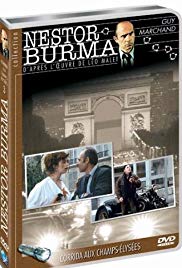 Despite being written and published in the midst of WWII, the story takes place afterwards, with former private detective Nestor coming home from a POW camp in Germany. When he arrives at the train station in Lyon, he runs into an old friend who is shot in Nester’s presence. Before he dies, the victim mutters “120 Rue de la Gare.” Having heard the words from another shooting victim, Nestor decides to investigate. It becomes apparent the perpetrator is a serial killer, and Nestor must discover his identity before falling prey to the murderer.
The good news is that several of the author’s books have been translated into English. And for those of you who know French, head over to YouTube where you can watch episodes of Nestor Burma produced by French TV producer DEMD from 1991 through 2003.
January 30, 2019
Talkshow Thursday: Welcome back, Sheila Ingle!
Talkshow Thursday: Welcome back, Sheila Ingle!
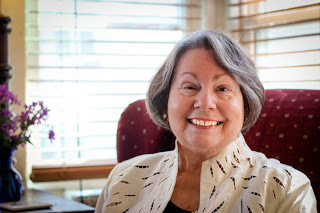 Linda: Welcome back to my blog. Thanks for joining me today. Your book Tales of a Cosmic Possum is a biography of your husband’s family. Why did you decide to write the book, and how did you come up with the title?
Sheila: John and I have been married 39 years, and I believe this book has been in the works that long. His heritage is the Appalachia mountains of Tennessee. When his grandfather left his holler, he moved to South Carolina to join the work force at a cotton mill. The family brought their customs and traditions with them. Growing up in the city, I knew nothing about life in a mill town. When we met, I quickly learned the differences. Listening to the dialect, being introduced to country music, and listening to their stories truly expanded my horizons.
The book Christy by Catherine Marshall came alive to me when John and I drove to Cutter’s Gap/aka Morgan’s Gap where we met the son of the woman who took Christy’s place as the school teacher. I finally realized it was time to tell the stories of the Ingle women. In one of Sharon McCrumb’s books, she writes of a cosmic possum, and Jane Hicks defines it in her poem, “How We Became Cosmic Possums.” When I read both of these, I realized I was married to a cosmic possum. John is one of those whose roots are Appalachian, but who has gone on to become educated without losing his mountain heritage.
LM: Research is important in any writing, but especially for non-fiction. How did you go about finding the information you needed?
Sheila: Interviewing John, his brother, and his cousins was my primary source; their memories of their growing up in Ingle Holler is still phenomenal. I learned about the different jobs in the mills through videos, the Greenville Museum, who has dedicated space to this lifestyle, reading descriptions of the mill villages and books of this era. The mills themselves are no longer in use, but their stories are still being told. Newspaper articles also were a help. Yes, to viewing the Pacolet River that flooded and refurbished, four room mill houses.
Our public library was a solid source of both photos and text. Also, choosing to have the setting for each story to be part of one day in a particular year helped with choosing what history details to include. e.g. Annie Mae owned the boarding house during the Depression, and the family talked about how she reached out to hoboes. Since I knew nothing about hoboes or their lives, I was fascinated to research them.
LM: On your website, you indicate the Revolutionary era is your favorite. What draws you to that time period?
 Sheila: Because of my grandmother’s enthusiasm for genealogy and family history, she became a member of the Daughters of the American Revolution, as well as several other lineage societies. She enjoyed telling my brother and me about those early settlers and how they fought for our freedom. I caught this time as being important to my history. As an English teacher, I taught literature from an historical perspective, including information about the government, music, lifestyles, etc. I am/was convinced that we learn well through immersion into a period, not by memorization.
After joining a DAR chapter here in Spartanburg, I went to visit Walnut Grove, an historic home built before the Revolution. It was in walking where the heroine walked and listening to the docent that I realized that there are few stories about the heroines of the American Revolution. So I decided to fill that gap with a book about Kate Moore Barry, a 18th century woman who lived less that five miles from where I grew up. From then on, I was hooked by this time period. Visiting reenactments and watching the reenactors live out the lives of those years, touring houses, plantations, churches, and civic buildings in my state of SC kept me learning, also.
The fact that most of the heroines were unknown filled me with a quest to share their stories. This time is the beginning of our nation, and we need to pass down to the next generations the importance of that. And, I am a descendent of Martha Washington which also intrigues my curiosity in wanting to learn all I can about our first First Lady.
LM: How did you get started as a writer, and how did you decide to seek publication?
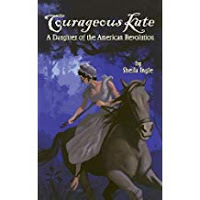 Sheila: As a teacher, I taught composition and started writing for some of our church publications. I mulled it over often and even did some ghost writing. It wasn’t until I visited Walnut Grove that I had a story that I was compelled to tell. It was a wonder that a local press agreed with me, and a year later, Courageous Kate was printed. What followed were four other biographies, including Tales of a Cosmic Possum, all written and published in eleven years. It has been an unreal journey, and I have enjoyed every minute.
LM: You live in a beautiful area of the world, a place many people visit. If money were no object, what is your idea of the ultimate vacation?
Sheila: I believe I would like to go on a jaunt that included Williamsburg, Mt. Vernon, Boston, and Philadelphia. Of course, there would be a few day trips along the way, like the childhood home of George Washington at Ferry Farm, Plimouth Plantation, and several days overnighting at the City Tavern. The ultimate part of this vacation would be that time would not be an issue. Both times I visited Mt. Vernon, I was plagued by a clock for only one day’s stay. Oh, I need the owners of Carter’s Grove, my Carter family, to reopen the house to the public once again. Watching the wild horses on the Outer Banks would also be a must, and in the evening a front row seat at The Lost Colony play in Roanoke. And one more thing would be watching a performance ofHamilton on Broadway. Probably this would take care of my bucket list!
LM: What is your next project?
Sheila I have almost completed research on Judith Giton Manigault, one of the first Huguenots to immigrate to South Carolina in the 17th century. On January 22, I will share part of her story to the South Carolina Historical Society, and maybe their response will guide me toward telling her story.
LM: Where can folks find you on the web?
Sheila: Blog: http://www.sheilaingle.comAuthor Page on Facebook: Sheila Ingle, AuthorTwitter: @sheilaingle1Goodreads: https://www.goodreads.com/author/show/583797.Sheila_Ingle
 Book Blurb: Tales of a Cosmic Possum is a group of short stories based on the history of eight women in my husband’s family who worked in the cotton mills of SC. They worked together in the mills, shared their gardens, attended church, and enjoyed the playing and singing of the songs from the Grand Ole Opry. When five of the brothers went off to war, those who couldn’t fight took care of their families. The Ingles stuck together, just like they were taught in the Appalachia.
Purchase link: http://www.amazon.com/dp/B073NSCPPY
 Linda: Welcome back to my blog. Thanks for joining me today. Your book Tales of a Cosmic Possum is a biography of your husband’s family. Why did you decide to write the book, and how did you come up with the title?
Sheila: John and I have been married 39 years, and I believe this book has been in the works that long. His heritage is the Appalachia mountains of Tennessee. When his grandfather left his holler, he moved to South Carolina to join the work force at a cotton mill. The family brought their customs and traditions with them. Growing up in the city, I knew nothing about life in a mill town. When we met, I quickly learned the differences. Listening to the dialect, being introduced to country music, and listening to their stories truly expanded my horizons.
The book Christy by Catherine Marshall came alive to me when John and I drove to Cutter’s Gap/aka Morgan’s Gap where we met the son of the woman who took Christy’s place as the school teacher. I finally realized it was time to tell the stories of the Ingle women. In one of Sharon McCrumb’s books, she writes of a cosmic possum, and Jane Hicks defines it in her poem, “How We Became Cosmic Possums.” When I read both of these, I realized I was married to a cosmic possum. John is one of those whose roots are Appalachian, but who has gone on to become educated without losing his mountain heritage.
LM: Research is important in any writing, but especially for non-fiction. How did you go about finding the information you needed?
Sheila: Interviewing John, his brother, and his cousins was my primary source; their memories of their growing up in Ingle Holler is still phenomenal. I learned about the different jobs in the mills through videos, the Greenville Museum, who has dedicated space to this lifestyle, reading descriptions of the mill villages and books of this era. The mills themselves are no longer in use, but their stories are still being told. Newspaper articles also were a help. Yes, to viewing the Pacolet River that flooded and refurbished, four room mill houses.
Our public library was a solid source of both photos and text. Also, choosing to have the setting for each story to be part of one day in a particular year helped with choosing what history details to include. e.g. Annie Mae owned the boarding house during the Depression, and the family talked about how she reached out to hoboes. Since I knew nothing about hoboes or their lives, I was fascinated to research them.
LM: On your website, you indicate the Revolutionary era is your favorite. What draws you to that time period?
 Sheila: Because of my grandmother’s enthusiasm for genealogy and family history, she became a member of the Daughters of the American Revolution, as well as several other lineage societies. She enjoyed telling my brother and me about those early settlers and how they fought for our freedom. I caught this time as being important to my history. As an English teacher, I taught literature from an historical perspective, including information about the government, music, lifestyles, etc. I am/was convinced that we learn well through immersion into a period, not by memorization.
 After joining a DAR chapter here in Spartanburg, I went to visit Walnut Grove, an historic home built before the Revolution. It was in walking where the heroine walked and listening to the docent that I realized that there are few stories about the heroines of the American Revolution. So I decided to fill that gap with a book about Kate Moore Barry, a 18th century woman who lived less that five miles from where I grew up. From then on, I was hooked by this time period. Visiting reenactments and watching the reenactors live out the lives of those years, touring houses, plantations, churches, and civic buildings in my state of SC kept me learning, also.
The fact that most of the heroines were unknown filled me with a quest to share their stories. This time is the beginning of our nation, and we need to pass down to the next generations the importance of that. And, I am a descendent of Martha Washington which also intrigues my curiosity in wanting to learn all I can about our first First Lady.
LM: How did you get started as a writer, and how did you decide to seek publication?
 Sheila: As a teacher, I taught composition and started writing for some of our church publications. I mulled it over often and even did some ghost writing. It wasn’t until I visited Walnut Grove that I had a story that I was compelled to tell. It was a wonder that a local press agreed with me, and a year later, Courageous Kate was printed. What followed were four other biographies, including Tales of a Cosmic Possum, all written and published in eleven years. It has been an unreal journey, and I have enjoyed every minute.
LM: You live in a beautiful area of the world, a place many people visit. If money were no object, what is your idea of the ultimate vacation?
Sheila: I believe I would like to go on a jaunt that included Williamsburg, Mt. Vernon, Boston, and Philadelphia. Of course, there would be a few day trips along the way, like the childhood home of George Washington at Ferry Farm, Plimouth Plantation, and several days overnighting at the City Tavern. The ultimate part of this vacation would be that time would not be an issue. Both times I visited Mt. Vernon, I was plagued by a clock for only one day’s stay. Oh, I need the owners of Carter’s Grove, my Carter family, to reopen the house to the public once again. Watching the wild horses on the Outer Banks would also be a must, and in the evening a front row seat at The Lost Colony play in Roanoke. And one more thing would be watching a performance ofHamilton on Broadway. Probably this would take care of my bucket list!
LM: What is your next project?
Sheila I have almost completed research on Judith Giton Manigault, one of the first Huguenots to immigrate to South Carolina in the 17th century. On January 22, I will share part of her story to the South Carolina Historical Society, and maybe their response will guide me toward telling her story.
LM: Where can folks find you on the web?
Sheila: Blog: http://www.sheilaingle.comAuthor Page on Facebook: Sheila Ingle, AuthorTwitter: @sheilaingle1Goodreads: https://www.goodreads.com/author/show/583797.Sheila_Ingle
 Book Blurb: Tales of a Cosmic Possum is a group of short stories based on the history of eight women in my husband’s family who worked in the cotton mills of SC. They worked together in the mills, shared their gardens, attended church, and enjoyed the playing and singing of the songs from the Grand Ole Opry. When five of the brothers went off to war, those who couldn’t fight took care of their families. The Ingles stuck together, just like they were taught in the Appalachia.
Purchase link: http://www.amazon.com/dp/B073NSCPPY
January 29, 2019
Wartime Wednesday: War Brides
Wartime Wednesday: War Brides
 Ever since there have been wars, there have been war brides. World War II was no different. One source I found indicates that between 1942 and 1952, approximately one million American soldiers married foreign women from fifty different countries. About 100,000 brides were British with another 150-200,000 from continental Europe. Somewhere between 50,000 and 100,000 servicemen married women from the Far East and Germany. Remember these numbers are just American troops!
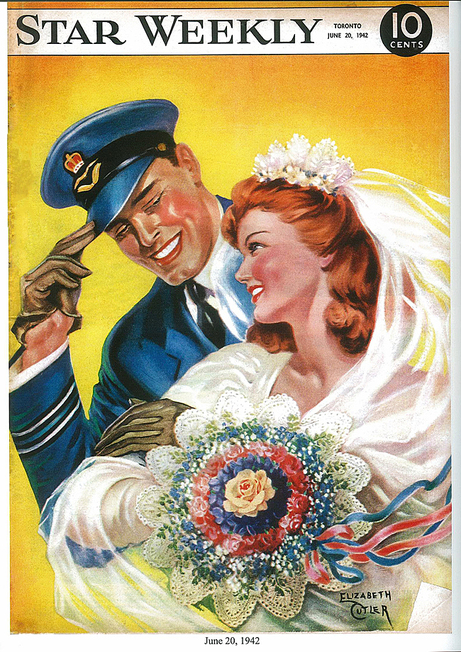 Why were these women willing to marry and leave the country of their birth? Some would say proximity—the “Yanks” were available. Native men were not. Others might say it was the generosity exhibited by American soldiers. To the women of war-torn countries where deprivation and the struggle to survive were a way of life, the food, personal items such as stockings, and money, offered by the Americans had to be tantalizing. Perhaps these women simply want to raise their children without threat of war.
In anticipation of this issues, soldiers, sailors, and airmen were issued a 38-page handbook instructing them on how to handle being guests in the various countries (whether it was ally or foe). The rules encouraged friendliness, but discouraged “special relationships.” An article in Yank Magazine touted “Don’t Promise Her Anything – Marriage Outside the U.S. is Out.”
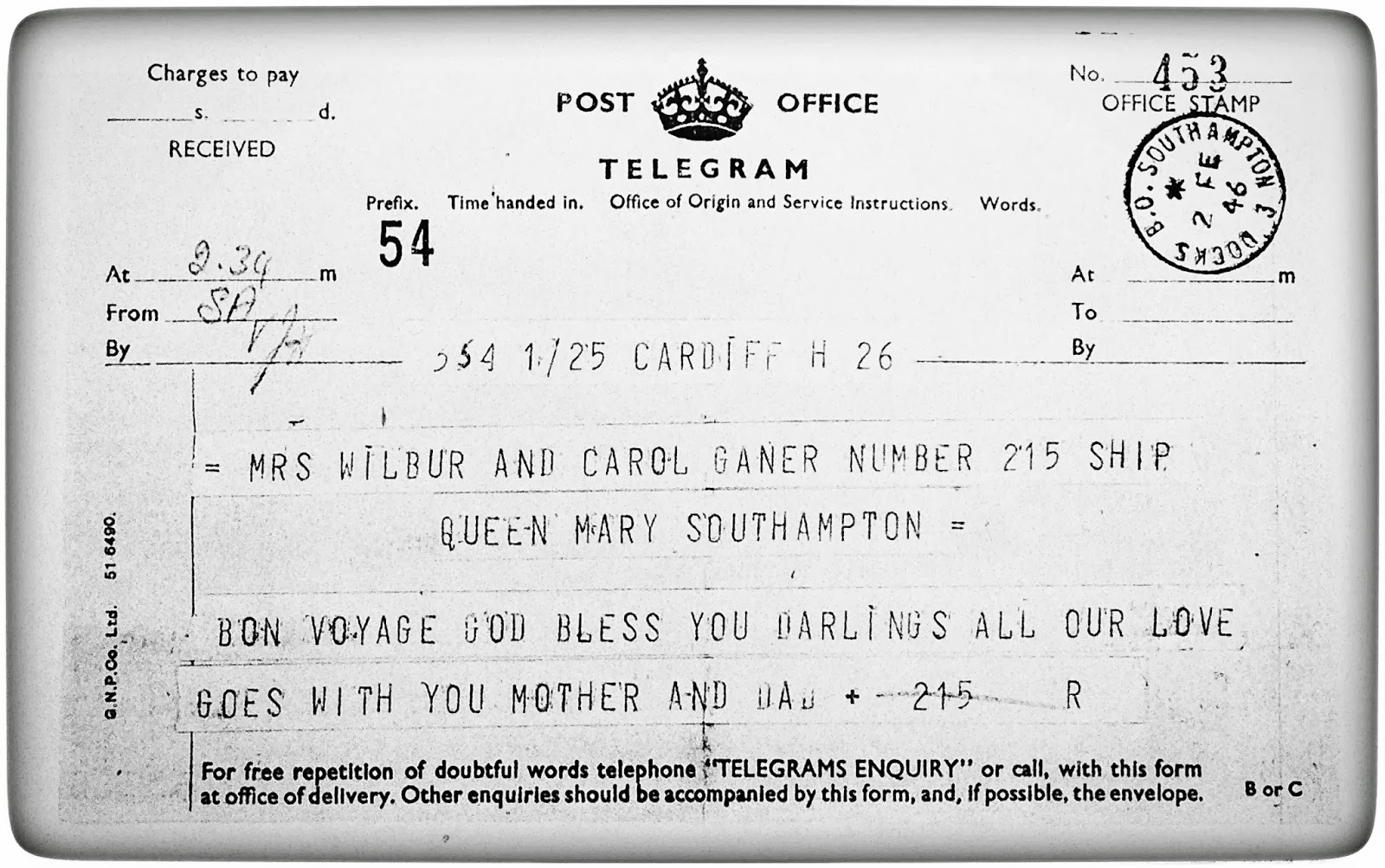 The story’s title may not have been officially correct, but the process for American servicemen to marry foreign wives was complex, requirement up to fifteen forms, and it could take up to a year before permission was granted or denied. A regulation from the War Department required overseas troops to obtain permission to wed, on threat of court-martial.
Until Congress passed the War Brides Act in 1945, these women were part of the limited number of immigrant aliens allowed to enter the U.S. each year, potentially leaving them stuck in their home countries for months or years. Six months later, Congress enacted the Fiancées Act which granted fiancées of servicemen three-month visas as temporary visitors. If the couple didn’t marry during the ninety days, the fiancée would be returned home.
 The women were eligible for free transport to the U.S. via former troop or hospital ships, but were told the ships might not be available for a year or more. Protests were conducted in front of the U.S. Embassy in June 1945. Then upon hearing that former First Lady Eleanor Roosevelt was in London that November, a group of brides gathered outside her hotel carrying placards that read “We Demand Ships” and “We Want Our Dad.”
 The pressure worked, and by January, the first shipment in Operation War Bride was on its way across the Atlantic. The ladies were met with excitement by the press and suspicion by some American women who declared them nothing more than gold-diggers. Many of the brides formed social clubs that served as emotional support as they adjusted to their new home.
January 28, 2019
Traveling Tuesday: Berlin
Traveling Tuesday: Berlin
 Brandenburg GateMy current work-in-progress, Love’s Belief, is set in Berlin during 1943. A large portion of my father’s heritage is German, but very little was made over that while I was growing up, so I don’t know a lot about the country. In hindsight, I realize that was perhaps because I was born only fifteen years after the end of the war.
 Situated on the two-hundred-and-fifty mile long River Spree, Berlin is one of Germany’s sixteen federal states. In existence since the 13th century, the city is filled with lakes, canals, gardens, parks, and forests. With the exception of 1949-1990, Berlin has been the country’s capital since 1417. At over 11,000 square miles, it is three times the size of Los Angeles county.
 Oberbaum BridgeHome to countless universities, orchestras, museums, entertainment venues, and sporting event, Berlin was the location of the 1936 Olympics. The Nazi party already had a firm grasp on the country, and initially forbid the participation of Jews. However, many of the other nations threatened to boycott, so Hitler backed down on his stance, with the exception of barring German Jewish athletes.
 In a desire to outdo the 1932 games held in Los Angeles, Hitler had a new 100,000-seat track and field stadium built as well as six gymnasiums and other smaller arenas. The games were the first to be televised, and the radio broadcasts reached forty-one counties. With eighty-nine medals, Germany won the most awards. The games would not be held again until 1948 in Switzerland.
Here is a virtual tour of some of the places my characters would have seen:
Brandenburg Gate: An 18th century monument, the Gate was built by King Frederick William II of Prussia after the successful restoration of order during the Batavian Revolution. Constructed on the site of a former city gate, it is one of the best-known landmarks in Germany and is located in the western part of the city center.
 Reichstag BuildingReichstag Building: First opened in 1894, the building was used to house the parliament of the Weimar Republic. Partially burned in 1933 by unknown causes, the facility became a military installation and housed propaganda presentations. It was never fully repaired and bombed in 1945 during the Battle of Berlin.
Oberbaum Bridge: A double-decker bridge, Oberbauam Bridge was initially wooden when constructed in 1732. With the advent of the U-Bahn officials realized the bridge was no longer adequate and order modifications. After two years of construction, the new bridge built of brick and stone in the Gothic style opened in 1896. Six years later the U-Bahn opened and carried nineteen passengers from Stralauer Tor to Potsdamer Plaz. In April 1945, the Wehrmacht blew up the middle section of the bridge in an effort to stop the Red Army from crossing.
 Bellevue PalaceBellevue Palace: French for “beautiful view,” Bellevue Palace is located in Berlin’s Tiergarten district on the banks of the River Spree. The Palace was constructed in 1786 as a summer residence for Prince Augustus Ferdinand of Prussia (King Frederick II’s younger brother). Featuring Corinthian pillars and wings on either side, the style is Neoclassical. Used as a museum in the 1930s, the Palace was renovated as a guest house for the Nazi government in 1938 before being damaged in 1945 during the Battle of Berlin.
January 23, 2019
Talkshow Thursday: Meet April Smith
Talkshow Thursday: Meet April Smith
 Linda: Thanks for joining me today. Congratulations on your debut novel Loving Grace.What was your inspiration for the story?
April: Thanks for having me! I’m happy to be here. As far as inspiration goes, I knew I wanted to write Christian fiction for teens pretty much from the start of my writing adventure. That part was easy. Figuring out where I wanted the story to take place was also a pretty easy choice for me to make. All of these one liners (mostly said by Grace) kept popping into my mind. And because most of the things were in some way related to a watermelon farm or a watermelon queen, I knew where Grace’s story would take place. So in some ways, the inspiration came from my time working in my best friend’s family watermelon farm during the summer and my time as a watermelon queen.
LM: The age old question for writers – are you a planner or a “pantster,” and what is your favorite part of the writing process?
April: For the most part I’m very much so a planner. I have a color coded outline and each scene is mapped out. I use a notebook for each manuscript, and I record things that I might need to remember or pictures I see that inspire me for a particular scene. I like to see where the story is going and know what my ending will look like too. But with that being said, it’s very important to leave yourself room as a writer for inspiration. Even with Grace’s story, entire scenes got switched around from their original outlined order. Some scenes were not even in the original outline, but I’m thankful that I allowed myself a little bit a “pantster” attitude so that when inspiration hit I was free to go with it. This is also one of the things I like most about writing—getting an idea and seeing where it takes the story.
LM: How did you get started as a writer, and how did you decide to seek publication?
 April: Well, it really started in high school when my high school English teacher saw something in my writing. And then again in college when one of my professors mentioned it. And then as a middle school English teacher myself, writing is pretty much a large part of my day—every day. But as far as writing my manuscript, it started a couple of years ago when I was reading a book, and it inspired me, that maybe I could do this too. I knew I wanted to write Christian fiction, and that I wanted to write for teens. So I wrote a manuscript, went to a conference, had the manuscript critiqued, and most excitingly of all, the person doing the critique liked it! That gave me the courage to submit it, and to begin the road to publication.
LM: Other than being a watermelon queen, is there any part of yourself in Grace?
April: I wouldn’t say there is any particular part of me in Grace. I do always try/hope to create characters that people can identify with though.
LM: Here are some quickies:
April:Favorite childhood book: The Secret Garden.Favorite food: Watermelon salsa…it’s the truth, that stuff is so good.Favorite vacation place: The beach! Warm sand and the sound of crashing waves is my favorite way to relax.
LM: What is your next project?
April: I’m working on two right now. One that is also set in the world of watermelons. There are some new characters as well as old characters in that one. The other one is about two totally different people who have to work together to achieve their separate but equally important goals.
LM: Where can folks find you on the web?
April: You can connect with me on Instagram (aprilsmith_books) and Twitter (@aprilsmithbook). I also have my website: www.aprilsmithbooks.com or my Facebook page.
Book Blurb: Loving Grace
 Grace Summer lands herself in a melon load of trouble when she becomes torn between the boy of her dreams and the boy almost next door. As the newly-crowned watermelon queen, she is thrust into the spotlight, meets the dreamy Warren Hartley, and continues trying to get oven an accident that rocked her world. Mix in working with Beau Baron who Grace happens to fight with just about as much as breathing and the metaphorical sparks fly.
Like most things in life, Grace must learn to take the good with the bad. While the good is the handsome and fun Warren Hartley, the bad is Beau Baron—or at least being around his annoying and rude self way more than she would like. For Beau, Grace is nothing more than aggravating and an irritating reminder from the night of the accident. Tensions soar as Grace and Beau fight to love themselves and maybe, just maybe, each other.
Purchase Link: http://www.amazon.com/dp/B079P56KDT