
P.K. Tyler's Blog, page 6
February 28, 2016
Beating a Book into Submission – Outline a Book in 5 Acts

Attribution to the British Library
In a recent conversation about writing, I mentioned that when I outline a book, I use the beat plot method but that first I Macro plot. I was met with some blank stares (on the internet it looks like this – “???”). So I thought I’d write up how I beat a book until it’s ready to be written.
My training was in theatre. Because of this, there are certain things I am locked into. I love breaking rules, though, and often do, but when I starta new project, the...


Beating a Book into Submission – Macro Outlining in 5 Acts
Attribution to the British Library
In a recent conversation about writing, I mentioned that I use the beat plot method but that first I Macro plot. I was met with some blank stares (on the internet it looks like this – “???”). So I thought I’d write up how I beat a book until it’s ready to be written.
My training was in theatre. Because of this, there are certain things I am locked into. I love breaking rules, though, and often do, but when I start a new project, the structure of my education underpins my work. So what is my outline process? The very first thing I do, and you can laugh, is get a three ring binder, a few super sharp pencils and some lined paper. I’ll type it all up eventually, but I really like having everything written out to flip through. It also puts me in a more creative space.
First I start with general worksheets:
Descriptions of major known character (One Page Per Character)
personality traits, flaws, goals, weaknesses, physical appearance, background, family, species/race/ethnicity, biggest regret, source of pride, goals (short and long term), how does character respond to stress/conflict/disappointment. Character symbolism. Religion, family, socio/economic situation. Relationship to other characters. You can put anything here and much more than I’ve listed.
Major known setting descriptions with tone, representation, symbolism (One Page Per Setting)
Major conflict summary – 1 paragraph (One Page)
All of these things can be changed, added to, or expanded on as I continue forward. But by doing this, I have a general sense of the players, the settings, and the plot trajectory. I keep these at the front of my binder to refer to and add to. Since I know my big picture, I can start thinking about the actual story I’m telling.
Then I create start by creating a “Macro” outline. A friend recently asked me to explain this, and I think it again comes from my theatre training. A Macro outline is about what each of the Five Acts accomplishes. If a story is told in Five Acts, they generally follow a traditional dramatic structure:
World Building
Inciting Incident
Escalation
Climax
Denouncement (winddown, consequences)
Not all Acts need to be the same length. Note, some people put the Climax in Act 3 and “falling action” in Act 4, This isn’t an academic 5 act structure paper, just how I use the concepts personally. For me, I prefer an escalation Act and to combine the falling action and Denouncement Act so there’s not a lot of exposition at the end. you can see a good visual of the different 5 act structures here:

From http://stonoff.com/fiveact-structure_...
There are lots of examples of this online, mostly of Shakespeare Plays and Quentin Tarantino movies  Lots of people like to talk about the 3 Act Structure: Beginning, Middle, End. But I feel like this doesn’t allow you the room to really plot out what your characters are doing. In reality, Aristotle’s 3-act story arc isn’t much different from 5 Acts or 7 or 9. You can find articles out there on all of them. 5 Acts works for me because it lets me create a clear summary, with enough detail to stay focused, but not so much to get lost in the minutia – yet.
An example of a 5 Act plot outline is from Iron Man:
ACT ONE– Introduction to Tony Stark and his internal conflict about selling weapons
ACT TWO– Tony is forced to directly face the issue of his actions. He is kidnapped and held hostage by those he sold weapons to! Builds prototype and sets up hero trope.
ACT THREE– Tony confronts his personal responsibility and makes a decision to change his life focus. (some call this the turning point). He will no longer sell weapons and just be a figure head. Obadiah revealed as being behind the kidnapping (betrayal!)
ACT FOUR– Tony steps up to the plate, makes a major decision about himself, and we see the action/consequence of that by him using his suit and genius in real war situations. Conflict with Obadiah comes to a head with big bam boom fight
ACT FIVE– All plot points have been brought together. Good guy wins and Stark emerges as a changed (somewhat) man.
(You can read The Hulk’s take on this as well here: https://filmcrithulk.wordpress.com/20...
Another example is Hamlet:
ACT ONE– Ghost appears, announces he was murdered, and requests Hamlet to avenge his death
ACT TWO– Plots a foot! Everyone is trying to catch everyone else in a lie!
ACT THREE– Will Hamlet kill Claudius? Possible incest theme with his mom and death of Polonius
ACT FOUR– Ophelia has gone mad, Claudius and Laertes plot the death of Hamlet
ACT FIVE– All of the characters die excluding Horatio and Fortinbras
Another great tool is to read over the quick plot oriented summaries written about movies and books here: http://www.helpingwritersbecomeauthor...
Once I’ve got my 5 Acts outlined in a super loose general way, I list out the elements I want to accomplish in each Act. This isn’t the same in every book but it helps to flesh out the quick Act descriptions. Each act should have an internal and external conflict, an escalation clause, a twist, and a true colors moment. Other things you can include are secrets revealed, out of character behavior (often in act 4), backstory, world building.
Now I start to write 1 line scene descriptions for each scene in the Act. The acts don’t all need the same elements but I like to have 5-7 scenes per act minimum. How do we do this? At the top of a page I write the scene code (ACT I – Scene 1, etc.) Below that I write out the following points:
Chapter Title
Description of Scene (1 sentence overview)
Character POV (mostly only for multi character POV stories)
Main plot line or subplot line.
Goal of scene (how does this scene move the plotline forward)
Important or Key elements of this chapter. (someone finds a phone – you need to remember next scene that they have it!)
Then I beat plot. Personally, I do this usually in literal bullet points like I’m using in this post.
Each beat is like a breath, you need them to keep living, to continue forward. If you miss one, you’ll be okay, a little winded but alright, but if you miss a few in a row, you’re suddenly holding your breath, soon desperate for air. This moment is when your reader decides to stop reading. They’re no longer invested, you haven’t feed them, you haven’t moved their hearts another beat toward the end of the story. Beat plotting isn’t just about writing faster or easier, its about understanding the structure and emotion which keeps your reader invested.
Here’s an example from Sin Eater. This is actually much less detailed then I usually do. Each of these would normally have additional beats within them but this is where we’ve started so we can plot out the whole scene moment by moment, but you get the idea:
Plot Beats from Sin Eater Season Two.
Lodaii, Vai, Riley, Nik, and Zeph enter the Crypt of Relics.
Demons attack in pure form, not tied to possessions.
Lodaii handles his business – because he’s a badass
Vai is impressed, maybe even a little turned on. (Careful now)
Riley is pissed b/c the outsider (ganje) showed him up
Riley acts like a dick, trying to control the situation, but Lodaii puts him in his place and Riley knows better than to take on an angel.
Nik is entertained by Riley getting a little ruffled, but Zeph isn’t playing. Trouble in Rivercity for the boys relationship peeks through.
They make it through the battle and out into the second gypsy camp as planned.
This could even been expanded on if the beat plot mood was flowing, but it’s enough to write out a scene. You just write from point to point, don’t think ahead, don’t worry, you already have it all planned and if you deviate from the plan, that’s awesome, it just means your in the zone. Everything can be reworked.
While you’re beat plotting keep in mind some elements that make a good scene work. You can’t use them all in one scene, but they are good questions to keep in mind as you plot so you make sure your scene is serving your story goals.
Is the Plot advanced in this scene?
Do we learn a character’s goal?
Is there action to increase the tension?
Is there character development?
Did you introduce a character conflict or insight?
Did you show an effect of character conflict?
Have the stakes been raised?
Have you reinforced movites already introduced?
Is there character backstory?
Is there World Building?
Does this seen help set the story’s tone or theme?
Is there foreshadowing?
What you’ve done here is go from biggest to smallest.
Macro concepts
5 ACTS
25-35 Scenes
Beats per scene
Words!
And done.
The way I came about thinking this way is kind of backward. As a dramaturg, part of my training was to “beat” a script. That meant going through a play and notating every moment where there was a personal change or plot development. These could happen 10 to a page, or only 2 per scene. It wasn’t science. But by taking the time to identify each beat, you understood the story, the motivations, and the bigger whys of the play better, making you an informed reader who could always ask the question of directors and actors, “does this serve the story?”
Dramaturgs are first and foremost about the story. They aren’t there to cater to playwrights or directors and rarely deal with actors at all. My job was to be the voice of the story. If you’re like me and believe in the idea that stories exist to be told, then you understand that sometimes, defending the story actually means going against the playwright, because the words may be theirs but the STORY is universal and an entity independent of it’s creators. That is the difficult role of the dramaturg, but that’s another post
I hope this has helped. I use this system for short stories and 100k word novels. It works for me. What works for you?
**A lot of these ideas have come from Jamie Gold’s amazing list of resources, including her downloadable beat plotting worksheets: http://jamigold.com/for-writers
January 8, 2016
Books
Science Fiction 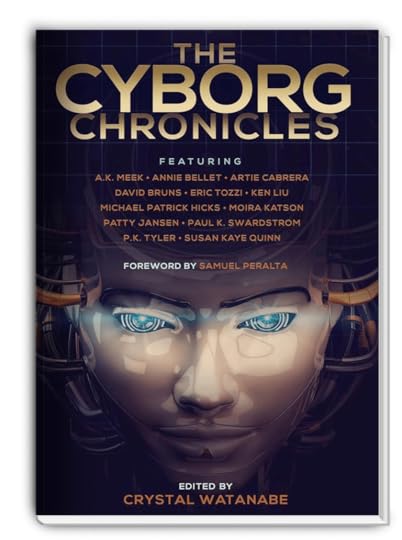
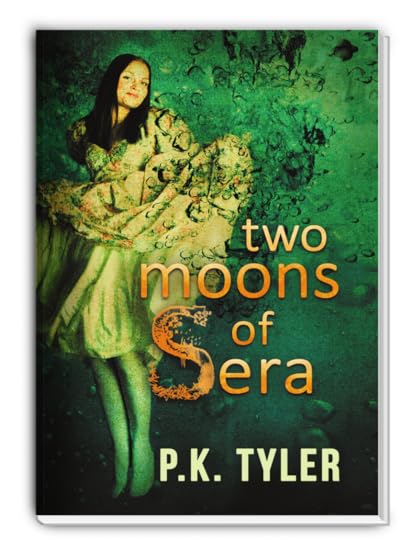
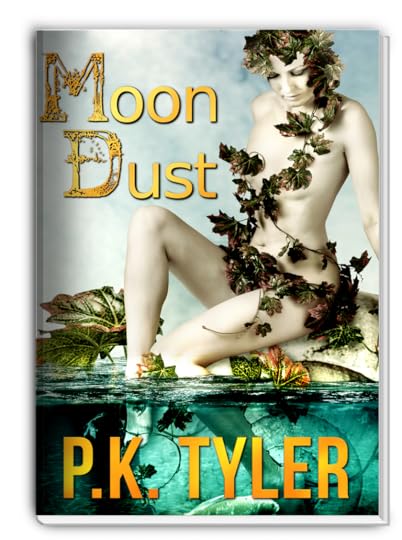
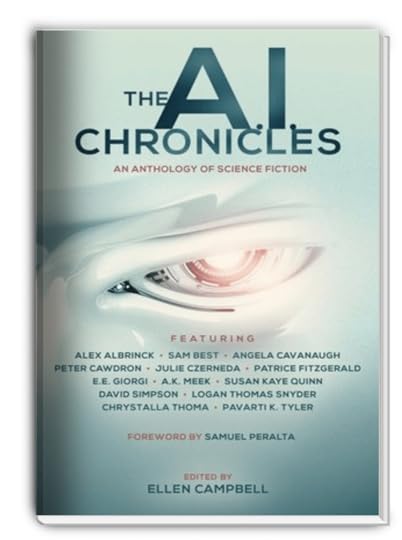 Speculative Fiction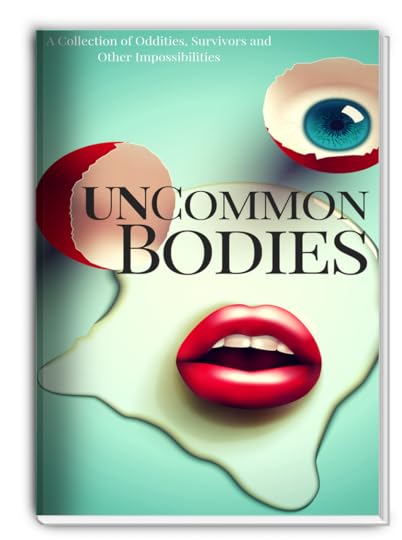
December 11, 2015
#WomenofSciFi – Interview with Lee Strauss
Lee Strauss is a prolific author of amazing work that spans across genres. Her main series – Perception (Young Adult Dystopian) – deals with deep issues of medical ethics.
PK Tyler: You write across genres as you and as Elle Strauss, but your main brand seems to be speculative fiction, is that right?
Lee Strauss: Yes. Even my YA books as Elle Strauss and Lee Strauss include elements of spec fic. Time travel and near future technology.
PKT: Your website calls your spec fic “Mystery/Suspense with a twist”. What do you think is the more important element in your work, the mystery or the sci-fi?
LS: My latest series is called A Nursery Rhyme Suspense: A Marlow and Sage Mystery. The world contains elements of sci-fi but the main genre is mystery. There is always a crime and a “who dun it” component.
PKT: The Perception series is described as a dystopian. Where do you think the popularity of dystopian fiction comes from?
LS: Probably Veronica Roth, lol. With a side dish of Suzanne Collins.
PKT: Does dystopian fiction have to be in the science fiction genre?
LS: Not necessarily, though, unless a book is void of any new, unexplored or uninvented elements, it most like would fall into sci-fi.
PKT: I tend to binge on stories. I watch full seasons of Orphan Black on Netflix and often read (and reread) entire series in practically one sitting. Sometimes more than once *cough*DUNE*cough*. What about you? What stories can’t you get enough of?
LS: I often binge on TV shows. I loved watching FRINGE on Netflix and still can’t get enough of CASTLE.
PKT: What single element do you think makes or breaks a book?
LS: Character attachment. Of course well-written prose and story development is important too, but at the end of the day, it’s the characters that bring us back.
PKT: Romance is often a key element in dystopian stories. Why do you think that is? Is it just a romance in another setting or is there something more going on by including this plot line?
LS: I think matters of the heart are part of the human condition. Ignoring physical attraction is like ignoring a character’s belief system and other things that make them fully human and not 2D. Romance doesn’t have to be the key thing, though, and usually isn’t. In dystopia there’s usually a strong survival thread. Eating and avoiding life threatening dangers have a higher priority than romantic urges.
PKT: What’s one mistake you’ve made with your writing or publishing you wish you could take back?
LS: This is a hard question. I try not to look back. Just look at was is right now and the best move forward. But if pressed, I’d say not sticking to genre and building a first strong series before branching out.
PKT: You’ve also written Time Travel Romance! How does this fit into the sci-fi genre in your mind?
LS: Time travel is acknowledged to be science fiction by the genre, probably because it usually involves a contraption of some sort or an anomaly of nature. In my case time travel for my main character in The Clockwise Collection works more like a paranormal gift.
PKT: So, what’s your next inspiration?
LS: I’m working on the third book of A Nursery Rhyme Suspense: A Marlow and Sage Mystery called Hickory Dickory Dock. This one has to do with time travel too (to the future instead of to the past), though the first two books do not and neither will subsequent books.
Fast Five:
Falling or Drowning?
Lee Strauss: Falling
Military Ruling Class or Corporate Ruling Class?
Lee Strauss: Corporate
Ancient Greece or Ancient Rome?
Lee Strauss: Greece
If you had to, which world could you survive: a world without vegetation or a world without water?
Lee Strauss: I don’t think anyone can survive without water.
Back in time or Flash to the Future?
Lee Strauss: Flash to the Future.
Thanks PKT! It was fun!!
About Lee Strauss
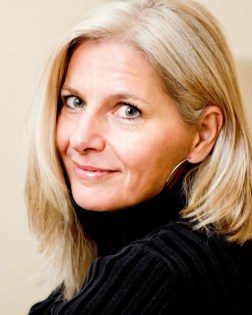
Lee Strauss is the author of A Nursery Rhyme Suspense Series (Mystery Sci-fi Romantic Suspense), The Perception Series (young adult dystopian), and young adult historical fiction. She is the married mother of four grown children, three boys and a girl, and divides her time between British Columbia, Canada and Dresden, Germany. When she’s not writing or reading she likes to cycle, hike and practice yoga. She enjoys traveling (but not jet lag :0), soy lattes, red wine and dark chocolate.
She also writes younger YA fantasy as Elle Strauss.
November 27, 2015
#WomenofSciFi – Interview with Kim Wells
Interviewing Kim Wells honestly feels a little bit like a cheat. She and I have become good friends since we both appeared in The Future Chronicles and have been working together on a number of projects, including the newly released UnCommon Bodies. Kim is always enthusiastic and so positive, I kind of wonder if she doesn’t secretly have a Gimp in her basement to take out her frustration on. If you haven’t read her work, she’s as talented as she is awesome, and that’s saying a lot.
PK Tyler: What brand of science fiction would you say your work falls under, in general.
Kim Wells: I call all of my work Magic Realism with a Southern Slipstream flair. That’s because, honestly, I just write what I want to read, and it’s all in there. For now, the sci-fi I’ve written has been very cyborg-speculative medium science. It’s not hard science, especially, although I did take care to make sure my science checked out on the stories, because I hate it when the science is stupid. I research the heck out of the smallest of detail, just for a passing paragraph.
I think I need a new category.
PKT: Religion and Myth plays a strong role in your work. Why is that?
KW: I would say that I am a Jungian at heart. I believe that we have this core of mythos that speaks to us all as humans, and because of that, I’m hugely fascinated with how looking at mythic, balanced, older stories can mesh with what we know today about humanity. The collective unconscious wants certain stories told, because they can teach us how to get through the messes we make, and how to keep pushing forward into a beautiful, wise place, instead of muddling through in the mistakes of the past. My own muse likes to force me to think about these things at 3:00 am, so I just follow her lead or else she’ll keep me up all night thinking about song lyrics.
I’ve also gone through some deeply religious (unconventionally so) phases, and learned a ton about goddesses, and multi-cultural myth, and how that shapes everything about contemporary culture. We know a lot in Western culture about the Greek and Roman gods, and that’s cool, but it’s going to be an important task to bring non-Western myth into the mix, and I’m trying to do that, respectfully. It’s a fine line, though–I don’t want to appropriate anyone’s story, but I do like telling them. Nowadays, I’m just a pop-culture nerd who tosses out a Buffy reference at the same time as I debate whether we’re all part of a computer simulation and what Monty Python would say about that.
PKT: Is it difficult to weave together sci-fi works about technology and the world of more ethereal concepts?
KW: Not at all. Sci-fi is about humanity. Even if it’s octo-aliens on a planet made out of liquid diamonds, it’s still the human story. And those ethereal concepts–love, peace, war, kindness, cruelty–those are all the stories we’re trying to figure out. From Day One, when an artist stuck her hand into some paint and put that hand print on a cave wall, we’ve been trying to tell that same story–the connection between humans reaching out. The science just makes it more full of blinky lights and robot tech.
PKT: You’ve been in a number of group projects including The Future Chronicles, UnCommon Bodies, and Apocalypse Weird. What is different about these projects from writing a novel? Do you enjoy them more or less?
KW: I have really enjoyed the collective group writing process with the writers I’ve met in these three different online communities. We’ll throw out a song lyric and half of us will work it into a storyline, or say, “Hey, I’ve got an idea for a character that does XYZ,” and someone will say, “YES,” and then you see it later in their published story. All of the people in these groups are trying to build great stuff–quality editing, quality graphics, beautiful prose and stories. And I find that inspiring, and awe-causing, and humbling. Writing a novel all by yourself without groups to help can be hard, and lonely, and there’s no feedback. Just asking friends or family for help doesn’t work, because either they don’t feel qualified to comment or they just say, “Yay I like it,” and you get no improvement. I wrote Mariposa over the course of about 10 years, and kept putting it down. My friend Chris Cox told me to get back to it, and invited me to some author groups, and then his writing was so bold and unapologetic that I just had to finish it. Until I found the collective group of thinkers and philosophers in the online authorial world, I was just a dabbler. Now I really feel like I’m getting my feet under me, and it’s all thanks to the support and community of those groups.
PKT: You’re also spearheading the Independent Women Anthology project coming this Spring. What made you want to do something like this?
KW: I actually published an online magazine for years and years–since 1998–where I found beginner writers and poets and scholars and published them, sometimes for the first time ever. Women Writers: A Zine was one of the first online communities for women that I ever saw, and I made it happen! And it was great. It just got kind of hard to keep up with the HTML changes on the site, and my other commitments got too big, so I stopped actively publishing it. There wasn’t an indie publishing world on Amazon then, so creating your own site was the only way to do it. But it didn’t pay (at all, honestly)–it was all a labor of love. So it seemed like a no-brainer to do something like that when I saw anthologies like The Future Chronicles, and Sam Peralta’s way of passing on the buck and helping out other indies. I thought I could do that, too, but with my favorite focus of women writers and feminist theory.
You know how Ruth Bader Ginsberg said that there would be “enough” women on the court when there were nine? And then people said, “Wow, how could you imagine that?” and her response was, “There have been plenty of times when there were nine men, and no one blinked.” That’s kind of how I feel about publishing an all female feminist-womanist centered anthology. Yes, there are great male writers, and I love many of them. But a lot of times, in anthologies, there are one or maybe two female writers, and people think that’s enough, if they think about it at all. And sometimes people say, “Well, I don’t think gender matters–if you’re a great writer, the story matters.” And yet, that erases the very real things that do still matter about gender. There are a lot of voices that aren’t getting heard, and they deserve nine spots on the court sometimes. I also want this anthology to be a very inclusive space of gender, and multi-ethnic, and multi-culture, and different abilities, you name it. I really think I might have a great new mega-supernova hit on my hands soon.
PKT: What do you feel is the role of women in science fiction? Are we just writers, or is there really a difference between women and men when it comes to sci-fi?
KW: First and foremost, we’re writers, and the story matters the most. But there can be a difference between women and men because we’ve all seen different angles, different lenses or perspectives, on the stories we tell. Like–have you ever wondered what women space colonists might bring on the space-arc of the future? Would they secretly squirrel away a long-loved family quilt, or a scrapbook of baby pictures? What kind of story might that be and how would it potentially be different from something a man might bring? And what if the alien culture we encountered valued quilts and family stories, and no one had ever thought to bring those along? The gap in communication could cost everything.
In the 1970s, with Second Wave feminism, there was a lot of talk about the “woman’s way of knowing” the world. Yes, there must be a lot of overlap, but there has been and probably still will be a difference in what we value, what we learn. And sci-fi is the best ever place to figure that out, because you can imagine anything.
It’s not that those things are the only stories women have to tell, but mostly, they aren’t told. And they’re just as important as the terraforming, and the alien war, and the cyborg awakening. All of those stories need to be told.
PKT: When you think back about your career so far, is there anything you’d do differently?
KW: The main thing I would do differently would have been to go a little slower on the editing/publishing process last Fall with Mariposa. There are a few things in there that I would do slightly differently. I think the story is amazing, still. And I love it. But I would have promoted it better, and built suspense longer, and maybe released more than one story at a time.
The only other thing I would have done differently was put a sexy naked man chest on the cover, because those really seem to sell. (Not really. But maybe.)
PKT: Tell us about your next project “UnDead Cyber Girl.”
KW: She is a really neat character. The short story in UnCommon Bodies is just the first encounter with her, and she’s this mashup of cyborg and supernatural and human trying to figure it all out. And she’s finding who she is, what she thinks about the world–like she’s been reborn–and then she has to find her tribe, and figure out what she’s there for. Is she really a cyber-assassin, or will those skills be used to save/protect/heal others?
I wanted to write a Cyborg story, and I tend to search images online for inspiration. And I found this one in Deviantart that was so compelling that I had to write that story. I do that a lot–search stock photos and think, “Ooooh. There’s a story.” I guess that makes me a method actor?
PKT: What inspired you to write a zombie/cyborg mashup?
KW: Cyborgs are always hard sci-fi, robots, futuristic, etc. But the cyborg is also part human. And humans have this zombie metaphor too–the ultimate consumer, blasting into crowds and ignoring everything but that insatiable need to have more, more, more. Cyborgs are almost always depicted as more robot than human, but I think they’ll have (we do have, by the way–cause most of us are already cyborgs of a sort) human weaknesses and desires. And that’s what I want to explore with Undead Girl.
There’s this quote from one of my favorite ever sci-fi writers, James Tiptree, from a story she wrote called “The Girl Who Was Plugged In“ (she actually wrote it as Alice Sheldon, one of her other pen-names).
Listen, zombie. Believe me. What I could tell you—you with your silly hands leaking sweat on your growth-stocks portfolio. One-ten lousy hacks of AT&T on twenty-point margin and you think you’re Evel Knievel. AT&T? You doubleknit dummy, how I’d love to show you something.
Look, dead daddy, I’d say. See for instance that rotten girl?
In the crowd over there, that one gaping at her gods. One rotten girl in the city of the future. (That’s what I said.) Watch.
And Tiptree, geniusly, explores the ideas of women’s connection to technology, and their bodies, and it’s from the point of view of the female-gaze, looking out at consumer culture and watching it. And that’s what I want to do with Undead Girl. Think about all those issues and write my version of that story.
PKT: What idea of someone else’s do you most wish you had thought of?
KW: Is it too late to claim that Harry Potter kid? That would be nice.
Fast Five:
You’re in an air strike! Quick, do you grab a sonic screwdriver or a laser gun?
KW: Laser gun, but also, a machete. Because when those things in the planes land, I’m gonna need some help with the hand to hand.
If you had to pick, which would you rather mate with, non-humanoid alien or robot?
KW: This is a really hard question, by the way. At first I wanted to say sexy robot, a la cyborg Replicant. I mean, who wouldn’t want to program in your secret desires to a Rutger Hauer bot in his prime? Or even Sean Young then? (growl purr). But then I thought that maybe the aliens would have empathic emotions and be able to feel your own pleasure and then expand it exponentially, so that it would be the perfect, best experience ever, mind-blowing, galaxy defining, supernova causing… but then I realized that the aliens would maybe have tentacles, so I decided robot.
Dogs or Cats?
KW: Cats. Definitely. I like dogs, but cats & I grok each other.
(note from Pav – OMG you said grok! I love you even more now!)
Do you write with music on or silence?
KW: Both. Sometimes, if I am in the mood for it, I make a playlist with the perfect music and play it quietly. But sometimes, I just need it to be quiet.
Green Thumb or Black Thumb?
KW: Completely black, with the chlorophyll laced blood of many poor, poor plants. I would love to be an ethereal plant goddess, but here is one of those places I’m definitely more cyborg.
About Kim Wells
 Kim wrote her first critically acclaimed (if you call her fourth-grade teacher a critic, and she does) short story when she was 9 years old. It was about Christmas in a Cave, and it featured such topical, ground-breaking subjects as homelessness & cave dwelling. She’s been writing ever since. The state of publication depends on who you ask.
She has a Ph.D. in Literature, with specialties in American Lit, Women Writers, Feminism, Sci-Fi/Fantasy & Film Studies but please don’t hold any of that against her. She teaches academic writing and how to read literature at a university in her hometown and tries to convince college students that it really is cool to like poetry.
She lives in the South, has twin children (one girl, one boy) and a husband who is the model for all her best romantic heroes. She also has two cats–one black and sassy, one stripey and fat, and also kinda sassy. Her website.
November 13, 2015
#WomenofSciFi – Interview with E.E. Giorgi
E.E. Giorgi is as eclectic as she is talented. She grew up in Tuscany, writes science fiction, and even creates amazing visual art (seriously, check it out). A self-publishing dynamo, E.E. doesn’t miss a beat when it comes to being on the cutting edge of both the science fiction genre and marketing. I don’t know about you, but I can’t wait to get to know her better!
PK Tyler: Unlike most of us fiction writers who just make things up, I understand you’re an actual bonafide scientist! What’s your area?
E.E. Giorgi: Haha, well I do make things up a little… but I take a lot of inspiration from Mother Nature, viruses and genetics in particular. My research field includes HIV vaccine testing, immunology, and cancer genetics.
PKT: How important do you think real applied science is to science fiction?
E.E. Giorgi: All my books have some real science foundation. I can’t write a book without doing extensive research–I guess for me it’s an occupational hazard. But I also love to read books that teach me stuff I can later look up and find out it’s real. Yes, it’s fiction, but even in fantasy when authors create new worlds, they apply rules and logic so that to the reader it all feels consistent. The same should go with science fiction. And it’s amazing the amount of inspiration one can draw from real science. I wrote my first book, Chimeras, after I learned about epigenetics and pseudogenes. Pseudogenes are bits of inactivated DNA we inherited from other species–for example, about 10% of our DNA originated from viruses. I started thinking about all these inactivated genes we share with lions and bears and mice and couldn’t help but think … what if these genes became activated again?
PKT: Your work has been described as “Hard” sci-fi. how do you feel about that genre designation? Does it fit how you see your work?
E.E. Giorgi: Yes, because, like I said, I always draw inspiration from real science. Maybe my last series, the Mayake Chronicles, is “softer,” but the thrillers are definitely “hard.” Chimeras and Mosaics have a lot of genetics, and Gene Cards looks at genetically modified foods.
PKT: Gender is something we talk about in terms of STEM education all the time. How important do you think it is in terms of fiction and writing?
E.E. Giorgi: This will sound highly unpopular, but I’m afraid we have the same gender bias in writing, too. I don’t want to say more because I know I’ll sound sour. I’ll just tell you one little anecdote about gender bias in STEM. In my book Chimeras, I have one woman scientist and one man scientist. The man is arrogant and pompous. The woman is a smart, intelligent scientist who, at some point, gets verbally abused by the man scientist. I sent the book to a book blogger and she found that all scientists in my book were portrayed as pompous and egotistical. In her review she said she couldn’t understand why I would portray all scientists like that since I’m a scientist myself. So, you see, it’s more than just a bias. It’s the way we look at things and see what we choose to see while neglecting the rest.
PKT: I’m currently reading Akaela and blown away by how you’re mixing so many elements of science and characterization together. Can you tell us about how you build your characters?
E.E. Giorgi: Thank you! So happy to hear you’re enjoying it.  I think a lot about my characters beforehand. They usually start as “voices” in my head and I let them talk for a while before writing them down on a page.
PKT: From The Gaijin Girl to Apocalypse Weird: Immunity you seem to have a theme of medical science fiction running through your work. What about this particular subgenre appeals to you?
E.E. Giorgi: And don’t forget my thrillers; they all revolve around medical research. My research touches hot topics like vaccines, genetics, and cancer. It’s easy to see how things could possibly go wrong in any of these fields. No, it’s not that I don’t trust science. I love science. It’s not just my job, it’s my life, my way of thinking. It teaches me to be humble, to keep asking questions, to never feel that one answer is the final answer. But I also see the human nature behind the scenes. Scientists are passionate people. But they can also be greedy and blinded by certainties. That’s the part I usually like to exploit in my books. I also love to use some of the amazing stuff I learn about genetics and viruses in my plots. Viruses and genes are some of the coolest things on Earth. They’re a constant source of inspiration.
PKT: You’ve been in a number of Anthologies and Collective Projects (The Future Chronicles, Apocalypse Weird) but I have to say, the most unusual to me was Tails of the Apocalypse. Can you tell me about the project and your story?
E.E. Giorgi: I’m so excited about this project. It’s Chris Pourteau’s brainchild, and, I have to say, he’s been absolutely brilliant recruiting top-notch writers, promoting, and applying his fantastic editing skillz. You are right that it is unusual, and to that I’ll add original and unique. So much so that when Chris first asked me to be part of it, I immediately thought, “Oh, that would be so cool, but I’ve never done anything like this before.” The only book I’d read written in an animal’s POV was The Art of Racing in the Rain, which, I confess, I found a little lame (I know, I know, everyone loved that book, so I’m the weird one). But then I read Chris’s story Unconditional and I was blown away. All stories in the anthology are fantastic, starting from the very first, the Poetry of Santiago, by Jennifer Ellis, which takes you to my home country, Italy, in a sentimental journey through the streets of Pompei. I’m extremely thankful to Chris for making me part of this.
PKT: Do you ever consider genre-hopping? What would you write if you did?
E.E. Giorgi: Literary. I would love to write a literary novel. How about “historical literary infused with magical realism a la Gabriel Garcia Marquez?” That’s got to be a genre, right? 
October 30, 2015
#WomenofSciFi – Interview with Ellery Kane
Ellery Kane does sci-fi dystopian her own way. Her Legacy series is a dark adventure that never leaves you bored. Her series has won several awards, including the Gold Medal in the Independent Publisher Book Awards, young adult, eBook category. To find out more about Ellery, her work, and read her awesome blog, check out http://ellerykane.com/.
PK Tyler: Ellery, you’re a trained psychologist and describe yourself as a professional voyeur. How do you think that informs your writing?
Ellery Kane: Many of the skills essential to the practice of psychology also come in handy as a writer. As a psychologist, I often rely upon my powers of observation to tell me things about people that others might overlook. For example, there was the inmate who held his face in his hands, grimaced, wiped his eyes, and told me he was devastated by his crime. On the surface, he seemed to be crying. Surely, he was remorseful. But look a little closer—no tears. Equally important, in every forensic evaluation, I spend at least 90% of my time just listening. Listening and looking—those are simple but fantastic tools for a writer. Those two skills have helped me to develop nuanced characters and to create realistic dialogue.
PKT: Kirkus notes that your books deal with issues of child abuse and PTSD. What made you decide to tackle such difficult and emotional topics?
EK: As a forensic psychologist, I’ve been fortunate to have had the experience of working with all sorts of victims and perpetrators. And for some, in their lifetimes, they will play both roles. No matter the population I work with, the legacy of the past is a constant refrain. Where do you come from? What have you endured? What have you survived? Some struggle to get over the past; some learn from it; some are changed by it; some are haunted. It was that idea, what we do with our pasts, that inspired me. Almost all of the heroes in Legacy are shaped by trauma. But, I also wanted to write a story of hope where the characters transcend their pasts.
PKT: Can you tell us about the science in the Legacy series?
EK: The emotion-altering medications (EAMs) in Legacy are inspired by today’s psychotropic medications, and, in describing their properties, I attempted to make the science as real as possible. For example, Emovere, a drug that is intended to reduce fear and suppress anxiety, targets the brain’s amygdala. We know that the amygdala is essential for emotional expression. Overstimulation can lead to outbursts of fear and aggression; whereas destruction of the amygdala can cause emotional flatness and apathy. Substance X, a particularly nasty EAM, inhibits empathy by acting on the supramarginal gyrus, a little spot at the junction of the parietal, temporal, and frontal lobes. When that area is impaired, research has shown that subjects are not as skilled at understanding and appreciating the emotions of others.
PKT: In the Legacy series, emotions can be controlled with a pill. What inspired this plot idea? It’s extremely original and unique.
EK: In imagining Legacy, I was inspired by my day job as a psychologist, where I am often face to face with individuals who are eager, sometimes desperate, to alter their own emotional states. Just as Lex observes in 2041, “It seemed that almost everyone was eager to feel or notto feel something.” Those words are as true today as ever. Don’t get me wrong—for many people, medications like antidepressants and antipsychotics are necessary for their recovery. But, for others, pharmaceutical companies cash in on their desire to quickly and easily alter unpleasant emotions, the longing for a quick fix. As a psychologist, I often wonder about the implications of the longing for a quick fix, so it wasn’t a stretch to create Legacy’s world, where Zenigenic, an up and coming pharmaceutical company, develops a line of Emotion Altering Medications (EAMs).
PKT: The Legacy series is almost complete. What do you plan to write next?
EK: The third book in the Legacy Trilogy—Revelation—is expected to release in January. But, I may not be done with these characters yet! I am currently working on a yet-untitled prequel, a novella from Quin McAllister’s point of view.
PKT: What advice do you have for other girls or women considering writing in the science fiction genre?
EK: No matter the genre, I have the same advice for any aspiring writer:
Read voraciously.
Write something every day.
And the scariest part—share your work with others, accept criticism, and develop a thick skin. I’m still working on that one!
With that said, I also love this quote by R.L. Stine:
“People say, ‘What advice do you have for people who want to be writers?’ I say, they don’t really need advice, they know they want to be writers, and they’re gonna do it. Those people who know that they really want to do this and are cut out for it, they know it.”
PKT: What has had the most significant impact on your writing in the last year? Why?
EK: This may sound strange, but writing has had the most significant impact on my writing. Before spring 2014, I hadn’t written creatively in at least eight years. Starting up again has been a bit like returning to the gym after slacking for a while. At first, things go very, very slowly, and you struggle a lot. You’re not very good at this anymore. But then, your writing muscles get stronger, and you start building up speed and skill. With each book I’ve written, I’ve seen significant improvement in my writing.
PKT: What topics are you most attracted to as a reader? Do you read sci-fi?
EK: Since I was a little girl reading Nancy Drew mysteries, I’ve been an avid reader with versatile tastes. I enjoy lyrical and literary writing like Toni Morrison’s The Bluest Eye and short stories by Joyce Carol Oates. On the flip side, I revel in a good mystery or thriller like those by James Patterson, Stephen King, and Sue Grafton. And, like my main character, Lex, I am a huge fan of Mary Oliver’s poetry. Lately, I’ve been reading a lot of young adult and new adult fiction. Some of my recent favorites are The Thief of Always, Divergent, The Hunger Games, and The Sea of Tranquility.
PKT: If you could be a fictional character for the duration of one book, who would you be and how would your personality affect the plot?
EK: This is a tough one! Out of the books I’ve read recently, I’d say, Tris from Divergent. I love her transformation throughout the series—and hello! she gets to hang out with Four—but I absolutely despised the ending. Without giving away any spoilers, if I was Tris, Allegiant would definitely not be happening. In fact, my sheer horror at the ending to that series was what inspired me to start writing again after my lengthy hiatus.
PKT: First lines are often the hardest part of a book. What’s the first line of Legacy and what are you trying to convey?
EK: “When I last saw my mother, we were standing on the Golden Gate Bridge.” With that sentence, I hoped to establish Lex’s feeling of loss and longing for her mother—a key theme throughout the Legacy Trilogy.
Fast Five:
Would you rather live in the distant future or distant past?
EK: Though I love the romanticism of the distant past, I’d say distant future. I’d miss the modern conveniences way too much.
Do you type, write by hand, or dictate?
EK: Type mostly. Write by hand—scrawl, really—in the middle of the night, when I’m struck by inspiration.
You can bring someone back from the dead—but it can’t be someone you know or in your family—who would you bring back?
EK: Robin Williams, because the world always needs more laughter.
You’re being sent to the moon. What 1 book do you take?
EK: A moon survival guide?
Which is scarier? Snakes or Spiders?
EK: I grew up on a farm in Texas, so I’m fairly comfortable with most critters. I think scorpions trump snakes AND spiders.
About Ellery Kane
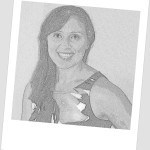 Forensic psychologist by day, young-adult novelist by night, Ellery Kane has been writing—professionally and creatively—for as long as she can remember. Just like her main character, Lex, Ellery loves to ask why, which is the reason she became a psychologist in the first place. Real life really is stranger than fiction, and Ellery’s writing is often inspired by her day job. Evaluating violent criminals and treating trauma victims, she has gained a unique perspective on the past and its indelible influence on the individual. An avid short story writer as a teenager, Ellery recently began writing for enjoyment again, and the Legacy series was born.
Ellery’s debut novel, Legacy, has received several awards, including winning the Gold Medal in the Independent Publisher Book Awards, young adult, e-Book category.
October 16, 2015
#WomenofSciFi – Interview with Patrice Fitzgerald
Patrice Fitzgerald is an author, attorney, and singer. She’s also recently taking on publishing other writers through her boutique press eFitzgerald Publishing, LLC. A very busy woman, Fitzgerald is a complete inspiration to the rest of us in the indie publishing industry with her amazing talent and dedication to supporting her fellow authors. To find out more about her and her stories you can sign up for her newsletter here.
Pavarti K Tyler: You’ve written a number of stories in Hugh Howey’s Wool Universe. What was it about his series that inspired you?
Patrice Fitzgerald: Hugh Howey and WOOL were my gateway drugs into science fiction writing. Though I read a whole lot of Heinlein, Clarke, and Bradbury in my youth (after jettisoning the notion that if it had “science” in the name, it must be boring and only for boys), I had never written in the genre.
I’ve always been attracted to speculative fiction writing and slightly zany plots, and the larger-than-life aspects of Hugh’s Silo Saga pulled me in and left me saying, “Hey, I want to do that too!” And when he encouraged me to pursue my first story idea, with his permission and express instructions to publish it and charge for it, I did.
PKT: You’re the power behind the Dark Beyond the Stars anthology. I noticed that the collection included exclusively the work of women science fiction authors. Was this a conscious choice?
PF: We certainly are getting a lot of attention because of that aspect of the collection! In truth, we were writers who knew and respected one another’s work, and we thought it would be fun to put out an anthology together. We hit on the notion of using space opera as a broad theme because it gave us a huge canvas on which to create. There was never a moment when we thought much about our genders. I suspect you could find quite a few story collections that included only male writers.
PKT: What inspired you to put together your own anthology collection?
PF: A lot of us have watched the explosion of “Chronicles” titles masterminded by Samuel Peralta, and they are all quality books and lots of fun, so we thought we’d give it a try.
PKT: How was the experience of working as curator as opposed to author different?
PF: Since this first one was more collaborative, I did more gentle nudging of fellow authors and less curating. We have a whole series planned now, which will allow me to do more in the realm of choosing stories from those that are submitted.
PKT: What about science fiction appeals to you as an author? And as a reader?
PF: The same aspect appeals to me both as an author and a reader—the otherness. The ability to create a newly imagined world and populate it with people (or creatures) and stories. As an author, to do this in short story form is tremendous fun and a real challenge.
PKT: You have books in genres from romance to thriller to science fiction, and now I see you’re working on a cozy mystery series! What do you think about the advice that you should stick to one genre or risk alienating your audience?
PF: For the new world of indie writing and indie authors, I think the rules are different. Part of what appeals to our fans is the fact that they are in close touch with writers on a very personal basis. If they enjoy your writing and feel connected to you as a person, they will typically follow you anywhere. That doesn’t mean that you will sell in every genre, or pull every fan successfully into a new area. But it does mean they are likely to give it a look and try it out.
In the same way that I feel in awe of and grateful for the chance to read authors like Hugh Howey, Annie Bellet, A.G. Riddle, Jennifer Foehner Wells, and David Simpson, there are some readers who feel that way about me. Which still astounds me!
PKT: Lately I’ve been seeing you post about a new project tentatively titled Star Crimes. What can you tell us about it?
PF: My bouncing baby book! So fresh I just started it tonight. It’s going to be a very cool sort of space investigator story including mystery, some paranormal abilities, intergalactic space wars, interspecies relations, and who knows what else. At least, that’s what I think it will include. We’ll see! Working title is STAR CRIMES I: Airless.
PKT: What draws you to space opera as a subgenre of science fiction?
PF: I did notice that space opera is getting hot right now, with the new Star Wars movie coming out. But I think, too, that we have dwelled in the land of post-apocalyptic and dystopian books set on a forbidding future Earth for a while, and perhaps it’s time for a change. Something out there is calling to us, and encouraging writers to boldly go… (you know the rest). I know you’re humming the theme in your head now!
PKT: You also sing, and have quite the range, from jazz to opera. How do you find this artistic expression is different from that of an author?
PF: Interesting question! Singing is immediate and visceral… your body is literally your instrument. And your audience is right there at the time you are creating the music for them. Writing is more solitary, long-term, and intricate. But they both involve sharing yourself, communicating, and producing pleasure in both the artist and the audience.
PKT: I heard a rumor that you have other (not-so) secret pen names. What made you decide to write under pen names instead of keeping all your work together?
PF: Well, mostly because my pen name stories are so racy! (Though it’s fair to say they are sexy mostly in the context of Regency-era historical fiction… and are not at all shocking to your typical 21st Century reader.)
I only started writing them three months ago, for fun. But they turned out to be easy, fast, and lucrative. So I’m going to see if I can juggle both for a while.
Fast Five:
PKT: Cowboys or Aliens?
PF: Aliens. Though cowboys are cool. How about cowboy aliens?
PKT: Would you live in a world that was SteamPunk or CyberPunk?
PF: Tough one. SteamPunk.
PKT: Analogue or Digital?
PF: Definitely digital.
PKT: You get one gun. Bullets or Lasers?
PF: Can I have a stun gun that shoots out a quick-acting but temporary paralyzing agent? And also makes the bad guys float in some kind of anti-gravity cloud so they are easy to transport? And maybe smells good. Something slightly spicy but not too sweet. Yes. That kind of gun.
PKT: Would you rather fight Orcs or Terminators?
PF: I think I’d go with a Terminator who looks like Schwartzenegger did a few years ago when he showed up nude in that very first movie. I wouldn’t fight him. I’d get him drunk and we’d have a few laughs. All very civilized.
About Patrice Fitzgerald
 Patrice Fitzgerald is the bestselling author of a number of books and short stories in the science fiction and speculative fiction realms. She’s the Series Editor for the BEYOND THE STARS space opera anthologies, the first of which, “Dark Beyond the Stars,” was released on August 24th, 2015… her birthday!
Patrice is also an attorney with a background in intellectual property. She heads a boutique publishing company featuring mystery, romance, fantasy, and nonfiction books. She gives courses to those interested in self-publishing, and in April of 2016 she will be presenting the first Big Island (Hawaii) Writers Retreat and Conference.
In her spare time, she’s a singer, performing jazz, Broadway, and opera with her husband. She lives on the water in New England and is thrilled to be making a living as a writer.
September 24, 2015
#WomenofSciFi – Interview with Theresa Kay
Theresa, welcome to my shiny new blog! I’m so excited to feature you in my Woman in Science Fiction series. I’ve had the privilege to read both Broken Skies and Dark Expanse (available for free here) and definitely agree with reviewers who say you are one of the up and coming authors to watch in the science fiction genre!
PK Tyler: Broken Skies deals with aliens coming to Earth. What inspired your depiction of aliens?
Theresa Kay: My aliens are humanoid mainly because I knew some of them would need to blend in with humans for over ten years before the collapse. The “pre-arrival” teams, as Flint called them, were made up of E’rikon from the less brightly/strangely colored family lines so they could pass more easily as humans. The features that set the E’rikon apart from humans (the scales on their backs and their eye and hair color) are somewhat inspired by birds. In fact, you could consider their various colors plumage.
PKT: Book Two, Fractured Suns will be released in September! Congratulations! What can you tell us about it?
TK: I can’t say a whole lot without major spoilers for Broken Skies, so I’ll just say that Fractured Suns picks up a few weeks after Broken Skies leaves off, and it’s told partially in Lir’s POV.
PKT: These books are in the alien science fiction genre. What inspires you about this subgenre and the alien theme?
TK: I’ve always been interested in science fiction in general, and I find the idea that there could be other intelligent lifeforms out there particularly fascinating. I’ve explored the idea of both friendly aliens (the E’rikon from Broken Skies) and hostile aliens (the Greesal from Dark Expanse/Bright Beyond) and have enjoyed writing them either way.
PKT: You credit The Rebel Writers for helping you on your path to success. Here at Kōsa Press, we’re a collective of like-minded authors working together for mutual success. I wonder if The Rebel Writers are similar. What is the approach of The Rebel Writers and what have you learned from working with other authors?
TK: The Rebel Writers and I came together almost by pure chance, and I couldn’t have asked for a better group of people to share my writing journey with. Basically, when our group started we were all at the same point: finished or almost finished writing a book. We cheered each other on to the finish line, offered critiques, beta read for each other and motivated each other in general. After that, as far as actual publishing went, we had no idea what we were doing. So, starting with Regan, we just began putting stuff out there and then came back to the group and shared what did and did not work for us so that the next Rebel to publish could benefit from the knowledge. As we all learned the business, the dynamic of the group changed a bit, but we still actively support each other both in our writing and personal lives. The Rebels are more than just my writing group, they’re some of my best friends.
PKT: On your blog you state, “The most common comment I get on it is: ‘I don’t typically read sci-fi, but I loved this.’ Why do you think this is? What about your work reaches beyond the limits of sci-fi or do readers not completely understand what science fiction really is?
TK: I think the reason I got that particular comment about Broken Skies is because it’s a YA series and the words “science fiction” tend to make readers think of spaceships and intergalactic battles and not post-apocalyptic stories set on Earth. That said, there’s a lot more YA sci-fi out there now than when I started writing Broken Skies (or when I wrote that “about me” section, lol), and it’s become a more popular genre in YA, so I don’t seem to hear that comment as often.
PKT: The Dark Expanse books have a strong military sci-fi theme. This is unusual for women sci-fi writers. What drew you to this aspect of science fiction?
TK: I’ve always read a variety of genres, but I think what drew me to this aspect of science fiction was actually the main character. Eva was one of those characters who popped up out of nowhere and started chattering away. For me, writing her series is more of a low pressure, “for fun” project than my others, so I just let the story go wherever Eva takes it.
PKT: What other projects are you working on? Have you done any genre jumping or are you solely focusing on science fiction at this point in your career?
TK: Speaking of Eva… My next release after Fractured Suns will be Bright Beyond Episode 3.Since I’m writing that series for fun more than anything else, it has been put on the backburner for a while now, and I’m anxious to get back to it. I’ve also begun brainstorming and doing some rough plotting for Shattered Stars, the third and final book in the Broken Skies series. There are some other stories knocking around in my brain too, including a horror/urban fantasy mash-up, a contemporary romance, and more sci-fi, but I’m not sure which one I’ll get around to finishing next.
PKT: How do you know when you’re ready to move onto a new subject for your stories?
TK: I tend to listen to whichever character is speaking the loudest at the time, so sometimes I end up working on more than one project at a time.
PKT: What system, task, or tool has had the greatest impact for reaching and maintaining your audience?
TK: Social media in general and particularly Goodreads, Facebook, and Instagram. Bloggers have also been essential in helping me get my books out there, along with some really enthusiastic readers and fans.
PKT: What’s the most important thing you’ve learned over your writing career that you’d like to share?
TK: You can’t edit what isn’t written. I struggle the most with first drafts (as do a lot of writers), so I constantly have to tell myself to just get the story down and then I can go back and fix things later.
Fast Five:
PKT: Would you join the Browncoats or Rebel Alliance?
TK: Browncoats.
PKT: If you could time travel in only one direction, would you go forward or back?
TK: Back.
PKT: Do you prefer swimming or hiking?
TK: Hiking.
PKT: Aliens or Sea Monsters?
TK: Aliens.
PKT: Would you rather live in a world with no power or a world with no books?
TK: No power.
About Theresa Kay
 I’m utterly awful at writing these things. No, really. I can write thousands upon thousands of words about fictional people, but writing about myself is like pulling teeth. I guess if I have to, though…
I’ve pretty much always wanted to be a writer. As far back as I can remember I was scribbling out words and asking teachers, “What’s thelongest it can be?” I still have the very first story I ever wrote, a hand-written fantasy story that I wrote around first grade. My writing has come a long way since then (thankfully), but it’s still a fun thing to look back on.
Probably the thing that most got me into writing was reading. I’ve been an avid reader from a very young age, and I always devoured as many books as I could get my hands on. And I still do. If you need a book recommendation, I’m your girl. Just give me a genre or an example of a book you liked, and I can normally list at least three books you might enjoy. Although I read nearly every genre, I tend to write in the realm of speculative fiction with an emphasis on sci-fi and urban fantasy.
September 11, 2015
#WomenofSciFi – Interview with S.J. Pajonas
Stephanie J. Pajonas is the author of the post-apocalyptic Japanese culture inspired science fiction series, The Nogiku Series. She has also written a number of other Japan-centric works across multiple genres. I read the entire Nogiku series in a week, that’s four books. I just couldn’t stop reading them! They’re that good. I’m thrilled to have Stephanie here with us today to talk about her work, her process, and the future of science fiction. To find out more about Stephanie visit her website and sign up for her newsletter. You’ll get a free book!
Pavarti K. Tyler: When did your fascination with Japan begin?
Stephanie J. Pajonas: A long time ago, in the 90s, when I saw Princess Mononoke in the theater and met a good friend of mine who had just spent many years living in Japan. A lot of my love for the country grew from there, and I have studied Japanese culture and language ever since.
PKT: Between September 2013 and May 2015, you wrote four full-length science fiction novels. How do you avoid sacrificing quality when you produce so much work so quickly? What’s your process?
SJP: Well, technically, I wrote them between early 2011 and 2015. I finished the first couple of drafts of Removed by November 2011 and went straight into writing the second book of the series, Released, while I looked for an agent. I did eventually find an agent I worked with for over a year. During the time we were on submission, I finished drafts of books 2 and 3, and had ideas for book 4. It seems that once the floodgates of ideas were open, I couldn’t stop them! It was in the spring of 2013 that I decided to part ways with my agent and self-publish, and the first book was published in September 2013. It took me a long time to write Removedin retrospect because I discovery-wrote it. The novel went through nine drafts before it made it to ebook! Nine. I now write faster and outline ahead of time which helps me produce quality work quicker.
PKT: Your Kami No Sekai stories all focus on the idea of inanimate objects playing a role in their owners lives. This reminds me a lot of some of the surrealism/magical realism fiction that came out of Japan in the 90s from authors such as Haruki Murakami and Banana Yoshimoto. Can you tell us what inspired this series?
SJP: First, I’m a huge fan of Murakami and Yoshimoto and have been reading them both for almost 15 years (In fact, I am re-reading Murakami’s The Wind-up Bird Chronicles right now! It’s one of my favorite books). I’m a big fan of the surrealist books and the way that the Shinto religion, Japan’s native religion, puts spirits into everything. It’s so fun and different from Western religions. Much more creative. But I actually got the idea for this series after reading a news story about Baymax, Big Hero Six, and how the Japanese don’t find robots at all frightening because they put a spirit in everything, from trees to rocks to toasters. That led me to believe that those spirits would talk to us and help us if they could, and my idea for the Kami No Sekai series was born! I got the idea for the first story, Rice Cooker Revenge, while cleaning my own rice cooker, and I got the idea for Washing Statue Wanderlust after watching an NHK special on the actual statue in Tokyo. I love writing those short stories and deciding which inanimate object is going to speak next.
PKT: What Japanese author would you recommend our readers check out?
SJP: I actually wrote about 8 Japanese Authors for Beginners on my own blog. But to boil it down, I definitely recommend Haruki Murakami and Banana Yoshimoto, which you have already mentioned here and also some classics like Yukio Mishima and Yasunari Kawabata. There are really so many to choose from. It would be a shame to miss out!
PKT: In the Nogiku series, the entire remaining population of Earth is living under a large, protective dome. How likely do you think it is that Earth will become inhospitable for human life?
SJP: I think it’s likely to happen but not for a thousand years, which is why I set my books so far into the future. I wish I could find the article I read a few years ago about how satellite images of Earth show that the desert has slowly been creeping in on every portion of land. That’s how I got the idea for this future Earth of the Nogiku series. I’m really not sure of the viability of dome living, but it makes for great sci-fi.
PKT: Strong female characters in science fiction are so exciting to find. Sanaa is an exceptional example of this. Is this character based on anyone in your life?
SJP: Nope. She is the opposite of everything I didn’t like about the YA heroines I had been reading at the time. I wanted someone strong (not just kick-ass and willing to wield a weapon), convicted, willing to accept other points of view, and use her brain. I also wanted her cultural dispositions to get in the way of her actions, so mixing Western and Japanese ways was a fun challenge. She is the kind of person I want as a friend, and she has become a fictional one to me over the years. Growing her personality over the course of the series, showing that she grew in some ways and others she did not, was the best part of writing this whole story.
PKT: Jiro is, in my opinion, pretty much the perfect man. He’s loyal, smart, respectful, and a little dangerous. He trusts Sanaa and supports her as an equal. Was this done on purpose?
SJP: Of course! He is also the opposite of everything I hate about the alpha men I see so often in romance. I wanted him strong but smart. Dominating but lenient and respectful. And yes, a little dangerous. I’m not sure there’ll ever be anyone I love in my writing as much as Jiro. I wish I could write him forever. Maybe I’ll have to write Jiro short stories. Hmmmm. That’s a thought!
PKT: Space travel is another topic you touch on in your science fiction work. How likely do you think it is that humanity will travel the stars?
SJP: Sigh. I really hope we make it off this earth someday. It’s a dream of mine to go into space, and I gravitate towards all the sci-fi out there that touches on space travel or colonization. How likely do I think it is? I know the Mars program is starting up, but I honestly don’t think I’ll see it in my lifetime. Maybe my kids will, but we’ll need a big push to get out there. In the meantime, I keep on dreaming and writing!
PKT: On your blog you write a “Full Moon Report.” How much of a role does astrology play in your writing?
SJP: Astrology is actually at the core of everything I write. Sanaa is a Capricorn and Jiro is a Scorpio (a perfect match). I know the signs of everyone in the series. Then in my contemporary romance, Laura is a Sagittarius and Lee is a Libra (Face Time), and Isa is a Virgo and Masa is a Pisces (Summer Haikus). In general, when I get the idea for a new book, I think about how I want the character to be and pinpoint their biggest flaw, then I find the astrological sign they most align with. I work through their strengths and weaknesses from there. When I have signs that clash, it’s even more fun to see how they act towards each other. I’m thinking about astrology for a brand-new book I’m outlining! Astrological signs are the first things I research when I start a new project.
Fast Five:
Would you rather live in Feudal times or Future times?
SJP: Definitely future. I’m all for baths, cars, and hopefully replicators that’ll make dinner for me. Lol.
Which would you do: travel through space or travel through dimensions?
SJP: Travel through space. I’m more interested in what lies “out there” than around the corner.
Would you rather live in a world where everyone sings or where objects talk to you?
SJP: Objects talk to me! I find singing to be grating, especially when I want silence. Just ask my kids.
Your webcam just turned on! What don’t you want us to see?
SJP: A clean house. (I’m a Capricorn. I like everything orderly and neat.)
Which scares you, tentacles or bugs?
SJP: I guess tentacles if I had to choose between these two. They are a little creepy. Bugs don’t bother me. I’m actually very afraid of snakes, to the point of a severe phobia. I can’t even look at photos of them. Ugh. I hate running across them on Facebook. I have muted several friends for posting photos of snakes. It is very uncool in my book!
About the S.J. Pajonas:
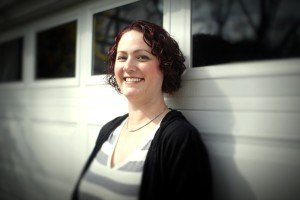 Stephanie (S. J.) is a writer, knitter, amateur astrologer, Capricorn, and Japanophile. She loves foxes, owls, sushi, yoga pants, Evernote, and black tea. When she’s not writing, she’s thinking about writing or spending time outside, unless it’s winter. She hates winter. Someday she’ll own a house in both hemispheres so she can avoid the season entirely. She’s a mom to two great kids and lives with her husband and family outside NYC. They have no pets. Yet. When it comes to her work, expect the unexpected. She doesn’t write anything typical. Find her online at spajonas.com.


