Brett Ann Stanciu's Blog, page 165
June 5, 2016
Alive Within: Generosity
A number of years ago, I was leaving a lake after a day of swimming with my daughters, and the gas tank fell out of my ancient Saab. A friend, also leaving the lake with his two young children, stopped to help. We put all the children in his Subaru, including my baby in her carseat, and he drove to a hardware store where we purchased straps, returned to my car, and then he tied up the tank. The gas tank was still secured in that way, when I gave the car to someone else.
The following summer, my baby had an allergic reaction at their pond, necessitating a terrifying ride to the ER. While it seemed my life was always in crisis around these folks, their barn, greenhouses, and farmhouse a few years later were incinerated by a gas explosion. That was in sugaring season, and one of the last things Kate had done in her kitchen was prepare a meal for my family, a gift during our arduous work season. She didn’t keep that meal for themselves; rather, she retained the presence of mind to have a mutual friend drive up the muddy road to our house the next day and deliver that homemade meal.
When I returned her dishes, with a meal I had made for her family, she exclaimed, “These are my things!” In that fire, she had lost nearly everything they owned.
The truth is, I think, that neither my life nor her life was so very far out of the ordinary; there’s undoubtedly differences in degrees and certainly in details, but all our lives are filled with some kind of traumas and miseries we would never willingly accept.
And yet we do.
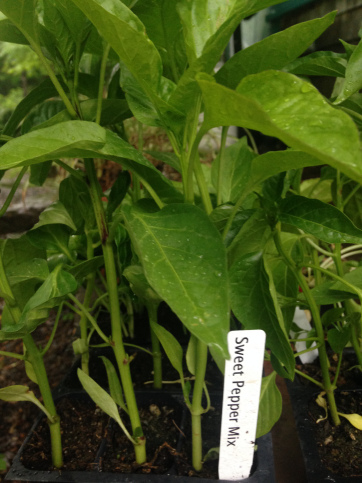
Today, buying pepper plants at High Ledge Farm, their greenhouses filled with flourishing seedlings, their house beautifully rebuilt, I thought again of the time these folks took to be generous. May their gardens grow well this year.
There… was my answer for why the homeless guy outside Gillette gave me his lunch thirty years ago: just dead inside. It was the one thing that, poor as he was, he absolutely refused to be.
– Sebastian Junger, Tribe: On Homecoming and Belonging
Woodbury, Vermont



June 4, 2016
Go For It, Kiddos!
Not only the season of popsicles and swimming, summer for 11-year-olds is truly Trampoline Season. About a month before my daughter’s birthday, I inquired at a local on-line forum if anyone had a trampoline no longer in use. Almost immediately, a grandfather at my daughter’s school located a trampoline in a nearby town. And then, as back-up, a few more, too.
The gift was an utter surprise to my daughter, and brought her such joy it made me happy, too.
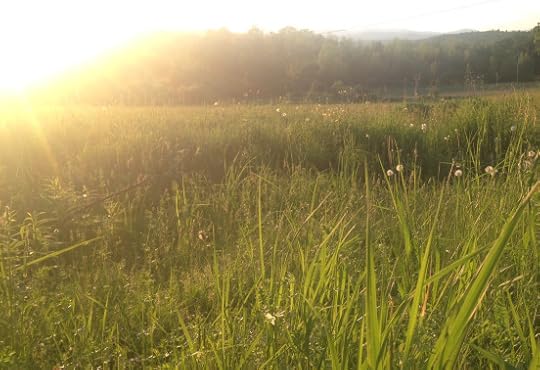
Up above the garden, behind the burgeoning forest of asparagus and weeds, elecampane already massing into its giant summer growth, comes the squeak squeak of trampoline springs, the children launching themselves off our buggy bit of Vermont into their kid version of the wild blue yonder.
There is a place where the sidewalk ends
and before the street begins,
and there the grass grows soft and white,
and there the sun burns crimson bright…
… the children, they mark, and the children, they know,
the place where the sidewalk ends.
– Shel Silverstein, “Where the Sidewalk Ends”
West Woodbury, Vermont


June 3, 2016
Habits of the Heart
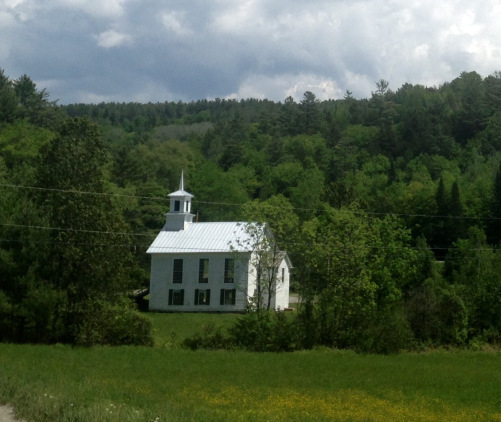
Last night, at a school board retreat, our moderator brought a vase of apple blossoms. How do folks do things in other parts of the world? We sat in our basement school library and ate salad with lettuce from a member’s garden, and fruit and chocolate.
In many ways, I think our local Vermont boards are some of the few remaining hold-outs of democracy in America. We follow Robert’s Rules of Order; the work we do is legally-binding and keeps the school running. Every two weeks, I sign off on every dollar spent. But the work of a school board – like a family – is also dialogue, and sometimes profound dialogue.
So, when we arrived at the place in the evening where we spoke about holding tension and chaos in our lives, I had plenty to draw upon: mothering, writing, being human….
If we fail to hold tension… creatively, the non-stop contradictions of our lives will frighten us, paralyze us and take us out of the action. But when we learn to hold them in a heart-opening way, they may take us toward something new, from greater inner congruence to the expansion of our own understanding. We are imperfect and broken beings who live out our lives in an imperfect and broken world. The genius of the human heart lies in its capacity to hold tension in ways that energize and draw us forward instead of tearing us apart.
– Parker J. Palmer
Calais, Vermont


June 2, 2016
Tools of the Trade
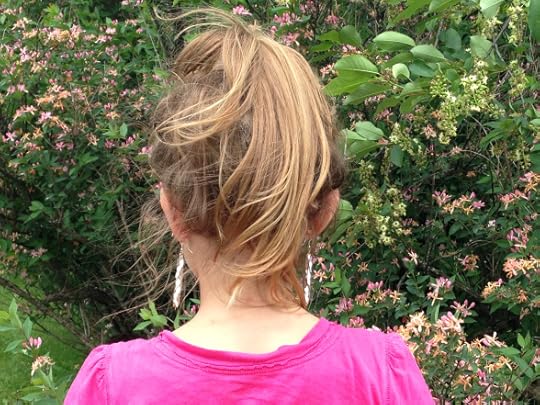
I stumble spelling the same handful of words, stupidly over and over. Fuchsia. Schedule. Traveling. As good, serviceable words, I use them repeatedly, and yet I always catch myself just for an instant. How do those consonants line up in schedule, anyway?
I imagine a surgeon has terminology, methodologies, sterilized silver, to utilize in her trade. Writers weld words with the subtlest shades of meaning: fuchsia in a hanging plant, profusely blossomed; or fuchsia I wrote about this morning, the color of a woman’s silk blouse and hazily diffuse through an unwashed convenience store window, filtered through a storm of twisting snowflakes.
Roseate. Coral. Magenta. Cerise. Bloodshot. Ruby.
Red is the color of blood, and I will seek it:
I have sought it in the grass.
It is the color of steep sun seen through eyelids….
– Conrad Aiken
Hardwick, Vermont


June 1, 2016
Imagine Me Gone
Here’s one reason to read: very late last night, I read through a twistingly wry scene between a sister and a brother. Then, at the very end of the chapter, a few lines tilted the scene into an entirely different perspective. All day, I’ve been thinking over this novel, how those lines are like ones in my own life, rare and yet terribly real. Our everyday realm is bona fide, too, but imagine literature – or life, for that matter – without the raw pulse of emotion, a literal opening of the heart in a world suddenly listening?
He had ceased his fidgeting… The house had gone quiet around us.
“I love you,” he said. “For whatever it’s worth.”
– Adam Haslett, Imagine Me Gone
Elmore, Vermont


May 31, 2016
Tuesday: a Few Miles Travelled
Eleven years ago, I drove away from Copley Hospital in Morrisville, sitting in the backseat of a car – a place I never sit. My six-year-old daughter was in the backseat, too, her infant sister between us, just days old. Although it had rained every single day in May – either a drizzle or deluge – the beginning days of June were sunny and hot. Leaving the hospital, we passed enormous corn fields where emerald shoots of corn had emerged from the dark soil in those few days I had been cloistered.
Sick through almost the entire pregnancy, by the end I was less alive, submerged in that pregnancy’s difficulty. But all that passed immediately with the birth of my second daughter. Within minutes of her birth, I felt myself returning to life.
In all the marvelous experiences of my life, those minutes driving by those June corn fields rank very near the apex: the two children I was meant to have, beside me birthed and healthy, the gloomy raininess of a long hard season dispersed, and all around us, radiant in sunlight, those fertile fields rich with life pushing upward, in those long sweeping rows of gems.
blessing the boats
(at saint mary’s)
may the tide
that is entering even now
the lip of our understanding
carry you out
beyond the face of fear
may you kiss
the wind then turn from it
certain that it will
love your back
may you
open your eyes to water
water waving forever
and may you in your innocence
sail through this to that
— Lucille Clifton


May 29, 2016
The Garden’s Geometry
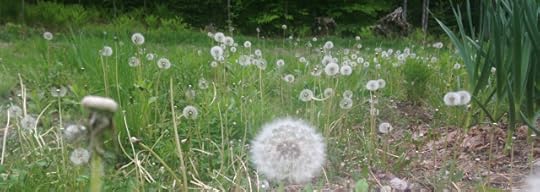
As a new mother, I was surprised by the weight of children; even babies, carried all day long, are heavy, and nursing in the nighttime, my arms often drooped with exhaustion. While my daughters are long since beyond the babes-in-arms stage, all afternoon yesterday I carried buckets of mulch and compost, bent with my hoe and scythe, and tugged my garden back from wilderness into domesticity: for a brief bit of time.
Step away, and the raspberry canes will run their way back. Creeping buttercup – or creeping crowfoot – proliferates knottily.
May is the season of optimism. I’ve planted melons for my watermelon-loving daughter, and promised to water well. The vertical territory of my beds lies low yet; visit in a few months and – like growing children – the vines will be lushly magnificent, the peppers spread out and holding hands, the bachelor buttons in bloom. May, like mothering, is the season of patience, too.
I’ve always preferred the woods in America to the woods where I grew up in Hampshire, which I can never help knowing are the hemmed-in exception to towns and villages and farms. New England is the other way around: a series of clearings in a forest. Keep walking north, and the clearings will shrink, until there are none.
Adam Haslett, Imagine Me Gone


May 28, 2016
Auditory Postcard from Vermont
Last night, hot from bike riding with my daughter and watering transplants in the garden, I madly put the screens in the upstairs windows. We slept with the glass opened all night, and this early morning is cool and lovely, a symphony of songbirds serenading my children in their dreams.
When I was a teenager, my cousin from New York City visited us in the summer and remarked every morning that the birds woke him with their singing. Turbo birds, he called them. These mornings, I sometimes remember the three enormous sugar maples that graced my childhood lawn, prime songbird habitat. As a child, I thought it amusing that someone would comment on songbirds. Really? You might as well comment on drinking water.
Like anywhere, Vermont has drawbacks: I’ve seen mercury at 42 below zero fahrenheight, the public libraries are too tiny, rural living can be darn lonely, and my ears are swollen with bug bites. But here’s just one ineffable joy: birdsong.
“A Minor Bird”
I have wished a bird would fly away,
And not sing by my house all day;
Have clapped my hands at him from the door
When it seemed as if I could bear no more.
The fault must partly have been in me.
The bird was not to blame for his key.
And of course there must be something wrong
In wanting to silence any song.
Robert Frost
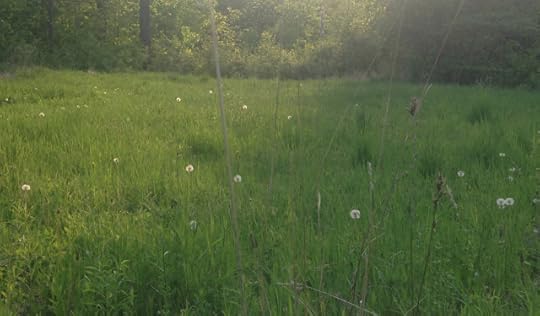
West Woodbury, May evening


May 27, 2016
Gravy, Today
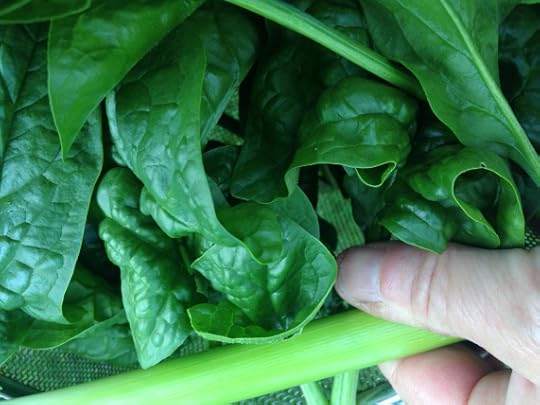
Early this morning before dawn, I woke and heard rain falling. Not much, but enough to satisfy the seedlings I’d planted yesterday. My garden has been dry, almost dusty. For those moments, I lay still, listening, letting the world around me do its work.
Gratitude’s a funny thing. Like empathy, I think it’s taken me decades to know its miraculous depths. Also early this morning, I received an email with a review of my novel in The Emerald City Book Review. I’ve never met the reviewer, yet she read my book in the way I had hoped the novel would be read, even quoting lines from where I consider the book’s heart, something I have never told a soul.
Like most writers, I toil at the bottom of a narrow, stone-lined well. But today: gratitude for someone who took the time to read and write so well about my book, gratitude to this earthly life that I could chisel out this book, and gratitude for this morning’s moments of rest, lying and listening to the sweet spring rain, falling on my garden.
Gravy.
Gravy, these past ten years.
Alive, sober, working, loving…
Pure Gravy. And don’t forget it.
Raymond Carver, “Gravy”


May 25, 2016
Tree Collecting
I stepped outside the Montpelier Library today and stood for a moment with my face turned up to a shower of cherry tree blossom petals steadily raining down.
As a writer, I collect words I particularly love: myriad and succor, litany and exquisite, constellation and pinwheeling. For years now in my travels around Vermont, I’ve noted particular trees of exceptional grace, like Hardwick’s beauty mark of three silver maples on route 15.
Last weekend, stepping out the back door of my brother’s brewery, I nearly walked into an enormous apple tree covered in pearly blossoms and humming bees. What’s this? I asked.
Amazing tree, he answered.
What a strange thing!
to be alive
beneath cherry blossoms.
– Issa
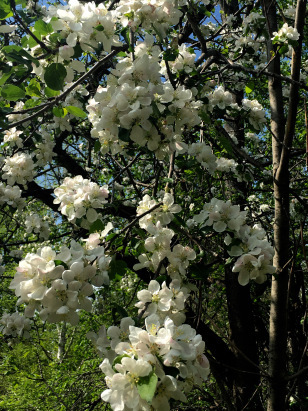
Photo by Molly S.