Emily Conrad's Blog, page 21
July 14, 2016
Guarding your heart from shame
I was reading an article on a new city ordinance allowing people to walk their dogs on trails in our city parks and came across this quote: "I find that shame is a wonderful thing."
That was one of my city council members, apparently talking about how to encourage people to follow the law and clean up after their dogs. He shall go unnamed here.
I struggled to finish reading the last paragraph of the article. Is shame the best solution to messes in city parks? I don't know, but I do know shame is not a wonderful thing.
I've gotten some tough feedback on my writing this year. So tough, I don't feel like I can talk about it. I'm ashamed of it. I spend time and conversations trying to figure out if the problem was my writing or the person who penned the comments. My writing friends tell me it wasn't my writing, that those comments were about their author. But months after the fact, I still read a quote like that and stop in my tracks, thinking about what shame wants for my writing.
Shame wants to stop me from seeking any help with my writing. It shouts whatever comments are offered through a megaphone like never before.
Shame would stop me from preparing for the conference I'll attend next month. It insists I can't present my writing like I believe in it when I know how it may be received.
Shame closes the door to writing new fiction, asking, If it's just going to be rejected and disliked, why bother?
Shame discourages sending a new manuscript to my agent. What if he doesn't like it, either? Shame asks. Then where will you be?
Sisters, if those questions resonate with you, let me tell you right where I'll be, right where you'll be when you're rejected, stepped on, and disregarded: still safe in the hands of our Savior.

A crushed reed he will not break, a dim wick he will not extinguish; he will faithfully make just decrees.Isaiah 42:3, NET
I don't believe my writing is above reproach by any means, and I still seek feedback from trusted critique partners. But when feedback of any kind is given without the right heart, without the measure of grace and encouragement, it produces shame. Contrast that with our Father, who instead of goading us with shame, calls us deeper with grace. As His followers, we should do the same for others.
And let us take thought of how to spur one another on to love and good works, not abandoning our own meetings, as some are in the habit of doing, but encouraging each other, and even more so because you see the day drawing near. Hebrews 10:24-25, NET
Yet, of course, we will still have those who would resort to shame. Maybe even unknowningly, they pelt us with criticism upon criticism and don't lower their voice to the gentle tones of grace. They tell us they're making us better or that we should have thicker skin. Shame refuses to take responsibility for the hurt it causes.
Our instinct--or mine, anyway--is to curl up into knots of shame and doubt. But instead, we are called to pick up our sword and fight against it.
Guard your heart with all vigilance, for from it are the sources of life.Proverbs 4:23, NET
Guard. Like a linebacker guards the quarterback. Like a solider guards his country. Like an officer guards his community. Like a lion guards her young.
Stand firm therefore, by fastening the belt of truth around your waist, by putting on the breastplate of righteousness, by fitting your feet with the preparation that comes from the good news of peace, and in all of this, by taking up the shield of faith with which you can extinguish all the flaming arrows of the evil one.
We war against shame with the promises of God. We are redeemed, called, and justified.
Jesus knows human shame tactics. He's been through the worst of them, and He rose with new life that he now offers us. Life to overcome shame, love to relegate shame to the realm of the irrelevant.
As for me, I'm still prepping for the conference and I just sent a manuscript to my agent yesterday. I have a short story in the works. I've struggled with shame, but the biggest shame of all? That would be letting shame win.
Since we're fighting shame with the promises of God, what verses to do fall back on to fight shame?

Relegate shame to the realm of the irrelevant! via @novelwritergirl


July 12, 2016
Beauty Rewrites: Embracing a Post-Baby Body by Ludavia Harvey
You might know me well enough to have crinkled your brow a bit when you saw that post title on my blog. If you don't know me well enough, here's a little about me: I don't have kids, so I don't have a post-baby body.
But I recently had a realization: not having kids doesn't stop a person from aging.
Of course, I knew this all along, but it became real in a new way the night I told the girls from my high school Bible study I was driving them home in a year 2000 model car only to realize that my car is as old as they are. And then my husband had the realization that he's worked at his current company for just two years less than his newest coworker has been alive.
So, we're aging, and I can tell you from experience that pregnancy isn't the only way a few extra pounds can find their way to a tummy. (It's just arguably the most rewarding.) Having kids also isn't the only way to end up with stretch marks (or other "unsightly" scars), fine lines, and gray hairs.
This is why I relate to Ludavia in this week's Beauty Rewrites post when she writes, All too often, I look in the mirror and think, "I need to lose weight. I can't wear a two-pieced swimsuit; because, everyone will see my stretch marks. How embarrassing. I have to wear loose clothing; so, no one sees the leftover pudge."
Kids or no kids, we become pros at camouflaging the signs of the life we've lived in our bodies. But here's the thing: we are living lives in these bodies, and that's nothing to be ashamed of. These bodies enable us to feel joy and pain. They carry us to friends and to waterfalls. They allow us to move and connect, and they eventually show the signs of it.
We can unhappily fight this, or we can embrace and care for our bodies, appreciating what they do for us, and ensuring they'll be able to continue living and exploring and enjoying life for as long as possible.
For perspective on shifting your focus off of your body's flaws, whether you've had kids or not, hop on over to read Ludavia's post on NiftyBetty.com!
 PS- This post is part of the 12-week series Beauty Rewrites featuring Christina Hubbard of Creative and Free, Ludavia Harvey of Nifty Betty, and myself. I hope you've been as encouraged as I've been as we've examined and rewritten some of the common struggles we have with our bodies and our perception of beauty. Only two posts remain! If you've missed any, check out the full list of Beauty Rewrites posts here.
 Stop fighting the signs of age and start embracing and caring for your body - via @novelwritergirl @niftybetty
July 7, 2016
Getting Ready to Receive God's Goodness
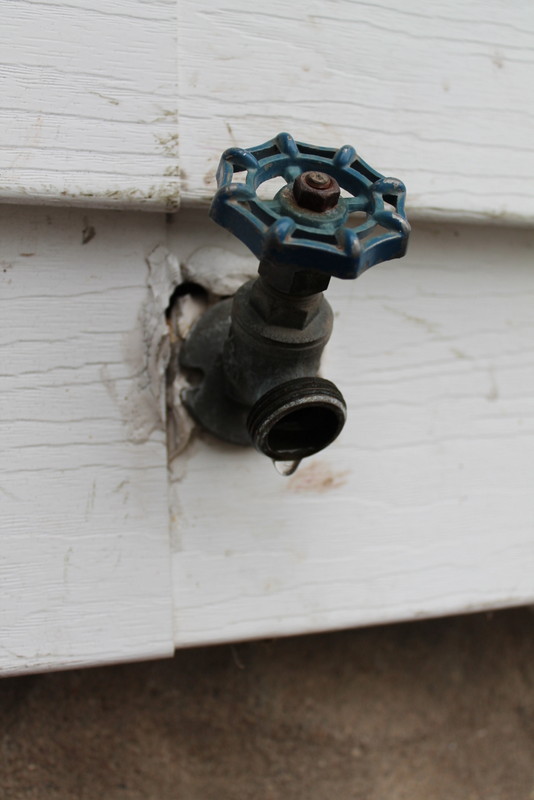
 To keep my hanging plants alive in summer, I must water them daily. The task requires a nearly full bucket of water, but the outdoor faucet of our new house lets out an impolite spray when I run it full blast. As much as I enjoy my petunias, I don't like dousing my knees with the over-shooting water.
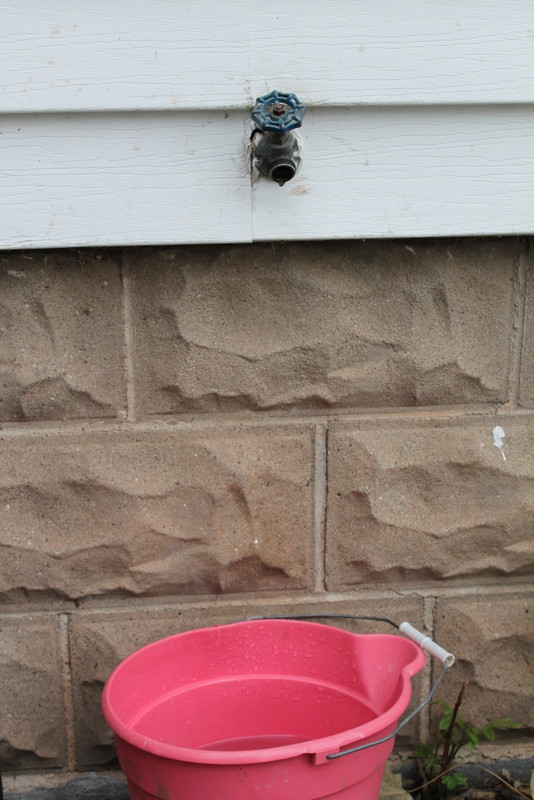
Yet, when the faucet is off, the spout leaks, dripping demurely. Figuring I can run the faucet less (and save the dripping water we pay for), I set my watering bucket underneath.
The faucet drips, drips, drips.
I watch for a moment. The bucket's mouth yawns for so much more than that little it receives. I'll have to unleash the spraying stream tomorrow before watering to fill the bucket. But at least the inch or two will be a start.
I leave the faucet to its dripping, the bucket to its thirst.
Sometimes my faith feels a lot like that bucket. Always receiving, but never full. Yet I am told that God's grace, love, and the living water he offers us gush like a fountain, and of course this is true. All around us, God's goodness roars like the culmination of the waterfalls of the world, like the place where oceans meet, like a monsoon soaking every leaf and branch as far as the eye sees and further still.
 But sometimes I cannot see this crushing wave of grace. Sometimes, I put out my palm to gauge the deluge and feel only a single drip at a time on my palm.
Drip. Drip. Drip.
When my husband and I added prayer together to our routine, it too felt like a droplet. The experience didn't feel better than praying alone felt. In fact, it struck me as awkward. I prayed anyway to honor my husband and because I'd heard praying together is important, though I guess I understood that to mean it was important for my relationship with my husband, not for the sake of my prayers or for my relationship with God.
But then I started to notice those prayers being answered. And then, more prayers to meet an emotional thirst I couldn't answer myself.
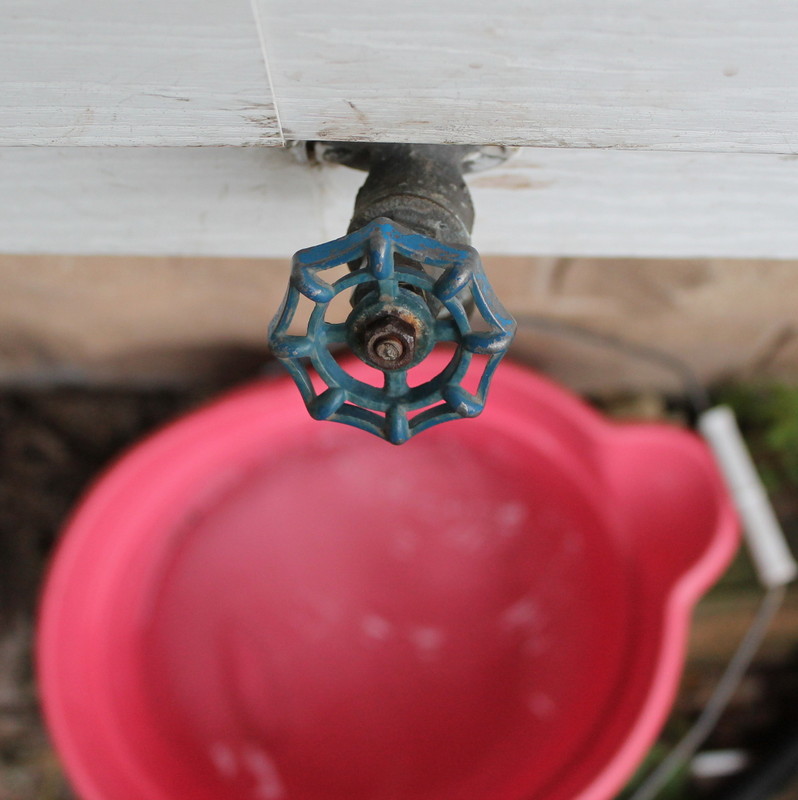
Unlike my leaking faucet, which only gushes full blast when I turn the handle, God's grace is flowing, full force, all the time and everywhere. But we have to have our bucket right side up to receive it.
We do this through the drip-like task of obedience even before our emotions feel the waves of God's love and grace rippling in answer. In my case, prayer and submission were a start. (Richard Foster's Celebration of Discipline offers and introduction to these and 10 other practices helpful to Christians seeking more of God.) But whatever God has called us to, we have to keep showing up, keep diving deeper, keep believing that what seems like a drip is in fact sufficient like the Bible tells us it is.
As for the bucket under the dripping faucet, twenty-four hours after placing the pail, I returned to find that thirsty mouth full. Each new drop that fell launched another droplet over the lip of the bucket to the damp collection of weed and brick at it's base. Shocked, I hauled the bucket to water the plants, splashing as I went.
What faith practices have kept your bucket right-side-up, ready to receive the goodness of God?
God's grace is flowing, full force, all the time and everywhere. Get ready to receive it - via @novelwritergirl
July 5, 2016
Beauty Rewrites: Why and how to declare your independence from sexy beauty
 It’s no secret sex sells. The magnetism of all that’s sexy is why magazines create swimsuit editions and our malls feature life-sized images of underwear-clad women arcing their backs in luxurious beds. It’s why string bikinis come in dozens of colors but scoring a cute one-piece takes a day of hunting. It’s why dressing a certain way gets us a certain amount of attention and behaving a certain way keeps that attention a little longer.
When beauty is so often portrayed as sexy and when sexy is so often considered beautiful, the two very different traits become easily confused as being one in the same. Sure, in some ways, we know that beauty is about smiling and loving God and putting others first. But on another level, don’t we also crave the attention that comes from the other kind of beauty? The sexy kind?
In a culture that is literally buying the lie that sexy=beautiful, choosing modesty is inconvenient, time-consuming, and puts us out of step with our friends. Should we even bother?
Absolutely. Here’s why:
Our girls need us to. Their young eyes are watching us. If we dress a certain way, why shouldn’t they? If they watch us go to unhealthy extremes to obtain the ultimate sexy body, they’ll want to, too. And as they get older, unless we can set an example that separates sexy from beautiful, what’s to stop our girls from rushing into physical relationships with the boys they date?
Our boys need us to. If we don’t live like there’s more to a woman than how she looks, why should they? The world needs more men who treat women (and their bodies) with real love and respect. There’s a reason childhood is called the formative years. Early experiences shape a person’s thinking. Proverbs 22:6 applies to both boys and girls: Train up a child in the way he should go; even when he is old he will not depart from it. (ESV)
Our men need us to. There are single fathers taking their daughters to the mall, men who worry about what their daughters see exemplified there. And some men would rather not be bombarded with unnecessary displays of skin for the sake of their own thought lives.
We need to for ourselves. Sexy beauty is based on fleeting physical appearances. Even if we stay in great shape or have plastic surgery, the sexy-beautiful window is small. Aging becomes a big disappointment, and the battle against it could bankrupt us—financially and emotionally. Also, if we pair modesty with true beauty, we’re more likely to attract the right kind of guy—one more likely to have staying power, who appreciates us for more than our looks.

So, how can you support true beauty in a culture that prizes sexy beauty?
Talk to the girls in your sphere of influence. Help them find clothes that meet the trends while still being age-appropriate. Compliment true beauty when you see it, whether just to remind yourself or to point a girl or a friend in the right direction. Be careful that your actions and words put the emphasis on true beauty rather than surface beauty, especially in front of children—and children are most everywhere. Choose clothes that reflect who you are and how you want others to think of you. Be appropriately sensitive to those you’ll come across. No, we can’t be responsible for the thoughts others have, but Romans 14:13 does tell us not to put stumbling blocks in front of each other. There’s lots of debate about what this means in terms of modesty. What you decide is between you and the Holy Spirit. It’s easy to stray from that and make the decision between ourselves and fashion or ourselves and our friends, but bring it back again to you and the Holy Spirit.Take a look at where and how you shop. Also between you and God, consider if the culture of the business promotes an appropriate level of modesty. Can you be modest while shopping there? Are there alternatives that might be more in line with your beliefs? Meditate on 1 Peter 3:4, which says, but let your adorning be the hidden person of the heart with the imperishable beauty of a gentle and quiet spirit, which in God's sight is very precious. (ESV)Examine your motives. Why did you choose that outfit? What kind of attention do you hope to attract? Are those motives something you’re willing to publicly stand by? Because your clothes—those are public.Remind yourself of your best true beauty features. When we don’t feel good about who we are, we start trying to bolster our confidence using the wisdom of the world. We treat our insecurity by attracting a few interested glances with a low-cut blouse or a tight skirt when what God says is truly valuable is in “the hidden person of the heart.” You were created by God, and he sent his Son to die for you. You are valuable. It doesn’t get more beautiful than that.In some ways, it seems modesty is a dying art, but when we believe in our own true beauty and value, we don’t have to flaunt everything we’ve got. Instead, we can save that for appropriate places, times, and relationships, and we can devote our energy to celebrating true beauty.
What is one thing you wish a woman you’d looked up to had told you about beauty when you were young?
 PS- This post is part of the 12-week series Beauty Rewrites featuring Christina Hubbard of Creative and Free, Ludavia Harvey of Nifty Betty, and myself. Join us on Tuesdays to get on good terms with the real you. For all the Beauty Rewrites posts, click here!
When we believe in our own true beauty and value, we don’t have to flaunt everything we’ve got-via @novelwritergirl
9 ways to declare your independence from sexy beauty and why you should-via @novelwritergirl #beautyrewrites
June 30, 2016
When dreams appear little or dying
Most of the plants in my yard seem to fall into one of two categories: little or dying.
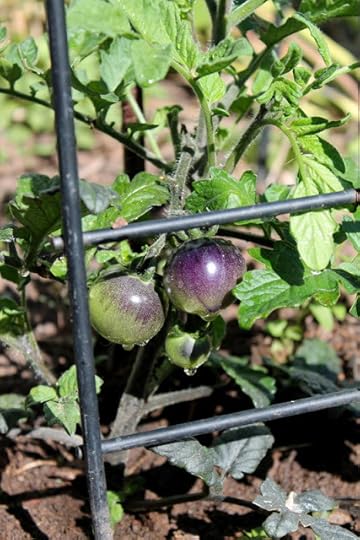
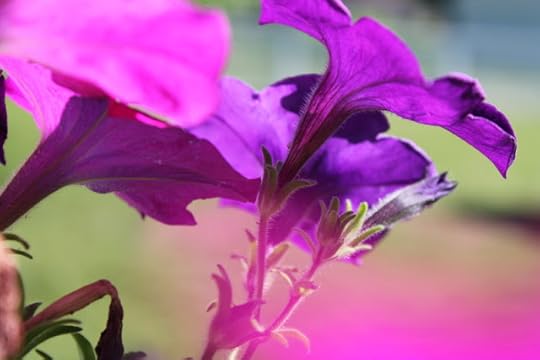
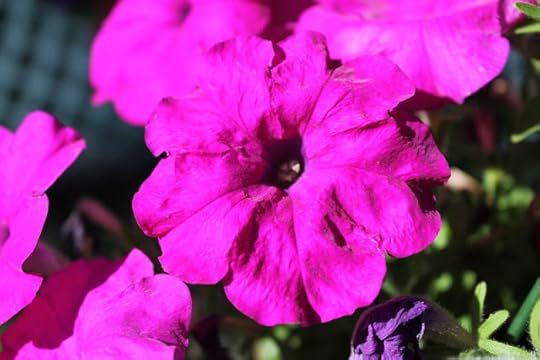
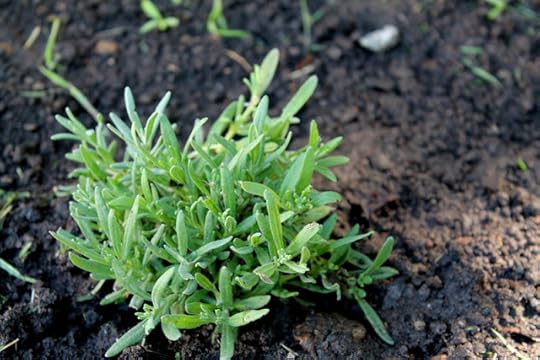
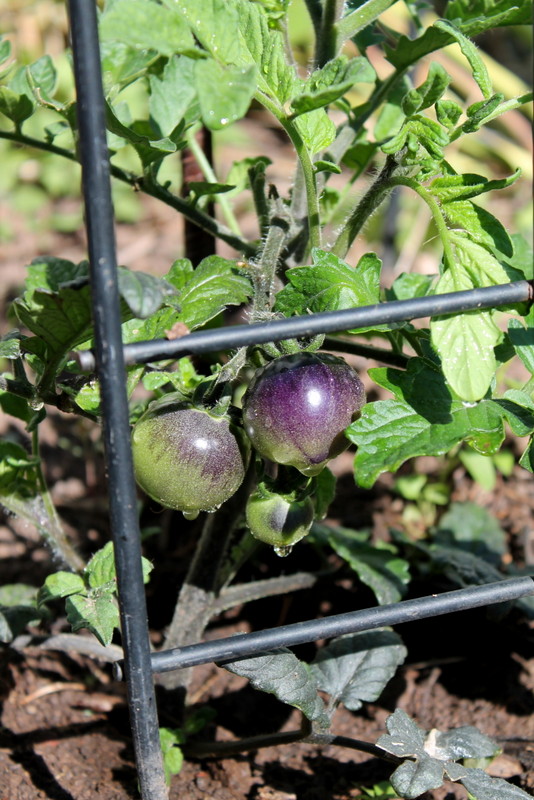
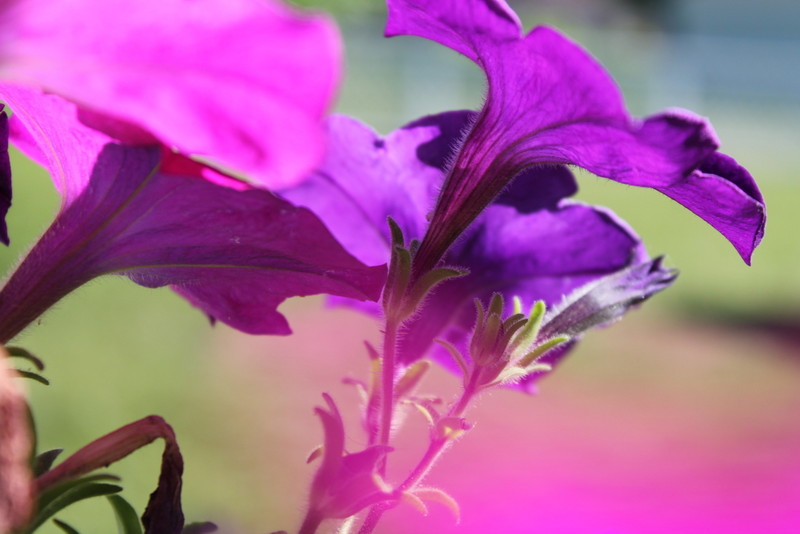
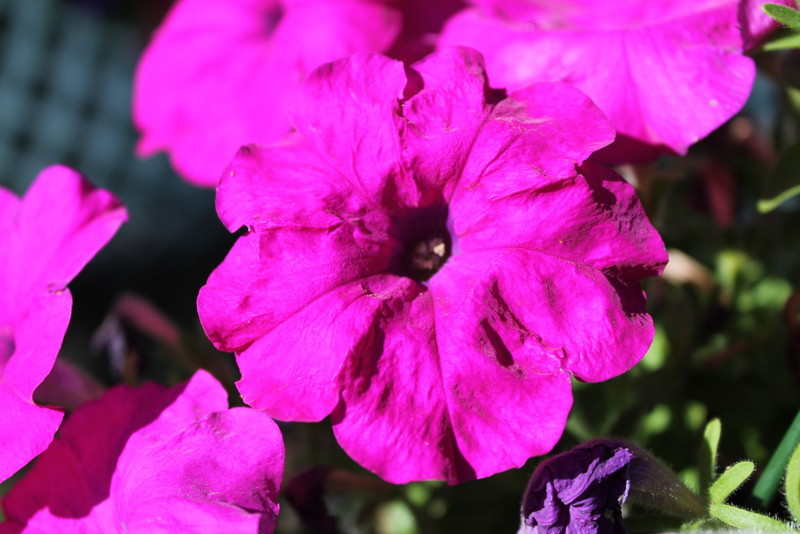
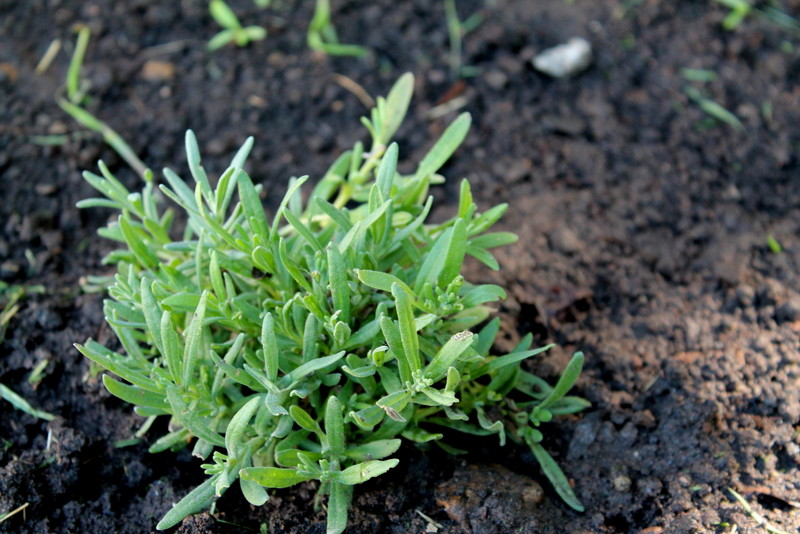
The littles: Petunias I envision spilling over their hanging pot like a waterfall or a pretty girl's hair instead reach toward the sun, not yet heavy enough to drape. The most promising of my tomato plants, the one with the purple skinned fruit, has just three tomatoes growing. The tiny little lavender plant, the one that's questionable for my gardening zone, the little plant doesn't have the size to survive a baby bunny let alone the strength to wrestle with a Wisconsin winter and win.
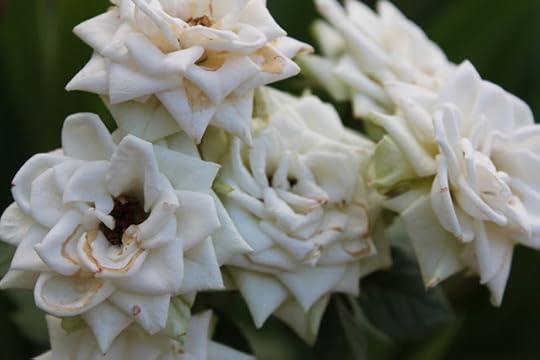
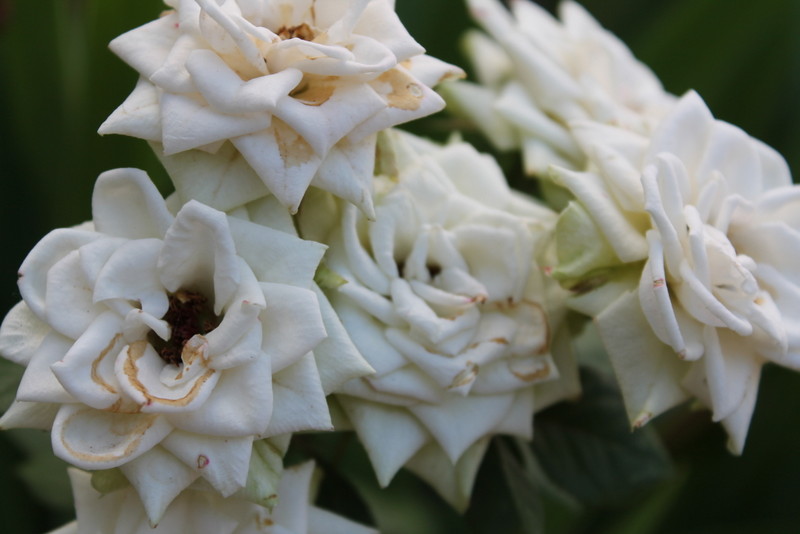
The dying: The mini roses I was so excited to see forming have gone from picture perfect to full bloom. Then, they revealed the yellow stamen at their centers. Next, the petals weathered and their happy centers turned deep brown. The poppies are long gone. All that remains of the lilacs are dry nubs.
But the truth is this: the littles are growing. To know they are on track, all I must do is look at the calendar. It's only June. They aren't meant to reach their glory until August. Maybe even September. For those that must survive the winter, they have months yet to grow roots, to establish themselves.
The truth is this: the dying have shared incredible beauty. They have graced vases throughout the house. They have fed bees and sheltered spiders. And even this death will end in life as they return next year and the year after.
I'm tempted to say my plans fall into these same categories, though dreams are harder to label. How do you tell the difference between a little dream and a dying dream when there's no calendar to consult? And is it reasonable to expect new life to return to dead dreams?
What if I told you there is a calendar? We just can't read it. That's why we don't know when Jesus is coming back. That's why we labelled Lazarus dead only to be proven gloriously wrong. The accounts in the Bible, in the lives of our loved ones, and in our own lives repeat this same theme over and over again. This is the key for us, whatever stage our dreams appear to be in.
We don't have a calendar, but we do have a history. Many histories. A whole cloud of witnesses who testify that God is faithful, that death is temporary, and that we are not to despise small beginnings.
When Saul was out to kill David, David's anointing as king was also not dying. It was pushing through the little stage, waiting to bloom at the right time. And Joseph's dreams. Those must've appeared dead many times over only to be found very much alive when he was placed over Egypt under Pharaoh.
God gave us our dreams for the long haul. Pits, slavery, death threats, and even death itself do not mean the end. It's not our job to label our dreams or determine when God will bring them to pass. It's our job to be obedient, loving God himself more than any dream he's given us. It's our job to have faith when our dreams look impossibly small and when they look dry and dead.
 Instead of mourning the setbacks or the lack of progress, let's sit quietly and wait for the God of the Living to show himself, to breathe life like only he can, to show us again his ways are not our ways. They are infinitely better.

On having faith when dreams look impossibly small or dry and dead via @novelwritergirl
The littles: Petunias I envision spilling over their hanging pot like a waterfall or a pretty girl's hair instead reach toward the sun, not yet heavy enough to drape. The most promising of my tomato plants, the one with the purple skinned fruit, has just three tomatoes growing. The tiny little lavender plant, the one that's questionable for my gardening zone, the little plant doesn't have the size to survive a baby bunny let alone the strength to wrestle with a Wisconsin winter and win.
The dying: The mini roses I was so excited to see forming have gone from picture perfect to full bloom. Then, they revealed the yellow stamen at their centers. Next, the petals weathered and their happy centers turned deep brown. The poppies are long gone. All that remains of the lilacs are dry nubs.
But the truth is this: the littles are growing. To know they are on track, all I must do is look at the calendar. It's only June. They aren't meant to reach their glory until August. Maybe even September. For those that must survive the winter, they have months yet to grow roots, to establish themselves.
The truth is this: the dying have shared incredible beauty. They have graced vases throughout the house. They have fed bees and sheltered spiders. And even this death will end in life as they return next year and the year after.
I'm tempted to say my plans fall into these same categories, though dreams are harder to label. How do you tell the difference between a little dream and a dying dream when there's no calendar to consult? And is it reasonable to expect new life to return to dead dreams?
What if I told you there is a calendar? We just can't read it. That's why we don't know when Jesus is coming back. That's why we labelled Lazarus dead only to be proven gloriously wrong. The accounts in the Bible, in the lives of our loved ones, and in our own lives repeat this same theme over and over again. This is the key for us, whatever stage our dreams appear to be in.
We don't have a calendar, but we do have a history. Many histories. A whole cloud of witnesses who testify that God is faithful, that death is temporary, and that we are not to despise small beginnings.
When Saul was out to kill David, David's anointing as king was also not dying. It was pushing through the little stage, waiting to bloom at the right time. And Joseph's dreams. Those must've appeared dead many times over only to be found very much alive when he was placed over Egypt under Pharaoh.
God gave us our dreams for the long haul. Pits, slavery, death threats, and even death itself do not mean the end. It's not our job to label our dreams or determine when God will bring them to pass. It's our job to be obedient, loving God himself more than any dream he's given us. It's our job to have faith when our dreams look impossibly small and when they look dry and dead.
 Instead of mourning the setbacks or the lack of progress, let's sit quietly and wait for the God of the Living to show himself, to breathe life like only he can, to show us again his ways are not our ways. They are infinitely better.
On having faith when dreams look impossibly small or dry and dead via @novelwritergirl
June 28, 2016
Beauty Rewrites: Why I Don't Take Beauty Cues from American Culture by Christina Hubbard
Before my first trip to France, I was concerned about fitting in during my brief stay, so I quizzed a friend who had lived and gone to school in France for a year. My main concern?
How to dress because Paris is, after all, one of the fashion capitals of the world.
My friend informed me that it seem like the styles that were popular in France arrived in my Midwestern town about two years later. So, while the top I was wearing might look like what she'd seen in France, they were probably already two years worth of trends ahead of it.
I was destined to be a fashion misfit. My whole class was.
Once in France, I ended up being late to meet my group for sightseeing in Nice. My host mom drove me to the general area where they were supposed to be, and we found the group easily. No one had cell phones or an easy way to contact the teacher, but even in the colorful city of Nice, our group of American students stood out in their flashy athletic sneakers and bright jackets.
Thankfully, those two weeks in France didn't end up being long enough for my clothes to make much of a difference in my ability to make friends or fit in. Among the other American students, my clothes were normal, and among the French students I met, I was little more than a curiosity.
However, the visit was long enough for me to notice that French style and French ways of life were different from what I'd grown up with in the US.
In today's Beauty Rewrites post, Christina Hubbard explores some of these differences. She goes way deeper than the colors we choose to wear and tackles some of the differences between French and American mindsets about how to be beautiful, healthy, and fulfilled.
She writes, "We Americans are known for our overwork ethic and tendency toward consumerism and heart disease. Most of us are trying to do so much, cramming our lives full of successes and things, always bigger and better. Trying to be so many things leaves us strung out, depressed, and totally wanting."
To find out how the French can help us with this and to read Christina's list of unAmerican beauty confessions, the first of which is, "I hate treadmills and anything called Insanity," click here.
Cues we can take from the French to be beautiful, healthy, and fulfilled via @ChristinaHubs @novelwritergirl
PS- This post is part of the 12-week series Beauty Rewrites featuring Christina Hubbard of Creative and Free, Ludavia Harvey of Nifty Betty, and myself. Join us on Tuesdays to get on good terms with the real you. For all the Beauty Rewrites posts, click here!June 23, 2016
Tables, tents, and enjoying blessings
 My husband assembled the table and chairs of my choosing. I put most of the chairs in the basement so I could situate the dining room table against the wall. My plan was to pull it out when company visits.
 My husband asked why I didn't put the table in the center of the room. He thought I was bowing to the old habits of a tiny house I no longer call home. I thought I was prudent to save the space, even as I impatiently wondered how to furnish it so I could finally host a family meal. If I pulled the table out, we'd have to walk around it whenever we passed through the room. It would be better to find some other way to use the space.
But God tells us, Enlarge the place of your tent, and let the curtains of your habitations be stretched out; do not hold back; lengthen your cords and strengthen your stakes. Isaiah 54:2, ESV
I imagine the verse is directed at women because verse 1 addresses a "barren one," but verse 2 may be aimed at the men. I don't know enough about Old Testament culture to know whose job or decision it was to widen the tents, but still, I picture women like me, eyeing the stakes and ropes that have penned them in.
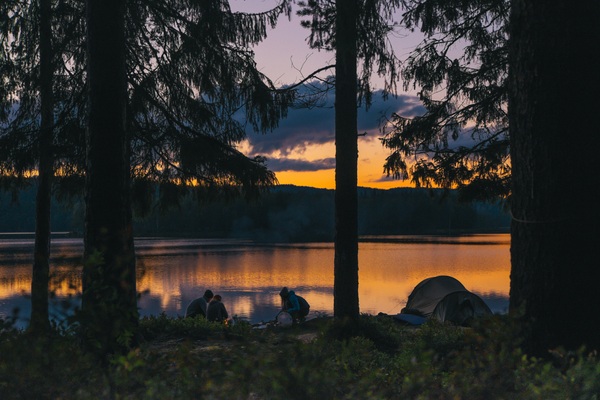
Perhaps, they chose the boundaries for their walls logically. Perhaps habit drove them. Perhaps they've been so used to the way things have been they've forgotten the way things could be. They may be unsatisfied with other areas of their lives--they long for children--but with this limited space, they have made their peace.
Yet God says, "Widen the tent. Do not hold back. Use the blessings I've already given you to prepare for those that are yet to come."
This same God looks at my dining room, and through my husband, asks audibly, "Why not put the table in the center of the room?"
He asks because he sees I'm holding back. I have made peace with the way things are. I have forgotten they could be so, so much better. I don't even believe, when he first tells me, that I am missing out. I am sitting at a table against the wall when God has invited us to use it all, everything he gave us.
I take the leap of faith. I pull the table away from the wall. I stop holding back. I circle the table with chairs and suddenly the empty room is full of invitations to sit, to linger, to be fed. Seated there, I can see all the space from which I have kept myself.
I see how I did something similar, working in the confined space of a day job because I had convinced myself it was logical. Because I was afraid to use the income God had blessed us with through my husband's job. Because I was in the habit of spending a certain amount, passing my days a certain way. What an epiphany it was to realize I could make the choice to widen my tent, to invite in the writing dream.
I see that I also often sit at the perimeter of love and grace and peace and joy, wanting, afraid to use it up, afraid to stretch it out and sit in the shelter it provides.
And from here, I see I'm not the only one at the edge of the room. I'm not the only one limited by boundaries that are, in fact, no more set in place than a tent wall.
But Christ set a place at the table for us, he pulled out chairs smack dab in the center of it all. He invites us to come, to sit, to know what it is to lack no good thing, to widen the walls of our tents and watch him fill it all. Here, we shall not want.
What boundaries have you lived with, only to find out later they weren't as fixed as you thought? In what areas might God be calling you to expand your tent?
This post was brought to you by: a) my dining room table, and b) the June 9th Five Minute Friday prompt "want." But, I didn't write it in five minutes, and I didn't write it until after the next week's prompt had already come out. In fact, they'll publish a new prompt tomorrow. Still, the FMF community is inspiring and supportive, and if you're not already familiar with them, check it out here!
Sometimes, enjoying God's blessings requires a leap of faith. Worth it every time via @novelwritergirl
June 21, 2016
Beauty Rewrites: How to Choose Joy Daily by Ludavia Harvey

Bad moods are like anchors. They sink, get stuck in the muck, and worse, they can keep a whole boatload of people stranded because one person's lack of joy can pull down others' moods, too.
It's much easier to fall into a funk than it is to jump for joy. But, of course, we'd all prefer to feel joy because it's obviously a bright emotion. Also, as Ludavia Harvey points out in this week's Beauty Rewrites post, "being joyful is beautiful."
She explains, "When you're in a foul mood, what happens to your face? How about your demeanor? The questions seem silly. You know what happens: you frown, you scrunch your eyebrows together, you slouch, you cross your arms."
These are not the hallmarks of beauty, and the attitudes that go along with bad moods are not attractive on any of us.
With how contagious bad moods are, what's a girl to do? How can we lift the bad mood from the muck and sail along in beautiful joy?
Navigate with me over to Ludavia's blog Nifty Betty for some practical suggestions.
Being joyful is beautiful. Try these 5 steps to build joy in your life today via @niftybetty
PS- This post is part of the 12-week series Beauty Rewrites featuring Christina Hubbard of Creative and Free, Ludavia Harvey of Nifty Betty, and myself. Join us on Tuesdays for a fresh look at what it means to be beautiful. For all the Beauty Rewrites posts, click here!
June 16, 2016
The power of asking why
 As I was drafting my latest post for Beauty Rewrites, I shared what I had with the ladies who are part of the collaboration: Ludavia and Christina. Christina made an innocent little comment on it, asking why I used to be so careful to wear makeup every day.
On the surface, why is a simple question--one I thought the early draft of the post had answered. (It hadn't.) So as I set about to answer her, my first thought was that I wore makeup because I wanted to be one of the pretty girls, and who doesn't want that? I literally wrote that into my next draft of the post. But the more I thought about it, the less that answer sat right with me. It was a cop out. A deeper why lurked, one I wasn't sure I wanted to fess up to.
That's the thing about why. It can always go deeper.
Why did I want to look pretty? Because I wanted to be special. Then, the real question finally occurred to me: Why didn't I feel special without makeup?
Armed with the right question, I arrived at a satisfying answer: I didn't feel special without it because if I'm not pretty, there isn't much to attract people to me. I'm quiet, shy, and struggle with small talk. I prefer to be alone, possibly because from a young age right up through high school, I suffered deep hurts at the hands of friends who got to know me and then chose to exclude and criticize me.
These are the kinds of hurts that I still feel in my sinuses and behind my eyes as I write about them now, about fifteen years and one week after graduating high school. I've been living with this hidden, tragic why for fifteen years (or more, more likely) without stopping to question it.
Why doesn't always dredge up old hurts, but when it does, that pain is worth rooting out.
I can now face this motivation. I can overcome it. If Jesus could walk through this world with nothing about his appearance that would attract us to him, I can walk through it without relying on appearance, too. Jesus drew crowds because of his love, truth and peace. He was life-giving, and he now lives in me. His presence in and with me is how I ought to attract people now. He, and not the consolation of a nice reflection in the mirror, is how I must cope with the pain of rejection.
Whys power everything we do. They motivate us to put on makeup, dress a certain way, spend our money in particular places on particular things. Our personal whys attract and repel us from people and activities. They touch every area of our lives, often silently from deep within.
Leaving something this powerful unexamined allows enemy strongholds to take up ground in our hearts and minds.
We can't tackle all the whys at once, and we might not be able to answer a why in one sitting, but with Jesus by our side, helping us examine our motivations and the hurts behind them (when there are hurts behind them), we can find healing. We can replace strongholds of hurt and lies with palaces of truth. We can go on to live happier, healthier lives in Jesus's name and by his power.
It all starts with a simple question: Why?
When we ask ourselves "why?" with Jesus by our side, we can replace lies with truth -via @novelwritergirl
P.S. Curious about the Beauty Rewrites series? Check out all the posts here.
June 14, 2016
Beauty Rewrites: What going without makeup taught me
A few years ago, I reconsidered my habit of wearing makeup every day. Not that makeup is wrong, but I was struck by the fact that I was proud of how I looked with it on. And I was not proud of how I looked without it--as a quiet introvert, I needed something to make me special and help me stand out from the crowd, didn’t I? It would be humbling to admit who I was without this kind of smoothed-on beauty.
So, I decided it would be healthy for me to take it off for a while. Not permanently, but long enough to see who I was without it. To stop pretending my made-up face was the only one I had.
Back then, I worked in an office, and I had tied a big part of my worth and identity to looking beautiful. I thought the no makeup thing would stand out incredibly to my co-workers. I expected comments. Especially since people had a habit of asking me if I was tired any time I failed to wear eyeliner.
As exposed and plain as I felt when I first headed to work sans makeup, nothing of note happened that week. I wasn’t left out or forgotten. My value as a person and contributor to the team didn’t crumble. A grand total of one person asked me (sincerely) if a makeup free face was a new trend. Other than that, I had a little more time in the morning and a new understanding of who I was beneath my foundation—me. Still me.
Thanks in part to that week, I’m less consistent in wearing makeup these days. The pressure to compensate for the parts of me I sometimes consider weaknesses--my quietness, namely--by consistently looking as perfect as possible no longer has such a hold on me. Some days, I put on makeup like I would put on a pulled-together outfit. Happily. And some days, I smile without. Happily.
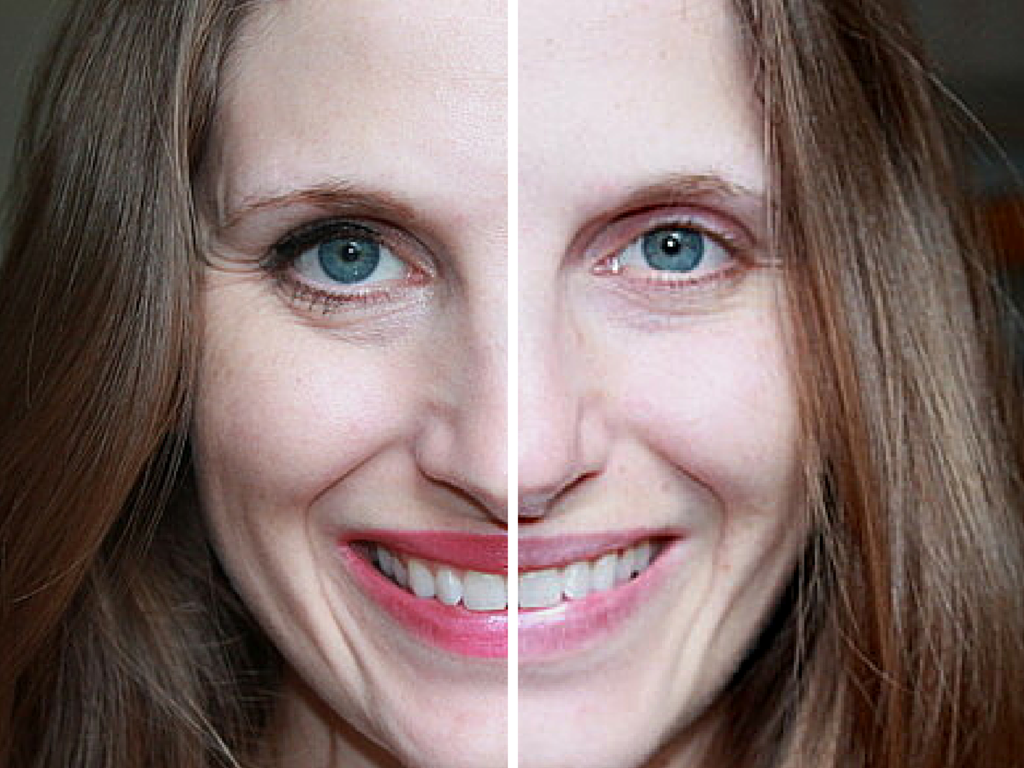 But I’m still learning not to put too much value on my efforts at external beauty. Take today, for example, when I took the photos of myself with and without makeup for this post. As I lined up the two photos, I felt silly. I’m writing a whole post about this like the decision to not wear makeup makes a big difference, but really, it’s still me in both of those photos. No big difference included.
Turns out, the biggest difference between me with makeup and me without is in my own mind. Knowing that, I’m a bit more comfortable in my own skin. I can’t say that I’m perfectly secure, of course. But I can say this choice doesn’t control me as much as it used to.
We’re selling ourselves short if we think our beauty or worth depends on makeup-created flawlessness. Anytime we begin to rely on surface beauty—makeup, that cute outfit, those expensive shoes—in order to feel good about ourselves, we need to take a gigantic step back. Maybe even go without something for a bit.
If makeup doubles as our self-confidence and beauty, we’re applying it wrong. Beauty is something much more substantial.
As 1 Peter 3:4 says, but let your adorning be the hidden person of the heart with the imperishable beauty of a gentle and quiet spirit, which in God's sight is very precious. (ESV)
Pursue that kind of beauty so that whatever you see in the mirror on any given day, you can know who you are: You. Still beautiful you.
Do you know this is true? Join me in posting a pic of yourself using #stillbeautifulme either without makeup or with half makeup and half not like I did.
PS- This post is part of the 12-week series Beauty Rewrites featuring Christina Hubbard, Ludavia Harvey, and myself. Join us on Tuesdays for a fresh look at beautiful. For all the Beauty Rewrites posts, click here!
Who I am beneath my makeup—me. Still me. via @novelwritergirl #beautyrewritesGoing without makeup for a week taught me who I really am- via @novelwritergirl #beautyrewrites