
Rosa Fedele's Blog, page 2
November 5, 2019
WE ESCAPED THE MADHOUSE
Yes, we did it! After years of dreaming of a rural idyll; craving trees, birds, room to move and clean air, we finally left inner city Balmain and relocated to the Southern Highlands – a relaxed one-and-a-bit hour drive south west of Sydney.
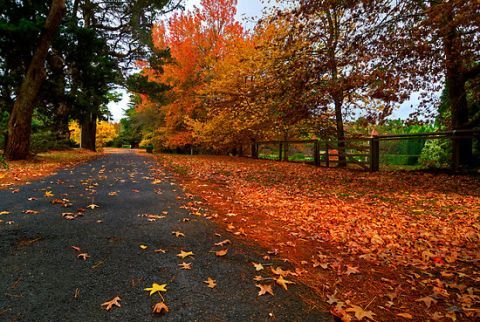
The Southern Highlands is a great place to visit – Bowral and Moss Vale are chock full of cafés, antiques, homewares, eye candy everywhere: check out Dirty Janes, Suzie Anderson Home and Hunter & Gatherer (my faves). The best scones ever are at Magpie Café in Berrima. Then have a glass of wine at Harry’s on Green Lane. Lots of vineyards too.
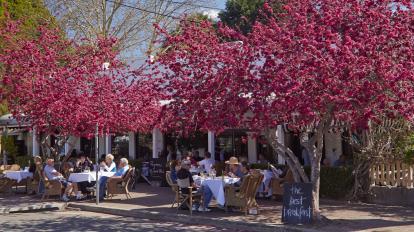
The bonus added extra is that I finally have my dream studio … and this weekend you’re invited!
OPEN STUDIO WEEKEND
SATURDAY AND SUNDAY 9/10 November
10AM – 4PM
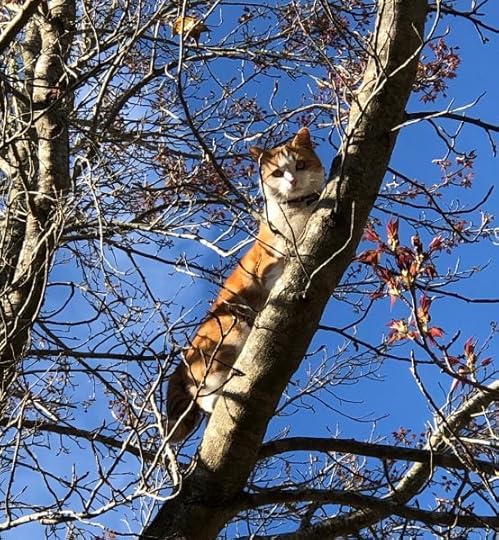
Come by and have a cup of tea or a glass of Prosecco. Prancerise through the trees. Meet Oscar the Spider-Cat.
Browse paintings, sketchbooks, prints and books in the studio and watch my progress on the largest still life I’ve undertaken to date. Here’s a clippet showing the development of just a teensy section of the painting:
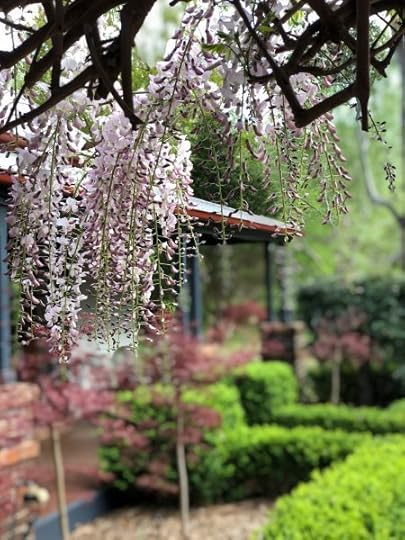
Or simply stroll through the gardens and inhale fresh air.*
*Free from diesel fumes, brake dust, smog, screaming ambulances, empty Twisties packets, cigarette butts and McDonald’s packaging. Mind-blowing, right?
Here’s the details:
49b Sunninghill Avenue BURRADOO NSW 2576
Stroll up the long and winding driveway all the way to the studio at back
Google Maps Link: https://goo.gl/maps/4paCrnKeVVbf4jKU6
Trivia of the Day:
Did you know that Bowral is the birthplace of PL Travers, author of Mary Poppins ?
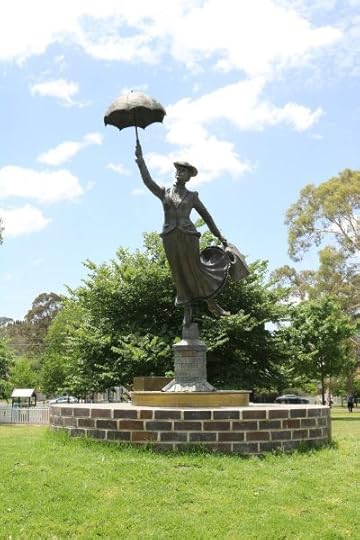 A fabulous statue of Mary Poppins by sculptor Tanya Bartlett stands in Glebe Park
Here’s a great article speculating on how the Mary Poppins character may have been created in the imagination of Helen Lyndon Goff (later to change her name to PL Travers) while she was a teenager and her family was living in Bowral during the period 1908-1917.
http://mary-poppins-birthplace.net/why-is-bowral-the-birthplace-of-mary-poppins/
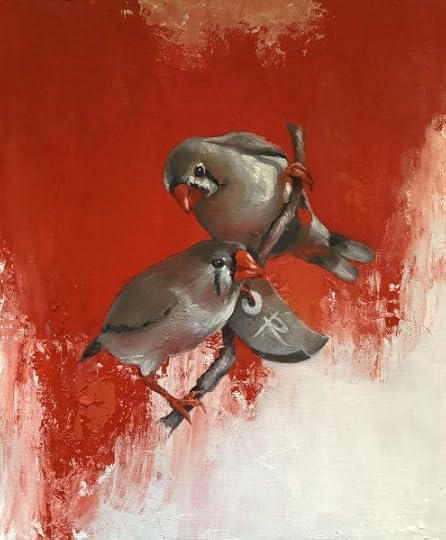
Did you know a group of finches is called a “charm”?
When we first moved to Bowral we were suddenly surrounded by the most abundant birdlife: kookaburras, cockatoos, corellas, parrots, parakeets, lorikeets, ALL the keets! and I was immediately overcome with the need to paint birds. Weird, right?
Some of my paintings have already sold but here’s a cute selection of whimsy that I call “One Finch, Two Finch, Red Finch, Blue Finch”. They’ll be on display during the Open Studio Weekend.
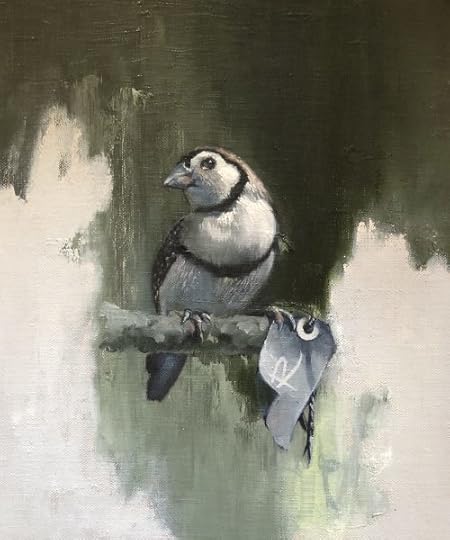
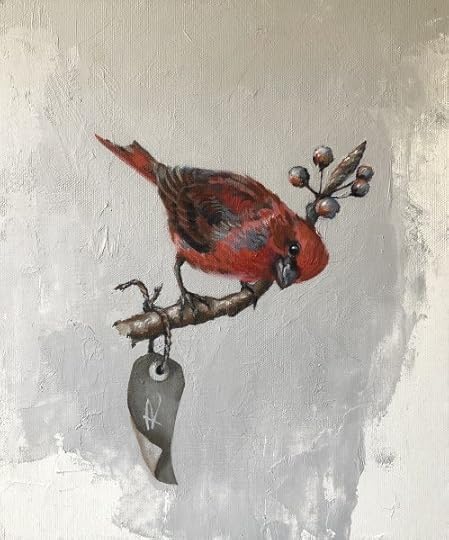
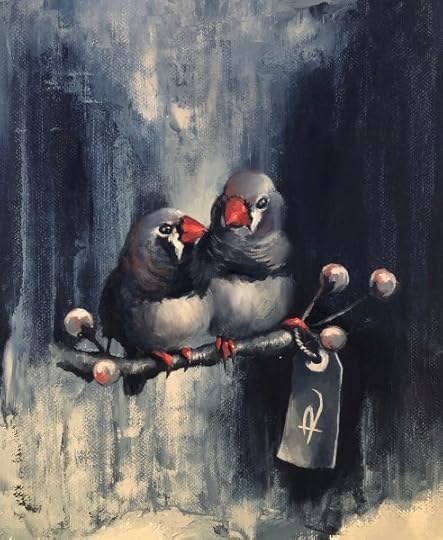
Did you know it’s been a WHOLE YEAR since the launch of THE LEGACY OF BEAUREGARDE?
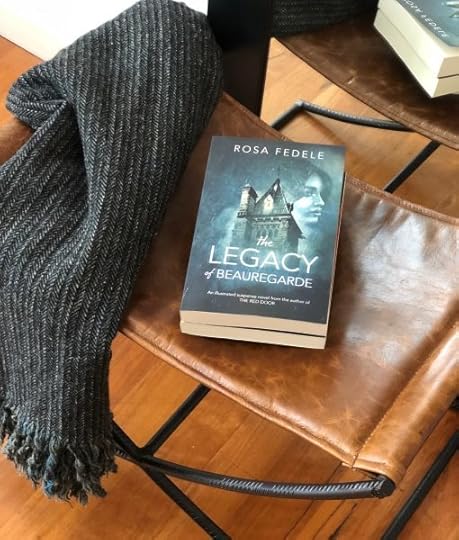
Signed copies of my books are available, perfect for Christmas gifts (yes, it’s NEXT MONTH!). Just drop me a line or pick one up if you’re visiting the Highlands.
Hugs to all,
Rosa XX


July 8, 2018
Thank you each and every one!
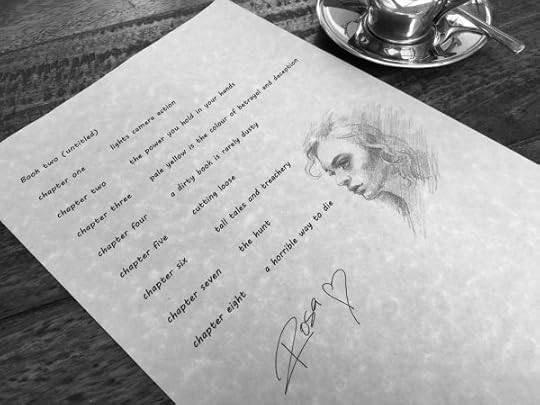
Here’s what the early draft of my chapters looked like …
Tomorrow is PUBLICATION DAY and I can’t think of the more perfect time than now to thank the ones who have helped me on this long and colourful journey:
A huge thank you to Teodora Olic and her mum Mina, for teaching me about all things Serbian; your patience and good humour is hugely appreciated. And yes, always happy to cook for you!
Many thanks to Cambell Ring, for donating simply hours of your time to talk cocaine, swat teams, what it was like in the Drug Squad during the colourful eighties and nineties … and explain exactly how to coordinate a major drug bust.
Eugenie Dale, merci! I’m forever grateful for your French translations.
My own dear sis Felicity Fedele and cousin Diego Fedele, molte grazie for untangling those tricky Calabrese words.
Domenica Garrett, I wish I could quote lyrics from all of your songs!
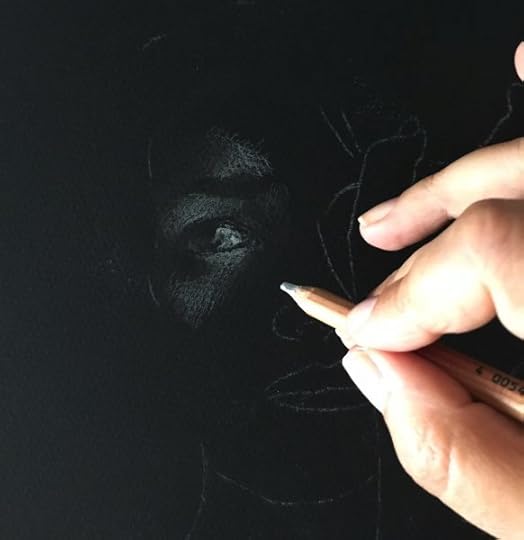
Every sketch starts somewhere …
Much gratitude goes to my structural editor, Alexandra Nahlous; your advice, suggestions and gentle nudges helped transform my meandering manuscript into a cracking little tale.
A big shout out to Laurence French M. Ed., who kindly donated his time to look at my raw manuscript and turned out to be the best beta reader ever!
Marie Dale, who so kindly sat for me for my painting of Gordana (I know I’ve thanked you before but there can never be too many thank yous, can there?)
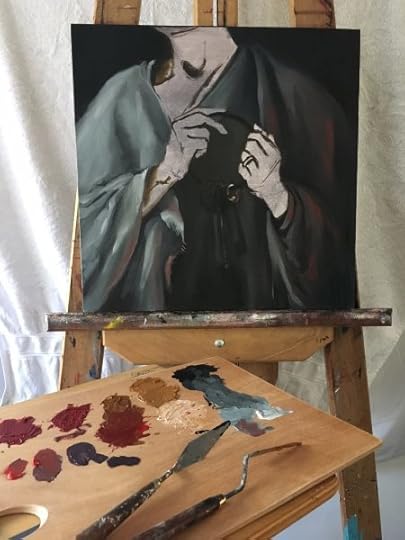
Gordana, early days
Big cheers again to Jenny and Ally Mosher from MoshPit Publishing, you guys are amazing and I’m so happy to be working with you again.
Finally, and most importantly, my family who continue to encourage and support me throughout all my crazy endeavours.
ARC reviews are already appearing on Goodreads and I must say I’m gobsmacked at the feedback from book-bloggers and reviewers. Think I’ve been quite close to tears a couple of times! Here’s the link if you’d like a look: The Legacy of Beauregarde on Goodreads
Thank you to everyone who has already pre-ordered (or is poised and waiting to order) the book – I’m so excited for you all to read THE LEGACY OF BEAUREGARDE and truly hope you enjoy it as much as I loved writing it and, of course, creating the illustrations. Hope to see some of your friendly faces at the launch party at Gleebooks, Glebe on Saturday 14th July 3.30PM!
I’ll need all the support you can give, believe me – my knees are shaking with nervousness!
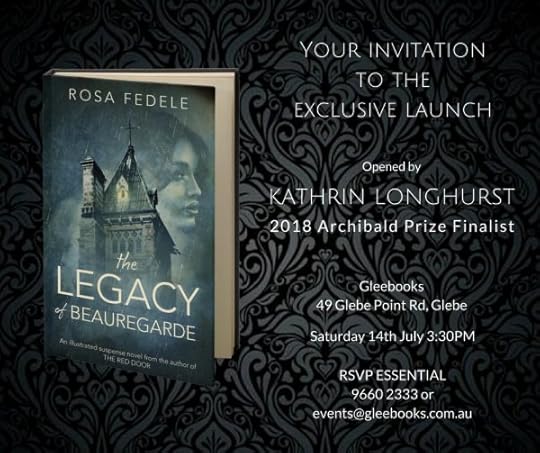
Here’s the links for those of you that can’t make it:
Amazon AU https://amzn.to/2JNML4h
Amazon US https://amzn.to/2M3Y7ie
Amazon UK https://amzn.to/2JGjSUC
iBooks https://apple.co/2tgQg9j
MoshShop: https://themoshshop.com.au/products/the-legacy-of-beauregarde-by-rosa-fedele
Or simply order from your favourite local bookseller 
June 13, 2018
THE LEGACY OF BEAUREGARDE IS UP AND AWAY!
PUBLICATION DAY is 10th JULY 2018
Dearest book- and art-lovers, we have lift off! Here’s the new trailer for your viewing pleasure … make sure to turn your volume up!
And to say thank you to my loyal (and as a welcome to my new) subscribers, I’m running a little giveaway …
Each Monday, for the next three weeks until publication day, I will be drawing the name of one subscriber to win a signed copy of THE LEGACY OF BEAUREGARDE … PLUS a set of seven ART CARDS with illustrations from the book!
Any subscriber who SHARES this post, whether on Facebook, Twitter or Instagram, tags me and uses the hashtags:
#thelegacyofbeauregarde #australiannoir
will automatically TRIPLE their chance in the draw.
Here’s me gushing over the art cards …
Monday night’s winner was:
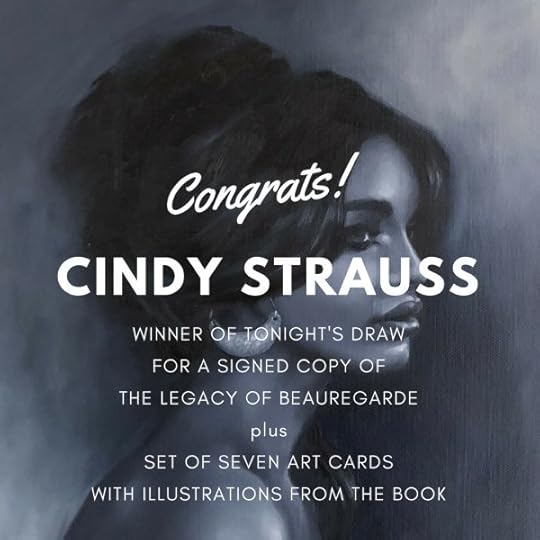
You can be a winner too!
The next draw will be Monday night 18th June (6PM AEST) Good luck!
If you just can’t wait to get your hands on those Art Cards, pop over to my Store and pick up a set now.
Sydney-siders! Would you like to come to the launch? Here’s the details:
I’m honoured to have none other than uber contemporary artist and 2018 Archibald Prize Finalist KATHRIN LONGHURST opening the show. You’ll love meeting her, she’s absolutely delightful. Hope to see you there
May 27, 2018
Announcing …
THE NEW BOOK IS COMING!
It’s done! And I’ve been absolutely jumping out of my skin to tell you!
The new book is finished and will be launched in just a couple of months. It’s another big one, as you can see from my rather large stack of pages! About 400 pages, actually.
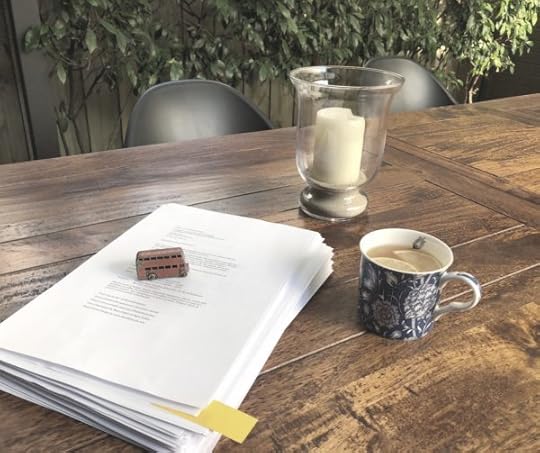
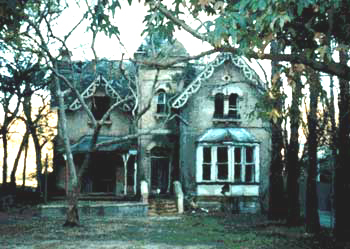
Once again it’s set in a historical part of Sydney. But I’ve been a bit cheeky, folks; taking one of my favourite buildings in Annandale, The Abbey, and relocating it to the leafy and delicious harbour-front suburb of Hunters Hill. The joy of artistic licence, hey?
Here’s what The Abbey looked like in 1880.
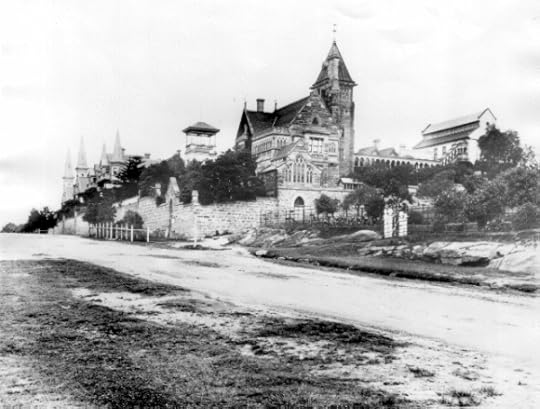
The novel takes place in 1990, a mere few years after The Red Door, and is a decadent and eccentric tableau of theatre and treachery, old secrets and betrayals; exploring friendship, guilt and obsession, and slipping between characters to gradually reveal a century-old mystery. There are secrets aplenty, a bit of melodrama and plenty of angst, and a couple of characters to whom I couldn’t imagine saying goodbye. But if you haven’t read TRD, never fear; it’s a stand-alone story too. I am so looking forward to bringing THE LEGACY OF BEAUREGARDE into the world!
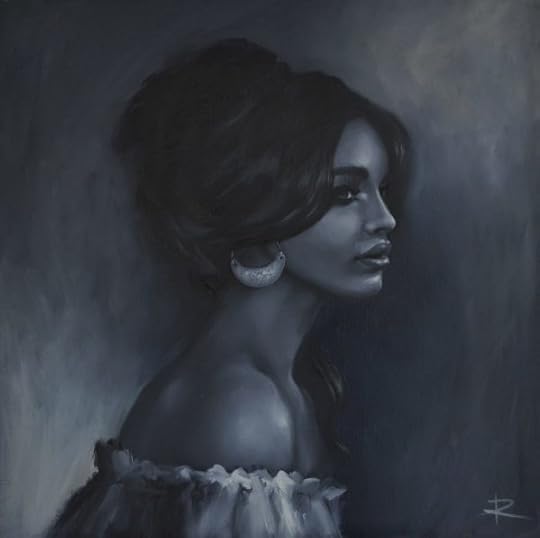
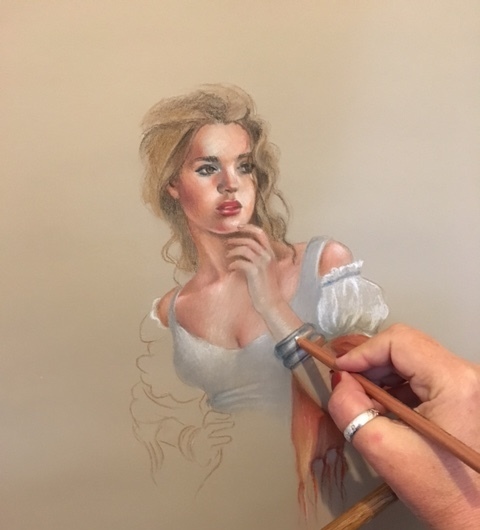
Here’s a portrait of my main protagonist. For now we shall call her “M”.
I’d also like to remind you, dear subscribers, of my exclusive offer to you: Digital ARC copies to read and review prior to publication.
What is an ARC, you ask?
An advance reading copy, advance review copy or advance reader’s edition (ARC or ARE) is a free copy of a new book given by a publisher to booksellers, librarians, journalists, celebrities or others, to read and review before the book is printed for mass distribution.
When the book is live, you upload your review to Goodreads, Amazon, your own blog etc. and share on socials with your friends and followers. You can have a copy in PDF or .mobi for Kindle format.
If you’re interested, please email me at rosafedeleartist@gmail.com.
I’ll share cover images and all other information – including international publication dates – soon. Don’t forget you can follow me on Instagram @rosafedele, Twitter @rosafedeleart and Facebook too.
So excited!
Rosa x
Privacy Policy: Dear art- and book-lovers, just wanted to take a moment to assure you that your privacy will be respected at all times; I will never spam, your email address will never be shared with others and you can unsubscribe at any time. Rosa x
December 11, 2017
“If you can’t say it at Christmas, when can you, eh?” – Love Actually

Well, what a cracker 2017 was, and so keen to jump into 2018 with both feet! And, as Natalie says in Love Actually (don’t tell me you don’t love that movie too!):
“If you can’t say it at Christmas, when can you, eh?”
My heartfelt love and thanks for all your support this year – I really couldn’t have done it with you, my constant cheer squad.
You’ve probably noticed on Insta and FB that I’ve been capping off the year with a small series of fun and fanciful paintings in perfect keeping with our celebratory mood and, because it’s nearly Christmas, I’d like to offer them to YOU, my faithful subscribers, first and before anyone else.
Here’s my G&T series …
Oil on Linen
30cm x 30cm (12″ x 12″)
For 24 HOURS ONLY each painting will be available
on my Store for the
Special Pre-Release Price of AUD$500 each*
Express Next Day Delivery to Sydney Metro Area
Rest of Australia 2-4 days
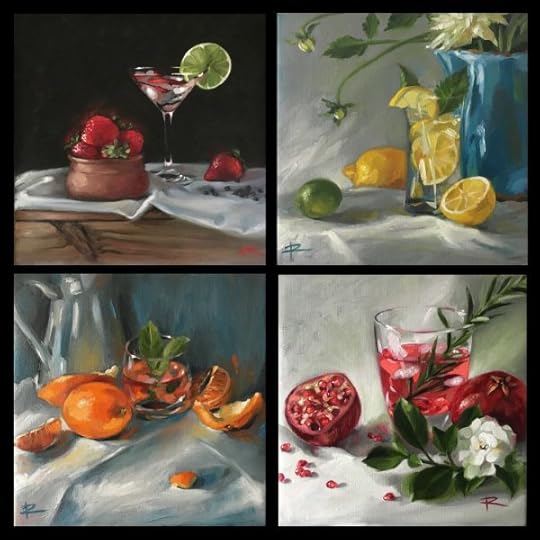
After 24 hours these luscious little treats will be released to the public on all stores for AUD$700 (Australia) and AUD$800 (International) .
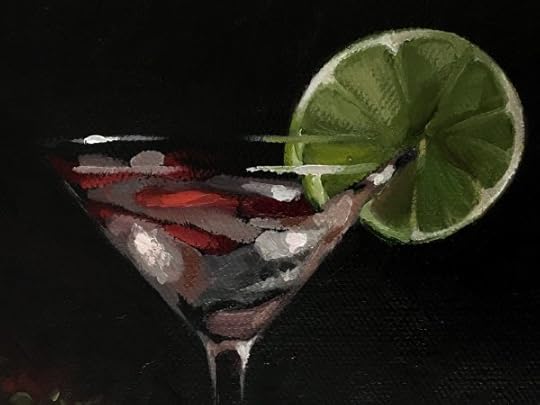
G&T Strawberries and Black Pepper
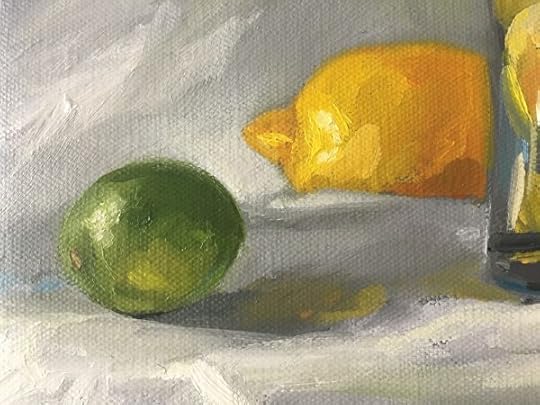
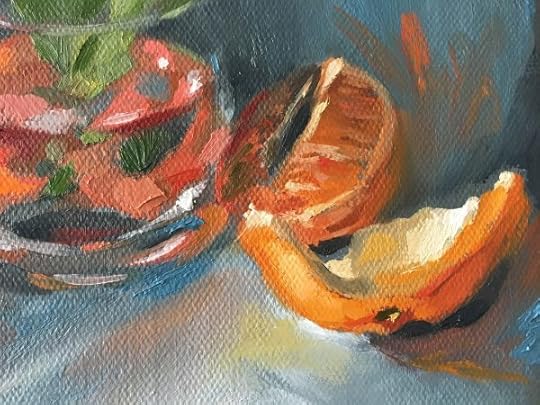
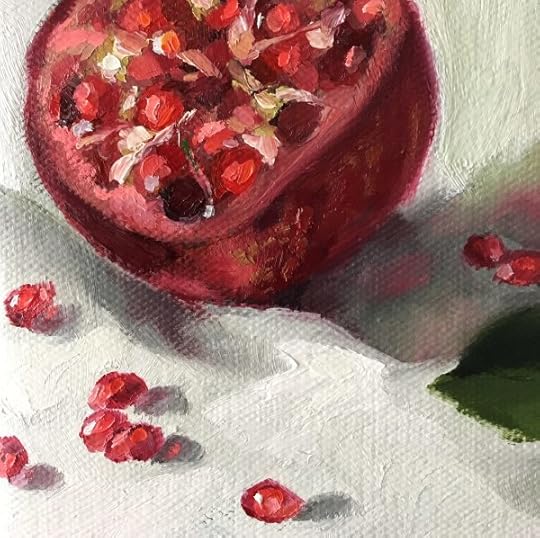
*AUD$500 within Australia only. For International, please add AUD$50 delivery.
Expires 13 December 2017 17:00 hours EST
Update on Book Two:
Every week now I’m asked (especially at every Christmas party!) when the next book will be ready … so here’s the latest:
The manuscript is complete and now in the capable hands of my structural editor Alexandra Nahlous – you may have read some of the books Alex has edited: The Husband’s Secret and The Hypnotist’s Love Story by Liane Moriarty or The Slap by Christos Tsiolkas, amongst many others.
The illustrations are done and, come the new year, I’ll be starting the design of the cover, followed by a complete proofread and format and then (the fun bit for you, lovely readers) distribution of ARC copies to volunteers for review and preparation for THE LAUNCH.
Don’t forget to drop me a line if you’d like to be an Advance Reader, ie. the recipient of a free e-copy before the final book is printed for mass distribution, to read and review in return for uploading your review to Goodreads, Amazon, your own blog etc. prior to launch.
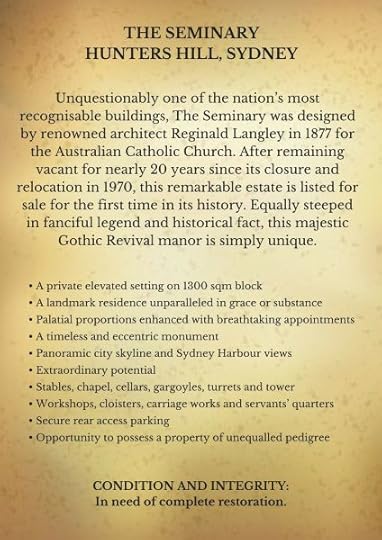
Finally, wishing you all the most wonderful, restful and, most importantly, fun! Christmas. I leave you with the opening page of Book Two, just to whet your appetite for what’s to come,
Rx
October 11, 2017
BREAKING NEWS
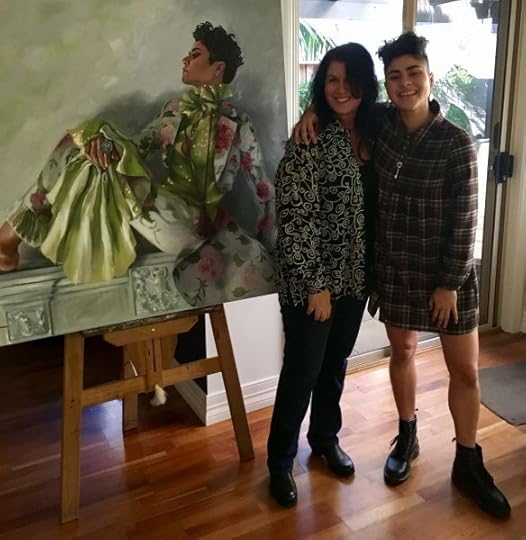
On the day that Jess came to see her finished portrait for the first time.
Firstly, I’m delighted and absolutely honoured to have been selected as Finalist in the 2017 Portia Geach Memorial Art Award with my portrait of Jess Cerro aka Montaigne.
For those of you who’ve not heard of this award … imagine the Archibald Prize, but for Australian women:
“The Portia Geach Memorial Award is Australia’s most prestigious art prize for portraiture by women artists.
The Award was established by the will of the late Florence Kate Geach in memory of her sister, Portia Geach. The non-acquisitive award of $30,000 is awarded by the Trustee for the entry which is of the highest artistic merit, ‘…for the best portrait painted from life of some man or woman distinguished in Art, Letters, or the Sciences by any female artist resident in Australia during the twelve months preceding the close date for entries.’
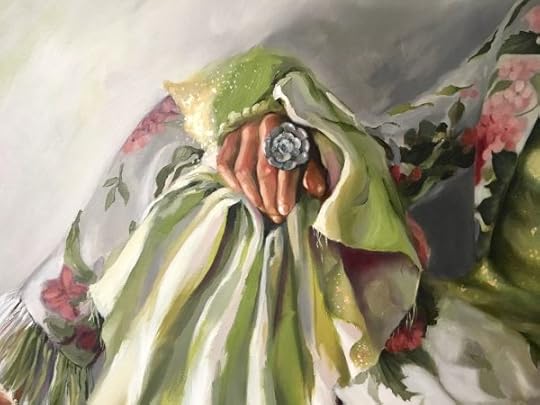
Detail of Montaigne’s hand. The costume was created by Melbourne designer Madeleine Sinco from up-cycled haberdashery and passementerie.
Born in 1873 in Melbourne, Portia Geach studied with John Singer Sargent and Lawrence Alma-Tadema in London and was also a lifelong activist for women’s rights. She established the Housewives Progressive Association of New South Wales, The Housewives Magazine in 1933 and the Progressive Journal two years later to promote issues such as equal pay for women and the right to hold public office.”
The exhibition will be held in the S.H. Ervin Gallery, Observatory Hill, Sydney from 20 October – 26 November 2017.
You can read more about Montaigne in my July post, Blessed Are the Cheesemakers.
My second piece of exciting news:
DO YOU HAVE AN ORIGINAL 2015 EDITION OF THIS BOOK?
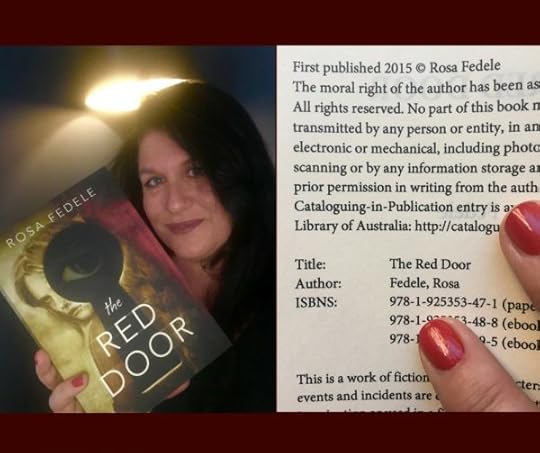
Well, like an unused Penny Black stamp or the 1964 James Bond Aston Martin DB5 (yes, just like that!!) the 2015 edition of THE RED DOOR is now officially a COLLECTOR’S ITEM.
TRD has been pimped, primed, buffed and polished … with a few little special edits of my own. I’m calling it The Director’s Cut. And I’ll be interested to see who can spot the changes.
I recommend ordering a copy of the new version from your favourite bookseller this weekend!
And for those of you who prefer their books delivered digitally, the Kindle and eBook is only 99c from today until 31st October. It’d almost be rude not to download it, n’est-ce pas?

Here’s the links:
And here’s the third piece of exciting news (yes!):
Book Two is drawing ever closer.
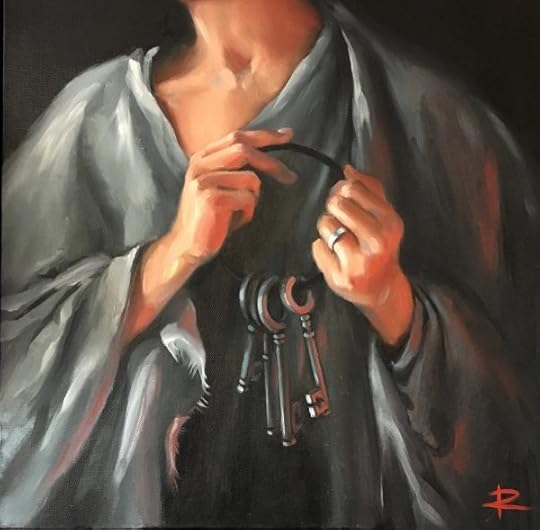
A sneaky peek of one of the characters from the next book.
I can’t tell you what the title is yet, but I’m offering my subscribers the opportunity to receive digital ARC copies in early 2018.
What is an ARC, you ask?
An advance reading copy, advance review copy or advance reader’s edition (ARC or ARE) is a free copy of a new book given by a publisher to booksellers, librarians, journalists, celebrities or others, to read and review before the book is printed for mass distribution.
When the book is live, the reader uploads their review to Goodreads, Amazon, their own blog etc.
If you’re interested, please email me at rosafedeleartist@gmail.com and I’ll place you on the ARC list.
Have a wonderful weekend everyone! Rx
September 18, 2017
“Everything is not said.” feat. Rosalie Ham, Author of The Dressmaker
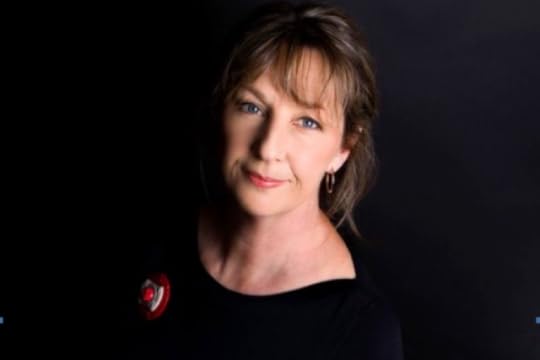
This month I’m honoured (and a fair bit excited) to hand my blog over to a novelist and screenwriter that all Australians will know. And pretty much the rest of the world too, I’ll warrant.
She describes herself as an “accidental novelist”. In novel-writing class, she got an assignment to write “a 500-word synopsis of your book”. ‘I had an idea and started writing it. Then you had to hand in 3,000 words, and then you had to hand in 10,000 words, and I had 30,000 words. It was only three weeks before I realised that this was the best “accident” that had ever occurred to me.’
Her iconic novel was first published in 2000. Nine years later it was taken up by producer , whom the author hadn’t seen for 30 years since they were at boarding school together and who recognised her own childhood (and the author) in the story.
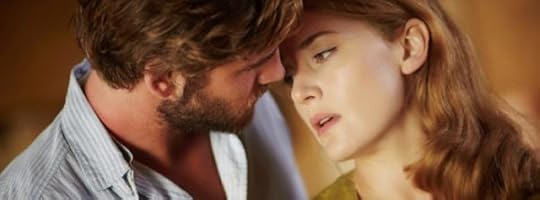
Director Jocelyn Moorhouse went on to adapt the book for the big screen. Then Kate Winslet said she wanted to be in the movie and so did Judy Davis, Liam Hemsworth, Hugo Weaving, Rebecca Gibney, Shane Jacobsen, Sarah Snook and many more fine Australian actors. And so they built the township of Dungatar.
A huge welcome to my guest – author of There Should Be More Dancing, Summer at Mount Hope and, of course, the worldwide phenomenon The Dressmaker, Rosalie Ham.
‘Though it isn’t usual,’ says Rosalie, ‘the story isn’t entirely unusual, so therefore it’s a successful story even without the red carpet at the end. It started where it always starts – childhood. Mine happened to be in a country town of 800 people. Not much happens all at once so you see most things.
‘You can’t hide in plain sight like you can in a city, so it’s rare anyone lies dead for more than a day on the kitchen floor, even if they did sleep with their cow. But secrets are spread like pollen. We kids knew why young couples suddenly married and we also knew where the adulterers met. Those were the secrets no one ever mentioned because secrets are ammunition as well as an Achilles heel, but the whole town benefited from knowing who the town kleptomaniac was.’
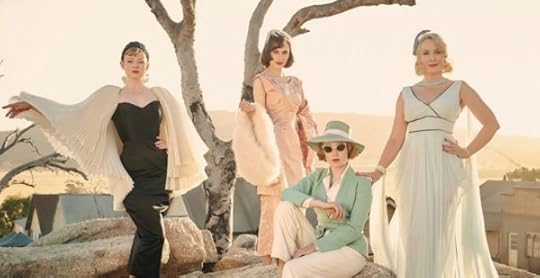
Sarah Snook as Gertrude, Hayley Magnus as Prudence, Amanda Woodhams as Nancy and Rebecca Gibney as Muriel in The Dressmaker.
‘We hear about the suspect paedophile, the “swingers” and the happily married couple with the middle kid who’s a dead ringer for the neighbour’s kids. There are blokes who wear drag to every fancy dress party and spinsters who have lived together since they “lost their fiances in the war” (but you only ever saw one set of sheets on the line).’
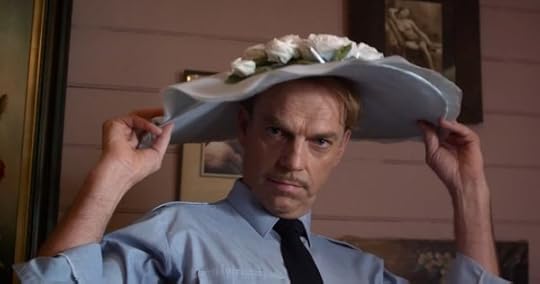
Hugo Weaving as Sergeant Horatio Farrat
Here’s a little piece on writing from a masterclass recently held by Rosalie.
EVERYTHING IS NOT SAID
by Rosalie Ham
Apart from the writing, the most interesting aspect of the workshop I recently attended was the energy in the room, specifically, its fluctuations.
There were eight separate energies present and those energies rose united in response to some writing and sank in the presence of the other kind of writing. Writing also worked when it worked to confront – the energies fractured, group lines were drawn even if the writing sang ‘TALENTED!” to all of us. The fractures confirmed that not everyone’s going to like writing just because it’s enlightening and illuminating, or because it works. And further to this, the whole workshop process confirmed what we know about the broader consequences of attempts at writing; that is, “good” writing doesn’t necessarily get published or sell millions of copies, and ‘less incisive’ writing can sell millions. Sales don’t reflect quality, and so the resulting conundrum is that “good” writing is a subjective thing. I suspect some of the writing in that room would not please all judges in some writing competitions but all of us writers, published and not, talented and not, came away from that workshop with salient reminders about what we are faced with each time we approach the process of turning an idea into a creative piece that works to unite, divide, enthrall, inform, shock … whatever it is we sit down to do.
It was the usual procedure: each of us submitted about 3000 words extracted from longer works – kid’s books, film scripts, novels, illustrated or not. We offered and received responses and took advice on how to make those manuscripts proceed, either to another draft or to an agent or publisher. Some of us were already published, some had a public platform of some sort, some not, but all of us were forced to read and respond to writing celebrating genres we weren’t naturally drawn to. Each of us had various strengths in the comments we offered. Some were good on transitions, some good on plot points, some on POV, others on subtext … or lack of it. Some worried about formatting.
‘You need to indent a new paragraph and dialogue needs a separate line… it has to do with tone, themes and ideas about themes, it has to do with action and how many times you write She said, she walked, she asked, she cried, she went...’
Others had a fine tuned sense about believability: ‘… but how can he say that when he’s only known her for half a page … I’m just wondering if it’s it feasible to have a pregnant ghost? You said the car was dark blue but it’s at night so do we need to know the colour… It’s not called a gun – you said it was a .22 so it’s called a rifle…’
And emotive writing:
‘The main character is a sexist misogynist. I find that offensive.’
‘He’s meant to be a sexist misogynist.’
‘But I find it offensive, no one would put up with that, surely?’
‘But she puts up with it because she’s like him. They’re like-minded, and they’re characters. It’s fiction!’
‘I wouldn’t want to read that kind of story.’
‘Right. You’d choose something else to read, but people like this do exist and people who like to read about them exist too … but what did you think of the writing?’
And someone asked me: ‘What’s the big deal about irrigation water anyway?’ and so I explained the history of irrigation in the Murray Darling Basin, and told myself again, ‘I don’t care of only ten irrigators buy my book, it’s the story I need to write.’
Even worse, I am a fan of the “what’s left unsaid”, because what’s left unsaid shouts the truth. Sometimes writers don’t hear that kind of language and never will. Neither will they hear the words ‘You do not write well’ no matter how loud. And it’s got nothing to do with preferences for genre, style or subject matter. It’s everything to do with what the qualities of what the author is presenting and how the words are on a page, where words sit in a sentence, how meaningful the sentences are and sentences sit in paragraphs and, of course, the larger story. And so on. And let’s not forget it’s all subjective … like when readers say: ‘… but I like being told everything.’
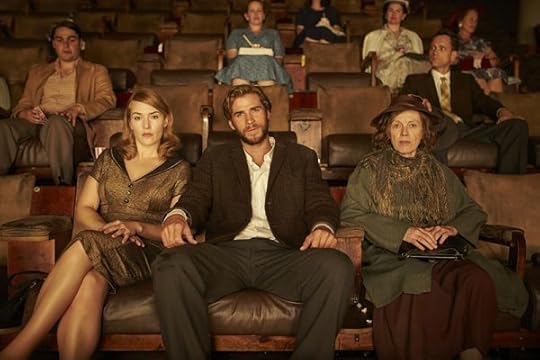
Kate Winslet as Tilly, Liam Hemsworth as Teddy and Judy Davis as Molly Dunnage
But, back to me.
Along with less is more, my other “thing” is active, present tense, and mostly I like to put the reader close to the action. And so my lead pencil was 9% employed applying the horizontal line to the following:
‘He had seen her that morning. He had watched her go to the laundry where she taken the bucket from the white storage cupboard. Then she had gone to the cow taking the yellow bucket with her, letting it swing in her hands as her hem skimmed the lush green grass, and the bucket was there now, waiting for her now, full and rancid… because she had forgotten it. She had forgotten it for love. For love of him. And now he watched her go towards it and reach for it, and he saw that she was shocked when she scooped some of the milk into a blue cup …’
And there were more words to cross out:
‘She lifted the blue cup, held it, looked at it, gasped, and put her hand to her chest. She was shocked. She turned, started to walk but stopped to look again at the curdled milk in the blue cup in her pale hands. She lifted her head, rubbed her forehead with her left hand then suddenly hurried (and hurried) away…’
Less is more.
You can disagree with me, but in our workshop room on that cold day, when one particular piece of writing was presented for scrutiny, the energy dissipated and a telling silence descended. Suddenly people needed to go to the toilet and others left to make coffee. Those of us left hiding behind our upheld pages cleared our throats and read our comments silently in the tense quiet. We were united in the absence of energy.
Finally, one brave reader shuffled her pages, cleared her throat and declared, ‘Your descriptions are vivid,’ and we were away.
‘Yes, they show great promise!’
‘But less is more,’ someone added, ‘And this is so in regard to your jokes.’
‘Oh! The jokes! But, perhaps just one per paragraph. People in real life don’t make that many jokes in one conversation …’
‘But the descriptions are very vivid.’
‘My reading stalled on the third page of description …’
‘Yes, just a few words to evoke a sense of the surrounds – a smell or one visual image rather than have her walk through the field for five pages?’
And so we were able to say to this writer: ‘…it’s about the dramatisation of the life force of a character in a situation, it’s not about flexing your writerly muscles and putting all your ideas in one scene.’
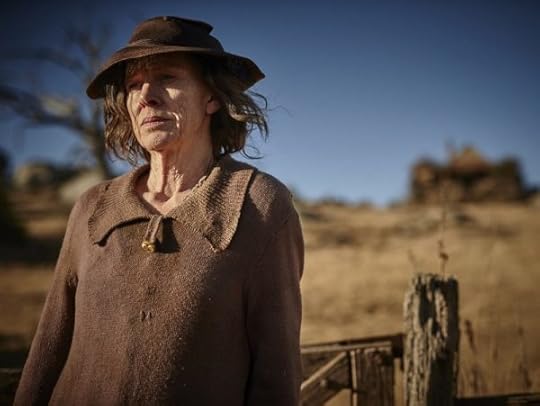
And finally someone said, ‘I wasn’t sure where I was heading. I was reading reading reading but nothing was happening–’
‘Though the descriptions were vivid.’
And someone said, ‘Me too. I couldn’t figure out if the cow was the main character or the girl carrying the yellow bucket …’
And then, The Right Question. ‘What’s the story about anyway?’
The writer looked around the room, ‘It’s a love story.’
‘Right,’ someone said, ‘but what are you saying about love?’
The author looked at her pages, shuffled them.
Then another question, ‘And where does this five page scene sit in the story?’
‘I’m not sure yet …’ she said, faintly.
‘Right. OK then, tell us what your main protagonist wants?’
The writer sat back in her chair and we were united in the absent energy, united by the other kind of writing. But some of us remembered with fondness that one piece we once submitted that taught us the most.
At least the descriptions were vivid, and they weren’t describing irrigation channels and the intricacies of water flow.
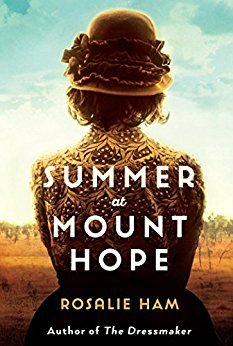
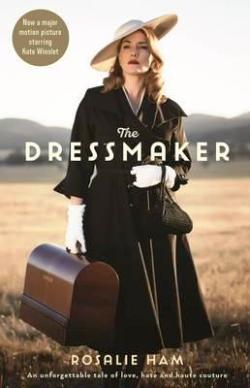
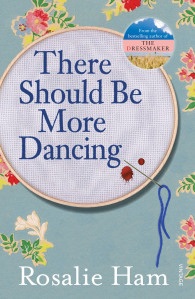
Wow! Thanks so much, Rosalie, for sharing your insights on writing! Rx
If you’d like to connect with Rosalie Ham, follow her on social media or buy her books (which I highly recommend you do – The Dressmaker is a cracking story, delightfully written and you’ll pick up those little things that you may have missed in the film), here are her links:
July 29, 2017
“Blessed are the cheese makers” – Monty Python
Another year and another Archibald Prize, wow! Unlike last year’s masterful and painterly depiction of Australian icon Barry Humphries (aka our beloved Dame Edna) by Louise Hearman, this year’s winner, Mitch Cairns, with his modernist portrait of artist Agatha Gothe-Snape has sparked nothing but controversy and chaos.
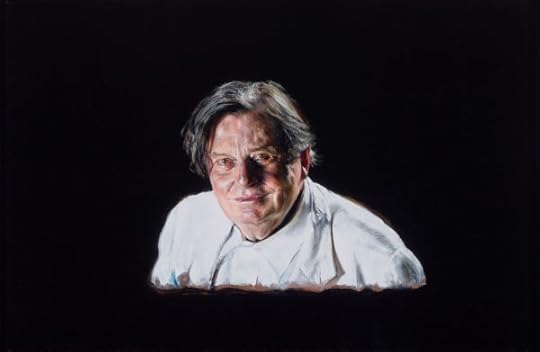
Barry Humphries by Louise Hearman, Winner of the Archibald Prize 2016
Former trustee of the Art Gallery of NSW and 2005 Archibald winner, John Olsen, AO, OBE was quoted as saying: “I think it’s the worst decision I’ve ever seen.” And Archibald 2012 winner Tim Storrier, also a former trustee, said the current trustees could “irreparably” damage the most sought-after award in Australian art.
What do you think?
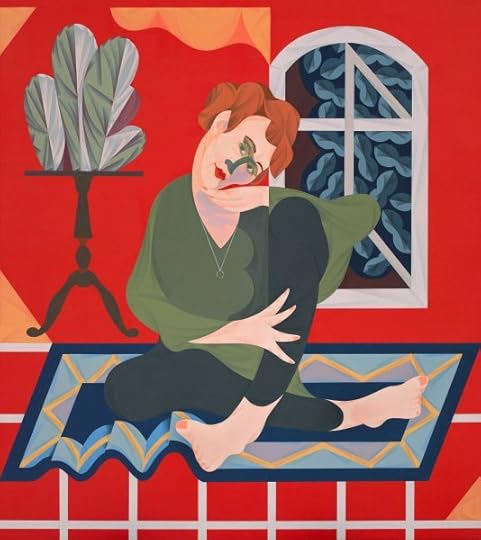
Agatha Gothe-Snape by Mitch Cairns, Archibald Prize 2017
And here’s my entry into the Archibald, Australian singer-songwriter MONTAIGNE.
My portrait of singer-songwriter MONTAIGNE
From Triple J Unearthed High finalist in 2012 to ARIA Award winner in 2016 for Breakthrough Artist of the Year, Montaigne (aka Jess Cerro) has worked with artists such as Hilltop Hoods, Megan Washington, San Cisco and Japanese Wallpaper, to name just a few. Earlier this year she supported Cyndi Lauper and Blondie at A Day on the Green, and she’s currently working on something top secret with Vogue … SSHHH.

While I was taking a break after completing the manuscript for my second novel, I heard Jess’s voice, sounding like an exquisite fusion of Björk and Kate Bush, on Triple J. To me, she appeared to evoke the New Romantics of the ’80s: Adam and the Ants and Spandau Ballet, Boy George and Duran Duran, an era I’m utterly fascinated with.
And when, on the day of our first sitting, Jess emerged in a decadent costume of frills, flounces and passementerie by designer Madeleine Sinco I just knew I was going to have fun with this painting!
Thank you, Jess, for allowing me to capture in you full glorious colour, you’re a gem.
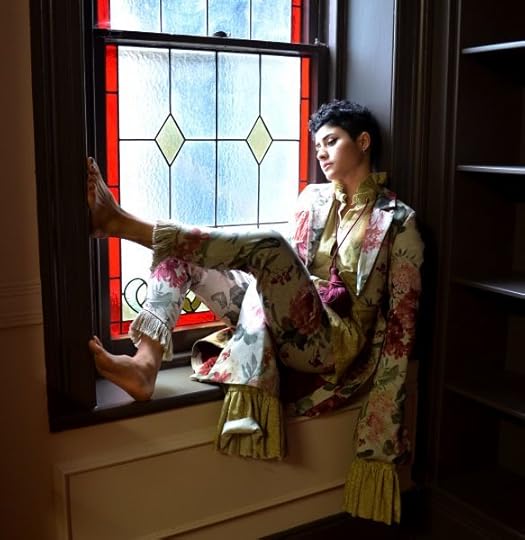
This photo was taken at our first sitting – I just love how restful and pensive Jess looks!
Can’t sign off without leaving you with a few words, but after last month’s heavy piece, here’s something a little lighter (and sillier!), and set in my favourite part of Sydney, historic and now ever-so-chic, Balmain. Enjoy.
“Claudia begged to come with us for the trip to Balmain.
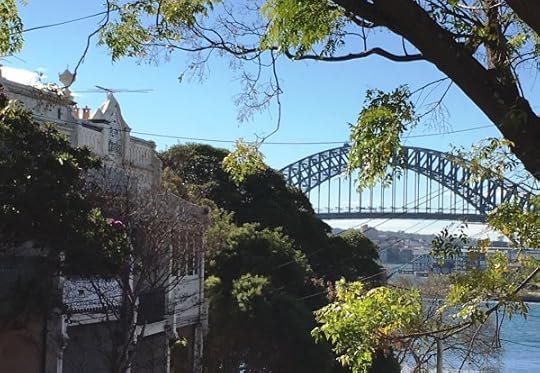
As we drove into the village, Annie gave us a running commentary on one of her favourite parts of Sydney. She detoured to show us the old working mans’ cottage in which her first husband had grown up. She manoeuvred her way down tiny one-way lanes as we cruised leisurely around the waterfront (‘This entire headland was once an old Caltex fuel depot …’).
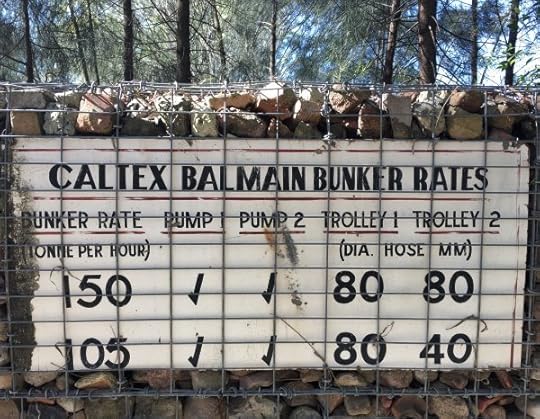
We passed tiny brick and stone homes squeezed cheek by jowl, grand old terraces with spectacular harbour views, and contemporary structures dropped inharmoniously betwixt and between. We idled in front of the homes of well-known actors, television personalities and artists (- lives here, don’t you know!) and slowed to ogle a film crew in action in front of a quirky little café.
An old car, gleaming scarlet with sunlight bouncing from its sensuous curves, was parked in front of the ancient service station which Annie pointed out as the old Balmain Garage (‘Been there since I was a little girl. It’s an icon around here, you know …’).
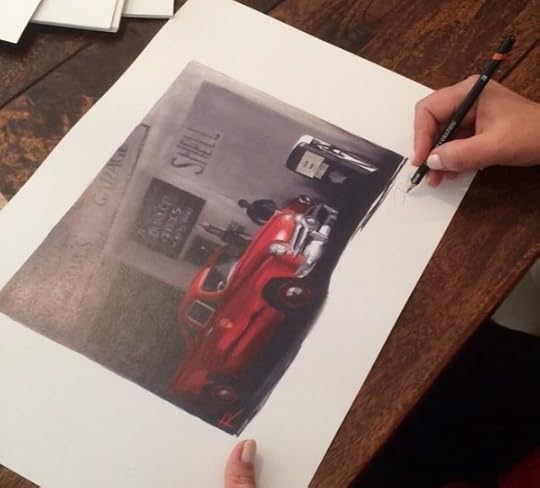
The Old Balmain Garage
Would you like your own signed print of my original oil painting? Pop over to: http://rosafedele.com/store/
We crowded into the newly opened cheese shop. Attractive and well-dressed patrons crammed loaves of fresh olive and rosemary bread, jars of chutney and cedar wood boxes of soft French cheese into raffia shopping baskets. Pungent waves wafted across the store as the doors to the cheese room opened and closed. Already a queue was formed at the long counter. After picking out a few delicious items, I waited to pay.
‘Claudie, I need eggs. Grab me a carton, would you?’
‘Welcome ladies – you’ll just LOOOVE those eggs,’ gushed the man behind the counter. His name tag proclaimed: ‘Hi I’m Serge. The Balmain Cheese Emporio. Cheese – milk’s leap toward immortality!’
‘Why, what’s so special about them?’ asked Annie.
‘Do you know – they come from a farm in beauuuutiful Bungendore! All organic, biodynamic, nothing unnatural! The farmer allows the chickens to roam in huuuge paddocks. Do you know he parks old double decker buses all over the farm, for the chickens to roost in?’
‘Does he now?’ Annie raised one eyebrow.
‘He has special dogs trained to keep away the foxes.’
‘Really?’ I looked at him, disbelieving.
‘What’s biodynamic?’ Claudia asked nobody in particular.
Douglas (‘Hi I’m Douglas. The Balmain Cheese Emporio. Blessed are the cheese makers.’) joined in. ‘Every chicken has its own name!’
‘NO!’ Highly improbable, but we humoured the two providores.
‘And once a month, the farmer removes the cocks to give the chickens a rest!’
‘Imagine that?’ Annie’s other eyebrow went up. ‘If only we could all remove cocks once a month to give ourselves a rest!’
We tumbled out of the shop, and began laughing hysterically as we weaved back and forth across the pavement, tripping over each other on our way back to the car.
‘Cocks!’ Claudia kept repeating, tittering away.
It was only when we were halfway home that I said: ‘Do you know how much those eggs were? Eight dollars!’
‘How much?’
‘It’s the extra added Cocks,’ Annie proclaimed, with a solemn wink.”
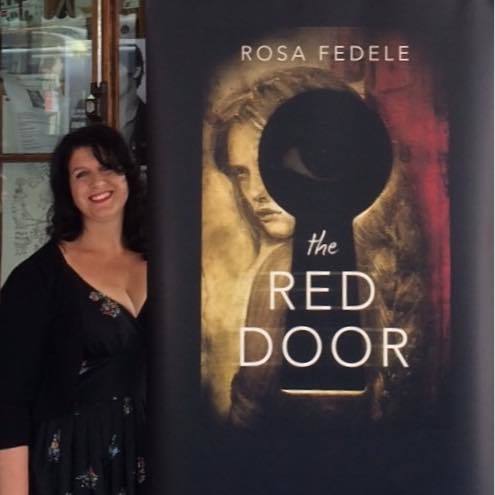
Grab your copy of THE RED DOOR at Amazon or iBooks, links below. Rx
June 26, 2017
“His bed was in the quarter which was once called the Ward for the Criminally Insane …”
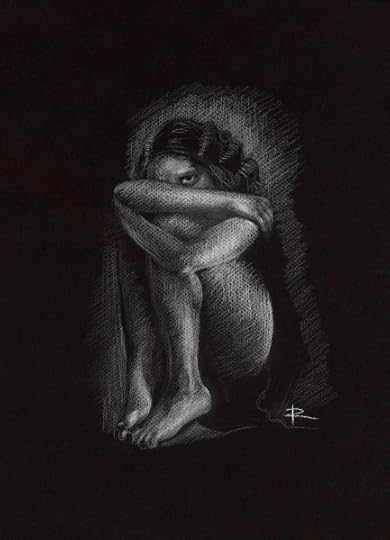
Another excerpt from THE RED DOOR in which we visit the notorious Kirkbride Block at Callan Park Hospital for the Insane.
The insane asylum, located in the grounds of Callan Park, an area on the shores of Iron Cove in the Sydney suburb of Lilyfield in Australia, was used for the housing and treatment of patients from 1878 until 1994. Famous inmates included Louisa Lawson, Australian suffragist, (mother of poet Henry Lawson) together with her sons, Charles and Peter; and (all my artist friends will love this!) J. F. Archibald, editor and publisher of The Bulletin and founder and namesake of the Australian Oscars of portrait painting, the Archibald Prize.
Trivia of the Day: A theft occurred in 2003 of thousands of medical antiques from the Callan Park Hospital for the Insane, including medical and dental instruments, lithographs and furniture, and a human skeleton!
“Wearily, and with a sigh, he clipped the lens cap back on. The deluge was far too heavy and obscured any prospect.
He wouldn’t let the rain dampen his spirits, though. Dampen his spirits, he chortled. He still had it! Today he was feeling quite well, cheerful almost. Sometimes luck was on his side. Like the unexpected encounter two years ago when he was still a guest at the Callan Park Hospital – he remembered the day clearly.
His bed was in the quarter which was once called the Ward for the Criminally Insane; in these more “enlightened” times it was simply known as Ward 18, and it could have been the closest ever to what he imagined hell might be, if such a place existed. The walls of the grand edifices which housed the institution, so venerable and elegant from the groomed lawns, contained a rotting society with the inevitable selection of brutes and sadists amongst both the misnamed “carers” and the wretched inmates. The hallways were rank with the essence of urine, misery and disinfectant, and tawny sandstone was imbued with the silenced screams of forsaken minds and tortured bodies.
The new patient’s arrival caused a stir amongst the populace; the rumour which preceded him was that he was a disturbed and violent murderer so, of course, everyone was eager to catch a glimpse. Muscled, tanned and blonde, the Nordic giant stood out like dogs’ nuts.
‘G’day Sven!’ He walked straight up and greeted the new resident with an audacious handshake on the first morning. The man refused to smile so, over the next few weeks, he began to entertain the surly and morose patient with stories about the staff and the other internees, often more for his own amusement, and to break the tedium, than for any other reason.
There was Bradley, the nurse; a thick, solid man with an ugly scar which disfigured his face from eyebrow to jaw. He had also once been a security officer at Maitland Gaol; his eye gouged out by a vengeful convict with a lethally sharpened toothbrush. During the day, Bradley was particularly good at joking with the patients, setting them at their ease and clapping them jovially on the back. When a fellow staff-member was feeling particularly low, he would pop out his glass eye and waggle it about until he managed to winkle out a smile, or even a snicker. But at night, long after the cold and unforgiving fluorescents were extinguished, Bradley was also particularly good at ambushing troublesome patients and inflicting indignities and brutalities, evidence of which was never recorded in the Case Book.
He warned him about Charles, who had been a paediatrician, and always appeared so urbane and cultured. Charles was fond of discussing the works of Twain and Hemingway, and his eyes would light at the opportunity of discussing the poetry of Wilde with a new audience. Charles was also a self-mutilator and, whenever possible, would suddenly and gleefully re-open his wounds mid-conversation and proceed to flick his blood upon the newest, and unwary, victim.
He gave him the heads-up on Vanessa, the groundsman’s wife. She was known around the mens’ block as Vanessa-the-Undresser and she was always happy to accommodate “the lads” whenever they could stray away from the screws long enough to hightail it across to the Oriental Gardens. In his opinion, a hand-job from Vanessa was far more therapeutic than any chemical, medical or surgical procedure the custodial morons of the Callan Park facility could administer.
In the end, his persistence paid off and the, by then, not-so-new patient began to open up. He heard about the man’s early years, and how it was growing up in Malmö. About his adored wife, and the infant son he was yet to hold. He told him about how excited he was to build his own home, and showed him the plans and elevations he sketched up with crayon on butchers’ paper during the long, empty nights in the Kirkbride Block. He told him he hadn’t actually murdered anyone, although he’d come close. And he told him about the “whispering” which began to contaminate his mind like an insidious worm, gnawing and niggling, while he had been employed on a short-lived and disastrous renovation project not so long ago; a “whispering” which he had trouble ignoring, and which disturbed him still.
A tenuous and fragile comradeship between the two began to gradually form, and it made living at the Hospital just a little easier to bear.”
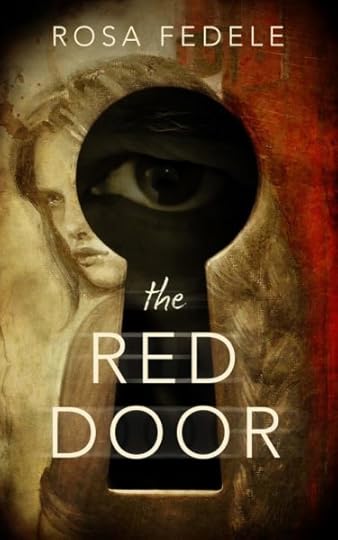
Grab your copy of THE RED DOOR at Amazon or iBooks, links below. Rx
May 24, 2017
“He’s watching me.”
Flashing back to 2012, on the day I first walked past that mansion in Glebe, one of the oldest suburbs in Sydney.
The magnificent old building riveted and mesmerised me. It was fronted by a brightly painted door, a glossy façade, and I began imagining what the door might mask, what it could have concealed over the last 150 years: nasty, shameful secrets, possibly a poor family’s misfortune and tragedy, rotten crimes and heaven knows what other unholy messes …
These are the first words I wrote.

“He strode past, all sun-burnished skin and bleached hair. It was his swagger which drew the eye: a compelling mix of insouciance and arrogance, achieved only by those who are either extraordinarily attractive, or very sure of themselves. I had secretly named him Harrison Ford, due to his startling resemblance to the actor. His old blue Falcon was parked at the kerb. He always parked in the same shady position, under the claret ash. Today he wore a tight green T-shirt that read ‘What Cup?’ He nodded a casual hello and bounded up the steps, two by two, into the main house, leaving a tantalising trail of fresh cologne. I gaped as his cheeky bottom in his cheeky jeans vanished from view.
‘Gorgeous!’ breathed Anne into my ear. ‘If I hear another word about that bloody America’s Cup, though …’
I jumped. ‘Where did you come from?’
‘So, who is he?’ Anne asked instead. Her cheeks were rosy and a mischievous glint shone in her eyes.
Anne was a joyous creature, brimming with an energy and effervescence that I’d never seen in a woman her age; she had easily ten years on me, but I marvelled at her ability to run circles around me. She popped by every other day during the building project; the builders adored her, and Anne adored them back. Especially Antonino. They flirted shamelessly, and she would swing her hips as she passed by him, giving me a secret wink.
Purchased as a deteriorating dump two years ago, several well-meaning people suggested I demolish Rosalind and build modern apartments. Level the house? I despised the idea. It was the charming sandstock brickwork, the bay windows and the gracious staircase that originally drew me – the detail in the arches and the cornices, the old elegance. The tower. It was once a prestigious home, but in the last century Rosalind had functioned, amongst other things, as a schoolhouse, a guesthouse and finally a low cost boarding house. When first I saw the old place, it was practically unliveable.
Four flats, two up and two down – a ground floor wing extending to the western side, previously used as a coach house. Part of the roof was missing and water leaked from somewhere through into the stairwell. Mould was creeping up the walls, and torn and discoloured linoleum covered all the floors. The kitchen cupboards were rotten and dirty, with cockroach and rat detritus in the corners. I couldn’t even bear to remember the condition of the bathrooms, especially Number One’s, which had an unidentifiable brown stain in the ceiling. It was squalor. And the smell!
James, the owner of the construction company, introduced his hotch-potch team of builders and they swarmed in, oozing confidence, happily swinging tools and cursing – a United Nations of trades. Antonino the foreman, smooth and Italian. Danik the beer bellied tiler, leering and saucy. Bryson the charming Welsh electrician. Jim the plumber, jolly and convivial. Teddy-Have-A-Chat, the painter. And Johan the carpenter. He was Danish, or Swedish or Finnish – I couldn’t tell which – and it made no difference anyway, as he left the job months ago in a cloud of uncertainty and disturbing rumours. It had been all been exceedingly bizarre.
James extolled Johan’s workmanship from the outset and particularly wanted to bring him in to restore the intricate timberwork of the balustrading, skirtings and doorways in the entrance and first floor gallery of the house. It was specialised work, and James was insistent on using Johan’s expertise. Then, an inexplicable series of unhappy accidents befell the tradesmen working at the top of the stairs. Johan’s assistant was hospitalised several weeks into the job with a dreadful injury to his arm, and replaced with a gruff Italian named Giosofatto. Not a month passed and this man walked off the site, waving his arms and babbling in a continental fury. Teddy told everyone who would listen that he had seen Giosofatto standing at the gates afterwards, staring up at the gallery window and crossing himself. James then called in a favour from an old friend, a skilled artisan who was working on a magnificent old mansion in the prestigious suburb of Vaucluse, who agreed to assist Johan in completing the joinery. He lasted a whole week. After complaining about his power tools shorting over and over, and that he didn’t appreciate being “watched” and “laughed at” by the tenant who lived on the second floor, a sudden debilitating migraine overcame him and his wife turned up to collect and take him home. Within days, Johan resigned from the job and the story which swept amongst the gossiping tradies was that he had assaulted his wife’s employer, been arrested and then admitted into a psychiatric care facility.
What remained of the restoration work was completed by Antonino. A few more of the tradies working inside the house sustained minor injuries, and poor Bryson managed to electrocute himself while attending to a recurring fault in the lights above the gallery. But James reassured me, saying it was all par for the course. ‘Bound to happen on a big job like this,’ he said.
Finally, the building was stripped back, re-plumbed and re-wired. The roof was repaired with reclaimed slate tiles, and wonderful wood floors revealed. Modern kitchens and contemporary new bathrooms were installed, the interiors painted and the floors sanded and polished.
On some days I stood at the front of the house, looking critically at the building, almost giddy with the magnitude of the project I had taken on. At last, the place looked like the elegant residence and coach house it was meant to, and not the wreck of the Hesperus. A glossy red door now fronted the main building with the original granite steps leading down onto the courtyard. Standing beside the resurrected stone fountain, I surveyed Rosalind with an empowering sense of pride and ownership. My chest throbbed with a warm bloom of well-being and, dared I hope, happiness?
Anne and I goggled as Harrison Ford’s figure disappeared through the red door and then craned our heads up, mouths open, to Number Four’s window on the second floor. There was no movement, and no sound.
‘Worked it out yet?’ Anne persisted. ‘When are you going to ask your tenant who he is?’
‘Well, I’m not going to ask her something like that! That would be too blatant,’ I changed the subject. ‘So, what are you up to today?’
Anne gave me a peck on the cheek and a pat on the bottom, and then bustled out through the wrought iron gates, letting them slam behind her as she trotted off towards the village. I winced. Those gates are worth a small fortune, please stop slamming them.
The fountain bubbled, young water plants waving and crystals of light glistening as the water spilled over the edges. It had cleaned up beautifully, the cracks and missing chips adding to the fountain’s charm and I trickled my finger along the fluted edge. The new border of young native rosemary rippled in the breeze and the gravelled courtyard shone in the sunlight. As Mary Poppins might have said, it was practically perfect.
Except for Number Three. Taking one last glance upwards before I went in, my eye was inevitably drawn towards the dowdy, yellowed lace curtains. Had they moved? I was sure they had. They were now slightly pulled to the right.
‘He’s watching me.'”
Book Two is in final editing stage, no release date yet, but I’m getting excited! Do feel free to subscribe for immediate updates.
In the meantime, if you missed THE RED DOOR you can head over to Amazon or iBooks to grab your copy now! Rx


