Mohammed Faris's Blog, page 45
December 26, 2015
Marketing Design Volunteer Required

ProductiveMuslim started as a simple blog driven by Abu Productive’s vision towards inspiring others to lead productive lives. Today, the blog has developed into an established platform on productivity — managed by a virtual team of more than 20 volunteers from around the globe.
As we continue to grow and consistently seek to reach greater heights, we’re in need of some more helping hands.
What do we need help with?
We are looking for a Marketing Designer Volunteer to do the following:
• Support ProductiveMuslim.com in online/offline marketing campaigns by designing suitable posters, leaflets, online banners, social media covers, etc.
• Maintain the branding of ProductiveMuslim.com in all our online/print material.
• Provide design input/feedback into major website upgrades/redesigns, e.g. ProductiveRamadan.com.
What’s in it for you?
• Flexibility: You have the freedom to work how you want, where you want. We focus on results.
• Personal and professional growth: As part of volunteering with the ProductiveMuslim team, you’ll be part of a dynamic, ever-growing, ever-learning, productive Muslim team. You’ll gain insights into how decisions are made and some of the major challenges that companies such as ours face, and you’ll be part of the ups and downs of running an online organization.
• Training: As much as you’re helping us, we want to help you! Our dream for each of our volunteers is that they come out from the experience with as much learning and skills that they can put to use for their future work and home life. Therefore, we commit to offer you free or subsidized access to relevant training programs that will improve and add to your current skill set and stand you in good stead for the future.
• Reward: In this life of inspiring people and turning their lives around for the better and the reward in the next life for the hard work dedicated to Allah’s  pleasure, in sha Allah.
• Reference: We are also happy to provide you a reference to future employers/colleges/university upon successful completion of six months working with us.
You’ll be a great fit if:
• You have intermediate/advanced proficiency in Adobe Photoshop & Illustrator
• You have an existing portfolio of good quality work
• You are someone with a design studio/career or experience and is willing to donate 3-5 hours per week for ProductiveMuslim.com
Do not apply if:
• You are looking for a hobby
• You are unable to commit time for this role on a daily basis
How to Apply
We’re looking for exceptional individuals who would add value to our work. Therefore, the application process is designed specifically to select such individuals and people we see to be best-fit with our team.
Here’s how the application process will work:
1. Complete the following design assignment:
1. Design a 750 x 422px ad banner for us that contains the following text:
• Simple Practical Guide to Developing Your Life Goals
• START THIS COURSE
Please also include the following imagery:
• ProductiveMuslim Academy logo (Click to download)
• a custom ProductiveMuslim ‘stickman’ (Click to download)
2. Send your design work along with a brief bio about yourself (Name, Age, Time Zone, Role you want to apply for) with the email subject Marketing Designer Application to aneesah[at]productivemuslim[dot]com.
3. If selected, you’ll be invited for a short interview (10-15 minutes) with the head of our Design Team.
4. After the interview, you should receive a reply (yes or no) within 1 week in sha Allah. This is where you’ll be invited to join our team on probation basis for 1 month.
5. Upon successful completion of your 1 month probation, you’ll be confirmed within our team and receive a welcome pack to ProductiveMuslim.com.
DEADLINE FOR ALL APPLICATIONS: 15 January 2016
We’re really interested for you to join us; apply early!
We get a huge number of applications so, unfortunately, it’s not possible for us to reply to everyone. Please bear with us if we take time to contact you. If you don’t hear from us, try next time, in sha Allah!


December 23, 2015
How to Have a More Productive Winter Break

Photo credit Henrik Thorn [flickr dot com/photos/henrikthorn/]
After a long semester of late night work on assignments, exhausting exams and deprivation of night sleep; winter break has finally arrived! Like many students, I intend to have a relaxing, stress-free break. However, there should be a limit to relaxation. Winter break should be approached with an organized plan to achieve a truly fulfilling and productive time. That’s what we’ll try to discuss in this article, in sha Allah.Many universities have about a month off for winter break. That’s 30 full days to make use of! Wouldn’t you hate going back to school with regrets that you haven’t achieved something meaningful during this time? We should learn how to organize our break to make the most of those days.
Prophet Muhammad  said:
said:
“The feet of the son of Adam shall not move from before his Lord on the Day of Judgement, until he is asked about five things: about his life and what he did with it, about his youth and what he wore it out in, about his wealth and how he earned it and spent it upon, and what he did with what he knew.” [Tirmidhi]
Allah will ask us about each hour we spent in our lives; be prepared to answer that question.
Know that if we do not take control of our time, it will control us and fill our time with laziness and unproductivity. There is a popular Arabic saying: “Free time is the playground of the Devil.” Shaytan wants to push us away from being Productive Muslims. It is in our own hands to stop him.
Therefore, I like to approach winter break with a plan set for what I intend to do each day of my break. The best way to organize your break is to divide it into three categories: leisure, religion and education.
Leisure with the right intention
Every person deserves a break to relieve stress. Students deserve it after all their hard work at school. Many activities can be done as leisure and still be a form of worship with the right intentions. Put down the electronics, turn the television off and stay away from social media as much as possible. This is the best opportunity to reconnect with your inner self and with your family and friends. With each hour you are spending scrolling the internet, you are making yourself an easy prey to fitnah and Shaytan. One hour of Facebook or Netflix could easily turn into two or three hours, if not worse. Take control of your time and do something that will benefit you on the Day of Judgment. Prophet Muhammad himself used to take time out of his busy schedule to spend time with his grandchildren, family and companions. He would make jokes and play with them.
Some suggestions to get you started:
• Read a book (Ex. Purification of the Heart by Sheikh Hamza Yusuf).
• Visit family members.
• Spend quality time with your parents. For example, ask them to tell you a story from their childhood.
• Do a kind act for them each day: cook them dinner, buy them a gift, help out around the house.
• Have a potluck with your friends.
• Watch a documentary.
• Start learning a new language.
• Take your little siblings or cousins to the park, library or carnival. Give them the attention you cannot give them when you are busy with school!
Revive your faith
There is no better way to spend your free time than in the remembrance of Allah . Allah tells us in the Qur’an:
“Remember Allah abundantly, in order that you become successful.” [Qur’an: Chapter 8, Verse 45]
Take some time to focus on strengthening your faith and expanding your knowledge. All Muslims need a faith booster every now and then. For those who are living in a country where they’re not surrounded by many practicing Muslims, sometimes they can slowly be pulled away from their religion without even knowing. By listening to influential lectures online, attending events at your local mosque or simply looking up the tafsir of a new surah, we renew our knowledge in our beautiful religion and remember the honor it is of being practicing Muslims.
Sometimes during the semester, we find excuses for delaying prayers such as being in class, finishing an assignment and so on. Even though those are not permissible excuses, we make them. In your break, use the time you have to pray on time, especially fajr prayer. Make it essential to pray each prayer at its right time. Start your day and end your night with the remembrance of Allah by doing adhkar and set a specific time during the day to read Qur’an, even if it’s a page after each obligatory prayer or five pages before you go to sleep. It takes 30 days to make or break a habit, so use this break to build important habits like these.
Some suggestions to get you started:
• Listen to lectures on your topics of interest online. You can find plenty of lectures on Bayyinah Youtube, Ilm Flix, Halaltube. Download podcasts to listen to them during your commute or shopping sprees.
• Look up the translation and/or tafsir of verses from the Qur’an to learn more about them.
• Make up your missed fasts from last Ramadan, now that Maghrib prayer is earlier in winter.
• Pray qiyam al-layl (night prayer).
• Read and/or memorize surahs from the Qur’an. You can also memorize the first 10 verses of Surat al-Kahf.
• Review surahs you have memorized.
• Volunteer your time with a non-profit organization, in a soup kitchen or at a homeless shelter.
• Start your own donation drive (clothes, food, etc.) with your friends.
• Learn a new hadith each day and try to apply what you learn.
• Ask your mosque for upcoming lectures or halaqas you could attend or participate in organizing.
Keep an eye on next semester’s work
Preparation is key to success. I like to get comfortable with my classes and schedule for the new semester before the first day starts.
Look up your new professors, ask friends about the classes you plan to take, purchase your textbooks beforehand and take a look at your course syllabus. The more comfortable you are with your classes and schedule, the easier of a transition you will have with your new classes. Also, if you know any of your new classes are going to be difficult, get a head start with your coursework.
Some suggestions to get you started:
• Ask friends for advice on your new classes.
• Look up the textbooks you will need. See if you can purchase used ones online.
• Look over your schedule and make sure your workload suits you.
• Email your new teachers for course materials and guidelines – if possible.
• Get a head start in your difficult classes.
Put it all together
Now it’s time to plan! Sit down for an hour and organize a schedule for each day you have in your break (yes, every single day!). Set your goal to complete one activity from two different categories each day, or three if you feel up for it. Be flexible though; this schedule is just meant to keep you productively busy. If you wake up feeling like doing something else, go for it!
Also, take advantage of Productive Muslim’s Taskinator to help plan your day and achieve your goals. Finally, remember to continue to sleep and wake up early and resist the temptation to turn your day upside down, as that will do you more harm than good.
Applying these tips to your winter break will improve your time management skills and you will learn how to prioritize and balance your actions.
Finally, use this break to break free from your bad habits and focus on something more important. If the first few days of your planned schedule are difficult for you, do not give up. It will get easier and you will realize the barakah (blessing) in your time, in sha Allah.
How do you plan on spending your winter break? Feel free to share your planned activities; we would love to hear from you!
December 21, 2015
[Break Free From Porn Addiction – Part 1] Why Now?
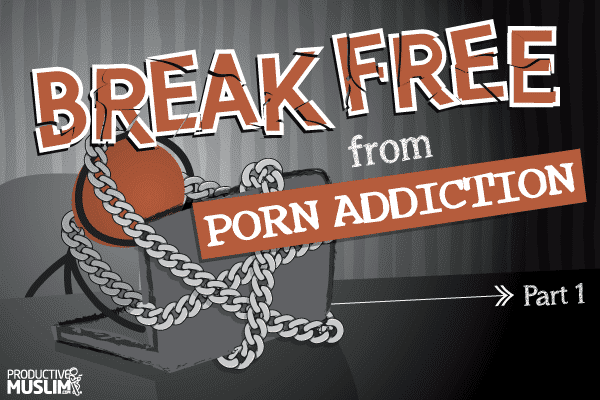
Doodle by Aneesah Satriya
The following is a true story:
An 18-year-old boy who was addicted to porn approached me for help. This is by far one of the most difficult cases I have handled. This young boy called me saying that he heard that I am willing to help those who are addicted to pornography and illegal sexual activities. He said it so frankly over the phone: ‘You are my last resort!’
I did my best to calm him down. Shortly after, I was able to convince him to come and meet me at the Center. When he came in, I immediately noticed that his mind was somewhere else. He was completely lost. He had sweat all over his face, which was extremely reddish, and quivered. Once he sat down, he said: ‘I am thinking of killing myself. Life is of no use anymore.’
Reflecting over this statement of his that is full of negativity, despair and grief made me recall the days when I was his age. I was full of energy and happiness. Life for me was everything. How could a person at his young age think of ending his life?
He said: “Pornography is killing me; I do not want it, yet I cannot quit.”
I treated him for over a year until he was able to overcome his addiction. Right now, he is doing very well. But while he is now completely free from pornography and undesirable sexual behaviors, he is being treated medically as he has developed severe Erectile Dysfunction as a result of regular masturbation during his years of addiction.
Let us ask ourselves: how many people out there can hold longer and cope with the destructive consequences of pornography? How many people can actually decide to commit suicide because of pornography? This boy reached a level where pornography was a daily practice of seven hours, yet there was no pleasure. He failed his exams, lost confidence, fought with everyone around him. At the end, he was thinking of committing suicide.
I would like to ask you as a reader: would you like this to happen to you, your family members or anyone you know? If not, then be a positive contributor and start eliminating this destructive habit from your life once and for all.
The above story and introduction were written by Br. Wael Ibrahim, founder and Chairman of Serving Islam team in Hong Kong. Ibrahim spends significant time and effort helping people realize the magnitude of consuming porn, how it damages their lives on the short and long run and how they can break free from this addiction and change to the best.
ProductiveMuslim has conducted an important interview with Ibrahim. The purpose of it is to help brothers and sisters out there become fully informed about this issue, its dimensions and how to break free from it and regain control over their lives in order to lead a pure, healthy lifestyle that is productive on every level.
We leave you with the interview.
At ProductiveMuslim, we continue to receive emails from brothers and sisters (young and old) who want to be productive and lead an active lifestyle, but unfortunately, they are facing a serious challenge with pornography addiction that it is affecting their lives.
1) Can you first define for us what pornography addiction is and what are its many forms?
Let me first define addiction itself.
The addiction of anything is a very compulsive and harmful need of having or doing something on a regular basis. In the past, people used to associate addiction with consuming hard substances like heroin, cocaine or alcohol etc. In fact, in the early ’80s, no one could have ever imagined that pornography would one day become an addictive and harmful substance.
Because pornography relies entirely on fantasy and imaginary scenes that will never exist in anyone’s life, its forms vary from one person to another. It all depends on your own fantasy that pornography has created for you. For example, we sometimes find people addicted to reading pornographic novels; others will be addicted to soft porn where private parts are not completely shown; some will only watch hardcore porn, while others will go to the extreme end and watch homosexuality and even bestiality videos.
So whichever type porn you are addicted to, the end result will remain the same. Your entire brain will be occupied most of the time with continuous sexual images that on the long run could easily ruin your life.
Pornography also comes from the Greek word porne and porneia, which mean female captives, prostitutes, fornication, sexual immorality and so on. In short, Muslims should have nothing to do with such a destructive sin. One of the most basic beliefs of Muslims is to be slaves to Allah and NOT to our desires.
2) How can someone tell if they are an addict or on the road to becoming one?
I will answer this question from two different angles:
How to tell that you are an addict
How to tell if others (i.e. spouse, child etc.) are addicted
First, how do you tell if you are addicted to pornography? Here are a few indicators:
The secrecy of the activity: It is normal for most of us to keep their sexual activities as a secret; however, porn addicts would even deny the fact that they are watching porn if confronted. Prophet Muhammad
said: “Righteousness is in good character, and wrongdoing is that which wavers in your soul, and which you dislike people finding out about.” [Related by Muslim]Procrastinating important tasks for the sake of porn: An addict’s level of productivity would drop instantly once his brain is enslaved to pornographic images. This is to the extent of delaying very important tasks for the sake of watching porn for hours.
Your expectations and beliefs about sex change: You start comparing your wife or husband with a porn star whom you have watched recently. Not only that, but you start losing interest in the lawful intimacy as a result of disliking your spouse’s performance as compared to the porn star. Addicts are mostly unaware that porn movies are all scripted and unreal.
Imagining having sex with people other than one’s spouse: A danger sign that could lead to actual zina is that once you are addicted to porn, you will start picturing real people whom you know and imagining having sex with them. These people could be your family members, neighbors, sisters or brothers in the nearby Islamic Community Center etc.
Second, how do you tell if others are addicted to pornography?
Isolation: The person always wants to be alone. So parents should be alert and not allow any Internet devices to be used in their children’s private rooms.
Sleeplessness and Internet all night: Most Internet users will be watching porn late at night. Spending hours on their computers or cellphones at that time with excuses of being busy checking emails, responding to urgent messages etc., could be an indication of their addiction.
Browsing history is always deleted: Porn users will always make sure to delete the computer’s history regularly. This is somehow a certain sign that the person is addicted and does not want anyone to know about his/her activity online.
Violent behavior: If you are a wife and you started to notice violent behavior during intimacy, or things your husband never did before and has now started to perform, it’s a clear indication that he has learned those moves from porn.
3) There have been countless studies done on the effect of pornography on the person’s thinking and lifestyle (see yourbrainonporn.com). The question though remains: what are the factors and reasons that drive Muslims (young/old, brothers/sisters) to seek porn in the first place even though it’s clearly prohibited in Islam?
Islam is a beautiful religion; it does not only prohibit the act of zina, but anything remotely associated with it, or anything that could lead to the actual act. And that’s why Allah says in the Qur’an:
“And do not approach unlawful sexual intercourse. Indeed, it is ever an immorality and is evil as a way.” [Qur’an: Chapter 17, Verse 32]
So, do not come NEAR zina or anything that leads you to it. Allah also says:
“O you who have believed, enter into Islam completely [and perfectly] and do not follow the footsteps of Satan. Indeed, he is to you a clear enemy.” [Qur’an: Chapter 2, Verse 208]
The command given is not only about following Satan, but rather his footsteps, his tricks and his traps that might lead to evildoing.
Similarly, the first exposure to porn could happen while watching what is called an ‘innocent’ movie, browsing through a sister’s profile on Facebook, a video clip on YouTube, a romantic novel and so on. That first trigger could lead to a massive production of a hormone in the brain called dopamine [a hormone responsible for our pleasures, happiness and addictions]. This will immediately register the activity as part of our “survival kit” and that same hormone will be produced regularly in larger quantities, day after day, week after week, year after year until you are completely enslaved to this addiction.
So what is the solution?
Identify your trigger: What is it that pushes your sexual desire on? Identify it and do your best to avoid it. Whether it is a movie, Facebook or any other trigger. These imaginary movies have got a very negative impact on our brains, and so your expectation of intimacy will be nothing but these filthy and twisted ideas you are watching on porn. So one of the first reasons why people are hooked on porn is what is called ‘the entertainment business’ – avoid that because in most cases, this is your biggest and first trigger.
Accountability partner: In most cases, an addict cannot fight the battle of pornography alone, so it is always wise to inform someone who you trust to keep track of your activities and make sure that you will not access these images for a year or more to ensure that you are totally free form the addiction. You can tell a parent, a wife, a trusted friend or a professional counselor/coach. But in all cases, you have to be very careful in choosing the right person to tell.
4) How and why does this addiction adversely affect a person’s overall productivity (spiritual, social, personal, professional)?
Pornography is, without a doubt, one of the top issues in our modern age that adversely affect our level of productivity. Here are some points I thought are important for people to know:
As indicated earlier, pornography is proven by scientists today to be a ‘dopamine addiction.’ This means the more you watch, the more you want. Therefore, the addiction has the ability to twist and change your brain chemistry and your very sexual behavior. Porn addicts would tell you that they cannot stay an hour without thinking of sex. Therefore, productivity level drops.
The less time you spend on your electronic devices, the more you spend doing something else beneficial and productive, i.e. spending time with family members, good friends, reading books, engaging in sports activities etc. And the opposite is obviously true. The simple equation is: No porn = less time spent on computers = no masturbation = more productive work.
Pornography twists the very basic beliefs about intimacy and our relationship with women. As a result, it destroys marital relationships, thus negatively affecting our level of productivity.
The more you watch, the more chances for males to have Erectile Dysfunction. Enough said.
Pornography promises nothing but isolation, depression, anxiety and a severe lack of motivation, due to the drop of dopamine level in your brain or when it is produced in greater quantities. How could anyone depressed be productive?
Our eyes and brains register these images for a long time. Now imagine someone praying to Allah
while these images are crossing their imagination! So the negative impact on one’s faith and spirituality is going to be very painful.Lastly, lack of sexual confidence when facing real intimacy with your lawful wife. This point is particularly addressing men because in most cases, they want to apply what they have been watching for years, but because of their lack of understanding that whatever they have been watching is fake, scripted and that it takes hours to shoot a two-minute scene, they fail to satisfy themselves or their wives. And that causes a lot of depression and grief, i.e. lack of productivity.
5) It’s easy to assume that most porn addicts are perhaps people who are not religious or don’t fear Allah and we can be very judgmental of people. However, according to some anecdotes and practitioners in this field, there’s a percentage of practicing/active brothers and sisters in the community who have also fallen for this. How do we reconcile this? Why do you think they face this duality in their lifestyle?
The answer is quite shocking. I believe that most people who are addicted to porn or frequently visit these websites are religious people. You see, atheist and other non-religious groups will have no issues watching porn and committing all types of illegal sexual activities that we can think of. However, religious groups who are addicted to porn will try to justify the activity by saying “Porn is better than fornication or adultery” – they will “halalize” their indulgence with porn to avoid the major sin of zina. That’s why a lot of religious groups, Muslims and others, are suffering from this severely.
The problem is, they have failed to realize that sooner or later, there will be no pleasure whatsoever from watching porn, and as a result many will be seeking the actual act of zina. So watching porn does not in most cases prevent the actual zina; in fact, in most cases people will end up committing the very zina they were trying to avoid.
6) How can we stop being judgmental about people who face this issue and start treating this addiction as a real disease?
The reason why we are judgmental in general is that we tend to forget that we too are sinful. The only difference is that our sins are still hidden and no one knows about them except Allah . However, when someone else’s sin is being exposed we tend to react as if we are angels and have never committed any shameful activity throughout our lives. So what should we do?
Remember that we are sinners too , and Allah
has given us the opportunity to repent, yet we are still falling short. So be a reason for someone else to repent and find a way out of his difficulty. Prophet Muhammad said:“Whoever relieves the hardship of a believer in this world, Allah will relieve his hardship on the Day of Resurrection. Whoever helps ease someone in difficulty, Allah will make it easy for him in this world and in the Hereafter. Whoever covers the faults of a Muslim, Allah will cover his faults in this world and in the Hereafter. Allah helps the servant as long as he helps his brother.” [Muslim]We need to be very compassionate when someone reveals his/her secret to us. Only then can we offer the necessary help so that Allah can help us too on the Day of Judgment.We need to genuinely educate ourselves about the science behind this addiction , so that we may feel the agony of those who are addicted to it. In most cases, we act judgmental because we think that addicts are perverted and immoral people. The fact is, they are not. Many of them are very devoted worshipers, memorize the Qur’an, niqabis and even imams. However, they are suffering form this severe brain disease, which is very compulsive and they need our help. So, start getting some books to educate yourself or enroll in any of the courses related to this matter and offer a helping hand.
7) Some individuals claim that they watch pornography to be better spouses. Is this true and what are some healthy, halal ways to improve intimacy between husband and wife?
This was the belief of sex therapists and counselors in the past. They used to recommend X-rated videos and images to help their clients improve their sexual performance. But that view completely changed in the mid-1990s with the rise of Internet and when these same clients were troubled with porn-related problems. One of these problems is lack of sexual pleasure between spouses and loss of interest in intimacy as a result of comparing each other with porn actors and actresses.
In Islam, Alhamdulillah, Prophet Muhammad did not leave this area unattended. In this regard, I would highly recommend a book titled “Islamic Guide To Sexual Relationship” published by Huma Press. It discusses a great deal of how Islam provides a complete guideline to enhance and energize our sexual relationship with our lawful spouses. That includes one’s intention, rights of husbands and wives in this regard, preferred and disliked times of intimacy, preparation, cleanliness, beautification, foreplay and many other halal tips.
8) Why do you think Muslim brothers/sisters don’t want to seek treatment for this addiction?
They do want to seek treatment and they want it so badly. What prevents them from telling anyone, however, is the feeling of shame and guilt. It is so embarrassing to reveal such a secret. That’s why I started to call them up during my lectures to reach out to me. I believe the first step towards recovery is to TELL SOMEONE.
Aside from the above reasons, some Muslims think that they are hypocrites and that Allah will never forgive them, because they know that pornography is prohibited, yet they cannot quit. To them, I would say that hypocrisy is to pretend that you believe in something, yet practice something else. However, in your case you are not pretending at all; you are compelled as a result of your addiction. You are struggling and that’s enough evidence that you are sincere and doing your best to get rid of this very compulsive habit. However, maybe all the methods that you have been trying are wrong, and so it’s time now to seek the appropriate ways, and I am fully committed to helping you out, in sha Allah.
9) Over the course of five years of experience, how many individuals have you tried to help quit this destructive habit? How did their productivity levels change as a result?
Since the day I have started researching the topic, I was approached by hundreds of affected brothers and sisters. And today, Alhamdulillah I could say that over 65 cases that I have coached in the past have completely recovered and are now living a very happy life; a ‘life of freedom’ as many of them would call it. Now many of them are focusing on their studies like never before, others feel their sexual activity with their spouses has improved dramatically, and even some of them are now selling handicrafts products which to them one day was a forgotten talent due to their indulgence in pornography.
![Wael Ibrahim is the founder of Serving Islam Team [Hong Kong] and Connect Institute [Global].](http://productivemuslim.com/wp-content/uploads/2015/12/wi.jpg)
Wael Ibrahim is the founder of Serving Islam Team [Hong Kong] and Connect Institute [Global].
So, to all my brothers and sisters who are still watching porn, I know you are enjoying the fun, excitement and sexual pleasure that you get from porn, but believe me at the end of the journey, you will be denied of all fun, excitement and sexual ecstasy. So what is the point? You are watching to enjoy but at the end you will be left out depressed and dissatisfied! So why enjoy for a few seconds and ruin your life for years to come?Break free today.
Stay tuned to part 2 of this series to learn exactly how you can break free!
December 16, 2015
On the Path of Allah: Tips to Remain Steadfast

Photo credits: Daniel Clarke flickr dot com/photos/42890356@N02/
Allah says:
“Indeed, good deeds do away with misdeeds.” [Qur’an: Chapter 11, Verse 114]
Isn’t that amazing? Not only do you get rewarded for any good action that you do, but your bad deeds decrease. Imagine if that was the rule in exams: for every correct answer you got, one mistake would be erased. We would be scoring 100% on every exam! However, too often we forget this mercy Allah has bestowed upon us when we deal with each other. When someone makes a change in their lifestyle to become closer to Allah by becoming more productive, one of the most difficult obstacles for them, surprisingly, can arise from family and friends.
Has it ever happened that when you take steps to invest your time in a way that pleases Allah , one of the obstacles you face can be the people closest to you?
As you realize the value of time and the importance of spending it in a way that pleases Allah , you realize that hobbies you used to enjoy no longer appeal to you or environments that you once loved become uncomfortable — and it may happen that those same environments are the ones you shared with your friends, or even your own family. Whenever you make a conscious effort to avoid these situations because you no longer want to be in that sort of atmosphere, you may end up with possible responses such as:
“But you never had a problem with free mixing before!”
“You used to listen to music every single day.”
“Since when did you become so strict, don’t you remember what you used to be like?”
“This is just a phase, I bet it won’t last…”
All of this can be difficult because the people you care about the most are pulling you down by reminding you of what you used to be like and using that to discredit the sincerity of your actions now. Sometimes it happens that when you express your discomfort with certain environments, it is implied that you are judging those around you, which is not the case.
So, what are some practical ways to potentially overcome this obstacle without compromising your principles or repelling everyone around you?
1. Communicate your preferences politely
Sometimes, a simple polite explanation is all that is needed to help people around you understand why you no longer feel comfortable with certain things. However, an explanation does not necessarily mean having a collection of Islamic evidence at hand to present to everyone, nor engaging in debates where the aim is to prove others wrong in showing what is halal (permissible) and what is haram (forbidden). Neither does it mean being apologetic or embarrassed about the fact that you want to spend your time in a way that pleases Allah .
Refrain from outright criticism
In life, we have met at least one type of practising Muslim, sometimes known as the “haram police.” I must admit that I was once this way. I found that when I chose to try to spend my time in a way that pleases Allah , I would criticize and judge others who didn’t follow suit. The phrases you generally hear from these kinds of people are something along the lines of:
“Astaghfirullah, that’s haram; what’s wrong with you!”
“Sister, this is haram, the clothes you’re wearing aren’t proper hijab.”
“Brother, the music you are listening to is forbidden and let me tell you about the punishment of it on the Day of Judgement.”
Or sometimes the most frustrating one can be the unsolicited advice from the random stranger who comes to you and without an introduction says:
“Salam brother/sister, what you’re doing is not actually permitted in Islam…”
Give advice gently, kindly
What I want to highlight here is the etiquette by which we advise others. As Muslims, we should help one other to become better; however, we should do it in an eloquent manner, not by engaging in an aggressive debate nor by condemning someone. We should also do so in private, not in front of others, to avoid embarrassing the other person.
You cannot force someone to change, and more often than not, putting pressure on them can push them away. To constantly give an image of Allah as a disciplinarian rather than The Most Compassionate, The Most Merciful, does not invite people to join you in coming closer to Allah .Always try to communicate with eloquence and kindness. Remember that everything is halal except what Allah has explicitly forbidden, not the other way around.
If the situation arises where you need to explain to someone changes that you’ve made, explain in a polite manner that in becoming closer to Allah , what you may previously have accepted and enjoyed, you no longer feel right about doing, and that it would mean a lot to you if people could accept and understand that. That’s all. However, keep in mind that not everyone will be understanding; some people will take offence. Therefore, you also need to be patient and realize that some people will come around in their own time.
2. Come up with alternatives
Being closer to Allah does not mean an end to your social life. It doesn’t mean rejecting every invite out because it’s not Islamic. You can propose alternative suggestions for gatherings that don’t make you feel like you have to compromise your beliefs. For example, you could suggest a quiz night where people are split into teams and are asked questions on different topics with a prize for the winning team. Or you could organize a bi-weekly Islamic circle where each participant is required to do a presentation and score each other.
I have been to different Islamic circles and I know that they can sometimes be a great place to catch up on sleep, as they’re not engaging and can sometimes be a monotonous lecture. However, an Islamic circle that I currently attend overcame that by awarding teams points based on the creativity of presentations and, as a result, the halaqah included short plays, quizzes and group activities that really made it a fun place to be.
However, not every outing has to be in the form of an Islamic circle. Instead, you can substitute the location, for example, to some place that is more comfortable. So places that serve alcohol or play loud music can be replaced with going on a picnic to the park, or holding a dinner at someone’s house. Time spent enjoying each other’s company is precious and can make others realize that you becoming closer to Allah does not mean you have become anti-social.
3. Surround yourself with righteous company
Prophet Muhammad said:
“A man is upon the religion of his best friend, so let one of you look at whom he befriends.” [Sunan Abi Dawud]
This doesn’t necessarily mean making a new set of friends and distancing yourself from anyone who does not share your beliefs. Rather, it is easier to do things when you have support and encouragement from people around you. If you are one of a few who have started making changes to become closer to Allah , it can be difficult to sustain those changes if you are on your own, so a conscious effort needs to be made to be around those who encourage you to do good and help you maintain and increase your good deeds.
Do your part
You can join local halaqahs, but what if none exist local to you? Start your own! What if you’re not ready for that? How about starting a group chat on Whatsapp for Islamic reminders, where people can send pictures, duas and verses from the Qur’an to help each other in the day? You could find out if there are any events or opportunities to volunteer at your local masjid to expand your social circle.
Constantly make dua to Allah to keep you firm on the right path and send righteous friends your way.
4. Pick yourself back up
Sometimes you’ll slip, sometimes you may temporarily fall into old habits, and people (or Shaytan, of course) may use this to discredit how sincere your intention to change was. People will use this to encourage you to go back to your old ways because it’s easy to do so. But do you remember the verse I started with? Good deeds remove bad deeds. Allah didn’t set conditions for us to do good deeds.
If you miss Fajr prayer, it doesn’t mean you have to miss the rest of your prayers. If you slip up, don’t let someone tell you that you were “pretending” to be religious and now that you’ve made a mistake you shouldn’t bother trying. Always remember the verse I opened up with and if you do something wrong, follow it with a good deed no matter how small, and let only Allah be the judge of your intentions. Allah will never get tired of giving you a new slate to start off with, nor will He diminish the value of your good deeds because of what you used to be like. The doors of tawbah (repentance) are always open, and:
“…Allah
5. Never underestimate the value of your actions
You can’t force people around you to change, and sometimes it can be painful to see those who you love and care for not taking the deen as seriously as you do. But Allah says:
“…you do not guide whom you like, but Allah guides whom He wills.” [Qur’an: Chapter 28, Verse 56]
So, don’t be disheartened and do your best to set an example. You never know how your actions could inspire those around you; maybe it won’t happen immediately, it may even happen after a few years. However, if somebody changes for the better after having been inspired by you, think of the amazing blessings and reward you will receive for inspiring even one person to be better and get closer to Allah . This can only be achieved with kind words and patience:
“…And if you had been rude [in speech] and harsh in heart, they would have disbanded from about you.” [Qur’an: Chapter 3, Verse 159]
What other challenges did you face when you made changes to your lifestyle to make it more pleasing to Allah ? How did you overcome them? If you have other tips to offer, share them with everyone!
December 11, 2015
How to Remain Productive While Grieving

Photo credits Zenat El3ain flickr dot com/photos/zenat_el3ain
When Muslims lose someone dear to them, they almost automatically say:
“…Indeed we belong to Allah, and indeed to Him we will return” [Quran: Chapter 2, Verse 156].
But the truth is, death is something no one can really prepare you for. There is no ‘right’ way to make sense of it or deal with it after accepting Allah’s decree. Although communicating and speaking about our losses with friends and family is beneficial, a far more empowering sensation is awarded to the believer who is gifted with a stronger connection with a superior source, whose power will never cease, grow tired, nor His ability to listen to us dwindle. I am still studying and recently lost my father. Through the coarse nature of life, I learned very quickly that we either become engulfed and swallowed whole by our circumstances, or we adapt and become proactive and flexible. For the Muslim, there is always an option, as we each have a choice in how we will react.
Here are some of my tips.
1. Do NOT dwell in isolation
Instead, observe the blessings. The lonely Muslim sends a personal invitation to Shaytan to come and visit him, sit on his bed and become misery’s company. A natural reaction humans possess is the need to focus on their losses when a major bereavement occurs. However, the trick is to focus on every single little thing you still have, being mindful that this could be taken too. If it were a parent, appreciate the other more ardently; if it were a sister, then look after your other siblings; and if it were a friend, take care of their family. Love begets love, while regret breeds discontentment.
I learned that when the thing/person we are most attached to in this world leaves us, it is a firm lesson in the process of detachment from dunya: to hold Allah above all others in your heart. More than this though, I quickly felt the support of Allah manifest itself in endless ways. The departing of one soul led to the gaining of so many more, as well as the opening of so many more relationships and opportunities. He is Al-Fattah (The Opener); He brings people onto our path to help fill the void. I lost a father but gained many more new friends, as well as the support of family members from the corners of the globe, and even support from strangers. Your job is to let all this comfort, affection and support pour in whenever it comes knocking as part of the healing process.
2. Ignore the woodpeckers
A vital gem which a friend of mine shared with me after she lost her grandmother was to take what people say graciously, but with a pinch of salt. All the messages of support, the paying of respects, the promises, grand gestures and testimonies of ‘always being there to talk to’ and the love people had never shared with you before, will eventually wither. Nothing lasts, and although appreciated at the time, that’s okay. If they were to stay, we would become unhealthily reliant on them. However, it is essential to be wary of those whom I call the “woodpeckers”: those who may gnaw at our confidence, happiness and self-esteem with subtle, continuous negative comments. It is vital that you become strong enough to rid yourself of the woodpeckers from your life, those who may bring negative energy and pass passive-aggressive comments. These relationships are toxic, particularly if you are feeling vulnerable and not quite yourself yet.
I have had my fair share of interesting conversations that we shall name “things not to say to a grieving person.” Sometimes people feel awkward not knowing what to say or how to say it, and as a result do not offer kind words at all. Or perhaps they make you feel uncomfortable by sounding insincere in their interaction. Things like “you’re so strong,” although at first sounds like a positive affirmation, later on becomes a condescending thorn in your side that often reminds you of what you must live up to in order to feel you are doing the “strong healer” position justice. Or those who rub salt in the wound by saying “I appreciate my family so much more now that I have witnessed this.” And my personal favourite: “I envied you, but honestly you realise no one’s life is perfect.”
There are also the more kinder comments in which the person couldn’t possibly understand or know how heart-wrenching it can feel like to listen to, “I had a dream about [person who passed away] the other night.” Although this seems like a nice gesture, in reality it feels like someone else’s emotional guilt, baggage or worse, fleeting dream — which may not mean much to them but to you a traumatic reminder of the very thing you’re still trying to make sense of — being heaved on to you in impolite bouts. Finally, those who may know of your struggle, know of your loss, know of your tribulation and still refuse to make excuses for your shortcomings are the most toxic of all.
A reminder to all of us: let’s be very careful what we say to others, especially in times of adversity. Words are more powerful than you think! Guard your tongue at all times, as Prophet Muhammad advised us to [Muslim].
4. Be patient
Give yourself time to heal with those who are sincere, and above all be grateful to Allah who designed this pivotal moment in your life in order to push some people away and draw others closer. In doing so, be patient and remember the Prophet’s words:
“How wonderful is the case of a believer; there is good for him in everything and this applies only to a believer. If prosperity attends him, he expresses gratitude to Allah and that is good for him; and if adversity befalls him, he endures it patiently and that is better for him.” [Muslim]
5. Be kind to yourself
Despite what anyone says, you have experienced something unlike what you ever have before. This explains the shock, devastation and fear. Even if you have, it still feels different every single time. Loss is our greatest fear and so it is only a matter of time before you adjust and develop coping mechanisms. The positive to draw from this experience is the immense strength you will gain. The tribulations that would have once sent you into ruins, can now be flicked off your shoulder. Seek one trusted friend who you know will be understanding and positive when seeking counsel and sanctuary from. Additionally, when you fall short of a deadline for a big work project or even fall into a massive argument with a friend, forgive yourself, go easy on yourself. Tell yourself you are no longer the person you used to be and in doing so acknowledge the fact that you will no longer have to keep up with the rat race we often get sucked into in the life we once indulged in.
Reassess your priorities
Take this pivotal moment in your life to turn things around to change and pull away from the things you didn’t like before or felt stuck in. Draw from this new strength you are about to experience and get rid of all the emotional, psychological and spiritual litter that only held you back.
Be self-sufficient
More than anything, find reliance upon yourself as self-sufficiency breeds organization, confidence, belief in oneself and empowerment. Learn about your body and mind in terms of how they may react to sadness. Identify stressors in your environment and work to cater to your needs. If you feel a low mood coming on, indulge in your favourite activity. Distract yourself with a good book, comedy show reel or a film. Moreover, find a quiet place away from it all and tell it all to Allah , tell Him everything: whisper the fears, anger, annoyance, impatience, ask Him for help as He is the Only One who can ease your pain or allow you to forget, and you must believe He will. I assure you, He never lets us down or falls short of His promises.
6. Occupy yourself
We all need time out to experience each feeling as it comes. However, it is imperative to try and keep moving forward. Bereavement often brings you back to the past; it reminds you of all the things you could have said or done. However, our routines that we are generally used to become a lifeline. Going back to organising, working and studying straight after someone close to us passes away can serve as a healthy distraction that allows you to channel your energy toward producing something positive that will work to aid your life. No one really prepares you for the practical side of time management within everyday living whilst enduring paralysing pain, yet Allah reassures us:
“For indeed, with hardship [will be] ease” [Qur’an: Chapter 94, Verse 5].
We only have a set number of hours in a day, and stopping for too long to reflect on the pain can often lead to feelings of overwhelming anguish and sadness. It can also be debilitating and paralysing if indulged in. Remember, we need to strike a balance between productivity and the time to adjust. Setting yourself manageable goals whilst scheduling time taken out for others will distract you whilst reminding you that you are not alone in losing. We all lose something or someone, it just manifests itself in different ways. A lot is expected of you after experiencing a loss; not only must you deal with practical financial responsibilities, you are also juggling your emotional, spiritual, physical and psychological well-being. Being organised to take enough time to cater to each area is mandatory. Moreover, looking after your health should be your priority.
7. Look after your health
This brings me to my next point, health watching: what we eat, how we eat, when we sleep, for how long we sleep, will become a useful tool to automatically feel a little lighter. Alhamdulillah, I was able to set up a women’s only kickboxing society as a result of wanting to create a space for exercise and expression for Muslim women, using negativity of our current surroundings to foster a positive outcome.
Focusing on spiritual, emotional and psychological well-being is in direct balance with your physical well-being. When one is neglected, the others topple one by one like dominoes. Our life can remain balanced and work in a perfect loop of cause and effect. If we don’t get enough sleep one night, we feel it the next day. The food we eat can very easily stimulate low mood and generally fool us into believing we are in a constant state of what we believe to be depression or anxiety. Our physiological state is working as a result of the foods we eat and hormones in the body. It is vital we acknowledge the difference between grieving and low mood that is a result of our bad lifestyle.
Action points:
– Take up a non-competitive sport that you enjoy
– Go for morning runs to clear your mind
– Cut out coffee/sugar to avoid sugar highs and lows and the build up of anxiety
8. Do not suppress your emotions
Psychologist Frieda Bernbaum, a PhD research psychologist and expert on depression, discusses the idea of feeling anger to be a far healthier emotion for us when experiencing grief, as it stimulates outward expression as opposed to inward fatigue, thus preventing symptoms of depression from forming. Bernbaum goes on to say how numbness helps with devastation and allows for the person to make plans for the future, to make sure we are not going to fall apart during this process.
Don’t block the emotions you’re feeling, but understand them. The sadness we feel from any kind of loss inside won’t subside completely, and it never will, but why must we associate and attach negative sensations to a very large portion of what life and living entails? We hurt because we love, perhaps if we didn’t know what the sensations of love felt like we wouldn’t hurt as much and what more of a loss that would be, to not be able to feel anything at all. If it feels unbearable or painful at times cry through it and then enjoy that sometimes you may feel content and even happy with your company, or circumstances for that time, and that is also a mercy granted by Allah .
When Prophet Muhammad’s son Ibrahim died, Abdul-Rahman Ibn ‘Auf  said:
said:
“O Allah’s Apostle, even you are weeping!” He said, “O Ibn ‘Auf, this is mercy.” Then he wept more and said, “The eyes are shedding tears and the heart is grieved, and we will not say except what pleases our Lord, O Ibrahim! Indeed we are grieved by your separation” [Sahih Al-Bukhari].
9. Make Qur’an your oxygen
I was added to a Whatsapp group at the start of this year whereby women from all over the country and globe are able to update it every time they complete the set pages of Qur’an for the day. The beauty is in seeing strangers from all over send “Done, Alhamdulillah” throughout the day, spurring others to follow suit and read the Qur’an and its translation and/or tafsir. It became my favourite part of the day.
The Qur’an is magical – almost fairy tale-like – in how it is tailored to you, your problems and your personality. It makes you feel like you are heard and it makes you feel special – as if you’re the only one experiencing what you are experiencing. The words speak to me at my exact time of need. I feel Allah speaking directly to me. He answers my prayers and questions about life and after death with every lecture I watch or every ayah I read in the Qur’an. It is only faith in the darkest of moments that enables us to forget the paralysing pain and trust the prosperous plan. The hadith and Qur’an serve not only as spiritual lifelines, but also a practical life book providing guidance on how to handle the good moments and the bad.
Have you lost a loved one recently? What other tips and resources helped you get through this difficult time and resume a productive lifestyle?
December 7, 2015
[Doodle of the Month] 10 Habits of Happy Productive Couples
What does it take to stay Muslim, married and extremely happy today? Print this illustrated version and hang it at home where you and your spouse can see it to constantly remind you of those 10 keys to marital happiness.
This doodle is based on the article 10 Habits of Happy Muslim Couples.
 Doodle by Aneesah Satriya| Click to view in High Resolution
December 6, 2015
[Animation – Episode 6] Habits of Happy Productive Muslim Couples: They Make Time for Each Other
Busy on your mobile phone all the time? Too absorbed in your work/with your friends that you are not giving due attention to your spouse? If yes, then this must stop, insha’Allah!
Couples need to make time for each other to increase and deepen their bond. Letting oneself be absorbed in everyday life while neglecting one’s spouse might be a major reason why many couples are growing apart this day and age.
Communicate, make time for one another, appreciate and support one another. You’re there for him, and he’s there for you. Never lose that, insha’Allah.
Script: Zaynab Chinoy
Producer: Dina Mohamed Basiony
Animator: Darul Arqam Studios
December 3, 2015
5 Reasons Asking Questions Leads To Success

Photo credits: flickr dot com/photos/51029297@N00/
Questions are the spark that leads to acquiring more knowledge! We all have problems and queries that we need assistance with, whether in religious matters, school, work, home or even relationships. While we all have questions, we often fail to ask for help!
There is an array of reasons why we hold back our questions. Fear of how we will be perceived by the one we ask and thinking that our question is pointless are among those reasons. However, by withholding our questions we also hold ourselves back from a great deal of success.
Our deen promotes acquiring correct and complete knowledge about anything, be it in deen or dunya matters. It is by seeking knowledge that we can continue to grow as Muslim individuals and as a Muslim ummah. It is no surprise then, that many of the ahadith relayed to us are actually the Prophet’s response to his righteous companions’ questions. They never stopped asking because they were always thirsty for knowledge, and that is something we should learn from.
Asking questions can be with the intention of sharing an idea, expressing an opinion or acquiring more information about a certain issue. In addition to the intention, a person should strive to maintain the etiquette of a Muslim while asking; being patient, respectful, thankful and considerate towards the person answering the question are some of those manners.
Additionally, a Muslim should keep in mind when it is appropriate to ask a question and when it is not. If asking will lead us to fall into the depths of gossiping and backbiting, we should refrain from asking. The beauty of asking is only when the knowledge or information you gain is beneficial to you and those around you.
To look further at the benefits of asking questions, here are five aspects you can look forward to gaining by asking questions.
1. Strengthen your worship
The fundamental need for asking questions is learning further about acts of worship. Prophet Muhammad’s life is a blueprint of how a believer should live; however, in order for us to follow in his footsteps we must educate ourselves. From the hadith of Aisha  , we learn the importance of asking on matters that you are unsure of:
An Ansari woman asked the Prophet how to take a bath after finishing from the menses. He replied, “Take a piece of cloth perfumed with musk and clean the private parts with it thrice.” The Prophet felt shy and turned his face. So I pulled her to me and told her what the Prophet meant. [Sahih Bukhari]
Though the matter of menses is a sensitive topic, the woman still asked because she did not know the appropriate way of bathing, which was needed in order for her to cleanse herself and pray. Had she not asked, the consequences would have been great. This teaches us not to hesitate when asking questions, even if the topic is embarrassing or off-limits. In this case, asking questions when you are confused about a topic leads to removal of errors, increase in knowledge and beautification of worship.
2. Increase your confidence
By being brave and pushing yourself to ask questions or admit to needing help, an individual slowly gains confidence. Though it can be daunting at first to ask your boss for clarification on a certain task or your teacher to explain a concept again, you benefit by overcoming the monster that holds you back each time you do so. The more you put yourself out there, the less frightening it becomes. As a result, you will not necessarily lose anything, but you will gain an answer, as well as confidence!
3. Learn new things
Nobody is born with knowledge of everything. By pondering over a question, we highlight a gap in our knowledge. In order to obtain the information to fill this gap, questions should be asked. Through asking in class, at a relevant lecture, checking trustworthy online resources or seeking a specialist; knowledge and knowledgeable persons can be found and accessed easily in our present-day. In the past, people used to travel for long days and nights just to ask a question. We have no excuse!
Allah tells us in the Qur’an:
“Then ask those who possess the message (ahl al dhikr) if you do not know [Qur’an: Chapter 21, Verse 7]”
Every person has different skills and strengths. This verse guides us to take advantage of those who possess knowledge and benefit from them. By doing so, you are given the opportunity to learn about new things.
4. Form new relationships
Allah tells us in the Qur’an:
“O mankind, indeed we have created you from male and female and made you peoples and tribes that you may know one another. [Qur’an: Chapter 49, Verse 13]”
Living in a culturally diverse world, a person can easily become confused, judgmental or have lack of understanding of other people. The Muslim ummah alone is is a mosaic of many different nationalities, colors, backgrounds and cultures, yet we all worship The Only One worthy of worship, Allah . The same applies to non-Muslim countries and societies. We should take time to get to know the people in our mosques, communities, universities and/or workplace. Asking questions is a great tool to form new connections and bonds with people and also clear misconceptions. By having an inquisitive mind, we are able to develop strong relationships and appreciate different traditions and cultures.
5. Save time
In the world of being a Productive Muslim, it is important to always seek out ways in which we can be more efficient with our time. By holding back and never asking your teacher to explain a new topic or your colleague what the best filing system is, you spend more time figuring these things out for yourself, causing a setback for yourself. Often, there has been someone in your position before and by turning to those who have experience, you can save yourself the time and hassle. While it is good to be dependent on yourself in certain issues, there is no harm when asking for help in completing a task. Save time, ask questions now.
Next time you find yourself hesitant to ask a question , think about these benefits. I am sure that you wouldn’t want to be the one standing in the way of your success. Put yourself out there…with humility, integrity and patience!
If you have any personal tips to encourage others to ask questions, please comment below. Don’t forget, sharing knowledge is a sunnah!
November 28, 2015
[Animation – Episode 5] Habits of Happy Productive Muslim Couples: They Never Lose Focus of Each Other’s Needs
One of the greatest problems couples may be facing while unaware, is their inability to focus on each other’ s needs.
Sometimes, while absorbed in our own work and thinking, we forget to give due attention to our spouses or focus on their needs.
Realizing that could have a great impact on deepening the bond and appreciation between the couples.
Don’t forget to pay attention to your spouse’s needs.
Click here to watch this animation in Vimeo
Script: Zaynab Chinoy
Producer: Dina Mohamed Basiony
Animator: Darul Arqam Studios