Mohammed Faris's Blog, page 44
February 4, 2016
[Magazine Review] Quest Jr. In Pursuit of Knowledge
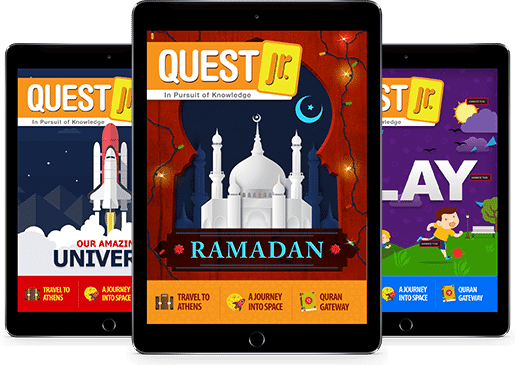
Photo credit: Questjr dot com
I remember ever since I was a child, whenever I’d go to the supermarket with my mother, I’d always ask her to let me buy a magazine. I would always pick the most pink, girliest magazine that included a little hair clip in it or a little lip gloss – because that was what was available for girls.
As a young girl, I used to buy magazines frequently and I recall that from the age of 11, my girly magazine content became more fixated on cliche girly activities: hair and makeup, take this quiz to see which celebrity you are like the most, tell us your most awful cringe moment etc. In general, thinking back, they were really pointless activities and this is what was marketed to young teenage girls. At that age, I wanted something colorful and stimulating with fun activities to do and unfortunately these magazines were the only appealing option back then.
However, now I was intrigued to come across a vibrant online magazine called Quest Jr In Pursuit of Knowledge. This is a magazine for young people between the ages of 8-14.
What is Quest Junior all about?
It is an initiative aimed to create a digital magazine that combines Islamic knowledge along with diverse coverage on arts, science, nature and technology from around the world. Quest Jr provides insightful educational content for children and young adults. It capitalizes on the use of technology to deliver knowledge to young children in a vibrant and interactive manner. So let’s go through the key features of the magazine.
Content quality
The magazine really contains a variety of topics, including stories, travel pieces, cooking recipes, scientific experiments and general knowledge – all geared towards motivating children to become more productive.
The interactive activities such as quizzes and riddles provide different engaging methods of conveying information. The stories range from ones about the righteous companions to a grandpa teaching his grandson about patience. The wide range of content means that a young reader will be engaged and able to learn many things from Islamic history, to general knowledge and even how to cook!
The language used is both easy for children and sometimes also challenging to help them expand their vocabulary. This could be used to encourage bonding time between parents and children to help the children develop their vocabulary whilst learning new things.
Overall, the wide variety of content ensures that the reader will be entertained for a while and will be gaining beneficial knowledge to help them take advantage of their time from a young age.
Design
The magazine doesn’t compromise on the design. It uses bright colors and fun pictures to really catch the attention of the reader. This way it appeals to young children and is not dull or boring. Each section is given its own color theme to make it memorable and stimulate the imagination of young curious minds.
Overall pros of the magazine
• Has a variety of engaging topics
• Comfortable layout that is easy to follow
• Bright colors and vibrant pictures to attract the reader
• Useful and beneficial content to stimulate the mind
• Compatible with Windows, Mac and Android devices
Areas of improvement
It seemed to me that the target audience of this magazine would be between 7-11, rather than 9-14 as I felt the content wouldn’t really appeal to young teenagers. However, this is something that can be developed in the future by diversifying the coverage to appeal to a larger range of audience.
Conclusion
Do I think this magazine is worth subscribing to? Probably, yes. It is important to motivate children from a young age to think about how to make the most out of their time and stimulate their curiosity to learn about beneficial topics, especially with all the distractions about them. This magazine does a good job of delivering content on both deen and dunya so as not only to stimulate curiosity, but also share useful knowledge.
The subscription offers are:
3 months- $25
6 months- $40
1 Year- $60
If you want to download a free copy of the magazine go to https://questjr.com/go-quest-jr/ and use the promo code: #goquestjr
Let us know what you think of the magazine in the comments below!


January 31, 2016
OUT NOW: The ProductiveMuslim Book – Where Faith Meets Productivity
Dear ProductiveMuslim Reader,
Assalamu’alaikum,
Alhamdulillah – I am excited to announce today the release of our first published book: The ProductiveMuslim Book: Where Faith Meets Productivity.
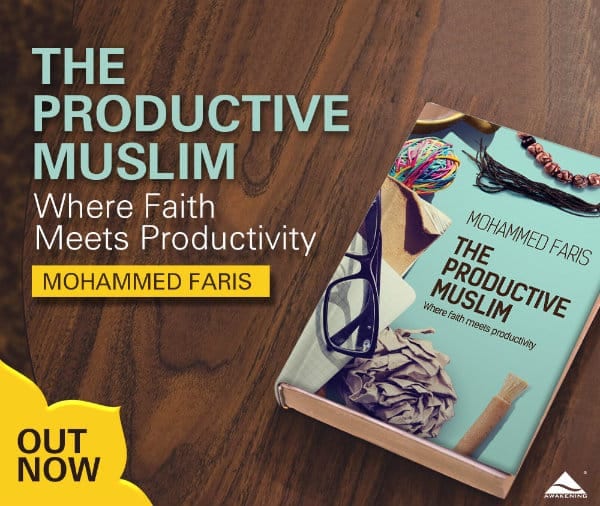
After 7 years of running ProductiveMuslim.com – the book summarises the best of what I’ve learnt on how our faith boosts productivity, and what the latest science and research tells us about productivity and high performance.
This book is a practical guide for the global urban Muslim facing modern challenges that hinder them from reaching their full potential. My hope is that this book will inspire Muslims globally to lead a productive lifestyle (spiritually, physically, and socially).
The book covers the following topics:
How spirituality can boost your productivity
How to manage your sleep, nutrition, and fitness (spiritually, physically, and socially)
How to be socially productive outside your home and community
How to manage your focus in an age of distractions
How to build productive habits and routines
How to manage your time and invest in your hereafter
How to be productive during Ramadan
Alhamdulillah, I’m excited about our partnership with Awakening Worldwide as our publishers who have worked incredibly hard to edit, design, and print the book and will be working harder over the next few weeks to make the book available at major markets.
I hope you’ll enjoy reading this book and you’ll share your feedback with me once you’ve read it.
Please tell all your friends and family about the ProductiveMuslim Book :) Thank you!
FAQs
Below are some FAQs regarding the book – if you have any questions, feel free to ask and I’ll answer them here:
HOW TO ORDER THE BOOK?
Currently, the book can be ordered from the Awakening Store online: http://awakeningstore.com/
WILL THE BOOK BE ON AMAZON?
We’re working with our publishers to have the book on Amazon soon.
WILL THE BOOK BE AVAILABLE IN LOCAL BOOKSTORES?
Our publishers are working hard to work with global and local distributors to distribute the book globally. If you know a distributor or a book store who wants the order the book in bulk, please let us know and we’ll put you in touch with the publishers directly.
WILL THERE BE A KINDLE VERSION OR AUDIOBOOK VERSION?
We’ll be working on this. No set date for launching the kindle version or audiobook version so far.
WILL YOU TRANSLATE THE BOOK INTO OTHER LANGUAGES?
Yes, we’re planning to translate the book – we will inform you once the book is translated.
CAN WE HOST YOU FOR A BOOK LAUNCH AT OUR LOCALITY?
Yes, please contact malika@productivemuslim.com to arrange a book launch event at your city.
I hope you’ll enjoy reading this book and you’ll share your feedback with me once you’ve read it.
P.S. Please tell all your friends and family about the ProductiveMuslim Book :) Thank you!
January 30, 2016
[The Productive Mommy Series] Surviving University as a Mother

Doodle by Quratulain Tariq
When I found out I was pregnant with my first child, I was still a university student. I was elated and overjoyed with the news, but I also couldn’t help feeling apprehensive and anxious! I was extremely blessed; Allah  had given me this gift to raise and nurture, but on the other hand I had doubts if I could actually handle the responsibilities of being a mother and a university student. How would I balance both roles? Could I continue my education or would I have to put it on hold?
That was about 7 years ago, and I have good news to share: I was able to successfully complete my university degree about two years later. In fact, I had the honour of carrying my little girl in my arms at my graduation ceremony! Alhamdulillah, it was a day I will never forget!
Although motherhood is a defining milestone, it doesn’t have to mean that everything else in life has to be put on hold. Prophet Muhammad  said that seeking knowledge is obligatory upon every Muslim. To make the best of the knowledge that Allah has bestowed upon us, we should always strive to use our knowledge as a means to please Allah . Allah says:
“…Allah will raise those who have believed among you and those who were given knowledge, by degrees…” [Qur’an: Chapter 58, Verse 11]
In this article, I will be sharing my tips that helped me get through my university studies as a mother with young children. In sha Allah, my advice will show you that education (whether secular or religious) does not have to be abandoned or given up when you have children. Whether you are a mother or mother-to-be who is thinking of becoming or already is a student, these tips are intended to help you find a balance between two important roles.
1. Find reliable childcare
This is the most important tip: make sure your child is in good hands! You must feel comfortable leaving your child in someone else’s care, otherwise the stress over childcare can negatively affect your performance at school. Start looking into childcare options as soon as you can, as some places have a long waiting list. If you are planning to leave your child with a family member, make sure you both are on the same page in terms of how your child should spend his or her day.
2. Enlist the support of people around you
Firstly, you will need the support of a family member that you can count on in the case of unplanned situations or late study nights, whether it is your spouse, a family member or close friend. Something to remember is to make sure that you remind that person of your appreciation for them; in the busyness of classes, studying and exams it can be easy to forget those who are there to make it easy for you.
Secondly, keep in mind that professors can be accommodating to your situation, so tell them at the beginning of your family commitments and keep them informed of certain situations that come up. For instance, my daughter ended up in the emergency room for a night, and I was unable to attend class the next morning, as I came home just hours before class started and I was still trying to calm my baby. I informed my professor of my situation, and he was kind enough to give me an extension for my paper that was due that day. Additionally, having an honest relationship about your situation will help with the next tip.
3. Decide on your preferred class schedule
This may not be as easy if you have already started school, but would be particularly helpful to someone who is considering going back to education after having children. Would it be better for you to attend classes in the morning, so you have the rest of the day to work on your assignments, study and take care of your baby? Or would you prefer having evening classes so that you can spend some time with your child before you go to school? Furthermore, consider how much time you would like to have in between classes; for instance, would it be ideal to have an hour or more between each class, so that you can utilize this time for a quick review session before the next class starts? Or would you like back-to-back classes so it shortens your day and you can get home quicker? Find out what works best for you and your family, and schedule your classes as soon as possible so that you get the times and days you desire.
4. Remain disciplined about your study methods
The vital aspect of being able to study whilst having a family is to have discipline and to know that there will have to be compromise. Studying as a mother can be difficult, so try to make it easier on yourself by following these studying tips:
Review your notes from class as soon as possible; this way the information learnt is still fresh in your head.
Read the class notes or the textbook right beforehand, so you know what to expect and so that you can ask your professor any questions that you may have.
Write down summary notes with key definitions highlighted; these will be handy if you don’t have time to read your full set of notes.
Eat high-energy foods and engage in quick exercises to keep your brain and body stimulated during study time.
Listen to your body! If you find yourself so tired that you can barely think straight, then taking a short nap will refresh your mind and brain, so that you can wake up and get back on track effectively.
5. Separate time, don’t mix it
I learned this the hard way, as my biggest mistake was trying to complete my assignments with my baby around…a big no-no! My daughter was able to sense that I was not giving her my full, undivided attention, and as a result, she would get frustrated and start crying. When she wasn’t crying, she was trying to grab my papers and yank the pen out of my hand – we were both getting nowhere! I quickly learned that I needed to pay full attention to her and do my assignments when she was napping or sleeping during the evenings. Another suggestion is to wait until your spouse or a family member is able to take care of the baby, so that you can study in a room separate from your baby, or go to the library where there are less distractions. Moreover, make sure that you are spending quality time with your child when you are free, so that your child is getting enough attention and love from you at some time during the day.
6. Find alternative solutions
As a parent, you will want to find alternative solutions to certain issues that may arise. For example, you may not always be able to make it to group meetings outside of class due to your child being sick; this is why it’s a great idea to find alternative solutions where you can still be at home and caring for your child, but still be a part of the meeting. One way in which this is possible, is to ask your group members to have a conference call through Skype or Google Hangouts. Engaging in a conference call allows you to still participate in group discussions, while being at home attending to your child – it’s a win-win situation!
7. Purify your intention and make dua (as always)
Seeking knowledge is a great blessing from Allah and can be a source of barakah in our lives. Education is a means for us to gain wealth and support our families, but as always, our ultimate goal should be to please Allah . Seeking knowledge, whether spiritual or non-religious, is rewarded, especially if you combine multiple intentions. Lastly, don’t forget to keep making dua that Allah makes this journey easy for you – there will be some ups and downs, some frustrating times and some times where you feel like giving up! In sha Allah with patience and hard work, the fruits of your labour will be seen very soon!
I leave you with a tip that you must remember at all times: don’t let the guilt get to you! There will be days where you will want to be with your baby instead of in the classroom, but know that you are doing this not only for yourself, but for your child as well. Your child should motivate you to complete your studies, and should push you to do your best! Don’t give up, keep going and make sincere dua that Allah makes it easy for you to accomplish your goals.
Are you a mother who is studying or considering going back to education? What are your tips and experiences?
January 27, 2016
ProductiveMuslim 1-Day London Workshop – 30th January 2016
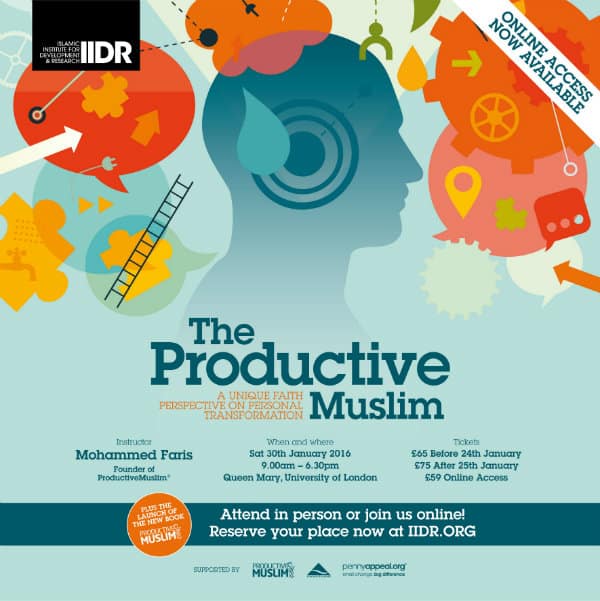
ProductiveMuslim.com is pleased to announce a 1-Day Productivity Workshop in London this Saturday, 30th January 2016 in partnership with the Islamic Institute for Development Research (IIDR).
The workshop will be facilitated by the founder of ProductiveMuslim.com, Mohammed Faris (aka Abu Productive) and you will learn what productivity truly means from an Islamic perspective. You will also learn practical tools, techniques and apps that help you manage your energy, focus and time, so you can breeze through your tasks and goals without procrastination, laziness, fatigue, overwhelm or stress. Some of the topics that will be covered include:
What does Islam have to do with Productivity?
The link between barakah and Productivity
Spiritual Productivity
Physical Productivity
How to Develop Productive Habits & Powerful Routines
And much more
See more at: http://www.iidr.org/course/77-the-productive-muslim/
If you’re in London, or in the UK and wish to register for the event, click here to find more details.
January 24, 2016
How to Let Go of Emotional Attachments

Image Credit: Susanne Nilsson Alone [flickr dot com/photos/infomastern/]
When people say you shouldn’t be attached to dunya, what does that make you think of? Money, fashion, property? Normally something tangible, something materialistic; but how often do you think of people?Do you ever stop to think that maybe you’re attached to this dunya because of the way you’re attached to people? Now this time, think about someone you love, someone you care about, someone you can’t really imagine your life without. What if that person stopped talking to you, what would become of you? If that relationship ended and they effectively cut you out of their life, how much time would you need to get over it? Unless a person truly detaches from dunya, they become paralyzed. This happens to people whether it is their best friend, someone they are in love with, or just someone in their life who they care deeply for. They stop being productive and allow hours, days, months even to pass by wastefully. If a person you cared about no longer wants you in their life, how do you let go and move on?
When people are upset they mope and are unable to eat, sleep, think or do anything. They spend their time dwelling on the past, thinking about what went wrong, what could have been done differently, the arguments, the emotions etc. However, all of this can be used as a catalyst for change. It can be used as an opportunity to cut off anything that is no longer benefiting you, thereby getting closer to Allah and fully detaching your heart from dunya.
In this article, we will discuss a few tips on how to achieve this, in sha Allah.
1. Remember death
Abu Hurairah
narrated that: “The Messenger of Allah said: ‘Frequently remember the destroyer of pleasures,’ meaning death.” [Sunan Ibn Majah]
If you are spending a lot of time trying to move on from someone, then remembering death will make you realize the value of time. Death puts into perspective how much time you are wasting. As morbid as it sounds, whenever a situation becomes very dramatic or intense, I remind myself that one day we are all going to die. Always remember that we are going to be buried under the ground one day, and that we are going to be asked about every hour we spent in our life. Think about the hours, days and months of wasted time that you spent moping, regretful and wondering why things didn’t work out. All that time that you spent doing nothing thinking about someone else, you will have to answer Allah for. Imagine yourself on the Day of Judgement, with your whole life before you; how will you explain to Allah all the precious time that you wasted?
As people who have responsibilities and deadlines, we need to remember that when something upsets us, our exams aren’t going to wait until we feel better nor are our responsibilities and deadlines going to pause whilst we take time to get over someone, so really evaluate whether the time spent moping is actually worth it.
2. Don’t resort to sad music/movies
In fact, this is one of the worst things a person can do. When people are sad, they feel that music or movies relate perfectly to their life. As a result, their emotions can become artificially manipulated to make them feel like their situation is worse than it actually is. A friend of mine summed this up very adequately when she described a singer to me. She said, “this singer will make you feel heartbroken about the person you had 3 seconds of eye contact with on the bus.”
Indulging in these activities brings no benefit to the already struggling believer, and it opens the door for Shaytan to distract them even more. Instead, listen to things that will uplift you, motivate you and fill you with optimism and positivity.
3. Fill the void by remembering Allah
As humans, we naturally try to fill a void in our life by replacing it with something similar or something temporary that will give us momentary happiness, such as constantly seeking to be with other people or in some cases binging on ice cream and chocolate, so-called ‘comfort foods’.
Allah
Let your tongue become moist with the remembrance of Allah who has given us more blessings than we can ever imagine. Don’t be ungrateful by allowing someone to blind you from the beautiful blessings that surround you. Don’t dwell on the past by thinking about how things could have gone differently.
Rather, accept the situation that you are now in and realize that it is out of your hands. You can’t change how people feel, so instead trust in Allah . If a relationship isn’t benefiting you or drawing you closer to Allah, then perhaps it is time to sever it.
Sometimes you outgrow people, or you grow apart but it shouldn’t paralyze you. Maybe this happened for a reason that you don’t know yet, as Allah reassuringly says:
“But perhaps you hate a thing and it is good for you; and perhaps you love a thing and it is bad for you. And Allah Knows, while you know not.” [Qur’an: Chapter 2, Verse 216]
Who knows, maybe in the future, that person will come back into your life.
4. Don’t remind people of your favors on them
Allah
When we are hurt, we sometimes like to remind people of everything we have done for them to somehow justify our anger toward them, as if they are indebted to us. Don’t let your good deeds be wiped away with the slip of your tongue. Don’t do things for other people if you expect loyalty from them.
Instead, do them for Allah ; that way even if people let you down, on the Day of Judgement, you will see all those good deeds making your scales heavier. We sometimes also neglect life truths. We all know that throughout life, people will hurt us, and a lot of times, it is the people closest to us who cause us the most pain. So rather than allow our tongue to strip us of our good deeds, why not accept what we know and ask Allah for patience and strength during difficult times?
5. Invest in your self-development
Don’t waste time, don’t waste time, don’t waste time. The time that you spend watching movies, wondering why your life didn’t turn out the way that you wanted and feeling sorry for yourself…you will regret it in the long term. If you are fortunate enough to have access to education, a bed to sleep in at night and food to eat, you are better off than many people in the world!
If you are able to read this article right now because you have access to Internet, then you have endless opportunities to better yourself both personally and professionally. When you think about the amount of time you waste in pointless activities, ask yourself: how much Qur’an could you have memorized? How much more studying could you have done for exams? How much better could your graduation project have looked like if you had not left it to the last minute? What new skills could you have learned in that time? How much more quality time could you have spent with your family?
Pick up a hobby, whether it’s a sport, learning a new language or something in crafts. Be productive. The older you become, the more responsibilities you will have, meaning you will have less free time, so take advantage of the time you have now by becoming the best version of yourself that you can be.
Conclusion
Letting go of people we care about is difficult, especially if it’s not something that we wanted to happen, and it can hurt, but don’t let it affect the way you spend your time. Allah says so beautifully:
“By time, indeed man is in loss. Except for those who have believed and done righteous deeds, and advised each other to truth and advised each other to patience.” [Qur’an: Chapter 103, Verses 1-3]
So stay productive, have sincere intentions and work hard. Leave whatever is out of your control to Allah and keep bettering yourself with every minute as no one knows when their life will end.
In a beautiful hadith it is narrated that Ibn Umar used to say:
“When you survive till the evening, do not expect to live until the morning; and when you survive until the morning, do not expect to live until the evening; (do good deeds) when you are in good health before you fall sick, and (do good deeds) as long as you are alive before death strikes.” [Bukhari]
Has a loved one stepped out of your life recently? Share with us your thoughts and experiences on being overly attached to people and its long-term effect on our productivity.
January 19, 2016
[Productive Breaks – Part 1] How to Have a Productive Break at Work

Photo credit: Jon https://flickr dot com/photos/jon_a_ross/
Whether you are at work or school, a break is a must, even if it is only for a few minutes to disconnect from the task-filled environment. However, a break is not a license to slack or waste time. Breaks can be used productively, perhaps not for work- or school-related tasks, but for self-enrichment.
This two-part series will explore the many tasks that can be done during our breaks at work or school. Part 1 includes 8 suggestions for activities that can be done during our work break, no matter how long or short it is.
Time-out is essential
Professionals often find that a large portion of their waking hours are spent at work, preparing for work or thinking about work. A person does not have to be a workaholic for their career or job to dominate their life. This is not always a bad thing; a driven focus can help achieve many great things, in sha Allah. However, this can also leave an individual with less time to spend on valuable actions. Unfortunately, this can have a negative effect on a person’s faith, relationships and general outlook toward the world.
This being said, many of us can appreciate that within our working day there are times -particularly during our break- where we chat with co-workers, spend time online, scroll through our social media accounts or engage in other tasks that are mostly of no benefit to us. Break times tend to vary in length from 30 minutes to 1 hour. Regardless of how long your break is, there are many ways to efficiently and productively use this time. Let’s start with the first ground rule.
Plan your breaks around salah
Many of us use our breaks to pray our salah and eat. To make this time even more productive, plan your breaks at work around salah times. Putting your salah first is imperative.
Prophet Muhammad
At times, when our break is short or we have a long to-do list, we rush or shorten our prayers in the hope of making our day easier; in reality, this is a recipe for disaster. Turning our back on Allah by not giving our salah its respectful time will only cause us major problems in the long run. Start each day by planning when you will take a break for salah and what you can do with the rest of your break time, if you have any.
The ultimate thing to remember is, while you are at work, this break is your time and therefore your life. Do not waste the valuable minutes you have because the only thing you will be left with is regret; why choose regret when you can be successful in sha Allah?
Here are 8 ways to maximize your lunch break.
1. Read Qur’an
Allah
Sometimes, we think we need a large portion of time to read the Qur’an with its tafsir. However, the important aspect is reading even one verse, understanding its true meaning as explained by the Islamic scholars, and then acting upon this new knowledge. The Qur’an was not sent down for us to simply read; it was sent to us as guidance to be acted upon. Make it a goal to read a few verses and their tafsir, contemplate over how these verses can be applied to your life, and then act upon them. If a 30-minute break leads to you applying even one small change to one aspect of your life that will make you a better Muslim, then that will be the best, most productive break you could ever have.
2. Pack on dua
As Muslims, we sometimes forget the best gift Allah has given us, which is a tool that can be used at any time during the day for any reason: dua.
The Prophet
Regardless of how long your break is, Allah is always there and is listening. No matter how busy your day is, how hectic it becomes, or what problems you face, turning to Allah is the only way to get you through. We all have things we want Allah to bless us with, for our dunya and deen. It could be something as small as asking Allah to help you with your busy day or get you home safely after work.
The Prophet
Let your break at work be another time during the day where you can make dua to Allah to bring to you what is best for you.
3. Read in the seerah (or any beneficial book)
The life of Prophet Muhammad is the blueprint of how a Muslim should live. He was a Messenger sent to us by Allah to show us the correct way to live. Yet, many of us know little about his life, his numerous struggles, his love-filled personality, his astounding achievements and his sense of humour. Our love for him grows as we learn about all the things he encountered in his life in order to spread the message of Islam to all corners of the world.
Find an authentic seerah book such as “The Sealed Nectar by Safi-ur-Rahman al-Mubarkpuri” and read a page daily to help you attain more knowledge on the life of the best of mankind.
Prophet Muhammad [pbuh] said: “Whoever seeks knowledge, he is atoning for what has passed [of sins while doing so].” [Darussalam]
4. Reflect
Even if your break is quite short, it can be the perfect time to take a step back from your day and reflect. Reflection is an important part of self-development, and it helps us identify the areas within us that we need to work on. Are you slacking in your salah? Are you reading Qur’an regularly? Are you putting your 100% into your family relationships? Are you spending too much time worrying about work? Putting the pause button on for a few minutes is all it takes to re-sync your direction toward working on the aspects of your life that need your attention the most. Alternatively, you could reflect upon the beauty of nature around you and give your mind a break!
5. Take a cat nap
Anas ibn Malik, a companion of the Prophet
Daytime napping is something that has been practiced and preached for centuries. A simple snooze for 20 minutes can have a major effect on your energy levels and short-term awareness, without leaving you feeling groggy. Not only is this a sunnah of the Prophet Muhammad , but it will give you the reserve to get through the rest of the day and in sha Allah make it even more productive.
6. Go for a walk
Not everyone has time to head to the gym or join an exercise class, especially during a busy work week. We often allow our minds to believe that in order to be active or fit, we must spend time at the gym or in gym wear. However, the best exercise is free: walking. Head outdoors and walk around the block or even your office building. A short walk can have a profound effect on both our physical and mental health. If you are finding your day stressful, this tip could be particularly helpful.
7. Call a relative
Abu Hurairah narrated that the Prophet Muhammad said: “Learn enough about your lineage to facilitate keeping your ties of kinship. For indeed keeping the ties of kinship encourages affection among the relatives, increases the wealth, and increases the lifespan.” [Al-Tirmidhi]
Maintaining family relations is a key characteristic of the believer. While families may spread across the globe, Allah has blessed us in many ways to keep in contact with them. With modern technology, it is easier than ever to drop a message or call your relatives wherever they are. Make it a habit once a week to call up various family members to send them your blessings and find out how they are doing.
8. Run errands
Paying bills, ordering a present, calling the gas company, picking up ingredients for dinner; there is a long list of things that would generally be easier to do in the day time. With working people tending to shop and call in the evening, anything you are able to fit into the day is a bonus for saving time in queues in the long run. By doing it during your lunch break, which you may usually spend chatting with co-workers, you now have free time to spend doing something you enjoy in the evening, in sha Allah.
After you read this article, think about which of these actions you could incorporate in your breaks. How else do you spend your lunch break? Feel free to comment below and share your insights with your fellow readers!
Also, if you are a student, don’t forget to stay tuned to Part 2 of this series to learn how to have a productive break in between your classes!
January 14, 2016
Empathic Parenting: Connect Emotionally with Your Child

Image Credit: flickr[dot]com/photos/stephanski/
In Islam, it is the right of every child to be treated with kindness, mercy and fairness. Although there are many parenting styles, many Muslims are not aware that showing emotional understanding towards children will help them become more cooperative, mature and confident people. In this article, I will be sharing the benefits of empathic parenting, as well as practical steps to connect emotionally with your children.What is empathic parenting?
Empathic parenting is based on the desire to raise individuals who are caring, compassionate and empathetic. Empathy is the ability to understand and share the emotions of another. The basic principle of empathic parenting stems from children’s ability to mirror the actions and qualities of the people around them. So, when children are surrounded by people who are respectful and calm, they will also take on these traits. This article will explain five benefits of empathic parenting and three ways to become a more empathic parent, in sha Allah. There is also a wealth of information on empathic parenting on websites and YouTube, where I also obtained my research.
But first and foremost, it was our beloved Prophet who taught us this quality.
Look up to our role model
Prophet Muhammad was kind, loving and compassionate with all children, including his daughters, grandchildren and servant. Ahadith and stories in this regard abound in the seerah, and these are just three of them:
1. “Allah’s Messenger kissed his grandson Hasan when a man named Al-Aqra was sitting with him. Al-Aqra said, “I have ten children and have never kissed one of them.” The Prophet looked at him and said, “Whoever is not merciful to others will not be treated mercifully.”” [Al-Bukhari]
2. The Messenger of Allah said: “Treat your children fairly, treat your children fairly.” [Sunan An-Nasa’i]
3. Narrated Umm Khalid: I went to Allah’s Messenger (as a child) with my father and I was wearing a yellow shirt. Allah’s Messenger said, “Sanah, Sanah!” (sanah meant “good” in the Ethiopian language). I then started playing with the seal of prophet-hood (between the Prophet’s shoulders) and my father rebuked me harshly for that. Allah’s Messenger said, “Leave her.” The Prophet, then, invoked Allah to grant her a long life thrice, “Wear this dress till it is worn out and then wear it till it is worn out, and then wear it till it is worn out.” (The narrator adds, “It is said that she lived for a long period, wearing that (yellow) dress till its colour became dark because of long wear.”) [Al-Bukhari]
The importance of caring about a child’s feelings is clear from these ahadith. In the third hadith, the Prophet Muhammad showed empathy to a little girl by understanding her innocence in playing with his seal of prophet-hood, and even prayed for her to have a long life. It is without doubt that Prophet Muhammad was the most merciful to children, whether or not they were his own. This is the greatest indication that we need to incorporate such mercy and kindness when raising our own children.
Remember, there are many benefits of raising good Muslim children. If our children are kind and empathic, in sha Allah, they will also pray for us, as the Messenger of Allah said:
“When a man dies, his deeds come to an end except for three things: Sadaqah Jariyah (ceaseless charity), a knowledge which is beneficial, or a virtuous descendant who prays for him (for the deceased).” [Muslim]
Five Benefits of Empathic Parenting
Showing your child that you understand their emotions will reap the following benefits, in sha Allah:
1. Your child will learn to control his/her emotions and be calm during stressful times
When you emotionally connect with your child, he/she will feel “safe” with you. Feeling emotionally “safe” helps children learn to control their emotions.
A time when I saw the results of this was when my 5 year-old daughter, Fatima, was recently bitten in the leg by a dog while playing outside. Alhamdulillah, she was wearing thick jeans and the bite did not puncture her skin. My neighbor informed me about the attack and said that she was impressed by Fatima’s calmness. After the dog went away, the neighbour asked Fatima if she was alright. Fatima said, “I’m okay. I just got a little scared.” The neighbour was more shaken up by the attack than my daughter! I thanked Allah and knew that my practice of empathic parenting helped Fatima stay calm in a situation that would be scary for a child.
2. Your child will be a more confident person
Empathic parenting creates self-esteem within a child, as they are developing in a nurturing, caring and supportive environment. “Mirroring” what your child is feeling by verbally naming his/her feelings, fosters bonding with your son/daughter and builds their self-confidence, as you are validating them and reassuring them that their emotions do matter.
Here are example of mirror phrases, which show that you care about your children’s thoughts and emotions.
“If I hear you correctly, what you are telling me is…?”
“Did I get it right?”
“Is there more you want to say about this?”
We will go into more detail about mirroring later on.
3. You will optimise your child’s brain development
Current research shows that emotional bonding is the foundation of brain development because it increases neuron connections in their brains. Parenting expert Dr. William Sears cites numerous studies that show that the two most important enhancers of a child’s brain development are the quality of the parent-child attachment, and the response of the caregiver to the child’s emotions.
4. You will experience a happier family atmosphere
Empathy builds trust. Your child will feel more comfortable sharing his/her feelings with you. Additionally, when children feel that their feelings are valued, they will naturally want to please you, because it feels good for them to be “heard”.
5. You will understand the deeper reasons for your child’s misbehaviour
If a child is misbehaving, it is because he/she feels threatened by something, or has an emotional need like engagement or attention. Empathy from parents helps children feel safe; when children feel safe, they are able to understand the world better and make better decisions. Ultimately, when you understand how children feel, you will see the meaning behind their behaviours and you can react accordingly.
An example of this is when I worked with a young student with learning difficulties. He would yell and throw objects when he didn’t understand a math problem. I showed empathy by asking how learning math made him feel, and he admitted that he misbehaves because he feels stupid. When I understood the feeling behind his behavior, I was able to assure him that he was not “stupid” and that many people struggle with learning math. My empathy made him feel calm and he was able to continue learning more comfortably.
Empathic parenting in action: 3 techniques
Now that we have seen how empathic parenting can benefit our children, let’s look at three ways we can implement this in our homes.
1. Exercise self-empathy
Empathic parenting helps your children manage their feelings. As parents, you first need to be able to do this yourself.
Self-empathy means that you are aware of your own feelings and listen to yourself. Your ability to empathise with your child depends on your ability to empathise with yourself. An example of practising self-empathy is by consciously finding ways to cope and change your emotional state when you are not calm and are in a stressful situation. This could be by reciting dhikr, making dua to Allah , talking to a caring person or engaging in enjoyable activities to calm you down. Your children will be able to see how you respond in difficult situations, helping them react in a similar way.
Remember your long-term goal as a parent: raising a child who will be a productive Muslim. When you remember the “bigger picture”, it will help you to react better to immediate problems.
A counselling technique I often recommend is to try to remember yourself as a child. When you establish an empathic connection to yourself as a child, this helps you empathise with your children. Additionally, try having a family empathy circle, where members sit in a circle and one person shares his/her thoughts. Then each member reflects back what he/she heard until the original speaker feels fully understood. This shows that the feelings of both adults and children are equally important.
2. Focus on the relationship
Empathy is the key to building a positive relationship with anybody, as it is a form of love, generating a feeling of “you and me” and togetherness. In addition, empathic parenting is also about creating structure and solving problems together. Setting rules and boundaries for children helps them understand their world.
Research has shown that the quality of a relationship between the helper (the parent) and the person receiving the help (your child), is the most important factor to predict whether or not the person will improve. So reflect on the kind of relationship you have between yourself and your children, and judge whether this is teaching your children compassion and empathy. Then reflect on what kind of relationship you want to have with your children and use that as your motivation for empathic parenting.
3. Learn to “mirror” your child’s emotions
This is perhaps the most important aspect of empathic parenting, especially if you find your children behaving badly. We all have a need to be validated, and this is no different in children. As parents, we may often undermine a child’s behaviours or thoughts by calling them “silly” or “immature”. However, when you mirror a child’s emotions by reflecting back what he/she has said to you, this encourages children to talk more about their emotions and boosts their self-esteem. As a result, your child will become calmer and more mature.
Here are three E’s which you can use:
Encourage a solution: If your child is misbehaving, rather than telling them they cannot do something, encourage your child to come up with a more acceptable solution of their own. For example, if they want to snack before dinner, you could say: “I put away the biscuits because we are having dinner in a little while. If you are very hungry, why not choose a healthier snack instead?”
Empathise with their feelings: State the logic of your child’s point of view by saying: “I understand how you are feeling” or “given all that you have said to me, I can imagine you must be feeling…”
Explain your reasons and feelings: Finally, empathic parenting does not mean sacrificing discipline; you are simply explaining the reasons behind a rule or command rather than just telling them they cannot do something.
When you set boundaries and say “no” to your child, your child will probably feel frustrated. Mirror this frustration by saying that you understand he wants something he cannot have and validate your child’s frustration. Stand by your rule, but let your child know that you understand how he feels.
Being an empathic parent takes time and patience, but the rewards last a lifetime. In sha Allah, your child will sincerely love you for taking the time to understand him or her, even when you disagree on something. By trying to implement even some of these tips, you will encourage both compassion and maturity within your children. In sha Allah your child will pray for you out of this sincere love, which will be a continuous source of blessings for you, even after your death.
After reading this article, would you consider yourself an empathic parent? What are some changes you plan on making to the way you treat and discipline your children? Feel free to share with us any examples where this parenting style has worked and any tips you have for other parents/caregivers.
January 9, 2016
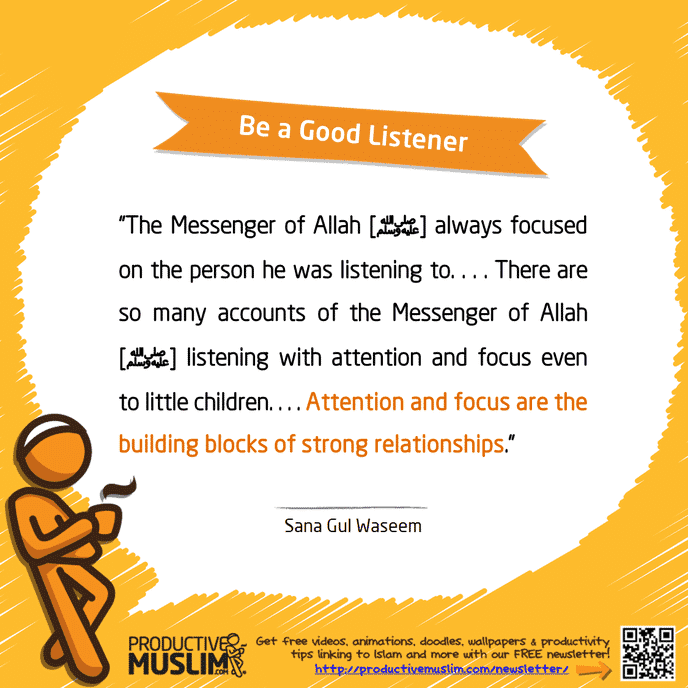
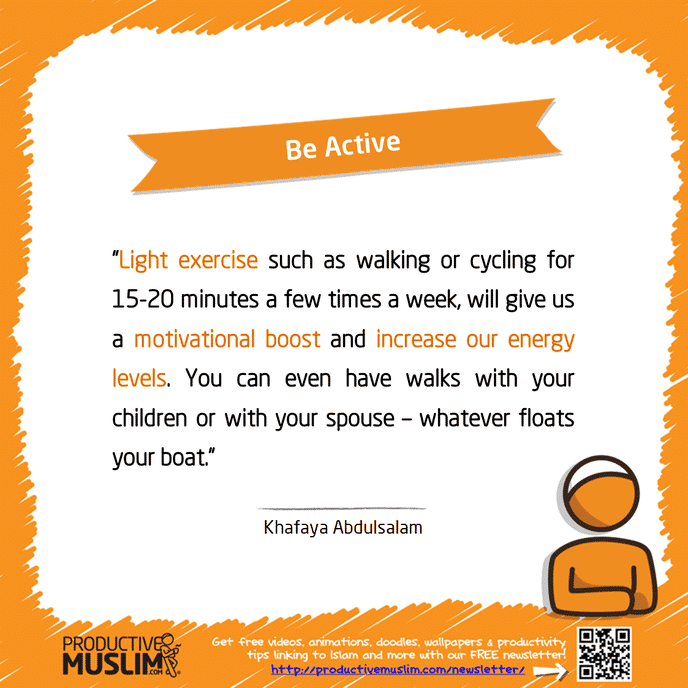
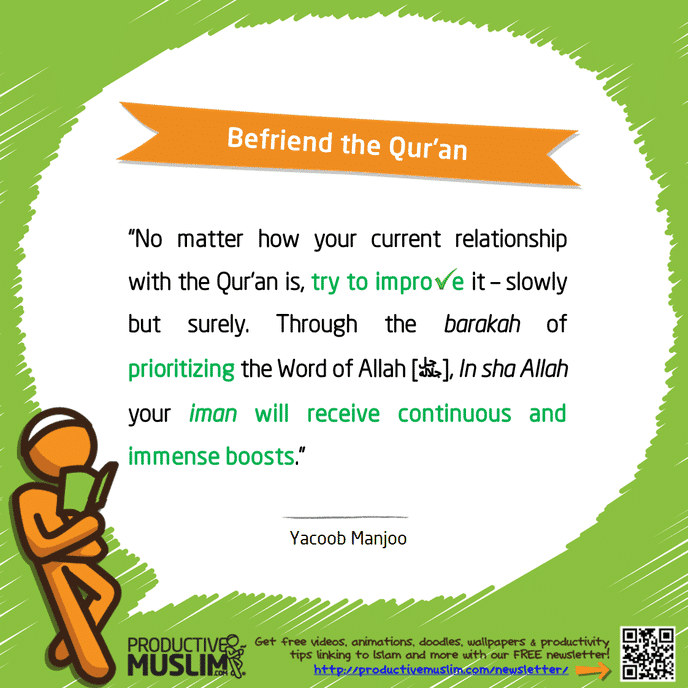
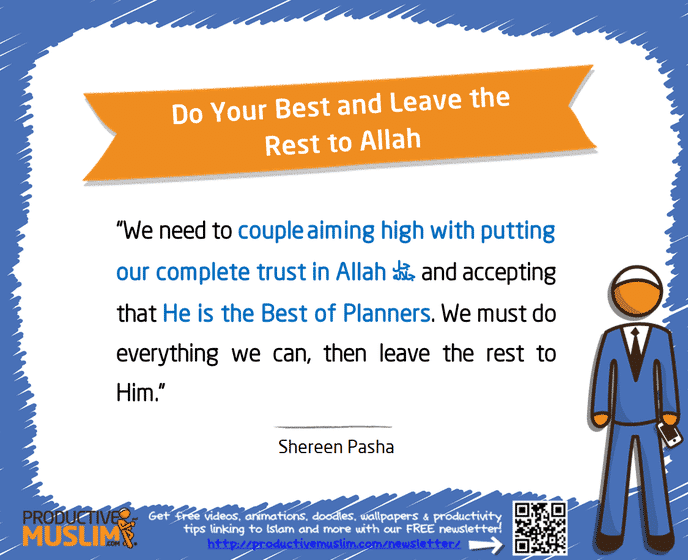
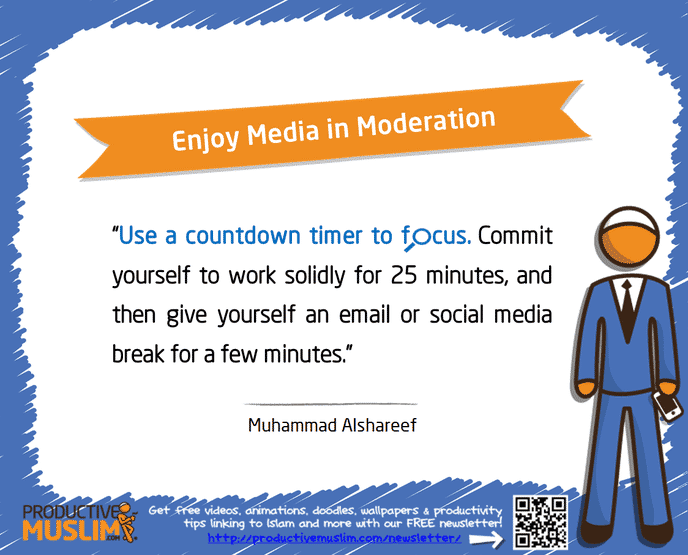
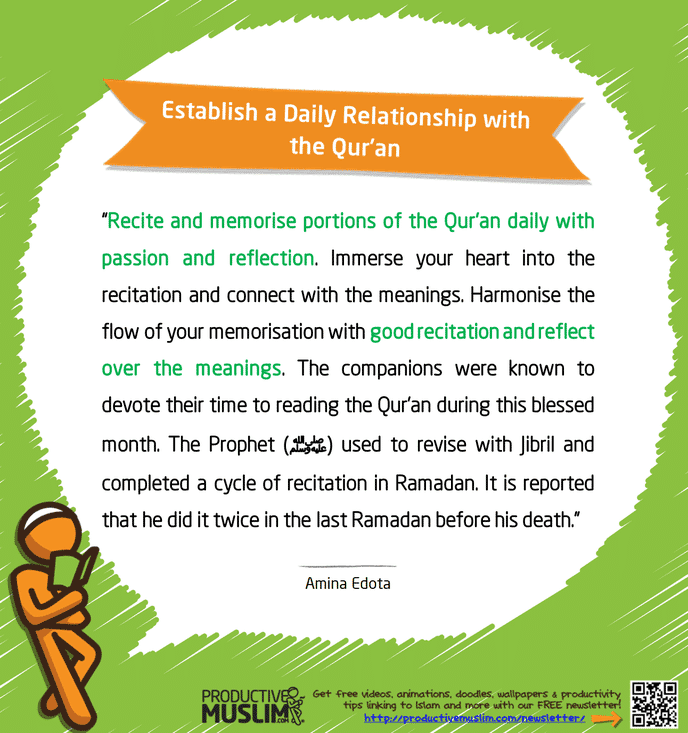
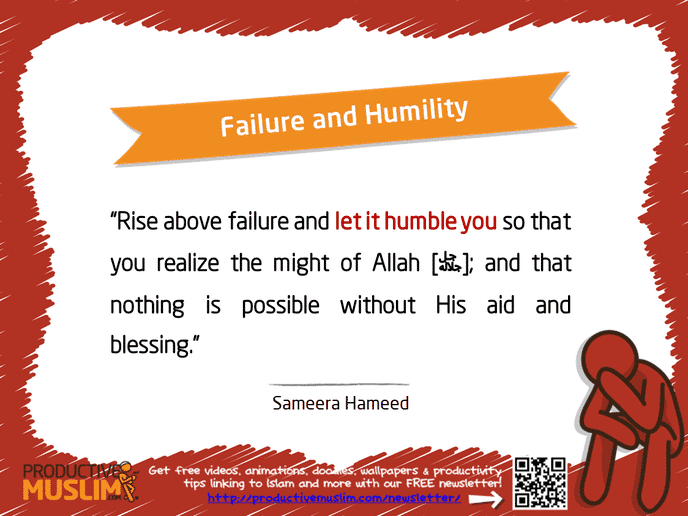
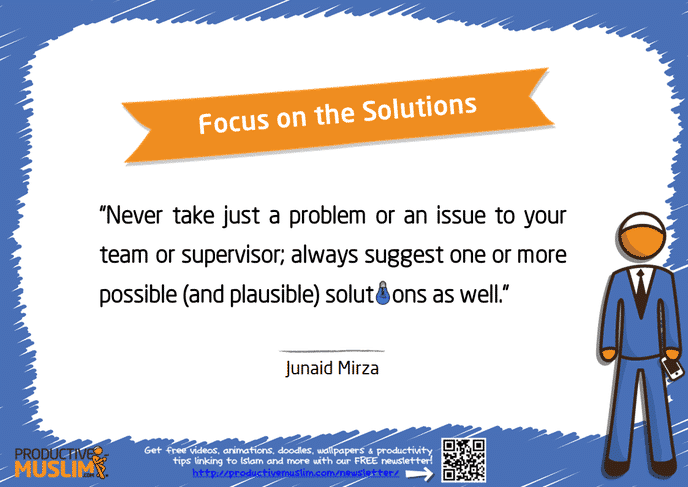
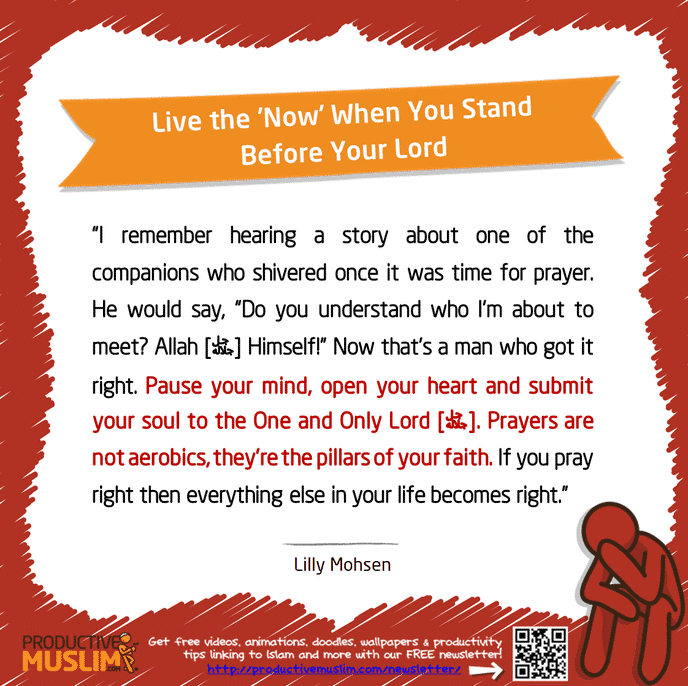
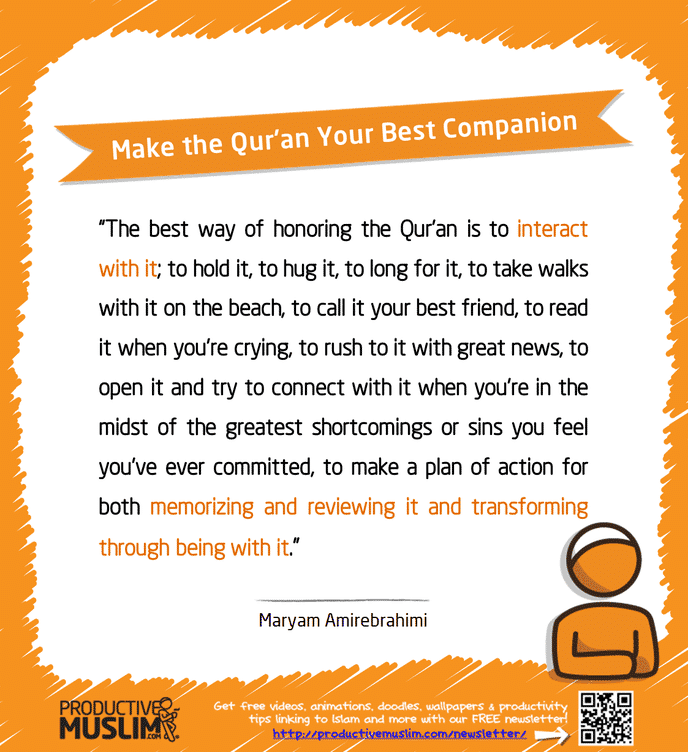
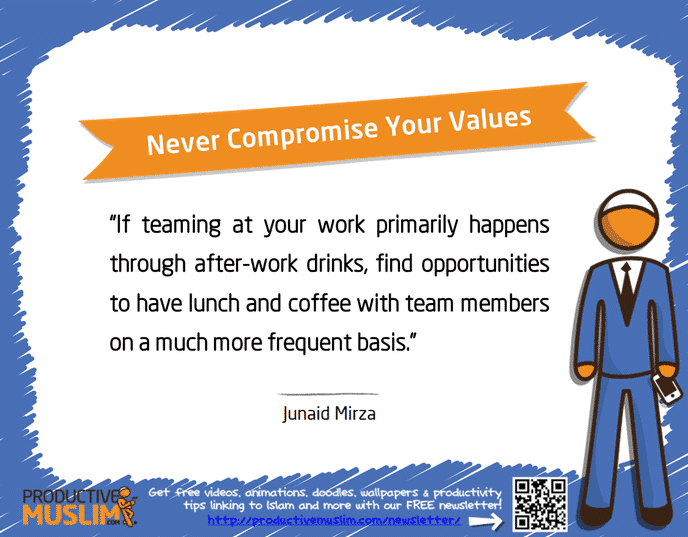
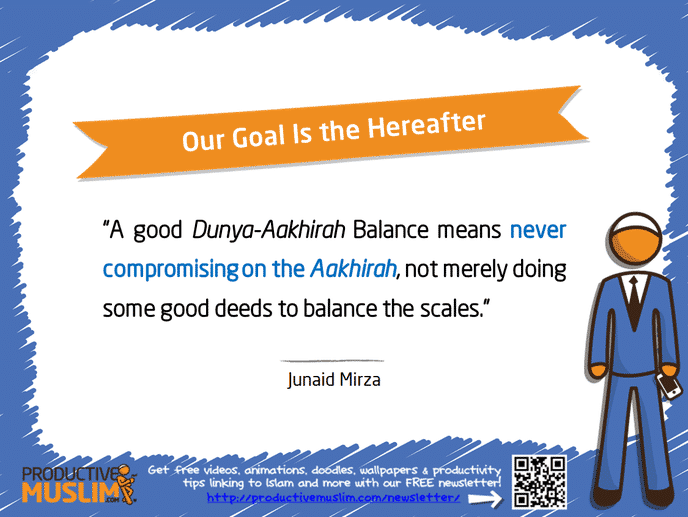
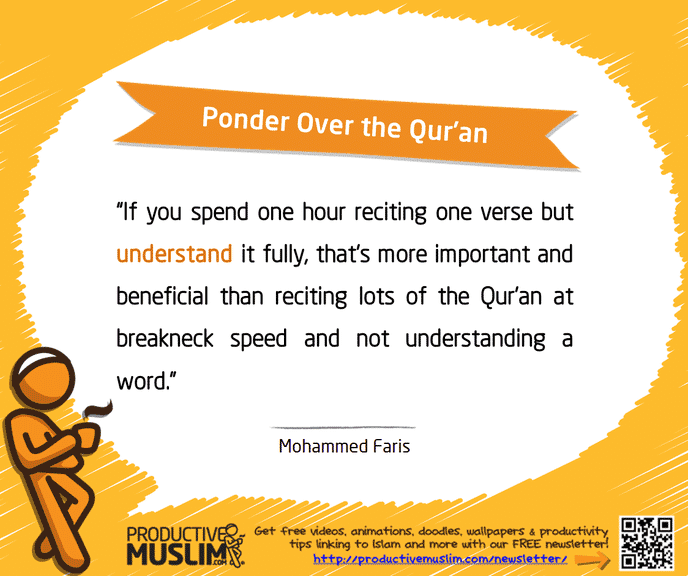
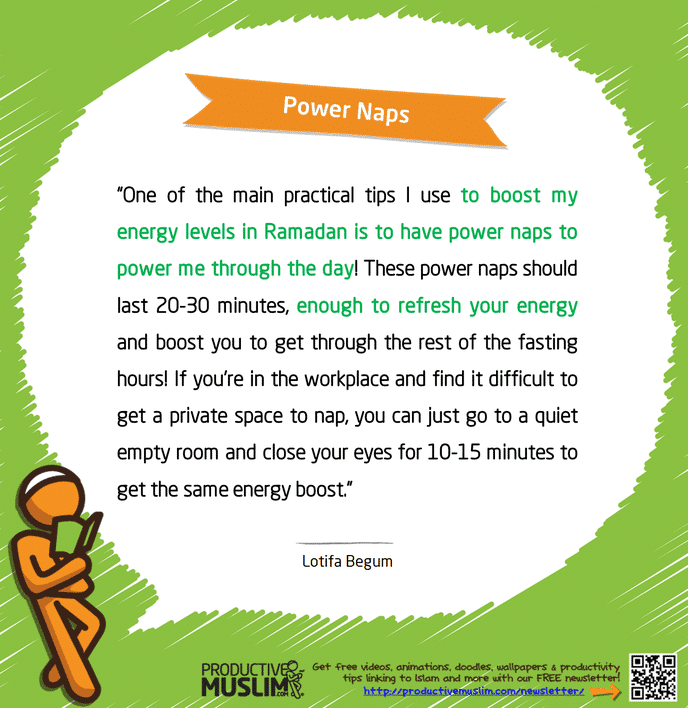
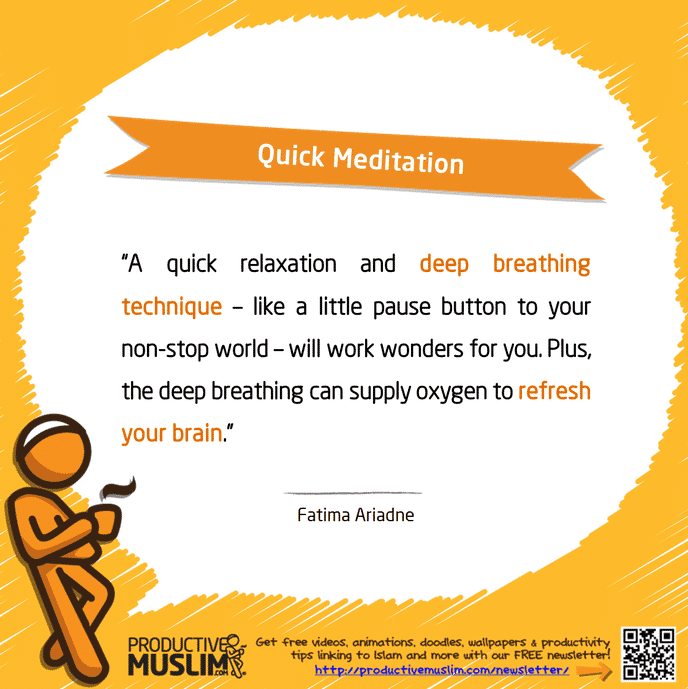
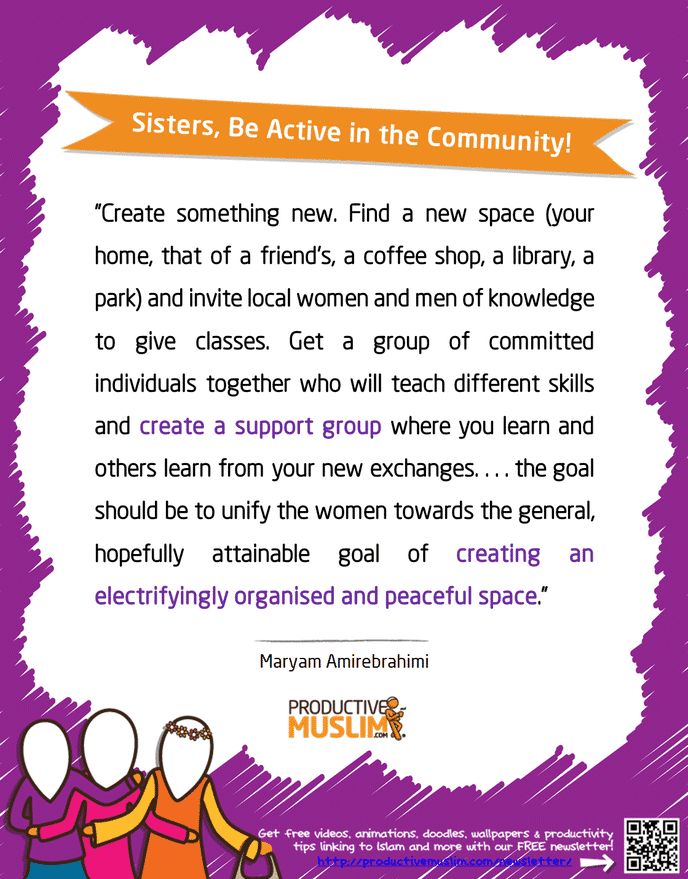
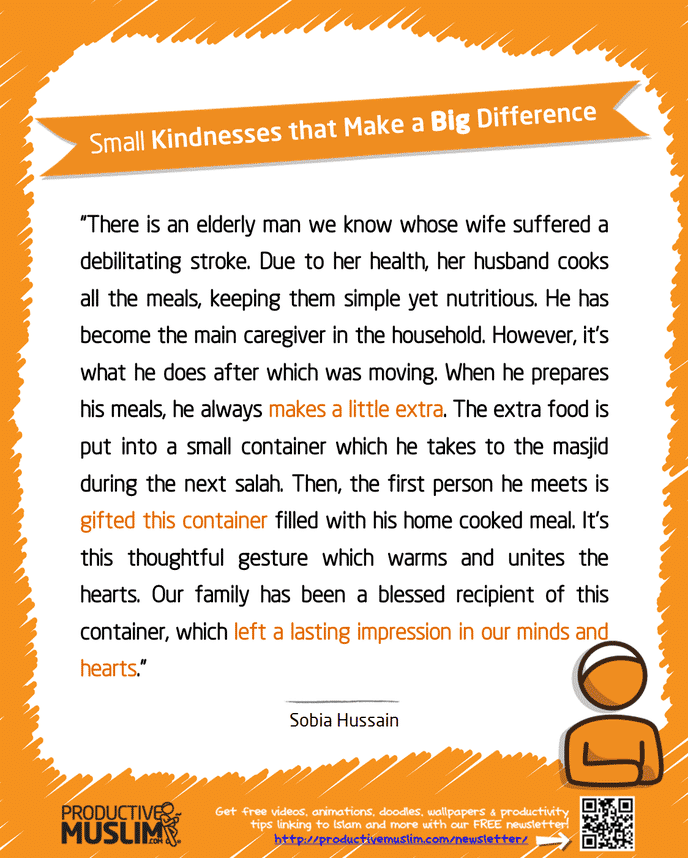
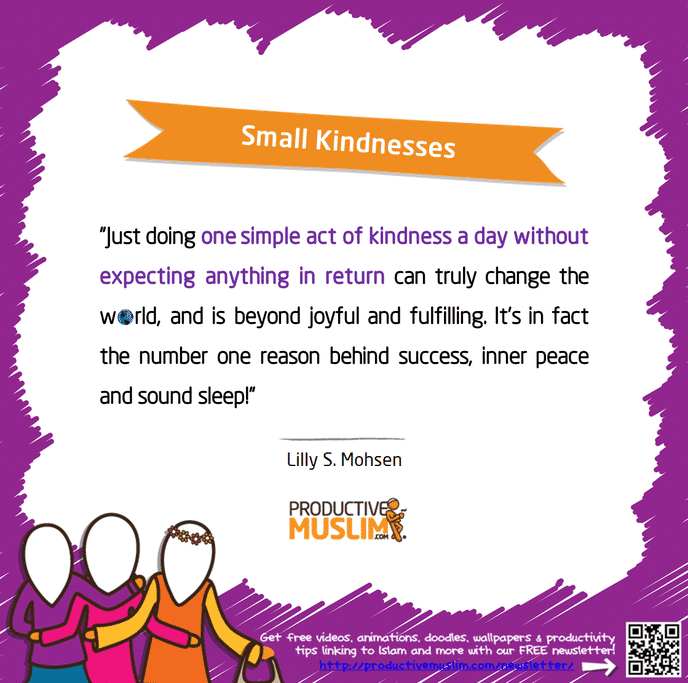
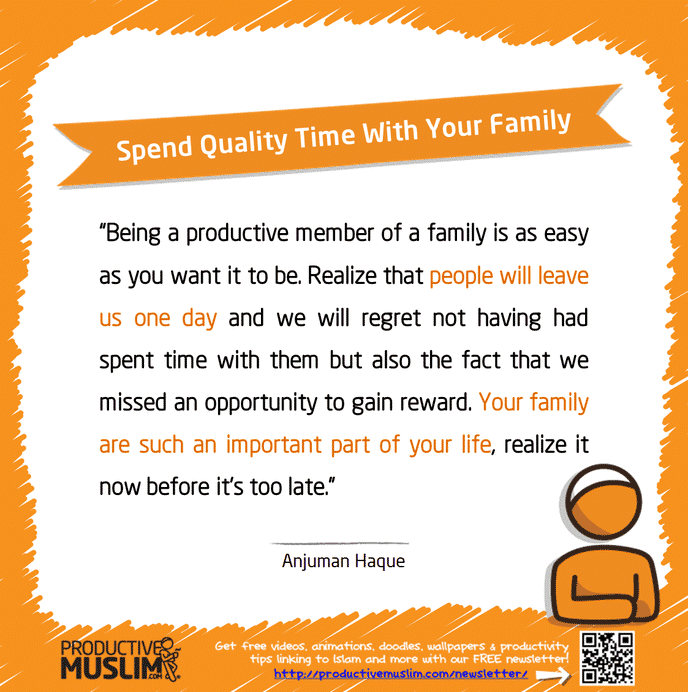
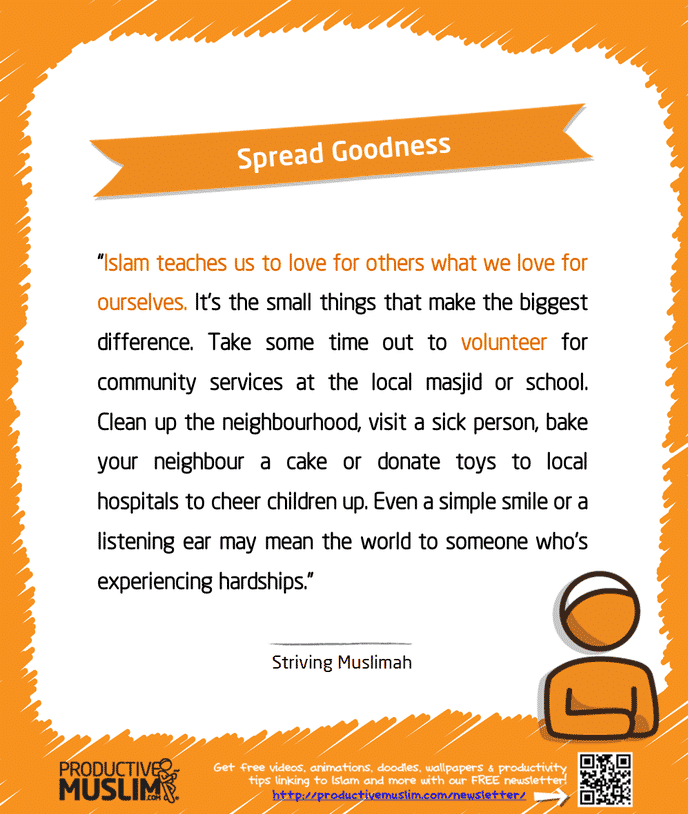
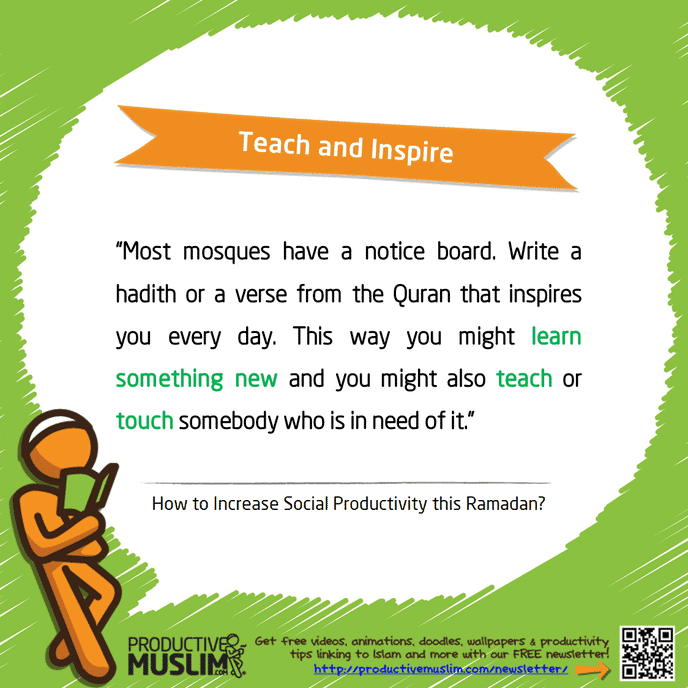
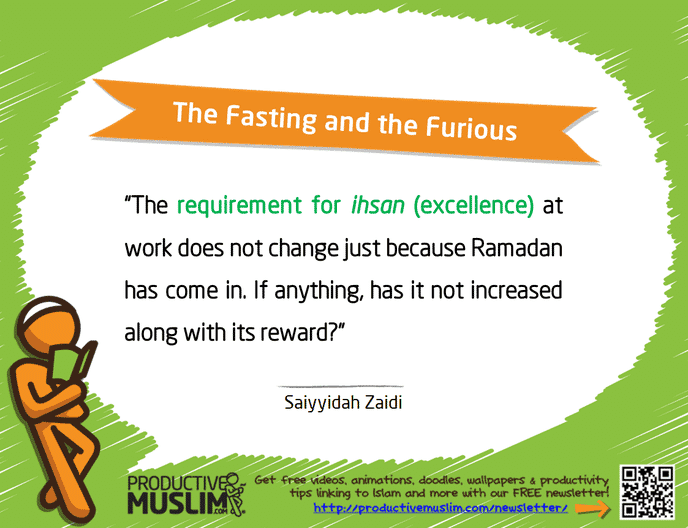
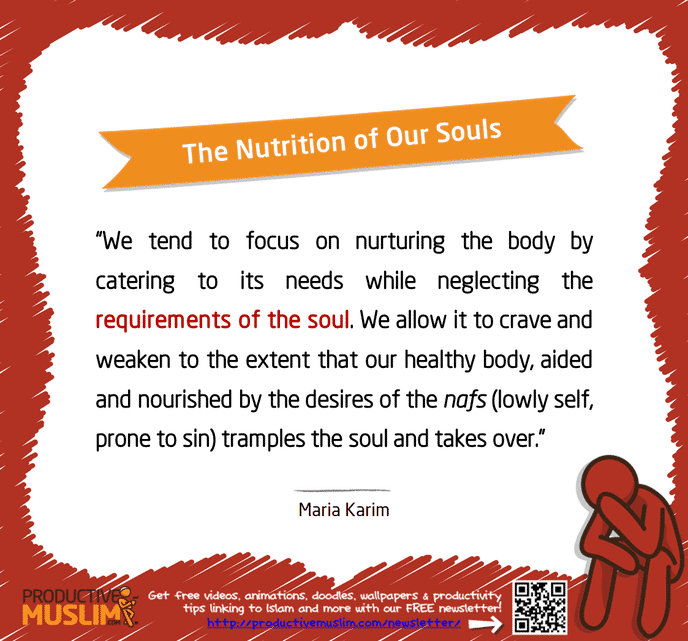
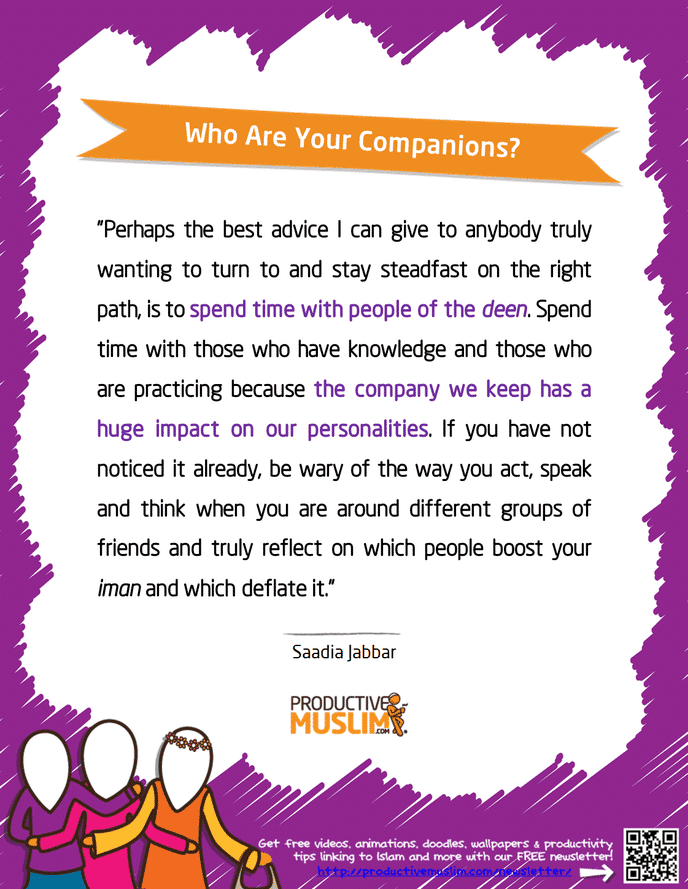
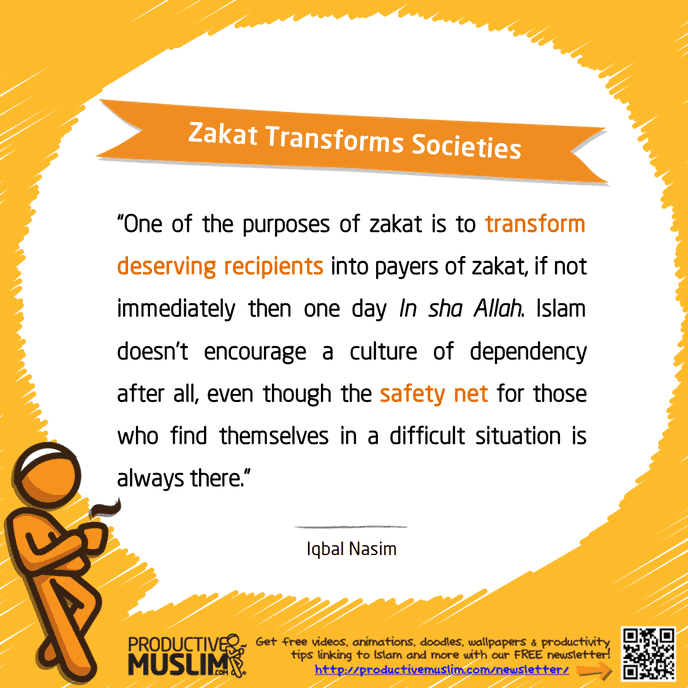
Inspirational Quotes on Productivity
In this post, we have compiled for you 50 productivity quotes extracted from articles previously published on ProductiveMuslim.com, written by various authors. Reflect on them, print them, share them; be inspired and stay productive!























December 31, 2015
Top 10 Achievements of ProductiveMuslim in 2015 (and Plans for 2016!)
Dear ProductiveMuslims,
Alhamdulillah, this year has been an incredible year for the ProductiveMuslim team. And I just wanted to share with you some of our major achievements which could not have happened without the permission and tawfeeq of Allah and your constant support and duas. So here’s our top 10 achievements for this year!
Top 10 achievements in 2015
1. Launched the new ProductiveMuslim.com website
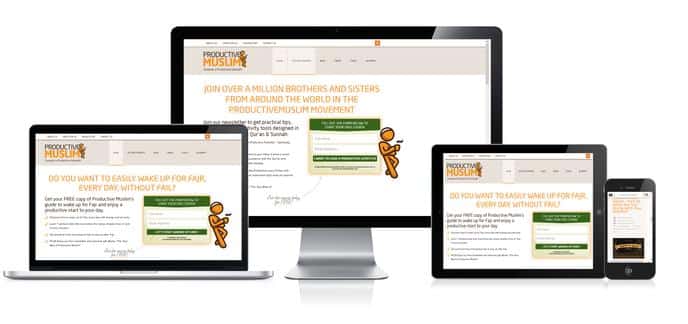
In spring, we launched the new version of ProductiveMuslim.com. This was the culmination of two years of design and development to optimize the user experience for ProductiveMuslim.com readers and give you a super clean, mobile-responsive look and feel. The feedback has been great so far and we promise to continually tweak and improve the site to make it even better in sha Allah!
2. Launched ProductiveMuslim coaching service
A number of you asked to get more personalized feedback and advice on your productivity challenges; hence, we launched the Abu Productive coaching service in January. This is a one-to-one coaching service that takes place online and Alhamdulillah, the results have been amazing. Check out some of the testimonials from some of our coaching clients below:
“MashaAllah Mohammed Faris (Abu Productive) knows his stuff and was able to grasp most of my challenges and come up with suggestions and approaches, and if it was beyond him then he still was able to suggest a direction” – Yasir, Coach & Entrepreneur, Canada.
“I loved the resources that Br.Mohammed Faris (Abu Productive) would e-mail me after our calls. I like how I can always refer to them whenever I have a challenge” – Sara, Nutrition Expert & Community Leader, USA
“I just enjoyed getting clarification and being able to use what I learnt immediately. It’s so practical and really enjoyable MasyaAllah! It’s like you get an instant boost you know?” – Marina, Mother & Educator, Malaysia
If you want to sign up for coaching, go to our coaching page here and sign up.

3. Launched ProductiveMuslimAcademy.com

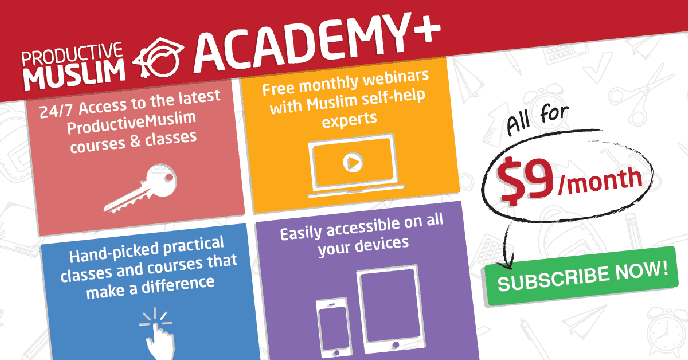
With our new ProductiveMuslimAcademy platform, all the latest ProductiveMuslim classes and courses are now available online 24/7 and accessible from all your devices. We’re also excited to launch a new subscription service called ProductiveMuslim Academy+ that allows all our course students to access our latest courses and classes for just $9/month!
4. Launched Ramadan competition

During Ramadan, we launched a brand new international competition asking people to submit their stories of them being spiritually, physically and/or socially productive during Ramadan. We received hundreds of submissions and we featured the top submissions on Eid day in this article here, check it out! We hope to repeat the competition next year and give some great prizes!
5. Launched new animation series
For over a year, we’ve been quiet on the animation front due to lack of funds, but thanks to the generous donation of a sponsor, we were able to produce six new animations based on our popular article 10 Habits of Happy Muslim Couples, and they’ve been receiving some great reviews online! Check them all here: Habits of Muslim Couples
6. Launched ProductiveMuslim Manifesto
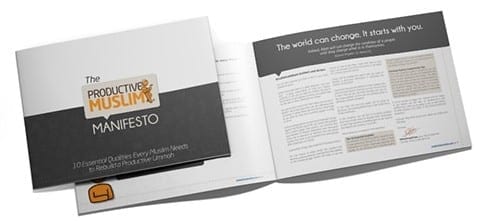
Over the past 7 years, we’ve produced a lot of content on ProductiveMuslim.com and we realized there was a need for a small eBook that introduces people to the top 10 core concepts at ProductiveMuslim.com. This idea gave birth to the ProductiveMuslim Manifesto, which is available for FREE here . The Manifesto is also available in eBook and Audiobook formats on these platforms:
Digital eBook:
Amazon Kindle
Apple iBookStore
Audio Book:
iTunes (Audiobook)
Audible.com (Audiobook)
7. Successfully crowdfunded our ProductiveMuslim Manifesto Translation Project

Realizing the popularity of the ProductiveMuslim Manifesto, we wanted the message of ProductiveMuslim.com to reach the four corners of the Ummah. So we launched a crowdfunding campaign on LaunchGood.com to fund the translation, editing and design of the ProductiveMuslim Manifesto into six popular languages in the Muslim world. By Allah’s permission, not only did we manage to complete the fundraising, but I’m also happy to announce that all the translations are now done and will be published on the website very, very soon!
8. Signed a book deal with Awakening Worldwide

The ProductiveMuslim book is in the final stages now and we were excited to sign a book deal agreement with Awakening Publications, a subsidiary of Awakening Worldwide, one of the leading Islamic media companies in the world today. The book is expected to be released in January 2016 in sha Allah! Look out for new announcements about the book very soon.
9. Held workshops in Nigeria and Switzerland for the first time

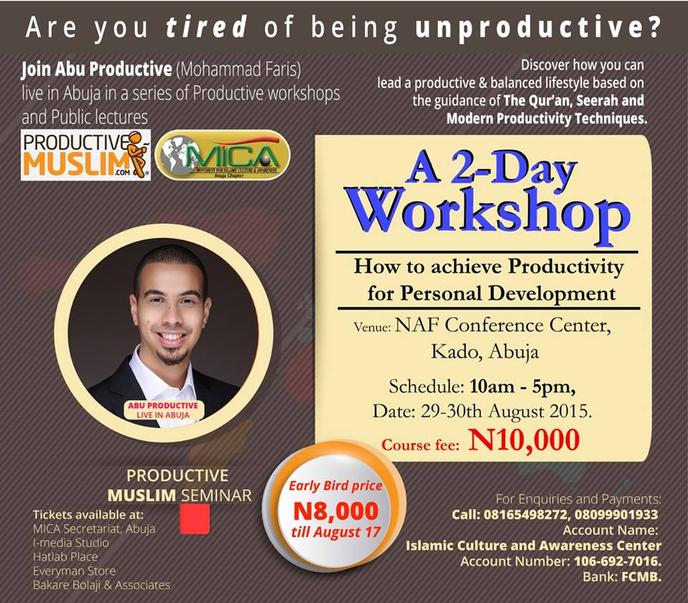
This year, ProductiveMuslim ventured into two new markets with our flagship ProductiveMuslim Workshop, namely Nigeria and Switzerland. We were overwhelmed by the wonderful responses we received and the amazing attendance in both countries. We hope to meet new ProductiveMuslim fans in new countries in 2016 in sha Allah! (P.S. UK –> you’re next!).
10. Personal milestone: moved full-time to ProductiveMuslim!
This is a bit of a personal milestone and a dream come true for me. I’ve finally taken the plunge and moved full-time to working on ProductiveMuslim.com earlier this year. Specifically, I moved to Dallas, Texas, here in the US to be closer to some of the leading Islamic online providers, namely: Bayyinah, Fiqh Of Social Media, Qalam Institute and others. I’ve also set up the company Leading Productive Lives LLC as the mother company for ProductiveMuslim and future brands in sha Allah!
What’s coming up in 2016?
We’ve a lot planned for ProductiveMuslim for 2016, but here’s a quick rundown of what to look forward to, in sha Allah:
• We’ll start 2016 with the book launch and a book tour in UK, Malaysia and Singapore (if you’re interested in hosting a workshop and a book launch in your locality, simply e-mail us at contactus[at]productivemuslim[dot]com).
• We’ll also start a new brand aimed specifically at Muslim professionals with professional courses for both individuals and corporates.
• We’ll be producing an exciting and animated illustration book for 9-14 year-olds that helps them deal with productivity issues, such as procrastination.
• We’ll be launching our brand new ProductiveMuslim Podcast: a weekly show hosted by the founders of MuslimLifeHackers.com on your productivity challenges.
• We’ll be producing merchandise materials including posters, wall calendars, journals and more :).
A big thank-you!
Honestly, I keep saying this, but I really mean it: if it wasn’t for you, our dear reader, we would not be where we are today. You fuel us with energy, dedication and commitment to better serve you each and every year. Thank you for being there for us! JazakumAllah khair for every like, share, comment and e-mail. It means a lot to us and it means a lot to the whole ProductiveMuslim team.
Please keep us in your duas :)
Sincerely,
Mohammed Faris (aka Abu Productive)
and the entire ProductiveMuslim team!
December 26, 2015
Graphic Design Volunteer Required

ProductiveMuslim started as a simple blog driven by Abu Productive’s vision towards inspiring others to lead productive lives. Today, the blog has developed into an established platform on productivity — managed by a virtual team of more than 20 volunteers from around the globe.
As we continue to grow and consistently seek to reach greater heights, we’re in need of some more helping hands.
What do we need help with?
We are looking for a Graphic Design Volunteer to do the following:
• Support ProductiveMuslim.com in online/offline marketing campaigns by designing suitable posters, leaflets, online banners, social media covers, etc.
• Maintain the branding of ProductiveMuslim.com in all our online/print material.
• Provide design input/feedback into our projects.
What’s in it for you?
• Flexibility: You have the freedom to work how you want, where you want. We focus on results.
• Personal and professional growth: As part of volunteering with the ProductiveMuslim team, you’ll be part of a dynamic, ever-growing, ever-learning, productive Muslim team. You’ll gain insights into how decisions are made and some of the major challenges that companies such as ours face, and you’ll be part of the ups and downs of running an online organization.
• Training: As much as you’re helping us, we want to help you! Our dream for each of our volunteers is that they come out from the experience with as much learning and skills that they can put to use for their future work and home life. Therefore, we commit to offer you free or subsidized access to relevant training programs that will improve and add to your current skill set and stand you in good stead for the future. You will also be working with experienced team members who are always ready to lend a helping hand.
• Reward: In this life of inspiring people and turning their lives around for the better and the reward in the next life for the hard work dedicated to Allah’s pleasure, in sha Allah.
• Reference: We are also happy to provide you a reference to future employers/colleges/university upon successful completion of six months working with us.
You’ll be a great fit if:
• You have an existing interest in visual arts, graphics design or illustration and are willing to develop it further
• You have intermediate proficiency in Adobe Photoshop, Adobe Illustrator or similar software
• You are someone with a design experience and is willing to donate 3-5 hours per week for ProductiveMuslim.com
Do not apply if:
• You are simply looking for a hobby
• You are unable to commit time for this role
How to Apply
We’re looking for exceptional individuals who would add value to our work. Therefore, the application process is designed specifically to select such individuals and people we see to be best-fit with our team.
Here’s how the application process will work:
1. Complete the following design assignment:
1. Design a 750 x 422px ad banner for us that contains the following text:
• Simple Practical Guide to Developing Your Life Goals
• START THIS COURSE
Please also include the following imagery:
• ProductiveMuslim Academy logo (Click to download)
• a custom ProductiveMuslim ‘stickman’ (Click to download)
2. Send your design work along with a brief bio about yourself (Name, Age, Time Zone, Role you want to apply for) with the email subject Graphic Designer Application to aneesah[at]productivemuslim[dot]com.
3. If selected, you’ll be invited for a short interview (10-15 minutes) with the head of our Design Team.
4. After the interview, you should receive a reply (yes or no) within 1 week in sha Allah. This is where you’ll be invited to join our team on probation basis for 1 month.
5. Upon successful completion of your 1 month probation, you’ll be confirmed within our team and receive a welcome pack to ProductiveMuslim.com.
DEADLINE FOR ALL APPLICATIONS: 15 January 2016
We’re really interested for you to join us; apply early!
We get a huge number of applications so, unfortunately, it’s not possible for us to reply to everyone. Please bear with us if we take time to contact you. If you don’t hear from us, try next time, in sha Allah!