K.E. Garland's Blog, page 43
October 24, 2019
TBT Thoughts: Do We Change?
About three months ago, a high school friend sent me a picture I had given her during our junior year. On the back, I’d done as many high school students used to. I’d written her a personal message. In case you can’t read my writing, it says:
[image error] To –:
Even though you never call anyone, and never tell anyone anything, and never go anywhere with anyone: u still the homie!
Love, Kathy
c/o ‘91
Okay. Let’s take a pause to commemorate 20th century rituals, such as signing pictures!
Now, back to my point. When I read what I’d written over two decades ago, I laughed. How much had I changed from 1990? I considered this person a friend, and I still do, yet for some reason, I had to call her out on her non-friend like behavior. Sound familiar? It does to me. I’ve written countless blogs that focus on relationships and understanding how we treat one another within those relationships.
Based on what I wrote, it seems to have been my lifelong quest.
Reading what I’d written reminded me of a quote. Loosely paraphrased it says, it’s not so much that we need to find ourselves, as we need to remember who we were, or something like that.
I agree. Much of our childhood and adolescent years are spent becoming acculturated and acclimated to our surroundings. We learn what we can, cannot, should, or should not say, and in some cases, do. Initially, our parents take on the role of ensuring we’re properly socialized. Once we begin school and other activities, society takes over. Some of these lessons are explicit, like don’t swear in public. Others are implicit, like girls should be quiet and demure.
One lesson that stands out for me is from my mother. She would always tell me, “it’s not what you say, but how you say it.” She tried to instill some sense of etiquette to my tone. By my mid-30s, and after watching others’ reactions in conversations, I began to self-censor not only my tone, but also my speech, because try as I may, I can’t seem to say things with sugar or honey. And if someone was going to worry about how I said something, it was best not to say it at all. This lasted two years. For me, self-censorship causes a buildup of unused words, and that’s not good for my health.
I’m believing more and more that we are born knowing who we are and what we need to do. Like the paraphrased quote above, we just need to remember who, what and why?
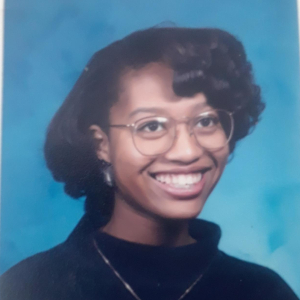 Eventually, I found my way back to who I am. Blogging has helped. While I do edit words for grammar and usage, I don’t suppress my tone or what I want to say. Likewise, I never intend to hurt someone’s feelings, so in person, sometimes I pause or exhale before speaking. But I make sure not to mince words. Finally, I’ve accepted the idea that if you’re focused on how I say something, instead of what I’ve said, then maybe we don’t need to communicate. And that’s okay. Maybe you’ll find someone who says things in a manner in which you can receive the message.
So, what do you think? Do we change over time? Are we taught to fit in, which causes us to change? Have you had to re-learn who you once were?


October 14, 2019
Monday Notes: “Umi said shine your light on the world”
[image error]“Shine your light for the world to see.” It’s a quote from a rap song that I’d heard decades ago (Mos Def). But I’m really feeling it after our D.C. book reading. Just like the previous two, this one was completely different as well. The Jacksonville book talk was more like a starter event. The authors had never publicly read their stories before, so the energy was a mixture of excitement and nervousness. Though each writer’s voice was clear, it was quiet.
[image error]Three months later, we’d moved 345 miles north to Atlanta. Three women had read in Jacksonville, so they were a bit more familiar with expectations. Their voices were grounded, louder. This time the audience had changed. The energy was palpable in varied ways. Questions were about the writing process, as well as the healing process. How had any of us done this? This included forgiving our fathers for heinous shenanigans. This included writing our mini-memoirs for someone other than ourselves.
[image error]Seven months after the Jacksonville event, we convened in Washington, D.C. and everything had changed. Two readers were pros. Kotrish Wright declined the use of a podium. Instead, she used the space around her to give more of a performance act. Her voice rose and fell, like an experienced reader. Inflection was important for specific parts. Ishna Hagan read her narrative with confidence and poise. She stood in her truth, which seemed to give her power.
Tikeetha was a novice to this experience. But I couldn’t tell. She read her story with the ease of a famous author. Though her story is sad and heart wrenching, she managed to make the audience nod and laugh at all the appropriate times.
And finally, there’s me.
[image error]This time I felt like I was shining my light for the world to see. An attendee who had cried her way through a question and almost the entire reading thanked me for putting this together. She’d intended to find a way for her mother to heal from trauma and mental illness. Another woman recounted her own father-daughter situation. It was enough to be another chapter in our edited collection. She, too, admitted she needed to find a way to counter her childhood dysfunction. A friend of mine provided me with a list she’d brainstormed to broaden my reach: come to Richmond, VA and call her OWN network contact.
After this third reading, I feel like we’ve each come into our own. We’ve done much more than pour our hearts on pages for catharsis. We’ve demonstrated what love, forgiveness, grace, and healing look like. We’ve exposed ourselves in ways that neither of us believed possible.
“Umi said shine your light on the world; shine your light for the world to see.” With this project, we’ve shone brightly and come into our own. And we plan to continue in our own way.
October 10, 2019
*TBT Thoughts: Tommy Hilfiger
[image error]
October 2, 2019
September 30, 2019
Monday Notes: Book Reading in DC!
The authors of Daddy: Reflections of Father-Daughter Relationships will be in Washington, DC on Saturday, October 12, 2019 between 3:00-5:00 P.M. If you’re in the area, please consider joining us for this important conversation centered on understanding the importance a father has in his daughter’s life, beginning to heal any past trauma, or sharing your own father-daughter story (positive or not).
[image error]
September 23, 2019
Monday Notes: Everybody Is Not A Christian
I’ve held off discussing much about religion on this blog because I haven’t felt the need. However, recent comments have revealed people’s assumptions. Some people think I’m a Christian.
One example comes from a client. I missed her call. I think it was a Wednesday. Because she couldn’t reach me by phone, she emailed. In her note, she mentioned that I was probably busy at church (Bible study). I wasn’t at Bible study. I was at home, sitting on my couch, watching TV.
[image error]A similar assumption occurred with another client. He was explaining how he’d be in Jacksonville for some type of religious convention. He told me that I’d enjoy it. I just listened as he talked. I think my silence led him to engage in a guessing game of sorts.
“I know. I know Doc. You probably have your own church that you go to and you can’t be fooled up with mine, but I think you’d like to come. I’ll send you the information.”
I laughed and told him it sounded like a place where I could sell some books.
[image error]This is what I usually do. I listen to the person. Laugh it off and let the conversation die. Past experience has taught me that saying something like, I don’t go to church; I don’t follow organized religion; or I’m not a Christian leads to full-on conversion techniques. Christians, in particular, either (a) ask me to attend their church or (b) outline reasons why I should follow their religious lead.
In the past, I’ve explained my religious background. My mother was a Sunday school teacher. My father was over the children’s ministry, and eventually, he became a Baptist deacon. My paternal grandmother was a staunch Catholic. One of my stepmothers was Apostolic. I know how to finish the phrase, “God is good…” as well as “God of mercy…” I know in some churches, I’m supposed to hold up one finger to symbolize excusing myself out of the sanctuary. I know the difference between AME and Methodist. Jesus Can Work It Out is one of my favorite gospel songs and I was thoroughly offended when Google Chromebook sampled it for a commercial. I’m familiar with hymnals, scripture, and all other manners of church behavior. But I am not a Christian.
What I’ve tried to explain to others is that it is because I’m well versed in Christianity that I choose not to participate.
The notion that my choice is not out of ignorance of the faith seems to baffle some people. In fact, it causes downright cognitive dissonance.
One day, my dad actually said to me, “I know you at least still pray because you’re doing so well.”
He couldn’t believe that my perceived success could be due to anything, but the Lord Jesus Christ, the Holy Bible, and some sort of private conviction.
[image error]Listen. I get it. There are 2.3 billion Christians in the world (Hackett & McClendon, 2017). Seventy percent of Americans are Christian (Religious Landscape Study). So, if you were to assume, then statistically speaking, you’d probably be right.
I guess my point is, as long as there are six other options that I could’ve chosen, the best thing to do is not to assume. While I’m at it, the most respectful act is also not to try to convert people once you learn they have other beliefs. Non-Christians are not wanderers who’ve lost their way. They actually might be thinking individuals, who’ve chosen a different path.
September 18, 2019
Inspiring Image #100: DUSK
[image error]
September 9, 2019
Monday Notes: In Search of Balance
The past 11 weeks, I’ve been busy. Remember when I silently reflected and meditated for 14 days? Remember when I said I needed to figure out how to generate more money? Welp, shortly after, I attracted several clients.
Since mid-June, I’ve edited 12 manuscripts. This means each week, I’ve pored over a different person’s dissertation or self-published book. While I’m grateful for the business, there have been repercussions.
My dry eye flared back up. About two years ago, the optometrist diagnosed me with this condition. To remedy it, I use eye drops; I only wear daily contacts (the kind you have to throw away after one use); and I take frequent screen breaks. Usually I can keep it under control, but staring at the computer, while reading 200-page manuscripts every week caused it to return. Sometimes this meant my right eye felt a little itchy and dull; other times it meant there was a bit of pain right behind my eyeball.
[image error]Writing was not a priority. This really bothered me. During the past few weeks, I’ve wanted to write. In fact, I’d created a goal to write a new piece and submit for publication every two weeks. This was impossible. It turns out that it’s challenging for me to read other people’s works, while writing my own. I don’t know about you, but I need time and space for the writing process to unfold. By the time I turned off my clients’ work and decompressed, I was tired and only wanted to sleep. This was a bit frustrating for me because I value writing above all else.
Reading blogs shifted to an even lower priority. I found myself not wanting to read as many blogs, which is unusual. Even when I’m on a social media break, I take at least one hour every day and read other bloggers’ material. But after editing thousands of words for hours, I didn’t want to read anyone else’s. It didn’t matter how inspirational, uplifting, or funny the blog was, I couldn’t make myself read for 60 minutes and meaningfully engage.
Editing 12 manuscripts in 11 weeks reinforced a few lessons:
Know your priorities. While I know that priorities shift depending on the circumstances, I think that your main priority should always remain number one. For example, writing is important to me. I actually felt bad that I didn’t want to exert the energy to express myself, even though I had the words piling up in my brain.
Know your limits. Prior to taking on so many clients, I already had a sense for what was reasonable for my lifestyle. The number is two. I can edit two manuscripts per month and maintain a sense of calm. Anything else is too much, and I won’t be wavering on that moving forward, unless I hire help.
Be ready for what you’ve requested. I asked for an increase in income, and I received it. But I wasn’t necessarily prepared for some of the consequences. As a result, I’ll be fine tuning how I co-create my life because after all, I’m in charge of myself and my choices.
So, tell me…how have you all been? What’s been going on? Have you ever gotten a little more than you bargained for? If so, how did you cope?
July 29, 2019
Monday Notes: My Bisexual Daughter
My daughter has a lot of positive qualities.
She is intelligent. I first realized just how smart she was when she was three-years-old. I begged the teacher to put her in the next class, but she disagreed, that is, until she interacted with her for two days.
“You were right,” she apologized, “I just thought you were like all the other parents who think their child is brilliant.”
The next day she was in the four-year-old class.
Her intelligence was reaffirmed years later at the end of third grade. I’d received her first state standardized test results. She’d gotten all the answers correct. Even with my background in education, I’d never seen marks like that.
She is caring. I remember when she cried because she was saving a lizard that had somehow entered the house, a frequent Florida occurrence. His little green tail fell off as she used a glass to capture him. She immediately burst into tears, but soon calmed down when I reminded her that lizards’ tails regenerate. She dried her face and released him outside where he belonged.
She is socially conscious. She loves being black and championing for black people in different ways, like when she assured her dark-skinned friend it was okay to stay in the sun; she had no fear of “getting darker,” and neither should he.
She can also be found telling her father and me about her new choice of water, why we shouldn’t be buying McDonald’s, why we should stop eating ‘carcinogens’ (e.g., meat), and why we should sign a petition about parolees.
She is kind. When she found out her big sister wouldn’t be able to attend our last trip, she offered to save more of her own check so that her sister could go. Of course her sister declined the offer, but my point is she offered. She also considers her friends and frequently stands up for them in different situations or is there for them when they need someone to listen.
She is trustworthy. This is why we had no problem passing my car to her at the age of seventeen. She drives to school and back home. She drives to work and back home. She drives to her friends’ houses for parties. She drives back to school for extracurricular activities. She drives to complete her service project once a week during the summer. She spends the night over friends’ houses, and when she doesn’t feel comfortable where she is, she texts me…and comes home. We trust her and her judgment.
These are the qualities that come to mind when someone asks me about my daughter. The last thing I consider is her sexual identity. I just wished society felt the same.
July 22, 2019
Monday Notes: Talking About Women Behind Their Backs and Women’s Empowerment
Where does talking about women behind their backs fit into women’s empowerment? I was faced with answering this question for myself after three different circumstances occurred over the course of two months.
[image error]Situation #1 is a combination of many experiences. It usually starts in a group DM. One person may say, “Hey, did you know that Sally did blah, blah, blah?” And because we all know Sally, but Sally’s not in the group, a conversation and judgments about her may ensue. I have been known to either start this type of dialogue, participate in the conversation, or throw in an lol or appropriate gif.
Situation #2 is also a common one I’ve found myself in. Two women don’t know each other, but for some reason have crossed one another’s paths. I associate with both women. Sally does something Sue doesn’t like and because I know both, I’m listening to each share their dislikes. I may also interfere by throwing in a, “Hey why don’t you think about it this way” because I feel a sense of loyalty to both and I’m equally associated.
[image error]Situation #3 surfaces every now and then. Again, it begins with my knowing two women, who also may know one another, but aren’t necessarily friends. Sue asks me a question about Sally. Just for the sake of example, it could be something like, “Why does she always wear her pants backwards?” Because I know Sally and I have insight into why her pants are always backwards, I answer. I never tell Sally; however, I do secretly continue this defense of her and her backwards-pants wearing.
I’ve decided participating in any future, similar conversations is wrong. Here’s why.
Many of you know my overall goal is to raise women’s consciousness; however, how can I be raising women’s consciousness in one breath, while talking about women behind their backs in another?
I can’t. It’s out of alignment. And I won’t be doing it anymore.
From here on out, I will not be discussing other women in the confines of text messages, DMs, or lunch dates. I also won’t be listening to other women discuss and judge women I know (or don’t know). My new direct phrase will be: Let’s talk about all the amazing things going on in your life and what you’re doing (or something similar). And finally, if someone wants to know why Sally always wears her pants backwards, I’m going to suggest that they pick up the phone and ask Sally.
Women’s empowerment is about more than writing, blogging, or speaking engagements, where women share their wounds and heal. It’s about not creating more cuts for someone we each refer to as “sis.” It’s about the way we carry ourselves when no one’s looking. This includes private conversations.
Let me know what you think, if you can relate to either of these situations, or if you have another one to share.