
Connie Willis's Blog, page 6
April 5, 2020
THOUGHTS ON THE CURRENT EPIDEMIC
THOUGHTS ON THE CURRENT EPIDEMIC
by
Connie Willis
(originally posted March 16 on Facebook)
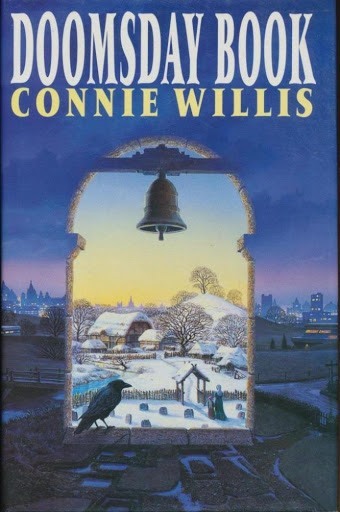
Back in the 1980s I wrote a novel called DOOMSDAY BOOK. It was about a time-traveler who went back to the Middle Ages and found herself caught in the middle of the Black Death. The book featured the bubonic plague, an influenza epidemic a lot like the Spanish flu epidemic, a future Oxford under quarantine, and a shortage of toilet paper.
And now. Thirty years later, here we are.
The Eiffel Tower’s closed.
So’s Broadway and the Metropolitan Museum of Art.
And Disney World.
Rome and Venice and Times Square are deserted.
March Madness has been canceled
And the opening of the baseball season delayed.
Conferences and comic cons and conventions have been called off.
There’s no Purell to be found anywhere.
Or toilet paper.
Store shelves are empty.
Schools and libraries and state offices are shut.
And it’s starting to feel eerily like the end of the world.
It isn’t.
This isn’t the Black Death or the Spanish flu, thank God,
but there are definitely parallels:
1. People blaming everyone and everything they can think of for the disease. Trump’s calling it a “foreign virus” and blaming Obama. Secretary of State Pompeo is calling it “the Wuhan flu.” And Fox News is calling it “the Chinese virus.”
2. Fleeing it. I saw an article today about rich New Yorkers fleeing to the Hamptons and to Florida to escape it, and when Trump put a travel ban on Europe and the UK, thousands of people frantically tried to get home. This kind of action, of course, only spreads the disease farther and faster, as witness the nightmare photos of crowds at O’Hare, jammed together in customs and waiting to be tested for the coronavirus, trapped in beyond-close proximity and unable to escape.
The problem is that, although diseases mutate, human nature stays the same, hence the fight-or-flight response, the scapegoating, and the other fear responses, like panic buying of toilet paper and hoarding. My grandmother had a neighbor during World War II who hoarded so much sugar in her attic that the floor collapsed, showering her entire house in sugar.
People during epidemics also grasp at superstitions and crazy cures. Rubbing onions on the boils and drinking arsenic and mercury was supposed to cure the plague. (It did. Or at least they didn’t die from the plague.) In this epidemic, televangelist Jim Bakker is selling a solution of colloidal silver that’s supposed to cure COVID-19. (it doesn’t, but it does turn you permanently bluish-gray), and Alex Jones is hawking a “nano-silver” toothpaste which “kills the whole SARS-corona family at point-blank range.” (It doesn’t.)
Hopefully, there will be more positive parallels, too. Like working together. The Boy Scouts did yeoman work during the Spanish flu epidemic, delivering medicines and groceries to the sick, and countless nuns, priests, and monks sacrificed themselves to treat the sick during the Black Death. Several villages voluntarily quarantined themselves during the Black Death to keep from spreading it further, and in some cases, the whole village died.
Unfortunately, we can’t do many of the things we would normally do to help in times like these, like huddling together, holding each other close, and reaching out to aid friends and neighbors. Right now, those are the worst things we could do.
But there are some good things we can do:
1. Reach out technologically to the people you love. Call, e-mail, FaceTime, and Skype them to make sure they’re okay and find out if they need anything.
2. Donate money to your local food bank. They’ll be swamped as people can’t go to work, and the needy will be hit first and hardest.
3. Countless community theater and musical groups have had to shut down (like the production of SISTER ACT my daughter was in.) This means they’re stuck with all the costs of putting on the production and none of the revenue, so make a donation to them or to your State Arts Council. They’re giving grants to these groups to help keep them afloat.
4. Give blood. (Contact the Red Cross for information.)
5. Donate to your local hospital or to groups that assist the sick and elderly.
6. You’re not supposed to go to restaurants, so they’re going to lose income, and local ones might go out of business, so buy gift cards from them. That’ll bring in income right now, and you’ll be able to use them later. (I put more money on my Starbucks card.)
7. Donate to politicians who you believe are doing a good job (or would do a good job.) If they’re running for office right now, they’ve been cut off from fundraisers and other money-making events. Help them out so they can help save your life the next time around. And vote.
8. Take care of yourself. Follow CDC guidelines. Wash your hands. Stay six feet away from other people. Don’t shake hands. Stay home. And if you’re sick, quarantine yourself. The point of all this is not just to keep you from catching the virus, but to keep you from SPREADING it, and by doing so to slow it down to the point that it doesn’t overwhelm the medical system, like it’s doing right now. There was a great tweet showing stripped grocery store shelves. It said, “This is what happens when everyone tries to buy groceries at once. Now imagine this is your hospital…”
And finally,
9. Remember people are amazing. They’re capable of rising to the most impossible of occasions in unexpected and wonderful ways. In Italy, where the people are living through a horror movie right now, they’re sitting on balconies and in windows, playing instruments and singing together. (If you haven’t seen the video, just google “Quarantined Italians singing.”)
Let’s follow their example!
Have courage.
Stay well.
My thoughts are with you.
Connie Willis


SOME ROMANTIC COMEDIES FOR VALENTINE’S DAY
I love watching romantic comedies every day of the year, but they’re especially fun on Valentine’s Day, so here’s a list of some you might not have seen:
1. THE DECOY BRIDE–this gem stars Kelly McDonald and David Tennant and is about a
celebrity couple trying to get married without the press finding out. They think they’ve found the
perfect location in one of the islands in the Hebrides, but things go awry. I adored all the jokes about writers and their books (and about book clubs) and the comments on the ridiculous things people try
to pass off as tourist attractions.
2. WIMBLEDON–there aren’t many movies about tennis tournaments (with good reason, I suspect), but this one, starring Kirsten Dunst and Paul Bettany (with Jon Favreau as the worst agent EVER) is great. It’s also a movie about the pressure on athletes–when you’re winning, when you’re losing, and when you think you’ve lost it–and it’s got great supporting characters. This is something the Brits are brilliant at, and Americans usually aren’t. “Peter Peter Colt’s” family is particularly maddening and funny. Plus it’s got Brighton, the London Eye, and rabbits.
3. HOW TO STEAL A MILLION–Audrey Hepburn is the daughter of a forger of famous paintings who’s about to be caught (he loaned a statue his grandfather forged to a museum that’s obviously supposed to be the Louvre, and didn’t realize they have tests for determining the authenticity of sculptures) and Peter O’Toole is the burglar she hires to help her steal her own statue back. When I saw it way back in the sixties, I thought it was the most romantic movie I’d ever seen, and I still feel that way. It’s a crime that Peter O’Toole got stuck doing stuff like Lawrence of Arabia and didn’t do more romantic comedies. Plus, the clothes (by Givenchy) are worth the price of admission all by themselves. And it’s set in Paris!
4. LOVE HAPPENS–Nobody’s ever heard of this movie, which stars Aaron Eckhart and Jennifer Aniston, which is a shame. It’s about a man who’s written a bestseller about how to cope with grief, only he’s not copying with his own grief AT ALL, and about a woman with terrible taste in men and the habit of leaving obscure words behind paintings in public places. There’s also a great agent (Dan Fogler this time), a funny assistant (Judy Greer), a WONDERFUL father-in-law (Martin Sheen), and a parrot. This movie got terrible reviews–Rotten Tomatoes has it at 17 and 37 per cent–but I loved it and found it genuinely touching.
5. IN AND OUT–Kevin Kline is a small-town high-school English teacher who’s getting married in two weeks–to Joan Cusack–and who is very good at his job. So much so that one of his ex-students, who’s now a movie star, mentions him in his Oscar acceptance speech, finishing, “And he’s gay!” and Kevin finds his engagement and his life upended as the media, including Tom Selleck as a truly self-absorbed TV reporter., descends on the little town. The movie was made by Frank Oz, and it’s full of wonderful bits and wry comments about sexuality and our attitudes toward it. Matt Dillon is amazing as the movie star, and his model girlfriend (who doesn’t know how to work an old-fashioned phone) is even better, and Kevin Kline’s students are terrific.
So get some popcorn and some chocolate and have a great Valentine’s Day!
Connie Willis
December 21, 2018
CHRISTMAS 2018 and CHRISTMAS IN WORLD WAR II
WEBSITE UPDATE
CHRISTMAS 2018 and CHRISTMAS IN WORLD WAR II
Yesterday I was reading the latest political comments, and somebody was wailing, “How can we possibly celebrate Christmas in a terrible world like this?”
The answer is, of course, “It’s always a terrible world, and yet people have somehow managed to keep celebrating it through floods and famines, epidemics and wars. In fact, Christmas is a holiday that’s built to incorporate sadness and loss, memories and regrets, within it,” as the song “Have Yourself a Merry Little Christmas” illustrates, with its “from now on, our troubles will be miles away” and its “through the years we all may be together, if the fates allow.”
That same sentiment is echoed in the song, “I’ll Be Home for Christmas,” which was written in the middle of World War II, and which ends with the singer promising that he’ll be home for Christmas “if only in my dreams.”
The soldiers knew how he felt. “It’s about the way a guy feels when the holidays roll around,’ Captain Charles L. Badley wrote in a letter home in 1942, “and it hits him with a jolt that the home folks and the old gang and the Statue of Liberty are thousands of miles, and a war and a victory away, and the going a bit rough in spots, and there are strangers everywhere–and it’s Christmas Eve.”
And so did Henry Wadsworth Longfellow, when he wrote “I Heard the Bells on Christmas Day.”
So does Henry Wadsworth’s poem, “I Heard the Bells on Christmas Day:”
I heard the bells on Christmas Day
Their old familiar carols play
And wild and sweet the words repeat
Of peace on earth, good will to men.
I thought how, as the day had come,
The belfries of all Christendom
Had roll’d along th’ unbroken song
Of peace on earth, good will to men…
And in despair, I bowed my head:
“There is no peace on earth,” I said
“For hate is strong and mocks the song
Of peace on earth, good will to men…”
He had good reason to despair. The Civil War was in its fourth year when he wrote the poem, with no sign of ending, and he had experienced a personal tragedy, too. His son Charles had been badly wounded in the war, his wife had been fatally burned when her dress caught fire and he had been badly burned when he attempted to rescue her.
And any number of people have quoted that verse of his poem in recent days, when it seems like hate is really strong and likely to win.
But that’s not the end of his poem or his conclusion about the world. Instead, he ends with:
Then pealed the bells more loud and deep:
“God is not dead, nor doth He sleep;
The wrong shall fail, the right prevail,
With peace on earth, good will to men.”
Till, ringing, singing on its way
The world revolved from night to day
A voice, a chime, a chant sublime,
Of peace on earth, good will to men.
That’s how I’m feeling this Christmas.
And like the people in this story, from the New York Times in 1941:
“Across the English Channel (on Christmas Day) German long-range
guns shelled the straits of Dover for fifteen minutes, but in one town villagers contemptuously ignored the shelling and went on singing Christmas carols.”
So,
may you go on singing carols this Christmas
and telling yourself that the wrong shall fail and the right prevail,
and in the meantime, here are some Christmas messages to cheer you from people who know how to
say it much better than I do:
* * * * *
“I have often thought, says Sir Roger, it happens very well that Christmas should
fall out in the middle of winter.”
Joseph Addison
* * * * *
“I do come home at Christmas. We all do, or we all should. We all come home, or ought to come home, for a short holiday– the longer, the better–from the great boarding school where we are forever working at our arithmetical slates, to take, and give, and rest.”
Charles Dickens
* * * * *
“Christmas is the day that holds time together.”
Alexander Smith
* * * * *
“They err who think Santa Claus comes down the chimney; he really enters through the heart.” Mrs. Paul M. Ell
* * * * *
“Just for a few hours on Christmas Eve and Christmas Day, the stupid, harsh mechanism of the world runs down and we permit ourselves to live according to untrammeled common sense, the unconquerable efficiency of good will.”
Christopher Morley
* * * * *
And finally, from Hazel Horn, a WASP in World War II:
“It was Christmas 1943, and all five of us in our bay were far from home. We were women Air Force pilot trainers at Avenger Field in Texas, and had nearly finished primary training. Everyone in our bay but one had received her Christmas presents from home. It looked as though I would have nothing to open on Christmas morning for the first time in my life. But one of my baymates went to the PX and bought me a small bottle of cologne, so I would not be left out. Her kind gesture made my day.”
And:
“We knew the penalty for disobeying an order, but this was Christmas, and we felt there was a higher order in effect for this special day. We got up and went over to some POWs (who were serving us dinner) and wished them a merry Christmas. We did not know if they understood English, but they knew our meaning and wished us ‘Frohliche Weihmachten’ in return.”
Happy holidays, everybody!
And a New Year full of peace on earth and goodwill toward everybody!
Connie Willis
October 30, 2018
WEBSITE UPDATE–HALLOWEEN–2018
WEBSITE UPDATE–HALLOWEEN–2018
CONNIE WILLIS’S RECOMMENDED READING (AND VIEWING) LIST FOR HALLOWEEN FOR COWARDS LIKE HER
I love Halloween, but at the same time I hate slasher movies, Saw-type movies, blood, gore, dismemberment, and even Stephen King’s THE SHINING. (See gore.) And I assume there are other people out there just like me who might like a list of things to see and read that aren’t any of the above, especially this year when the blood and gore–and dismemberment–are out there in the real world and impossible to forget.
I’m not forgetting them AT ALL, but I also know people sometimes people need something to take their minds off the horrors of the real world, at least for a little while. So here’s a list of stories and movies that are spooky and shivery that you might have missed:
SHORT STORIES
“The Summer People” by Shirley Jackson–What happens if you decide to stay behind in your cabin when summer’s over? I mean, there’s no real reason to go home, is there?
“Homecoming” by Ray Bradbury–A traditional Halloween story with witches and ghosts and goblins and vampires, but with a twist. (Note: This is probably my favorite Ray Bradbury story.)
“Horrer Howce” by Margaret St. Clair–Amusement parks keep upgrading to provide scarier and scarier rides. Where DO they get their ideas?
“Evening Primrose” by John Collier–Have you ever wondered what happens in a department store after it closes? (Note: This was made into a lovely one-act musical with haunting Stephen Sondheim songs.)
“The Exiles” by Ray Bradbury–Where do all those witches and monsters go when nobody reads them anymore?
And two classics: “An Occurrence at Owl Creek Bridge” by Ambrose Bierce “The Cask of Amontillado” by Edgar Allen Poe
NOVELS
THE HAUNTING OF HILL HOUSE by Shirley Jackson–The book. Not the movie called THE HAUNTING, though it’s not bad, or the movie called THE HAUNTING OF HILL HOUSE, which was terrible, or the new series called THE HAUNTING OF HILL HOUSE, which isn’t the same story at all. The book!
THE CIRCUS OF DR. LAO by Charles Finney–One of the strangest and creepiest novels I’ve ever come across. It reminded me of SOMETHING WICKED THIS WAY COMES by RayBradbury (which was actually written later.) I recommend both.
ALL HALLOW’S EVE by Charles Williams–I’ve recommended this before. It begins with the heroine, Lester, standing on Westminster Bridge, looking across the Thames at the plane crash in which she has just been killed, and follows her through a London of the dead.
WE HAVE ALWAYS LIVED IN THE CASTLE by Shirley Jackson–The creepiest novel of all time. Do not read late at night.
MOVIES
THE OTHERS–This Nicole Kidman is my favorite Halloween movie! I don’t want to say anything else for fear of giving something away. When I saw it, I knew nothing about it, and that was the perfect way to see it!
WHAT LIES BENEATH–It has Michelle Pfeiffer and Harrison Ford and a next-door neighbor who may or may not have been murdered and be haunting their house. BETWEEN TWO WORLDS– An ocean liner is crossing from England to America during World War II. Or is that where it’s really going? This is the remake of a 1930s film called OUTWARD BOUND, which was made from the book (and the play), OUTWARD BOUND, by Sutton Vance.
And for fun:
THE ADDAMS FAMILY–Girl Scout: “Are there real lemons in your lemonade?” Wednesday: “Are there real Girl Scouts in your Girl Scout cookies?” ‘Nuff said.
GHOST TOWN–Like THE SIXTH SENSE, only the dentist who’s stuck seeing dead people hates them. It’s got Ricky Gervaise, Tea Leoni and Greg Kinnear. And Kirsten Wiig, in one of the funniest scenes ever. And, believe it or not, it’s a romantic comedy!
THE RAVEN–This 1963 movie, which stars Vincent Price, Boris Karloff, and Peter Lorre, is great. Vincent Price to the raven: Can’st thou tell me of my lost Lenore? Where, oh, where is my lost Lenore? Raven: How the hell would I know?
Oh, and if you want to read something of mine, I recommend:
PASSAGE
LINCOLN’S DREAMS
and “Service for the Burial Dead.”
Happy Halloween, everybody!
Connie Willis
May 10, 2018
STORY CORPS
WEBSITE UPDATE–STORY CORPS
May 6, 2018
We just returned from the Jack Williamson Lectureship in Portales, New Mexico. As usual, it was wonderful–it’s always my favorite convention of the year. I love the luncheon (S.M. Stirling spoke this year), the panels, and the forensics lectures my daughter gives (this year’s was on the Sierra LaMar case.) And I love the chance to see old friends like Betty Williamson and Gene Bundy. But this year, there was an additional highlight: NPR’s StoryCorps.
For those of you who haven’t heard of StoryCorps, it’s a project National Public Radio embarked on in 2003 to record conversations between people and create an oral history of ordinary people and their experiences. They’ve recorded thousands of 40-minute-long conversations of parents and children, siblings, friends, and every other possible combination of people on every possible topic. I’ve heard people talk about a teacher who helped them, a father they didn’t get along with, the person who saved their life, diving into freezing water to rescue them as a baby, and the parole officer who sent them back to prison. They talk about their jobs, their childhoods, the Holocaust, the Depression, the World Trade Center, their college days, and everything else under the sun. The most recent one I heard was about two people who met and fell in love at a nudist colony.
NPR plays snippets of them on Morning Edition every Friday. Listening to them invariably makes me laugh. Or cry. Or both. The full conversations are archived in the Library of Congress and at the StoryCorps website, where you can listen to them.
Just before we left for the Lectureship, Betty called and said the StoryCorps van was in Portales for a month and asked me if I’d be willing to record a conversation with her about Jack. I jumped at the chance. I loved Jack Williamson, and the chance to help preserve the memory of his importance as a writer and his intelligence and kindness as a human being was irresistible, and we had a wonderful conversation about him, discussing the man she knew as Uncle Jack and the man I knew as a science fiction giant and founder of the field–and as a friend.
When Betty called, she mentioned StoryCorps was having trouble finding volunteers, so I asked her to reserve the next slot for me, my husband, and our daughter, so we could talk about our trips to the total solar eclipse in 1979 and the one last year and how much they meant to us.
Our conversations will be archived at the Library of Congress and at the StoryCorps website. I just checked, and they’re not up yet, but you’ll eventually be able to listen to the interviews here:
And if a StoryCorps van comes to your area, I encourage you to sign up. You can talk about anything you want to–your love of books or science fiction, a person who made a difference in your life, or your hobby. Or you can reminisce with a friend or a sibling or an old roommate. It’s a wonderful experience, and a chance to be an active part of history.
Connie Willis
April 15, 2018
MY FAVORITE BOOKS: THE BOOK YOU FORGOT YOU LOVED
MY FAVORITE BOOKS:
THE BOOK YOU FORGOT YOU LOVED
I was doing some research on the attack on Coventry the other day and thought I remembered there being something about it at the end of C.S. Lewis’s novel THAT HIDEOUS STRENGTH, so I decided to read the book again.
I hadn’t read Lewis since college, when I’d adored him. In fact, he was the first of the Inklings I discovered. (If you’re not familiar with the Inklings, they were an informal group of Oxford writers with a bent for fantasy and religion who met and discussed each others’ work both in C.S. Lewis’s rooms at Magdalen College and in the pub, The Eagle and Child. They included Lewis, his brother Warren, J.R.R. Tolkien, Charles Williams, Hugo Dyson, Owen Barfield, and an assortment of other writers.)
I can’t remember which of Lewis’s books I read first, probably THE GREAT DIVORCE, and I immediately devoured all of them, from THE SCREWTAPE LETTERS to TILL WE HAVE FACES and the PERELANDRA trilogy, of which THAT HIDEOUS STRENGTH is the third and final volume. (Somehow I didn’t find out about the Narnia books till much later, and when I did, I was lukewarm about them. Sorry, Aslan fans!)
Anyway, as a college student I thought he was wonderful, and it killed me that I was born too late to be part of the Inklings (which I was sure they would have let me join).
But as time went on, I grew disenchanted with him. I began to find his writing pretentious and preachy, and when I found out he hadn’t let Dorothy Sayers join the Inklings either (it was men only), that he was generally dismissive of her (he hated GAUDY NIGHT and her detective hero, Lord Peter Wimsey, writing, “I conceived a loathing for him not surpassed by any other character in literature known to me, unless by his Harriet”), and that, after declaring that woman’s place was in the home, he’d insisted HIS wife be at every meeting, my ardor for him began to cool.
In the meantime, I had discovered Tolkien’s LORD OF THE RINGS, oddly enough not through Lewis or the Inklings. In one of the luckiest incidents of my life, I happened on his books (the paperbacks with the surreal-looking pink and blue covers) while looking for something to read on a plane. I was flying to Connecticut to break off my engagement to my boyfriend, and I needed something long and distracting to read on the transcontinental flight. I say lucky because from the first words, I was completely hooked, and by the time I got off the plane I was deep in Middle Earth. “Oh, my gosh,” I breathlessly told my fiancee, “Frodo and Sam are in so much trouble. The Black Riders are after them, and Gandalf’s missing, and I don’t know whether to trust this Strider guy or not,” and completely forgot to break up with him. We have now been married fifty years and counting.
Anyway, Tolkien’s world was infinitely rich and complex, with a history that reached back for aeons, and his view of how the spiritual world worked was much less simple and straightforward than Lewis’s: Good didn’t always win out, evil was never fully vanquished, the best intentions could lead to disaster, and EVERYTHING came with a price.
And then, through him, I discovered Charles Williams, the third of the Inklings, and eventually my favorite. His books were full of strange and wonderful premises–a London of the dead, a tarot deck whose figures came to life, the Holy Grail found in an English country church–and full of ideas were even more nuanced and thought-provoking than Tolkien’s. C.S. Lewis began to seem Sunday-schoolish and simplistic in retrospect, and over time I began to think of him as an author I’d outgrown.
And then I reread THAT HIDEOUS STRENGTH.
It was like when you’ve lost touch with a friend, and in the time you’ve been apart, you’ve focused more and more on the memory of their irritating habits to the point that now you can’t remember why you hung around them in the first place. And then you see them again and suddenly you remember why you were friends and how terrific they are.
That’s what it was like for me and C.S. Lewis. Reading the novel, I remembered all the things I’d loved about him.
For starters, there was his fellows’ meeting at the college, in which things seemed harmless enough on the surface, but there were currents underneath–euphemisms and manipulation and playing one person against another, and a second, secret agenda that was never mentioned–and what seemed to be happening and what was really going on were two COMPLETELY different things. Anyone who’s ever sat through a meeting will recognize Lewis’s–and squirm
There was also Lewis’s understanding of how evil actually works–not by villains rubbing their hands and plotting world domination, but by them working on people’s fears and desires, and their inertia, the schoolboyish need to be part of the “in” group, the fear of being considered stupid or uncool or behind the times, the willingness to go along with things until suddenly you’re past the point of no return. The characters Curry and Feverstone were suavely terrifying, and Withers, with his slow, harmless-sounding talk that means nothing at all, was the epitome of evil.
And then there’s Merlin, newly released from his tomb after centuries, brusque and violent and utterly unlike the Merlins of Malory or EXCALIBUR or Mary Stewart, and yet totally authentic. And full of commentary on the strange new time he finds himself in: “You give me a bath such as the Emperor himself might envy, but no one attends me to it,” he complains. “I lie in a room with windows of pure crystal so that you can see the sky as clearly when they are shut as when they are open, and there is not wind enough within the room to blow out an unguarded taper; but I lie in it alone with no more honour than a prisoner in a dungeon.”
The whole book is full of thought-provoking things like that. There are insights on every page that you want to stop and think about. And even when you completely disagree with what he’s saying (like, for instance, his assessment of what a bear would perceive and what women’s place in society is), it’s still interesting, like having a stimulating argument with a friend.
Finally, there’s his sheer storytelling skill. In THAT HIDEOUS STRENGTH he tells us first about Jane and her disturbing dreams (and they ARE disturbing) and then switches to her husband Mark and the equally disturbing efforts to sell Merlin’s Well, alternating their stories for maximum effect. I found myself staying up late to read just one more chapter and then another, and another, just like I had in college.
This is not to say I don’t still have problems with Lewis. His relegation of women to home and hearth may be normal for someone writing in the 1940s and living in the exclusively male environment of an Oxford college, but his insistence that God agrees with him on this puts it in a whole other category (though even there, he does make Jane the hero of THAT HIDEOUS STRENGTH, not her husband).
Lewis also frequently lets his desire to promote his own beliefs take over the story. And too much of the book’s climax takes place offstage. But I still loved the book.
The irony in all of this is that I had misremembered the part about Coventry that prompted me to read THAT HIDEOUS STRENGTH in the first place. The flight from Edgestow only faintly resembled the exodus from Coventry, (though it may well have inspired Lewis’s story) and all the innocent bystanders definitely did not miraculously escape, as they do in the book.
But I’m still glad I reread it, and now I can’t wait to go back and read PERELANDRA and OUT OF THE SILENT PLANET and THE GREAT DIVORCE and THE SCREWTAPE LETTERS–to see what else I’ve forgotten.
Connie Willis
FIVE THINGS YOU DIDN’T KNOW ABOUT THE TITANIC
FIVE THINGS YOU DIDN’T KNOW ABOUT THE TITANIC
It’s April fifteenth, the anniversary of the sinking of the Titanic. You’d think we’d know everything about the sinking by now, after all the books and movies (and Broadway musicals), but that’s not true.
Here are some things you may not know about the Titanic:
1. THERE WAS A PSYCHIC ON BOARD.
The well-known spiritualist, W.T. Stead, who claimed to be telepathic and clairvoyant and to have received all sorts of messages from the Other Side, was on the Titanic. But, I mean, how good could he have really been? If he was really psychic, he’d have known the ship was going to sink and would have taken another ship.
2. MOLLY BROWN WAS EVEN MORE OF A HERO THAN YOU MAY BE AWARE OF.
As you probably know from THE UNSINKABLE MOLLY BROWN (the less said about the misbegotten movie, TITANIC, the better), she gave the passengers in her lifeboat her fur coat and the rest of her clothes and then, stripped down to her underwear, kept their spirits up by singing songs she’d learned in her saloon days in Leadville.
She did NOT brandish a gun, but she tried desperately to get the crewman in charge of the boat to go back and pick up the passengers in the water, to no avail. (In his defense, he was afraid the boat would be swamped and/or overturned when they tried to climb aboard), and after trying to persuade him, she threatened to throw him overboard.
But it was once safely aboard the Carpathia that she really began to shine. She helped the crew identify the passengers. She knew several languages (as you know from THE UNSINKABLE MOLLY BROWN), and she used them to find out who the rescued immigrant women and children were, to comfort them (they’d just lost their husbands and fathers), and to see if they had any relatives who could help them when they got to New York.
She also started up a fund for them, and when the richer passengers didn’t pitch in, she posted a giant sign in the ship’s dining room headed, “The following people have not donated,” with a list of their names below. By the next meal, everyone on board had coughed up a donation. Over all, she raised ten thousand dollars for them, but she was still not done.
When the ship docked in New York City, she put the immigrants up in hotels at her own expense, worked tirelessly to contact their families and friends, and didn’t leave town till every single one of them had either been reunited with loved ones or had been put on a train (also at her expense) to where those relatives were.
When she finally made it back to Denver, she definitely deserved all the press declaring her to be a hero and the warm welcome she got. Later on she went to Halifax to lay wreaths on the graves of those whose bodies had been recovered, and gave medals to the captain and crew of the Carpathia. A true heroine!
2. LIEUTENANT LIGHTOLLER WAS A HERO TWICE OVER.
Charles Herbert Lightoller was the second officer on the Titanic. As soon as he realized the ship was sinking, he began getting the women and children into the lifeboats, working hard to launch and lower the boats on the port side. When all the boats were gone, he began working to free the collapsible canvas boats tethered to the top of the officers’ quarters. He was attempting to untie Collapsible B from the roof when the bow of the boat went under and he was swept, along with the lifeboat, into the water. (Later on, at the American inquiry, a senator, attempting to accuse him of dereliction of duty, asked him, “When did you leave the ship?” Lightoller replied, “I didn’t leave the ship, Senator. The ship left me.”)
Once in the water, Lightoller swam to the now upside-down Collapsible B, crawled on top of it, helped others climb aboard, and then somehow kept it afloat till the Carpathia got there, shouting directions to the men to shift their weight in response to the swells and keep the boat from capsizing. He was the last person to board the rescue ship, waiting till the very end to make sure every last person was saved.
He then went on to have a successful career on other ships, served in the Royal Navy in World War I, and sank a U-boat. He retired just in time for the evacuation from Dunkirk, when he took his yacht, one of his sons, and a teenaged Sea Scout across the Channel to rescue over 120 soldiers.
When I saw the movie Dunkirk, I said, “I’ll bet the grandfather in the movie was based on Lightoller, and it was, right down to the aircraft evasion maneuver he used, which had been taught to him by his youngest son, and that youngest son’s having been killed earlier in the war.
I’ve always said that if I found myself in any sort of maritime disaster, I know just what I’d do: Stand next to Lightoller!
3. THERE WERE DOZENS OF OTHER HEROES
The Titanic was full of heroes, some famous, others unknown. Like the man who was helping load the boats when a woman and her twelve-year-old son came up. “He can’t go. He’s too old,” the crewman loading the boats said. The man grabbed a hat off the head of a nearby woman, clapped it on the boy’s head, and said, “There! Now he’s a girl, and now he can go.”
And the second-class passenger who, when he realized the ship was sinking, went below and released all the animals from their kennels, including a champion bulldog who was later seen paddling gamely in the freezing water. When I’ve told this story, some people’s response to it is, “So what? It didn’t do any good,” but I don’t hold with the idea that good deeds only count when they succeed in the desired outcome, and at least they didn’t drown in their cages.
4. NOT EVERYBODY ON BOARD BEHAVED AS WELL AS THEY DID.
There were many brave people that night, from 22-year-old Edith Evans, who gave up her place in the last boat to a mother to the stokers who kept the fires going and the lights on till the very end, knowing that if they did, they wouldn’t have a chance to get out themselves, but not everybody was a hero.
J. Bruce Ismay, for instance. He was the chairman and managing director of the White Star Line, along to bask in the glory of the Titanic’s maiden voyage. When it began to sink, however, he promptly got in a lifeboat and became one of the few men who survived the disaster. At the hearings afterward, he claimed he had a perfect right to do so–he was a passenger and not a crew member, and thus had every right to try to save his own life, a truly wretched excuse.
Even worse, once aboard the Carpathia, he demanded a cabin all to himself and spent the harrowing trip home sedated so he didn’t have to face the other, orphaned and widowed survivors. And worst of all, as the investigations proceeded, it became obvious he had 1) limited the number of lifeboats on board (he thought they ruined the view on the boat deck) and 2) ordered the ship to go full speed ahead through the ice field so the Titanic could set a speed record on her maiden voyage and become famous.
She became famous, all right, and so did he. He was branded a coward and was vilified in the press. As one newspaper put it, “Mr. Ismay cares for nobody but himself. He leaves his ship to sink with the powerless cargo of lives and does not care to lift his eyes.” he was shunned by friends, bombarded with hate mail, and forced to become a complete recluse. His reputation never recovered, and he’s gone down (deservedly so) as the villain of the Titanic.
On a lesser scale of criminality, there was also the nameless passenger, whose remains (sort of) were found when the ship was located in the 1980s. Among the treasures brought up was a little heap of necklaces, brooches, and rings which had been found lying in a stateroom. One of the passengers had obviously taken the opportunity of everyone being up on the boat deck to break into their staterooms and steal their jewelry. Not that it did him any good. The recovery team concluded that the things were in the pocket of his pants, which had long since ratted away. So had he.
5. JUST BECAUSE PEOPLE WERE CRIMINALS DIDN’T MEAN THEY HAD TO ACT LIKE IT.
But not all the crooks on board behaved badly. A gambler who regularly worked the boats, travelling back and forth to play cards with the passengers and cheat them out of their money labored manfully to put lifebelts on people and load the boats. He made no attempt to board one himself, but when the last boat on his side was being lowered, he suddenly darted forward and handed a letter to a woman in the boat, asking her to deliver it to his sister. It told her simply that he was on the Titanic, an essential message since he was travelling under an alias, and no one would ever have known what happened to him otherwise. It reminded me of countless noble card sharps and con men in literature, like the gambler in the 1939 movie, STAGECOACH, whom I had always thought were romanticized but who I now realized might have been based on real-life heroes.
When I wrote PASSAGE, my novel about near-death experiences and the Titanic, I read every book
I could find on the subject. The best one (except for first-hand encounters and UNSINKABLE: R.M.S. TITANIC by Daniel Butler) is still the first one ever written: Walter Lord’s A NIGHT TO REMEMBER. It captures the panic, the heroism, the tragedy, and the meaning of the sinking better than anything written since.
That’s because so many of the other books on the sinking have an agenda: the sinking represented the downfall of the British Empire or the horror of class inequalities or the flaws of capitalism and greed. It does all those, of course, but that isn’t why it immediately captured the public’s fascination and has never let go. It was bigger and more universal than all those things. As John William Foster, the author of THE TITANIC COMPLEX put it. The reason we cannot stop talking about the great liner is because the Titanic is about everything.”
THE ONION once put a picture of the Titanic on its front page with a headline that read: WORLD’S LARGEST METAPHOR SINKS,, which is funny, but also true. But it’s not a metaphor for greed or women’s suffrage or British notions of chivalry. It’s a symbol of something larger–of fate, of death, of how we’re going along, blithely thinking we’re going somewhere, only to come up against a hard and inexorable reality. And face to face with ourselves.
\
Connie Willis
February 13, 2018
SOME GREAT ROMANTIC COMEDIES FOR VALENTINE’S DAY
SOME GREAT ROMANTIC COMEDIES FOR VALENTINE’S DAY
Anyone who knows me knows I adore romantic comedies, and Valentine’s Day seems like a good time to share some of them with you. (NOTE: I’m not talking about romances. They’re a totally different genre. So fear not, you won’t find any BRIDGES OF MADISON COUNTY or Nicholas Sparks stuff here.)
I’m talking about romantic comedy, which has wit, charm, banter, and, most important, banter. It treats men and women as equal partners rather than seducer and seducee or conqueror and conquest, and it frequently turns romantic tropes like flowers, rings, and weddings, on their heads. Romantic comedies are about forging relationships whose hallmarks are honesty, humor, selflessness, teamwork, and bringing out the best in each other.
And it’s a genre that’s wildly underappreciated. People sneer at them as “rom-coms” and dismiss the whole genre as contrived and unrealistic. And yet Shakespeare wrote lots of them, and so did Jane Austen, and the classic screwball comedies remain popular to this day, while the dramas of the time are virtually unwatchable. And great ones continue to be made today. You just have to look for them. (NOTE: There are also a lot of terrible ones out there, which is why romantic comedies have such a bad name. I know. I have watched all of them. Many Bothans died to bring you this list.)
So here’s the list, divided into convenient categories for you, including my top ten favorites of all time. But watch them all–and have a happy Valentine’s Day!
THE CLASSIC ERA
Screwball comedies emerged with the coming of the talkies
and were brilliant all through the thirties and forties:
HIS GIRL FRIDAY
IT HAPPENED ONE NIGHT
BRINGING UP BABY
THE PHILADELPHIA STORY
THE MORE THE MERRIER
THE LADY EVE
BALLS OF FIRE
MY MAN GODFREY
MY FAVORITE WIFE
THE AWFUL TRUTH
NINOTCHKA
THE MAJOR AND THE MINOR
THE THIN MAN
THE DARK AGES
In the fifties, Doris Day and Rock Hudson got hold of the
romantic comedy, and it took the genre a long time to re-
cover. In the meantime, good ones were in short supply,
though there were still a few around:
HOW TO STEAL A MILLION
FATHER GOOSE
WALK, DON’T RUN
THE AFRICAN QUEEN
THE APARTMENT
THAT TOUCH OF MINK
CACTUS FLOWER
WHAT’S UP, DOC?
HOW TO MARRY A MILLIONAIRE
_____________________________________________________________________
THE MODERN ERA
WHEN HARRY MET SALLY
YOU’VE GOT MAIL
SLEEPLESS IN SEATTLE
FRENCH KISS
PRETTY WOMAN
SABRINA
ROMANCING THE STONE
FEVER PITCH
ROXANNE
WORKING GIRL
RUNAWAY BRIDE
LEAP YEAR
SWEET HOME ALABAMA
L.A. STORY
SIX DAYS, SEVEN NIGHTS
MISS CONGENIALITY
THE WEDDING SINGER
FOR LOVE OR MONEY
NEW IN TOWN
GHOST TOWN
OVERBOARD
__________________________________________________________________
THE BRITS
For some reason, probably their understated approach
to emotion and their sense of irony, the British are way
better at this stuff than we are, and rate a whole
separate category.
WIMBLEDON
THE DECOY BRIDE
NOTTING HILL
BRIDGET JONES’S DIARY
JACK AND SARAH
AND THE AUSSIES
The Australians aren’t bad at it either:
STRICTLY BALLROOM
CROCODILE DUNDEE
PAPERBACK HERO
_____________________________________________________________________
THE REAL CLASSICS
Romantic comedies didn’t start with the movies, though
they’re a perfect medium for them, and Shakespeare et al,
have taken full advantage of that:
Jane Austen’s EMMA
SENSE AND SENSIBILITY
PRIDE AND PREJUDICE
PERSUASION
NORTHANGER ABBEY
CLUELESS (modern version of EMMA)
BRIDGET JONES’S DIARY (modern version of PRIDE AND PREJUDICE)
BRIDE AND PREJUDICE
Shakespeare’s TWELFTH NIGHT
MUCH ADO ABOUT NOTHING
AS YOU LIKE IT
THE TAMING OF THE SHREW
10 THINGS I HATE ABOUT YOU (modern version of
THE TAMING OF THE SHREW)
SHAKESPEARE IN LOVE
Willam Goldman’s THE PRINCESS BRIDE
Dorothy L. Sayer’s STRONG POISON
HAVE HIS CARCASE
GAUDY NIGHT
E.M. Forster’s A ROOM WITH A VIEW
SOME THAT ARE CHRISTMAS MOVIES TOO
I’ve listed these before, as Christmas movies, but they’re
great romantic comedies, too:
THE SURE THING
LOVE, ACTUALLY
CHRISTMAS IN CONNECTICUT
BACHELOR MOTHER
THE SHOP AROUND THE CORNER
WHILE YOU WERE SLEEPING
_____________________________________________________________________
SOME YOU MAY NEVER HAVE HEARD OF
THE BIG SICK
STATE AND MAIN
THE REWRITE
LAST CHANCE HARVEY
NEW IN TOWN
ALL OF ME
FEVER PITCH
RETURN TO ME
HE SAID, SHE SAID
LOVE HAPPENS
FOOLS RUSH IN
PICTURE PERFECT
MORNING GLORY
SILVER LININGS PLAYBOOK
AND MY TOP 10, WELL, ACTUALLY 12, NO, WAIT, 13,FAVORITES OF ALL TIME
In no particular order:
1. STRICTLY BALLROOM
2. HOW TO STEAL A MILLION
3. WALK, DON’T RUN
4. SLEEPING WITH OTHER PEOPLE
5. GHOST TOWN
6. THE LADY EVE
7. NOTTING HILL
8. FATHER GOOSE
9. WIMBLEDON
10. OVERBOARD
11. HIS GIRL FRIDAY
12. JACK AND SARAH
December 24, 2017
CHRISTMAS, DICKENS, AND THE MAN WHO INVENTED CHRISTMAS
CHRISTMAS, DICKENS, AND THE MAN WHO INVENTED CHRISTMAS
Over Thanksgiving, we went to see the movie, THE MAN WHO INVENTED CHRISTMAS. It’s a charming movie, in the vein of SHAKESPEARE IN LOVE, though not as good, but then again, SHAKESPEARE IN LOVE was written by Tom Stoppard. And not as good doesn’t mean the movie’s not very good. It is.
THE MAN WHO INVENTED CHRISTMAS is the story of how Dickens came to write A CHRISTMAS CAROL, and in the course of it you see large chunks of CAROL, the circumstances under which he wrote it, and the childhood events which informed his Christmas classic, particularly the time he spent working in a blacking factory, desperately trying to earn enough money to get his parents and little sister out of debtor’s prison while living BY HIMSELF in a frigid garret room.
That trauma infuses his work, from DAVID COPPERFIELD to NICHOLAS NICKLEBY and OLIVER TWIST–and, of course, A CHRISTMAS CAROL. And the movie does a good job of showing you how it does.
What it DOESN’T show you is how Dickens made the jump from freezing urchin to successful author, complete with nice family, big house, and international fame–an almost magical transformation. It doesn’t answer the question: how did he manage to survive the nightmare and avoid the fate of all those other boys and sink into the mire of poverty, illness, and crime like they did? What saved him from that?
There’s nothing to show you how he got from one to the other or how he managed to not only survive his ordeal, but also to come out of it a kind and compassionate person.
There’s obviously a scene missing, and I’m not talking about one that shows how a relative died two years later and left the family an inheritance which got them out of jail and Charles out of the blacking factory and back in school. I’m talking about the one that shows what sustained him during that dark time, what kept him from succumbing to bitterness and despair and made it possible for him to spring back once the nightmare was over.
There’s a brief hint in the movie (when he gives the little Irish serving-maid his copy of ARABIAN NIGHTS to read), and it’s echoed by the CHRISTMAS CAROL’s characters who haunt his study, but it’s not explicit enough for people who aren’t steeped in Dickens knowledge.
So what’s the scene? It occurs in that barren garret room Dickens lived in, and you can find it in DAVID COPPERFIELD, Dickens’ most purely autobiographical novel:
“My father had left a small collection of books in a little room upstairs, to which I had access (for it adjoined my own) and which nobody else in our house ever troubled. From that blessed little room, Roderick Random, Peregrine Pickle, Humphrey Clinker, Tom Jones, the Vicar of Wakefield, Don Quixote, Gil Blas, and Robinson Crusoe, came out, a glorious host, to keep me company. They kept alive my fancy, and my hope of something beyond that place and time . . .”
The scene occurs again in A CHRISTMAS CAROL, in the scene where the Ghost of Christmas Past shows him his younger self, left all alone at school during the Christmas holidays:
“…a lonely boy was reading near a feeble fire; and Scrooge sat down upon a form, and wept to see his poor forgotten self as he used to be…“Suddenly a man, in foreign garments: wonderfully real and distinct to look at: stood outside the window, with an axe stuck in his belt, and leading by the bridle an ass laden with wood.
“‘Why, it’s Ali Baba!’ Scrooge exclaimed in ecstasy. ‘It’s dear old honest Ali Baba! Yes, yes, I know! One Christmas time, when yonder solitary child was left here all alone, he did come, for the first time, just like that. Poor boy! …‘There’s the Parrot!’ cried Scrooge. ‘Green body and yellow tail, with a thing like a lettuce growing out of the top of his head; there he is! Poor Robin Crusoe!…’”
It was books–and imagination–that rescued Charles, that kept him company in his loneliness, protected him from hopelessness, and kept him from giving up, that made it possible to believe in a way out and the possibility of a better life even when none seemed possible, and it’s too bad that’s not in the movie.
But it’s a really good movie about a great man, and I highly recommend it.
* * *
I also recommend watching A CHRISTMAS CAROL in one of its myriad forms (at last count there are over fifty). My favorites include:
–Patrick Stewart’s
–Alistair Sims’
–Mr. Magoo’s (with songs by Broadway composers Jules Styne and Bob Merrill)
–Dr. Who’s
–THE MUPPET CHRISTMAS CAROL (which is recommended by London’s Charles Dickens Museum as being the most faithful to the book–except for the fact that there are two Marleys and a rat)
–SCROOGED (especially Carol Kane’s demented Spirit of Christmas Past)
–THE TWILIGHT ZONE’S “Carol for Another Christmas”
–BAH, HUMDUCK! A LOONEY TUNES CHRISTMAS CAROL with Daffy Duck as Scrooge)
Or you can read the original CHRISTMAS CAROL. It’s full of delights and surprises, starting with the title, which is, in full, A CHRISTMAS CAROL IN PROSE, BEING A GHOST STORY OF CHRISTMAS IN FIVE STAVES. There are several scenes which never make it into the TV versions, such as the Cratchit’s older daughter, sent out to work and already ruining her eyes with close work in poor light, and the part where the Ghost of Christmas Present takes Scrooge to all the far-flung corners of the globe to show him Christmas in lonely country cottages and at sea.
Plus, the writing’s fabulous:
“Scrooge! Hard and sharp as flint, from which no steel had ever struck out generous fire; secret, and self-contained, and solitary as an oyster.”
And
“The city clocks had only just gone three, but it was quite dark already–it had not been light all day–and candles were flaring in the windows of the neighboring offices, like ruddy smears upon the palpable brown air.”
And it’s got the best first line ever!
If you already know A CHRISTMAS CAROL by heart, you might want to read my short story, “Adaptation” (in the collections MIRACLE and A LOT LIKE CHRISTMAS ), which has the Ghosts of Christmas Past, Present and Yet to Come fallen on hard times and forced to get jobs in an American department store.
Or you can read one of Dickens’ OTHER Christmas stories. A CHRISTMAS CAROL has so thoroughly taken over that people are always astonished to discover it was only one of several Christmas stories he wrote. I’d recommend “The Chimes,” which bears an uncanny resemblance to another Christmas classic, “The Cricket on the Hearth,” and “The Haunted Man and the Ghost’s Bargain,” which stars a grim chemistry professor and a wish with unintended consequences.
* * *
After we saw the movie, I wanted to know more about the particulars of Dickens’ life, so I went online to see what I could find out–and was promptly horrified. Not by Dickens’ history, which was harrowing enough, but by the literary critics who wrote about it. Many of them were dismissive of his sufferings as a child, and some were downright contemptuous.
“He may only have worked there a year,” one sniffed, and others suggested that he exaggerated the harshness of the conditions. Still others criticized “the self-pity that permeates many of his works,” and their ridiculous “fairy-tale plots” and happy endings, calling them mere wishful thinking.
One even accused him of harboring a childish belief that if he had died or turned bad, “it would have served the grownups right.”
Who ARE these people? In the first place, he didn’t exaggerate anything–he really did work ten-hour days in a place full of toxic fumes, rats, and a cruel dog-eat-dog attitude among the boys who worked there.
In the second place, a year (if it was a year–some historians say it was closer to two, or two and a half) is an eternity to a child , even if it’s a year with a definite cut-off date, which this wasn’t. People who were put in debtors’ prison hardly ever got out, and he had no reason to think his awful servitude wouldn’t go on forever and ever.
I’d like to see how well those same critics would have done if their parents had been hauled off to prison when they were twelve and they’d been sent to work in a filthy, disease-ridden place to work exhaustingly long days and then go home to a cold back attic where they lived by themselves, and see how THEY did, and how much “self-pity” they had. (Note: Self-pity is when you feel sorry for yourself even though nothing’s happened to make you feel that way, not when you really are a victim.)
When Dickens said he might easily have died or turned into a criminal for all the care that was taken him, he was telling the simple truth. It was a miracle it didn’t happen to him.
Trust me, Dickens’ experience was every bit as nightmarish as he depicted it–and it was very nearly worse. After his newly released father pulled him out of the factory and sent him off to school, his mother argued strenuously that he be sent back to the factory. He never forgave her.
As for the ridiculous “fairy-tale” endings, if they really happen to you, then you get to write about them. That’s the rule. And Dickens’ life was full of surprising reversals and unexpected deliverances. Including the writing of A CHRISTMAS CAROL.
As I said before, who ARE these people?
Well, of course we know who they are. They’re Scrooge and his cohorts, completely lacking in compassion, asking, “Are there no prisons? Are there no workhouses?”, saying that the poor had better “die and decrease the surplus population.” People with no compassion or heart–and no imagination, who can’t imagine what it must have been like for poor Charles!
* * *
Sorry.
Christmas is no time for ranting, which is why Dickens, who’d originally intended to write a political pamphlet railing about children and poverty, decided instead to write A CHRISTMAS CAROL, which did far more good than any op-ed could have. Donations to the poor skyrocketed, a Boston factory owner gave his workers free turkeys and the day off, and charitable “Tiny Tim” campaigns sprang up everywhere.
So I’ll close with an admonition to “keep Christmas” like the converted Scrooge did and some words from the man who invented Christmas himself:
“Christmas is a time in which, of all times in the year, the memory of every remediable sorrow, wrong, and trouble in the world around us, should be active with us not less than our own experiences, for all good.”
and
“I am sure I have always thought of Christmas time…as a good time, a kind, forgiving, charitable, pleasant time; the only time I know of, in the long calendar of the year, when men and women seem by one consent to open their shut-up hearts freely and to think of the people below them as if they really were fellow passengers to the grave, and not another race of creatures found on other journeys.”
and
“Many merry Christmases, many happy New Years. Unbroken friendships, great accumulations of cheerful recollections and affections on earth, and heaven for us all.”
So, in the words of Dickens, “A merry Christmas to everybody! A happy New Year to the world!” from me. And, as Tiny Tim would say, “God bless us everyone!”
Connie Willis
November 21, 2017
THANKS ON THANKSGIVING
THANKS ON THANKSGIVING
Last Thanksgiving my daughter said she was making a list of people she was thankful for. It wasn’t the usual list of family and friends and mentors and sources of inspiration, though. Instead, her list was of the people you might not remember to thank, the people who’d maybe done something small, but who’d nonetheless made a difference in your life.
I thought this was a great idea. Herewith three of those people who changed my life in assorted ways:
1. Nora Ephron and Meg Ryan.
Until the movie WHEN HARRY MET SALLY came out, I thought you had to choose from the stuff that was there on the menu. I had no idea you could order food the way you wanted it. But when Sally ordered her salad dressing on the side and “the pie heated, and I don’t want the ice cream on top. I want it on the side. And I’d like strawberry instead of vanilla if you have it. If not, then no ice cream, just whipped cream, but only if it’s real. If it’s out of a can, then nothing,” it was a revelation. Ever since then I’ve ordered food exactly the way I wanted it–my Starbucks bacon-gouda sandwich-double cooked, my milk with ice in it, my pizza with chopped garlic. And it’s been great. The food’s been delicious!
2. A seventh-grade teacher.
One of my junior-high teachers–I can’t remember her name or even what she taught except that she wasn’t my English teacher, who made us read JULIUS CAESAR, which I despised, and who told an obnoxious story about her idea of the perfect student, who when asked, “Who’s there?” would answer, “It is I”–stopped me after class one day and said, “You’re a really good student, but your handwriting is terrible.”
That was an understatement. I had skipped third grade, which is when cursive is (or was) taught, and had been flung without any preparation into fourth grade. I had learned to write it from that large alphabet that ran along the top of the blackboard (capital letter followed by lower-case), obviously not the best way to learn anything, let alone letters that had to be connected with one another.
“Your bad handwriting’s going to handicap you going forward,” this teacher said, and told me if I was willing to bring my lunch to her room, she’d teach me cursive. I don’t remember anything else about the lessons–whether she taught me the Palmer Method out of a book or made up her own–or how long the lessons lasted (weeks? months?). All I know is that I now have clear, easily readable, and even, when I’m not in a hurry, beautiful handwriting, and I owe it all to her. I’m still stunned by her kindness, reaching out to a student to help and giving up her lunchtimes to do so.
3. My eighth-grade teacher, whose name I do remember.
Mrs. Werner was my home-room teacher, and every day after lunch she read aloud to us, one of which was Rumer Godden’s AN EPISODE OF SPARROWS. This is NOT a children’s book, even though its heroine, Lovejoy, was ten years old. She was also a thief. She lived in post-war London, and when she decided she wanted to build a garden in the rubble of a bombed-out church, she not only shoplifted seeds and a trowel, but recruited other kids to steal for her. She was also thoroughly unpleasant. Not without reason. She had a slutty mother with an assortment of nasty boyfriends and was often left with strangers for months at a time. As I say, not a book for junior-high-schoolers.
I have no idea what anybody else in the class thought about the book, but I loved it AND Lovejoy. It was my first introduction to Rumer Godden, who I fell in love with, especially her novel about grief, IN THIS HOUSE OF BREDE. It was also my first introduction to how you can take a classic and update it (AN EPISODE OF SPARROWS is actually Frances Hodgson Burnett’s THE SECRET GARDEN retold.)
And it was my first introduction to the Blitz, planting a seed which blossomed when I went to St. Paul’s years later and fell in love with the fire watch and the history of London during the war–which had a HUGE impact on my life.
Thank you for reading EPISODE OF SPARROWS to me! And thank you, Norah and Meg, for making my eating life so much more pleasant. And THANK YOU, Seventh-Grade Teacher for giving up your lunchtimes to make my handwriting legible. I’m sorry I don’t remember your name. And I’m sorry I didn’t thank you before.
Thanks to everyone who’s helped me along the way–I couldn’t have done it without you! And, to everybody reading this, have a wonderful Thanksgiving!
Connie Willis
Connie Willis's Blog

- Connie Willis's profile
- 4674 followers

