
Connie Willis's Blog, page 3
December 11, 2021
Library of America Live Event for American Christmas Stories December 15th at 6 pm ET
 Library of America Live Event for American Christmas Stories December 15th at 6 pm ET. FREE (Registration required).
Register Here via eventbrite
Acclaimed bestselling SF and fantasy writer Connie Willis, editor of the just-released American Christmas Stories, joins LOA Live for a merrily unconventional yuletide conversation about the uniquely American literature inspired by this most wonderful time of the year. With Jamaican-born speculative novelist Nalo Hopkinson, whose story caps the collection, and historian Penne Restad (Christmas in America: A History.)
There will be a brief Q&A at the end of the program; you will be able to type a question and submit it to the event moderator.
Registration is required to attend this event. After registering on Eventbrite, you will receive a confirmation email from Zoom with instructions on how to join the presentation. We ask that you download the Zoom app in advance for the best user experience.
We thank our promotional partners: The Association of Literary Scholars, Critics, and Writers (ALSCW); Locus magazine; Science Fiction and Fantasy Writers of America; the University of Texas at Austin; the Writers Guild Foundation.
LOA Live programs are presented free of charge to help readers across the nation and around the globe make meaningful connections with America’s best writing. Programs are made possible by contributions from friends like you, and we hope you’ll consider a suggested donation of $15 to support future presentations.
Library of America, a nonprofit organization, champions our nation’s cultural heritage by publishing America’s greatest writing in authoritative new editions and providing resources for readers to explore this rich, living legacy.


AMERICAN CHRISTMAS STORIES
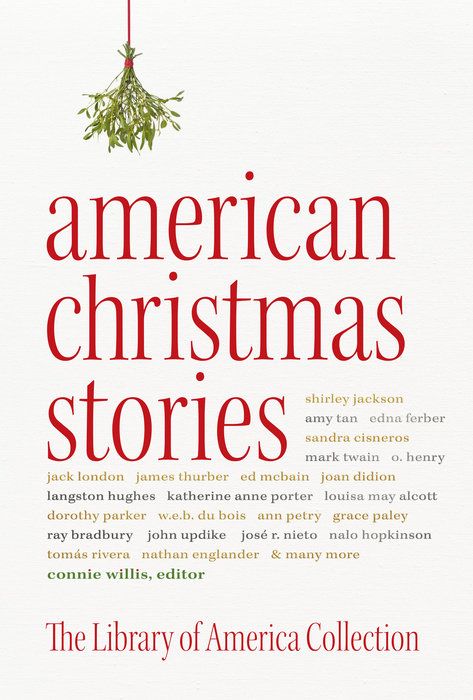 AMERICAN CHRISTMAS STORIES
I have a new book out I want to tell you about. Two years ago, I was honored to be asked to help put together a collection of American Christmas stories for the Library of America. The Library of America is a highly prestigious non-profit organization that “publishes, preserves, and celebrates America’s greatest writing. ” It’s published over 300 volumes by authors ranging from Ralph Waldo Emerson to Ray Bradbury, from Frederick Douglass to Edgar Rice Burroughs and Octavia Butler, and I was thrilled to be asked to edit what turned out to be AMERICAN CHRISTMAS STORIES.
The mission of the book was to chronicle the history of the American Christmas story from its beginnings in the mid-1800s to the present day as it grew and expanded and diversified into every genre and ethnic group and aspect of American life. To that end, we looked for stories in all sorts of places and publications.
( NOTE: Stefanie Peters and David Cloyce Smith and the other editors at Library of America did all the heavy lifting, scouring all sorts of obscure books and magazines, finding thousands of stories for us to choose from, and getting all the necessary permissions and releases. All I did was read a bunch of stories, suggest some stories they’d missed, and write the introduction.)
Between us, we found mysteries, horror stories, Westerns, science-fiction stories, ghost stories, police procedurals, and fantasies, stories by famous authors like Bret Harte and John Updike and stories by writers you’ve never heard of, like Pauline Hopkins and John Kendrick Bangs. Stories by African-American authors writing in the post-Civil War South, by Chinese-American authors writing about California’s Chinatown, by authors of vastly different backgrounds writing about Alaskan and Puerto Rican and Nebraska Christmases.
And we found stories written in all different keys, from cynicism to sentimentality, from nostalgia to urban angst. And comedy. So many Christmas collections focus solely on serious or uplifting stories, but humor’s been a staple of the American Christmas story since Mark Twain and William Dean Howells, and I was really happy we were able to include humorous stories by Shirley Jackson, Robert Benchley, Leo Rosten, Joan Didion, and Damon Runyon.
(Especially Damon Runyon. We would have included all his Christmas stories if we’d had room, and all of O. Henry’s, but alas, there were length constraints–and permissions we weren’t able to get. And in addition, we didn’t want this collection to be a carbon copy of every other Christmas anthology we’d ever read. Which is why O. Henry’s “Gift of the Magi” and the “Christmas won’t be Christmas” piece by Louisa May Alcott aren’t in the book. Sorry. But they’ve been reprinted virtually everywhere, and if we included them, we’d have had to leave out stories by both O. Henry and Alcott that you might not have read before.)
We also included lots of other wonderful stories, like Langston Hughes’ wistful “One Christmas Eve” and Edna Ferber’s “No Room at the Inn” and Ben Hecht’s “Holiday Thoughts” Jacob Riis’s “The Kid Hangs Up His Stocking” and Jack London’s “Klondike Christmas” and Dorothy Parker’s “The Christmas Magazines and the Inevitable Story of the Snowbound Train.”
For you science-fiction, fantasy, and horror fans, there’s Cynthia Felice’s “Track of a Legend,” Mildred Clingerman’s “The Wild Wood,” Steve Rasnic Tem’s “Buzz,” Ray Bradbury’s “The Gift,”and Raymond E. Banks’s “Christmas Trombone.”” (And a story of mine that they chose, “Inn.”)
I have lots of favorites in the collection–Thomas Disch’s “The Santa Claus Compromise” and Pete Hamill’s “The Christmas Kid” and W.E.B. DuBois’s “The Sermon in the Cradle”–but the two stories that I’m happiest about for being in the book are Christopher Morley’s “The Tree That Didn’t Get Trimmed,” which is probably my favorite Christmas story ever, the one that best embodies the holiday’s spirit of beauty and redemption and one which isn’t nearly well enough known, and “The Impossible Snowsuit of Christmas Past” by George V. Higgins. I’d found that story years ago in a magazine, and our family read it every year on Christmas Eve, but it had only been reprinted once and had never been anthologized, and we had the very devil of a time trying to locate it. It just wasn’t anywhere. (Thanks, you wonderful Library of American editors, for your efforts in tracking it down!) If they hadn’t succeeded in finding it and then getting permission to use it, you’d probably never have had the chance to read it, and that would have been a pity. It’s such a lovely story. As are all the other nearly-lost treasures that fill this book.
Sorry to brag, but I’m just so proud of how the book turned out and so grateful to the Library of American for having given me the chance to be involved with it.
The book is AMERICAN CHRISTMAS STORIES, The Library of America Collection, edited by Connie Willis, and it’s available pretty much everywhere in both hardback and e-book formats.
https://loa.org/books/703-american-christmas-storieshttps://www.goodreads.com/…/58144408-american-christmas…Note: The Link to loa.org includes a 25% discount.
Have a great holiday season!
Connie Willis
WEBSITE UPDATE–THANKSGIVING 2021 – MOVIES FOR A NEGLECTED HOLIDAY
 WEBSITE UPDATE–THANKSGIVING 2021 – MOVIES FOR A NEGLECTED HOLIDAY
Poor Thanksgiving! It gets short shrift all around. Not only is it completely upstaged by Christmas, but now Black Friday means that Thanksgiving only gets a single day, and in the last few years (interrupted only by the Pandemic), Black Friday starts Thursday afternoon so you don’t even have time to do the dishes before Thanksgiving’s over and it’s on to the Christmas spending frenzy.
The same is true for movies. Hallmark devotes an entire month to Christmas movies and there are dozens of other new and old classics to watch, but there are hardly any Thanksgiving movies, and the ones there are always seem to involve a person who’s terminally ill. (Don’t believe me? How about STEPMOM, FUNNY PEOPLE, and ONE TRUE THING, to say nothing of THE BIG CHILL, in which the person’s already died?) Movies like that are the last thing we need in this Pandemic-That-Never-Seems-To-End.
So here’s a list of some cheerful Thanksgiving movies to watch in the ninety seconds or so between Thanksgiving dinner and Black Friday:
The top four in my family are:
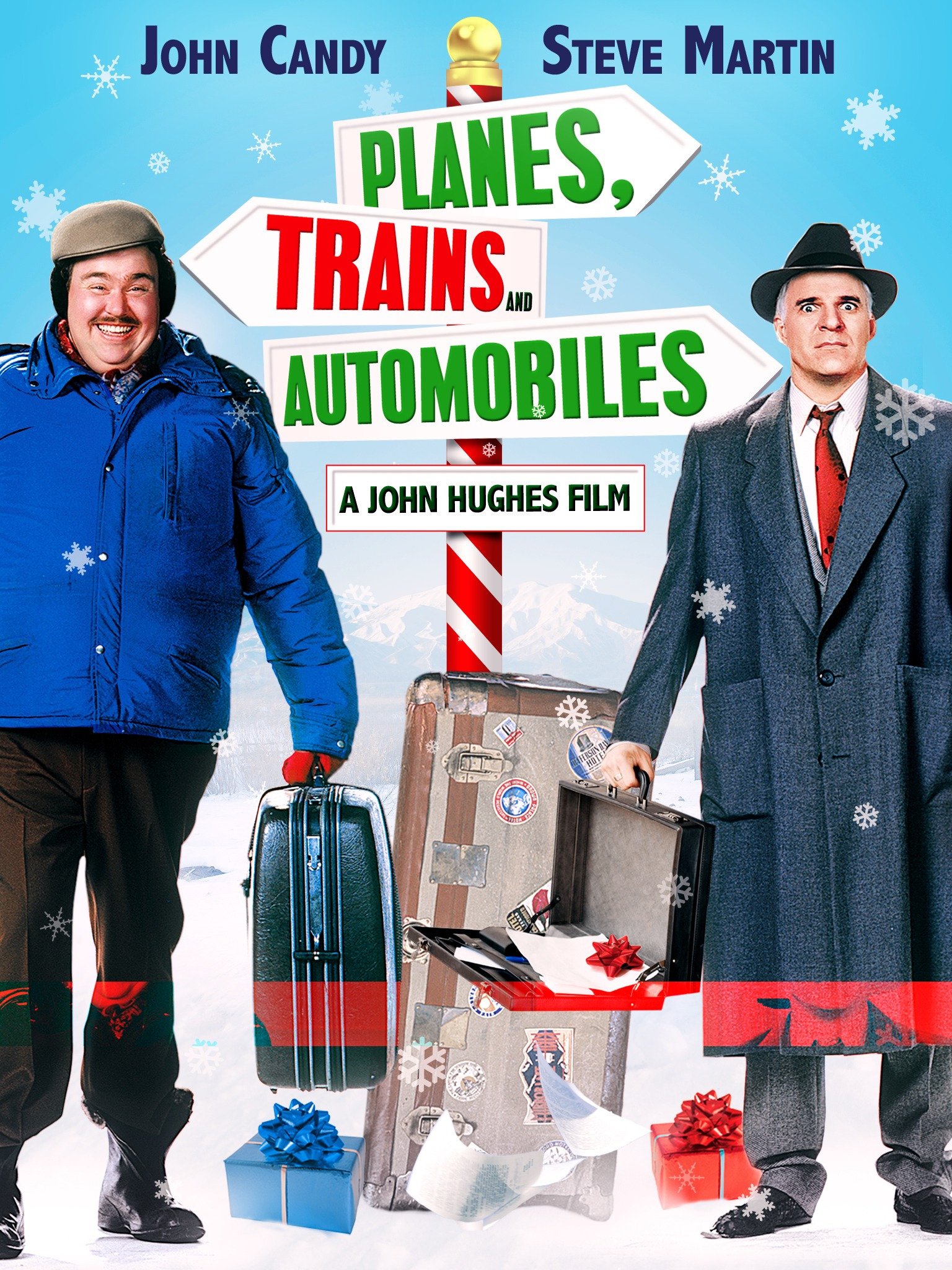
1. PLANES, TRAINS, AND AUTOMOBILES–This is the hands-down best ever Thanksgiving movie, about Steve Martin’s struggles to get home in time for Thanksgiving dinner, against obstacles including flight cancellations, scary motels, cattle trucks, near-death-on-the-highway, and John Candy. We watch it every year.
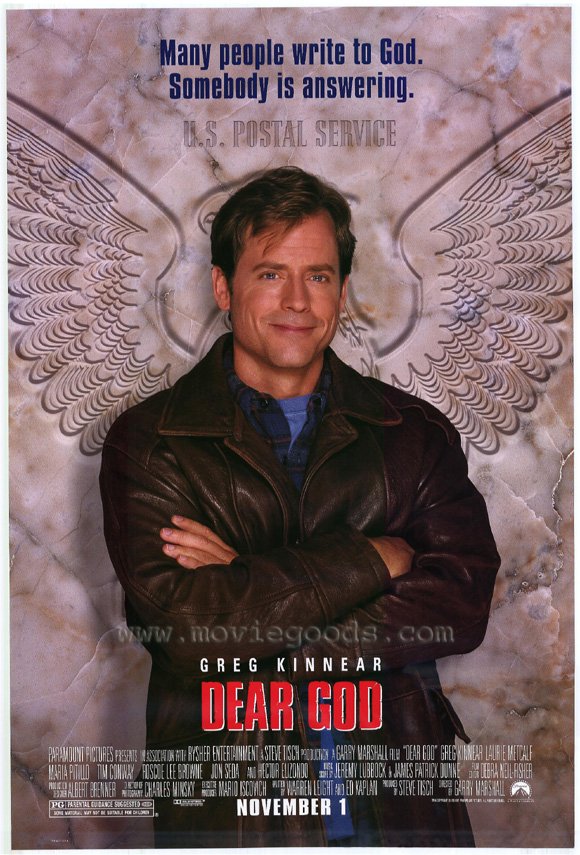
2. DEAR GOD–For some reason nobody’s ever heard of this movie, even though it was made by Penny Marshall and stars Greg Kinear and a host of crazies who work in the dead-letter office at the Post Office. It starts in the fall and goes all the way to the day before Christmas, and it has a wonderful Thanksgiving scene–at a miniature golf course.
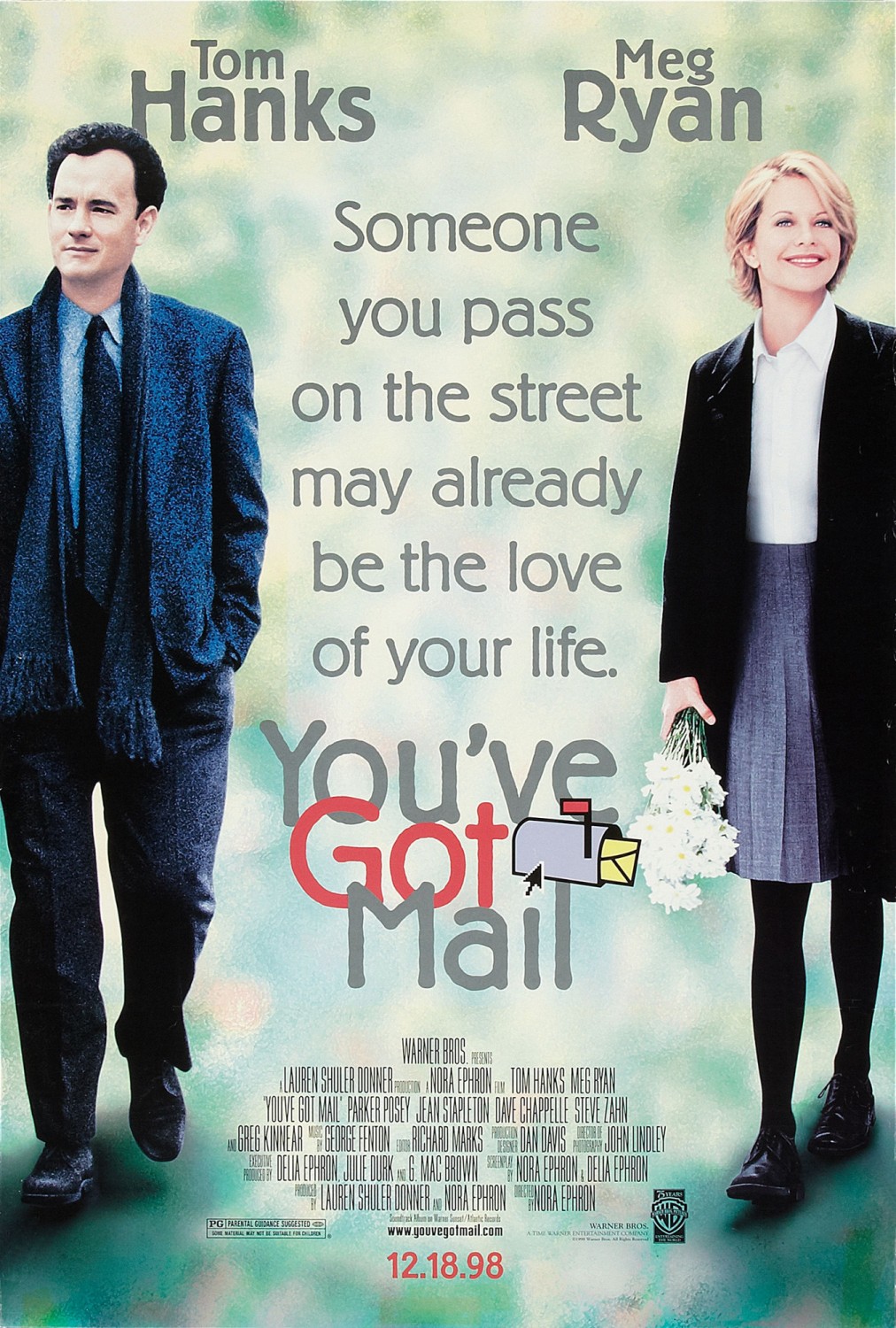
3. YOU’VE GOT MAIL–This remake of THE SHOP AROUND THE CORNER (which is definitely a Christmas movie and should be watched then, preferably on Christmas Eve) takes place through the fall, and has not only Thanksgiving get-togethers but the shopping you have to do beforehand, with a very funny scene set in a cash-only lane at the grocery store.
4. ADDAMS FAMILY VALUES–The Addams Family are always great, but this one was made even more special by Wednesday’s participation in a Thanksgiving Pageant at her school.
And these are good, too:
5. HOME FOR THE HOLIDAYS–This movie, which stars Holly Hunter and Robert Downey, Jr., is all about coming home for Thanksgiving and dealing with your highly dysfunctional family.
 6. SCENT OF A WOMAN–If you want to avoid going home for Thanksgiving, you can always hire out for Thanksgiving weekend to assist a blind man, especially if the blind man is Al Pacino, who is not at all the helpless invalid Chris O’Donnell expects and who has very interesting ideas about what makes a good weekend, many of them involving Gabrielle Anwar.
7. MIRACLE ON 34TH STREET–I know, I know, this is a Christmas movie, but everyone always forgets that it starts with the Macy’s Thanksgiving Day Parade and Natalie Wood tricking her mother into inviting John Payne to Thanksgiving dinner. (I am of course referring to the black-and-white original version, which is the only one worth watching.)
8. And speaking of the Macy’s Parade, there’s TOWER HEIST, a movie about a bunch of guys (Ben Stiller, Eddie Murphy, Casey Affleck) who’ve lost all their money in a Ponzi scheme planning a heist that will get their money back and get revenge on the guy who stole it. They decide the best time to pull off the heist is during the Macy’s Parade, since everybody’s busy watching the balloons and the bands.
9. PAUL BLART: MALL COP–This movie’s not about Thanksgiving but about Black Friday, which apparently is also a good time to commit a crime, and the only person standing between them and success is Kevin James.
10. SEMI-TOUGH–And if you can’t get through Thanksgiving without watching football, this is probably the best football movie ever made, with Burt Reynolds, Kris Kristofferson, Jill Clayburgh, and an incredible storyline involving the playoffs and an EST-type psychological guru.
11. Or if you’re the sentimental type, you can watch THE BLIND SIDE, a heartwarming true football story about a Southern family who befriended a black kid with no prospects and made him part of their family. It’s funny and sweet and has a great Thanksgiving dinner scene.
I hope you have a happy Thanksgiving and that you have a lot to be grateful for.
I know I do.
Including my family, my friends, and all of you.
Plus great Thanksgiving movies to watch.
Connie Willis
September 5, 2021
The Road To Roswell and other Book News!
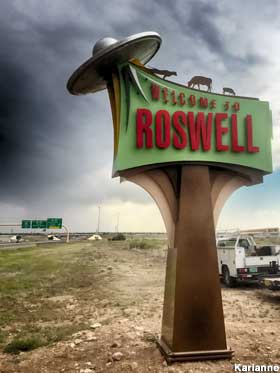 Hi! For all my long-suffering and infinitely patient fans, it’s now official. Random House has bought my new novel and it will be coming out….well, I don’t actually know when it will be coming out. There’s still the rewrite to do with my editor and then the galleys and stuff, but hopefully soon.
The novel is called THE ROAD TO ROSWELL, and it’s a comedy about UFOs and alien abduction (I mean, what else could it be but a comedy when aliens are involved?)
Here’s the setup:
Francie has come to New Mexico to be the maid-of-honor in her best friend Serena’s wedding (and hopefully to be there so her friend can confide in her if she wants to back out at the last minute, which Francie hopes she does.) Serena’s done this before–she’s dated a number of strange guys: base jumpers, psychics, and now a UFO nut– and the wedding’s going to be in the UFO Museum in Roswell during the annual UFO Festival, which occurs every year on the anniversary of the famous Roswell incident, when a flying saucer crashed somewhere outside of Roswell and then was hauled off to Area 51 or Hangar 18 or something. Anyway, Francie, who doesn’t believe any of this nonsense, has to go to Serena’s car to pick up some decorations for the wedding, and when she reaches in the back seat, she’s grabbed by an alien who forces her to be his driver on a wild trip across the Southwest, a trip during which he picks up assorted other people–a handsome, hitchhiking conman, a sweet old lady, a Western movie enthusiast– and insists on stopping at curio shops, casinos, and Las Vegas wedding chapels on the way to wherever it is he’s going.
The novel’s all done, except for my editor’s rewriting suggestions, and I’ve had a wonderful time working on it (except that because of my research I’ve been stuck with ads for Las Vegas wedding chapels and their bizarre themed weddings on my phone for the last two years.)
My other news is that now that THE ROAD TO ROSWELL is done, I’m working on a new time travel novel involving the Oxford historians, Romantic poets, Tintern Abbey, the Inklings, and Lewis Carroll. It’s tentatively called THE SPANNER IN THE WORKS, and no, I don’t know when it will be done. I JUST STARTED IT!
I’ll let you know as soon as I know when THE ROAD TO ROSWELL will be out.
In the meantime, I’ve edited a collection about the history of the American Christmas short story which will be out this Christmas. It has stories in it by everybody from Louisa May Alcott to Damon Runyon and Pete Hamill, with some of your favorites, some you may never have heard of, and a whole assortment of science fiction, fantasy, Western, and mystery stories. I’ll keep you posted about that publication date, too. [American Christmas Stories, out on Oct 19th]
And on a personal note, we’re all hanging in there through the Pandemic, though I’m starting to feel like a character in the JURASSIC PARK franchise. Just when I think the dinosaurs are all dead, here they come again!
So, if you haven’t yet, PLEASE get the vaccine. We’re all vaccinated here, but still wearing masks and staying close to home since we live in a county full of yahoos who still think it’s a hoax, the vaccine will turn them magnetic, it will make them barren, etc. And now school’s starting!
Stay well and safe, everybody!
And I hope you like the new book.
Connie Willis
PRIMEVAL IS BACK!!! (on Britbox)
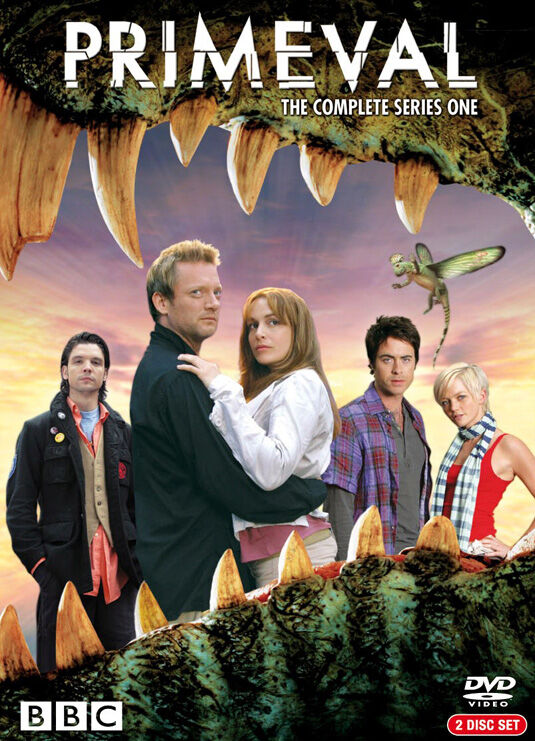 PRIMEVAL IS BACK!!!
I just saw that the first two seasons of PRIMEVAL, the British science-fiction series, is now available from Britbox, and I thought it was a good time to encourage anybody who hasn’t seen it so far to take a look at it. That is, if there’s anybody left who I haven’t already told they HAVE to watch this series–
I have recommended it so many times that it’s become a standing joke in science fiction circles (I somehow figure out a way to mention it on every single panel) and Locus has forbidden me to mention it at the Locus Awards Banquet. As if that could stop me!
I know it sounds like I’m obsessed with the series, but so was Kit Reed, one of my favorite science-fiction writers of all time (see her brilliant short stories, “The Wait” and “Great escape Tours, Ltd.”) and nearly everybody I’ve ever introduced it to has loved it. (One couple took it on a beach weekend and ended up never going outside the entire time because they were binge-watching.)
The premise sounds A) dumb and B) like a kid’s show, and in the beginning it intended to compete with the reboot of DR. WHO. The basic story is this: Rips in time called “anomalies:” are happening which allow creatures from the past to come through to modern-day England. A group consisting of a paleontology professor, his hunky assistant, a pretty blonde zoologist who works at a zoo, a geeky computer nerd, and a government bureaucrat named Claudia Brown, set out to stop them from causing mayhem and panic, all the while keeping what’s happening under wraps and not violating the Official Secrets Act.
So, basically, the A-team with dinosaurs. So far, it’s completely formula, and you think the hunky guy and the pretty blonde will obviously get together, the geeky nerd will provide the plot explication and comic relief, the professor and the bureaucrat will flirt with each other, etc. but that only lasts for an episode or two, and then things start to get really interesting. And after Episode 6 (the end of the first short season) things REALLY take off! My daughter in a different time zone was ahead of me in watching, and after I’d binge-watched the first season, I called her in the middle of the night. Instead of her mumbling a sleepy hello or saying, “Oh my God, who’s dead?” she said calmly, “I assume you’ve just finished watching Episode 6, Mother.”
“Yes,” I said. “Oh, my God!”
And as time went on there were more and more surprises–the rips in time, which at first seemed to be limited to the past, begin to expand to take in the future; it turned out what was happening on the surface isn’t what’s really going in, and no character is safe from having something happen to them. And there are plot twists I never saw coming, even though that hardly ever happens to me since I spend my life thinking about plot twists. I continued to be surprised right up to the end of the series. Oh, and the series (of 5 seasons) had a great ending, which is a requirement for me before I ever recommend a series to anybody.
One of the things that was so great about this show was the money and expertise they lavished on what started out as an action series (just like DR. WHO.) If this had been made in the States, they would have hired B-list actors, B-list screenwriters, and have spent a dollar fifty on special effects. Not with PRIMEVAL. The actors were brilliant, especially Douglas Henshall, who played Cutter, Ben Miller, who is the funniest, driest bureaucrat ever, and Andrew Lee-Potts, who was wonderful as Connor, the computer geek. (We originally found the series through him. We’d seen him on Syfy’s miniseries, ALICE, a dystopic science-fiction take on Alice in Wonderland, thought he was great, and wanted to see if he’d been in anything else.) The special effects were done by the people who created WALKING WITH DINOSAURS, and the creatures were simply amazing. My favorite was a pterodactyl which was as beautiful as it was dangerous, but I also loved the dodoes and the raptors (“Come on, how hard is it to find a raptor in a shopping mall?”) and the spinosaurus. Plus, the T-Rex, which you knew had to show up sooner or later. But the best thing about the show were the scripts, which were funny, intelligent, and so good I use examples from them of foreshadowing, good dialogue, subtext, and irony in every writing class I teach. To give one example, each season had a story arc, seasons 1 through 3 had an arc, and seasons 1 through 5 had an arc.
How could I get so excited about a show about dinosaurs in modern-day London? you may ask.
Well, one reason is because I’ve been writing–and reading–and watching movies–for a really long time, and as a result, I find it almost impossible to read a story or novel or watch something without taking it apart, editing and criticizing and anticipating every move the author or screenwriter’s going to make. It’s an occupational hazard. In LIFE ON THE MISSISSIPPI, Mark Twain talked about how he had gone on the river because he thought it was so beautiful. He loved the colors and the shapes, the ripples and floating logs and the sunsets, and he wanted nothing more than to be a riverboat pilot and “learn the river.”
But it came at a cost. “Now when I had mastered the language of this water and had come to know every trifling feature that bordered the great river as familiarly as I knew the letters of the alphabet, I had made a valuable acquisition. But I had lost something, too…all the grace, the beauty, the poetry had gone out of the majestic river!…Then, if that sunset scene had been repeated, I should have looked upon it without rapture, and should have commented upon it, inwardly, in this fashion: “This sun means we are going to have wind to-morrow; that floating log means that the river is rising, small thanks to it; that slanting mark on the water refers to a bluff reef which is going to kill somebody’s steamboat one of these nights, if it keeps stretching out like that… All the value any feature of it had for me now was the amount of usefulness it could furnish toward compassing the safe piloting of a steamboat. ”
Writing is the same way, and I have always felt that Mark Twain was talking not only about “learning the river,” but about becoming a writer, and of the loss that comes as you become more knowledgeable in the way prose works. As you learn the trade, you lose the wide-eyed wonder you had at reading books and watching movies and view them from the point of your craft. You get much more critical of what you’re reading and intolerant of bad dialogue and worse plotting. You start thinking, “If they’d done it this way, it would have been so much better,” and want to rewrite the ending–and sometimes the whole thing–for them. (Which is why nobody wants to go to the movies with a writer.) Plus, you spot plot twists way ahead of time and see the big reveal coming from miles off.
But Mark Twain didn’t tell the whole story, because although there’s definitely a loss and it becomes harder and harder to read bad books and watch mediocre movies, you sometimes happen across something so good that you can get all the pleasure you got from reading or watching as a kid as well as a delight in how skilled the author is, how expertly they did it. This doesn’t happen very often. It’s only happened to me a few times in recent years: reading Alan Bennett’s THE UNCOMMON READER and Joan Didion’s THE YEAR OF MAGICAL THINKING and Nora Ephron’s HEARTBURN and watching the movies QUIZ SHOW and DECOY BRIDE and THE OTHERS, but when it does, it’s a double pleasure–and one you could never have experienced when you were a kid. It makes having become a writer all worthwhile.
That’s what happened to me watching PRIMEVAL–I could appreciate the clever writing and the cleverer plotting and the expert acting and at the same time lose myself completely in the story, just like when I was a kid reading and watching great stuff for the first time.
The series may not have that effect on you–reading and watching things is a very personal matter–and you probably won’t get as obsessed as my daughter and I did–we actually went to that mall where the raptor was and to the British Museum to look at the mummies and Egyptian statues they’d seen while hunting for an ancient crocodile that looks like the goddess Ammut. And we nearly died waiting for Seasons 4 and 5 to come out. But I’d give it a chance anyway. At least watch to the end of Episode 6 before you decide you don’t like it.
Trust me, it’s a great show. There are episodes set in the old Underground tunnels at Aldwych and in the late Cretaceous and on the M-25, with a rampaging mammoth stopping traffic, no less. And it’s something to do while you’re stuck at home waiting for the delta variant to go away and people to get their vaccinations (not necessarily in that order.)
(Oh, and just one thing. Before Season 4 came out, they did a bunch of webisodes to show you what happened between Seasons 3 and 4. They’re on YouTube, and you should definitely watch those before starting Season 4.)
Good viewing!
Connie Willis
June 19, 2021
CANTERBURY’S MONKS AND WHAT THEY SAW (PROBABLY)
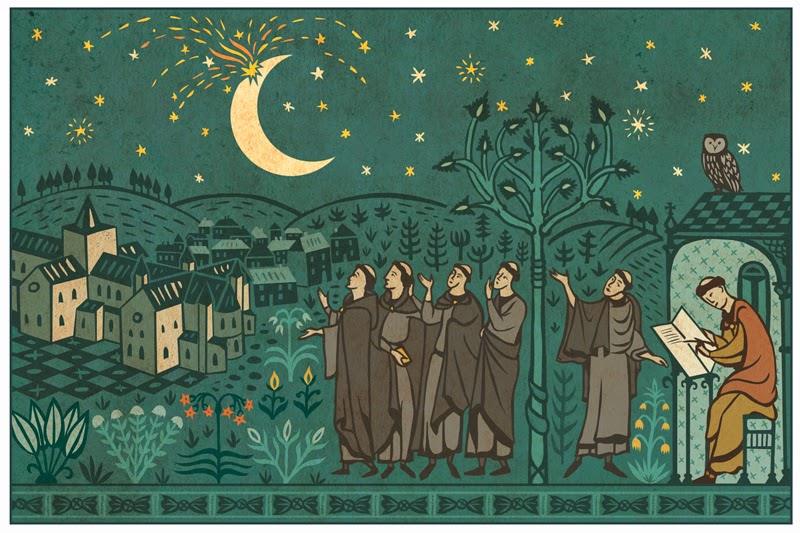
Canterbury Cathedral was part of St. Augustine’s Abbey, a monastery founded in 598 A.D. It endured Viking raids, William the Conqueror’s invasion, a large fire (in 1168), and the murder of its archbishop, Thomas a Becket, and was finally done in by Henry VIII. But possibly the most important event in its long history was something happened on a summer night in June in 1178.
That night, “after sunset when the moon was first seen,” five monks were sitting outside looking at the sky and the crescent moon when the upper part of the horn “suddenly split in two. From the midpoint of this division, a flaming torch sprang up, spewing out fire, hot coals, and sparks. The body of the moon writhed like a wounded snake. Afterwards it resumed it proper state. This phenomenon was repeated a dozen times or more, the flame assuming various twisting shapes at random and then returning to normal. Then, after these transformations, the Moon, from hook to horn, that is, along the whole length, took on a blackish appearance.”
The five monks told Gervase of Canterbury, the chronicler of the Abbey, what they’d seen, and he wrote it all down, adding that the monks were “prepared to stake their honor on an oath that they have made no addition or falsification in the narrative.” Unfortunately, they were the only people to have seen it. According to European chroniclers of the time, the continent was “fogged in” that night, so the five Canterbury monks were the only witnesses, and nobody paid any attention to their account for nearly eight hundred years, at which point geologist Jack B. Hartung proposed a theory for what they might have seen: a giant asteroid slamming into the moon.
If it had, there should be a crater at the place the monks described the explosion as being, so Hartung went about looking for one–and found a likely candidate: Crater Giordano Bruno (named after Bruno, the first person martyred for science in 1600.) The crater was fourteen miles in diameter and on the far side of the moon, but in a place near the edge where the explosion could have been seen. And it was very young, as determined by the spectacular rays radiating from it. In the case of older craters, the rays have been hit repeatedly by other, smaller asteroids which throw up dust and obscure the rays. Crater Giordano Bruno’s rays were sharp, clear, and very long, all of which suggested it was the Moon’s youngest crater.
Hartung deduced that the flames the monks saw were a plume of molton matter rising from the surface and that the illusion of the Moon’s breaking in two could have come from the resultant dust cloud obscuring the Moon. Hartung also deduced that if the Moon had been hit, it should still have a slow longitudinal wobble like a bell’s ringing (which it did) and an elevated temperature (which it didn’t), but scientists concluded that an asteroid impact on the surface of the Moon was most likely what the monks had seen.
Then in 2001, Paul Withers, a graduate student at the University of Arizona’s Lunar and Planetary Lab, said an asteroid impact was impossible. The crater was much older (1 to 10 million years old) and, besides, if an asteroid HAD hit the Moon, it would have thrown up enormous amounts of dirt and rock, and there would have been a giant meteor shower afterwards consisting of up to 50,000 asteroids an hour, which would have lasted for weeks, and no observers had mentioned one. Withers also argued that if an asteroid had hit the moon that Korean or Chinese astronomers should have seen it (though I don’t think that works because of when the impact occurred.)
Withers argued that what the monks had actually seen was a very large asteroid entering Earth’s atmosphere that had burst into flames as it did, “fizzing and bubbling and sputtering,” and that it just happened to be aligned with the Moon so that it looked like the Moon was exploding. (Personally, I find the chances of that exact alignment with the monks’ line of sight happening even more unlikely than their happening to see an asteroid hit the Moon.)
Other scientists weighed in, saying they couldn’t possibly have seen the Moon because it would have been invisible at sunset from Canterbury on the eighteenth of June (I’d like to point out that Gervase never said “just after sunset,” he said, “after sunset when the moon was first seen,” which is an entirely different thing,) and others claimed the monks had made the whole thing up and were just talking about Islam being defeated in the Crusades, since Islam’s symbol is the crescent moon, even though the monks never said a word about Islam OR the Crusades, and this was the only thing like this that the reported seeing.
In 2008 the Japanese satellite SELENE took high-resolution photos of the crater, which scientists used to attempt to date the crater by counting the smaller craters in it. They came up with a probable age of one million to ten million years and concluded the chances of its being a mere eight hundred years old were .1 per cent.
The only way to definitely prove whether those monks saw an asteroid hit the Moon is by going to Crater Giordano Bruno, collecting rock samples, and carbon-dating them, but in the meantime there have been several asteroid impacts recorded on the Moon that were visible to the naked eye–one on March 17, 2013, another on February 24, 2014, and, most recently, one on June 21, 2019 during a total lunar eclipse, all of which produced a blinding flash. “It was so bright!” Bill Cook of NASA’s Meteoroid Environment Office said. None of these were even close to the size of the asteroid that created Giordano Bruno. The largest was fifteen meters across, and Bruno is fourteen MILES across, and yet they were easily visible from earth, which makes the monks’ story more plausible.
Stay tuned. Personally, I’m rooting for the monks, but we shall see…
Connie Willis
THE NEBULA AWARDS 2021
Last night I attended the Nebula Awards Ceremony (virtually) where I was awarded the Service to SFWA Award. It was very exciting. I’d known about it for awhile, but I wasn’t allowed to tell anybody till after the Nebulas. Here’s the speech I gave, and here’s the link to the ceremony, complete with James Patrick Kelly’s introduction of me:
https://www.youtube.com/watch?v=8FdCCOjFKtE [Her introduction begins at 23:00.]
NEBULAS SERVICE AWARD SPEECH
Thank you, Jim, for that great introduction
and thanks to all of you for this lovely award.
I don’t really deserve it.
In the first place, if the service was emceeing the Nebulas,
that was really fun
In the second place, if it was teaching at Clarion and Clarion West,
I loved doing that,
and I’ve been rewarded every day
by the wonderful things my students have accomplished
and the awards they’ve won.
You Clarion people are great!
In the third place, if my service was being a committee member,
I’ve been writing for YEARS about the horrors of committees,
how they constantly get off-topic
and spend hours on pointless minutiae
and squabble over things that DO NOT MATTER.
I even wrote a story
about the worst committee of all time
the one where archangels were put in charge of planning the Apocalypse,
and how they spent hours deciding who the Antichrist should be
and fighting over what the heavenly choirs should sing--
"I mean, the Hallelujah Chorus has been done to death!"--
and whether that pale horse of the Four Horsemen of the Apocalypse
was white or gray or a palomino or what.
As you might expect, the planning didn’t work out,
and the story was called "Why The World Didn’t End Last Tuesday,"
So I figured my ending up on SFWA committees
was my punishment for that story
and all the other stuff I’d written
and said
and thought.
But the thing is, it worked out great.
I got to work with terrific people.
Sane and sensible and intelligent
people like
Jack Williamson,
Jeff Carver,
Chuck von Rospach,
Kevin O’Donnell,
Terra LeMay,
and James Patrick Kelly
on the Nebula Rules Committee
and deeply dedicated and caring people like
Lou Berger,
Robert Silverberg,
Anatoly Belikovsky,
Jerry Pournelle,
James Patrick Kelly,
and Oz Drummond
on the Emergency Medical Fund Committee
Plus Cat Rambo
and Mary Robinette Kowal
and countless other officers and members through the years.
Every one of them has worked much harder
and deserves this award more than I do.
AND they’re only a small segment
of all the people who have worked
and continue to work to make SFWA such a vital and thriving organization.
This award should go to all of them.
But I’m very grateful that you decided to give it to me.
Oh, and I’d like to apologize for all the mean things I’ve said about committees.
Mostly.
This award is a wonderful honor. Thank you so much.
Connie Willis
April 8, 2021
WEBSITE UPDATE–EASTER AND BEN-HUR–4-4-21
WEBSITE UPDATE–EASTER AND BEN-HUR–4-4-21
EASTER MOVIES
For Easter weekend we’ve been eating deviled eggs (not Peeps because they have to get stale first to be really good) and watching BEN-HUR. We watched the 1959 Charlton Heston version and then the silent film.
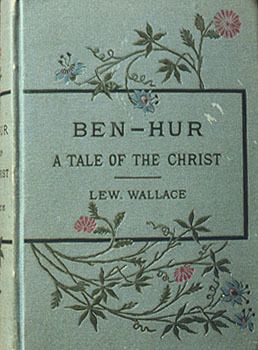
I read the book long ago, and it was terrific. You may not know this, but it was written by General Lew Wallace, a Union Civil War general, and it out-sold even UNCLE TOM’S CABIN. It had several stage productions and continued to be the top-selling American novel right up till GONE WITH THE WIND. I remember loving the book, though some of you may find the style sort of old-fashioned and difficult to read. I especially loved the fact that the wise men were portrayed as actual people, with lives of their own, and that Balthazar was a major character in the novel.
Lew Wallace said the book was inspired by a talk he had had with an agnostic on a train one day, a talk in which the agnostic knew far more than he did about the Bible. He was humiliated by his own ignorance and decided to learn as much as he could about the Bible, and set out to do tons of research on Biblical history, which really shows in the book (especially in a time when people pretty much played fast and loose with historical facts.)
His research turned into the novel, BEN-HUR, A TALE OF THE CHRIST, and it tells the story of Jesus from the point of view of a Jewish nobleman who falls afoul of the Roman Empire and who encounters Jesus when he is a prisoner on his way to certain death in a Roman galley. It started the fashion of books told from the point-of-view of a peripheral character, books like THE ROBE (from the point-of-view of one of the soldiers who gambled for Christ’s robe as he was dying on the Cross) and THE SILVER CHALICE (from the point-of-view of the Roman slave who made the cup used at the Last Supper) and eventually led to an onslaught of books and movies from somebody other than the main character’s point-of-view: the Wicked Witch of the East (WICKED), Elizabeth Bennet’s silly mother (MRS. BENNET HAS HER SAY), the Big Bad Wolf (THE TRUE STORY OF THE THREE LITTLE PIGS), to say nothing of MALEFICENT and the upcoming CRUELLA. Nearly all of these are terrible, but occasionally somebody–like Tom Stoppard with ROSENCRANTZ AND GUILDENSTERN ARE DEAD (from the point-of-view of the two lackeys charged with killing Hamlet but who end up murdered themselves–gets it right, and Ben-Hur is one of those times.
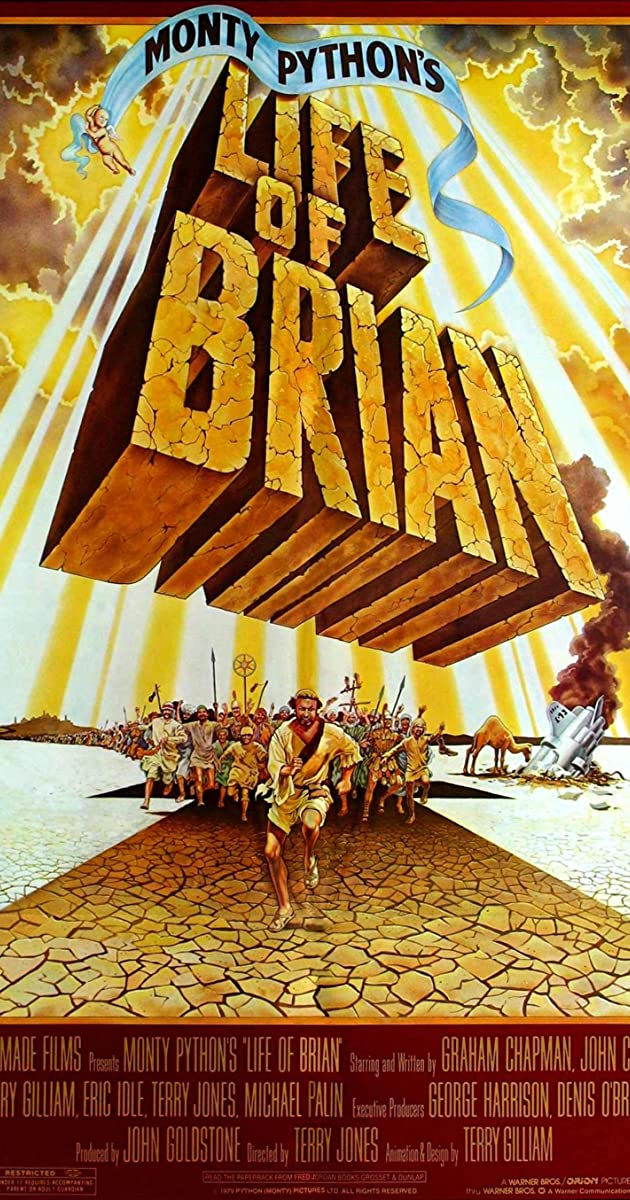
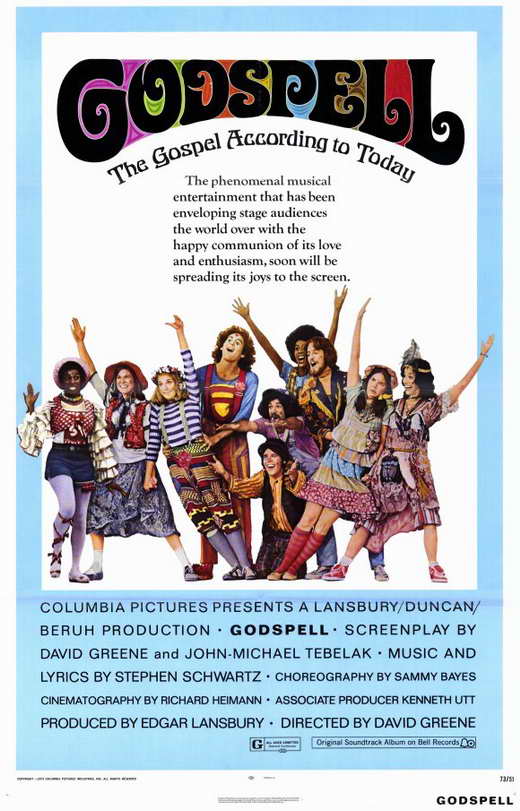
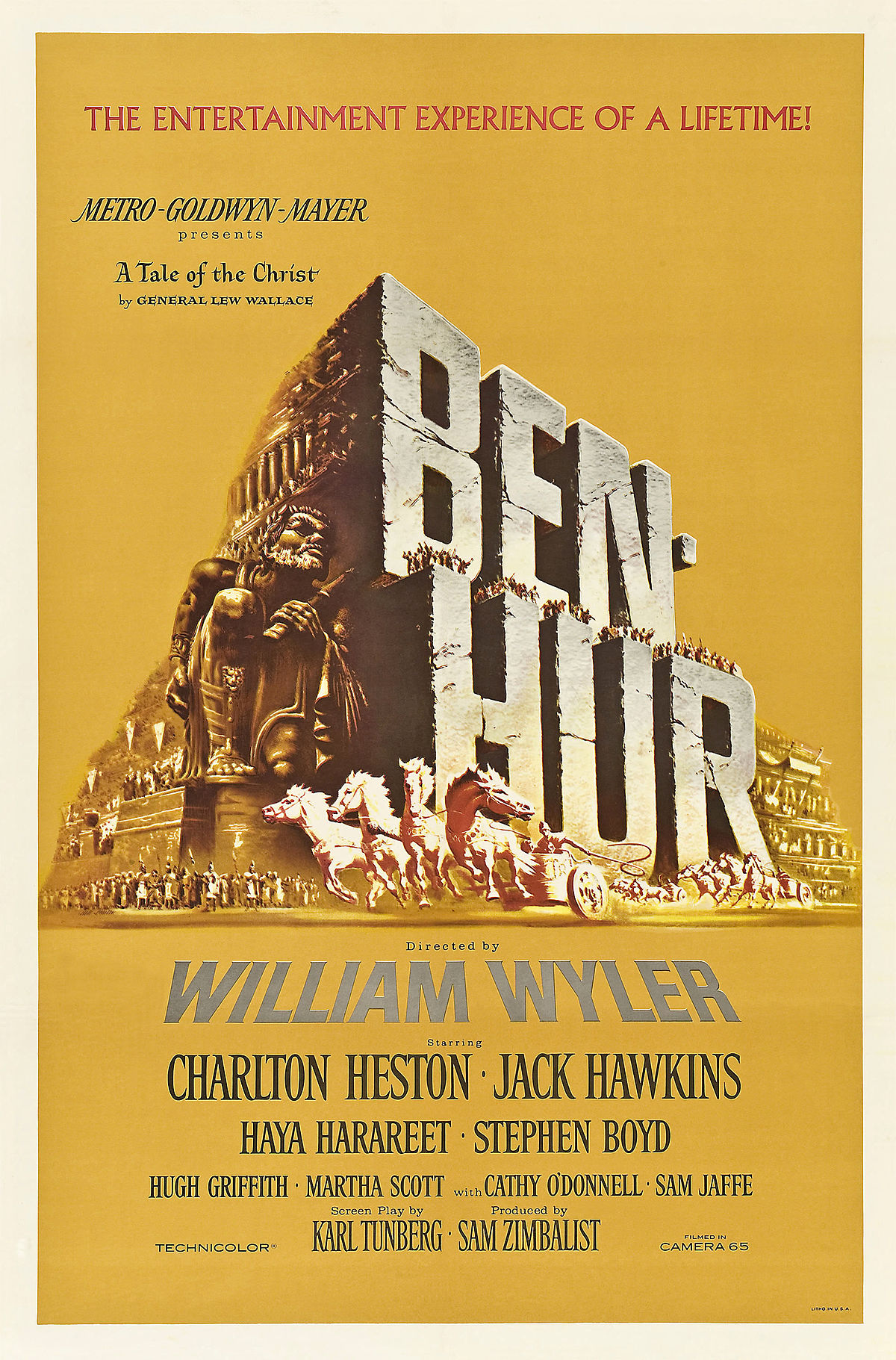 Using a peripheral character is a great way to tell a story that everybody has strong opinions about, and BEN-HUR’s obliqueness (and the powerful plot of betrayal and revenge and redemption) is the reason why it’s the best of all the Bible-themed movies, except for LIFE OF BRIAN (which also tells the story from a different angle) and GODSPELL (which sets the story in the hippie 1960s and adds musical numbers and tap-dancing.) Movies like THE TEN COMMANDMENTS and SAMSON AND DELILAH and especially KING OF KINGS are virtually unwatchable, but BEN-HUR remains a really good movie, in spite of the nearly three-hour length and the on-the-nose dialogue (helped some by Gore Vidal’s and Christopher Fry’s work on the script.)
Even though it kills me to say it, Charlton Heston does a really good job as Judah Ben-Hur, which is critical since he as to carry long stretches of the movie all by himself, and the movie tells a really moving story and has a killer ending. The chariot race–which is pretty spectacular–gets all the attention, and there’s a bloody sea battle, but the really powerful scenes are the personal ones, and some of the actors are wonderful–Hugh Griffiths as the Arab who races a team of horses named after stars–Rigel, Aldebaran, Altair, and Antares (which delighted my teen-aged science-fiction self) and Jack Hawkins as the only decent Roman in the bunch and Israeli actress Haya Harareet as Esther, who’s my favorite character and who, unlike in any other sword-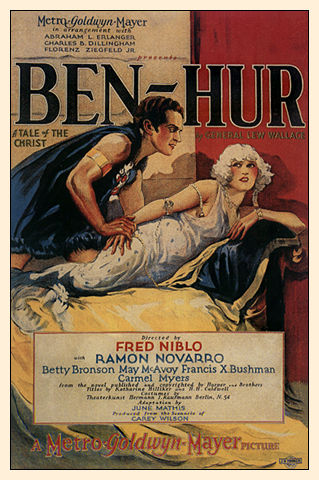 and-sandals Bible epic, is the smartest person in the room and the moral center of the movie. I cried at the ending, even though I knew what was coming, just as I cried at the end of the book, which pretty much tells you how I feel about it.
After we watched the 1959 BEN-HUR, we watched the 1925 silent version, which was not as good–the plot has some holes and Esther is unaccountably played by someone who looks exactly like Mary Pickford, blonde long curls and all–but I for one think the chariot race is better than the one in the 1959 movie. The rumor is that one of the cameramen was killed while filming it, and, watching it, that’s easy to believe.
Anyway, I recommend watching both–1959 first and then the silent–and I also recommend watching GODSPELL and LIFE OF BRIAN.
And, whatever you watch, have a happy Easter and a blessed Passover!
Connie Willis
April 4, 2021
WEBSITE UPDATE–3-26-21–GREAT SCIENCE NEWS!
This week was a great week for science-related news.
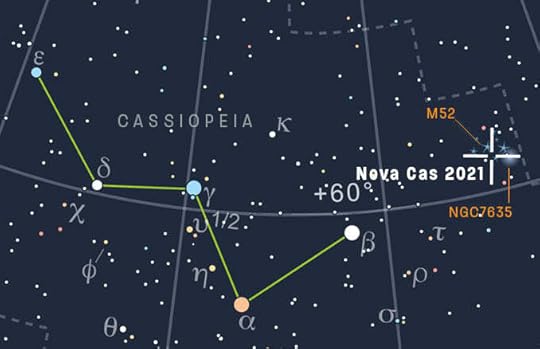
First, a new nova was spotted in the constellation Cassiopeia. (This is not the one I’ve been pulling for all year–Betelgeuse in Orion–but a brand-new one that was found.) It was spotted by accident by a Japanese amateur astronomer, Yuji Nakamura, who saw a star where there shouldn’t be one in the northern sky. It was near the W-shaped (or, right now, chair-shaped) constellation Cassiopeia, and, as the nights went by, it seemed to grow brighter.
Nakamura spotted it through a telescope. It’s not visible to the naked eye yet, but it will be in a month or so as it grows brighter and brighter. Right now you can see it with binoculars. It’s been officially named Vi405 Cas.
It’s a classical nova, so what we’re seeing is not the star, but the flash of light as it explodes. It’s like watching a thermonuclear bomb go off from a VERY safe distance. A nova can brighten 50,000 to 100,000 times in a matter of hours, but it’s hard to tell how long it will last, so if you have clear skies in your area, you need to get out there now to look for it. Instructions for where to look are at Sky and Telescope.
Note: I haven’t given up on Betelgeuse yet. Last year in January it began to fade rapidly, and scientists thought it might be getting ready to go supernova, but then nothing happened. It brightened again, but not quite back to normal, and scientists are anxiously waiting to see what happens next. According to them, it could explode any time in the next 10,000 years or so, but I’m hoping it does it in my lifetime, even though after it was over, it would mean Orion would be without one shoulder, and we might have to think of another name for the constellation.
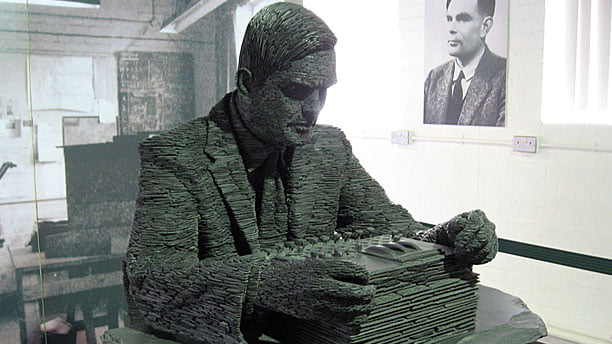
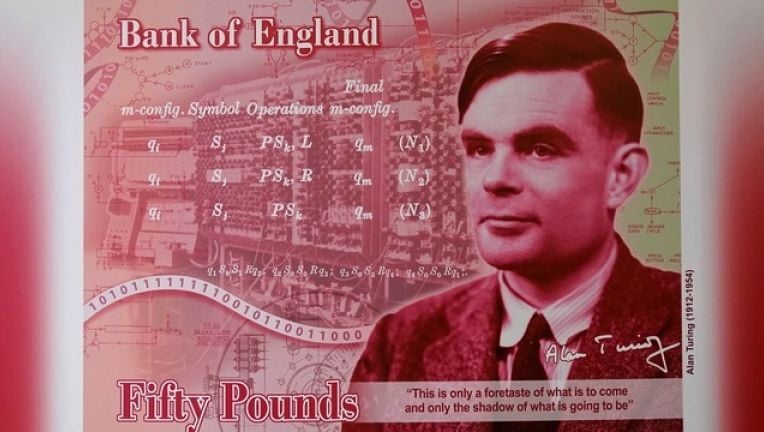 The second great piece of news was the announcement that Alan Turing’s picture will be on the new British 50-pound note. They announced it yesterday, and in honor of him, the rainbow flag flew over the Bank of England (will wonders never cease?)
In case you’re unclear on who Turing is, he’s the scientist behind the breaking of the German Enigma code at Bletchley Park during World War II. The Nazis’ code was considered unbreakable, and basically was, but Turing came up with a design for bombes which would automatically sort through the hundreds of thousands of possibilities of letter combinations in the coded messages and made it possible to decode the messages. This meant that the Allies had access to all sorts of information about German troop movements and ship locations and plans and gave us a HUGE advantage. This was all done in COMPLETE SECRECY, since if the Germans found out we’d broken the code, they’d simply change the settings, and we’d lose access. Or worse, they’d feed us false information. But because of that secrecy, what he and the other scientists and mathematicians and linguists at Bletchley Park had done was unknown until the records were declassified in the 1970s.
Which meant that in 1952, when he got in trouble, the courts didn’t realize they were charging and convicting the man who had won the war for Britain. To them, he was just a gay man, and in the 1950s, being gay was a serious crime, punished by prison. (Look at what happened to Oscar Wilde, and he was a famous playwright when he was arrested.) Turing was stripped of his security clearance (which made it impossible to do the work he loved), tried for “gross indecency” and given the choice of prison or chemical castration. He chose the latter, but the medications made it impossible for him to work or think, and he committed suicide two years later. A crime had been committed, all right, but it was the British government which had committed it, and putting Turing’s picture on the 50-pound note is obviously in part an act of atonement for what they did to him. “He deserved so much better,” the Governor of the Bank said in his speech.
But it’s also an attempt to properly honor the man who, in large part, won the war, or if not, then he certainly shortened it by several years (years during which Hitler might have been able to obtain the atomic bomb) and saved millions of lives. He is often called “the man who won the war.”
Turing’s invention of the bombes and other decoding techniques wasn’t his only scientific accomplishment. At age 22, he wrote a brilliant paper which became the basis for the modern computer. Astronomer Adam Frank says, “Turing’s machines are the essence of every device with a chip in it that you have ever encountered. That’s why Turin stands, essentially, at the head of the line when it comes to the creation of the digital age. He is the father of all computers.”
He also did groundbreaking work on artificial intelligence. He invented the Turing Test, a test by which scientists attempt to tell whether they’re talking to a human being or a robot, and he made major strides in studying the mathematics of plants. And all of this by the age of 41. Just think what he could have accomplished if he hadn’t been hounded to death.
Note: If you want to find out more about him and what he did, I highly recommend the movies “The Imitation Game,” a biographical movie about his time at Bletchley Park, and “Enigma,” a fictionalized story about how BP got shut out of the Naval Enigma Code and then got back in again. Both are really good.
Turing was clearly a genius. His fellow workers in Hut 8 at Bletchley Park, all of whom were geniuses, too, called him “Prof.” He was also your classic absent-minded professor with lots of eccentricities. He chained his coffee mug to the radiator to keep it from being stolen and wore a gas mask in the spring because he had hay fever. He also had a bike with a chain that kept falling off. Instead of replacing it, he would simply pedal the bike backward until the chain was fixed. He was also a deeply, deeply terrible driver. He had apparently done the math and concluded that the smaller the amount of time a person spent in an intersection, the less the chance of an accident, which meant as he approached a crossroads, he floored it and roared through without looking to either right or left, terrifying the people who had been foolish enough to get in the car with him. (They usually only rode with him once.)
The 50-pound note doesn’t just have Turing’s picture on it, it also has his signature–it’s one taken from the registry book when he signed in at Bletchley Park–a picture of the Enigma machine and the bombes, diagrams from his 1939 paper on computing machines, a green-and-gold foil resembling a computer chip, a diagram of an Automatic Computing Engine Pilot Machine, a ticker tape of binary data, and a spiral sunflower pattern which pays tribute to Turing’s work on morphogenetics.
And there are clues to what the Bank is calling “The Turing Challenge,” a series of coded messages embedded in the 50-pound note that the public can attempt to puzzle out. It was designed by people at GCHQ (the intelligence organization at the heart of Bletchley Park), and they said it will probably take at least seven hours for experts to solve (and the rest of us much longer.) They said it might even stump Alan Turing himself, “though we doubt it.” To try it yourself, google “Turing Challenge,” work out the message, and then enter it into the Enigma keyboard that’s been set up online to see what you’ve done. You don’t need an actual banknote to figure it out. The images are all online.
Having a banknote dedicated to him is a fitting honor for Turing, who along with Winston Churchill, Jane Austen, and the painter J.W. Turner will be on new forgery-proof polymer notes which are supposed to be sturdier than the old paper notes. They have a clear plastic window and a hologram image to prevent forgery. And there’s a quote from Turing that’s totally appropriate:
“This is only a foretaste of what is to come and only the shadow of what is going to be.”
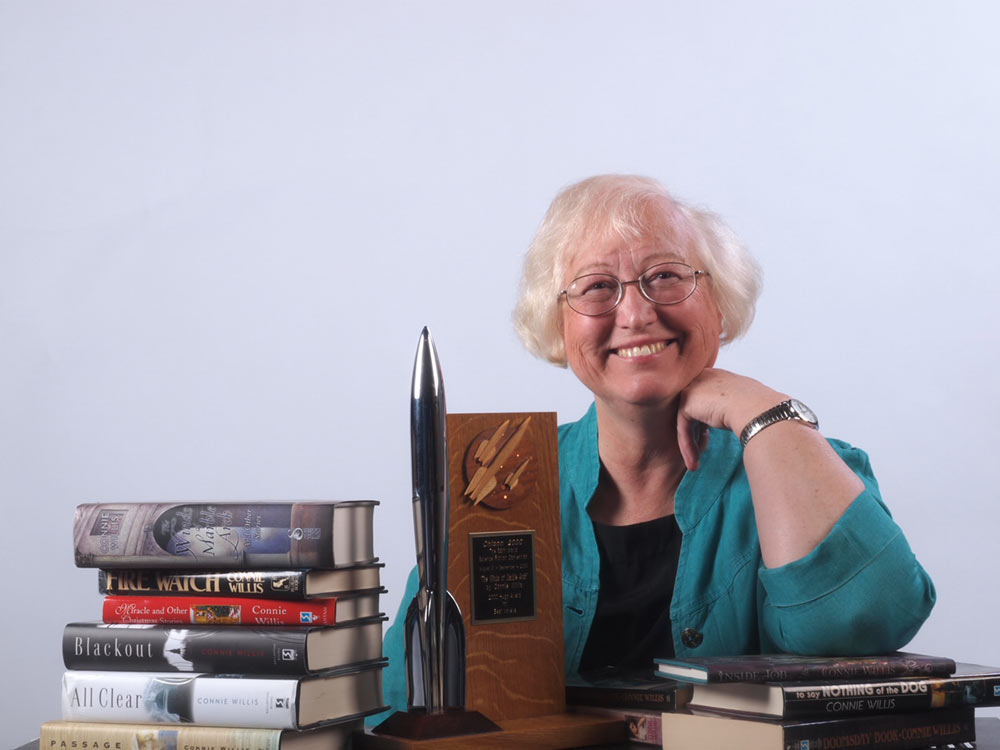
Connie Willis – Some Recent News and Updates
Connie Willis will receive the Kevin O’Donnell, Jr. Service to SFWA Award from the Science Fiction and Fantasy Writers of America during the 2021 Nebula Awards Weekend. Details on the award and how you can participate in the 2021 Nebula Awards Weekend can be found here.
Author Kristin Cashore takes a detailed look at Doomsday Book as one of her series of posts on the craft of writing.
Side note on Doomsday Book, the Subterranean Press limited edition of the novel sold out quickly. It is possible more copies may be made available once shipping has completed later in the year. Details on the release can be found here. It is recommended you subscribe to the Subterranean Press email list to get first notification of any availability.
The NoCo Optimist has a recent interview with Connie about Doomsday Book and the pandemic we’ve been going through: ” Renowned science fiction author and Greeley resident, Connie Willis, sees ‘Doomsday Book’ come to life amid pandemic“
Connie Willis's Blog

- Connie Willis's profile
- 4674 followers

